




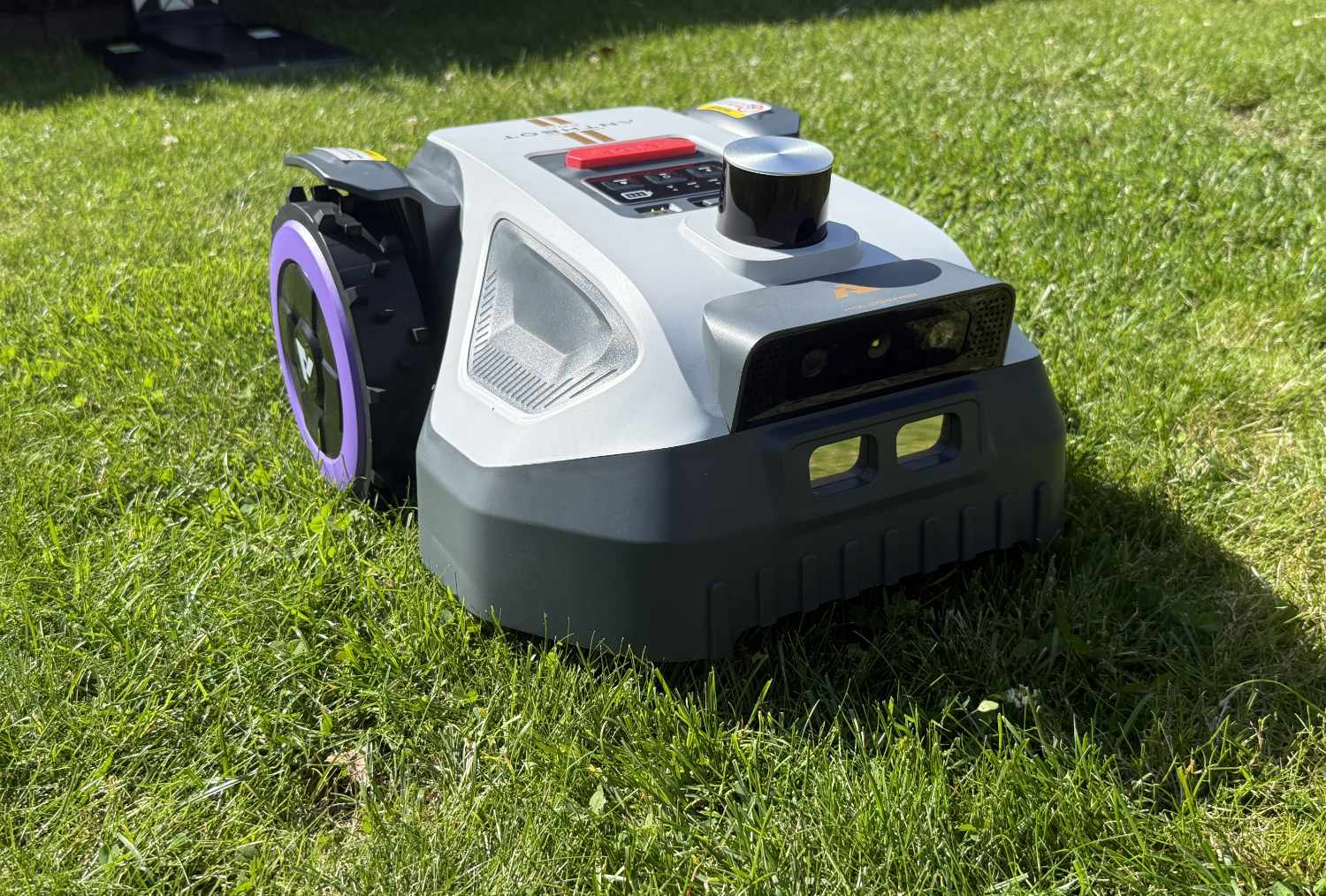
Exceptionally reliable quadruple navigation in a compact robotic lawn mower: Anthbot M9 Pro review
Compact wireless class.
The Anthbot M9 Pro relies on four technologies for exceptionally reliable navigation. Our Anthbot M9 Pro review shows just how well this works in practice. We also discuss the differences compared to the significantly more affordable Anthbot M9. Which robotic lawn mower is the better choice for whom?Marcus Schwarten (translated by Marcus Schwarten (translation supported by DeepL)) Published 🇩🇪 🇪🇸 ...
Anthbot M9 Pro review conclusion: Playing it safe
With its quadruple-navigation solution, the Anthbot M9 Pro relies on particularly reliable navigation, as it demonstrated in testing. If one technology fails or becomes inaccurate—for example, due to poor RTK reception—this is not a problem. This is particularly advantageous in challenging gardens where, for example, tall trees may interfere with the RTK signal in certain areas.
However, Anthbot charges a hefty premium for this feature. A price premium of nearly 500 euros compared to the M9—which is identical in construction apart from LiDAR—is a significant difference. While the M9 was a value pick in our test, the M9 Pro no longer deserves that distinction. This is especially true since it performed surprisingly worse than the M9 in obstacle detection and avoidance.
Based on our test findings, the M9 is the better choice. Only those who depend on redundant navigation technology or place particular value on it will be better served by the M9 Pro. Otherwise, the Anthbot M9 Pro is likely to struggle in the now highly competitive market for robotic lawn mowers designed for areas of up to 1,000 square meters.
Pros
Cons
Price and availability
In Europe, the suggested retail price for the Anthbot M9 Pro is 1,299 euros. It is available directly from the manufacturer and on Amazon, among other places, sometimes bundled with a garage at a discounted price.

A few months ago, we tested the Anthbot M9 (approx. 650 euros on Amazon). We liked this compact robotic lawn mower for lawns of up to 1,000 square meters, partly because of its reasonable MSRP of 849 euros.
With the Anthbot M9 Pro, the manufacturer recently launched a new version that is even better equipped but also significantly more expensive. Our review reveals what sets the Anthbot M9 Pro apart from the M9 and who might find it worth buying.
Anthbot M9 Pro specifications & comparison with Anthbot M9
| Feature/Model | Anthbot M9 Pro | Anthbot M9 |
|---|---|---|
| Area | 1,000 m² | 1,000 m² |
| Navigation | HoloSense Quad-Fusion Positioning | Full-Band RTK + NRTK + Dual Vision |
| Obstacle detection | 150° HDR AI Vision | 150° HDR AI Vision |
| Cutting system | Mowing disc | Mowing disc |
| Number of blades | 5 | 5 |
| Cutting width | 20 cm | 20 cm |
| Cutting height | 3–7 cm | 3–7 cm |
| Cutting-height adjustment | electric | electric |
| Gradient | 45% / 24° | 45% / 24° |
| Display | no | no |
| Battery capacity | 5 Ah/90 Wh | 5 Ah/90 Wh |
| 4G | yes | yes |
| Weight | 10 kg | 10.1 kg |
| Dimensions | 49.8 x 39.2 x 27.8 cm | 49.8 x 39.2 x 25.1 cm |
| Water resistance | IPX6 | IPX6 |
| Garage included | no | no |
| Replacement blades included | 5 | 5 |
| Color | Gray | Gray |
| MSRP | 1,299 euros | 849 euros |
| Available at | Amazon | Amazon |
Features & package contents: Adds LiDAR
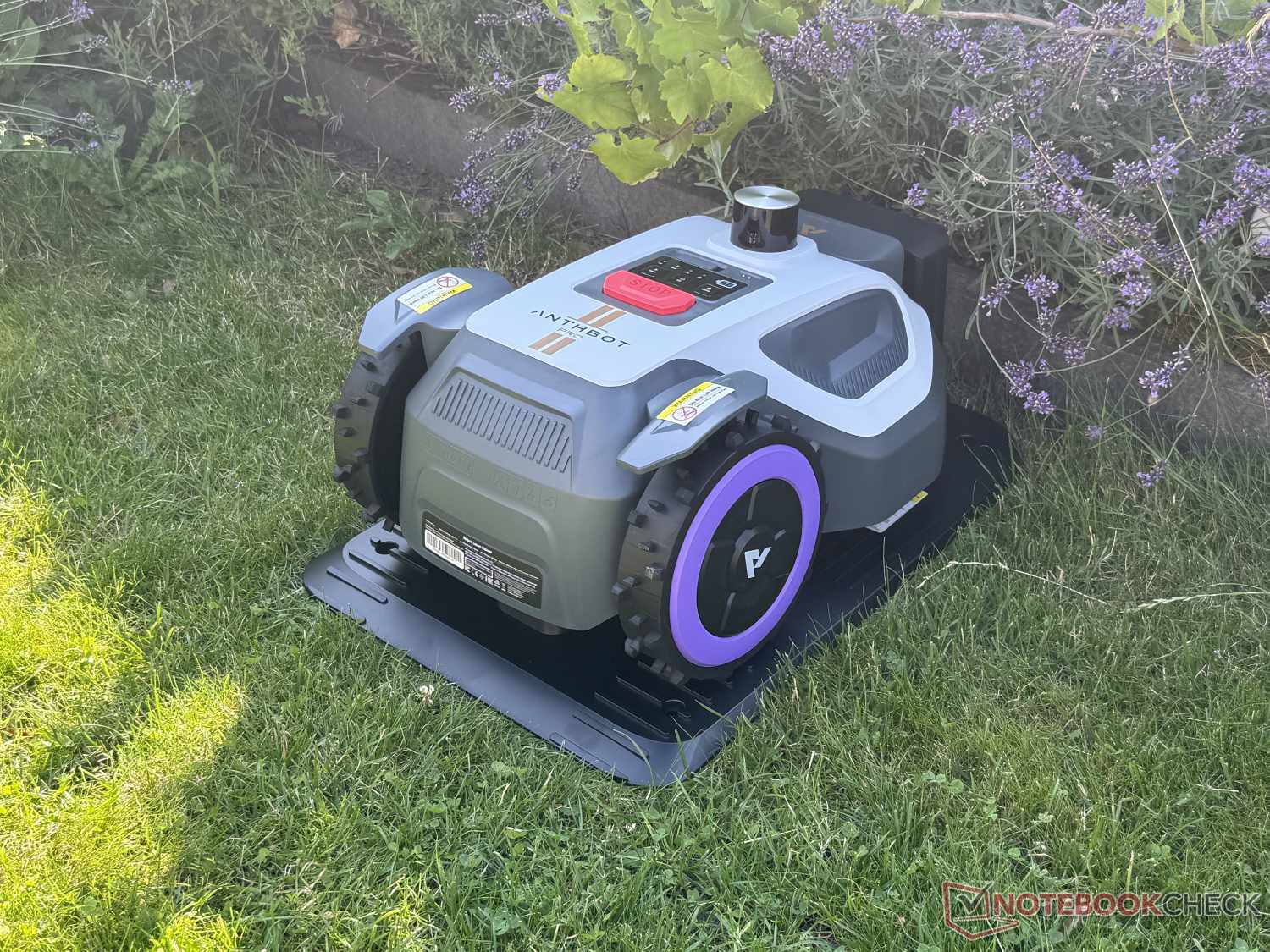
The Anthbot M9, which we have already tested, relies on RTK technology—specifically, an RTK reference station in your own yard. However, it can also work with NetRTK instead. With the M9 Pro, on the other hand, the manufacturer now also relies on LiDAR, as indicated by the small tower on top of the robotic lawn mower. This technology, primarily known from robot vacuums, can be found in many different robotic mowers in 2026, such as the Mova LiDAX Ultra, the Dreame A3 AWD Pro, the Roborock Z1 LiDAR, and the Navimow H2.
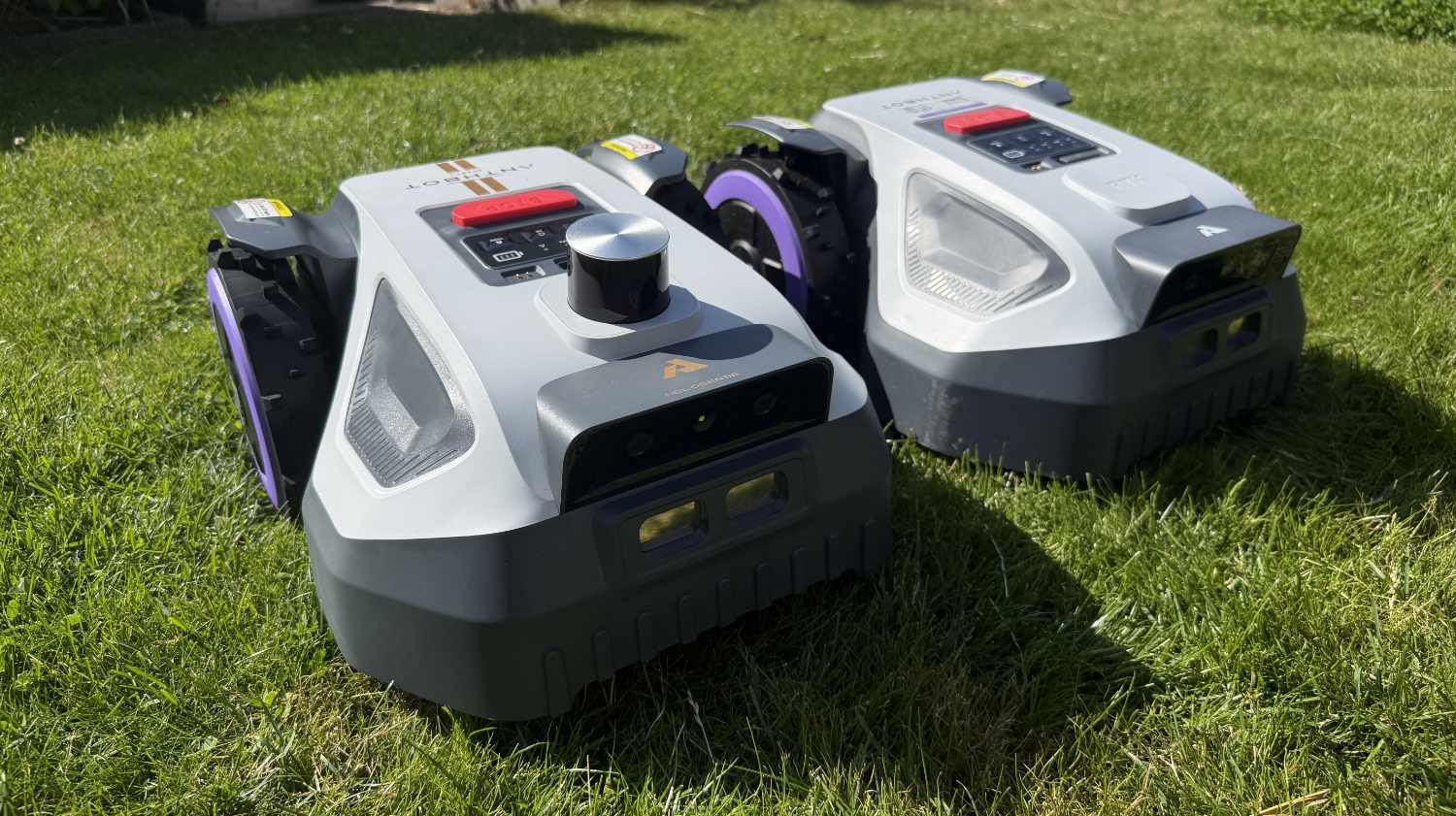
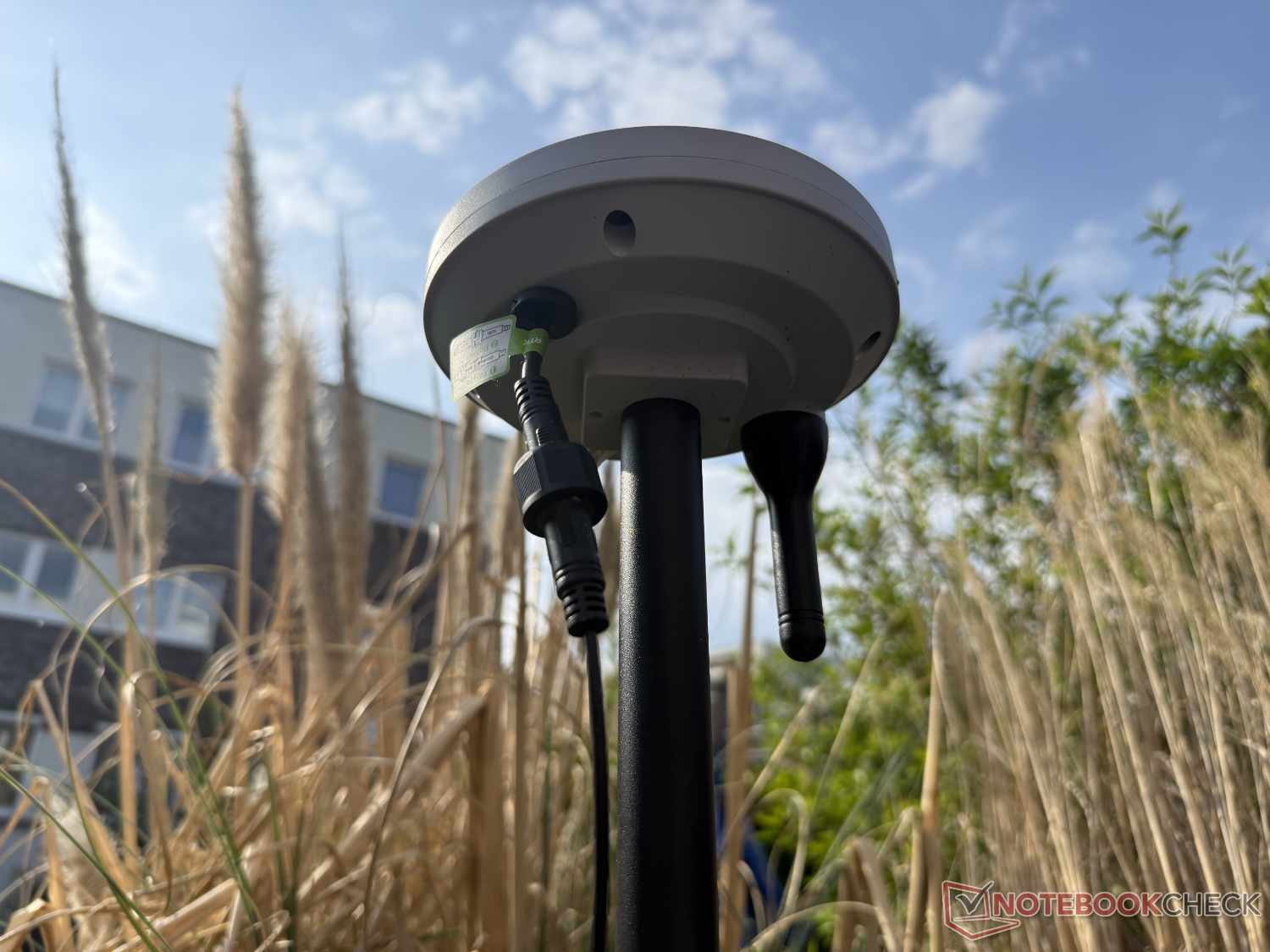
However, Anthbot does not do away with the RTK antenna. Instead, its so-called Holosense 4-in-1 navigation uses four technologies: 360° LiDAR, RTK/NetRTK, and Dual Vision. According to the manufacturer, the advantage is exceptionally high precision and reliability. We’ll reveal how well this works in practice later in our Anthbot M9 Pro review.
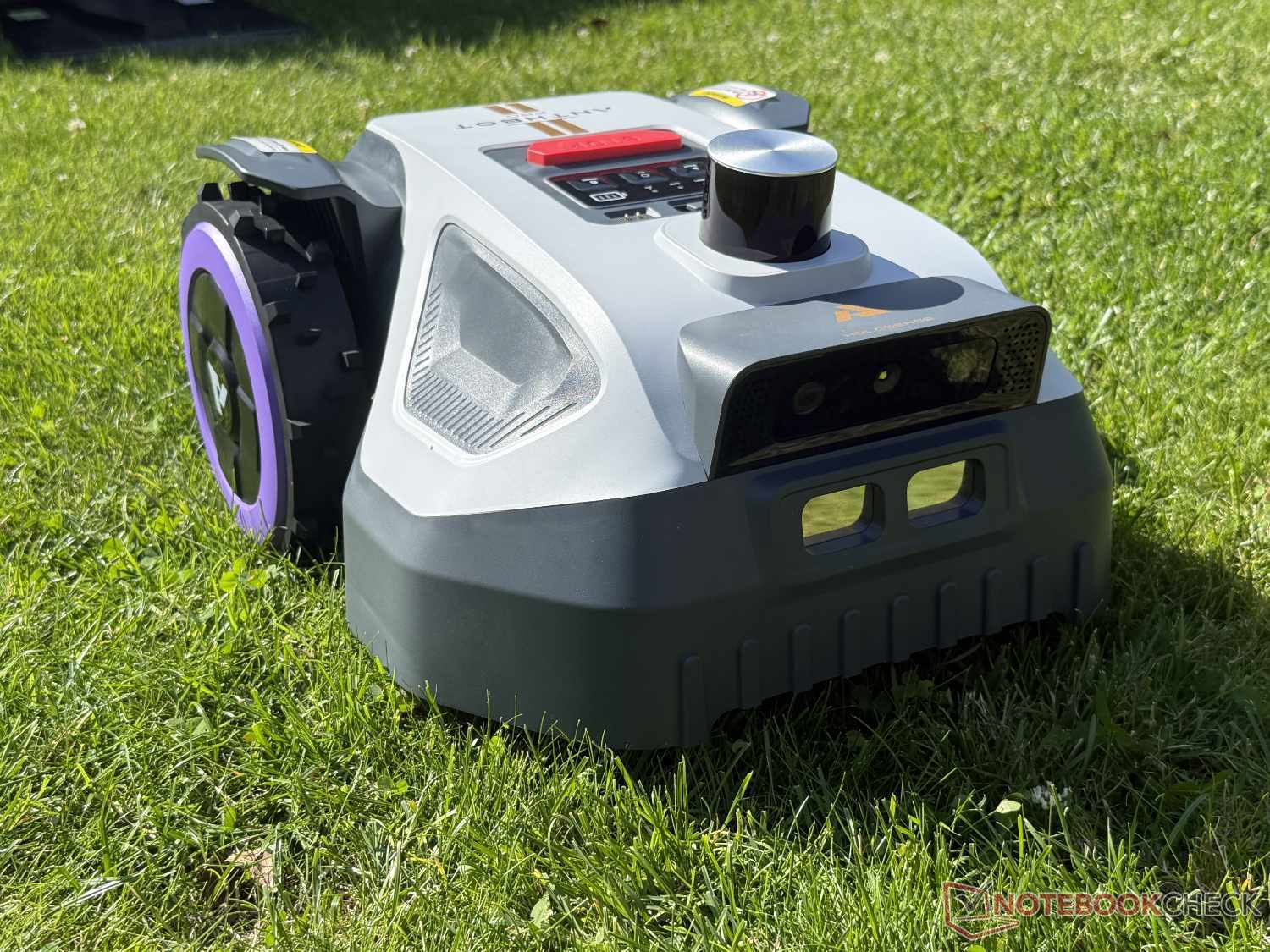
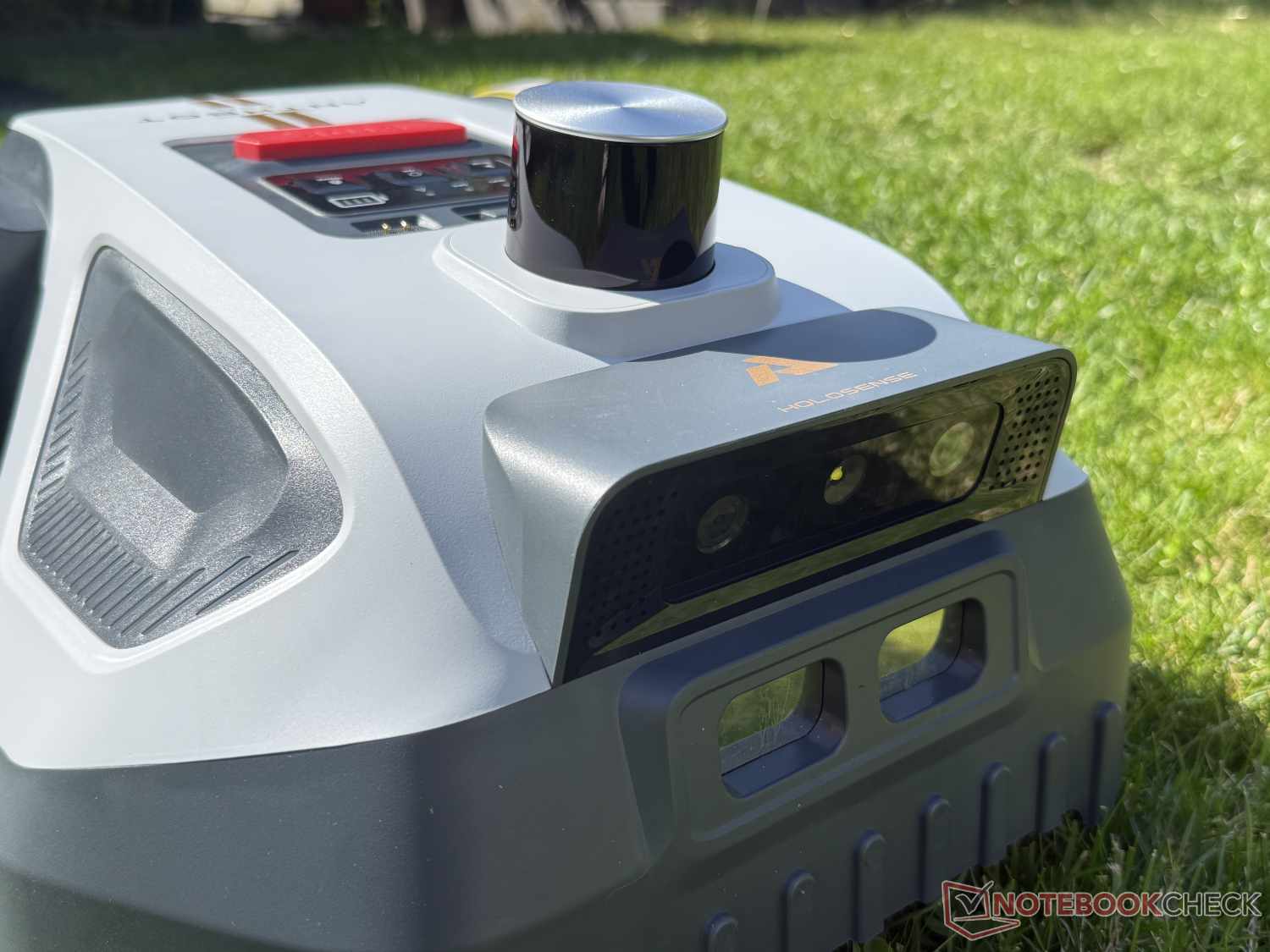
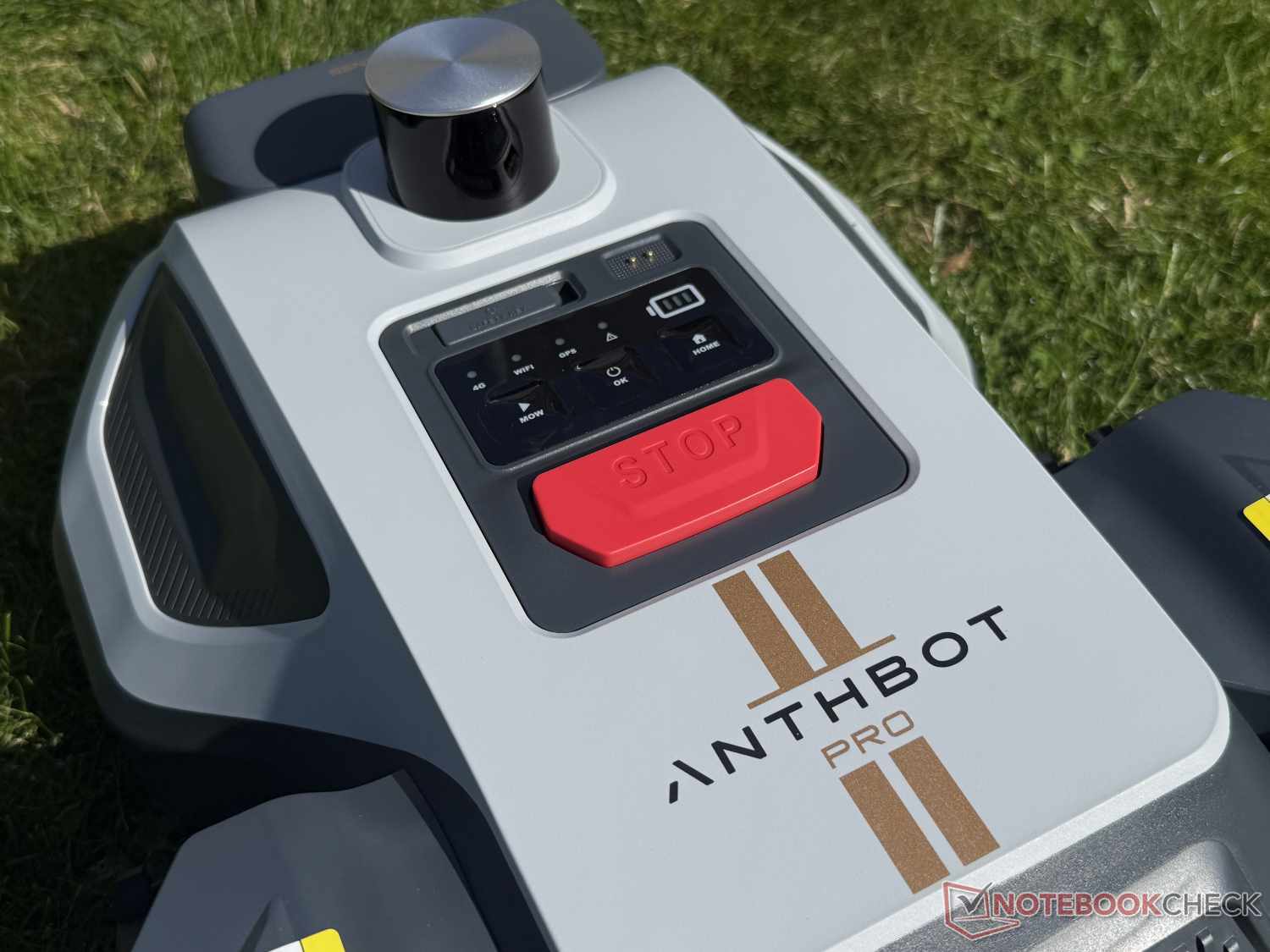
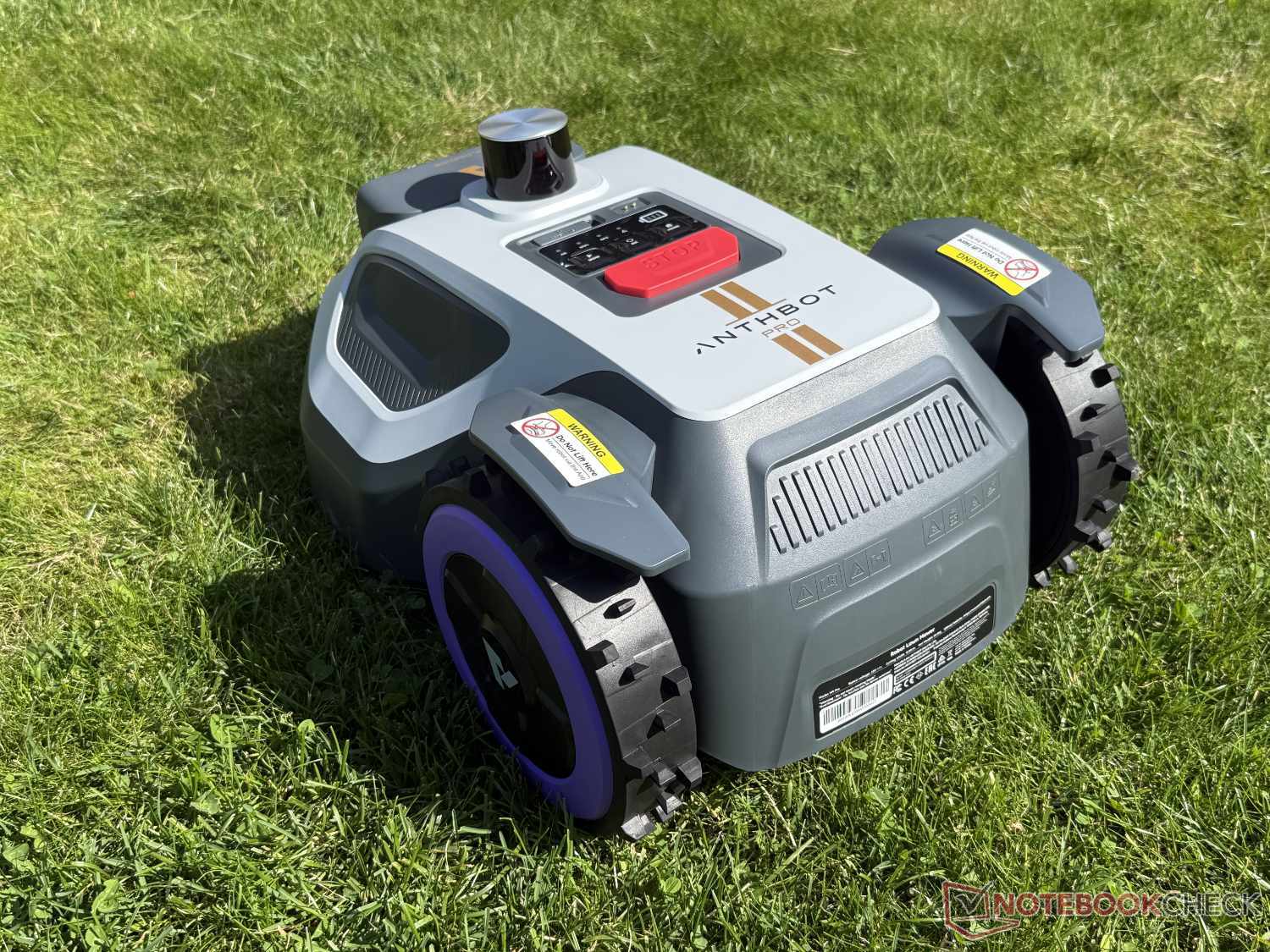
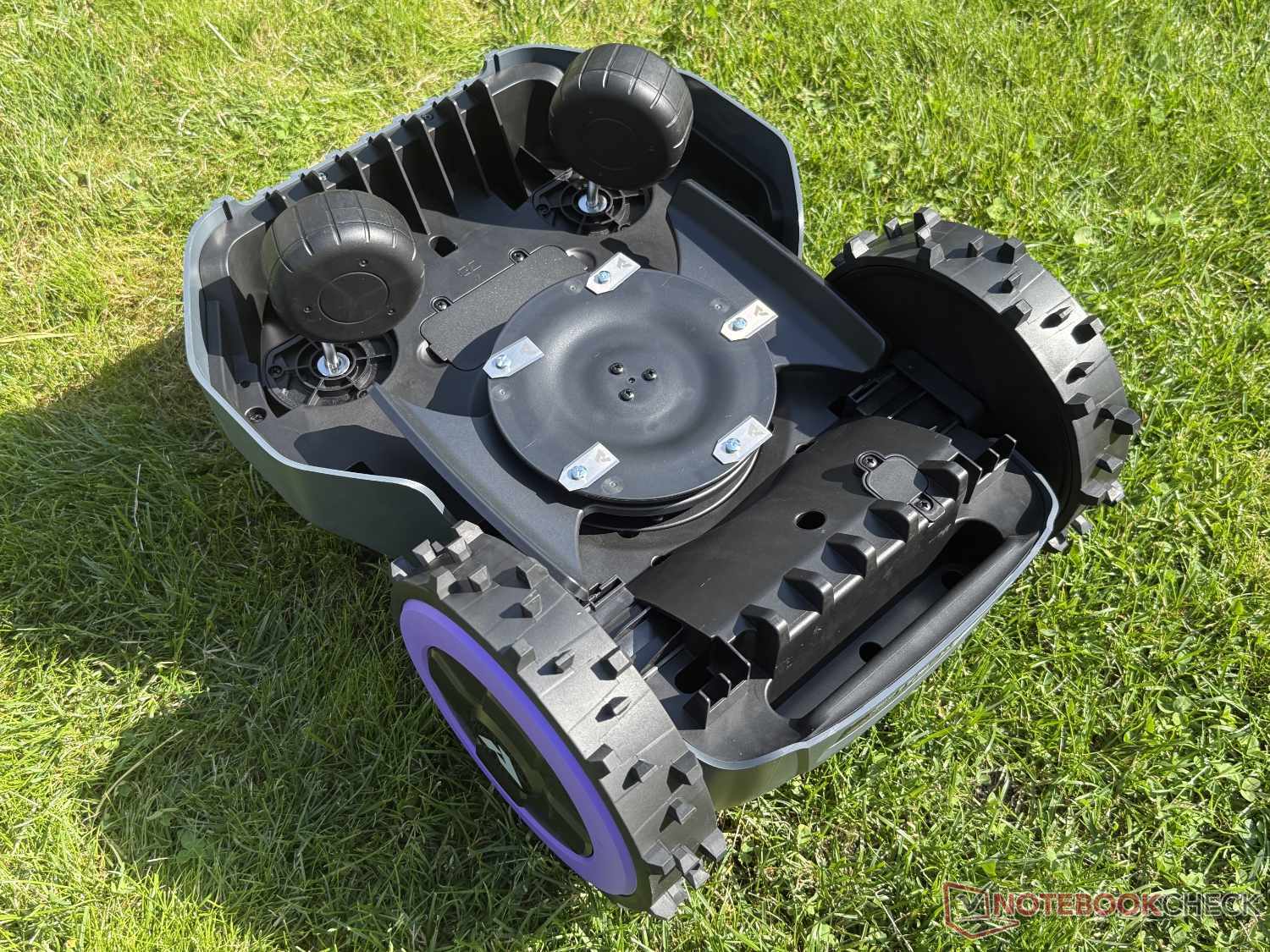
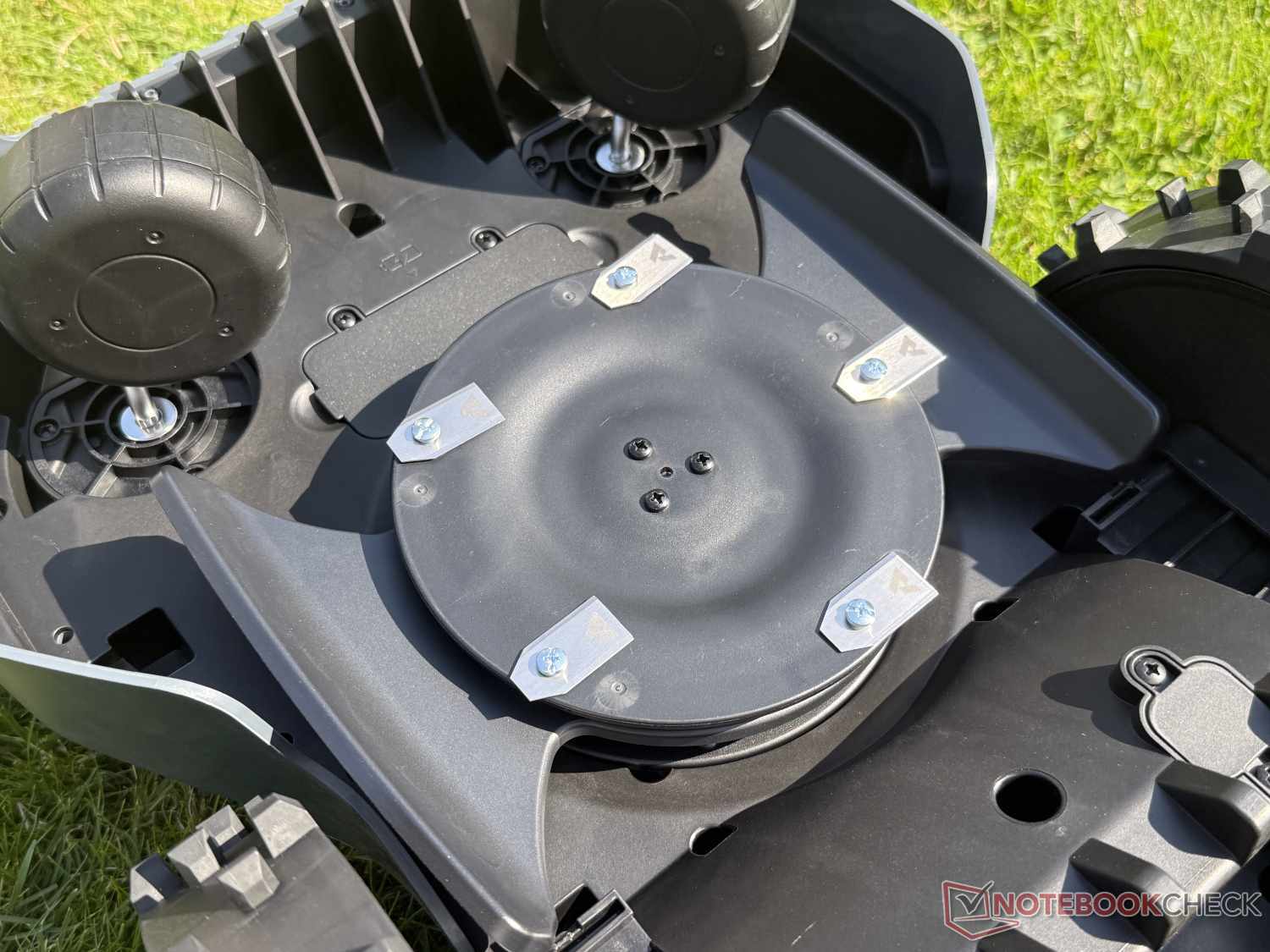
First, a few more words about the Anthbot M9 Pro’s features. We’ll keep this brief, however, and refer you to our review of the Anthbot M9 for detailed information. Aside from one year rather than three months of free 4G service, followed by an annual fee of 39.90 euros, there aren’t any major differences. Here, too, mowing is handled by a 20-cm-wide mowing disc fitted with five freely pivoting blades. The package contents are also the same, as the RTK antenna is still included despite the addition of LiDAR.
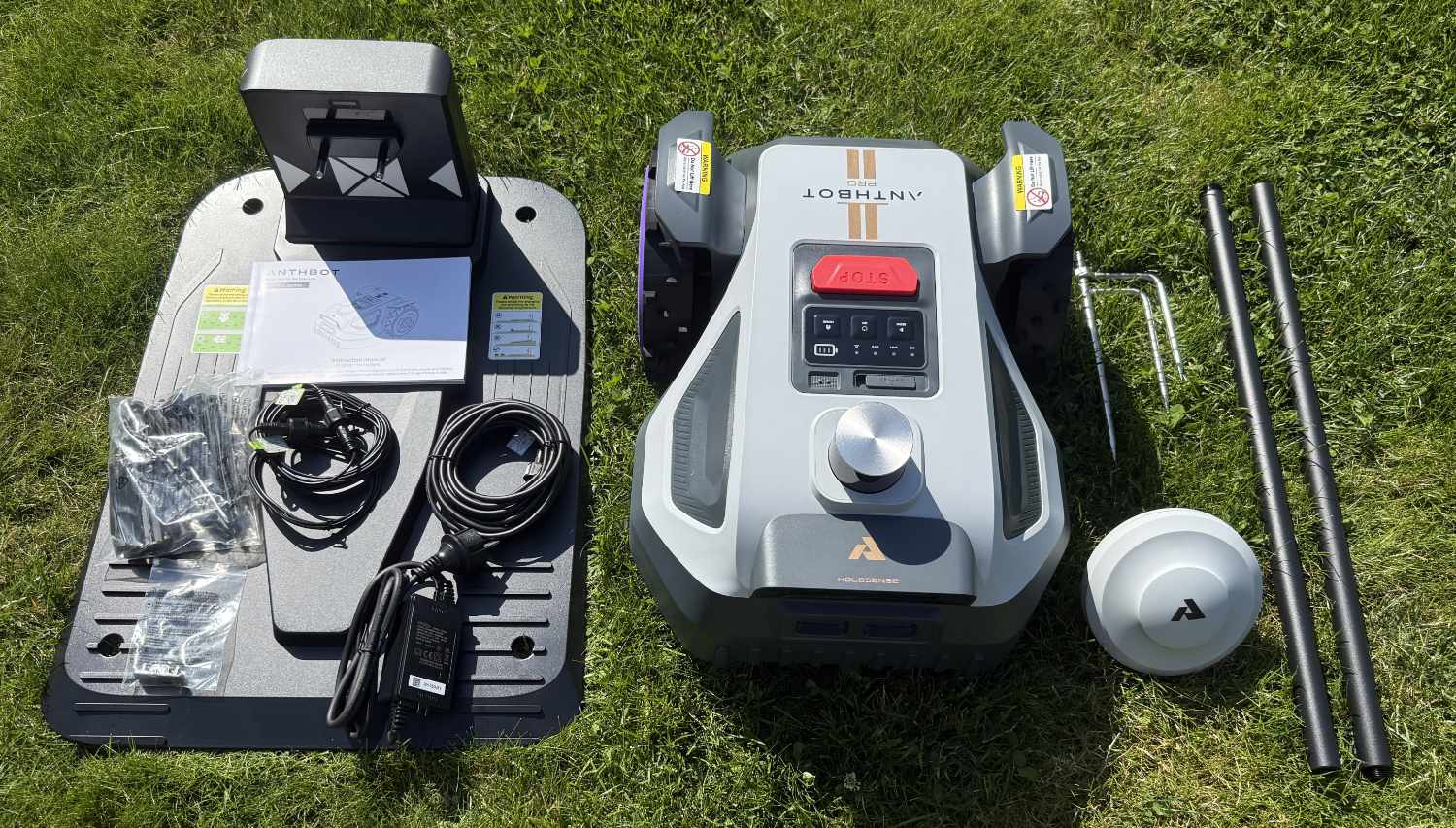
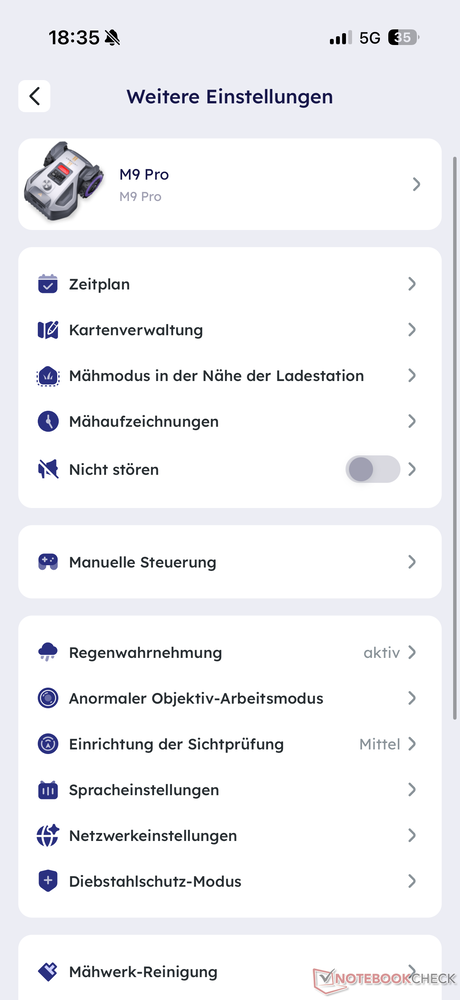
Important Note: Since the Anthbot M9 Pro presented here and the previously tested Anthbot M9 do not differ in many respects, this review focuses solely on the differences between them. For the sections “Setup & Maintenance” and “App & Operation,” please refer to our Anthbot M9 review. Among other features, the M9 Pro also offers AI-assisted automated mapping and a solid app with map management and numerous configuration options.
Navigation & obstacle detection: Generally reliable
The key difference between the Anthbot M9 Pro and the standard model is its navigation technology. By adding LiDAR, Anthbot supplements RTK/NetRTK and the two AI cameras with another technology. The benefit is easy to explain.
RTK is an established technology that ensures precise navigation in the garden. However, it relies on both the reference station and the robot having a clear view of the sky in order to receive the necessary satellite signals. This is often difficult, especially on properties with many obstacles such as buildings, trees, and the like. That’s where LiDAR models come into their own, as they do not rely on a GPS signal. However, they sometimes have limited positioning accuracy and struggle with the constantly changing environment of a garden. NetRTK, the third technology, uses cellular connectivity or Wi-Fi instead of an RTK base station, which also has its limitations.
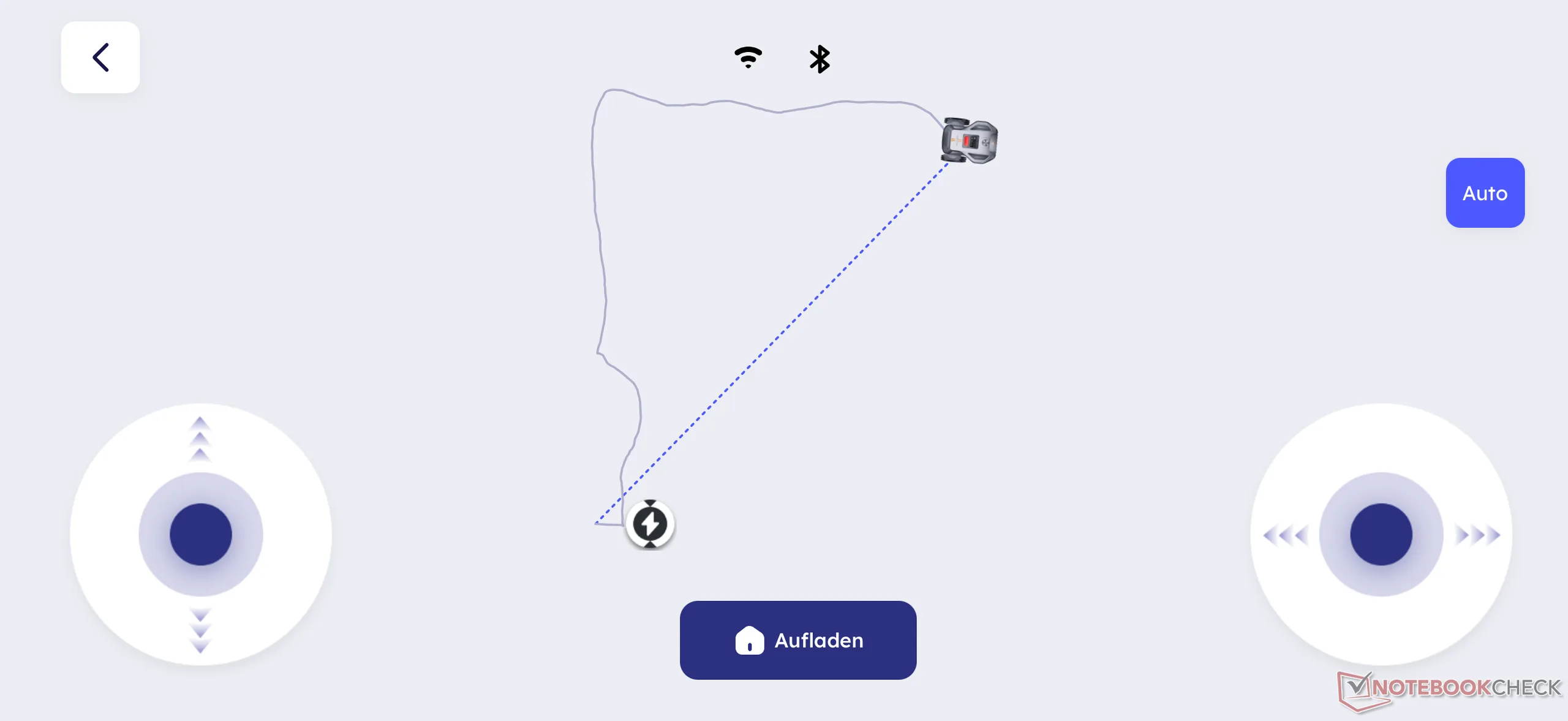
By combining these three positioning and navigation technologies with the two AI cameras on the front, Anthbot promises particularly accurate and fail-safe operation with the M9 Pro. And indeed, it demonstrated this in our test. Among other things, we unplugged the RTK antenna’s power cable while the mower was operating. This did not faze the Anthbot M9 Pro. It continued to follow its paths across the mapped lawn reliably and accurately without being thrown off course.
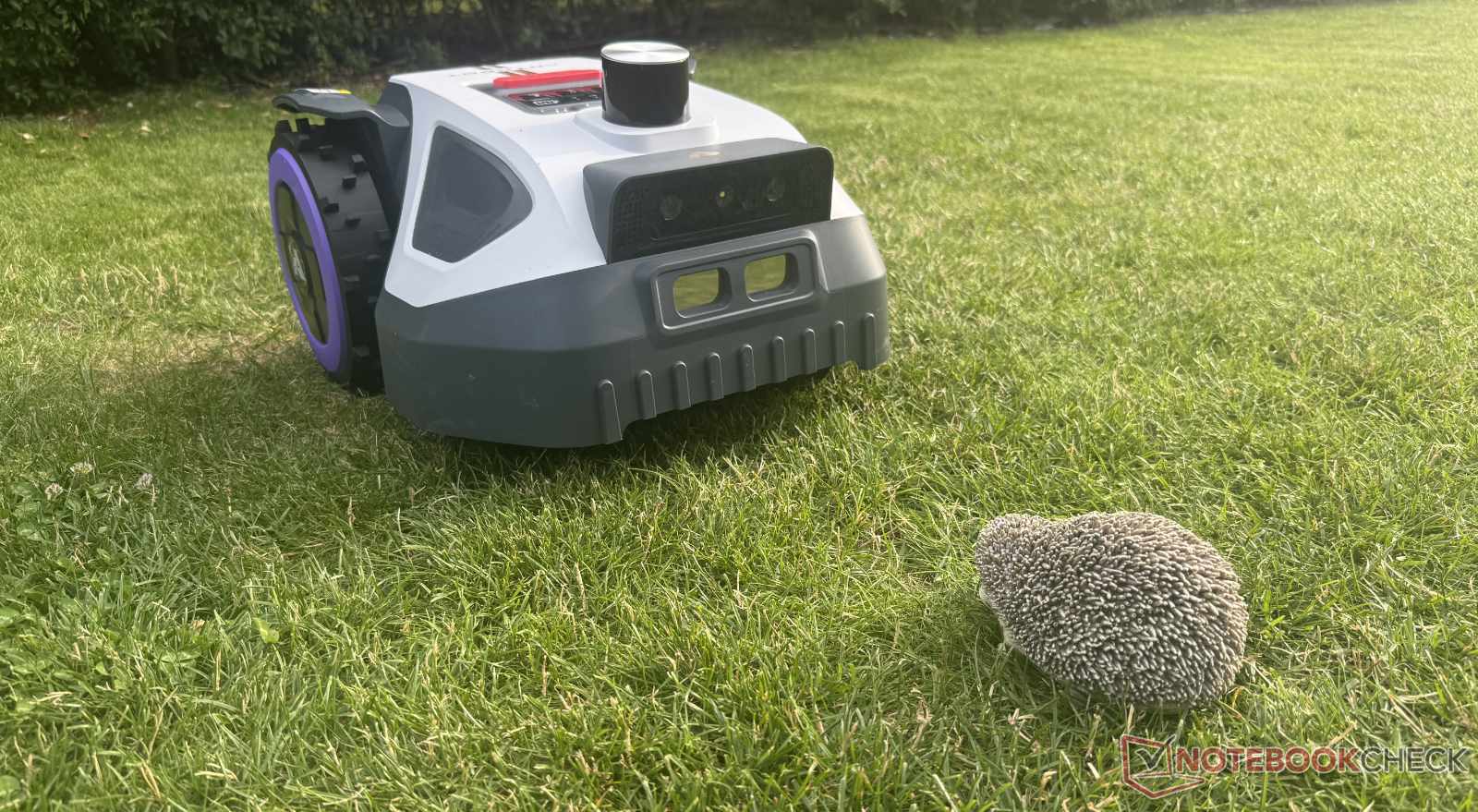
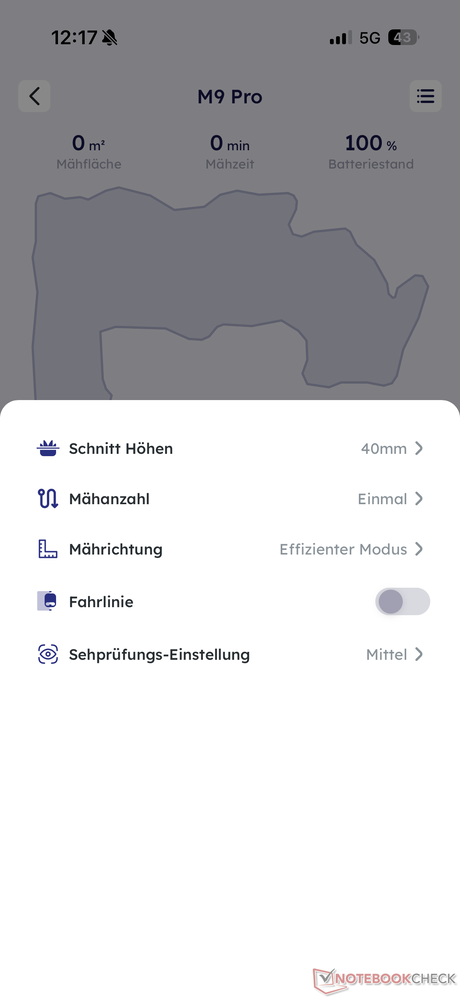
Surprisingly, however, obstacle detection and avoidance on the Anthbot M9 Pro did not work as reliably as they did when we tested the Anthbot M9. This isn’t noticeable on a cleared lawn, since larger obstacles such as plants, garden play equipment, and the like pose no problem. But even at the highest of the three sensitivity levels, the robotic mower consistently failed to detect our usual small test obstacles and instead frequently ran right over them.
Only the piece of garden hose—the longest obstacle, albeit also the lowest—was reliably “seen” by the Anthbot M9 Pro in our test. It detected a small ball measuring around 10 cm in diameter only occasionally, while our mock hedgehog and a tennis ball were always run over. We repeated this test at various times with the latest firmware version available each time—unfortunately, without any significant differences.
Area & edge mowing: No upgrade over the M9
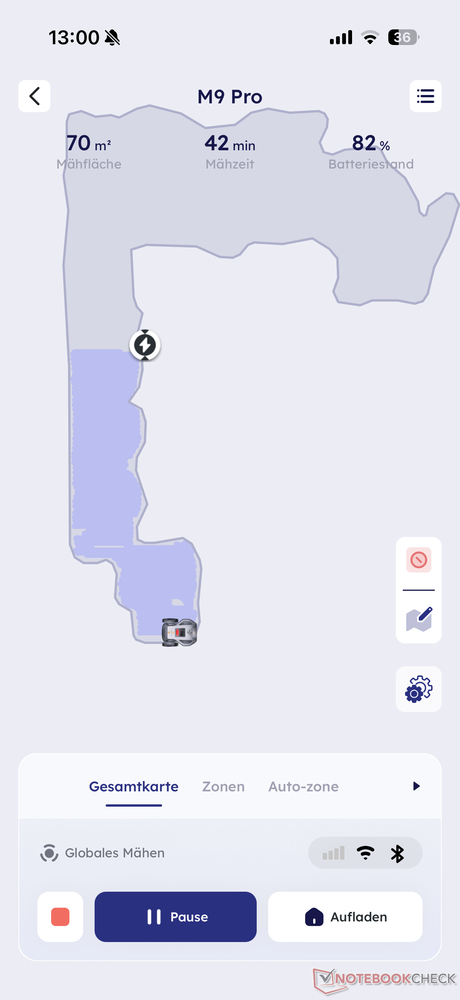
The M9 had already impressed us in testing, as it navigated reliably across our test area—which, admittedly, isn’t particularly challenging in terms of satellite reception. The M9 Pro goes one better in this test, as it can navigate even more precisely, especially in extreme situations. This results in good area coverage and, consequently, a uniformly and neatly mowed lawn, as long as the terrain isn’t too steep. Even narrower passages around 70 cm wide are generally not a problem.
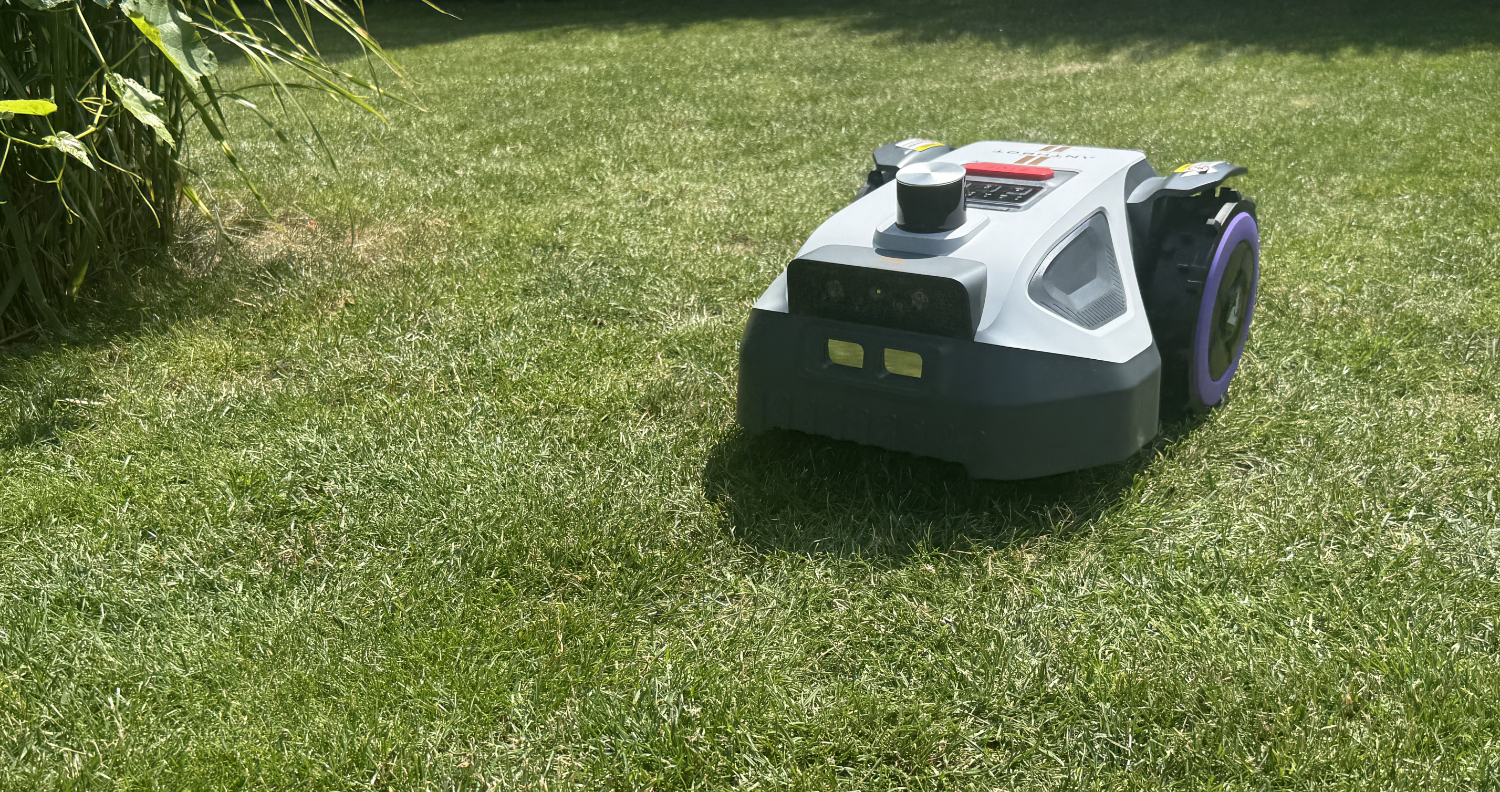
When it comes to edge mowing, however, the M9 Pro offers no upgrade. That’s a shame. Given the significant price difference, we would have liked to see an improvement in this area for the Pro model. An edge-cutting mechanism—such as the one offered as an option on the Roborock RockNeo Q1 or built into the Mammotion Luba Mini 2 AWD (approx. 1,400 euros on Amazon)—or a movable cutting system like the one on the Mova LiDAX Ultra (starting at approx. 700 euros on Amazon) would have suited the Anthbot M9 Pro well.
Anthbot loses points here in this price class. The mowing disc with its five blades is positioned centrally beneath the unit, leaving around 9 cm between it and the edge. This leaves a fairly wide strip unmowed along boundaries that are not level with the lawn, although the robot’s fairly precise navigation ensures that the strip is not significantly wider than necessary. At flush, ground-level transitions, however, edge-to-edge mowing is possible because precise boundary overhangs can be freely defined for edge areas in the map management settings.
Battery life & noise level: Exceeded the manufacturer’s specifications
The Anthbot M9 Pro’s 5 Ah (90 Wh) battery has the same capacity as the M9’s. However, the added LiDAR technology consumes additional power. As a result, on our test area, the Pro version mowed about 50 square meters less per battery charge than the M9. However, covering nearly 250 square meters in just over two hours is still a solid result—and shows greater endurance than the manufacturer specifies. The charging time is identical at just under two hours.
Due to its higher energy consumption, the Anthbot M9 Pro also uses slightly more electricity per month. In our comparison scenario of 500 square meters mowed three times a week, it still proves quite economical, with a projected monthly consumption of just over 7 kWh. The difference compared with the M9 amounts to only a few cents in additional electricity costs per month.

Based on our test, is the Anthbot M9 Pro not the right wire-free robotic lawn mower for your garden?
Then discover many more models in our 2026 Best Robotic Lawn Mowers list!
Transparency
The selection of devices to be reviewed is made by our editorial team. The test sample was provided to the author as a loan by the manufacturer or retailer for the purpose of this review. The lender had no influence on this review, nor did the manufacturer receive a copy of this review before publication. There was no obligation to publish this review. As an independent media company, Notebookcheck is not subjected to the authority of manufacturers, retailers or publishers.
 Add as a preferred source on Google


