




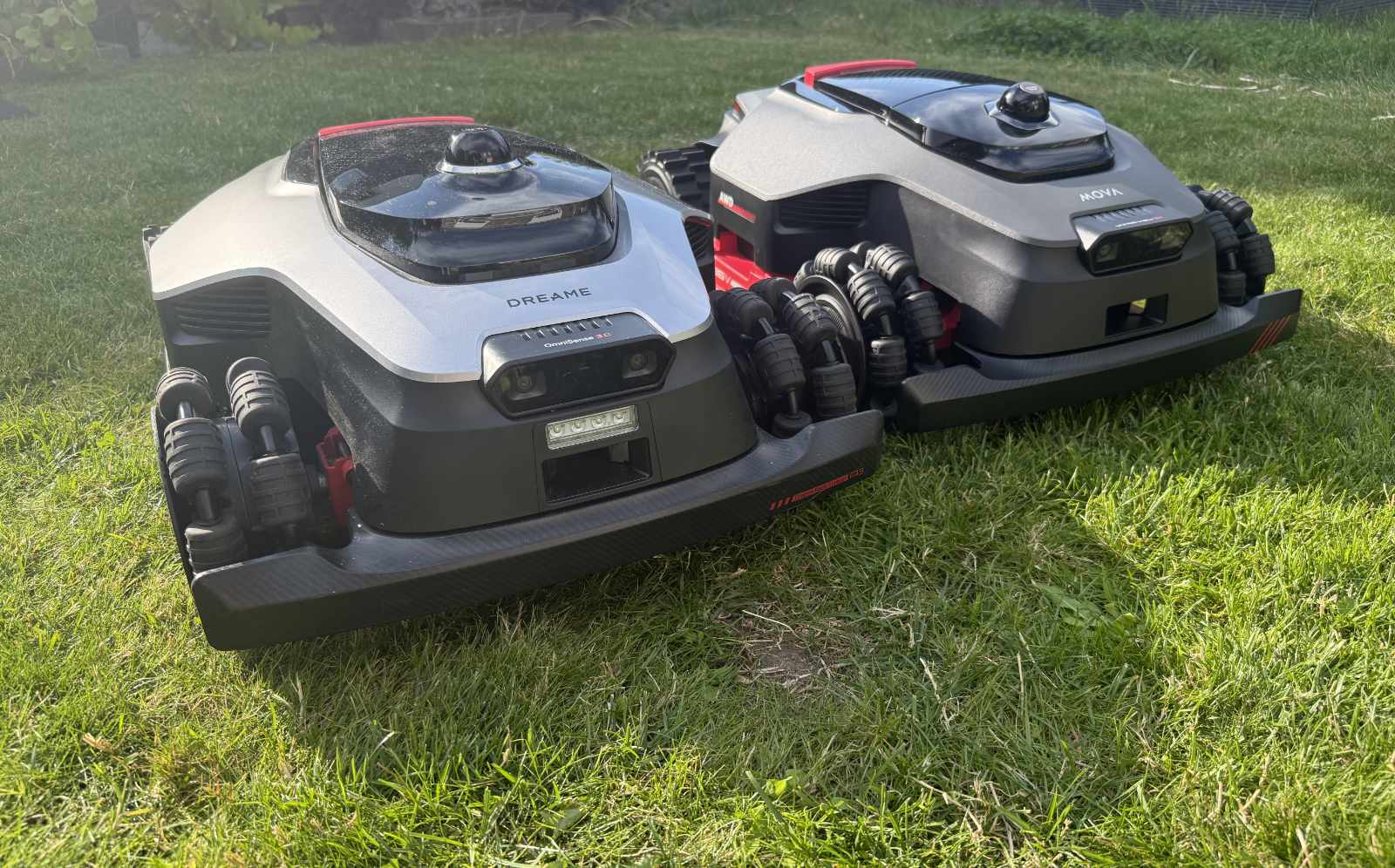
All-wheel-drive robotic lawn mowers review & comparison: Dreame A3 AWD Pro vs. Mova LiDAX Ultra AWD
Battle of the Brothers.
They look like brothers and are also technically almost identical. But what sets the two all-wheel-drive robotic mowers—the Dreame A3 AWD Pro and the Mova LiDAX Ultra AWD—apart? Our test reveals their similarities and differences, as well as how well they performed in real-world use.Marcus Schwarten (translated by Marcus Schwarten (translated by DeepL)) Published 🇩🇪 🇳🇱 ...


Dreame A3 AWD Pro vs. Mova LiDAX Ultra AWD test conclusion: Powerful all-wheel-drive robotic mowers
As expected, the Dreame A3 AWD Pro and Mova LiDAX Ultra AWD show many similarities in testing. The robotic mowers are largely identical in design. Nevertheless, they are not really competitors, as they effectively divide up the market in Europe. While Mova covers gardens of up to 2,000 square meters, Dreame targets property owners with lawns of up to 5,000 square meters.
In testing and comparison, both AWD robotic mowers made a very good impression. Among other things, they impressed with their all-wheel-drive capabilities, even if they could not quite demonstrate the promised ability to handle 80 percent gradients. Navigation and obstacle detection worked reliably for the most part. Overall, only minor issues and a few points of criticism stood out negatively in the test.
The question remains: for whom are these two robotic mower “monsters” the right choice? In addition to their coverage area—which, especially in the case of the Dreame A3 AWD Pro, is matched by only a few models on the market—they are primarily aimed at gardens with rough terrain. That is where they can really demonstrate their power. But with their dual cutting systems and high coverage per battery charge, they are also quite appealing for flat, well-maintained English-style lawns. Alternatives include, for example, the Roborock Z1 LiDAR, the Navimow X4, or the Ecovacs Goat A3000.
Pros
Cons
Price and availability
The manufacturer’s suggested retail price for the Mova LiDAX Ultra AWD starts in Europe at 1,599 euros for the smallest version, which covers up to 1,000 square meters (Mova LiDAX Ultra AWD 1000). The Mova LiDAX Ultra AWD 1600 has a recommended retail price of 1,899 euros, and the Mova LiDAX Ultra AWD 2000 has a recommended retail price of 2,199 euros.
The Dreame A3 AWD Pro 3500 has a suggested retail price of 2,599 euros, while the Dreame A3 AWD Pro 5000 is priced at 2,999 euros. These models are available directly from the manufacturers as well as from various retailers such as Amazon, usually at significantly lower prices.

Table of Contents
- Dreame A3 AWD Pro vs. Mova LiDAX Ultra AWD test conclusion: Powerful all-wheel-drive robotic mowers
- Features & what’s included: The biggest difference is the size of the mowing area
- Setup & maintenance: Automatic mapping if desired
- App & usability: Nearly identical apps
- Navigation & obstacle detection: Both AWD robotic mowers rely on LiDAR
- Area & edge mowing: Adjustable dual cutting decks
- Runtime & noise level: Mows more than 500 m² per battery charge
It’s no secret that Dreame and Mova are closely linked. This is also evident from their many very similar products. In the case of robotic lawn mowers, for example, these include the two all-wheel-drive models, the Dreame A3 AWD Pro and the Mova LiDAX Ultra AWD, which share more than just a visual resemblance. Our test and comparison of the two AWD robotic lawn mowers reveals exactly what those similarities are—and what differences still exist.
Specifications: Dreame A3 AWD Pro & Mova LiDAX Ultra AWD
| Feature/Model | Dreame A3 AWD Pro 3500 / 5000 | Mova LiDAX Ultra AWD 1000 / 1600 / 2000 |
|---|---|---|
| Coverage | 3,500 / 5,000 m² | 1,000 / 1,600 / 2,000 m² |
| Navigation and Obstacle Detection | 360° 3D LiDAR + AI Dual Vision | 360° 3D LiDAR + AI Dual Vision |
| Mowing System | Dual mowing system with EdgeMaster 2.0 | Dual mowing system with UltraTrim 2.0 |
| Number of blades | 6 | 12 |
| Cutting width | 40 cm | 40 cm |
| Cutting height | 3–10 cm | 3–10 cm |
| Cutting height adjustment | electric | electric |
| Gradient | 80% / 38.7° | 80% / 38.7° |
| Display | yes | yes |
| Battery capacity | 7.5 / 10 Ah | 7.5 / 7.5 / 7.5 Ah |
| 4G | yes | yes |
| Weight | 23.9 kg | 23.6 kg |
| Dimensions | 74.0 x 53.2 x 32.5 cm | 74.0 x 53.2 x 32.1 cm |
| Water resistance | IPX6 | IPX6 |
| Garage included | No | No |
| Replacement blades included | 18 | 36 |
| Color | Silver | Gray |
| MSRP | 2,599 euros / 2,999 euros | 1,599 euros / 1,899 euros / 2,199 euros |
Features & what’s included: The biggest difference is the size of the mowing area
Aside from minor differences, the Dreame A3 AWD Pro and the Mova LiDAX Ultra AWD are very similar. They also share many features—but there is one key difference: Mova’s all-wheel-drive robotic mower comes in three models designed for areas of up to 1,000, 1,600, and 2,000 square meters. Dreame’s A3 AWD, on the other hand, can handle up to 3,500 or 5,000 square meters. Thus, the two manufacturers have taken a clever approach: While Mova targets medium-sized gardens, Dreame offers the premium solution for even larger properties.
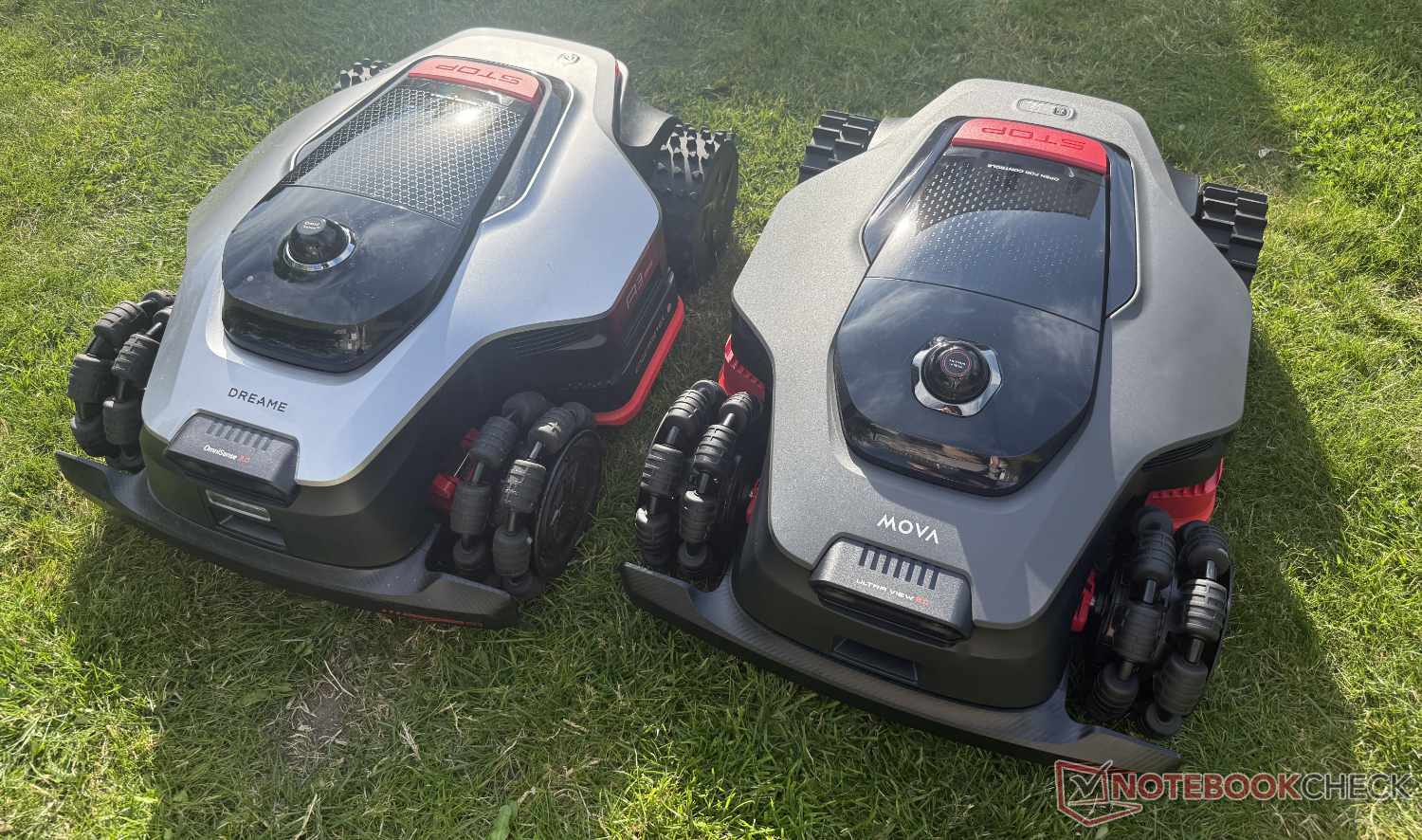
Both models are well equipped for rough terrain, thanks not only to their all-wheel drive. Gradients of up to 80% (38.7°) and obstacles up to about 6 cm should also pose no problems for these two off-road robotic mowers—or so the manufacturers claim. We’ll discuss how well this works in practice later in this test and comparison.
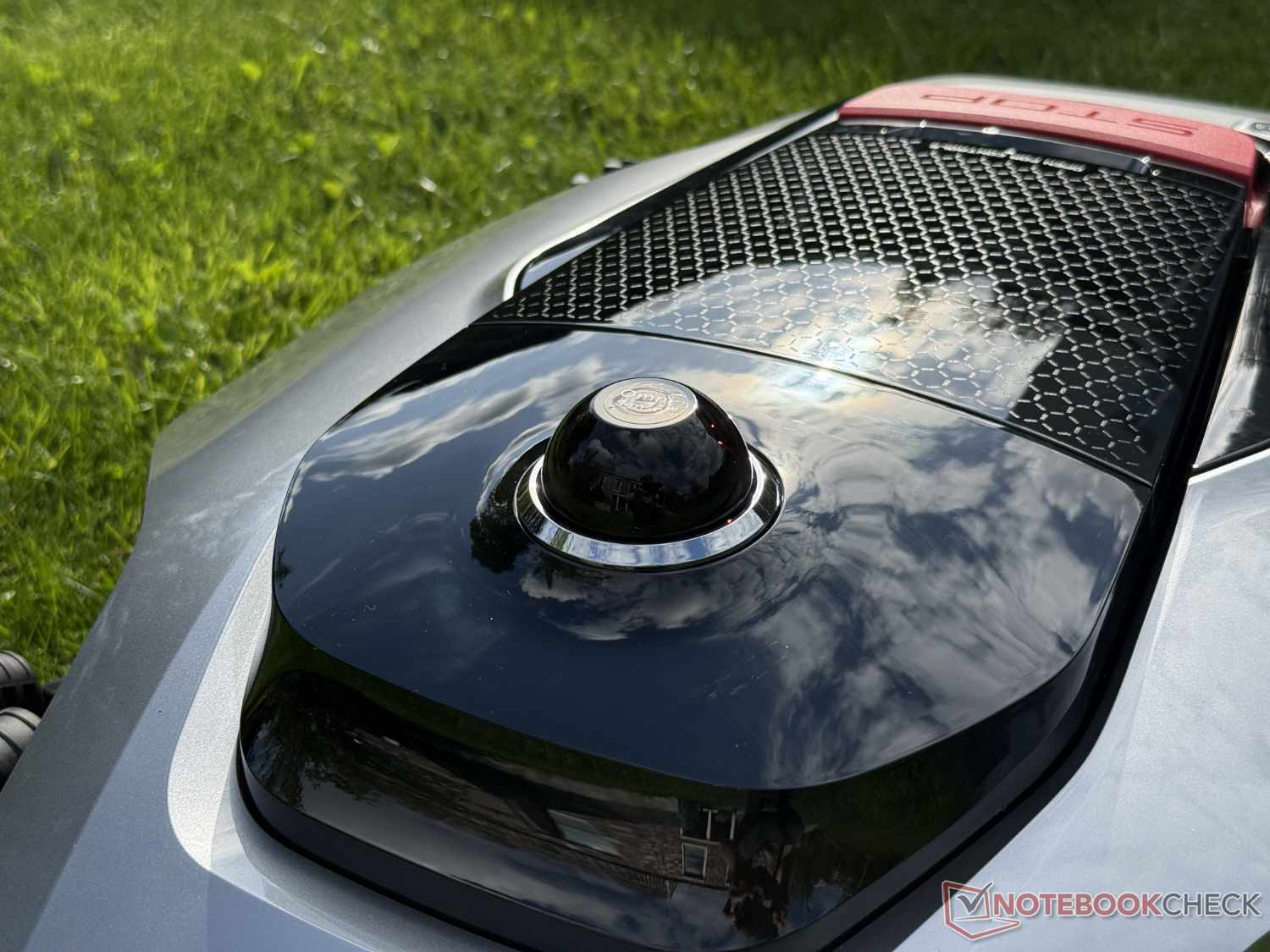
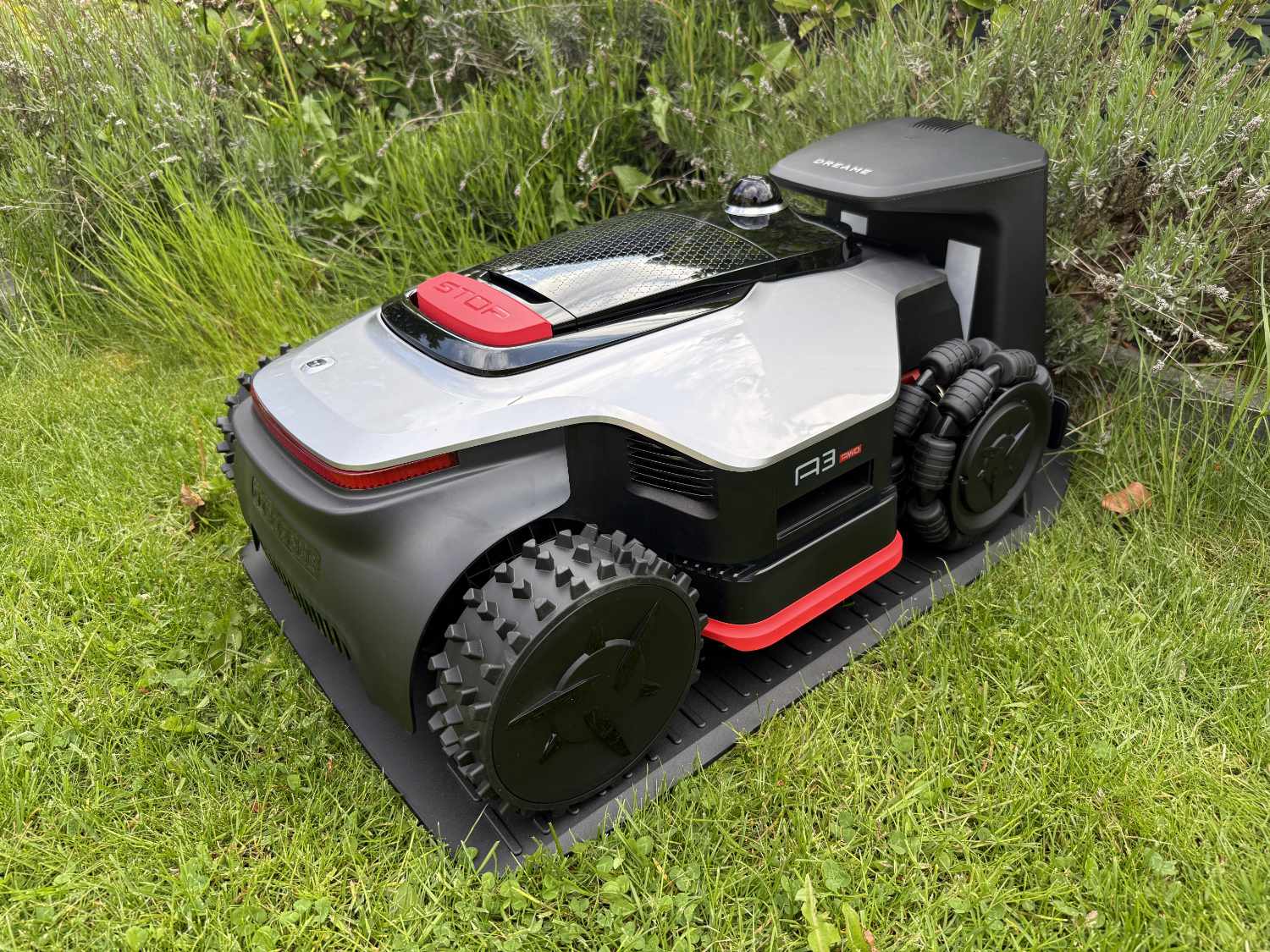
First, a few more details on equipment and features. For navigation and obstacle detection, both the A3 from Dreame and the LiDAX Ultra AWD from Mova use 360-degree LiDAR on top and an AI dual-camera system at the front. This means they do not require an RTK antenna. One minor difference: The A3 has an LED headlight installed below the camera module for potential use in the dark, though we do not recommend doing so. The Mova LiDAX Ultra AWD does not have this feature.
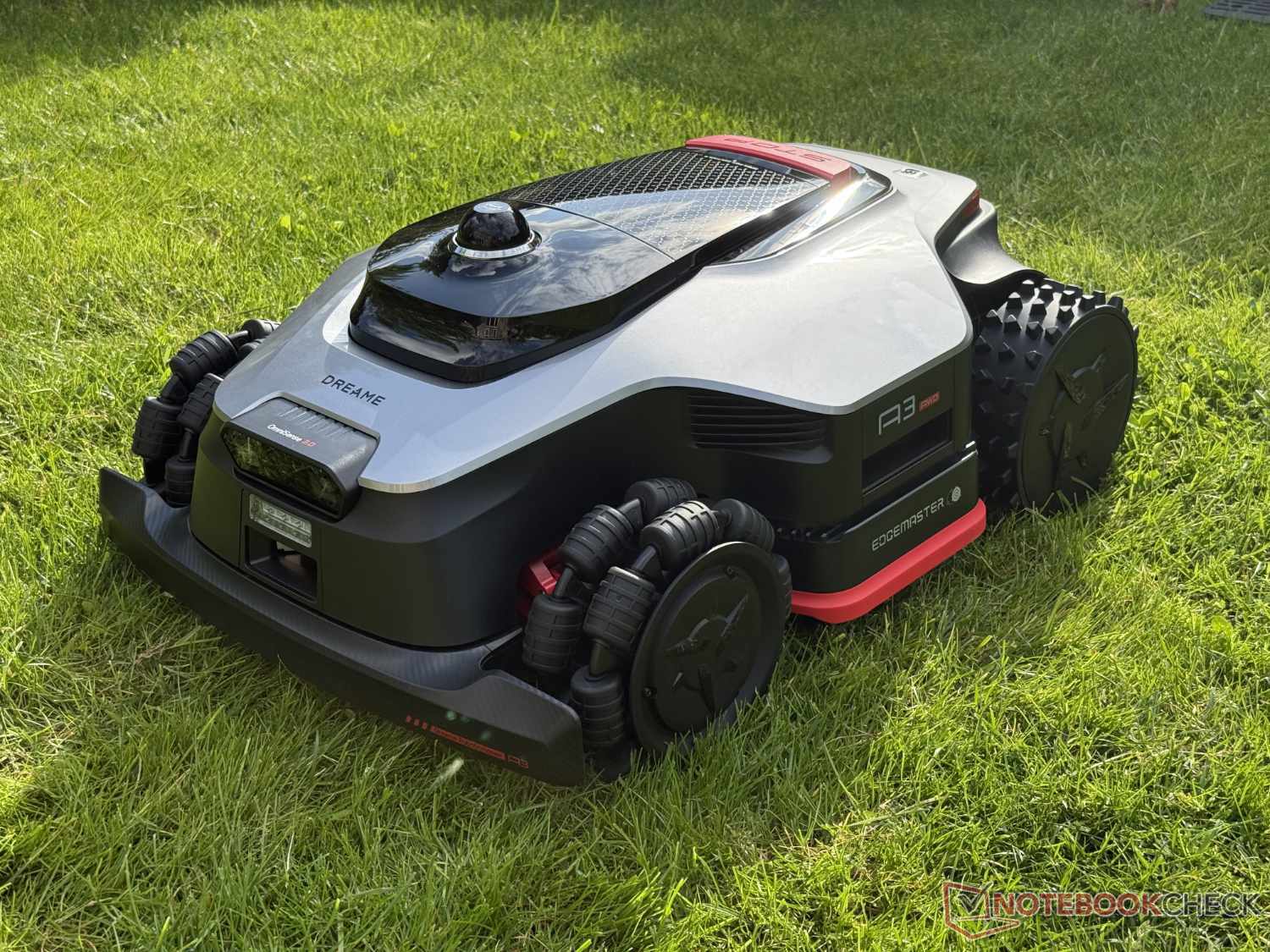
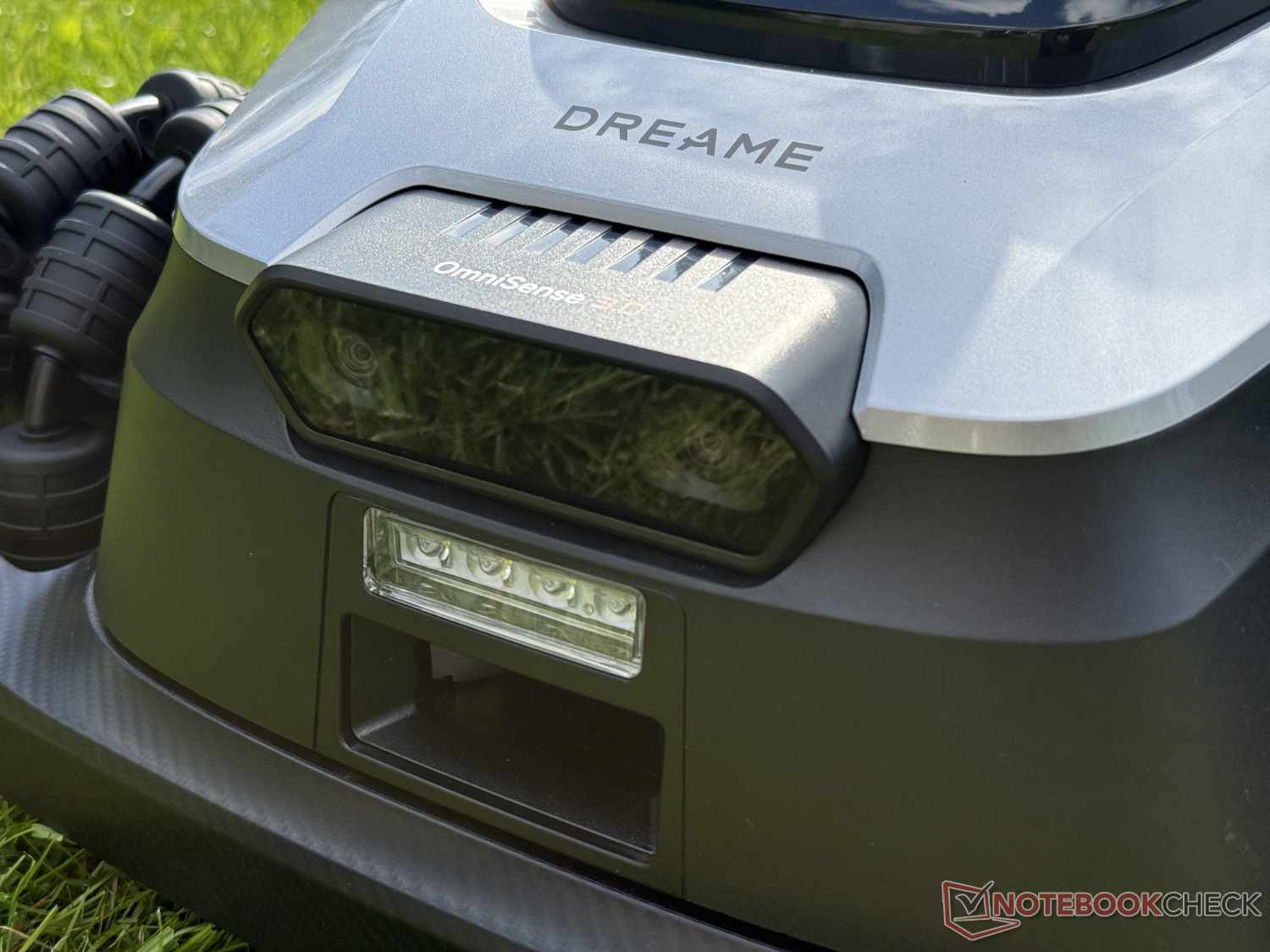
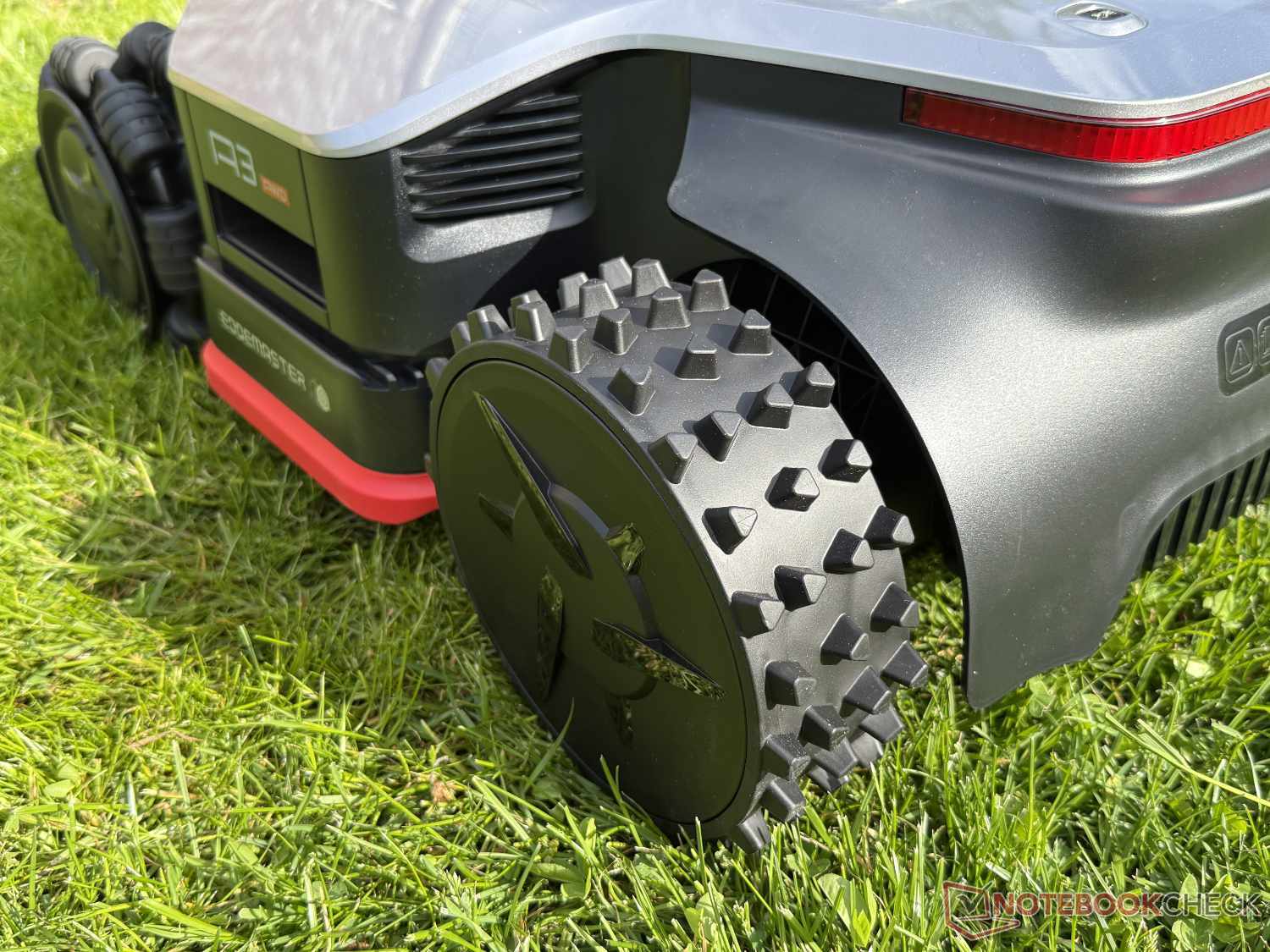
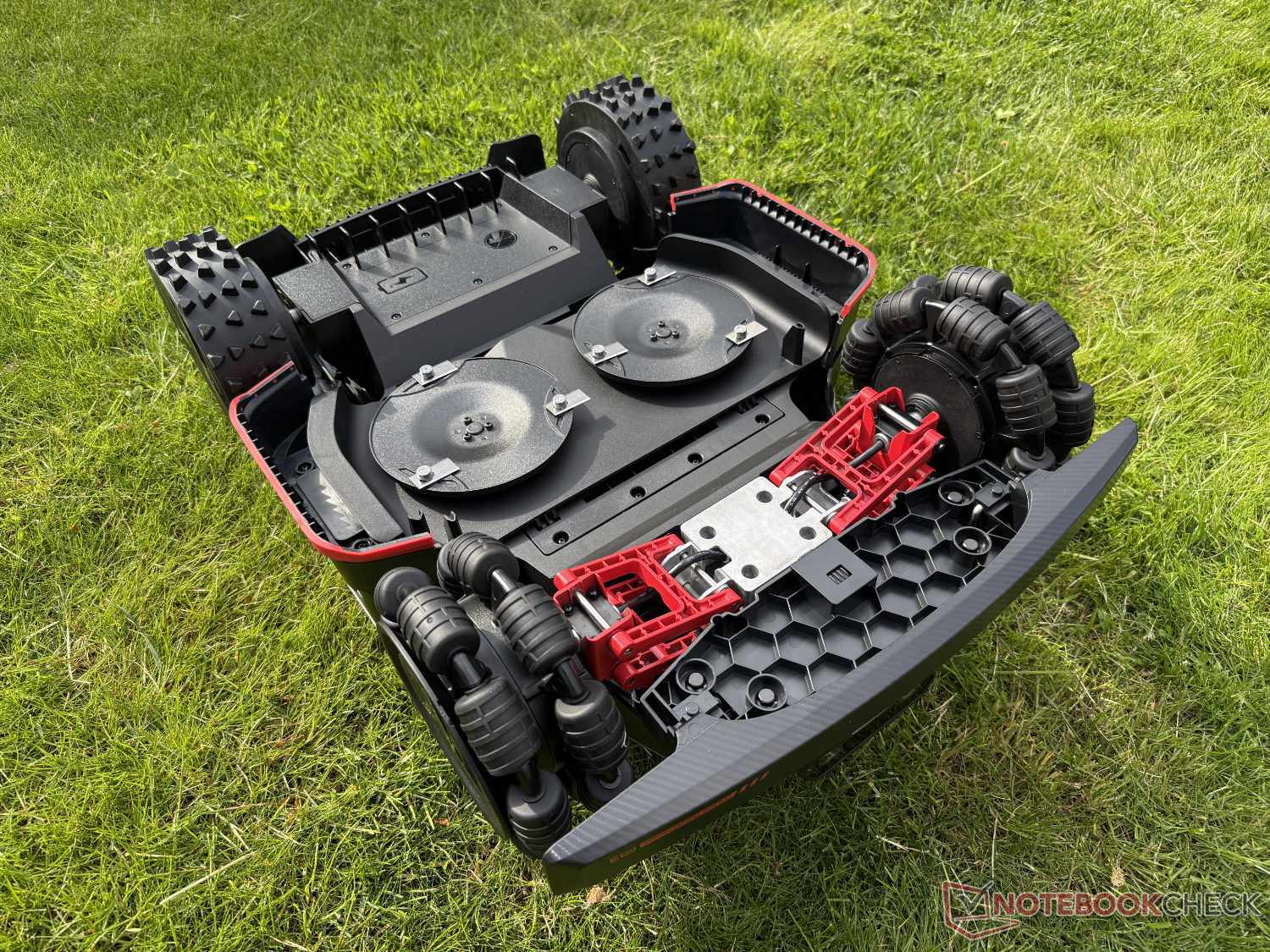
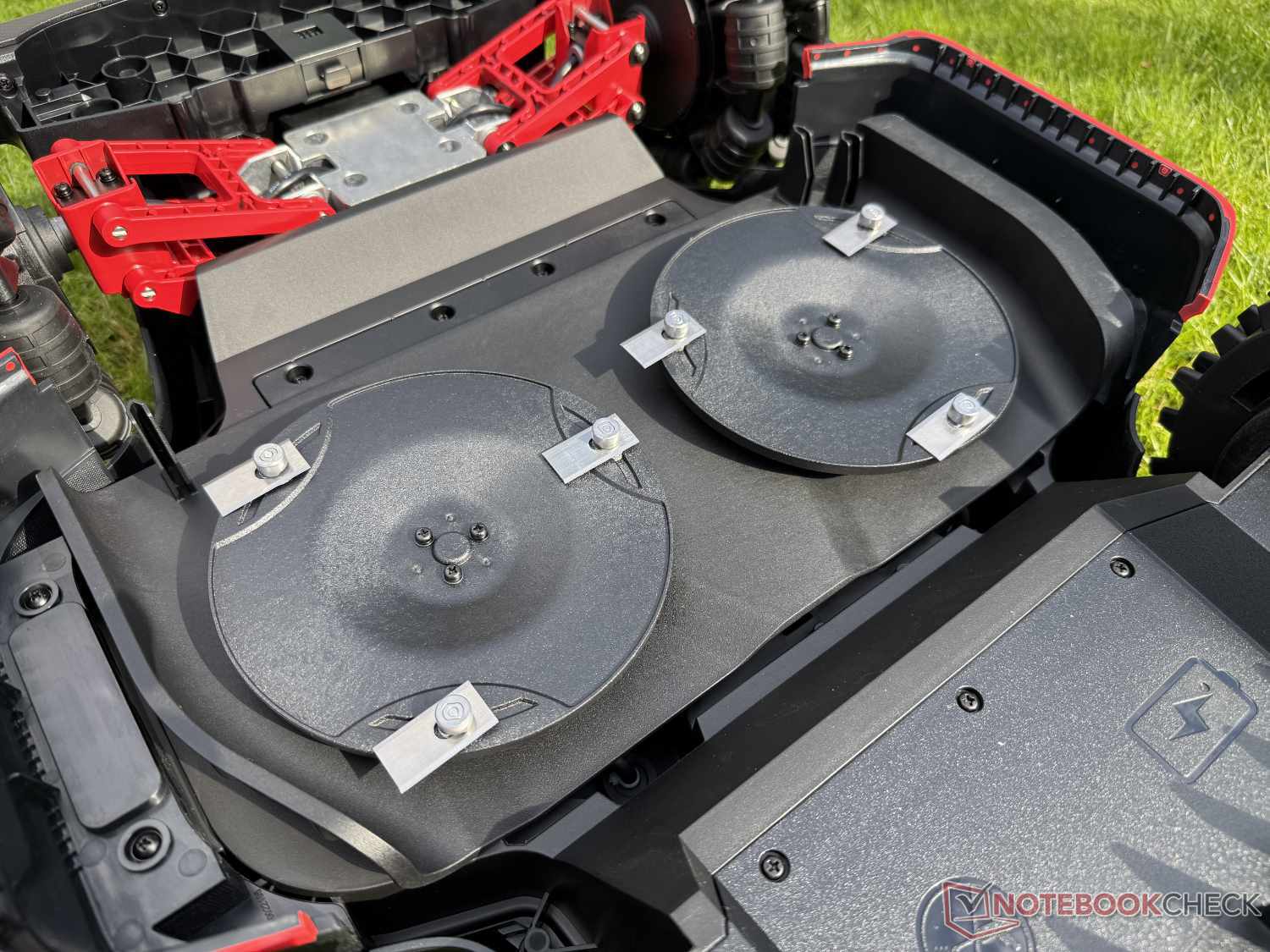
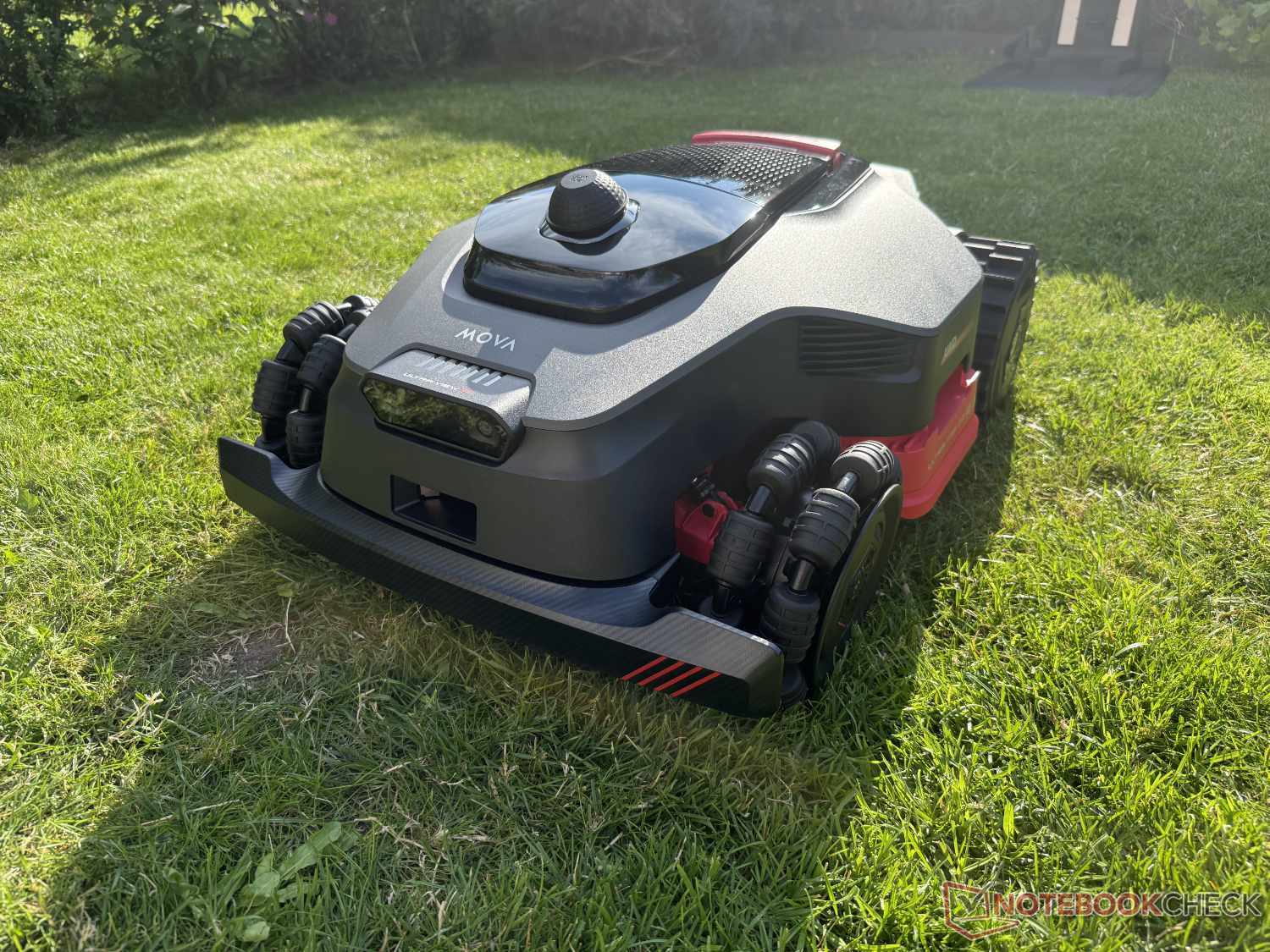
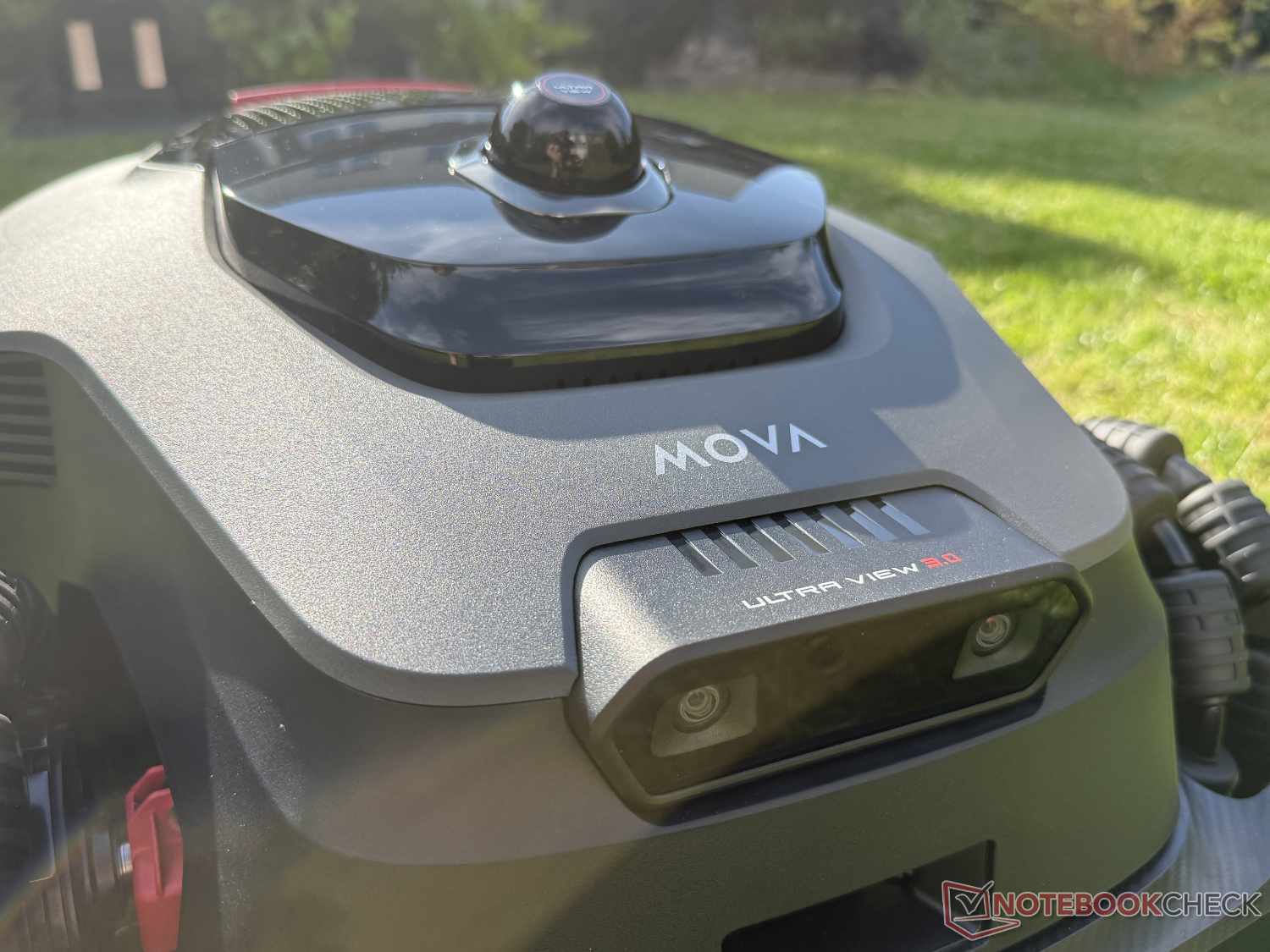
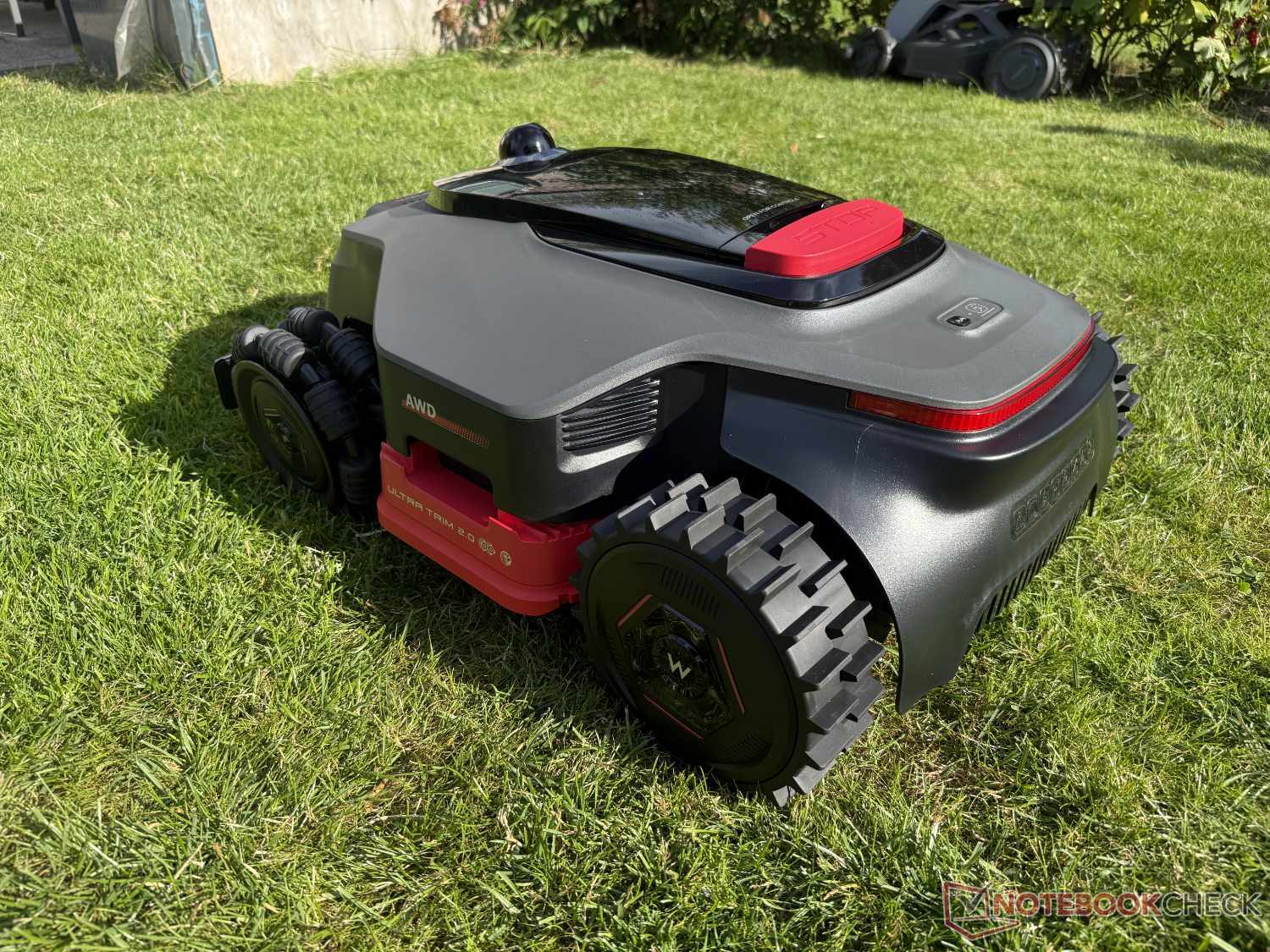
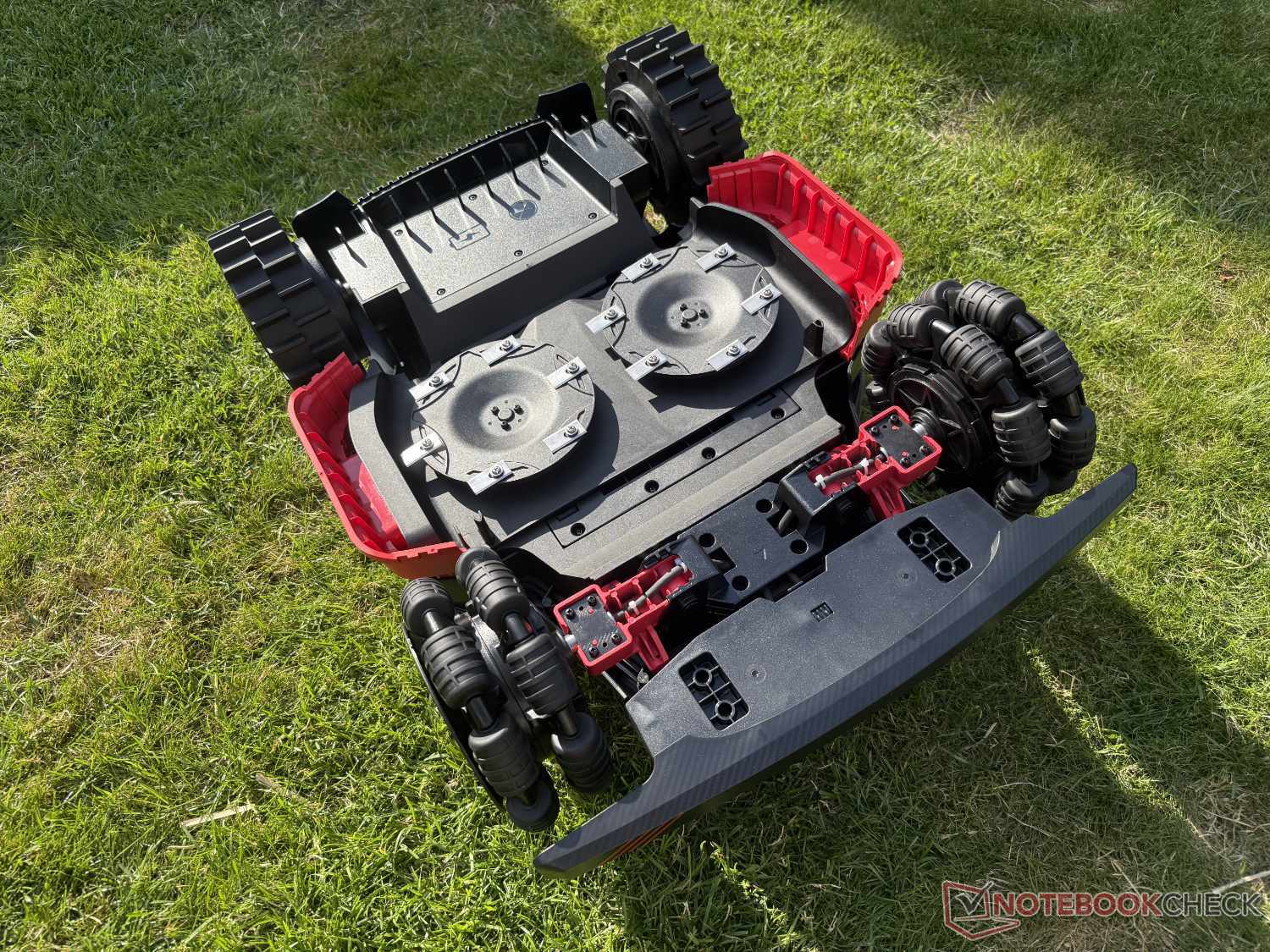
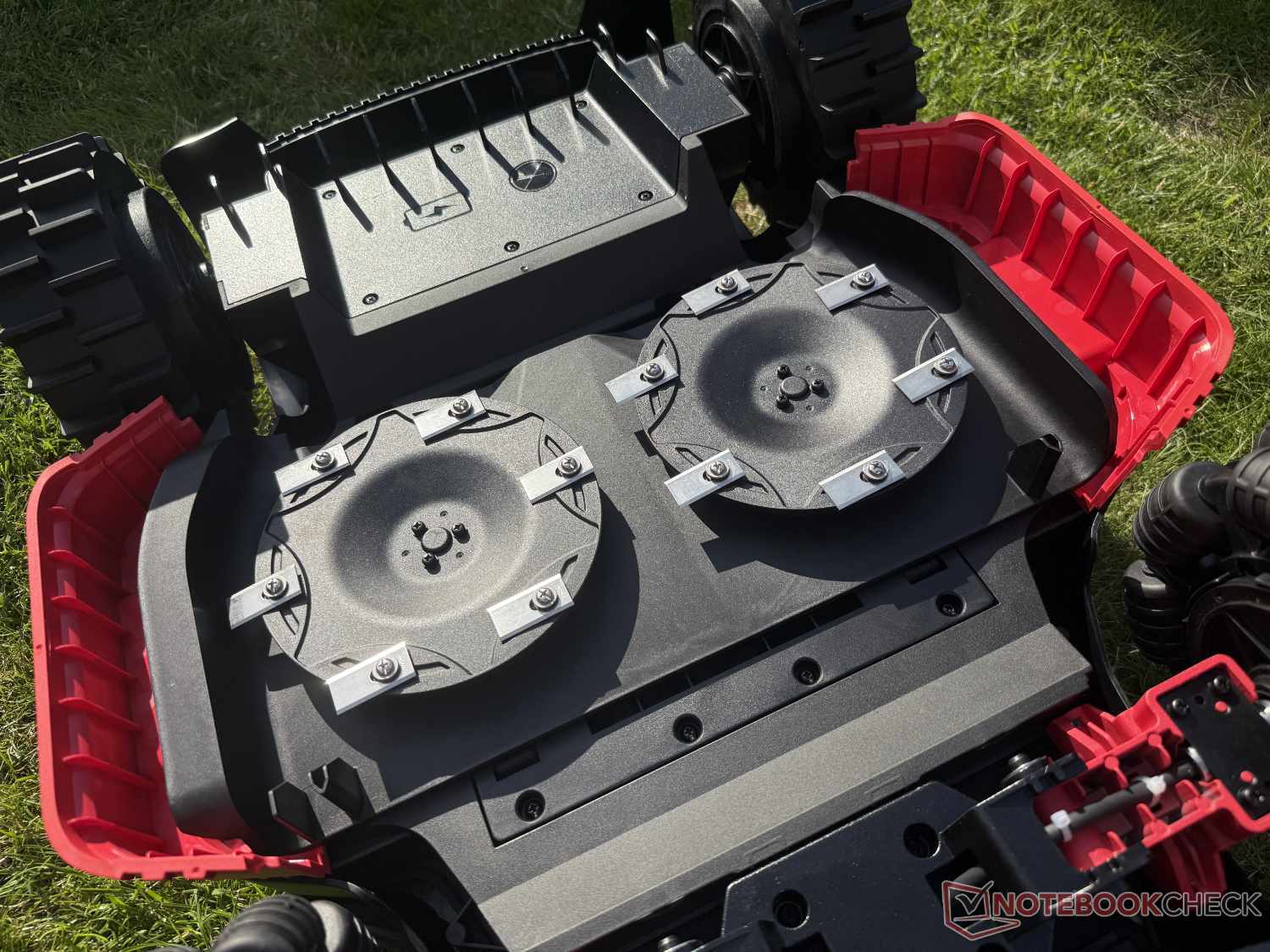
Both models are equipped with a dual cutting deck featuring two sets of three (Dreame) or six (Mova) blades and a 40 cm cutting width. The cutting height is electrically adjustable from 3 to 10 cm on each model. In addition, both models can shift the cutting deck sideways by up to 3 cm for edge trimming. Dreame calls this technology EdgeMaster 2.0, while Mova calls it UltraTrim 2.0—but ultimately, it is the same function.
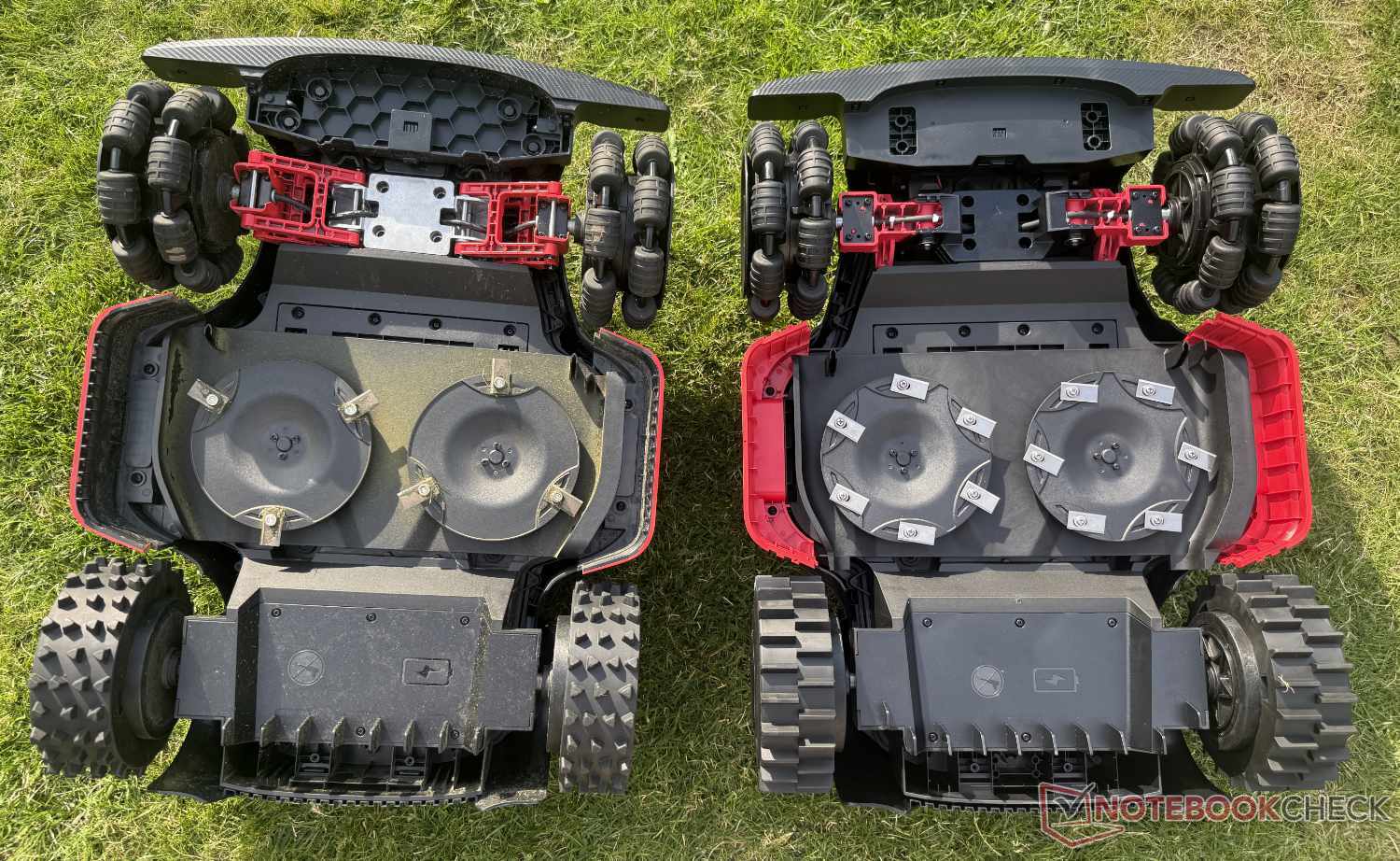
While the Dreame A3 AWD Pro’s suspended front-wheel assembly gives a more substantial impression, there are also minor differences in the accessories included with the robotic mowers, each of which weighs just over 23 kg. Dreame includes only 18 replacement blades, while Mova is twice as generous with 36—but it also uses twice as many blades for each replacement. On the Dreame, the blades can be changed without tools.
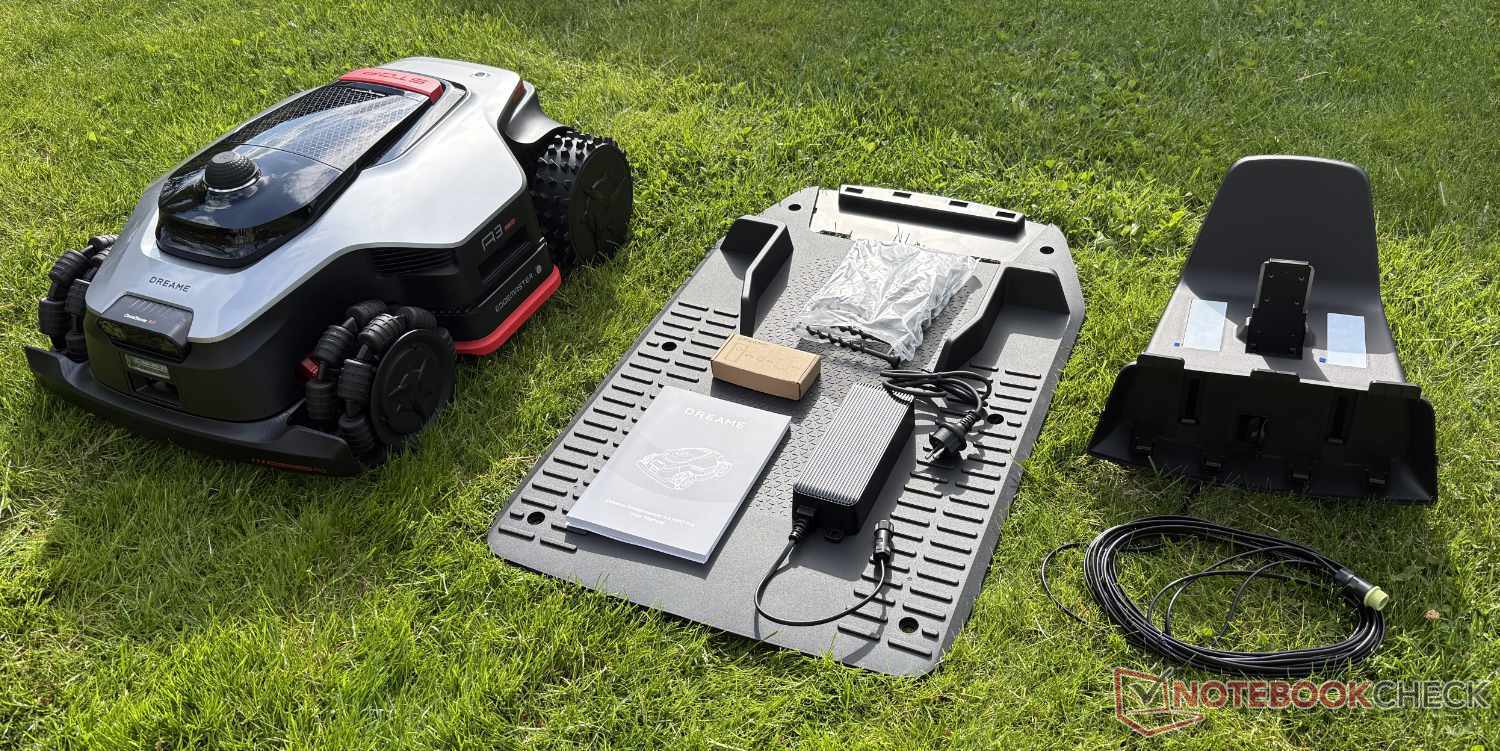
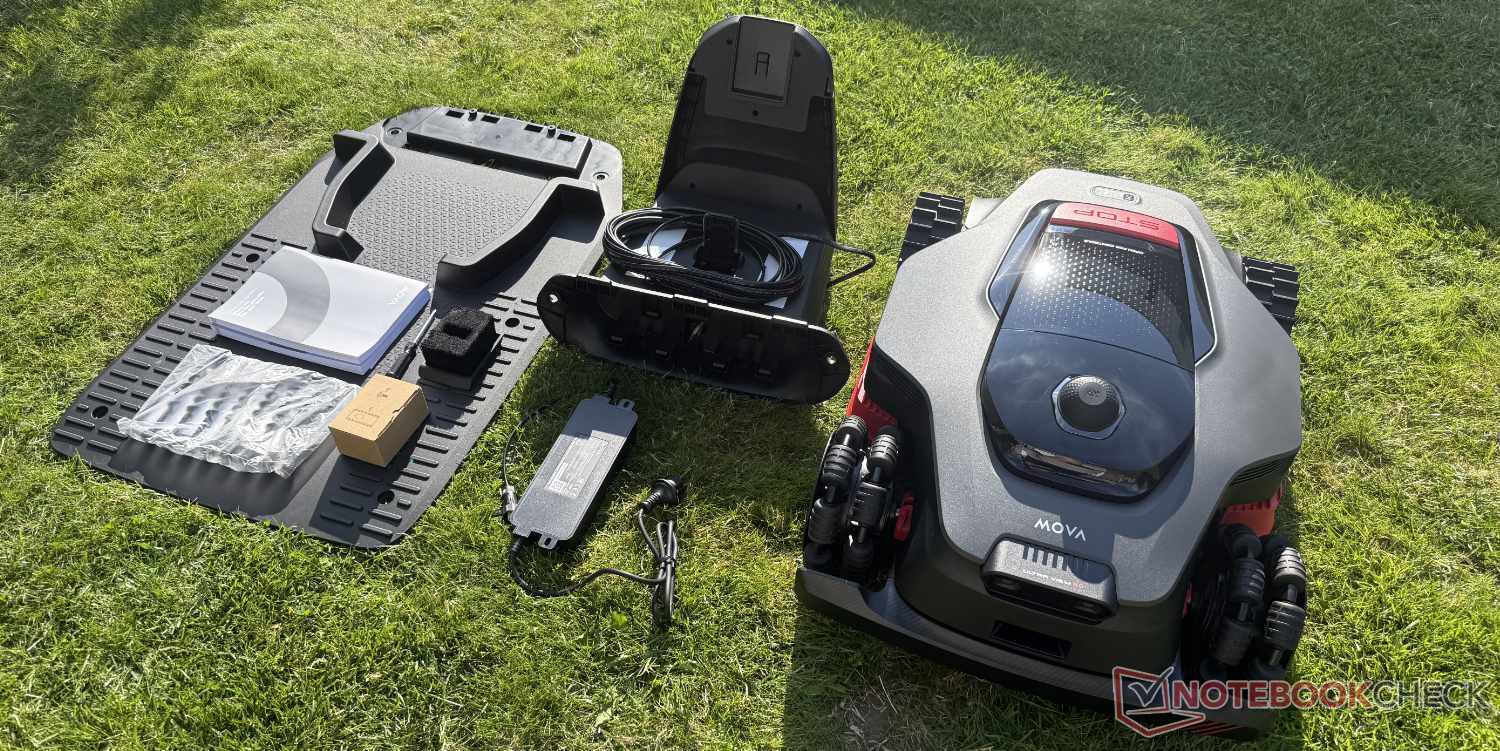
Identical items include the standard charging station with mounting screws, the power adapter, a lint-free cloth for cleaning the LiDAR sensor, and the user manual. Dreame has done away with the brush in the station’s roof—a feature familiar from previous years—that automatically cleans the LiDAR sensor, while Mova continues to include it.
Setup & maintenance: Automatic mapping if desired
As we’ll show in the next section, the Dreame and Mova apps are also largely identical. Accordingly, the initial setup process is the same. After the charging station has been set up and connected to the power supply, the first steps are completed on the robotic lawn mower itself. Once the language and PIN have been set, the process continues in the respective app.
There, the first step is the usual process of connecting to your home Wi-Fi network, although both models can also communicate via 4G. Next comes mapping the new territory for the A3 AWD Pro or LiDAX Ultra AWD. Mapping can be done either automatically, using AI to detect the lawn area, or manually.
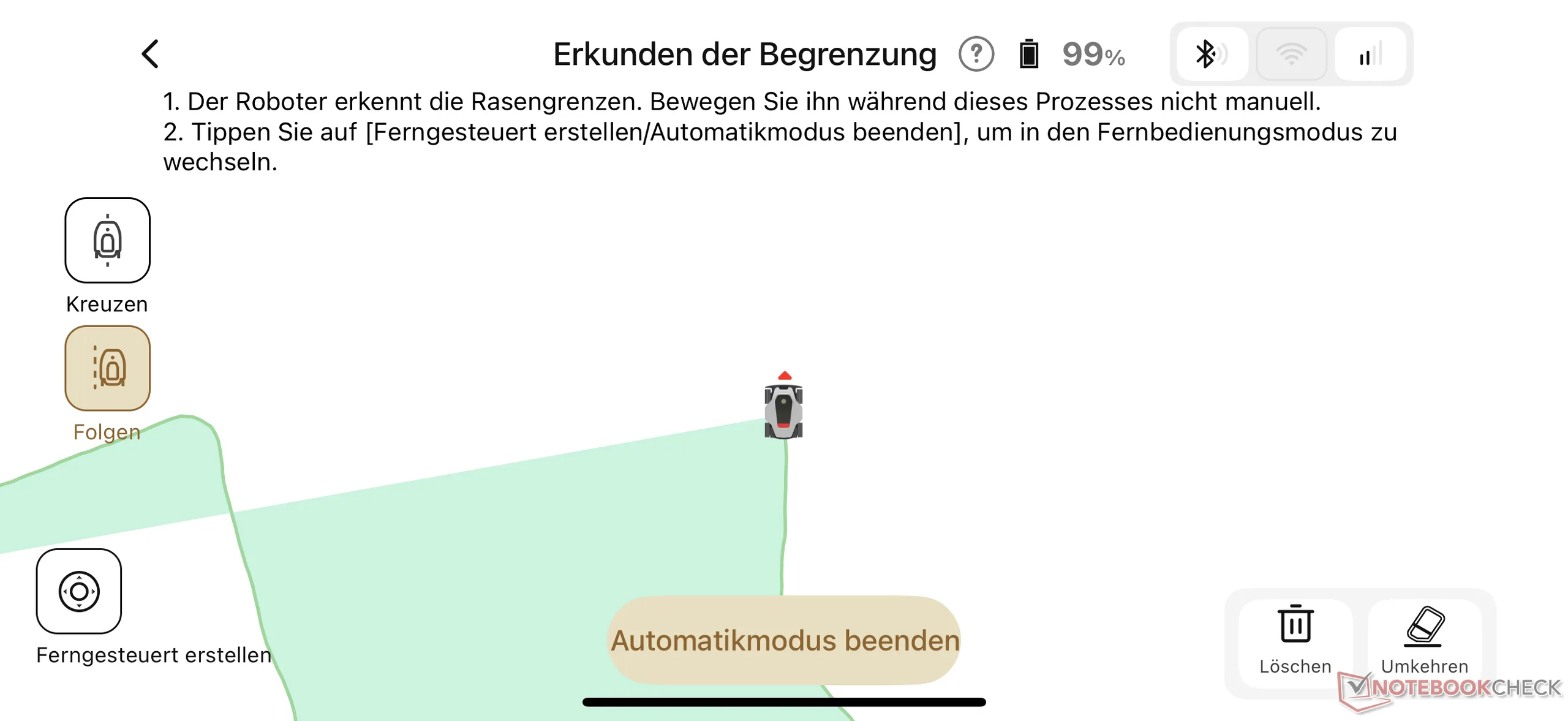
AI mapping worked quite reliably overall on both models, but it was not perfect. Among other things, both mowers made excessively wide arcs around plants overhanging from adjacent flower beds. With the Mova, a problem also arose at the start of our test a few weeks ago: when switching from AI mapping to manual mapping, the controls did not work, so the mapping process had to be restarted.
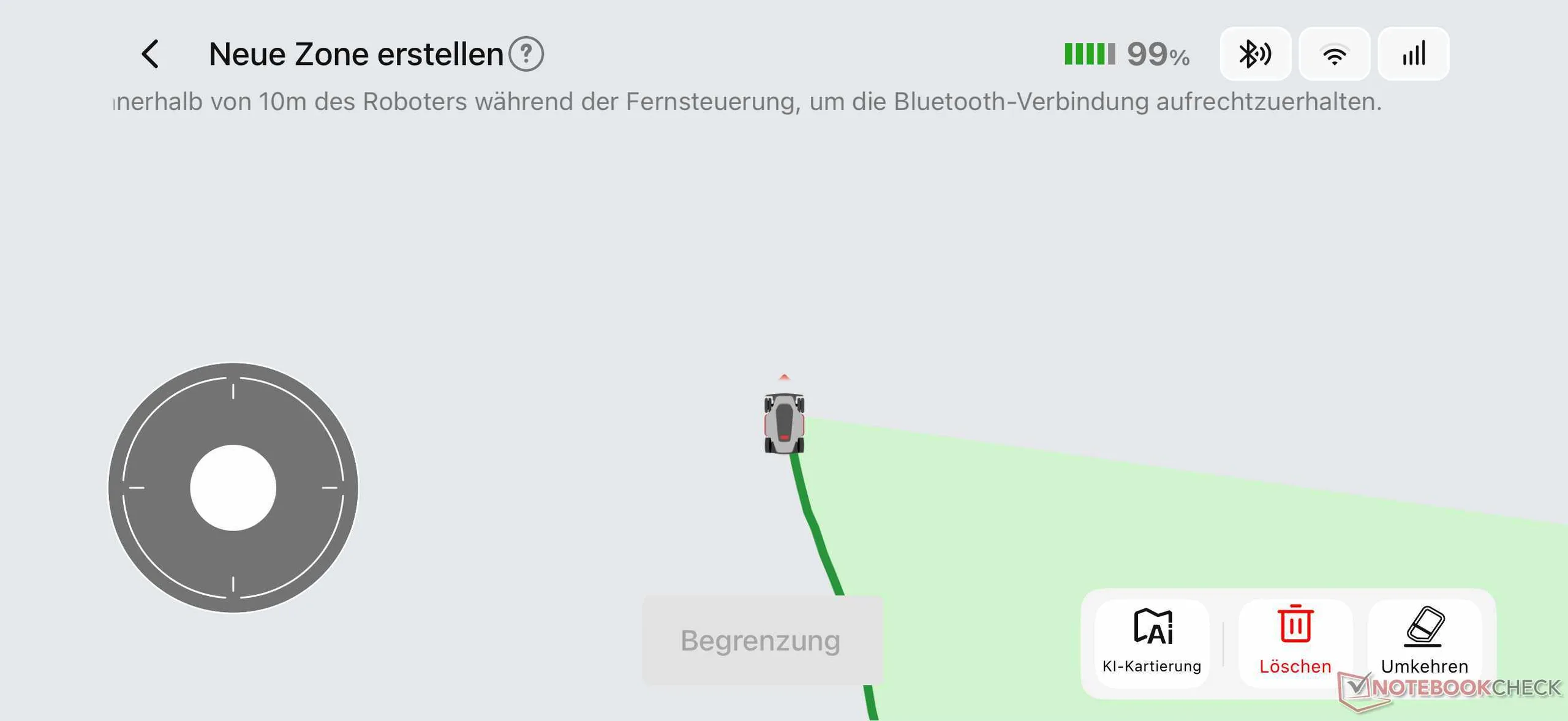
Manual mapping is definitely more precise and reliable. In both cases, the robotic mowers are steered using a single virtual joystick, which, in our experience, works very well. If you steer the mower incorrectly or are not entirely satisfied with the route, you can use the erase function to go back a short distance and try again.
App & usability: Nearly identical apps
Just like the robotic mowers, the apps from Dreame and Mova are very similar. You almost have to use a magnifying glass to spot the differences. But that is not a problem, since we think both are well designed, although they could be a bit clearer in certain areas. They offer extensive options for configuring and controlling these smart gardening assistants.
In the overview for each device, both apps display the generated map along with live progress during mowing. Small icons for detected obstacles are also shown there, and in addition to AI recognition, photos of them can be taken if desired. Various buttons and displays containing the most important information and functions are positioned around the map.
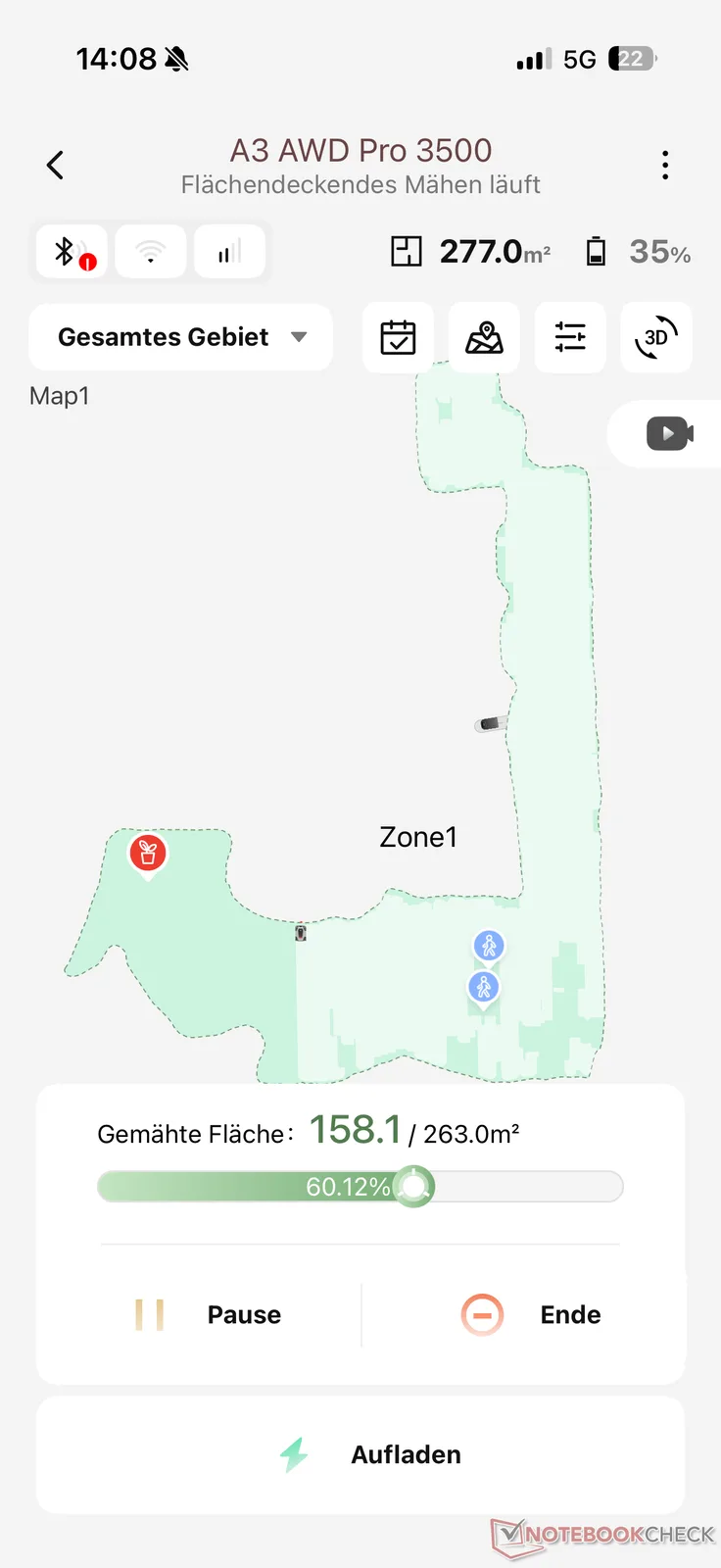
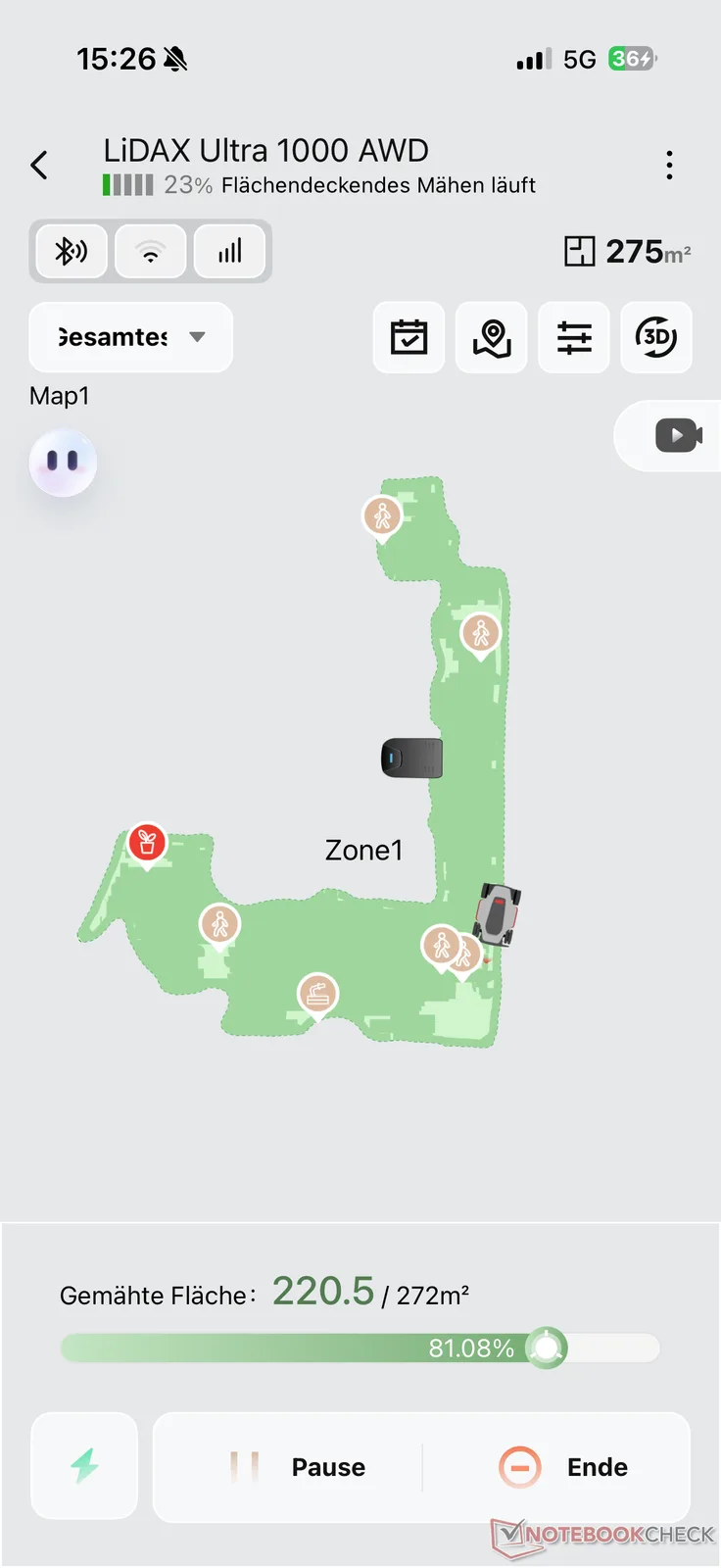
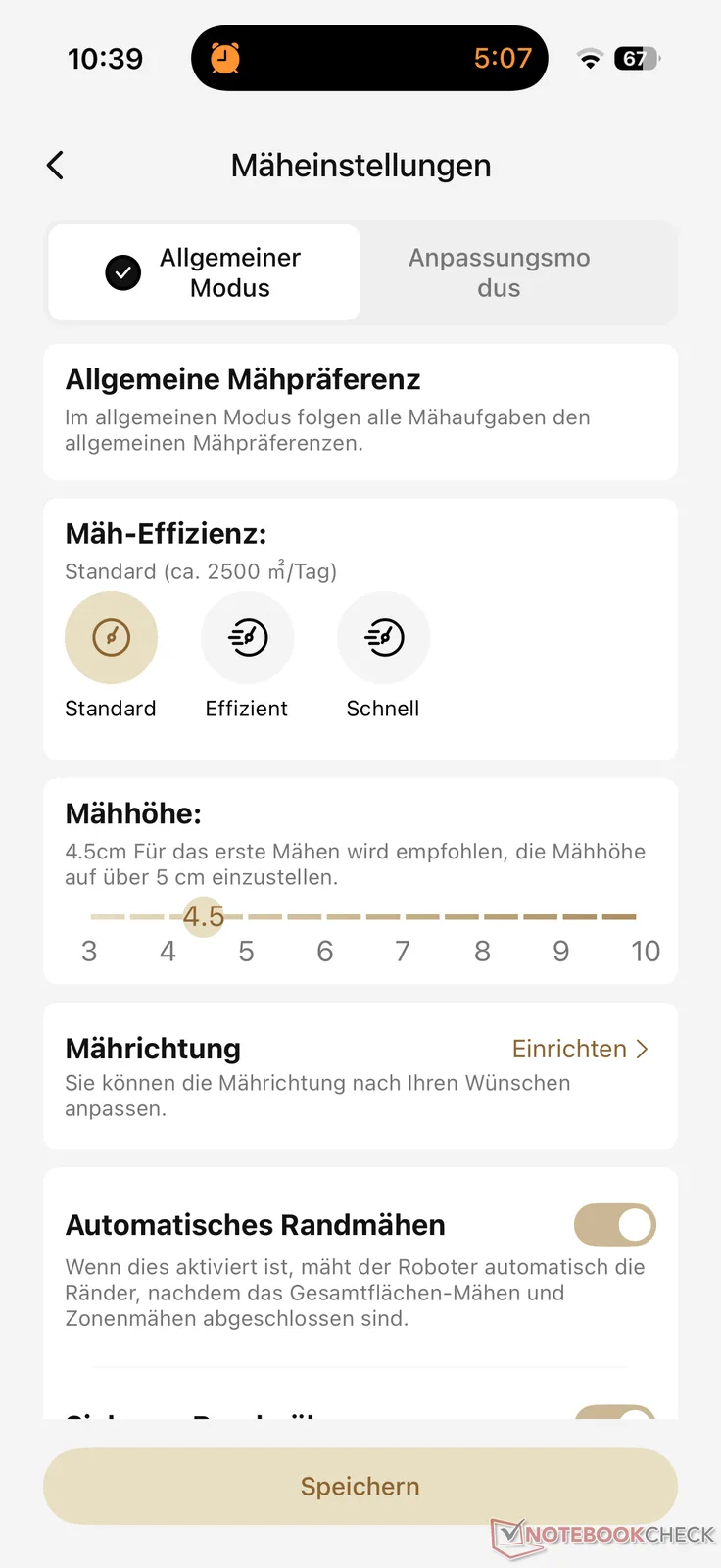
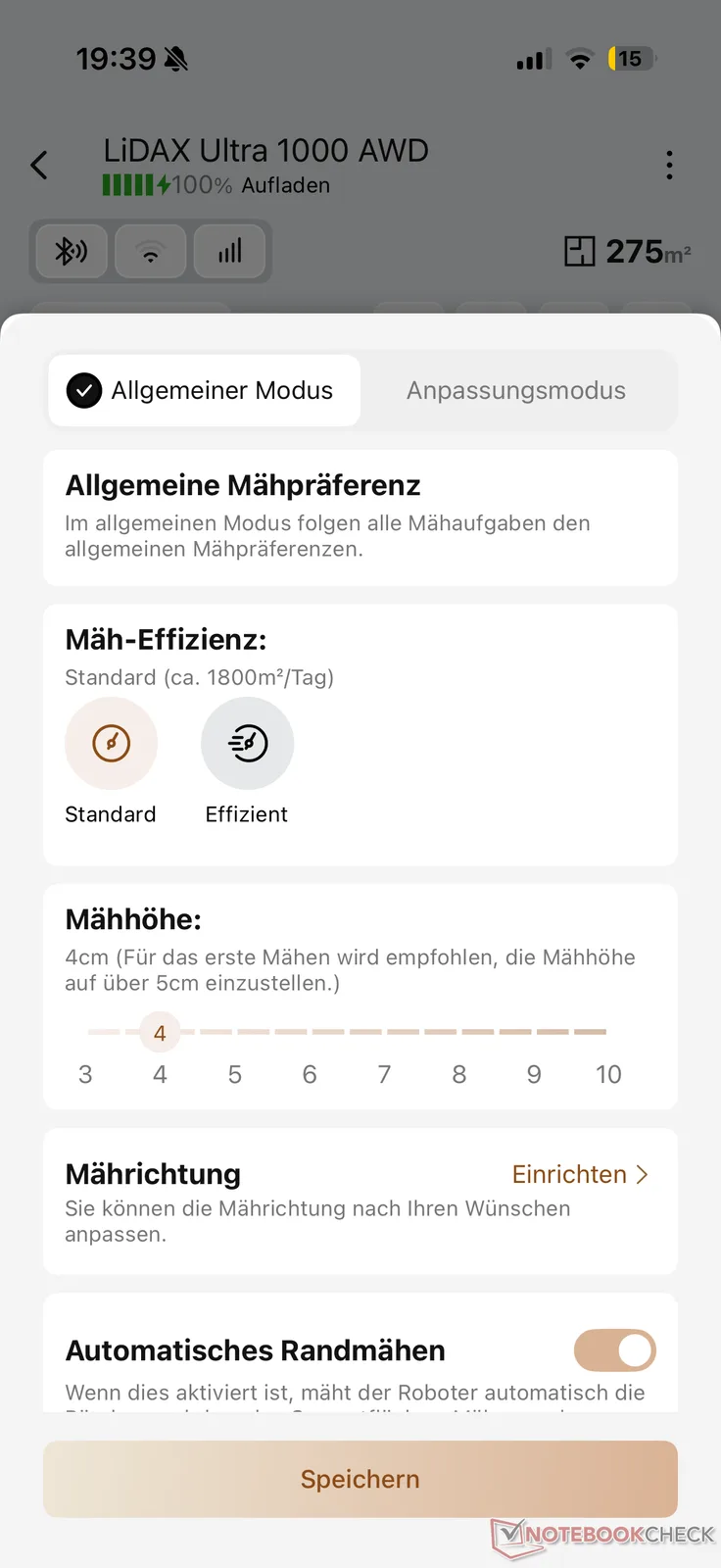
While the “Start/Pause/Stop” and “Charge” buttons at the bottom control the robot, there are various settings at the top. In addition to the mowing schedule, map management, and 3D map, the mowing settings can also be found here. Along with efficiency (three or two levels), cutting height (via a slider), and mowing direction, various additional settings can be configured, such as the use of the cutting-deck offset and the sensitivity of obstacle avoidance (at multiple levels). Together with the mowing modes (Entire Area, Boundary, Zone, Spot, and Manual), this allows for extensive customization to suit your specific conditions and preferences.
In the map management section, you can create up to two maps—including features such as no-go zones and optional lawn patterns. Additionally, live video, theft protection, and a host of other settings round out the apps from Dreame and Mova. Overall, both manufacturers offer numerous options and features whose implementation differs slightly in certain respects.
Navigation & obstacle detection: Both AWD robotic mowers rely on LiDAR
Both AWD robotic lawn mowers use the same navigation technology. Each unit is equipped with a LiDAR sensor that scans 360 degrees. This allows the robots to “see” their surroundings and, in combination with the virtual map created at the outset, know where they are in the garden at all times—without RTK or satellite positioning.
In practice, this worked very well for both robotic mowers tested and compared. They followed nice, straight paths through our test garden and ultimately covered nearly the entire area. Any missed spots—caused initially by movable obstacles, for example—were revisited at the end.
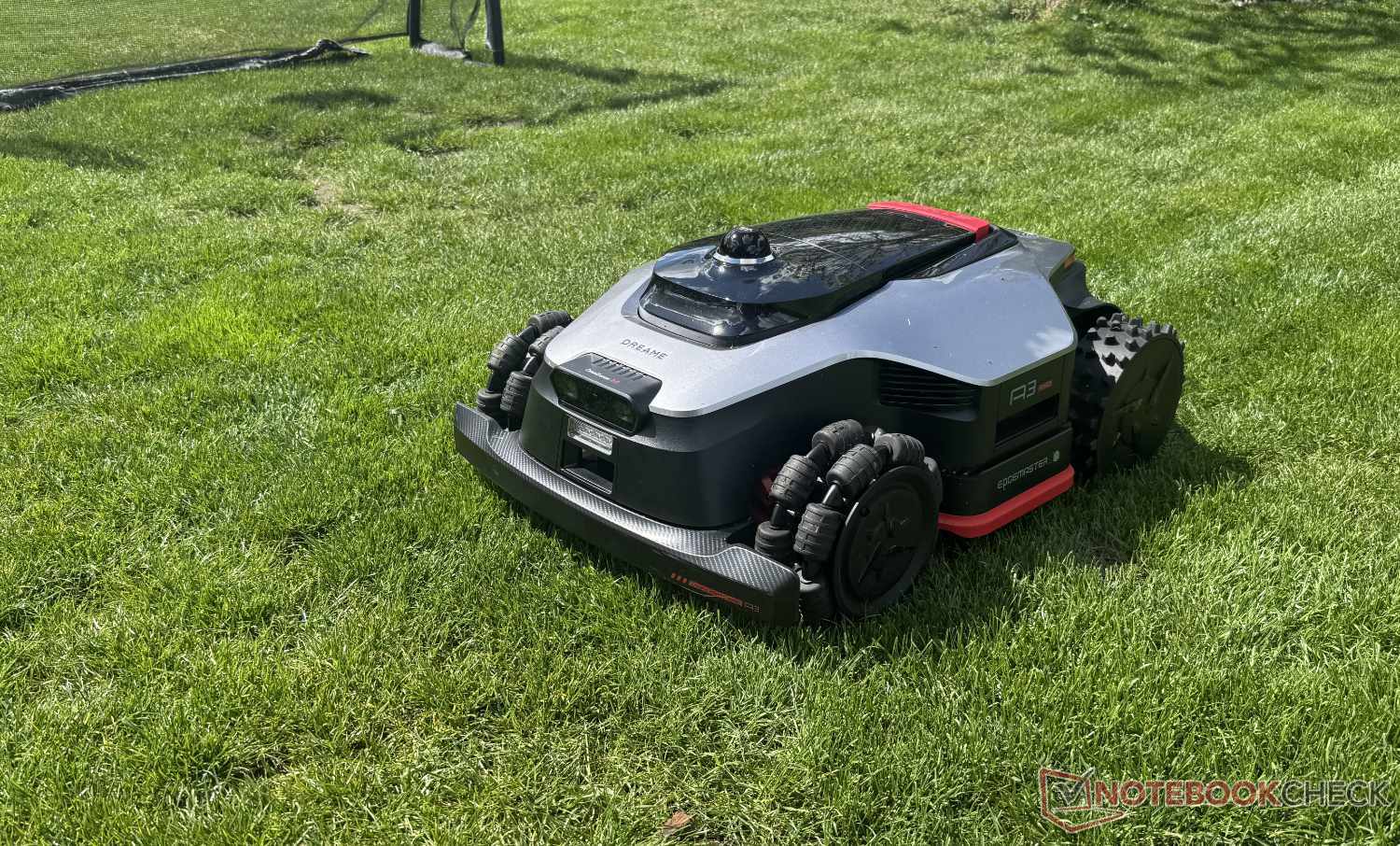
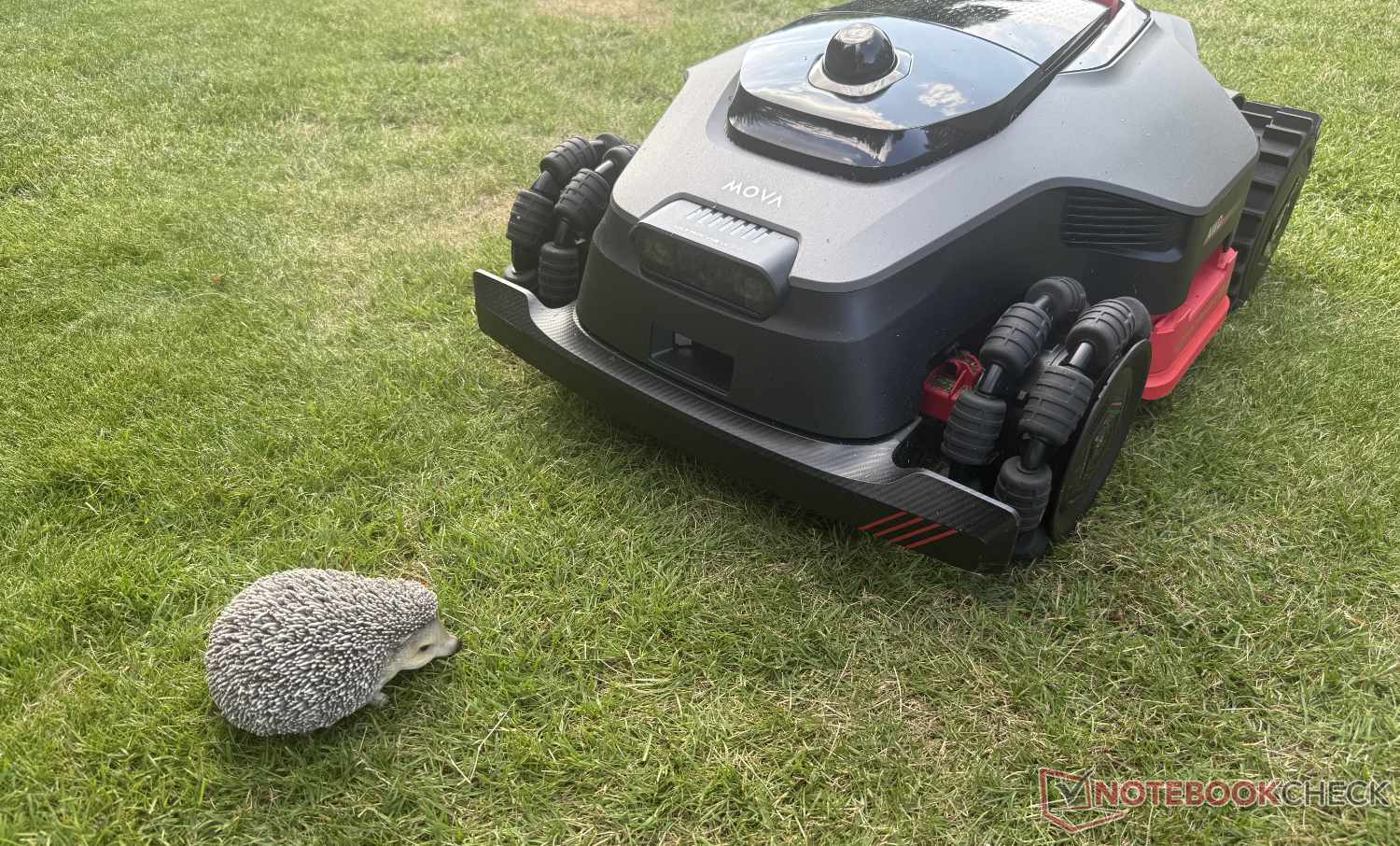
There is also little to criticize when it comes to obstacle detection, for which both the Dreame A3 AWD Pro and the Mova LiDAX Ultra AWD use two AI cameras on the front. All of our standard test obstacles—including a fake hedgehog, a tennis ball, and a piece of garden hose—were reliably detected, and in most cases, the AI correctly identified them in the app.
If the apps are configured so that the robotic mowers approach obstacles very closely, this does provide better coverage, but in our test it occasionally led to slight contact—sometimes even as a mower was turning away. This costs both models points in the secondary assessment.
Area & edge mowing: Adjustable dual cutting decks
Thanks to a 40 cm cutting width across two cutting discs, both the Dreame A3 AWD Pro and the Mova LiDAX Ultra AWD cover a lot of ground per pass. With twice as many blades, the Mova should theoretically mow even more cleanly. In practice—and outside laboratory conditions—however, we did not notice much of a difference. Based on our testing, both deliver a clean cut and an attractive mowing pattern.
Although neither robotic mower is equipped with a dedicated edge trimmer or side-mounted cutting deck like some competitors, both can shift their cutting decks sideways toward the edge of the unit when mowing along borders, thanks to EdgeMaster 2.0 (Dreame) and UltraTrim 2.0 (Mova). This leaves a gap of only about 3 cm.
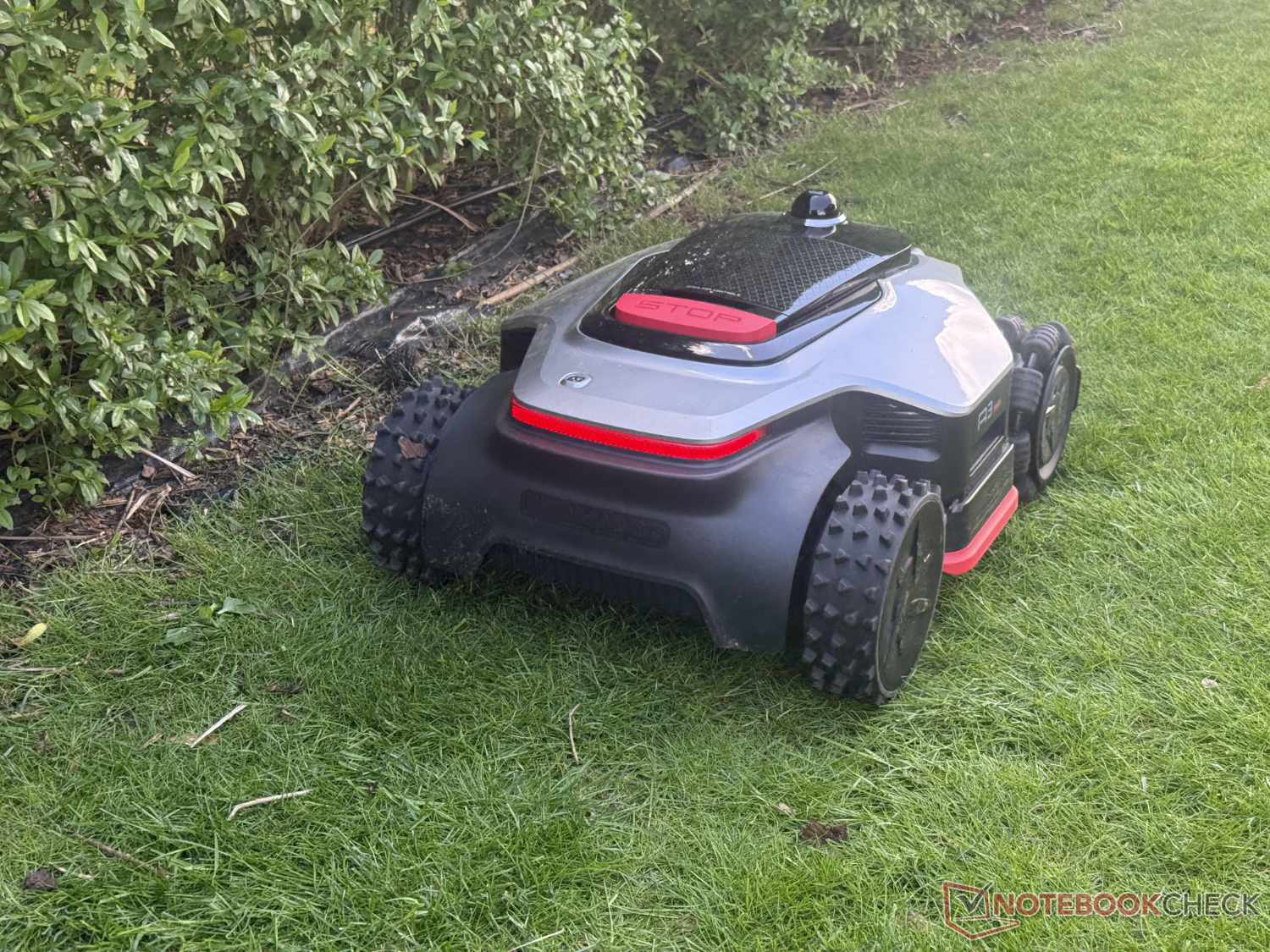
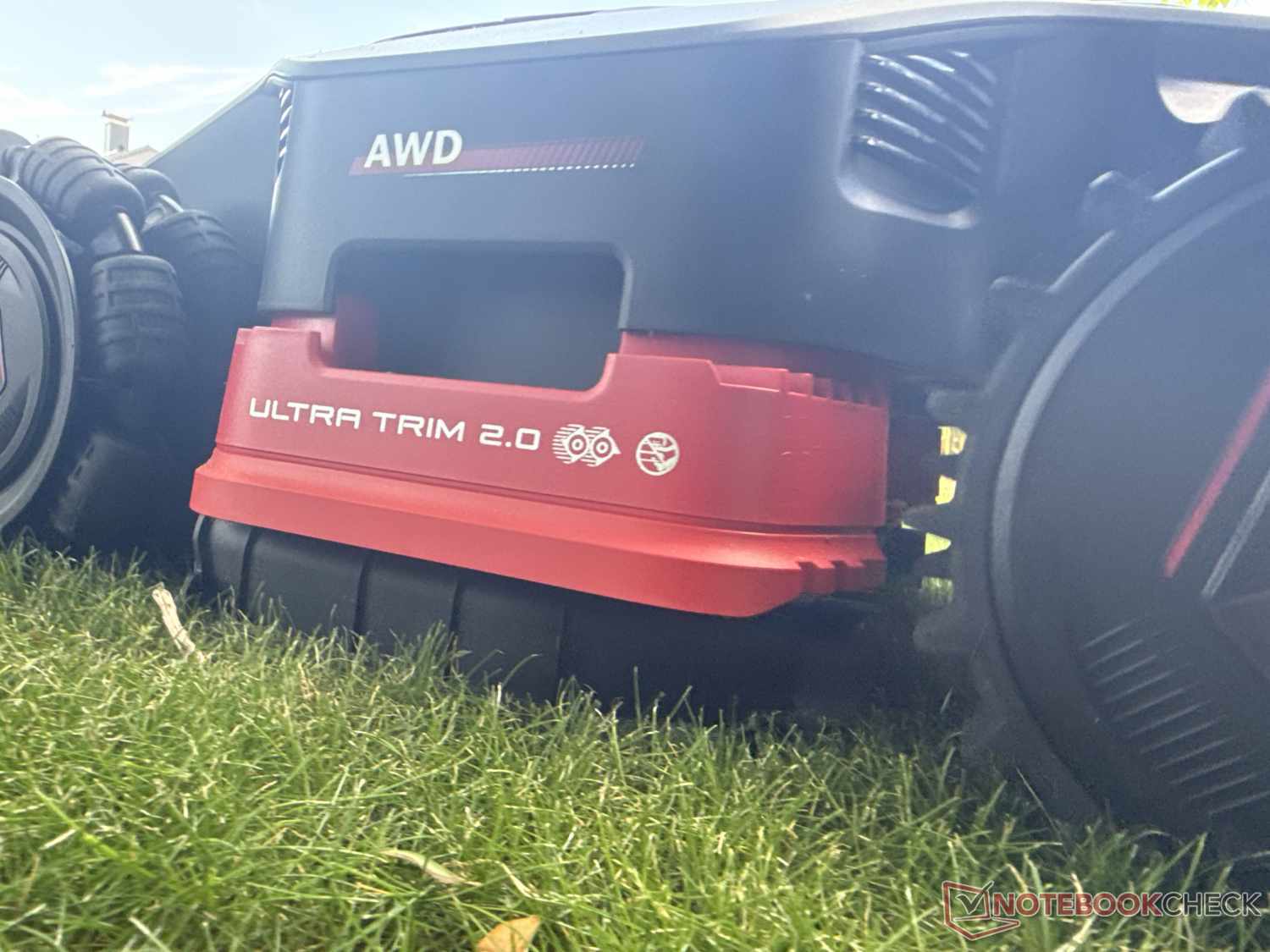
Combined with navigation that usually follows the edge quite closely, this leaves only relatively narrow strips of unmowed grass along borders without flush, ground-level transitions. The only issue was that, with the default settings, the mowers made arcs that were too wide for our liking around overhanging plants. However, the apps allow you to define “zones for ignoring obstacles” (Dreame) or create “accessible zones” (Mova). Along patios, paths, and similar areas, both robotic mowers can mow right up to the edge.
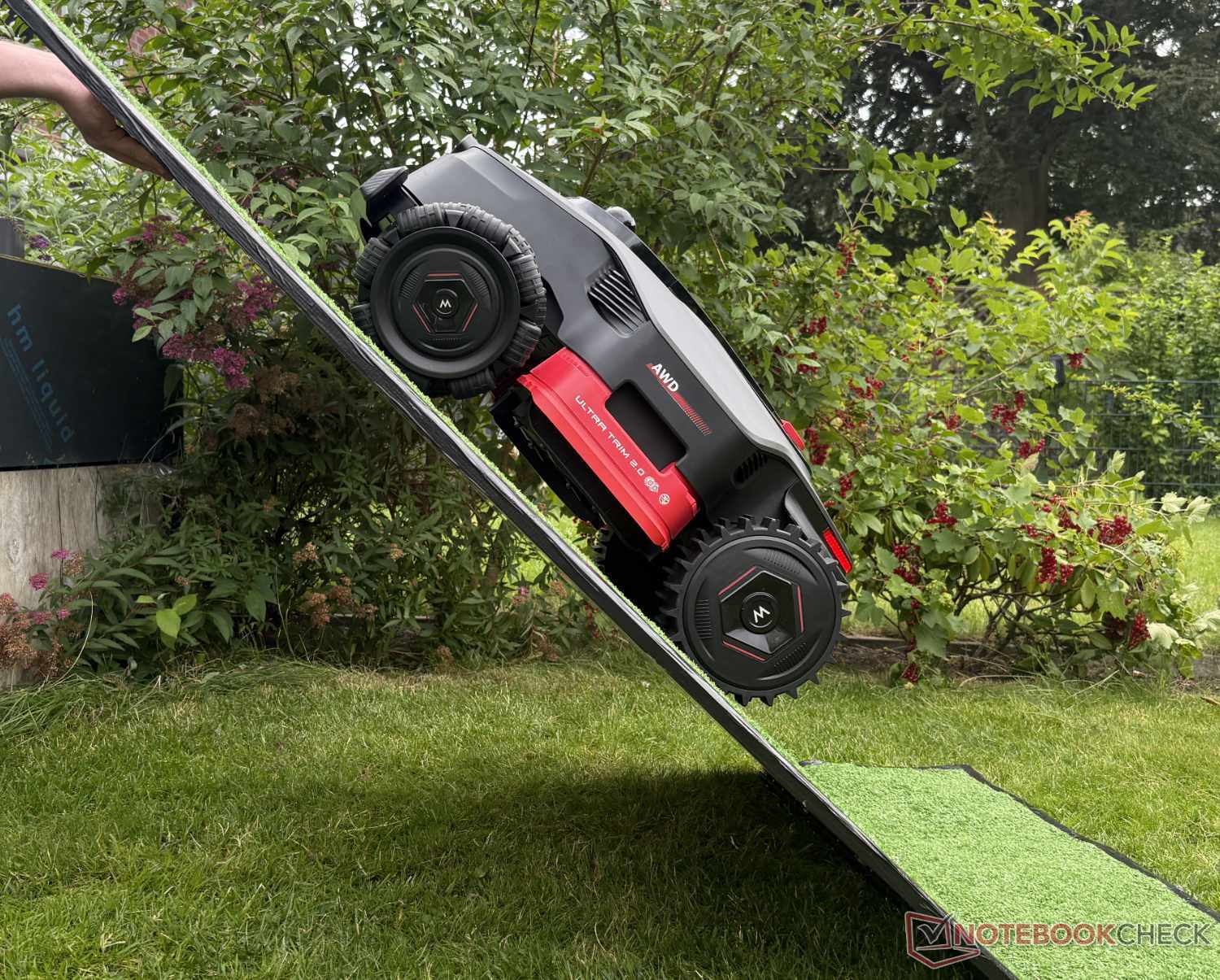
Both Dreame and Mova claim a climbing ability of up to 80%. On our artificial-turf test ramp, they were not quite able to demonstrate this figure. At just over 70 percent, both models displayed an error message stating that the robot had been lifted. This was simply because the front wheels lost contact with the ground slightly due to the steep angle.
In terms of motor power, however, more than 70 percent would have been possible. Anyone who needs to make full use of an 80 percent gradient in their garden—which is quite rare in practice—should remain somewhat skeptical based on our test findings. That said, even a gradient of just over 70 percent is a more than respectable figure for a robotic lawn mower.
The size of the two AWD robotic mowers should also be taken into account. The dimensions of the Dreame A3 AWD Pro and the Mova LiDAX Ultra AWD are virtually identical. Both are 74 cm long, over 53 cm wide, and a good 32 cm high. Although they pivot around their front wheels in a fairly tight space, those wheels do not actively steer. Nevertheless, tight spots are not exactly these robotic mowers’ best friends. A width of at least 80 cm is recommended so they can navigate even narrow sections of lawn without trouble—although the A3 seemed a little more capable in this regard during the test.
Runtime & noise level: Mows more than 500 m² per battery charge
For this test, we used the Dreame A3 AWD Pro 3500 and the Mova LiDAX Ultra AWD 1000—the smallest models in each line. Both models are powered by a 7.5 Ah battery, so they are identical in this regard.
In a direct comparison using standard settings, the Dreame A3 AWD Pro 3500 covered approximately 600 square meters per battery charge in about four hours—slightly more than the roughly 530 square meters covered by the Mova LiDAX Ultra AWD 1000. This suggests slightly more efficient navigation by the Dreame model, although the difference is ultimately minor.
In testing, the Dreame robotic lawn mower was also slightly faster at recharging from 15 to 100 percent, taking less than 1.5 hours. The Mova took about 10 minutes longer, but that is also not a major issue. The maximum charging power for both was just over 200 W—which is very high. However, this high charging rate means that both produce clearly audible fan noise.
During their time at the charging station, approximately 270 Wh of energy flowed into each battery. In terms of standby power consumption, the Mova robotic mower was slightly more efficient—but here, too, the difference is marginal. Ultimately, both all-wheel-drive robotic mowers consume less than 10 kWh per month in our standard comparison, which extrapolates from mowing 500 square meters of lawn three times a week. This means their power consumption is higher than that of many more compact robotic mowers. However, this is not surprising for these two “robotic mower monsters” with all-wheel drive and dual cutting decks.
The noise level, of course, varies primarily depending on mowing activity. We measured around 60 dB for both models, in each case from a distance of approximately 1 m. This means that neither the Dreame A3 AWD Pro nor the Mova LiDAX Ultra AWD is among the quietest robotic mowers on the market—although given their size and power, that is hardly surprising.

According to our test, are neither the Dreame A3 AWD Pro nor the Mova LiDAX Ultra AWD the right wire-free robotic lawn mower for your garden?
Then discover many more models in our 2026 Best Robotic Lawn Mowers list!
Transparency
The selection of devices to be reviewed is made by our editorial team. The test sample was provided to the author as a loan by the manufacturer or retailer for the purpose of this review. The lender had no influence on this review, nor did the manufacturer receive a copy of this review before publication. There was no obligation to publish this review. As an independent media company, Notebookcheck is not subjected to the authority of manufacturers, retailers or publishers.
 Add as a preferred source on Google


