




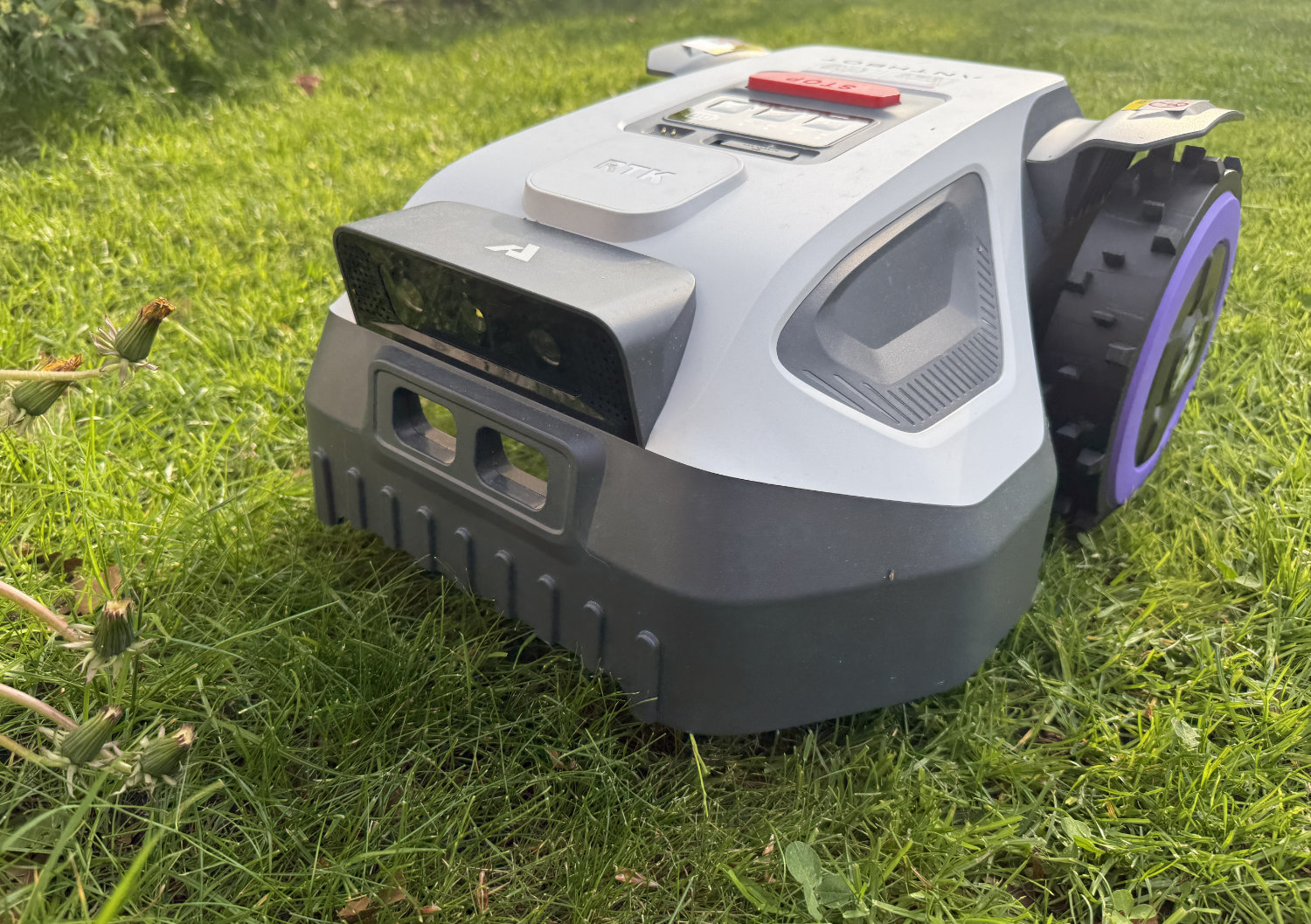
Affordable, compact robotic lawnmower for smaller gardens: Anthbot M9 review
Wireless compact class.
The Anthbot M9 is a handy robotic lawnmower designed for smaller gardens. Our review shows its strengths and weaknesses and for whom the compact robot lawn mower is suitable.Marcus Schwarten (translated by DeepL / Marcus Schwarten) Published 🇩🇪 🇳🇱 ...
Anthbot M9 test conclusion: Best-value pick for gardens up to 1,000 square meters
Overall, the Anthbot M9 made a good impression in the test. It presents itself as fuss-free and unobtrusive, had hardly any problems in the test and mostly did its job reliably. Among other things, the obstacle detection and systematic navigation were impressive. There were only a few minor points of criticism in the test.

Overall, our impressions make the Anthbot M9 a good choice for gardens of up to 1,000 square meters that do not have a steep slope or too many tall objects around them. Its price of well under $1,000 also makes it interesting.
A possible alternative in the compact class of robotic mowers would be the Mammotion Yuka mini, which is available in 2026 in the second generation with LiDAR. If you only have up to 500 square meters to mow, you can opt for the almost identical Anthbot M5 or alternatively other affordable models such as the Eufy C15 or RoboUp Raccoon 2 SE.
Pros
Cons
Price and availability
The recommended retail price of the Anthbot M9 is $899. It is available, among other places, directly from the manufacturer - often at a significantly lower price and in a bundle with Garage or NetRTK (4G).

Table of Contents
- Anthbot M9 test conclusion: Best-value pick for gardens up to 1,000 square meters
- Features & scope of delivery: Compact robotic lawnmower with RTK
- Setup & maintenance: Mapped with AI
- App & operation: Extensive settings
- Navigation & obstacle detection: mostly reliable
- Mowing performance & edge mowing: Compact robot mower even for narrow gardens
- Running time & volume: Exceeded manufacturer's specifications
There are numerous wireless robotic lawn mowers on the market. However, many models are not only quite large, but also only designed for expansive lawns. But hardly anyone has one, especially in cities.
With the M5 and M9, Anthbot offers quite handy robotic lawn mowers for smaller gardens. While the M5 is designed for gardens up to 500 square meters, the Anthbot M9 we tested mows up to 1,000 square meters.
Both models are largely identical in construction, as a comparison of the Anthbot M5 and Anthbot M9 shows. The only differences are the size of the battery and therefore the area coverage and weight. This means that the findings from our Anthbot M9 test also largely apply to the Anthbot M5.
Data sheet (Comparison Anthbot M9 & M5)
| Property/model | Anthbot M9 | Anthbot M5 |
|---|---|---|
| Area | 1,000 m² | 500 m² |
| Navigation | Full-Band RTK + Dual Vision | Full-Band RTK + Dual Vision |
| Obstacle detection | 150° HDR AI vision | 150° HDR AI vision |
| Mower | Mowing disk | Mowing disk |
| Number of blades | 5 | 5 |
| Cutting width | 20 cm | 20 cm |
| Cutting height | 3 - 7 cm | 3 - 7 cm |
| Cutting height adjustment | electric | electric |
| Slope | 45% / 24° | 45% / 24° |
| Display | no | no |
| Battery capacity | 5 Ah | 2.5 Ah |
| 4G | yes | yes |
| Weight | 10.1 kg | 9.8 kg |
| Dimensions | 49.8 x 39.2 x 25.1 cm | 49.8 x 39.2 x 25.1 cm |
| Water resistance | IPX6 | IPX6 |
| Garage included | no | no |
| Number of blades supplied | 5 + 5 | 5 + 5 |
| Color | Grey | Grey |
| MSRP | $899 | $799 |
Features & scope of delivery: Compact robotic lawnmower with RTK
Like the M5, the Anthbot M9 relies on classic RTK navigation and uses dual full-band RTK with many satellites. An RTK antenna around 1.25 m high is required in your own garden if you are not using the NetRTK, which is also available. Alternatively, the Anthbot M5 is also available with LiDAR technology, which will be used in many new robot mowers in 2026, but not in the M9. The RTK technology is supported by two cameras in the front, which are responsible for object recognition with 150° HDR AI vision.
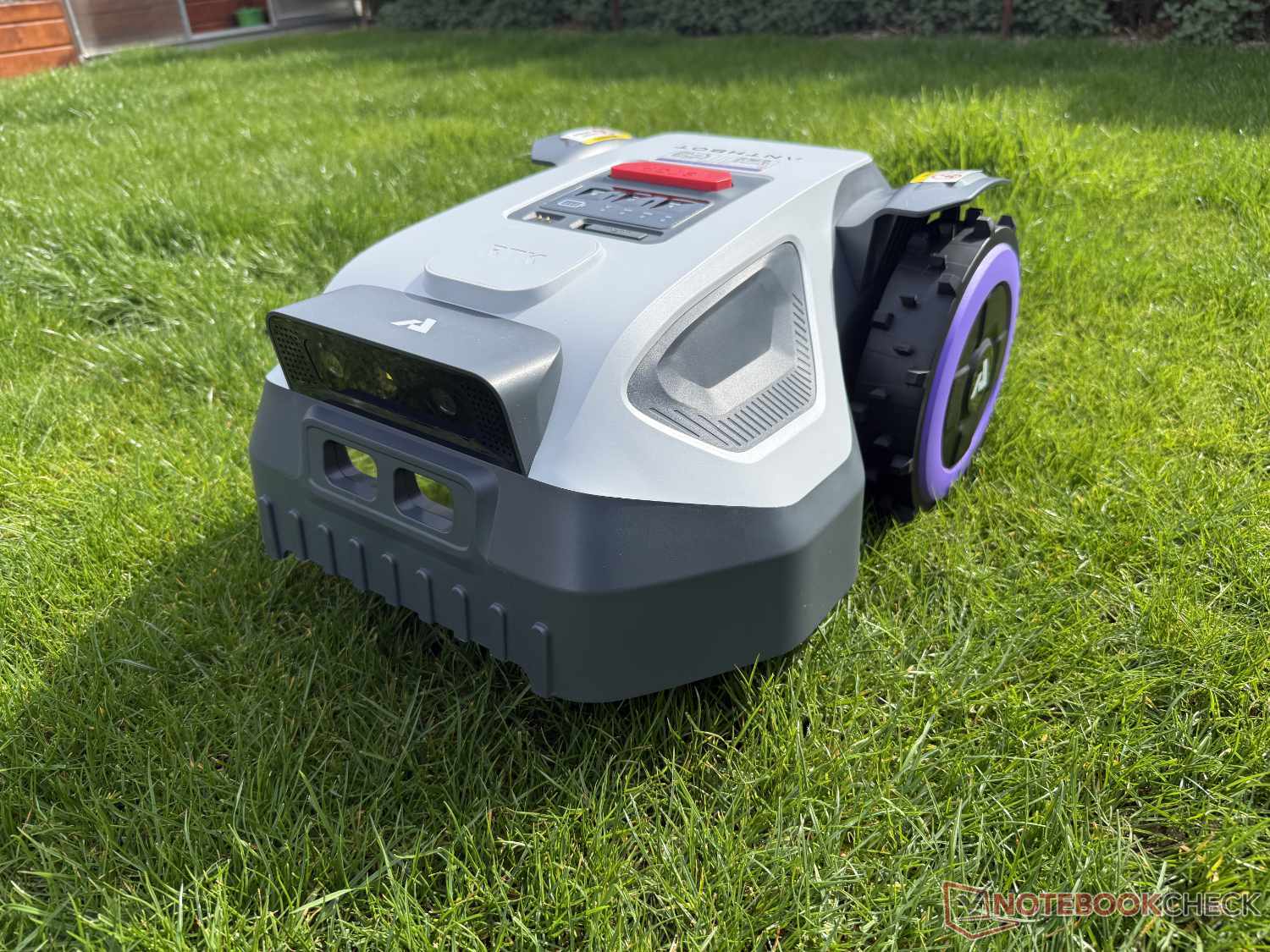
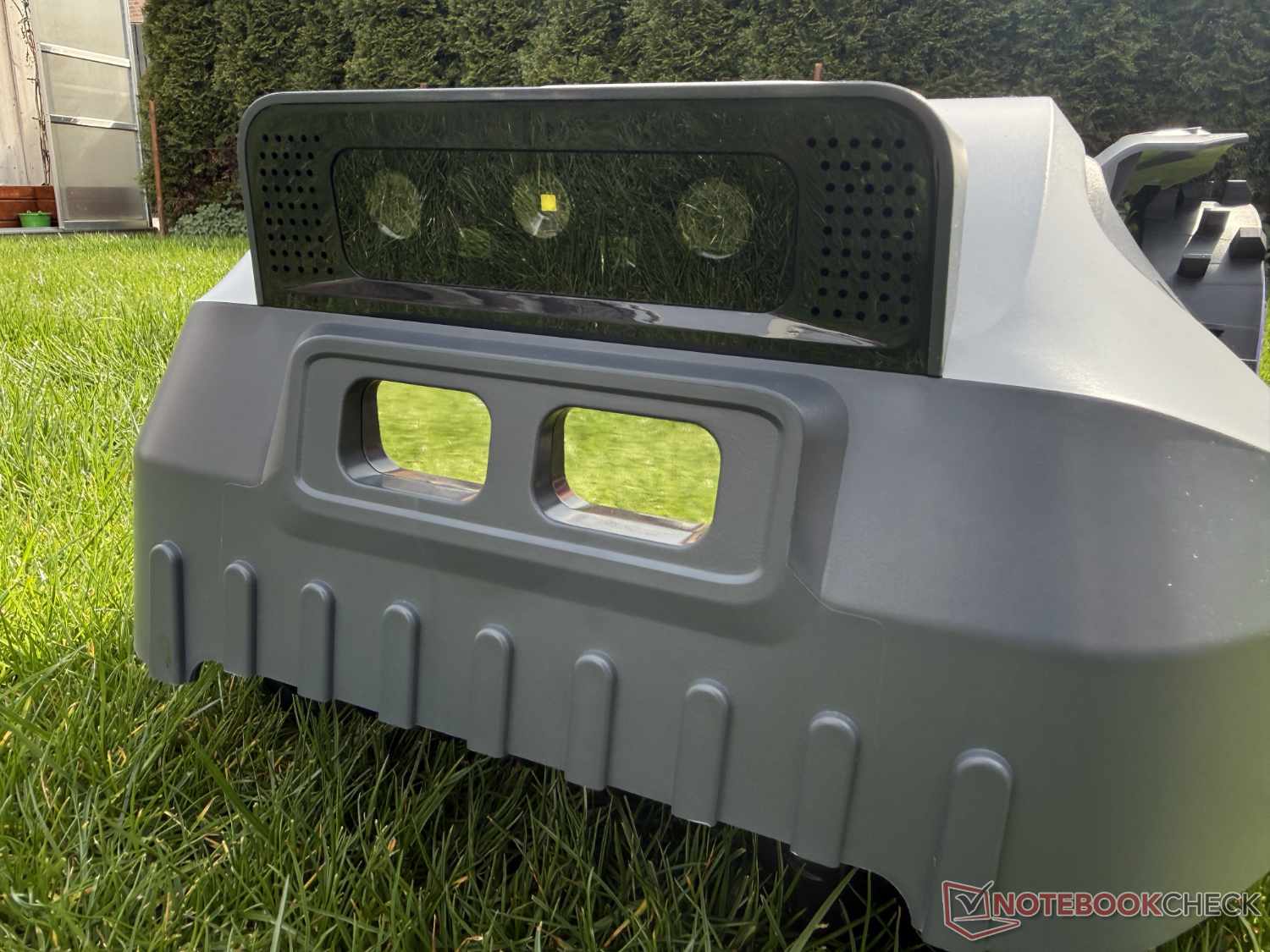
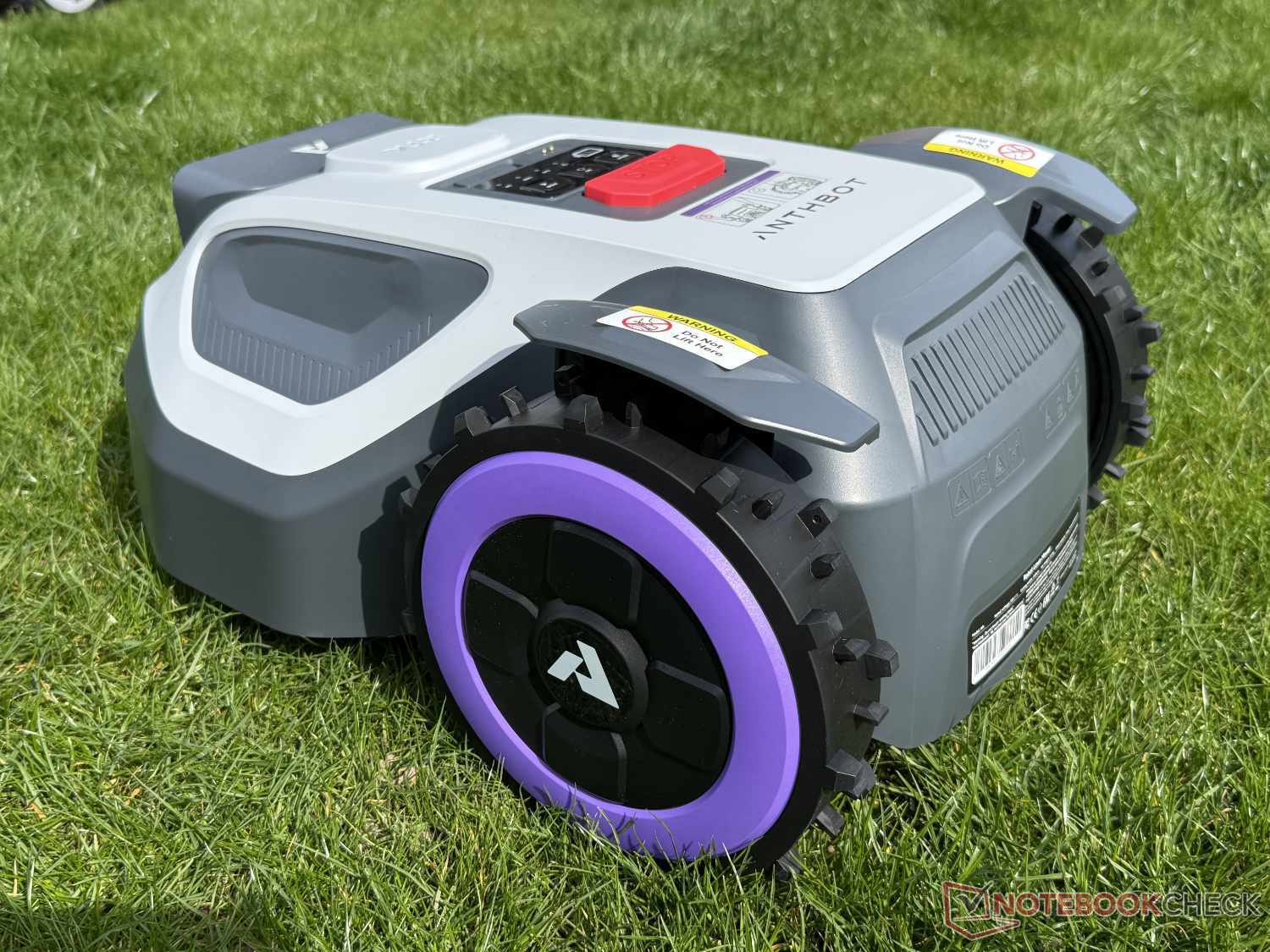
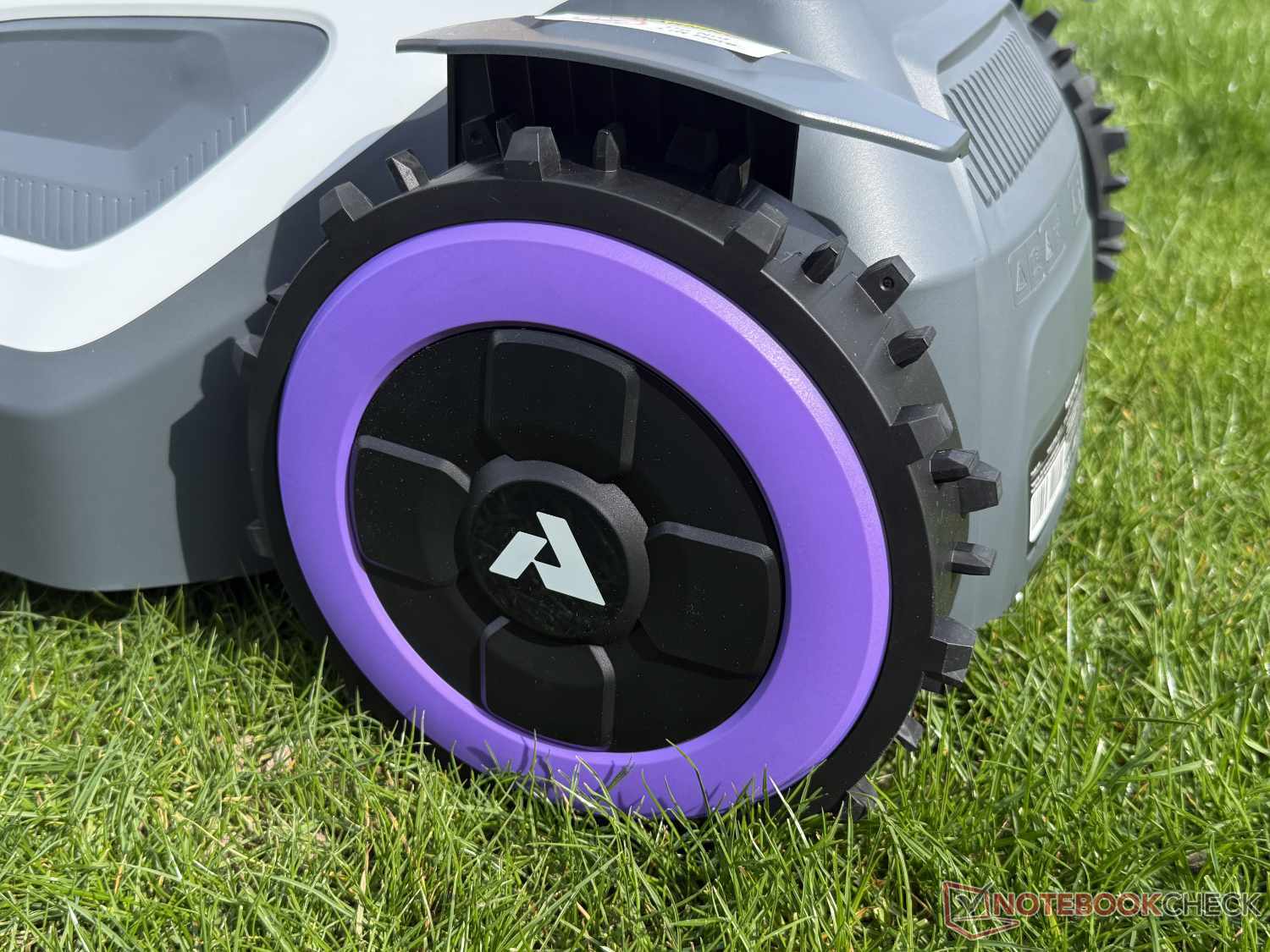
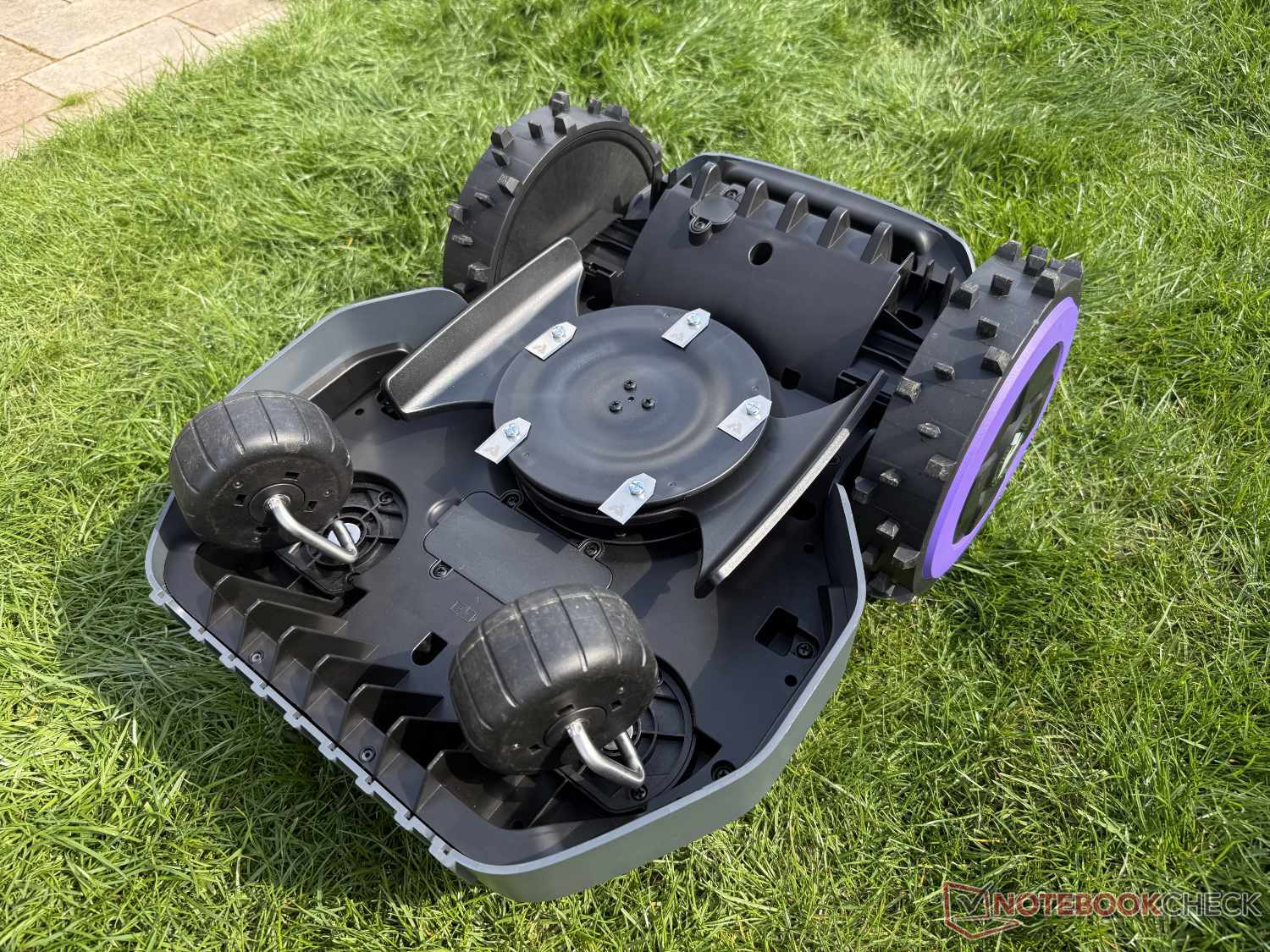
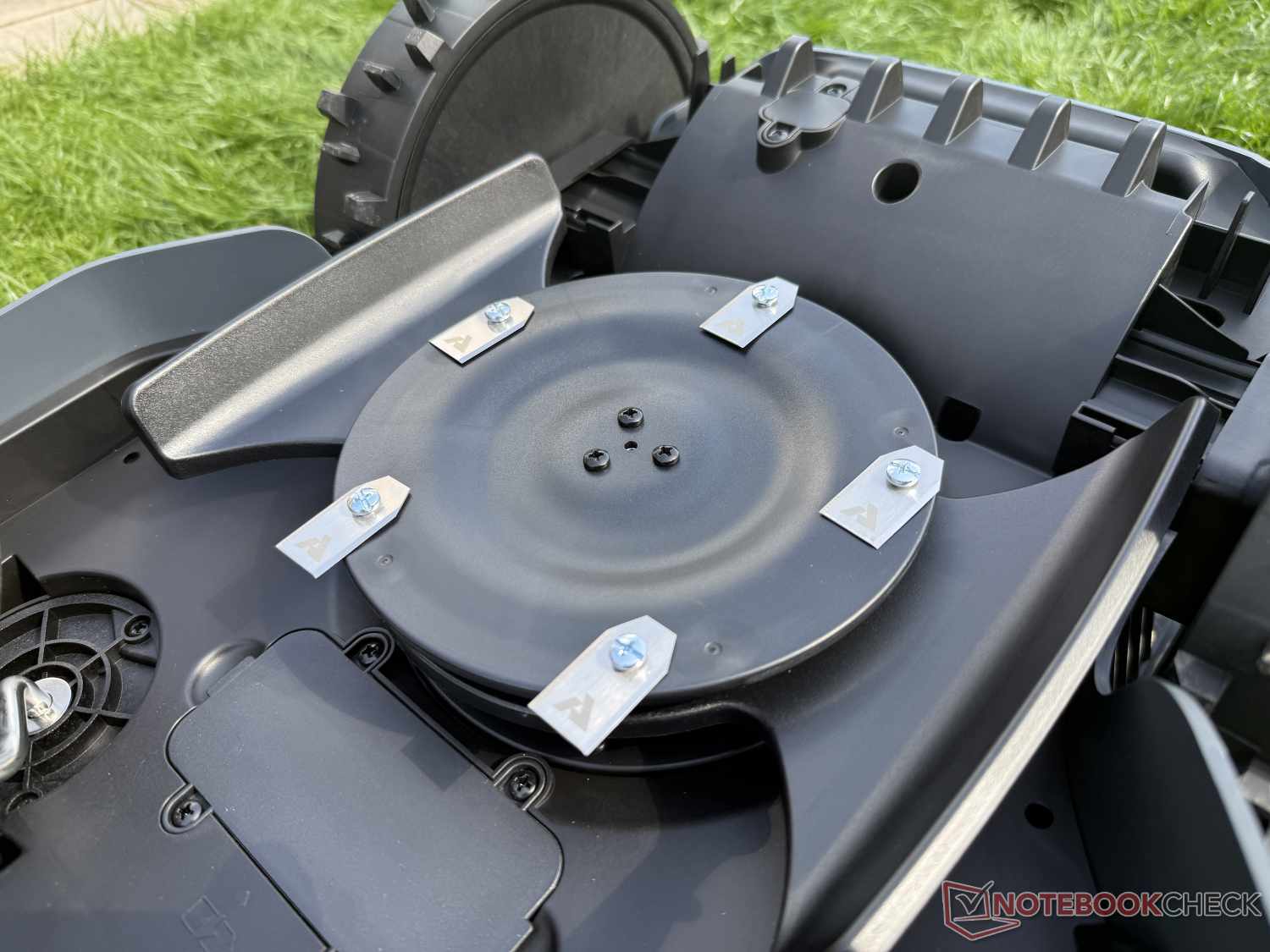
This wireless robotic lawnmower for smaller gardens is also quite classic in other respects. It mows with a round cutting disc with five blades, which has a manageable cutting width of 20 cm. The cutting height can be adjusted electrically between 30 and 70 mm, which is not a matter of course in this price range. This is packaged in a fairly compact housing measuring around 50 cm long, 40 cm wide and 25 cm high. Thanks to a weight of around 10 kg and a handle at the rear, this can be carried quite easily if necessary.
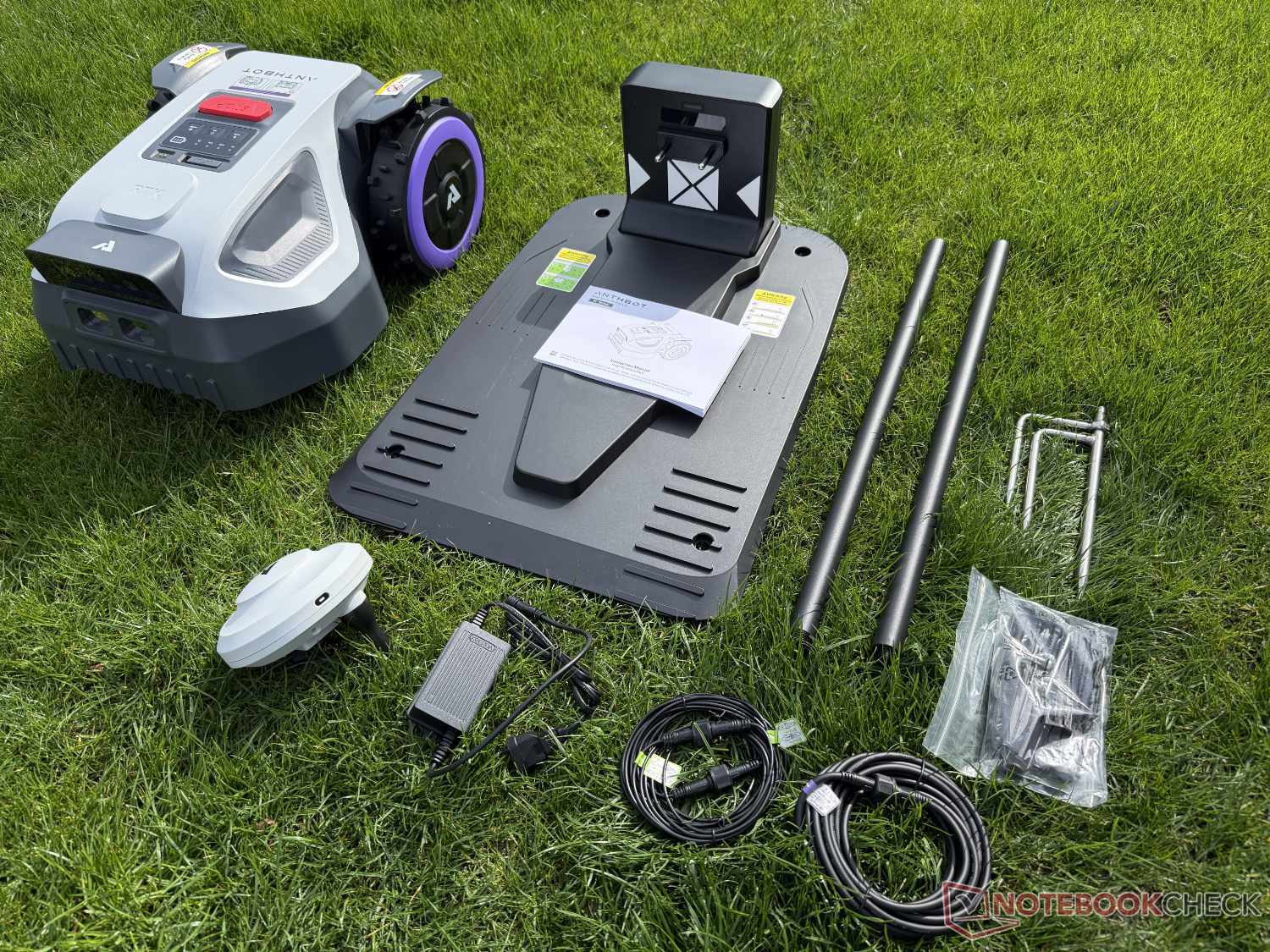
The scope of delivery is also standard. In addition to the robotic lawnmower itself, it comes with the usual charging station, charger and extension cable. Also included in the box is the RTK antenna with two-piece rod and ground spike. In addition, there are the usual accessories such as a set of replacement blades (5 pieces) as well as ground screws and tools for attaching the charging station. Anthbot also offers the M9 in a bundle with a garage on request.
Get a 10% discount now when you buy the ANTHBOT M9!
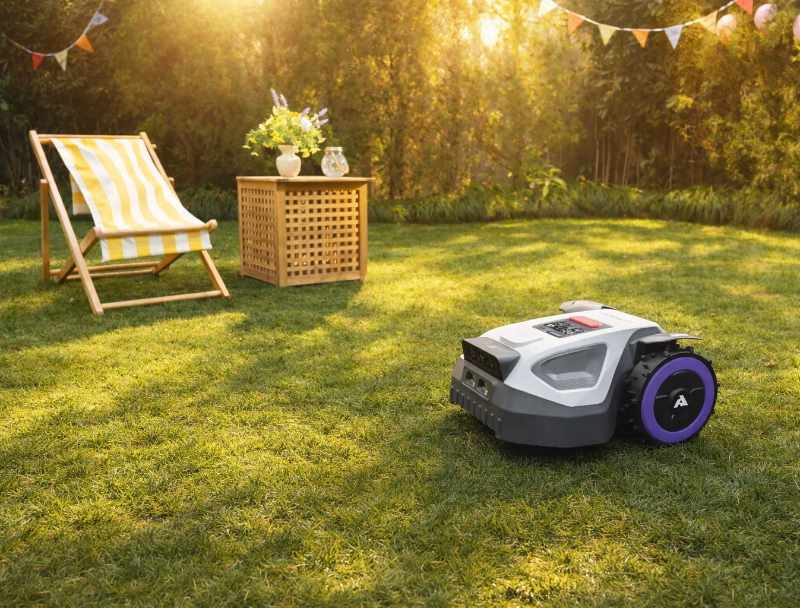
Secure the ANTHBOT M9 now at a bargain price. By redeeming the voucher code KVOZ9937, you can benefit directly at Amazon from a 10 percent discount on the current price. Alternatively, the code M9RB200 offers the same savings directly via the manufacturer's online shop.
This makes the ANTHBOT M9 available at an even more affordable price. This wireless robotic lawnmower combines a compact design with high performance and was developed for modern gardens where precision and reliability are paramount. Its powerful drive system ensures reliable performance even under demanding conditions, while high-quality sensors reliably detect obstacles and ensure stable and reliable operation.
Setup & maintenance: Mapped with AI
Setting up the Anthbot M9 requires the usual steps. Once the charging station has been set up in a suitable location, it must be connected to a power socket. The RTK antenna must then be set up nearby. This should have as clear a "view" of the sky as possible.
The connection between the smartphone, home Wi-Fi network and robotic lawnmower is then established via the Anthbot app. To do this, first add a new device and then follow the instructions on the display. We had no problems with these steps when testing the Anthbot M9.
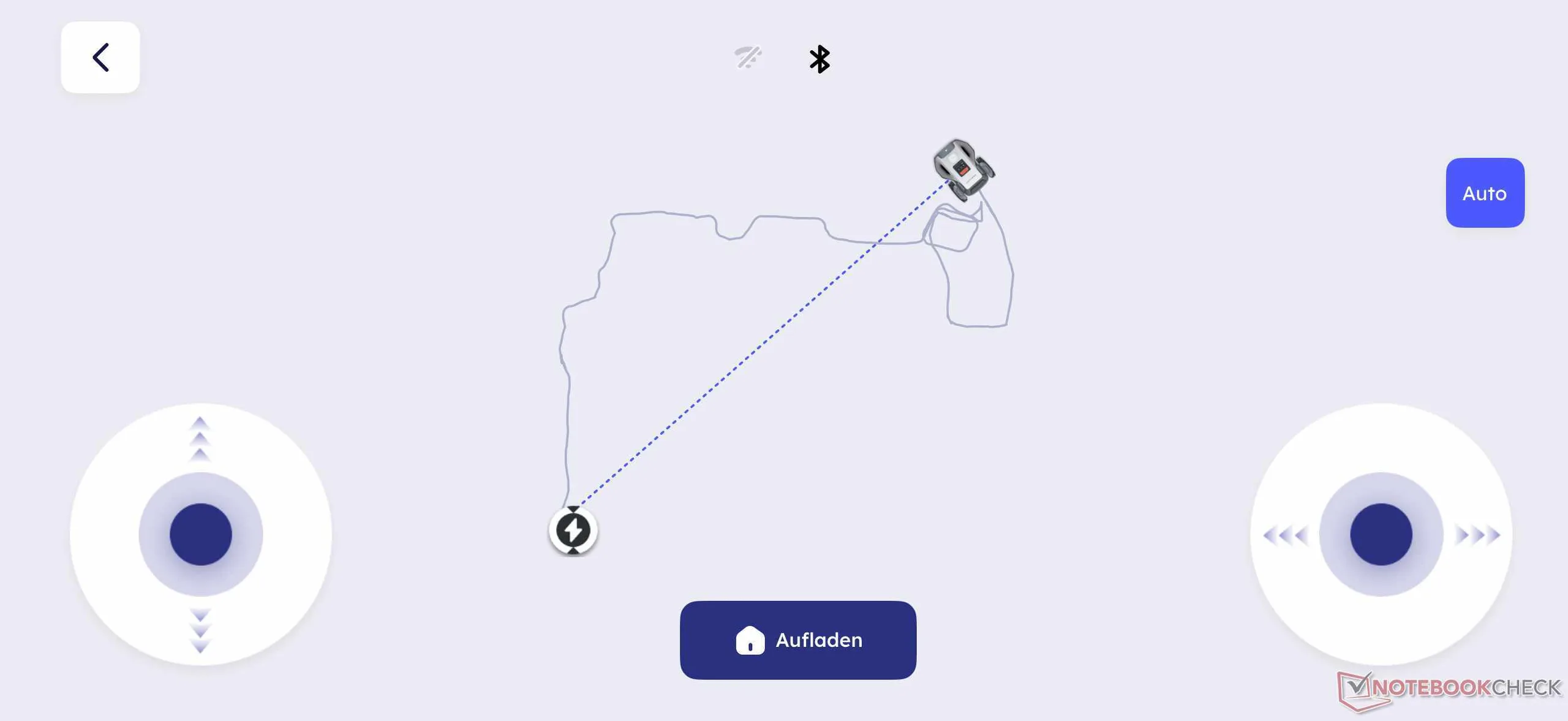
Finally, the necessary mapping of the robot mower's new area of operation is carried out, i.e. the exploration of the lawn. This can be done either manually or automatically, controlled by AI. With the AI-based solution, the robot independently drives along the edge of the lawn at a distance of a few centimetres. This worked well for the most part in the test. It only got tangled up in a flowerbed island positioned close to the edge of the lawn. Here it was necessary to switch briefly to manual mapping. In this mode, the Anthbot M9 is controlled with two virtual joysticks on the display, which works well. Overall, not a brilliant performance, but absolutely solid.
Thanks to IPX6, the Anthbot can be cleaned with a garden hose for occasional maintenance. A suitable screwdriver for changing blades is included in the scope of delivery, as is a first set of replacement blades.
App & operation: Extensive settings
The Anthbot M9 is controlled and programmed in the usual way via the Anthbot app, which is already used during setup. Although the German localization is not perfect and sometimes takes some getting used to, it offers many functions.
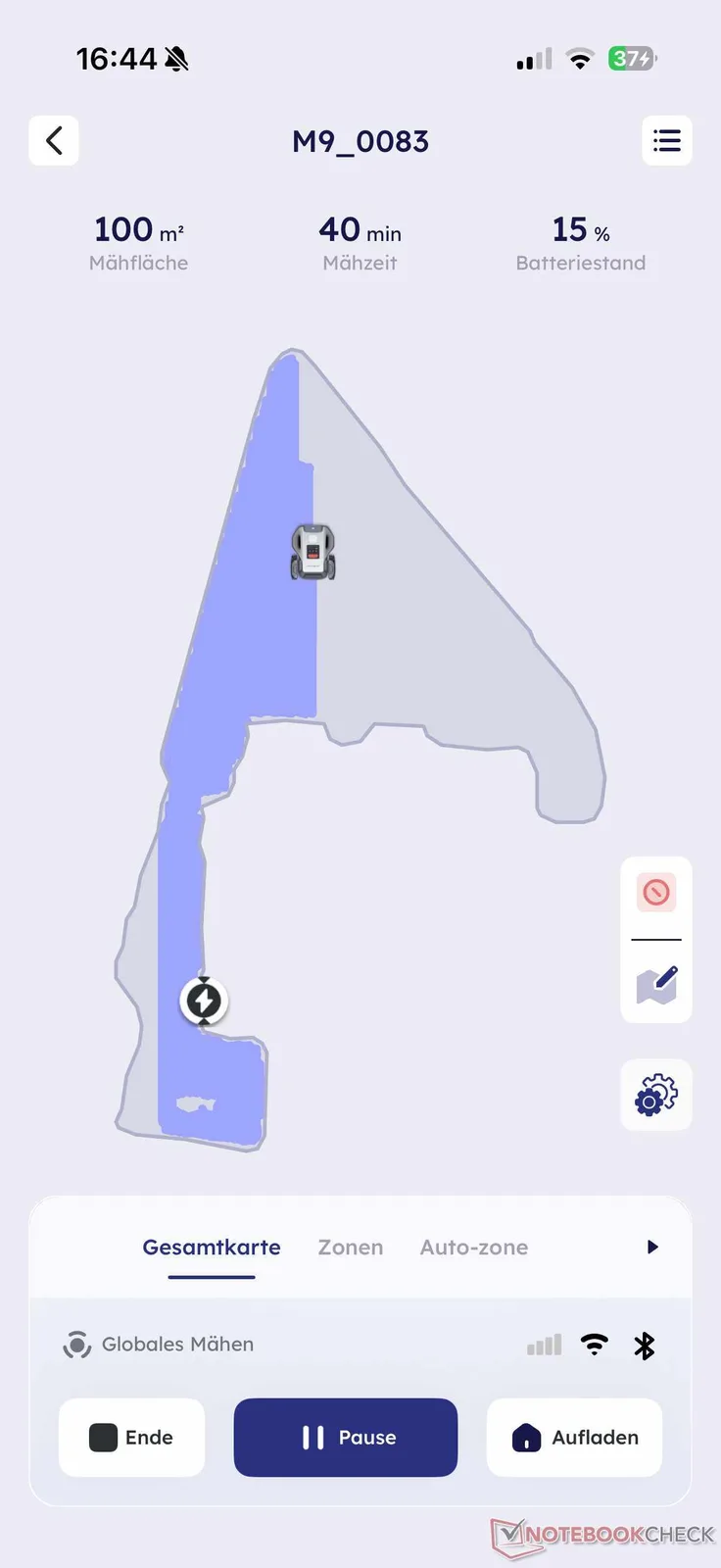
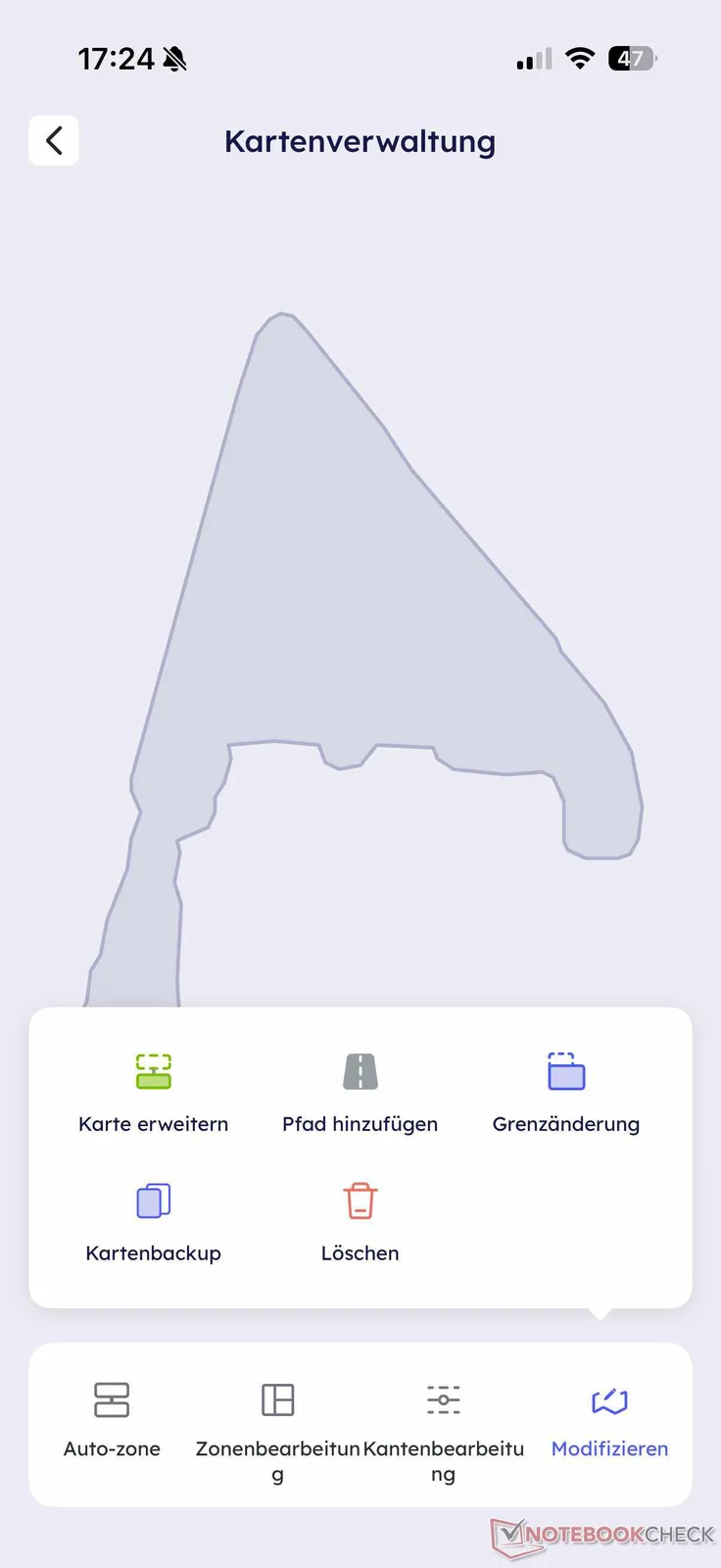
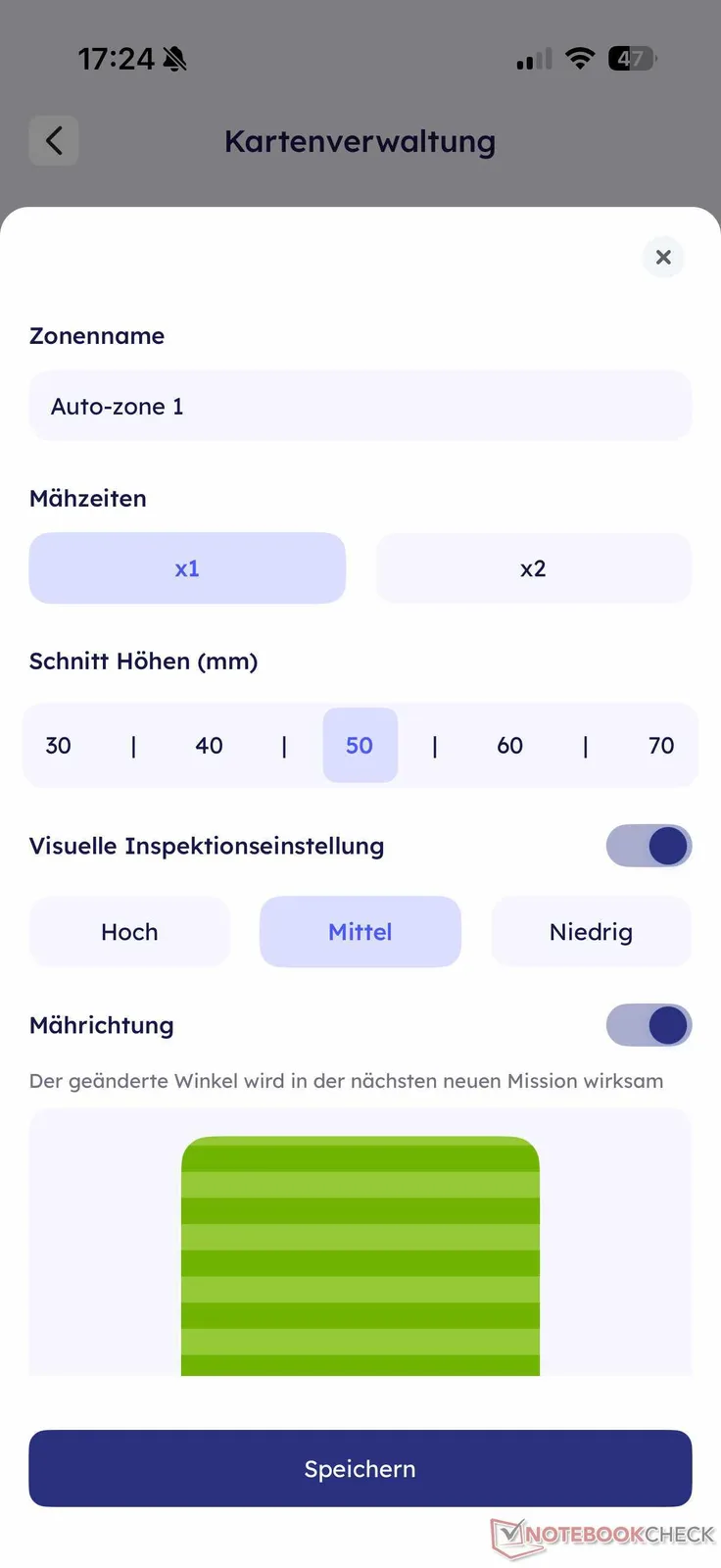
The live overview shows mowing progress in real time, as usual. The mowing settings can be changed using the gear icon. In addition to the number of mowings (once or twice), the mowing height (in 5 mm increments) and the freely adjustable mowing direction, the obstacle detection can also be adjusted in three stages. More on this below in our Anthbot M9 review.
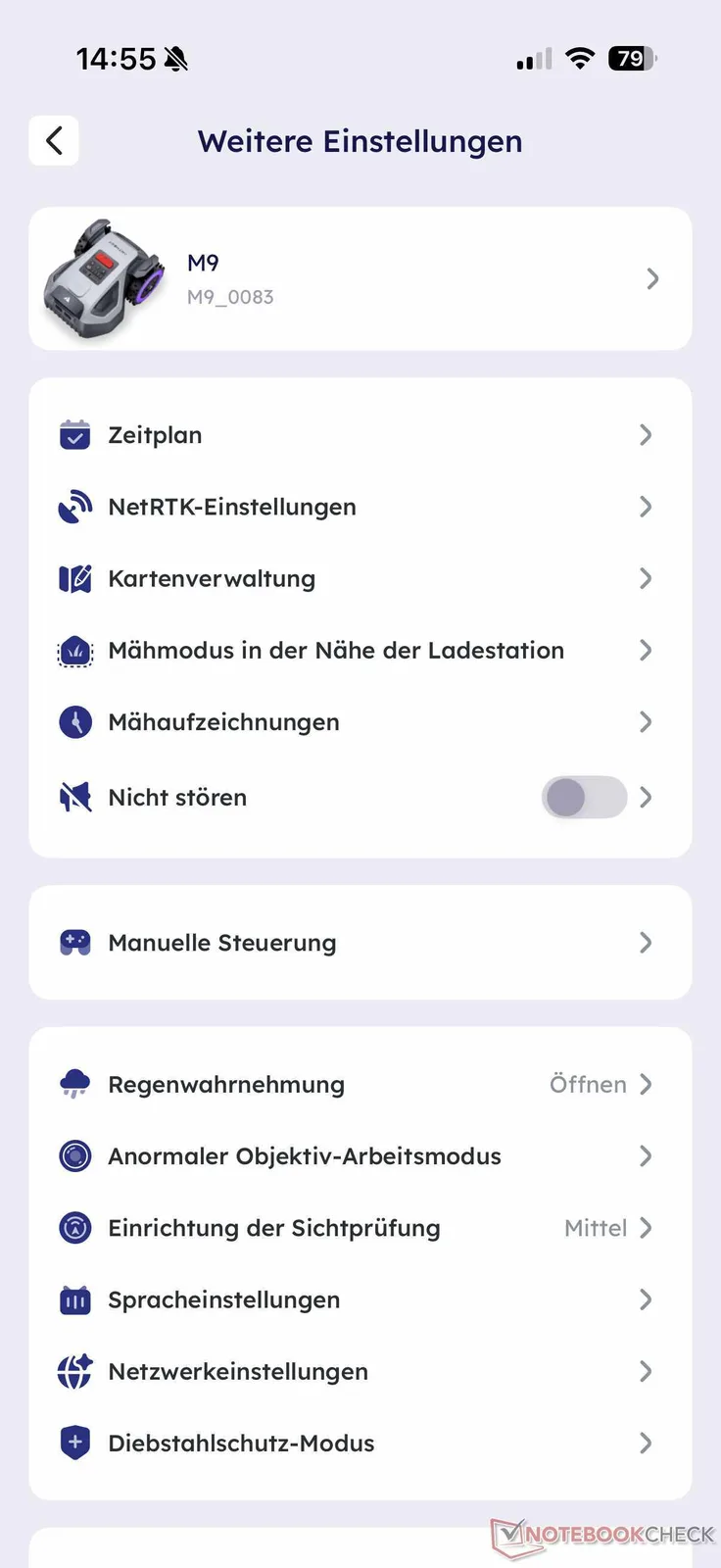
The map management offers various functions. In addition to a backup to save a map, the behavior at edges can be set (more details on this below). There are also various zones including paths and the option to customize the current map. Various settings such as schedules, behavior in the rain, anti-theft mode and firmware updates round off the Anthbot app. The only thing we missed was a live video function.
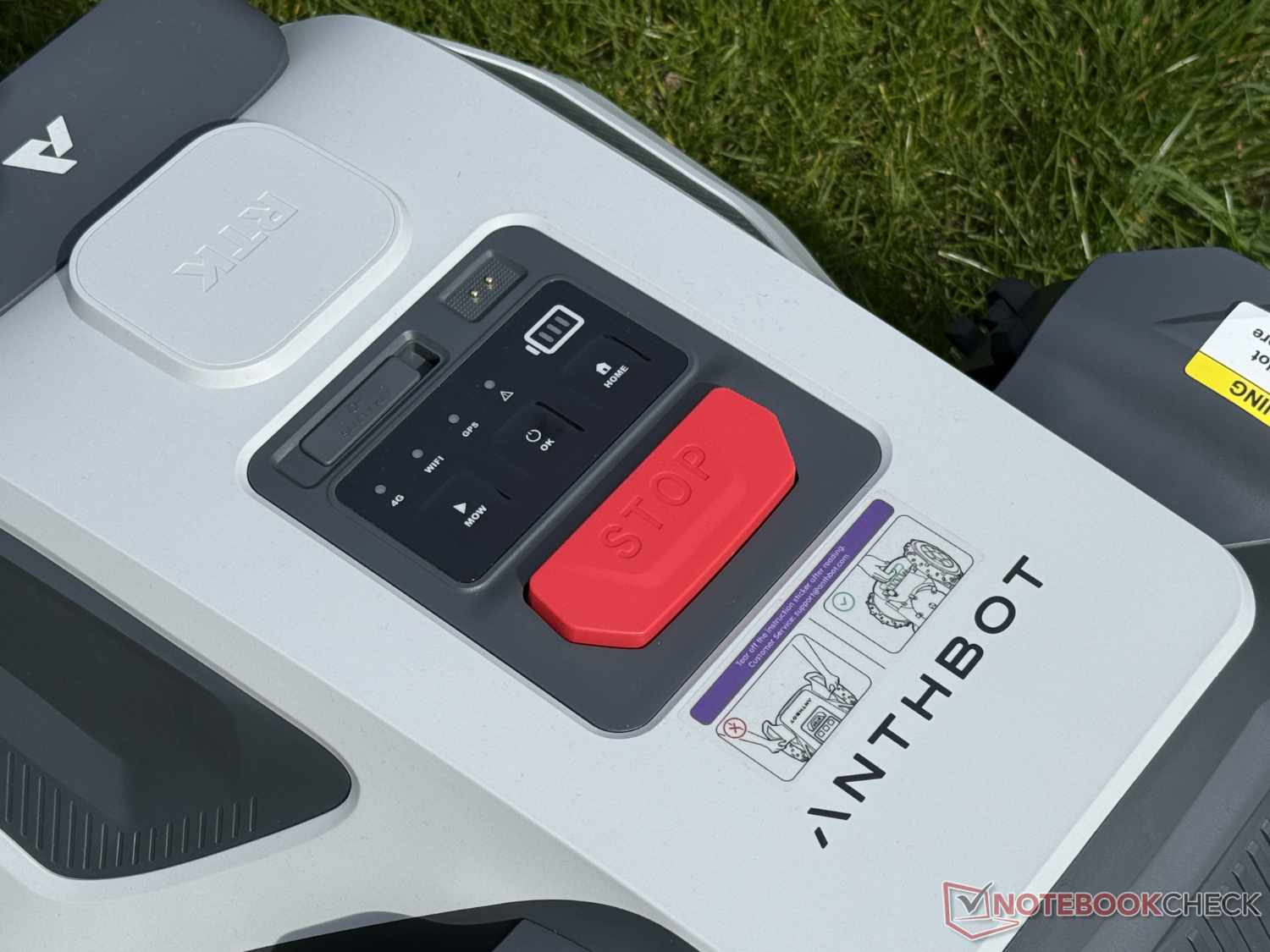
As an alternative to the app, it can also be operated directly on the robot. In addition to the obligatory STOP in red, the control unit on the top includes three small buttons (Mow, OK and Home).
Above these are four status LEDs and a three-part battery icon. There is no display. The rain sensor and a safety key can also be found there.
Navigation & obstacle detection: mostly reliable
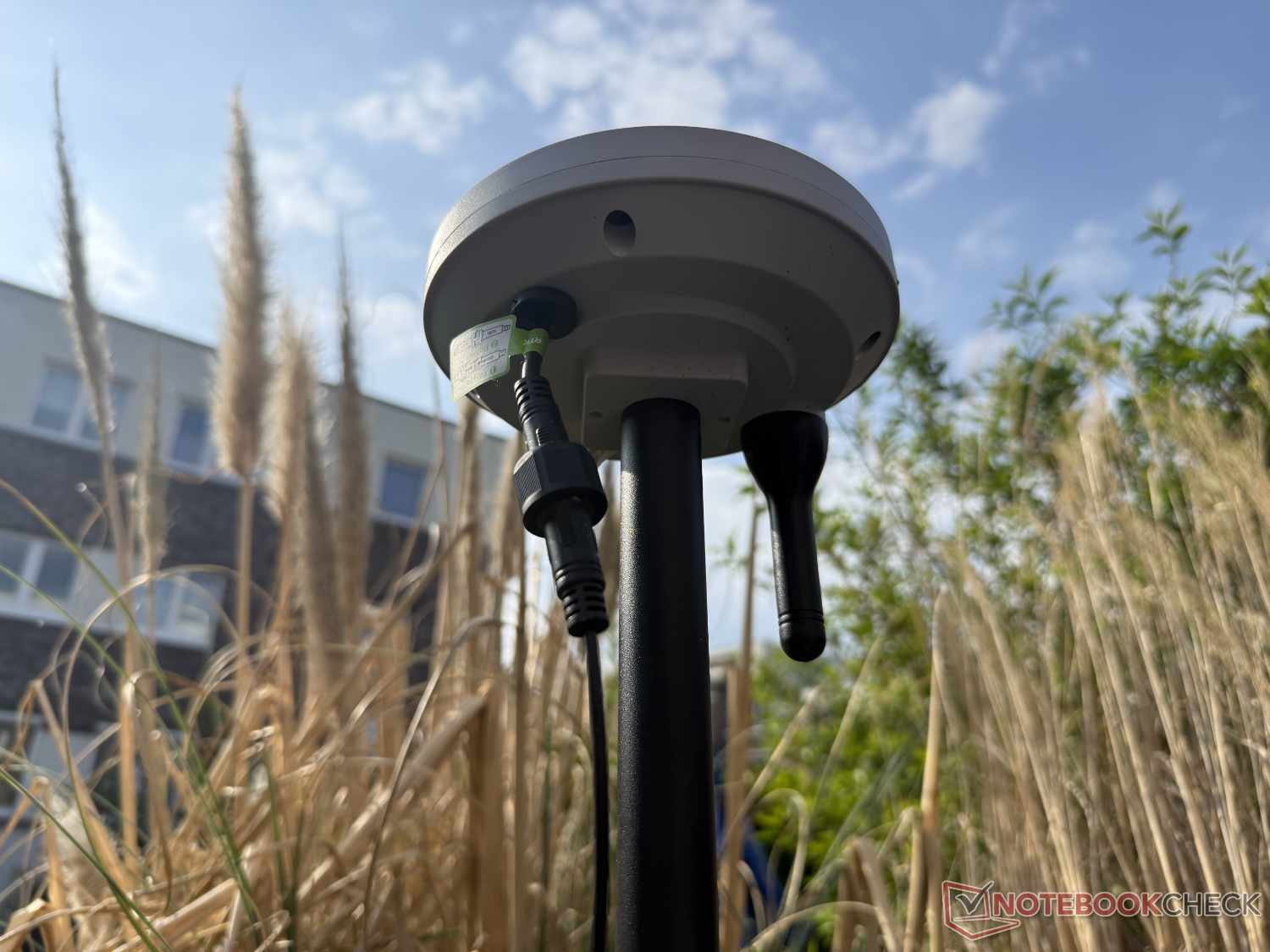
As already mentioned, the Anthbot M9 uses its own RTK antenna for navigation in its previously mapped area of operation. During the test period, it left this area slightly once, which led to it getting stuck on an edge. Due to the usual slight inaccuracies of the technology, a safe distance should always be maintained from such potential sources of danger when mapping. However, this is also advisable for robot mowers with both LiDAR and RKT. Otherwise, the navigation of the Anthbot M9 worked reliably in the test.
NetRTK can also be used as an option - i.e. without an RTK antenna. For this, the M9 supports 4G as well as Wi-Fi. Three months of 4G use are included free of charge with the purchase. After that, you will have to pay around $40 per year. Unfortunately, activating NetRTK did not work with our test device.
There are three different levels to choose from for obstacle detection ("Visual inspection setup"). It worked reliably even at the medium level. In the test, the Anthbot M9 reliably detected our usual challenges, including a fake hedgehog, a piece of garden hose lying on the lawn and a tennis ball. Other robotic lawnmowers, some of which are considerably more expensive, have struggled with all three relatively small or flat test obstacles - but not the Anthbot M9. It always avoided them all and drove relatively close to them.
Mowing performance & edge mowing: Compact robot mower even for narrow gardens
Thanks to its mostly reliable navigation, the Anthbot M9 systematically made its way across our test area during the test. Due to its relatively simple technology, it is not particularly capable on rough or uneven terrain.. Its maximum climbing ability is 24°/45%, although our impressions were that it then struggled depending on the surface. However, thanks to its relatively compact shape, it is maneuverable and can usually cope with narrower passages from around 70 cm. The M9 is therefore well suited to more complex lawns, but these should not be on steep slopes or surrounded by many tall trees.
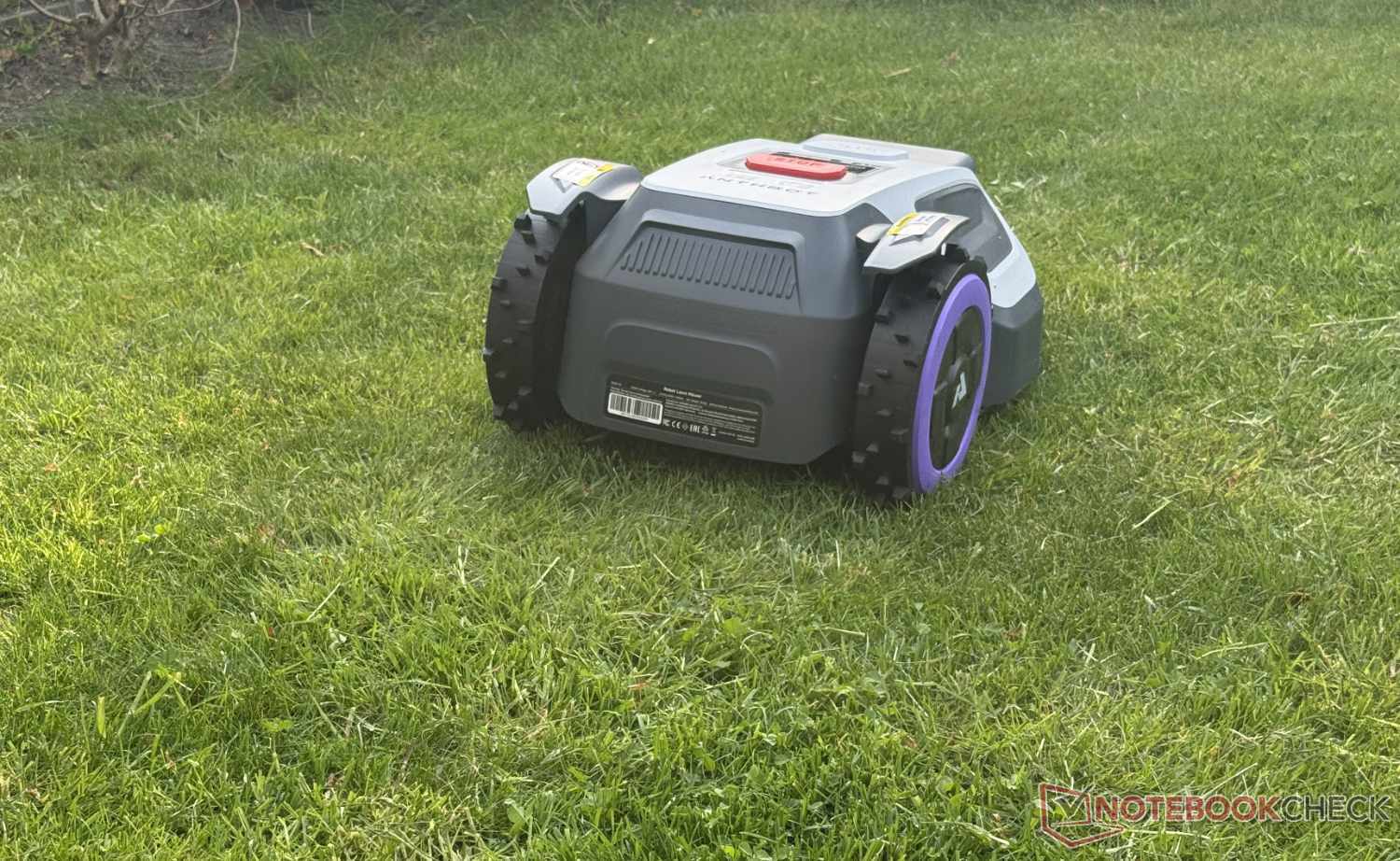
There is little to criticize about the mowing performance itself. With its mowing disk and five blades, it reliably cuts the lawn to the electrically set height of between 3 and 7 cm, just like most robotic lawn mowers. Anyone using a smart lawn helper for the first time will quickly notice a visible difference.
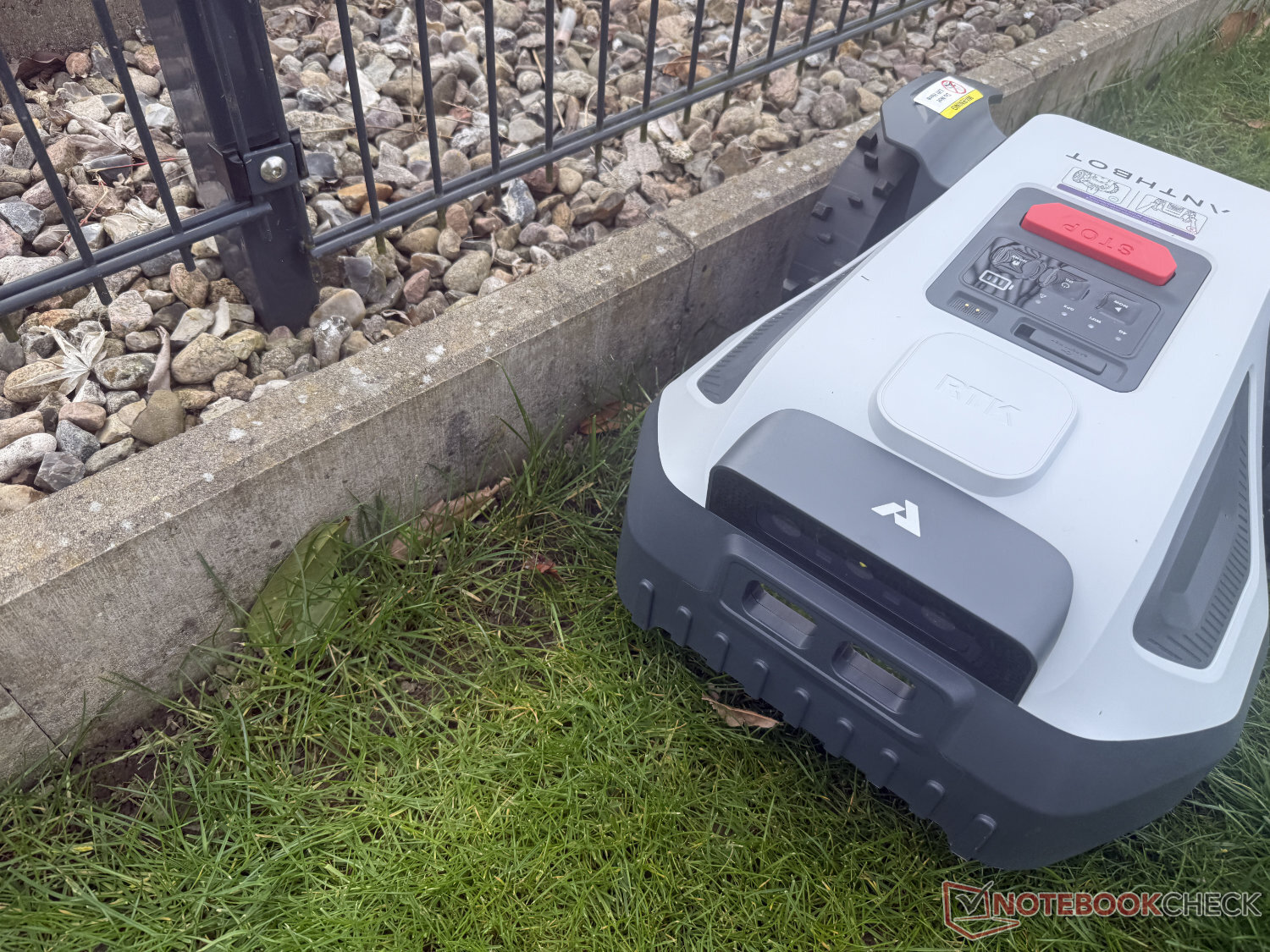
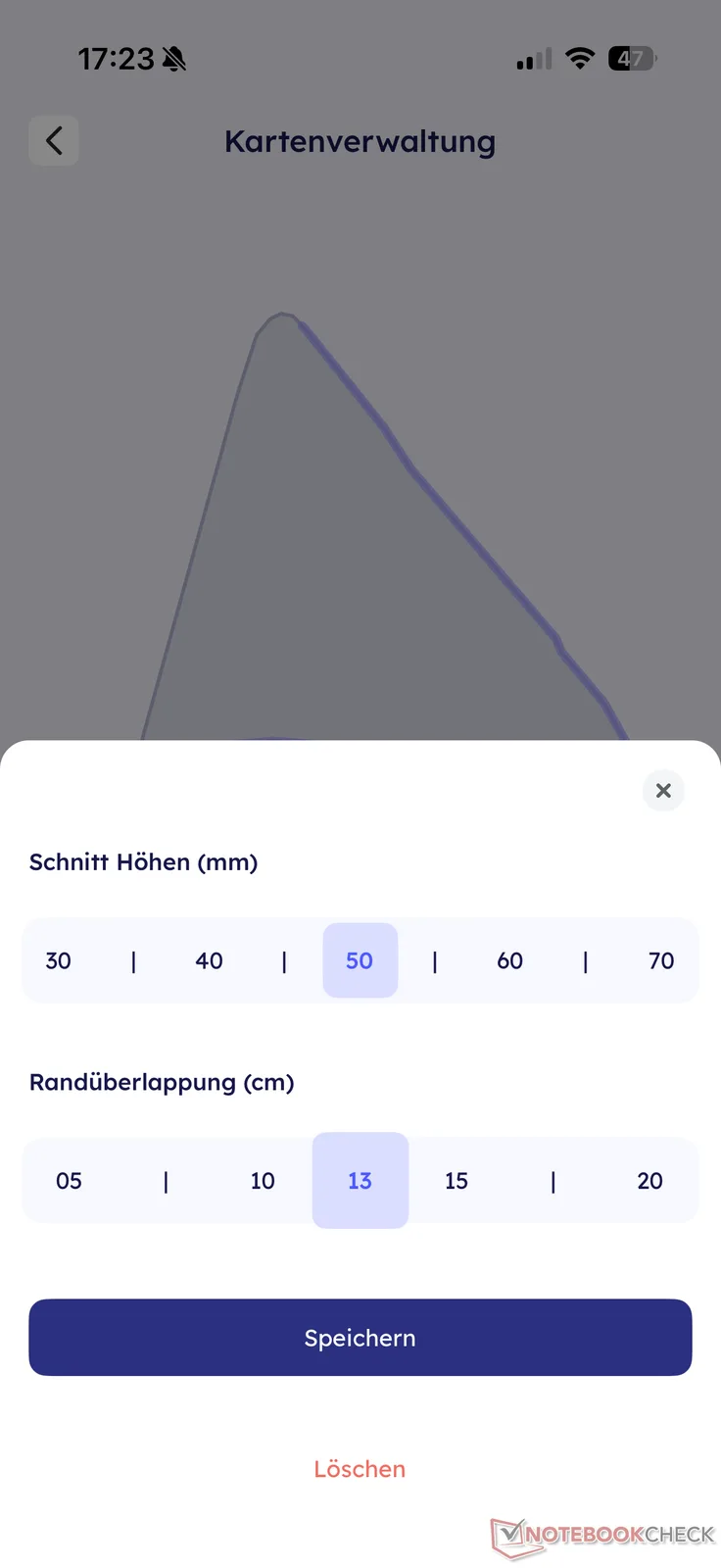
The usual sticking point is mowing the edges of the lawn. The mower is positioned in the middle and therefore a good 9 cm away from the edge of the housing. This automatically results in a fairly wide unmown strip - at least in the case of transitions that are not at ground level. However, if these are present, the Anthbot M9 can also extend up to 20 cm beyond the lawn if desired. This can be individually defined in the app in the map management for individual border areas.
However, this should be done carefully. As an experiment, we set the mower to overrun the boundary by a few centimetres in an area bordered by a 10 cm high kerbstone. As a result, he zigzagged slightly along the stone with the right side of the device, leaving clearly visible marks. In this case, the camera-based obstacle detection did not override the settings specified in the app.
Running time & volume: Exceeded manufacturer's specifications
The manufacturer specifies a running time of 90 minutes per charge for the 5 Ah/90 Wh battery of the Anthbot M9. The test device was even able to exceed this in practice, although this of course always depends on the height of the lawn and therefore the mowing intensity as well as the terrain. Overall, the robot mower managed to cover almost 300 square meters on our test area with one battery charge, which is a remarkable result considering its size and price.
During the subsequent pit stop at the charging station, which the robot did not always reliably "hit" on the first attempt, it took a little longer than the manufacturer's specification of 90 minutes. In around two hours, just under 110 Wh with up to 55 W flowed through the measuring device. We measured the energy consumption in standby mode (when the robotic lawnmower is waiting in its station for the next use) at approx. 7 W.
If we extrapolate this for our usual comparison scenario of mowing 500 square meters three times a week, this results in a monthly power consumption of just under 7 kWh. This means that the Anthbot M9 is not the most economical robotic lawnmower on the market, but it is absolutely reasonable. This also applies to the noise level. From a distance of 1 m, we measured the M9 at around 60 dB, sometimes louder during intensive mowing - not particularly quiet, but not noticeably loud either.

Is the Anthbot M9, according to our test, not the right wire-free robotic lawnmower for your garden?
Then discover many more models in our 2026 ranking of the best robotic lawnmowers!
Transparency
The selection of devices to be reviewed is made by our editorial team. The test sample was given to the author by the manufacturer free of charge for the purposes of review. There was no third-party influence on this review, nor did the manufacturer receive a copy of this review before publication. There was no obligation to publish this review. As an independent media company, Notebookcheck is not subjected to the authority of manufacturers, retailers or publishers.
 Add as a preferred source on Google


