




Sunseeker V1 review: Bargain robotic lawnmower for English lawn
Extremely cheap, but with a garage.
A robotic lawnmower for under 400 euros sounds like a real bargain. In the test, however, the Sunseeker V1 quickly shows that the low-cost robotic lawnmower does not guarantee an English lawn, but rather requires it - and even dug itself in once.Marcus Schwarten (translated by DeepL / Marcus Schwarten) Published 🇩🇪 🇳🇱 ...
Sunseeker V1 at a glance:
- Max. Area: 300 m²
- Navigation: camera-based
- Mowing disk: 16 cm, 2 to 5 cm cutting height
- Special feature: with garage
- Good for: price-conscious buyers with simple, small gardens
- Not suitable for: complex areas
Sunseeker V1 test conclusion: Inexpensive robotic lawnmower for simple areas
As a purely camera-based robotic lawnmower without mapping, our practical experience shows that the Sunseeker V1 is only suitable for small, simply designed lawns with clearly recognizable edges. With its random-based navigation, the bargain robot lawn mower without perimeter wire does not necessarily ensure the aforementioned English lawn, but more or less presupposes it.
If your lawn meets these requirements and you are looking for an affordable robotic lawnmower, the Sunseeker V1 will make your work easier at a reasonable price. Compared to more expensive models with RTK or LiDAR, however, the Sunseeker V1 works less efficiently.
In addition to the quick and easy set-up and uncomplicated operation, we noticed the reliable obstacle detection in the test of the Sunseeker V1. However, the robot lawn mower occasionally got stuck during the test period, so it is not a completely autonomous garden helper.
Pros
Cons
Price and availability
The recommended retail price for the Sunseeker V1 is 389 euros - including garage. The Sunseeker V1 is currently not available in the USA. In Europe, for example, it is available from Amazon.
Table of Contents
- Sunseeker V1 test conclusion: Inexpensive robotic lawnmower for simple areas
- Equipment & scope of delivery: Comes with garage
- Set-up & maintenance: ready for use in no time at all
- App & operation: Rudimentary without mapping
- Navigation & obstacle detection: chaotic and therefore inefficient
- Mowing performance & edge cutting: No guaranteed coverage
- Running time & volume: Favorable not only in price
At less than 400 euros, the Sunseeker V1 is one of the most affordable robotic lawn mowers without a perimeter wire on the market. The particularly compact and inexpensive robot lawn mower is not only available at a bargain price, but even comes with a garage included.
Is it worth buying? Our practical test of the Sunseeker V1 shows what this bargain robot lawn mower can do, who it is suitable for and what compromises need to be made.
Data sheet Sunseeker V1
| Feature | Sunseeker V1 |
|---|---|
| Area | 300 m² |
| Navigation and obstacle detection | Vision AI camera |
| Mower | Mowing disk |
| Number of blades | 3 |
| Cutting width | 16 cm |
| Cutting height | 20 to 50 mm |
| Cutting height adjustment | manual |
| Slope | 27% / 15° |
| Display | yes |
| 4G | no |
| Battery capacity | 2 Ah |
| Weight | 6.7 kg |
| Dimensions | 51.6 x 32.3 x 22.7 cm |
| Water resistance | IPX5 |
| Garage included in delivery | yes |
| Number of blades included in the scope of delivery | 3 + 6 pieces |
| Color | black/grey |
| MSRP | 389 Euro |
| available at | Amazon |
Equipment & scope of delivery: Comes with garage
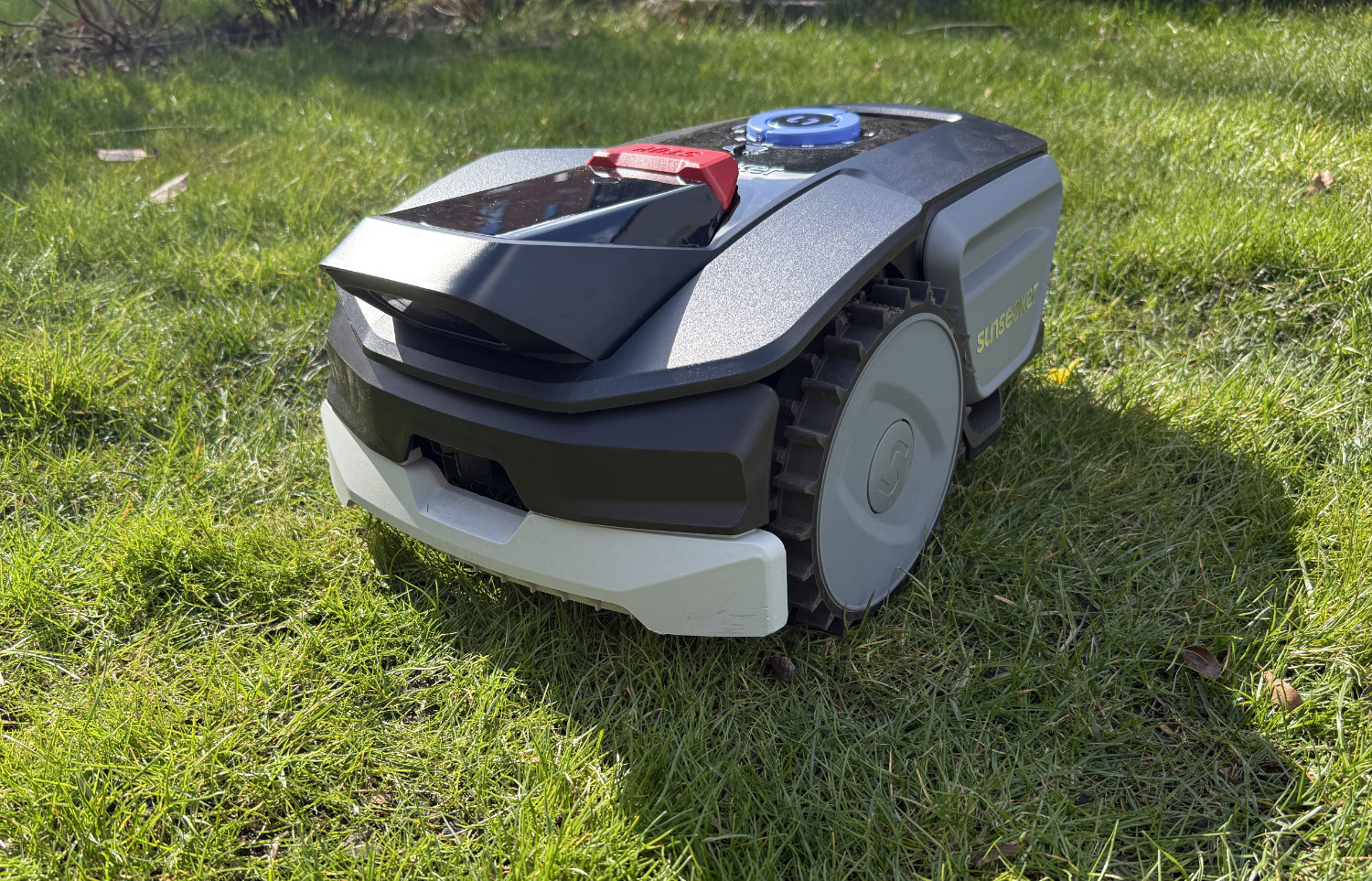
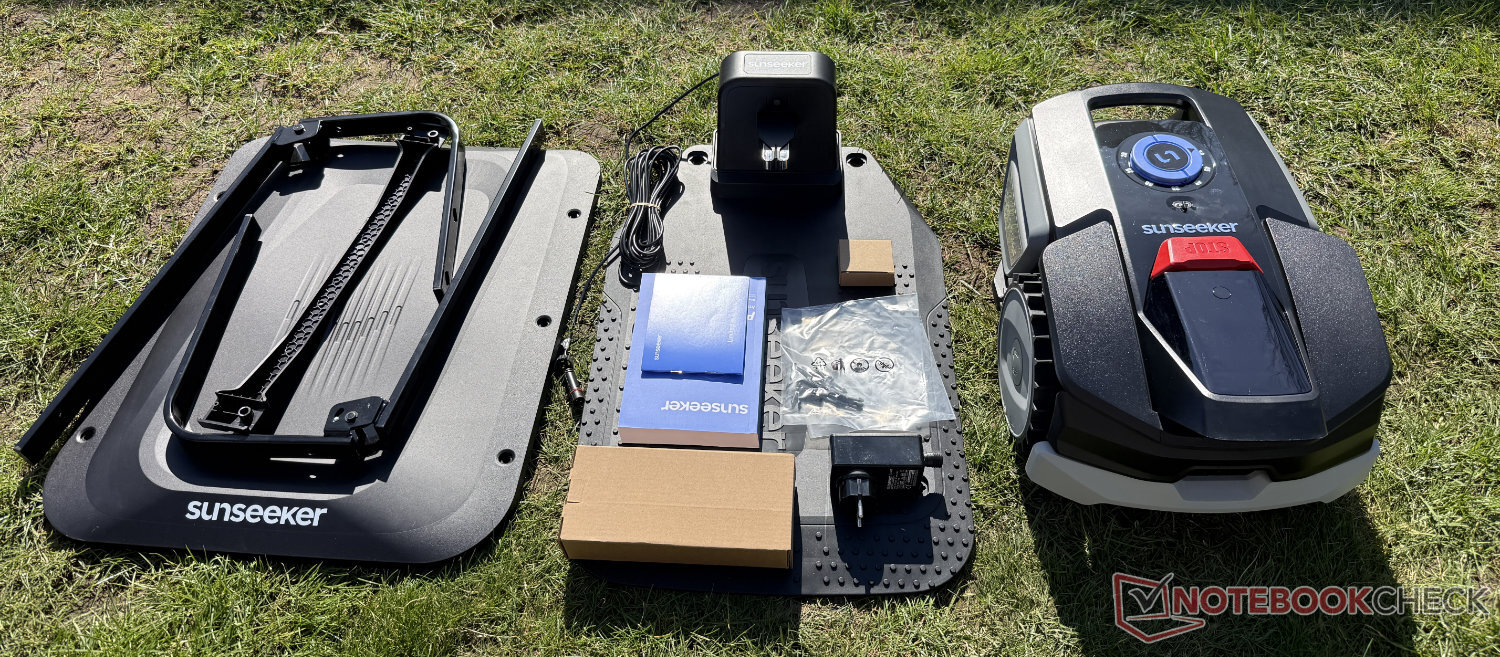
If you (like me) have already held many robotic lawn mowers in your hands, you're almost a little shocked at first when you unpack the Sunseeker V1. Not only is the wireless robot lawn mower relatively light at less than 7 kg. It is also extremely compact. Compared to some other models, it almost looks like a toy.
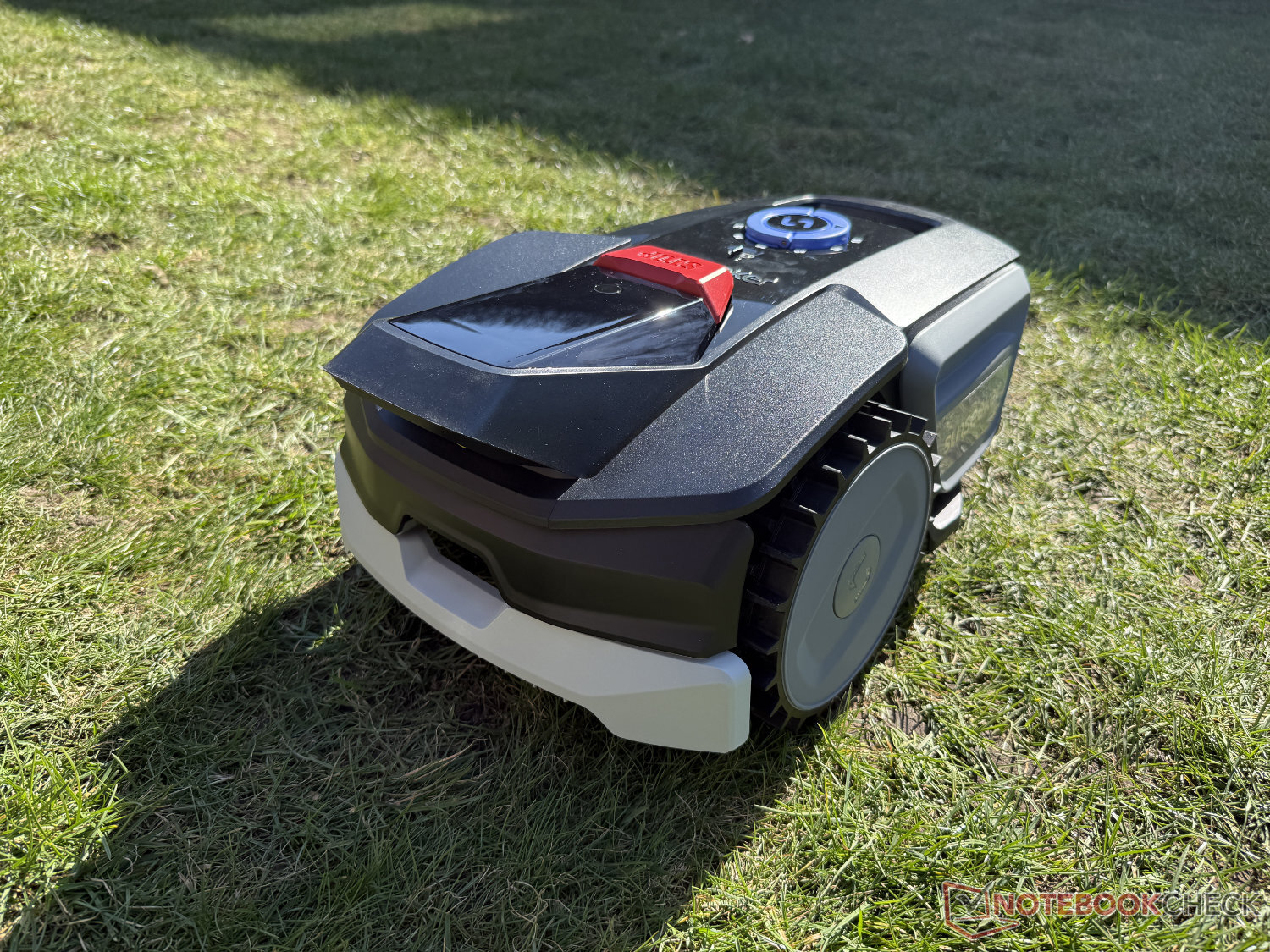
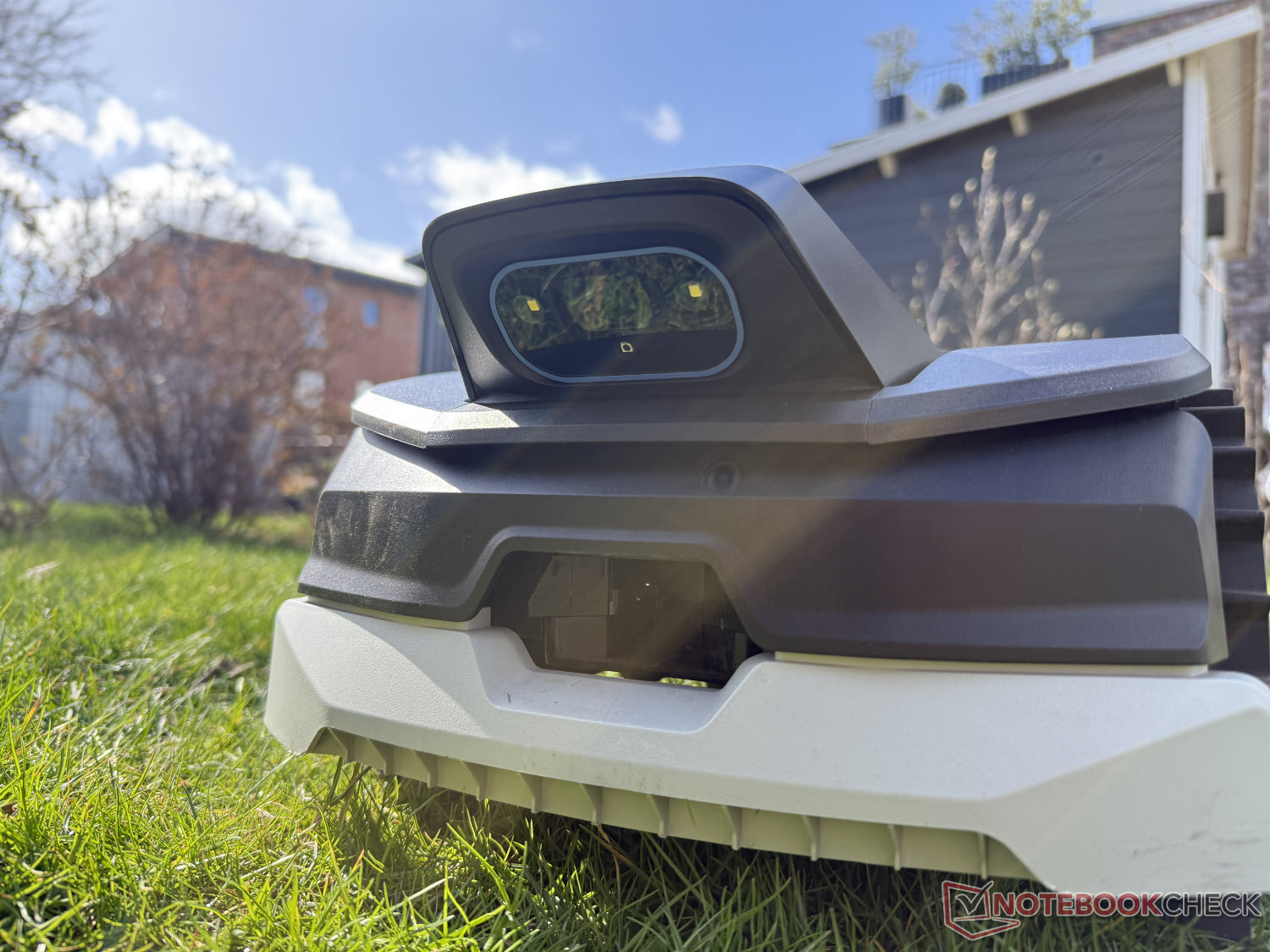
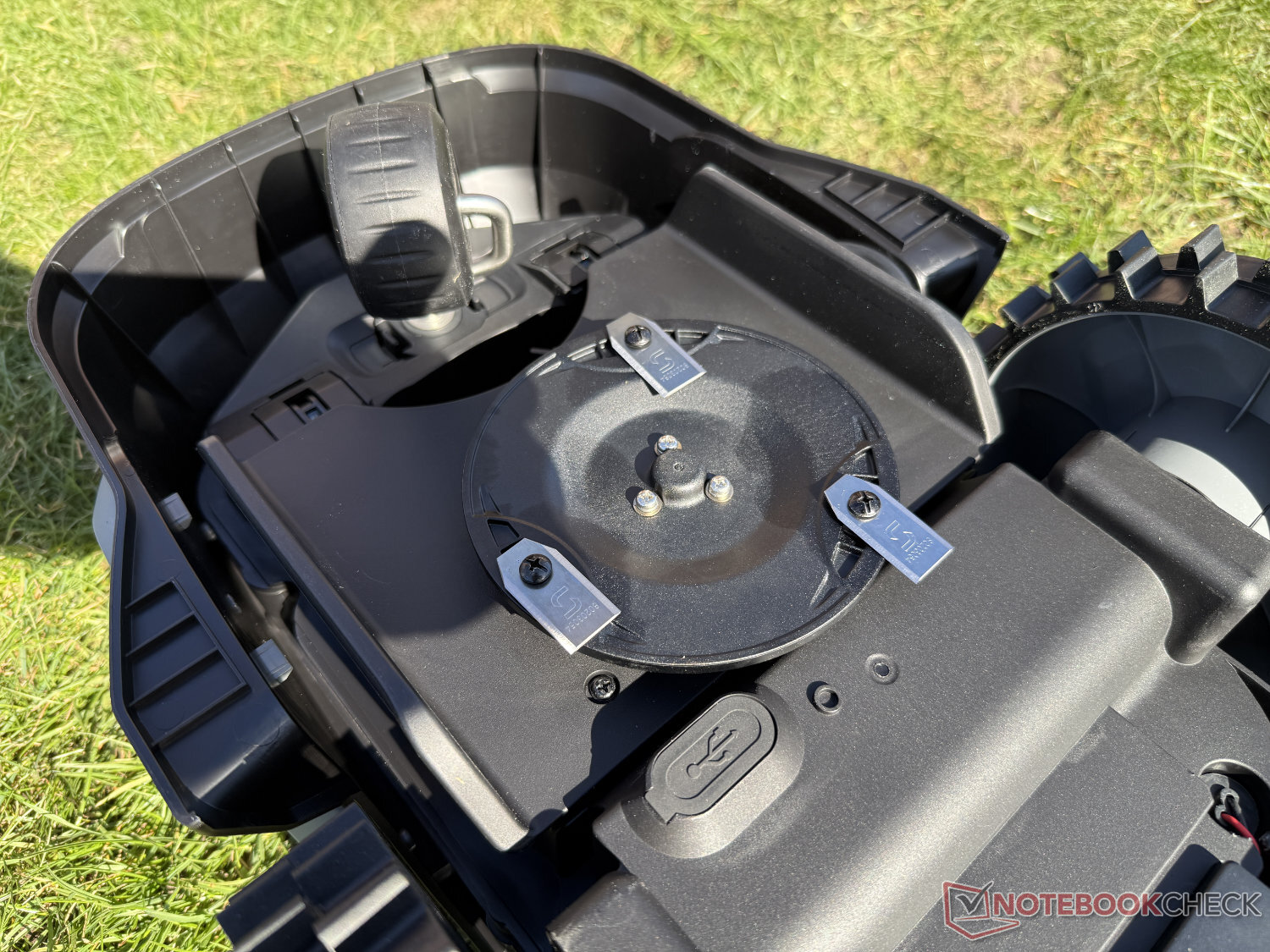
However, a look at the underside shows that this is not the case. This is where the mowing disk is located, although it is also very compact with a mowing width of 16 cm. The cutting height can be adjusted between 20 and 50 mm, but only manually in line with the price range. In addition to the control unit, the front-facing camera for navigation is also located on the top, which we will discuss below.
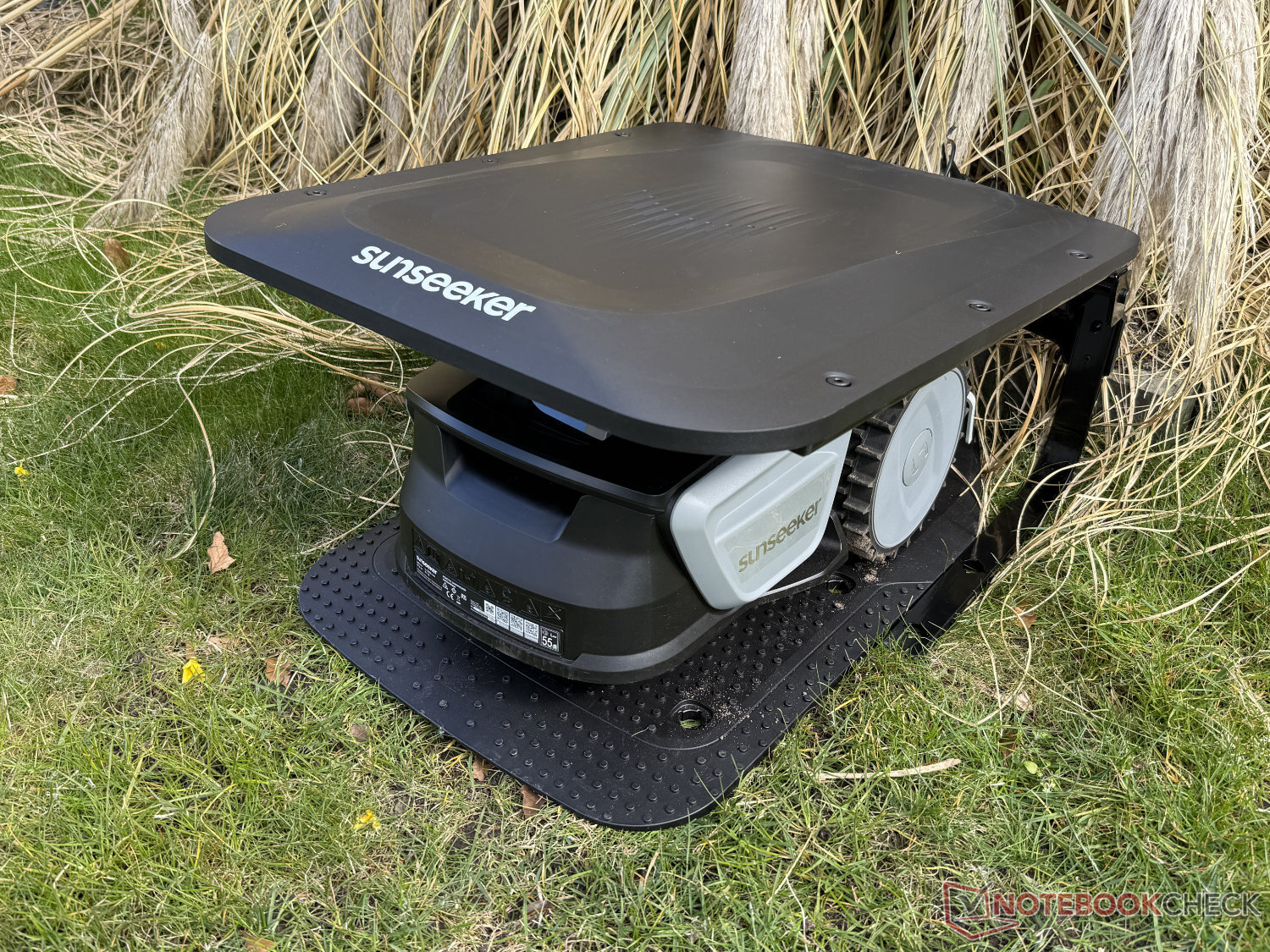
The Sunseeker V1 also comes with a special feature: despite the low price of less than 400 euros, the manufacturer includes not only a charging base but also a complete garage in addition to 6 replacement blades. This means that the robotic lawnmower stands under a protective roof, which also protects the camera module from dirt during the inactive phases. Assembly is possible without tools.
Set-up & maintenance: ready for use in no time at all
Sunseeker promises particularly easy handling. This starts with the installation. The charging station and roof must be set up in a suitable place on the edge of the lawn and secured to the ground using the ground screws provided. The power cable must also be plugged into a socket.
But that's all! No RTK station needs to be set up, not to mention the time-consuming laying of a boundary wire. The Sunseeker V1 also does not require a mapping run, as is necessary with other modern robotic lawnmowers without a boundary wire, either manually or AI-controlled. This is simply because it does not have a mapping function. But more on this in our Sunseeker V1 review below.
Effortless Lawn Care: Sunseeker V1 – Smart, Quiet, Ready to Go

No boundary wires, no complicated setup – the Sunseeker V1 is ready in minutes with the ReadyGo system. Its Vision-AI obstacle avoidance and floating cutting deck deliver a perfectly trimmed lawn quietly (55 dB) and efficiently.
Durable design with IPX5 water protection and sunshield keeps it safe from rain and sun. Ideal for small gardens up to 300 m². Supported by our local service team, providing quick assistance and expert advice.
Order your Sunseeker V1 on Amazon now and enjoy the SPRING SALES!
This robot lawn mower is therefore ready for use very quickly. "Unpack, set up, start mowing" is not just an empty advertising promise, but has been impressively proven in practice. Even the assembly of the garage (which is included with hardly any other robotic lawnmower) is completed very quickly with just a few plug-in connections. No other robotic lawnmower without a perimeter wire has ever been ready to go so quickly in the test.
Maintenance is similarly simple. The Sunseeker V1 can be cleaned with a garden hose. A screwdriver is required to change the three blades.
App & operation: Rudimentary without mapping
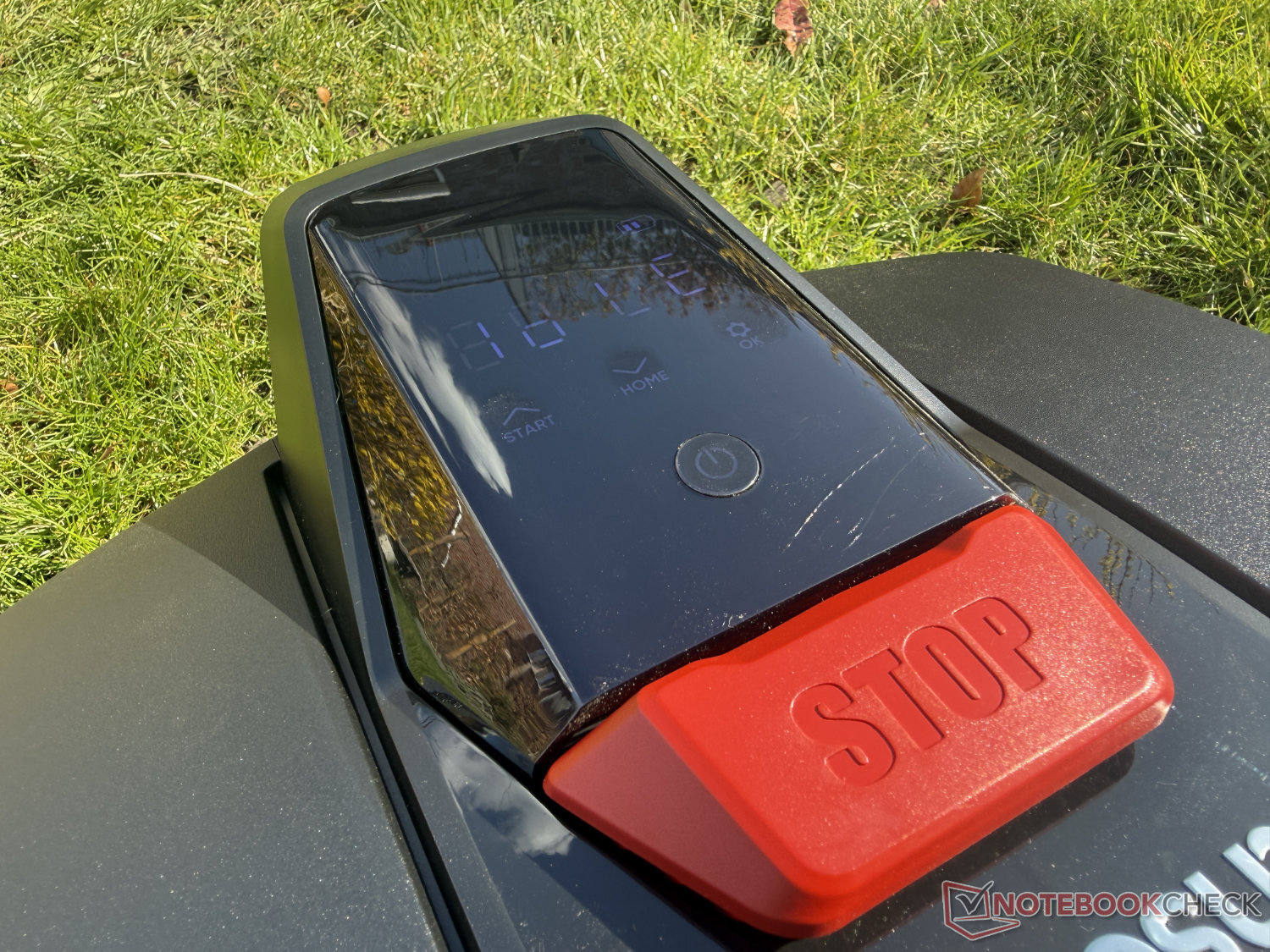
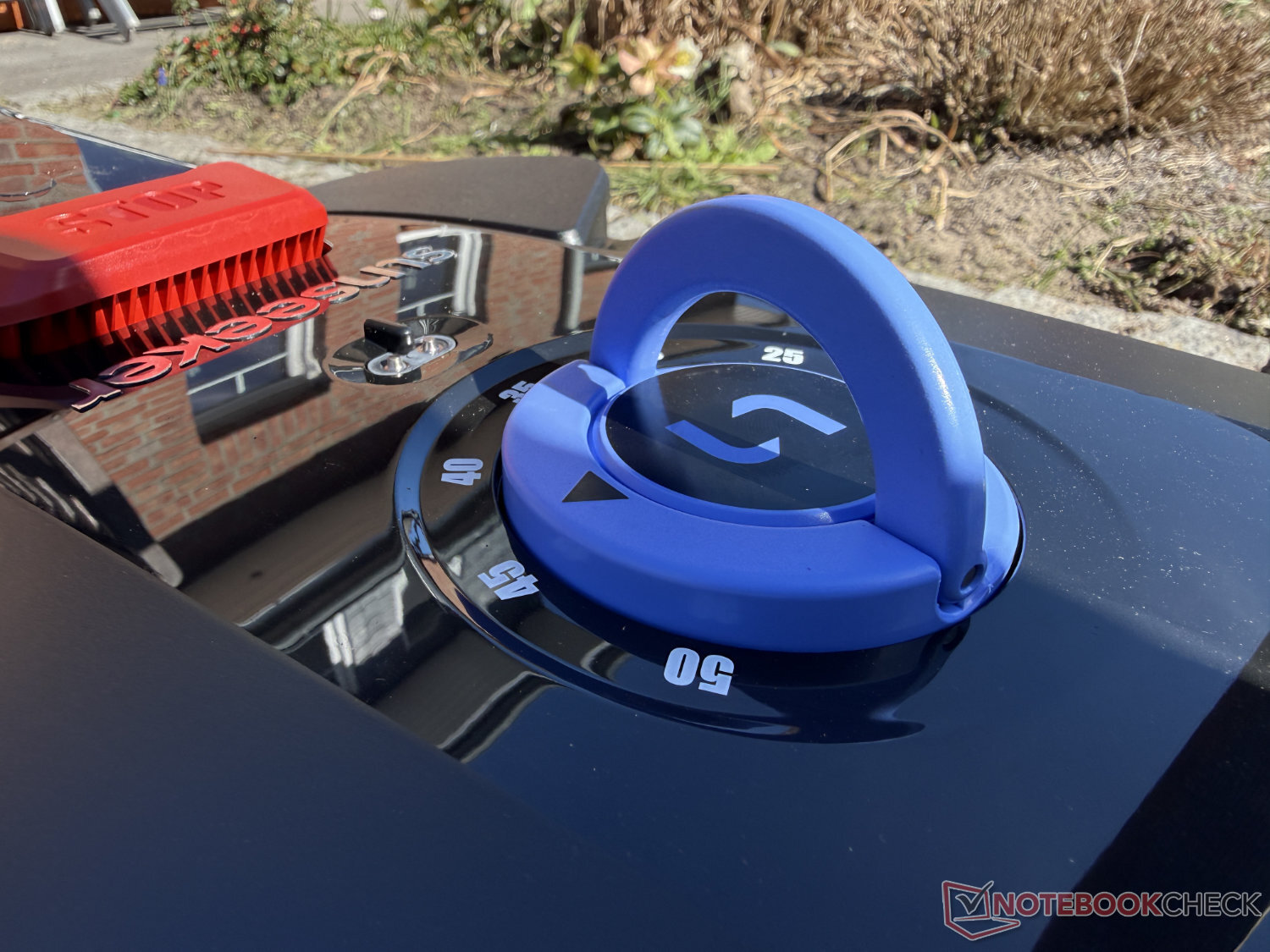
Sunseeker also promises particularly easy operation. This is also a given. The Sunseeker V1 can be used completely without an app. In addition to a small display, the affordable robotic lawnmower has five buttons/touch surfaces for stop, on/off, start/up, home/down and settings/ok. The manual adjustment of the cutting height is located at the rear. For this purpose, a rotary wheel is installed on the top, from which a small handle can be folded out for easier operation.
Alternatively, the V1 can be operated via the Sunseeker app. This opens up more possibilities. To establish a connection between the robot and the app, simply scan a small QR code on the rear with your smartphone. The connection to the home Wi-Fi network is then established. This didn't work right away in our test, but was completed successfully in the end.
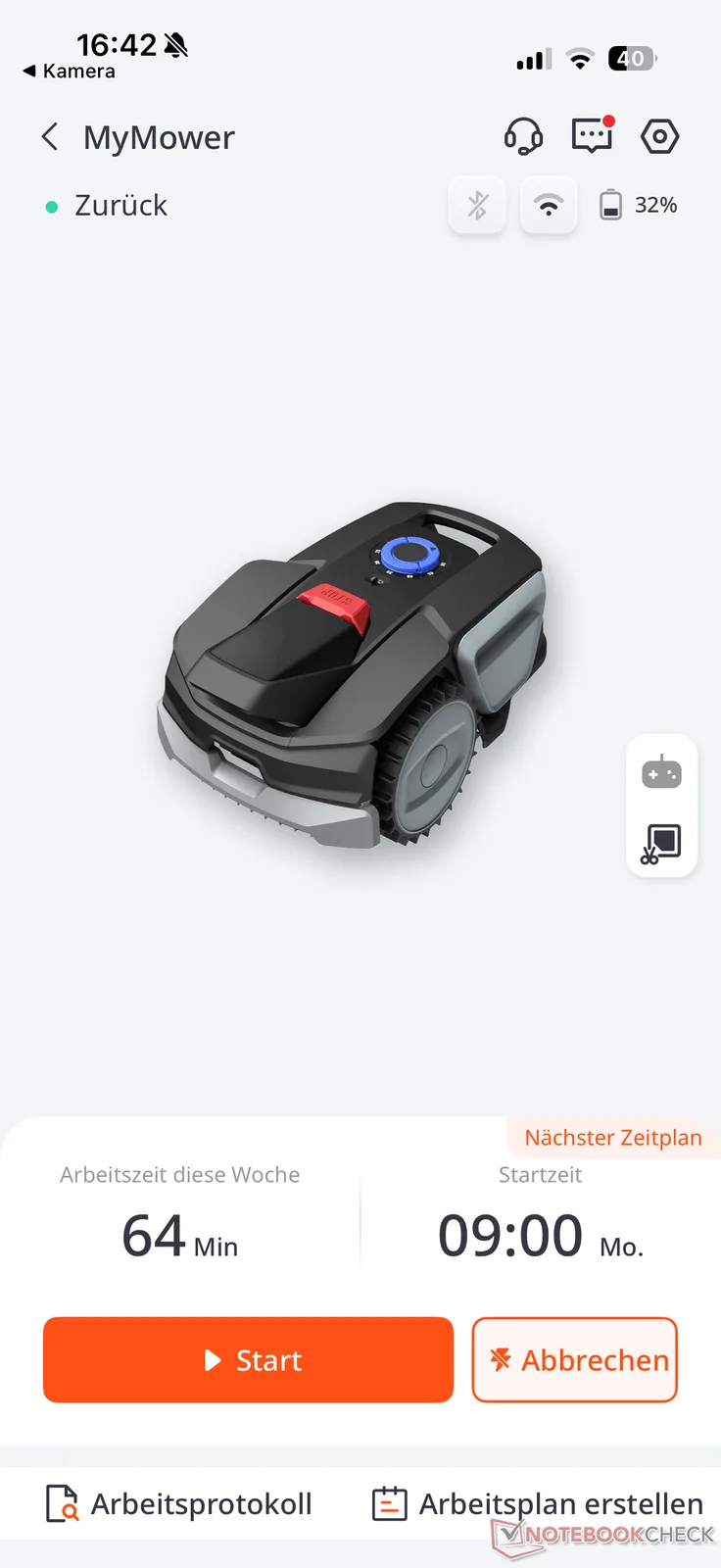
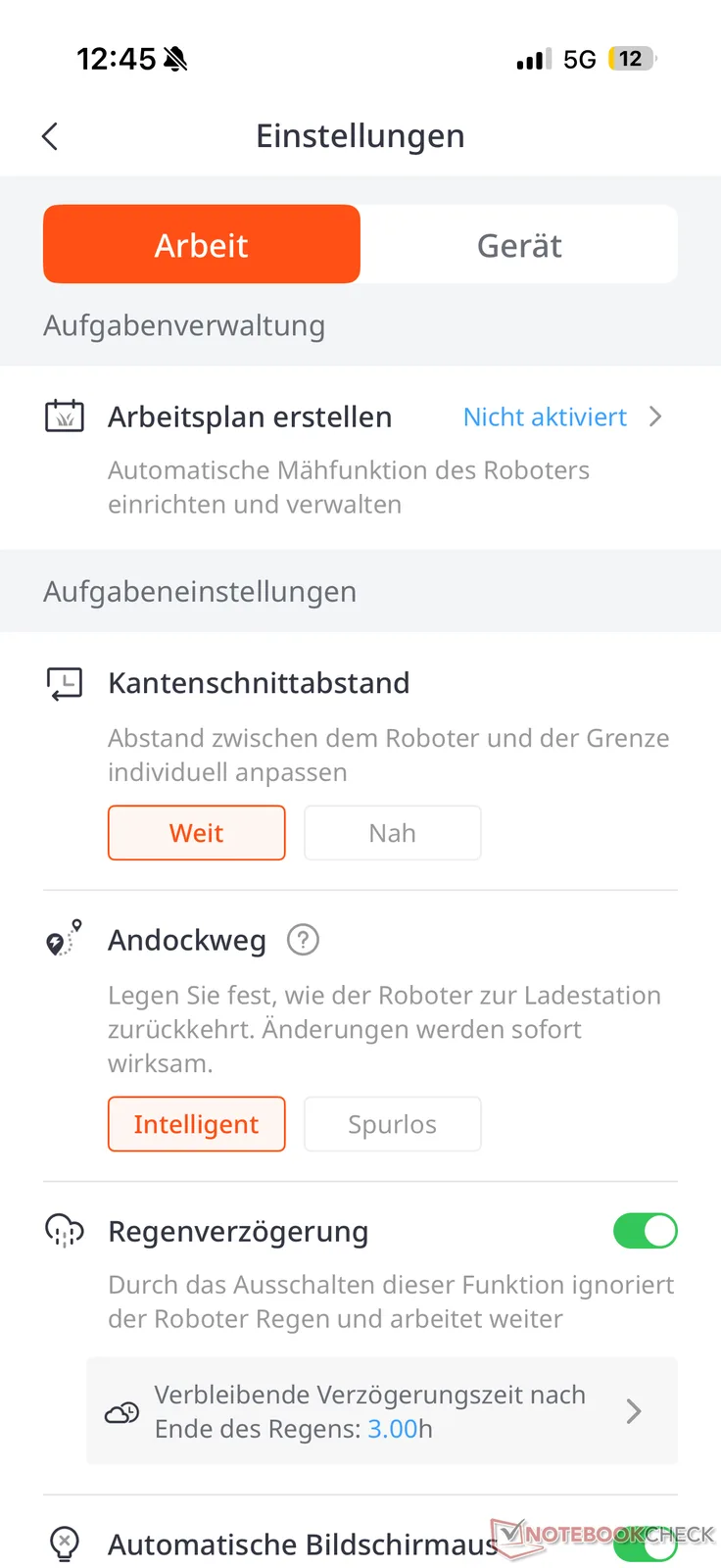
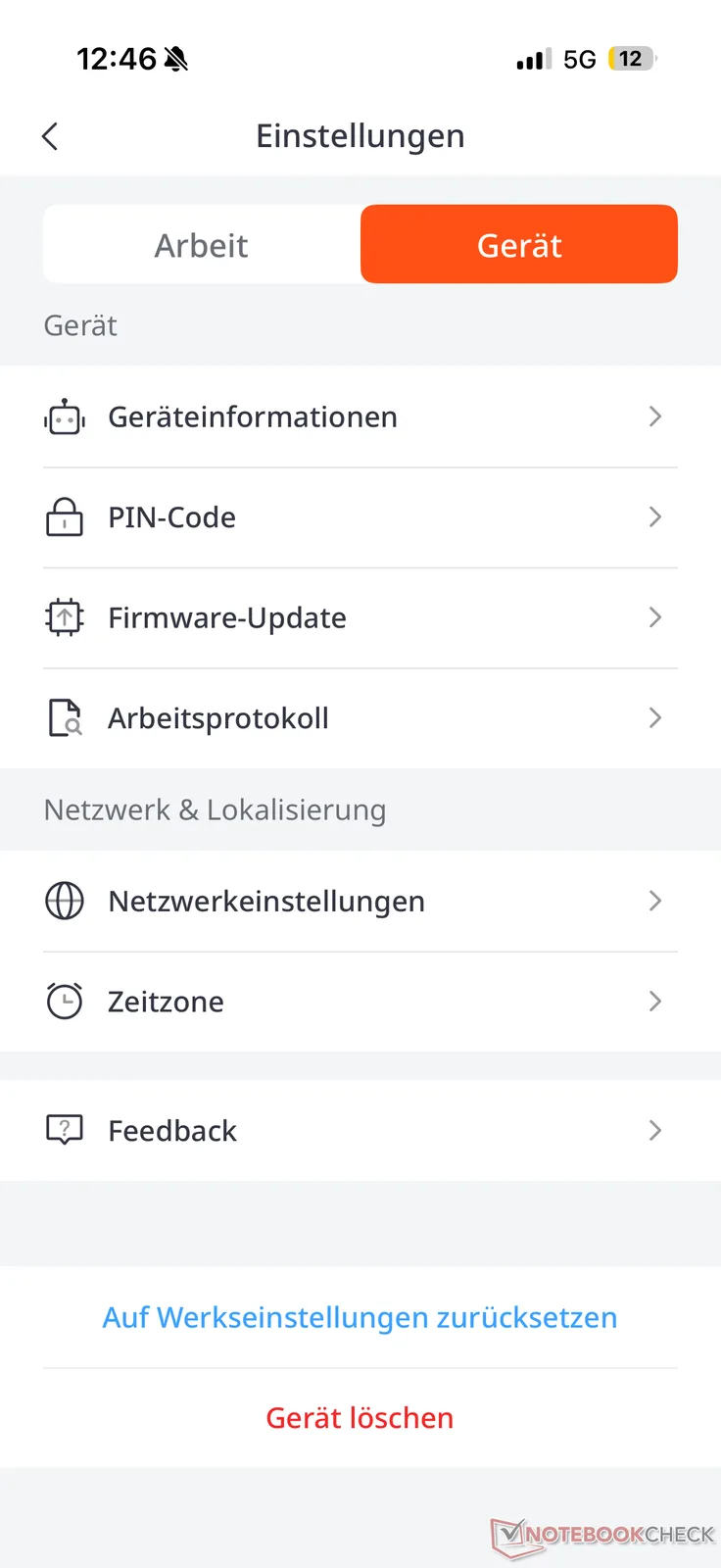
The app offers rudimentary functions such as creating a schedule for automatic mowing, various settings such as for edge cutting behavior (near, far) or in the rain, as well as viewing work logs and installing firmware updates (if available).
There is no map management or even multi-zone management, as the Sunseeker V1 does not create a map. It is simply sent to work via the large start button, the app or a schedule and then mows away happily. In addition, a small icon can be used to optionally start the edge cut, i.e. the one-time circling of the lawn.
Navigation & obstacle detection: chaotic and therefore inefficient
The Sunseeker V1 navigates purely camera-based, i.e. it does not rely on RTK or LiDAR, let alone a perimeter wire. As soon as it detects the edge of the lawn with its front-mounted camera, it turns around and continues to drive at a random angle. This results in chaotic navigation across the lawn. This sets the V1 apart from many other robotic lawn mowers without a perimeter wire on the market, all of which are more expensive than this inexpensive model.
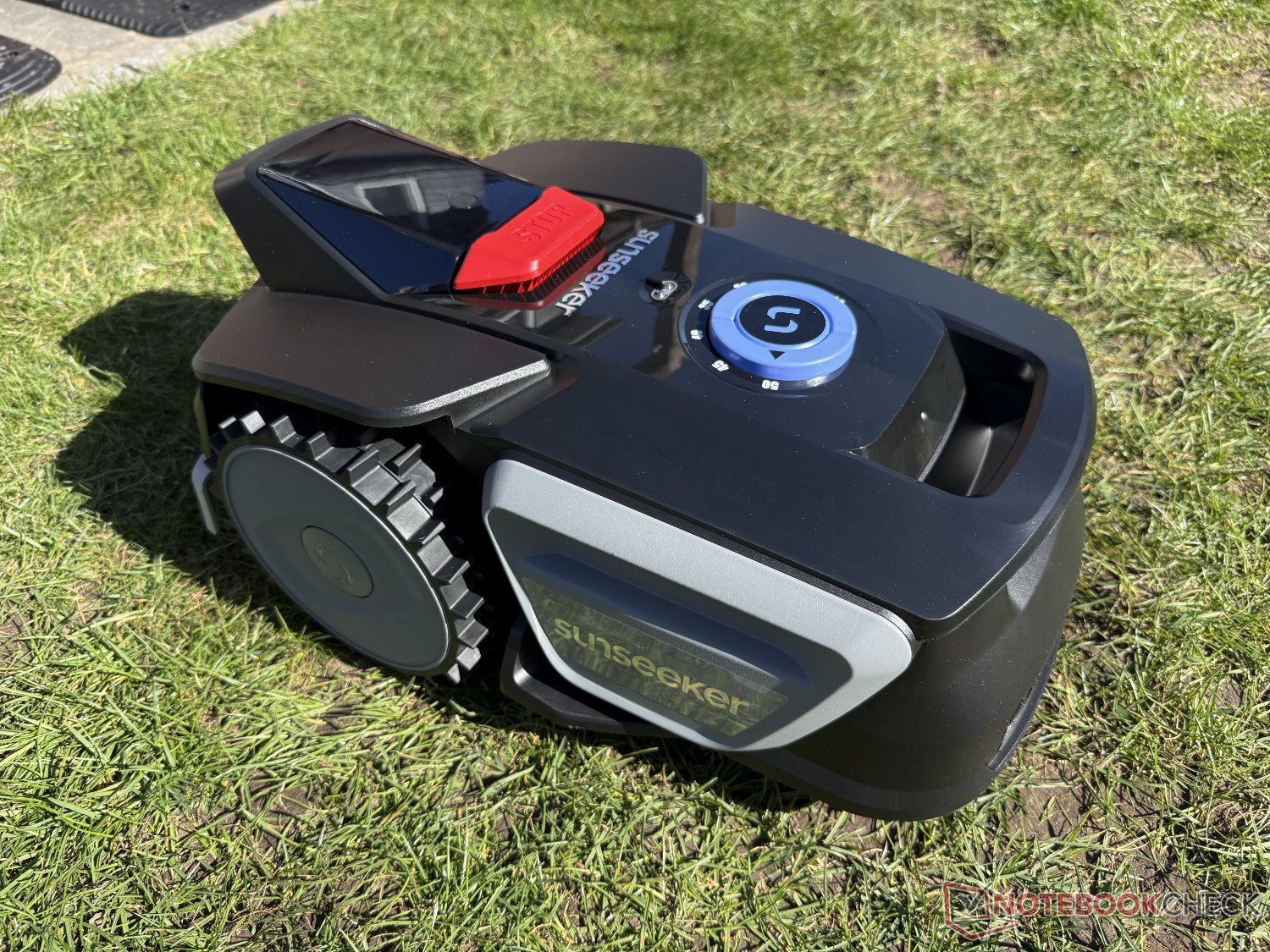
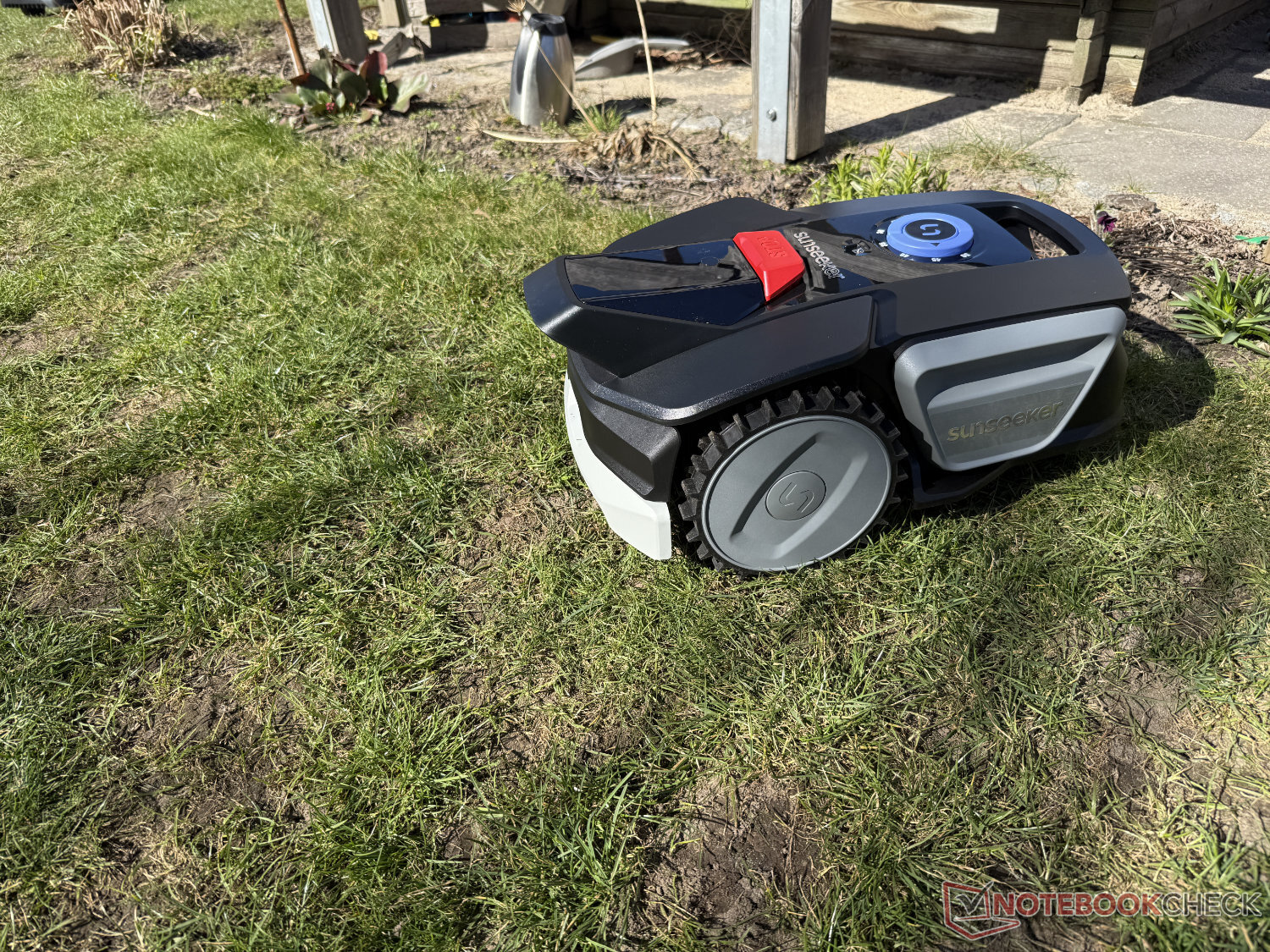
The consequence of chaotic navigation is not only that there is no guaranteed coverage of the entire mowing area. It is also inefficient, requiring considerably more time than systematic mowing in parallel paths. This means that the Sunseeker V1 is only suitable for small (max. 300 square meters according to the manufacturer), simply shaped plots with clearly identifiable boundaries. Not only is comprehensive mowing not guaranteed for complexly shaped areas, it is highly unlikely to be achieved.
In the test, the Sunseeker V1 usually reliably detected the transition from the lawn to flower beds, patios and the like. Shadows did not irritate it. However, there are two other things to criticize: Firstly, it occasionally stopped a little early and could have moved a little closer to the edge.
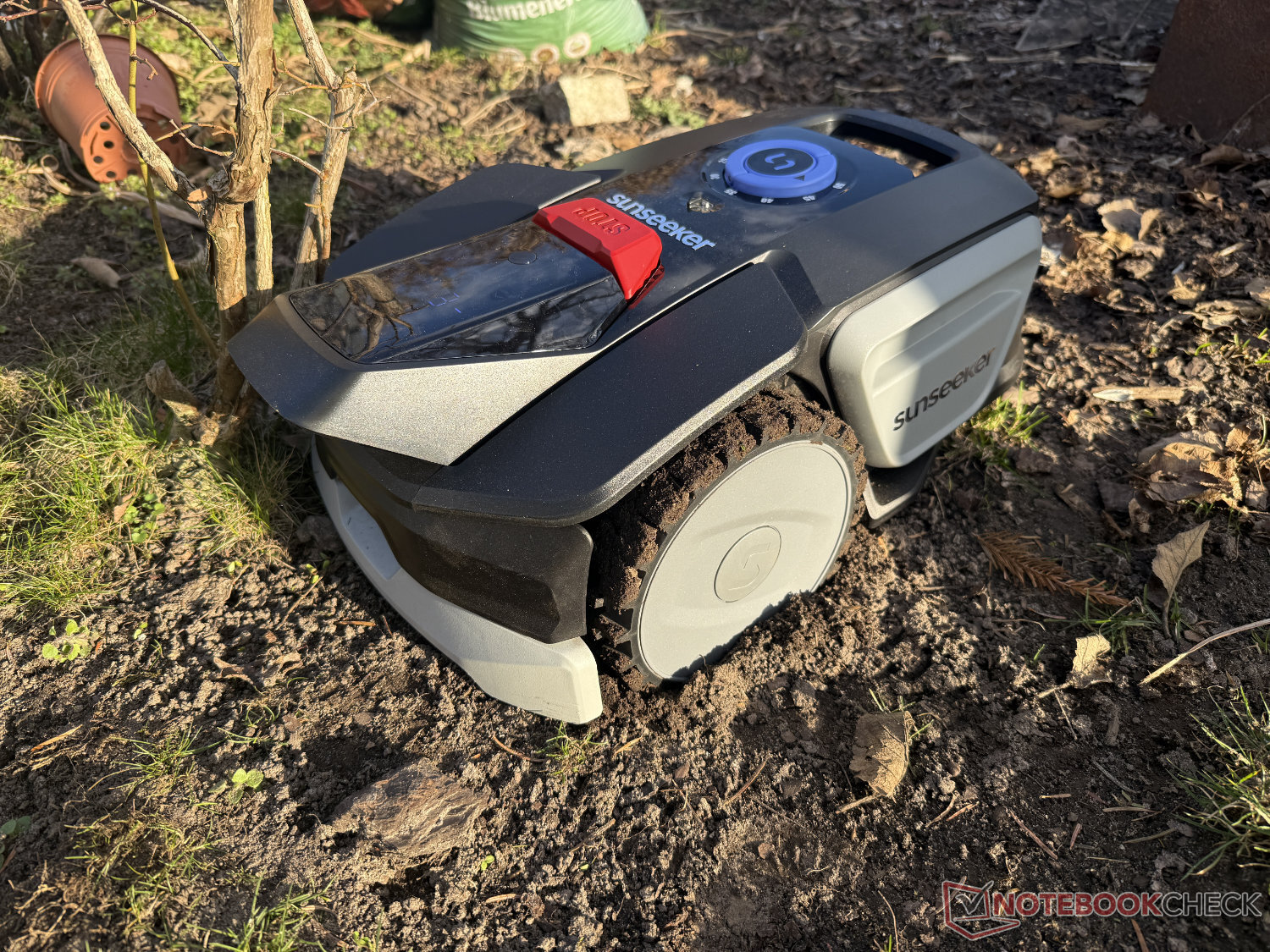
And secondly, it got stuck on rare occasions. This happened, for example, on a lawn that was not completely green after the winter and had a small "grass island" surrounded almost all the way round by rather earthy areas. By chance, the robot mower had caught exactly the one strip of green that led to the island. However, it was then trapped on this island, as it was unable to find the exit again due to the random turning. It also left the lawn completely once on the test area and got stuck in the ground with its large drive wheels and buried itself.
It is therefore important to be aware that the Sunseeker V1 may occasionally need help in practice if the plot is not perfectly prepared for it. Overall, however, the navigation worked more reliably than we experienced last year with one or two other camera-based robotic mowers.
The detection of obstacles on the lawn worked even better, not to say flawlessly. In addition to the hedgehog dummy and tennis ball, the Sunseeker V1 also detected a piece of garden hose lying on the lawn in our practical test. Many other robotic lawnmowers in the test failed to do this - even significantly more expensive ones.
Mowing performance & edge cutting: No guaranteed coverage
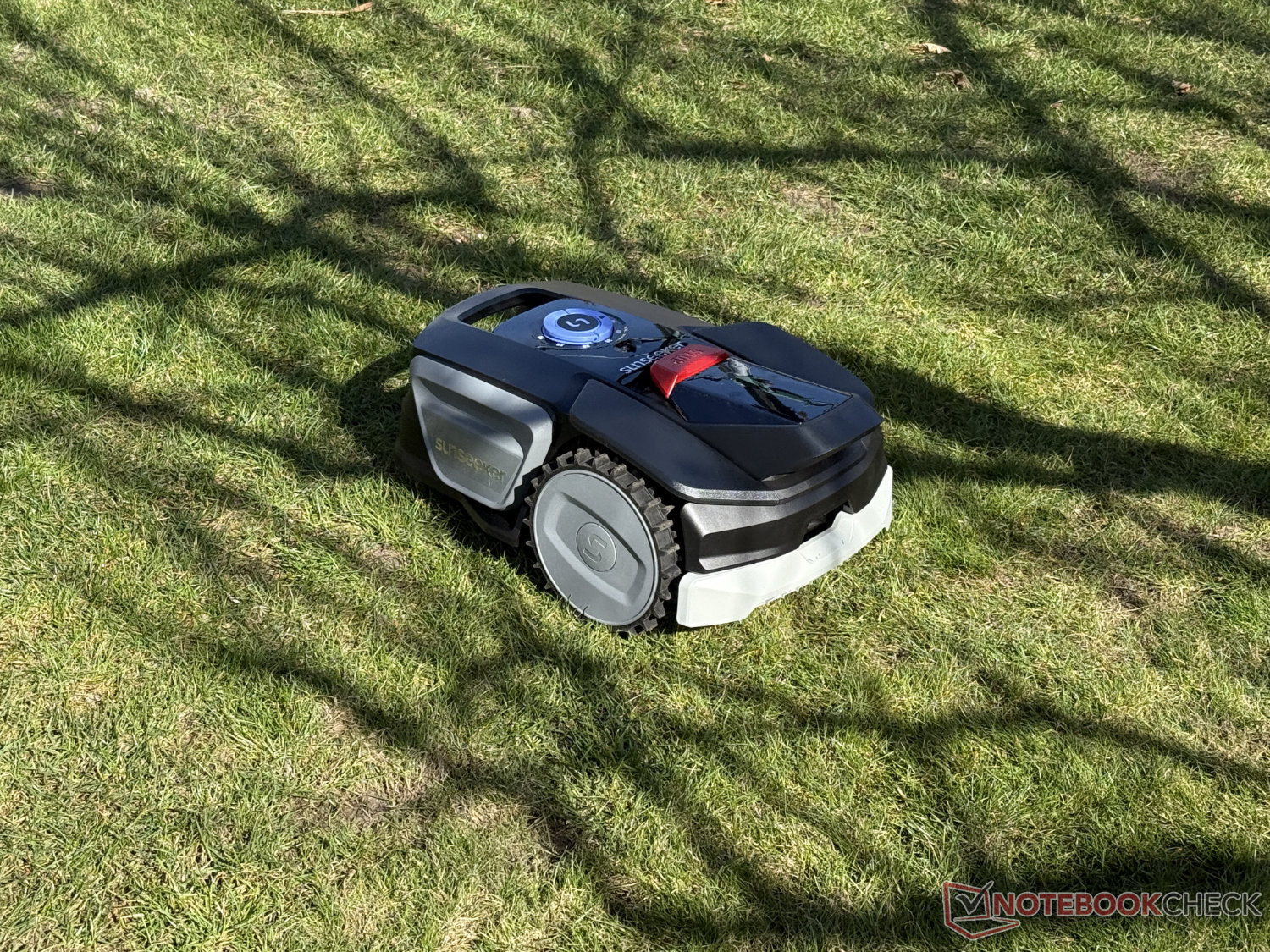
The criticism of the chaotic navigation is also accompanied by restrictions for a uniform mowing pattern. This is simply not guaranteed here - not to mention a parallel path pattern. The Sunseeker V1 must achieve the highest possible probability that each area of the meadow to be mowed will be crossed at least once due to the duration of its work. This procedure is familiar from the old wired, "dumb" robotic mowers.
According to our test impressions, the Sunseeker V1 mowed the paths taken solidly. The small mowing disk with its three blades does its job just as well as many other robot mowers with significantly higher price. So the lawn is mowed afterwards, but not necessarily evenly.
When the battery is running low, the robotic lawnmower drives from its position back to the charging station at the edge of the lawn. This means that only part of the edge is mowed at a time. The corresponding mode in the app must be used for area-wide edge mowing.
The distance to the lawn edge can be set in the app between "Far" and "Close". In our practical experience, it is around 5 to 10 cm for even transitions with hard edges. If the transition between the lawn and, for example, beds without edging is smooth, the distance may be even greater. In any case (as with many other robotic lawn mowers), this requires occasional manual reworking - especially as the distance between the mowing disc and the edge of the machine is an additional 8 cm.
Running time & volume: Favorable not only in price
The Sunseeker V1 mowed our test area for a good hour on a single charge. It then returned to the station with a good 20 percent battery charge, where it remained for around 70 minutes. During this time, around 35 Wh flowed into the battery at a maximum charging speed of just under 30 W until it was charged again. We measured the standby consumption at around 3 W.
The monthly energy costs for the Sunseeker V1 cannot be determined as precisely as for systematically navigating robotic lawnmowers. This is because the number of mowing cycles required to cover a reasonably large area is heavily dependent on the area and its shape. Let's assume that the Sunseeker performs five mowing cycles a day, three times a week. This results in a monthly power consumption of approx. 4 kWh. The Sunseeker V1 therefore proves to be very energy efficient in the test, although navigation is inefficient.
We measured the noise level during mowing from a distance of 1 m at around 57 dB. This means that the Sunseeker V1 is not particularly quiet, but not very loud either.

Is the Sunseeker V1 not the right robot lawn mower without wire for your own garden according to our test?
Then here are many more models in our Robotic lawn mower best list 2026 discover!
Transparency
The selection of devices to be reviewed is made by our editorial team. The test sample was provided to the author as a loan by the manufacturer or retailer for the purpose of this review. The lender had no influence on this review, nor did the manufacturer receive a copy of this review before publication. There was no obligation to publish this review. As an independent media company, Notebookcheck is not subjected to the authority of manufacturers, retailers or publishers.
 Add as a preferred source on Google


