




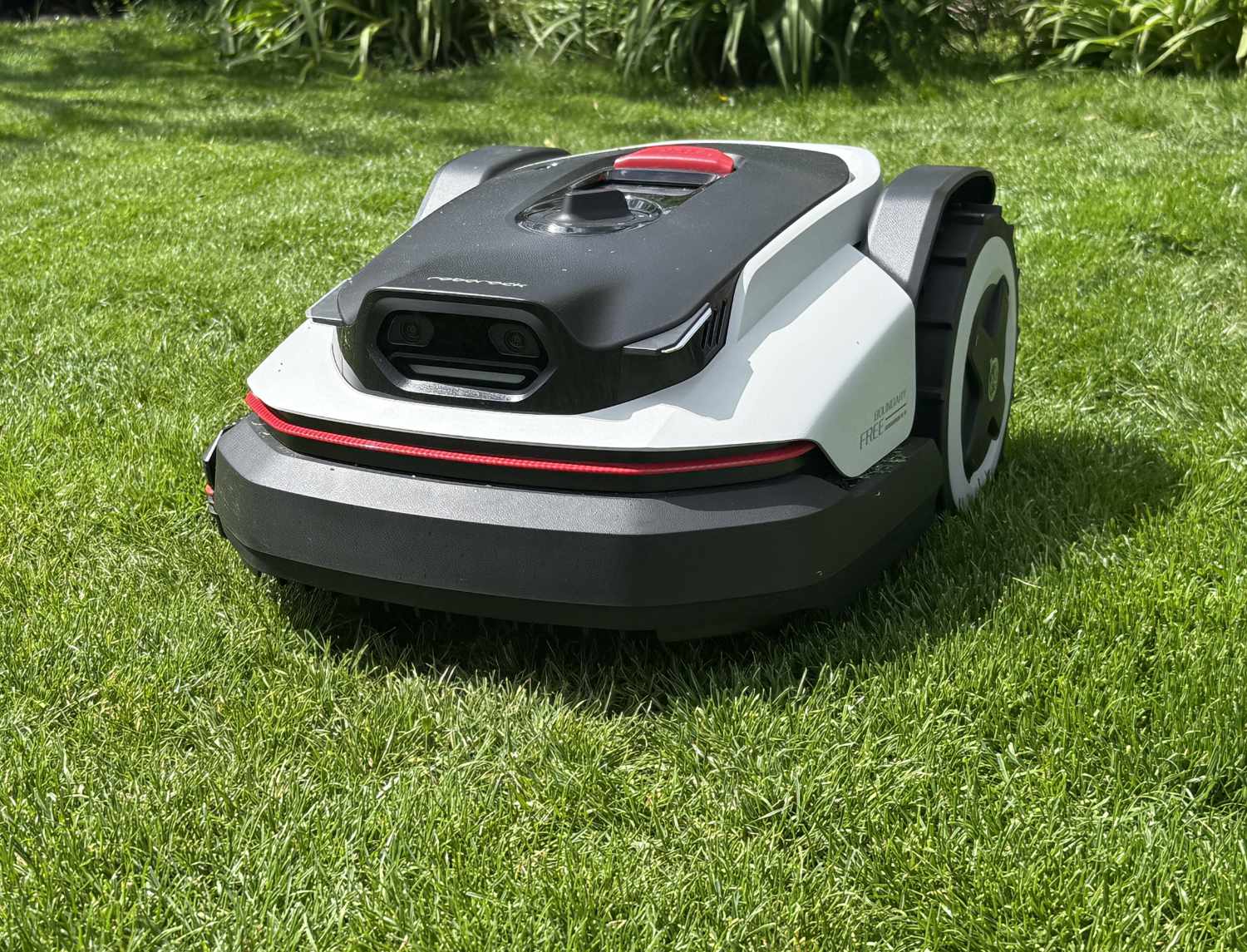
Edge-cutting module on an entry-level robotic lawn mower: Roborock RockNeo Q1 review
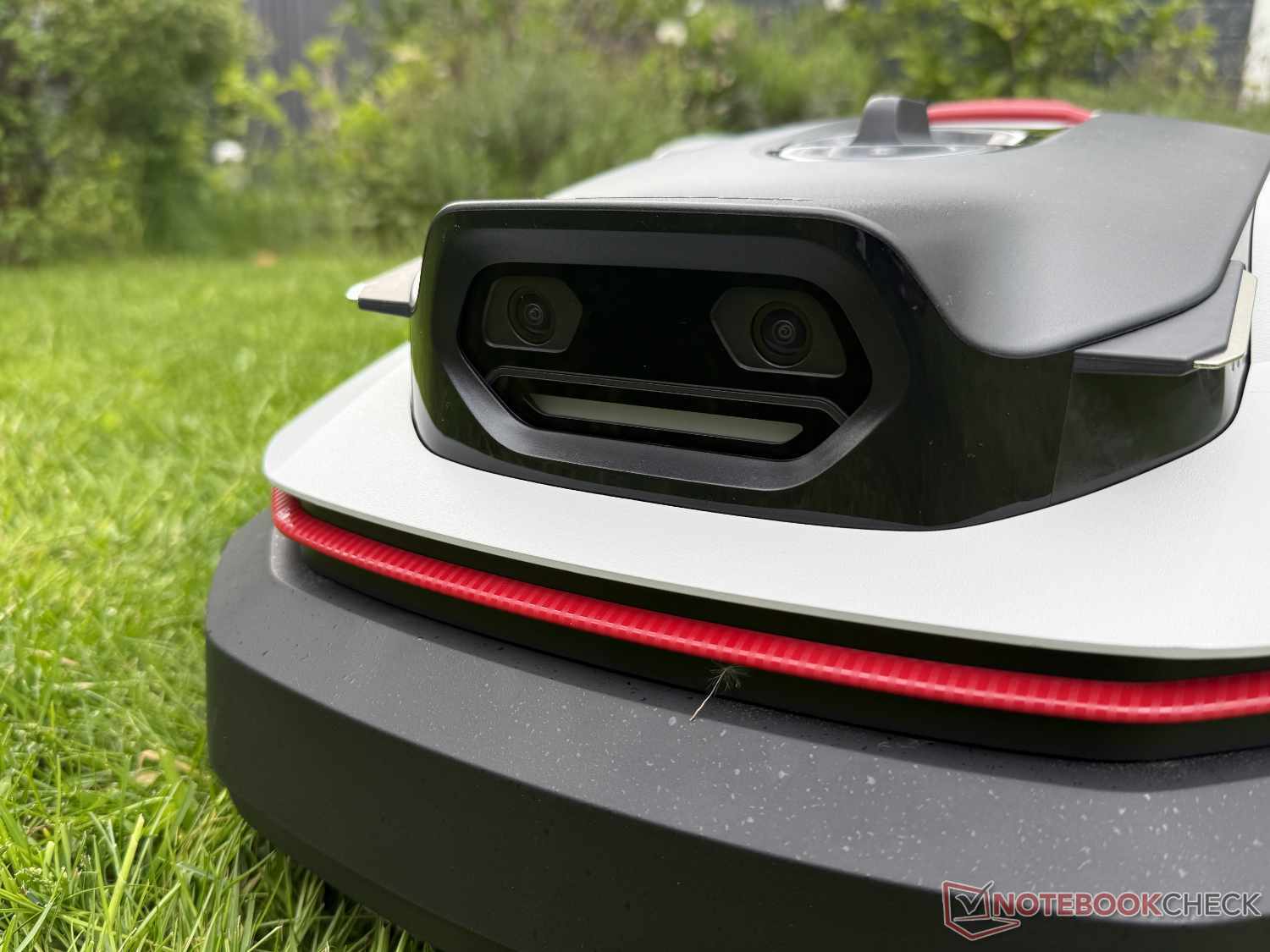
Grinning face with edge-cut module.
With its optional PreciEdge module, the Roborock RockNeo Q1 promises to solve one of the biggest problems with robotic lawn mowers. Our review reveals whether Roborock’s entry-level model actually delivers on this promise in real-world use.Marcus Schwarten (translated by DeepL / Marcus Schwarten) Published 🇩🇪 🇳🇱 ...
Roborock RockNeo Q1 review conclusion: It could be so great...
The Roborock RockNeo Q1 offers many of the features of a perfect robotic lawn mower for smaller gardens. With a suggested retail price starting at 799 euros, it’s quite affordable and hardly gets any more expensive even with the optional edge-trimming module. But unfortunately, that’s exactly where the biggest problem lies.
In theory, the Roborock RockNeo Q1 should deliver nearly perfect edge cutting in our test. Unfortunately, it doesn’t do that in practice. The culprit is its overly cautious navigation, which—even with obstacle avoidance deactivated during edge mowing—makes wide detours around any obstacles. As a result, overhanging plants—and sometimes even shadows—create large unmowed areas that, based on the settings and technical capabilities, should actually be mowed almost right up to the edge.
Aside from this weakness, which should be resolvable via a software update, the Roborock RockNeo Q1 made a good impression in testing. Although the app doesn’t offer as many settings as those from other manufacturers, it’s well-organized. Navigation and obstacle detection are absolutely solid, even if an RTK antenna is required for this. Some other models now offer this more conveniently thanks to LiDAR, but they’re usually more expensive as well.
Pros
Cons
Price and availability
The manufacturer’s suggested retail price for the Roborock RockNeo Q105, which covers up to 500 square meters, in Europe is 799 euros. The RockNeo Q110, which covers up to 1,000 square meters, has a manufacturer’s suggested retail price of 1,199 euros. They are available from various retailers.
In addition, Roborock offers the PreciEdge cutting module for edge trimming as an optional retrofit accessory. The price for this is around 100 euros.
Table of Contents
- Roborock RockNeo Q1 review conclusion: It could be so great...
- Features & what’s included: Optional PreciEdge edge module
- Setup & maintenance: With optional AI mapping
- App & usability: Clear and easy to navigate
- Navigation & obstacle detection: For small, simple gardens
- Mowing performance & edge mowing: Software holds back hardware
- Runtime & noise level: Runs for just under 2 hours
In 2026, Roborock ventured out of the house and into the yard. Right from the start, the manufacturer—best known for its robotic vacuums—is offering four different robotic lawn mowers. The Roborock RockNeo Q1 is the entry-level model and thus the most affordable solution for smart lawn care.
We tested the Roborock RockNeo Q1 over an extended period. Our Roborock RockNeo Q1 review reveals how Roborock’s new wire-free robotic mower performed in real-world use.
Data sheet
| Features/Model | Roborock RockNeo Q105 | Roborock RockNeo Q110 |
|---|---|---|
| Coverage | 500 m² | 1,000 m² |
| Navigation | RTK + VSLAM | RTK + VSLAM |
| Obstacle Detection | Stereo Vision | Stereo Vision |
| Mower | Mower disc | Mower disc |
| Number of blades | 3 | 3 |
| Cutting width | 22 cm | 22 cm |
| Cutting height | 2–6 cm | 2–6 cm |
| Adjust cutting height | manually | manually |
| Gradient | 45% (24°) | 45% (24°) |
| Display | yes | yes |
| Battery capacity | 4 Ah | 4.6 Ah |
| Connectivity | Wi-Fi & Bluetooth & 4G (Optional) | Wi-Fi & Bluetooth & 4G (Optional) |
| Weight | 12.2 kg | 12.3 kg |
| Dimensions | 62.5 x 42 x 27 cm | 62.5 x 42 x 27 cm |
| Water resistance | IPX6 | IPX6 |
| Charging dock included | No | No |
| Number of blades included | 3 + 9 | 3 + 9 |
| MSRP | 799 euros | 1,199 euros |
Features & what’s included: Optional PreciEdge edge module
Roborock offers the RockNeo Q1 in two different models: the RockNeo Q105 and Q110. We tested the smaller model, designed for lawns up to 500 square meters—which should be sufficient for many typical gardens in Germany. It is equipped with a 4 Ah battery. The Q110 can handle up to 1,000 square meters and, thanks to its 4.6 Ah battery, mows for longer and charges faster.
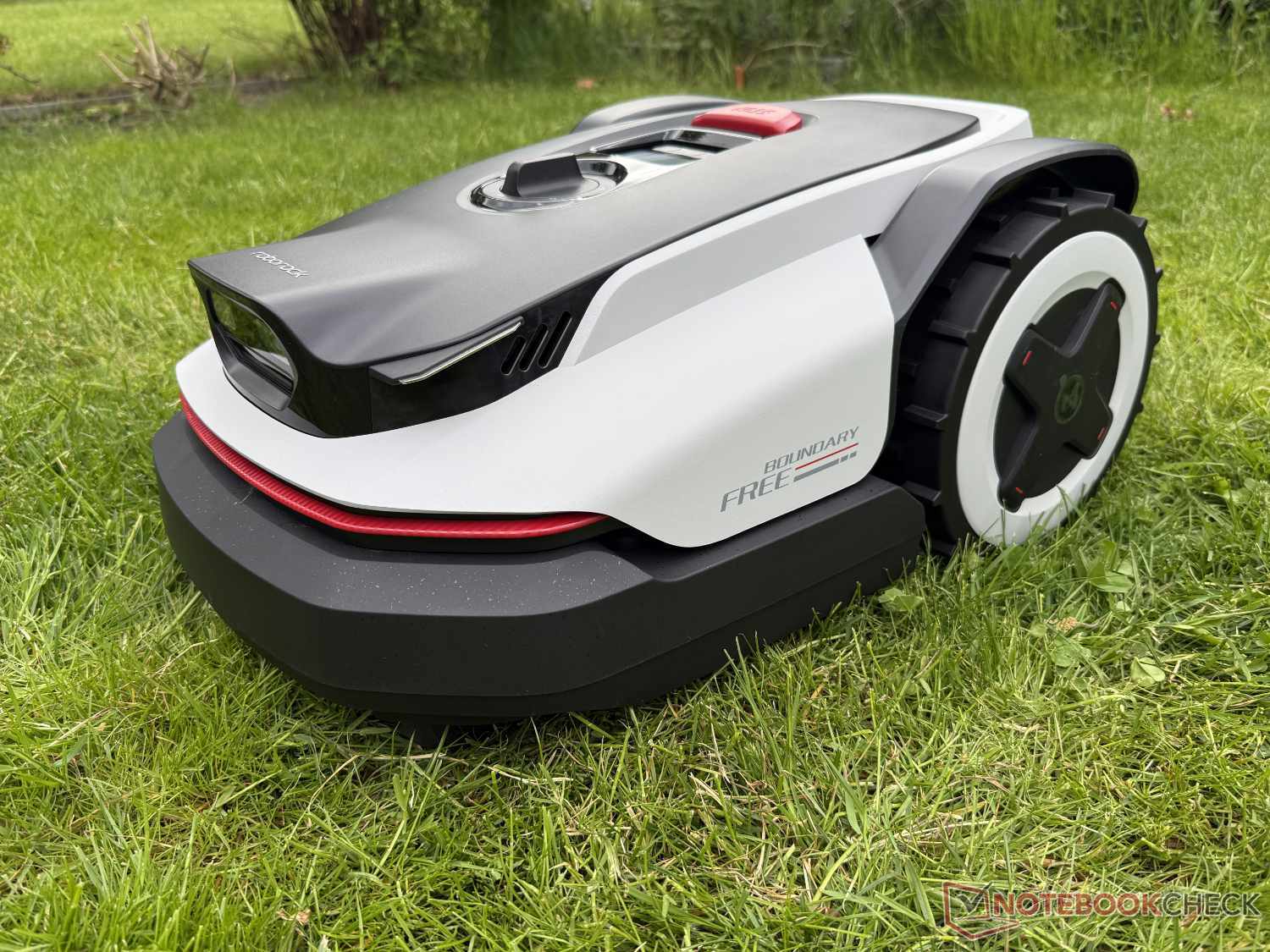
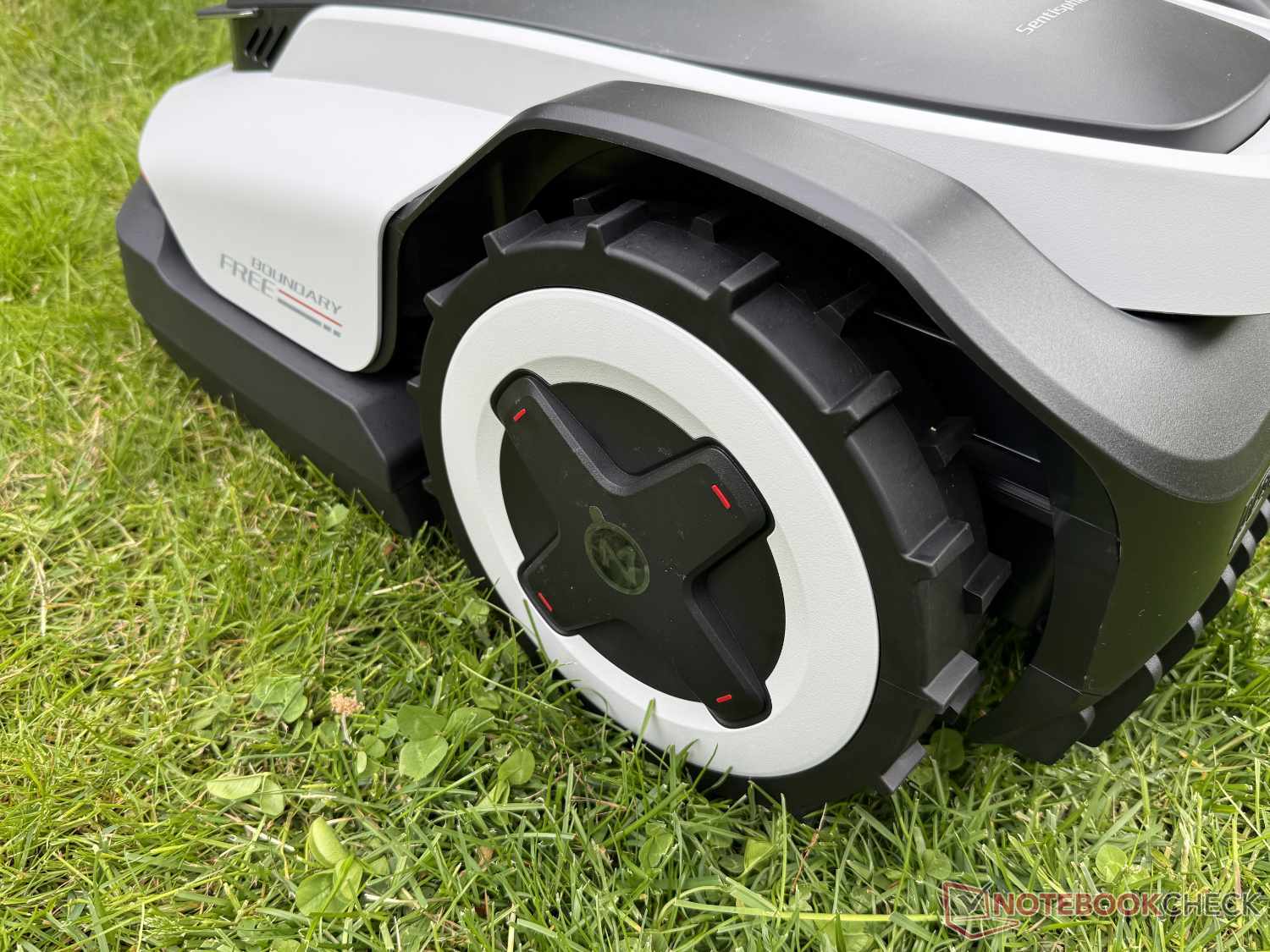
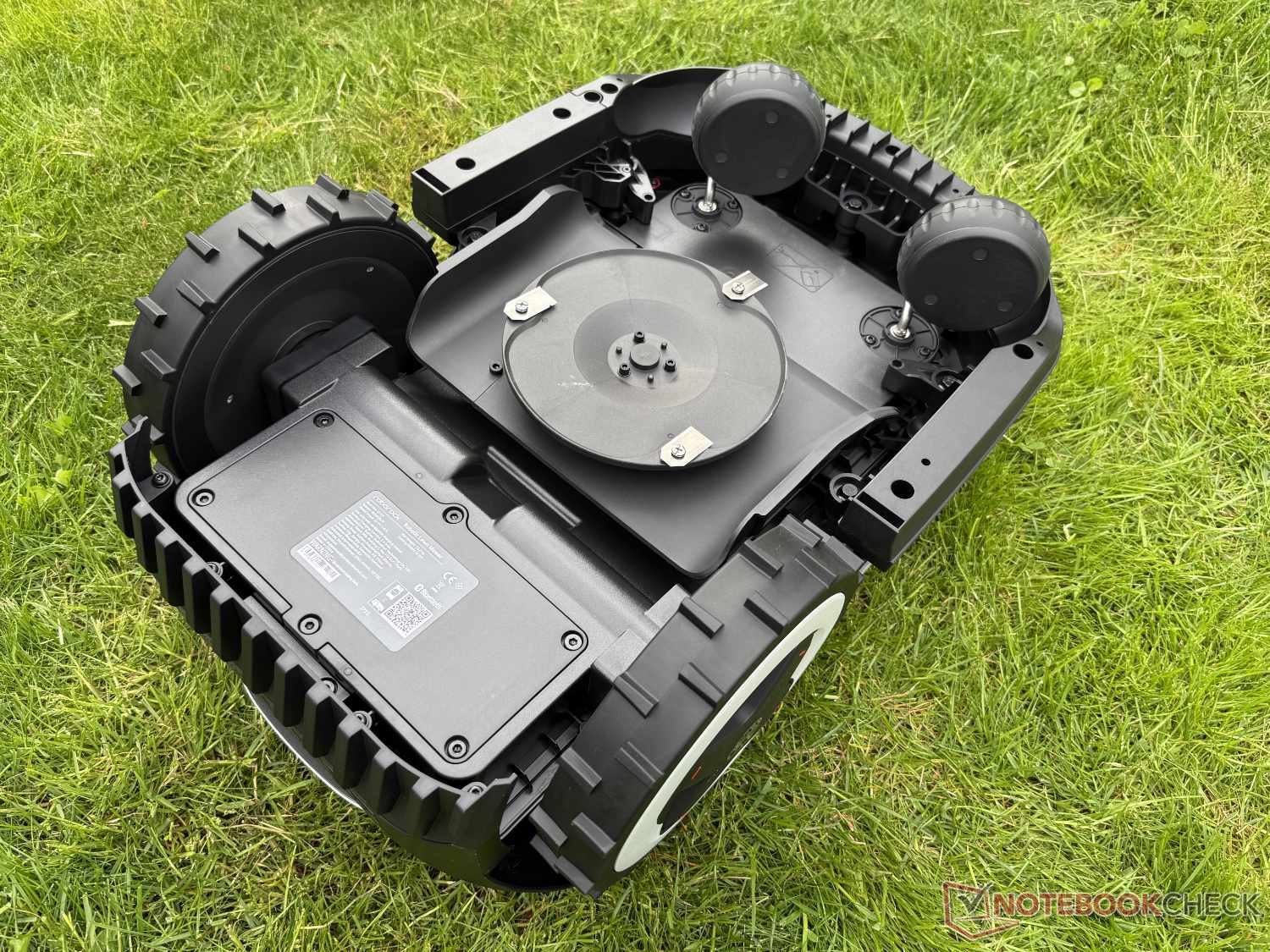
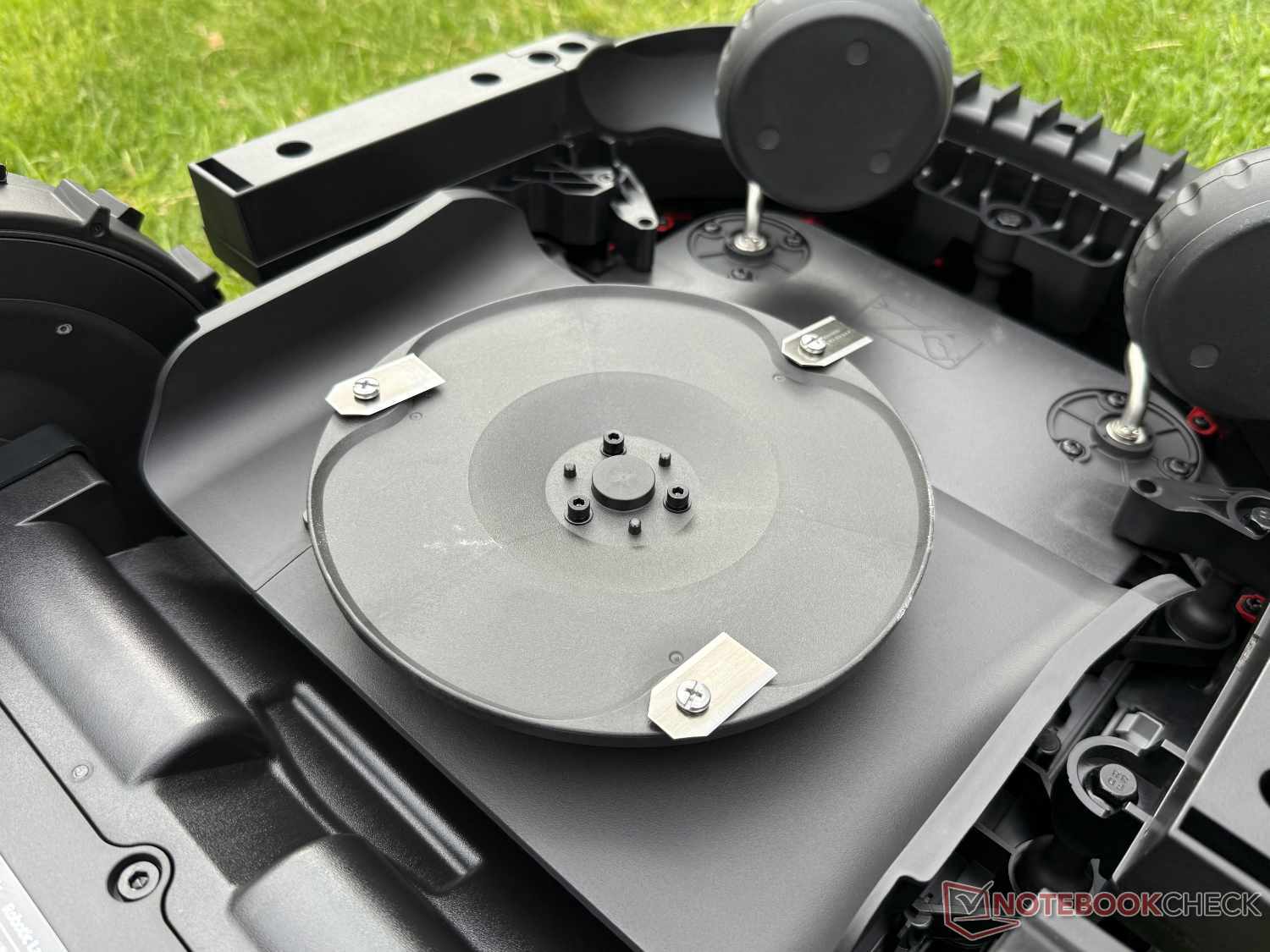
Otherwise, there are no differences whatsoever. The main difference from the more expensive RockMow S1 (for 800 or 1,500 square meters) lies in the manual adjustment of the cutting height. This can be adjusted between 20 and 60 mm using the standard mechanical dial and must therefore be set to the same value for all mowing zones (unless you want to adjust it manually each time).
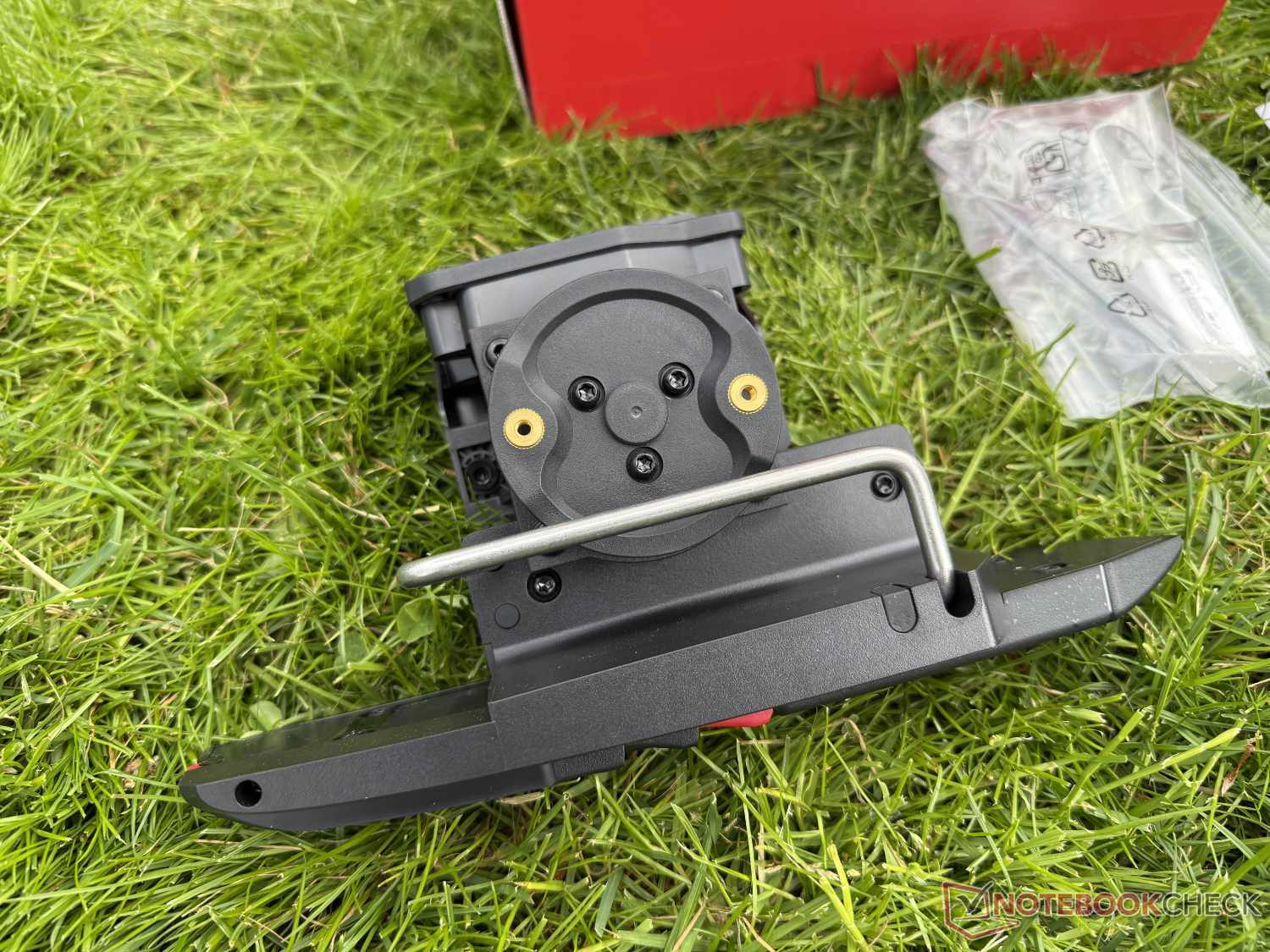
The mower deck itself features three blades with a cutting width of 22 cm and is mounted on a floating suspension to adapt to uneven ground. The cutting disc, located centrally beneath the 42 cm-wide robotic mower, can be supplemented with the PreciEdge cutting module. This is not included as standard and can be purchased as an option. We’ll explain the benefits of this further down in our Roborock RockNeo Q1 review.
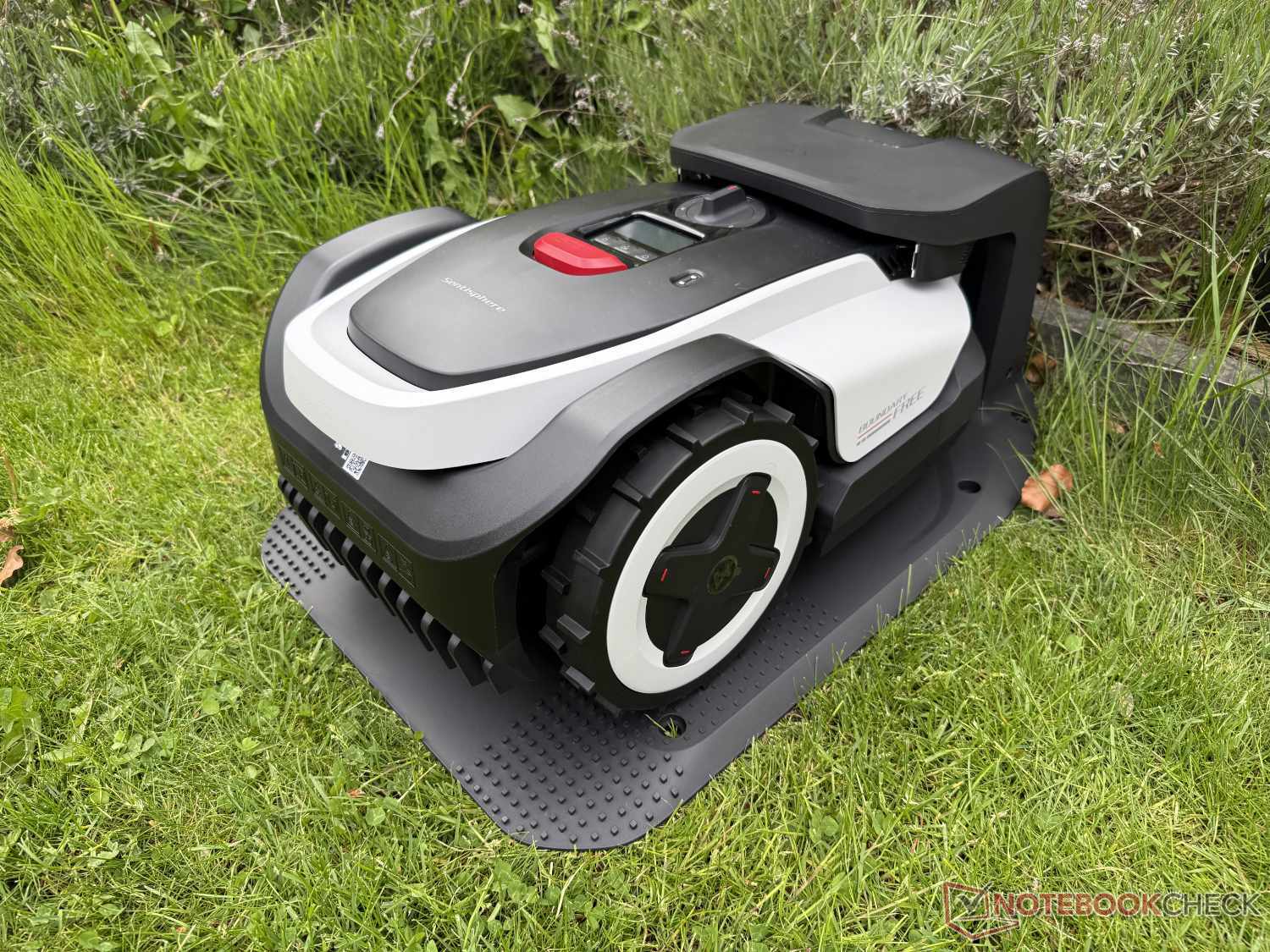
For navigation, Roborock relies on the established RTK (Real-Time Kinematic) and VSLAM technologies in its entry-level model—specifically, an antenna about 1.5 m high in the yard. LiDAR, which offers advantages especially on properties with many tall trees, buildings, and the like, is reserved for the top-of-the-line RockMow Z1 LiDAR model. For obstacle detection, a stereo vision system with two cameras is built into the front. A nice touch: The two lenses, with the LED module positioned below them, look like a grinning face, giving the RockNeo Q1 a friendly, grinning appearance.
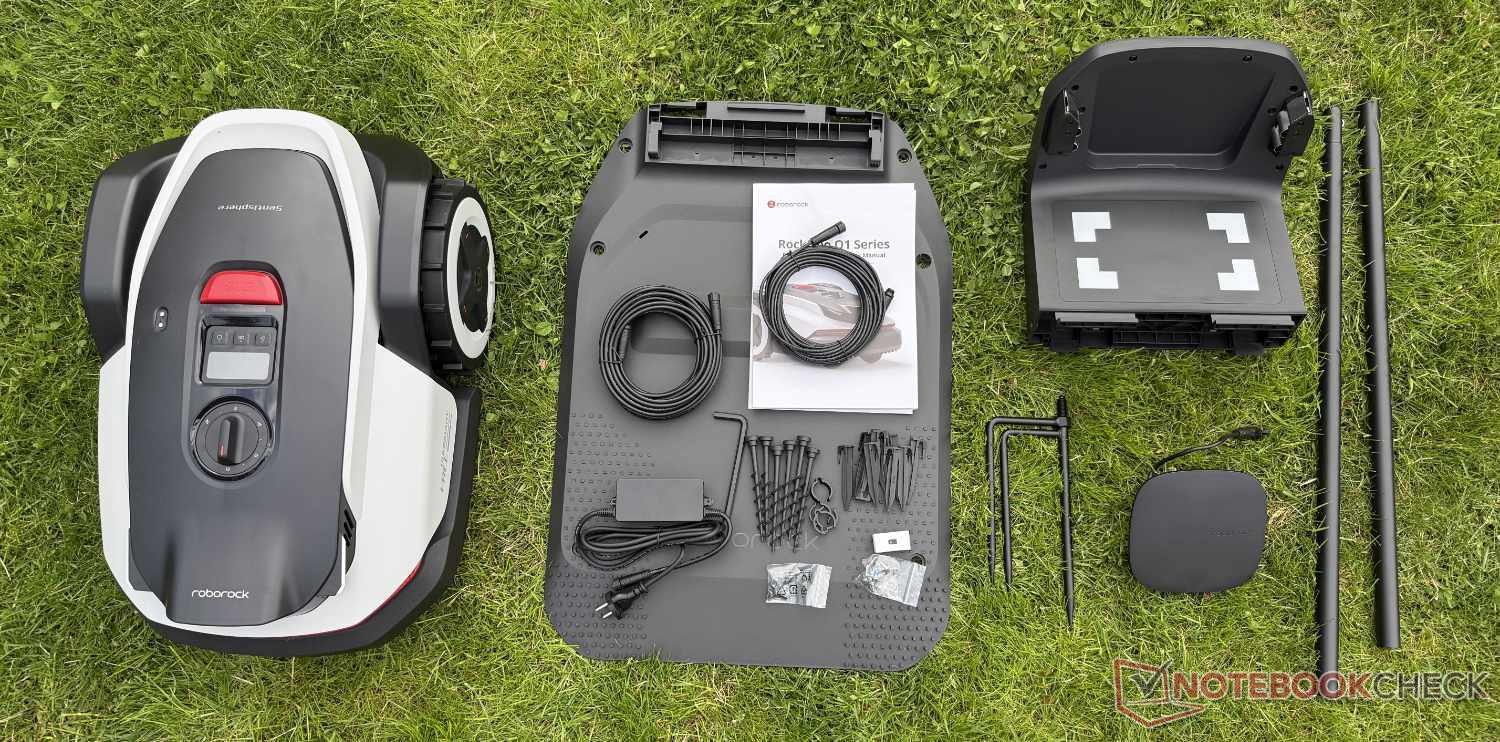
The robotic lawn mower, which weighs about 12 kg and has a recessed handle at the rear for easier carrying, naturally comes with the standard charging station, including a charger and extension cord. Also included are the RTK reference station with an extension cable for connecting to the charging station, nine replacement blades, and a few small items such as ground anchors and screws.
Setup & maintenance: With optional AI mapping
The initial setup is done in the usual way. If you don’t already have one from a robot vacuum, you’ll need the Roborock app for Android or iOS and an account. Establishing the connection then takes just a few steps, which worked without any issues during testing. The device connects via Wi-Fi and Bluetooth. Mobile connectivity is also available via the optional 4G and anti-theft module.
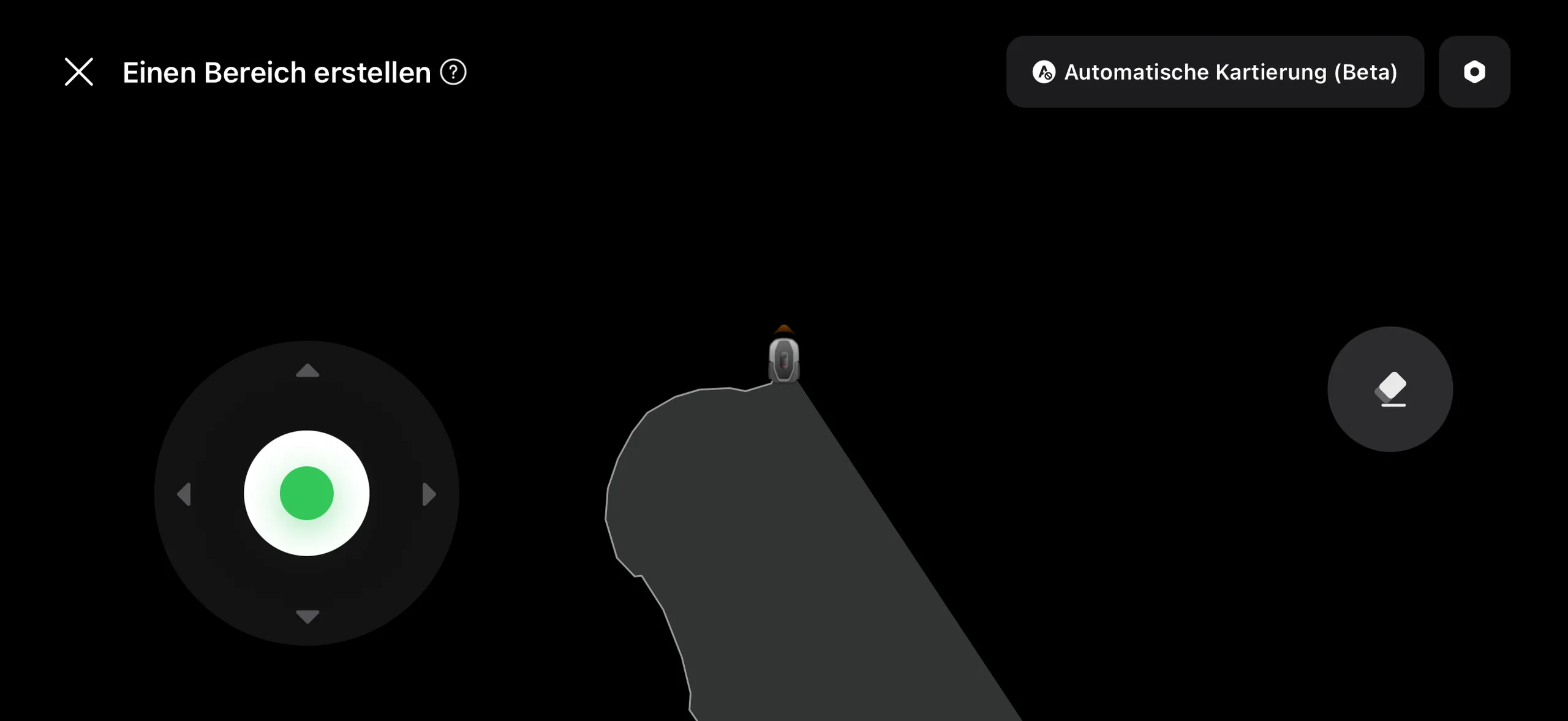
Once the charging station and the RTK antenna have been set up (each requires assembly with just a few screws), the area to be mowed is mapped. To do this, the robotic mower is manually controlled via a virtual joystick on the display.
At the beginning of our testing phase, the controls felt a bit too erratic and sensitive for our liking. Since then, Roborock has improved this via updates—several of which have been rolled out in the meantime—so that manual mapping worked well. Alternatively, there’s also an AI mapping feature, which is in beta and only partially usable.
The occasional blade replacement can be done using the included screwdriver. Thanks to its IPX6 certification, the RockNeo Q1 can be cleaned with a garden hose.
App & usability: Clear and easy to navigate
Anyone who already owns a Roborock robot vacuum should be able to quickly navigate the Roborock app’s robotic mower section. But even first-time users shouldn’t have much trouble, as the app is well-organized and fairly straightforward. The manufacturer doesn’t offer the vast range of features and settings that some competitors provide. For example, there’s no live video feed from the cameras. However, you can enable a setting in the app to save photos of detected obstacles.
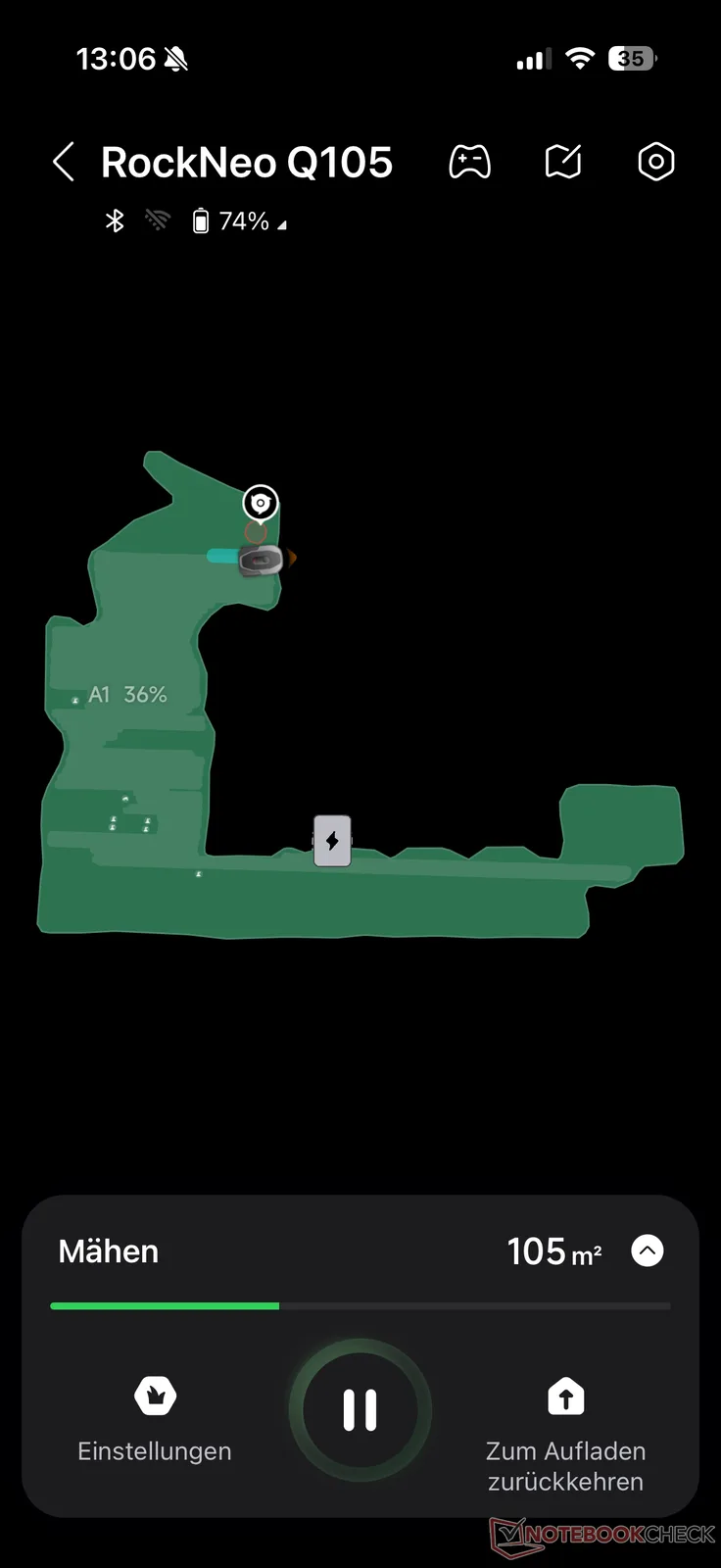
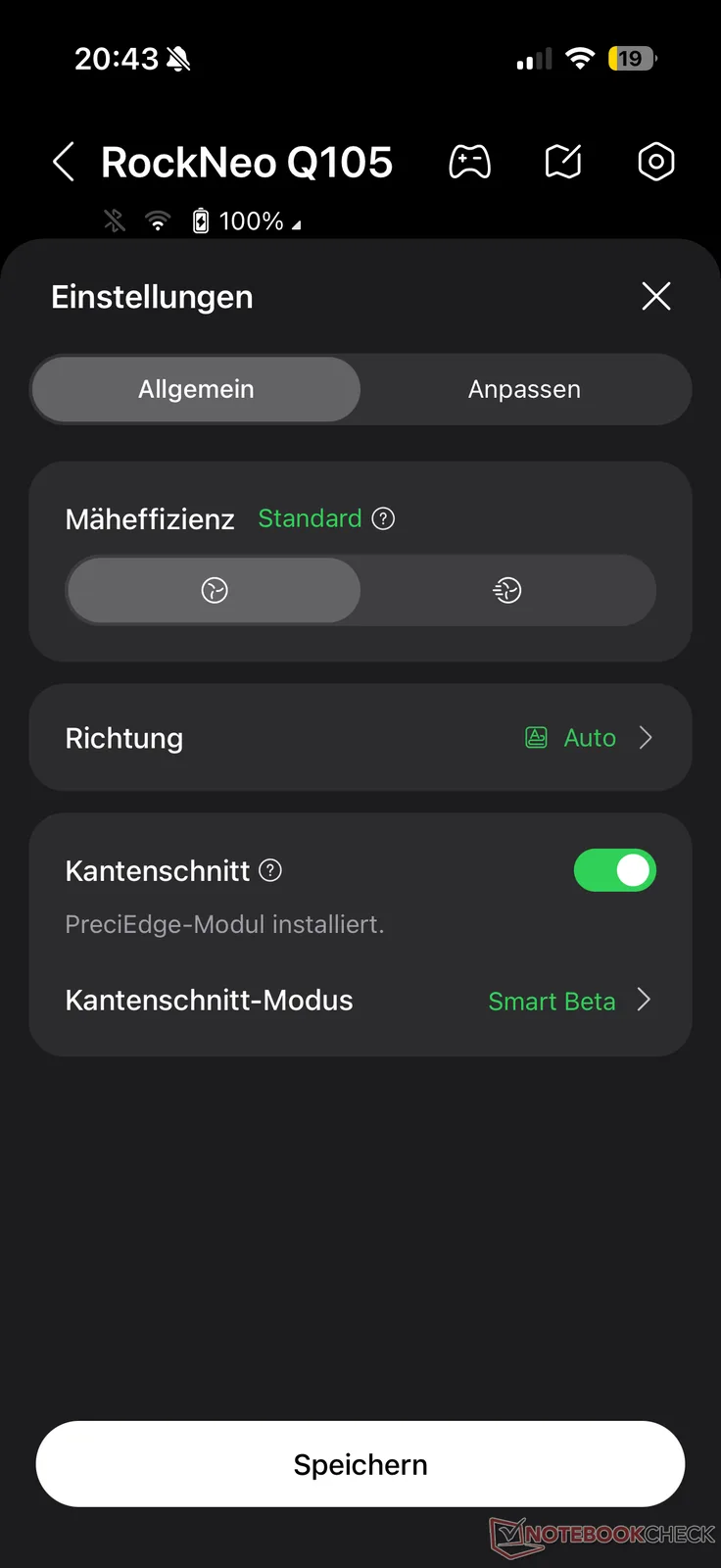
If you haven’t created a mowing schedule for automatic mowing, you can send the RockNeo Q1 to work by pressing the large play button. To the right of that is the button to return to the station; to the left are the mowing settings. There, you can adjust the mowing efficiency (Standard, Efficient) and the direction (Optimal, Custom, or with automatic rotation to prevent ruts) for the entire area or for each zone. In addition, if installed, you can enable edge mowing with the PreciEdge module and select its mode (Smart Beta, Safe). You can choose to mow the entire area, a single zone, or just the edges.
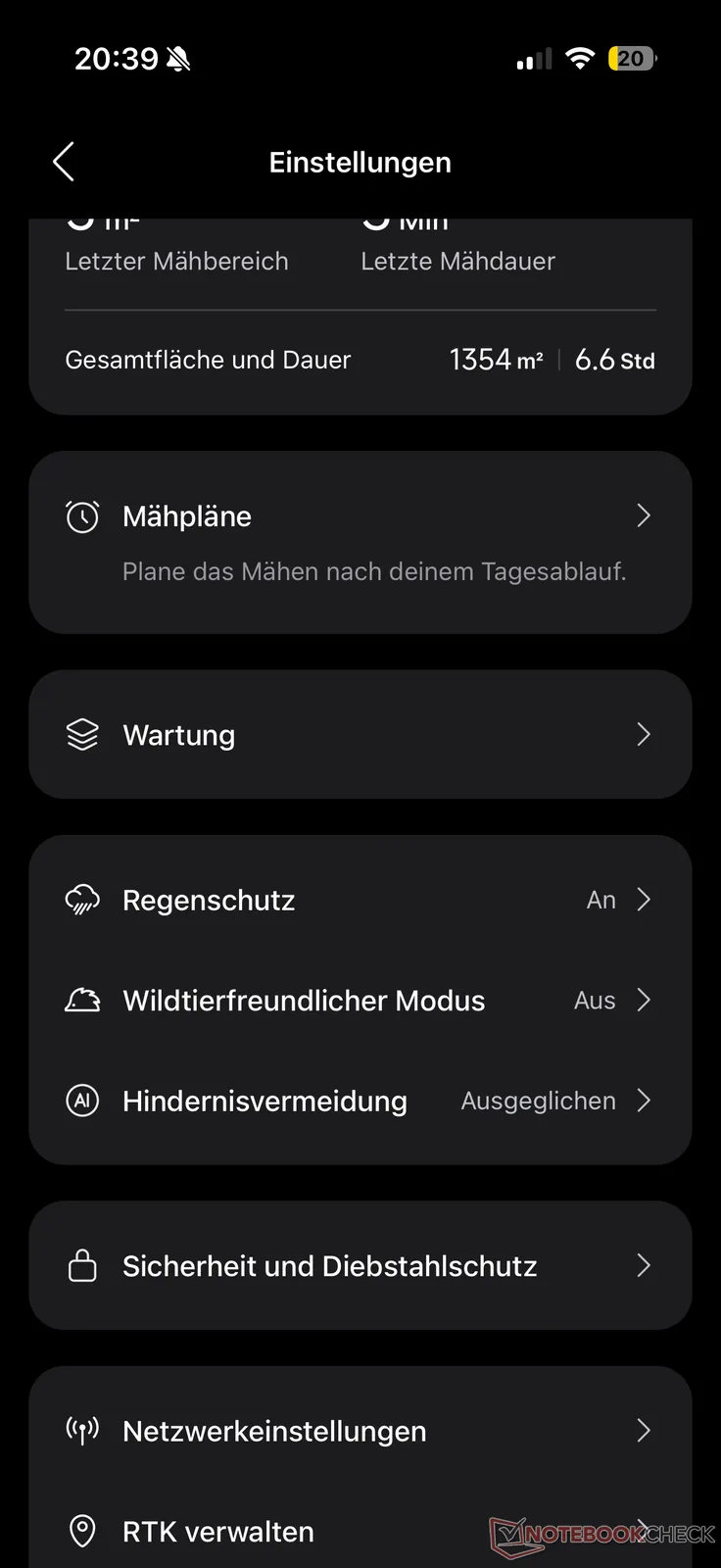
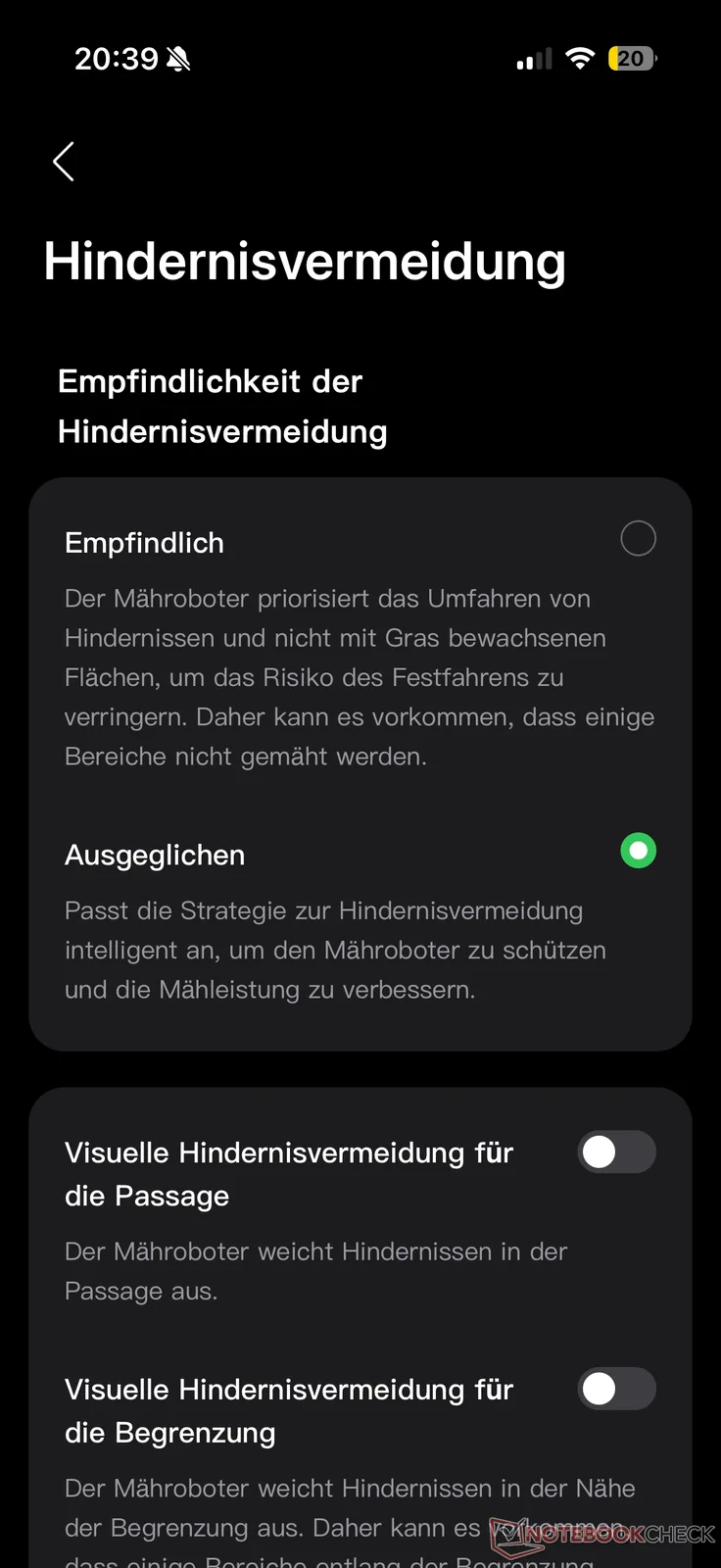
Three more icons are located in the upper right corner. In addition to remote control, you can access the menu with other settings there. Here, in addition to viewing the history and creating mowing schedules, you’ll find rain protection and a “Wildlife-Friendly Mode,” among other options. You can also adjust obstacle avoidance. In addition to the two levels “Sensitive” and “Balanced,” you can also choose to enable or disable “Visual Obstacle Avoidance for Passages” and “Visual Obstacle Avoidance for Boundaries.”
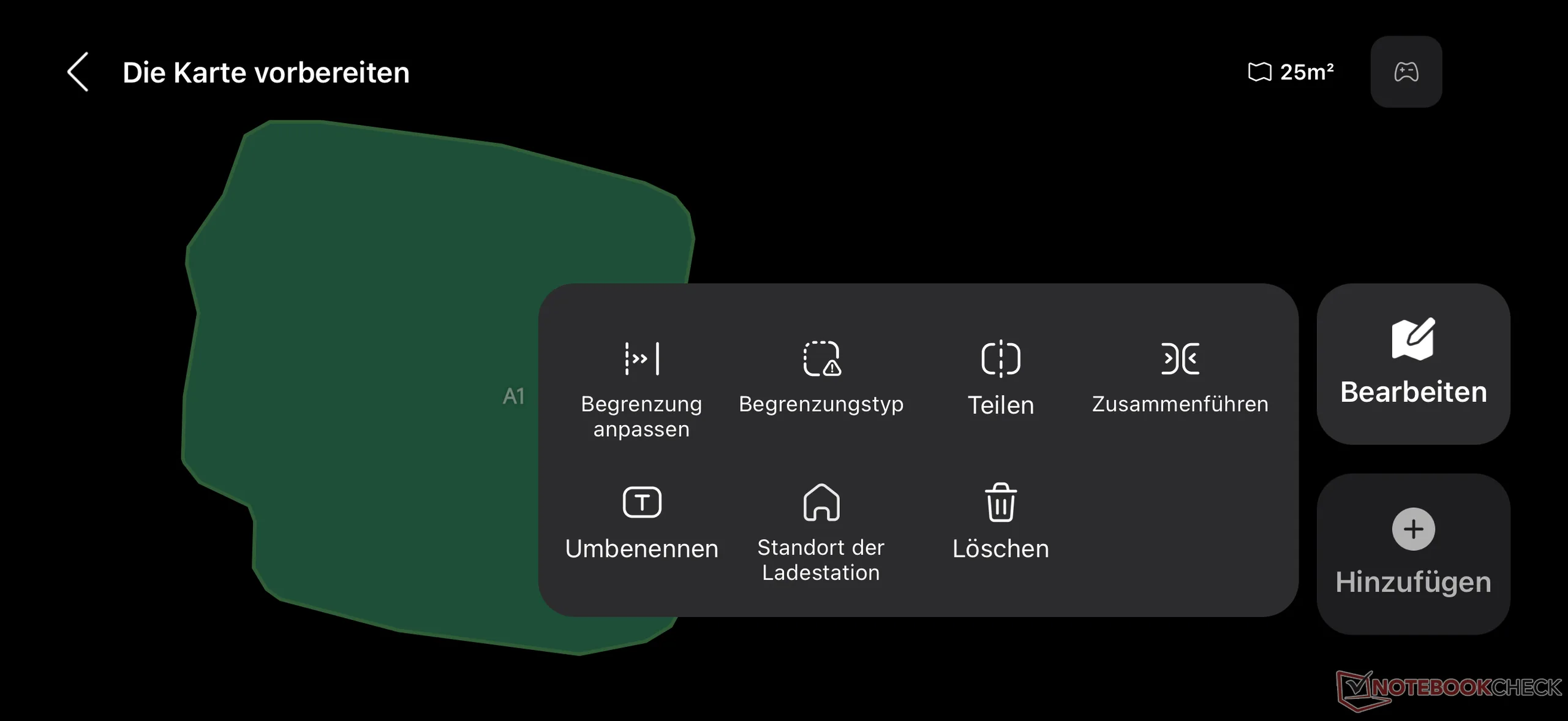
The third icon opens the map management screen. This feature is already familiar from the initial setup. In addition to adding areas, no-go zones, and pathways, it also allows you to adjust the boundaries later. To do this, the robotic mower is remotely guided along the new path. This eliminates the need for a complete remapping whenever a new flower bed or similar feature is added.
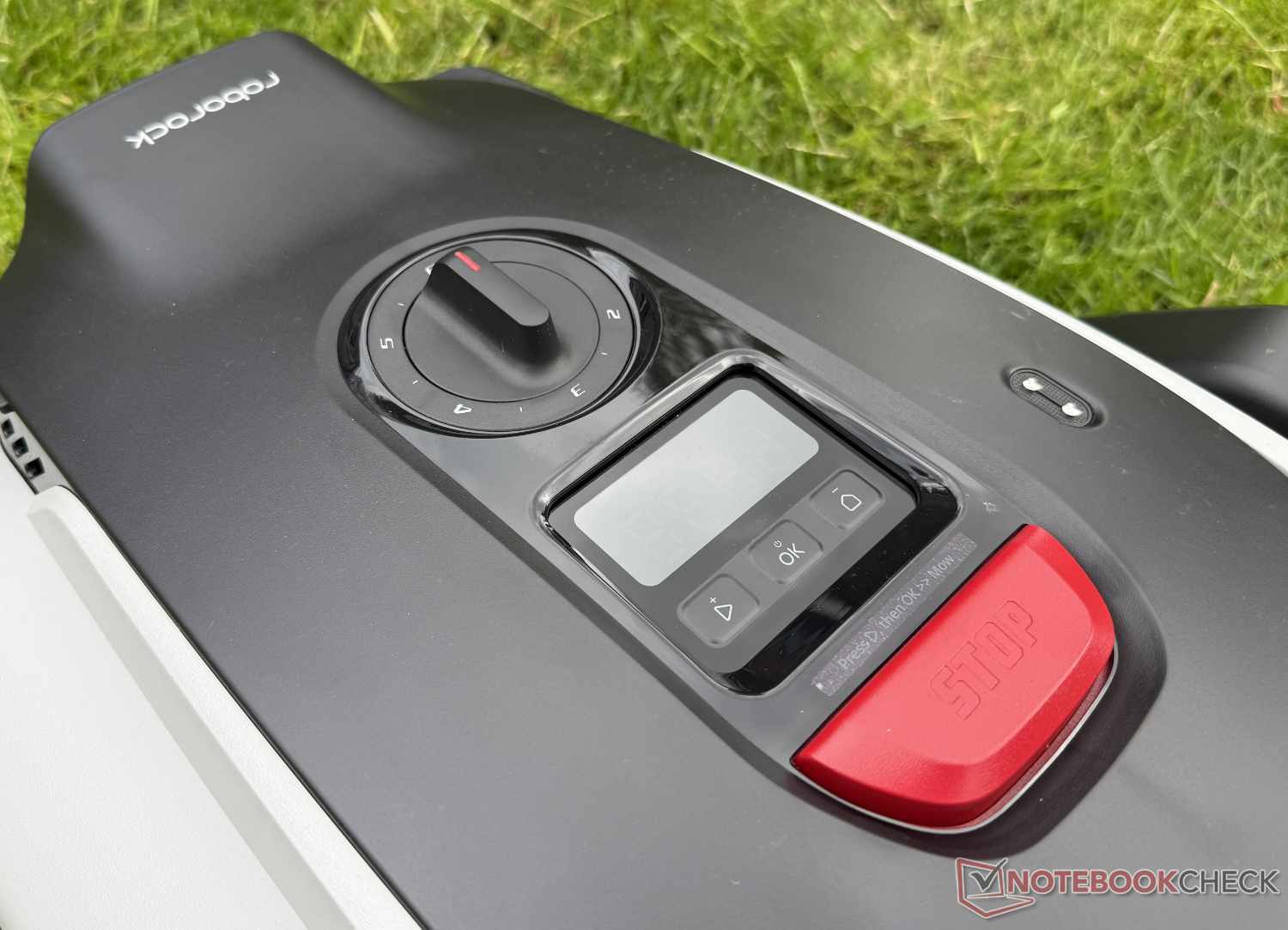
The control panel on the robot is standard. In addition to the aforementioned rotary dial for manually adjusting the cutting height, there is an equally simple status display. Alongside the obligatory red Stop button, there are three buttons for Go, OK, and Home.
Navigation & obstacle detection: For small, simple gardens
Navigation via the RTK antenna worked reliably on our test area, which is approximately 300 square meters in size. Occasionally, the robotic mower chose routes that were difficult to understand and, in some cases, skipped areas for no apparent reason. However, since it generally returned to cover these areas shortly before the end of the mowing cycle, this is not ideal but acceptable.
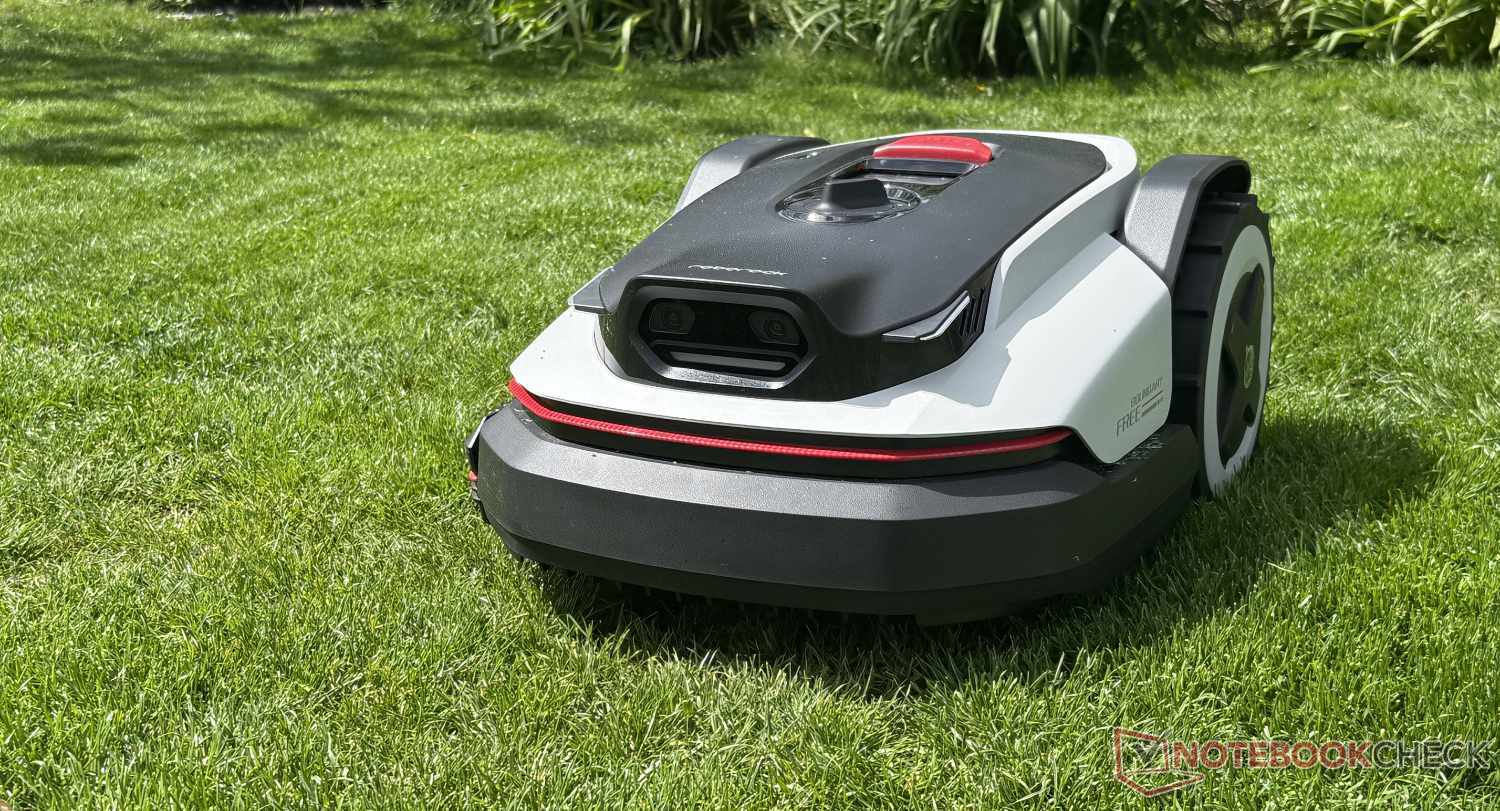
Measuring just over 60 cm in length and 40 cm in width, the RockNeo Q1 is not particularly compact, but rather an average-sized robotic lawn mower. During testing, it generally managed to navigate narrow passages just under 90 cm wide—unless plants were hanging into the path from the sides. The robot tends to get distracted by these. More on that below. Otherwise, there were no major problems or malfunctions during the testing period. However, difficult terrain and inclines are not among the RockNeo Q1’s strengths. It can handle inclines of up to about 45 percent / 24 degrees, though sometimes with some difficulty.
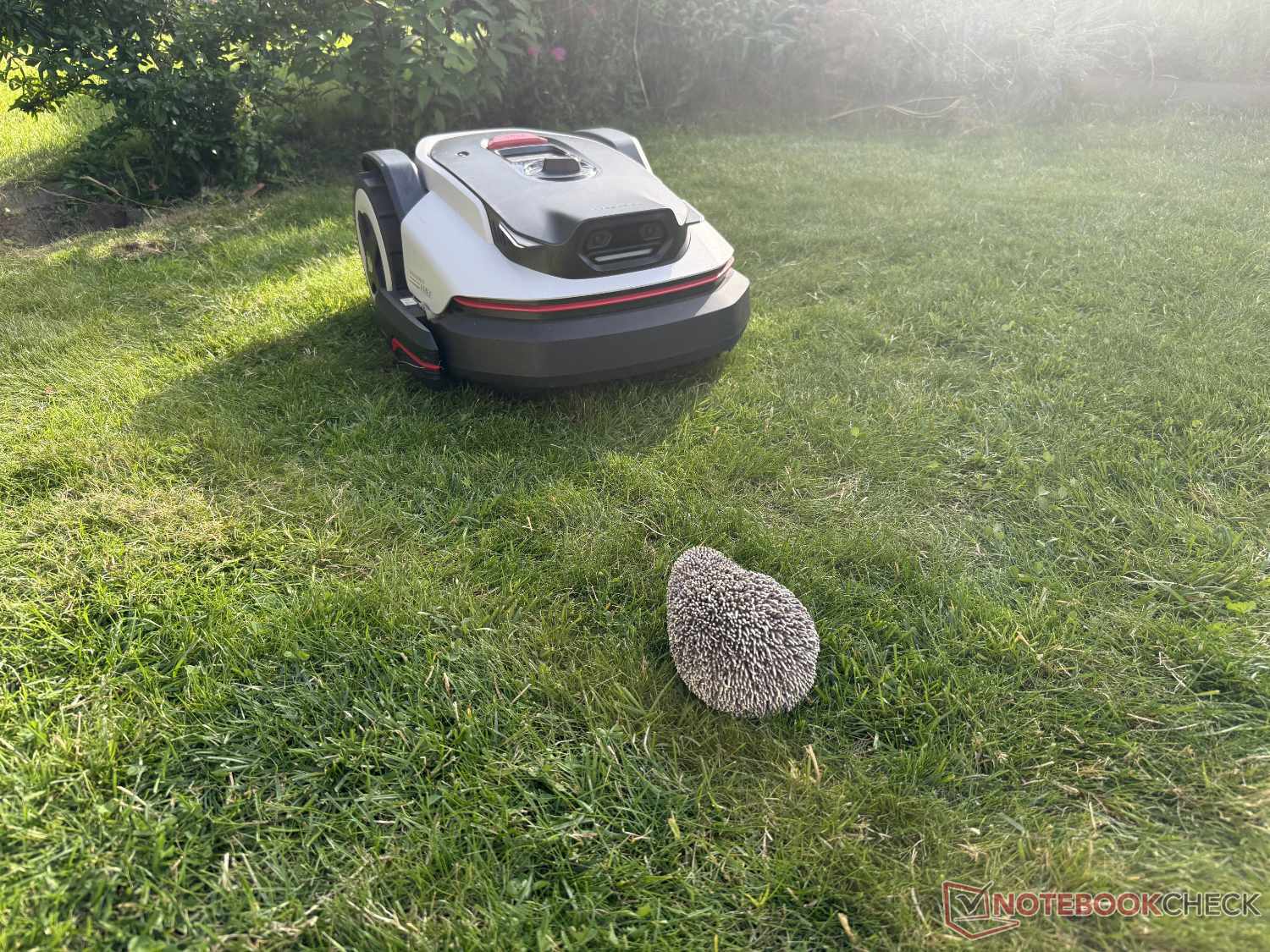
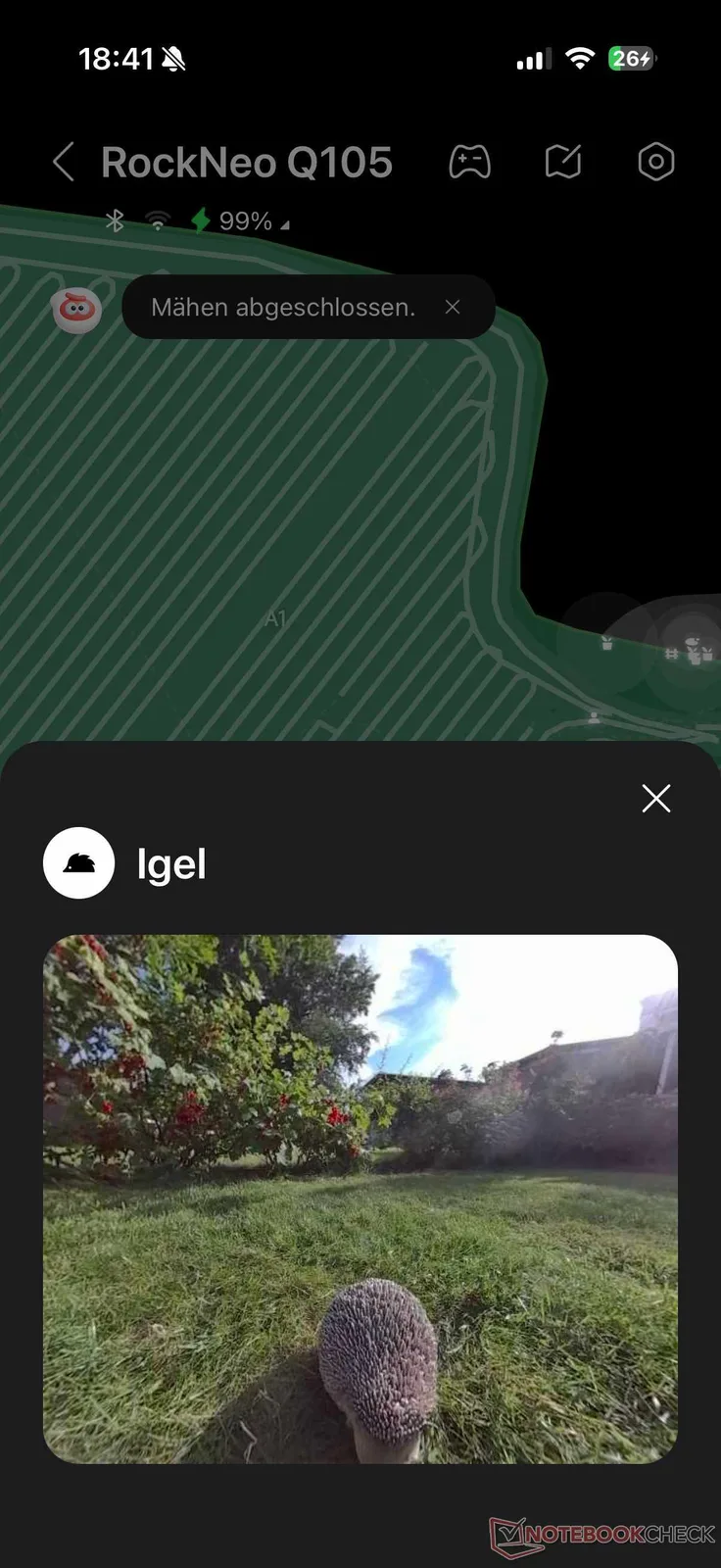
The Roborock RockNeo Q105’s obstacle detection worked reliably for the most part during testing. It avoided our hedgehog dummy every time, although it occasionally passed quite close to it. The AI reliably recognized the hedgehog and marked it on the map. It also almost always reliably navigated around the other test obstacles, such as soccer goals, a soccer ball, and a piece of garden hose. The only obstacle that stumped the test unit was a tennis ball—though this has also happened to other, significantly more expensive robotic lawn mowers in tests.
Mowing performance & edge mowing: Software holds back hardware
With its 22-cm cutting width and three blades, the Roborock RockNeo Q1 delivers solid mowing results. It consistently maintained the set cutting height between 20 and 60 mm on our test areas, thus performing its task satisfactorily.
The major strength of Roborock’s robotic mowers is said to be their ability to trim edges—provided the optional add-on module is installed. We installed this on our test unit (it’s quite easy to do in just a few minutes with a few screws) and had high expectations that it would eliminate what is arguably the biggest weakness of robotic lawn mowers.
The edge module features a mini cutting deck with two blades, which has a diameter of about 10 cm. It extends to within about 3 cm of the unit’s edge, promising a virtually edge-to-edge cut.
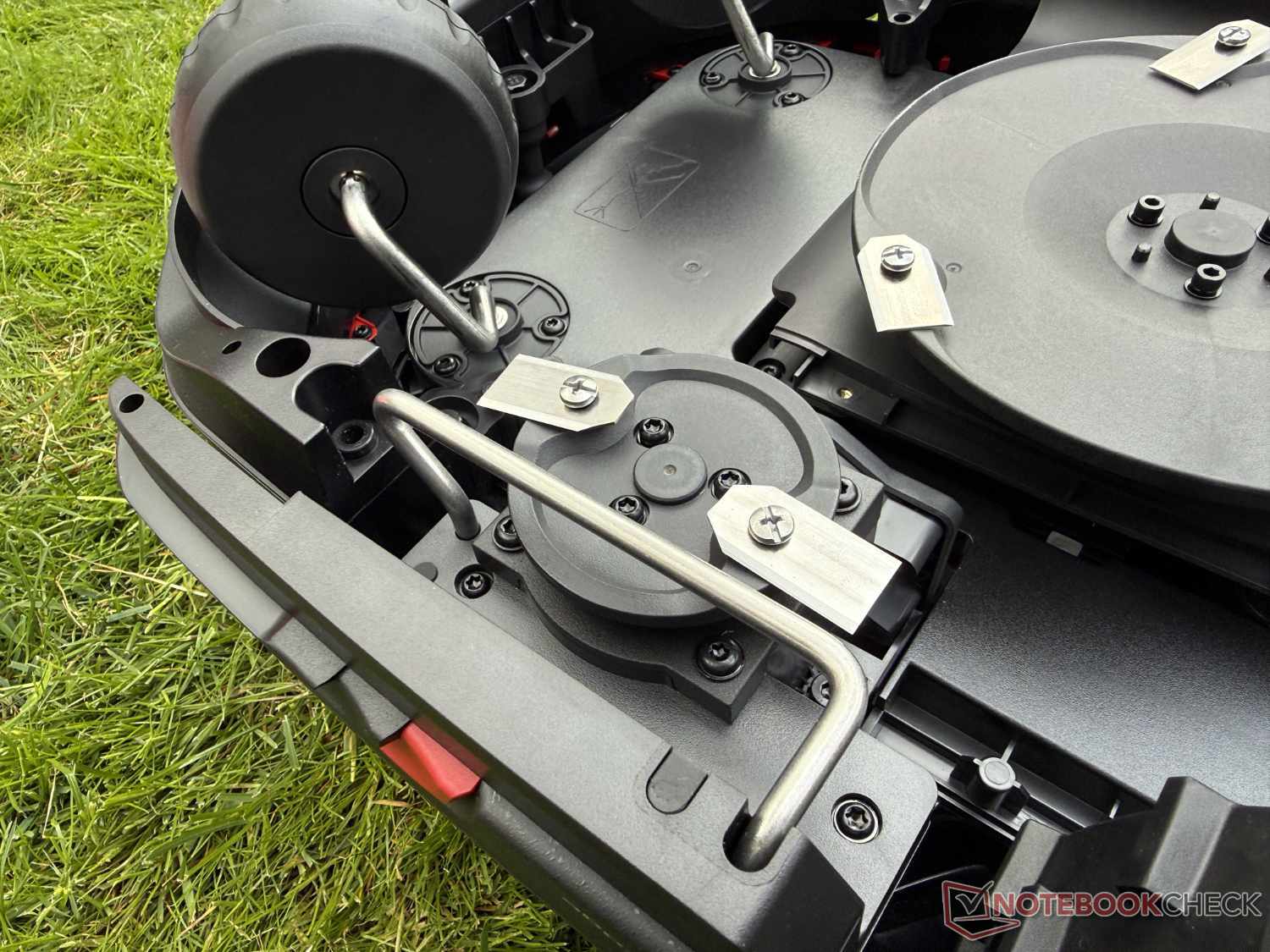
So much for the theory. In practice, unfortunately, things sometimes look different. On flat, unobstructed edges, the RockNeo Q1 ensures edge-to-edge mowing—though many other models achieve this as well by driving right up to the edge of the lawn. The test candidate should really score points in areas where there is no level transition. But this is precisely where the RockNeo Q1’s software often throws a wrench in the works.
Even though the “Visual Obstacle Avoidance for Boundaries” setting is disabled in the app, this little “scaredy-cat” backs away from almost every border plant hanging over the lawn. It would be easy for it to simply plow right through—just as many other robotic mowers have done before it. The robotic mower even occasionally got “scared” of a shaded area and gave it a wide berth.
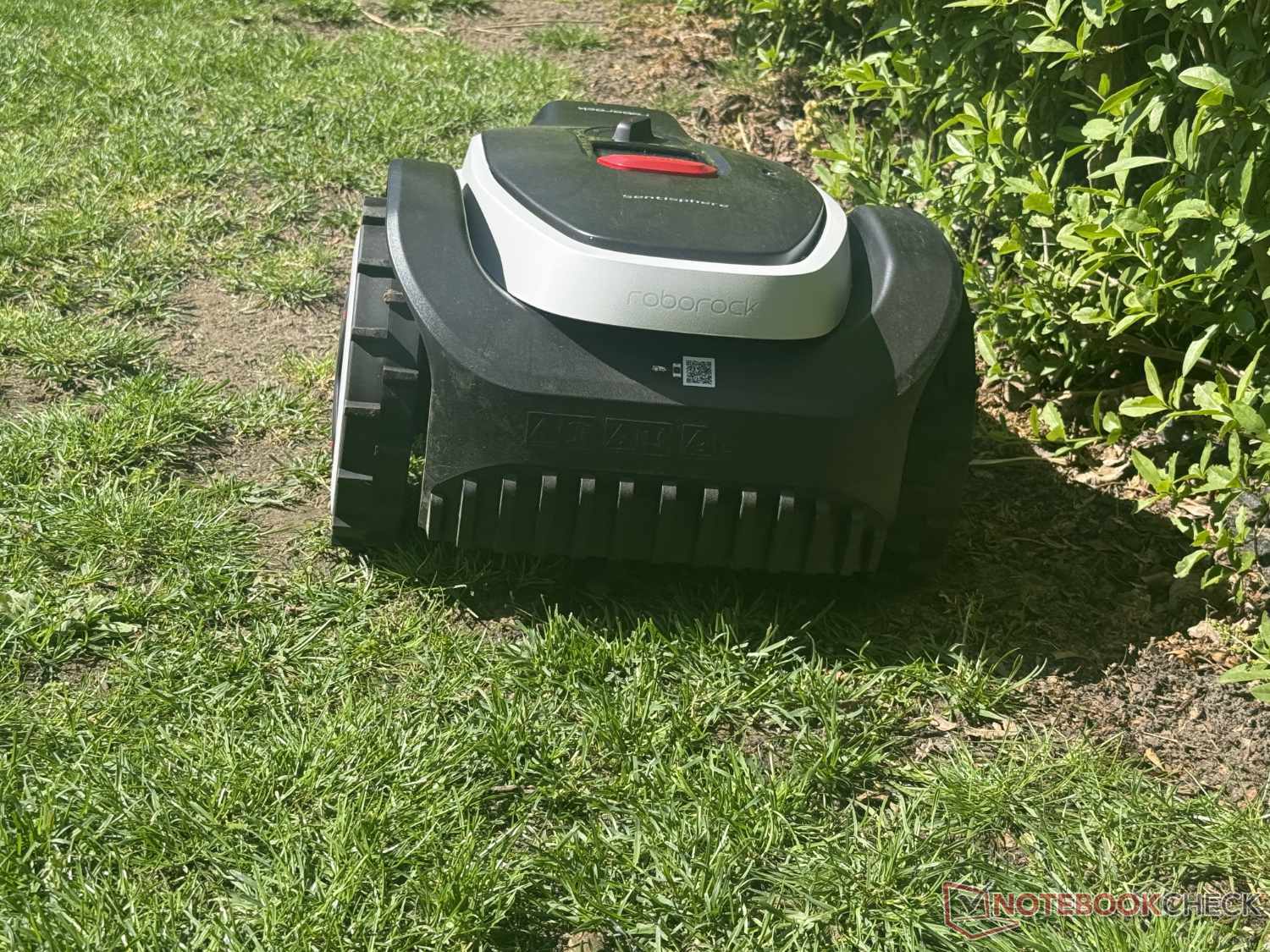
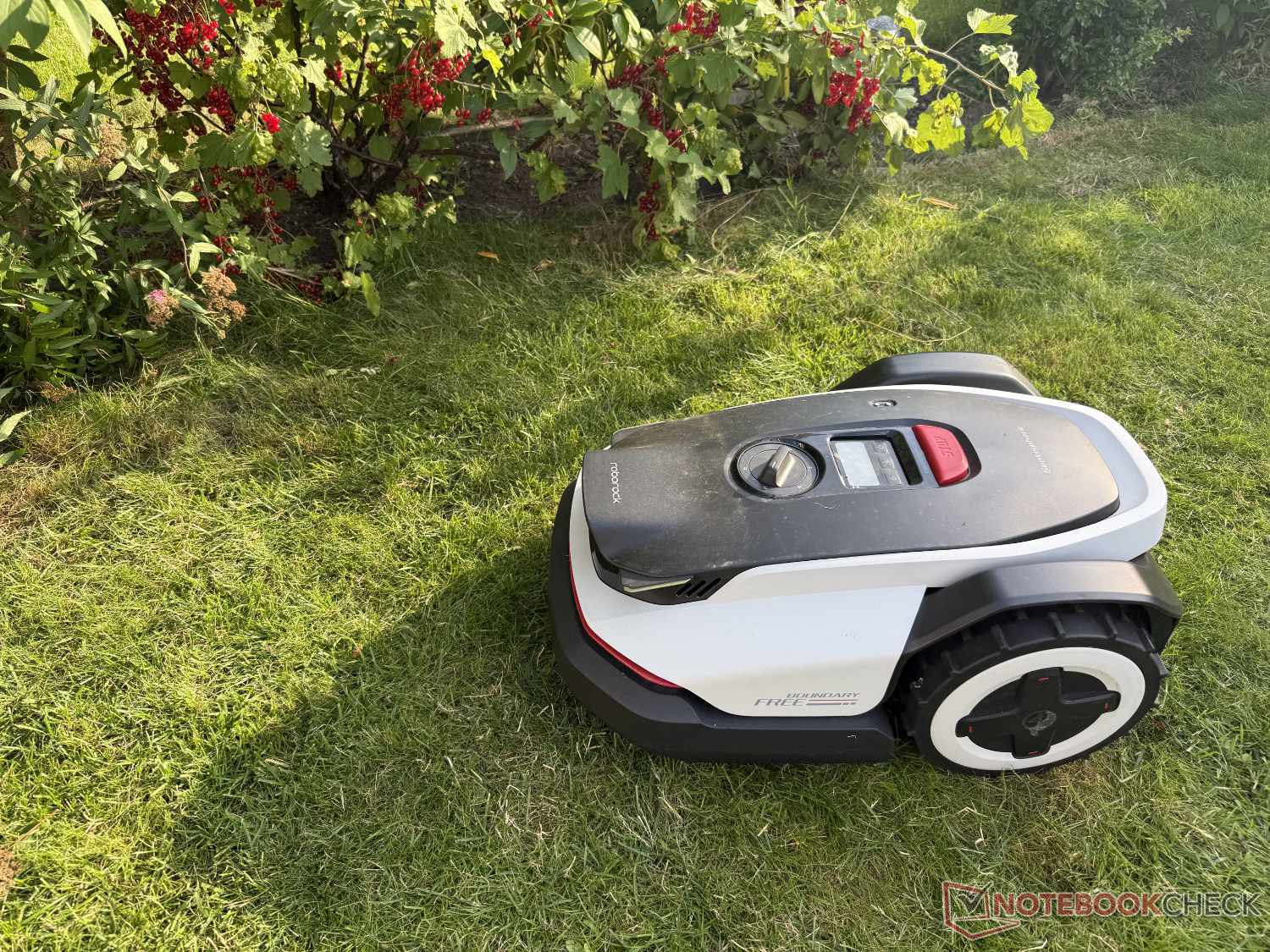
As a result, the performance at the edge of the lawn—despite the edge module—tends to be below average. Based on our observations, this has nothing to do with the safety settings of the PreciEdge module, which is mounted close to the outer edge of the device. Even when this module is disabled in the settings, the behavior during edge mowing remains unchanged and is still overly cautious.
In short: the hardware is good, but the software isn’t (yet). Roborock definitely has room for improvement here so that the RockNeo Q1 can score points in the test with its supposed strength. However, since the manufacturer has already been actively rolling out firmware updates, we’re optimistic that these issues will eventually be resolved...
Runtime & noise level: Runs for just under 2 hours
Roborock specifies a mowing time of 100 minutes per battery charge for the RockNeo Q105 we tested. It actually managed to slightly exceed this on our test area. With 15 percent battery remaining, it returned to the charging station after just under two hours and having covered a good 250 square meters, where it charged for about the same amount of time.
To ensure comparability among the robotic lawn mowers we tested, we assume the theoretical scenario that 500 square meters are to be mowed three times a week. Based on our measurements, this results in a monthly electricity consumption of approximately 9 kWh for the RockNeo Q105.
This means the RockNeo Q1 is definitely not among the most energy-efficient robotic lawn mowers, though this is likely due in part to the additional edge-trimming module—as well as its relatively high standby power consumption of 10 W. With a noise level of around 60 dB measured during testing, it’s not among the quietest models, but it’s not uncomfortably loud.

Based on our test, is the Roborock RockNeo Q1 not the right wire-free robotic lawn mower for your yard?
Then discover many more models in our 2026 Best Robotic Lawn Mowers list!
Transparency
The selection of devices to be reviewed is made by our editorial team. The test sample was provided to the author as a loan by the manufacturer or retailer for the purpose of this review. The lender had no influence on this review, nor did the manufacturer receive a copy of this review before publication. There was no obligation to publish this review. As an independent media company, Notebookcheck is not subjected to the authority of manufacturers, retailers or publishers.
 Add as a preferred source on Google


