




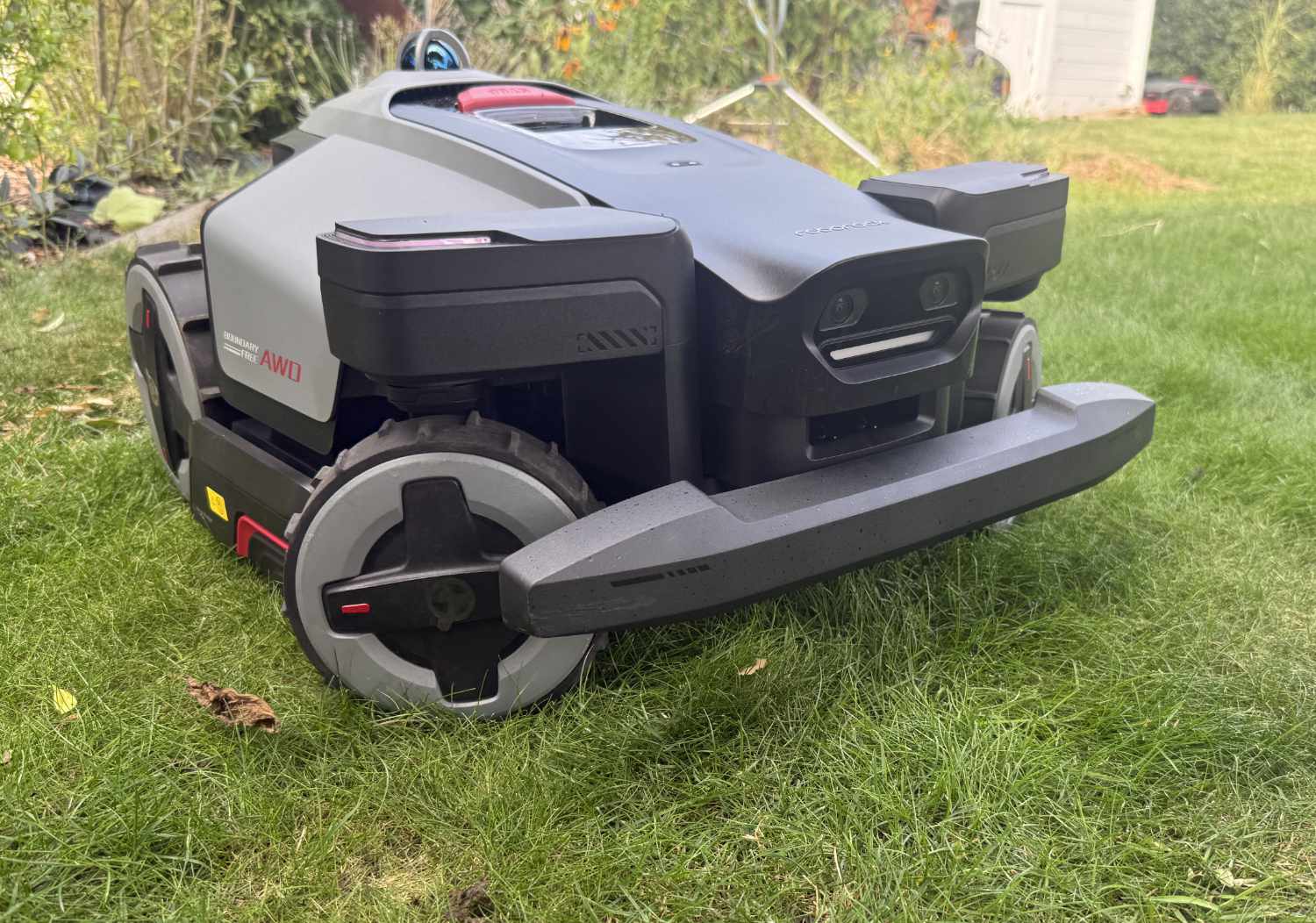
Flagship robotic lawn mower with optional edge-cutting module: Roborock RockMow Z1 LiDAR review
Impressive features.
All-wheel drive, active steering, an optional edge-cutting deck, and LiDAR—the Roborock RockMow Z1 LiDAR boasts an impressive array of features. Our test shows just how well Roborock’s flagship robotic mower performs in real-world use.Marcus Schwarten (translated by Marcus Schwarten (translation supported by DeepL)) Published 🇩🇪 🇳🇱 ...

Roborock RockMow Z120 LiDAR review verdict: Powerful hardware, software in need of improvement
We had high expectations for the RockMow Z1 LiDAR. After all, this is the flagship model, which has a recommended retail price of nearly 3,000 euros. And the technical features—including all-wheel drive, active steering, LiDAR, and an optional edge-cutting module—simply sound promising.
Unfortunately, in our test, the RockMow Z120 LiDAR didn’t perform as well as we had expected. This is less due to the hardware and primarily due to the software. Among other things, the expensive robotic mower proved less reliable at detecting obstacles than many other models. Edge mowing also didn’t work as well as we’d hoped, despite the optional edge-cutting module. Here, too, the software (as of August 25, 2026) prevented better results.
The fundamentals of this powerful all-wheel-drive robotic mower are solid, as demonstrated by its off-road capability and maneuverability, among other things. Mowing and navigation also work well for the most part. The software can be improved. This is where Roborock needs to act—and, as the latest updates show, it is already doing so. Based on our test impressions, it is currently still difficult for the mower to challenge all-wheel-drive rivals such as the Dreame A3 AWD Pro or the very similar Mova LiDAX Ultra AWD.
Pros
Cons
Price and availability
The manufacturer's suggested retail price for the Roborock RockMow Z120 LiDAR in Europe is 2,699 euros. In the USA, the RockMow X120H LiDAR is sold for an MSRP of $3.199. It is available from selected retailers. The PreciEdge edge-cutting module costs around 150 euros.
Table of Contents
- Roborock RockMow Z120 LiDAR review verdict: Powerful hardware, software in need of improvement
- Features & package contents: Impressive equipment
- Setup & maintenance: AI mapping did not work in our test
- App & controls: Clear and well organized
- Navigation & obstacle detection: LiDAR instead of RTK
- Area & edge mowing: With an optional edge-cutting module
- Runtime & noise level: Mows 300 square meters per battery charge
Important note: We tested the European version, the RockMow Z120 LiDAR, which is largely identical in construction to the RockMow X120H LiDAR sold in the USA.
Roborock entered the robotic lawn mower market in 2026. Having already tested the entry-level RockNeo Q1, we now turn our attention to the other end of the product lineup—and thus to the top-of-the-line Roborock RockMow Z1 LiDAR.
We tested the Roborock RockMow Z120 LiDAR together with the optional PreciEdge edge-cutting module. Our review reveals what sets this all-wheel-drive robotic lawn mower apart and what weaknesses it exhibited.
Roborock RockMow Z120 LiDAR specifications
| Area | 2,000 m² |
|---|---|
| Navigation | Sentisphere LiDAR |
| Obstacle detection | Vision-LiDAR fusion |
| Mowing unit | Mowing disc |
| Number of blades | 6 |
| Cutting width | 24 cm |
| Cutting height | 2–7 cm |
| Cutting height adjustment | electric |
| Gradeability | 80% / 39° |
| Display | yes |
| 4G | yes |
| Battery capacity | 6 Ah |
| Weight | 21.7 kg |
| Dimensions | 66.1 x 47.5 x 33.2 cm |
| Water resistance | IPX6 |
| Garage included | No |
| Replacement blades included | 6 |
| Color | Gray |
| MSRP | 2,699 euros |
Features & package contents: Impressive equipment
The Z1 LiDAR is the flagship model in Roborock’s 2026 robotic lawn mower lineup. It is positioned above the three RTK models—RockNeo Q1, RockMow S1, and RockMow Z1—and is the only model to use 360° laser technology. The sensor is housed in a protected dome on top of the rear section of the robotic lawn mower. This technology offers particular advantages over RTK in areas where numerous obstacles—such as trees, buildings, and the like—can interfere with GPS reception. In addition, Roborock has installed the customary AI cameras at the front for obstacle detection.
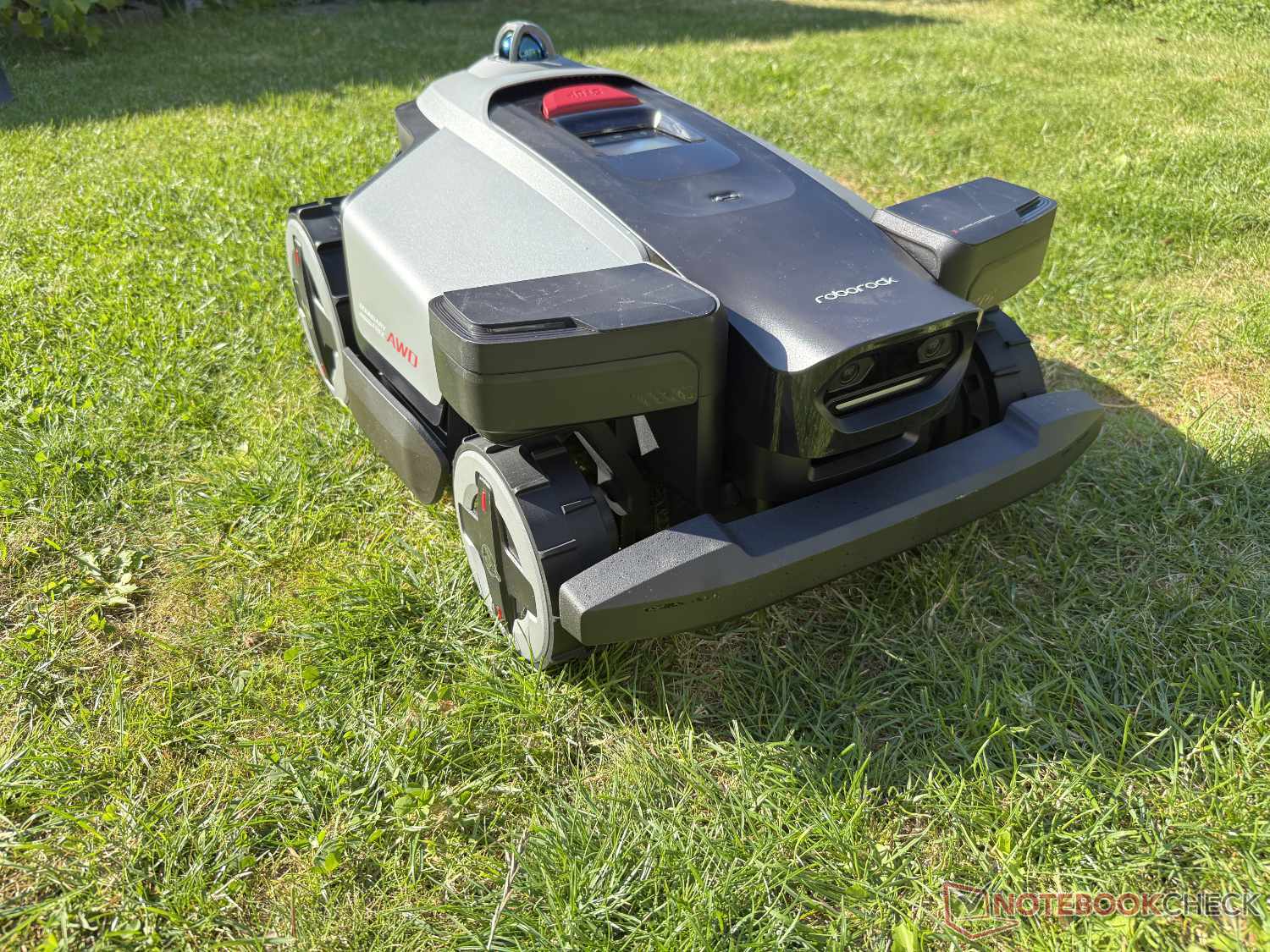
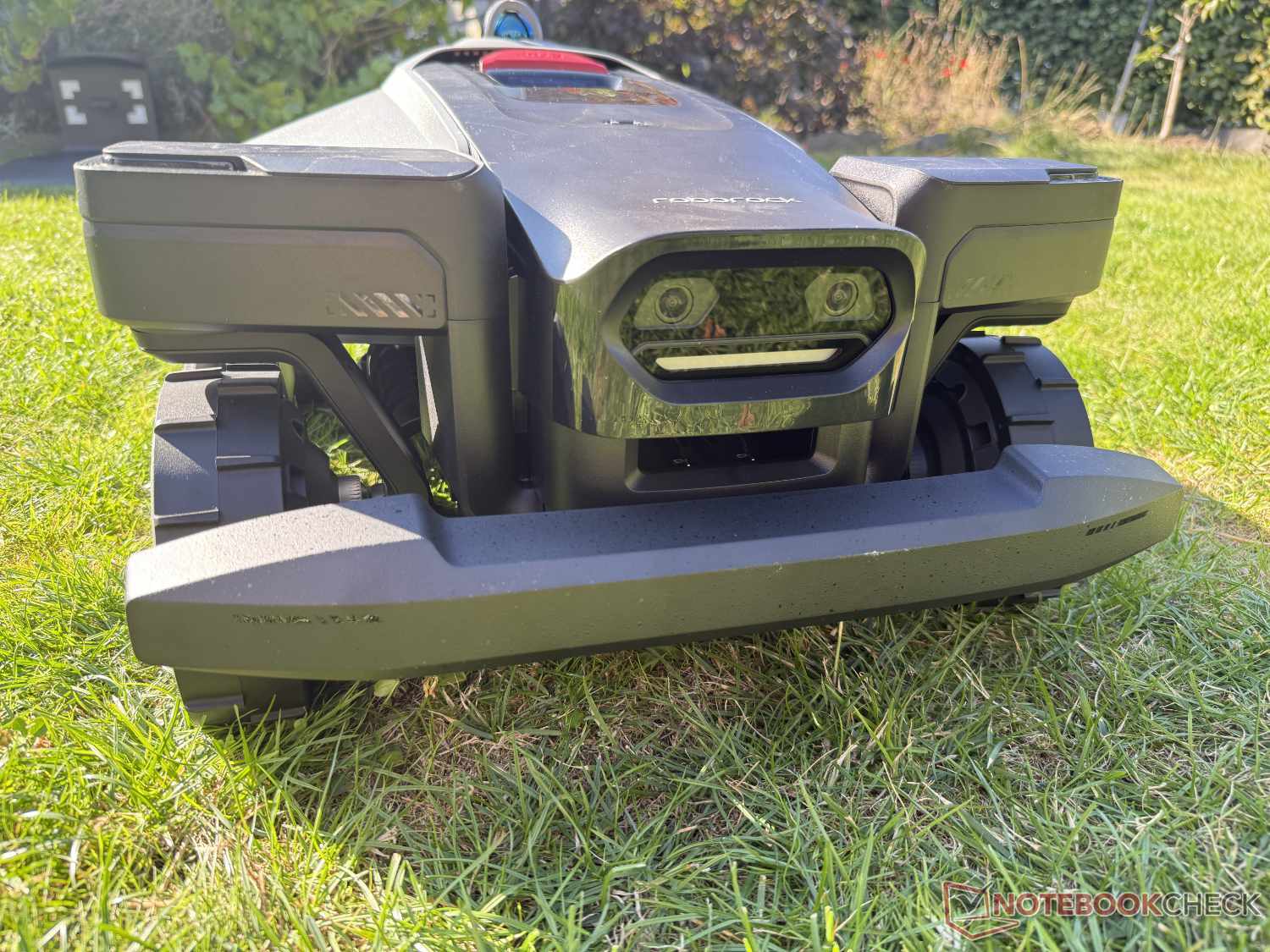
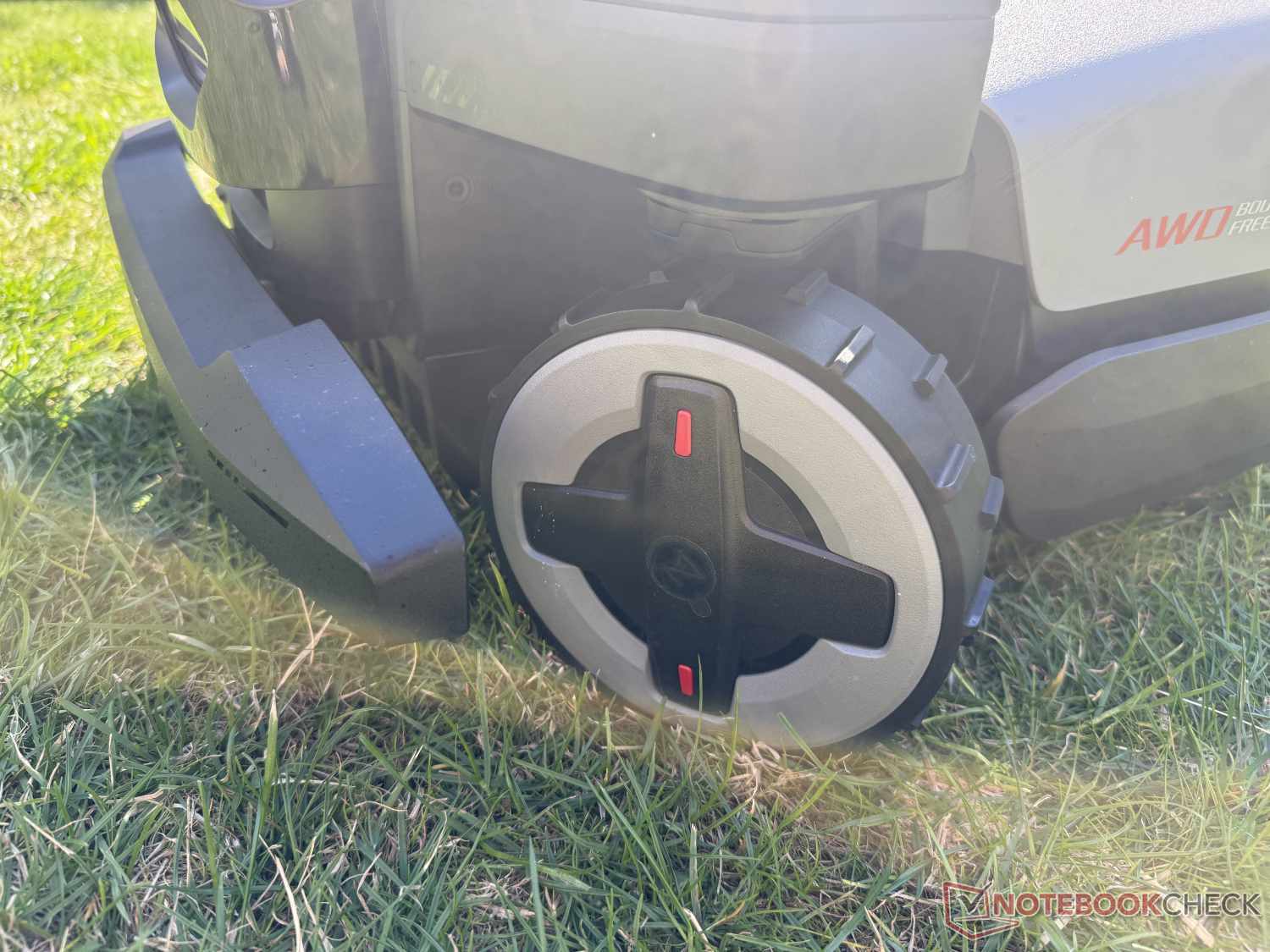
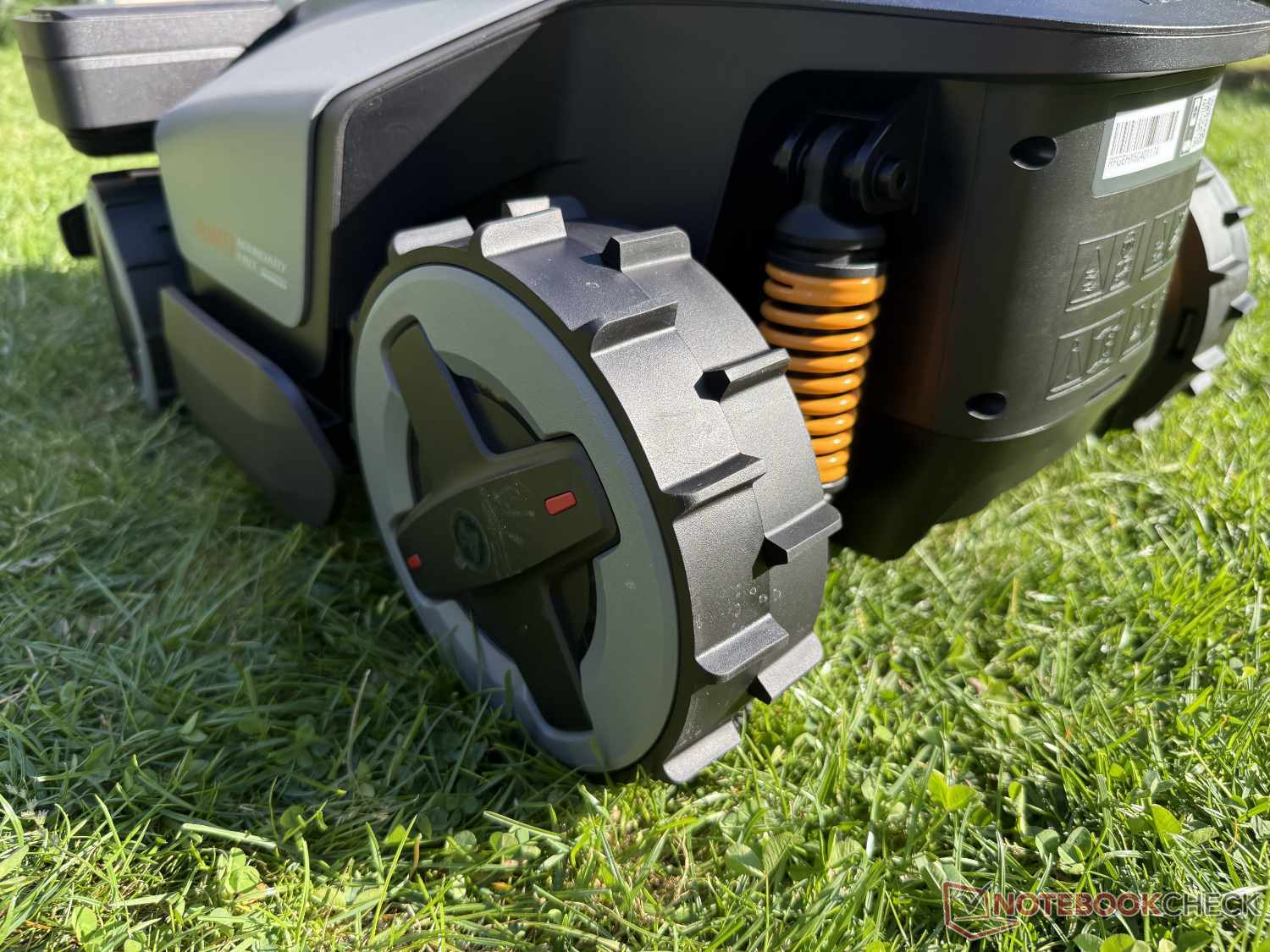
Like the Z1, the LiDAR version is also an all-wheel-drive robotic mower and is therefore intended to be particularly capable on rough terrain. In addition to suspension for the two rear wheels, the active steering system at the front is another major difference compared with many competitors. More on this below.
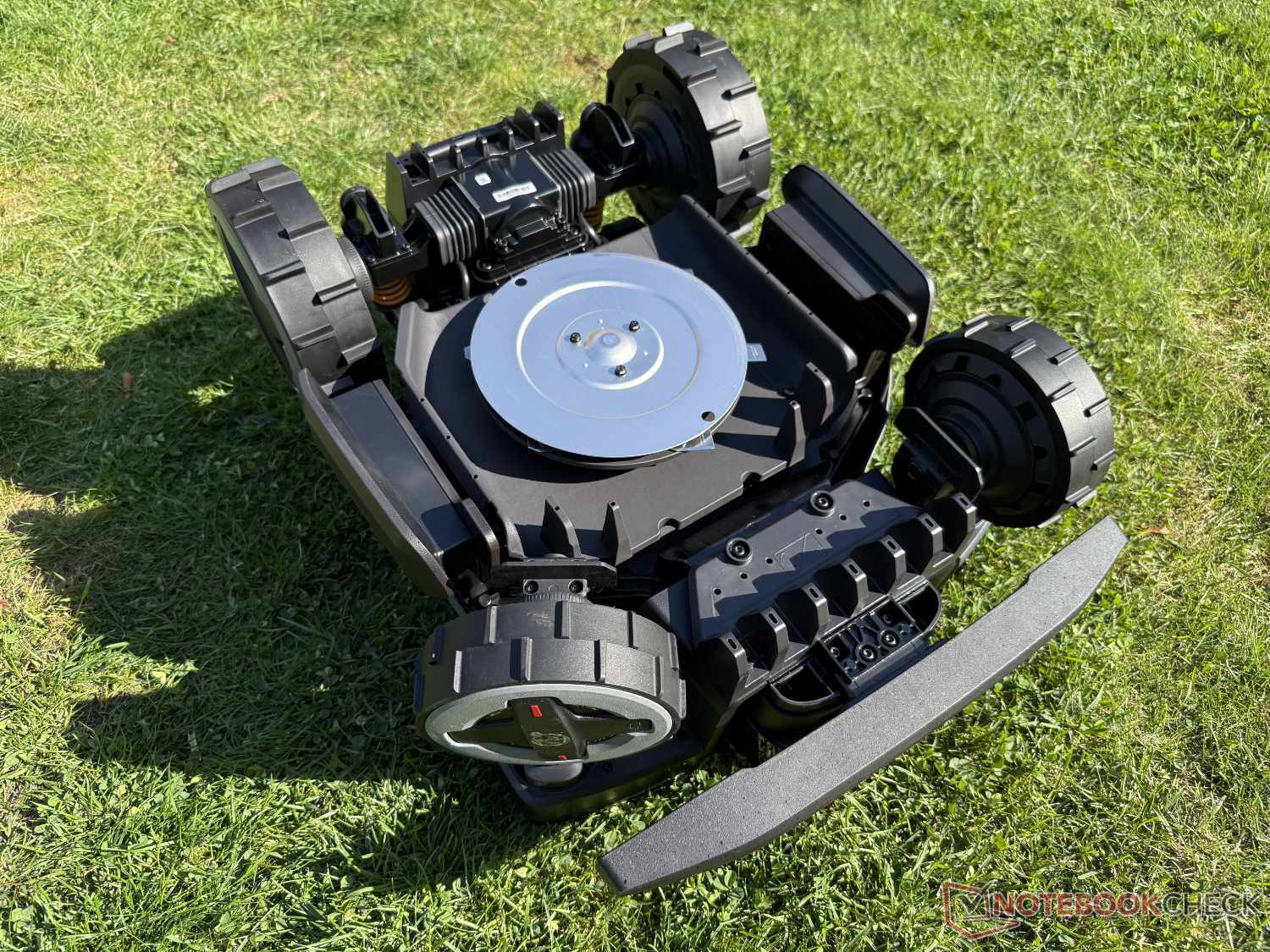
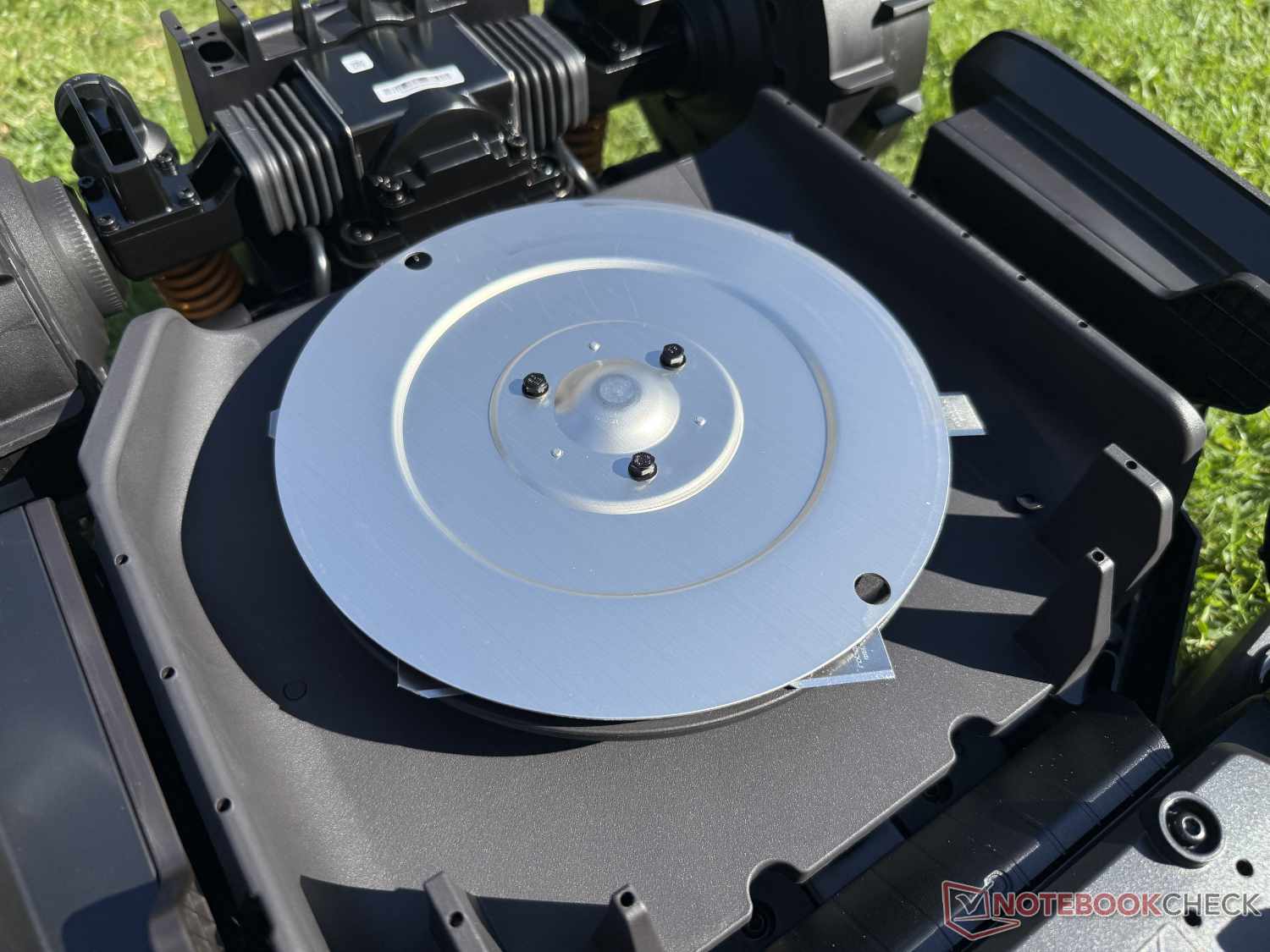
First, here are some additional important specifications. Unlike some competitors with dual mowing decks, the Z1 LiDAR uses only a single floating mowing disc, which offers a 24 cm cutting width and an electrically adjustable cutting height ranging from 20 to 70 mm.
A special feature is the installable side-mounted mowing deck. The PreciEdge edge-cutting module is not included but can be retrofitted as an optional extra. It reduces the uncut edge to as little as 3 cm. We’ll also give our verdict on it further below.
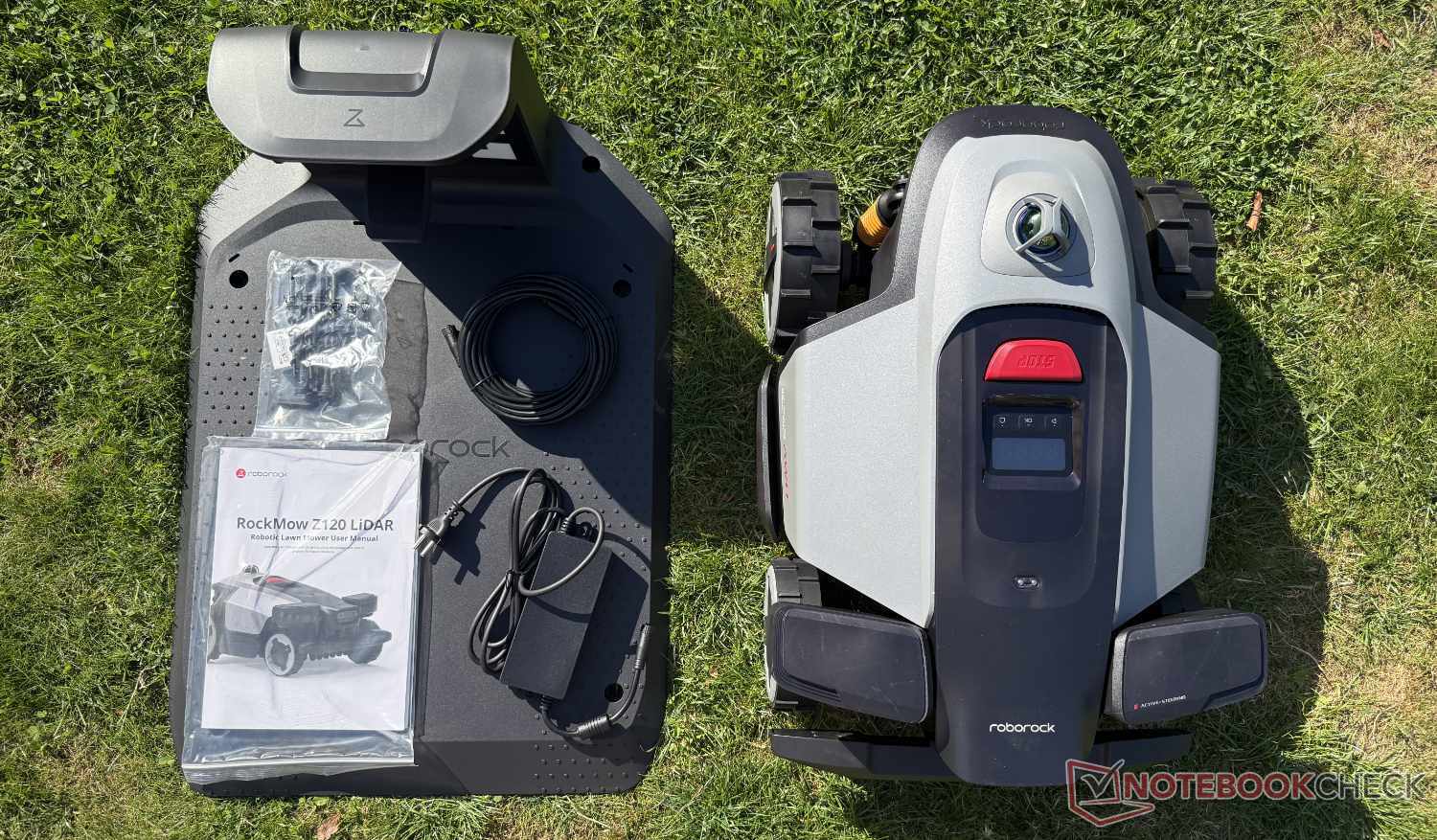
First, let’s wrap up this section with an overview of the package contents. In addition to the standard charging station, Roborock supplies its RockMow Z1 LiDAR, which weighs just under 22 kg, with six replacement blades and the usual accessories for securing the station.
Setup & maintenance: AI mapping did not work in our test
Establishing a connection between the robotic mower, the Wi-Fi network, and the app posed no problems whatsoever during testing. In addition, the Z1 LiDAR also connects via 4G. A three-year data plan is included in the purchase price. The next step is the customary exploration of the new working area.
The RockMow Z120 LiDAR offers both manual and automatic mapping—although the AI feature is still in beta and did not work during testing. On two test properties, both of which had clearly visible lawn edges in at least some areas, the AI mode could not be activated. This is frustrating for a robotic lawn mower in this price range.
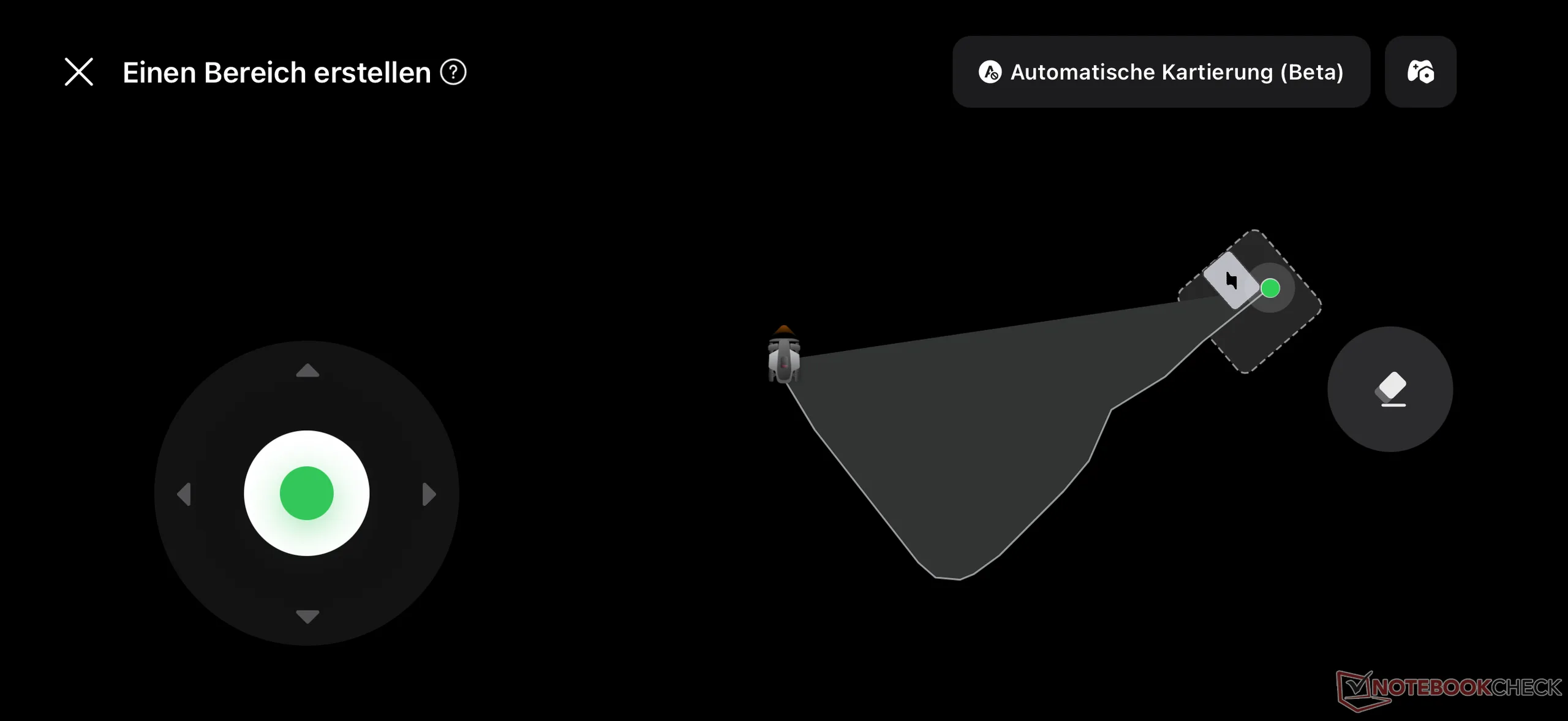
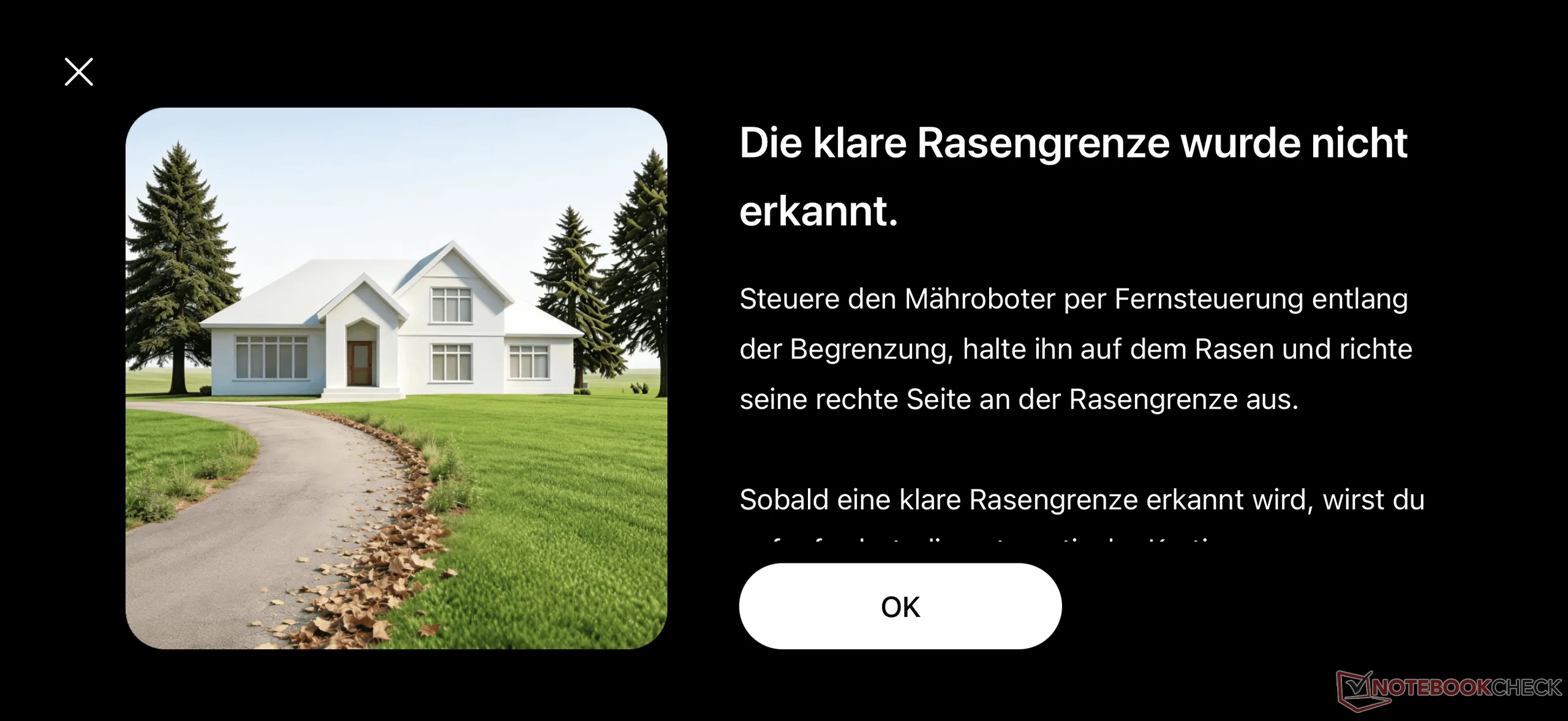
Manual mapping is performed by default using a joystick, which is used to manually steer the robotic lawn mower. At first, this feels somewhat unfamiliar compared with many other robotic lawn mowers we have already tested, as the steerable front wheels make it exceptionally agile. In other words, it takes a bit of finesse to maneuver the relatively responsive robot as closely as possible along the edge of the lawn. After a short adjustment period, however, it worked well.
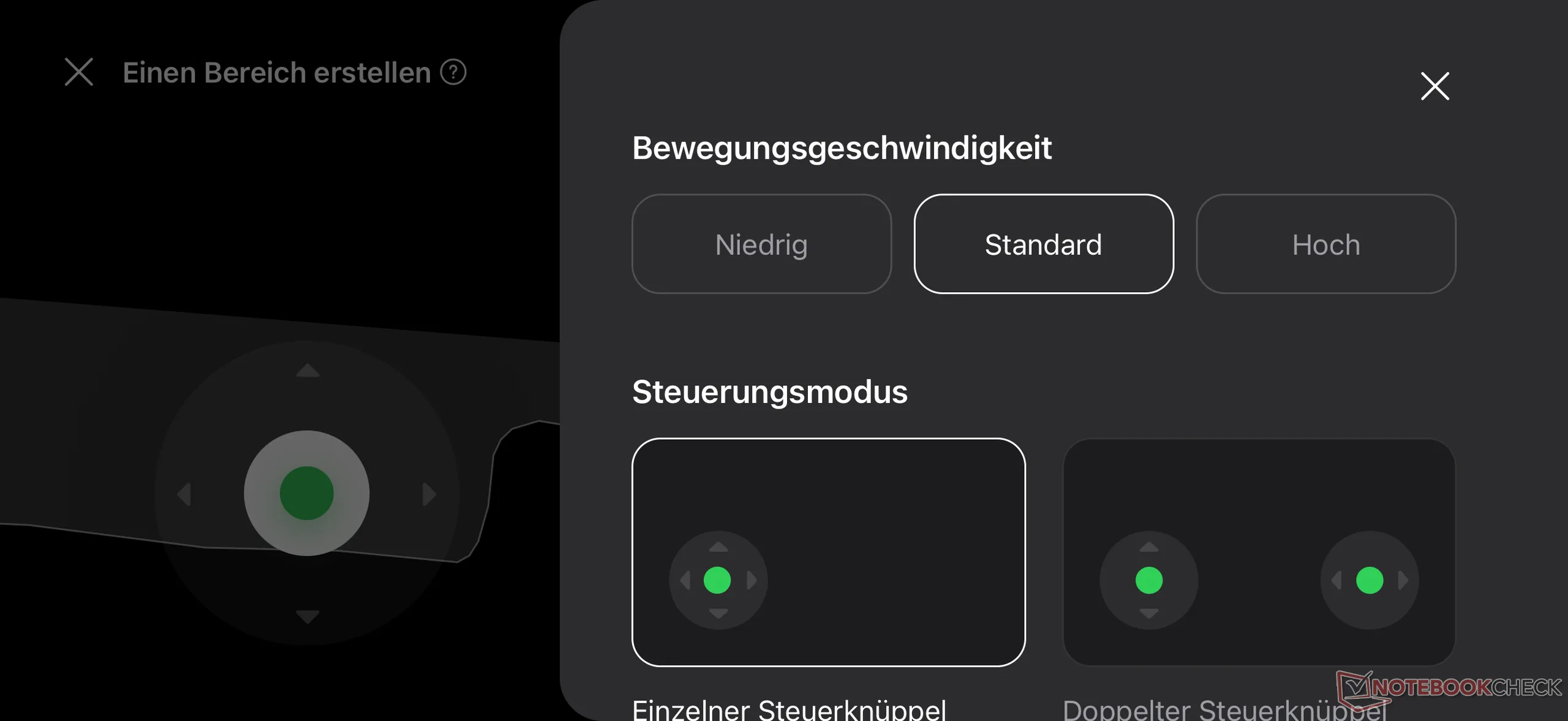
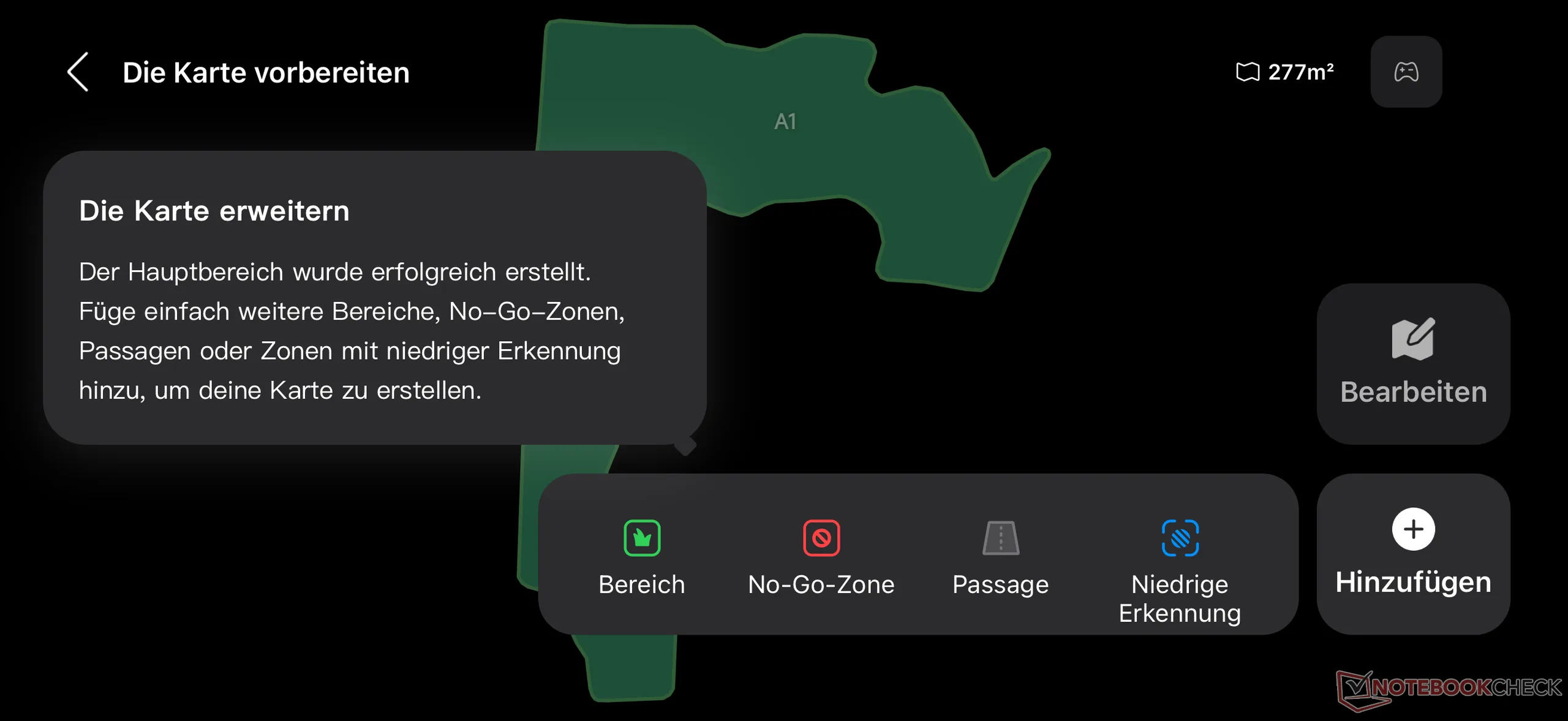
A positive feature is that tapping the icon in the upper-right corner brings up various options. This allows users to customize the manual controls to their preferences, for example by choosing one or two joysticks and different movement speeds. This is exemplary.
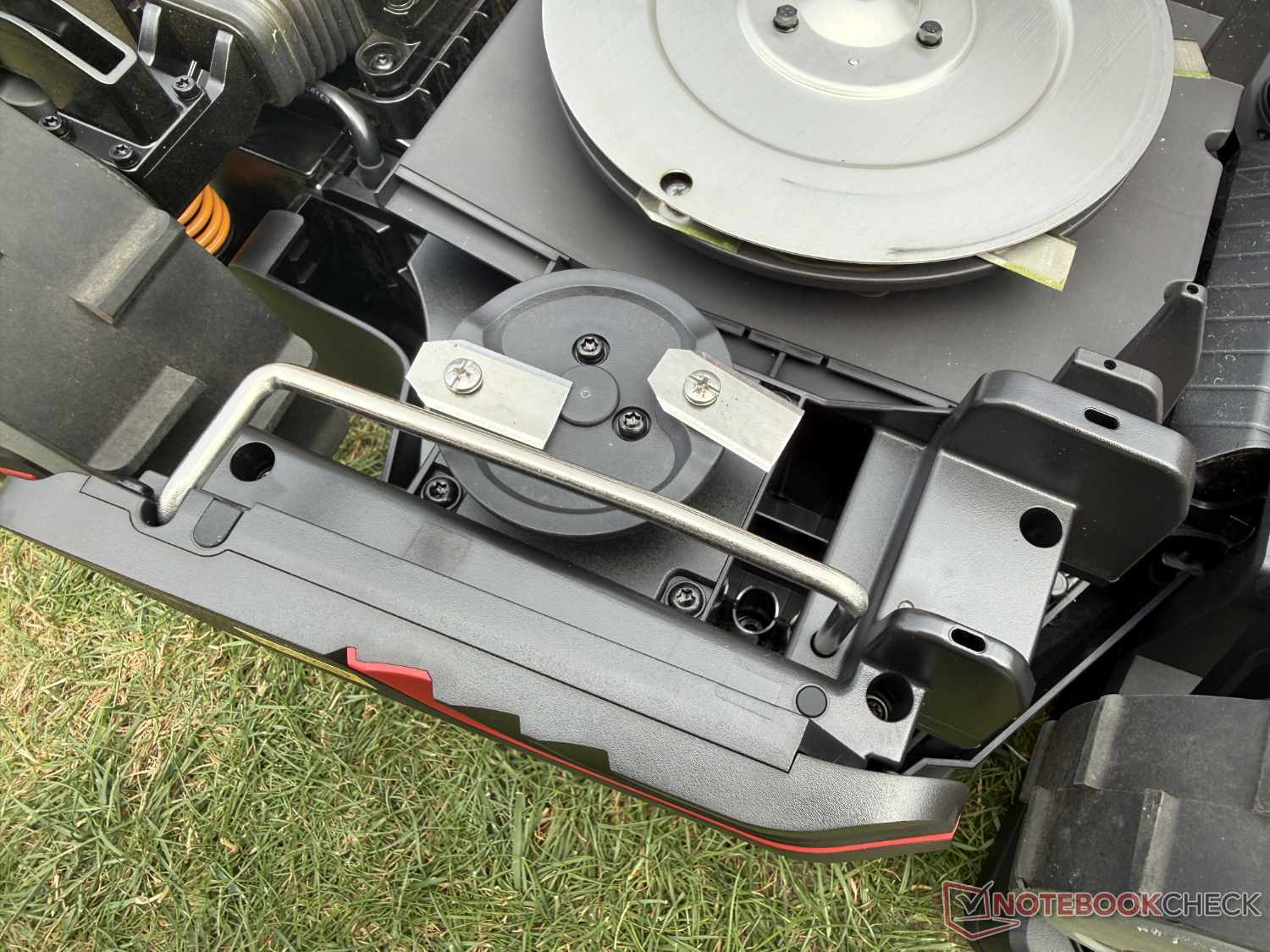
The six blades on the main mowing deck and the two blades on the optional side-mounted mowing deck can be replaced using a Phillips-head screwdriver. Thanks to its IPX6 rating, cleaning the robotic mower with a garden hose is no problem.
App & controls: Clear and well organized
The Roborock app has a clear layout. As usual, the home screen displays the generated map in the center, together with live progress during mowing. Below it are controls for starting, pausing, and stopping Zone, Full, or Edge mowing modes (but no Spot mode).
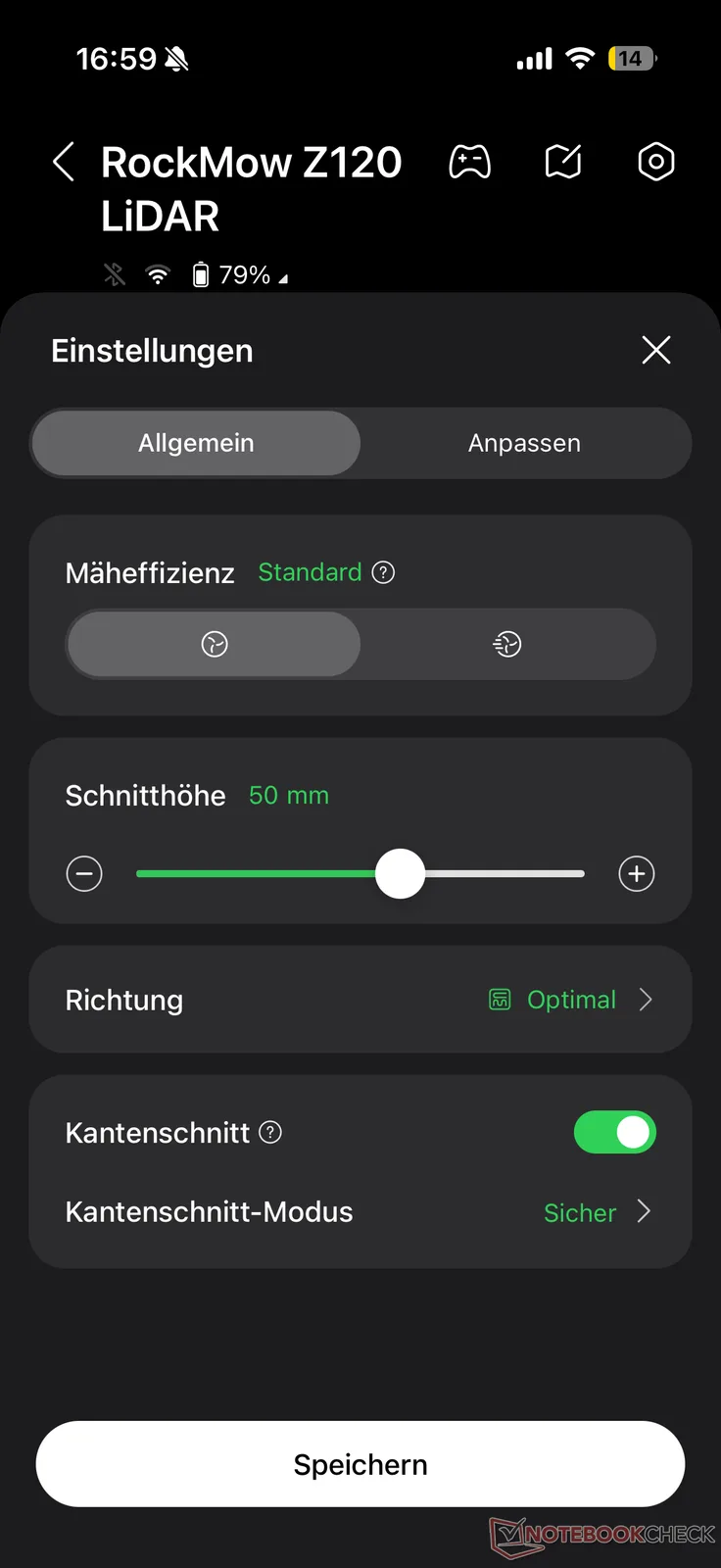
The icon in the lower-left corner opens the menu containing mowing settings for all zones or individual zones. Here, users can customize mowing efficiency (Standard or Efficient), the cutting height from 20 to 70 mm (in one-millimeter increments, which is highly unusual), the mowing direction, and the edge mode to suit their preferences.
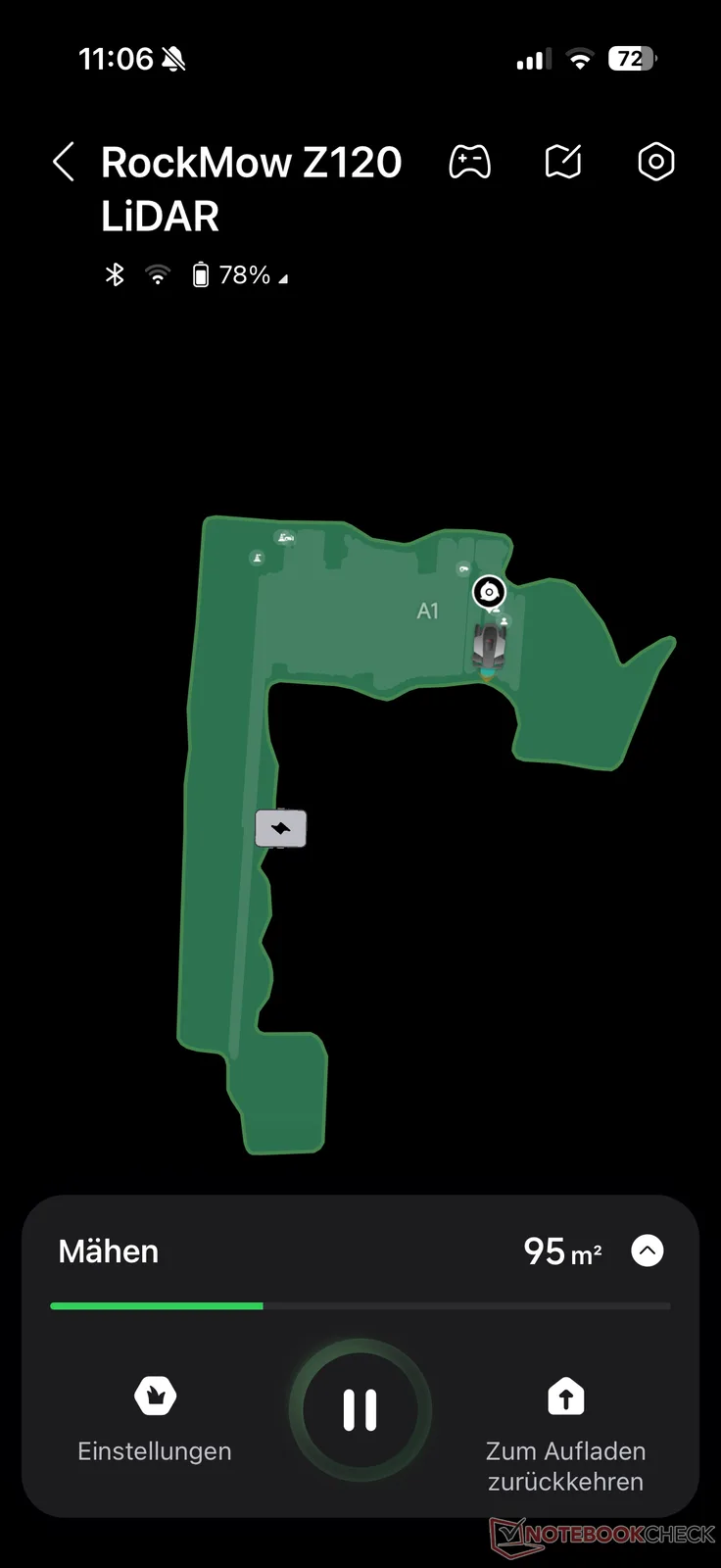
In the upper-right corner are icons for remote control and map management. The latter allows users to set up multiple zones, no-go zones, and passages, among other things. There is also an option to create low-detection zones—areas in which the robotic mower reduces visual obstacle avoidance so that it can, for example, drive across stone paths.
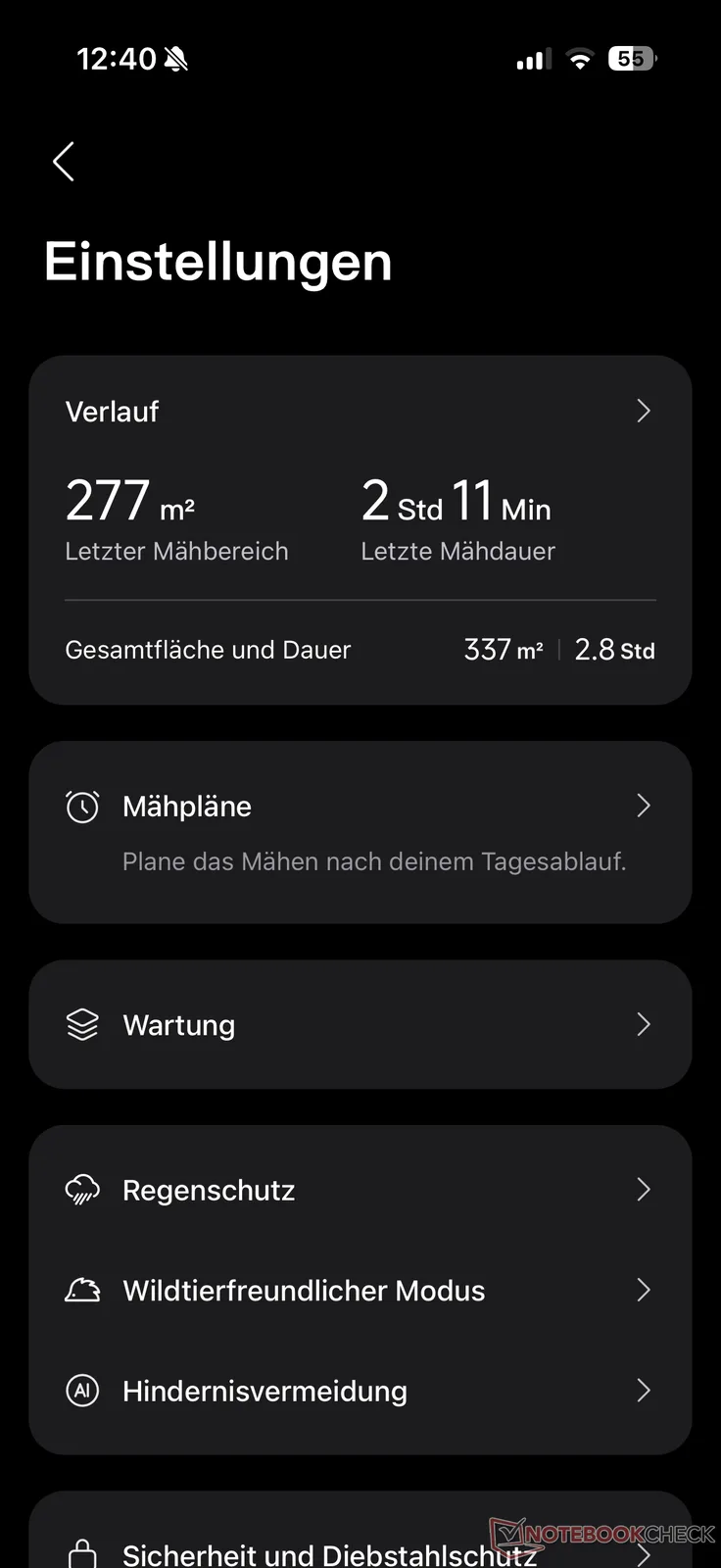
Next to these is the icon for the menu containing additional settings. In addition to the history and mowing schedule, this menu includes settings for rain protection, theft protection, and more. Obstacle avoidance can also be adjusted here; alongside the two levels “Sensitive” and “Balanced,” there are options for passages and boundaries. The robot can also take photos of obstacles if desired. However, it does not have a live video function.
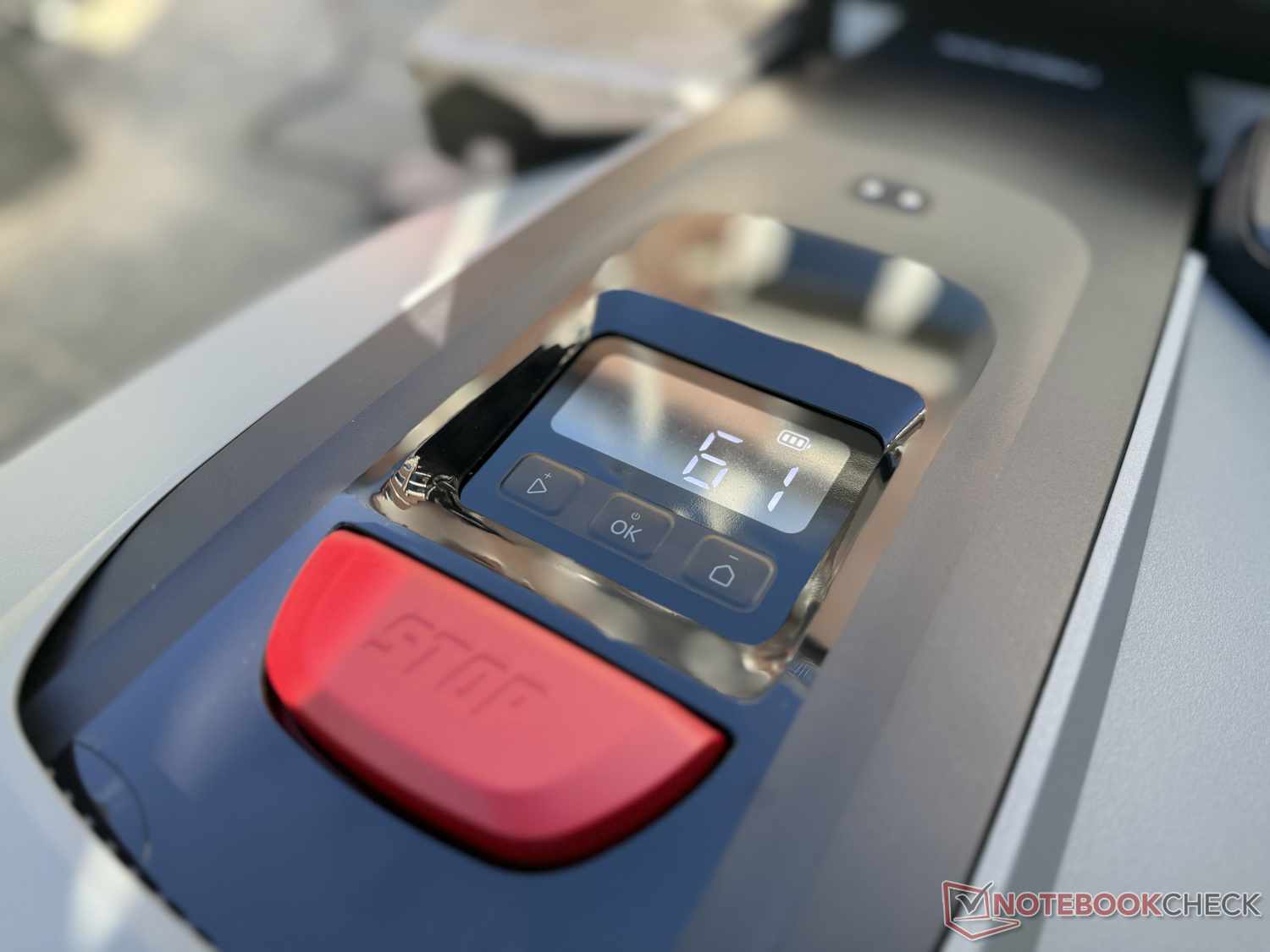
Alternatively, the Roborock robotic lawn mower can be operated directly on the device in the usual way. In addition to the simple display and the standard stop button, there are further buttons for the most important functions.
Navigation & obstacle detection: LiDAR instead of RTK
Thanks to LiDAR, the RockMow Z120 LiDAR does not require an RTK antenna. On two test areas, it used its laser sensor, which is protected by a sturdy metal bracket, to navigate largely reliably and systematically in straight lines. There is little to criticize here.
When it comes to obstacle avoidance, however, the Roborock flagship model disappointed us somewhat. It reliably detected our imitation hedgehog—which is good and important for animal welfare, even though we strongly advise against running robotic mowers at night or at dusk. There is also a wildlife protection mode in the app for this purpose.
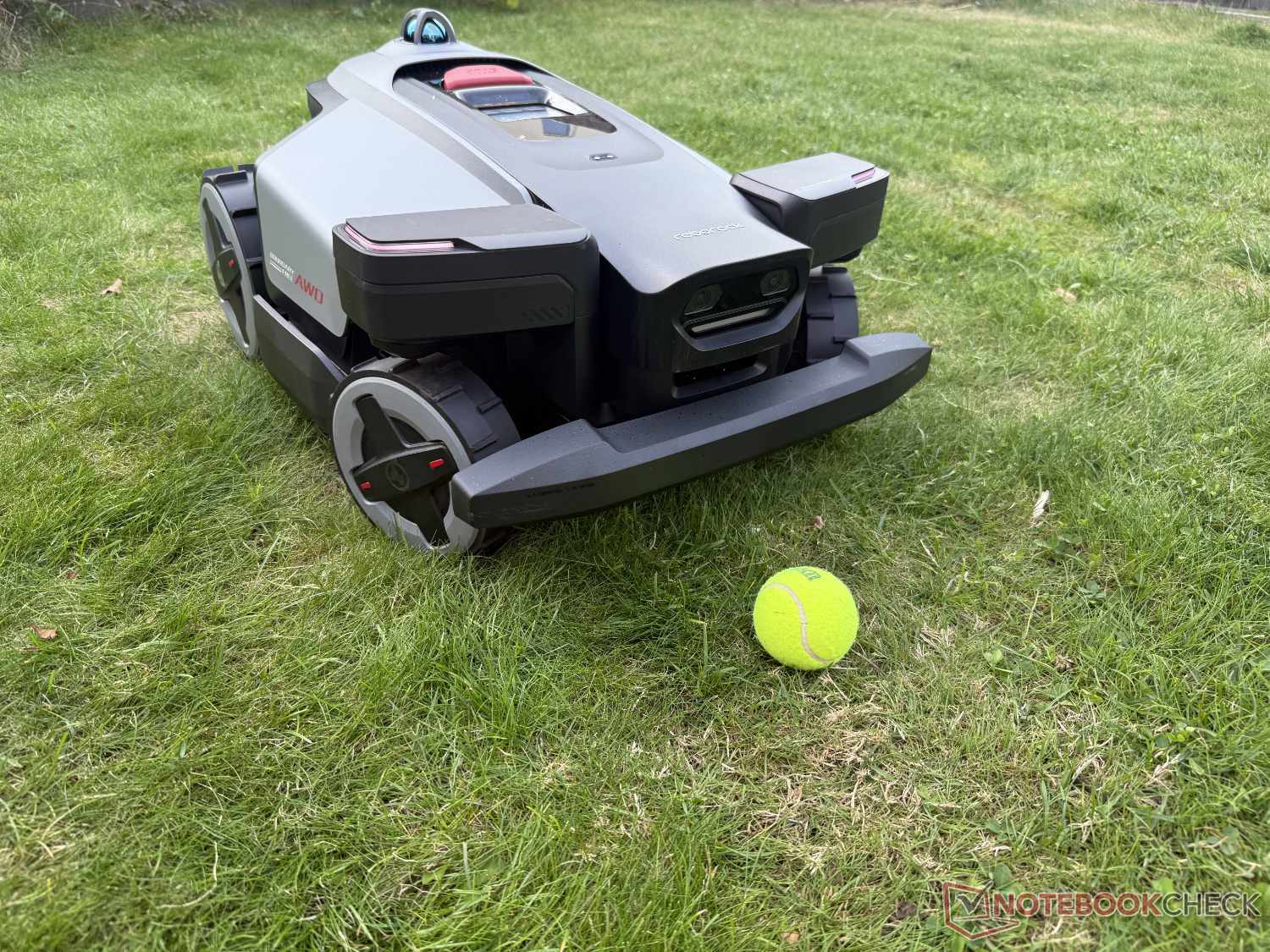
However, when faced with other challenges, such as a tennis ball or a piece of garden hose, the RockMow Z1 LiDAR struggled in our test and usually ran straight over them. In this respect, it cannot quite keep up even with some entry-level models, such as the TerraMow Mini 500 (approx. 750 euros on Amazon). The fact that its wheels can drive over a tennis ball demonstrates its ability to negotiate obstacles, but this was not the capability it was supposed to demonstrate in this situation.
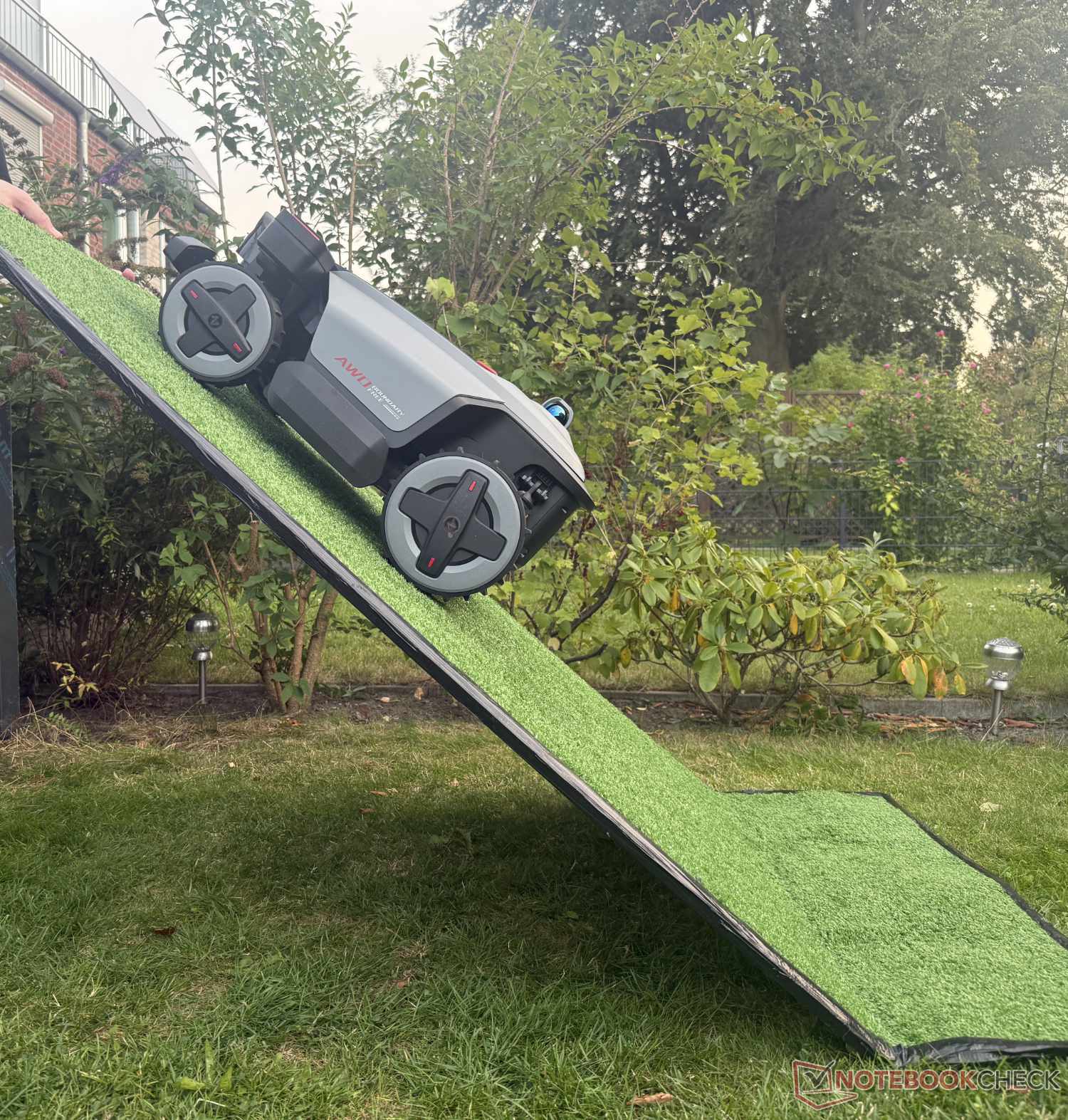
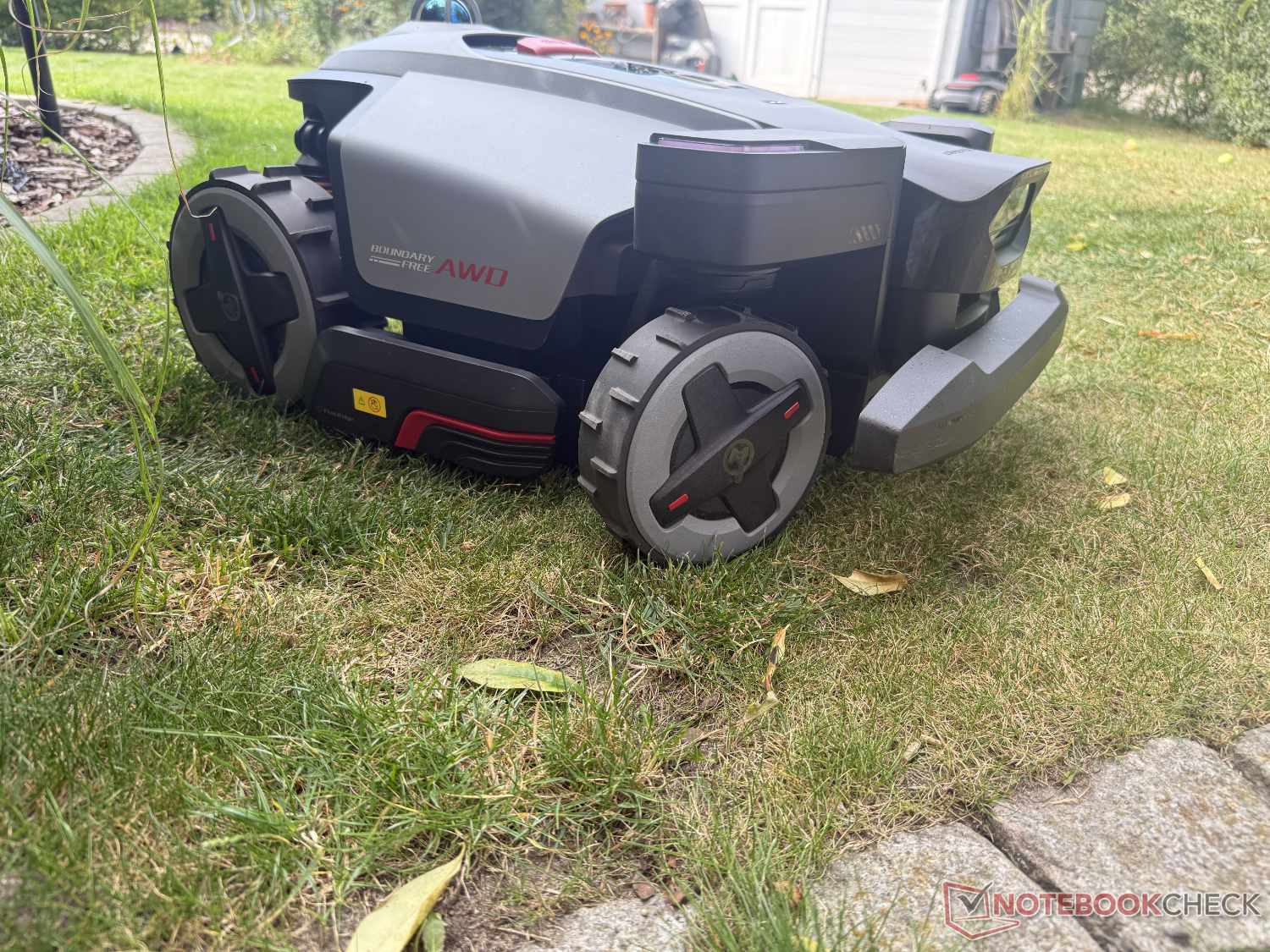
Roborock claims that the RockMow Z1 LiDAR can climb an 80 percent gradient, equivalent to 39 degrees. It managed just over 70 degrees on our artificial-turf test ramp. It then stopped working and displayed an error message stating that the robot had tipped over. Nevertheless, this is a very impressive result and puts it on par with its all-wheel-drive competitors, the Dreame A3 AWD Pro (approx. 2,000 euros on Amazon) and the Mova LiDAX Ultra AWD (approx. 1,700 euros on Amazon).
Another feature that stood out positively during testing was the active steering of the front wheels. The robot can turn each wheel independently by nearly 90 degrees in either direction. This not only allows it to turn in place without damaging the lawn but also enables nimble maneuvering along edges and similar obstacles—even though the robot, measuring 66.1 x 47.5 x 33.2 cm in length, width, and height, is anything but compact.
Area & edge mowing: With an optional edge-cutting module
Compared with other flagship robotic mowers from Dreame, Mova, and others, the RockMow Z120 LiDAR has only a single mowing deck with a 24 cm cutting width. Naturally, this means it cannot cover as much area per pass as its competitors. Among other things, this could count against it in the following section on runtime.
When mowing open areas, however, this is not an issue. The cut produced by the Roborock RockMow Z120 LiDAR in our test was clean. It reliably follows straight paths. There is little to complain about here—thanks in part to the navigation system, which works well in open areas.
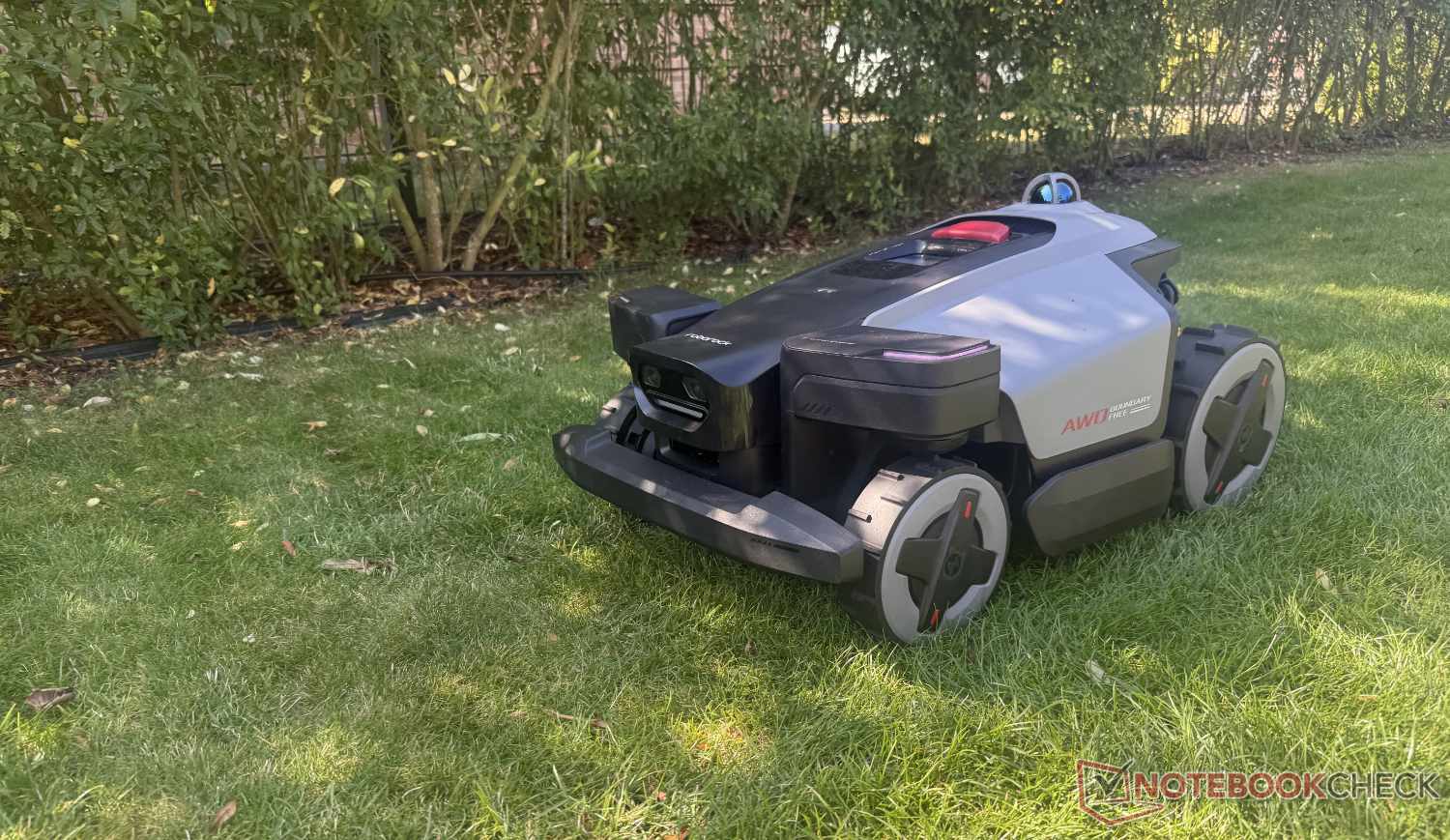
When mowing along edges, however, having only one centrally positioned mowing disc instead of two, as found on many competing models, is a disadvantage. The disc is consequently much farther from the edge of the machine, leaving an unmown strip at least 12 cm wide when the mower travels along raised borders.
To get around this problem, Roborock offers the PreciEdge edge-cutting module. It is available for all models, including the Z1 series. Unfortunately, it is neither included as standard nor pre-installed and must be purchased separately. Once installed with four screws, the add-on module—with its mini mowing disc and two blades (six blades are included)—reduces the edge clearance to around 3 cm.
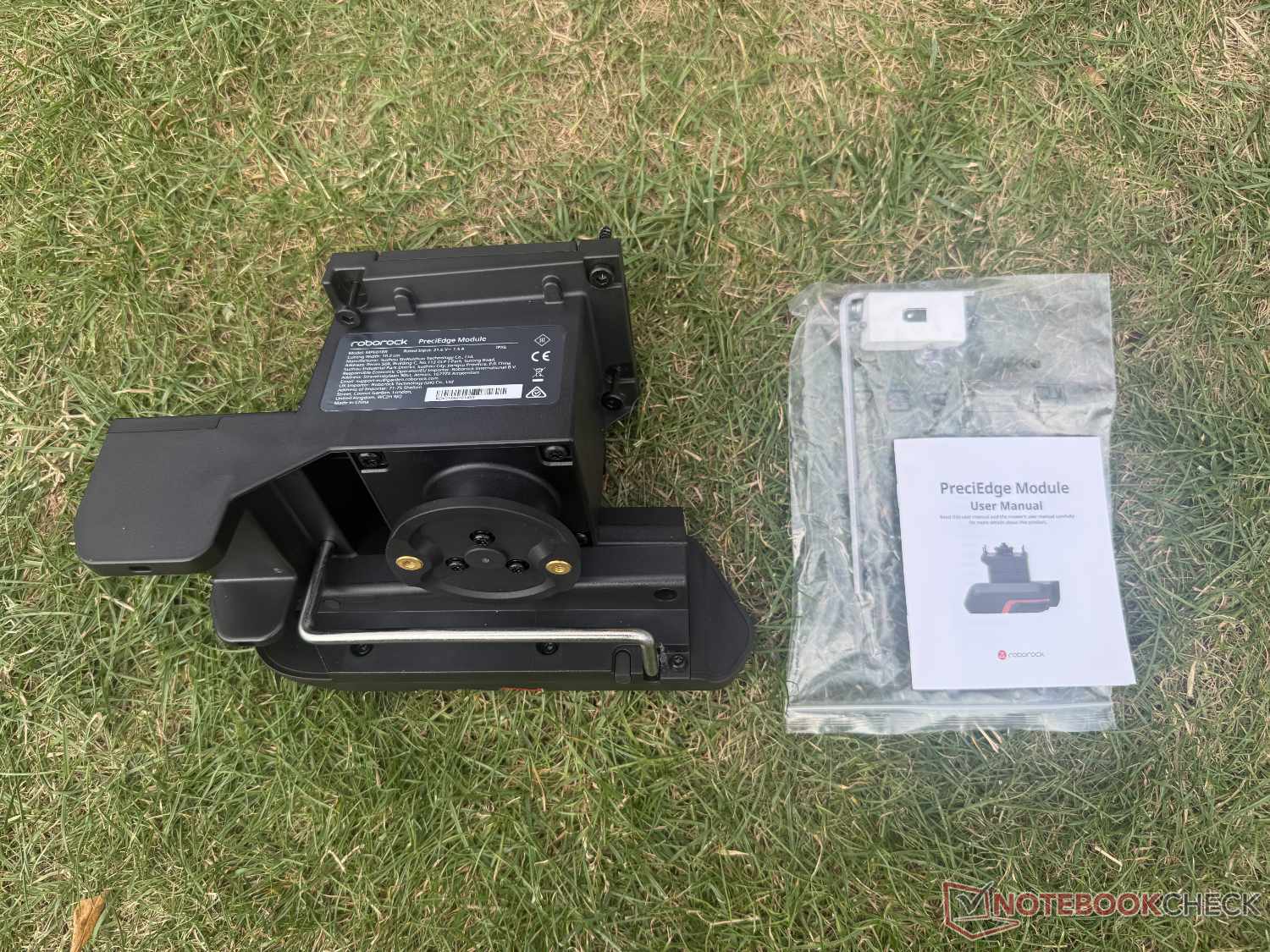
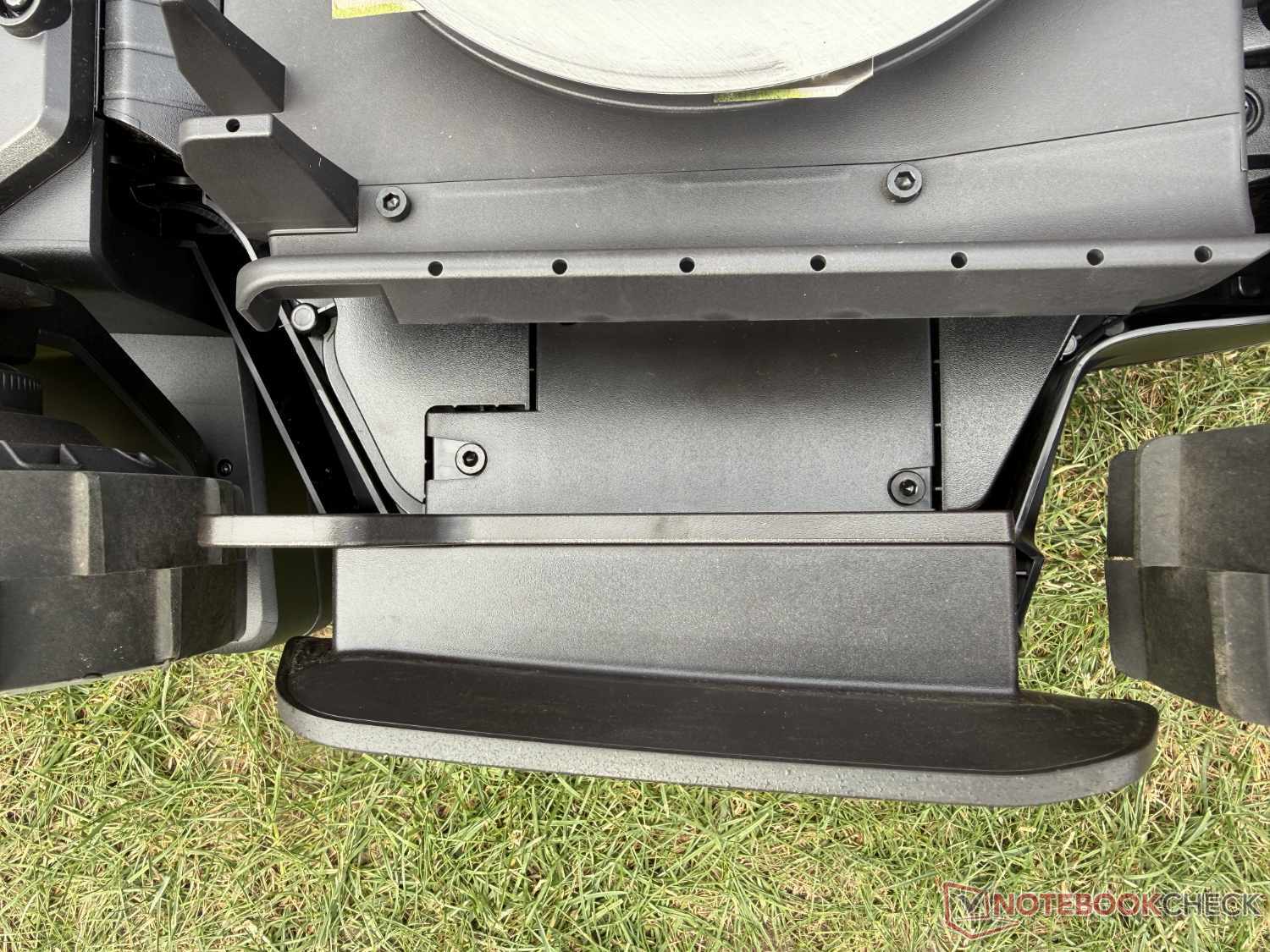
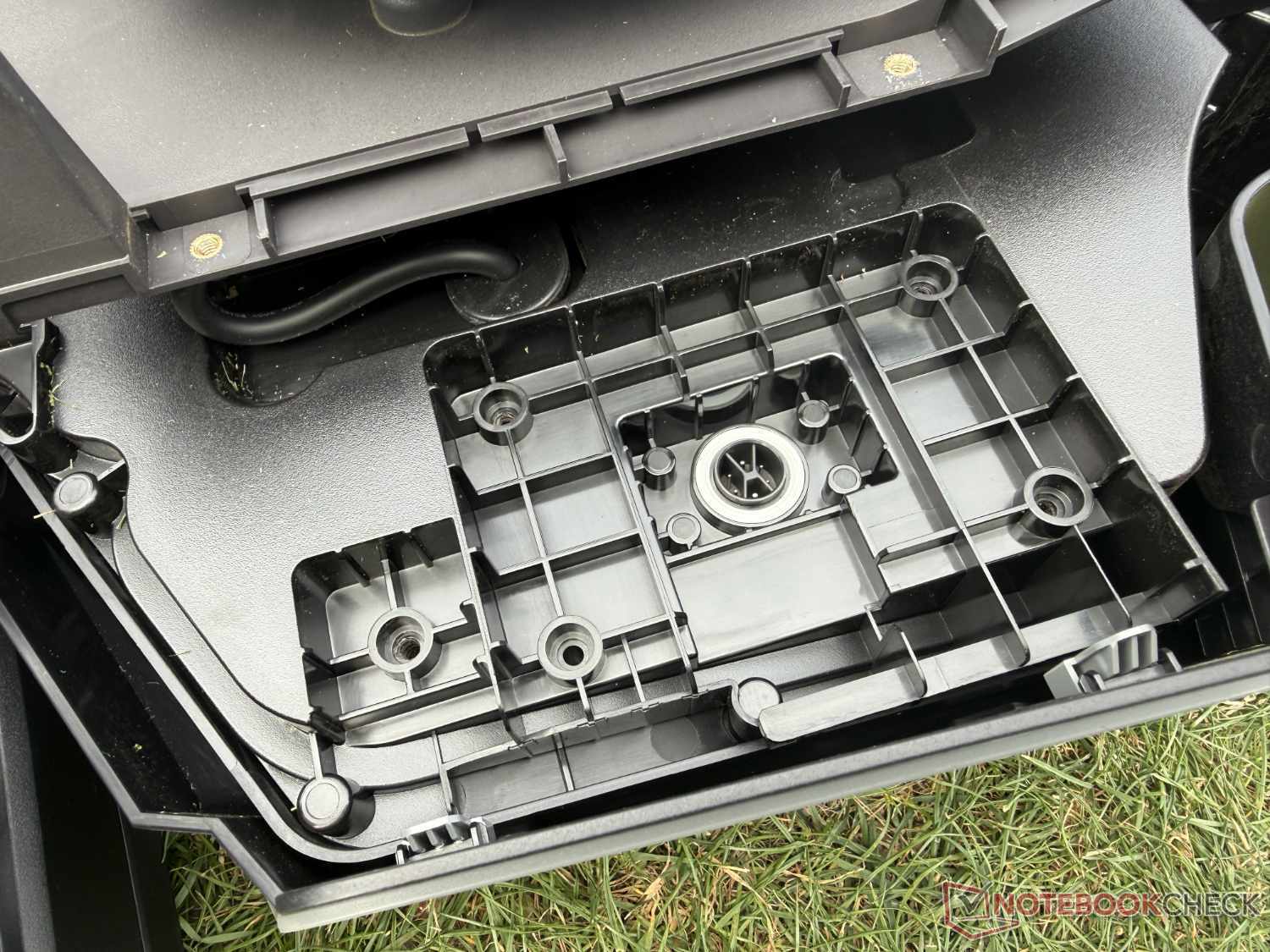
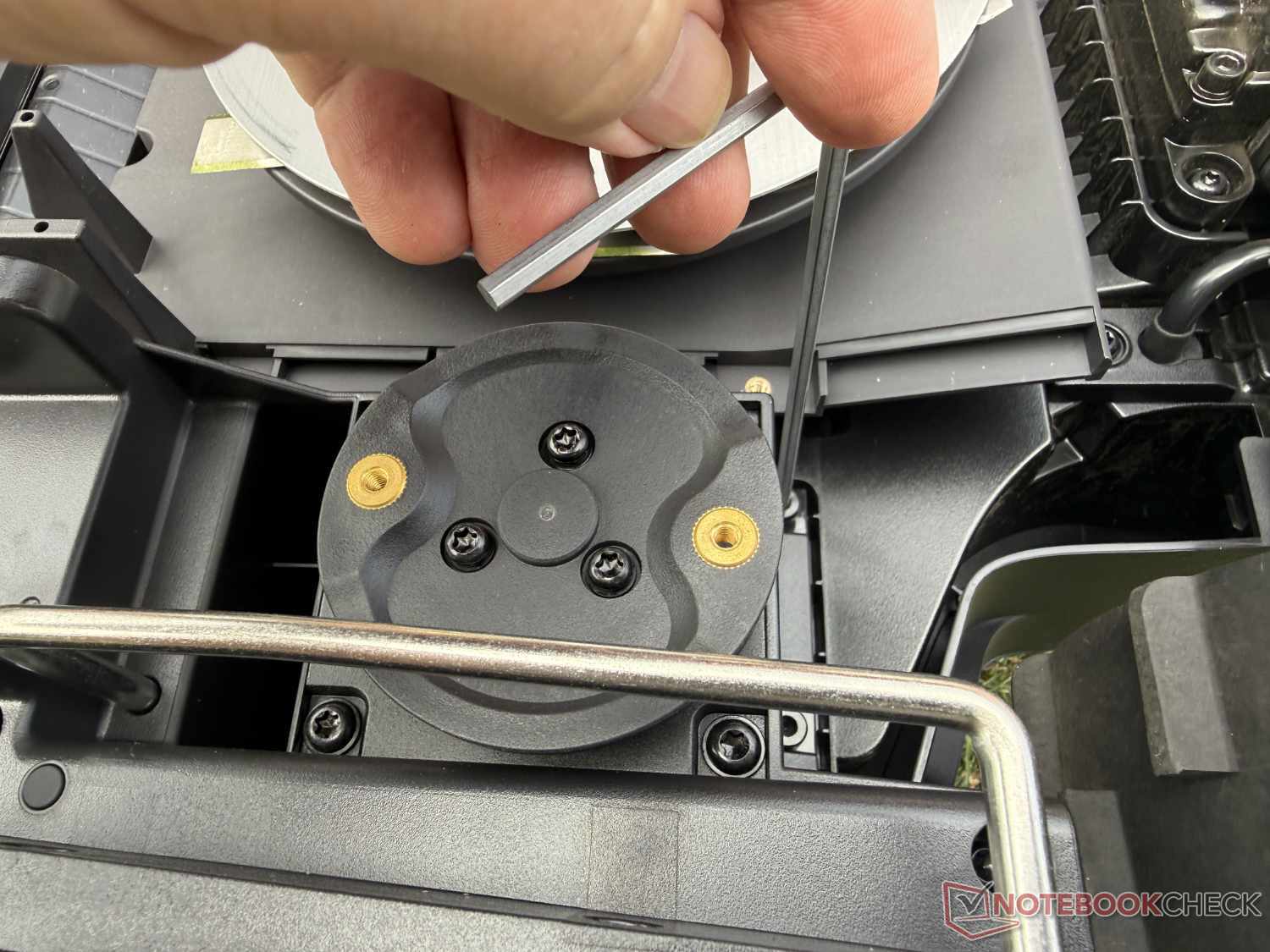
However, the same issue arises here as it did during our test of the entry-level RockNeo Q1—although, based on our test impressions, the problem does not seem to be as severe with the flagship model. The software updates (as of August 25, 2026) appear to be gradually taking effect after the situation initially looked worse. Nevertheless, even the all-wheel-drive flagship is still too skittish for our liking when mowing along edges and frequently makes an excessively wide detour around even individual branches protruding from adjacent flower beds.
When trimming edges—especially with “Visual Obstacle Avoidance for Boundaries” disabled and Smart Edge Trimming mode enabled in the app, the latter still being in beta like AI mapping—we would often have preferred it to follow a tighter line. After all, the RockMow Z1 LiDAR frequently left a gap of around 10 cm even along clear, ground-level edges during testing, for no apparent reason. As a result, the edge-trimming module unfortunately does not deliver the desired results, even though the robot should have an advantage in terms of maneuverability thanks to its steerable front wheels.
Runtime & noise level: Mows 300 square meters per battery charge
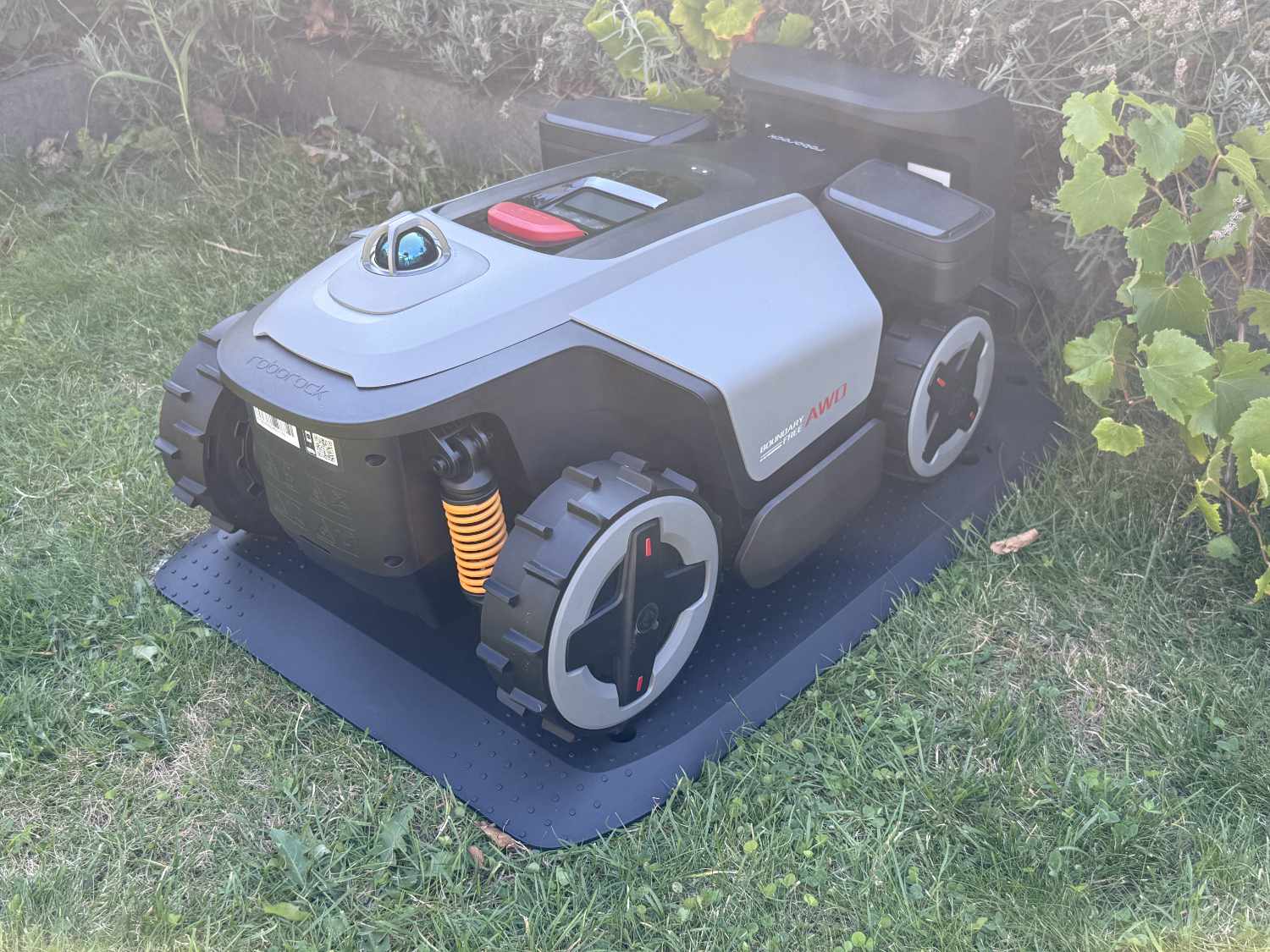
Roborock equips the RockMow Z1 LiDAR with a relatively small 6 Ah battery—especially considering its price range and its rating for areas of up to 2,000 square meters. In our test, it lasted just over two hours on our test area—slightly longer than the manufacturer’s stated 110 minutes. During that time, it mowed around 300 square meters. That is decent, but significantly less than the AWD competitors from Dreame and Mova can manage on a single battery charge.
It then returned to the charging station with 15 percent battery remaining. It stayed there for only 75 minutes, drawing up to 140 W and adding around 135 Wh to the battery. Combined with standby power consumption of 6 W while parked at the station with a fully charged battery, this results in monthly electricity consumption of 7 kWh in our standard comparison scenario—mowing 500 square meters three times a week.
The Roborock is therefore quite energy-efficient despite its power. At under 60 dB, measured from a distance of 1 m, it is not particularly loud either.

Based on our test, is the Roborock RockMow Z120 LiDAR not the right wire-free robotic lawn mower for your yard?
Then discover many more models in our 2026 best robotic lawn mowers list!
Transparency
The selection of devices to be reviewed is made by our editorial team. The test sample was provided to the author as a loan by the manufacturer or retailer for the purpose of this review. The lender had no influence on this review, nor did the manufacturer receive a copy of this review before publication. There was no obligation to publish this review. As an independent media company, Notebookcheck is not subjected to the authority of manufacturers, retailers or publishers.
 Add as a preferred source on Google


