




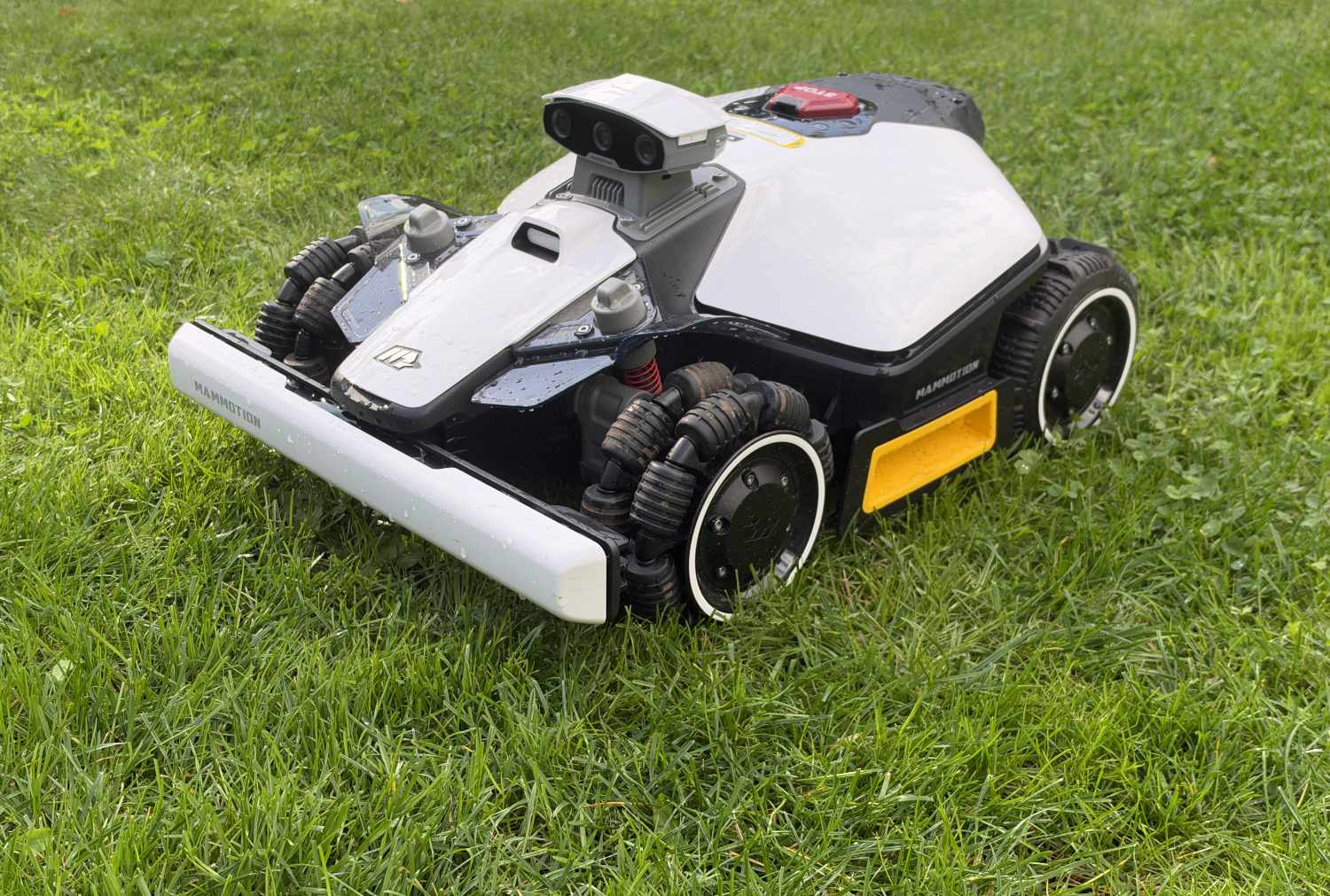
Compact all-wheel-drive robotic lawn mower with edge trimming: Mammotion Luba mini 2 AWD 1000 review
Compact AWD robotic lawn mower.
A second cutting deck for the edges and all-wheel drive packed into a robotic mower that is still fairly compact—does the Mammotion Luba mini 2 AWD 1000 perform as well in our review and in real-world use as its spec sheet promises?Marcus Schwarten (translated by Marcus Schwarten (translation supported by DeepL)) Published 🇩🇪
Mammotion Luba mini 2 AWD 1000 review verdict: robotic lawn mower for smaller, demanding gardens
The Luba mini from Mammotion was already an attractive solution last year for demanding gardens that aren’t too large. In 2026, the second generation continues this trend unabated. The standout addition of an edge-cutting deck is an important step forward, although our testing suggests its practical benefits still have room for improvement.

In addition to its compact dimensions for an all-wheel-drive robotic mower, RTK-free navigation, reliable obstacle detection, and a revamped app are further highlights of the Luba mini 2 AWD 1000 review. Despite a few minor criticisms, it earns an excellent overall rating.
Pros
Cons
Price and availability
In Europe, the recommended retail price for the Mammotion Luba mini 2 AWD 1000 is €1,499. However, it is now available for less, for example directly from Mammotion and from Amazon.
In the USA, only the Mammotion Luba mini 2 AWD 1500 is available, with an MSRP of $1,999. It can be purchased directly from the manufacturer.

Table of Contents
- Mammotion Luba mini 2 AWD 1000 review verdict: robotic lawn mower for smaller, demanding gardens
- Features & scope of delivery: Without RTK and LiDAR
- Setup & maintenance: First assembly, then AI mapping
- App & Controls: In a new light
- Navigation & obstacle detection: As reliable as ever
- Lawn & edge mowing: Full potential not realized
- Runtime & noise level: Practical energy-saving options
Important note: We tested the European Mammotion Luba mini 2 AWD 1000. This model is not available in the USA at all; only the Luba mini 2 AWD 1500 is sold there.
Last year, Mammotion brought two Luba mini robotic lawn mowers to market—the classic model with RTK and, later, a version with LiDAR. In 2026, the successor, Luba mini 2 AWD, has already followed, and it comes in two different versions as well.
Our Mammotion Luba mini 2 AWD 1000 test reveals how well the compact all-wheel-drive robotic lawn mower performed over the season.
Specifications & differences Luba mini 2 AWD series
| Feature/Model | Mammotion Luba mini 2 AWD 1000 | Mammotion Luba mini 2 AWD 1500 |
|---|---|---|
| Area | 1,000 m² | 1,500 m² |
| Navigation & Obstacle Detection | Triple-camera AI vision + NetRTK | 360° LiDAR + Dual-Camera AI Vision |
| 4G | yes (incl. 3 years of data) | yes (incl. 3 years of data) |
| Mower deck | Main + edge mowing disc | Main + edge mowing disc |
| Number of blades | 6 + 3 | 6 + 3 |
| Cutting width | 20 + 12 cm | 20 + 12 cm |
| Cutting height | 20 - 65 mm + 50 mm | 20 - 65 mm + 50 mm |
| Adjust cutting height | electric | electric |
| Slope | 80% / 38.6° | 80% / 38.6° |
| Display | no | no |
| Battery capacity | 6.1 Ah | 6.1 Ah |
| Weight | 15 kg | 17.2 kg |
| Dimensions | 584 x 430 x 282 mm | 584 x 460 x 290 mm |
| Water resistance | IPX6 | IPX6 |
| Garage included | No | no |
| Replacement blades included in the package | 12 pieces | 12 pieces |
| Color | White | White |
| RRP | 1,499 euros | 1,899 euros |
Features & scope of delivery: Without RTK and LiDAR
In our test, we had the Mammotion Luba mini 2 AWD 1000. This model uses NetRTK and a Triple AI Camera for navigation and obstacle detection, and is designed for lawns of up to 1,000 square meters. Alternatively, there is also the Mammotion Luba mini 2 AWD 1500, which can handle up to 1,500 square meters and twice as many zones—20—but uses 360° LiDAR and Dual-Camera AI Vision for navigation. Both models come with a 4G module and three years of data. After that, ongoing costs apply (~50 euros per year).
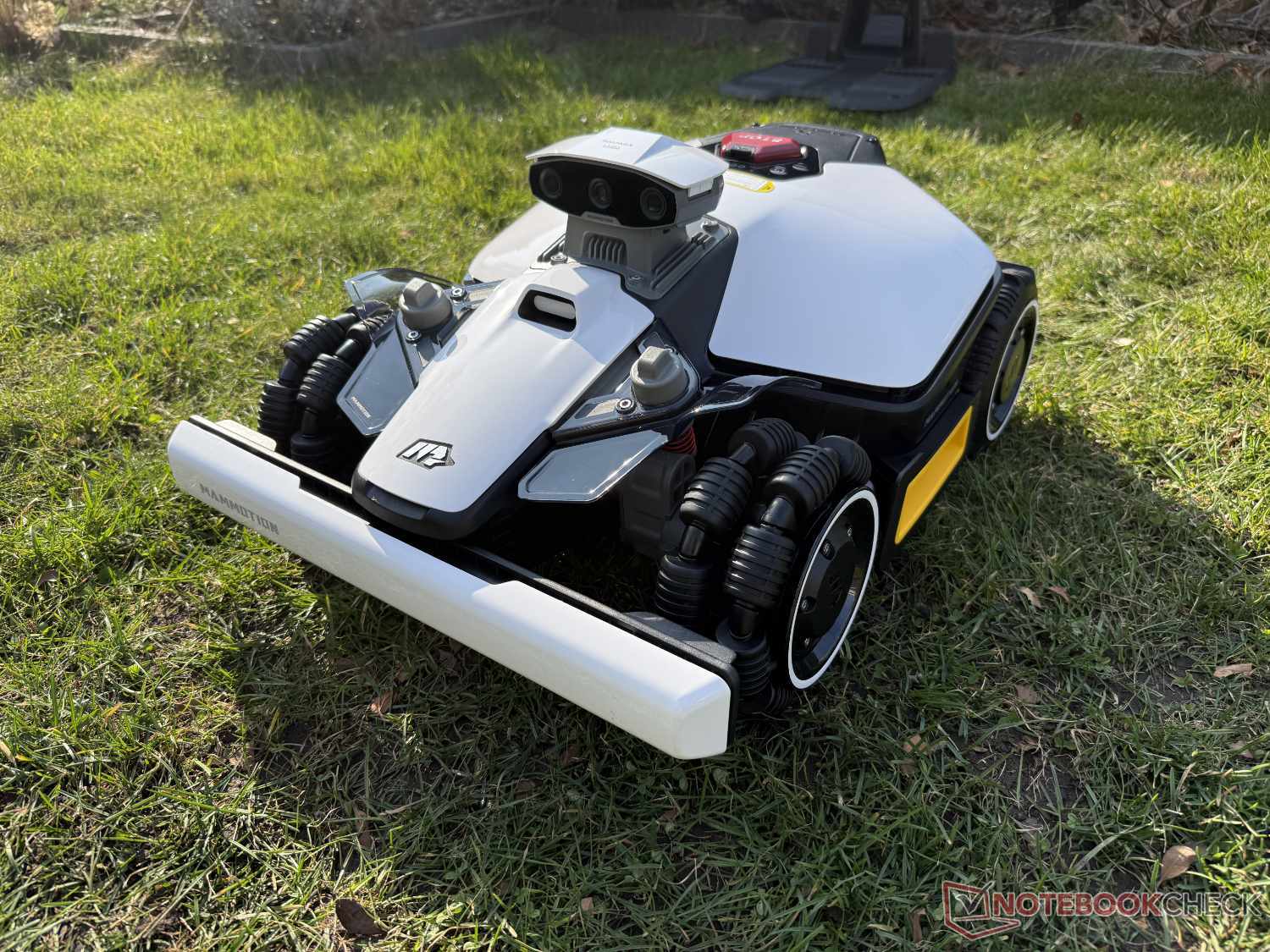
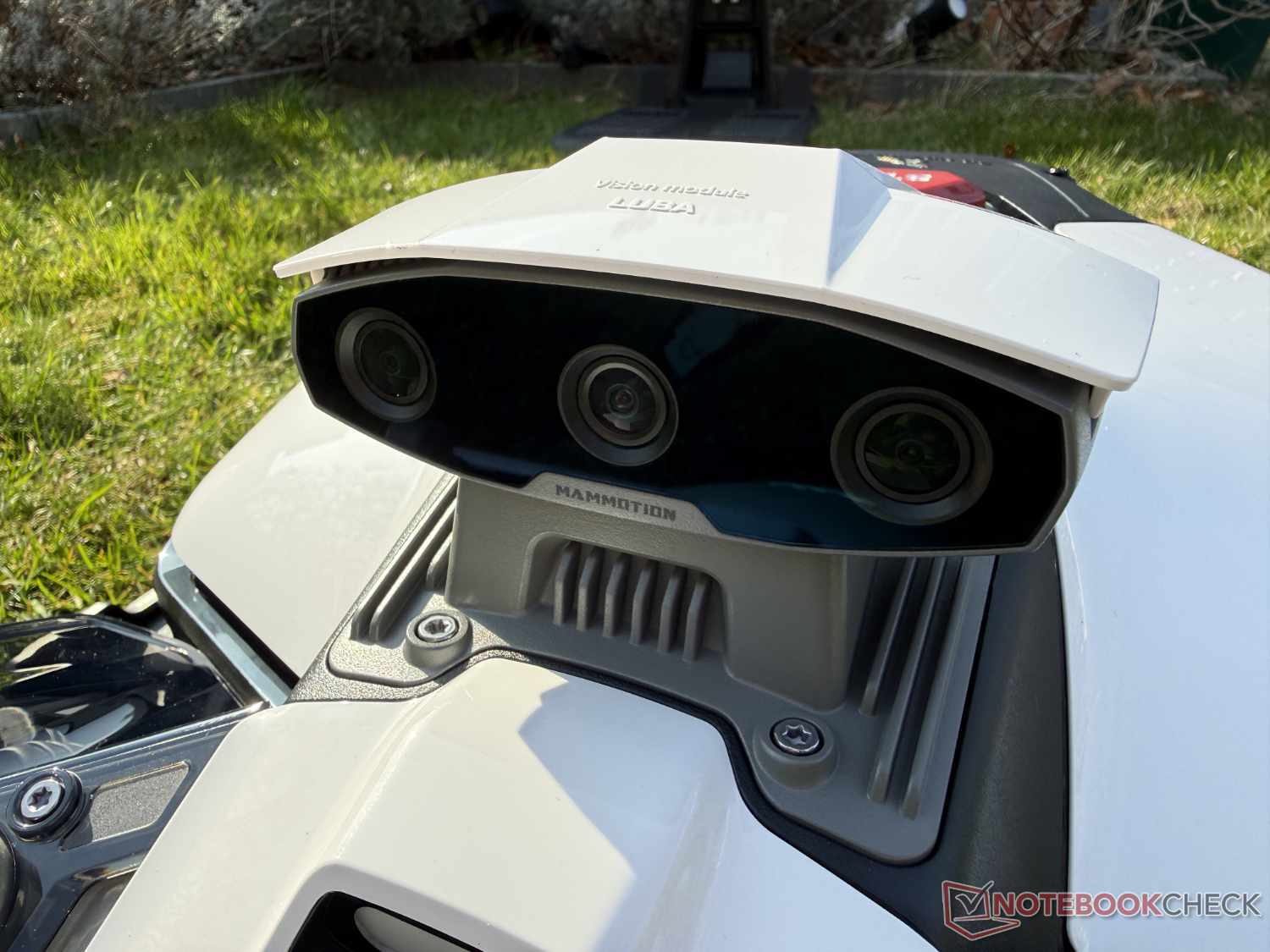
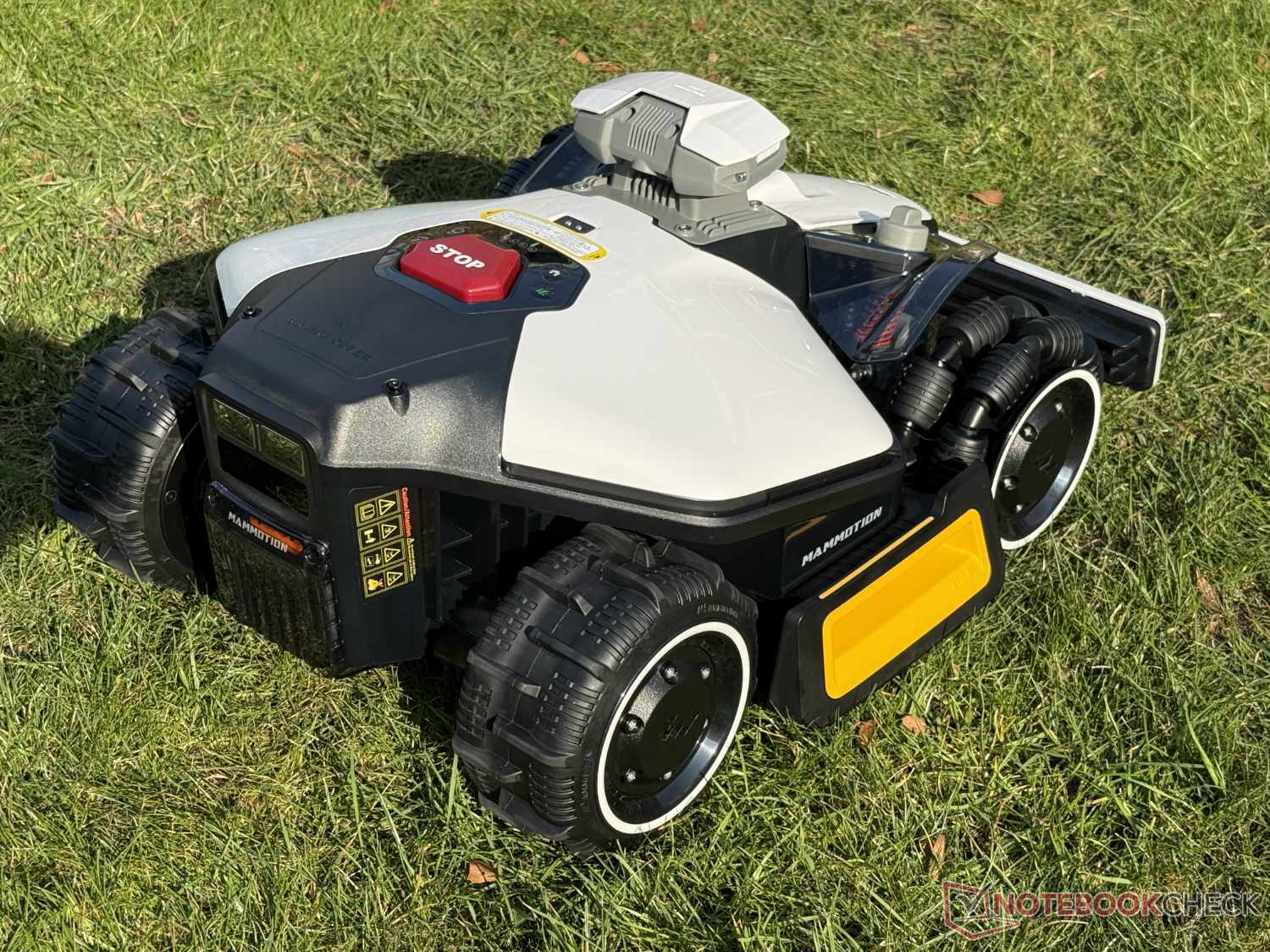
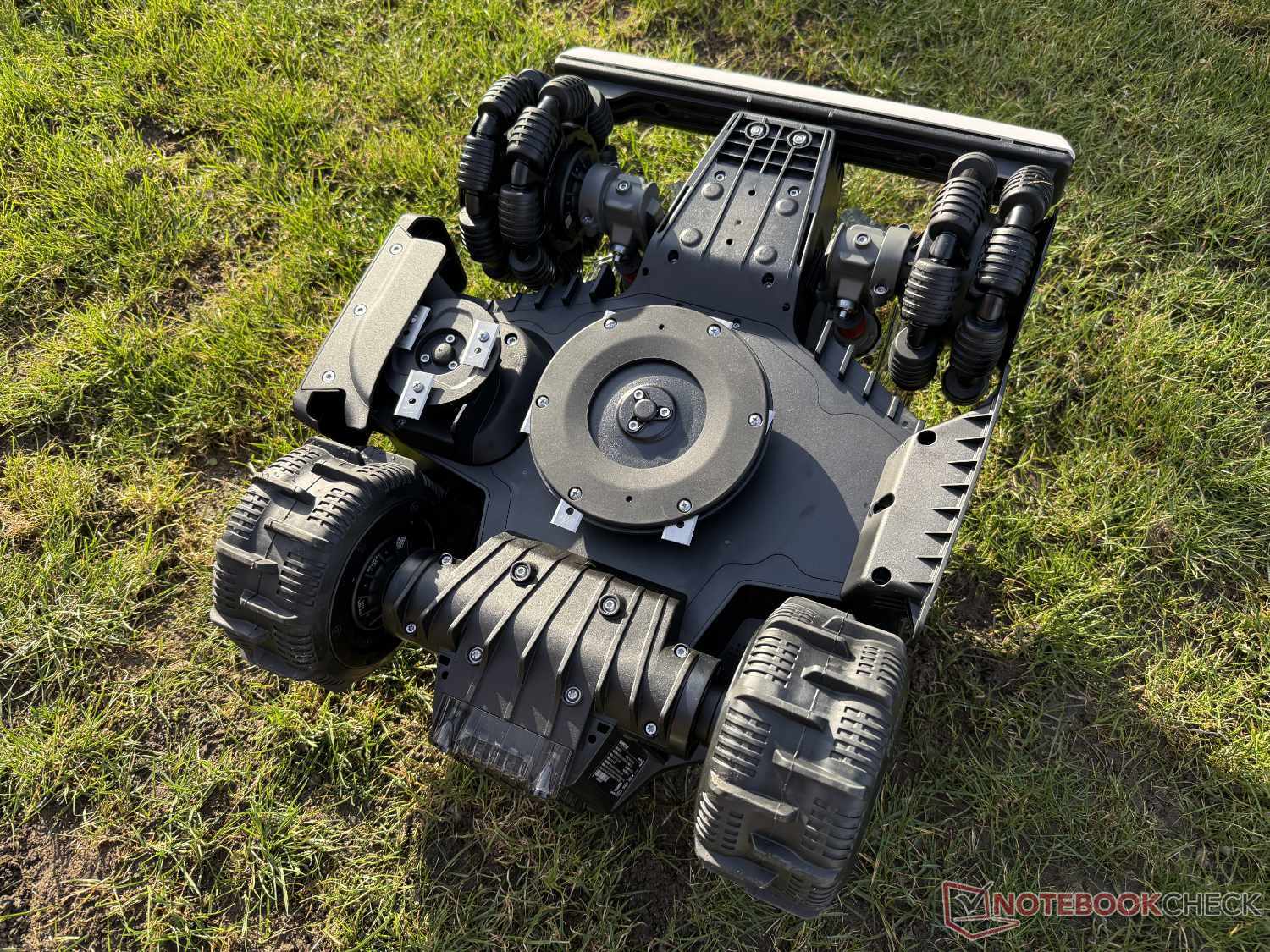
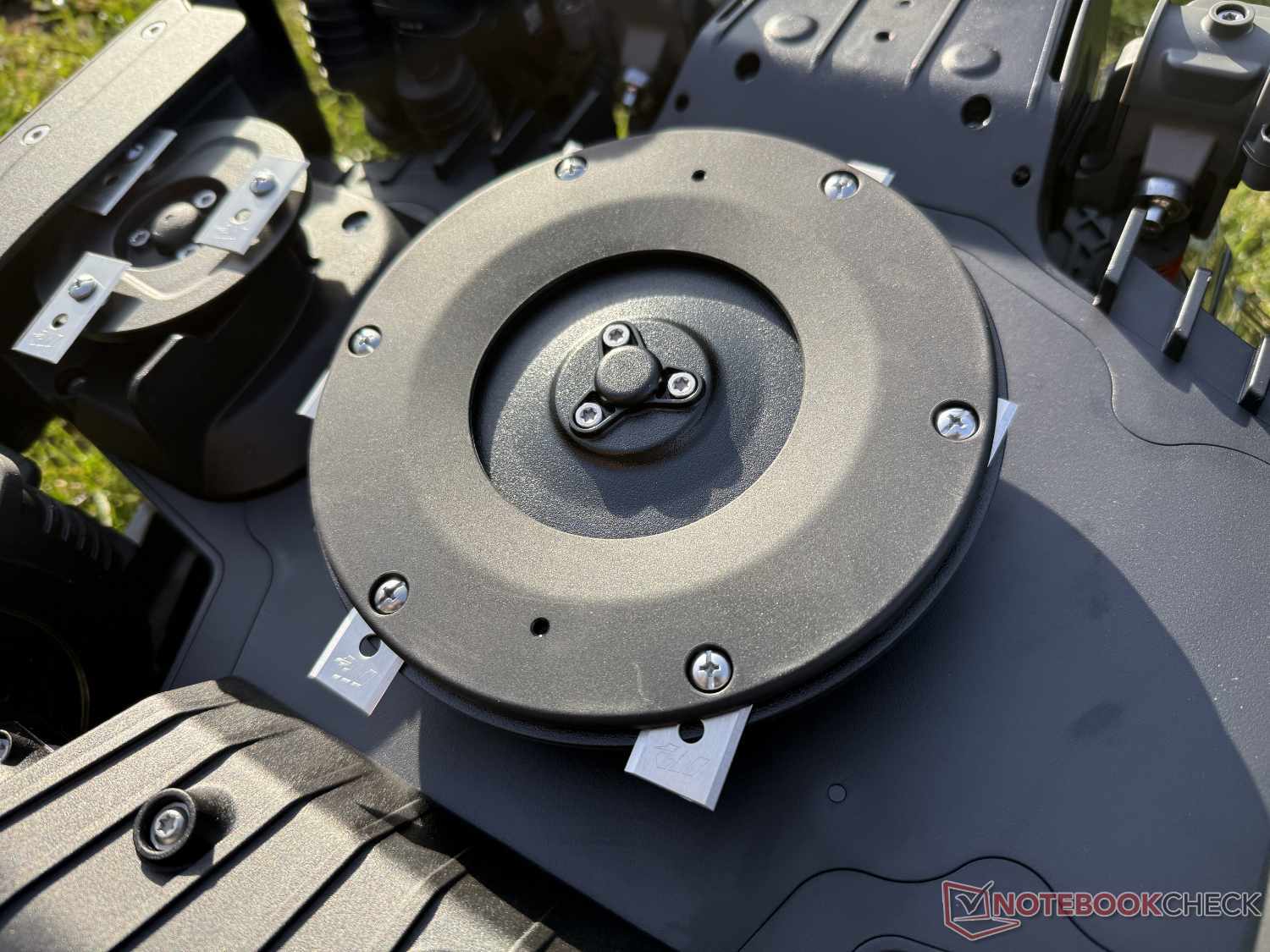
In many other respects, the two models are identical—although our test results specifically relate to the Luba mini 2 AWD 1000. Among other things, in addition to their 20 cm-wide main cutting deck with six blades, they feature a brand-new 12 cm edge-cutting deck with three blades. This promises mowing almost right up to the edges, which we discuss below.
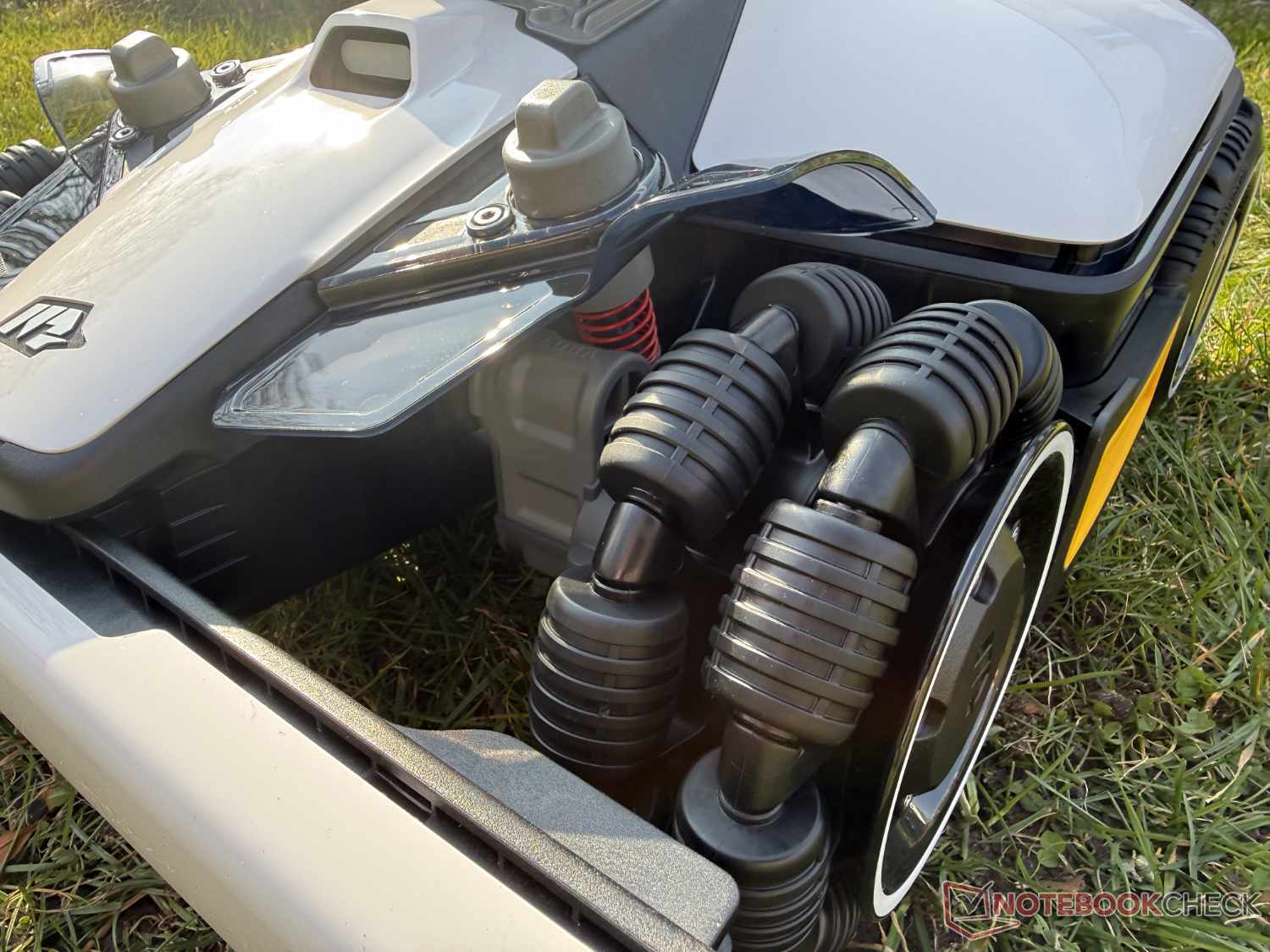
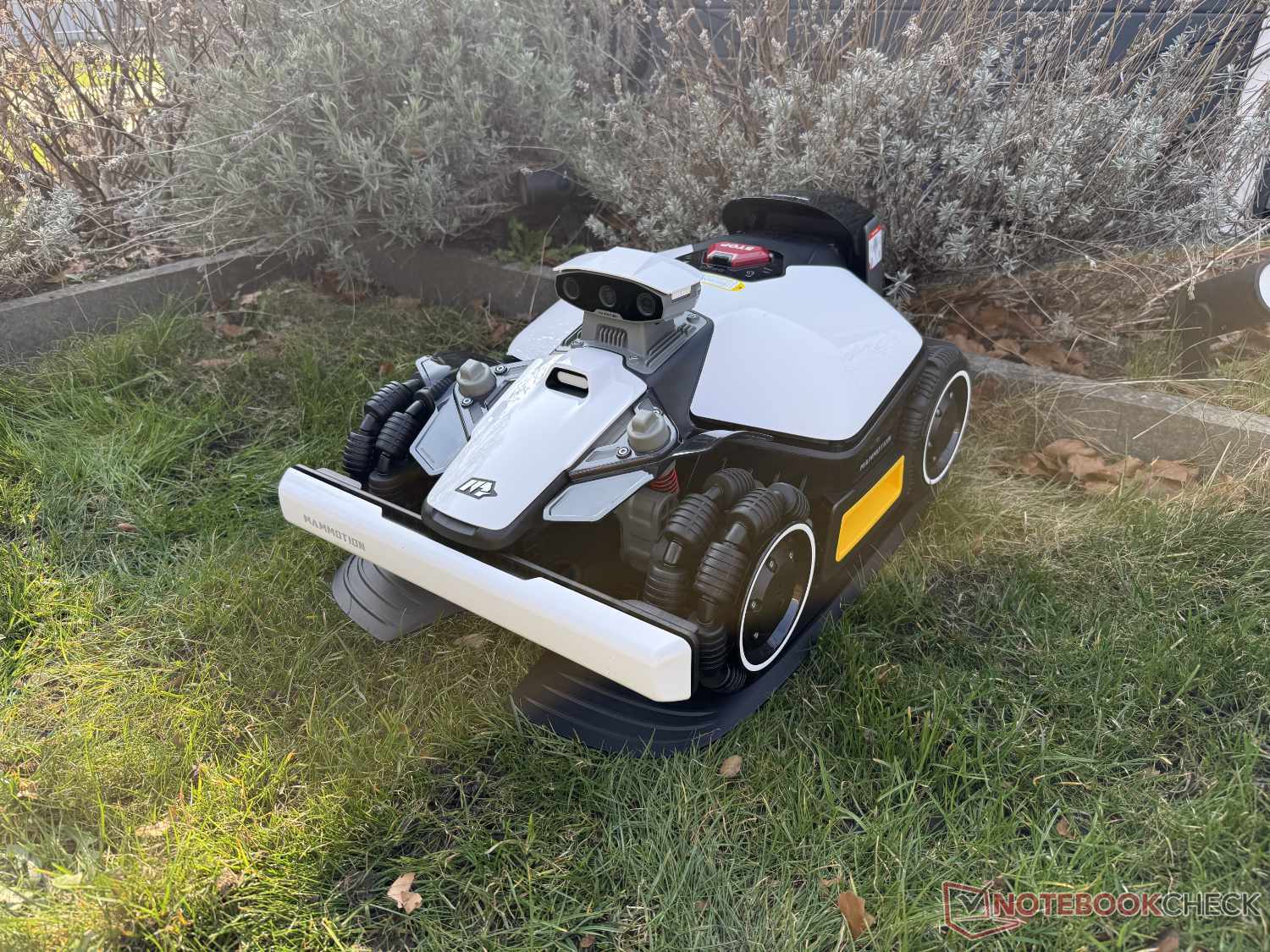
Like all Mammotion Luba models, the Luba mini 2 AWD also comes with the all-wheel drive announced in its name, along with suspended front wheels. According to the manufacturer, this enables it to handle gradients of 80 percent, or a good 38 degrees, which we will also discuss later. The Luba mini 2 AWD 1000 looks impressive in the dark thanks to its front headlight and two red rear light strips. Nevertheless, to protect wildlife, we strongly advise against operating it from dusk onward.
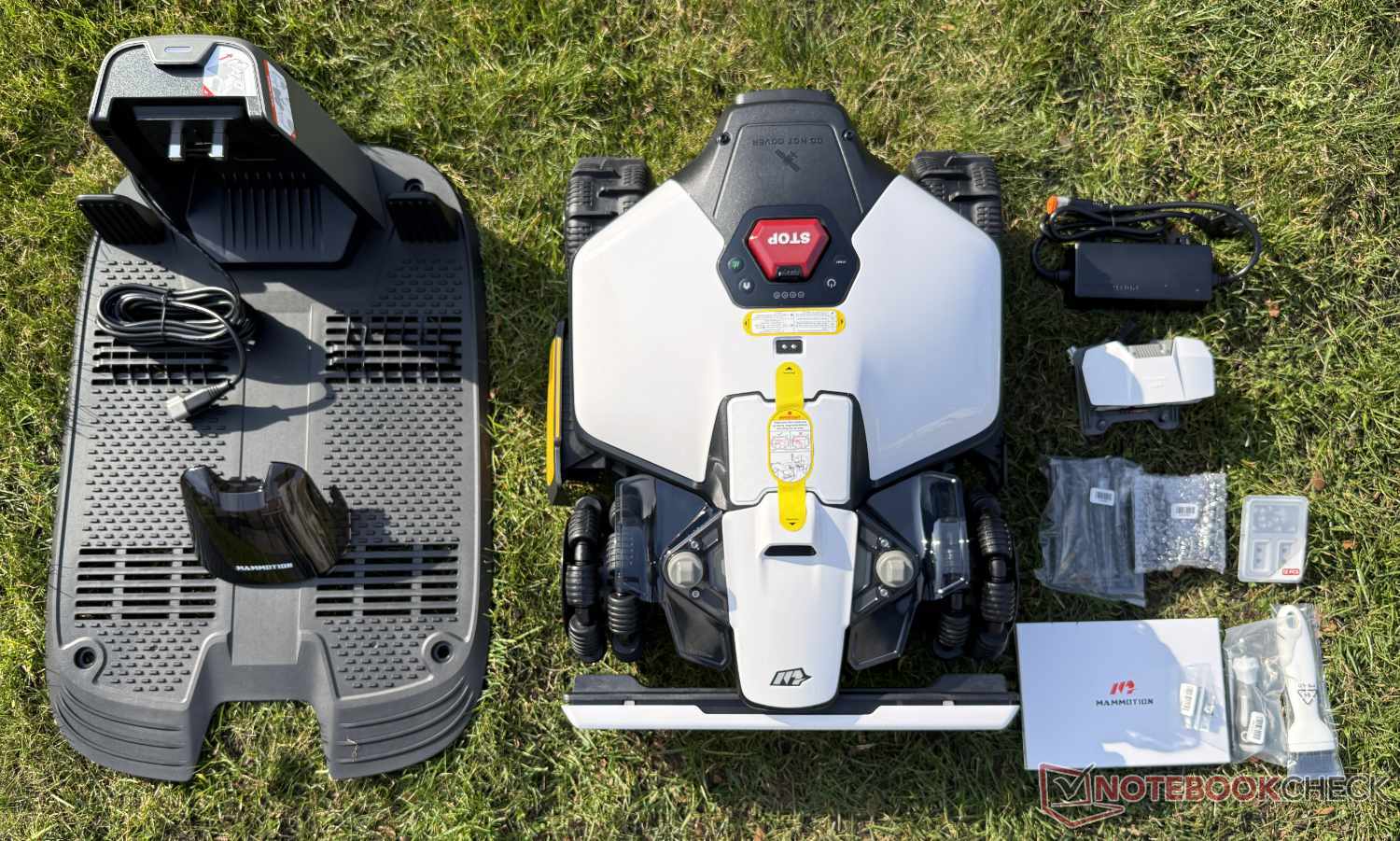
Finally, a few words about what’s included. The Luba mini 2 AWD doesn’t require an RTK antenna. Accordingly, the box contains only the robotic mower itself, the charging station and power adapter, twelve replacement blades, a manual, and the usual accessories. A screwdriver for assembly is also included.
Setup & maintenance: First assembly, then AI mapping
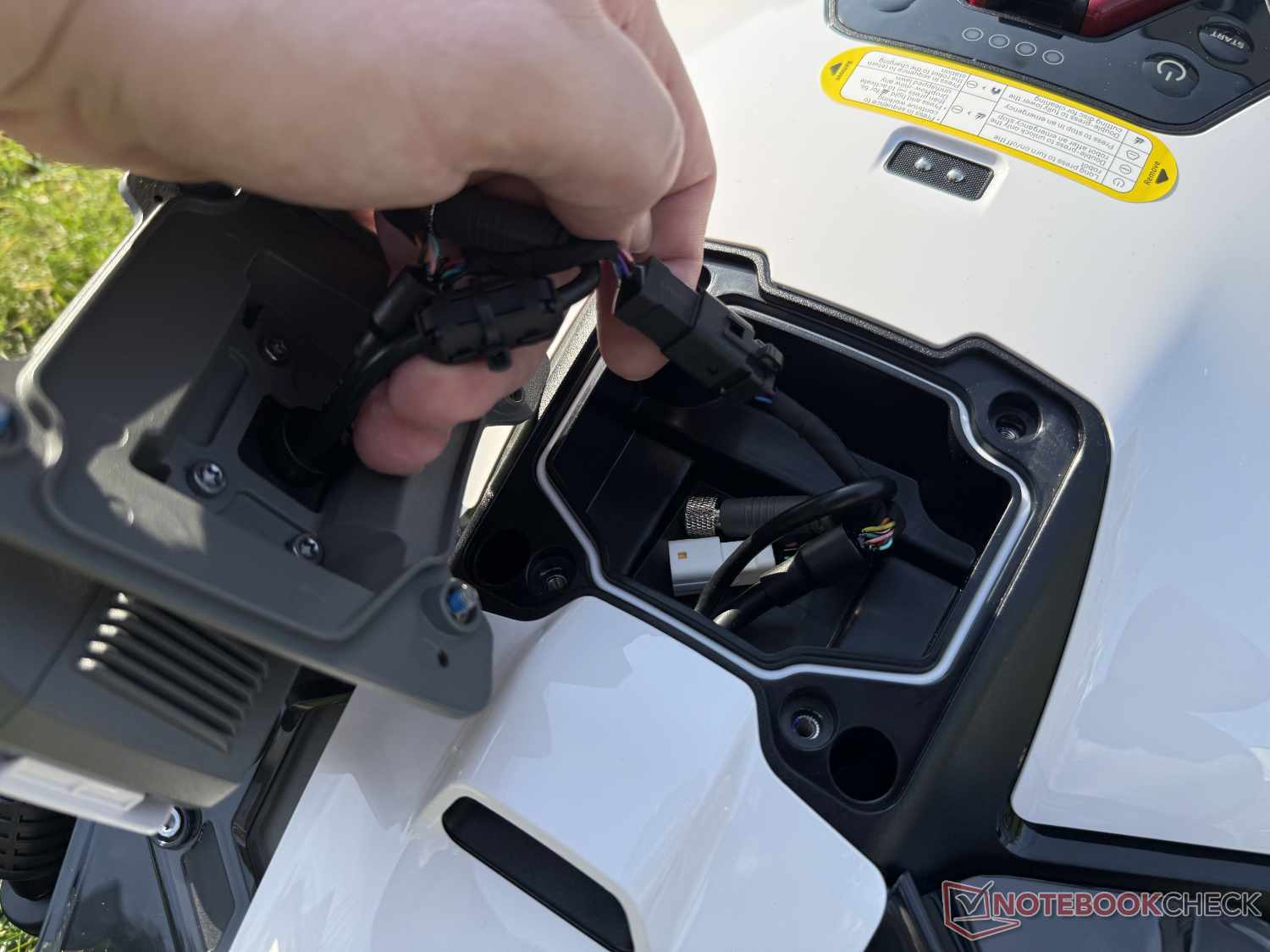
First, the robotic lawn mower has to be assembled. But it’s not as bad as it sounds. Ultimately, all you need to do is mount the navigation module on top of the robot. This involves connecting just a few cables and tightening a few screws—that’s it.
Next, the Luba 2 mini AWD needs to be connected to the Mammotion app, which has recently been given a completely new look. First, the robot and smartphone are paired via Bluetooth. The Wi-Fi connection is then added during setup. Everything worked smoothly in our test. The same goes for setting up the charging station, which is particularly flexible, quick, and easy to install thanks to the absence of an RTK antenna.
Next comes the usual mapping. The Mammotion Luba mini 2 AWD 1000 offers two options for this: automatic and manual. We tried both. With AI mapping, the robotic mower does not just drive around the edge of the lawn, as many other models do. Instead, it explores the area in greater detail, making many passes, much like the TerraMow V1000 or the Eufy C15.
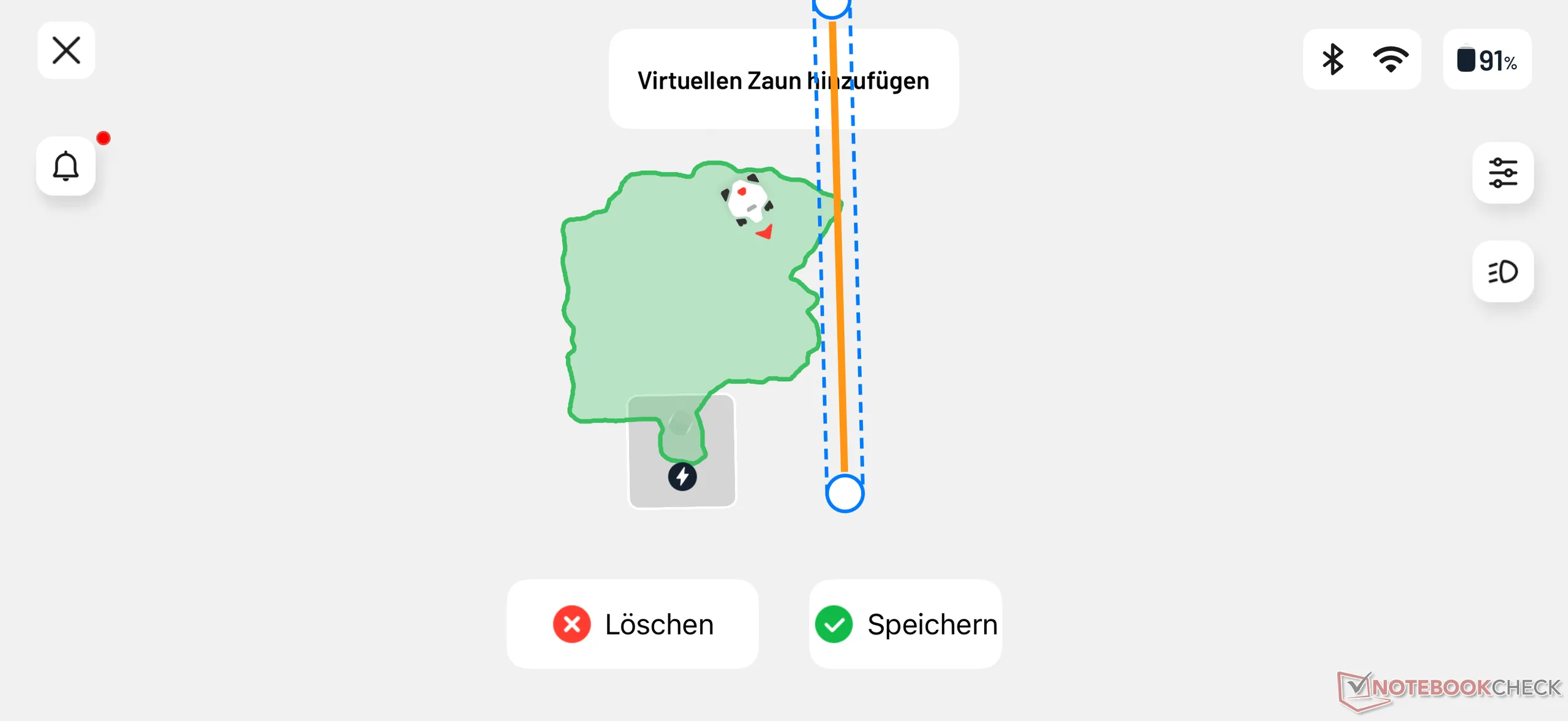
The result in the test was a detailed virtual map, which took around 30 minutes for a good 300 square meters. Multiple independent lawn areas can also be mapped here. In addition, virtual fences and no-go zones can be entered while mapping is paused if the entire lawn area is not to be mapped.
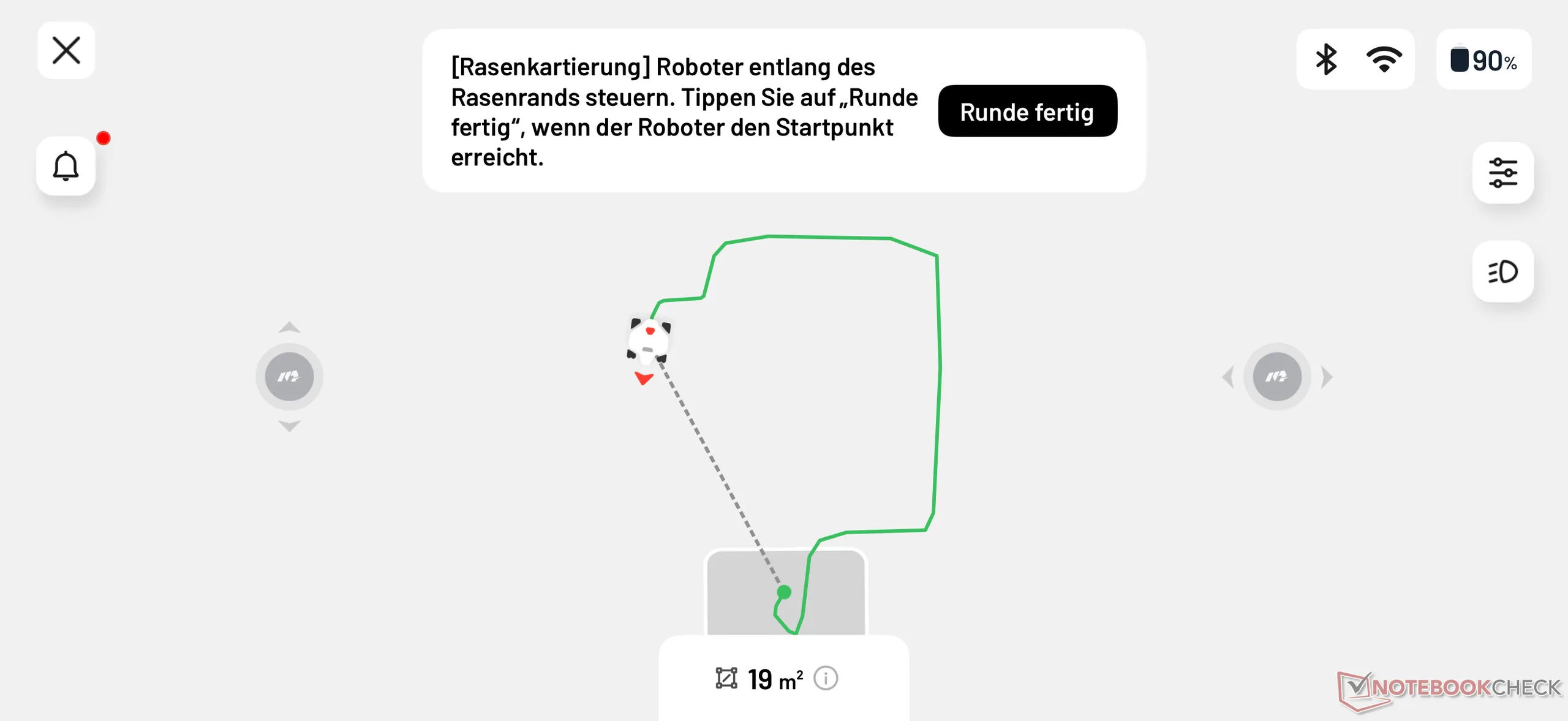
Alternatively, manual mapping is possible. Here, the robotic lawn mower is remotely controlled once along the edge of the lawn using two virtual control sticks on the smartphone display. This also worked without any problems in the test, as the controls do not respond too sensitively, making precise steering possible.
The robot can be cleaned with a garden hose, for example, as it has the usual IPX6 protection rating. The blades can be replaced using the included screwdriver. Handling is somewhat hindered by the lack of a handle, making the approximately 15 kg robotic lawn mower more difficult to carry.
App & Controls: In a new light
Mammotion recently gave its app a major update. Our testing period began with the old version. However, we want to evaluate the new, visually refreshed version. Nothing has changed at its core; the design has mainly been revised.
From the overview, you can send the robotic lawn mower to work with a single tap. The live progress can then be viewed on the virtual map on the device page. Several buttons for controls, settings and map management, as well as live video, are arranged around it. Overall, the interface is clear, while still providing quick access to important functions.
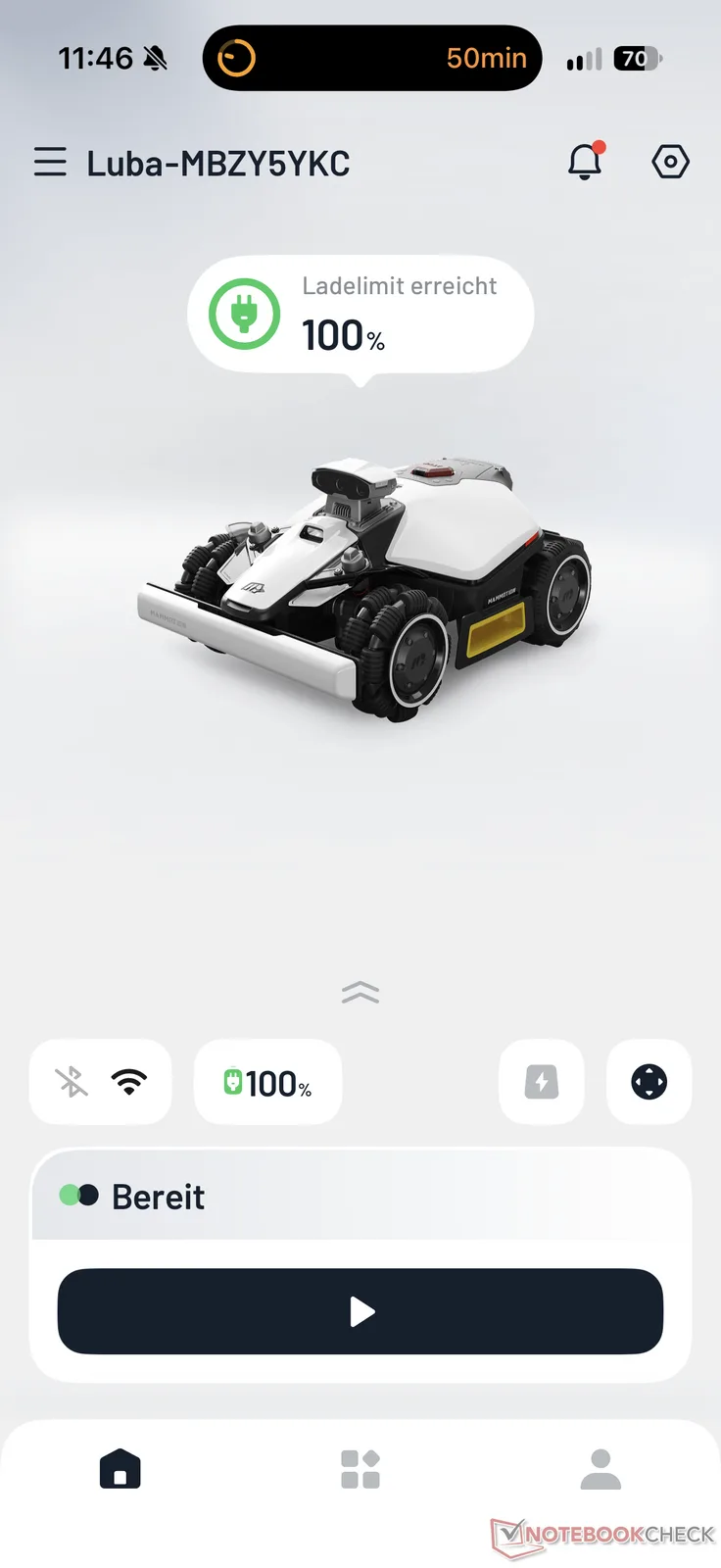
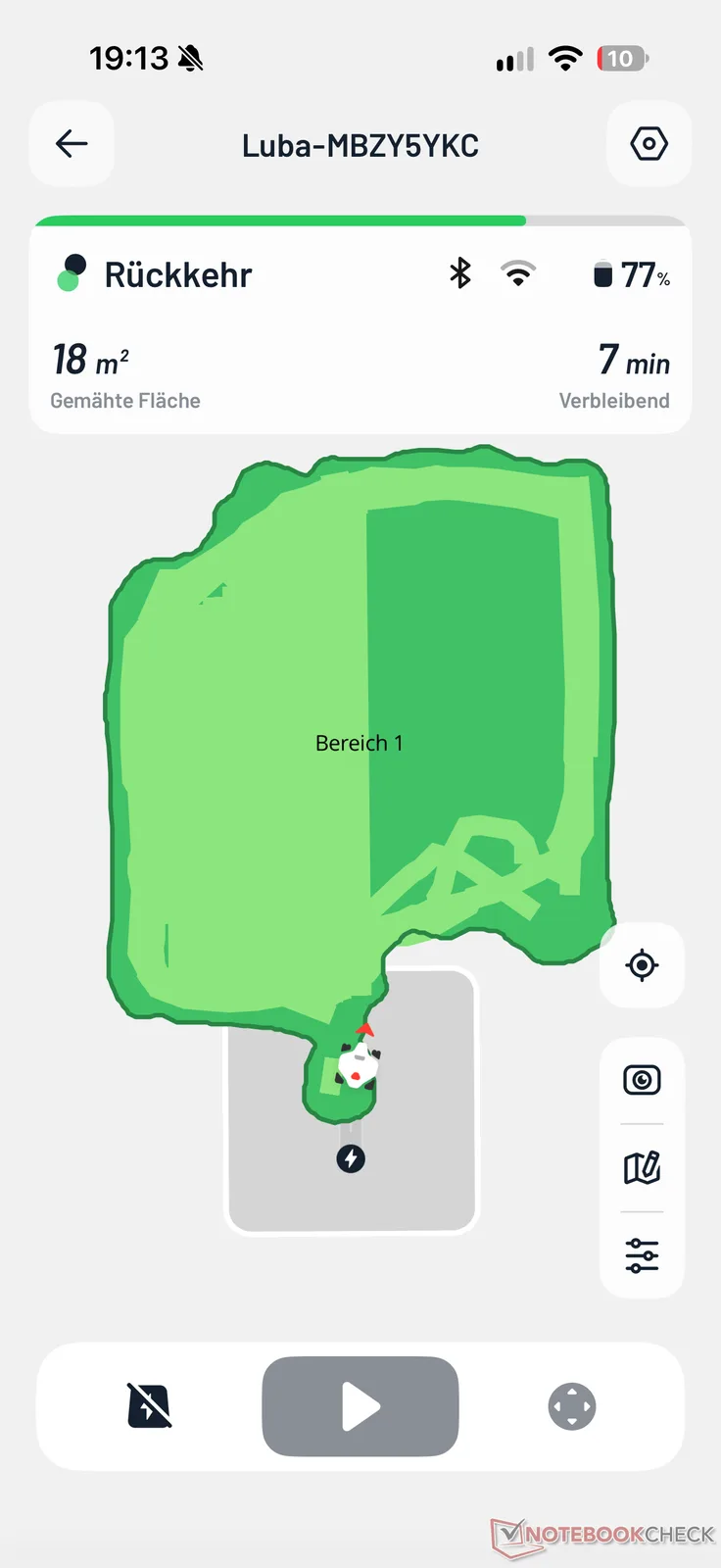
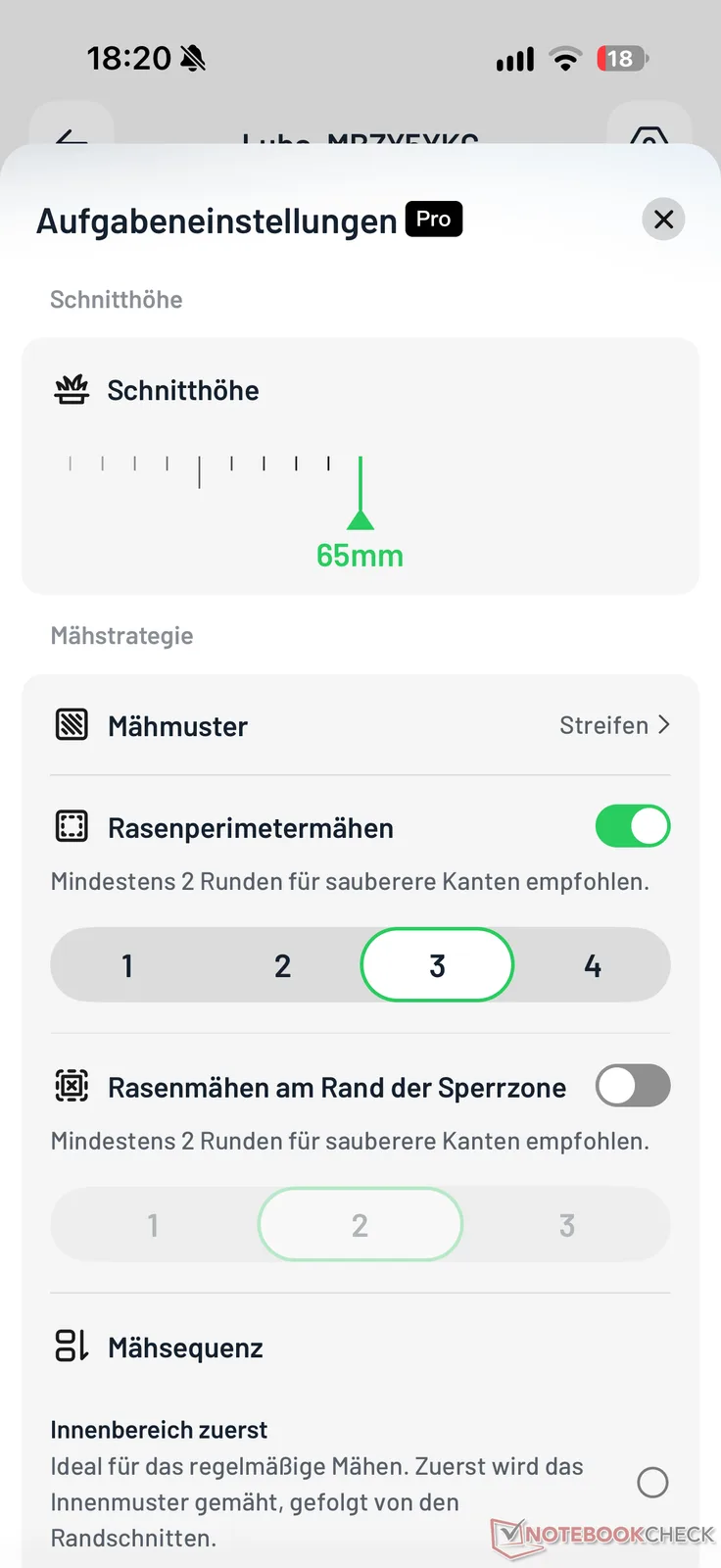
For mowing, you can adjust settings including the cutting height (in millimeter increments), mowing direction and pattern, number of perimeter passes, speed, and lane spacing. There are three options for obstacle avoidance sensitivity (Simple, Standard, Sensitive).
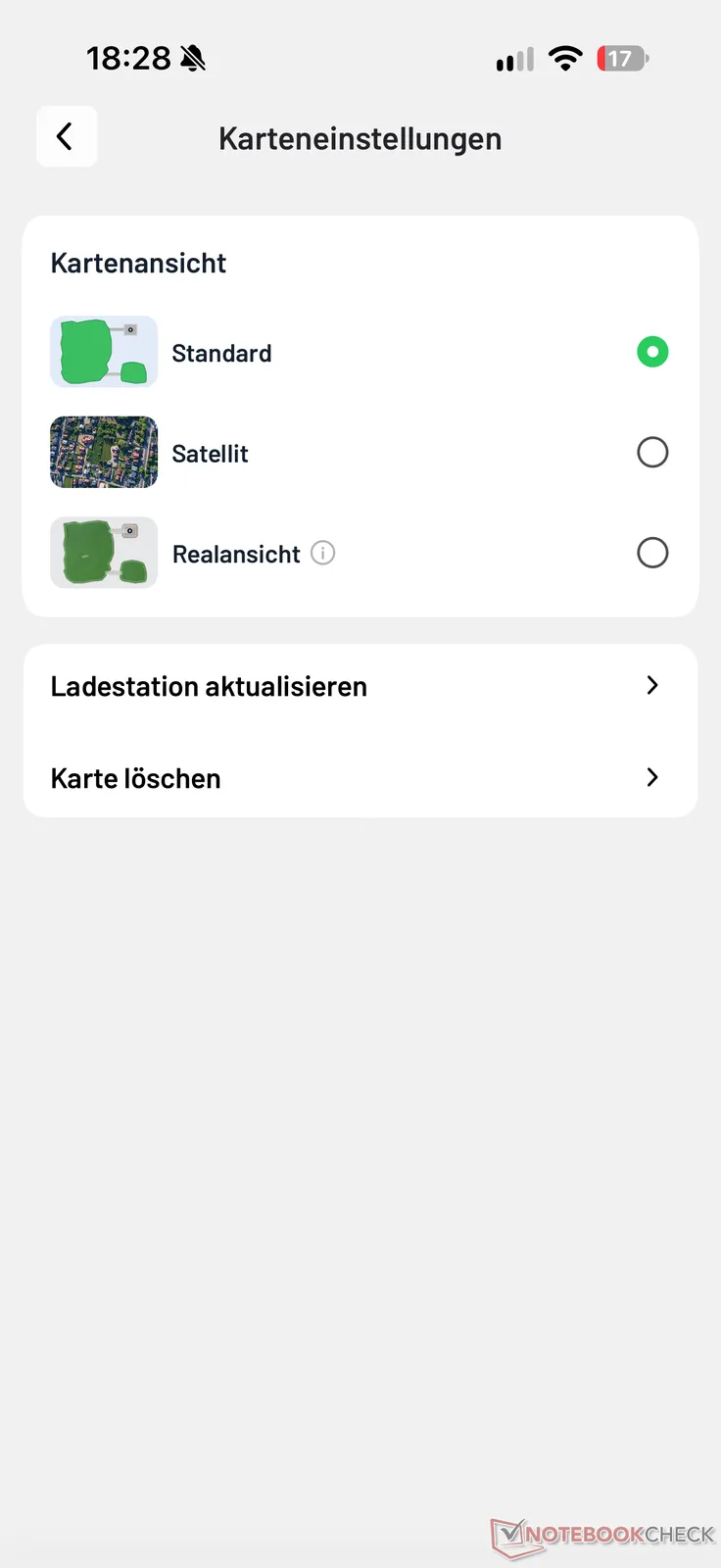
The Mammotion app earns extra points with numerous additional settings. In addition to the usual items such as task history and schedule, the menu offers various settings for routes, blade speed, rain and wildlife protection, and the battery. For the latter, you can adjust settings including charging behavior (charge limit), charging during off-peak hours, and various energy-saving options—practical.
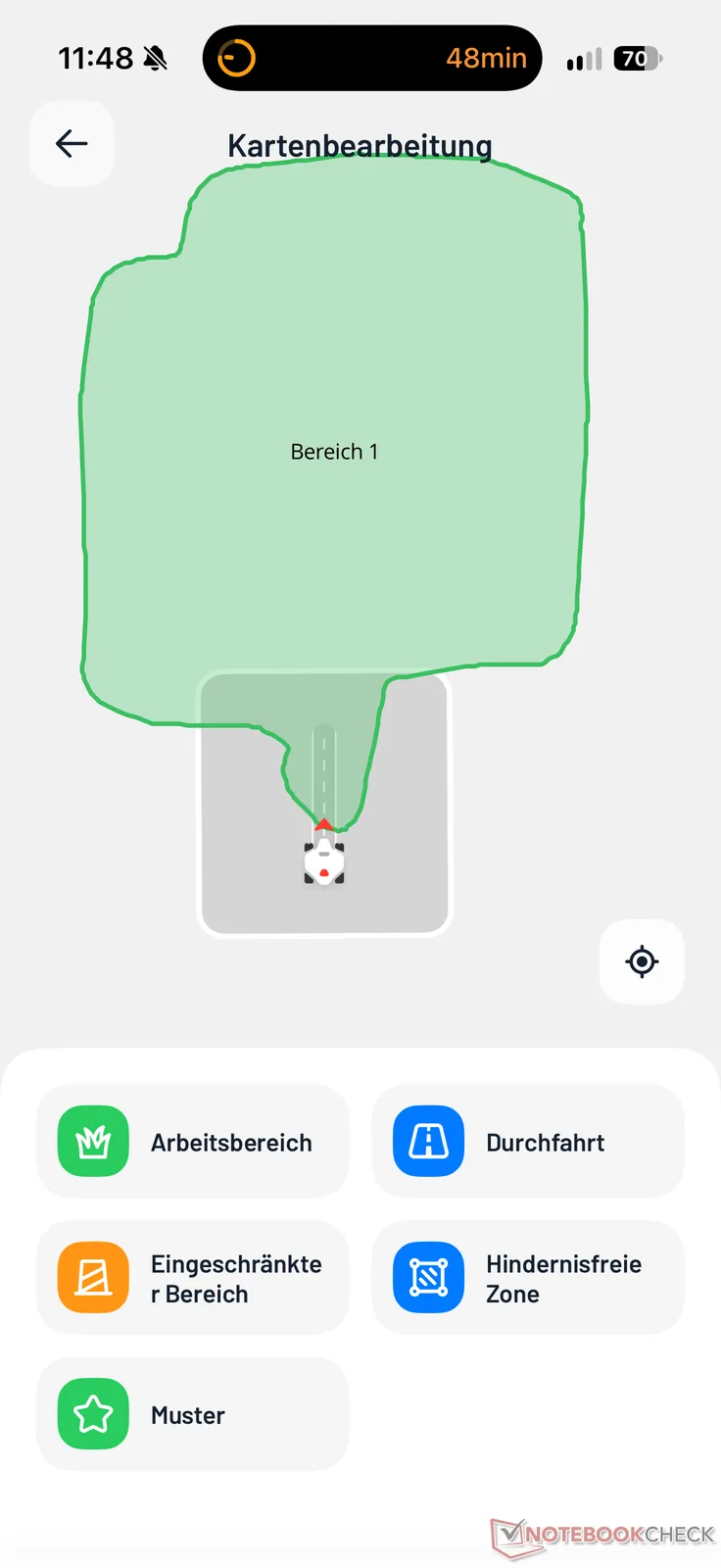
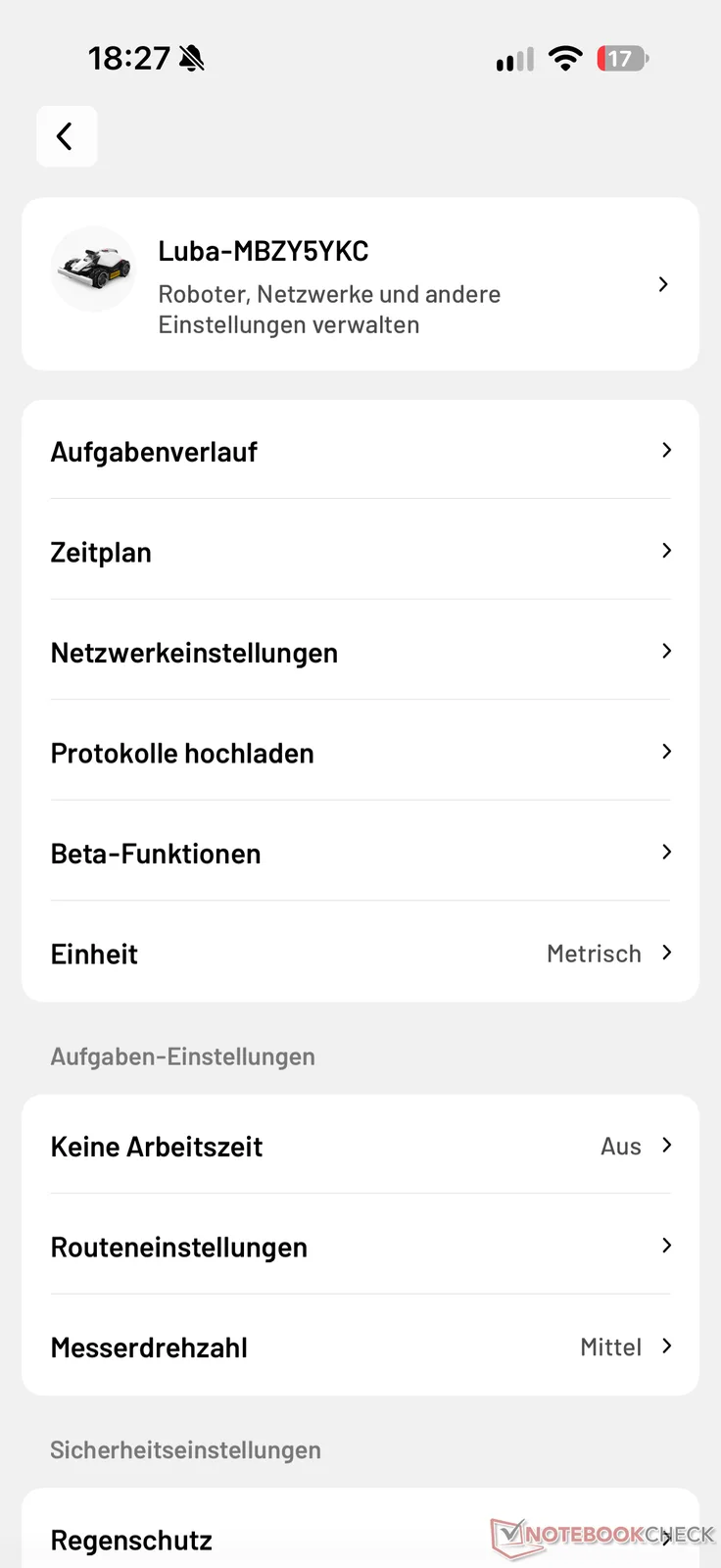
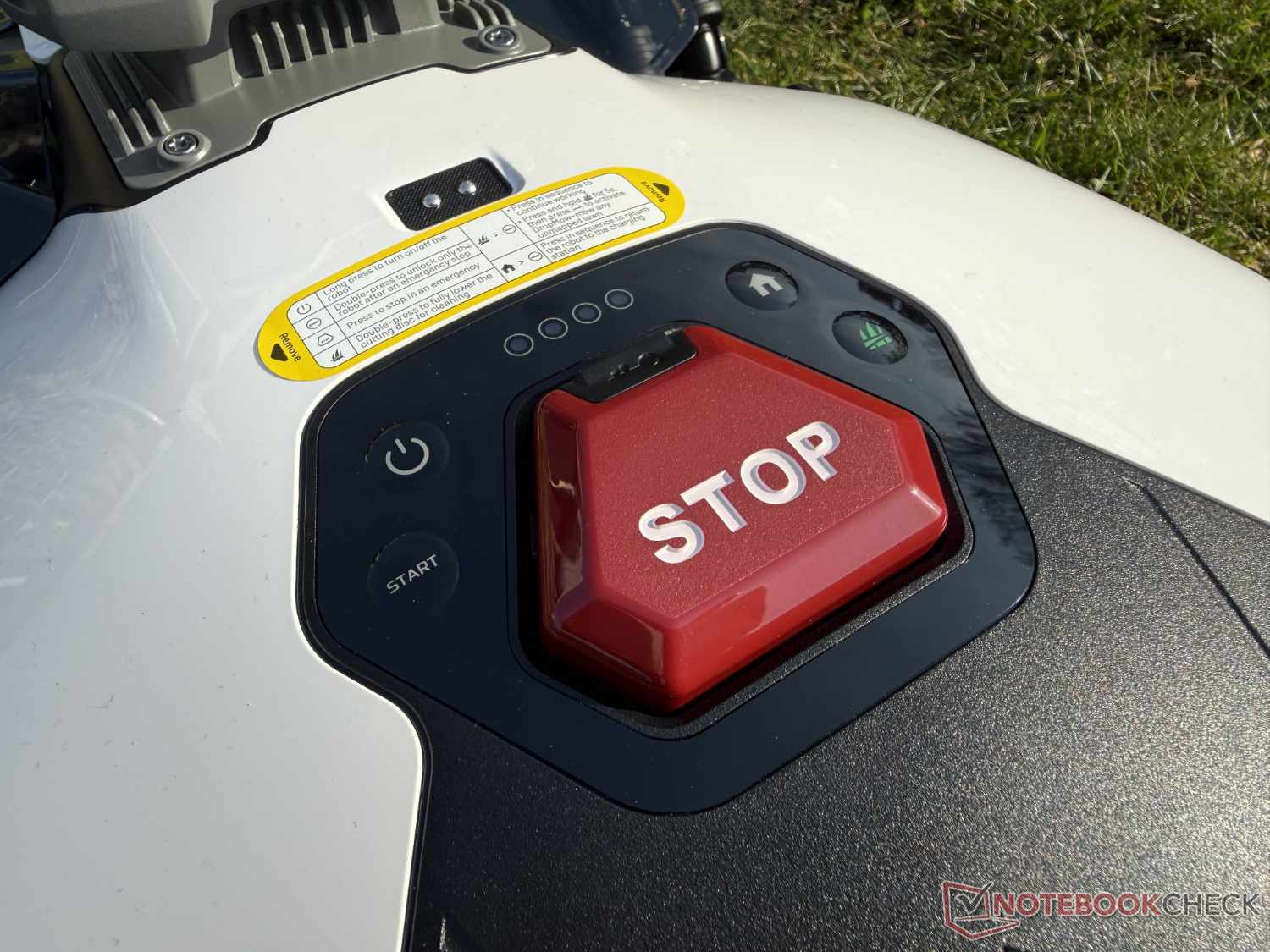
Mammotion does not install a display on the Luba mini 2 AWD 1000. Four LEDs indicate the current battery level. There are also five buttons on top of the device: Stop, Power, Start, Home, and Lawn.
Navigation & obstacle detection: As reliable as ever
As described at the outset, the Mammotion Luba mini 2 AWD 1000 navigates using a combination of Triple-Camera AI Vision and NetRTK. This means it relies on its three front-facing cameras as well as Wi-Fi and/or 4G reception. In practice, this worked well in two of our test gardens, based on our experience. At first, the Luba mini 2 got stuck once on an edging around the lawn. Overall, however, there were hardly any problems, and the robotic mower performed its job reliably.
It navigated across the lawn systematically, mostly in straight lines. At the ends, it either turns on the spot or performs a multi-point turn. Although this takes a little more time, it is gentler on the lawn. After all, its wide rear wheels in particular have a relatively large contact area. Its relatively compact design, at 43 cm wide, is an advantage when passing through narrow areas.
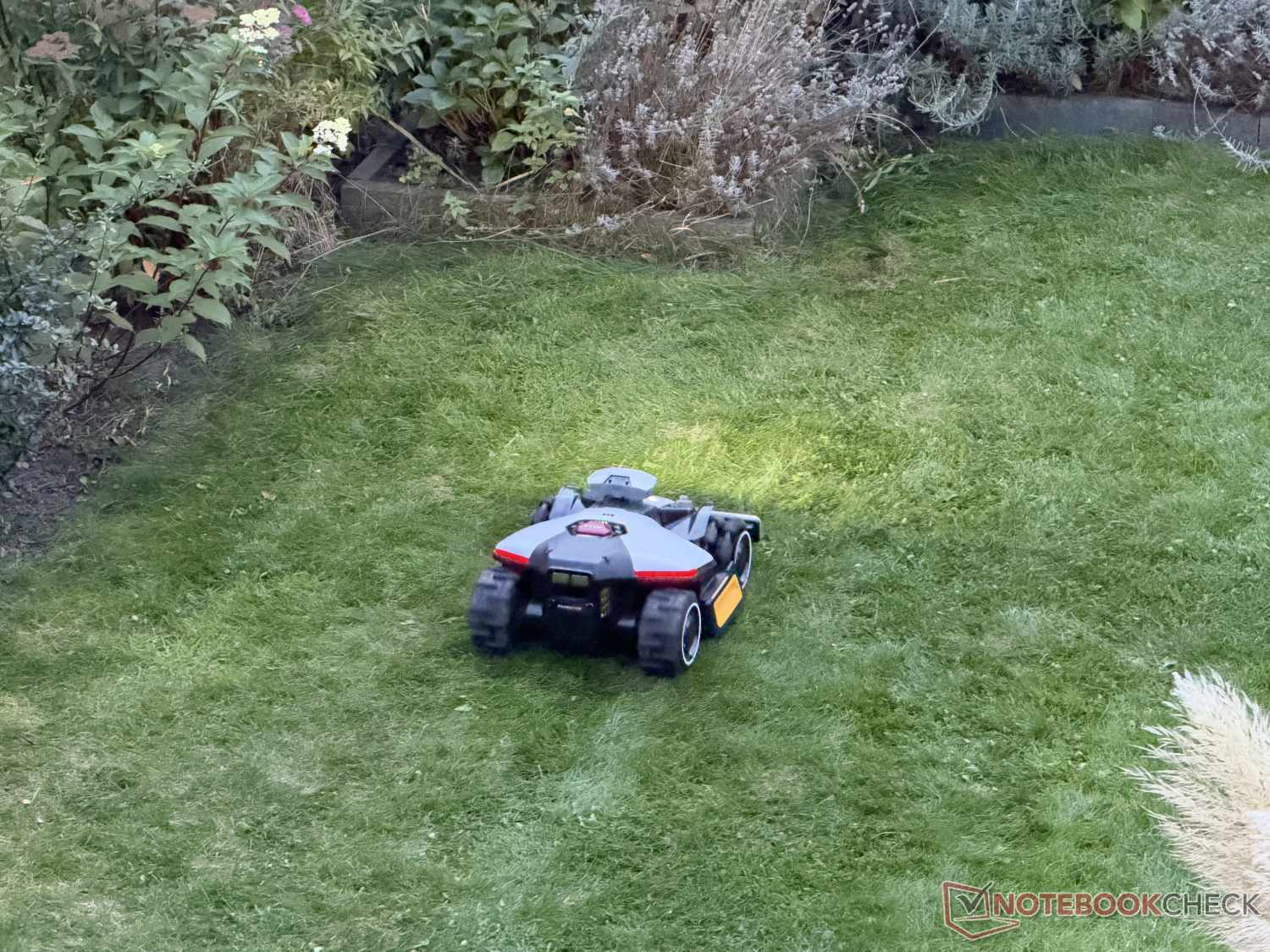
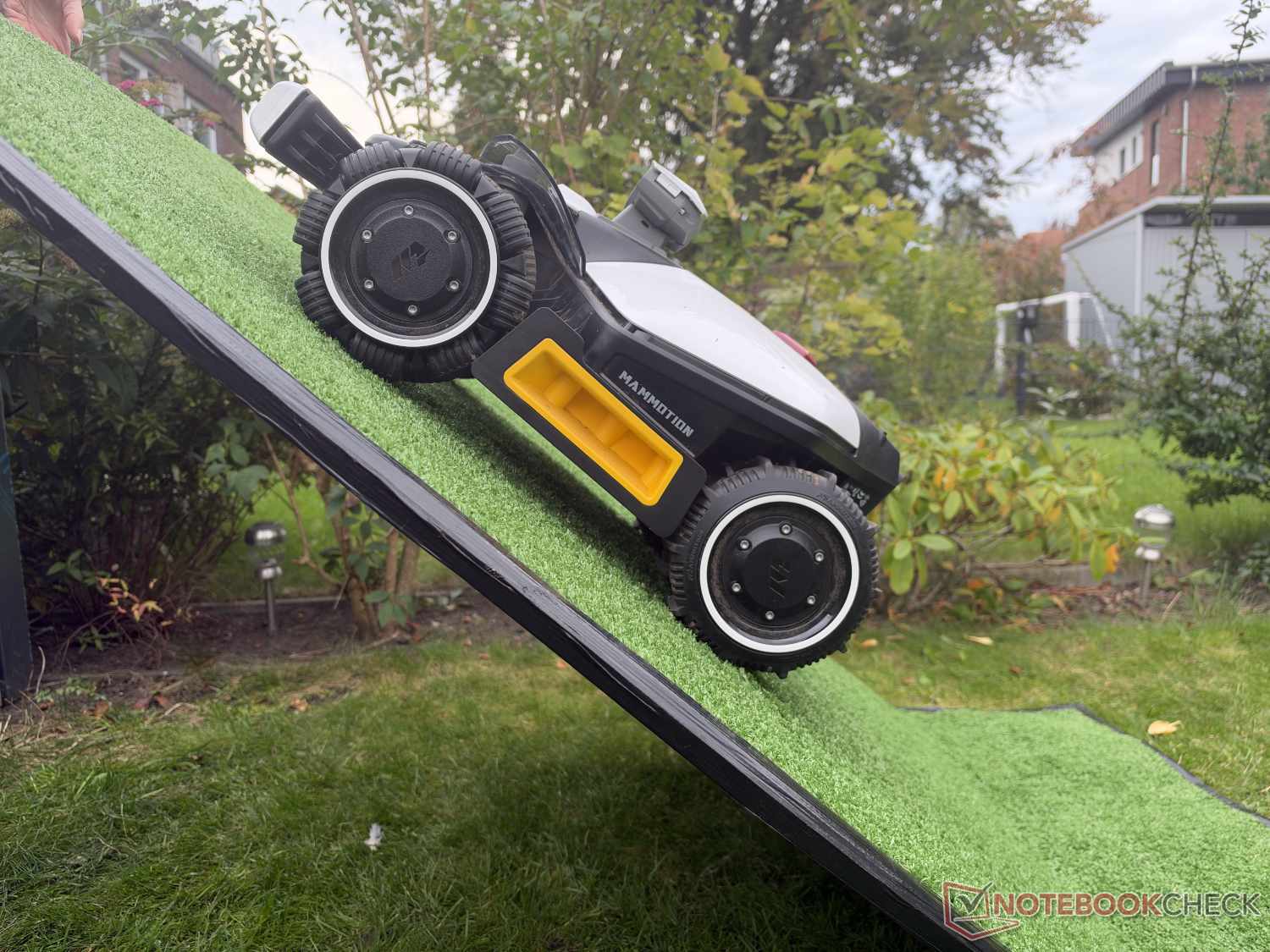
The Luba 2 mini AWD 1000 couldn’t quite demonstrate the 80 percent gradeability claimed by the manufacturer on our artificial turf test ramp—not due to a lack of traction, but because of a “Mowing robot tipped” error message. However, it managed up to 70 percent, which is still impressive. With its all-wheel drive, this model is therefore suitable not only for properties with steep slopes, but also for uneven lawns and winding gardens.
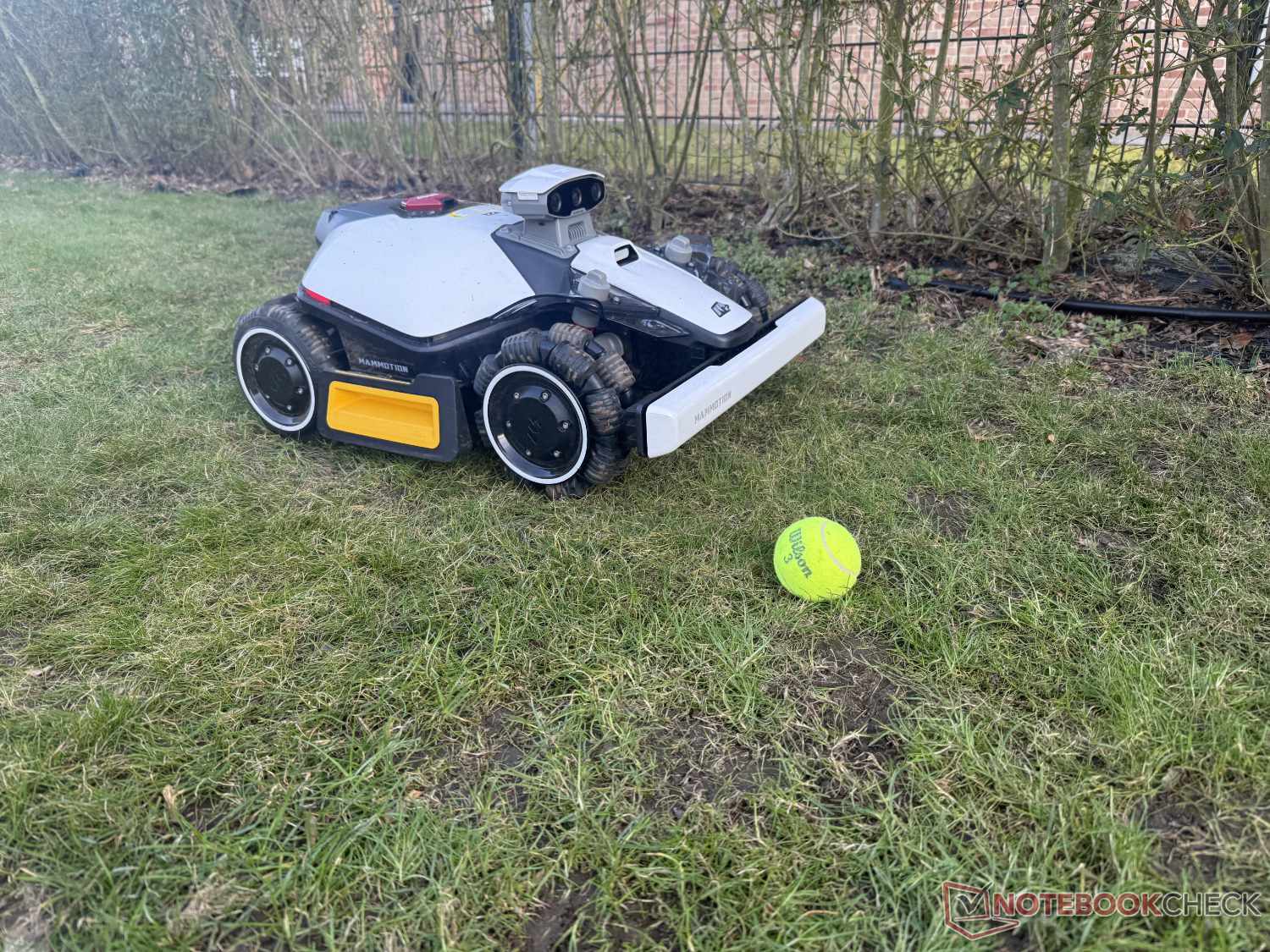
Last year, the Luba mini models already stood out for their reliable obstacle detection. That hasn’t changed in 2026. In our test, the Mammotion Luba mini 2 AWD 1000 reliably detected all obstacles, including our hedgehog decoy, a tennis ball, and a piece of garden hose.
Lawn & edge mowing: Full potential not realized
With a 20 cm cutting width, the Luba mini 2 AWD 1000 comes equipped with a medium-width main mowing deck. It performed solidly on our test areas. However, the relatively wide tracks left by the previously mentioned XXL wheels somewhat marred the cut in places.
The highlight of the 2026 generation is undoubtedly the second, side-mounted cutting deck for edge trimming. It sits on the right-hand side of the robotic mower (when viewed from above) and extends almost to the edge of the device. With its three blades, it is designed to allow mowing almost right up to the edge, even where the lawn borders are not flush with the lawn. That is the theory, at least.
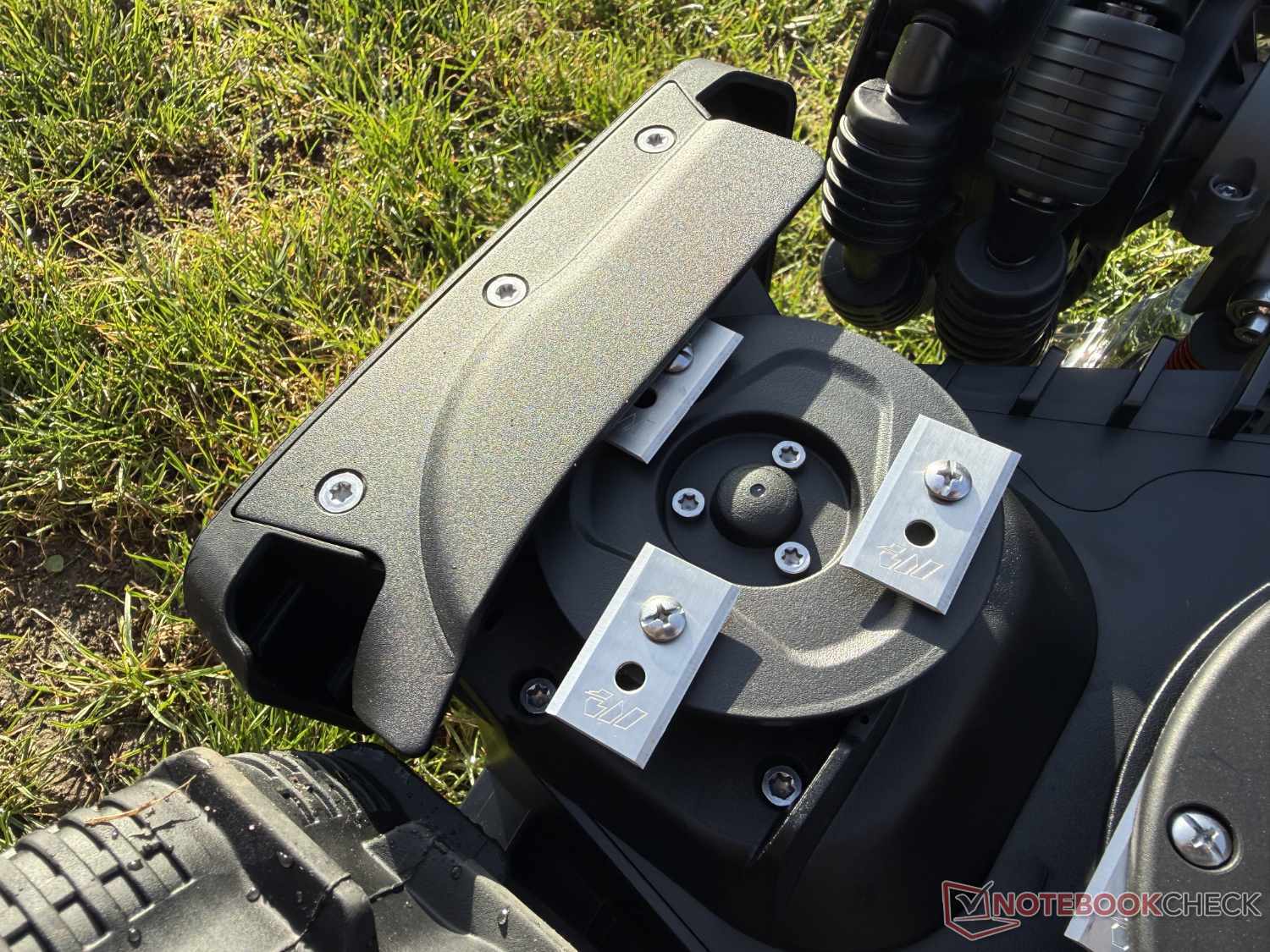
In practice, two problems (initially) temper the high expectations. First, for safety reasons, Mammotion installs a protective plate about 5.5 cm wide. This is intended to prevent fingers reaching under the robotic mower from coming into direct contact with the blades. The guard can be removed at your own risk by undoing three star-head screws.
The second problem in the practical test of the Mammotion Luba mini 2 AWD 1000’s edge cutting is software-related. With the standard obstacle avoidance setting, the robotic mower relatively often steered around plants hanging over the lawn from adjacent flower beds. It would be desirable to be able to disable obstacle avoidance at your own risk while cutting edges, or at least turn it down further. The robot could then follow the map more aggressively and plow through overhanging branches to achieve even better results when cutting edges.
Another minor point of criticism is that the side cutting deck cannot be adjusted in height. It always cuts at 50 mm, while the main mowing disc can be adjusted electronically between 2 and 6.5 cm. This means that the edges are cut better than with many other robotic mowers without an edge trimmer or side cutting deck, but there may still be a slight difference in cutting height between the edges and the rest of the lawn.
Runtime & noise level: Practical energy-saving options
To wrap up our Mammotion Luba 2 mini AWD 1000 test, a few words about battery life. With its large 6.1 Ah battery, the robotic mower ran for almost three hours straight in our test with the default settings and mowed around 200 square meters. That is slightly less than the manufacturer’s stated figure, but it depends heavily on the settings and the nature of the garden.
With around 15 percent charge remaining, it then returned to its charging station, where it charged just under 150 Wh at up to 87 W in around two hours. Combined with its relatively high standby consumption of over 10 W, this works out to a calculated monthly electricity consumption of around 11 kWh if the Luba 2 mini AWD 1000 is to mow 500 square meters of lawn three times a week. Optionally, consumption during waiting times can be drastically reduced by activating power-saving options in the app, which can save a lot of electricity. For our test, however, we always use the default settings.
Despite its all-wheel drive and two cutting decks, the Luba 2 mini AWD 1000 did not prove particularly loud in the test. We measured around 55 dB from a distance of 1 m, although this, as always, also depends on mowing activity.

Is the Mammotion Luba 2 mini AWD 1000, according to our test, not the right wire-free robotic lawn mower for your garden?
Then discover many more models in our best robotic lawn mowers of 2026!
Transparency
The selection of devices to be reviewed is made by our editorial team. The test sample was provided to the author as a loan by the manufacturer or retailer for the purpose of this review. The lender had no influence on this review, nor did the manufacturer receive a copy of this review before publication. There was no obligation to publish this review. As an independent media company, Notebookcheck is not subjected to the authority of manufacturers, retailers or publishers.
 Add as a preferred source on Google


