


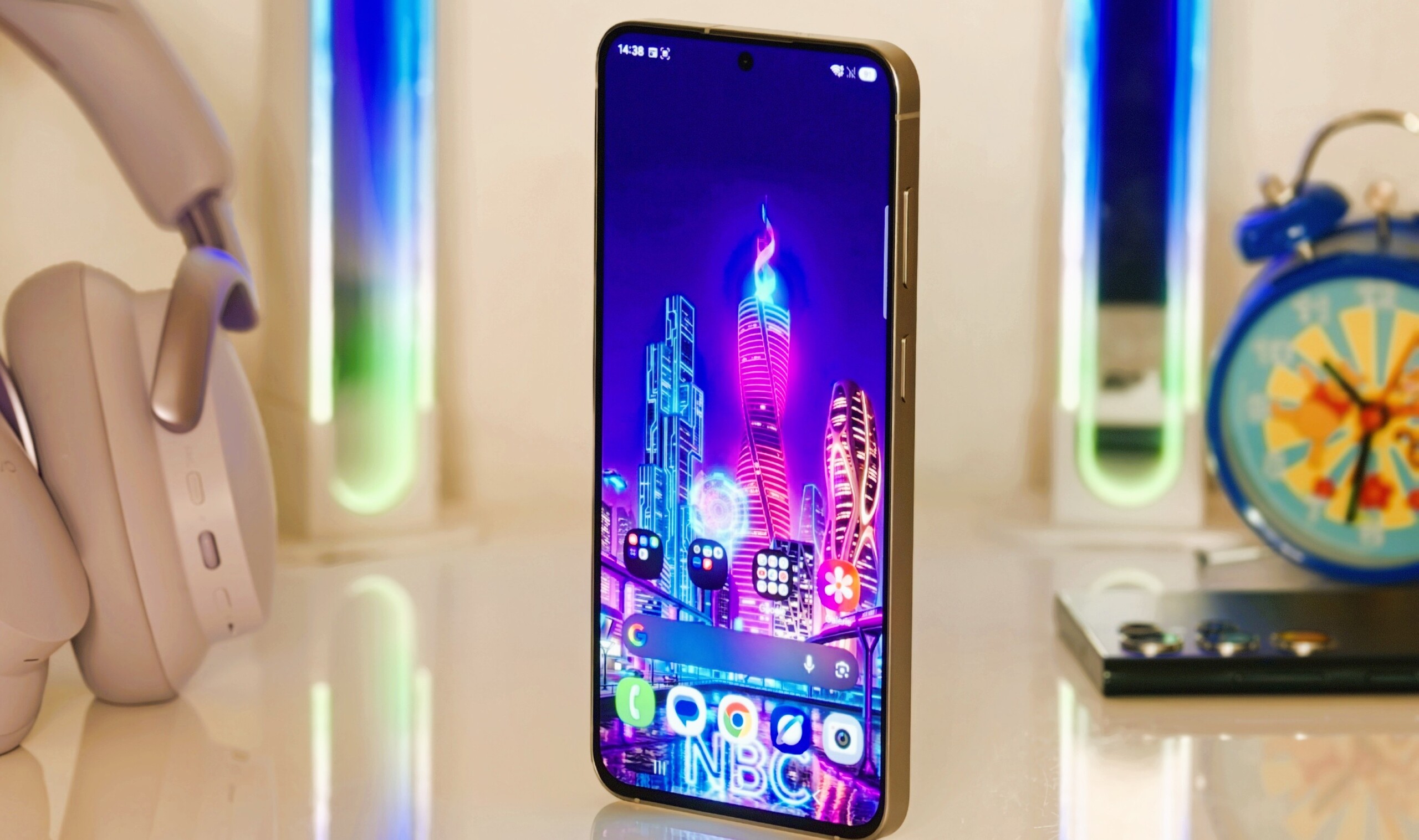
Verdict - Samsung Galaxy S26 FE
Although the MSRP is hard to justify given the numerous cutbacks, the Fan Edition—thanks to a significant price drop shortly after launch—is quickly becoming an attractive option for Samsung fans. Highlights include premium build quality, an appealing 120Hz AMOLED display, and a long-term update guarantee. The main camera also delivers solid photos.
Despite the price drop, the Galaxy S26 FE remains a compromise-filled smartphone. In particular, the outdated 8 MP telephoto camera is disappointing and feels entirely inadequate for an upper-mid-range device in 2026. Furthermore, there is the baffling downgrade to USB 2.0—which removes support for DeX—along with the absence of certain features (such as Wi-Fi 7) and only average battery life.
Given these many question marks, one might wonder whether this "Fan Edition" truly meets its fans' wishes.
Pros
Cons
Price and availability
The Samsung Galaxy S26 FE has been on the market since September, and comes in Blueberry, Graphite, and Pistachio. While its recommended retail price (RRP) is a steep $699, the Fan Edition can now be found starting at around $499—for instance, through Samsung's online store or on Amazon.

- $599.99 price as of 2026-11-21 13:05 UTC.Samsung Galaxy S26 FE, Unlocked Phone, Graphite, 256GB | Galaxy AI, AI Photo Editor, 50MP Camera, Photo Assist, My FanCam, Super Steady Video, 4900 mAh Battery, 8 GB Memory
- $499.99 price as of 2026-11-21 13:05 UTC.Samsung Galaxy S26 FE, Unlocked Phone, Blueberry, 128GB | Galaxy AI, AI Photo Editor, 50MP Camera, Photo Assist, My FanCam, Super Steady Video, 4900 mAh Battery, 8 GB Memory
- $499.99 price as of 2026-11-21 13:05 UTC.Samsung Galaxy S26 FE, Unlocked Phone, Pistachio, 128GB | Galaxy AI, AI Photo Editor, 50MP Camera, Photo Assist, My FanCam, Super Steady Video, 4900 mAh Battery, 8 GB Memory
Table of Contents
- Verdict - Samsung Galaxy S26 FE
- Specifications - Samsung Galaxy S26 FE
- Case - A waterproof Samsung smartphone with IP68
- Features - Premium mid-range with only USB 2.0
- Software - The Galaxy phone comes with Android 17
- Communication and GNSS - The Galaxy S26 FE has 5G and Bluetooth 5.4
- Telephone functions and voice quality - An Android phone with an eSIM
- Cameras - A Samsung smartphone with 50 megapixels and optical image stabilisation
- Accessories and warranty - The Galaxy S26 FE comes without a charger
- Input devices and operation - A mid-range smartphone with an optical fingerprint sensor
- Display - A Galaxy S26 FE with AMOLED and 120 Hz
- Performance - A Samsung phone with Exynos 2500
- Emissions - The Android phone throttles its performance only slightly
- Battery life - The Samsung smartphone only does 45-watt charging
- Notebookcheck overall rating
- Possible alternatives compared
Specifications - Samsung Galaxy S26 FE
Case - A waterproof Samsung smartphone with IP68
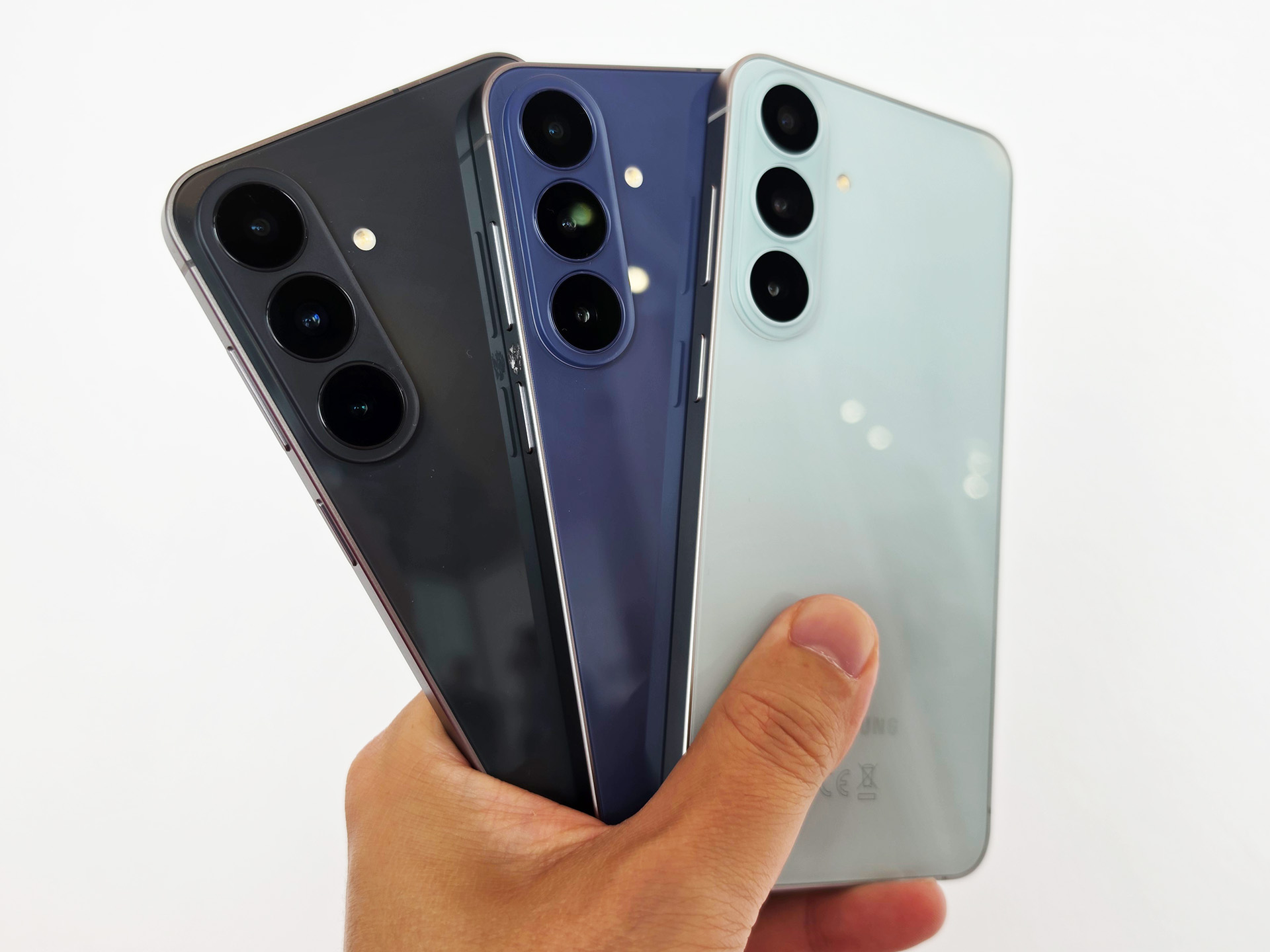
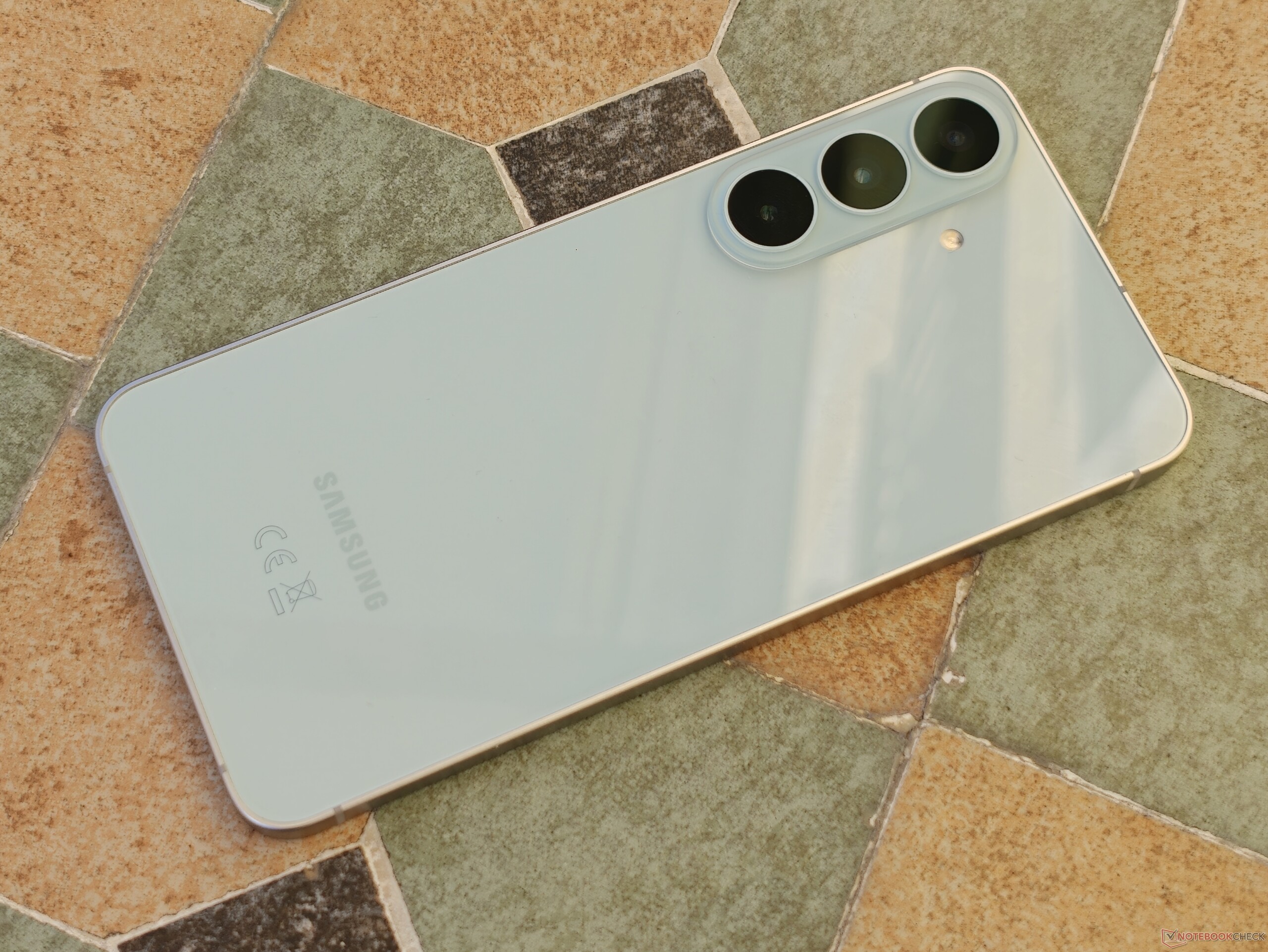
The Galaxy S26 FE is IP68 certified, making it water- and dust-resistant. The build quality and premium feel are impeccable, although the Samsung phone feels rather angular in the hand. At approximately 7 millimeters thick and weighing 193 grams, the Fan Edition is relatively thin and light.
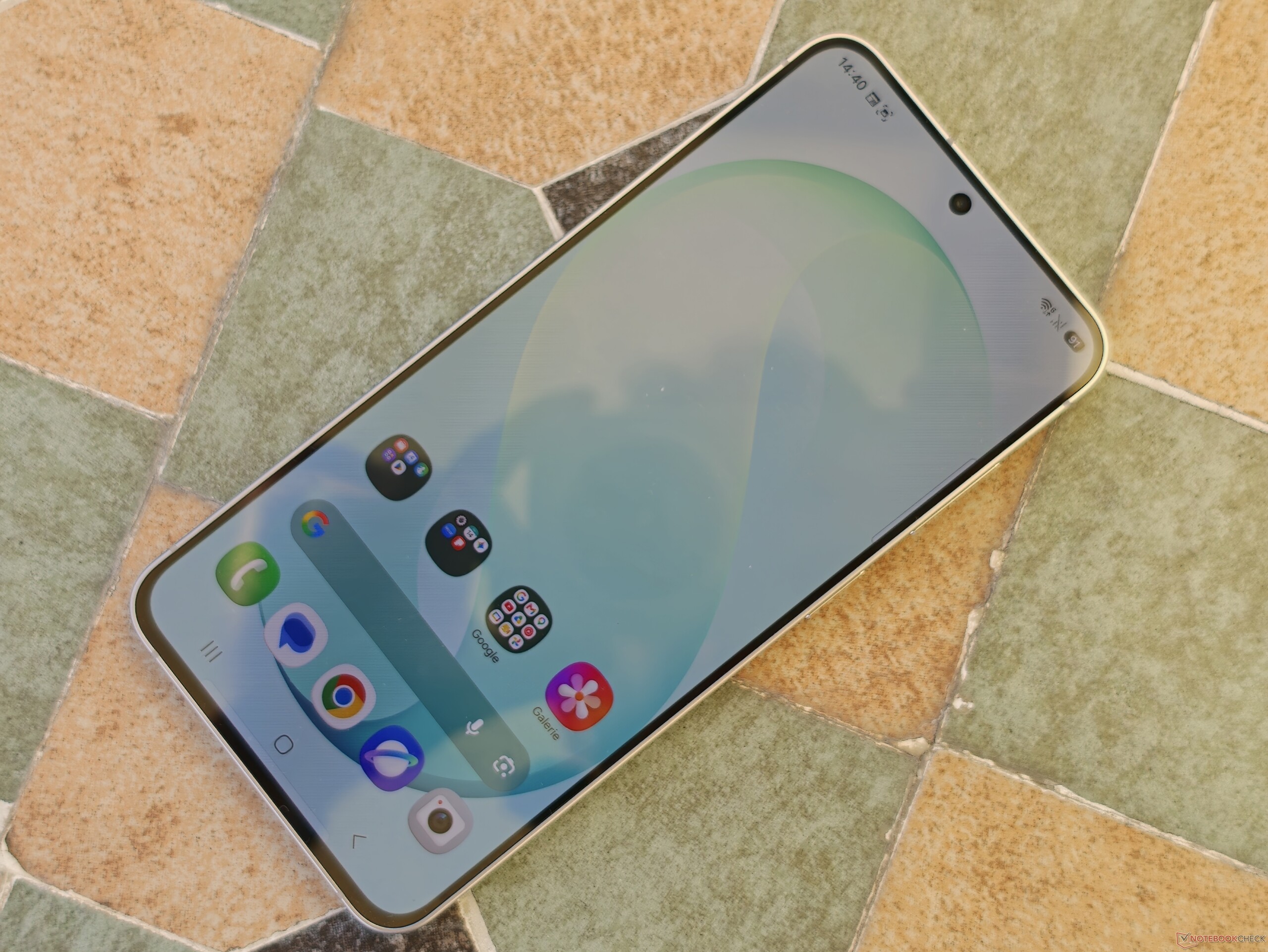
The OLED display is protected by Gorilla Glass Victus+. With a screen-to-body ratio of around 89 percent, the Galaxy S26 FE boasts a modern look, but the Galaxy S26+ has even slimmer display bezels.
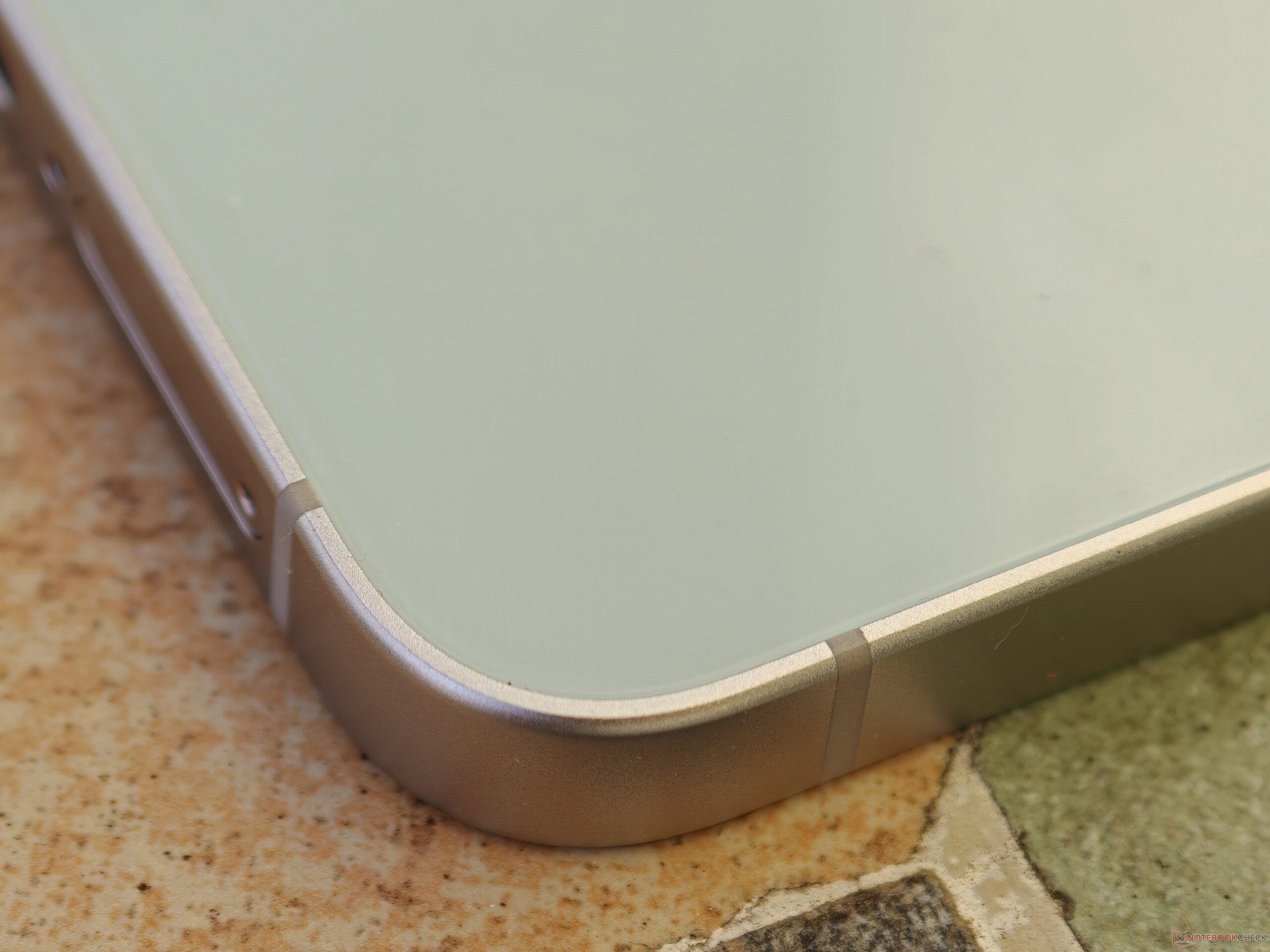
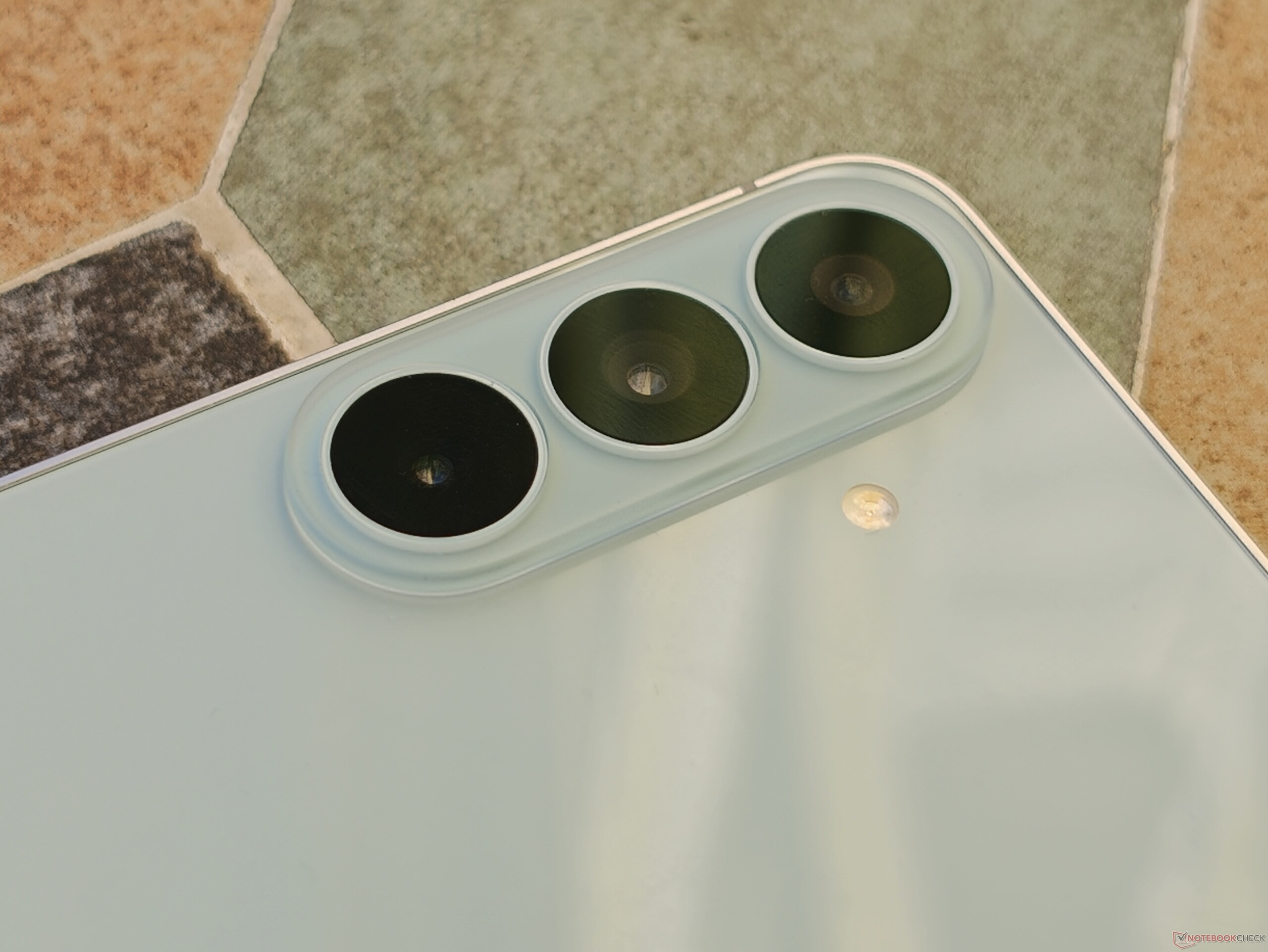
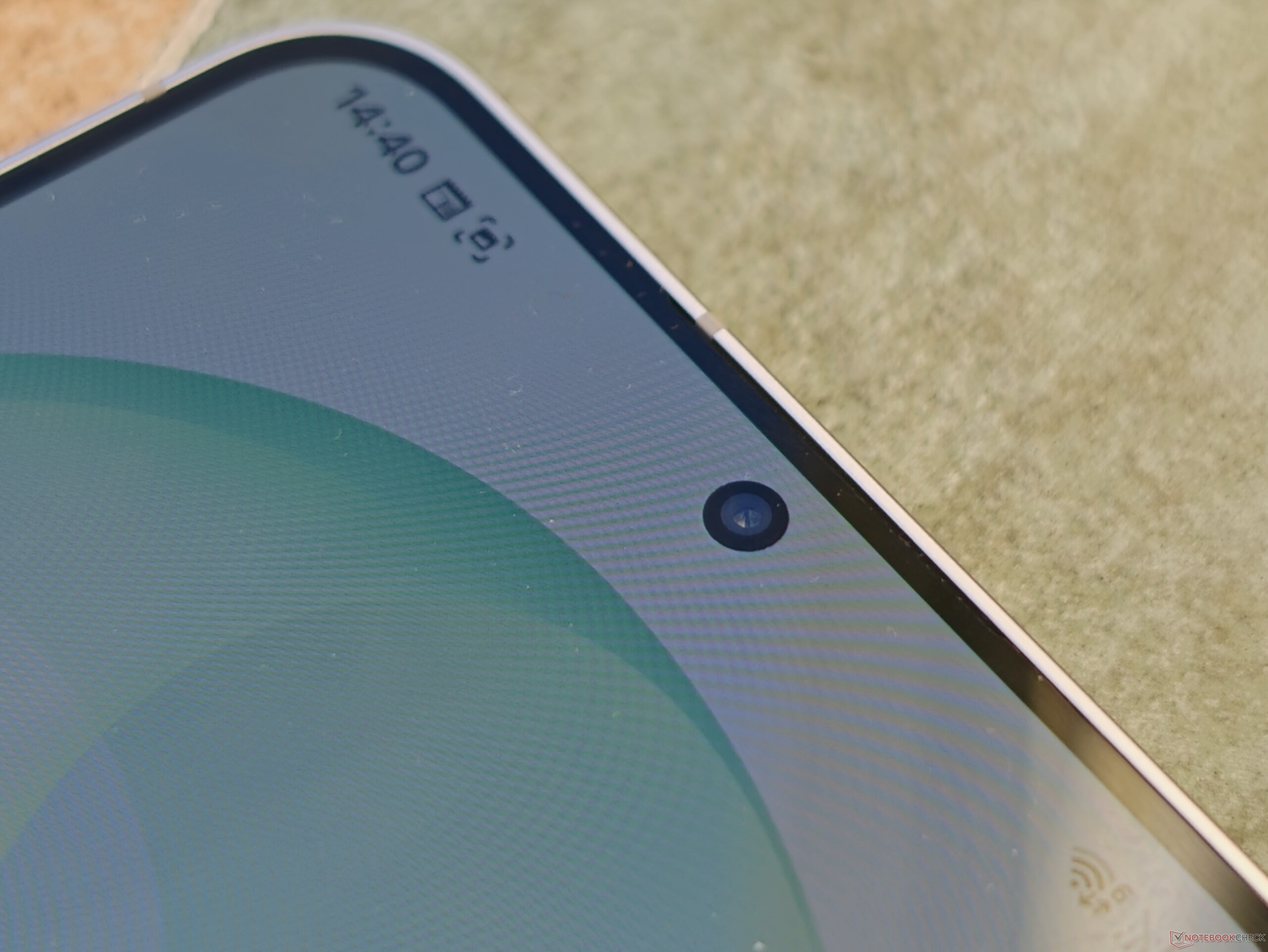
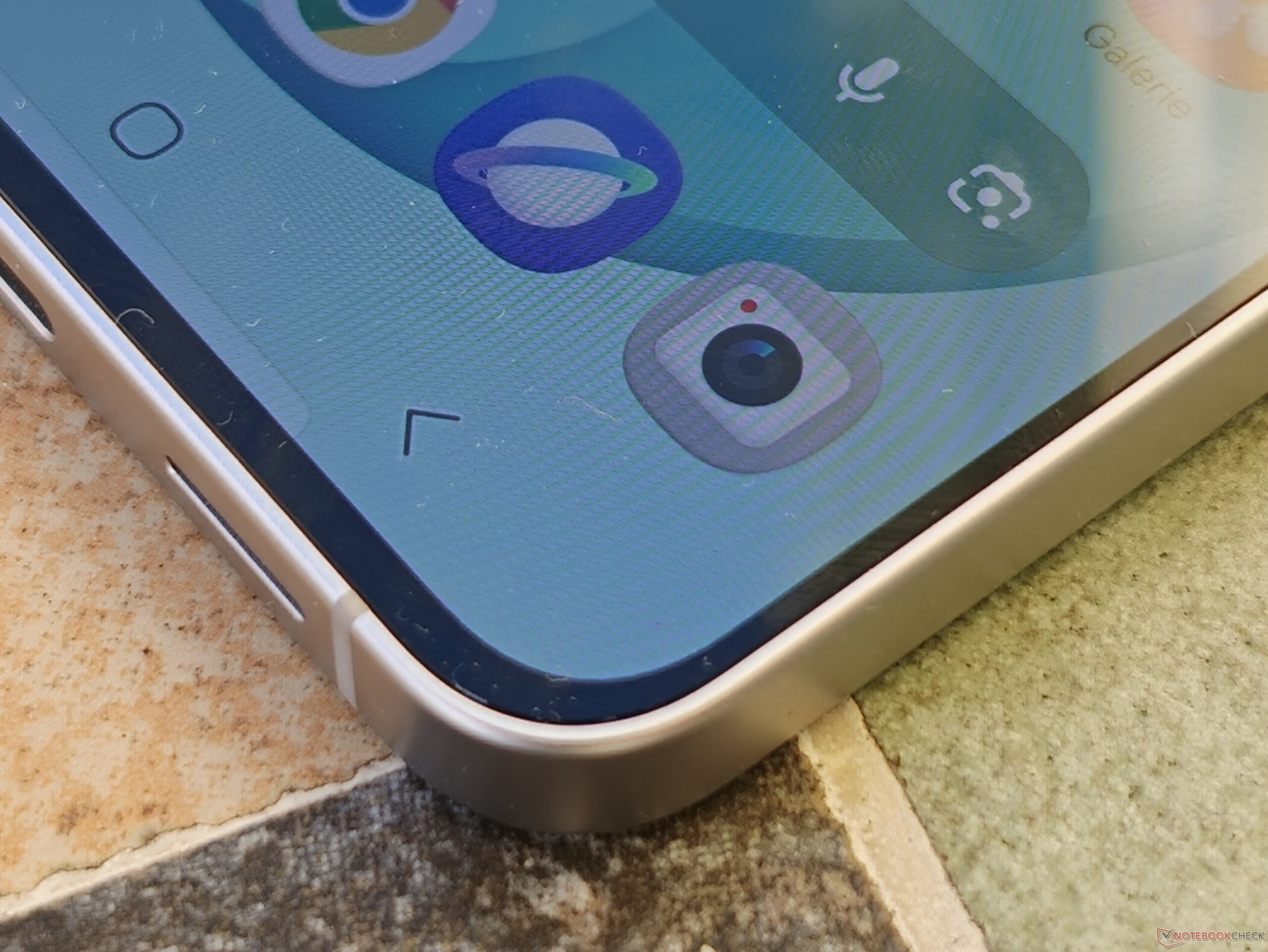
Features - Premium mid-range with only USB 2.0
Samsung offers the Galaxy S26 FE in three storage configurations, though only the two larger-capacity options feature the UFS 4.0 standard. By contrast, our 128 GB test unit still uses UFS 3.1.
The USB port is a major disappointment. With the S26 FE, Samsung has reverted to the slow 2.0 standard, which lacks support for video output or the DeX interface. In our tests, the mid-range phone—paired with a Samsung Portable SSD T7—achieved a sluggish transfer speed of approximately 35 Mbit/s.
Software - The Galaxy phone comes with Android 17
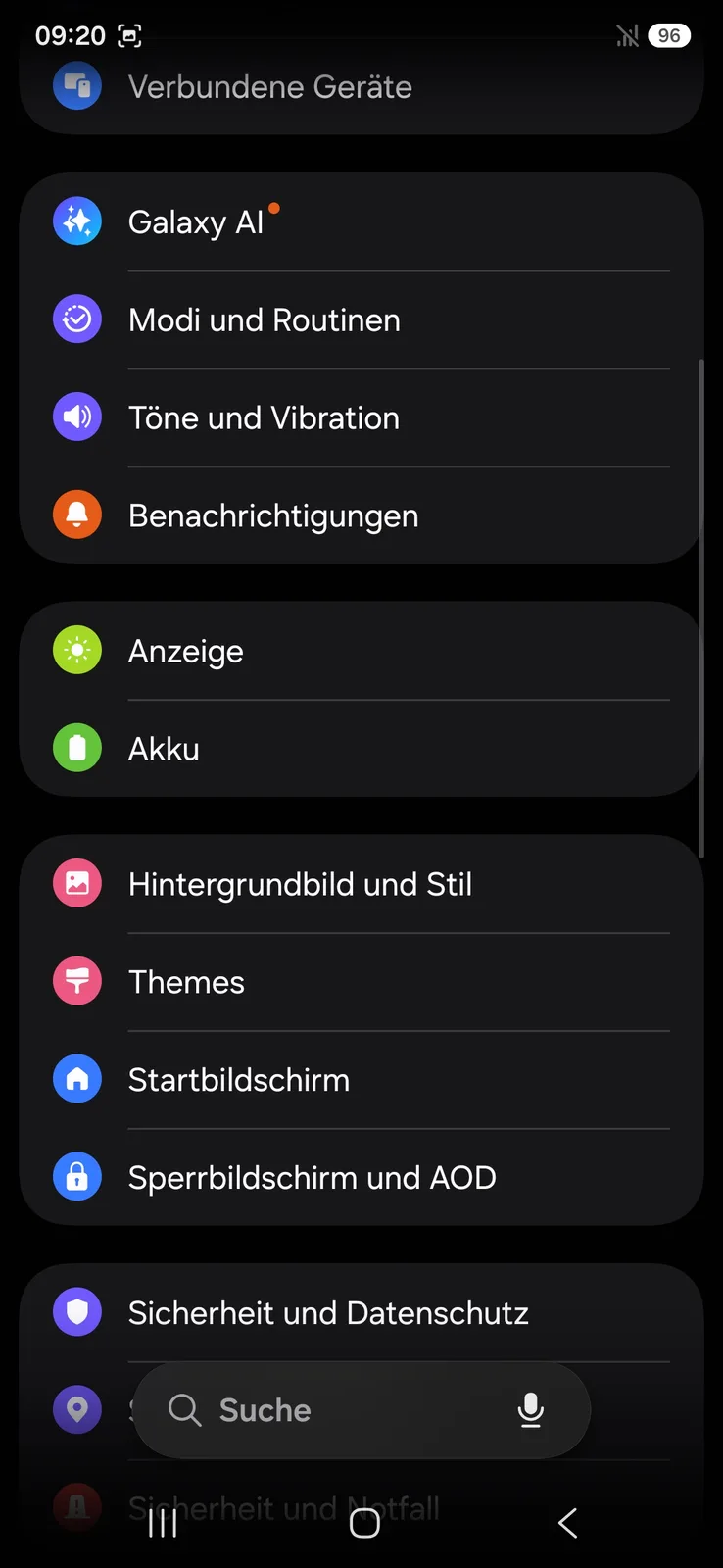
If you prioritize long-term updates, the Galaxy S26 FE is an excellent choice. According to Samsung, the device will receive OS upgrades and security updates for a total of 7 years from its release date. Furthermore, with Android 17 and One UI 9, the FE model is on par with the S26 series.
Sustainability
The Galaxy S26 FE sets exemplary standards when it comes to sustainability. In its sustainability report, the manufacturer provides data on the product's lifecycle, including its environmental impact during production, the usage phase, and disposal.
The product packaging incorporates recycled materials and appears to be entirely free of plastic. Furthermore, through its "Self Repair" service, Samsung provides access to original spare parts and repair manuals.
Communication and GNSS - The Galaxy S26 FE has 5G and Bluetooth 5.4
Without WiFi 7 and Bluetooth 6 and a starting MSRP of $699, the Galaxy S26 FE no longer feels up to date. Admittedly, this shortcoming is unlikely to be a major issue in everyday situations, as our tests with a reference router highlighted solid performance for both data reception and transmission.
In terms of mobile connectivity, Samsung’s premium mid-range device is very well equipped, featuring 5G support and a wide range of LTE frequency bands.
| Networking | |
| Samsung Galaxy S26 FE | |
| iperf3 transmit Wi-Fi6/7 RT-BE96U | |
| iperf3 receive Wi-Fi6/7 RT-BE96U | |
| Motorola Edge 70 Plus | |
| iperf3 transmit Wi-Fi6/7 RT-BE96U | |
| iperf3 receive Wi-Fi6/7 RT-BE96U | |
| Xiaomi 17T Pro | |
| iperf3 transmit Wi-Fi6/7 RT-BE96U | |
| iperf3 receive Wi-Fi6/7 RT-BE96U | |
| Samsung Galaxy S26+ | |
| iperf3 transmit AXE11000 | |
| iperf3 receive AXE11000 | |
| iperf3 transmit AXE11000 6GHz | |
| iperf3 receive AXE11000 6GHz | |
| Samsung Galaxy S25 FE | |
| iperf3 transmit AXE11000 | |
| iperf3 receive AXE11000 | |
| iperf3 transmit AXE11000 6GHz | |
| iperf3 receive AXE11000 6GHz | |
| Average Wi-Fi 6E | |
| iperf3 transmit AXE11000 | |
| iperf3 receive AXE11000 | |
| iperf3 transmit AXE11000 6GHz | |
| iperf3 receive AXE11000 6GHz | |
| iperf3 transmit Wi-Fi6/7 RT-BE96U | |
| iperf3 receive Wi-Fi6/7 RT-BE96U | |
| Average of class Smartphone | |
| iperf3 transmit AXE11000 | |
| iperf3 receive AXE11000 | |
| iperf3 transmit AXE11000 6GHz | |
| iperf3 receive AXE11000 6GHz | |
| iperf3 transmit Wi-Fi6/7 RT-BE96U | |
| iperf3 receive Wi-Fi6/7 RT-BE96U | |
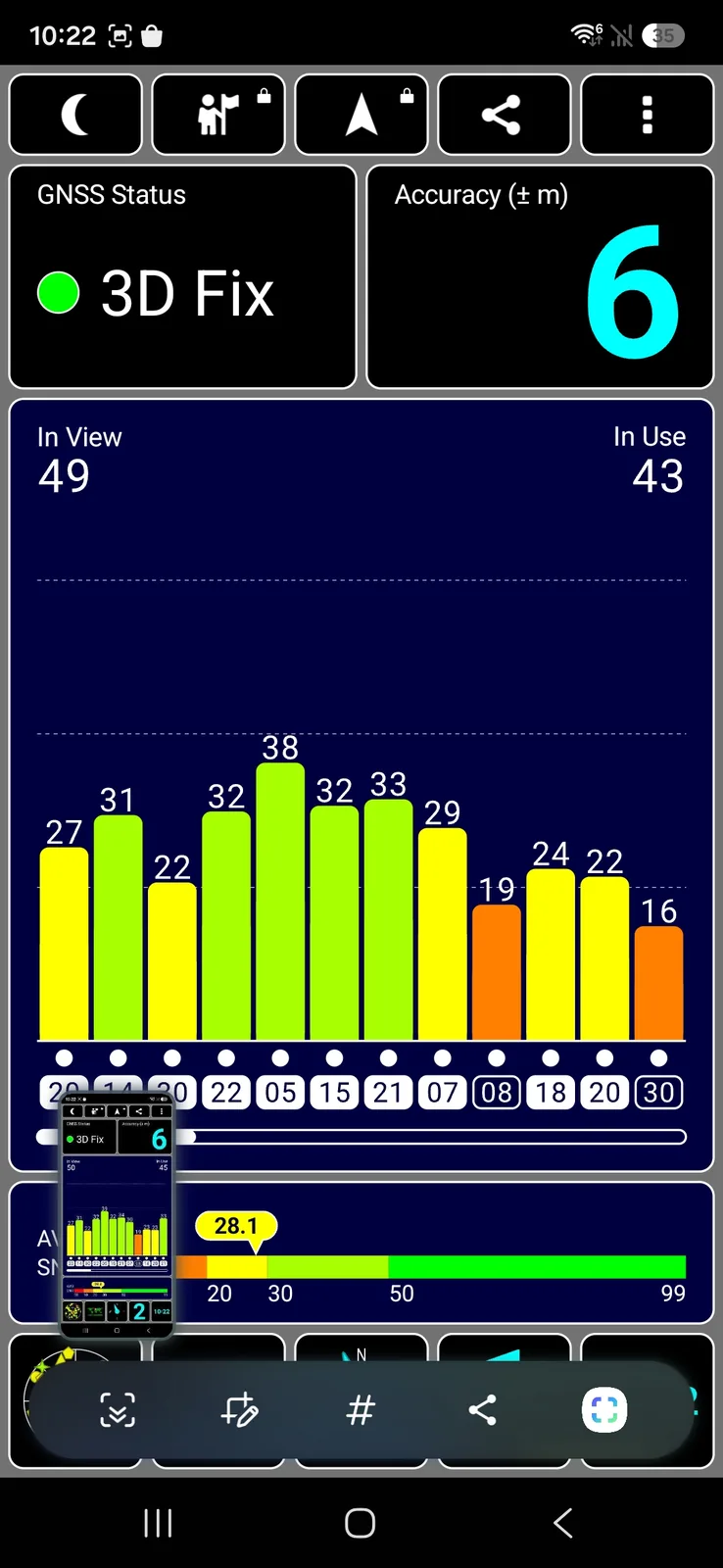
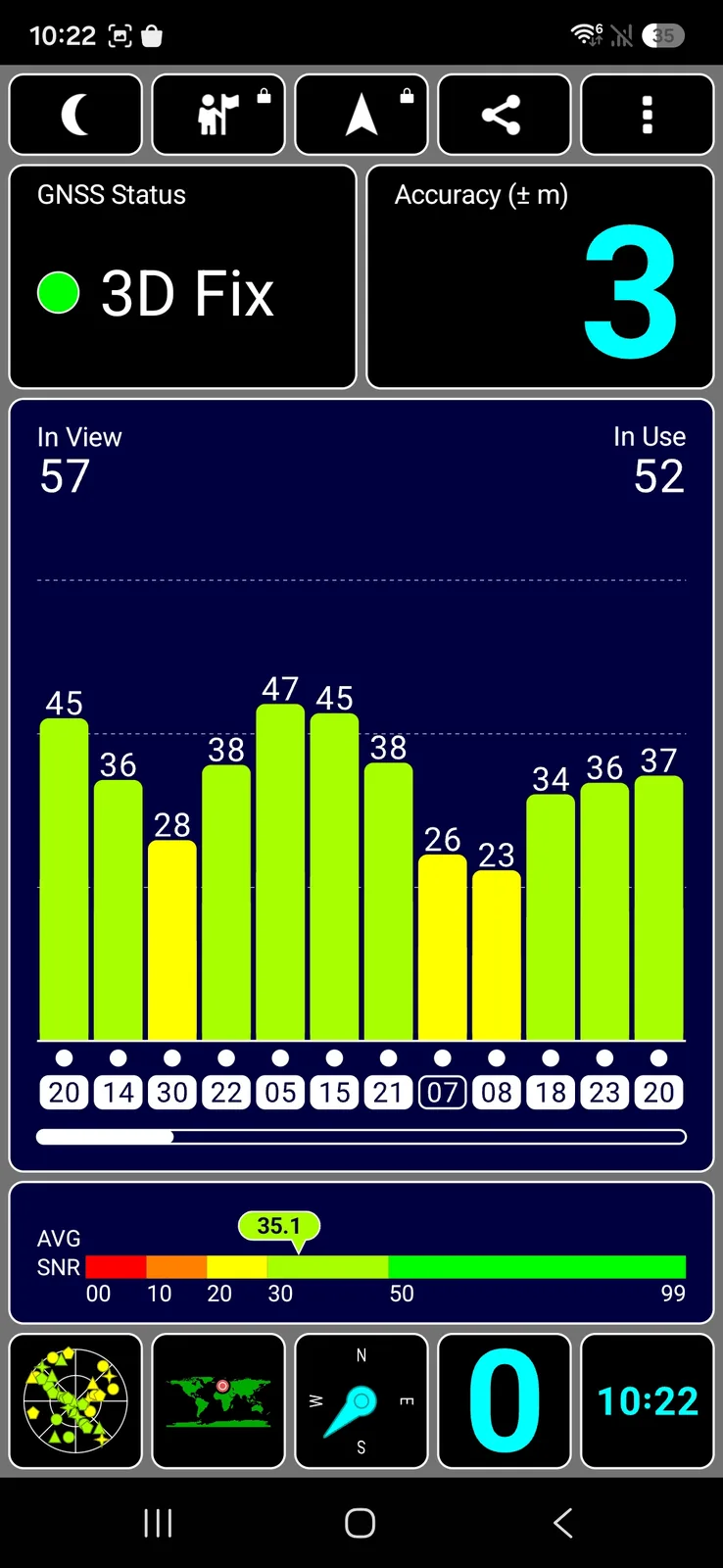
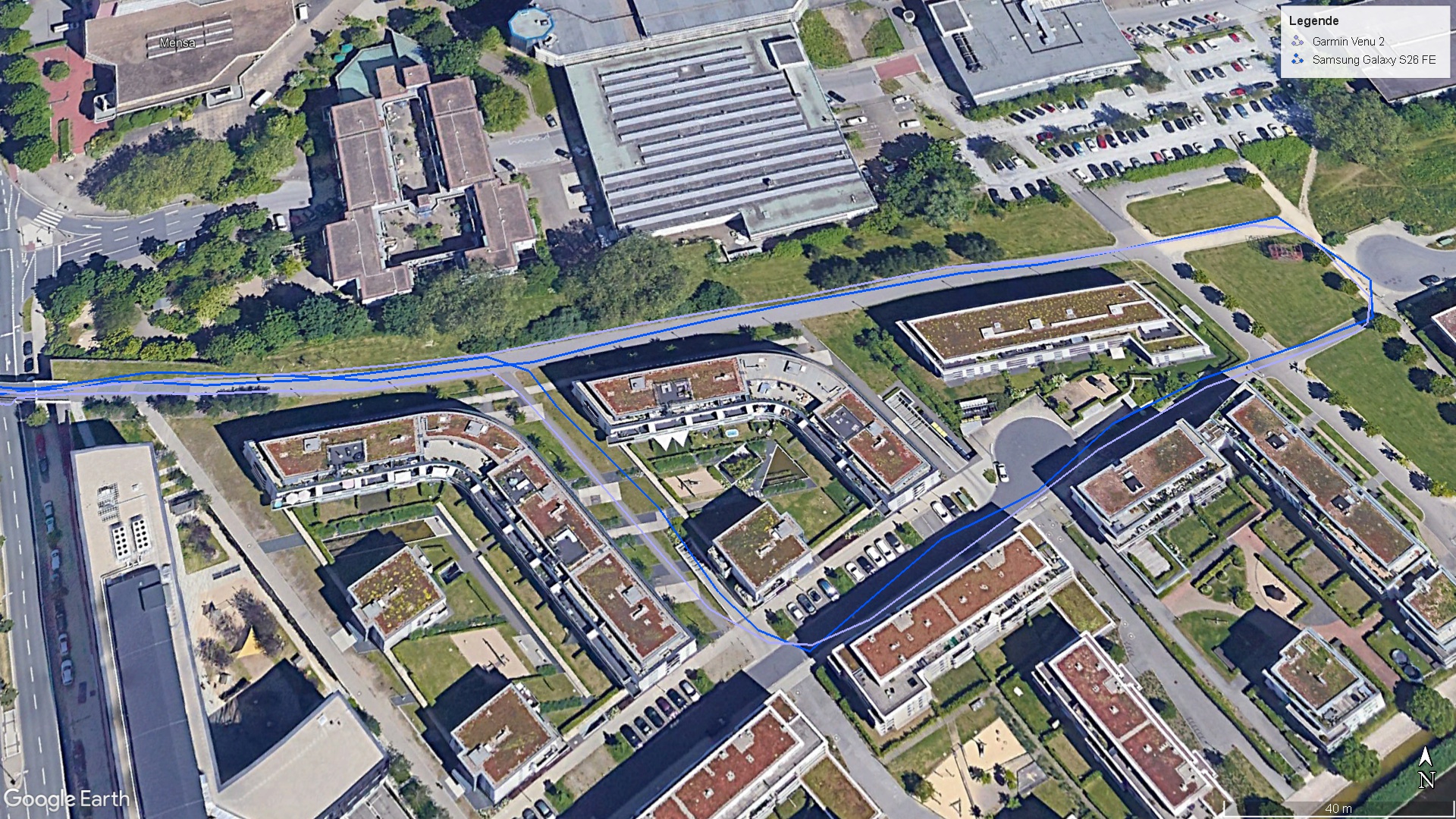
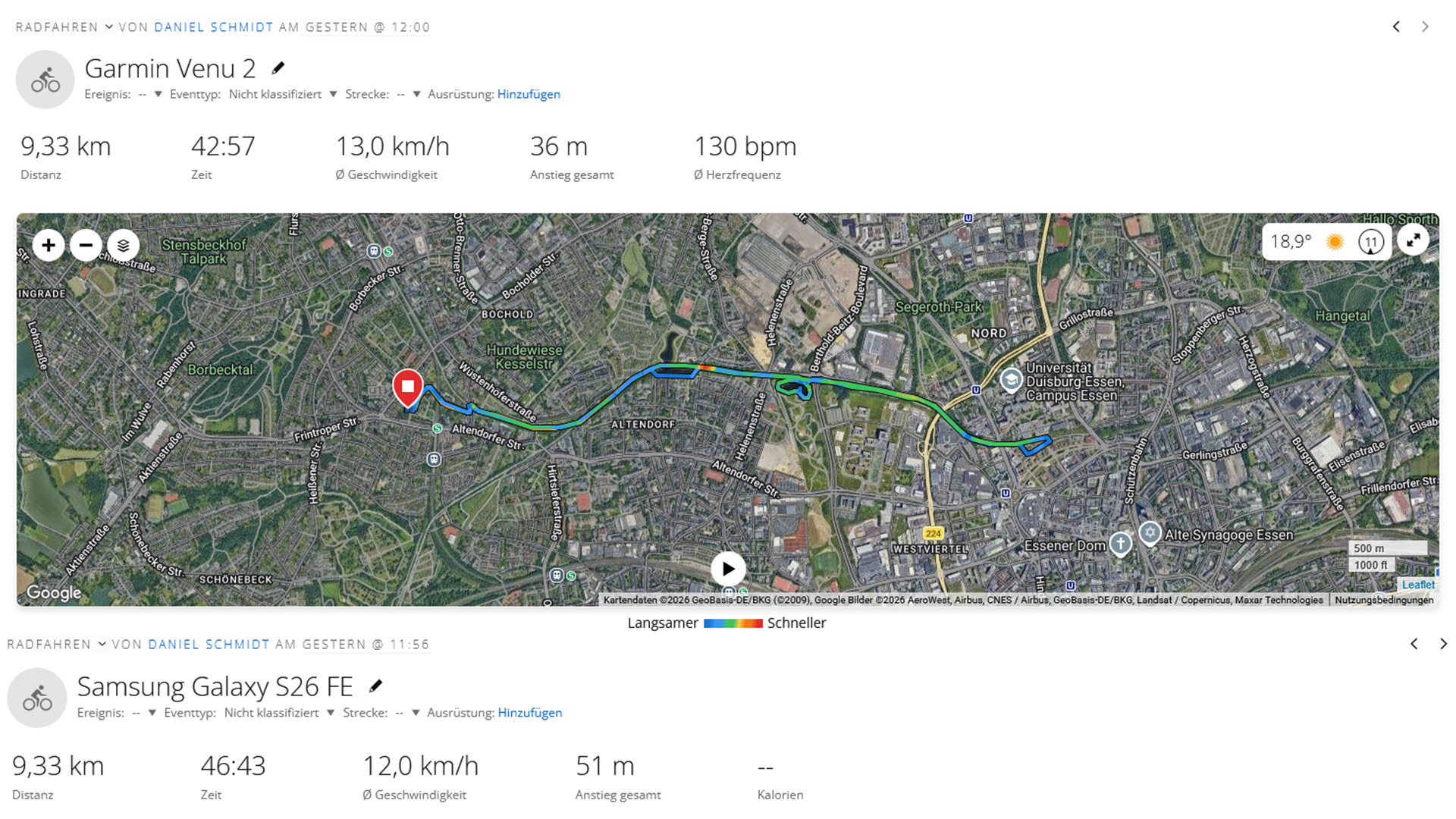
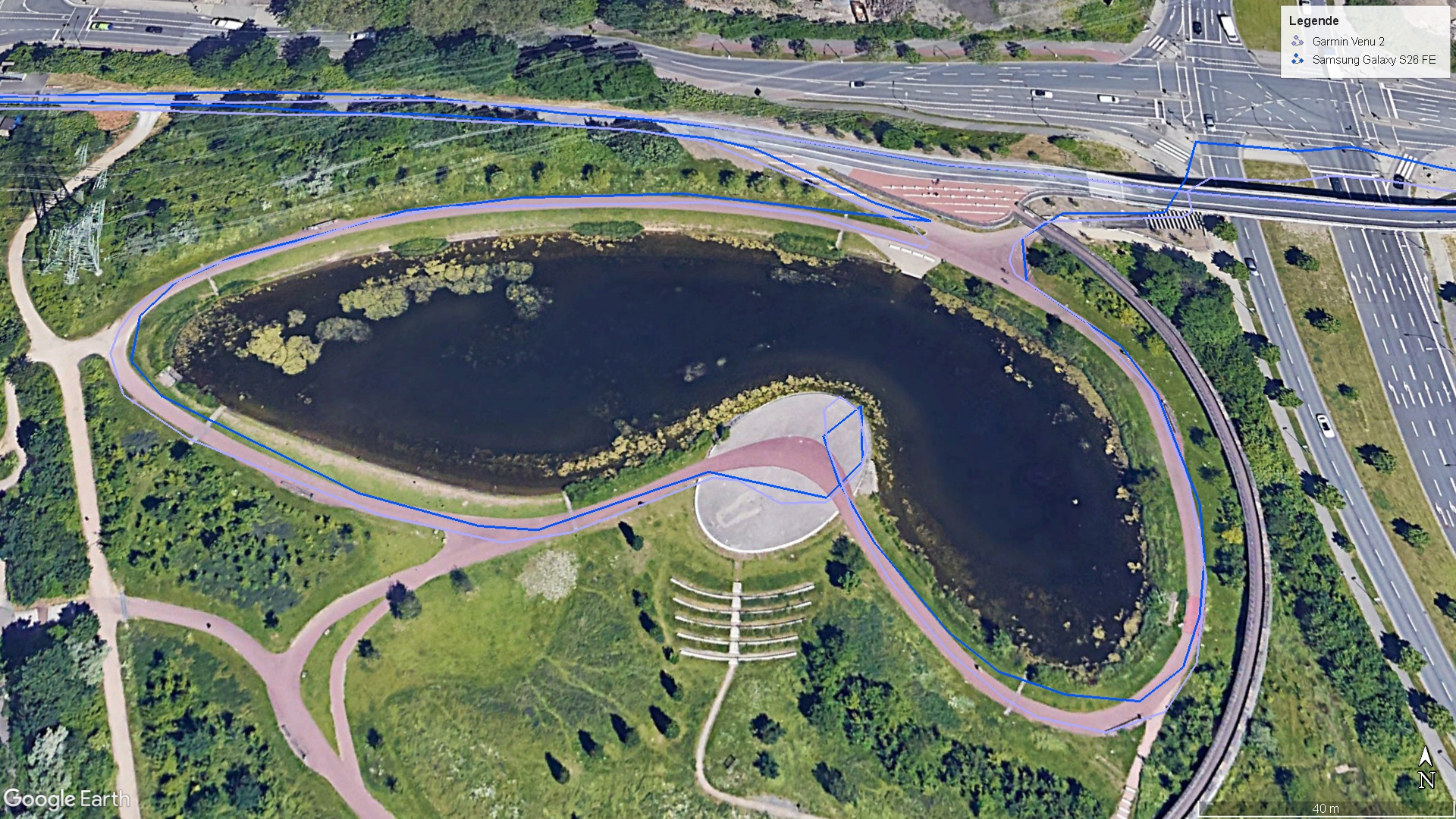
In our outdoor tests, the Galaxy S26 FE used its dual-band GNSS to quickly establish a location with an accuracy of approximately 3 meters. In practical use, the Galaxy phone proves to be quite precise—performing comparably to the Garmin Venu 2—though some noticeable deviations from the actual route are apparent. With these discrepancies remaining within an acceptable range, the mid-range smartphone can still be recommended for navigation without a hint of reservation.
Telephone functions and voice quality - An Android phone with an eSIM
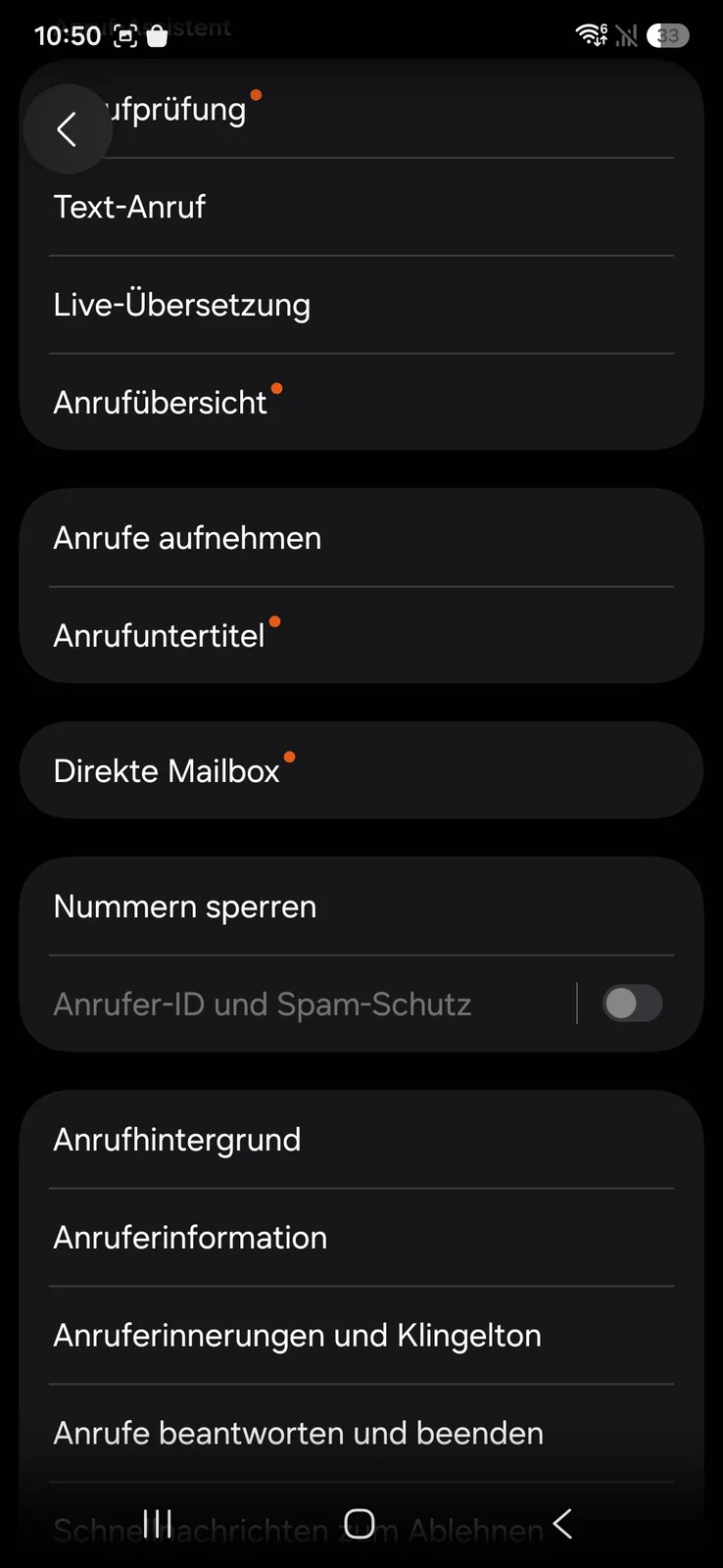
The Galaxy S25 FE can be used with two nanoSIMs or in a dual-eSIM configuration, delivering good call quality with natural voice reproduction. In addition to standard features like VoNR, VoLTE, and Wi-Fi Calling, it also supports Galaxy AI for calls.
Cameras - A Samsung smartphone with 50 megapixels and optical image stabilisation

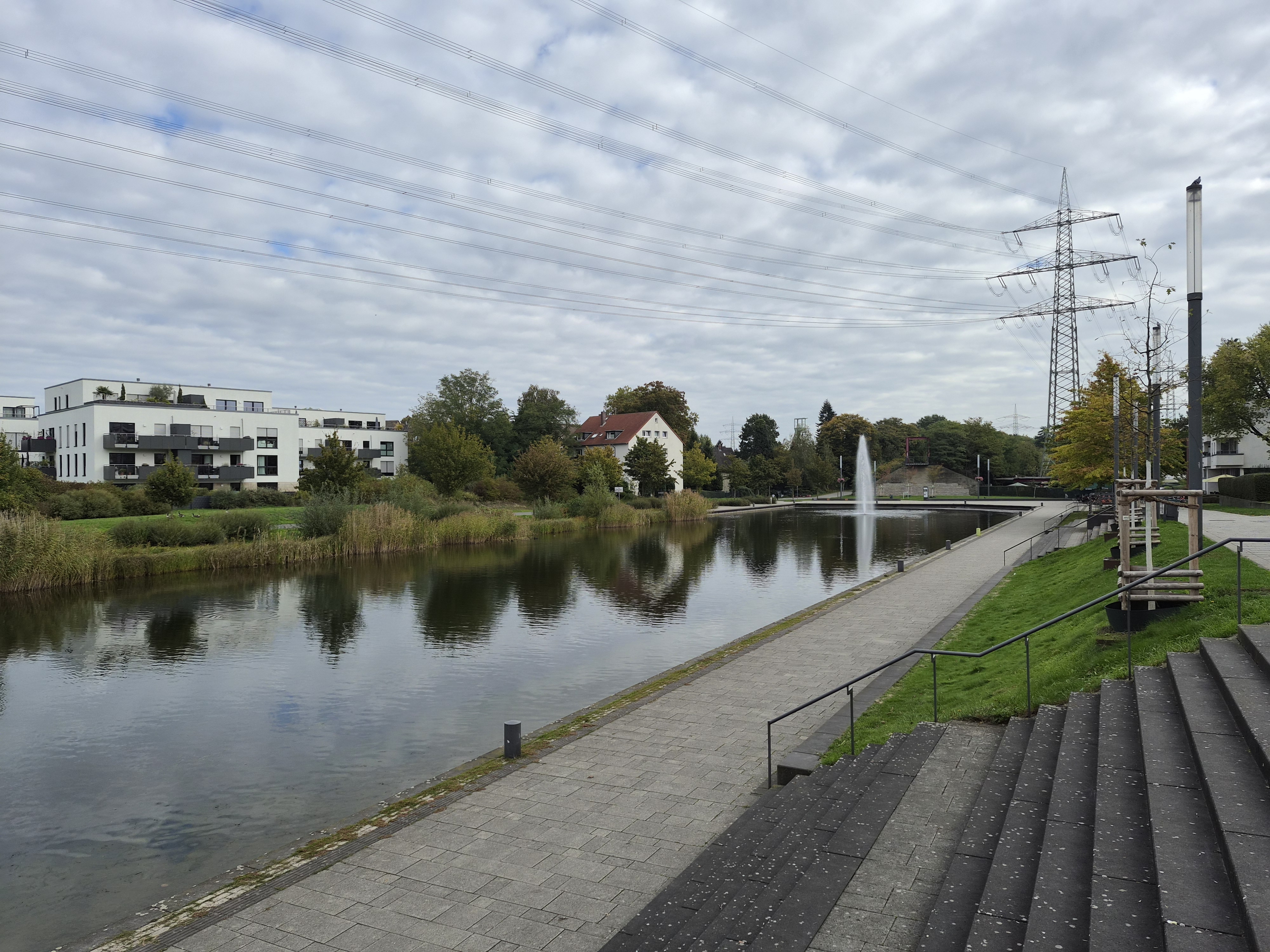
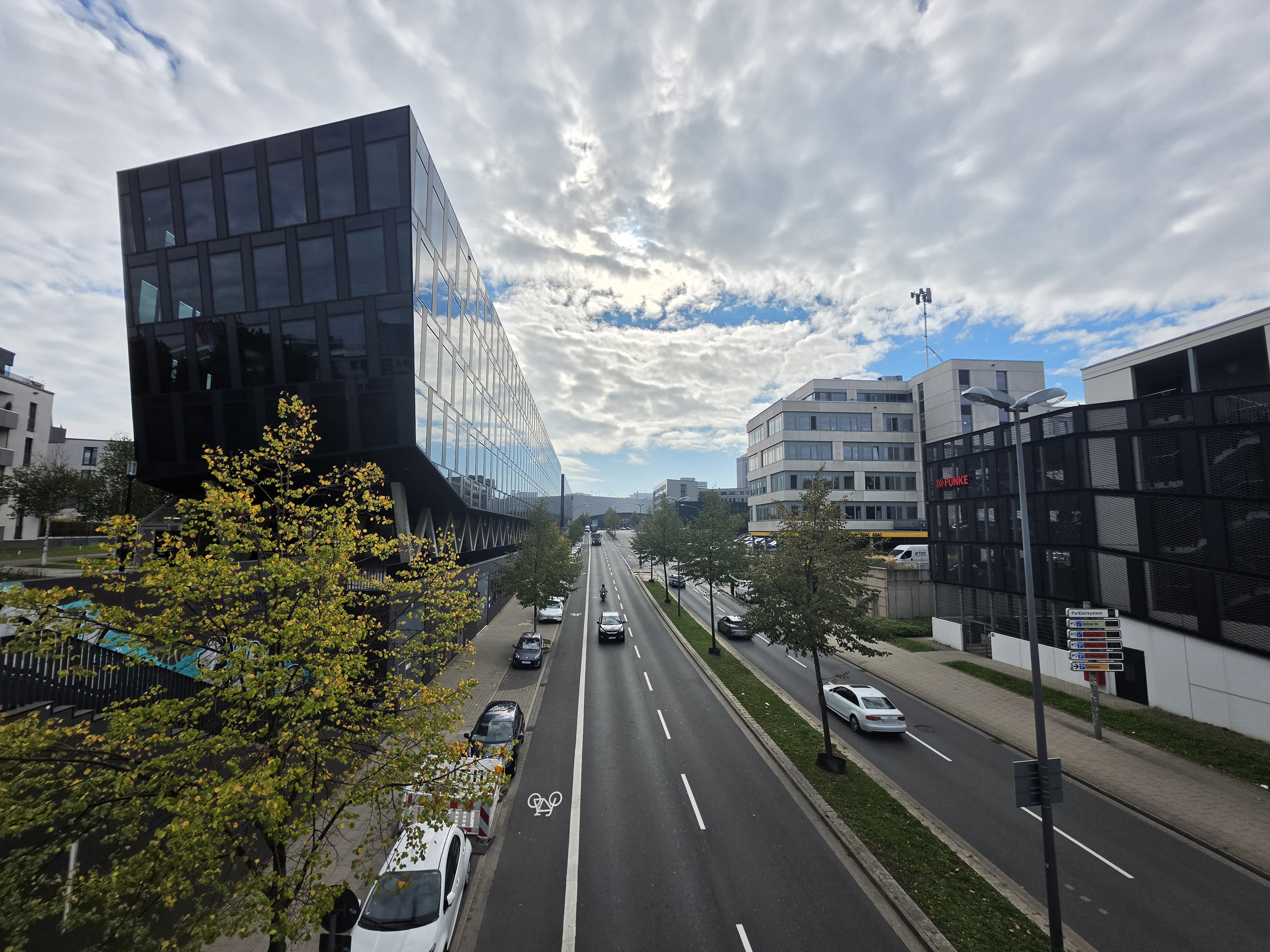
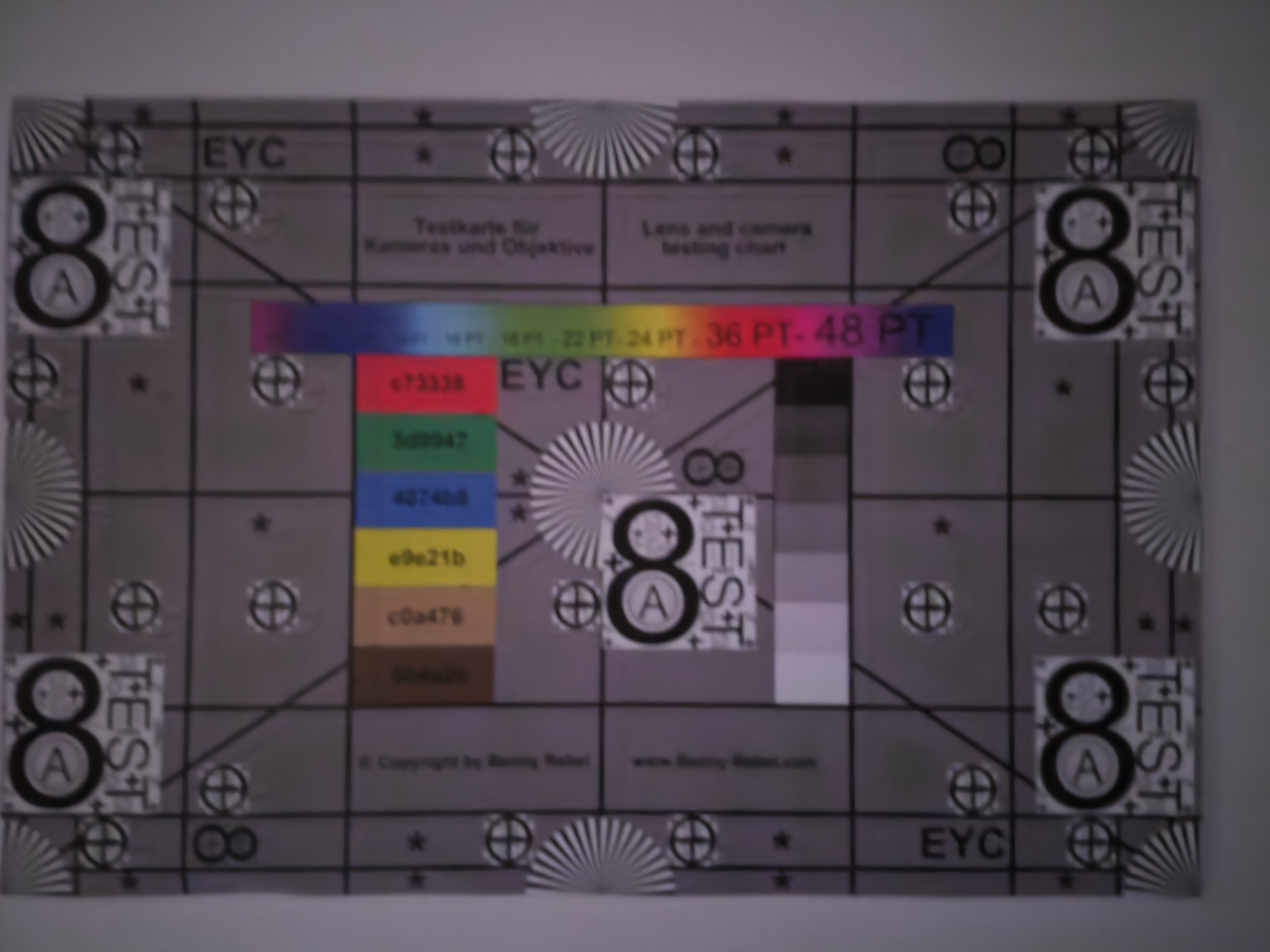
The camera hardware has barely changed since the S24 FE and no longer aligns with the price point expected for 2026. While the Galaxy S26 FE’s 50MP main camera—featuring an f/1.8 aperture and OIS—captures appealing photos in both daylight and low-light conditions, the other, lower-resolution lenses (ultra-wide-angle and telephoto) fall significantly short in terms of quality.
The 8MP telephoto camera, with its 3x zoom and tiny 1/4.4-inch sensor, is of limited use outside of optimal lighting conditions; even in outdoor daylight, it lacks detail and sharpness. The same applies to the 12MP ultra-wide-angle lens, which uses a small 1/3.2-inch sensor and offers a 123-degree field of view.
On a positive note, the Galaxy S26 FE delivers excellent color accuracy, and its AI features are also noteworthy. For instance, the "My FanCam" function allows videos to be cropped so that subjects remain centered, while the Photo Assist tool enables image editing via generative AI.
Image comparison
Choose a scene and navigate within the first image. One click changes the position on touchscreens. One click on the zoomed-in image opens the original in a new window. The first image shows the scaled photograph of the test device.
RabbitLakeLow lightUltra-wide angleZoom 5x



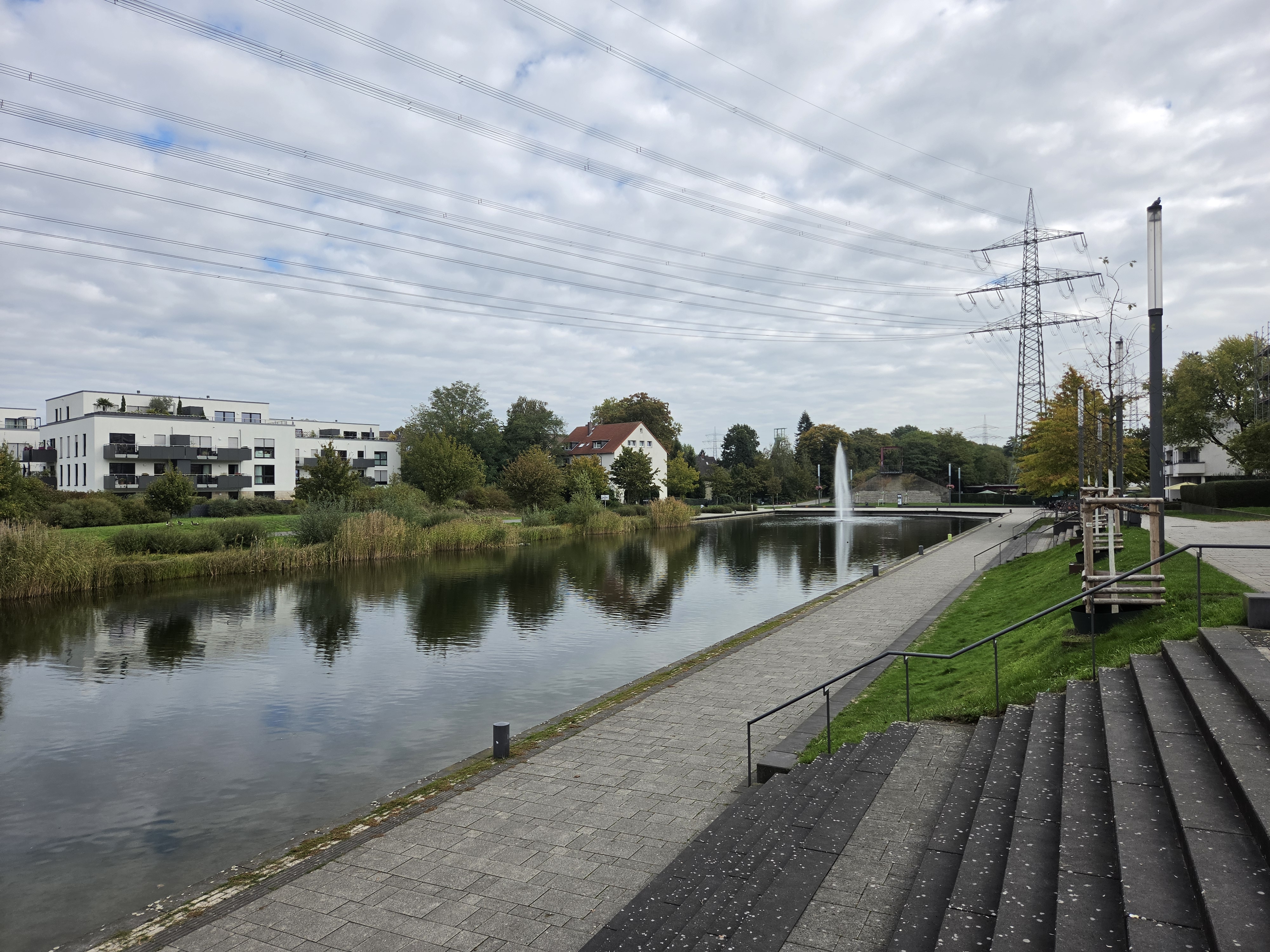
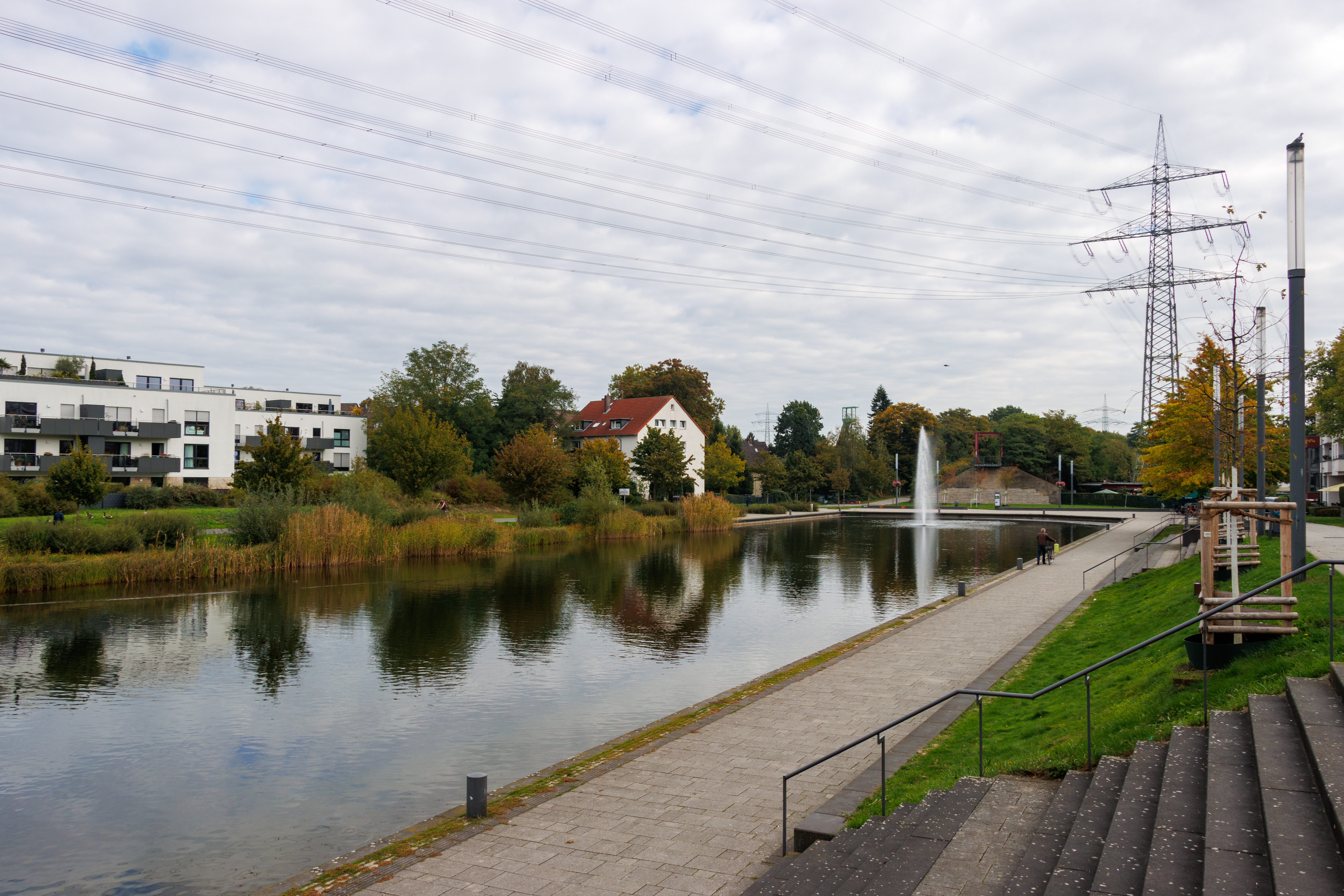




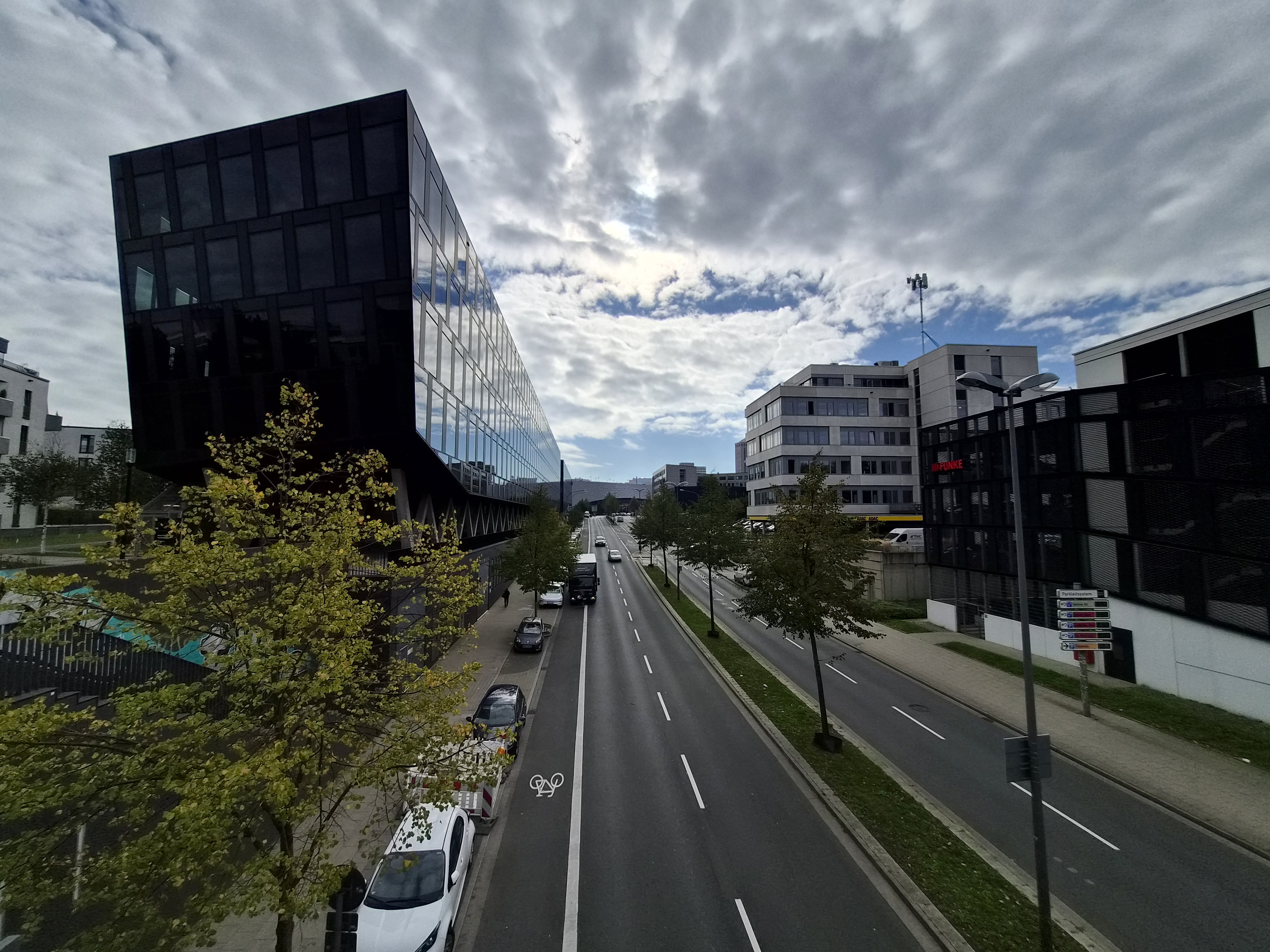









Accessories and warranty - The Galaxy S26 FE comes without a charger
The Galaxy S26 FE comes with a USB-C cable and a SIM eject tool. In Germany, Samsung provides a 24-month warranty. With the Care+ insurance package, this can be extended by the manufacturer to include accident and theft protection.
Input devices and operation - A mid-range smartphone with an optical fingerprint sensor
The 6.7-inch OLED screen is responsive and provides a smooth user experience. The linear vibration motor in the Galaxy S26 FE is also impressive, providing crisp, sharp feedback.
Those accustomed to the ultrasonic fingerprint sensor found on the Galaxy S26 may find the optical sensor on the Fan Edition somewhat frustrating. You often have to place your finger on the scanner two or three times before it is successfully recognized. Furthermore, it requires a firm press for the biometric identification to work. Alternatively, users can opt for 2D facial recognition, though this method is less secure.


Display - A Galaxy S26 FE with AMOLED and 120 Hz

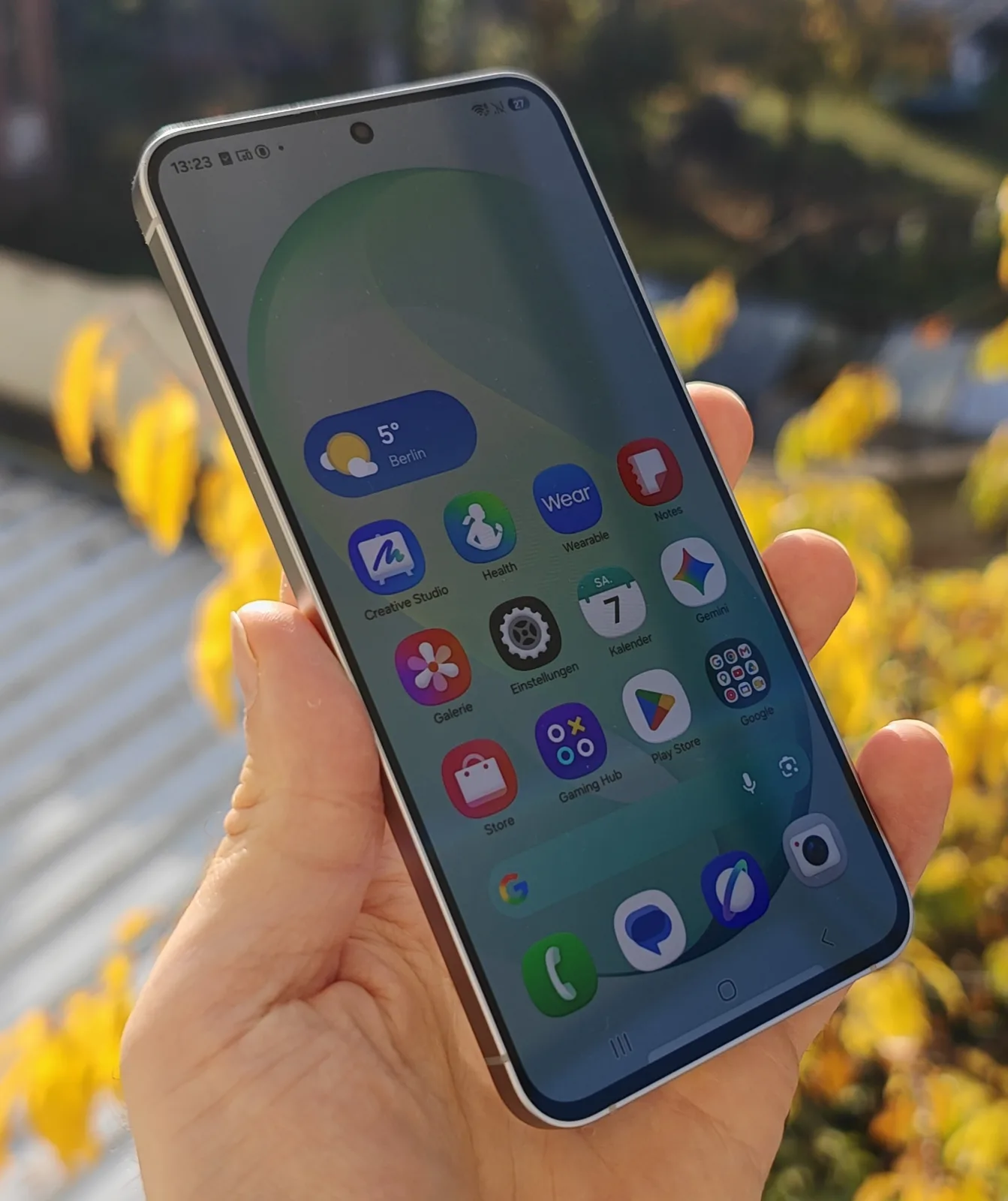
The 6.7-inch AMOLED display packs a refresh rate of 120 Hz. In our tests, the Galaxy S26 FE only switched between 120 Hz and 60 Hz; we found no evidence of LTPO technology.
The brightness is rated at 1,900 nits. Our measurements—taken using the APL18 pattern (which is relevant for everyday use) and during the playback of HDR video—fall within this range. Regarding the luminance of a Xiaomi 17T Pro or Motorola Edge 70 Plus, Samsung ought to improve upon this, though nearly 2,000 cd/m² can certainly not be considered bad.
Pulse-width modulation (PWM) is used to control screen brightness—unfortunately, without high-frequency PWM dimming, which could help minimize the negative effects of flickering. We measured a frequency of just 240 Hz. For comparison, Xiaomi offers both DC dimming and high-frequency PWM dimming at 3,846 Hz in its mid-range devices.
| |||||||||||||||||||||||||
Brightness Distribution: 96 %
Center on Battery: 1183 cd/m²
Contrast: ∞:1 (Black: 0 cd/m²)
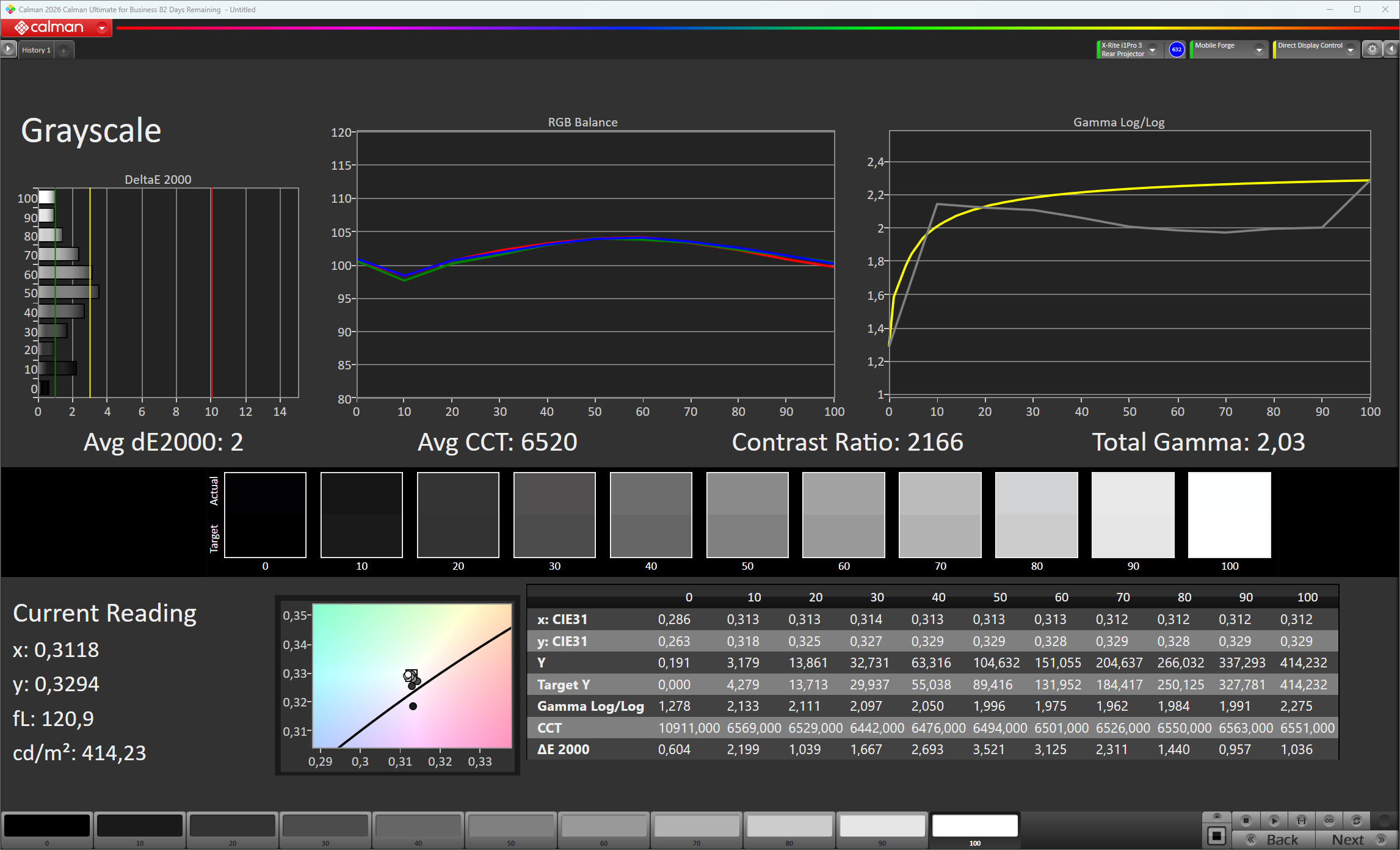
ΔE ColorChecker Calman: 2.3 | ∀{0.5-29.43 Ø4.68}
ΔE Greyscale Calman: 2 | ∀{0.09-98 Ø4.92}
99.9% sRGB (Calman 2D)
Gamma: 2.03
CCT: 6520 K
| Samsung Galaxy S26 FE AMOLED, 2340x1080, 6.7" | Motorola Edge 70 Plus AMOLED, 2772x1272, 6.8" | Xiaomi 17T Pro AMOLED, 2772x1280, 6.8" | Samsung Galaxy S26+ LTPO-AMOLED, 3120x1440, 6.7" | Samsung Galaxy S25 FE AMOLED, 2340x1080, 6.7" | |
|---|---|---|---|---|---|
| Display | 122% | 80% | 49% | 2% | |
| APL18 Peak Brightness (cd/m²) | 1932 | 4226 119% | 3507 82% | 2751 42% | 1863 -4% |
| HDR Peak Brightness (cd/m²) | 1853 | 4152 124% | 3295 78% | 2875 55% | 1990 7% |
| Response Times | 15% | 7% | -66% | -9% | |
| Response Time Grey 50% / Grey 80% * (ms) | 1.3 ? | 1.2 ? 8% | 1.13 ? 13% | 3.79 ? -192% | 1.34 ? -3% |
| Response Time Black / White * (ms) | 1.02 ? | 0.8 ? 22% | 1.01 ? 1% | 1.18 ? -16% | 1.36 ? -33% |
| PWM Frequency (Hz) | 240 | 361 | 120 | 240 | 240 |
| PWM Amplitude * (%) | 16.76 | 14 16% | 15.46 8% | 15.27 9% | 15.31 9% |
| Screen | 26% | 6% | -7% | -25% | |
| Brightness middle (cd/m²) | 1183 | 1414 20% | 1068 -10% | 1384 17% | 1136 -4% |
| Brightness (cd/m²) | 1179 | 1060 -10% | 1379 17% | 1132 -4% | |
| Brightness Distribution (%) | 96 | 97 1% | 95 -1% | 98 2% | |
| Black Level * (cd/m²) | |||||
| Colorchecker dE 2000 * | 2.3 | 1.24 46% | 1.3 43% | 2.8 -22% | 3.5 -52% |
| Colorchecker dE 2000 max. * | 3.2 | 2.29 28% | 2.5 22% | 4.5 -41% | 5.5 -72% |
| Greyscale dE 2000 * | 2 | 1.8 10% | 2.2 -10% | 2.2 -10% | 2.4 -20% |
| Gamma | 2.03 108% | 2.129 103% | 2.26 97% | 2.05 107% | 2.02 109% |
| CCT | 6520 100% | 6517 100% | 6875 95% | 6514 100% | 6322 103% |
| Total Average (Program / Settings) | 54% /
44% | 31% /
20% | -8% /
-13% | -11% /
-16% |
* ... smaller is better
Screen Flickering / PWM (Pulse-Width Modulation)
| Screen flickering / PWM detected | 240 Hz Amplitude: 16.76 % | 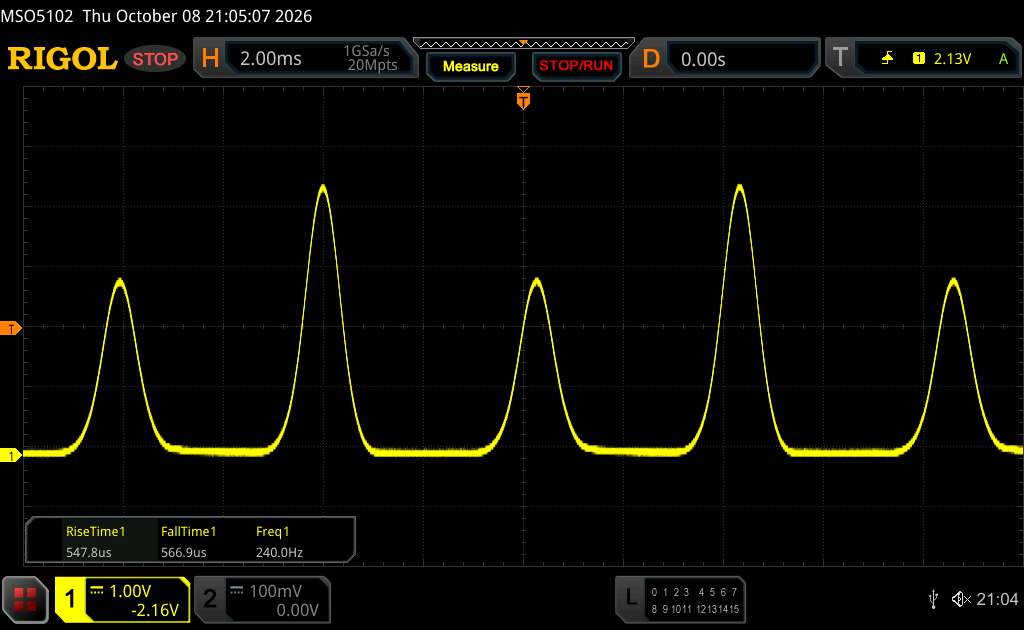 | |
The display backlight flickers at 240 Hz (worst case, e.g., utilizing PWM) . The frequency of 240 Hz is relatively low, so sensitive users will likely notice flickering and experience eyestrain at the stated brightness setting and below. In comparison: 52 % of all tested devices do not use PWM to dim the display. If PWM was detected, an average of 7547 (minimum: 5 - maximum: 343500) Hz was measured. | |||
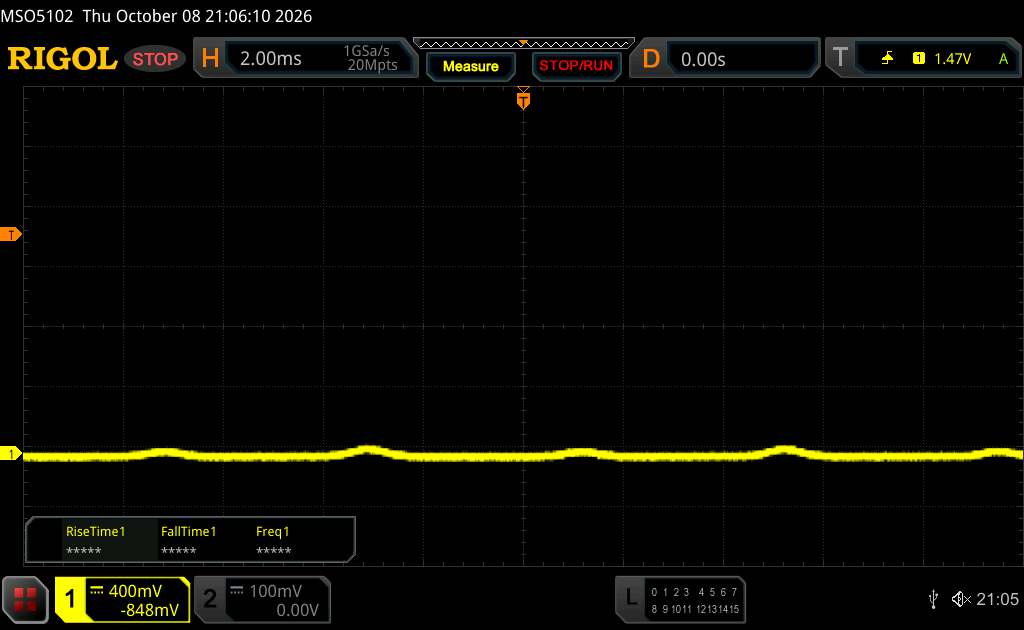
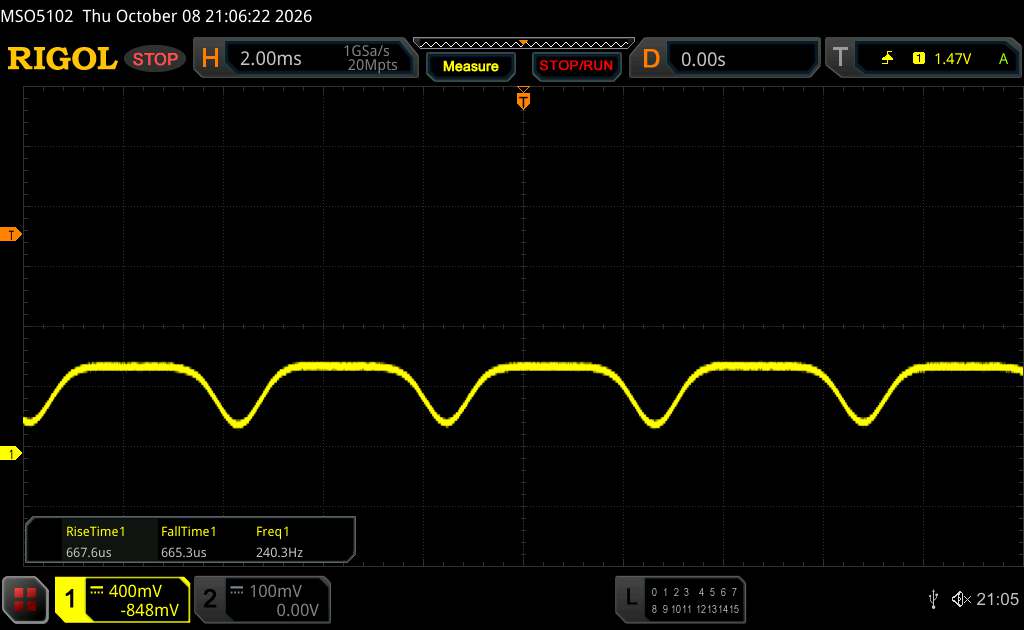
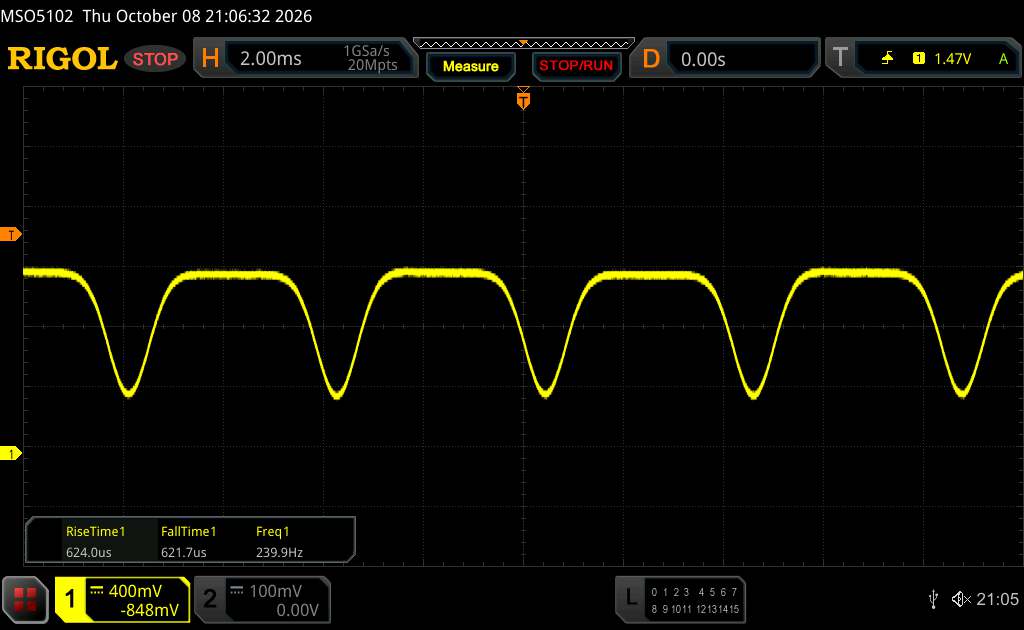
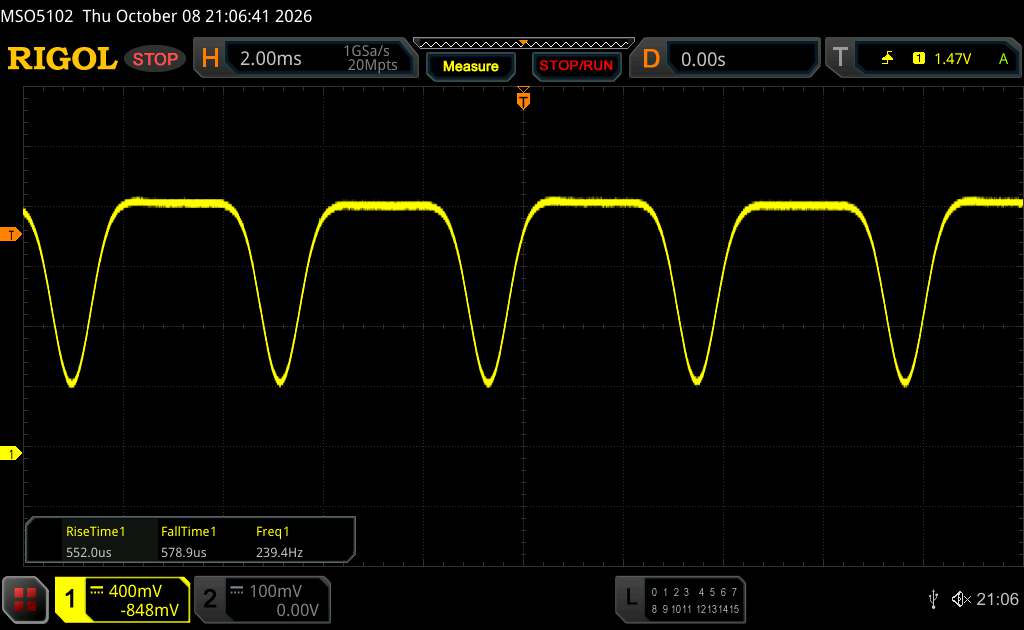
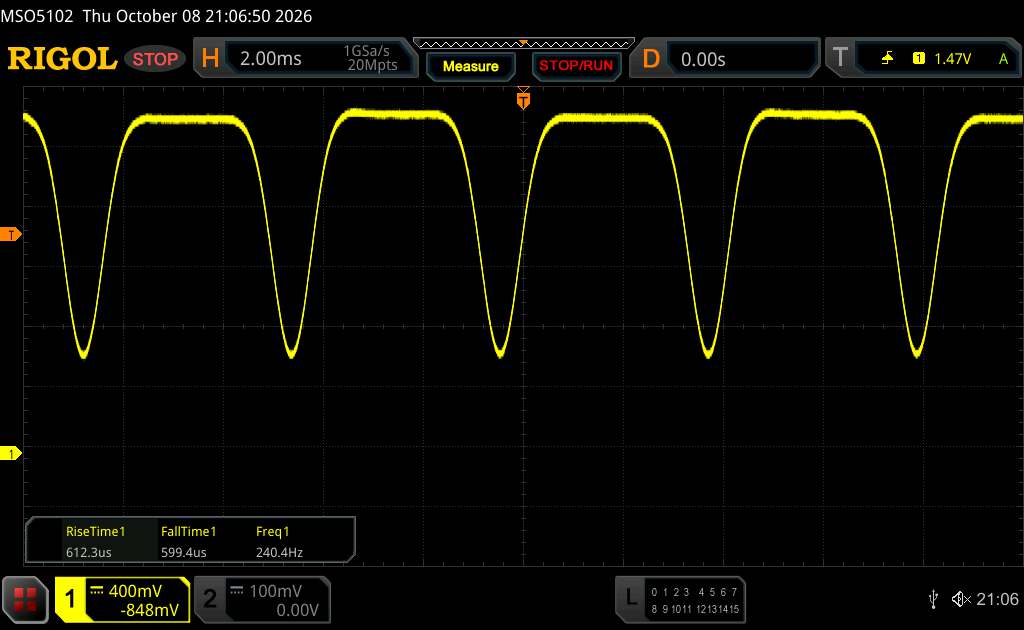
A series of measurements with a fixed zoom level and various brightness settings (Although the amplitude waveform appears flat at minimum brightness, this is due to the scaling. An enlarged version of the amplitude at minimum brightness is shown in the information box.)
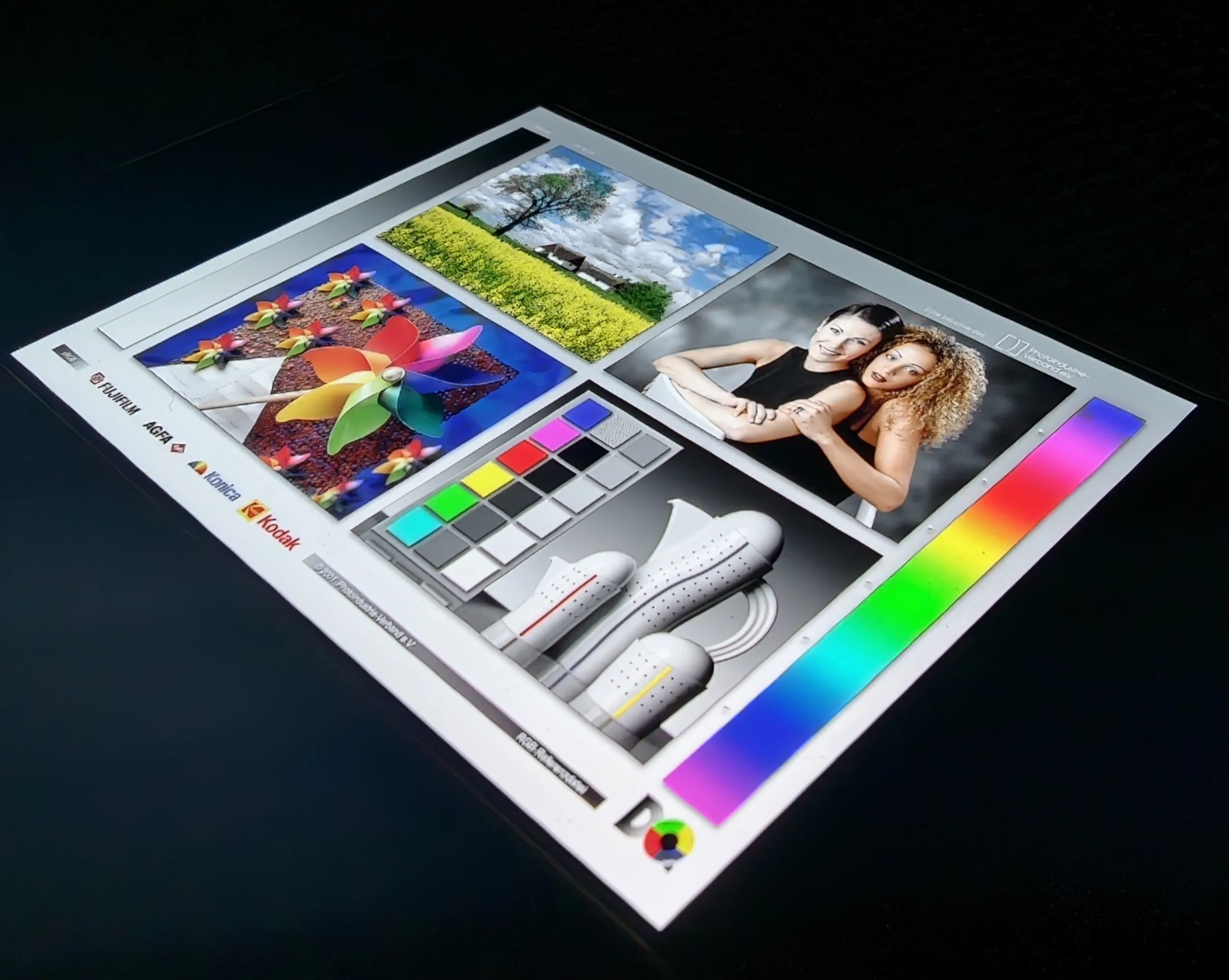
In terms of color accuracy, the Galaxy S26 FE falls squarely within our target range (<3). However, a look at the competition reveals that Samsung could certainly do better; slight deviations are visible to the human eye.


Display Response Times
| ↔ Response Time Black to White | ||
|---|---|---|
| 1.02 ms ... rise ↗ and fall ↘ combined | ↗ 0.516 ms rise | 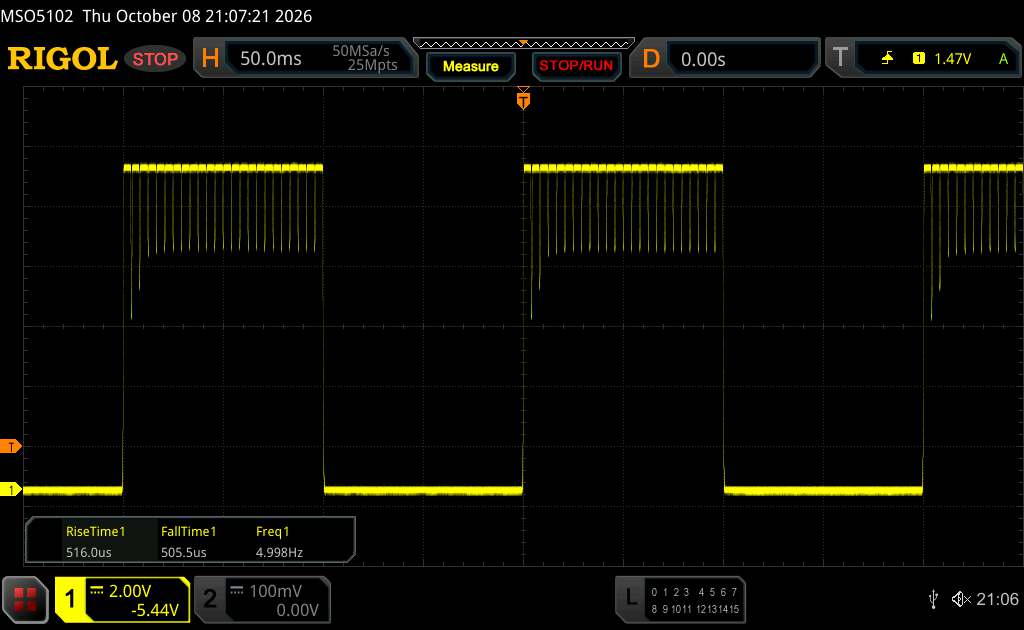 |
| ↘ 0.5055 ms fall | ||
| The screen shows very fast response rates in our tests and should be very well suited for fast-paced gaming. In comparison, all tested devices range from 0.1 (minimum) to 240 (maximum) ms. » 5 % of all devices are better. This means that the measured response time is better than the average of all tested devices (19.6 ms). | ||
| ↔ Response Time 50% Grey to 80% Grey | ||
| 1.3 ms ... rise ↗ and fall ↘ combined | ↗ 0.6315 ms rise | 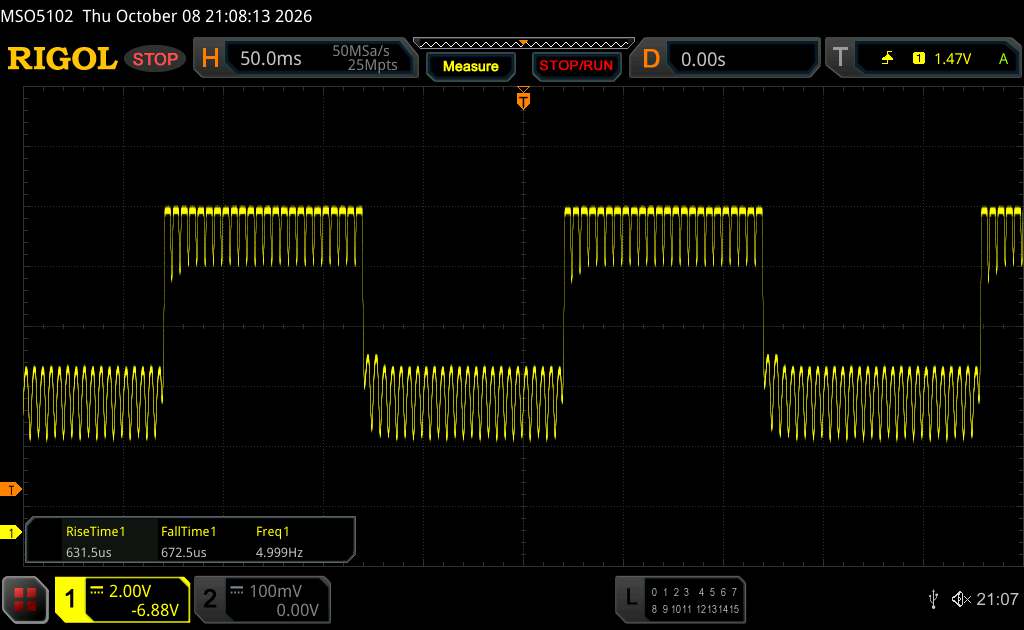 |
| ↘ 0.6725 ms fall | ||
| The screen shows very fast response rates in our tests and should be very well suited for fast-paced gaming. In comparison, all tested devices range from 0.13 (minimum) to 636 (maximum) ms. » 7 % of all devices are better. This means that the measured response time is better than the average of all tested devices (30.6 ms). | ||
Performance - A Samsung phone with Exynos 2500
The Galaxy S26 FE is positioned as the entry-level model in the Galaxy S26 series. Accordingly, it does not feature the latest Exynos 2600; instead, it features the previous year’s chip, the Exynos 2500 and is paired with only 8 GB of RAM.
Particularly when it comes to Geekbench’s single-core tests, the Samsung chipset does not fare well when compared to the performance of the Xiaomi 17T Pro. However, the Exynos 2500 performs better in AI benchmarks.
| UL Procyon AI Inference for Android - Overall Score NNAPI | |
| Samsung Galaxy S26+ | |
| Average of class Smartphone (2895 - 66164, n=92, last 2 years) | |
| Samsung Galaxy S26 FE | |
| Average Samsung Exynos 2500 (18365 - 18654, n=2) | |
| Samsung Galaxy S25 FE | |
| Xiaomi 17T Pro | |
| AI Benchmark - Score V6 | |
| Average of class Smartphone (55.6 - 22780, n=73, last 2 years) | |
| Samsung Galaxy S26 FE | |
| Average Samsung Exynos 2500 (n=1) | |
| Samsung Galaxy S25 FE | |
| Samsung Galaxy S26+ | |
| Antutu v12 - Score | |
| Samsung Galaxy S26 FE | |
| Average Samsung Exynos 2500 (n=1) | |
| Average of class Smartphone (573642 - 4764073, n=11, last 2 years) | |
Graphics processing is handled by an integrated Samsung Xclipse 950, which holds its own impressively in benchmarks. Even in demanding tests—including those at high 4K resolution—it achieves 47 frames per second, meaning you will experience no issues playing modern games.
GFXBench (DX / GLBenchmark) 2.7: T-Rex Onscreen | 1920x1080 T-Rex Offscreen
GFXBench 3.0: on screen Manhattan Onscreen OGL | 1920x1080 1080p Manhattan Offscreen
GFXBench 3.1: on screen Manhattan ES 3.1 Onscreen | 1920x1080 Manhattan ES 3.1 Offscreen
GFXBench: on screen Car Chase Onscreen | 1920x1080 Car Chase Offscreen | on screen Aztec Ruins High Tier Onscreen | 2560x1440 Aztec Ruins High Tier Offscreen | on screen Aztec Ruins Normal Tier Onscreen | 1920x1080 Aztec Ruins Normal Tier Offscreen | 3840x2160 4K Aztec Ruins High Tier Offscreen
| 3DMark / Wild Life Extreme Unlimited | |
| Samsung Galaxy S26+ | |
| Xiaomi 17T Pro | |
| Samsung Galaxy S26 FE | |
| Samsung Galaxy S25 FE | |
| Motorola Edge 70 Plus | |
| 3DMark / Wild Life Extreme | |
| Samsung Galaxy S26+ | |
| Xiaomi 17T Pro | |
| Samsung Galaxy S26 FE (Play-Store-Version) | |
| Samsung Galaxy S26 FE (Press-Version) | |
| Samsung Galaxy S25 FE | |
| Motorola Edge 70 Plus | |
| 3DMark / Wild Life Unlimited Score | |
| Samsung Galaxy S26+ | |
| Xiaomi 17T Pro | |
| Samsung Galaxy S26 FE | |
| Samsung Galaxy S25 FE | |
| Motorola Edge 70 Plus | |
| 3DMark / Solar Bay Score | |
| Samsung Galaxy S26+ | |
| Xiaomi 17T Pro | |
| Samsung Galaxy S26 FE | |
| Samsung Galaxy S25 FE | |
| 3DMark / Solar Bay Unlimited Score | |
| Xiaomi 17T Pro | |
| Samsung Galaxy S26+ | |
| Samsung Galaxy S26 FE | |
| Samsung Galaxy S25 FE | |
| 3DMark / Solar Bay Extreme Score | |
| Xiaomi 17T Pro | |
| Samsung Galaxy S26 FE | |
| Samsung Galaxy S25 FE | |
| 3DMark / Solar Bay Extreme Unlimited Score | |
| Xiaomi 17T Pro | |
| Samsung Galaxy S25 FE | |
| 3DMark / Steel Nomad Light Unlimited Score | |
| Samsung Galaxy S26+ | |
| Xiaomi 17T Pro | |
| Samsung Galaxy S26 FE | |
| Samsung Galaxy S25 FE | |
| 3DMark / Steel Nomad Light Score | |
| Samsung Galaxy S26+ | |
| Samsung Galaxy S26 FE | |
| Xiaomi 17T Pro | |
| Samsung Galaxy S25 FE | |
| GFXBench (DX / GLBenchmark) 2.7 / T-Rex Onscreen | |
| Samsung Galaxy S26+ | |
| Samsung Galaxy S25 FE | |
| Xiaomi 17T Pro | |
| Samsung Galaxy S26 FE | |
| GFXBench (DX / GLBenchmark) 2.7 / T-Rex Offscreen | |
| Xiaomi 17T Pro | |
| Samsung Galaxy S26+ | |
| Samsung Galaxy S26 FE | |
| Samsung Galaxy S25 FE | |
| GFXBench 3.0 / Manhattan Onscreen OGL | |
| Samsung Galaxy S26+ | |
| Samsung Galaxy S25 FE | |
| Xiaomi 17T Pro | |
| Samsung Galaxy S26 FE | |
| GFXBench 3.0 / 1080p Manhattan Offscreen | |
| Samsung Galaxy S26+ | |
| Xiaomi 17T Pro | |
| Samsung Galaxy S25 FE | |
| Samsung Galaxy S26 FE | |
| GFXBench 3.1 / Manhattan ES 3.1 Onscreen | |
| Samsung Galaxy S26+ | |
| Xiaomi 17T Pro | |
| Samsung Galaxy S26 FE | |
| Samsung Galaxy S25 FE | |
| GFXBench 3.1 / Manhattan ES 3.1 Offscreen | |
| Samsung Galaxy S26+ | |
| Xiaomi 17T Pro | |
| Samsung Galaxy S26 FE | |
| Samsung Galaxy S25 FE | |
| GFXBench / Car Chase Onscreen | |
| Samsung Galaxy S26+ | |
| Xiaomi 17T Pro | |
| Samsung Galaxy S26 FE | |
| Samsung Galaxy S25 FE | |
| GFXBench / Car Chase Offscreen | |
| Samsung Galaxy S26+ | |
| Samsung Galaxy S26 FE | |
| Xiaomi 17T Pro | |
| Samsung Galaxy S25 FE | |
| GFXBench / Aztec Ruins High Tier Onscreen | |
| Xiaomi 17T Pro | |
| Samsung Galaxy S26 FE | |
| Samsung Galaxy S25 FE (Vulkan) | |
| Samsung Galaxy S26+ | |
| Motorola Edge 70 Plus | |
| GFXBench / Aztec Ruins High Tier Offscreen | |
| Xiaomi 17T Pro | |
| Samsung Galaxy S26+ | |
| Samsung Galaxy S26 FE | |
| Samsung Galaxy S25 FE (Vulkan) | |
| Motorola Edge 70 Plus | |
| GFXBench / Aztec Ruins Normal Tier Onscreen | |
| Samsung Galaxy S26+ | |
| Xiaomi 17T Pro | |
| Samsung Galaxy S26 FE | |
| Samsung Galaxy S25 FE (Vulkan) | |
| Motorola Edge 70 Plus | |
| GFXBench / Aztec Ruins Normal Tier Offscreen | |
| Xiaomi 17T Pro | |
| Samsung Galaxy S26+ | |
| Samsung Galaxy S26 FE | |
| Samsung Galaxy S25 FE (Vulkan) | |
| Motorola Edge 70 Plus | |
| GFXBench / 4K Aztec Ruins High Tier Offscreen | |
| Xiaomi 17T Pro | |
| Samsung Galaxy S26+ (vulkan) | |
| Samsung Galaxy S26 FE (vulkan) | |
| Samsung Galaxy S25 FE (Vulkan) | |
| Motorola Edge 70 Plus | |
| Jetstream 2 - 2.2 Total | |
| Samsung Galaxy S26+ (Chrome 146) | |
| Samsung Galaxy S25 FE (Chrome 141.0.7390.43) | |
| Samsung Galaxy S26 FE (Chrome 157) | |
| Average Samsung Exynos 2500 (210 - 232, n=2) | |
| Average of class Smartphone (2 - 480, n=106, last 2 years) | |
| Motorola Edge 70 Plus (Chrome 152) | |
| Xiaomi 17T Pro (Edge 147) | |
| Xiaomi 17T Pro (Chrome 147) | |
| Octane V2 - Total Score | |
| Samsung Galaxy S26+ (Chrome 146) | |
| Samsung Galaxy S25 FE (Chrome 141.0.7390.43) | |
| Average Samsung Exynos 2500 (57211 - 65875, n=2) | |
| Samsung Galaxy S26 FE (Chrome 157) | |
| Average of class Smartphone (6015 - 160221, n=121, last 2 years) | |
| Xiaomi 17T Pro (Chrome 150) | |
| Mozilla Kraken 1.1 - Total | |
| Xiaomi 17T Pro (Chrome 150) | |
| Average of class Smartphone (216 - 2718, n=112, last 2 years) | |
| Samsung Galaxy S25 FE (Chrome 141.0.7390.43) | |
| Average Samsung Exynos 2500 (423 - 487, n=2) | |
| Samsung Galaxy S26 FE (Chrome 157) | |
| Samsung Galaxy S26+ (Chrome 146) | |
| WebXPRT 5 - Overall | |
| Samsung Galaxy S26+ (Chrome 146) | |
| Samsung Galaxy S26 FE (Chrome 157) | |
| Average Samsung Exynos 2500 (n=1) | |
| Average of class Smartphone (19 - 139, n=32, last 2 years) | |
| Xiaomi 17T Pro (Chrome 150) | |
* ... smaller is better
| Samsung Galaxy S26 FE | Motorola Edge 70 Plus | Xiaomi 17T Pro | Samsung Galaxy S26+ | Samsung Galaxy S25 FE | Average 128 GB UFS 3.1 Flash | Average of class Smartphone | |
|---|---|---|---|---|---|---|---|
| AndroBench 3-5 | 6% | 15% | 20% | 23% | -34% | 5% | |
| Sequential Read 256KB (MB/s) | 2009.12 | 2048.02 2% | 3021.51 50% | 3574.74 78% | 3756.44 87% | 1594 ? -21% | 2311 ? 15% |
| Sequential Write 256KB (MB/s) | 1762.43 | 1844.13 5% | 2770.02 57% | 2543.31 44% | 2450.19 39% | 832 ? -53% | 2024 ? 15% |
| Random Read 4KB (MB/s) | 322.87 | 364.54 13% | 414.44 28% | 419.84 30% | 382.44 18% | 248 ? -23% | 322 ? 0% |
| Random Write 4KB (MB/s) | 424.09 | 434.49 2% | 108.71 -74% | 122.63 -71% | 198.68 -53% | 253 ? -40% | 377 ? -11% |
Emissions - The Android phone throttles its performance only slightly
Temperature
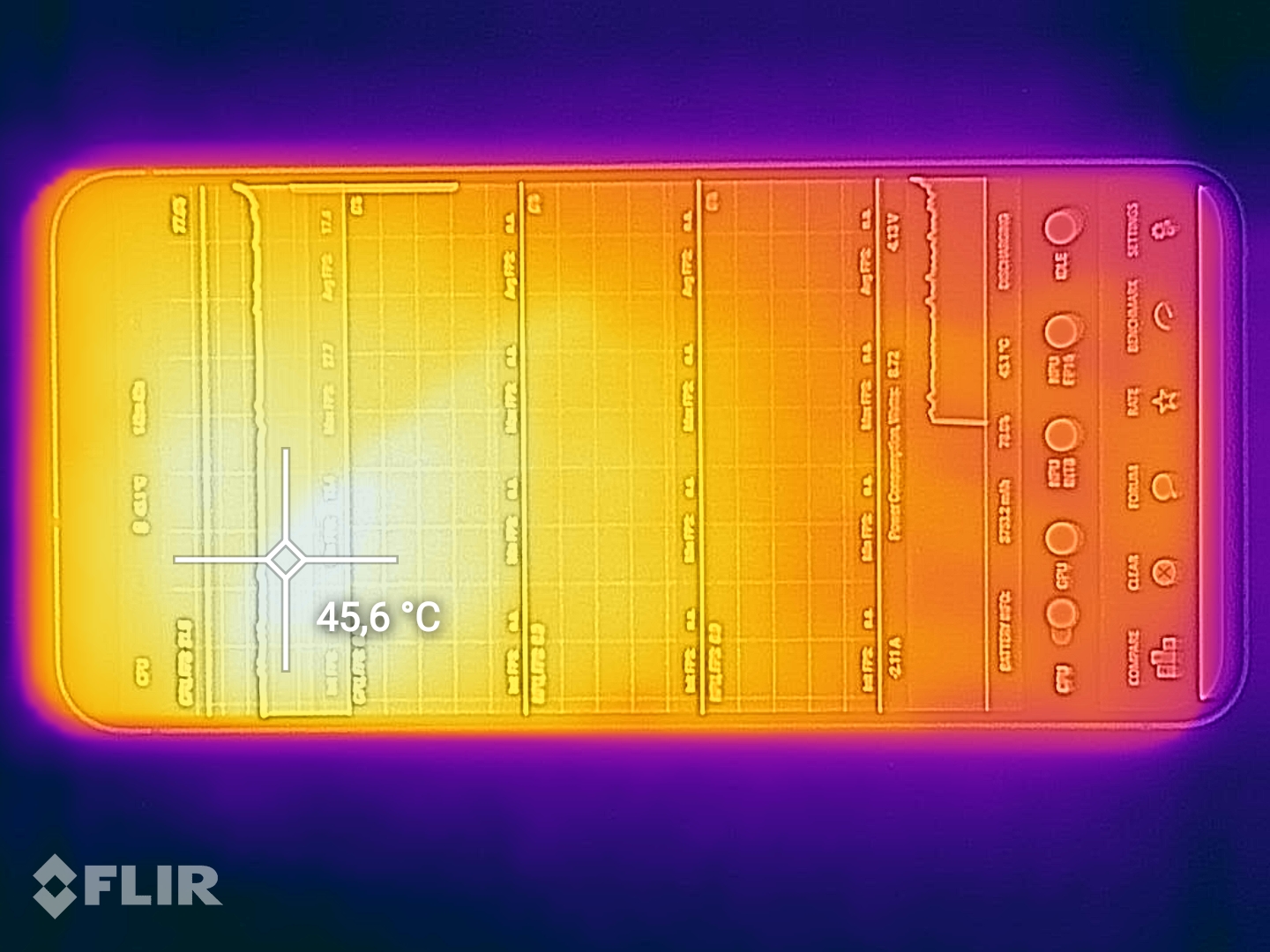
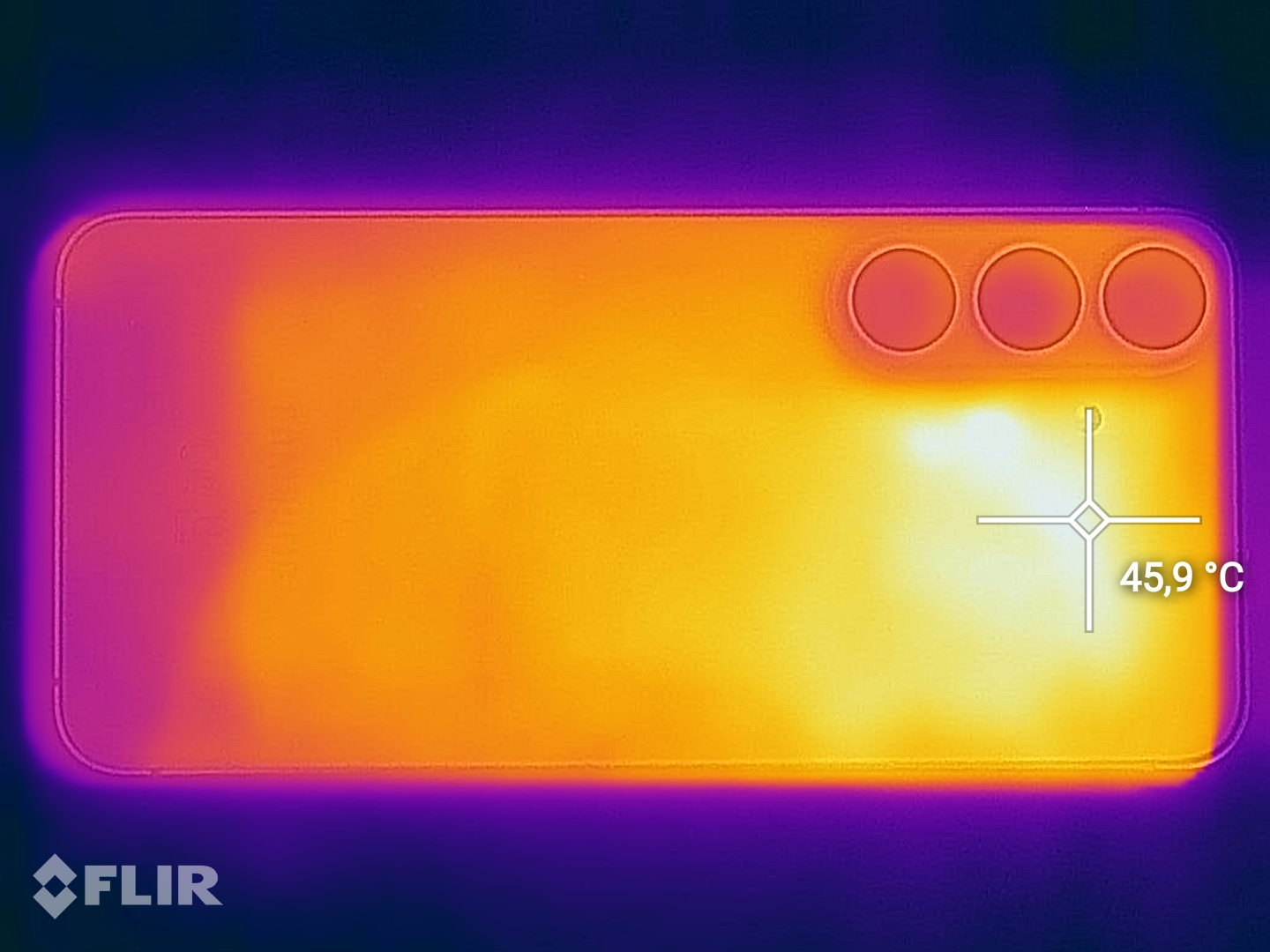
The Exynos SoC's temperature level is neither particularly high nor especially low; we measured a peak of around 43 °C. Of greater interest, however, is the performance under load. In 3DMark stress tests, the Galaxy S26 FE fortunately exhibits less throttling compared to its predecessor, though a reduction in system performance of approximately 40 percent is still quite significant.
(±) The maximum temperature on the upper side is 43.7 °C / 111 F, compared to the average of 35.4 °C / 96 F, ranging from 21.9 to 247 °C for the class Smartphone.
(±) The bottom heats up to a maximum of 44.5 °C / 112 F, compared to the average of 34.1 °C / 93 F
(+) In idle usage, the average temperature for the upper side is 30.9 °C / 88 F, compared to the device average of 33 °C / 91 F.
3DMark Stress Tests
| 3DMark | |
| Wild Life Stress Test Stability | |
| Motorola Edge 70 Plus | |
| Samsung Galaxy S26 FE | |
| Xiaomi 17T Pro | |
| Samsung Galaxy S26+ | |
| Samsung Galaxy S25 FE | |
| Wild Life Extreme Stress Test | |
| Motorola Edge 70 Plus | |
| Samsung Galaxy S26 FE | |
| Xiaomi 17T Pro | |
| Samsung Galaxy S26+ | |
| Samsung Galaxy S25 FE | |
| Solar Bay Stress Test Stability | |
| Xiaomi 17T Pro | |
| Samsung Galaxy S26 FE | |
| Samsung Galaxy S26+ | |
| Samsung Galaxy S25 FE | |
| Steel Nomad Light Stress Test Stability | |
| Samsung Galaxy S26+ | |
| Samsung Galaxy S26 FE | |
| Samsung Galaxy S25 FE | |
| Xiaomi 17T Pro | |
Speakers
Samsung’s Fan Edition certainly doesn’t set any new benchmarks for mobile audio quality. Nevertheless, the stereo speakers deliver pleasant sound with a touch of bass—both in everyday use and in our pink-noise measurements. However, the device begins to struggle when it comes to the very high-frequency range.
For external audio output, you can use the USB-C port (wired) or opt for Bluetooth 5.4 (wireless). The latter supports a solid selection of codecs.
Samsung Galaxy S26 FE audio analysis
(+) | speakers can play relatively loud (91.5 dB)
Bass 100 - 315 Hz
(-) | nearly no bass - on average 20% lower than median
(+) | bass is linear (6.5% delta to prev. frequency)
Mids 400 - 2000 Hz
(±) | higher mids - on average 6.5% higher than median
(+) | mids are linear (6% delta to prev. frequency)
Highs 2 - 16 kHz
(±) | higher highs - on average 5.3% higher than median
(+) | highs are linear (3.9% delta to prev. frequency)
Overall 100 - 16.000 Hz
(±) | linearity of overall sound is average (18.4% difference to median)
Compared to same class
» 20% of all tested devices in this class were better, 9% similar, 71% worse
» The best had a delta of 11%, average was 34%, worst was 136%
Compared to all devices tested
» 41% of all tested devices were better, 8% similar, 51% worse
» The best had a delta of 4%, average was 23%, worst was 136%
Samsung Galaxy S25 FE audio analysis
(+) | speakers can play relatively loud (92 dB)
Bass 100 - 315 Hz
(-) | nearly no bass - on average 19.3% lower than median
(+) | bass is linear (4.6% delta to prev. frequency)
Mids 400 - 2000 Hz
(±) | higher mids - on average 5.7% higher than median
(+) | mids are linear (4.9% delta to prev. frequency)
Highs 2 - 16 kHz
(±) | higher highs - on average 5.9% higher than median
(+) | highs are linear (4.6% delta to prev. frequency)
Overall 100 - 16.000 Hz
(±) | linearity of overall sound is average (17.3% difference to median)
Compared to same class
» 12% of all tested devices in this class were better, 8% similar, 80% worse
» The best had a delta of 11%, average was 34%, worst was 136%
Compared to all devices tested
» 33% of all tested devices were better, 8% similar, 59% worse
» The best had a delta of 4%, average was 23%, worst was 136%
Battery life - The Samsung smartphone only does 45-watt charging
Power consumption
The 4,900 mAh battery is relatively small, though it does support 45-watt wired charging and 15-watt wireless charging. A notable—and negative—aspect worth highlighting is that the Galaxy S26 FE actually lost charge during our stress test.
In terms of power consumption, the Samsung phone is unremarkable, and the idle power draw of over 2 watts certainly leaves room for improvement.
| Off / Standby |   0.35 / 0.06 Watt |
| Idle |  0.83 / 2.16 / 2.25 Watt |
| Load |
13.4 / 16.07 Watt |
    
| |
Key:
min: ,
med: ,
max: Metrahit Energy | |
| Samsung Galaxy S26 FE 4900 mAh | Motorola Edge 70 Plus 6500 mAh | Xiaomi 17T Pro 7000 mAh | Samsung Galaxy S26+ 4900 mAh | Samsung Galaxy S25 FE 4900 mAh | Average Samsung Exynos 2500 | Average of class Smartphone | |
|---|---|---|---|---|---|---|---|
| Power Consumption | 8% | 28% | 24% | 26% | 16% | 26% | |
| Idle Minimum * (Watt) | 0.83 | 0.9 -8% | 0.89 -7% | 0.56 33% | 0.87 -5% | 0.66 ? 20% | 0.899 ? -8% |
| Idle Average * (Watt) | 2.16 | 1.6 26% | 1.67 23% | 1.28 41% | 1.48 31% | 1.515 ? 30% | 1.489 ? 31% |
| Idle Maximum * (Watt) | 2.25 | 2.1 7% | 1.73 23% | 1.31 42% | 1.52 32% | 1.62 ? 28% | 1.695 ? 25% |
| Load Average * (Watt) | 13.4 | 6.27 53% | 12.38 8% | 6.76 50% | 13.4 ? -0% | 6.81 ? 49% | |
| Load Maximum * (Watt) | 16.07 | 8.63 46% | 16.9 -5% | 12.89 20% | 16.1 ? -0% | 10.7 ? 33% |
* ... smaller is better
Power consumption: Geekbench (150 cd/m²)
Power consumption: GFXbench (150 cd/m²)
Battery run time
In our Wi-Fi battery test, the Galaxy S26 FE delivered a solid runtime. However, in the year 2026, our recorded 15.5 hours isn't particularly impressive. Afterwards, the Samsung phone requires about 80 minutes to charge.
| Battery runtime - WiFi v1.3 | |
| Samsung Galaxy S26 FE | |
| Motorola Edge 70 Plus | |
| Xiaomi 17T Pro | |
| Samsung Galaxy S26+ | |
| Samsung Galaxy S25 FE | |
Notebookcheck overall rating

For anyone on the hunt for a large Samsung phone, the Galaxy S26 FE presents an interesting option within the Galaxy ecosystem. However, given the expectations implied by the "Fan Edition" label, the model proves to be a disappointment in many respects.
Samsung Galaxy S26 FE
- 11/20/2026 v8
Marcus Herbrich
 Total Sustainability Score:
Possible alternatives compared
Image | Model / Review | Price | Weight | Drive | Display |
|---|---|---|---|---|---|
1. 85%  | Samsung Galaxy S26 FE Samsung Exynos 2500 ⎘ Samsung Xclipse 950 ⎘ 8 GB Memory, 128 GB UFS 3.1 | List Price: 799€ | 193 g | 128 GB UFS 3.1 Flash | 6.70" 2340x1080 385 PPI AMOLED |
2. 77.8%  | Motorola Edge 70 Plus Qualcomm Snapdragon 7s Gen 3 ⎘ Qualcomm Adreno 810 ⎘ 8 GB Memory, 256 GB UFS 3.1 | List Price: 599€ | 159 g | 256 GB UFS 3.1 Flash | 6.78" 2772x1272 450 PPI AMOLED |
3. 85.7%  | Xiaomi 17T Pro MediaTek Dimensity 9500 ⎘ Arm Mali G1-Ultra MC12 ⎘ 12 GB Memory, 512 GB UFS 4.x | Amazon: $775.00 List Price: 1000€ | 219 g | 512 GB UFS 4.1 Flash | 6.83" 2772x1280 447 PPI AMOLED |
4. 89%  | Samsung Galaxy S26+ Samsung Exynos 2600 ⎘ Samsung Xclipse 960 ⎘ 12 GB Memory, 256 GB UFS 4.x | List Price: 1249€ | 190 g | 256 GB UFS 4.0 Flash | 6.70" 3120x1440 513 PPI LTPO-AMOLED |
5. 85.6%  | Samsung Galaxy S25 FE Samsung Exynos 2400 ⎘ Samsung Xclipse 940 ⎘ 8 GB Memory, 256 GB UFS 4.x | List Price: 809€ | 190 g | 256 GB UFS 4.0 Flash | 6.70" 2340x1080 382 PPI AMOLED |
Transparency
The selection of devices to be reviewed is made by our editorial team. The test sample was provided to the author as a loan by the manufacturer or retailer for the purpose of this review. The lender had no influence on this review, nor did the manufacturer receive a copy of this review before publication. There was no obligation to publish this review. As an independent media company, Notebookcheck is not subjected to the authority of manufacturers, retailers or publishers.
This is how Notebookcheck is testing
Every year, Notebookcheck independently reviews hundreds of laptops and smartphones using standardized procedures to ensure that all results are comparable. We have continuously developed our test methods for around 20 years and set industry standards in the process. In our test labs, high-quality measuring equipment is utilized by experienced technicians and editors. These tests involve a multi-stage validation process. Our complex rating system is based on hundreds of well-founded measurements and benchmarks, which maintains objectivity. Further information on our test methods can be found here.
 Add as a preferred source on Google


