




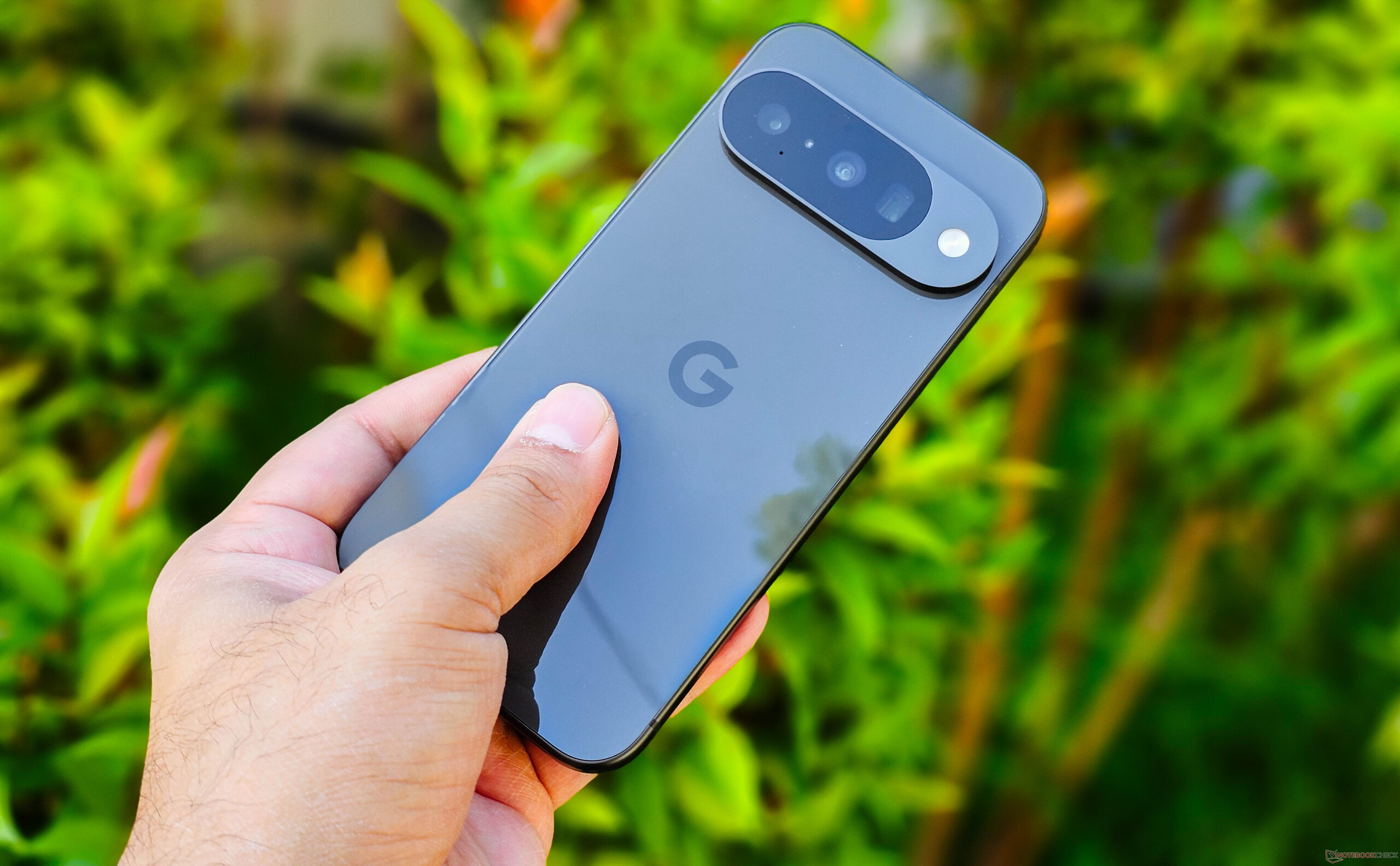
Verdict: Pixel drops and price drops make this a worthy buy in 2026
The Pixel 10 sits at an interesting juncture, as compact smartphones are once again gaining momentum. Google has retained the familiar, well-received design elements of the Pixel 9 while adding noteworthy features, including PixelSnap and the move to Tensor G5.
With the Pixel 10, you get a first-class Android experience the way Google intended. While it lacks features like 100x Pro Res Zoom and Video Boost found in the Pro models, the familiar Gemini features such as Magic Cue, Pixel Screenshots, Camera Coach, and more come standard.
The Tensor G5 SoC suits the Pixel 10’s needs but can’t match the competition in raw performance, even with Google’s much-delayed GPU driver updates.
While the Pixel 10 generally produces good photos, its shortcomings become apparent when compared with the Pixel 9, as Google has opted to include a 5x telephoto lens at the expense of weaker ultra-wide and primary cameras.
Other weaknesses include a non-LTPO panel, slower Wi-Fi throughput and storage performance, and long charging times.
If you want a first-party Android experience with a reliable update cycle but aren’t inclined toward the Pro models, the Pixel 10 is a good choice, especially at discounted prices. And if the 5x telephoto lens is of no consequence, the Pixel 9 still remains a good value purchase in 2026.
Performance connoisseurs and spec sheet enthusiasts, however, are better served by newer offerings from Xiaomi, Samsung, Vivo, and Apple that command somewhat higher premiums.
Pros
Cons
Price and Availability
The Google Pixel 10 is available worldwide and on Amazon US for $711 for the 256 GB variant (although prices seem be temporarily fluctuating).
In India, the Pixel 10 is offered only in a 256 GB SKU and can be had from the Google India Store for ₹74,999 or via Amazon IN for ₹70,838.

Table of Contents
- Verdict: Pixel drops and price drops make this a worthy buy in 2026
- Specifications
- Build: IP68-rated with a very glossy back
- Hardware: Slower Qi 2 wireless charging and no UWB
- Software: Android 16 QPR3 with a long update cadence
- Communication and GNSS: Handicapped Wi-Fi performance
- Telephony and Call quality: US models eSIM-only
- Cameras: Good everyday shooter despite downgraded ultra-wide and main lenses
- Accessories and Warranty: Pixel Care+ only in the US
- Input devices and Operation: Fast ultrasonic fingerprint reader
- Display: 24-bit non-LTPO Super Actua panel with no 480 Hz flicker option
- Performance: Tensor G5 struggles despite new GPU drivers
- Gaming: Up to 60 fps possible with details dialed down
- Emissions: Heat output and throttling on expected lines
- Energy consumption: Power draw and battery life gains over the Pixel 9
- Notebookcheck's impressions of the Google Pixel 10
- Potential competitors in comparison
After having reviewed the Google Pixel 10 Pro XL and the Pixel 10 Pro, we now take an extensive look at the base Pixel 10 variant. Like the Pixel 10 Pro models, the majority of the Pixel 10's upgrades are internal while retaining the familiar Pixel 9 design.
Changes this time include an upgrade to the Tensor G5 SoC, UFS 4.0 storage, the addition of a 10.8 MP 3x telephoto camera, a marginally larger battery, and Pixelsnap magnetic attachments.
Specifications
Build: IP68-rated with a very glossy back
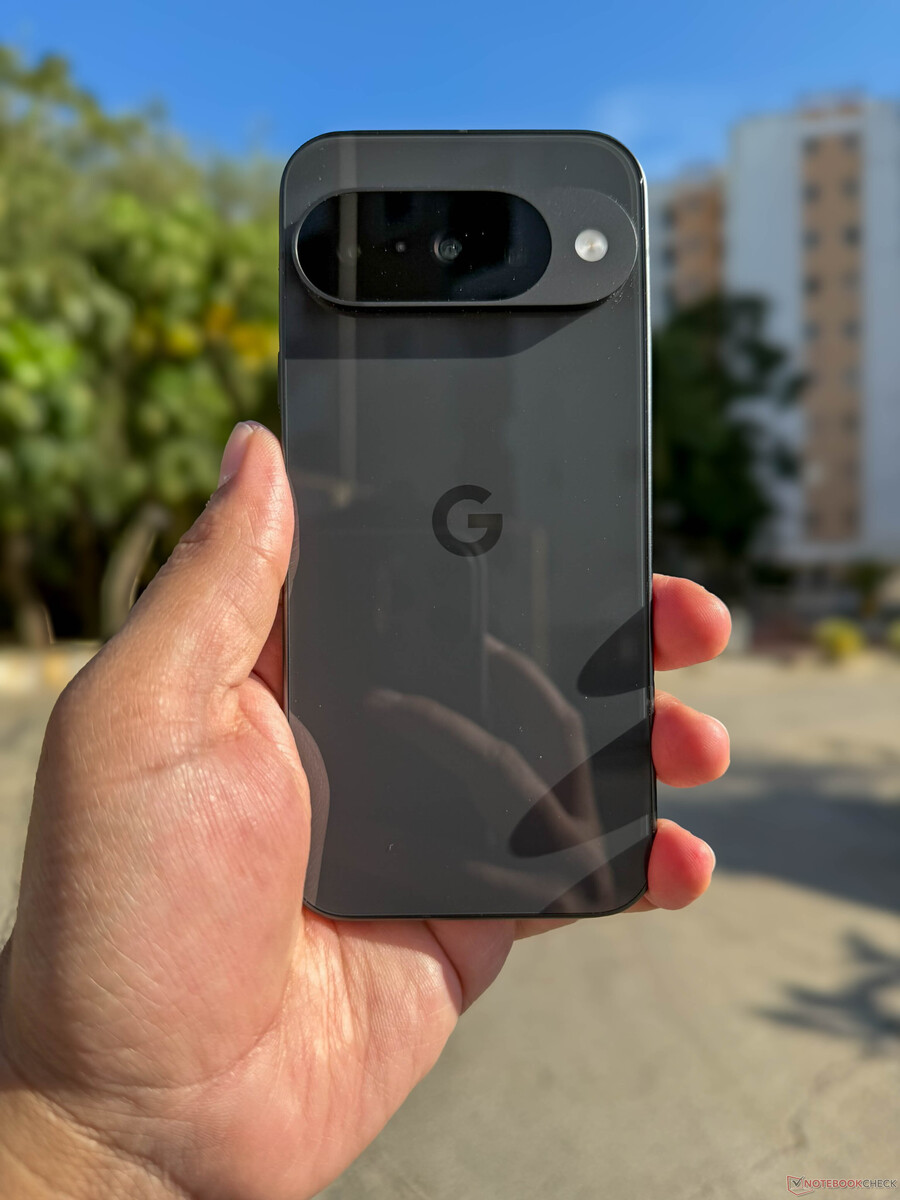
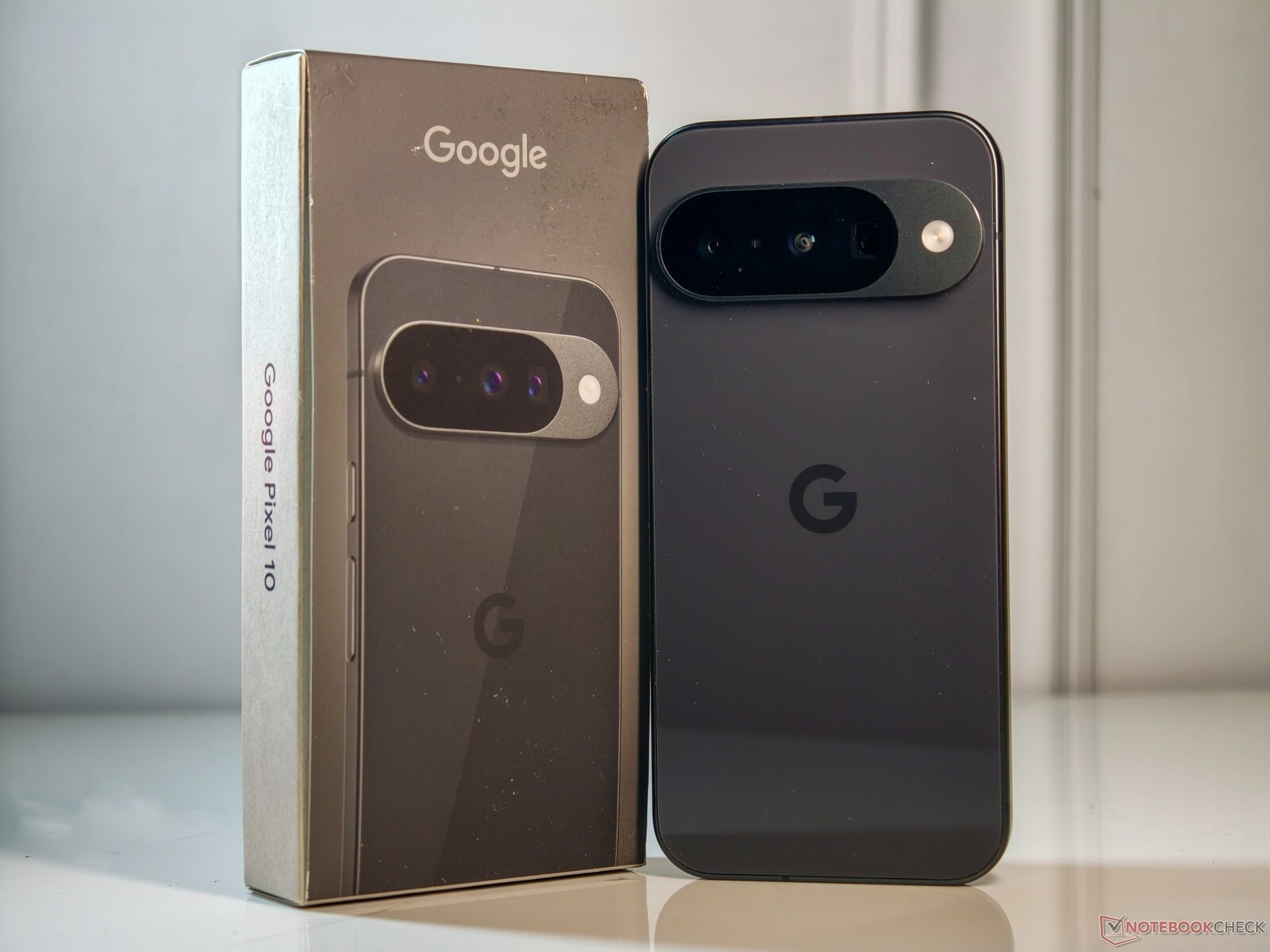
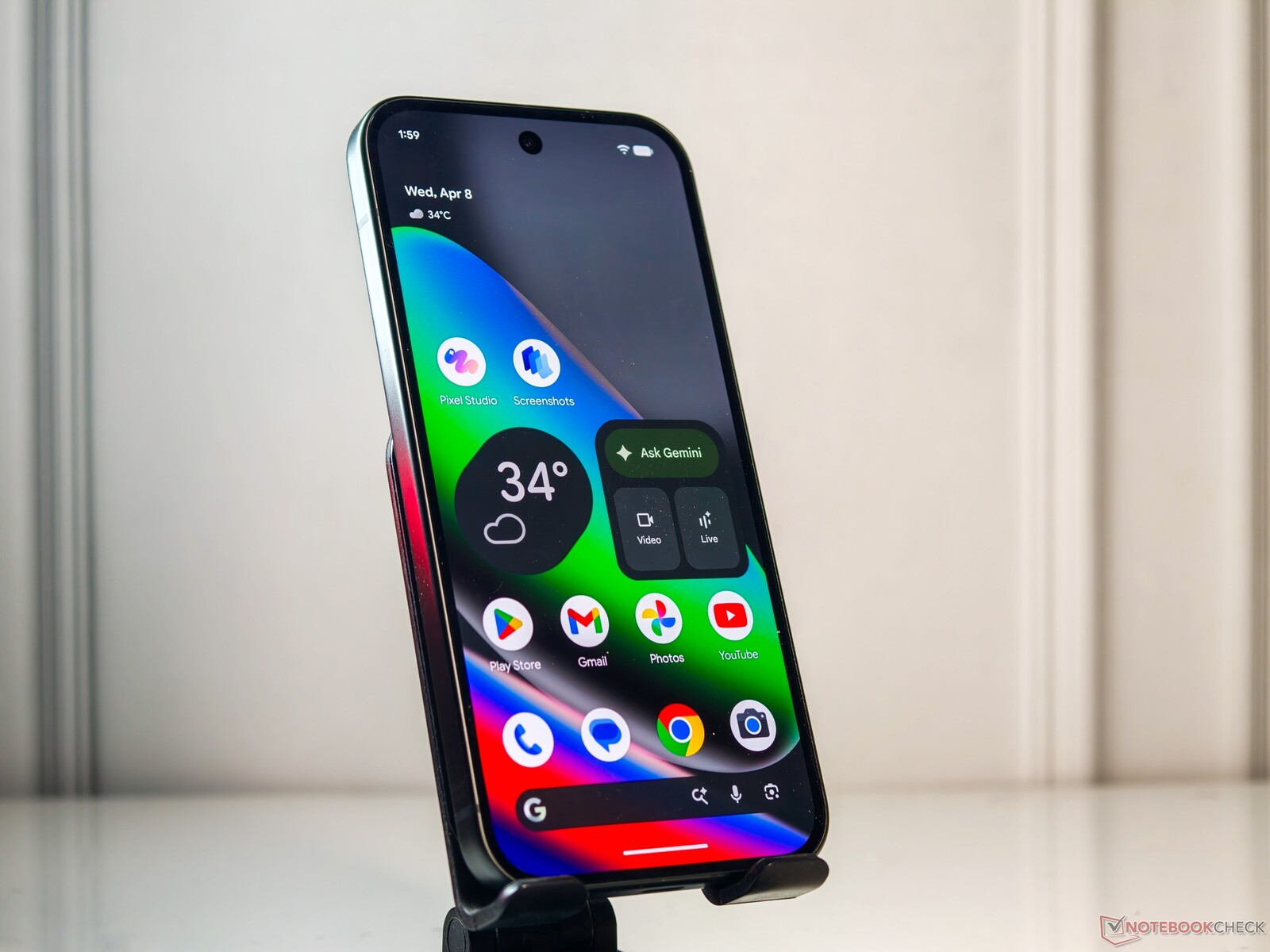
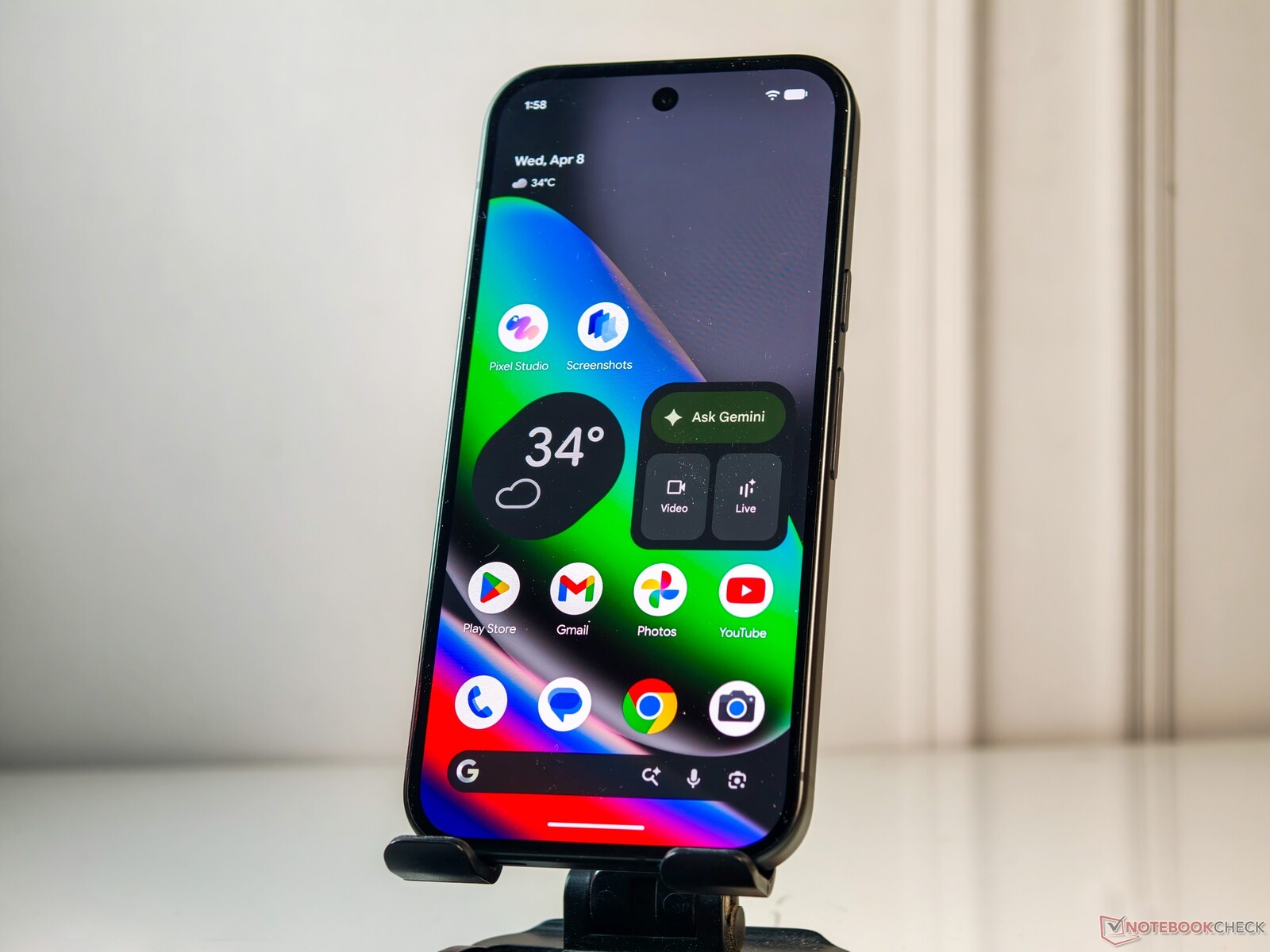
The 6.3-inch Pixel 10 comes in Indigo, Frost, Lemongrass, and Obsidian (our unit) color options. Compared to the Pixel 9, the Pixel 10 is a wee bit heavier at 204 g but fits snugly in the hand.
The weight distribution makes holding the handset comfortable, and the camera island doesn't add too much top heaviness even though it's now slightly larger than before.
Both the front and back glass panels are Corning Gorilla Glass Victus 2 joined together by what Google calls a spacecraft-grade aluminum frame.
Like the Pixel 9, the Pixel 10's back glass is glossy, which gives it a premium look but is also a fingerprint magnet despite Google's claims to the contrary.
Although not entirely water or dustproof, the Pixel 10 is IP68-rated for dust and water resistance (up to 1.5 m for 30 min).
Hardware: Slower Qi 2 wireless charging and no UWB
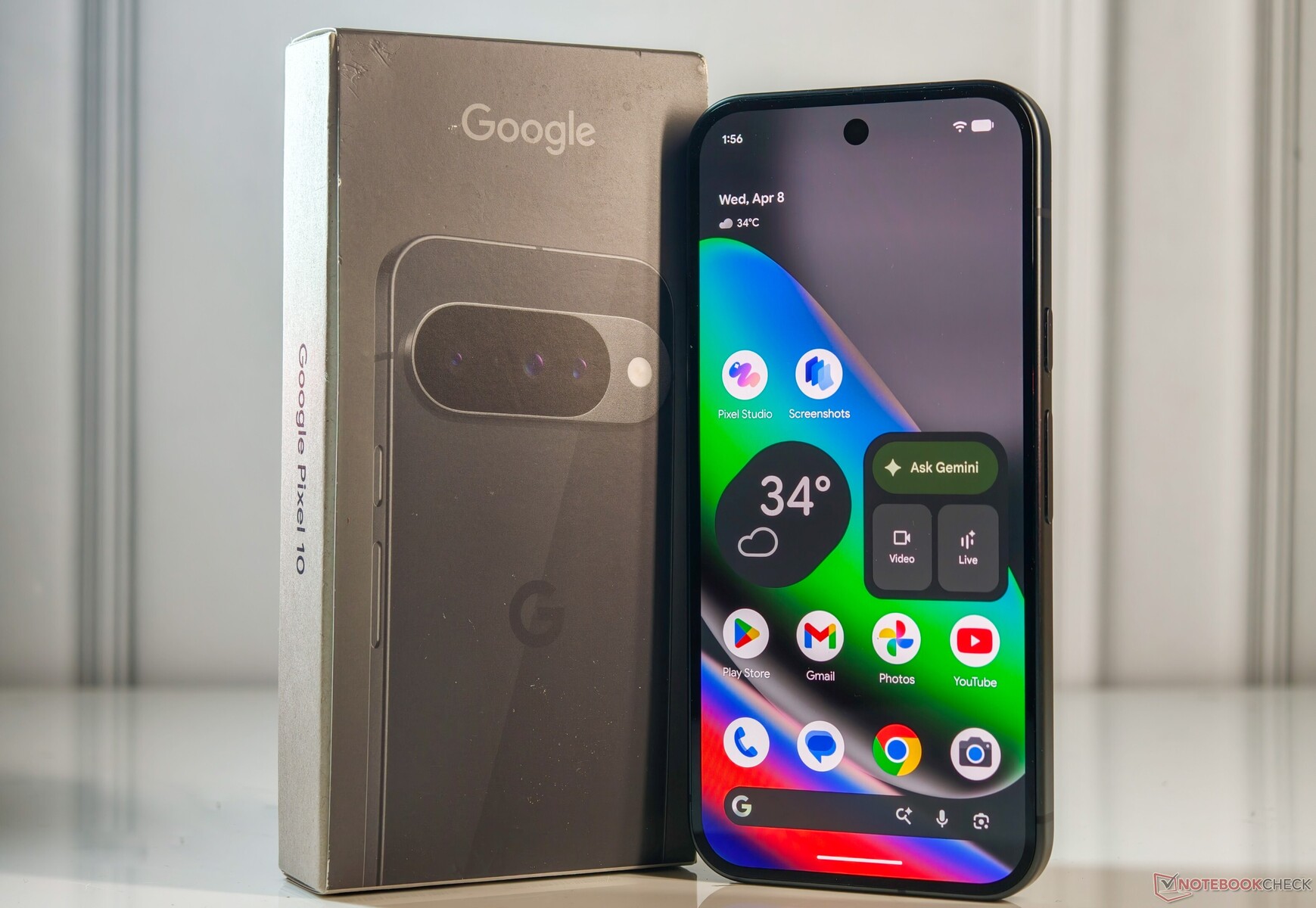
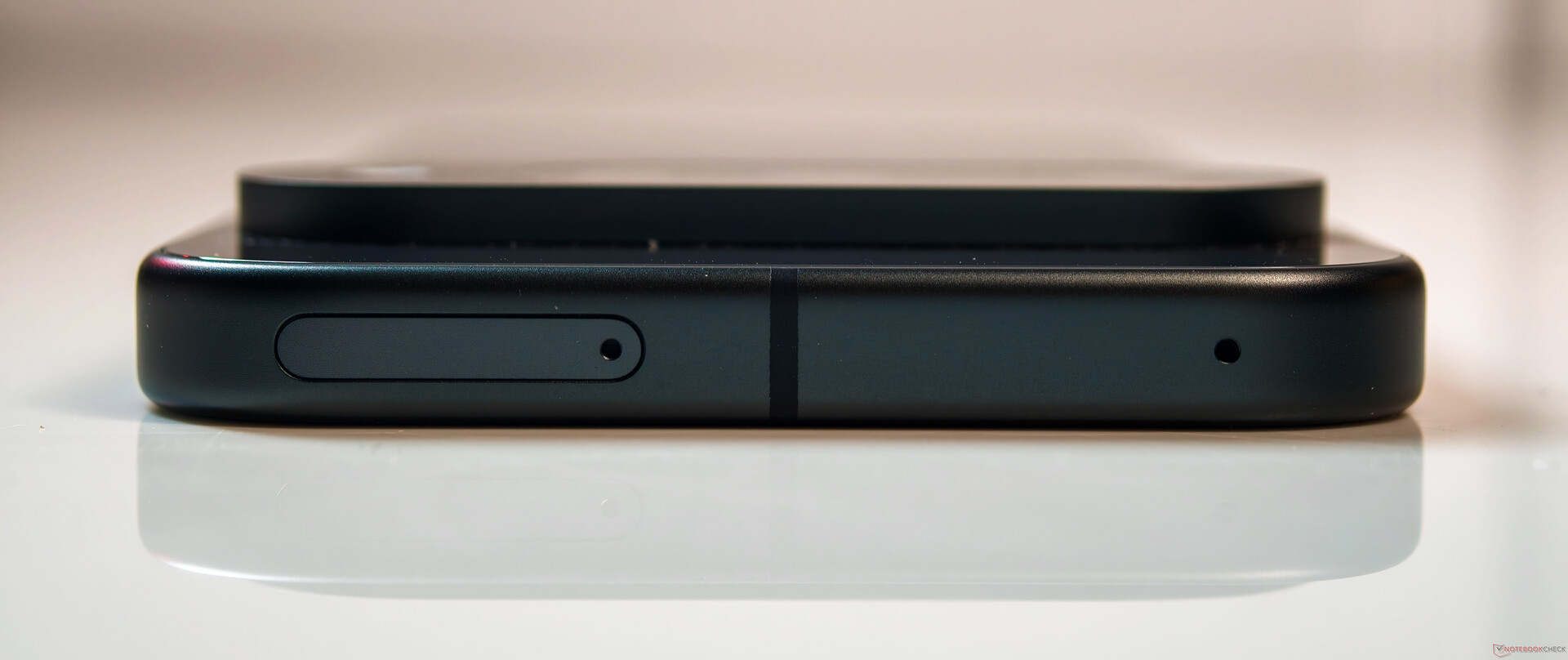
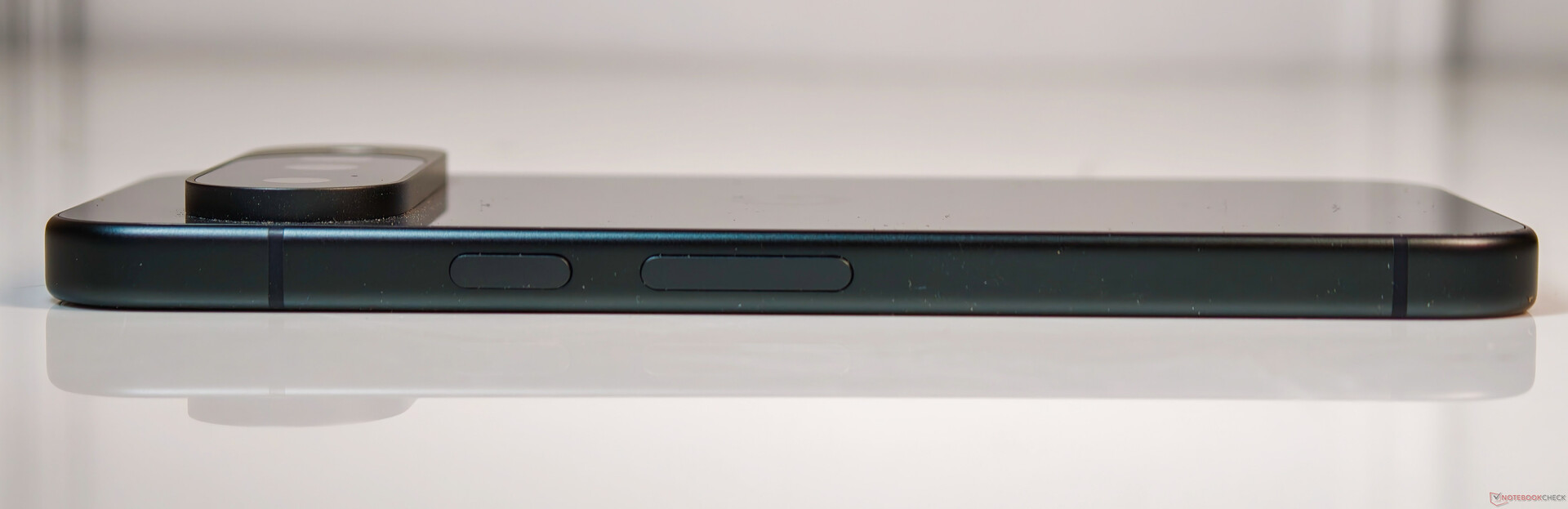
Coming from the Pixel 9, Google has rearranged a few physical elements. The SIM tray is now positioned at the top left and can hold a single nano SIM card alongside an additional eSIM.
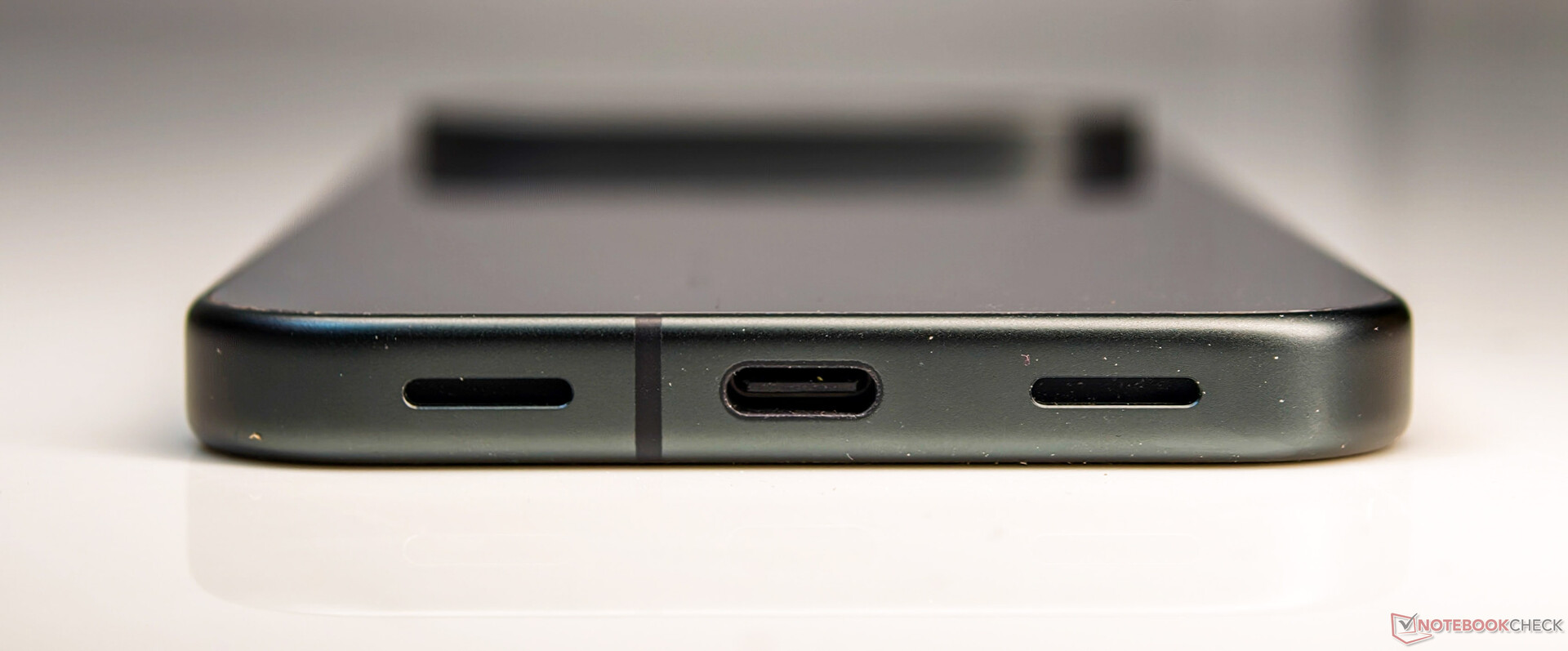
The loudspeaker is placed to the right of the USB 3.2 Type-C port, so it doesn't get blocked when the phone is held in landscape orientation.
Unlike the Pixel 10 Pro XL, which supports the 25 W Qi 2.2 standard, the Pixel 10 is limited to 15 W Qi 2 wireless charging.
Although the phone includes NFC, Google has omitted an ultra-wide band (UWB) chip. There's no IR blaster or a microSD card reader either.

Software: Android 16 QPR3 with a long update cadence
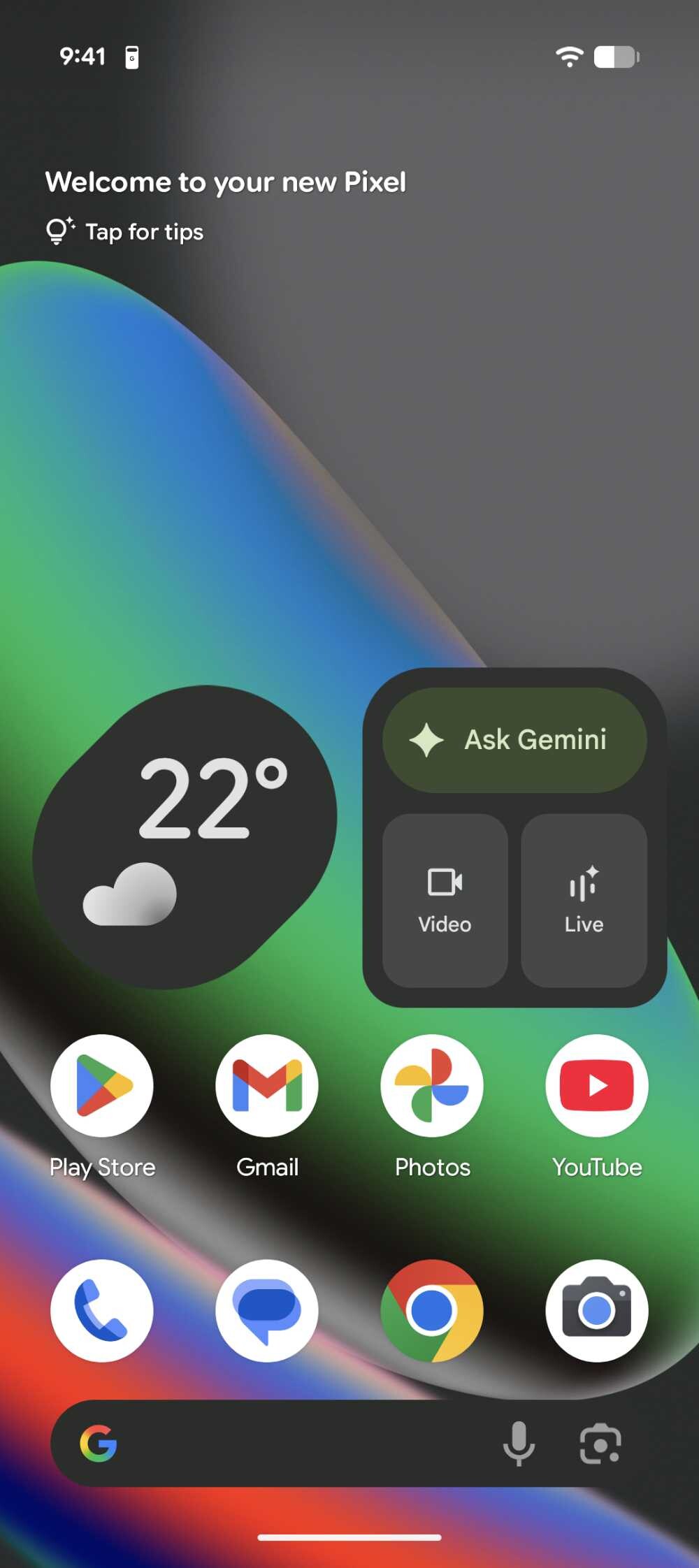
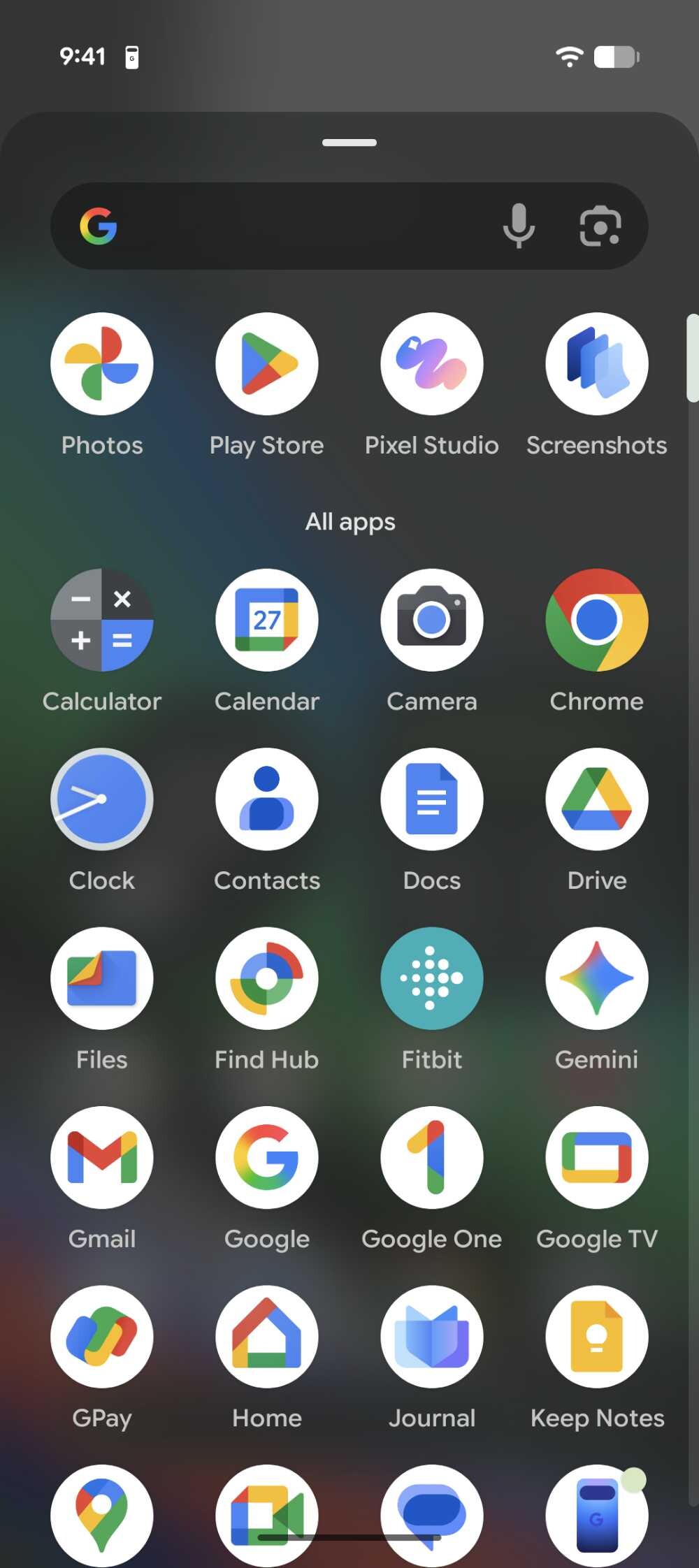
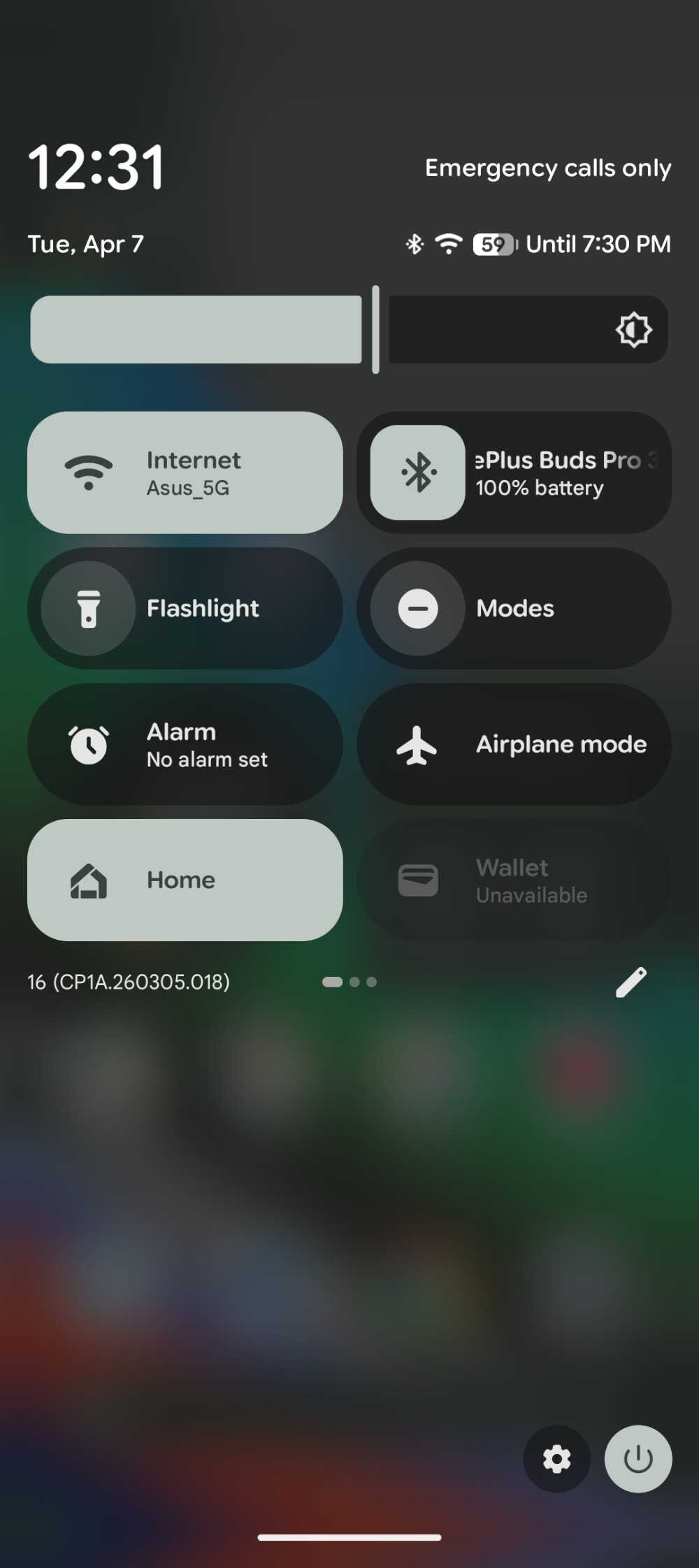
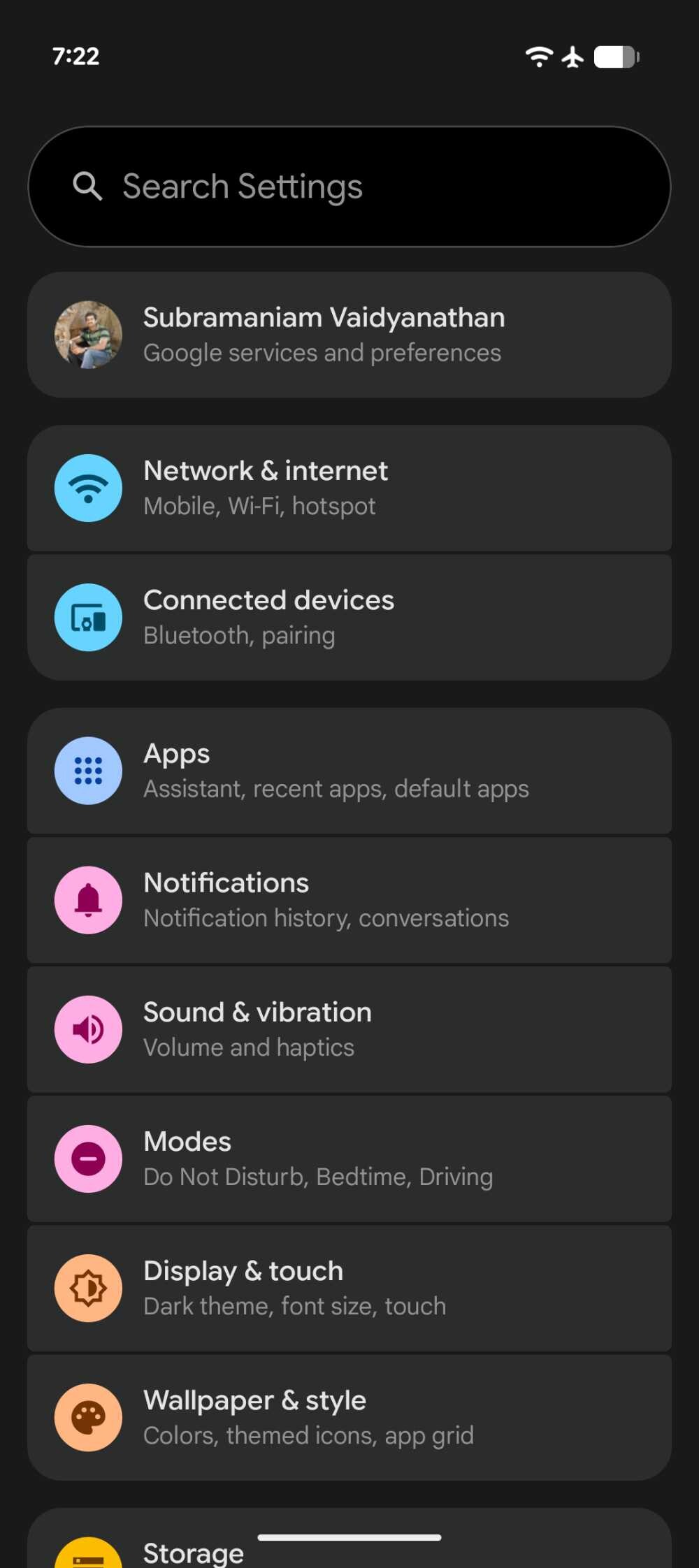
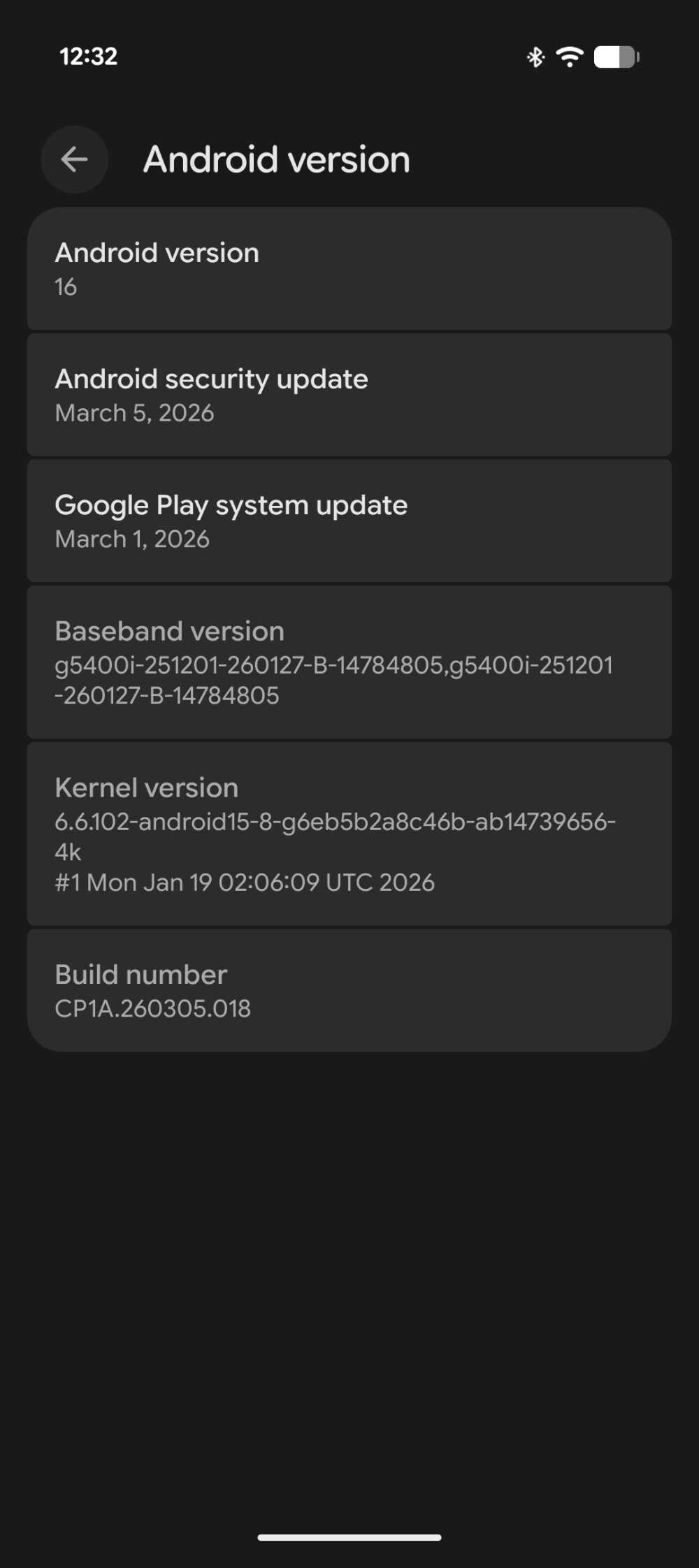
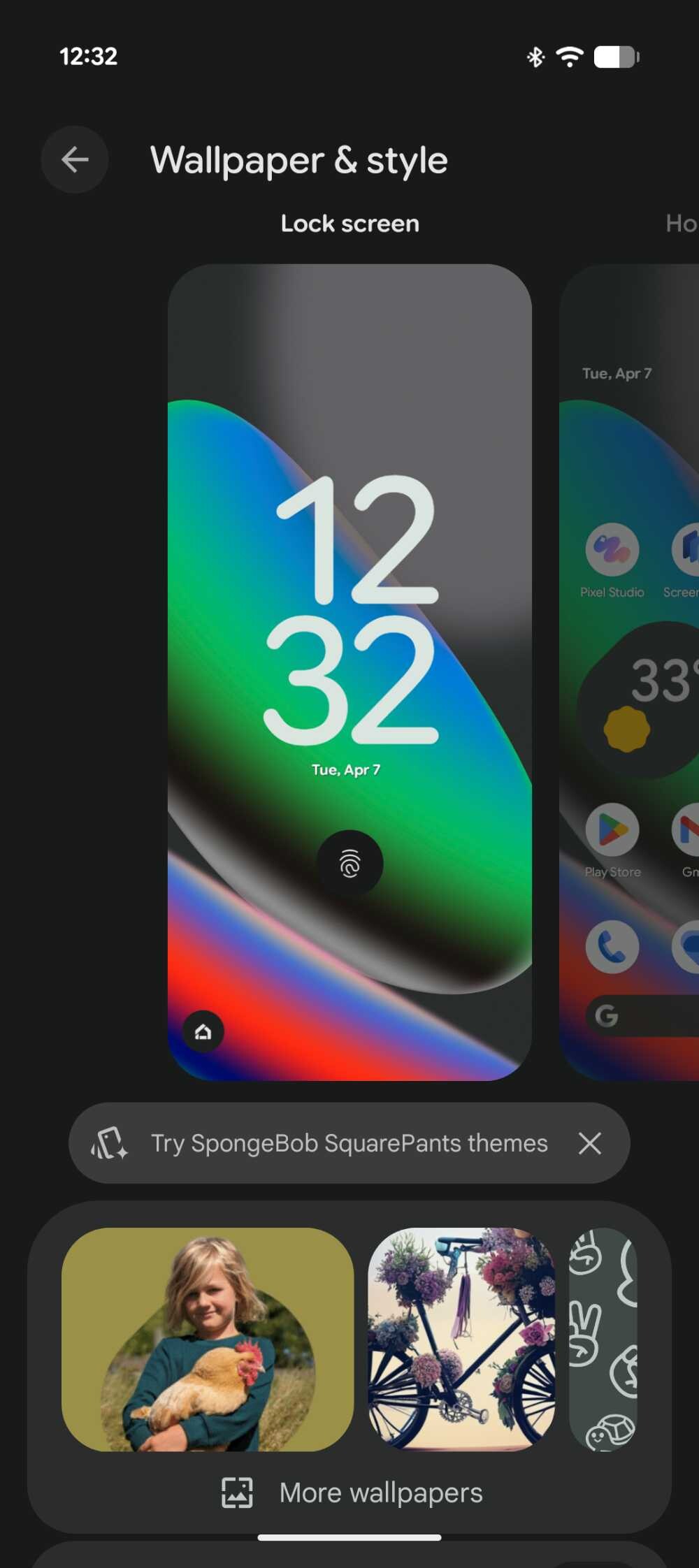
As is standard Pixel fare, the Pixel 10 ships with Android 16 (currently in QPR3) with Google’s Pixel UI layered on top. Android 16 QPR3 brings several noteworthy improvements, including flashlight controls, GUI support for Android’s Linux development environment, Desktop mode, themed icons, and more.
We also get a healthy dose of Google AI features, including Gemini, Pixel Screenshots, Magic Cue, and Camera Coach, among others.
That being said, some of the AI goodies like 100x Pro Res Zoom, Night Sight Video, and Video Boost are reserved for the Pro models and aren’t available on the base Pixel 10 phones.
The Pixel 10 comes with Google’s seven-year software support commitment, including regular Pixel Drops and security patches.

Sustainability
The Pixel 10’s packaging is 100% plastic-free. According to Google, the housing, battery, magnets, haptic engine, logic boards, and PCBs use 100% recycled materials, while at least 53% recycled plastic is used in 10 of the 13 plastic components.
Communication and GNSS: Handicapped Wi-Fi performance
Unlike the Pixel 10 Pro, or even the Pixel 9, the Pixel 10 does not offer Wi‑Fi 7 and is limited to dual-band Wi‑Fi 6E with Bluetooth 6.0.
In our tests using an Asus ROG Rapture GT‑AXE11000 reference router at a 1 m distance with a clear line of sight, the Pixel 10's Wi‑Fi throughput was significantly slower than that of the Pixel 10 Pro and the Pixel 9, even on the 6 GHz 6E band.
| Networking / iperf3 transmit AXE11000 6GHz | |
| Google Pixel 9 | |
| Vivo X300 | |
| Google Pixel 10 Pro | |
| Average Wi-Fi 6E (229 - 1888, n=84) | |
| Average of class Smartphone (287 - 1945, n=65, last 2 years) | |
| Samsung Galaxy S25 | |
| Xiaomi 17 | |
| Apple iPhone 17 | |
| Google Pixel 10 | |
| Networking / iperf3 receive AXE11000 6GHz | |
| Google Pixel 9 | |
| Vivo X300 | |
| Google Pixel 10 Pro | |
| Apple iPhone 17 | |
| Average of class Smartphone (339 - 2145, n=66, last 2 years) | |
| Average Wi-Fi 6E (598 - 1874, n=84) | |
| Xiaomi 17 | |
| Samsung Galaxy S25 | |
| Google Pixel 10 | |
| Networking / iperf3 transmit AXE11000 | |
| Samsung Galaxy S25 | |
| Google Pixel 9 | |
| Average Wi-Fi 6E (227 - 1810, n=66) | |
| Google Pixel 10 Pro | |
| Apple iPhone 17 | |
| Google Pixel 10 | |
| Average of class Smartphone (52.5 - 1851, n=113, last 2 years) | |
| Networking / iperf3 receive AXE11000 | |
| Apple iPhone 17 | |
| Samsung Galaxy S25 | |
| Average Wi-Fi 6E (442 - 1787, n=68) | |
| Google Pixel 10 Pro | |
| Google Pixel 9 | |
| Google Pixel 10 | |
| Average of class Smartphone (52.2 - 1614, n=113, last 2 years) | |
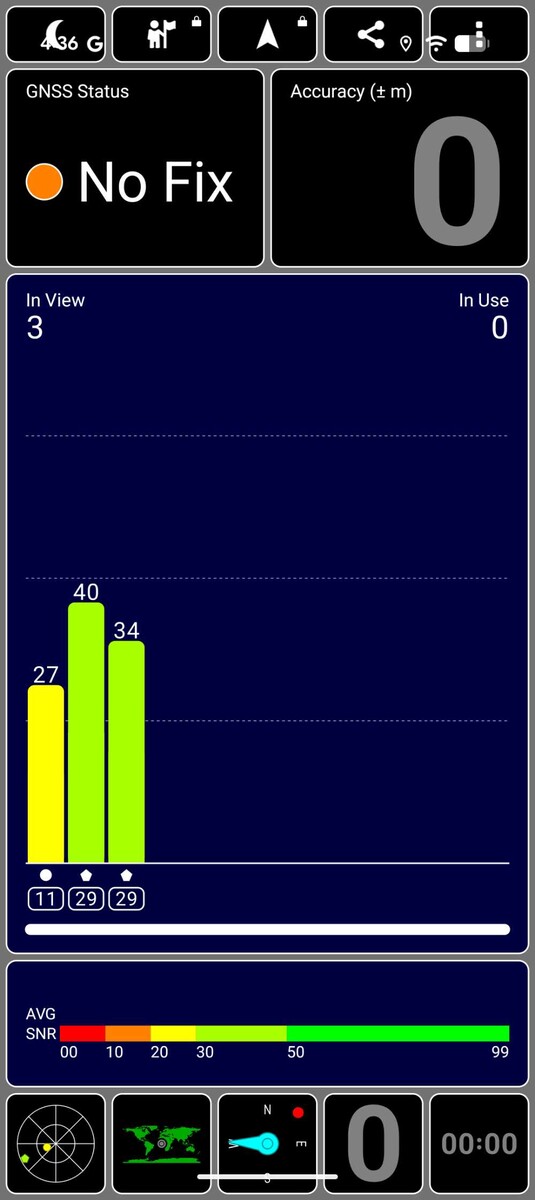
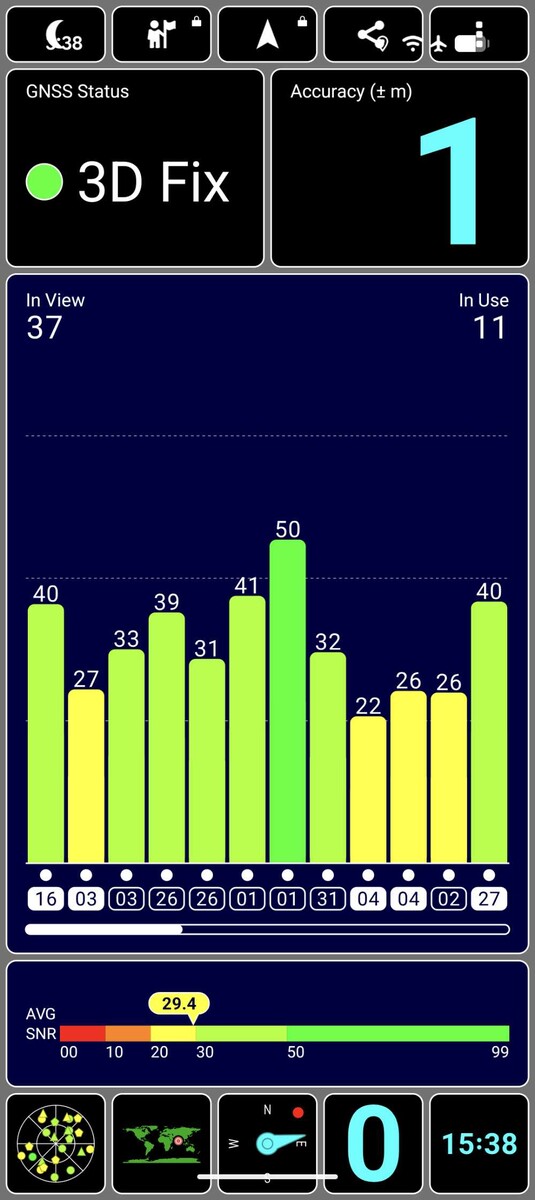
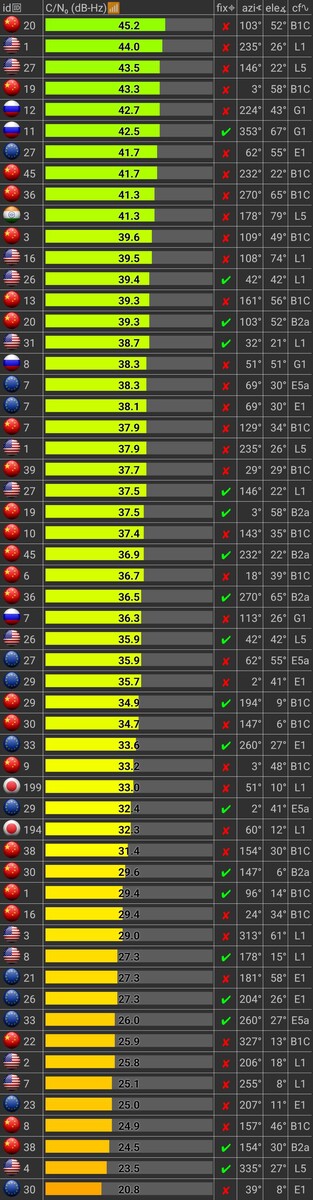
The Pixel 10 offers broad satellite support for navigation, including L1+L5 dual-band GPS, GLONASS (L1/G1), Galileo (E1+E5a), BeiDou (B1C+B2a), QZSS (L1+L5), and NavIC (IRNSS L5).
EGNOS and GAGAN satellite-based augmentation systems (SBAS) do not appear to be supported.
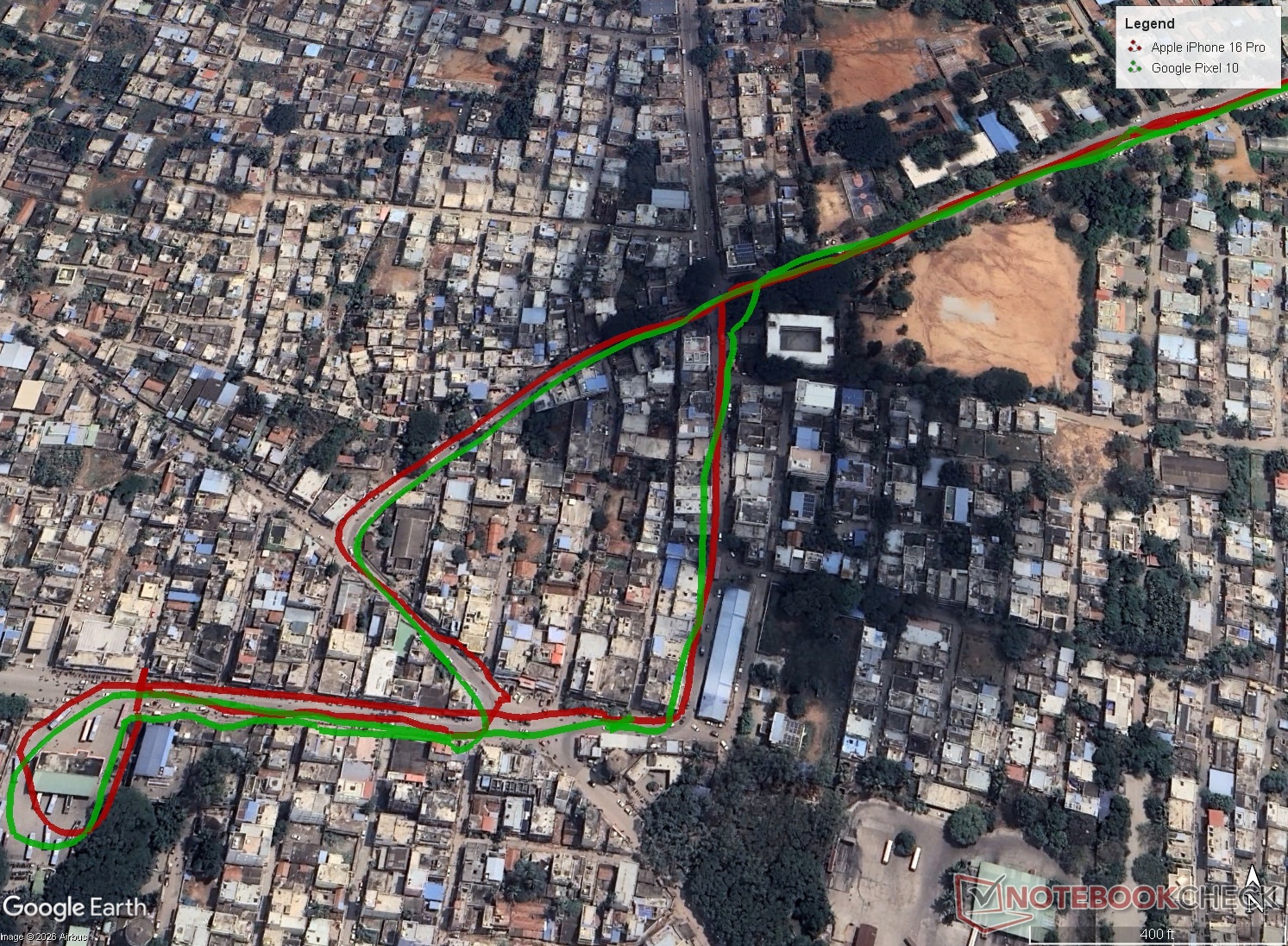
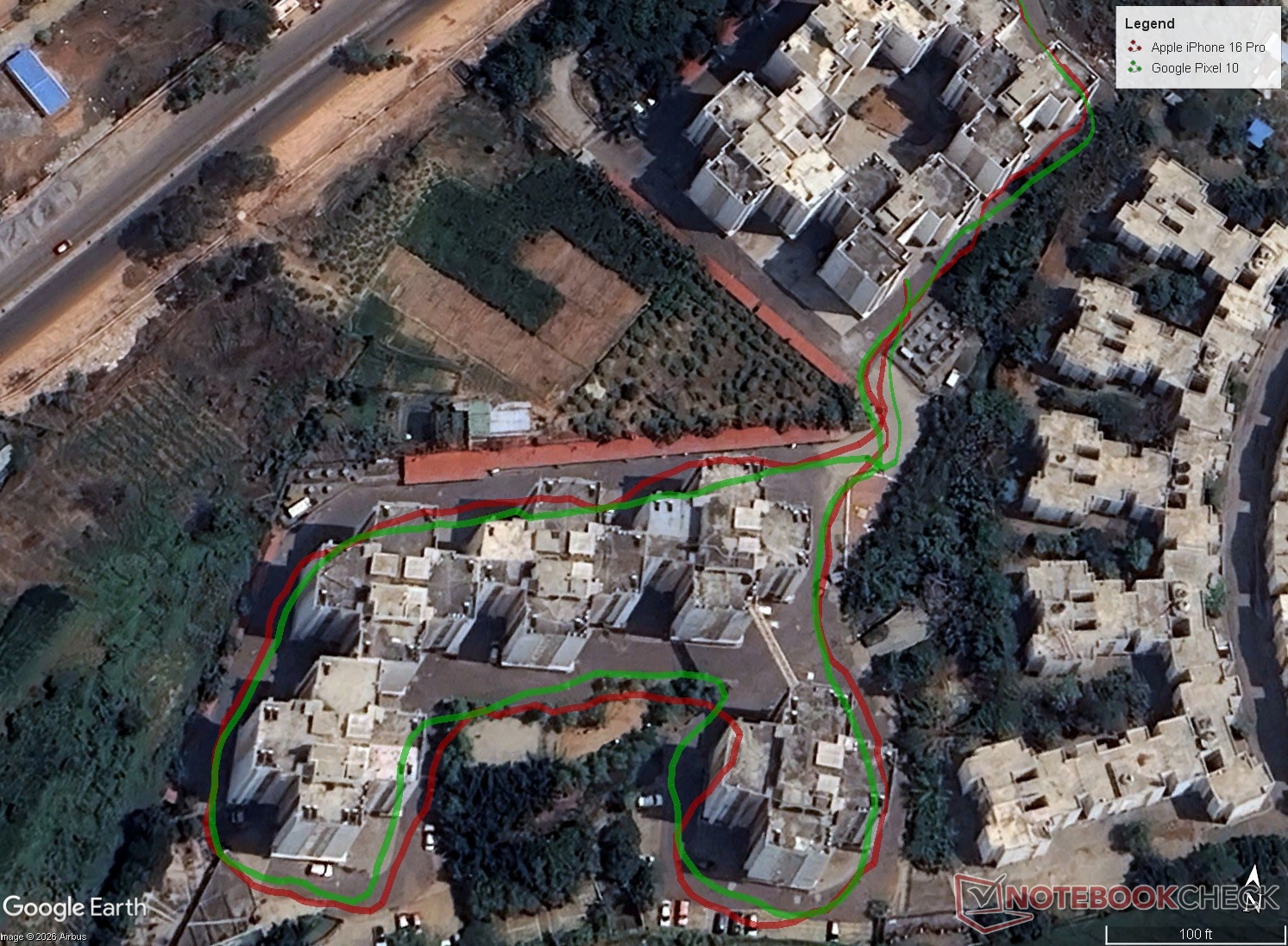
Indoors, the Pixel 10 struggles to acquire enough satellite signals, but outdoor reception is quite accurate.
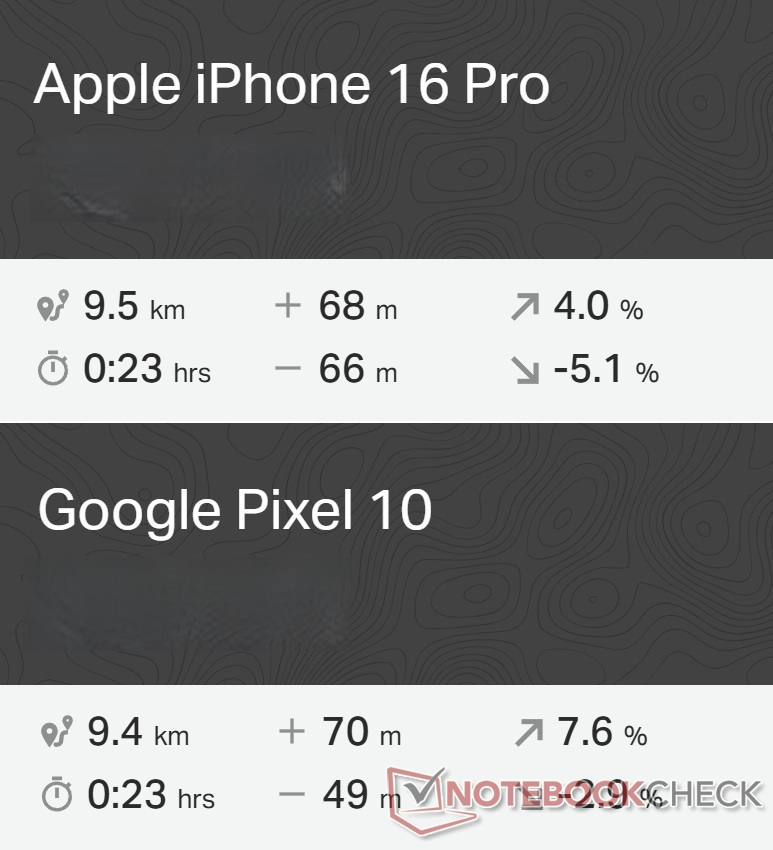
The Pixel 10's navigation is comparable to that of the Apple iPhone 16 Pro, both on the road and in a dense residential area.
Telephony and Call quality: US models eSIM-only
US models of the Pixel 10 (GLBW0) are eSIM-only but support 5G mmWave on bands 258, 260, and 261, as well as Sub-6 GHz. The Indian variant (GK2MP) supports only 5G Sub-6 GHz frequencies but includes a removable SIM tray (nano-SIM and eSIM).
Calls and contacts are managed via Google Dialer and Google Contacts, with integrated Magic Cue and Google Assistant features.
Call quality on Jio True5G is good, with support for Vo5G (VoNR). Parties can be heard clearly on both the speakerphone and earpiece, with little to no distortion at high volume.

Cameras: Good everyday shooter despite downgraded ultra-wide and main lenses



The Pixel 10 continues to rely on the same 10.5 MP selfie camera with an f/2.2 aperture, autofocus, and a 95° field of view we saw in the Pixel 9.
Selfies come out well, with good color reproduction, natural skin tones, and sharp detail. Portraits from the selfie camera also look good, with effective bokeh that isolates the subject without clipping features.
Google's decision to downgrade the ultra-wide and primary rear cameras to 13 MP and 48 MP sensors (down from the Pixel 9's 48 MP and 50 MP, respectively) has met with some consternation.
Images from the ultra-wide camera seem comparable to those of the Pixel 9 at first glance, but there is visible softness.
While images from the Pixel 10's 48 MP main camera look very similar to those from the Pixel 9's 50 MP sensor, the downgrade becomes apparent in the shadowy foliage in the image comparison below.
Cropping-in to 2x with the main camera also adds a significant amount of noise, though even the Pixel 9's 2x zoom photos come out noisy.
The Pixel 10 gets a dedicated 5x telephoto lens this time, which is a better approach than relying on the Pixel 9's digital zoom.
The 5x telephoto shots are fine for casual social media use in good lighting. However, it can't match the likes of the OnePlus 13 and iPhone 16 Pro, as we see reduced detail and color, along with added noise.
That being said, low-light shots fare much better, with the Pixel 10 offering a noticeably improved image overall compared to its predecessor.
Interestingly, unlike the Pixel 10 Pro XL, the Pixel 10's main camera can focus well at very short distances, resulting in good macro shots.
The selfie, primary, and 5x telephoto cameras can all shoot 4K 60 fps video. However, 10-bit HDR is limited to FHD resolution.

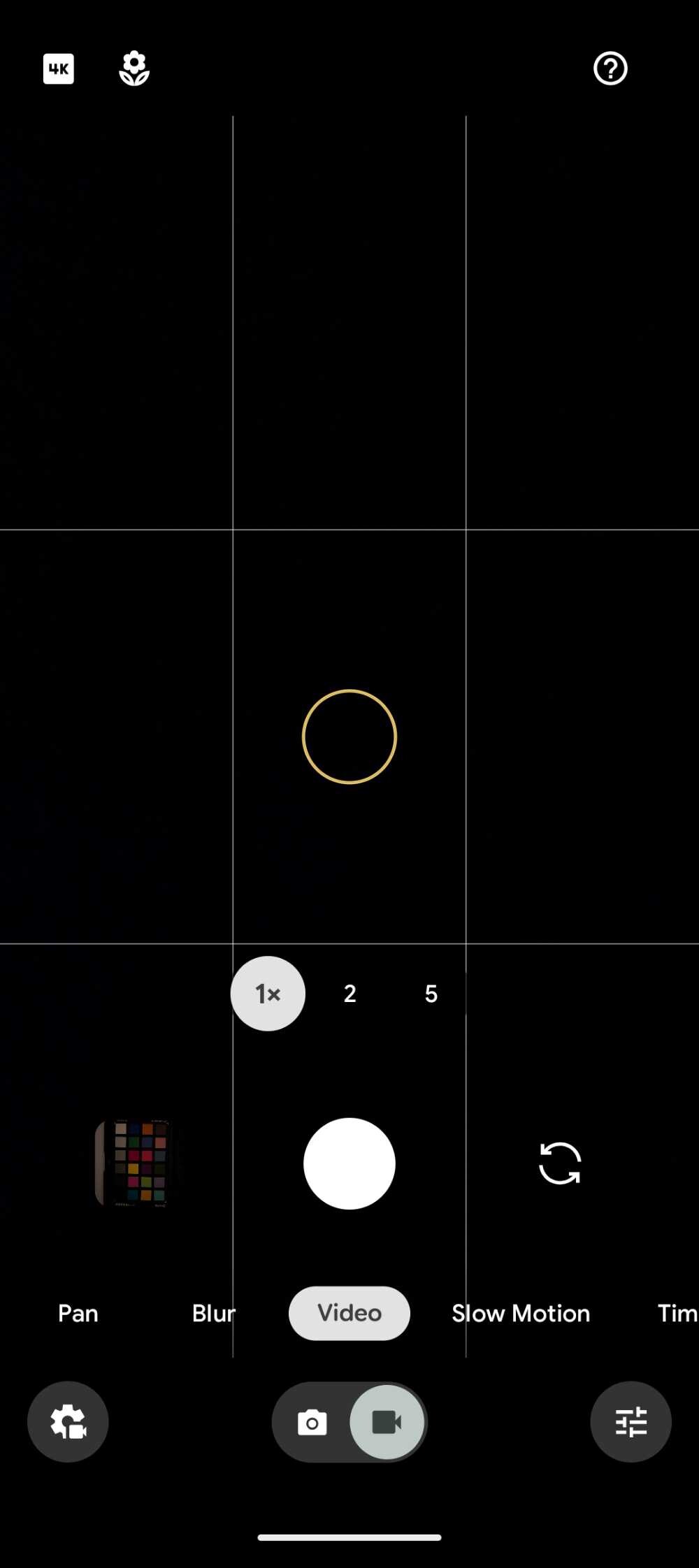
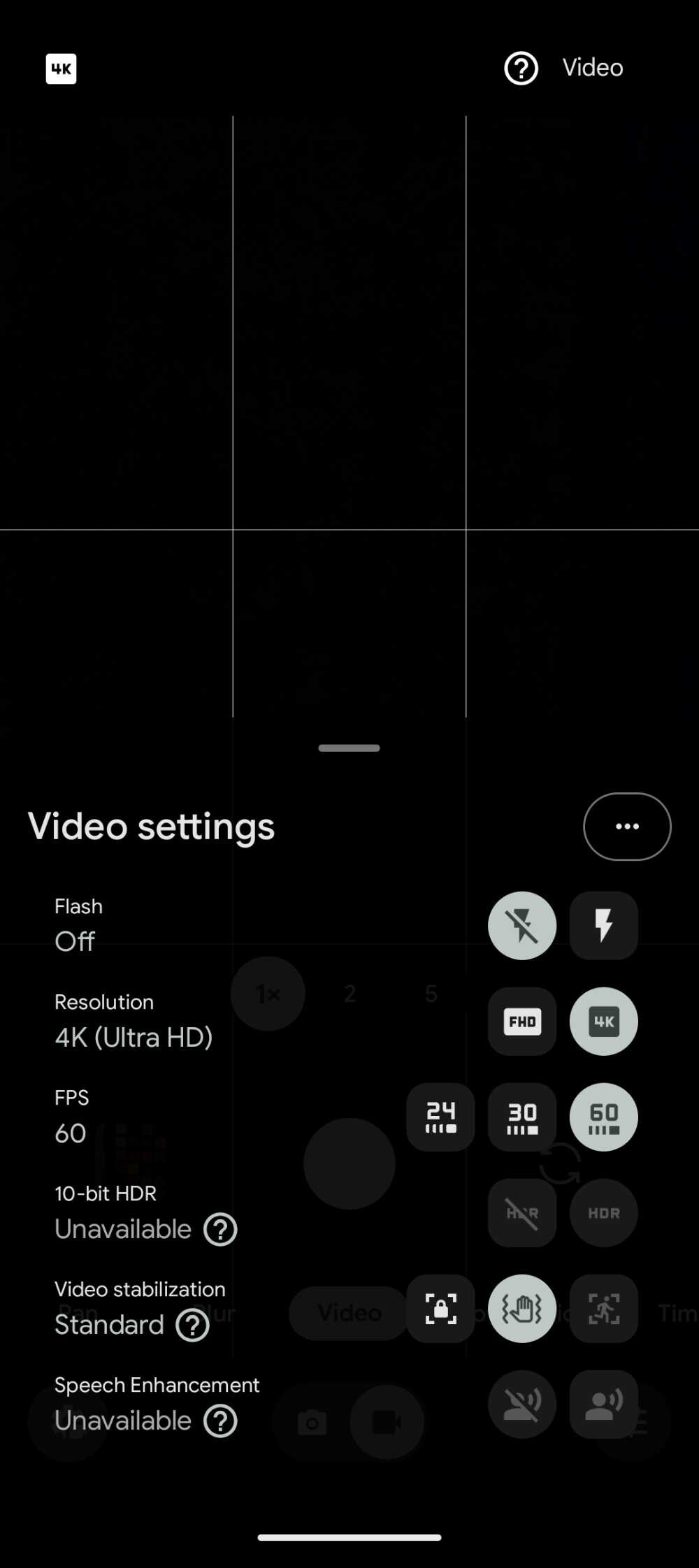

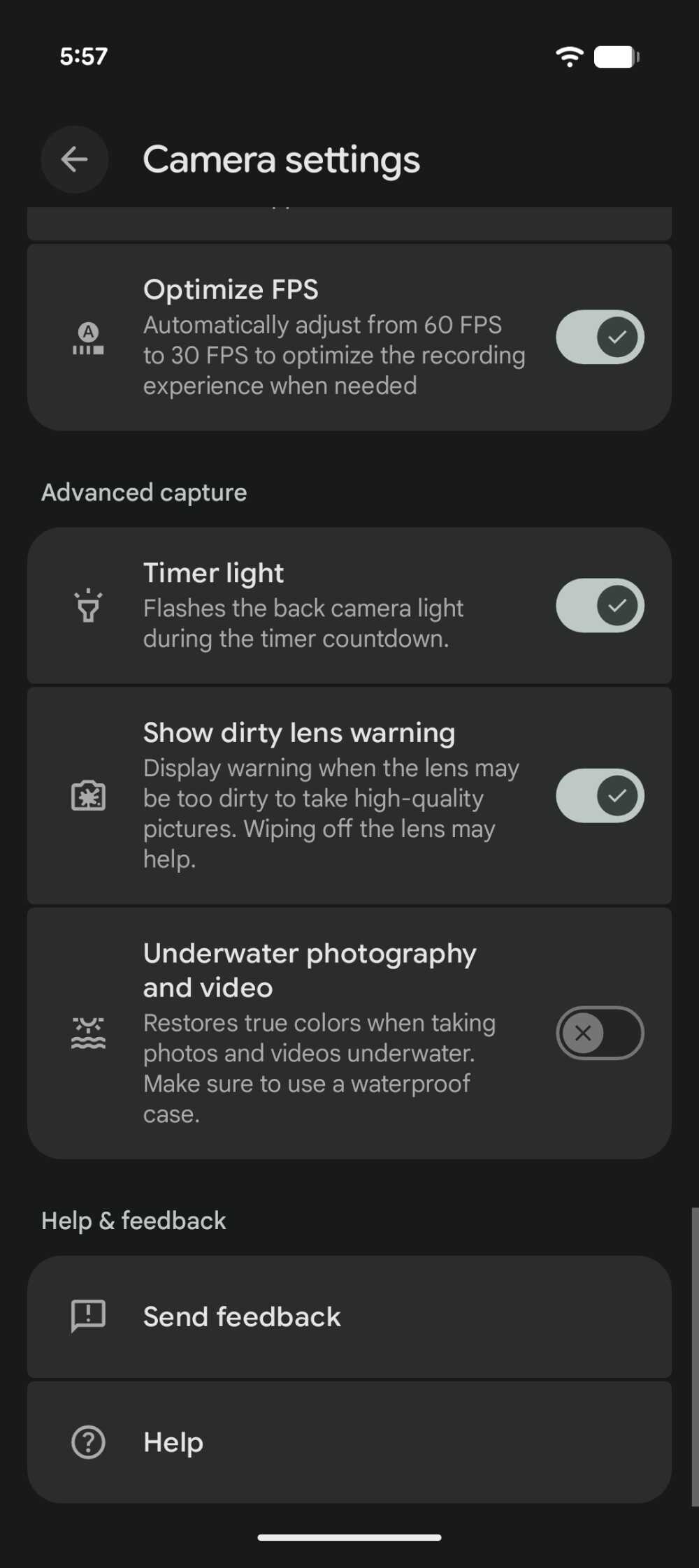
Image comparison
Choose a scene and navigate within the first image. One click changes the position on touchscreens. One click on the zoomed-in image opens the original in a new window. The first image shows the scaled photograph of the test device.
Ultra-wide 0.5xMain cameraMain camera 2x zoom5x Optical zoomLow light




















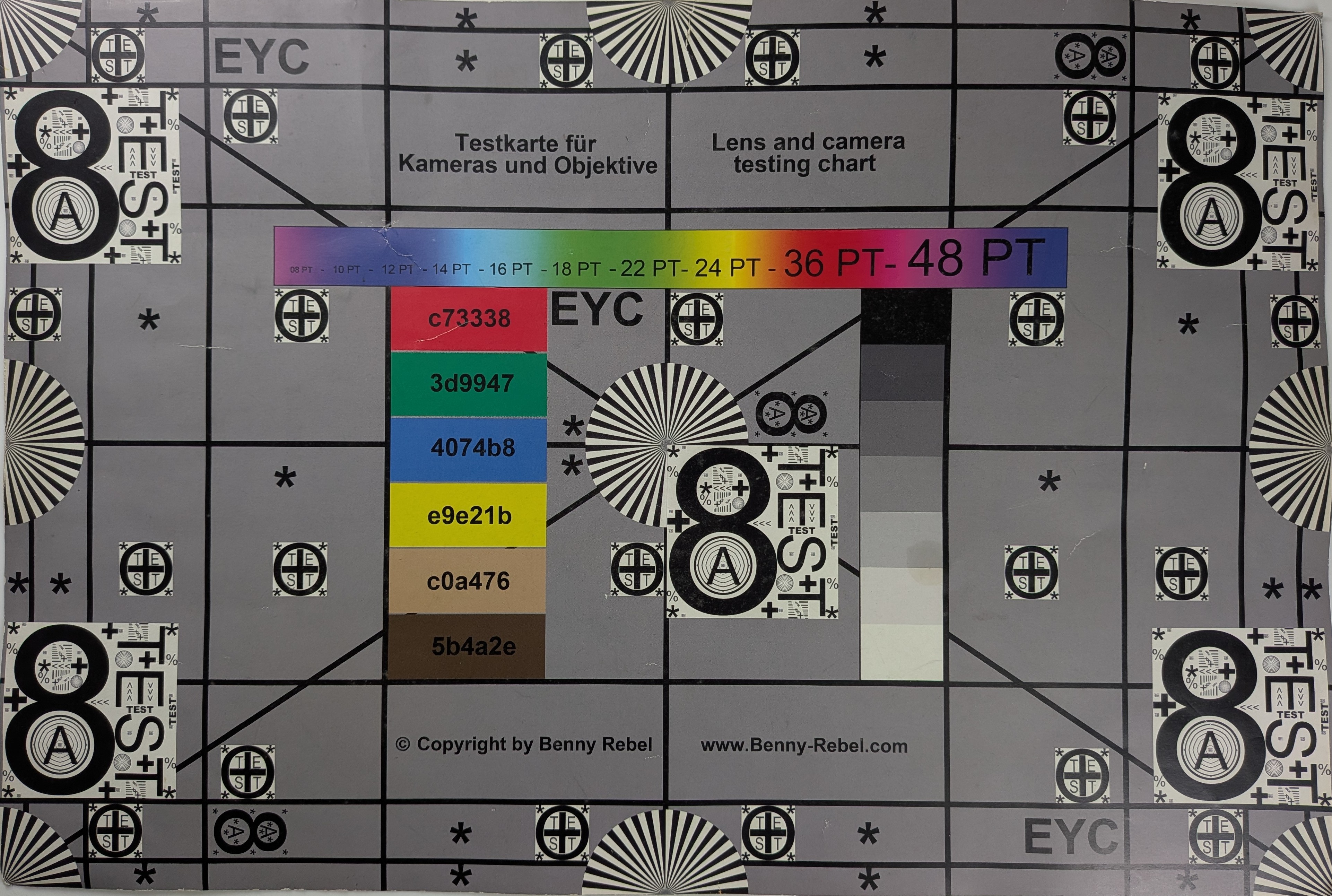
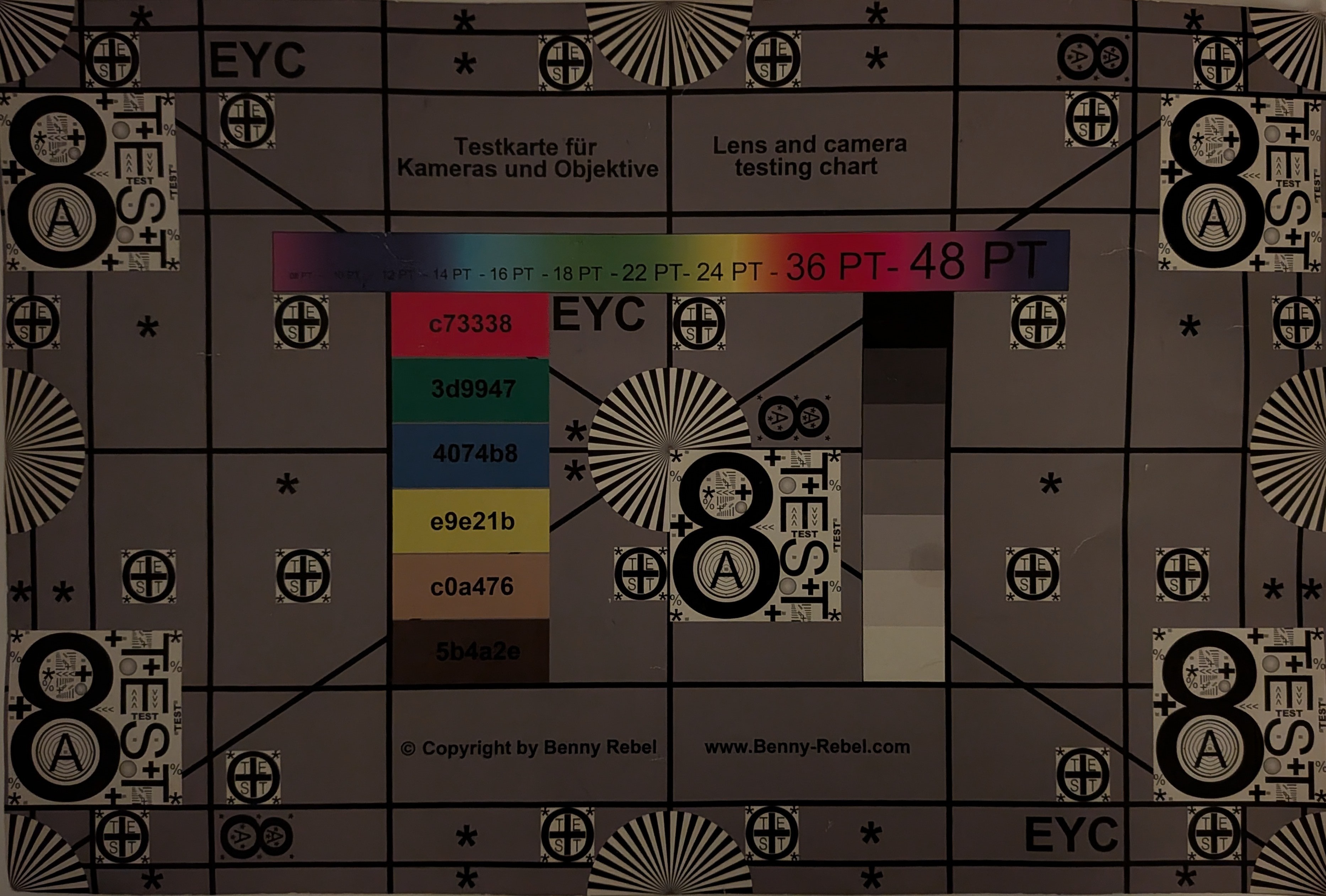
The main camera achieves a minimum DeltaE 2000 value of 6.43 under controlled lighting with our ColorChecker Passport. Details in the test chart are reproduced well.
At 1 lux, we see significantly higher color deviations, but details in the test chart are still quite discernible.




Accessories and Warranty: Pixel Care+ only in the US
Google does not bundle many accessories in the box, apart from the USB 2.0 Type-C cable, a SIM ejector tool, and paperwork.
In India, the Pixel 10 comes with a standard one-year warranty. A two-year Pixel Care+ plan for the Pixel 10 costs $179 and is exclusive to US customers.
There's also a $199 Pixel Care+ plan that covers loss and theft, available across the US except New York.
Input devices and Operation: Fast ultrasonic fingerprint reader
The Pixel 10's ultrasonic fingerprint reader authenticates quickly. There's also a less secure 2D face unlock that works well in decent ambient lighting.
Haptic feedback is excellent, although the Pixel 10 Pro XL feels more pronounced and crisper in this regard.
The phone's exact touch response rate is unknown, but it responds quickly to touch both while gaming and in general use subjectively.
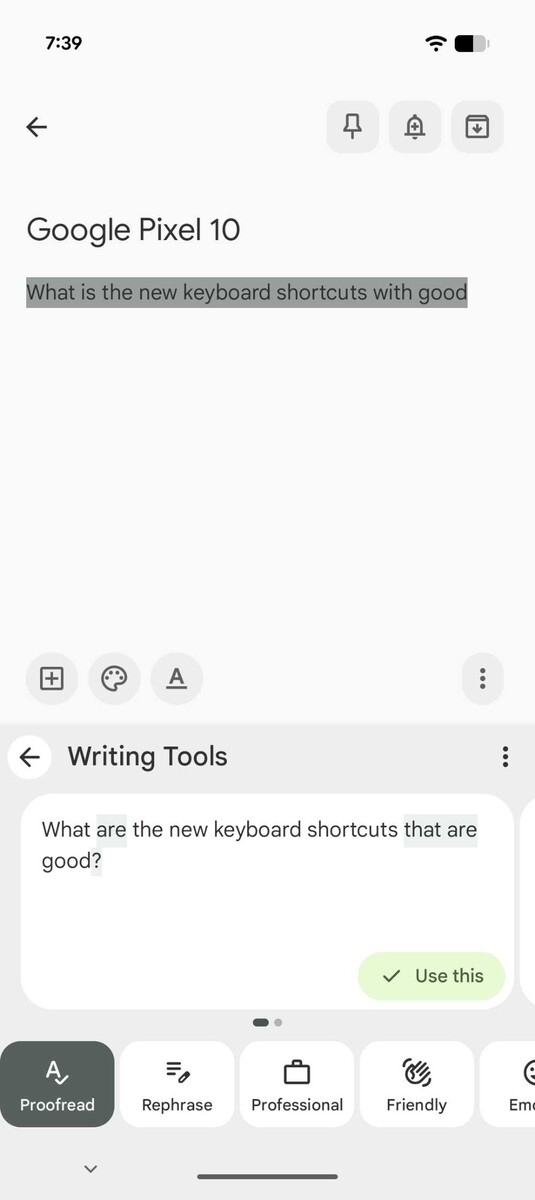
The default Gboard keyboard includes AI-powered writing tools for proofreading and rephrasing text.


Display: 24-bit non-LTPO Super Actua panel with no 480 Hz flicker option

Unlike the Pixel 10 Pro models, the base Pixel 10 uses a non-LTPO 2,424 x 1,080 20:9 Super Actua display, meaning its refresh rate can vary only between 60 Hz and 120 Hz and cannot drop to 1 Hz.
Google rates the panel at up to 2,000 nits in HDR mode, with a peak brightness of 3,000 nits. In our testing, the display delivered 86% brightness uniformity and reached a peak of 1,862 nits with the ambient light sensor engaged, and a maximum of 1,692 nits during HDR playback (25% window).
The Pixel 10 supports HDR10, but not Dolby Vision.
| |||||||||||||||||||||||||
Brightness Distribution: 86 %
Center on Battery: 1850 cd/m²
Contrast: ∞:1 (Black: 0 cd/m²)
ΔE ColorChecker Calman: 1.96 | ∀{0.5-29.43 Ø4.69}
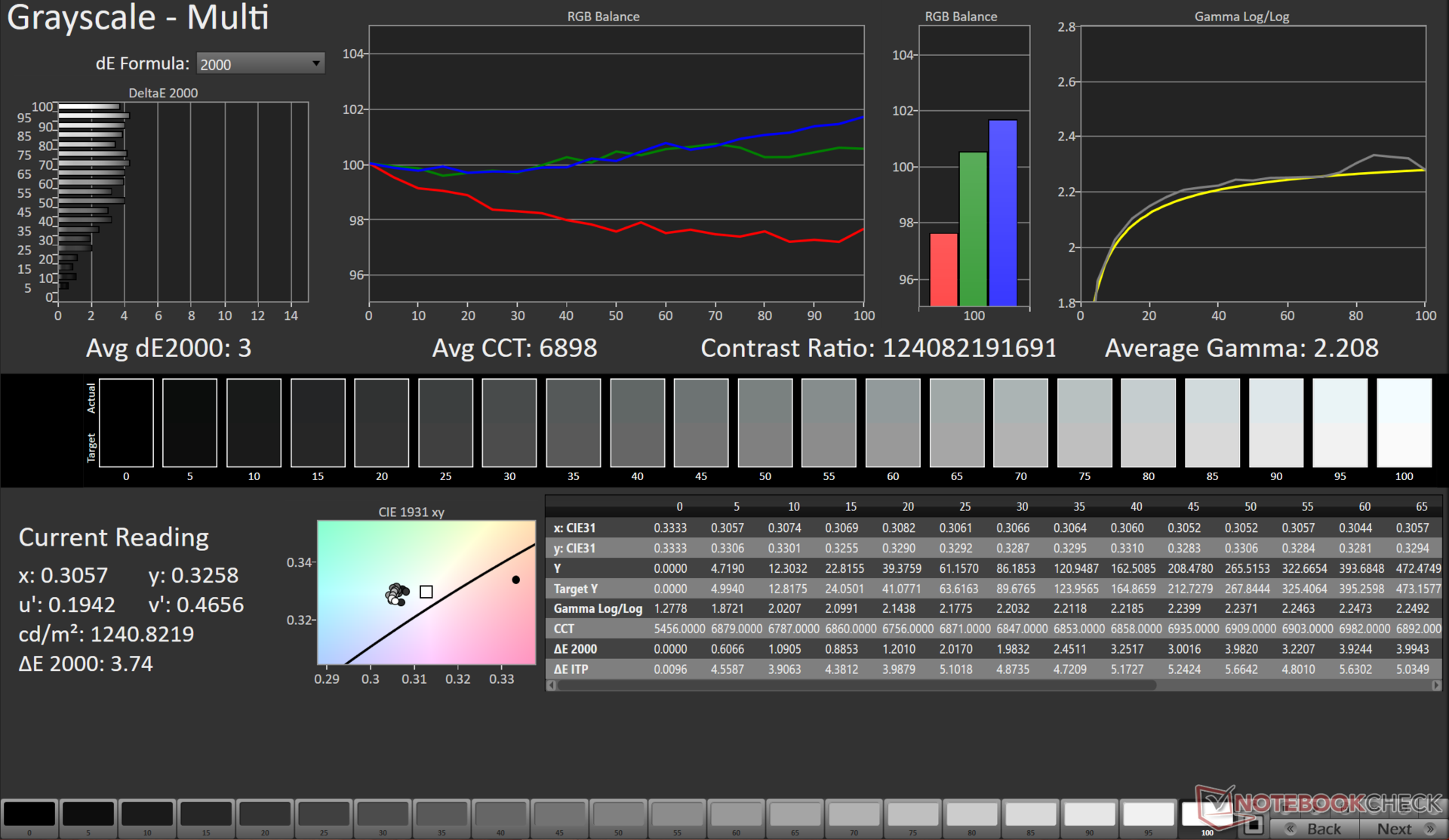
ΔE Greyscale Calman: 3 | ∀{0.09-98 Ø4.94}
95.6% sRGB (Calman 2D)
Gamma: 2.2
CCT: 6898 K
| Google Pixel 10 OLED, 2424x1080, 6.3" | Google Pixel 9 OLED, 2424x1080, 6.3" | Xiaomi 17 LTPO AMOLED , 2656x1220, 6.3" | Google Pixel 10 Pro OLED, 2856x1280, 6.3" | Apple iPhone 17 OLED, 2622x1206, 6.3" | Vivo X300 AMOLED, 2640x1216, 6.3" | Samsung Galaxy S25 AMOLED, 2340x1080, 6.2" | |
|---|---|---|---|---|---|---|---|
| Screen | 32% | -3% | 41% | 9% | 13% | -13% | |
| Brightness middle (cd/m²) | 1850 | 2063 12% | 1030 -44% | 2161 17% | 1138 -38% | 1537 -17% | 1301 -30% |
| Brightness (cd/m²) | 1754 | 1914 9% | 1021 -42% | 2198 25% | 1127 -36% | 1523 -13% | 1311 -25% |
| Brightness Distribution (%) | 86 | 84 -2% | 98 14% | 94 9% | 96 12% | 96 12% | 98 14% |
| Black Level * (cd/m²) | |||||||
| Colorchecker dE 2000 * | 1.96 | 0.7 64% | 1.44 27% | 0.7 64% | 1.07 45% | 1.4 29% | 3.1 -58% |
| Colorchecker dE 2000 max. * | 4.25 | 2.2 48% | 3.68 13% | 1.8 58% | 2.99 30% | 2.6 39% | 4.4 -4% |
| Greyscale dE 2000 * | 3 | 1.2 60% | 2.5 17% | 0.8 73% | 1.8 40% | 2.1 30% | 2.3 23% |
| Gamma | 2.2 100% | 2.23 99% | 2.274 97% | 2.19 100% | 2.22 99% | 2.28 96% | 2.01 109% |
| CCT | 6898 94% | 6524 100% | 6868 95% | 6646 98% | 6516 100% | 6754 96% | 6454 101% |
* ... smaller is better
Natural mode, default color temperature (Color space target: sRGB)
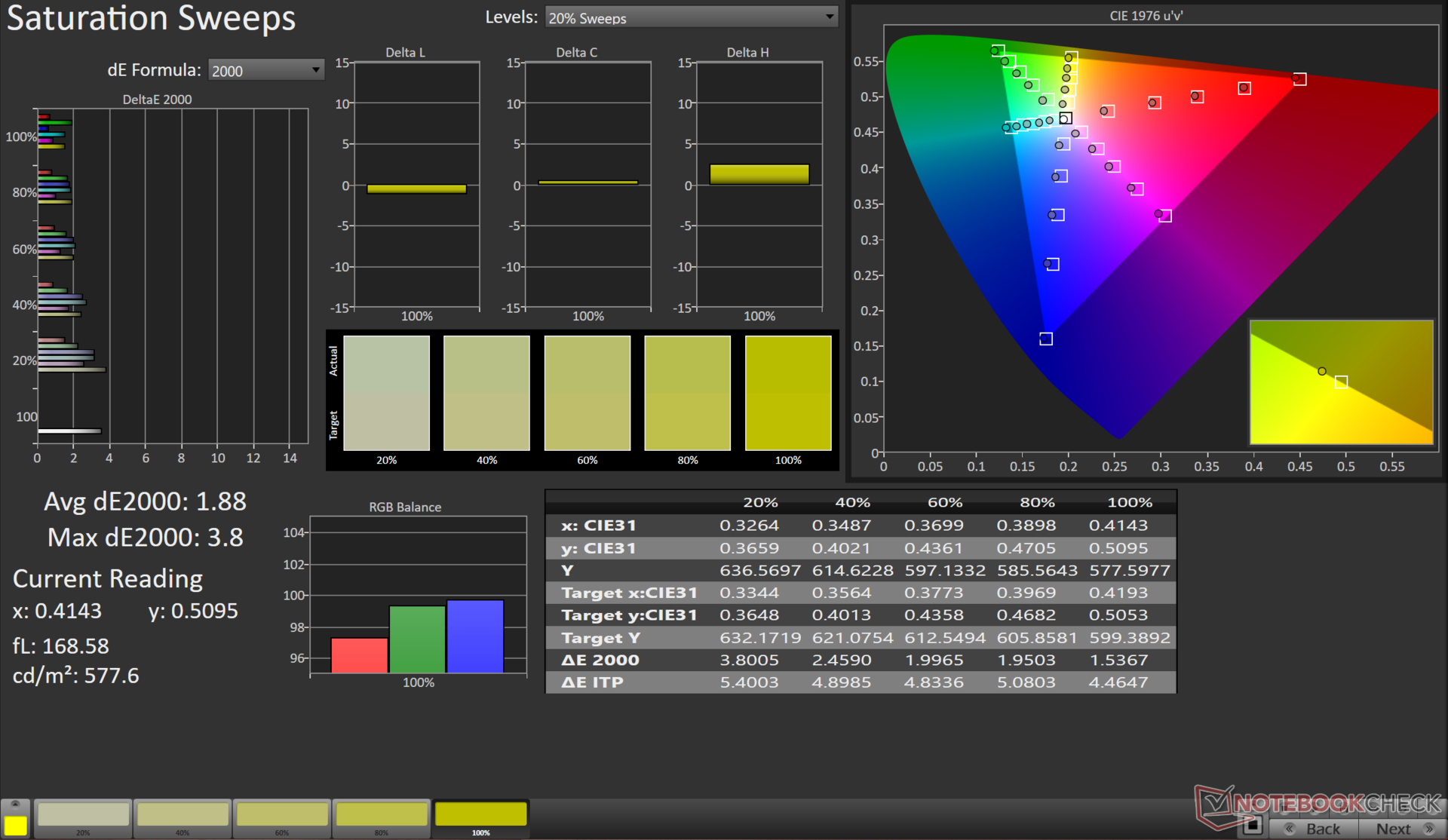
The Pixel 10 lets you choose between Natural and Adaptive color modes. Color calibration ex-works isn’t the best we’ve seen, but Natural mode is the more accurate of the two.


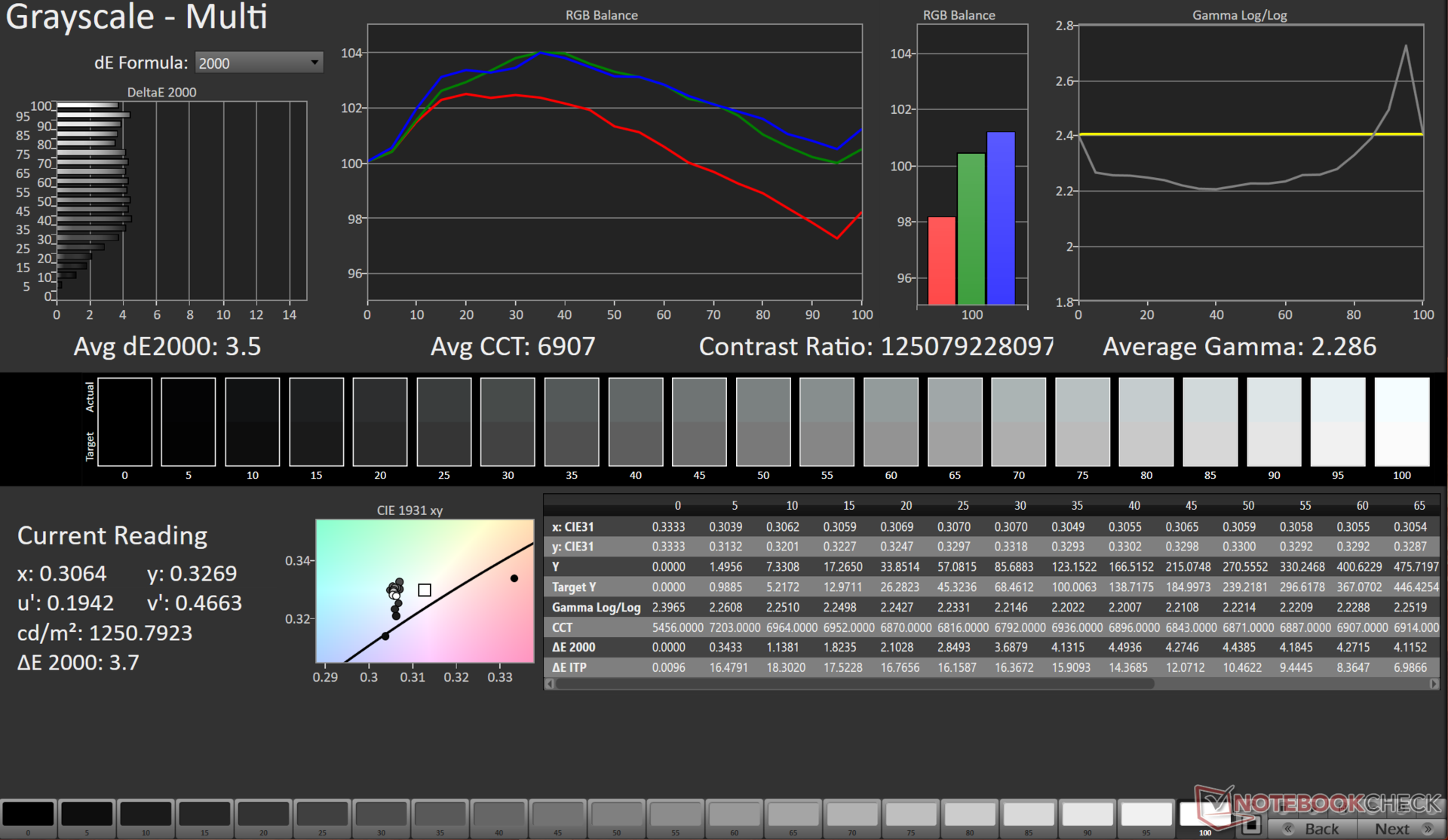
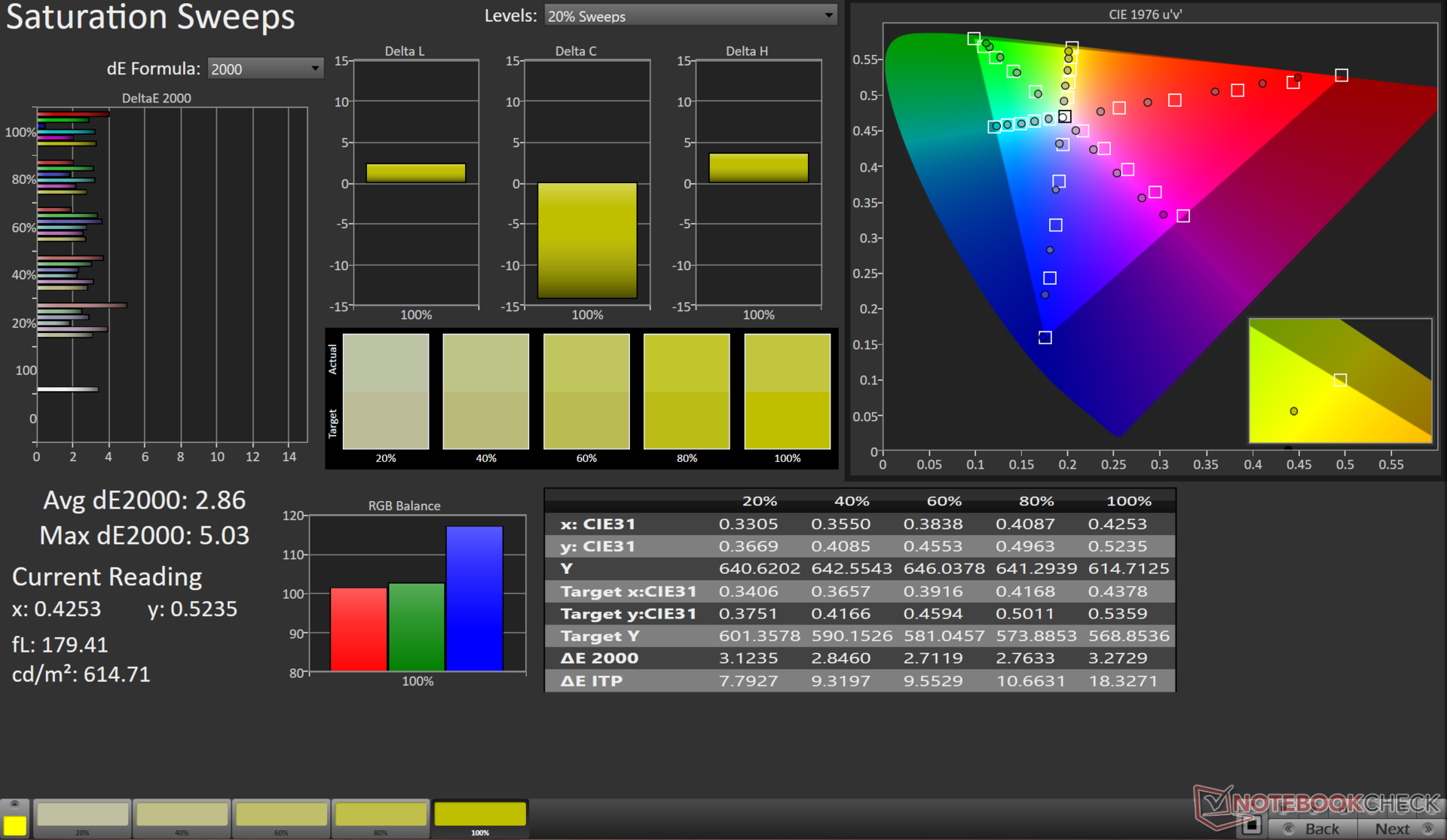
Adaptive mode, default color temperature (Color space target: sRGB)
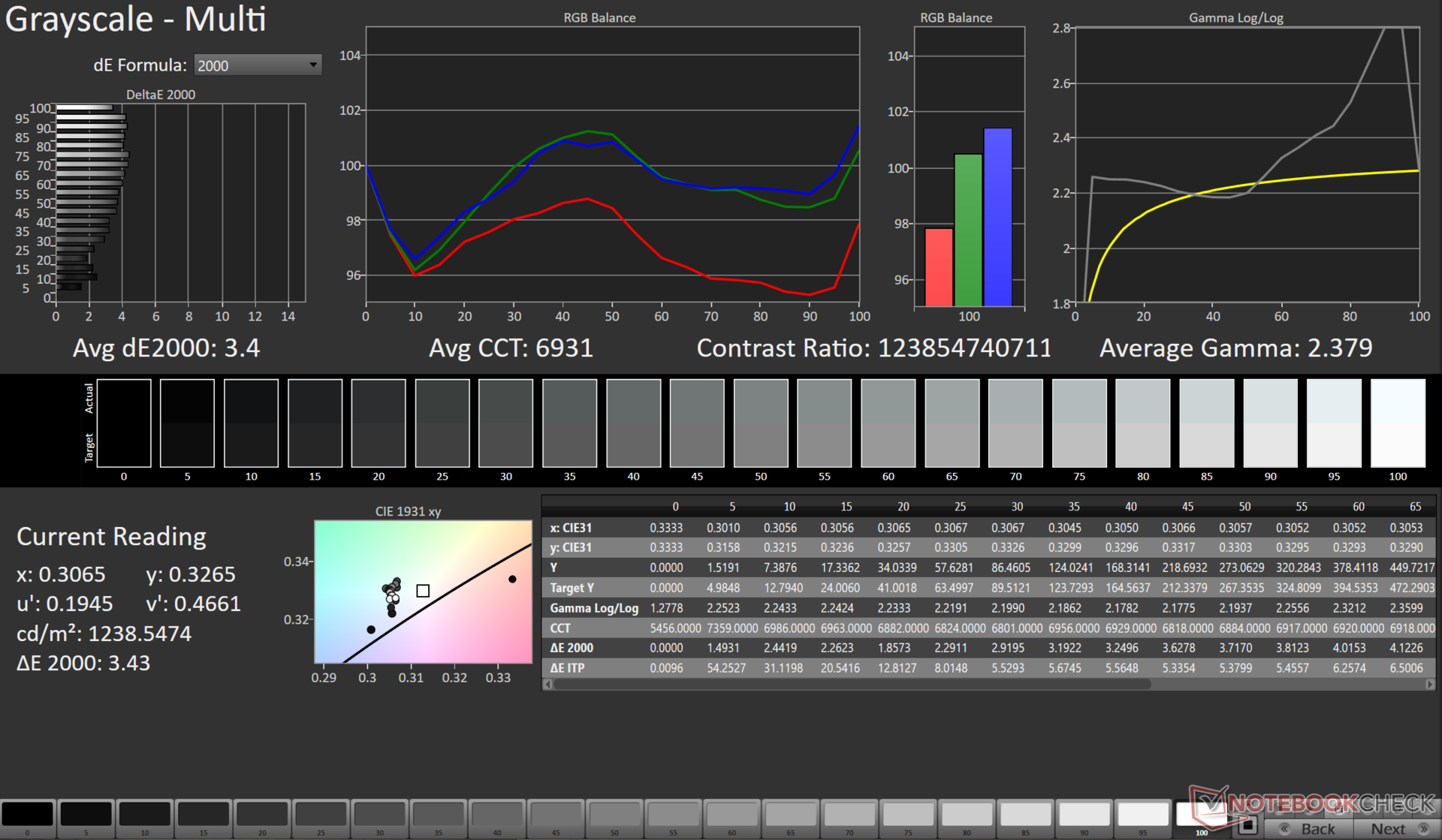


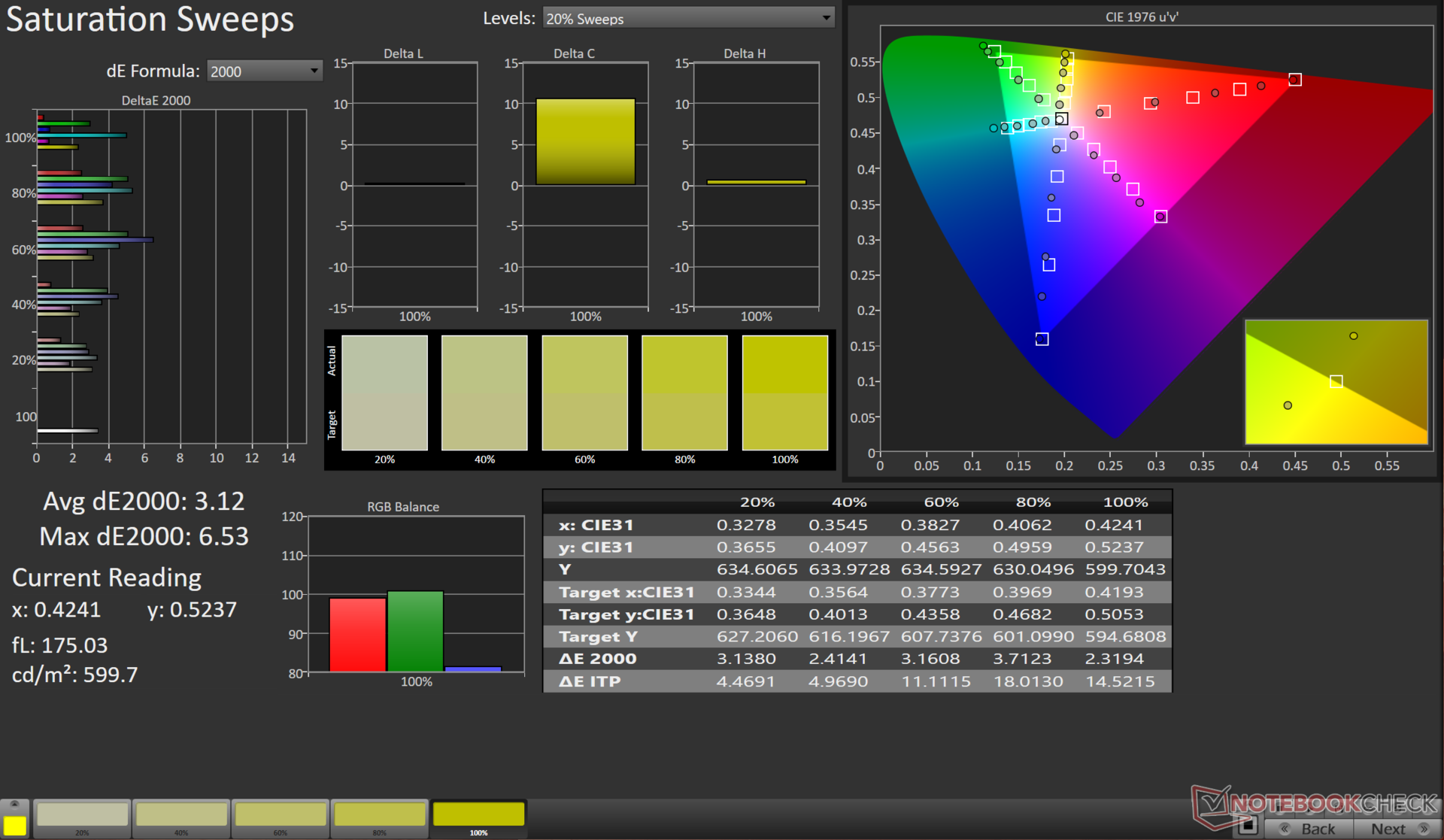
Adaptive mode, default color temperature (Color space target: Display P3)


Screen Flickering / PWM (Pulse-Width Modulation)
| Screen flickering / PWM detected | 240.66 Hz Amplitude: 83.3 % | 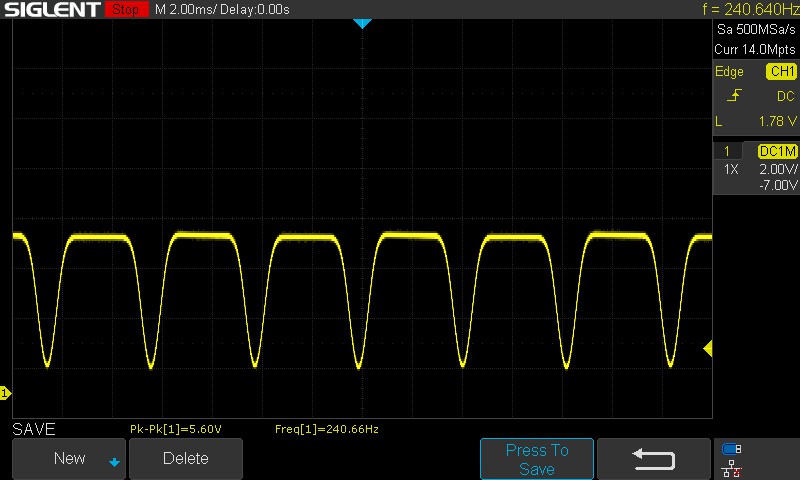 | |
The display backlight flickers at 240.66 Hz (worst case, e.g., utilizing PWM) . The frequency of 240.66 Hz is relatively low, so sensitive users will likely notice flickering and experience eyestrain at the stated brightness setting and below. In comparison: 52 % of all tested devices do not use PWM to dim the display. If PWM was detected, an average of 7617 (minimum: 5 - maximum: 343500) Hz was measured. | |||
The Pixel 10 display flickers at a constant 240 Hz across all tested brightness levels. Unlike the Pixel 10 Pro series, there's no accessibility option to increase the PWM frequency to 480 Hz.
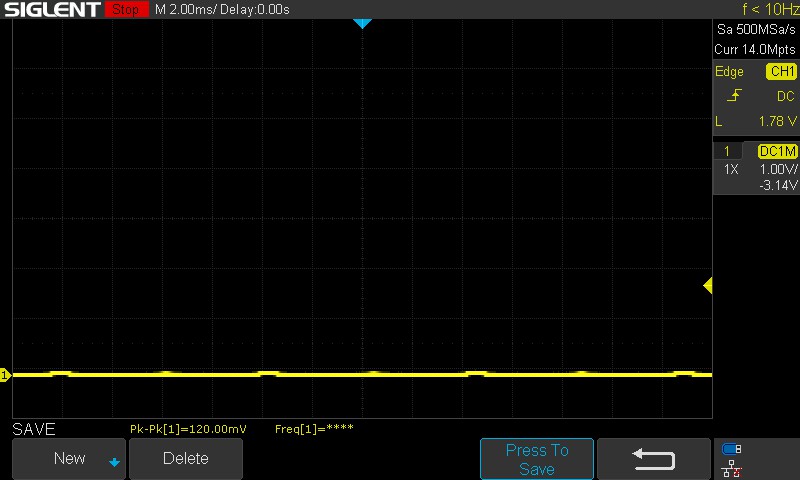
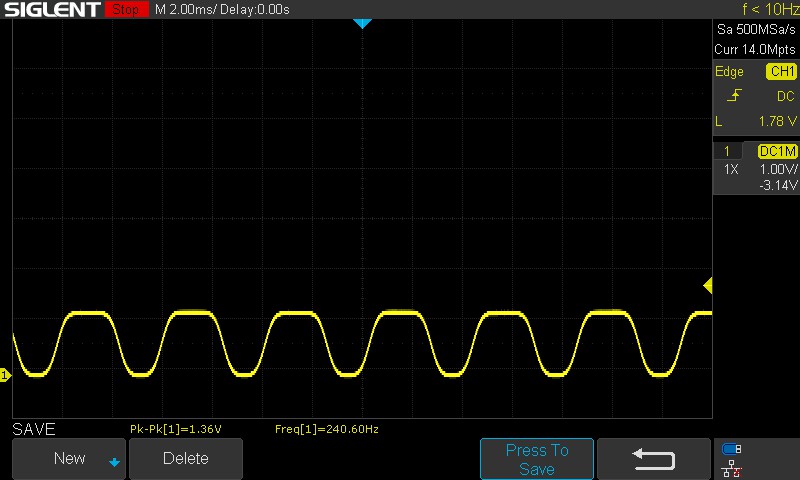
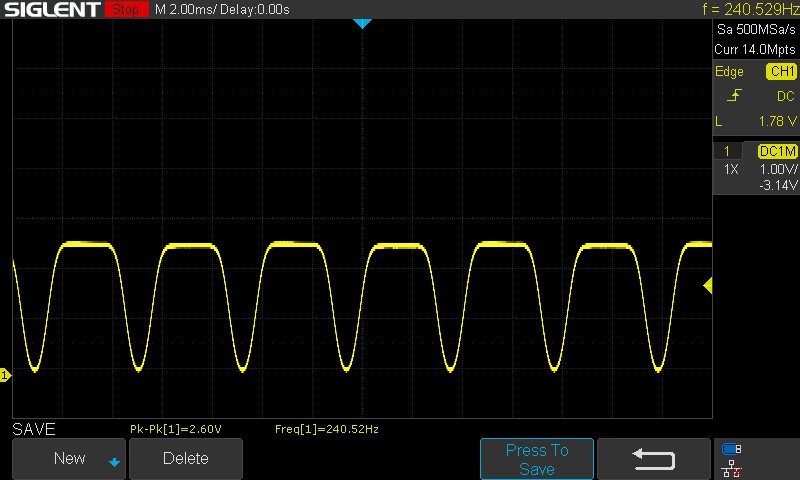
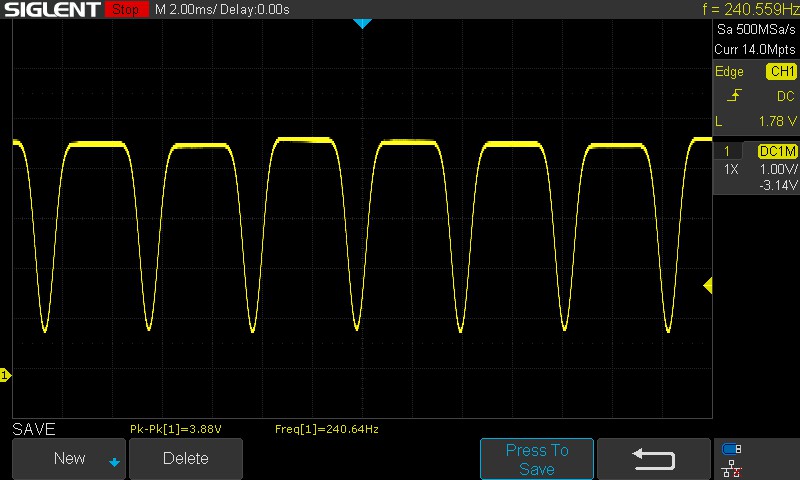
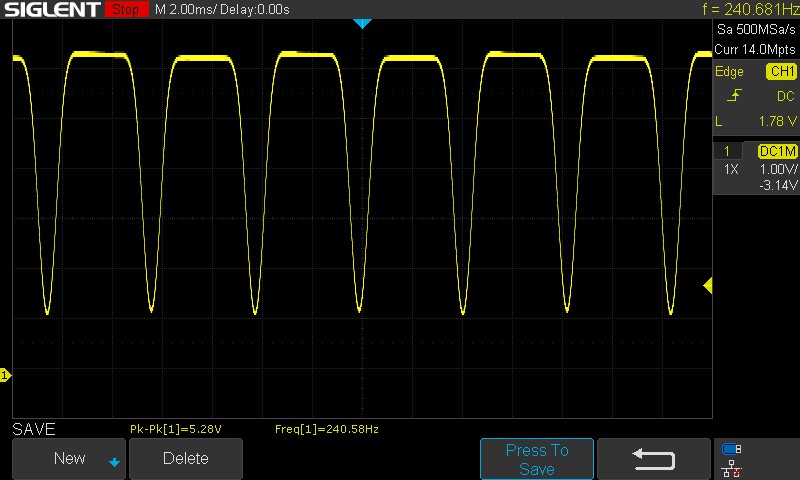
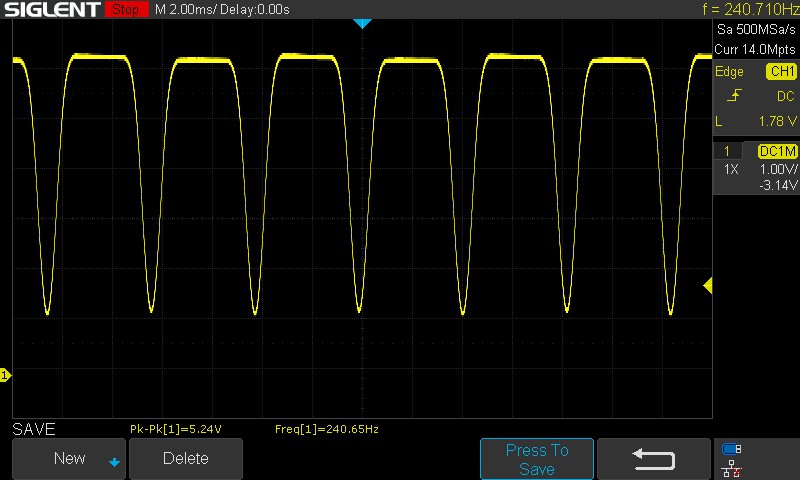
Measurement series with fixed zoom level and different brightness settings (The amplitude curve at minimum brightness looks flat, but this is due to the scaling. The info box shows the enlarged version of the amplitude at minimum brightness).
For more information, check out our primers on "Why PWM is such a headache" and "Analysis: DC Dimming vs. PWM".
Our PWM Ranking table provides an overview of measured PWM across reviewed devices.
Display Response Times
| ↔ Response Time Black to White | ||
|---|---|---|
| 11.2 ms ... rise ↗ and fall ↘ combined | ↗ 9.2 ms rise | 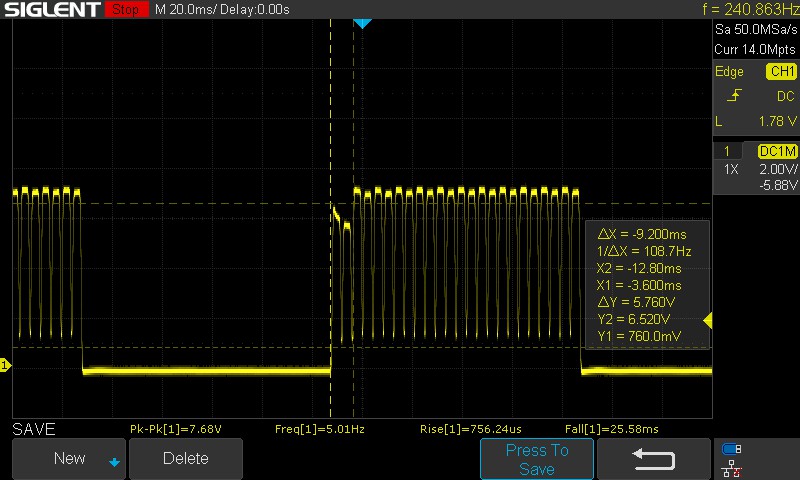 |
| ↘ 2 ms fall | ||
| The screen shows good response rates in our tests, but may be too slow for competitive gamers. In comparison, all tested devices range from 0.1 (minimum) to 240 (maximum) ms. » 31 % of all devices are better. This means that the measured response time is better than the average of all tested devices (19.7 ms). | ||
| ↔ Response Time 50% Grey to 80% Grey | ||
| 0.89 ms ... rise ↗ and fall ↘ combined | ↗ 0.45 ms rise | 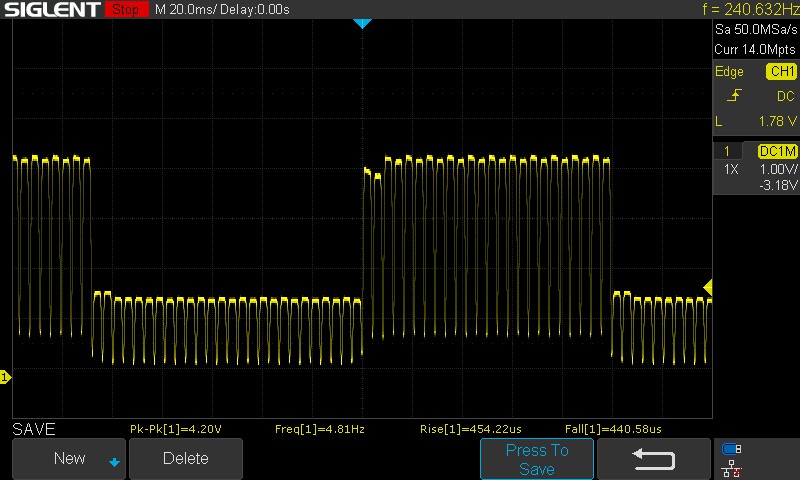 |
| ↘ 0.44 ms fall | ||
| The screen shows very fast response rates in our tests and should be very well suited for fast-paced gaming. In comparison, all tested devices range from 0.13 (minimum) to 636 (maximum) ms. » 4 % of all devices are better. This means that the measured response time is better than the average of all tested devices (30.7 ms). | ||
The Pixel 10 uses a 24-bit panel (8 bits per RGB channel) and thus can display 16 million colors. We did not detect any signs of temporal dithering.
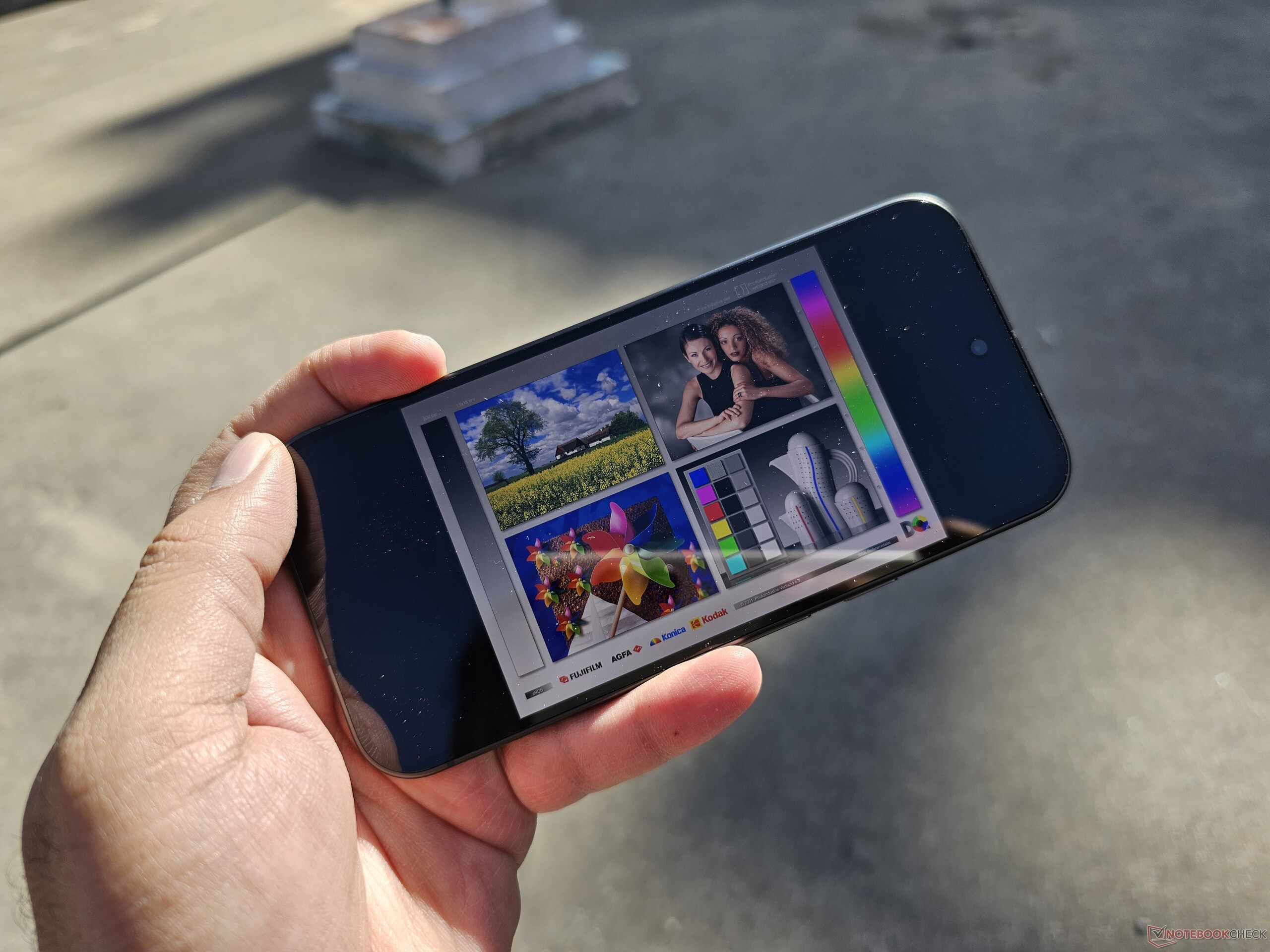
Outdoor viewing is pretty legible at maximum brightness. Viewing angles are stable with no perceived loss of brightness and color at the extremes.


Performance: Tensor G5 struggles despite new GPU drivers
In terms of CPU performance, the Pixel 10’s Tensor G5 can only match the Snapdragon 8s Gen 4 in Geekbench single-core.
The Tensor G5 trails behind and cannot keep up with the Apple iPhone 17, Xiaomi 17, and Vivo X300, which feature premium flagship SoCs like the Apple A19, Snapdragon 8 Elite Gen 5, and the MediaTek Dimensity 9500.
| UL Procyon AI Inference for Android - Overall Score NNAPI | |
| Google Pixel 9 | |
| Xiaomi 17 | |
| Samsung Galaxy S25 | |
| Google Pixel 10 | |
| Average of class Smartphone (2895 - 66164, n=99, last 2 years) | |
| Average Google Tensor G5 (17652 - 19584, n=3) | |
| Google Pixel 10 Pro | |
| AI Benchmark - Score V6 | |
| Samsung Galaxy S25 | |
| Average of class Smartphone (55.6 - 22780, n=79, last 2 years) | |
| Xiaomi 17 | |
| Google Pixel 10 | |
| Google Pixel 10 Pro | |
| Average Google Tensor G5 (761 - 802, n=3) | |
The PowerVR D-Series DXT-48-1536 iGPU shows decent gains over the Mali G715 MP7 in the Pixel 9 in 3DMark and GFXBench tests. Despite updating to the new v25.1 GPU driver, the iGPU still pales in comparison to the competition.
While the new driver delivers much better Geekbench OpenCL scores than we saw previously, overall GPU performance remains far behind the Mali-G1 Ultra MC12 and Apple A19 GPU, and even last gen's Adreno 830.
3DMark: Wild Life Extreme Unlimited | Wild Life Extreme | Wild Life Unlimited Score | Steel Nomad Light Unlimited Score | Steel Nomad Light Score
GFXBench (DX / GLBenchmark) 2.7: T-Rex Onscreen | 1920x1080 T-Rex Offscreen
GFXBench 3.0: on screen Manhattan Onscreen OGL | 1920x1080 1080p Manhattan Offscreen
GFXBench 3.1: on screen Manhattan ES 3.1 Onscreen | 1920x1080 Manhattan ES 3.1 Offscreen
GFXBench: on screen Car Chase Onscreen | 1920x1080 Car Chase Offscreen | on screen Aztec Ruins High Tier Onscreen | 2560x1440 Aztec Ruins High Tier Offscreen | on screen Aztec Ruins Normal Tier Onscreen | 1920x1080 Aztec Ruins Normal Tier Offscreen | 3840x2160 4K Aztec Ruins High Tier Offscreen
| Geekbench 6.7 / GPU OpenCL | |
| Xiaomi 17 | |
| Vivo X300 | |
| Samsung Galaxy S25 | |
| Google Pixel 9 | |
| Google Pixel 10 | |
| Google Pixel 10 Pro | |
| Geekbench 6.7 / GPU Vulkan | |
| Samsung Galaxy S25 | |
| Vivo X300 | |
| Xiaomi 17 | |
| Google Pixel 9 | |
| Google Pixel 10 | |
| Google Pixel 10 Pro | |
| 3DMark / Wild Life Extreme Unlimited | |
| Vivo X300 | |
| Samsung Galaxy S25 | |
| Xiaomi 17 | |
| Apple iPhone 17 | |
| Google Pixel 10 Pro | |
| Google Pixel 10 | |
| Google Pixel 9 | |
| 3DMark / Wild Life Extreme | |
| Vivo X300 | |
| Samsung Galaxy S25 | |
| Xiaomi 17 | |
| Apple iPhone 17 | |
| Google Pixel 10 Pro | |
| Google Pixel 10 | |
| Google Pixel 9 | |
| 3DMark / Wild Life Unlimited Score | |
| Samsung Galaxy S25 | |
| Vivo X300 | |
| Xiaomi 17 | |
| Apple iPhone 17 | |
| Google Pixel 10 Pro | |
| Google Pixel 10 | |
| Google Pixel 9 | |
| 3DMark / Steel Nomad Light Unlimited Score | |
| Vivo X300 | |
| Xiaomi 17 | |
| Apple iPhone 17 | |
| Google Pixel 9 | |
| Google Pixel 10 Pro | |
| Google Pixel 10 | |
| 3DMark / Steel Nomad Light Score | |
| Vivo X300 | |
| Xiaomi 17 | |
| Apple iPhone 17 | |
| Google Pixel 9 | |
| Google Pixel 10 | |
| Google Pixel 10 Pro | |
| Samsung Galaxy S25 | |
| GFXBench (DX / GLBenchmark) 2.7 / T-Rex Onscreen | |
| Google Pixel 10 Pro | |
| Google Pixel 9 | |
| Samsung Galaxy S25 | |
| Google Pixel 10 | |
| Xiaomi 17 | |
| Vivo X300 | |
| Apple iPhone 17 | |
| GFXBench (DX / GLBenchmark) 2.7 / T-Rex Offscreen | |
| Vivo X300 | |
| Xiaomi 17 | |
| Samsung Galaxy S25 | |
| Apple iPhone 17 | |
| Google Pixel 9 | |
| Google Pixel 10 | |
| Google Pixel 10 Pro | |
| GFXBench 3.0 / Manhattan Onscreen OGL | |
| Google Pixel 10 Pro | |
| Google Pixel 9 | |
| Samsung Galaxy S25 | |
| Google Pixel 10 | |
| Xiaomi 17 | |
| Vivo X300 | |
| Apple iPhone 17 | |
| GFXBench 3.0 / 1080p Manhattan Offscreen | |
| Samsung Galaxy S25 | |
| Vivo X300 | |
| Xiaomi 17 | |
| Apple iPhone 17 | |
| Google Pixel 10 Pro | |
| Google Pixel 10 | |
| Google Pixel 9 | |
| GFXBench 3.1 / Manhattan ES 3.1 Onscreen | |
| Samsung Galaxy S25 | |
| Google Pixel 10 | |
| Xiaomi 17 | |
| Vivo X300 | |
| Google Pixel 9 | |
| Google Pixel 10 Pro | |
| Apple iPhone 17 | |
| GFXBench 3.1 / Manhattan ES 3.1 Offscreen | |
| Vivo X300 | |
| Xiaomi 17 | |
| Samsung Galaxy S25 | |
| Apple iPhone 17 | |
| Google Pixel 10 Pro | |
| Google Pixel 10 | |
| Google Pixel 9 | |
| GFXBench / Car Chase Onscreen | |
| Samsung Galaxy S25 | |
| Xiaomi 17 | |
| Vivo X300 | |
| Google Pixel 9 | |
| Google Pixel 10 | |
| Apple iPhone 17 | |
| Google Pixel 10 Pro | |
| GFXBench / Car Chase Offscreen | |
| Samsung Galaxy S25 | |
| Xiaomi 17 | |
| Vivo X300 | |
| Apple iPhone 17 | |
| Google Pixel 10 Pro | |
| Google Pixel 9 | |
| Google Pixel 10 | |
| GFXBench / Aztec Ruins High Tier Onscreen | |
| Samsung Galaxy S25 | |
| Xiaomi 17 | |
| Vivo X300 | |
| Google Pixel 10 | |
| Google Pixel 9 | |
| Google Pixel 10 Pro | |
| Apple iPhone 17 | |
| GFXBench / Aztec Ruins High Tier Offscreen | |
| Vivo X300 | |
| Samsung Galaxy S25 | |
| Xiaomi 17 | |
| Apple iPhone 17 | |
| Google Pixel 10 Pro | |
| Google Pixel 10 | |
| Google Pixel 9 | |
| GFXBench / Aztec Ruins Normal Tier Onscreen | |
| Samsung Galaxy S25 | |
| Xiaomi 17 | |
| Vivo X300 | |
| Google Pixel 10 | |
| Google Pixel 9 | |
| Google Pixel 10 Pro | |
| Apple iPhone 17 | |
| GFXBench / Aztec Ruins Normal Tier Offscreen | |
| Vivo X300 | |
| Xiaomi 17 | |
| Samsung Galaxy S25 | |
| Apple iPhone 17 | |
| Google Pixel 10 Pro | |
| Google Pixel 10 | |
| Google Pixel 9 | |
| GFXBench / 4K Aztec Ruins High Tier Offscreen | |
| Vivo X300 | |
| Samsung Galaxy S25 | |
| Xiaomi 17 | |
| Apple iPhone 17 | |
| Google Pixel 10 Pro | |
| Google Pixel 10 | |
| Google Pixel 9 | |
Basemark GPUScore
Browser performance is a marked improvement over the Pixel 9, though it still falls short of comparable Samsung and Apple offerings.
That being said, everyday browsing with the default Chrome browser was smooth and hiccup-free.
| Jetstream 2 - 2.0 Total | |
| Apple iPhone 17 (Safari Mobile 26) | |
| Samsung Galaxy S25 (Chrome 134) | |
| Average Google Tensor G5 (193.3 - 262, n=3) | |
| Google Pixel 10 (Chrome 146 ) | |
| Google Pixel 10 Pro (Chrome 140) | |
| Average of class Smartphone (63.9 - 423, n=115, last 2 years) | |
| Google Pixel 9 (Chrome 129) | |
| Speedometer 2.0 - Result 2.0 | |
| Apple iPhone 17 (Safari Mobile 26) | |
| Samsung Galaxy S25 (Chrome 134) | |
| Google Pixel 10 (Chrome 146) | |
| Average Google Tensor G5 (343 - 370, n=3) | |
| Google Pixel 10 Pro (Chrome 140) | |
| Average of class Smartphone (49.3 - 733, n=72, last 2 years) | |
| Google Pixel 9 (Chrome 129) | |
| Speedometer 3 - Score 3.0 | |
| Apple iPhone 17 (Safari Mobile 26) | |
| Samsung Galaxy S25 (Chrome 134) | |
| Xiaomi 17 (Chrome 141) | |
| Average Google Tensor G5 (20.6 - 21.3, n=3) | |
| Google Pixel 10 (Chrome 146) | |
| Google Pixel 10 Pro (Chrome 140) | |
| Google Pixel 9 (Chrome 129) | |
| Average of class Smartphone (3.06 - 45.5, n=81, last 2 years) | |
| WebXPRT 4 - Overall | |
| Apple iPhone 17 (Safari Mobile 26) | |
| Samsung Galaxy S25 (Chrome 134) | |
| Google Pixel 10 (Chrome 146) | |
| Average Google Tensor G5 (174 - 187, n=3) | |
| Google Pixel 10 Pro (Chrome 140) | |
| Average of class Smartphone (56 - 278, n=89, last 2 years) | |
| Google Pixel 9 (Chrome 129) | |
| Xiaomi 17 (Chrome 141) | |
| Octane V2 - Total Score | |
| Apple iPhone 17 (Safari Mobile 26) | |
| Samsung Galaxy S25 (Chrome 134) | |
| Google Pixel 10 Pro (Chrome 140) | |
| Average Google Tensor G5 (74722 - 84281, n=3) | |
| Google Pixel 10 (Chrome 146) | |
| Google Pixel 9 | |
| Xiaomi 17 (Chrome 141) | |
| Average of class Smartphone (6015 - 126661, n=135, last 2 years) | |
| Mozilla Kraken 1.1 - Total | |
| Average of class Smartphone (281 - 2718, n=119, last 2 years) | |
| Google Pixel 9 (Chrome 129) | |
| Vivo X300 (Chrome 143) | |
| Xiaomi 17 (Chrome 141) | |
| Google Pixel 10 Pro (Chrome 140) | |
| Average Google Tensor G5 (468 - 473, n=3) | |
| Google Pixel 10 (Chrome 146) | |
| Samsung Galaxy S25 (Chrome 134) | |
| Apple iPhone 17 (Safari Mobile 26) | |
* ... smaller is better
Google says it uses UFS 4.0 storage in all Pixel 10 models with 256 GB and higher storage. However, actual storage performance in our tests seems relatively low.
Assuming Google’s spec is correct, this suggests a potential bottleneck with the Tensor G5, given similar scores we've seen with the Pixel 10 Pro and the Pixel 10 Pro XL.
| Google Pixel 10 | Google Pixel 9 | Xiaomi 17 | Google Pixel 10 Pro | Vivo X300 | Samsung Galaxy S25 | Average 256 GB UFS 4.0 Flash | Average of class Smartphone | |
|---|---|---|---|---|---|---|---|---|
| AndroBench 3-5 | -38% | 95% | -14% | 28% | 20% | 49% | 12% | |
| Sequential Read 256KB (MB/s) | 1762.72 | 1584.56 -10% | 3943.44 124% | 1492.74 -15% | 2056.87 17% | 3982.43 126% | 3615 ? 105% | 2280 ? 29% |
| Sequential Write 256KB (MB/s) | 1660.39 | 256.48 -85% | 3784.97 128% | 1353.55 -18% | 1997.76 20% | 2256.71 36% | 2641 ? 59% | 1972 ? 19% |
| Random Read 4KB (MB/s) | 281.71 | 226.41 -20% | 487.69 73% | 264.44 -6% | 332.61 18% | 299.89 6% | 391 ? 39% | 317 ? 13% |
| Random Write 4KB (MB/s) | 421.08 | 266.19 -37% | 643.31 53% | 347.84 -17% | 654.09 55% | 51.76 -88% | 394 ? -6% | 362 ? -14% |
| Google Pixel 10 | Google Pixel 9 | Xiaomi 17 | Google Pixel 10 Pro | Samsung Galaxy S25 | Average 256 GB UFS 4.0 Flash | Average of class Smartphone | |
|---|---|---|---|---|---|---|---|
| PCMark for Android | -56% | 43% | -26% | 38% | 0% | -23% | |
| Storage 2.0 seq. read int. (MB/s) | 2523.98 | 1592 ? -37% | 3050 ? 21% | 2296.31 -9% | 3499 ? 39% | 2633 ? 4% | 1576 ? -38% |
| Storage 2.0 seq. write int. (MB/s) | 1781.95 | 250 ? -86% | 2580 ? 45% | 1078.56 -39% | 3089 ? 73% | 2282 ? 28% | 1504 ? -16% |
| Storage 2.0 random read int. (MB/s) | 40.9 | 25 ? -39% | 62.9 ? 54% | 36.54 -11% | 58.6 ? 43% | 51 ? 25% | 43.6 ? 7% |
| Storage 2.0 random write int. (MB/s) | 92.34 | 55.8 ? -40% | 146.5 ? 59% | 48.52 -47% | 93.2 ? 1% | 80.7 ? -13% | 72.1 ? -22% |
| Storage 2.0 (Points) | 137955 | 28089 ? -80% | 189969 ? 38% | 104562 -24% | 187720 ? 36% | 79578 ? -42% | 73186 ? -47% |
Gaming: Up to 60 fps possible with details dialed down
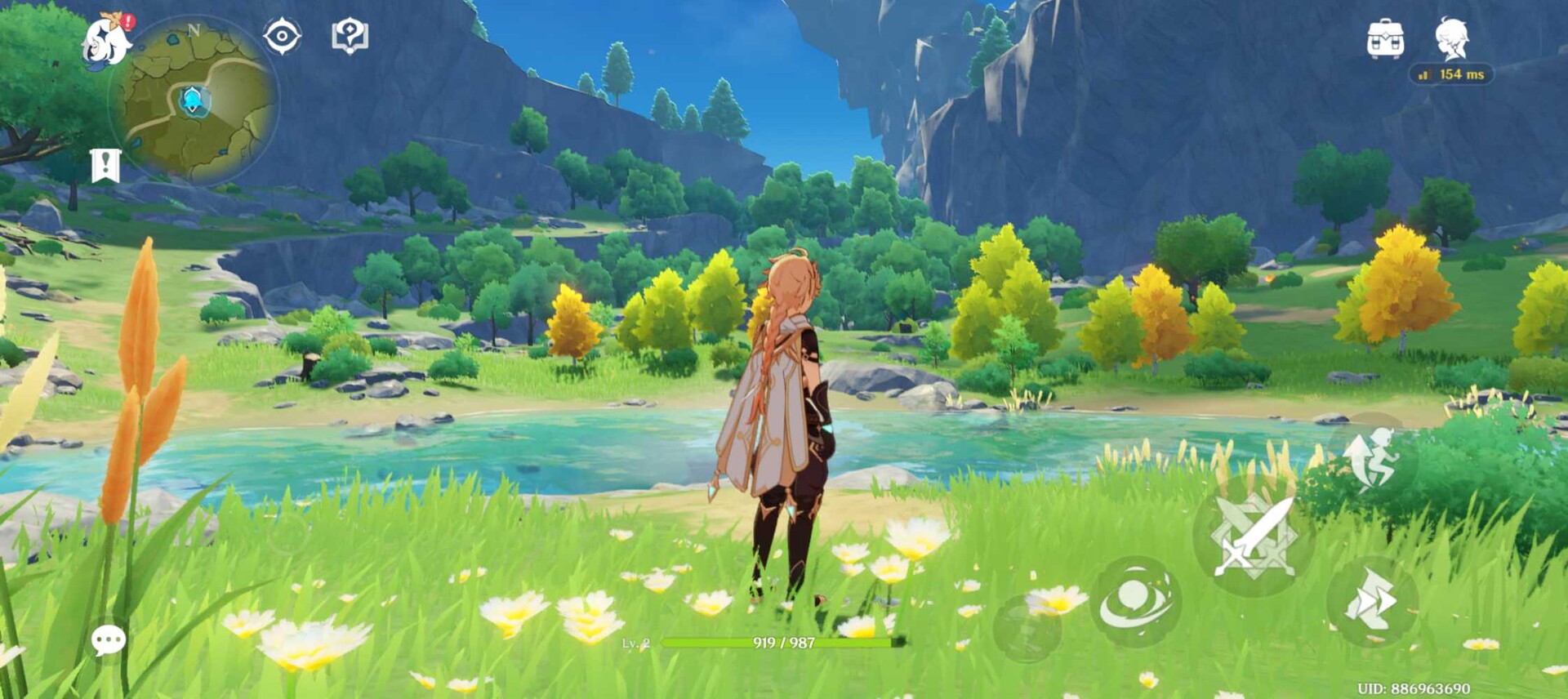
The Pixel 10 can run supported games at 60 fps, but only at low to medium settings. Google has disabled ray tracing on the DXT-48-1536 iGPU for some reason.
Frame rates dip at higher settings, but games like Genshin Impact can still run close to 50 fps at the highest settings, while PUBG Mobile averages around 40 fps at HD and higher settings.
Touch response is adequate for casual gaming, but competitive gamers may prefer other options. Pixel UI also lacks gaming-specific customizations or overlays.
All game metrics were logged using the GameBench Studio Pro application.

Emissions: Heat output and throttling on expected lines
Temperature
Surface temperatures remain generally tolerable even under full load, with the smartphone reaching around 40°C on both the screen and the back cover.
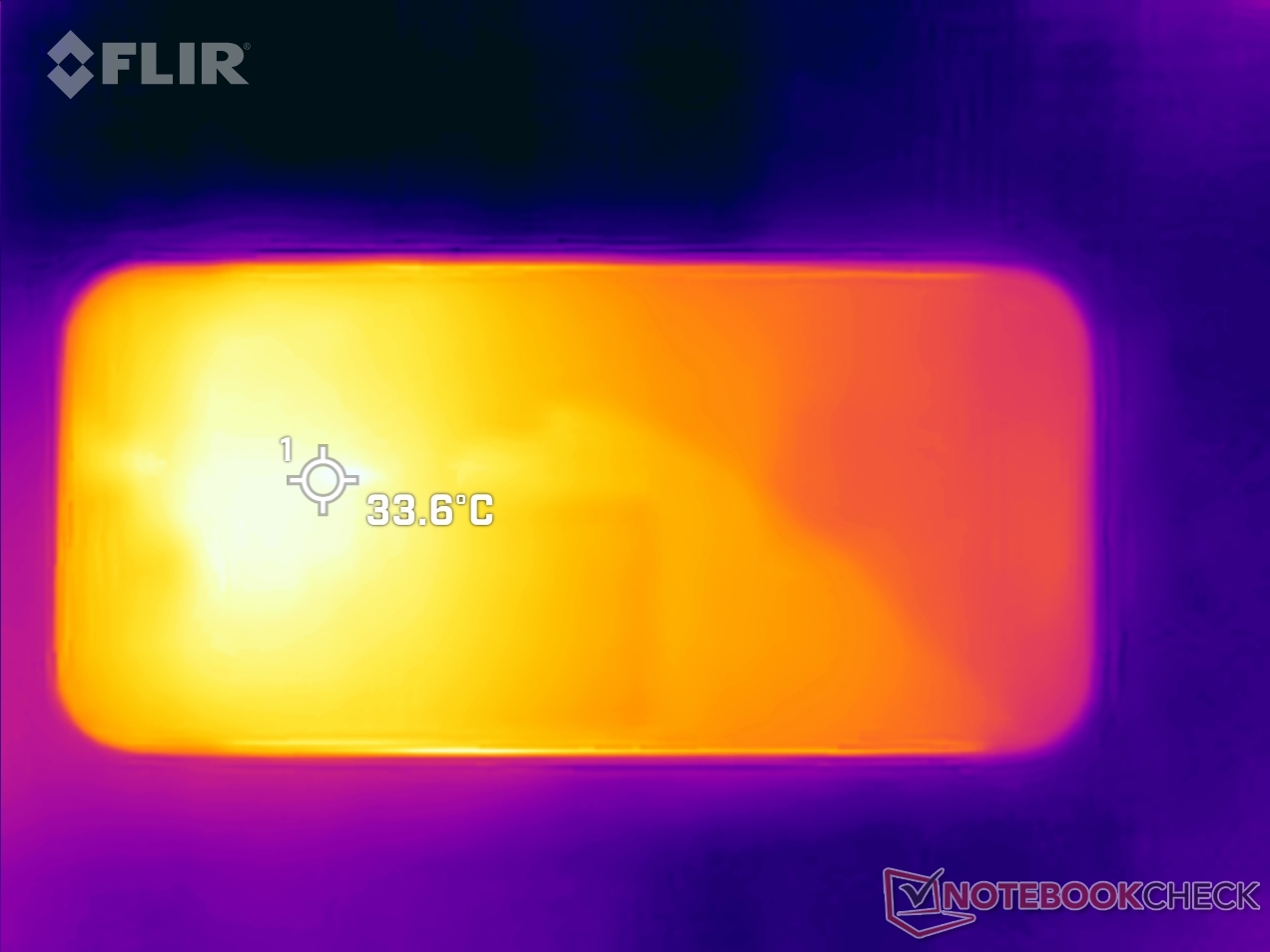
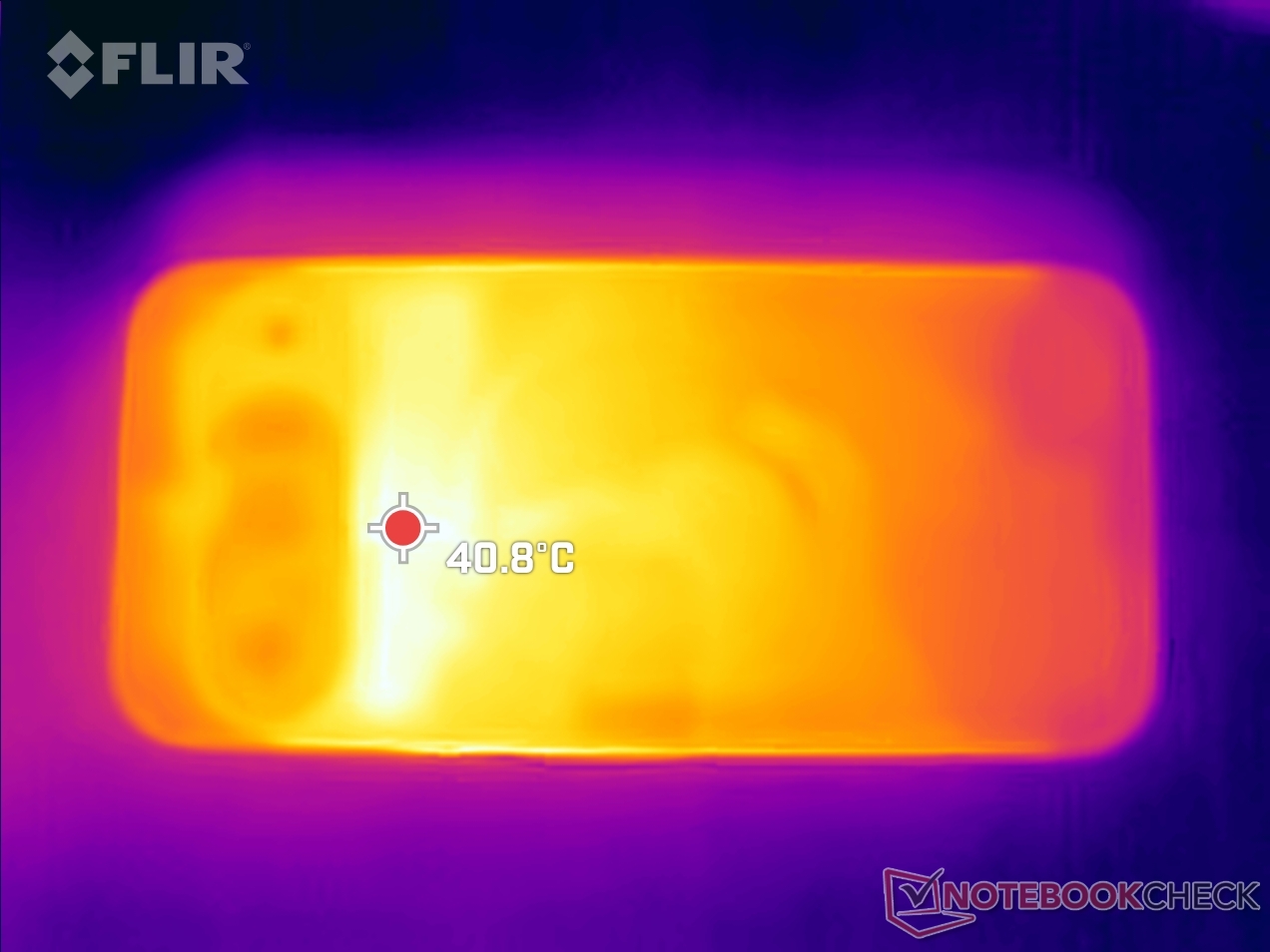
(±) The maximum temperature on the upper side is 40.6 °C / 105 F, compared to the average of 35.4 °C / 96 F, ranging from 21.9 to 247 °C for the class Smartphone.
(+) The bottom heats up to a maximum of 39.8 °C / 104 F, compared to the average of 34.1 °C / 93 F
(+) In idle usage, the average temperature for the upper side is 30.2 °C / 86 F, compared to the device average of 33 °C / 91 F.
3DMark stress tests
The Pixel 10 performs similarly to the Pixel 9 in 3DMark stress tests and was especially stable in the Steel Nomad Light stress.
| 3DMark / Wild Life Stress Test Stability | |
| Apple iPhone 17 | |
| Google Pixel 10 Pro | |
| Xiaomi 17 | |
| Google Pixel 9 | |
| Google Pixel 10 | |
| Vivo X300 | |
| Samsung Galaxy S25 | |
| 3DMark / Wild Life Extreme Stress Test | |
| Google Pixel 10 Pro | |
| Xiaomi 17 | |
| Google Pixel 10 | |
| Google Pixel 9 | |
| Apple iPhone 17 | |
| Samsung Galaxy S25 | |
| Vivo X300 | |
| 3DMark / Steel Nomad Light Stress Test Stability | |
| Google Pixel 10 Pro | |
| Google Pixel 10 | |
| Google Pixel 9 | |
| Xiaomi 17 | |
| Apple iPhone 17 | |
| Vivo X300 | |
Speakers
The Pixel 10’s speakers reach nearly 85 dB(A) loudness, with the earpiece doubling as a stereo speaker. Although the bass is lacking, the speakers deliver decent mids and highs.
Several Bluetooth codecs are supported, but the phone offers only SBC and AAC choices, with a maximum of 16-bit/44 kHz sampling when connected to the OnePlus Buds Pro 3 and no LHDC.
Google Pixel 10 audio analysis
(+) | speakers can play relatively loud (84.7 dB)
Bass 100 - 315 Hz
(-) | nearly no bass - on average 19.9% lower than median
(±) | linearity of bass is average (10.7% delta to prev. frequency)
Mids 400 - 2000 Hz
(+) | balanced mids - only 3% away from median
(+) | mids are linear (4.9% delta to prev. frequency)
Highs 2 - 16 kHz
(+) | balanced highs - only 3.5% away from median
(+) | highs are linear (3.9% delta to prev. frequency)
Overall 100 - 16.000 Hz
(±) | linearity of overall sound is average (15.4% difference to median)
Compared to same class
» 4% of all tested devices in this class were better, 3% similar, 93% worse
» The best had a delta of 11%, average was 34%, worst was 136%
Compared to all devices tested
» 23% of all tested devices were better, 4% similar, 73% worse
» The best had a delta of 4%, average was 23%, worst was 136%
Apple iPhone 17 audio analysis
(±) | speaker loudness is average but good (81.3 dB)
Bass 100 - 315 Hz
(±) | reduced bass - on average 9.2% lower than median
(±) | linearity of bass is average (11.6% delta to prev. frequency)
Mids 400 - 2000 Hz
(+) | balanced mids - only 3.1% away from median
(+) | mids are linear (6% delta to prev. frequency)
Highs 2 - 16 kHz
(±) | higher highs - on average 5.1% higher than median
(±) | linearity of highs is average (7.7% delta to prev. frequency)
Overall 100 - 16.000 Hz
(+) | overall sound is linear (14.8% difference to median)
Compared to same class
» 2% of all tested devices in this class were better, 3% similar, 95% worse
» The best had a delta of 11%, average was 34%, worst was 136%
Compared to all devices tested
» 20% of all tested devices were better, 4% similar, 76% worse
» The best had a delta of 4%, average was 23%, worst was 136%
Energy consumption: Power draw and battery life gains over the Pixel 9
Power consumption
| Off / Standby |   0.15 / 0.36 Watt 0.15 / 0.36 Watt |
| Idle |  0.88 / 1.29 / 1.4 Watt 0.88 / 1.29 / 1.4 Watt |
| Load |
5.38 / 19.3 Watt |
    
| |
Key:
min: ,
med: ,
max: Metrahit Energy | |
| Google Pixel 10 Tensor G5, 4970 mAh | Google Pixel 9 Tensor G4, 4700 mAh | Xiaomi 17 SD 8 Elite Gen 5, 7000 mAh | Google Pixel 10 Pro Tensor G5, 4870 mAh | Apple iPhone 17 A19, 3692 mAh | Vivo X300 Dimensity 9500, 5360 mAh | Samsung Galaxy S25 SD 8 Elite f. Galaxy, 4000 mAh | Average Google Tensor G5 | Average of class Smartphone | |
|---|---|---|---|---|---|---|---|---|---|
| Power Consumption | -8% | 4% | -25% | -7% | -25% | -9% | -8% | -4% | |
| Idle Minimum * (Watt) | 0.88 | 0.66 25% | 0.7 20% | 1.01 -15% | 1.1 -25% | 0.6 32% | 0.47 47% | 0.957 ? -9% | 0.901 ? -2% |
| Idle Average * (Watt) | 1.29 | 1.49 -16% | 1.4 -9% | 1.65 -28% | 1.3 -1% | 2.02 -57% | 1.04 19% | 1.427 ? -11% | 1.483 ? -15% |
| Idle Maximum * (Watt) | 1.4 | 1.78 -27% | 1.7 -21% | 2.05 -46% | 1.5 -7% | 2.08 -49% | 1.07 24% | 1.65 ? -18% | 1.677 ? -20% |
| Load Average * (Watt) | 5.38 | 7.44 -38% | 5.9 -10% | 7.25 -35% | 7.6 -41% | 13.33 -148% | 5.67 ? -5% | 6.82 ? -27% | |
| Load Maximum * (Watt) | 19.3 | 16.64 14% | 11.7 39% | 19.78 -2% | 12 38% | 16.38 15% | 18.5 ? 4% | 10.8 ? 44% |
* ... smaller is better
Power consumption: Geekbench (150 cd/m²)
Power consumption: GFXbench (150 cd/m²)
Battery run times
The Pixel 10 gets only a 270 mAh battery capacity increase over the Pixel 9, delivering 8% longer runtimes in our standardized WLAN browsing test and 52% longer runtimes during 1080p H.264 video playback, both at 150 nits brightness.
The phone supports up to 30 W power delivery and takes about 1.5 hours to fully charge from zero.
| Google Pixel 10 Tensor G5, 4970 mAh | Google Pixel 9 Tensor G4, 4700 mAh | Xiaomi 17 SD 8 Elite Gen 5, 7000 mAh | Google Pixel 10 Pro Tensor G5, 4870 mAh | Apple iPhone 17 A19, 3692 mAh | Vivo X300 Dimensity 9500, 5360 mAh | Samsung Galaxy S25 SD 8 Elite f. Galaxy, 4000 mAh | |
|---|---|---|---|---|---|---|---|
| Battery runtime | -3% | 73% | 6% | 47% | 9% | 13% | |
| Reader / Idle (h) | 29 | 35 21% | 72.7 151% | 33.1 14% | 66.7 130% | 45.2 56% | |
| H.264 (h) | 24.8 | 16.3 -34% | 36.1 46% | 24 -3% | 29.4 19% | 26.5 7% | |
| WiFi v1.3 (h) | 17.9 | 16.5 -8% | 30.9 73% | 21.1 18% | 20.1 12% | 19.6 9% | 18 1% |
| Load (h) | 3.5 | 3.9 11% | 4.3 23% | 3.3 -6% | 4.4 26% | 3 -14% |
Notebookcheck's impressions of the Google Pixel 10
After several software updates and price discounts, the Google Pixel 10 stands out as a viable compact Android smartphone. However, competitors in 2026 have moved on to more efficient chipsets and larger batteries.
Google Pixel 10
- 04/08/2026 v8
Vaidyanathan Subramaniam
 Total Sustainability Score:
 Potential competitors in comparison
Image | Model / Review | Price | Weight | Drive | Display |
|---|---|---|---|---|---|
1. 86%  | Google Pixel 10 Google Tensor G5 ⎘ IMG DXT-48-1536 ⎘ 12 GB Memory, 256 GB UFS 4.x | List Price: 999€ | 204 g | 256 GB UFS 4.0 Flash | 6.30" 2424x1080 421 PPI OLED |
2. 84.9%  | Google Pixel 9 Google Tensor G4 ⎘ ARM Mali-G715 MP7 ⎘ 12 GB Memory, 128 GB UFS 3.1 | List Price: 899€ | 198 g | 128 GB UFS 3.1 Flash | 6.30" 2424x1080 421 PPI OLED |
3. 89.2%  | Xiaomi 17 Qualcomm Snapdragon 8 Elite Gen 5 ⎘ Qualcomm Adreno 840 ⎘ 12 GB Memory, 512 GB UFS 4.x | List Price: 650€ | 191 g | 512 GB UFS 4.1 Flash | 6.30" 2656x1220 464 PPI LTPO AMOLED |
4. 88.9%  | Google Pixel 10 Pro Google Tensor G5 ⎘ IMG DXT-48-1536 ⎘ 16 GB Memory, 256 GB UFS 4.x | List Price: 1199€ | 207 g | 256 GB UFS 4.0 Flash | 6.30" 2856x1280 497 PPI OLED |
5. 87.9%  | Apple iPhone 17 Apple A19 ⎘ Apple A19 GPU ⎘ 8 GB Memory, 256 GB NVMe | List Price: 949 Euro | 177 g | 256 GB NVMe | 6.30" 2622x1206 460 PPI OLED |
6. 88%  | Vivo X300 MediaTek Dimensity 9500 ⎘ Arm Mali G1- Ultra MC12 ⎘ 12 GB Memory, 256 GB UFS 4.x | List Price: 1049€ | 190 g | 256 GB UFS 4.1 Flash | 6.31" 2640x1216 461 PPI AMOLED |
7. 88.9%  | Samsung Galaxy S25 Qualcomm Snapdragon 8 Elite for Galaxy ⎘ Qualcomm Adreno 830 ⎘ 12 GB Memory, 256 GB UFS 4.x | List Price: 899€ | 162 g | 256 GB UFS 4.0 Flash | 6.20" 2340x1080 416 PPI AMOLED |
Transparency
The selection of devices to be reviewed is made by our editorial team. The test sample was provided to the author as a loan by the manufacturer or retailer for the purpose of this review. The lender had no influence on this review, nor did the manufacturer receive a copy of this review before publication. There was no obligation to publish this review. As an independent media company, Notebookcheck is not subjected to the authority of manufacturers, retailers or publishers.
This is how Notebookcheck is testing
Every year, Notebookcheck independently reviews hundreds of laptops and smartphones using standardized procedures to ensure that all results are comparable. We have continuously developed our test methods for around 20 years and set industry standards in the process. In our test labs, high-quality measuring equipment is utilized by experienced technicians and editors. These tests involve a multi-stage validation process. Our complex rating system is based on hundreds of well-founded measurements and benchmarks, which maintains objectivity. Further information on our test methods can be found here.
 Add as a preferred source on Google


