Downgrades and higher prices expected to result in decline in sales of Apple iPhone, Samsung Galaxy and others
DRAM prices have tripled in the past three months and further price increases are expected next year. This is expected to result in laptops becoming at least 20% more expensive, while many budget smartphones are expected to be offered with only 4 GB of RAM.
Analysts at Counterpoint Research have revised their sales forecast for the global smartphone market downward in light of rising DRAM and NAND costs. While the analysts had previously anticipated slight growth, the smartphone market is now expected to shrink by 2.1%. The lower price segment, where DRAM and NAND account for a significant portion of a smartphone's production costs, will be particularly hard hit.
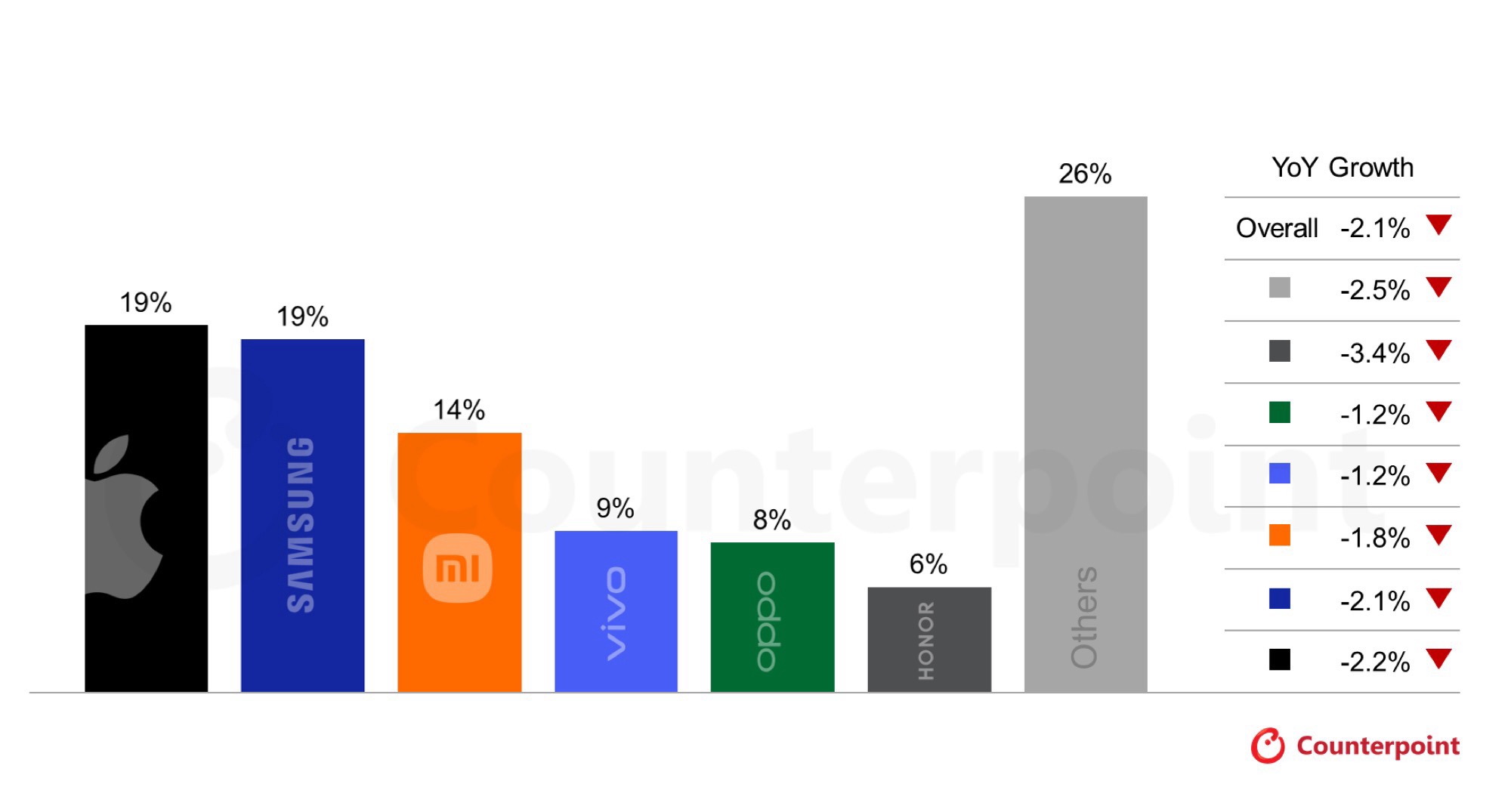
An entry-level smartphone is already said to cost 25% more to produce than in the summer, while manufacturing costs for a flagship model such as the Apple iPhone 17 Pro have risen by 10% so far. In the first half of 2026, costs are expected to rise by a further 10 to 15%. Counterpoint Research expects Apple and Samsung to remain market leaders with a 19% market share each, followed by Xiaomi with 14%, Vivo with 9%, and Oppo with 8%.
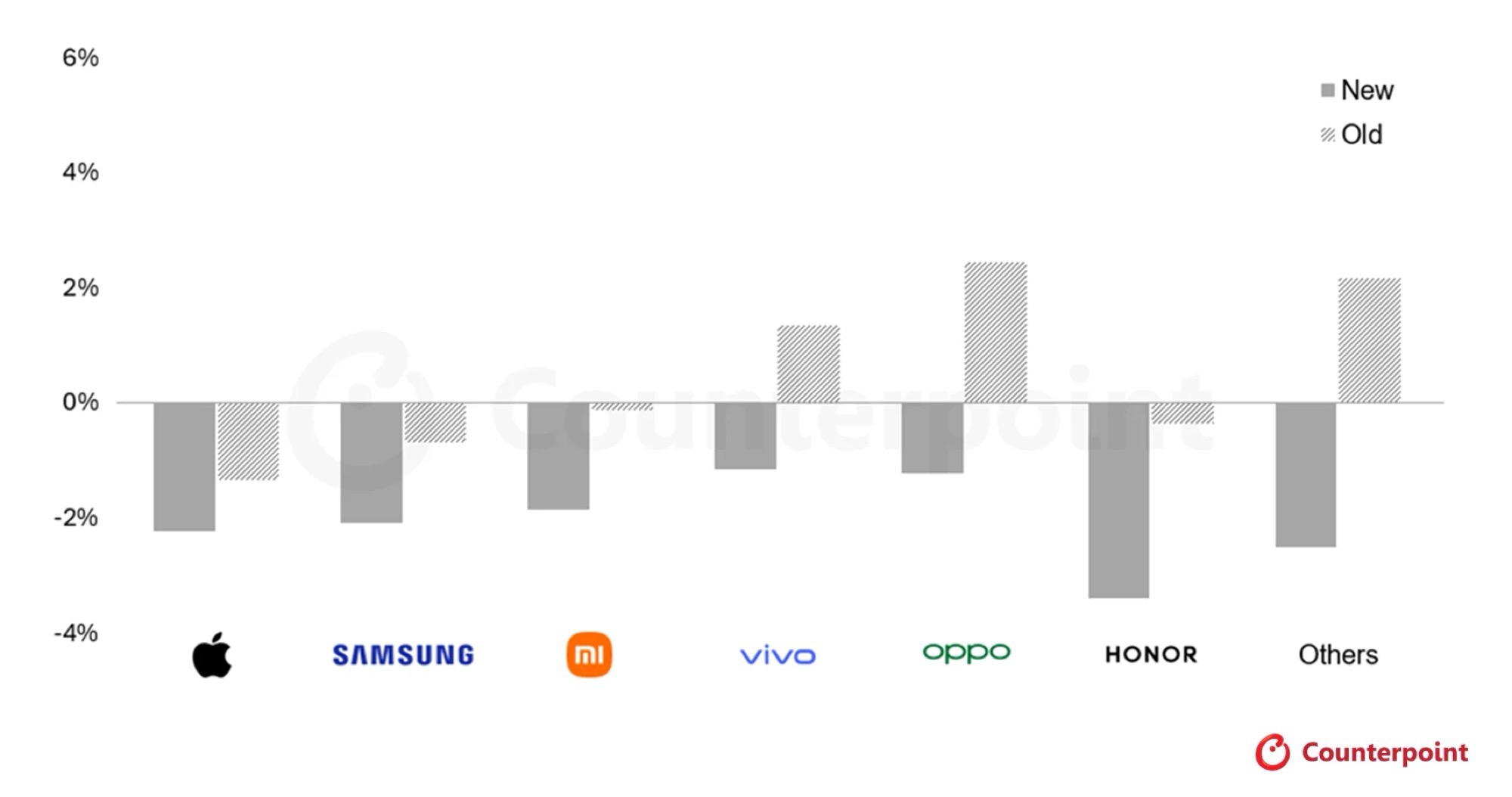
DRAM is expected to become 40% more expensive by the second quarter of 2026. According to Counterpoint Research, manufacturers that sell generally more expensive products, such as Apple and Samsung, will be less affected by these price increases. Manufacturers of more affordable mid-range smartphones, on the other hand, are expected to consider downgrades, not only in RAM but also in the display, processor and cameras, in order to avoid excessive price increases.
Source(s)
 Add as a preferred source on Google