




Thin, efficient, long-lasting, and affordable – the Gigabyte A16 Pro surprises in review
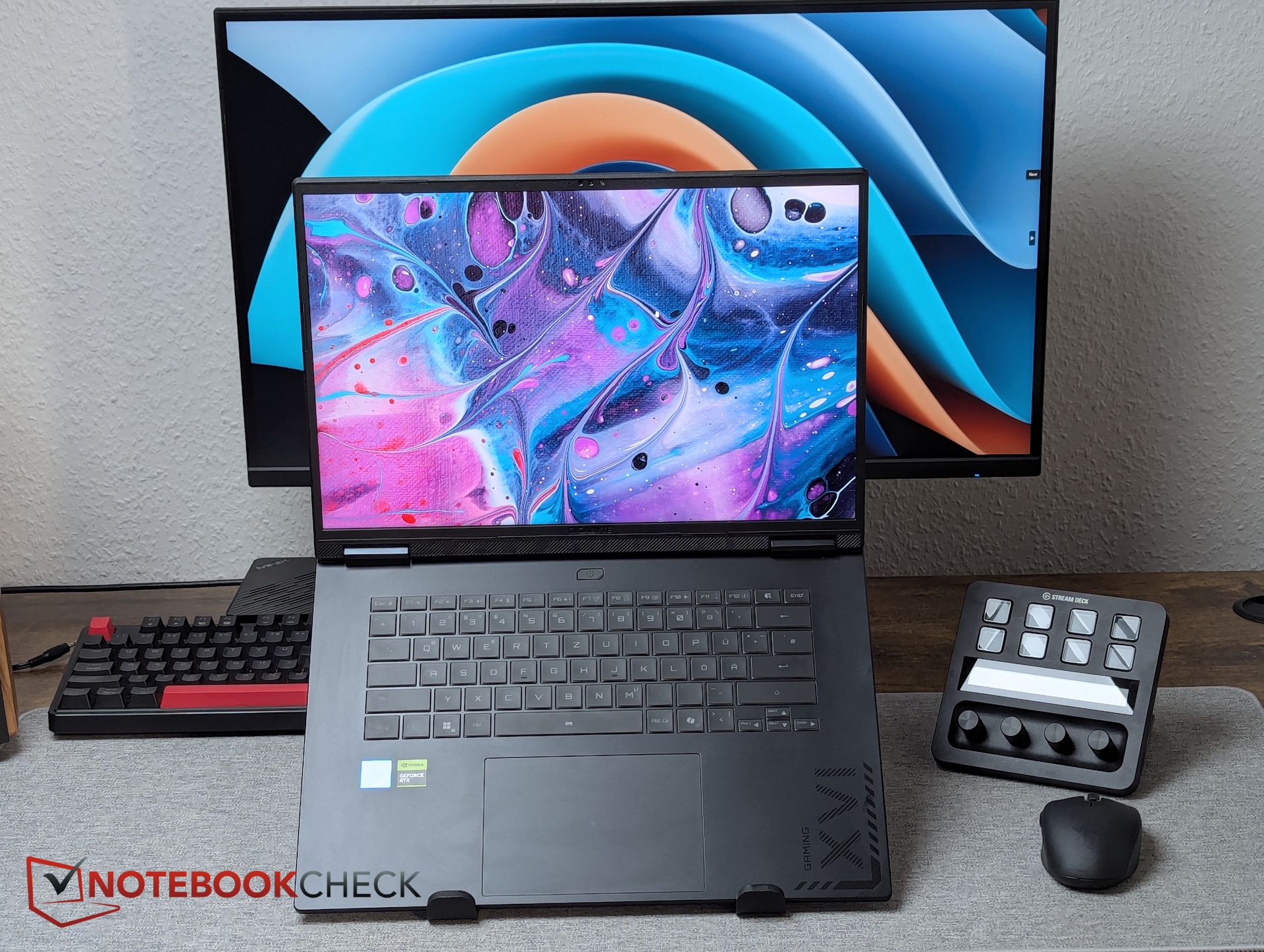
Slim gaming notebook with creator ambitions
Gigabyte clearly markets the Gaming A16 Pro ($1,850 on Amazon) as a gaming device on its website, but the “Pro” in the name suggests a broader audience—and for good reason. As a gaming laptop equipped with an RTX 5070 Ti, it offers solid performance potential along with 12 GB of VRAM. Add to that a notably slim chassis for a gaming notebook, strong battery life, and a fairly bright display rated at 500 nits with a resolution of 2,560 x 1,600 pixels.
Combined with a relatively low price for this class of hardware, the A16 Pro has all the right ingredients to appeal not only to gamers who prioritize mobility but also to entry-level creators. Beyond its obvious role as a portable gaming machine, its specs also make it a viable workstation for tasks like video editing, AI workloads, or 3D modeling.
Cooling and ports: Why the "Pro“ can not convince
However, our in-depth review also shows that Gigabyte leaves some of the A16 Pro’s potential untapped due to a lack of meaningful design updates. For example, the A16 Pro uses the exact same chassis as the non-Pro A16. The difference between the two models? In addition to a newer CPU, the more powerful RTX 5070 Ti is exclusive to the Pro, while the standard model tops out at a non-Ti RTX 5070. But even the non-Pro version already struggled with thermal SSD throttling due to its thin design. With even more powerful hardware inside, the Pro model appears to inherit—and not address—that issue.
The same applies to connectivity: an outdated USB 2.0 port and a maximum of USB 3.0 (USB 3.1 Gen1, 5 Gb/s) might still be acceptable for an entry-level gaming system like the A16 non-Pro, but for a device branded “Pro” and positioned as a potential creator laptop, it falls short.
The Gigabyte A16 Pro comes with additional pros and cons. You’ll find all the details—and whether this slim notebook is truly a good fit for gamers or even entry-level creators—in our full review.
 Add as a preferred source on Google


