




Samsung beats Apple: The winners and losers in troubled smartphone market
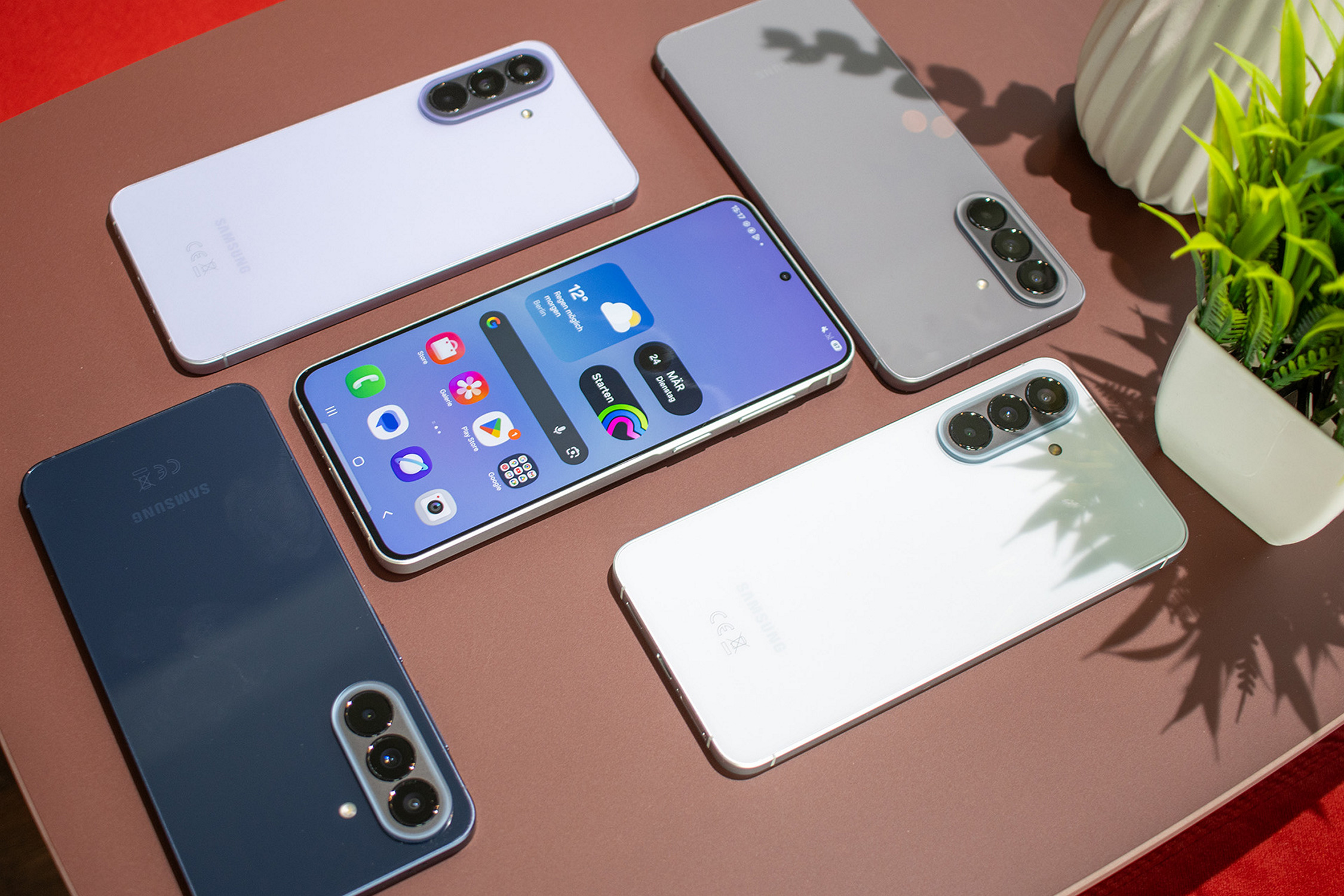
The smartphone industry is going through a very rough patch. Market researchers at Counterpoint Research reported a steep 11% decline in global shipments for the second quarter of 2026. According to industry experts, the last time the smartphone market saw such a weak early summer was 13 years ago. The primary driver of this downturn is said to be a massive shortage of DRAM and NAND memory chips. Major suppliers are reportedly reserving their production capacity primarily for the lucrative expansion of AI data centers, pushing component costs for smartphone manufacturers sharply upwards. These price increases are being passed directly on to consumers. To make matters worse, ongoing conflicts in the Middle East are further driving up oil prices and shipping costs.
Nonetheless, Samsung seem unfazed by the gloom and has reclaimed the global crown. The South Korean company secured a 24% market share and is growing faster than any other top-five manufacturer. Its recipe for success: a well-oiled supply chain and clever summer discounts, particularly in India and the Middle East. This strategy has allowed Samsung to avoid drastic price hikes. The Galaxy S26 series proved to be strong sellers, with the high-end Ultra model seeing especially high demand thanks to its new AI features and privacy display.
Apple has likewise bucked the global downward trend. The California-based company increased its shipments by 3% year-over-year and achieved a 20% market share, breaking its record for a second quarter. Apple was also the only major manufacturer to avoid raising prices during this period. The iPhone 17 series remains in very high demand worldwide. However, Apple did suffer a setback in China, partly because it offered less aggressive discounts for this year’s 618 Shopping Festival – a major sale event in the country – compared with the previous year.
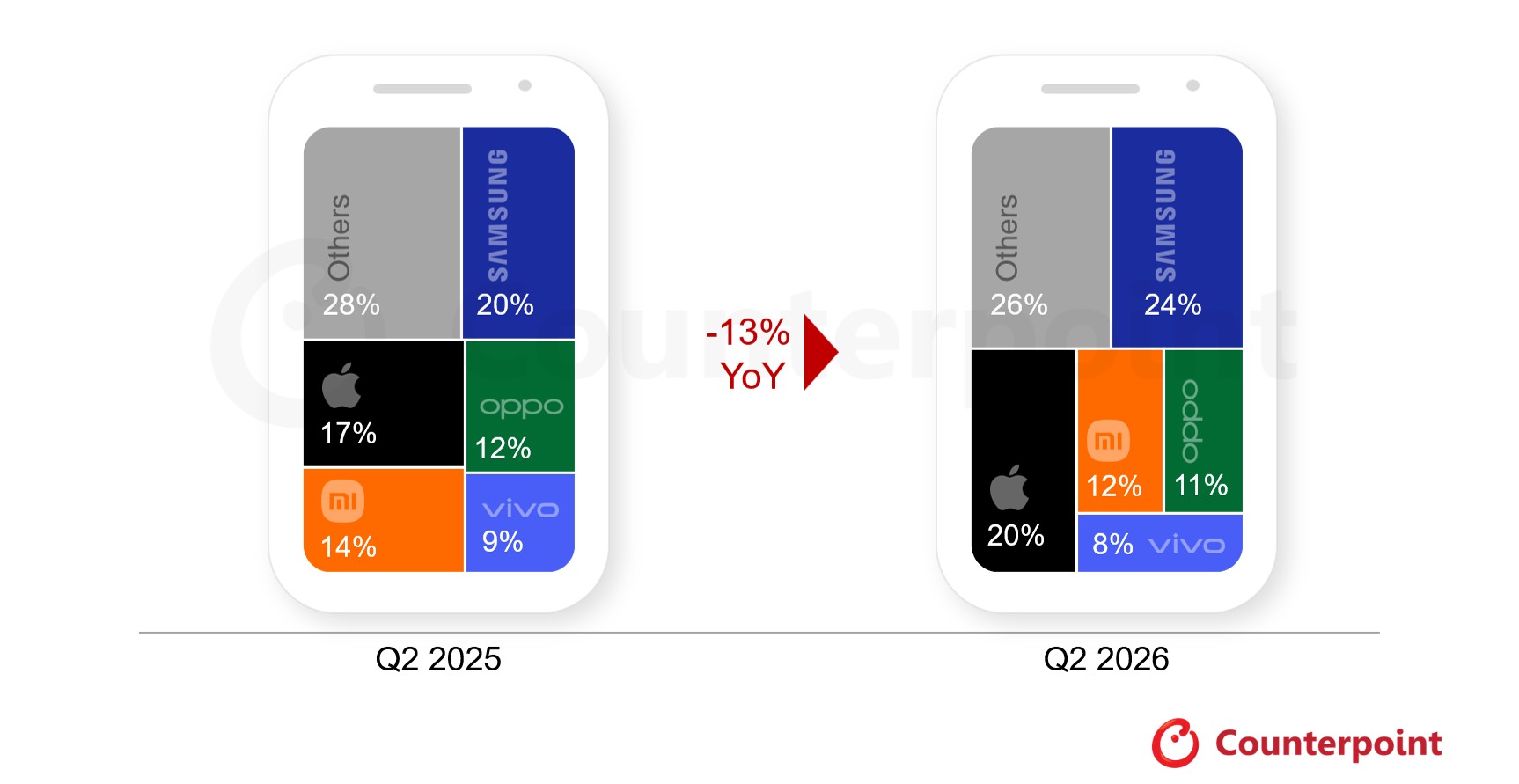
In contrast, the Chinese companies Xiaomi, Oppo and Vivo saw double-digit declines. Owing to their strong presence in the entry-level and mid-range segments, these brands are heavily impacted by rising memory prices. Price-sensitive consumers are currently delaying new purchases or opting for older devices. Xiaomi managed to cushion the downturn by streamlining its portfolio, securing third place with a 12% market share, while Oppo (11%) and Vivo (8%) both suffered significantly from weak demand and supply bottlenecks that pushed key models out of their traditional price brackets. Beyond the top five, Google (+16% YoY) and Huawei (+6% YoY) both delivered outstanding performance, driven by the Pixel 10 lineup and Mate 80 series, respectively. Analysts at Counterpoint Research expect a 14% decline in the smartphone market for the whole of 2026, as the memory shortage is projected to persist into 2027.
Source(s)
 Add as a preferred source on Google


