




Qualcomm Snapdragon 8cx Gen 3 vs Qualcomm Snapdragon X Elite X1E-80-100 vs Qualcomm Snapdragon X Plus X1P-46-100
Qualcomm Snapdragon 8cx Gen 3
► remove from comparison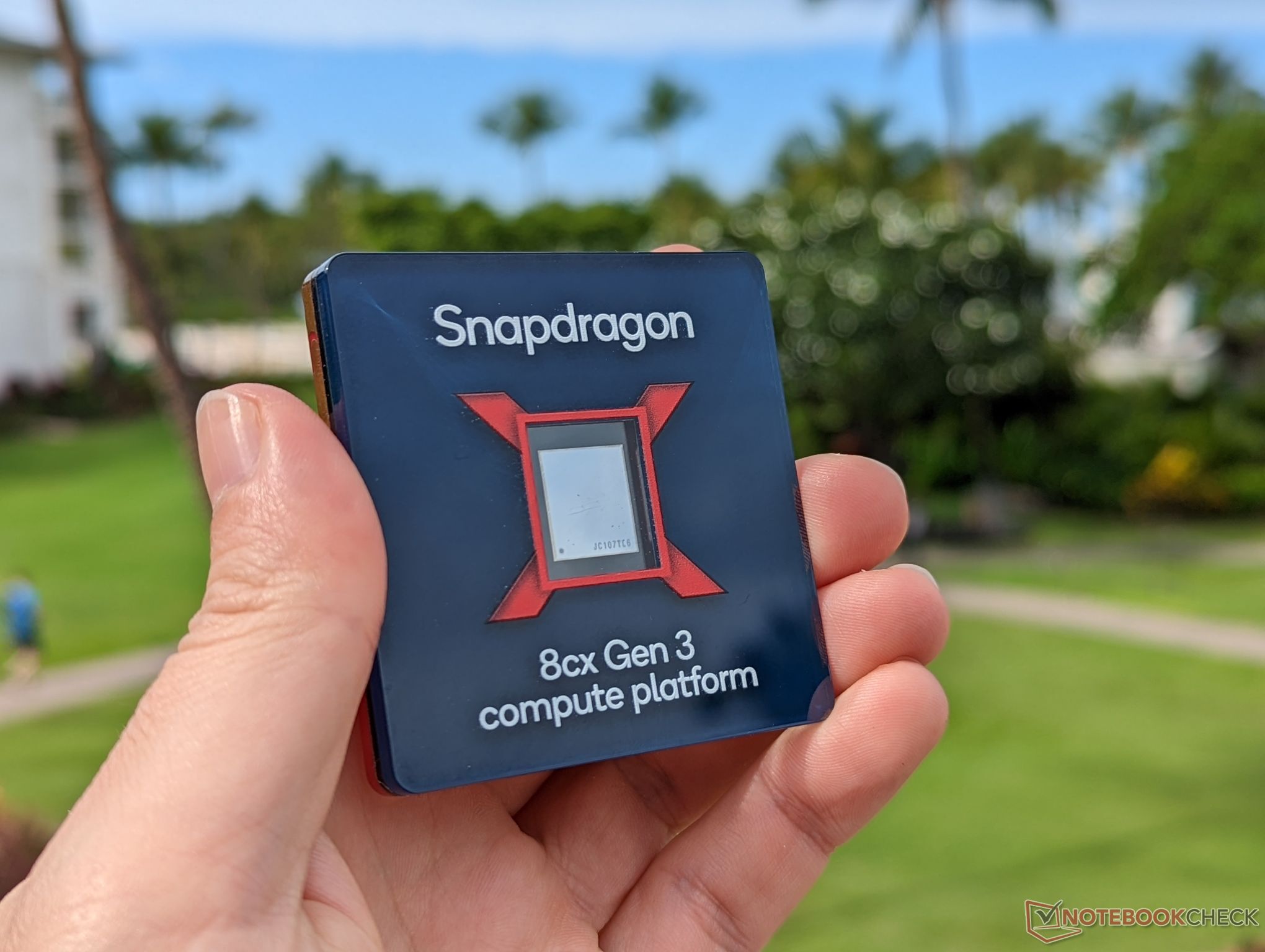
The Qualcomm Snapdragon 8cx Gen 3 Compute Platform is an ARM based SoC for Windows laptops. It integrates four big ARM Cortex-X1 performance cores (up to 3 GHz) and four smaller ARM Cortex-A78 with up to 2.4 GHz.
The Compute Platform also integrates a Snapdragon X62 5G modem with up to 10 Gbps download and 316 Mbps upload. The integrated WLAN modem supports Wi-Fi 6E (2x2) and the satellite positioning system supports BeiDou, Galileo, GLONASS, GPS, QZSS, and SBAS. The integrated video engine supports H.264, H.265, and VP9 decoding in 4K 120fps.
The performance should be around 85% faster for the CPU and 60% faster for the GPU compared to the previous generation (Snapdragon 8cx Gen 2).
The chip is produced in the modern 5nm process at Samsung (5LPE) and designed for fanless laptops (7 to 9 Watt TDP range).
Qualcomm Snapdragon X Elite X1E-80-100
► remove from comparison
The Snapdragon X Elite X1E-80-100 is a pretty fast ARM architecture processor (SoC) for use in Windows laptops. The X1E-80-100 is the second-fastest member of the Snapdragon X series, as of May 2024; as such, it has 12 Oryon CPU cores (3 clusters of equally powerful cores; 12 threads) running at up to 4.0 GHz, the 3.8 TFLOPS Adreno X1-85 GPU, the 45 TOPS Hexagon NPU and an impressively fast LPDDR5x-8448 memory controller.
The faster Snapdragon X Elite X1E-84-100 is thought to be based on the same die with the same NPU and the same number of CPU cores but with higher GPU and CPU clock speeds.
Architecture and Features
Qualcomm Oryon cores are in part based on Nuvia IP; they most likely make use of the ARM v8.7 microarchitecture. Much like modern AMD and Intel processors, the Snapdragon chip is compatible with USB 4 and thus with Thunderbolt 4 but it remains to be seen if it is is compatible with GeForce or Radeon discrete graphics cards.
The Qualcomm SoC is thought to have at least 12 PCIe 4 and 4 PCIe 3 lanes for connecting various kinds of devices. NVMe SSDs are supported with a throughput of up to 7.9 GB/s; furthermore, most laptops built around the chip are expected to have 16 GB of LPDDR5X-8448 RAM. There is also a 45 TOPS NPU for accelerating AI workloads.
Performance
When all of the 12 cores are under load, they can run at up to 3.4 GHz. The much more desirable 4.0 GHz clock speed is only achievable under single-thread or dual-thread loads.
Given the very similar clock speeds, its multi-thread benchmark scores should be about the same as that of the X1E-78-100 for Ryzen 7 7840U and Apple M3-like performance in most real-world tasks. We'll make sure to update this section once we get our hands on a system powered by the X1E-80-100.
Like any other Windows on ARM platform, the Snapdragon X chip works best with applications and games compiled specifically for ARM processors. If making use of the built-in x86 to ARM emulation mode, a performance penalty of about 20% is to be expected.
Graphics
The integrated 3.8 TFLOPS Adreno X1-85 GPU is DirectX 12-enabled but not DirectX 12 Ultimate-enabled, despite featuring VRS and ray tracing support. The 3.8 TFLOPS of performance that it delivers pale in comparison to the slowest current-generation professional Nvidia Ada graphics card for laptops, the RTX 500 Ada, that delivers up to 9.2 TFLOPS.
Its gaming performance is somewhat underwhelming. While slightly faster than the aging Iris Xe (96 EUs), the Adreno is not fast enough to outpace the Radeon 780M meaning there is little point in comparing it with full-fat discrete graphics cards. Baldur's Gate 3, a triple-A title released in 2023, is pretty much unplayable at 1080p / Low. GTA V, a game that saw the light of day in 2015, is playable at 1080p / High.
The Qualcomm iGPU will let you use up to 3 UHD 2160p monitors simultaneously. 2160p120 integrated displays are supported, as are the popular AV1, HEVC and AVC video codecs (both decoding and encoding). The hardware does not support the VVC codec; that feature remains a Lunar Lake exclusive for now.
Power consumption
The X1E-80-100 is most likely going to be less power-hungry than its more powerful brother (the latter can be set to consume up to 80 Watts). Expect to see anything between 20 W and 45 W under long-term workloads because that's what Ryzen HS chips normally consume.
The SoC is built with a 4 nm TSMC process for decent, as of H1 2024, energy efficiency.
Qualcomm Snapdragon X Plus X1P-46-100
► remove from comparison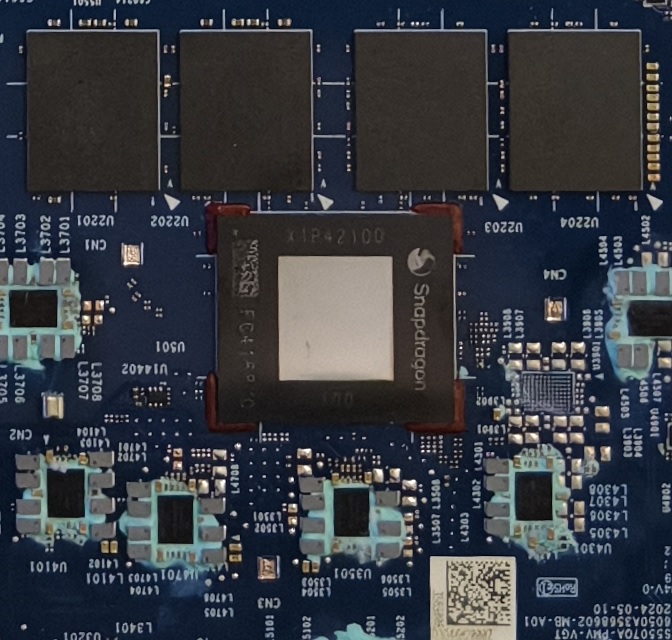
The Snapdragon X Plus 8-core (X1P-46-100) is a relatively affordable ARM architecture processor for use in Windows laptops that was unveiled in Sep 2024. This Qualcomm SoC features 8 Oryon CPU cores running at up to 4.0 GHz, along with the 2.1 TFLOPS X1-45 iGPU and the 45 TOPS Hexagon NPU. The super-fast LPDDR5x-8448 memory controller, USB 4.0 support, TB 4 support and PCIe 4 support are all onboard as well.
Architecture and Features
The Oryon cores (2 clusters of essentially identical cores; 8 threads) are mostly based on Nuvia IP and they reportedly make use of the ARM v8.7 microarchitecture. Much like modern AMD and Intel processors, the Snapdragon chip is compatible with USB 4 and thus with Thunderbolt 4 however it does not appear to support eGPUs as of September 2024.
The X1P-46-100 is based on the smaller die codenamed Purwa, unlike most X Elite and X Plus processors. It is believed to have at least 8 PCIe 4 and 4 PCIe 3 lanes for connecting various kinds of devices. NVMe SSDs are supported with a throughput of up to 7.9 GB/s; furthermore, most laptops built around the chip are expected to have 16 GB of LPDDR5x-8448 RAM. There is also a 45 TOPS NPU present for accelerating AI workloads.
Performance
A lot depends on the power targets of a specific system, just like it is with AMD, Intel and Nvidia products. That being said, we fully expect the X1P-46-100 to be just a little faster than the Core i5-1245U when executing multi-threaded x86 code.
The 4.0 GHz clock speed is only achievable in single-thread workloads. When executing multi-threaded tasks, the CPU cores will run at no more than 3.4 GHz.
Graphics
The X1-45 used here delivers up to 2.1 TFLOPS of performance. Unlike the much faster 3.8 TFLOPS and 4.6 TFLOPS X1-85 iGPUs, this little graphics adapter has much fewer unified shaders at its disposal. Its gaming performance is set to be sufficient for pre-2021 games at resolutions such as 1600x900 on low graphics settings.
AVC, HEVC and AV1 video codecs can be both hardware-decoded and hardware-encoded whereas with VP9, only decoding is possible. The highest monitor resolution supported is UHD 2160p.
Power consumption
Expect to see anything between 15 W and 30 W under long-term workloads depending on the system and the power profile chosen. The number includes RAM.
The SoC is built with TSMC's N4P process for better-than-average power efficiency, as of H2 2024.
| Model | Qualcomm Snapdragon 8cx Gen 3 | Qualcomm Snapdragon X Elite X1E-80-100 | Qualcomm Snapdragon X Plus X1P-46-100 | ||||||||||||||||||||||||||||||||||||||||||||||||||||||||||||||||
| Codename | Cortex-X1 / A78 | Oryon | Oryon | ||||||||||||||||||||||||||||||||||||||||||||||||||||||||||||||||
| Series | Qualcomm Snapdragon | Qualcomm Snapdragon X | Qualcomm Snapdragon X | ||||||||||||||||||||||||||||||||||||||||||||||||||||||||||||||||
| Clock | 2400 - 2995 MHz | <=4000 MHz | <=4000 MHz | ||||||||||||||||||||||||||||||||||||||||||||||||||||||||||||||||
| L1 Cache | 768 KB | 2.3 MB | 2.3 MB | ||||||||||||||||||||||||||||||||||||||||||||||||||||||||||||||||
| L2 Cache | 6 MB | 12 MB | 12 MB | ||||||||||||||||||||||||||||||||||||||||||||||||||||||||||||||||
| L3 Cache | 8 MB | 6 MB | 6 MB | ||||||||||||||||||||||||||||||||||||||||||||||||||||||||||||||||
| Cores / Threads | 8 / 8 | 12 / 12 12 x 4.0 GHz Qualcomm Oryon | 8 / 8 4.0 GHz Qualcomm Oryon | ||||||||||||||||||||||||||||||||||||||||||||||||||||||||||||||||
| TDP | 7 Watt | 30 Watt | |||||||||||||||||||||||||||||||||||||||||||||||||||||||||||||||||
| Technology | 5 nm | 4 nm | 4 nm | ||||||||||||||||||||||||||||||||||||||||||||||||||||||||||||||||
| Features | FastConnect 6900 2x2 Wi-Fi, Adreno 690 GPU | ||||||||||||||||||||||||||||||||||||||||||||||||||||||||||||||||||
| iGPU | Qualcomm Adreno 690 | Qualcomm SD X Adreno X1-85 3.8 TFLOPS | Qualcomm SD X Adreno X1-45 1.7 TFLOPS | ||||||||||||||||||||||||||||||||||||||||||||||||||||||||||||||||
| NPU / AI | 15 TOPS INT8 | 45 TOPS INT8 | 45 TOPS INT8 | ||||||||||||||||||||||||||||||||||||||||||||||||||||||||||||||||
| Architecture | ARM | ARM | ARM | ||||||||||||||||||||||||||||||||||||||||||||||||||||||||||||||||
| Announced | |||||||||||||||||||||||||||||||||||||||||||||||||||||||||||||||||||
| Manufacturer | www.qualcomm.com | www.qualcomm.com | www.qualcomm.com | ||||||||||||||||||||||||||||||||||||||||||||||||||||||||||||||||
| Series: Snapdragon X Oryon |
|
| |||||||||||||||||||||||||||||||||||||||||||||||||||||||||||||||||
| TDP Turbo PL2 | 80 Watt |

Benchmarks

Average Benchmarks Qualcomm Snapdragon 8cx Gen 3 → 0% n=0
Average Benchmarks Qualcomm Snapdragon X Elite X1E-80-100 → 0% n=0
 - Average benchmark values for this graphics card
* Smaller numbers mean a higher performance
1 This benchmark is not used for the average calculation


 Add as a preferred