




Lenovo unveils powerful Legion Y900 4K tablet specs
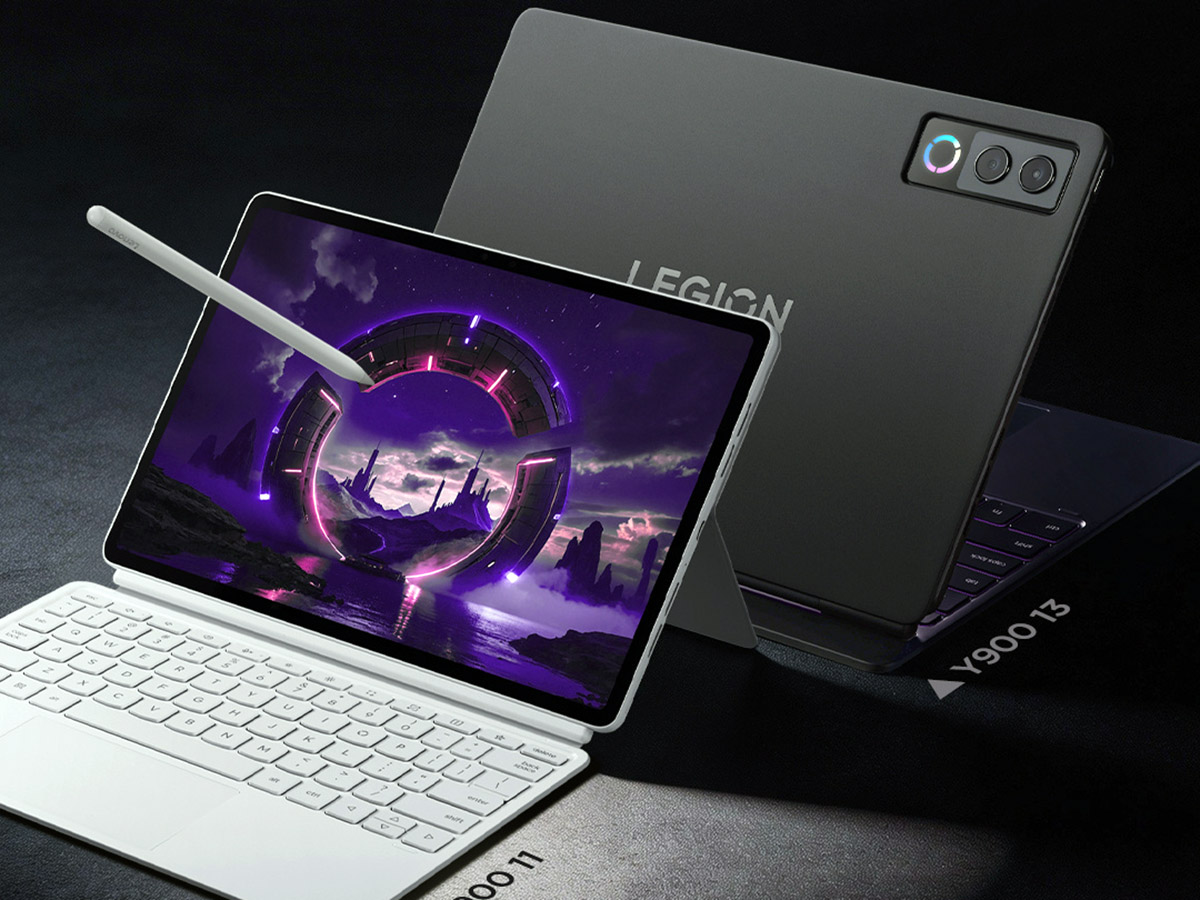
Lenovo has just officially confirmed the specs of its flagship Legion Y900 tablet ahead of the May 19 launch event, revealing what will land as one of the most powerful Android tablets out there.
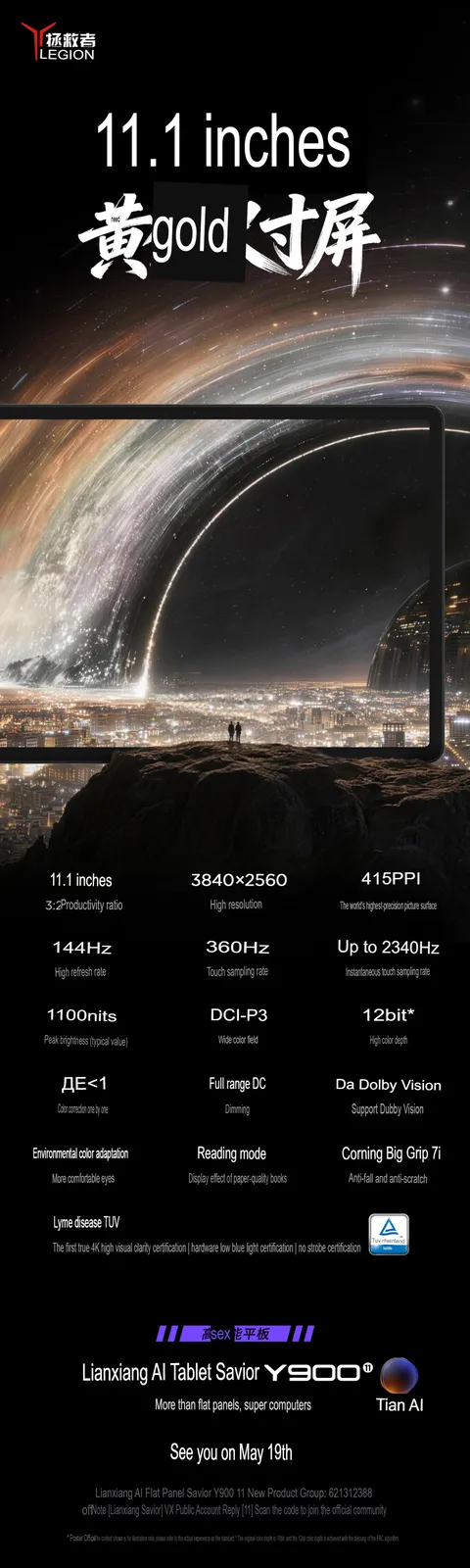
Or, rather, two powerful Android tablets because the Legion Y900 slates are coming in different display sizes: a smaller 11-incher with a 4K display and a larger 13-inch model. For the small one, in particular, Lenovo argues that this is the world’s highest precision picture surface, alluding to the 415 pixels-per-inch (PPI) display density, but the specs wonders of the new tablets don’t stop here.
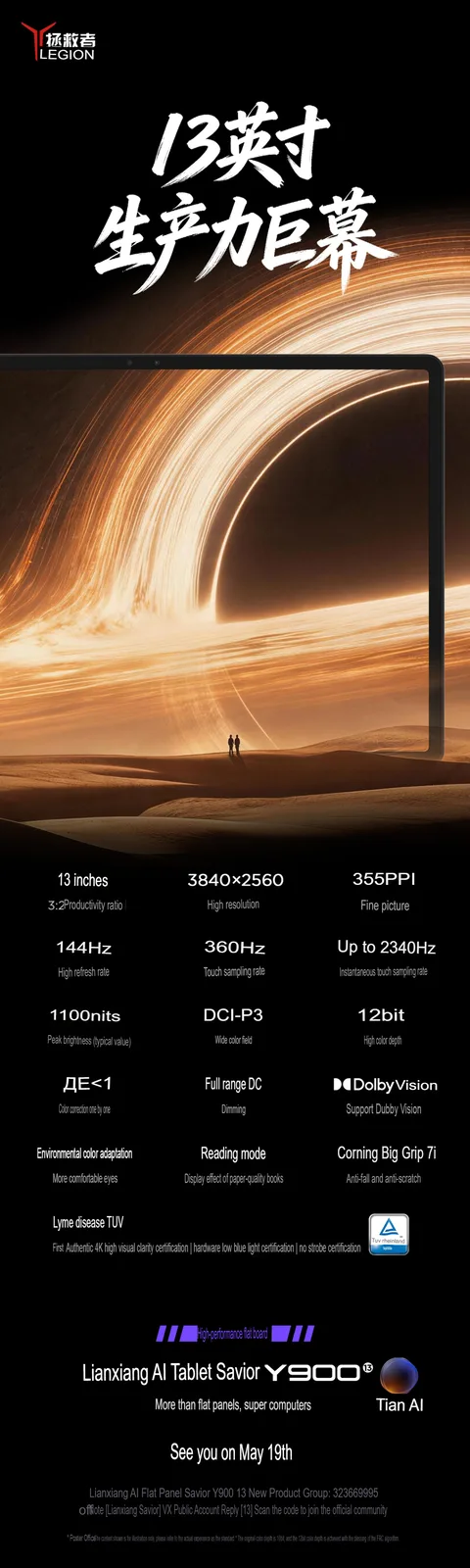
Lenovo Y900 2026 tablet specs
- 11.1-inch or 13-inch display with 3:2 aspect ratio
- 3840×2560 resolution
- 415 PPI or 355 PPI pixel density
- 144Hz high refresh rate
- 360Hz touch sampling rate
- Up to 2340Hz instantaneous touch sampling rate
- 1100 nits peak brightness (typical)
- DCI-P3 Wide Color Gamut
- 12-bit high color depth
- ΔE < 1 per-unit factory calibration
- DC dimming throughout
- Dolby Vision
- Ambient color adaptation
- Reading mode paper book display effect
- Corning Gorilla 7i
- First TÜV Rheinland certification for high visual clarity
Both variants pack a 3840×2560 resolution panel with more than 9.8 million pixels, well exceeding the 8.3 million 4K standard, and a 3:2 aspect ratio that actually makes sense for productivity.
As mentioned, that returns 415 PPI on the 11.1-inch model and 355 PPI on the 13-inch, both comfortably sharper than, say, the iPad Pro's Liquid Retina XDR at around 264 PPI. For a better comparison, the Samsung Galaxy Tab S10 Ultra tops out at 239 PPI on its 14.6-inch OLED screen, while Xiaomi's Pad 7 Ultra manages around 275 PPI on its 14-inch panel.
The refresh rate is 144 Hz across both sizes, which is becoming a staple for flagship Android tablets, but Lenovo pushes further with a 360 Hz touch sampling standard that spikes up to 2340 Hz upon instantaneous touch, which is useful for reaction time when gaming.
Lenovo claims the Y900 is the first tablet to earn the TÜV Rheinland's testing body "True 4K High Visual Clarity" certification, alongside hardware-level low blue light and flicker-free ratings. Peak brightness hits 1100 nits, while the DCI-P3 wide color gamut coverage, a 12-bit color depth, and the ΔE<1 factory calibration for each individual unit out of the factory round out a panel specs sheet that would be worthy of any flagship phone, too.
Moreover, the Gorilla Glass 7i protection cover, DC dimming, Dolby Vision support, and an ambient color adaptation mode suggest Lenovo wants this to function as a desktop replacement, a media center, and a gaming device all at once.
It remains to be seen what processing power Lenovo has chosen to run the 2026 Y900 tablet edition, but judging from the previous Y900 edition that made its way globally as the Lenovo Tab Extreme, it would be a pretty powerful one. Lenovo's tablets, like the IdeaPad 11 that is less than $230 on Amazon, are a pretty popular line of school slates, but the Legion line is a completely different beast and is unlikely to be cheap.
The exact Lenovo Y900 AI tablet price and memory configurations will be detailed on May 19, when Lenovo rolls out the slates together with a number of new gadgets like the Y70 phone, a Y7000X laptop, and the next-gen Moto Razr foldable phone edition.
Source(s)
Lenovo Legion Tablet (Weibo)
 Add as a preferred source on Google


