




Lenovo Yoga Pro 9 16IAH10 RTX 5050
Pros
Cons
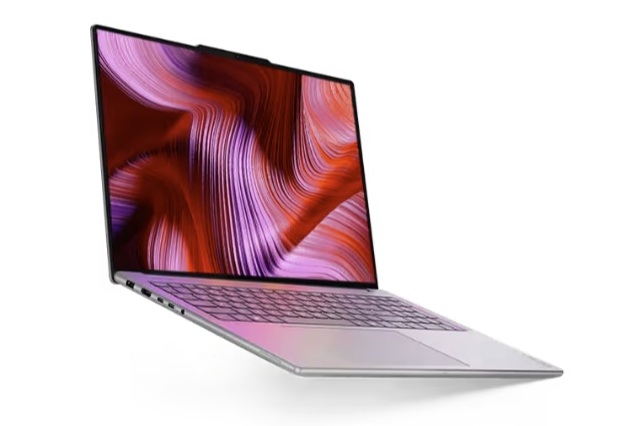
The Lenovo Yoga Pro 9 16IAH10 RTX 5050 is a 16-inch premium laptop aimed at entry-level creators, combining an Intel Core Ultra 9 285H with an Nvidia GeForce RTX 5050 (8 GB) at up to 100 W. It features a 2880 x 1800 OLED touchscreen with HDR and a 120 Hz refresh rate, alongside 32 GB LPDDR5x memory and a 1 TB SSD. Review excerpts highlight strong build quality, an excellent keyboard, and a notably powerful six-speaker Dolby Atmos setup. Compared with higher-end RTX 5060/5070 variants, the RTX 5050 model is described as cheaper, cooler, and generally quieter, but not dramatically less expensive at around $1,800. Performance is considered good for laptop workloads and moderate gaming, with the RTX 5050 positioned around RTX 4060-class performance depending on settings. Value is a recurring concern, with some reviewers recommending waiting for discounts or stepping up to a higher configuration for heavier creative work.
Specifications
Primary Camera: 5 MPix
Price comparison
Average of 4 scores (from 4 reviews)
Reviews for the Lenovo Yoga Pro 9 16IAH10 RTX 5050
The Yoga Pro 9 16 with GeForce RTX 5050 graphics is cheaper, cooler, and generally quieter than its more expensive RTX 5060 or 5070 options. Unfortunately, at almost $1800 retail, the system isn't that much less expensive than the higher-end configurations.
Source: Techspot

The Yoga Pro 9i (Gen 10) Aura Edition sits in a useful middle ground: more practical than design-first premium competitors, and slightly more portable than a full workstation. The combination of OLED display options, strong CPU/GPU configurations, and a port selection that respects real work makes it a credible creator laptop. Lenovo’s Aura features, especially Smart Share, Smart Modes, Smart Care, and Lenovo X Power, create a buyer-first support experience. The proprietary power connector is the main strategic misstep. It is not a deal-breaker, but it adds fragility to travel and shared-device environments.
Single Review, online available, Short, Date: 03/10/2026
Source: PC Mag
The Lenovo Yoga Pro 9i Gen 10 Aura Edition is an effective entry-level content-creation laptop with an impressive OLED display, an industry-leading keyboard, a powerful audio system, and a potent processor in a premium shell. It's a fitting ground-level professional photo- and video-editing laptop, but you should definitely hold out for sales that bring its component mix closer to sensible pricing. While the Yoga Pro's RTX 5050 GPU can likely handle some heavier photo- and video-editing tasks, more intense work will require a higher-power configuration or another product. If you can find this version on sale and you're just getting started in the digital content world, the Yoga Pro 9i Gen 10 is likely worth springing for. Otherwise, spending extra for the Editors' Choice-award-winning Asus ProArt P16 instead might be the smarter long-term play.
Single Review, online available, Medium, Date: 02/15/2026
Rating: Total score: 80%
Source: CNet
Lenovo has been on a hot streak with its line of Yoga two-in-ones. The Yoga 9i 2-in-1 Aura Edition that I reviewed a few months ago won a CNET Editors' Choice award, and the Yoga 7 14 Gen 9 took home the same award before that. The Yoga 9i 14 Gen 9 and Yoga 7 16 Gen 9 also garnered high marks. The Lenovo Yoga Pro 9i 16 Aura Edition extends this run of success. Unlike the other Yogas mentioned above, the Yoga Pro 9i 16 Aura Edition is not a two-in-one convertible but a traditional laptop. The Pro 9i represents the top end of the Yoga line, while the Aura Edition represents Lenovo's commitment to AI features, performance tuning and high-end displays.
Single Review, online available, Short, Date: 02/01/2026
Rating: Total score: 86%
Source: How to Geek
Besides some troubles with the keyboard layout, which I'm sure I'd eventually adapt to, I found the Yoga Pro 9i 16IAH10 very pleasant to use. The keys are every bit as high-quality as you'd expect from Lenovo and a laptop in this price range, the screen is beautiful, and the performance—while less than you'd get from a desktop in the same price range—is pretty good for a laptop. On the whole, the build quality is superb. In 2025, the inability to use a regular USB-C charger to charge (even slowly) is a huge downside, one that would prevent me from ever buying this laptop for my own personal use. I'm not great about holding on to cables or chargers.
Single Review, online available, Medium, Date: 01/18/2026
Rating: Total score: 70%
Comment
NVIDIA GeForce RTX 5050 Laptop: Entry-level graphics card from the Blackwell family for Laptops with 2,560 unified shaders (CUDA cores) and a clock rate of 1500 - 2662 MHz depending on the TDP setting. According to Nvidia, the performance without DLSS and frame generation should be comparable to an RTX 4060.
With these GPUs you are able to play modern and demanding games fluently at medium detail settings and HD resolution.
» Further information can be found in our Comparison of Mobile Graphics Cards and the corresponding Benchmark List.
Ultra 9 285H: High-end mobile processor based on the Arrow Lake architecture with 16 cores divided into 3 clusters. The 6 fast P-cores clock at up to 5.4 GHz. There are also 8 smaller E-cores with up to 4.5 GHz and 2 small low power cores (same architecture) with up to 2.5 GHz. The SoC integrates a small NPU with 13 TOPS peak performance and supports vPro Enterprise.» Further information can be found in our Comparison of Mobile Processsors.
Devices from a different Manufacturer and/or with a different CPU
Devices with the same GPU
Devices with Same Screen Size and/or Weight
Devices from the same Manufacturer
 Add as a preferred source on Google


