




Is Path Tracing Ready for Laptops? Testing NVIDIA’s Free DLSS 4.5 Upgrade on an RTX 5090 & RTX 5060
Path Tracing is the ultimate goal when it comes to realistic rendering in modern video games, and it builds on ray tracing by simulating how light interacts with objects and materials in the real world. Unfortunately,, it requires a lot of computing power and is therefore reserved for high-end hardware.
To make playable frame rates possible on today's hardware, engines use only a few light rays, and technologies like Nvidia's Ray Reconstruction feature try to clean up the resulting image to balance performance and image quality. With today's update, Ray Reconstruction is moving up to the same 2nd-Gen Transformer model that already powers upscaling with impressive results.
So is Path Tracing out of its early "Tech-Demo" Stage, and can you enjoy titles like Cyberpunk 2077, Alan Wake II, and Pragmata on gaming laptops?
| Feature / Metric | NVIDIA DLSS 4.5 Ray Reconstruction Details |
|---|---|
| Core Technology | 2nd-Generation Transformer AI Model (Preset / Model F) |
| Primary Improvements | Enhanced texture clarity, reduced temporal boiling/ghosting, improved fine detail restoration |
| Performance Overhead | None (Identical performance, compared to previous Ray Reconstruction model) |
| GPU Compatibility | All NVIDIA GeForce RTX Series (RTX 20, 30, 40, and 50 Series) |
| How to Enable | Manual selection via NVIDIA App - Ray Reconstruction Model F |
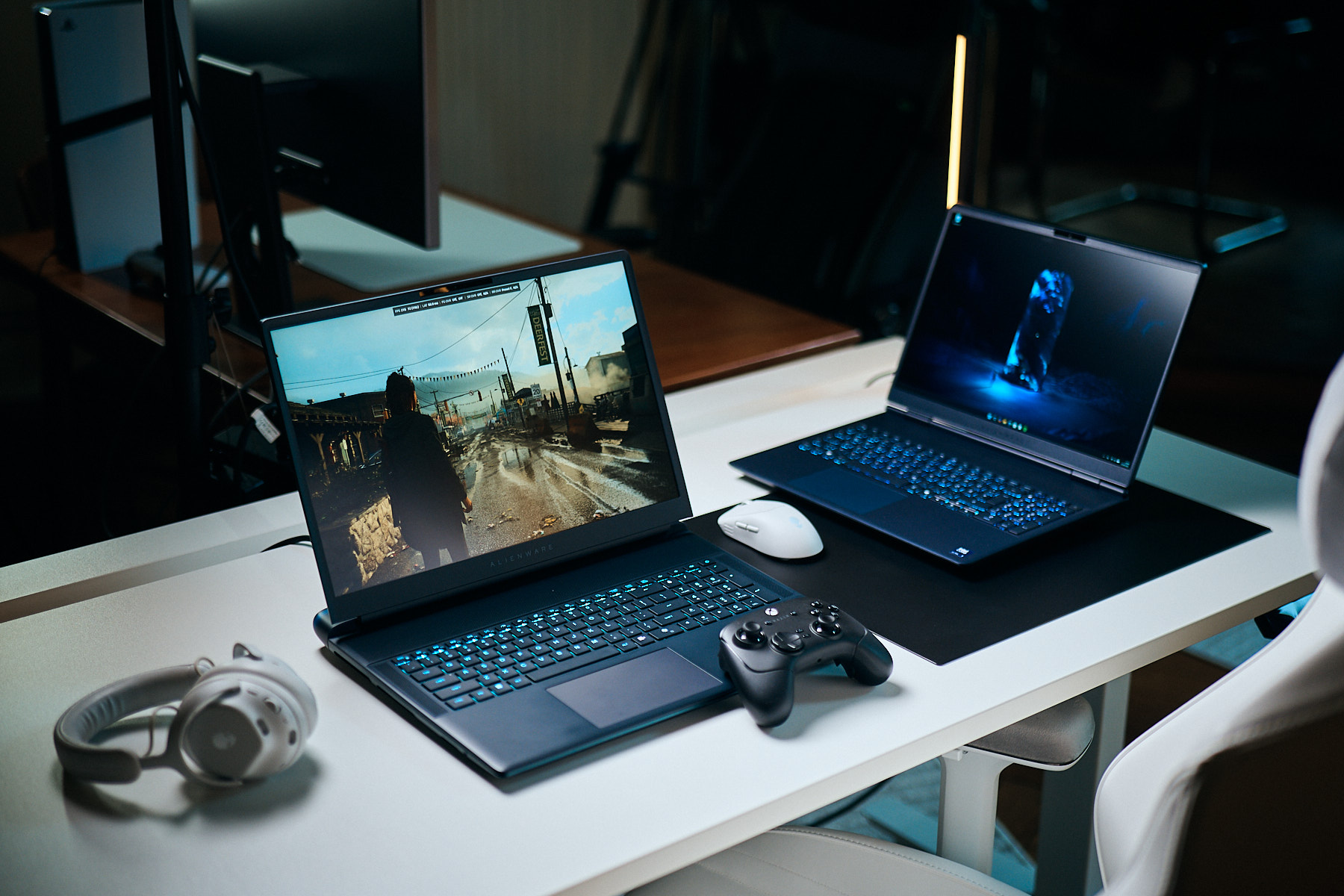
| Tested Laptops | Alienware 18 Area 51 (RTX 5090 Mobile) & Aurora 16X RTX 5060 Laptop |
| Tested Titles | Alan Wake II, Cyberpunk 2077, Resident Evil Requiem, Pragmata |
Watch our detailed breakdown and analysis video on YouTube with gameplay footage and image quality comparisons.
How DLSS 4.5 "Fixes" Path Tracing
Again, Path tracing calculates the true physical trajectory of light across entire game scenes, but due to what today's laptop GPUs can handle, real-time engines can only sample a small number of light rays per pixel. Without reconstruction, this results in a grainy, noisy image. NVIDIA's updated DLSS 4.5 Ray Reconstruction uses a second-generation Transformer AI model to reconstruct missing detail, and in our testing it did exactly what is supposed to do.
nd while the effect is subtle, it is still noticeable, even though the differences from the last-gen model aren't exactly "night and day"!
- Zero Performance Cost: Despite processing 20% more parameters with 35% higher computational capability, execution times remain identical to previous versions, making it a free visual upgrade.
- Image Clarity & Stability: The model update significantly reduces the distracting "boiling" artifacts on reflective surfaces (e.g., smoke in Cyberpunk 2077. rain effects and reflections in Resident Evil Requiem, or trailing light effects and reflecting surfaces in Pragmata).
- Restored Fine Detail: High-frequency details like smoke, foliage, and intricate wall textures retain sharpness that previously got smeared by aggressive spatial denoisers.
Laptop Performance Impressions: RTX 5090 vs. RTX 5060
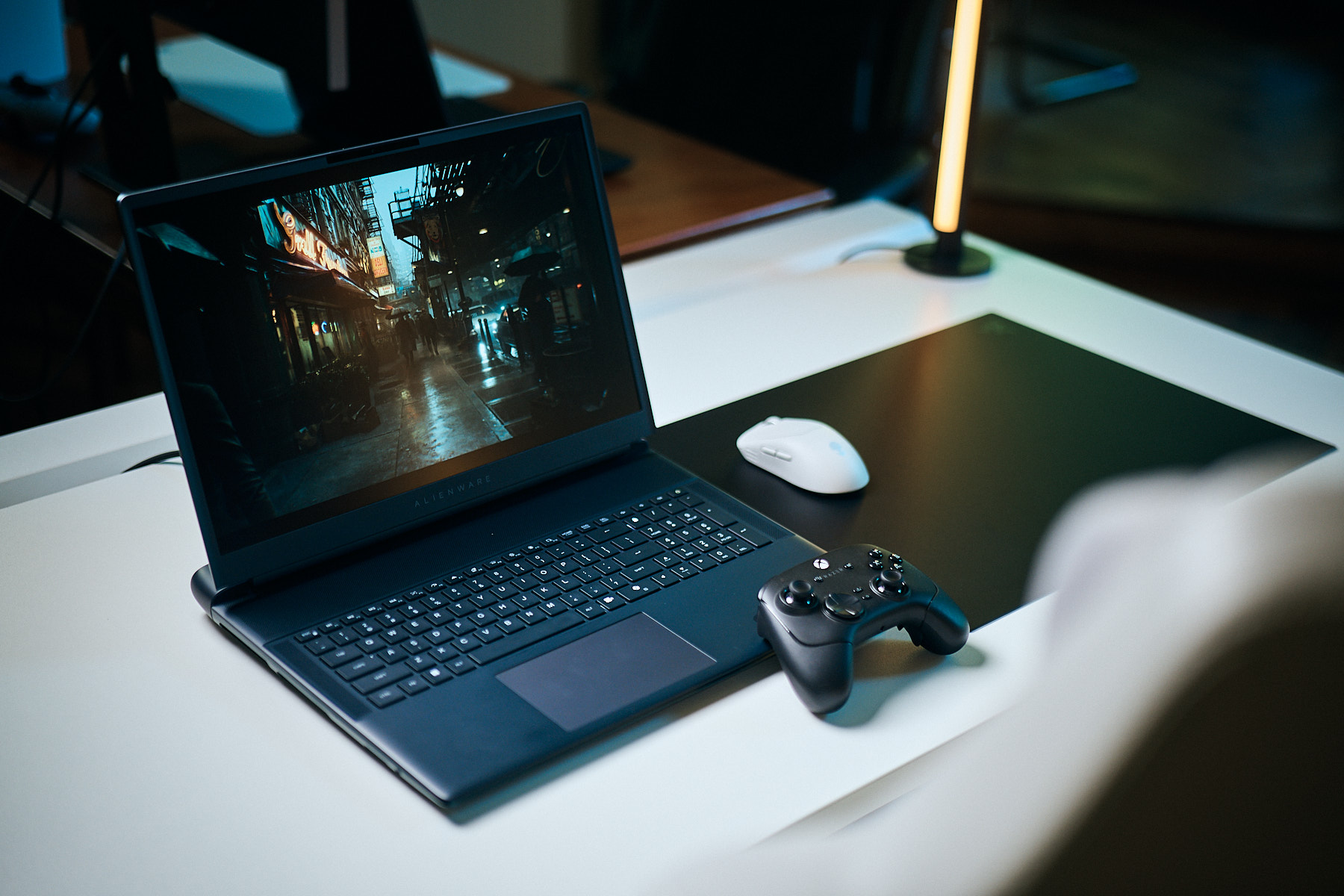
When testing Path Tracing on top-tier hardware—specifically the Alienware 18 Area 51 equipped with the RTX 5090 Mobile GPU—the combination of DLSS Quality Mode and Ray Reconstruction Model F easily delivers a quite playable 60+ FPS at native QHD+ resolution. In slower-paced story titles like Alan Wake II or Pragmata, the added clarity creates an incredibly immersive presentation, and with (Multi-)Frame Generation in the mix, even triple-digit framerates are possible without a problem.
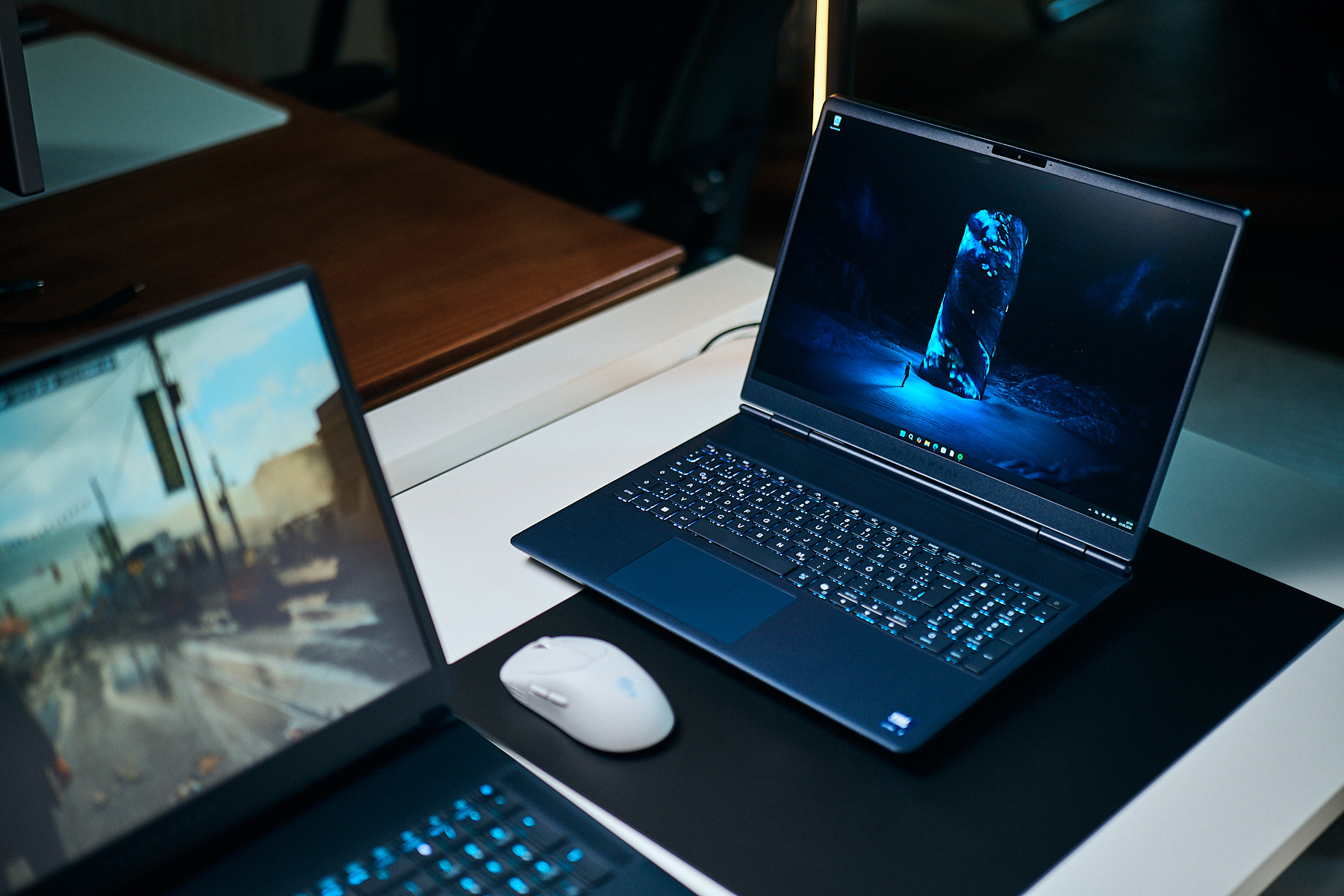
On an entry-level/midrange RTX 5060 laptop, like the Alienware Aurora 16X, full path tracing at QHD remains unplayable, but scaling down to 1200p with moderate settings allows titles like Resident Evil and Pragmata to run at playable frame rates. So while you will have to make some sacrifices to overall visual fidelity, it is definitely possible to enjoy the latest and greatest in video game graphics, even without high-end hardware.
For a real-world impression and FPS numbers, please check out this section of out video.
 Add as a preferred source on Google


