




21-month OLED monitor burn-in test proves users shouldn't fear panel degradation
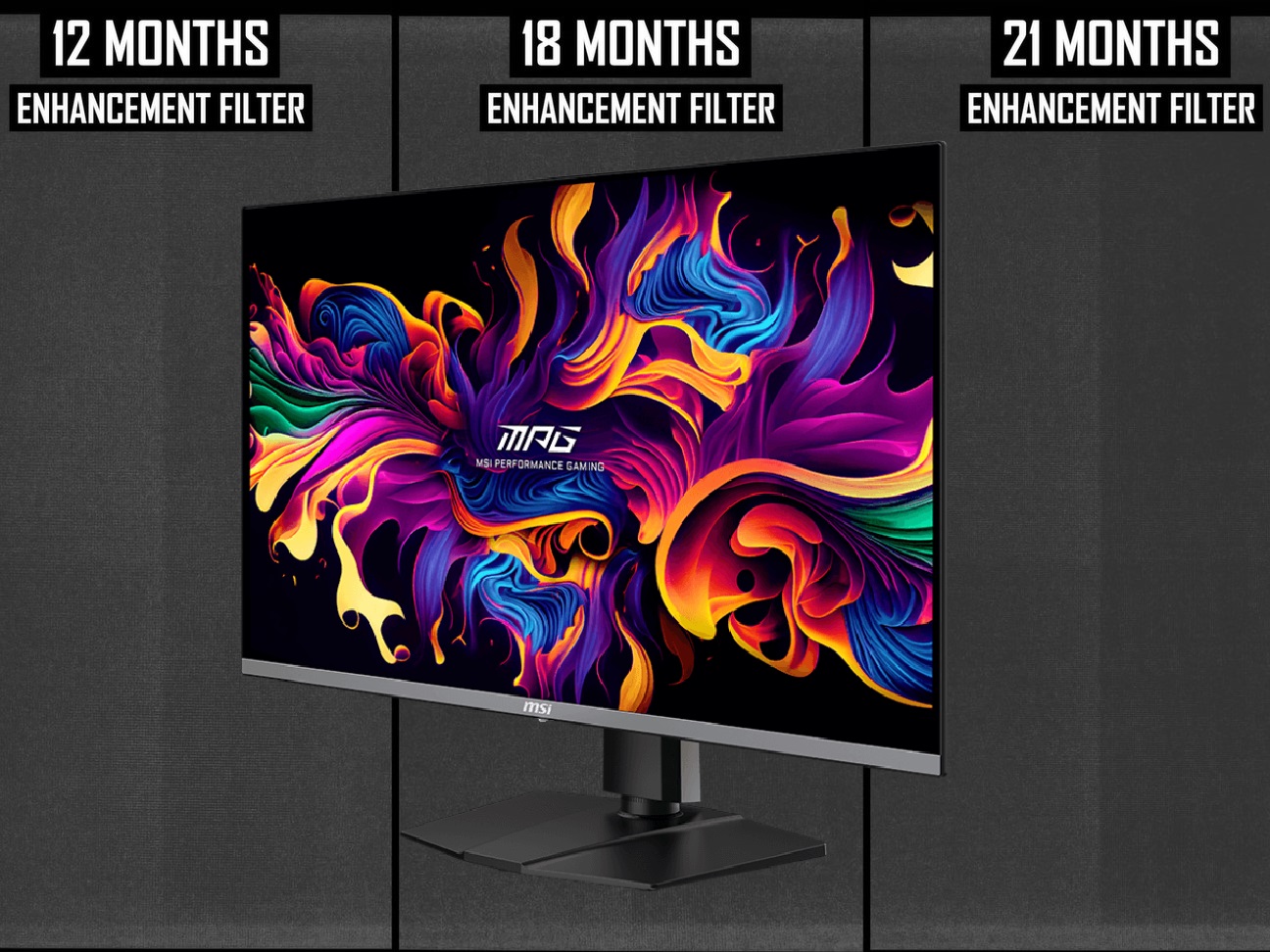
Back in September, we reported on Monitor Unboxed’s (MU) long-term OLED monitor burn-in test. After using the MSI MPG 321URX QD-OLED gaming monitor for 4,000 to 4,500 hours over a period of 18 months, MU found out that the resulting burn-in shouldn’t be a deal-breaker for average users who intend to use the monitor for a range of different workloads like media consumption, gaming, and more.
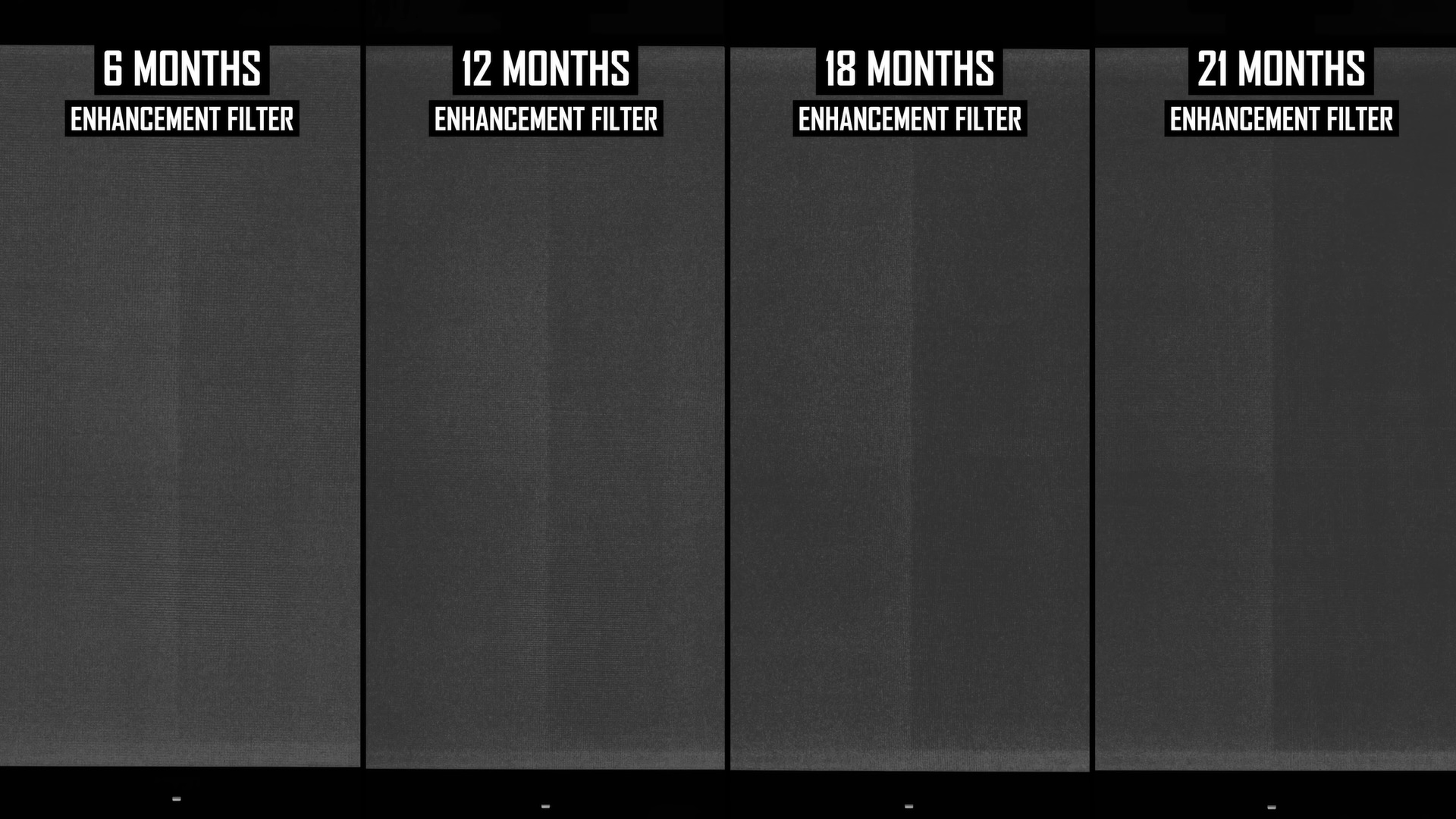
In the latest 21-month update, MU reports that the areas on the monitor that already suffered from burn-in are now in a worse condition. However, the actual monitor degradation isn’t as severe as one might expect from an OLED monitor that has been abused for 21 months straight without any burn-in reducing features enabled.
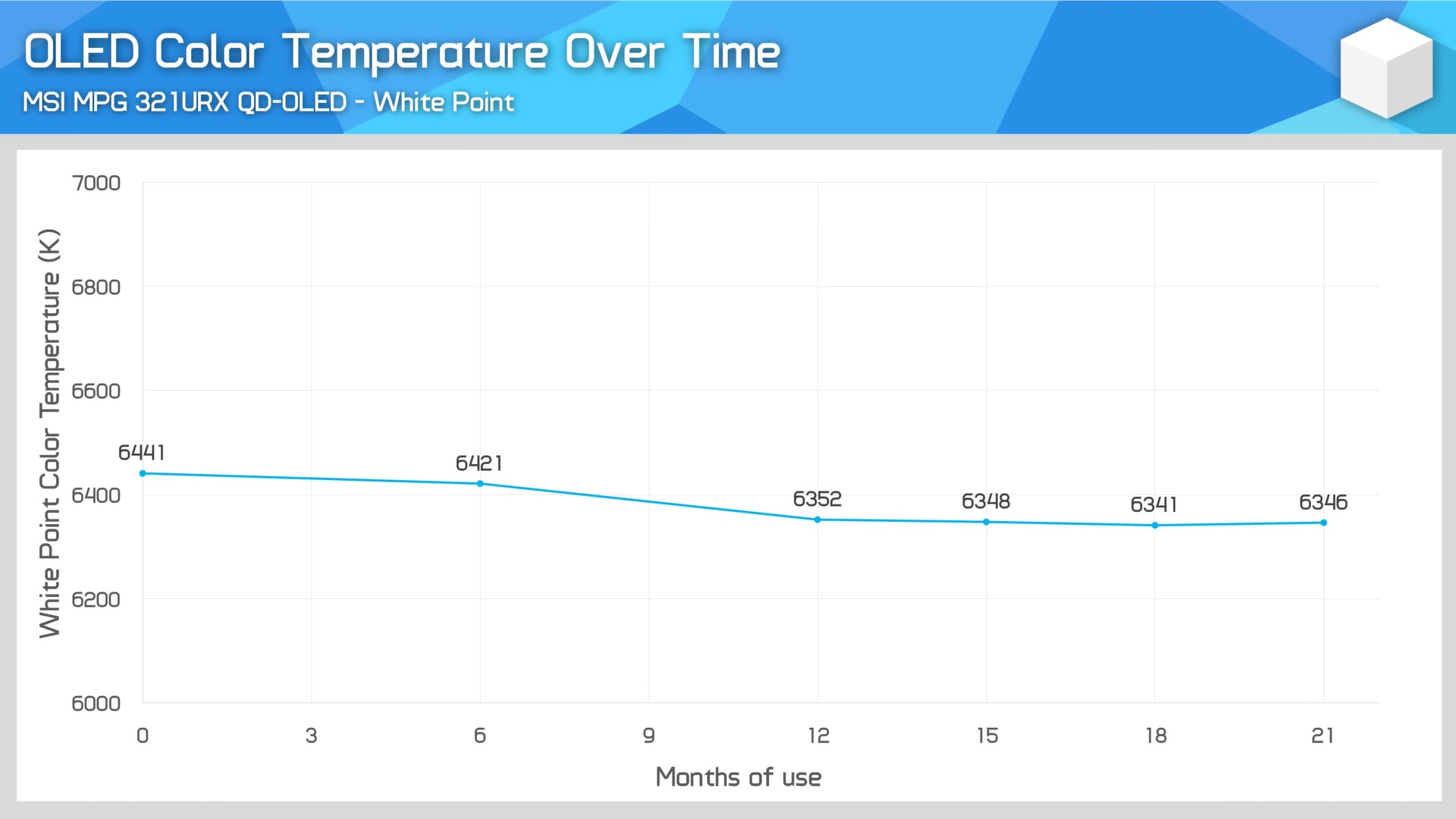
Like in the previous update, the most apparent artefacts are still the ones caused by the Windows Taskbar, the boundary line separating the two side-by-side apps, and burn-in on the right side where the most used static app was placed. Similar to the 18-month update, MU also reports that the Green sub-pixels seem to have deteriorated the worst, followed by the Blue, and then the Red sub-pixels. However, the color temperature of the MSI MPG 321URX QD-OLED gaming monitor has resisted any further deviation.
One area where the MSI MPG 321URX QD-OLED has suffered a little is the maximum brightness. Per MU, this is the first time that the maximum brightness of the OLED monitor has taken a hit, as the monitor now reaches only up to 237 nits. While this is a decrease of just 5 nits, it is reasonable to expect that the monitor will suffer even more moving forward, as OLEDs get dimmer with prolonged use.
All in all, after roughly 5000 hours of hard usage with just 576 compensation cycles and no other burn-in mitigation feature applied, the MSI MPG 321URX QD-OLED gaming monitor seems to have held up quite well. For an average gamer, the monitor should easily last from three to four years of multimedia use without any noticeable burn-in.
Source(s)
 Add as a preferred source on Google


