The Intel Core Ultra 7 265K is an Arrow Lake-based desktop processor with 20 cores in two clusters. The 8 performance cores clock at up to 5.5 GHz and the 12 smaller efficiency cores at up to 4.6 GHz. All CPU cores can use the 30MB Smart Cache (L3).
The Arrow Lake-S chips are composed of several chiplets. The CPU part is manufactured at TSMC in the modern N3B (3nm) process, the GPU also comes from TSMC in the N5P process. The SoC and I/O tile are manufactured in the TSMC N6 process. The base tile is manufactured by Intel in the 22nm process and carries the individual chiplets thanks to Fovero's 3D packaging.
Compared to the similar Core Ultra 7 265KF, the 265K integrates a Intel Graphics called 4-core iGPU with up to 2 GHz. Furthermore, the 265K offers vPro Enterprise management and security features.
The TDP is specified at 125 watts (long-term) to 250 watts (turbo).
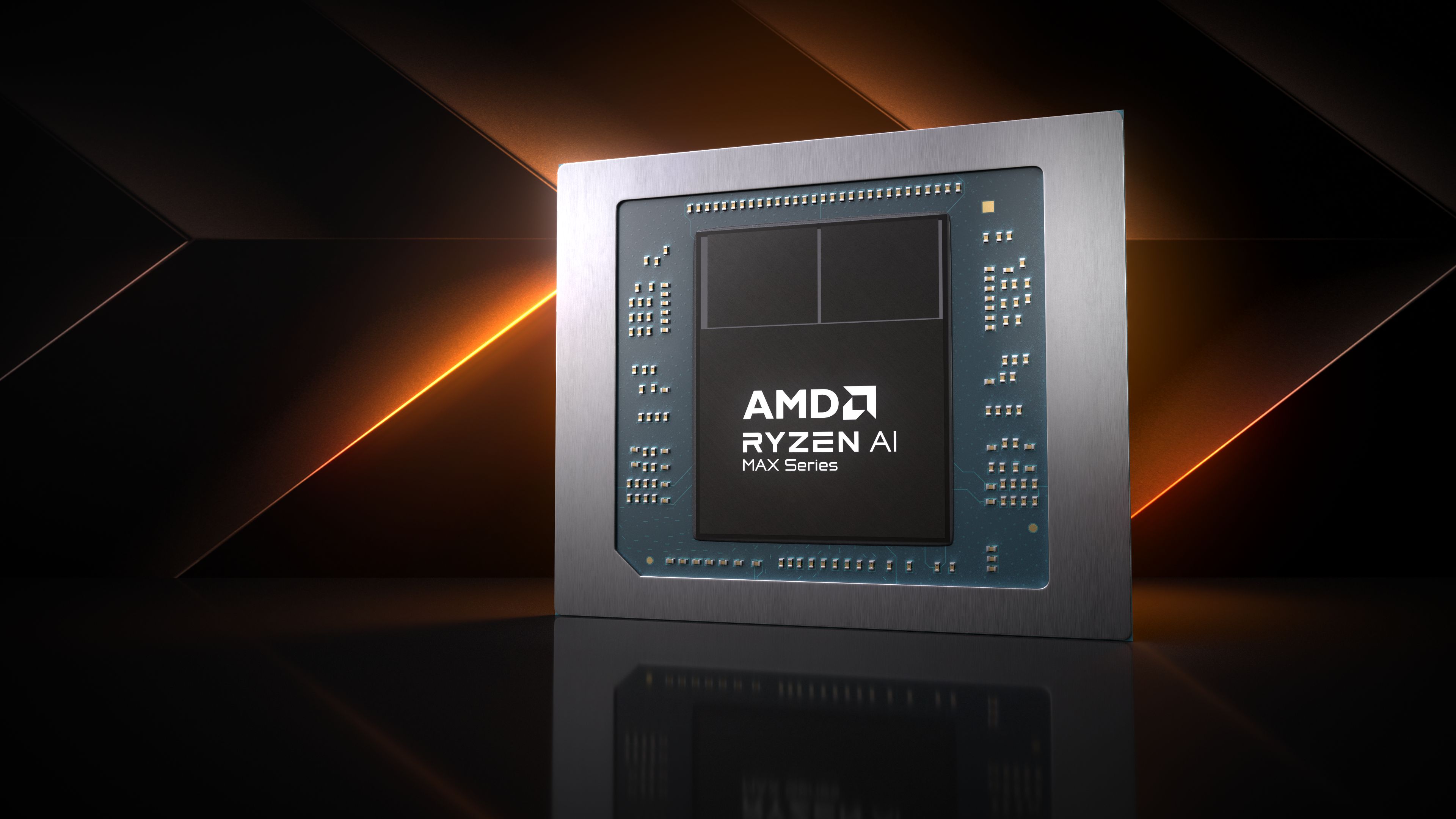
The AMD Ryzen AI Max 390 is a powerful Strix Halo family processor that debuted in January 2025. The APU comes equipped with 12 Zen 5 CPU cores running at up to 5.0 GHz, the 32 CU RDNA 3+ Radeon 8050S graphics adapter and the 50 TOPS XDNA 2 neural engine. Other noteworthy features include PCIe 4, USB 4 and LPDDR5x-8000 RAM support and a whole lot of L3 cache.
Architecture and Features
Unlike it is with Strix Point, Strix Halo parts are powered by Zen 5 cores - no Zen 5c here. It's not clear if this is the desktop Zen 5 implementation with full AVX512 throughput or the mobile one. According to AMD, Zen 5 delivers a 16% IPC improvement over Zen 4 thanks to branch prediction improvements and other refinements.
Elsewhere, the AI Max chip supports RAM as fast as LPDDR5x-8000, and is natively compatible with USB 4 (and therefore Thunderbolt). It has PCIe 4.0 support for a throughput of 1.9 GB/s per lane, just like its 8000 series predecessors had. The integrated XDNA 2 NPU delivers up to 50 INT8 TOPS for accelerating various AI workloads.
Performance
Its CPU performance should be about 10% higher than that of the Ryzen AI 9 HX 370 and HX 375 due to the AI Max chip's higher TDP power target and lack of cut-down Zen 5c cores.
Graphics
The Radeon 8050S sports 32 RDNA 3+ architecture CUs (2048 unified shaders) that could see it competing with lower mid-range desktop graphics cards like the Radeon RX 7700 XT. This GPU will undoubtedly run any game at 1080p on Ultra, however, the ultimate question is whether or not the cooling solution of the laptop will be powerful enough to let the iGPU shine.
Naturally, the Radeon is capable of driving four SUHD 4320p60 monitors. It can also efficiently encode and decode the most popular video codecs including AVC, HEVC, VP9 and AV1. The latest addition to that list, the VVC codec, is not supported unlike it is with Intel Lunar Lake chips.
Power consumption
The AI Max 390 can eat up to 120 W depending on the system and its TDP power targets, with 45 W named as the minimum TDP.
The 4 nm TSMC process that the CPU cores are built with make for decent, as of Jan 2025, energy efficiency.
The AMD Ryzen AI Max+ 395 is a powerful Strix Halo family processor that debuted in January 2025. The APU comes with 16 Zen 5 CPU cores running at up to 5.1 GHz, the 40 CU RDNA 3+ Radeon 8060S graphics adapter and the 50 TOPS XDNA 2 neural engine. Other noteworthy features include PCIe 4, USB 4 and LPDDR5x-8000 RAM support and a whole lot of L3 cache.
Architecture and Features
Unlike Strix Point, Strix Halo parts are powered by Zen 5 cores - no Zen 5c here. It's not clear if this is the desktop Zen 5 implementation with full AVX512 throughput or the mobile one. According to AMD, Zen 5 delivers a 16% IPC improvement over Zen 4 thanks to branch prediction improvements and other refinements.
Elsewhere, the AI Max+ chip supports RAM as fast as LPDDR5x-8000, and is natively compatible with USB 4 (and therefore Thunderbolt). It has PCIe 4.0 support for a throughput of 1.9 GB/s per lane, just like its 8000 series predecessors had. The integrated XDNA 2 NPU delivers up to 50 INT8 TOPS for accelerating various AI workloads.
Performance
From leaks, we know that the Ryzen delivers around 20,700 Geekbench 6.3 Multi points, meaning it trades blow with very powerful desktop CPUs like the Ryzen 9 9900X.
Graphics
The Radeon 8060S is the most powerful iGPU that AMD has on offer, as of Jan 2025. It features 40 RDNA 3+ architecture CUs (2560 unified shaders) that could see it outcompeting lower mid-range desktop graphics cards like the GeForce RTX 4050. This GPU will undoubtedly run any game at 1080p on Ultra, however, the ultimate question is whether or not the cooling solution of the laptop will be powerful enough to let the iGPU shine.
Naturally, the Radeon is capable of driving four SUHD 4320p60 monitors. It can also efficiently encode and decode the most popular video codecs including AVC, HEVC, VP9 and AV1. The latest addition to that list, the VVC codec, is not supported unlike it is with Intel Lunar Lake chips.
Power consumption
The AI Max+ 395 can eat up to 120 W depending on the system and its TDP power targets, with 45 W named as the minimum TDP.
The 4 nm TSMC process that the CPU cores are built with make for decent, as of Jan 2025, energy efficiency.






 - Average benchmark values for this graphics card


 Add as a preferred