




This DIY Halo console runs games from physical cartridges — but there's a catch
Ever since Sony announced that it would end disc production after January 2028, it seems increasingly likely that physical media is sadly on its way out. But one good thing to come out of this announcement is that people who care about ownership and physical media are raising their voices more than ever and educating others about how they can take ownership of the products they purchase.
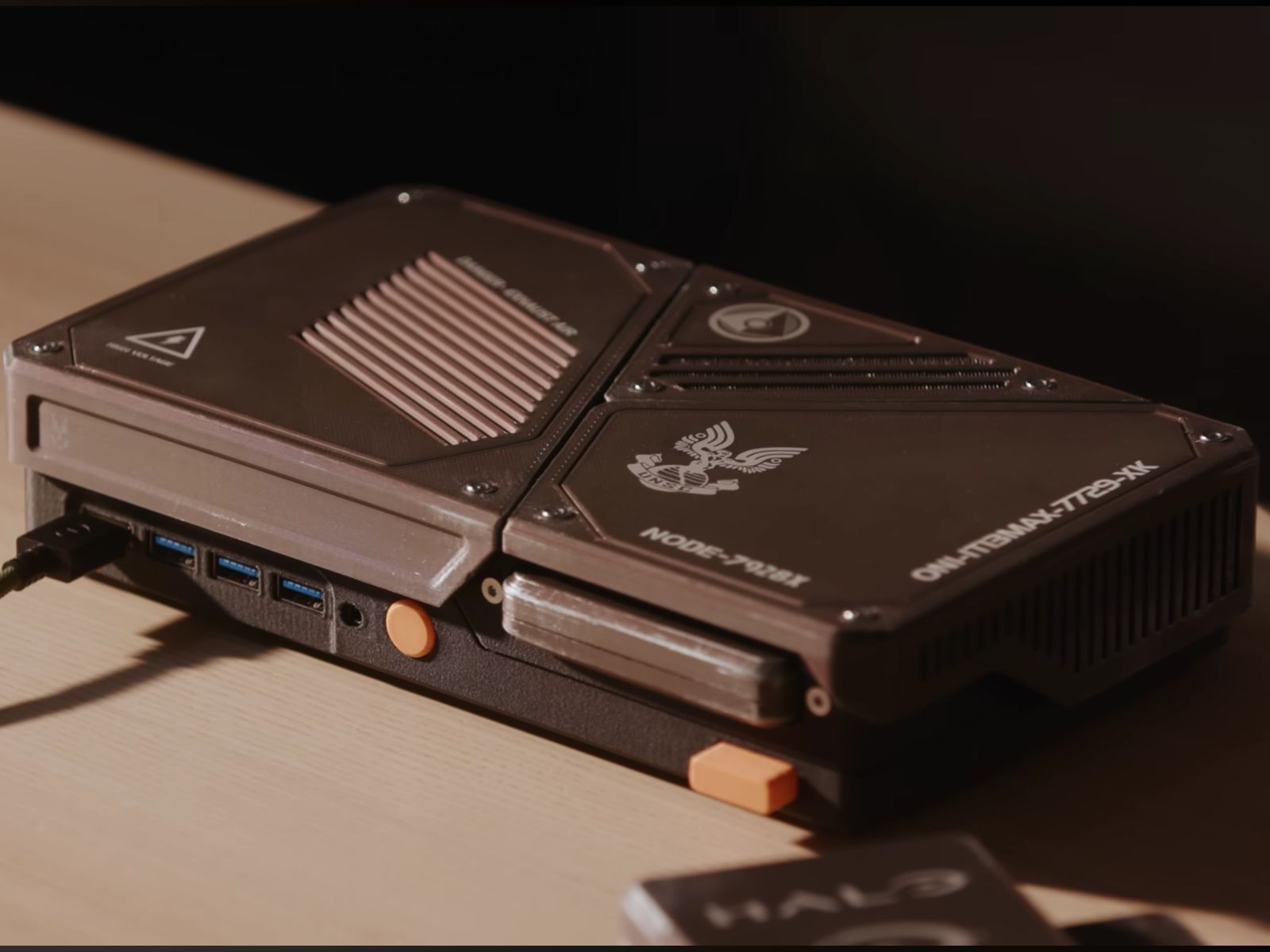
YouTube channel The Stock Pot has responded in a very creative way by building a compact gaming console with a cartridge slot, complete with a spring-loaded eject button and a shelf of chunky, laser-engraved Halo cartridges. The catch is that the cartridges hold no games at all.
Each one is a 3D-printed shell with an NFC sticker tucked inside. When it slides into the slot, an RC522 NFC reader wired to an ESP32 microcontroller reads the tag's ID and passes it along. The game itself still lives on the PC's SSD, bought from Steam like any other digital purchase. The creator is upfront about this, admitting the build doesn't actually solve the ownership problem he spends a chunk of the video complaining about, but says it reminds him of a time when a game you paid for genuinely existed and was genuinely yours.
How the Halo console case was 3D printed around a Geekom mini PC
The console is built around a Geekom IT13 MAX mini PC, which we recently reviewed at Notebookcheck, calling it a mini PC with an “attractive price-to-performance ratio.” It packs a 16-core Intel Core Ultra 9 185H with Arc graphics, 24 GB of soldered LPDDR5-5600, a 500 GB SSD, Wi-Fi 7, dual 2.5G LAN, and two USB4 ports. Geekom sent over a 3D model of the board on request, which saved a lot of reverse-engineering, though it's unlikely they expected their nicely made enclosure to be binned immediately.
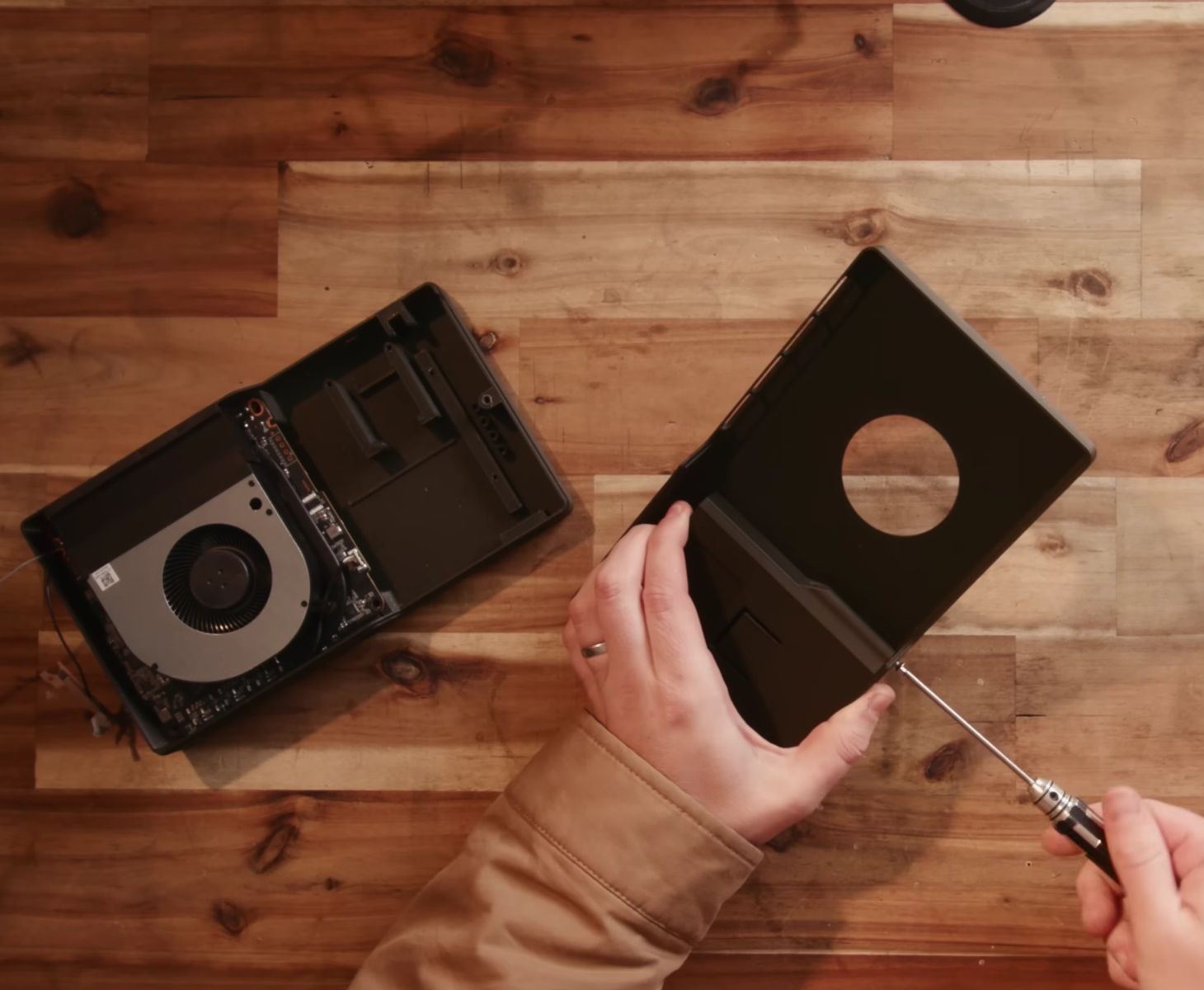
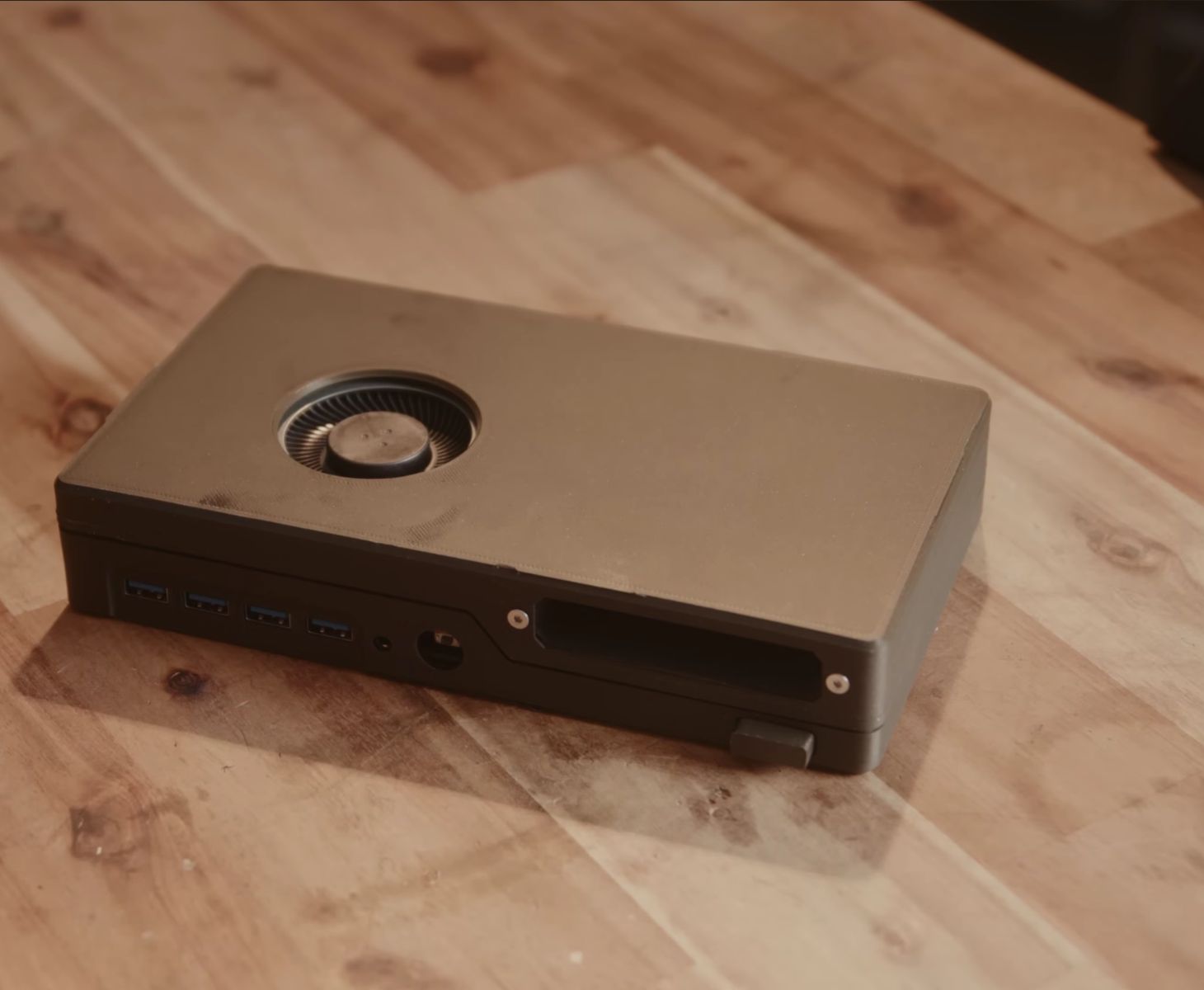
He modeled a new case around it, borrowing the cartridge pocket from an earlier NFC media player he built for movies. The pocket was deepened to make room for an eject button that pushes a lever at the rear, popping the cartridge loose. Crucially, the old cartridge library still fits.
Since the chip runs at a 45W TDP, the intake and exhaust were sized generously and kept clear of obstructing geometry to keep noise down. Prototypes were printed in recycled PLA; the final shell is carbon-fiber-reinforced PETG, with olive-green decorative panels bolted on over an air gap for a bolt-on armor look, plus orange buttons for contrast. Panel details were marked with a UV laser. An attempt to fill debossed logos with gold-flecked UV resin didn't pan out, so the cartridges were laser-engraved instead, each with its own in-universe Easter egg.
How it actually works
The clever part is the software. Rather than the Home Assistant setup his movie player used, this runs different firmware on identical hardware. The ESP32 pushes the cartridge ID over USB serial to the mini PC, where a small Python app sitting in the system tray maps each ID to either a Steam ID or a path to an .exe. Insert the cartridge, and the game launches.
Two more catches: the ESP32 needs an external USB cable running to the mini PC, because the board's unlabeled internal headers weren't worth risking. It's being folded into a version two of the cartridge player instead, the creator said.
So, in a way, building this small console seems like the creator's way of making their voice heard, or registering a protest to show that they stand with physical media. The case files are free on Printables, linked in the YouTube video description.
Source(s)
 Add as a preferred source on Google


