





Verdict on the Lenovo Tab Plus Gen 2
Lenovo has given its Tab Plus a great update with the second generation: Not only does the tablet look completely different, but its key qualities have been retained and its weaknesses have been improved:
The built-in round stand now provides an even more versatile way to position your tablet or even mount it on the wall. The sound is even more powerful, and the screen is significantly brighter. Furthermore, Lenovo does not use PWM for brightness control in this device, so people with sensitivity to it likely won’t have any issues.
The Lenovo Tab Plus Gen 2 also offers significantly more power and faster storage than its predecessor and, thanks to its large battery, lasts a very long time in everyday use.
Due to its unusual design, the tablet isn’t suitable for every use case, as it’s quite bulky—measuring over two centimeters at its thickest point. Software support could also be longer.
Overall, the Tab Plus Gen 2 impresses with great sound and very good multimedia capabilities. It’s also nice to see a tablet that breaks away from the usual monotony of slim metal chassis and OLED displays.
Pros
Cons
Price and availability
The Lenovo Tab Plus Gen 2 is already available from many retailers.
On amazon.com, it currently costs around US$ 470.

Table of Contents
- Verdict on the Lenovo Tab Plus Gen 2
- Specifications
- Case and features – Heavy, but worth it
- Communication and operation – No fingerprint sensor
- Software and sustainability – 4 years of security
- Cameras – Acceptable image quality
- Display – Sufficiently bright
- Performance, emissions, and battery life – Great speaker, great endurance
- Notebookcheck Overall Rating
- Comparison of Possible Alternatives
Specifications
Case and features – Heavy, but worth it
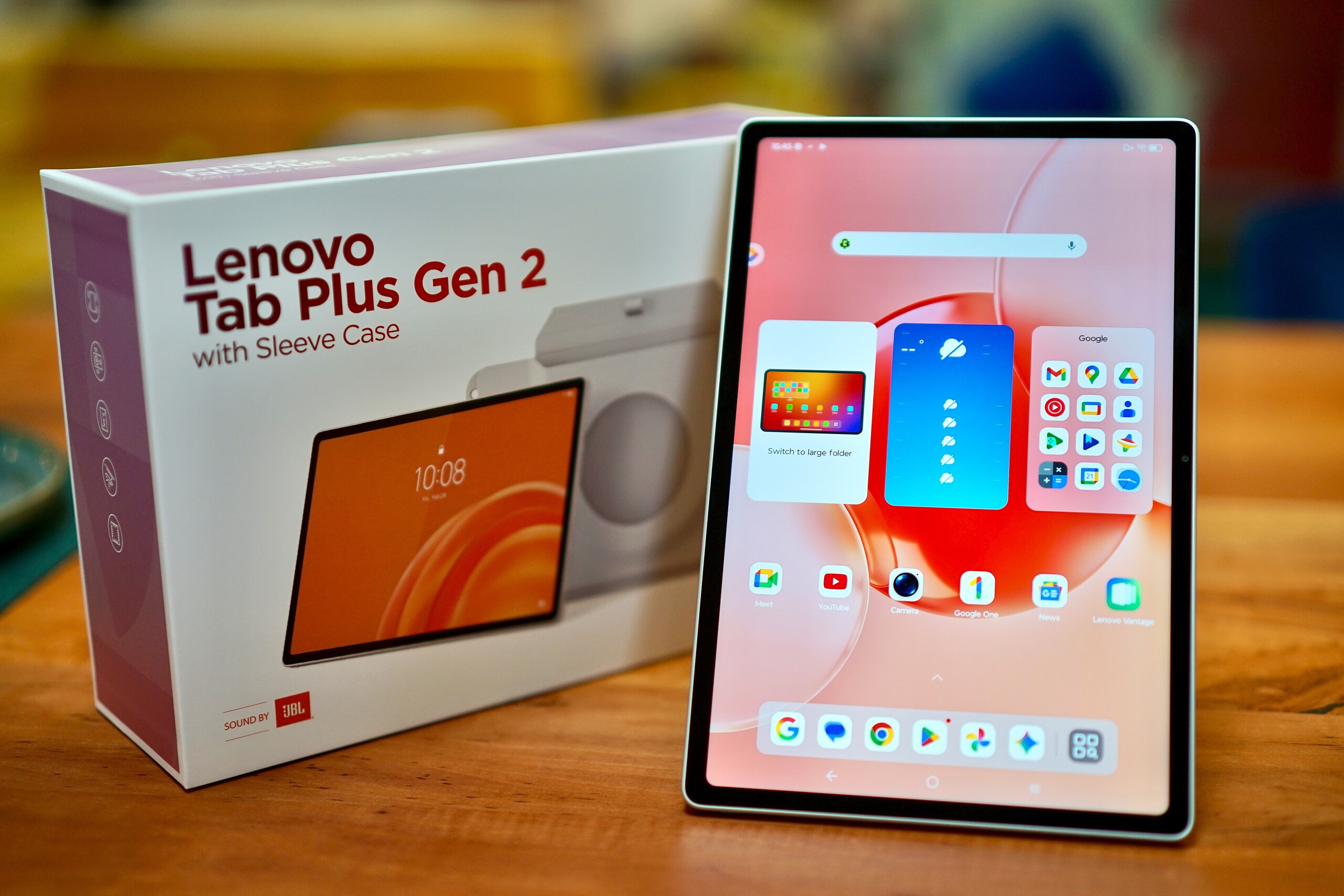
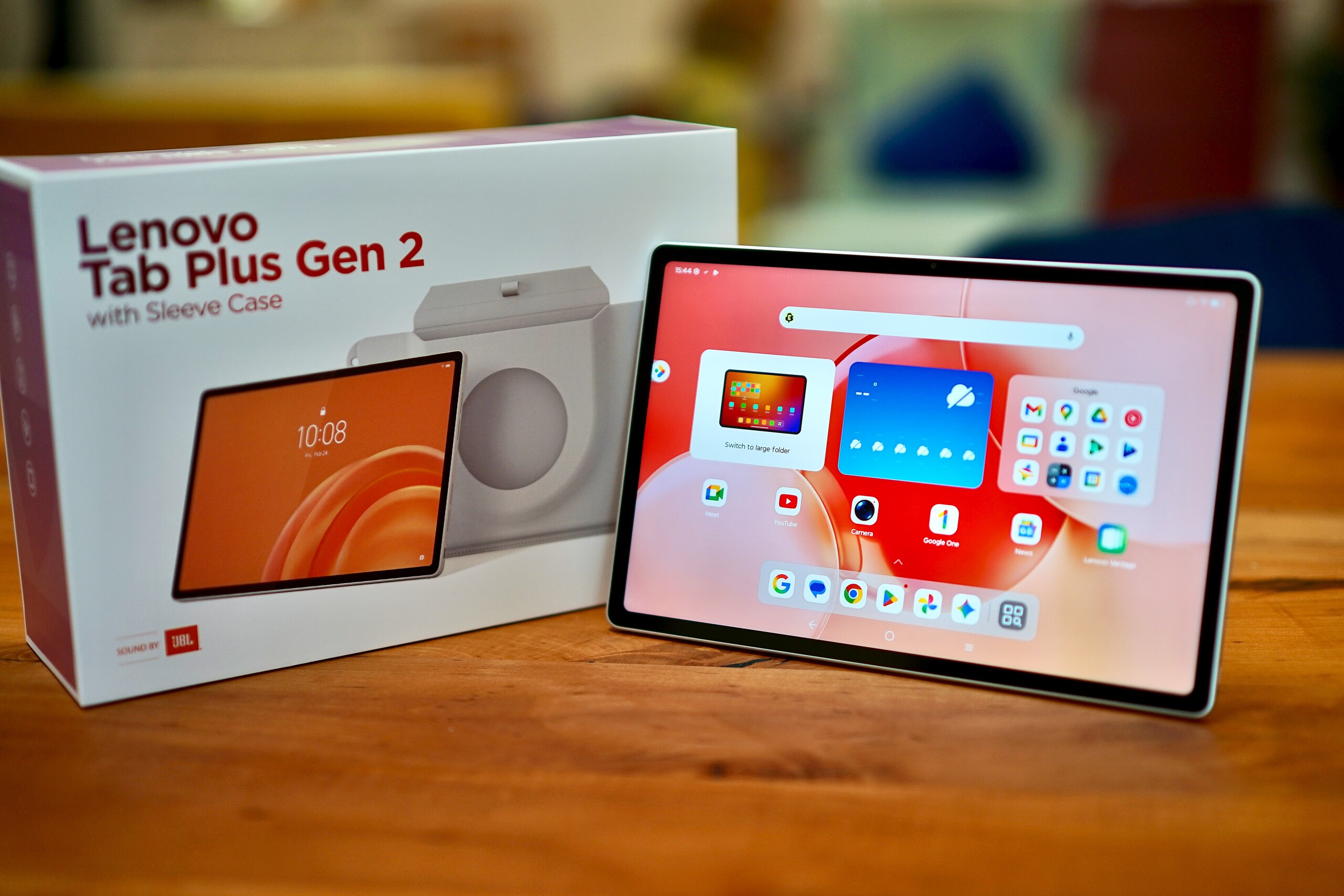
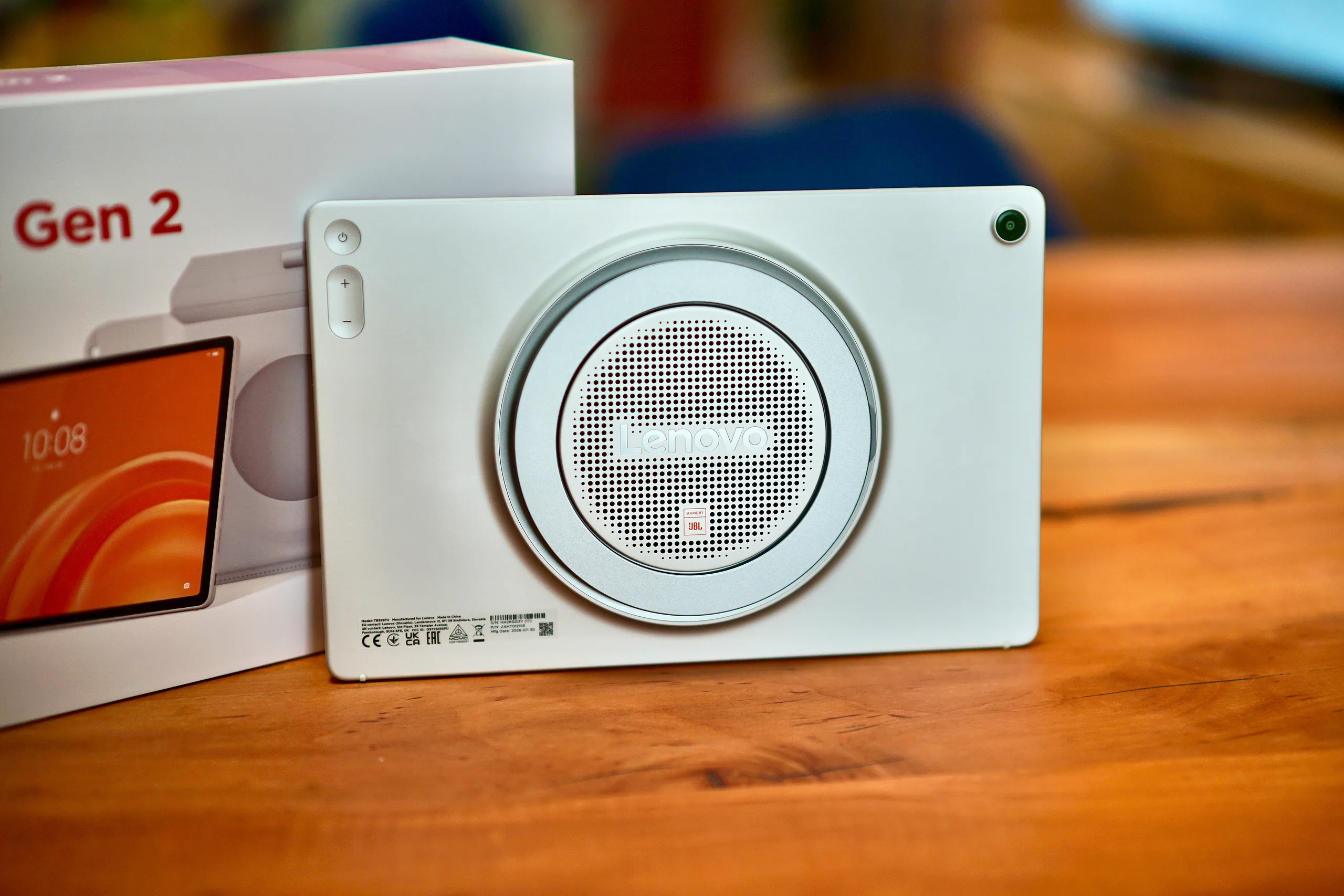
Compared to the first generation of the Tab Plus, the weight has increased significantly: the Lenovo Tab Plus Gen 2 weighs 775 grams, making it not exactly the most portable tablet. At least Lenovo has come up with a case that allows you to carry the Tab Plus Gen 2 like a shoulder bag.
The chassis is also unusual because, although it’s actually only 6.8 millimeters thick, the large speaker and the stand in the middle bring its total thickness to just under 2.3 centimeters. The whole thing is encased in a matte metal body that fits comfortably in the hand and features high-quality construction.
The tablet can be ordered with 128 or 256 GB of storage, and the storage can be expanded via a microSD card. In our tests, the card reader worked quite quickly.


| SD Card Reader - average JPG Copy Test (av. of 3 runs) | |
| Oppo Pad 5 (Angelbird V60) | |
| Lenovo Tab Plus Gen 2 (Angelbird V60) | |
| Lenovo Tab Plus (Angelbird V60) | |
| Average of class Tablet (10.2 - 79.2, n=44, last 2 years) | |
Cross-Platform Disk Test (CPDT)
Communication and operation – No fingerprint sensor
There is no 5G version of the tablet, and unlike its predecessor, the Wi-Fi version also lacks satellite positioning.
In our tests with the Asus RT-BE96U reference router, the Wi-Fi 6 modem in the Tab Plus Gen 2 achieved speeds of around 400 Mbit/s, which is typical for affordable mid-range tablets. Only the Poco Pad X1 demonstrated in our comparison that higher speeds are possible, also in this price range. For most everyday tasks, however, the Tab Plus Gen 2's Wi-Fi is fast enough.
Like its predecessor, the tablet is compatible with the Lenovo Tab Pen Plus, which must be purchased separately. It supports 4,096 pressure levels and connects to the tablet via Bluetooth.
The touchscreen can also be operated very precisely with a finger. Unusually, the hardware buttons are located on the back, but after a short adjustment period, they also allow for comfortable use. There is no fingerprint sensor; only facial recognition is available for biometric authentication.
| Networking | |
| Lenovo Tab Plus Gen 2 | |
| iperf3 transmit Wi-Fi6/7 RT-BE96U | |
| iperf3 receive Wi-Fi6/7 RT-BE96U | |
| Lenovo Tab Plus | |
| iperf3 transmit AXE11000 | |
| iperf3 receive AXE11000 | |
| Oppo Pad 5 | |
| iperf3 transmit Wi-Fi6/7 RT-BE96U | |
| iperf3 receive Wi-Fi6/7 RT-BE96U | |
| Xiaomi Poco Pad X1 | |
| iperf3 transmit AXE11000 | |
| iperf3 receive AXE11000 | |
| iperf3 transmit AXE11000 6GHz | |
| iperf3 receive AXE11000 6GHz | |
| Average 802.11 a/b/g/n/ac/ax | |
| iperf3 transmit AXE11000 | |
| iperf3 receive AXE11000 | |
| iperf3 transmit AXE11000 6GHz | |
| iperf3 receive AXE11000 6GHz | |
| iperf3 transmit Wi-Fi6/7 RT-BE96U | |
| iperf3 receive Wi-Fi6/7 RT-BE96U | |
| Average of class Tablet | |
| iperf3 transmit AXE11000 | |
| iperf3 receive AXE11000 | |
| iperf3 transmit AXE11000 6GHz | |
| iperf3 receive AXE11000 6GHz | |
| iperf3 transmit Wi-Fi6/7 RT-BE96U | |
| iperf3 receive Wi-Fi6/7 RT-BE96U | |
Software and sustainability – 4 years of security
Android 16 comes pre-installed, and updates are expected through 2030, but only two new Android versions are planned. So don’t expect new software for too long.
The packaging is plastic-free, but no other data on the product’s sustainability is available.
Cameras – Acceptable image quality

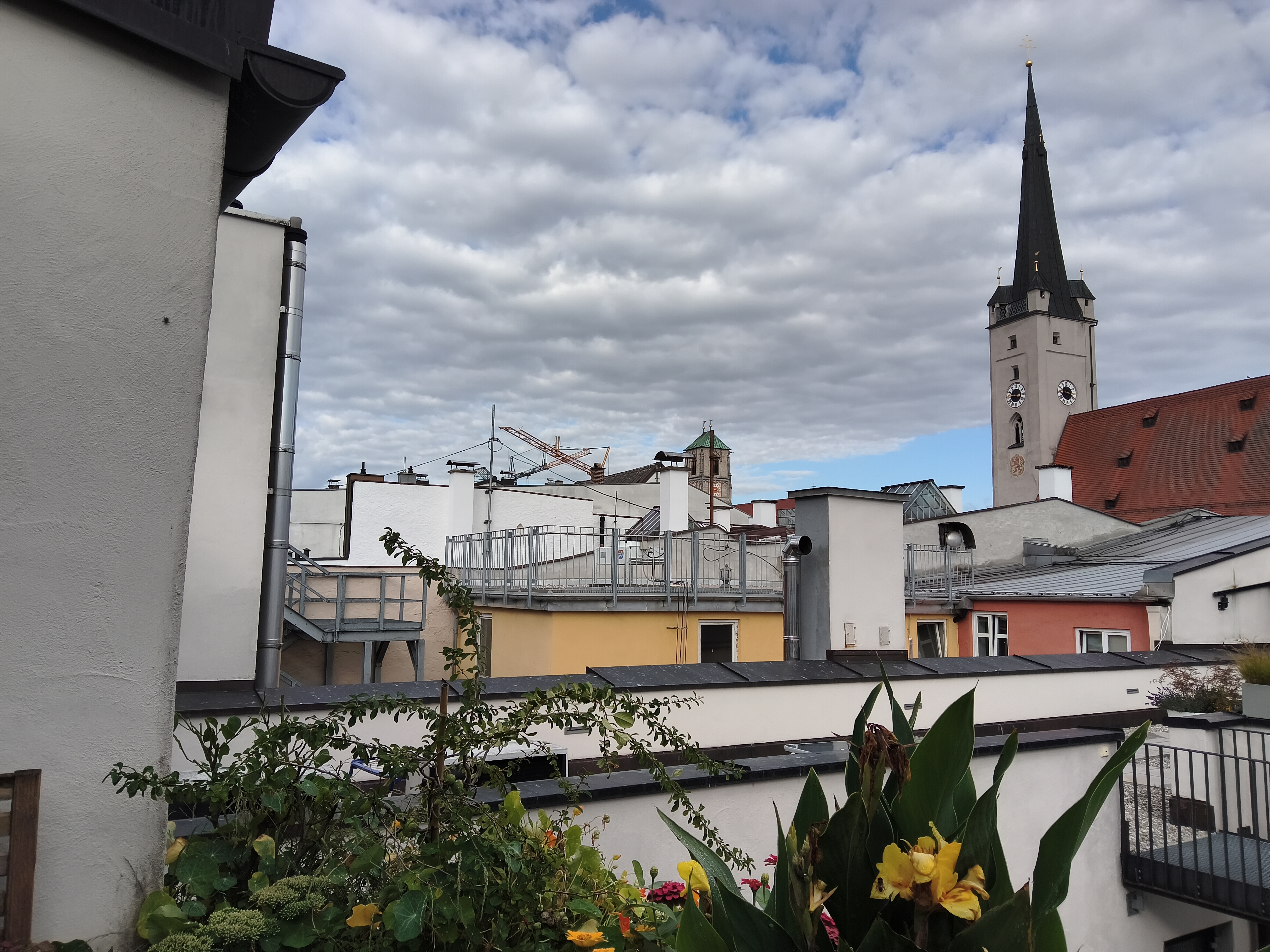
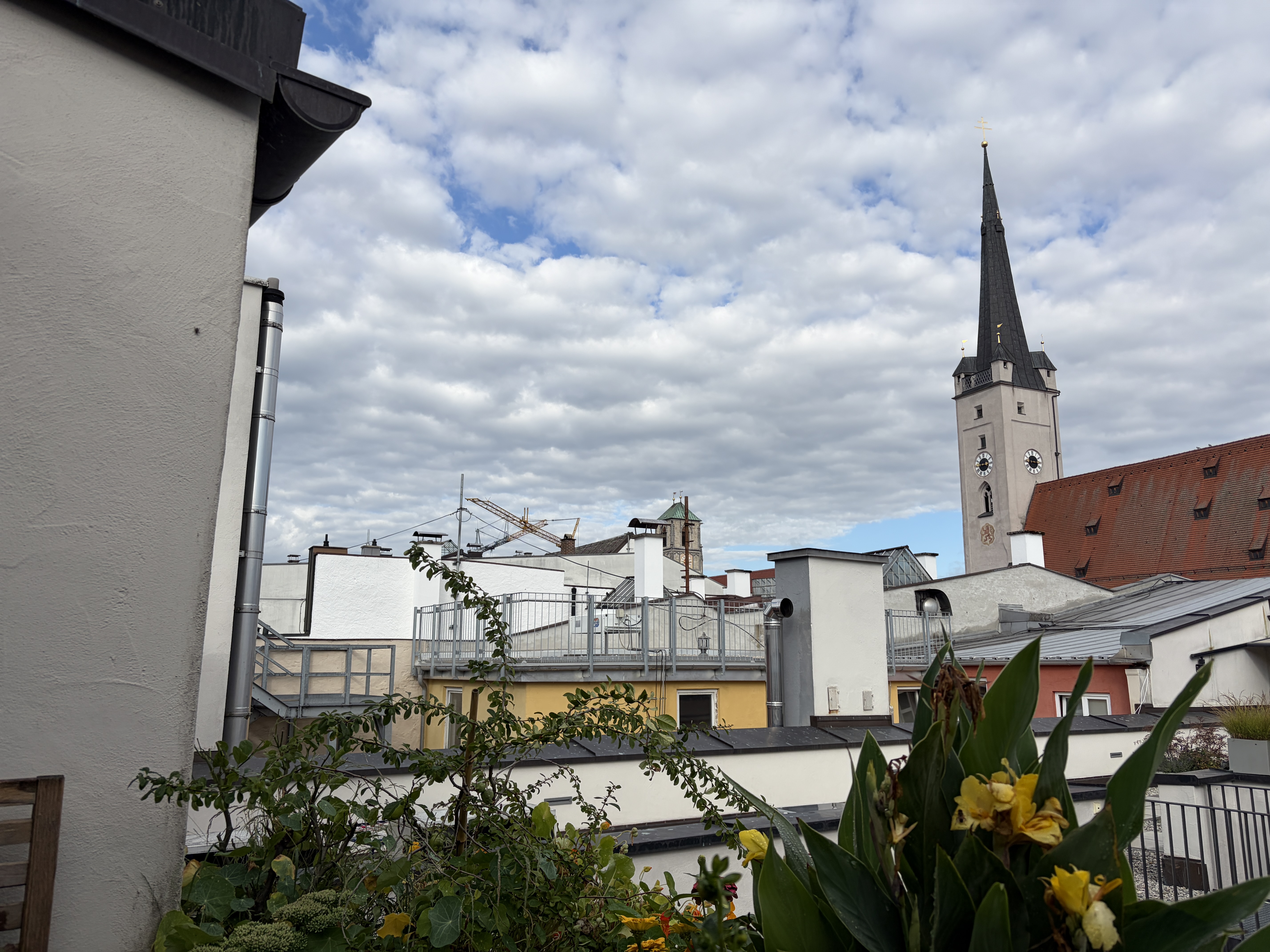
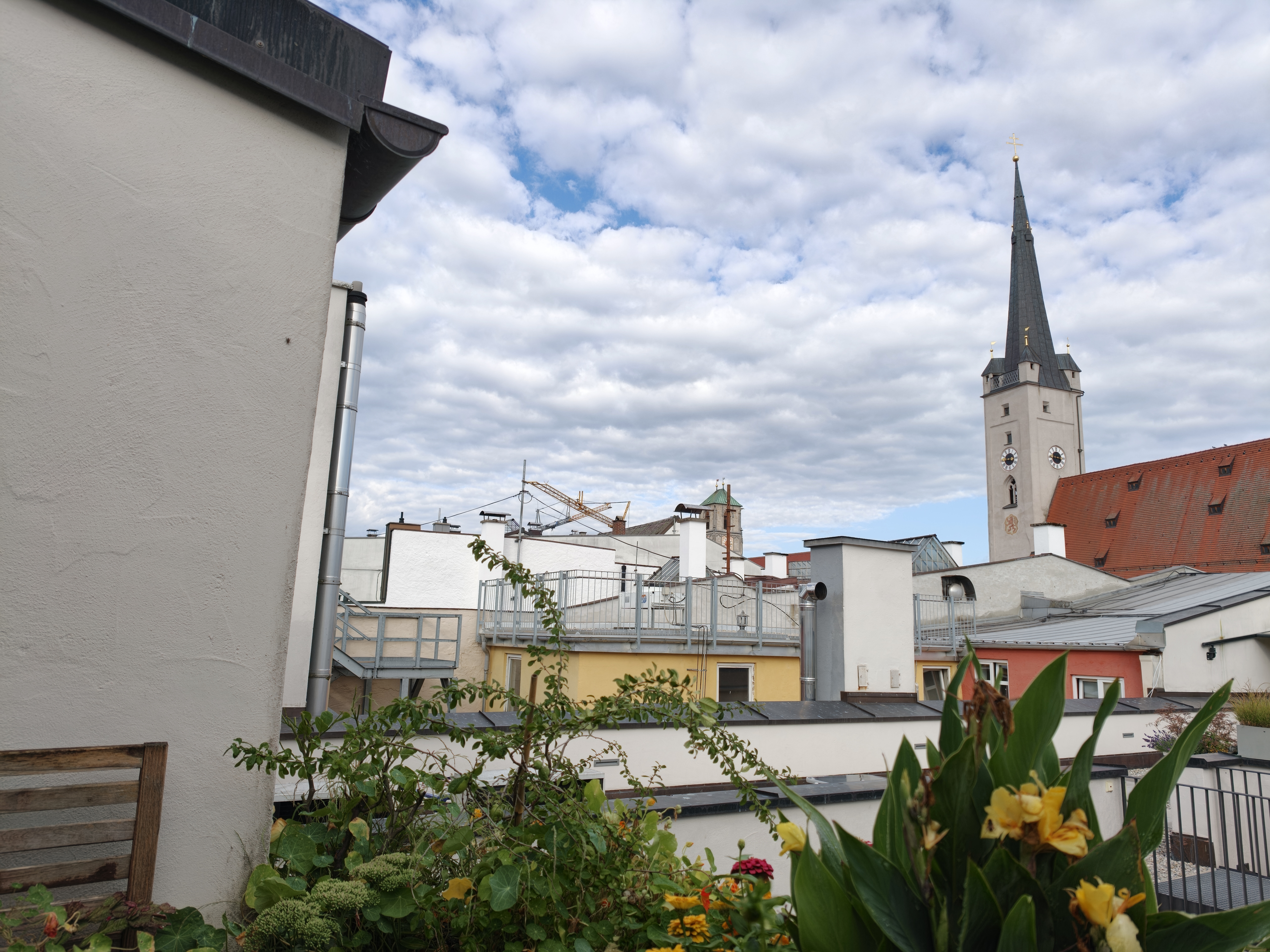
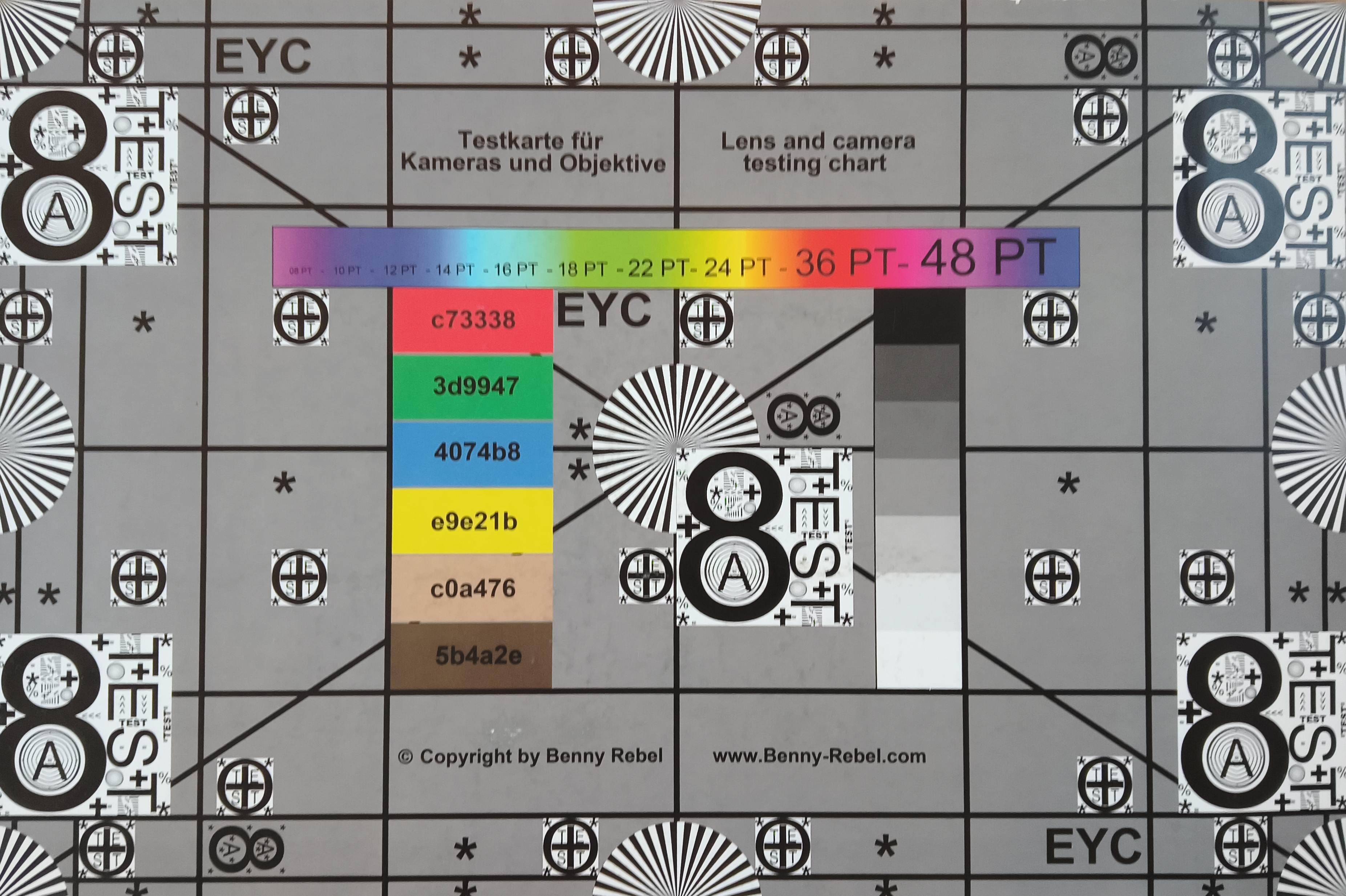
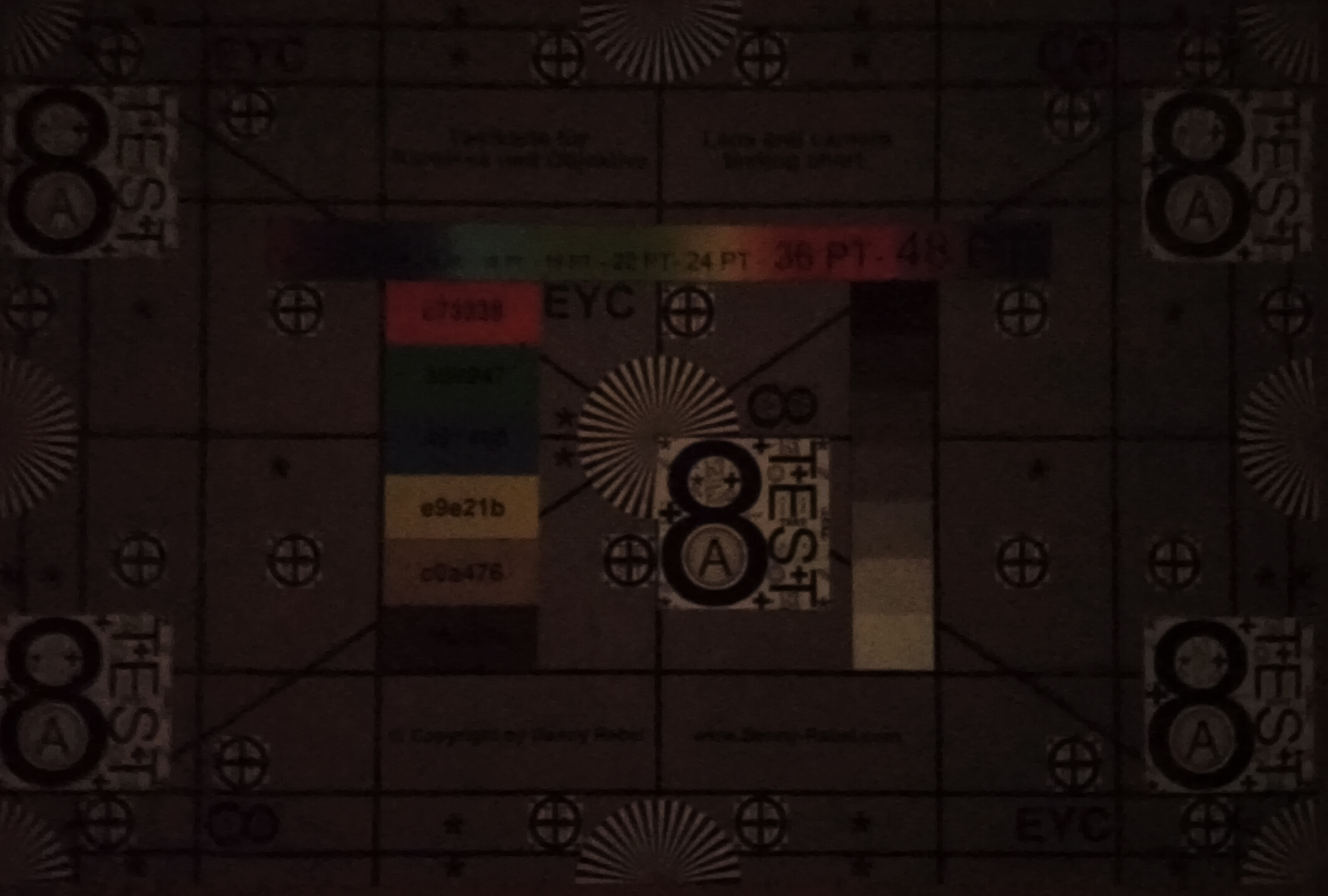
Lenovo doesn’t place too much emphasis on good cameras, but there is a 13-megapixel sensor on the back that produces decent pictures as long as you don’t zoom in too much.
Photos from the 8-megapixel selfie camera can quickly look a bit grainy, but are generally usable.
Image comparison
Choose a scene and navigate within the first image. One click changes the position on touchscreens. One click on the zoomed-in image opens the original in a new window. The first image shows the scaled photograph of the test device.
PlantSurroundingLow Light













Display – Sufficiently bright
The IPS screen offers higher resolution and is brighter than in the tablet's predecessor. This allows the Lenovo Tab Plus Gen 2 to compete much more effectively with similarly priced tablets. We measured brightness of up to 680 cd/m² during everyday use, so you can even take the tablet outdoors.
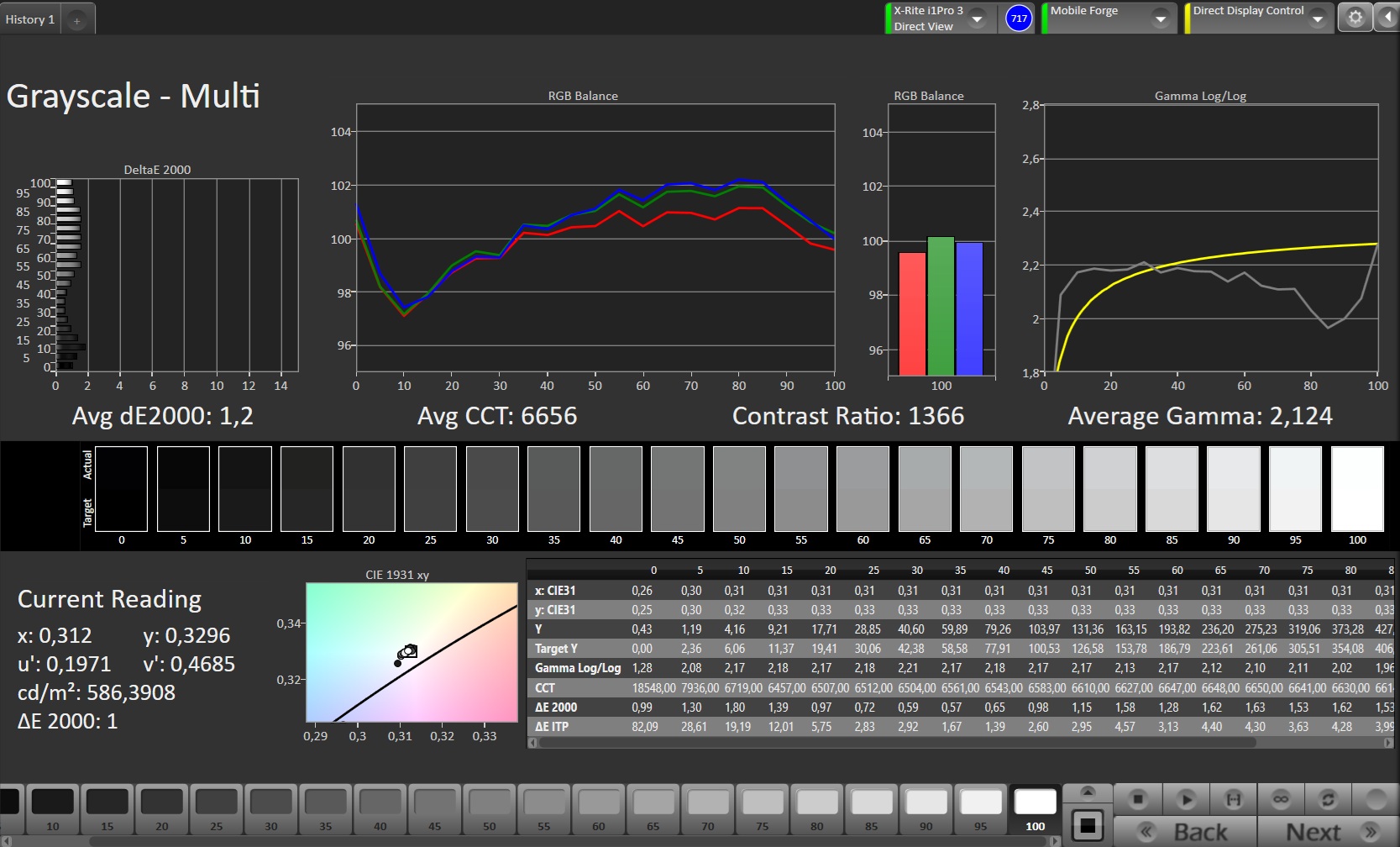
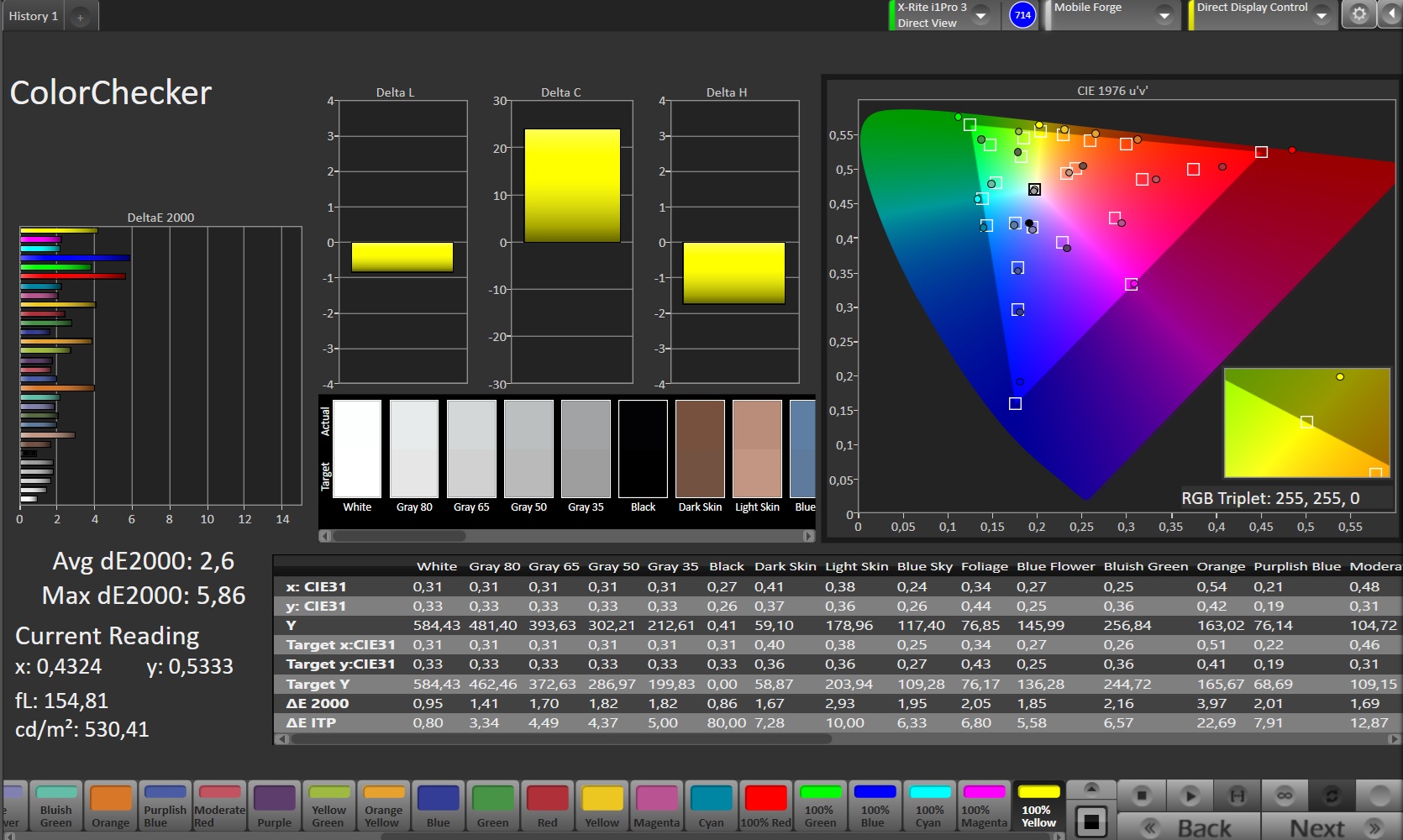
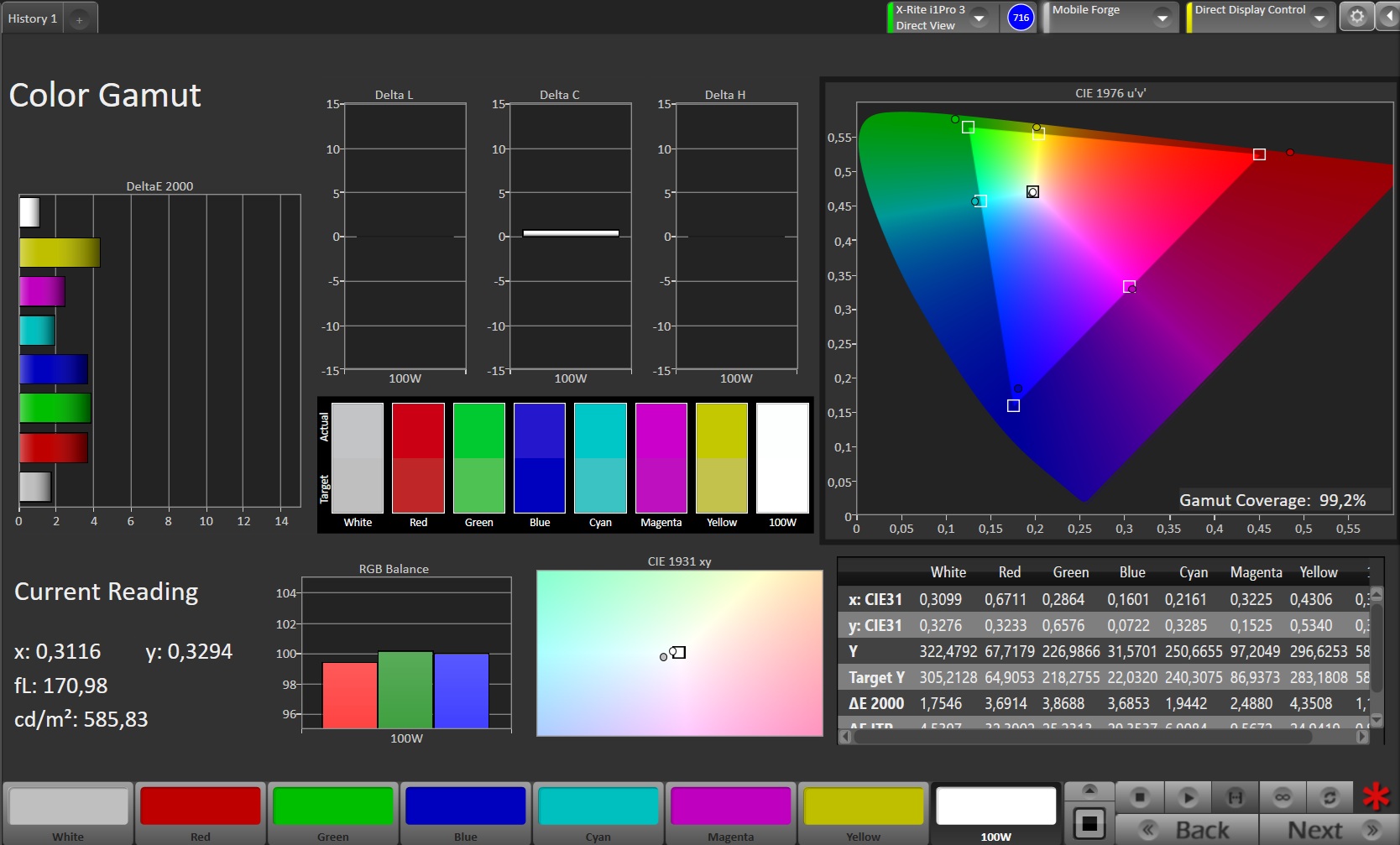
The screen reproduces colors quite accurately and does not exhibit PWM flickering at low brightness levels.
| |||||||||||||||||||||||||
Center on Battery: 680 cd/m²
Contrast: 1619:1 (Black: 0.42 cd/m²)
ΔE ColorChecker Calman: 2.6 | ∀{0.5-29.43 Ø4.69}
ΔE Greyscale Calman: 1.2 | ∀{0.09-98 Ø4.94}
99.2% sRGB (Calman 2D)
Gamma: 2.124
CCT: 6656 K
| Lenovo Tab Plus Gen 2 IPS, 2560x1600, 12.1" | Lenovo Tab Plus IPS, 2000x1200, 11.5" | Oppo Pad 5 LCD, 2800x1980, 12.1" | Xiaomi Poco Pad X1 TFT-LCD, 3200x2136, 11.2" | |
|---|---|---|---|---|
| Display | 33% | -2% | ||
| APL18 Peak Brightness (cd/m²) | 695 | 903 30% | 788 13% | |
| HDR Peak Brightness (cd/m²) | 684 | 926 35% | 574 -16% | |
| Response Times | -92% | 0% | -40% | |
| Response Time Grey 50% / Grey 80% * (ms) | 22.8 ? | 51 ? -124% | 25.1 ? -10% | 35.42 ? -55% |
| Response Time Black / White * (ms) | 14.5 ? | 23.2 ? -60% | 13.1 ? 10% | 18.09 ? -25% |
| PWM Frequency (Hz) | ||||
| PWM Amplitude * (%) | ||||
| Screen | -35% | -18% | -31% | |
| Brightness middle (cd/m²) | 680 | 465 -32% | 892 31% | 794 17% |
| Black Level * (cd/m²) | 0.42 | 0.3 29% | 0.8 -90% | 0.47 -12% |
| Contrast (:1) | 1619 | 1550 -4% | 1115 -31% | 1689 4% |
| Colorchecker dE 2000 * | 2.6 | 2.96 -14% | 1.17 55% | 2.2 15% |
| Colorchecker dE 2000 max. * | 5.86 | 5.32 9% | 4.67 20% | 5.8 1% |
| Greyscale dE 2000 * | 1.2 | 3.6 -200% | 2.3 -92% | 3.7 -208% |
| Gamma | 2.124 104% | 2.372 93% | 2.415 91% | 2.25 98% |
| CCT | 6656 98% | 6016 108% | 6856 95% | 6962 93% |
| Brightness (cd/m²) | 438 | 862 | 727 | |
| Brightness Distribution (%) | 88 | 93 | 89 | |
| Total Average (Program / Settings) | -64% /
-50% | 5% /
-4% | -24% /
-27% |
* ... smaller is better
Screen Flickering / PWM (Pulse-Width Modulation)
| Screen flickering / PWM not detected | 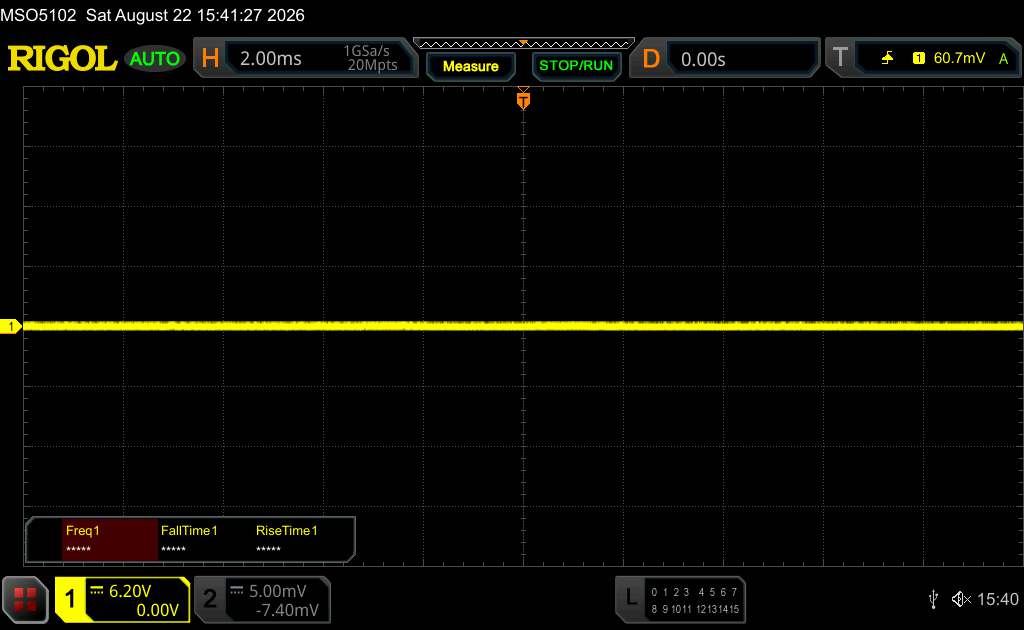 | ||
In comparison: 52 % of all tested devices do not use PWM to dim the display. If PWM was detected, an average of 7638 (minimum: 5 - maximum: 343500) Hz was measured. | |||
Display Response Times
| ↔ Response Time Black to White | ||
|---|---|---|
| 14.5 ms ... rise ↗ and fall ↘ combined | ↗ 8.8 ms rise | 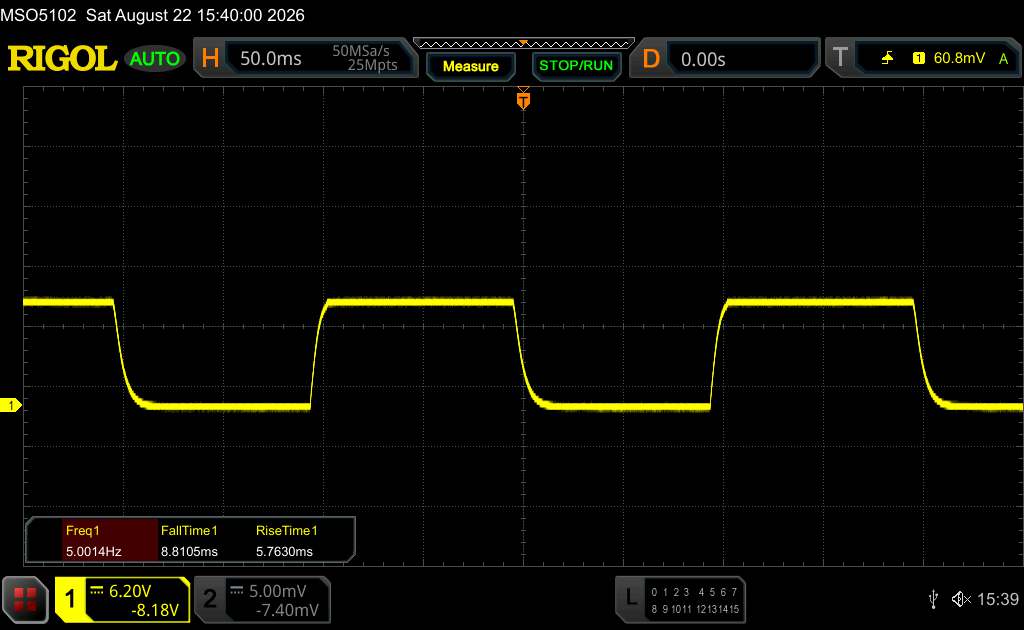 |
| ↘ 5.7 ms fall | ||
| The screen shows good response rates in our tests, but may be too slow for competitive gamers. In comparison, all tested devices range from 0.1 (minimum) to 240 (maximum) ms. » 36 % of all devices are better. This means that the measured response time is better than the average of all tested devices (19.7 ms). | ||
| ↔ Response Time 50% Grey to 80% Grey | ||
| 22.8 ms ... rise ↗ and fall ↘ combined | ↗ 15.4 ms rise | 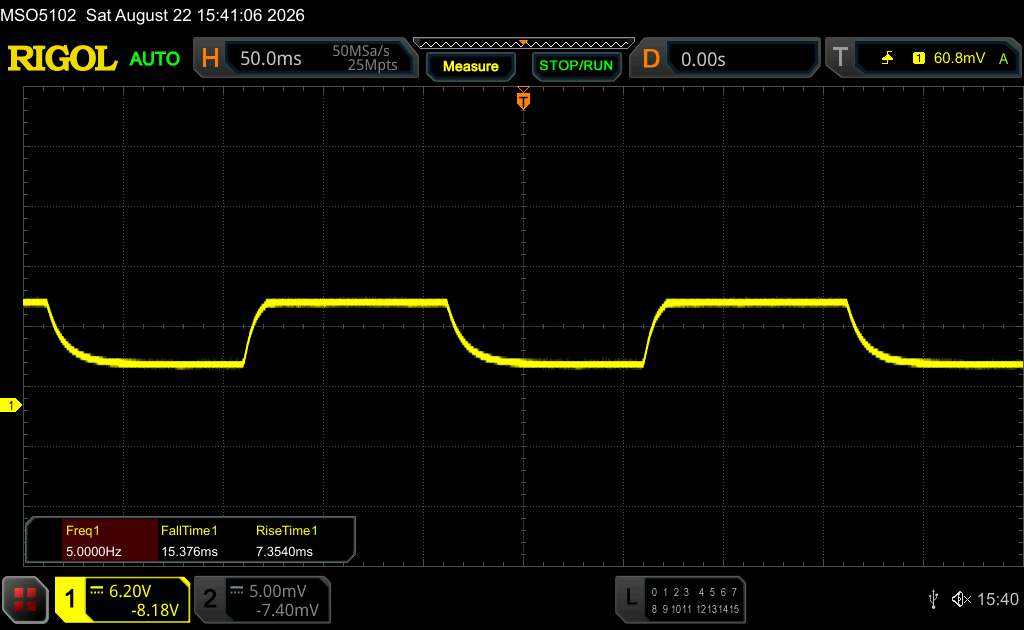 |
| ↘ 7.4 ms fall | ||
| The screen shows good response rates in our tests, but may be too slow for competitive gamers. In comparison, all tested devices range from 0.13 (minimum) to 636 (maximum) ms. » 34 % of all devices are better. This means that the measured response time is better than the average of all tested devices (30.8 ms). | ||
Performance, emissions, and battery life – Great speaker, great endurance
The MediaTek Dimensity 7400 is used as the SoC. This gives the tablet enough power for everyday use and makes it significantly faster than its predecessor. Smooth operation isn’t always guaranteed during resource-intensive tasks, but if you’re just navigating through menus and performing simple tasks, you shouldn’t encounter any issues. The memory performs quickly.
There is hardly any noticeable heat buildup on the casing, even under prolonged load. The 3DMark stress tests show no perceptible performance throttling.
The biggest highlight of the Lenovo Tab Plus Gen 2 is its sound system, featuring a total of nine speakers. The central unit on the back, as well as the sides, house a total of 4 tweeters, 3 subwoofers, and 2 passive membranes. And you can really hear the difference: The sound is rich and detailed, and overall, it’s one of the best we’ve heard on a tablet in recent years.
If desired, you can even connect other devices to the Tab Plus Gen 2 to use it as a Bluetooth speaker.
The battery has also become significantly more powerful: It now has a capacity of 10,200 mAh, delivering nearly 29 hours of runtime in our Wi-Fi test. So even if you work or stream nonstop for 24 hours, the tablet won’t run out of juice right away.
| GFXBench | |
| on screen Aztec Ruins Normal Tier Onscreen | |
| Xiaomi Poco Pad X1 | |
| Average of class Tablet (5.2 - 301, n=80, last 2 years) | |
| Oppo Pad 5 | |
| Lenovo Tab Plus | |
| 1920x1080 Aztec Ruins Normal Tier Offscreen | |
| Xiaomi Poco Pad X1 | |
| Average of class Tablet (5.6 - 323, n=80, last 2 years) | |
| Oppo Pad 5 | |
| Lenovo Tab Plus | |
| on screen Aztec Ruins High Tier Onscreen | |
| Average of class Tablet (3.1 - 94, n=80, last 2 years) | |
| Xiaomi Poco Pad X1 | |
| Oppo Pad 5 | |
| Lenovo Tab Plus | |
| 2560x1440 Aztec Ruins High Tier Offscreen | |
| Xiaomi Poco Pad X1 | |
| Average of class Tablet (2 - 134, n=80, last 2 years) | |
| Oppo Pad 5 | |
| Lenovo Tab Plus | |
| 3840x2160 4K Aztec Ruins High Tier Offscreen | |
| Xiaomi Poco Pad X1 | |
| Average of class Tablet (0.81 - 57, n=80, last 2 years) | |
| Oppo Pad 5 | |
| Lenovo Tab Plus | |
| Lenovo Tab Plus Gen 2 | Lenovo Tab Plus | Oppo Pad 5 | Xiaomi Poco Pad X1 | Average 128 GB UFS 3.1 Flash | Average of class Tablet | |
|---|---|---|---|---|---|---|
| AndroBench 3-5 | -3% | 44% | 145% | 11% | 63% | |
| Sequential Read 256KB (MB/s) | 1433 | 991.99 -31% | 1922.71 34% | 4068.41 184% | 1584 ? 11% | 2112 ? 47% |
| Sequential Write 256KB (MB/s) | 759 | 837.52 10% | 1674.97 121% | 3751.24 394% | 807 ? 6% | 1703 ? 124% |
| Random Read 4KB (MB/s) | 233 | 240.56 3% | 208.83 -10% | 203.66 -13% | 246 ? 6% | 280 ? 20% |
| Random Write 4KB (MB/s) | 206 | 221.09 7% | 266.49 29% | 237.72 15% | 249 ? 21% | 330 ? 60% |
(+) The maximum temperature on the upper side is 32.6 °C / 91 F, compared to the average of 33.7 °C / 93 F, ranging from 20.7 to 53.2 °C for the class Tablet.
(+) The bottom heats up to a maximum of 34.6 °C / 94 F, compared to the average of 33.2 °C / 92 F
3DMark Stress Tests
| 3DMark | |
| Wild Life Stress Test Stability | |
| Lenovo Tab Plus | |
| Oppo Pad 5 | |
| Lenovo Tab Plus Gen 2 | |
| Xiaomi Poco Pad X1 | |
| Wild Life Extreme Stress Test | |
| Oppo Pad 5 | |
| Lenovo Tab Plus | |
| Lenovo Tab Plus Gen 2 | |
| Xiaomi Poco Pad X1 | |
| Steel Nomad Light Stress Test Stability | |
| Oppo Pad 5 | |
| Xiaomi Poco Pad X1 | |
Lenovo Tab Plus Gen 2 audio analysis
(+) | speakers can play relatively loud (93.7 dB)
Bass 100 - 315 Hz
(-) | nearly no bass - on average 98.8% lower than median
(+) | bass is linear (0% delta to prev. frequency)
Mids 400 - 2000 Hz
(-) | nearly no mids - on average 98.8% lower than median
(+) | mids are linear (0% delta to prev. frequency)
Highs 2 - 16 kHz
(-) | nearly no highs - on average 98.8% lower than median
(+) | highs are linear (0% delta to prev. frequency)
Overall 100 - 16.000 Hz
(-) | overall sound is not linear (114.5% difference to median)
Compared to same class
» 98% of all tested devices in this class were better, 1% similar, 1% worse
» The best had a delta of 7%, average was 21%, worst was 130%
Compared to all devices tested
» 96% of all tested devices were better, 1% similar, 3% worse
» The best had a delta of 4%, average was 23%, worst was 136%
Xiaomi Poco Pad X1 audio analysis
(+) | speakers can play relatively loud (89.4 dB)
Bass 100 - 315 Hz
(±) | reduced bass - on average 11.8% lower than median
(±) | linearity of bass is average (8.2% delta to prev. frequency)
Mids 400 - 2000 Hz
(±) | higher mids - on average 7.4% higher than median
(+) | mids are linear (4.1% delta to prev. frequency)
Highs 2 - 16 kHz
(+) | balanced highs - only 4.9% away from median
(+) | highs are linear (6.4% delta to prev. frequency)
Overall 100 - 16.000 Hz
(+) | overall sound is linear (13.2% difference to median)
Compared to same class
» 24% of all tested devices in this class were better, 4% similar, 72% worse
» The best had a delta of 7%, average was 21%, worst was 130%
Compared to all devices tested
» 14% of all tested devices were better, 3% similar, 83% worse
» The best had a delta of 4%, average was 23%, worst was 136%
| Off / Standby |   0.1 / 0.2 Watt 0.1 / 0.2 Watt |
| Idle |  1.2 / 1.7 / 1.8 Watt 1.2 / 1.7 / 1.8 Watt |
    
| |
Key:
min: ,
med: ,
max: Metrahit Energy | |
| Lenovo Tab Plus Gen 2 10200 mAh | Lenovo Tab Plus 8600 mAh | Oppo Pad 5 10420 mAh | Xiaomi Poco Pad X1 8850 mAh | Average MediaTek Dimensity 7400 | Average of class Tablet | |
|---|---|---|---|---|---|---|
| Power Consumption | 2% | -26% | -15% | 0% | -116% | |
| Idle Minimum * (Watt) | 1.2 | 1.2 -0% | 1.8 -50% | 0.7 42% | 1.2 ? -0% | 2.16 ? -80% |
| Idle Average * (Watt) | 1.7 | 1.6 6% | 1.9 -12% | 2.45 -44% | 1.7 ? -0% | 3.9 ? -129% |
| Idle Maximum * (Watt) | 1.8 | 1.8 -0% | 2.1 -17% | 2.58 -43% | 1.8 ? -0% | 4.29 ? -138% |
| Load Average * (Watt) | 3.7 | 6.7 | 7.31 | 8.87 ? | ||
| Load Maximum * (Watt) | 5.7 | 9 | 9.17 | 14.4 ? |
* ... smaller is better
| Lenovo Tab Plus Gen 2 10200 mAh | Lenovo Tab Plus 8600 mAh | Oppo Pad 5 10420 mAh | Xiaomi Poco Pad X1 8850 mAh | |
|---|---|---|---|---|
| Battery runtime | -16% | -34% | -52% | |
| WiFi v1.3 (h) | 28.9 | 24.2 -16% | 19.1 -34% | 13.9 -52% |
| Reader / Idle (h) | 44.3 | |||
| H.264 (h) | 18.6 | |||
| Load (h) | 6.1 | 4.2 |
Notebookcheck Overall Rating
The Lenovo Tab Plus Gen 2 is affordable, high-quality, and unique.
Due to its bulky design, it certainly isn’t suitable for every use case, but at the same time, the sound is truly impressive.
Lenovo Tab Plus Gen 2
- 09/17/2026 v8
Florian Schmitt
 Total Sustainability Score:
 Comparison of Possible Alternatives
Image | Model / Review | Price | Weight | Drive | Display |
|---|---|---|---|---|---|
1. 80.6%  | Lenovo Tab Plus Gen 2 MediaTek Dimensity 7400 ⎘ ARM Mali-G615 MP2 ⎘ 8 GB Memory, 128 GB UFS 3.1 | List Price: 429€ | 775 g | 128 GB UFS 3.1 Flash | 12.10" 2560x1600 249 PPI IPS |
2. 77.8%  | Lenovo Tab Plus Mediatek Helio G99 ⎘ ARM Mali-G57 MP2 ⎘ 8 GB Memory, 128 GB UFS 2.2 | List Price: 299 Euro | 660 g | 128 GB UFS 2.2 Flash | 11.50" 2000x1200 204 PPI IPS |
3. 80.9%  | Oppo Pad 5 MediaTek Dimensity 7300 ⎘ ARM Mali-G615 MP2 ⎘ 8 GB Memory, 128 GB UFS 3.1 | List Price: 459€ | 577 g | 128 GB UFS 3.1 Flash | 12.10" 2800x1980 283 PPI LCD |
4. 85.8%  | Xiaomi Poco Pad X1 Qualcomm Snapdragon 7+ Gen 3 ⎘ Qualcomm Adreno 732 ⎘ 8 GB Memory, 512 GB UFS 4.x | List Price: 389€ | 500 g | 512 GB UFS 4.0 Flash | 11.20" 3200x2136 344 PPI TFT-LCD |
Transparency
The selection of devices to be reviewed is made by our editorial team. The test sample was provided to the author as a loan by the manufacturer or retailer for the purpose of this review. The lender had no influence on this review, nor did the manufacturer receive a copy of this review before publication. There was no obligation to publish this review. As an independent media company, Notebookcheck is not subjected to the authority of manufacturers, retailers or publishers.
This is how Notebookcheck is testing
Every year, Notebookcheck independently reviews hundreds of laptops and smartphones using standardized procedures to ensure that all results are comparable. We have continuously developed our test methods for around 20 years and set industry standards in the process. In our test labs, high-quality measuring equipment is utilized by experienced technicians and editors. These tests involve a multi-stage validation process. Our complex rating system is based on hundreds of well-founded measurements and benchmarks, which maintains objectivity. Further information on our test methods can be found here.
 Add as a preferred source on Google


