




Verdict - Poco Pad X1
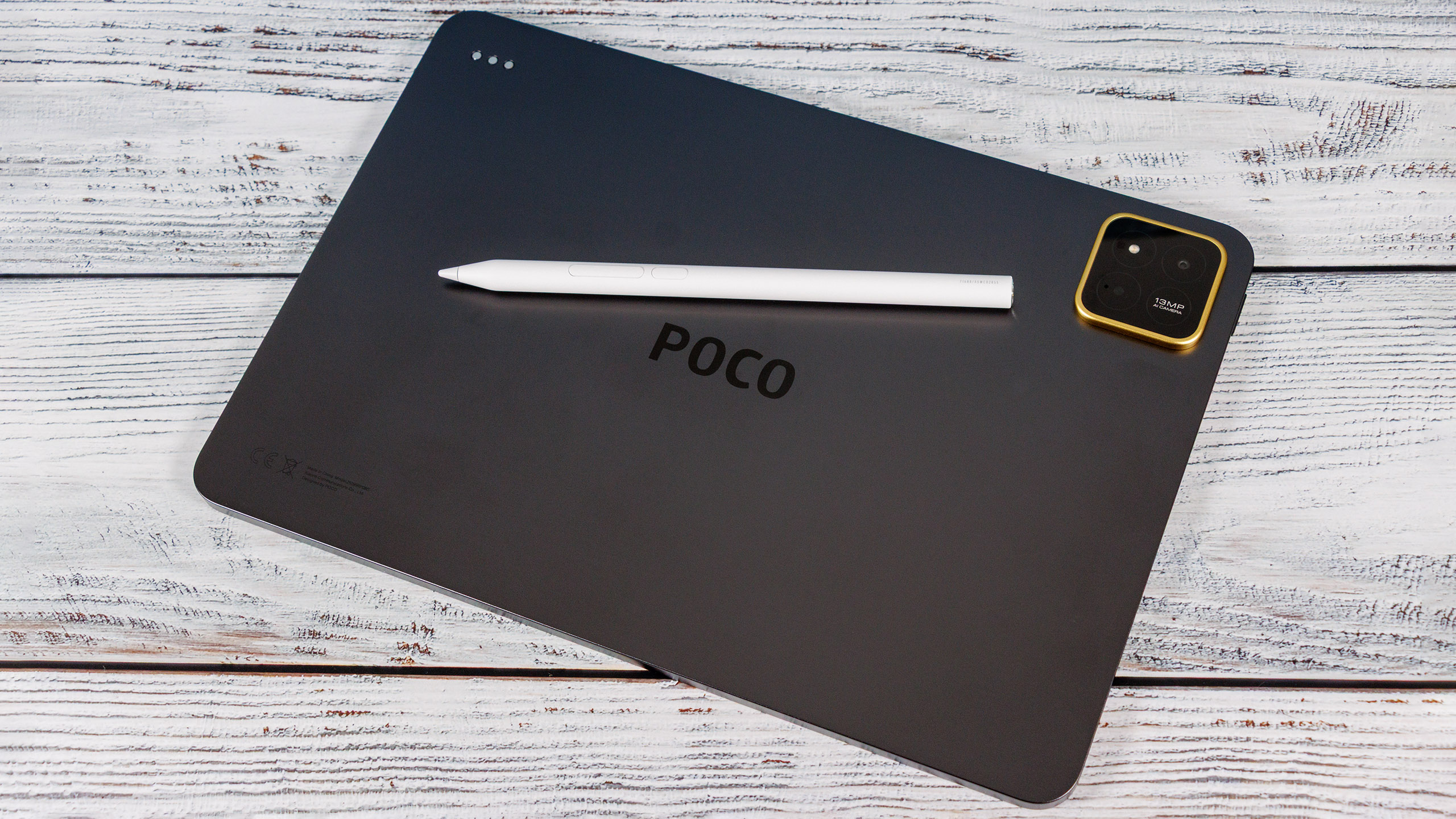
The Xiaomi Poco Pad X1 presents itself as a premium mid-range tablet that comes with a slim metal case and impressive build quality. The protruding camera proves to be somewhat annoying in everyday use, but this can be avoided by using a protective case. The display offers excellent image quality, a flicker-free display, and high brightness.
The Snapdragon chip is responsible for smooth performance, even when playing games. However, it lacks a headphone jack, a fingerprint sensor, and a vibration motor. On the plus side, it features Wi-Fi 6E, NFC, and good stylus support, albeit with cameras that only deliver average results.
Running HyperOS 3.0 based on Android 16, the Poco Pad X1's software is bang up-to-date, but advertising and pre-installed apps slightly detract from the user experience. Updates are guaranteed for five years, which is decent for a device in this price range.
Pros
Cons
Price and availability
The Xiaomi Poco Pad X1 can be purchased on Xiaomi's store on Amazon UK or AliExpress.

- $269.50XIAOMI Poco Pad M1 Only WiFi (No Calls or Text) 12.1" 2.5K Octa Core 4 Speakers Global ROM 12000mAh Bluetooth Wi-Fi 6 8MP Model 2509ARPBDG (Gray, 256GB + 8GB)
- $290.00XIAOMI Poco Pad M1 Only WiFi (No Calls or Text) 12.1" 2.5K Octa Core 4 Speakers Global ROM 12000mAh Bluetooth Wi-Fi 6 8MP Model 2509ARPBDG (Blue, 256GB + 8GB)
- $379.50XIAOMI Pad 8 Ai WiFi Version Global (No Calls or Text) 11.2 inches 3.2K 144Hz 9200mAh Four Speakers 13 Mp Model 25097RP43G (Gray, 128GB + 8GB)
Table of Contents
- Verdict - Poco Pad X1
- Specifications: Poco Pad X1
- Case - The Poco Pad X1 has a metal unibody
- Features - A Poco tablet with premium functions
- Software - HyperOS 3.0 is already here
- Communication - Fast Wi-Fi for the Pad X1
- Cameras - Solid optics during the day
- Accessories and warranty - Only a 12-month warranty
- Input devices and operation - The Poco tablet offers face recognition
- Display - The Poco Pad X1 uses a high-contrast and flicker-free LCD
- Performance - The Poco tablet comes with a Snapdragon 7+ Gen 3
- Emissions - Only slight losses under load
- Battery runtimes - Surprisingly short
- Notebookcheck overall rating
- Possible alternatives compared
The Pad X1 is the flagship tablet in Poco's tablet portfolio, released simultaneously with the Poco Pad M1. While it also focuses on multimedia, it features a slightly smaller display and higher-quality components, which is a distinction that extends to the optional accessories.
Poco Pad X1 is not officially intended for the European market, where it is represented by the virtually identical Xiaomi Pad 7. As a result, the tablet has no official MSRP, but it can already be found for under £330 from various retailers.
Specifications: Poco Pad X1
Case - The Poco Pad X1 has a metal unibody
The Xiaomi Poco Pad X1 comes in blue and gray and is only 6.18 mm thick, although we measured 6.45 mm. The camera protrudes 3.2 mm, which can cause the tablet to wobble when placed on a table. An optional case can remedy this.
The build quality of the metal unibody case is impressive. It feels very premium to the touch and only creaks minimally when twisted. The gaps are tight and even. The metal case is a bit of a fingerprint magnet, but it is easy to clean.
Xiaomi hasn't provided any information regarding an IP rating.
Features - A Poco tablet with premium functions
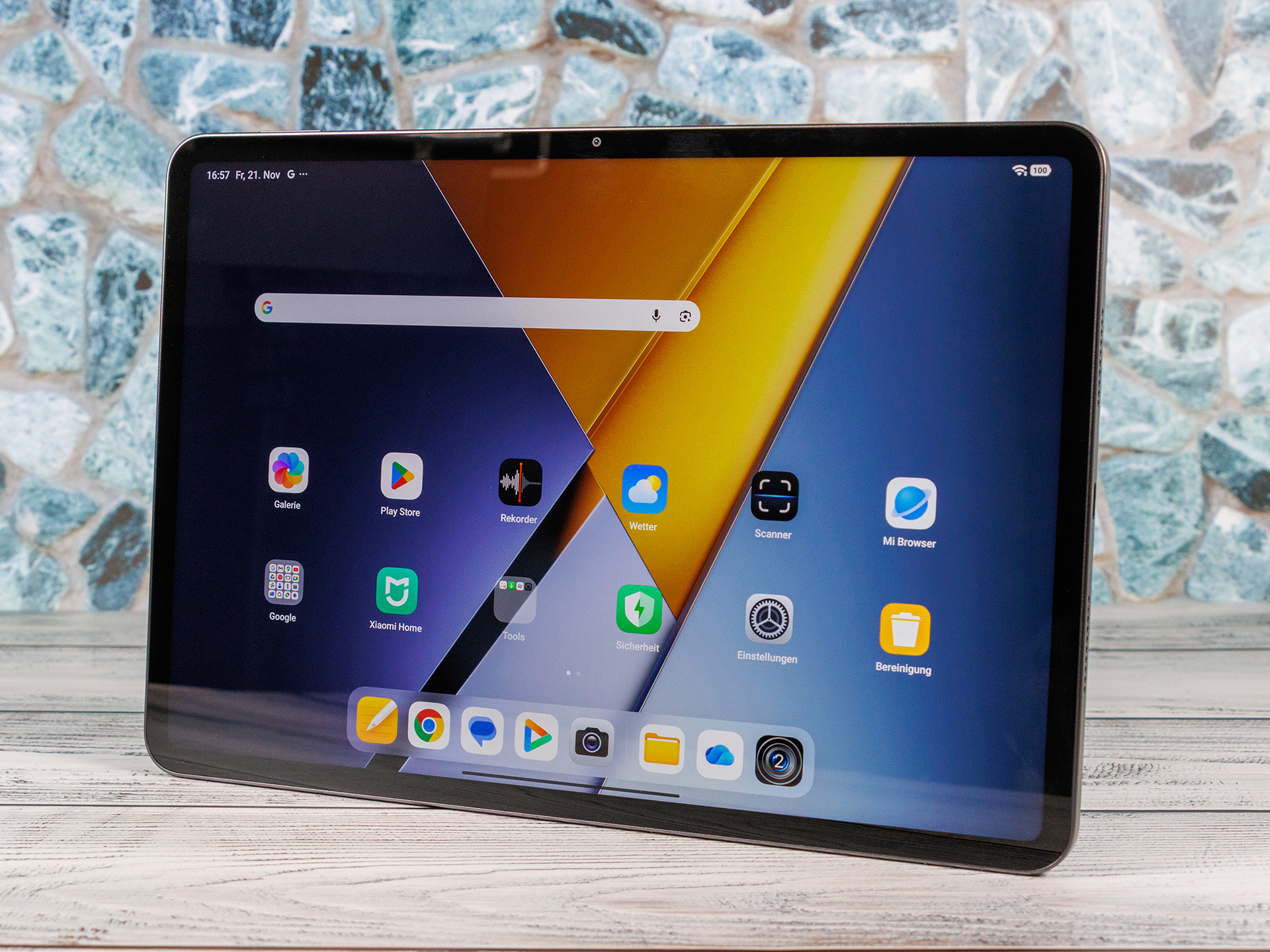
The Poco Pad X1 features a fast USB 3.2 port, which can also be used for wired video output. It can mirror the tablet's screen, but a desktop mode is lacking.
In addition to Xiaomi's connectivity options, the X1 also offers NFC and can be used as an additional screen for your computer via Miracast. An IR blaster is also on board. However, it comes without a vibration motor and a fingerprint sensor. A headphone jack and microSD card support are also missing in action.
Software - HyperOS 3.0 is already here
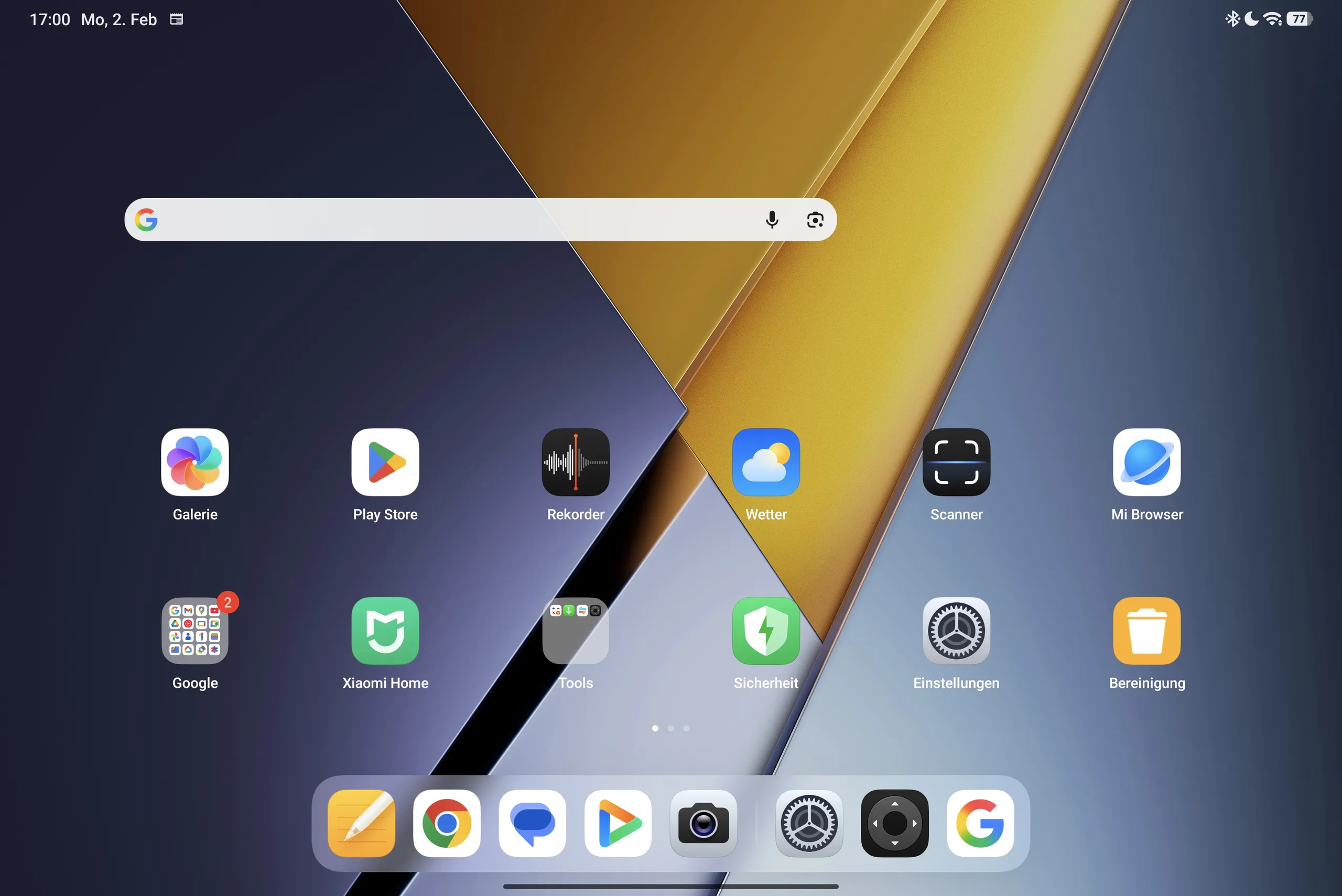
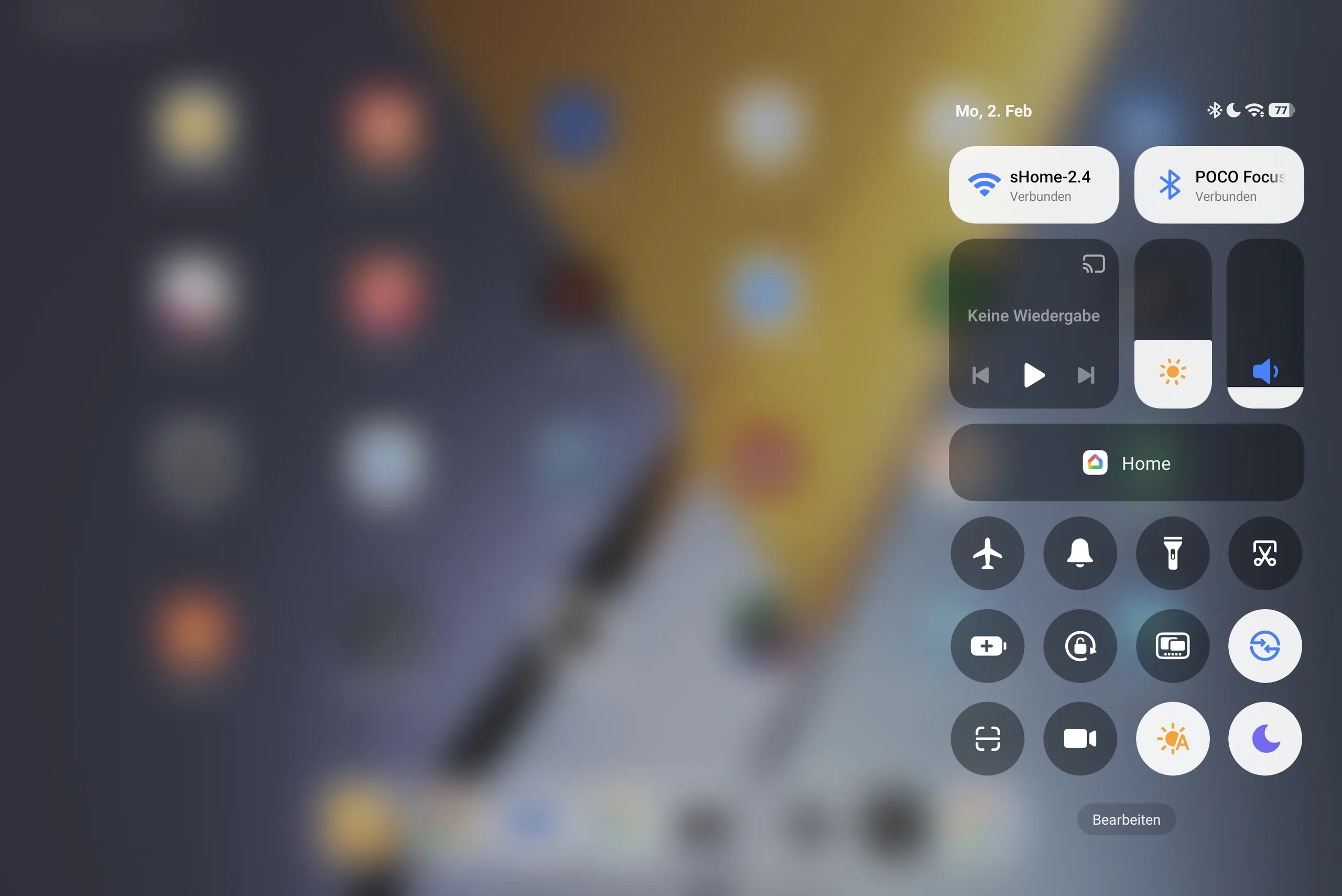
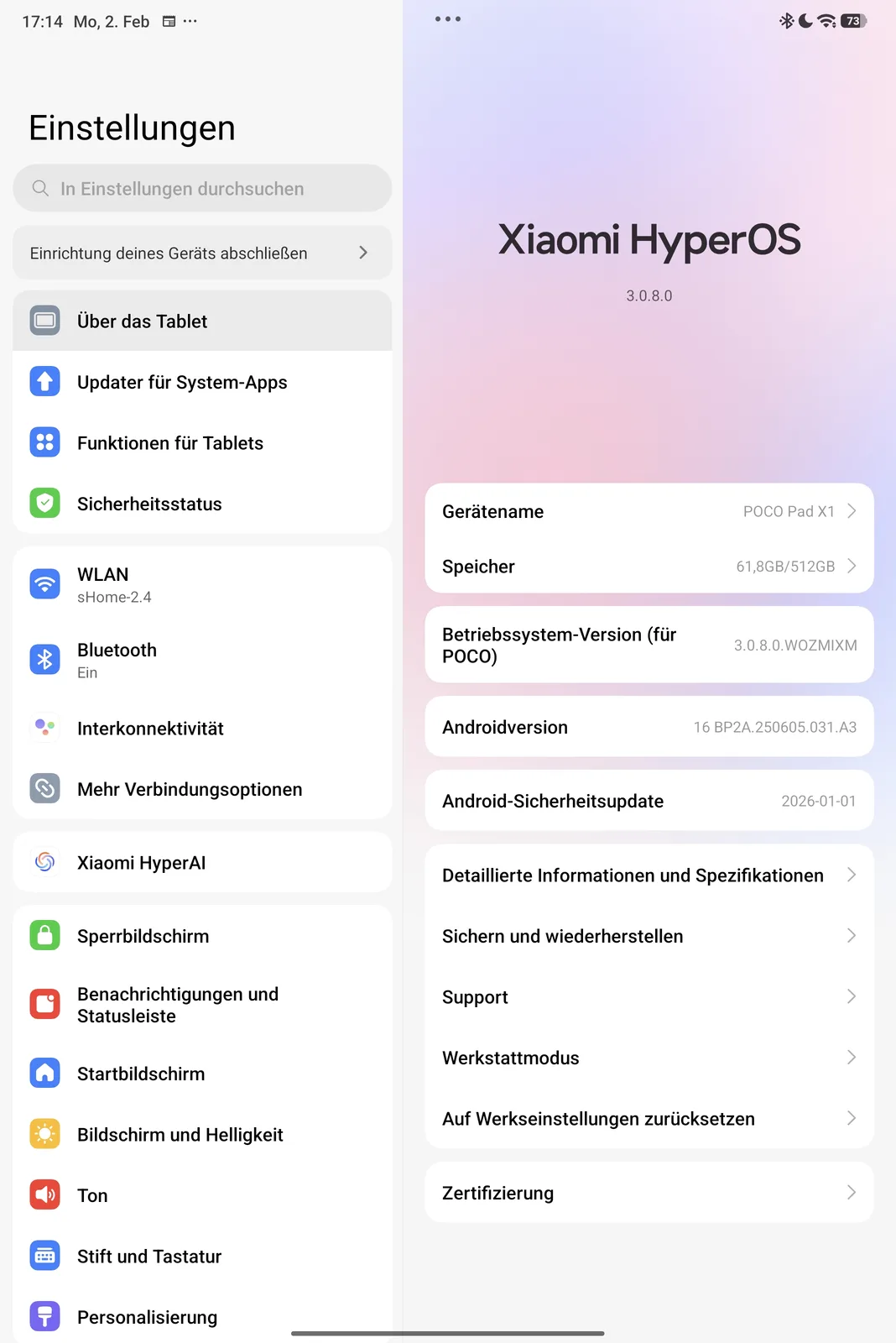
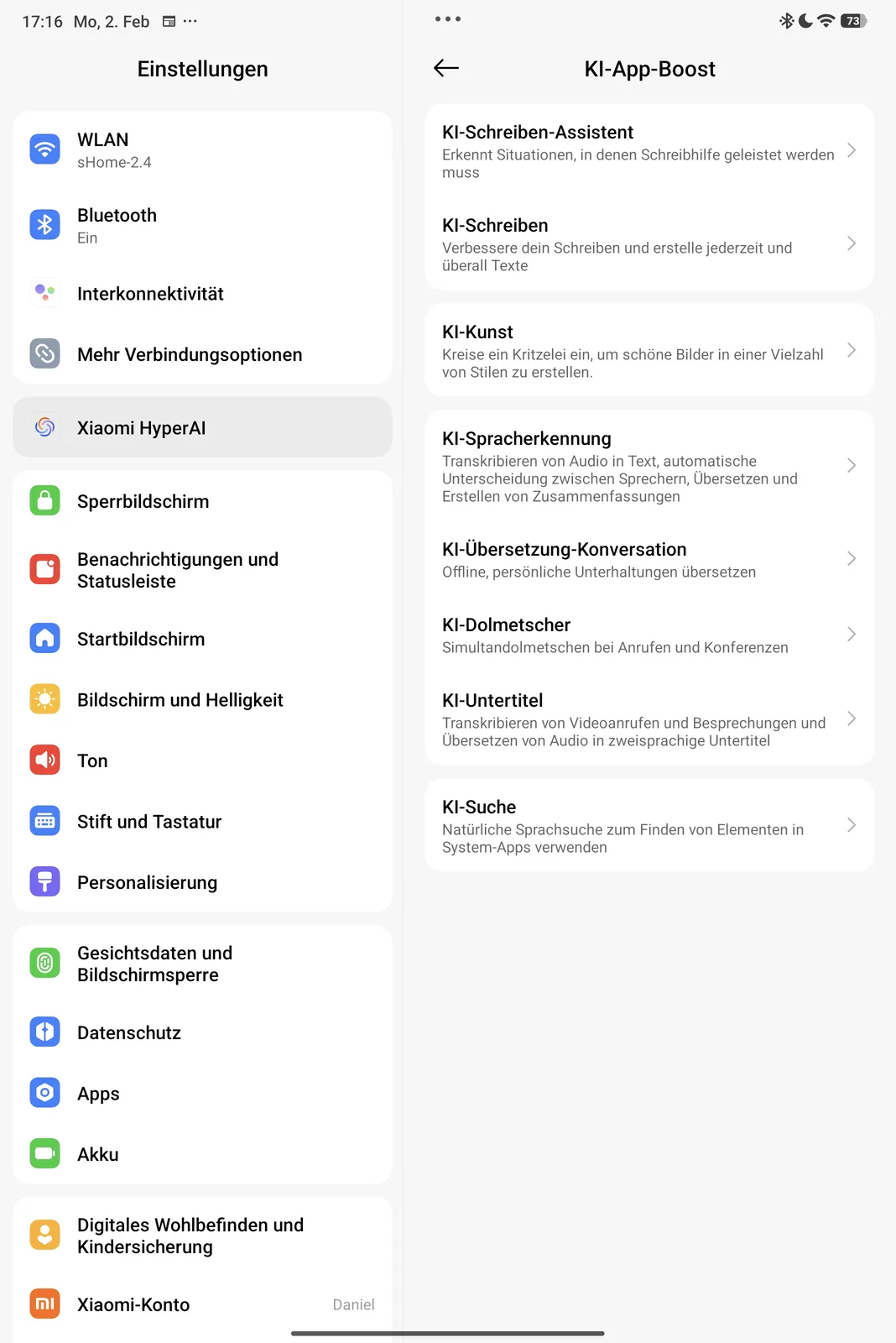
The Poco Pad X1 originally shipped with Google Android 15 and Xiaomi HyperOS 2.0, but shortly after our review began, it received an update to the current HyperOS 3.0, which is based on Android 16. The Xiaomi tablet is slated to receive major updates for three years and security patches for five years. Xiaomi's HyperAI is also included.
Unfortunately, the tablet also contains some advertising as well as several pre-installed third-party apps. However, these can be easily uninstalled. You can find out how to remove the ads in this article.
Sustainability
Xiaomi hasn't provided any specific information regarding the sustainability of its Poco Pad X1. The packaging is plastic-free, but sealed in a clear film.
Since the Poco Pad X1 is not officially available in Germany, Xiaomi doesn't offer any repair manuals or spare parts. However, the tablet is compatible with the identical Pad 7i, and this is why the resources for the sister model can be used.
Communication - Fast Wi-Fi for the Pad X1
The Poco Pad X1 utilizes fast Wi-Fi 6E and can therefore operate in the 6 GHz band. Consequently, the data transfer speeds to our Asus Rapture GT-AXE11000 reference router are very high.
However, the Xiaomi tablet does not support satellite positioning. For video conferencing, it does include noise cancellation, "FocusFrame" (similar to Apple's Center Stage), and a cross-device camera. The latter permits the use of a smartphone's camera when connected via Xiaomi's interconnect technology.
| Networking | |
| Xiaomi Poco Pad X1 | |
| iperf3 transmit AXE11000 | |
| iperf3 receive AXE11000 | |
| iperf3 transmit AXE11000 6GHz | |
| iperf3 receive AXE11000 6GHz | |
| Xiaomi Pad 7 | |
| iperf3 transmit AXE11000 | |
| iperf3 receive AXE11000 | |
| iperf3 transmit AXE11000 6GHz | |
| iperf3 receive AXE11000 6GHz | |
| Samsung Galaxy Tab S10 FE | |
| iperf3 transmit AXE11000 6GHz | |
| iperf3 receive AXE11000 6GHz | |
| Apple iPad 11 (2025) | |
| iperf3 transmit AXE11000 | |
| iperf3 receive AXE11000 | |
| Average Wi-Fi 6E | |
| iperf3 transmit AXE11000 | |
| iperf3 receive AXE11000 | |
| iperf3 transmit AXE11000 6GHz | |
| iperf3 receive AXE11000 6GHz | |
| Average of class Tablet | |
| iperf3 transmit AXE11000 | |
| iperf3 receive AXE11000 | |
| iperf3 transmit AXE11000 6GHz | |
| iperf3 receive AXE11000 6GHz | |
Cameras - Solid optics during the day

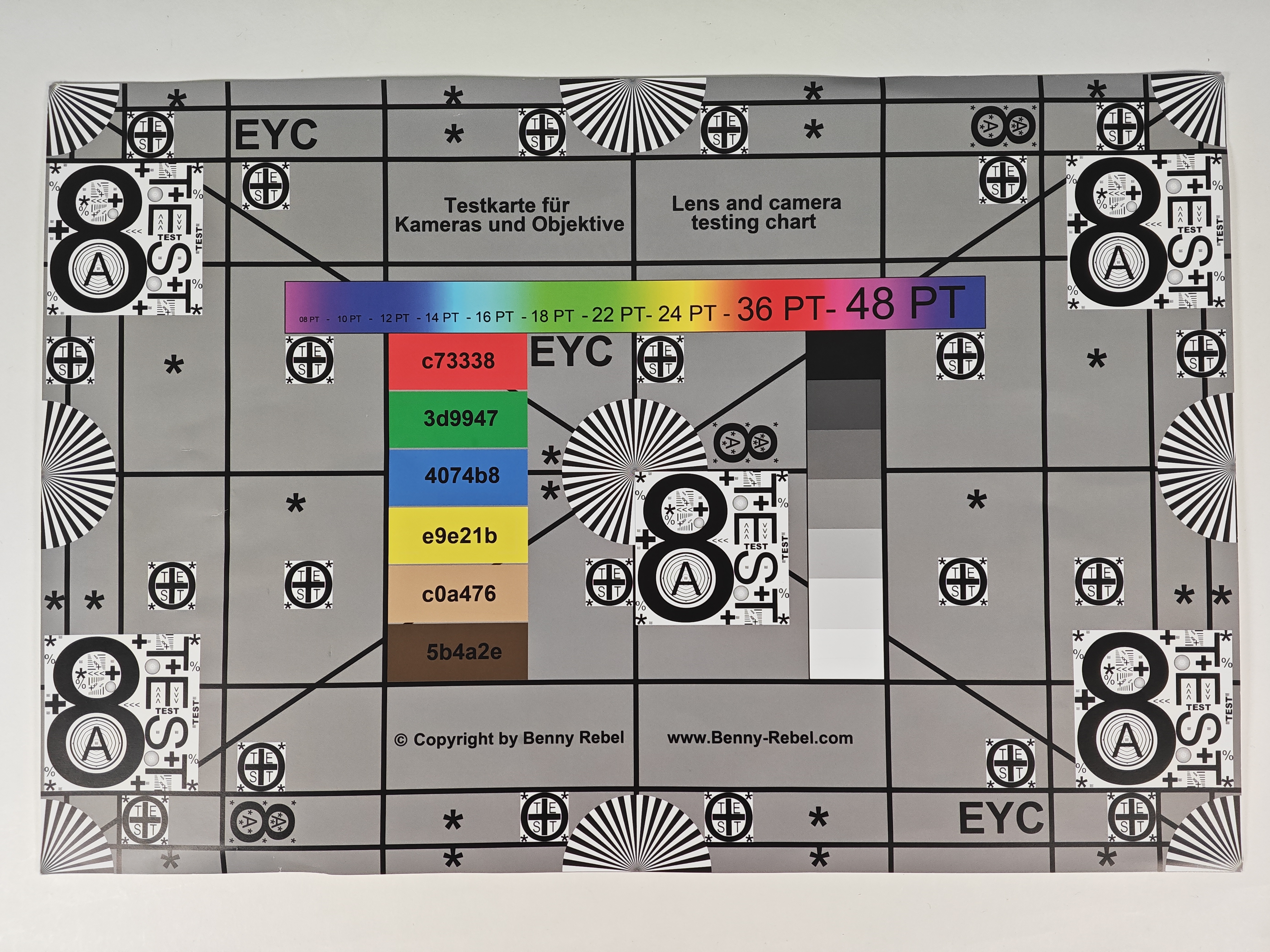
On the front, the Poco Pad X1 delivers solid image quality for video calls, but these videos can be recorded in Full HD (30fps) at best. Additionally, it uses the same sensor as seen in the Pad M1.
The main camera on the back features a larger OmniVision sensor and offers a slightly higher resolution. Images taken with it appear both natural and balanced, and deliver a high level of detail in daylight. This even makes it feasible to capture the occasional snapshot.
The Pad X1 records videos in Ultra HD (30fps) at best, and even manages 60fps in 1080p. However, the electronic image stabilization gets overwhelmed quickly by the high frame rate.
Image comparison
Choose a scene and navigate within the first image. One click changes the position on touchscreens. One click on the zoomed-in image opens the original in a new window. The first image shows the scaled photograph of the test device.
Main cameraMain camera5x zoomLow light



















Accessories and warranty - Only a 12-month warranty
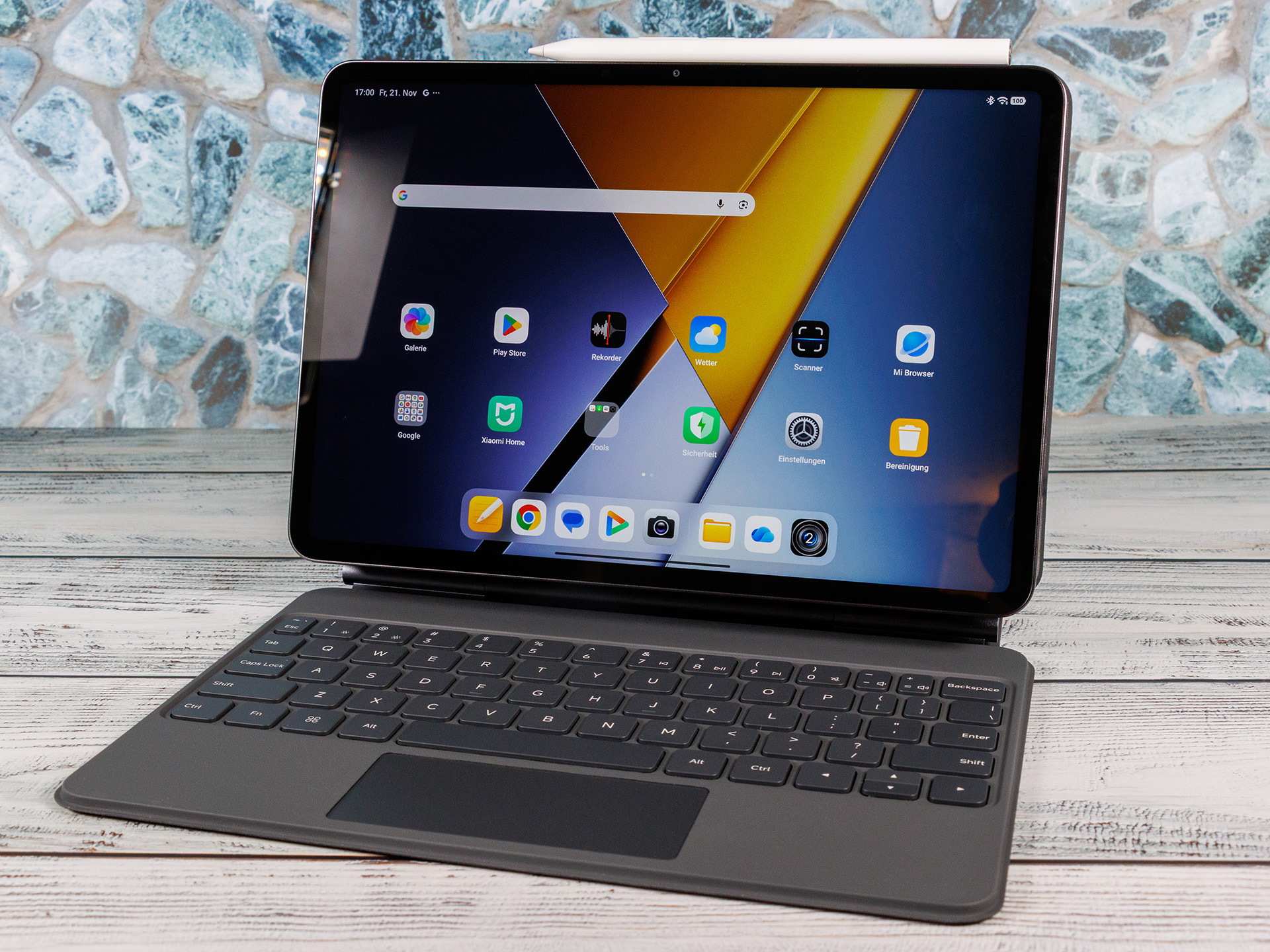
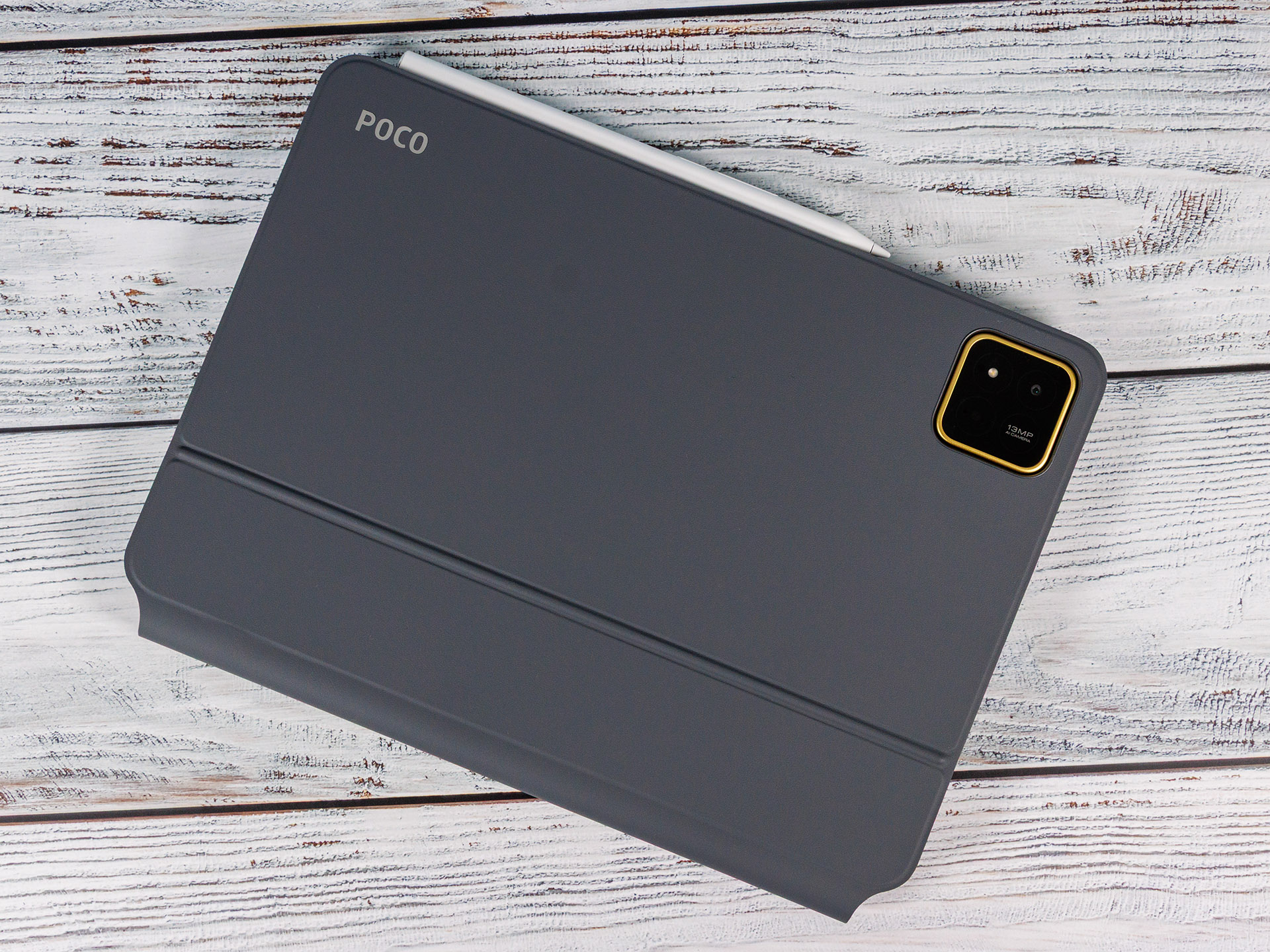
The Xiaomi Poco Pad X1 comes with a 45-watt charger and a USB cable (Type-A to Type-C). The Poco Focus Pen, a cover, and the Floating Keyboard are available as optional accessories.
The accessories are identical to those of the Xiaomi Pad 7, and this is quite an attractive proposition, depending on availability and price.
Xiaomi provides its tablet with a 12-month international warranty, which does not affect the dealer's warranty. Xiaomi Care is not available for tablets.
Input devices and operation - The Poco tablet offers face recognition
The capacitive touchscreen performed reliably in our tests and offered a pleasantly smooth experience when performing swiping gestures. It also supports the Poco Focus Pen (or Xiaomi Focus Pen), which boasts a latency of just 3 ms and can distinguish up to 8,192 levels of pressure sensitivity. You can store and charge the pen by attaching it magnetically to the tablet. The writing experience is good.
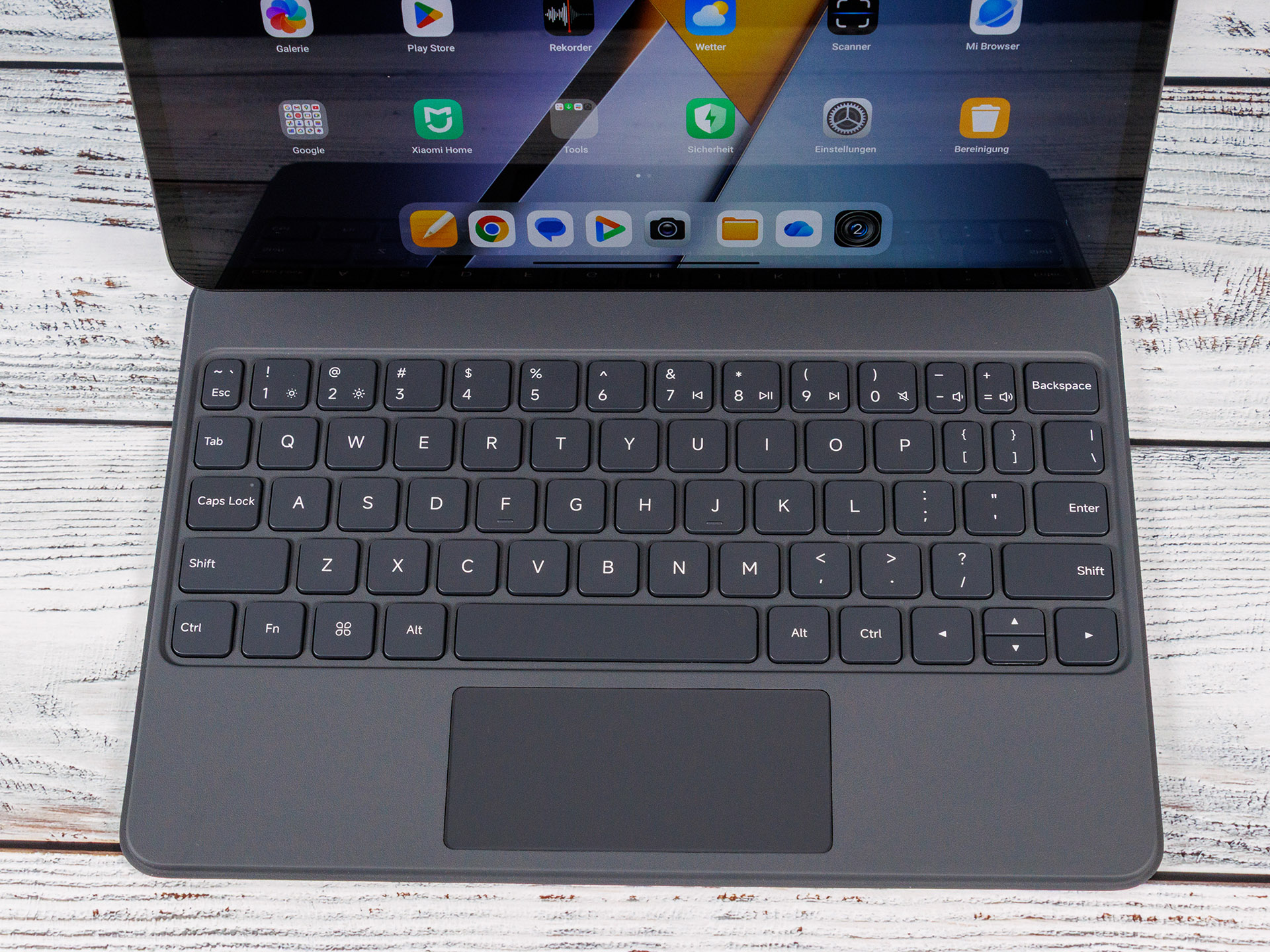
The optional floating keyboard (or Xiaomi Pad 7 Focus Keyboard) allows for flexible adjustment of the tablet's viewing angle and offers quiet keystrokes and adaptive backlighting. The small touchpad responds precisely and reliably.
In good lighting conditions, the face recognition via the front camera also works reliably, but is hit-or-miss in the dark. Unfortunately, only two faces can be saved, and both a fingerprint sensor and a vibration motor are absent.
Display - The Poco Pad X1 uses a high-contrast and flicker-free LCD
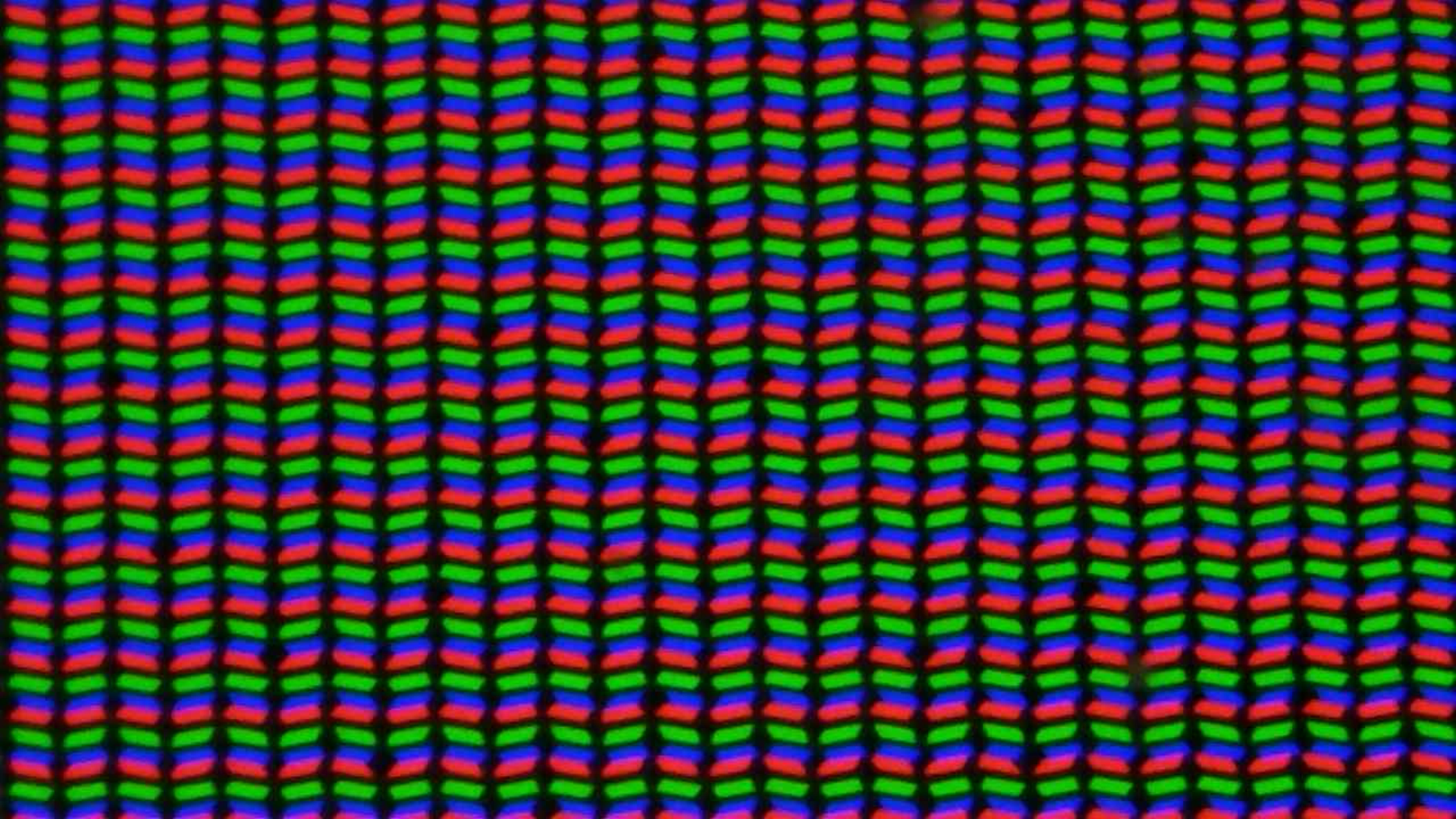
The Poco Pad X1's 11.2-inch (28.45 cm) LCD display delivers a high pixel density, and the result is crisp, sharp images. The contrast ratio is also excellent thanks to a decent black level. The system dynamically adjusts the refresh rate between 30 and 144 Hz and supports every common HDR standard.
For an LCD, the panel's brightness is good, the backlighting is excellent, and we were unable to detect any light bleed on our review device. Furthermore, Xiaomi doesn't use PWM for its brightness control, and we also didn't observe any temporal dithering.
| |||||||||||||||||||||||||
Brightness Distribution: 89 %
Center on Battery: 794 cd/m²
Contrast: 1689:1 (Black: 0.47 cd/m²)
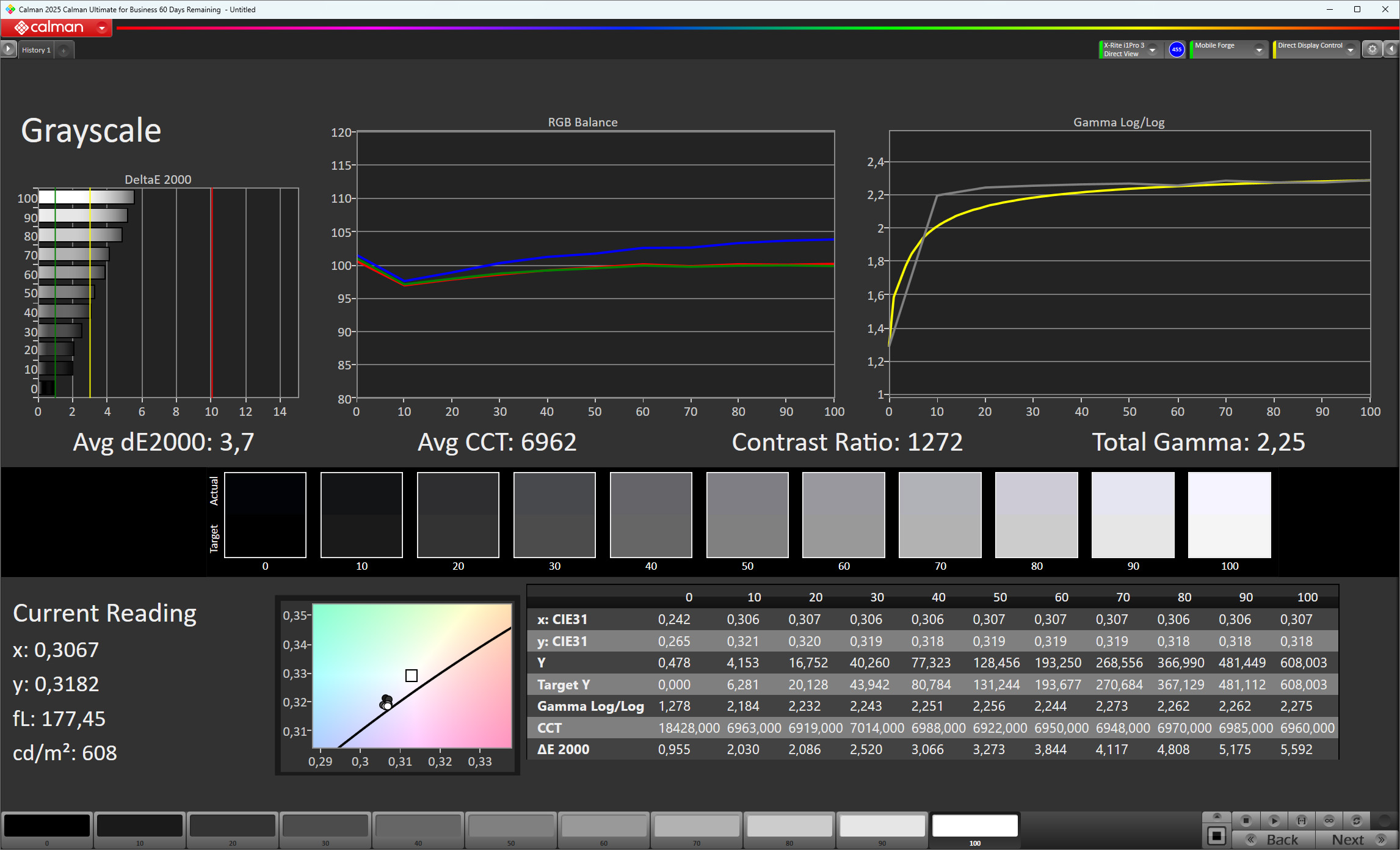
ΔE ColorChecker Calman: 2.2 | ∀{0.5-29.43 Ø4.69}
ΔE Greyscale Calman: 3.7 | ∀{0.09-98 Ø4.94}
99.2% sRGB (Calman 2D)
Gamma: 2.25
CCT: 6962 K
| Xiaomi Poco Pad X1 TFT-LCD, 3200x2136, 11.2" | Xiaomi Pad 7 LCD, 3200x2136, 11.2" | Samsung Galaxy Tab S10 FE IPS, 2304x1440, 10.9" | Apple iPad 11 (2025) IPS, 2360x1640, 10.9" | |
|---|---|---|---|---|
| Screen | -3% | 13% | -21% | |
| Brightness middle (cd/m²) | 794 | 838 6% | 663 -16% | 526 -34% |
| Brightness (cd/m²) | 727 | 815 12% | 617 -15% | 531 -27% |
| Brightness Distribution (%) | 89 | 96 8% | 84 -6% | 93 4% |
| Black Level * (cd/m²) | 0.47 | 0.88 -87% | 0.39 17% | 0.99 -111% |
| Contrast (:1) | 1689 | 952 -44% | 1700 1% | 531 -69% |
| Colorchecker dE 2000 * | 2.2 | 1.8 18% | 1.47 33% | 1.9 14% |
| Colorchecker dE 2000 max. * | 5.8 | 3.9 33% | 4.14 29% | 4 31% |
| Greyscale dE 2000 * | 3.7 | 2.5 32% | 1.4 62% | 2.9 22% |
| Gamma | 2.25 98% | 2.25 98% | 2.199 100% | 2.14 103% |
| CCT | 6962 93% | 6912 94% | 6730 97% | 6982 93% |
* ... smaller is better
| Display / APL18 Peak Brightness | |
| Xiaomi Pad 7 | |
| Xiaomi Poco Pad X1 | |
| Apple iPad 11 (2025) | |
| Display / HDR Peak Brightness | |
| Xiaomi Poco Pad X1 | |
| Xiaomi Pad 7 | |
| Apple iPad 11 (2025) | |
Screen Flickering / PWM (Pulse-Width Modulation)
| Screen flickering / PWM not detected | 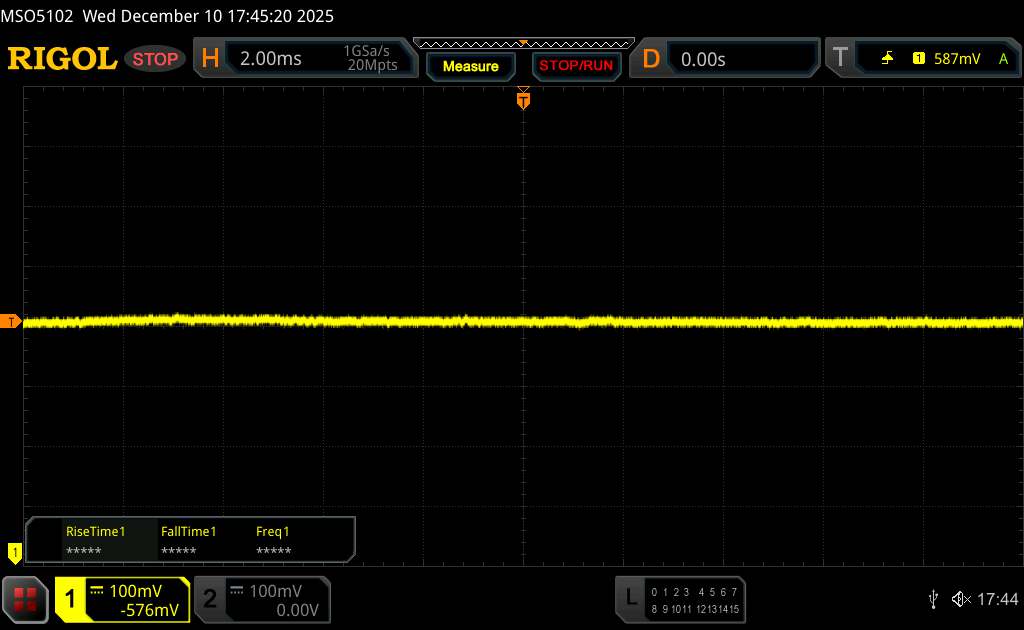 | ||
In comparison: 52 % of all tested devices do not use PWM to dim the display. If PWM was detected, an average of 7629 (minimum: 5 - maximum: 343500) Hz was measured. | |||
We achieved the most natural color reproduction when we selected the Professional color profile and the Warm temperature preset. However, even then, the white balance was still a bit on the cool side, and cyan showed visible deviations in the test. In everyday use, though, this shouldn't be a significant issue.


Display Response Times
| ↔ Response Time Black to White | ||
|---|---|---|
| 18.09 ms ... rise ↗ and fall ↘ combined | ↗ 4.733 ms rise | 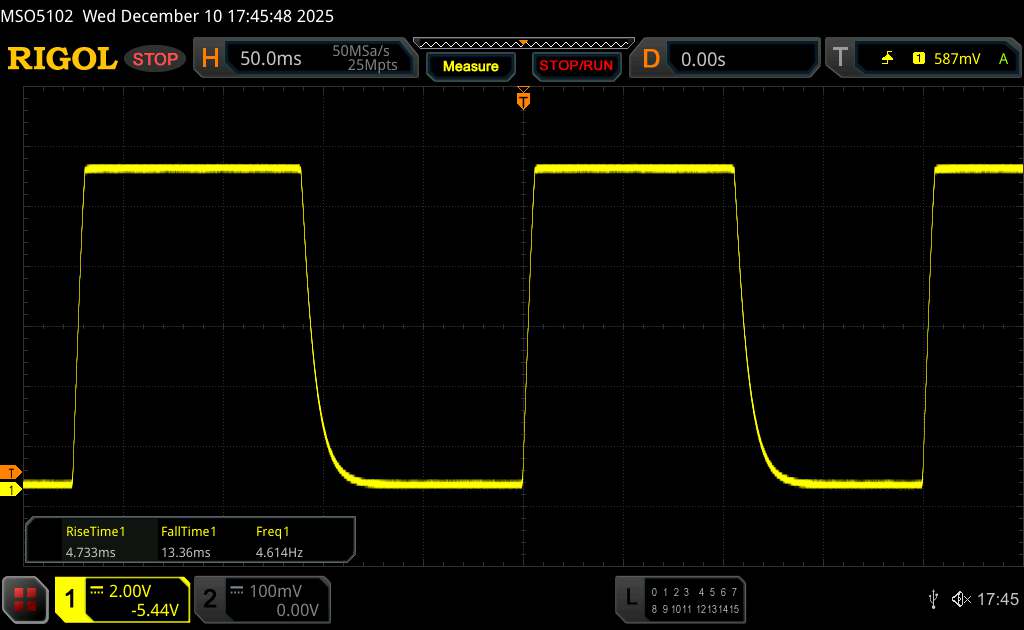 |
| ↘ 13.36 ms fall | ||
| The screen shows good response rates in our tests, but may be too slow for competitive gamers. In comparison, all tested devices range from 0.1 (minimum) to 240 (maximum) ms. » 41 % of all devices are better. This means that the measured response time is similar to the average of all tested devices (19.7 ms). | ||
| ↔ Response Time 50% Grey to 80% Grey | ||
| 35.42 ms ... rise ↗ and fall ↘ combined | ↗ 10.83 ms rise | 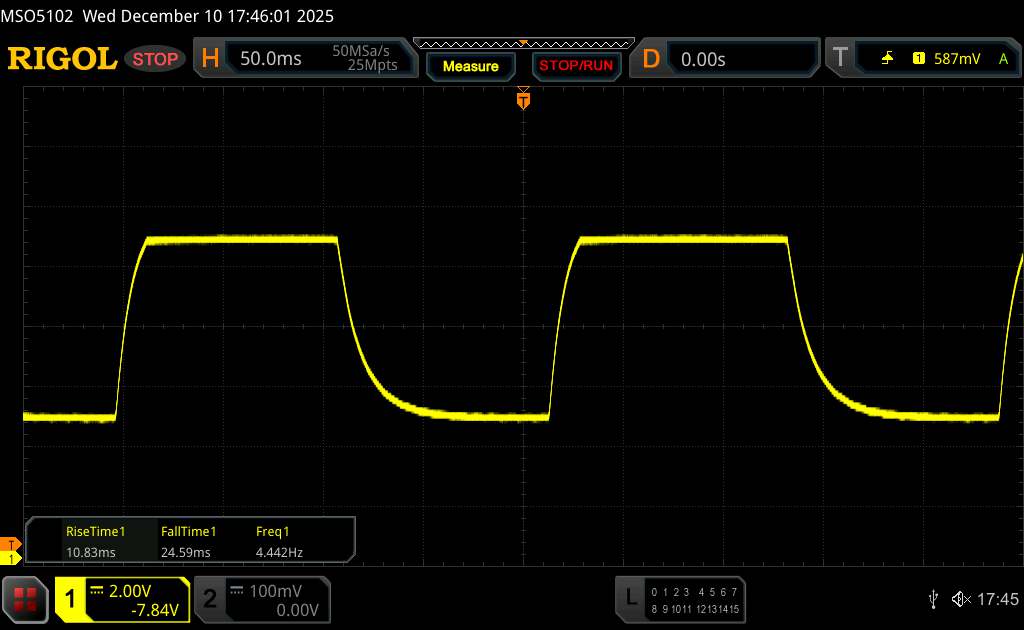 |
| ↘ 24.59 ms fall | ||
| The screen shows slow response rates in our tests and will be unsatisfactory for gamers. In comparison, all tested devices range from 0.13 (minimum) to 636 (maximum) ms. » 50 % of all devices are better. This means that the measured response time is worse than the average of all tested devices (30.8 ms). | ||
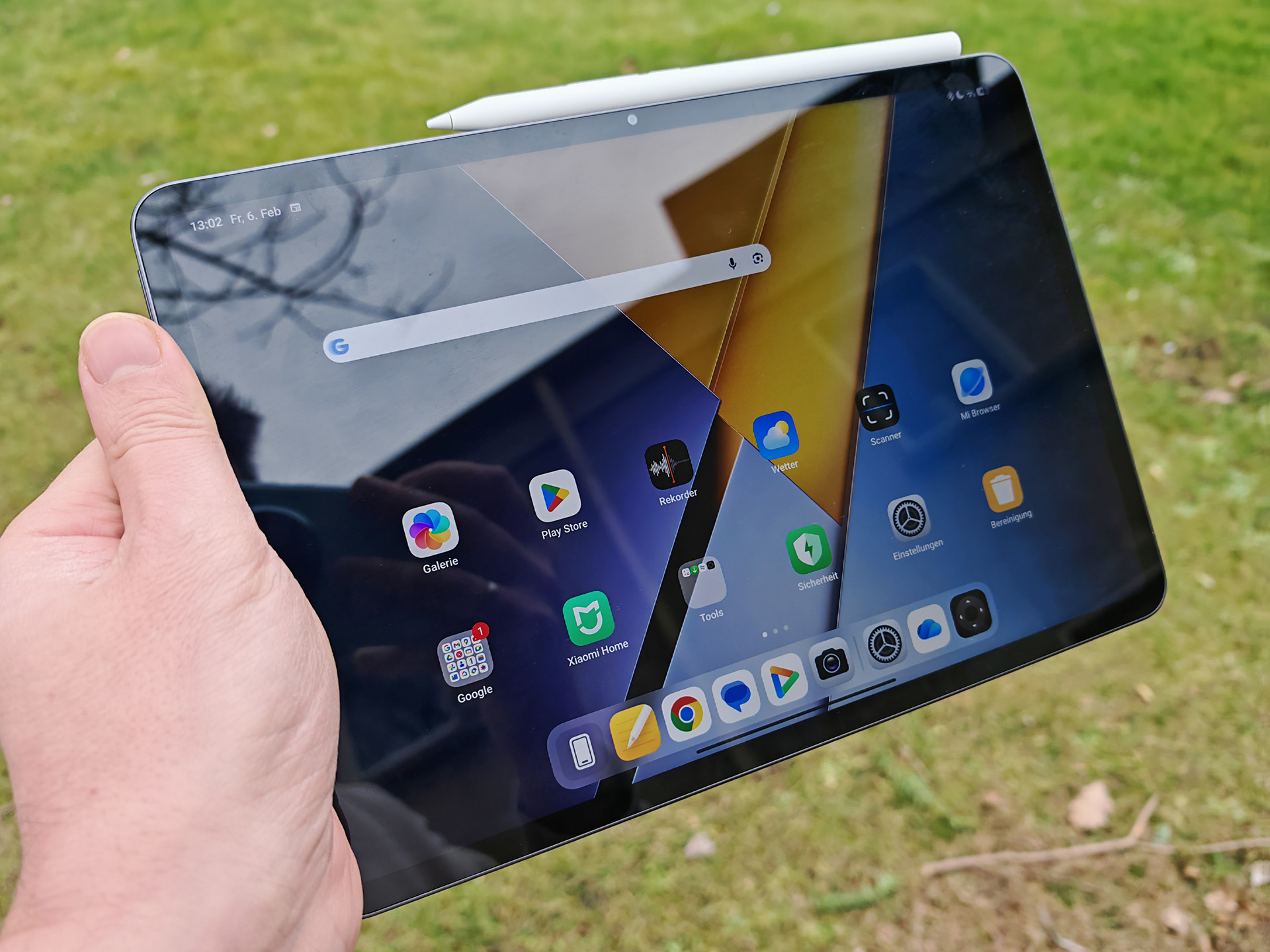
The tablet remains easily readable on overcast days, but reflections can quickly become bothersome when viewed side on.
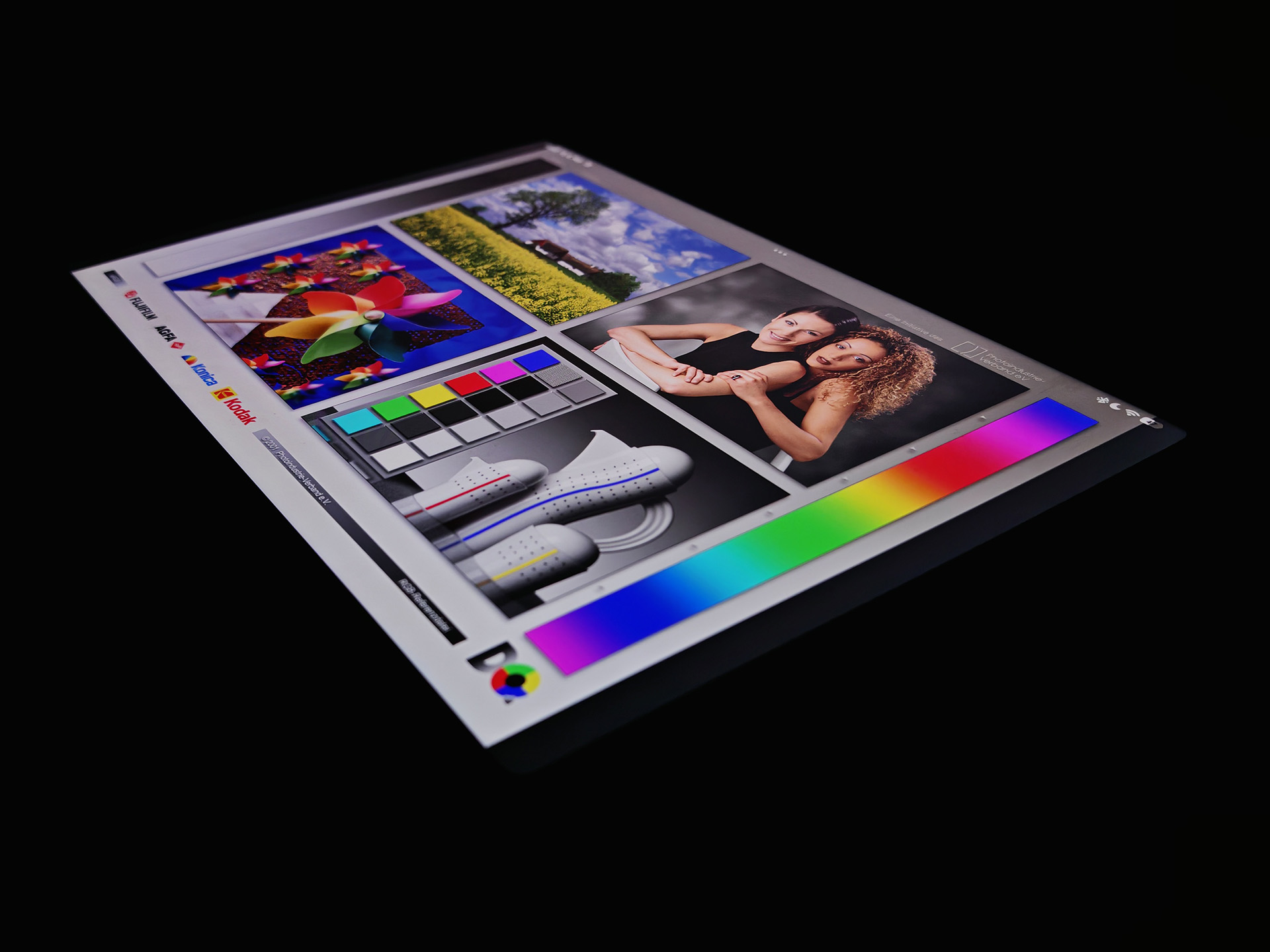
Viewing angle stability is good, and we only noticed a slight drop in brightness at wide viewing angles.
Performance - The Poco tablet comes with a Snapdragon 7+ Gen 3
In terms of performance, the Poco Pad X1 finds itself positioned in the upper mid-range and uses a Snapdragon 7+ Gen 3 with 8 GB of LPDDR5x RAM. When it comes to CPU performance, it lags a little bit behind the iPad. However, in everyday situations, it delivers smooth system performance.
| Antutu v11 - Score | |
| Average of class Tablet (522205 - 4184631, n=11, last 2 years) | |
| Xiaomi Poco Pad X1 | |
| Average Qualcomm Snapdragon 7+ Gen 3 (n=1) | |
| UL Procyon AI Inference for Android - Overall Score NNAPI | |
| Average of class Tablet (3600 - 76852, n=53, last 2 years) | |
| Xiaomi Poco Pad X1 | |
| Xiaomi Pad 7 | |
| Average Qualcomm Snapdragon 7+ Gen 3 (10851 - 14598, n=3) | |
| Samsung Galaxy Tab S10 FE | |
| AI Benchmark - Score V6 | |
| Xiaomi Poco Pad X1 | |
| Average of class Tablet (70.4 - 22476, n=38, last 2 years) | |
| Average Qualcomm Snapdragon 7+ Gen 3 (3671 - 5079, n=2) | |
| Xiaomi Pad 7 | |
| Samsung Galaxy Tab S10 FE | |
Graphics processing is handled by the Adreno 732, which does not support ray tracing but nominally offers more power than the A16 GPU in the iPad. However, depending on the benchmark scenario, this advantage is cancelled out by the higher resolution.
GFXBench (DX / GLBenchmark) 2.7: T-Rex Onscreen | 1920x1080 T-Rex Offscreen
GFXBench 3.0: on screen Manhattan Onscreen OGL | 1920x1080 1080p Manhattan Offscreen
GFXBench 3.1: on screen Manhattan ES 3.1 Onscreen | 1920x1080 Manhattan ES 3.1 Offscreen
GFXBench: on screen Car Chase Onscreen | 1920x1080 Car Chase Offscreen | on screen Aztec Ruins High Tier Onscreen | 2560x1440 Aztec Ruins High Tier Offscreen | on screen Aztec Ruins Normal Tier Onscreen | 1920x1080 Aztec Ruins Normal Tier Offscreen | 3840x2160 4K Aztec Ruins High Tier Offscreen
| 3DMark / Wild Life Extreme Unlimited | |
| Xiaomi Pad 7 | |
| Xiaomi Poco Pad X1 | |
| Apple iPad 11 (2025) | |
| Samsung Galaxy Tab S10 FE | |
| 3DMark / Wild Life Extreme | |
| Xiaomi Pad 7 | |
| Xiaomi Poco Pad X1 | |
| Apple iPad 11 (2025) | |
| Samsung Galaxy Tab S10 FE | |
| 3DMark / Wild Life Unlimited Score | |
| Xiaomi Pad 7 | |
| Xiaomi Poco Pad X1 | |
| Apple iPad 11 (2025) | |
| Samsung Galaxy Tab S10 FE | |
| 3DMark / Solar Bay Score | |
| Apple iPad 11 (2025) | |
| Xiaomi Pad 7 | |
| 3DMark / Solar Bay Unlimited Score | |
| Apple iPad 11 (2025) | |
| 3DMark / Steel Nomad Light Unlimited Score | |
| Xiaomi Pad 7 | |
| Xiaomi Poco Pad X1 | |
| Samsung Galaxy Tab S10 FE | |
| 3DMark / Steel Nomad Light Score | |
| Xiaomi Pad 7 | |
| Xiaomi Poco Pad X1 | |
| Samsung Galaxy Tab S10 FE | |
| GFXBench (DX / GLBenchmark) 2.7 / T-Rex Onscreen | |
| Xiaomi Pad 7 | |
| Xiaomi Poco Pad X1 | |
| Samsung Galaxy Tab S10 FE | |
| Apple iPad 11 (2025) | |
| GFXBench (DX / GLBenchmark) 2.7 / T-Rex Offscreen | |
| Xiaomi Pad 7 | |
| Xiaomi Poco Pad X1 | |
| Apple iPad 11 (2025) | |
| Samsung Galaxy Tab S10 FE | |
| GFXBench 3.0 / Manhattan Onscreen OGL | |
| Xiaomi Pad 7 | |
| Xiaomi Poco Pad X1 | |
| Samsung Galaxy Tab S10 FE | |
| Apple iPad 11 (2025) | |
| GFXBench 3.0 / 1080p Manhattan Offscreen | |
| Xiaomi Pad 7 | |
| Xiaomi Poco Pad X1 | |
| Apple iPad 11 (2025) | |
| Samsung Galaxy Tab S10 FE | |
| GFXBench 3.1 / Manhattan ES 3.1 Onscreen | |
| Xiaomi Pad 7 | |
| Apple iPad 11 (2025) | |
| Xiaomi Poco Pad X1 | |
| Samsung Galaxy Tab S10 FE | |
| GFXBench 3.1 / Manhattan ES 3.1 Offscreen | |
| Xiaomi Pad 7 | |
| Xiaomi Poco Pad X1 | |
| Apple iPad 11 (2025) | |
| Samsung Galaxy Tab S10 FE | |
| GFXBench / Car Chase Onscreen | |
| Apple iPad 11 (2025) | |
| Xiaomi Pad 7 | |
| Xiaomi Poco Pad X1 | |
| Samsung Galaxy Tab S10 FE | |
| GFXBench / Car Chase Offscreen | |
| Xiaomi Pad 7 | |
| Xiaomi Poco Pad X1 | |
| Apple iPad 11 (2025) | |
| Samsung Galaxy Tab S10 FE | |
| GFXBench / Aztec Ruins High Tier Onscreen | |
| Apple iPad 11 (2025) | |
| Xiaomi Pad 7 | |
| Xiaomi Poco Pad X1 | |
| Samsung Galaxy Tab S10 FE | |
| GFXBench / Aztec Ruins High Tier Offscreen | |
| Xiaomi Poco Pad X1 | |
| Xiaomi Pad 7 | |
| Apple iPad 11 (2025) | |
| Samsung Galaxy Tab S10 FE | |
| GFXBench / Aztec Ruins Normal Tier Onscreen | |
| Apple iPad 11 (2025) | |
| Xiaomi Pad 7 | |
| Xiaomi Poco Pad X1 | |
| Samsung Galaxy Tab S10 FE | |
| GFXBench / Aztec Ruins Normal Tier Offscreen | |
| Xiaomi Poco Pad X1 | |
| Xiaomi Pad 7 | |
| Apple iPad 11 (2025) | |
| Samsung Galaxy Tab S10 FE | |
| GFXBench / 4K Aztec Ruins High Tier Offscreen | |
| Xiaomi Poco Pad X1 | |
| Xiaomi Pad 7 | |
| Apple iPad 11 (2025) | |
| Samsung Galaxy Tab S10 FE | |
| Jetstream 2 - 2.2 Total | |
| Xiaomi Poco Pad X1 (Chrome 143) | |
| Apple iPad 11 (2025) (Chrome 135) | |
| Average Qualcomm Snapdragon 7+ Gen 3 (229 - 256, n=2) | |
| Xiaomi Pad 7 (Chrome 135) | |
| Average of class Tablet (61.3 - 579, n=45, last 2 years) | |
| Samsung Galaxy Tab S10 FE (Chrome 135) | |
| WebXPRT 4 - Overall | |
| Apple iPad 11 (2025) (Chrome 135) | |
| Average of class Tablet (54 - 376, n=53, last 2 years) | |
| Xiaomi Poco Pad X1 (Chrome 143) | |
| Xiaomi Pad 7 (Chrome 135) | |
| Samsung Galaxy Tab S10 FE (Chrome 135) | |
| Average Qualcomm Snapdragon 7+ Gen 3 (110 - 152, n=3) | |
| Octane V2 - Total Score | |
| Apple iPad 11 (2025) (Chrome 135) | |
| Xiaomi Poco Pad X1 (Chrome 143) | |
| Xiaomi Pad 7 (Chrome 135) | |
| Average Qualcomm Snapdragon 7+ Gen 3 (55668 - 70183, n=3) | |
| Average of class Tablet (4497 - 138481, n=69, last 2 years) | |
| Samsung Galaxy Tab S10 FE (Chrome 135) | |
| Mozilla Kraken 1.1 - Total | |
| Average of class Tablet (243 - 13119, n=64, last 2 years) | |
| Samsung Galaxy Tab S10 FE (Chrome 135) | |
| Average Qualcomm Snapdragon 7+ Gen 3 (544 - 1153, n=3) | |
| Xiaomi Pad 7 (Chrome 135) | |
| Xiaomi Poco Pad X1 (Chrome 143) | |
| Apple iPad 11 (2025) (Chrome 135) | |
* ... smaller is better
| Xiaomi Poco Pad X1 | Xiaomi Pad 7 | Samsung Galaxy Tab S10 FE | Lenovo Idea Tab Pro | Average 512 GB UFS 4.0 Flash | Average of class Tablet | |
|---|---|---|---|---|---|---|
| AndroBench 3-5 | 21% | -33% | 73% | 41% | -7% | |
| Sequential Read 256KB (MB/s) | 4068.41 | 3911.82 -4% | 1602.8 -61% | 3648.3 -10% | 3708 ? -9% | 2112 ? -48% |
| Sequential Write 256KB (MB/s) | 3751.24 | 3387.43 -10% | 1271.5 -66% | 3298.5 -12% | 3129 ? -17% | 1703 ? -55% |
| Random Read 4KB (MB/s) | 203.66 | 311.09 53% | 225.1 11% | 474.4 133% | 382 ? 88% | 280 ? 37% |
| Random Write 4KB (MB/s) | 237.72 | 344.51 45% | 204.2 -14% | 668 181% | 476 ? 100% | 330 ? 39% |
Emissions - Only slight losses under load
Temperature
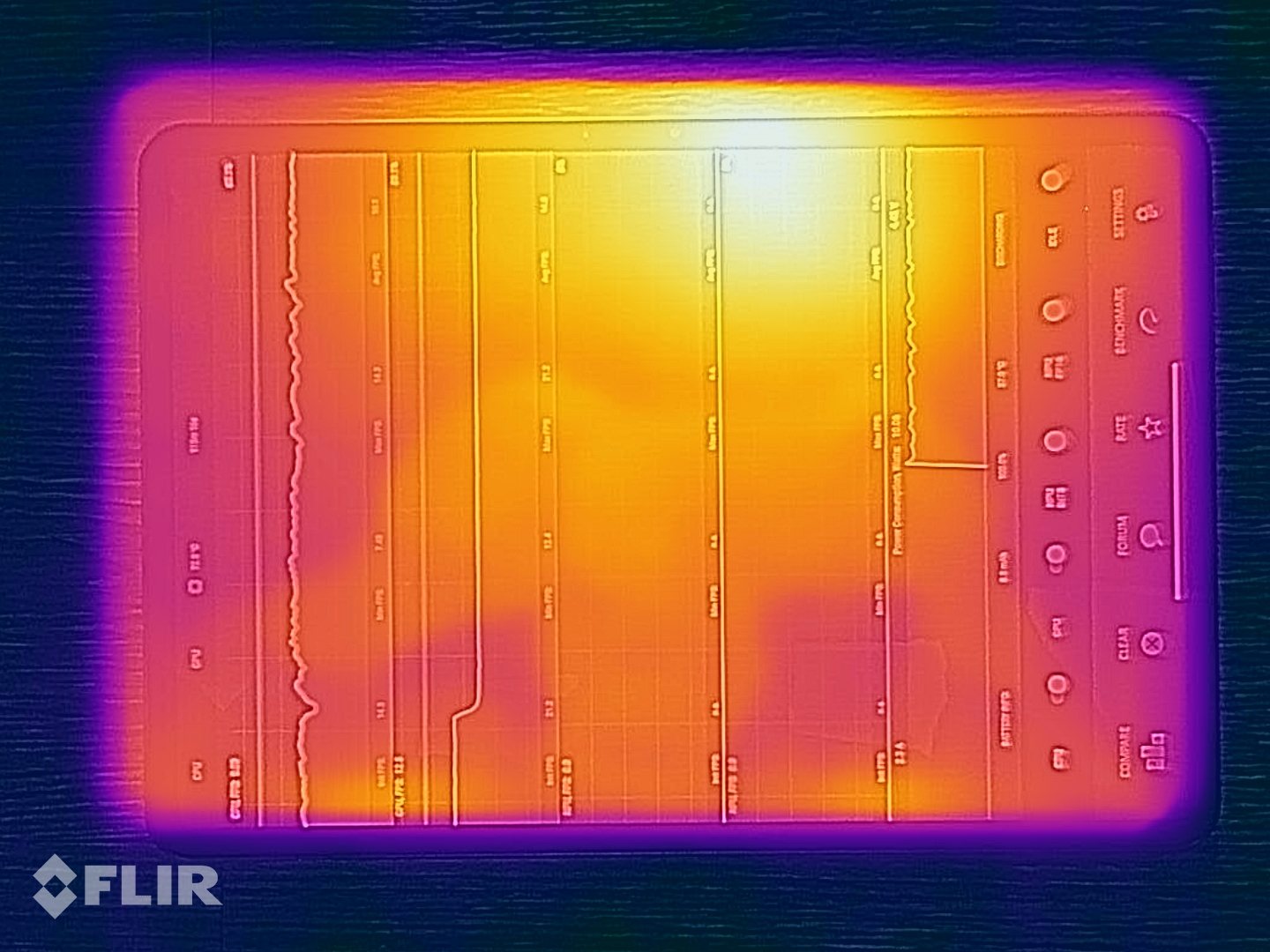
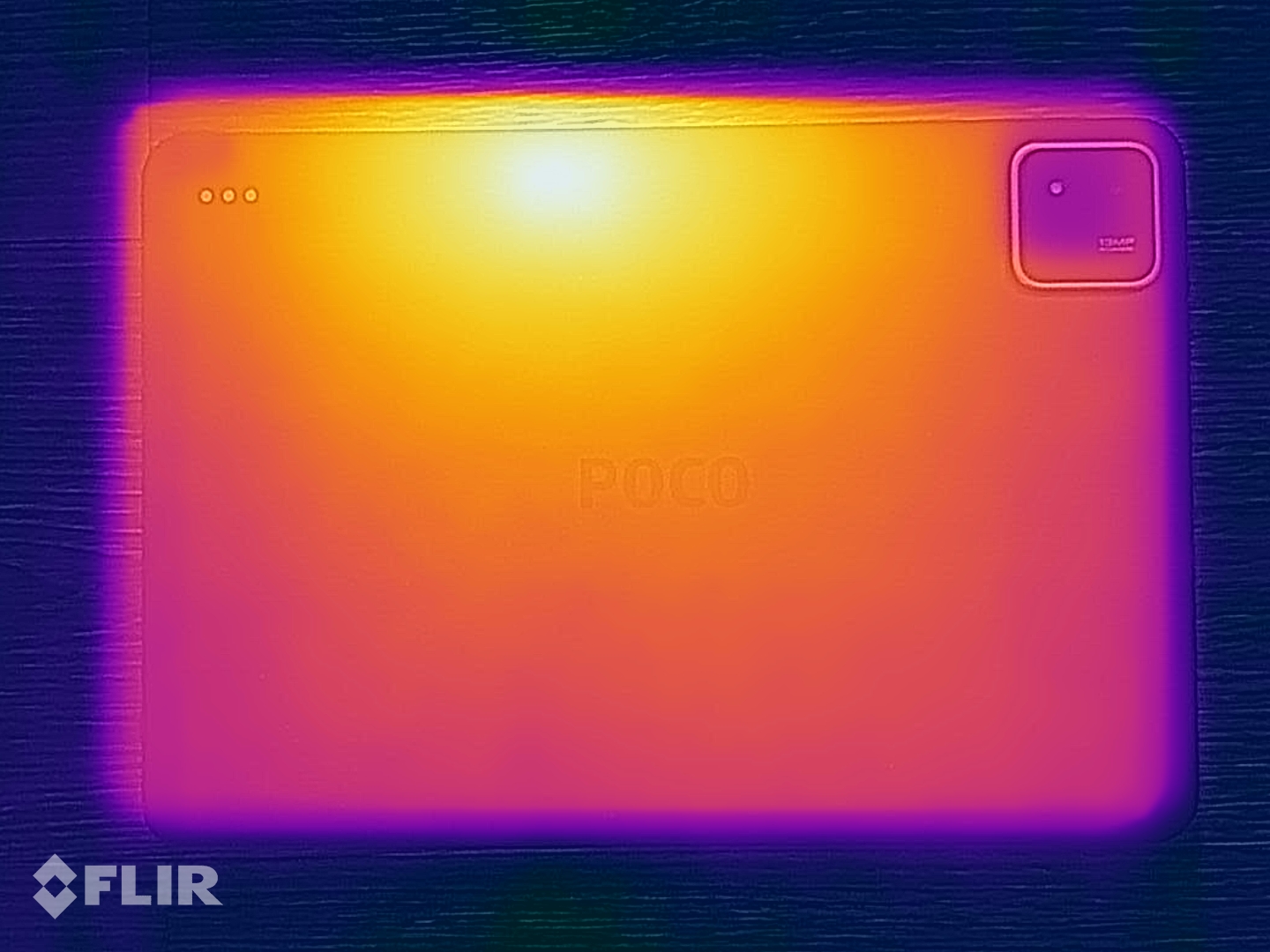
Surface temperatures remain safe in every possible scenario. The SoC cooling is also successful, and only results in a comparatively small level of throttling in the stress test, yet it still generates the most frames in the comparison.
(±) The maximum temperature on the upper side is 40.2 °C / 104 F, compared to the average of 33.7 °C / 93 F, ranging from 20.7 to 53.2 °C for the class Tablet.
(±) The bottom heats up to a maximum of 40.4 °C / 105 F, compared to the average of 33.2 °C / 92 F
(+) In idle usage, the average temperature for the upper side is 29.4 °C / 85 F, compared to the device average of 30 °C / 86 F.
3DMark Stress Tests
| 3DMark | |
| Wild Life Stress Test Stability | |
| Samsung Galaxy Tab S10 FE | |
| Apple iPad 11 (2025) | |
| Xiaomi Pad 7 | |
| Xiaomi Poco Pad X1 | |
| Wild Life Extreme Stress Test | |
| Samsung Galaxy Tab S10 FE | |
| Xiaomi Poco Pad X1 | |
| Apple iPad 11 (2025) | |
| Xiaomi Pad 7 | |
| Steel Nomad Light Stress Test Stability | |
| Samsung Galaxy Tab S10 FE | |
| Xiaomi Pad 7 | |
| Xiaomi Poco Pad X1 | |
Speakers
The Xiaomi Poco Pad X1's four speakers support Dolby Atmos and deliver relatively good sound, albeit lacking depth.
Alternatively, audio output is possible via USB-C or Bluetooth.
Xiaomi Poco Pad X1 audio analysis
(+) | speakers can play relatively loud (89.4 dB)
Bass 100 - 315 Hz
(±) | reduced bass - on average 11.8% lower than median
(±) | linearity of bass is average (8.2% delta to prev. frequency)
Mids 400 - 2000 Hz
(±) | higher mids - on average 7.4% higher than median
(+) | mids are linear (4.1% delta to prev. frequency)
Highs 2 - 16 kHz
(+) | balanced highs - only 4.9% away from median
(+) | highs are linear (6.4% delta to prev. frequency)
Overall 100 - 16.000 Hz
(+) | overall sound is linear (13.2% difference to median)
Compared to same class
» 24% of all tested devices in this class were better, 4% similar, 72% worse
» The best had a delta of 7%, average was 21%, worst was 130%
Compared to all devices tested
» 14% of all tested devices were better, 3% similar, 83% worse
» The best had a delta of 4%, average was 23%, worst was 136%
Apple iPad 11 (2025) audio analysis
(+) | speakers can play relatively loud (86.1 dB)
Bass 100 - 315 Hz
(-) | nearly no bass - on average 16.8% lower than median
(±) | linearity of bass is average (9.9% delta to prev. frequency)
Mids 400 - 2000 Hz
(+) | balanced mids - only 3.6% away from median
(+) | mids are linear (6.2% delta to prev. frequency)
Highs 2 - 16 kHz
(±) | higher highs - on average 6.5% higher than median
(+) | highs are linear (4% delta to prev. frequency)
Overall 100 - 16.000 Hz
(±) | linearity of overall sound is average (15.2% difference to median)
Compared to same class
» 33% of all tested devices in this class were better, 3% similar, 64% worse
» The best had a delta of 7%, average was 21%, worst was 130%
Compared to all devices tested
» 22% of all tested devices were better, 4% similar, 74% worse
» The best had a delta of 4%, average was 23%, worst was 136%
Battery runtimes - Surprisingly short
Power consumption
The Poco Pad X1's power consumption is surprisingly slightly higher than that of the almost identical Xiaomi Pad 7, but it's still on a respectable level compared to other tablets on the market.
The tablet can be charged at up to 45 watts and took 88 minutes to charge in our tests (50%: 37 min.; 80%: 66 min.).
| Off / Standby |   0.07 / 0.16 Watt 0.07 / 0.16 Watt |
| Idle |  0.7 / 2.45 / 2.58 Watt 0.7 / 2.45 / 2.58 Watt |
| Load |
7.31 / 9.17 Watt |
    
| |
Key:
min: ,
med: ,
max: Metrahit Energy | |
| Xiaomi Poco Pad X1 8850 mAh | Xiaomi Pad 7 8850 mAh | Samsung Galaxy Tab S10 FE 8000 mAh | Apple iPad 11 (2025) 7698 mAh | Average Qualcomm Snapdragon 7+ Gen 3 | Average of class Tablet | |
|---|---|---|---|---|---|---|
| Power Consumption | 14% | -36% | -119% | -30% | -82% | |
| Idle Minimum * (Watt) | 0.7 | 0.74 -6% | 2.1 -200% | 1.43 -104% | 1.1 ? -57% | 2.16 ? -209% |
| Idle Average * (Watt) | 2.45 | 1.72 30% | 2.5 -2% | 7.16 -192% | 3.6 ? -47% | 3.9 ? -59% |
| Idle Maximum * (Watt) | 2.58 | 1.74 33% | 2.9 -12% | 7.2 -179% | 3.72 ? -44% | 4.29 ? -66% |
| Load Average * (Watt) | 7.31 | 7.26 1% | 5.8 21% | 11.23 -54% | 7.09 ? 3% | 8.87 ? -21% |
| Load Maximum * (Watt) | 9.17 | 8.11 12% | 7.9 14% | 15.03 -64% | 9.53 ? -4% | 14.4 ? -57% |
* ... smaller is better
Power consumption: Geekbench (150 cd/m²)
Power consumption: GFXbench (150 cd/m²)
Battery life
What was already apparent in the power consumption test is now a bitter reality in the battery test, with the battery life being significantly shorter than that of the Pad 7.
Nevertheless, the battery life is good, and the Poco Pad X1 keeps going for significantly longer than the iPad. Xiaomi might also improve this further with an update.
| Battery runtime - WiFi v1.3 | |
| Xiaomi Poco Pad X1 | |
| Xiaomi Pad 7 | |
| Samsung Galaxy Tab S10 FE | |
| Apple iPad 11 (2025) | |
Notebookcheck overall rating
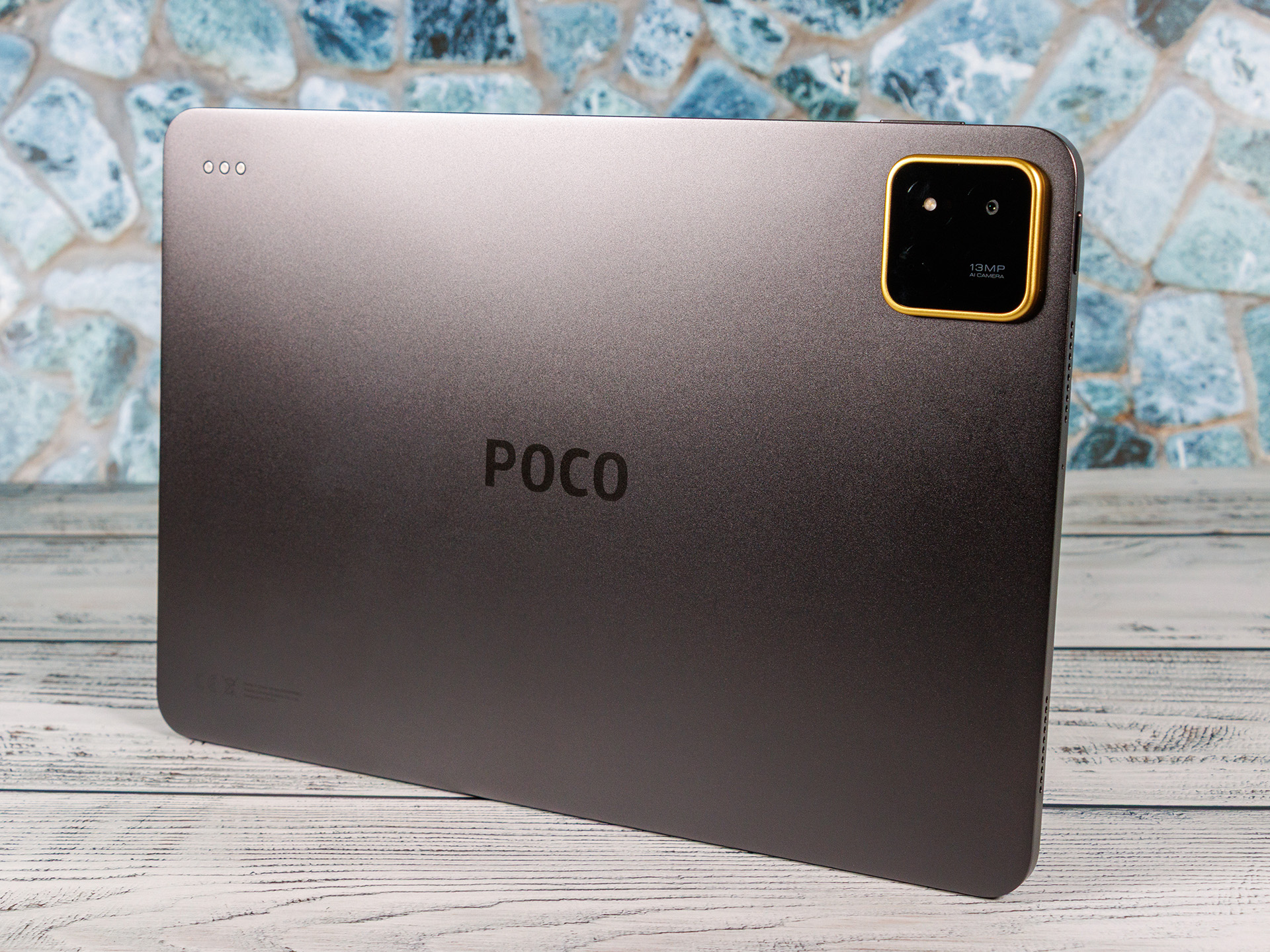
The Xiaomi Poco Pad X1 is a well-made mid-range tablet with an excellent display and fast performance, but things can quickly get expensive with the optional accessories.
Xiaomi Poco Pad X1
- 02/06/2026 v8
Daniel Schmidt
 Total Sustainability Score:
 Possible alternatives compared
Image | Model / Review | Price | Weight | Drive | Display |
|---|---|---|---|---|---|
1. 85.8%  | Xiaomi Poco Pad X1 Qualcomm Snapdragon 7+ Gen 3 ⎘ Qualcomm Adreno 732 ⎘ 8 GB Memory, 512 GB UFS 4.x | List Price: 389€ | 500 g | 512 GB UFS 4.0 Flash | 11.20" 3200x2136 344 PPI TFT-LCD |
2. 85.9%  | Xiaomi Pad 7 Qualcomm Snapdragon 7+ Gen 3 ⎘ Qualcomm Adreno 732 ⎘ 12 GB Memory, 256 GB UFS 4.x | List Price: 400€ | 500 g | 256 GB UFS 4.0 Flash | 11.20" 3200x2136 344 PPI LCD |
3. 81.6%  | Samsung Galaxy Tab S10 FE Samsung Exynos 1580 ⎘ Samsung Xclipse 540 ⎘ 12 GB Memory, 256 GB UFS 3.1 | List Price: 779€ | 497 g | 256 GB UFS 3.1 Flash | 10.90" 2304x1440 249 PPI IPS |
4. 83.9%  | Apple iPad 11 (2025) Apple A16 Bionic ⎘ Apple A16 GPU 4-Core ⎘ 6 GB Memory, 128 GB NVMe | Amazon: List Price: 399€ | 477 g | 128 GB NVMe | 10.86" 2360x1640 265 PPI IPS |
Transparency
The selection of devices to be reviewed is made by our editorial team. The test sample was given to the author by the manufacturer free of charge for the purposes of review. There was no third-party influence on this review, nor did the manufacturer receive a copy of this review before publication. There was no obligation to publish this review. As an independent media company, Notebookcheck is not subjected to the authority of manufacturers, retailers or publishers.
This is how Notebookcheck is testing
Every year, Notebookcheck independently reviews hundreds of laptops and smartphones using standardized procedures to ensure that all results are comparable. We have continuously developed our test methods for around 20 years and set industry standards in the process. In our test labs, high-quality measuring equipment is utilized by experienced technicians and editors. These tests involve a multi-stage validation process. Our complex rating system is based on hundreds of well-founded measurements and benchmarks, which maintains objectivity. Further information on our test methods can be found here.
 Add as a preferred source on Google


