Notebookcheck Logo
(Image source: Daniel Schmidt)

Big tablet for little money - Xiaomi Poco Pad M1 review

Budget star.

With its flicker-free 12.1-inch display, fast SoC, Dolby Atmos speakers, and large battery, the Poco Pad M1 offers impressive features at a relatively low cost. We evaluate the tablet's performance in our review.
Daniel Schmidt, 👁 Daniel Schmidt, Anton Avdyushkin (translated by DeepL / Ninh Duy) Published 🇩🇪 🇫🇷 ...
Android Touchscreen Tablet

Verdict on the Poco Pad M1

The Xiaomi Poco Pad M1 proves to be a solid mid-range tablet option with clear strengths in everyday use. The workmanship, aluminum unibody, and the large 12.1-inch LCD with accurate colors, flicker-free display, and adaptive 120 Hz make it a pleasant companion for media consumption and everyday work tasks.

The performance of the Snapdragon 7s Gen 4 ensures mostly smooth operation and stands out clearly in comparisons, while the excellent battery life, including 33-watt charging, further emphasizes its suitability for daily use.

The average sound of the quad speakers, the mediocre outdoor brightness, and the just functional cameras have to be accepted. On the positive side, Wi-Fi 6E, microSD support, headphone jack, stylus compatibility, and a long, though inconsistently communicated update timeline should be noted.

Pros

+ accurate and flicker-free 12.1-inch display
+ great battery life
+ microSD, jack connection and stylus support

Cons

- weak HDR
- average speakers
- only USB 2.0

Price and availability

The Poco Pad M1 is not officially sold by Xiaomi in Germany, but is still available via its Amazon store or at Otto.

Amazon Logo
  • $339.99
    XIAOMI Poco Pad M1 Only WiFi (No Calls or Text) 12.1" 2.5K Octa Core 4 Speakers Global ROM 12000mAh Bluetooth Wi-Fi 6 8MP Model 2509ARPBDG (Blue, 256GB + 8GB)
  • $339.50
    XIAOMI Poco Pad M1 Only WiFi (No Calls or Text) 12.1" 2.5K Octa Core 4 Speakers Global ROM 12000mAh Bluetooth Wi-Fi 6 8MP Model 2509ARPBDG (Gray, 256GB + 8GB)
  • $17.99
    Ibywind for Xiaomi Redmi Pad Pro/Redmi Pad 2 Pro/Poco Pad/Poco Pad M1 Screen Protector,2 Pack,9H Hardness Tempered Glass with Alignment Frame,Full Coverage,Bubble Free,Fingerprint Unlock,Scratch Resistant

The Poco Pad M1 is the sister model of the Redmi Pad 2 Prowhich are very similar on the data sheet. Our test clarifies the differences and which Xiaomi tablet is more worthwhile.

Specifications: Xiaomi Poco Pad M1

Xiaomi Poco Pad M1 (Poco Pad Series)
Processor
Qualcomm Snapdragon 7s Gen 4, 1 x 2.7 GHz ARM Cortex-A720, 3 x 2.4 GHz ARM Cortex-A720, 4 x 1.8 GHz ARM Cortex-A520, Cortex-A720 / A520
Graphics adapter
Memory
8 GB 
, LPDDR4x
Display
12.10 inch 16:10, 2560 x 1600 pixel 249 PPI, Capacitive touchscreen, native pen support, TFT-LCD, Wet touch technology, glossy: yes, HDR, 120 Hz
Storage
256 GB UFS 2.2 Flash, 256 GB 
, 227.4 GB free
Connections
1 USB 2.0, USB-C Power Delivery (PD), Audio Connections: Audio Jack (3.5 mm), USB-C, Card Reader: microSD up to 2 TB (FAT, FAT32, exFAT), Brightness Sensor, Sensors: accelerometer, gyro, compass, OTG
Networking
Wi-Fi 6E (a/b/g/n = Wi-Fi 4/ac = Wi-Fi 5/ax = Wi-Fi 6/ Wi-Fi 6E 6 GHz), Bluetooth 5.4
Size
height x width x depth (in mm): 7.5 x 279.8 x 181.65 ( = 0.3 x 11.02 x 7.15 in)
Battery
12000 mAh Lithium-Ion, 27 W reverse charging, battery cycles: 1000
Charging
fast charging / Quickcharge
Operating System
Android 15
Camera
Primary Camera: 8 MPix (GalaxyCore GC08A3, 1/4", 1.12 µm, f/2.0); Camera2-API-Level: Level 3
Secondary Camera: 8 MPix (OmniVision OV08D10, 1/4", 1.12 µm, f/2.28)
Additional features
Speakers: Quad, Keyboard: OnScreen, USB-Cabel, SD Card Eject Tool, HyperOS 2.0, 12 Months Warranty, Bluetooth Audio Codecs: SBC, AAC, aptX, aptX HD, aptX Adaptive, aptX TWS+, LDAC, LHDC 5.0 | GNSS: not supported | HDR: Dolby Vision | DRM Widevine L1 | IP53 | USB Copy Test: 28.64 MB/s (connected to Samsung Portable SSD T7 (USB 3.2 Gen. 2), Supported File Systems for external storages: FAT32, exFAT, NTFS | max. charging speed: 33 W (wired) , fanless
Released
11/26/2025
Weight
610 g ( = 21.52 oz / 1.34 pounds) ( = 0 oz / 0 pounds)
Note: The manufacturer may use components from different suppliers including display panels, drives or memory sticks with similar specifications.


Case and features - Poco Pad M1 comes with microSD and audio jack

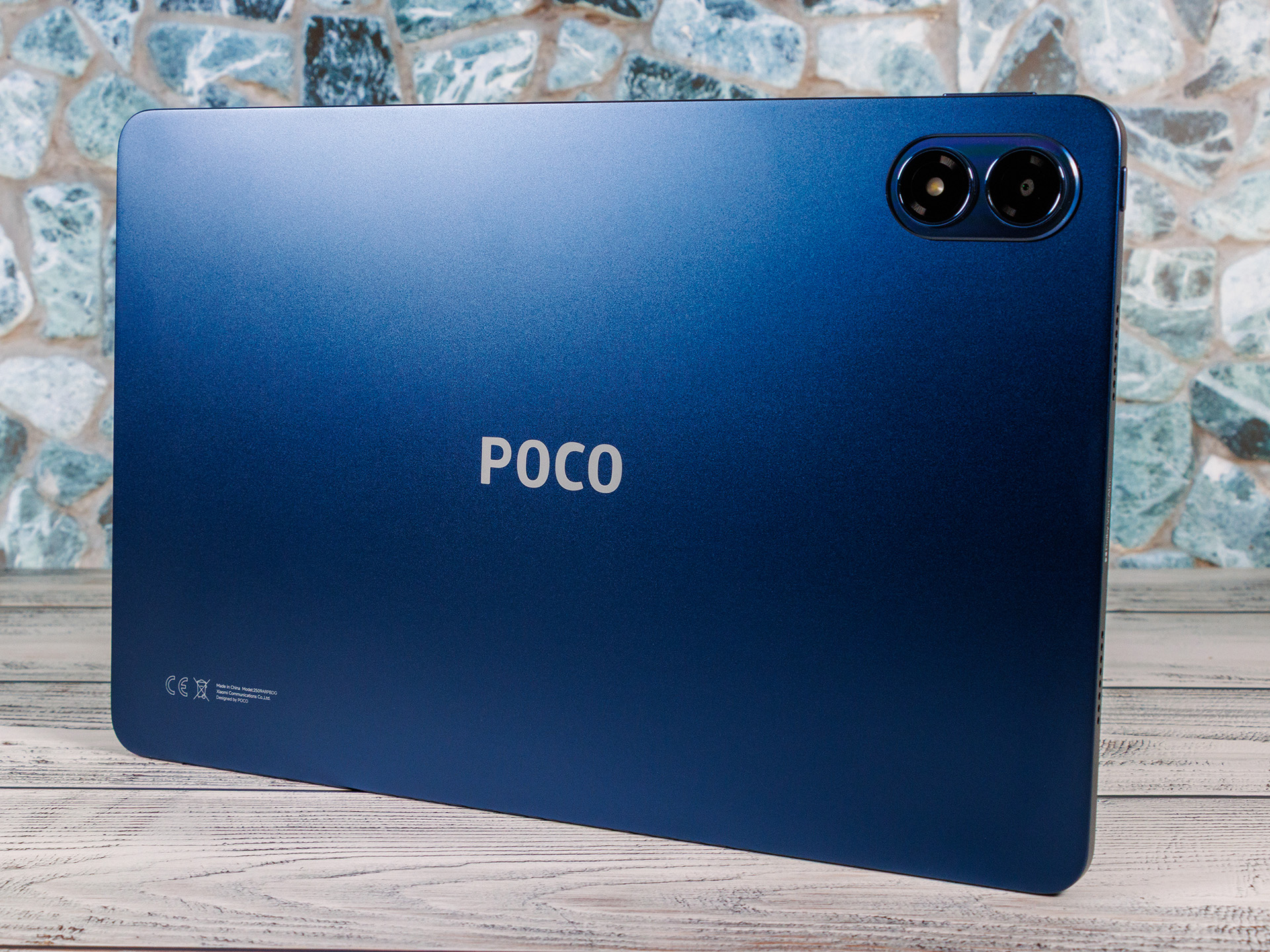
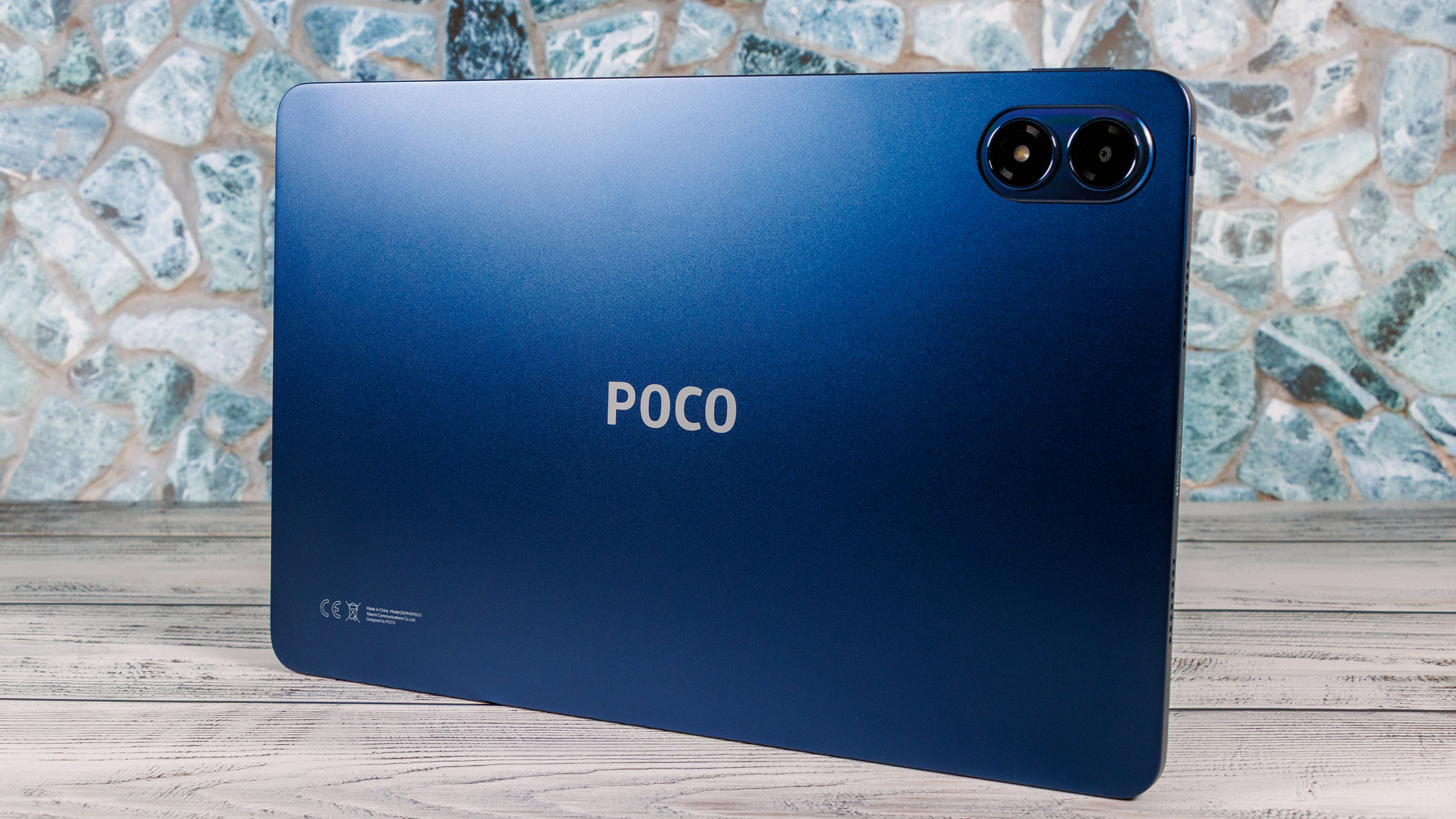
The Xiaomi Poco Pad M1 is available in blue and gray and is 7.5 mm thick. At 610 grams, it is no lightweight, but this is hardly noticeable when held in either hand. The tablet has an aluminum unibody with a neat finish and makes a robust impression.

The Pad M1 is available only with 8 GB of RAM and 256 GB of internal UFS 2.2 storage. Unlike the Redmi Pad 2 Pro, the Poco tablet lacks a 5G option, but it also supports microSD and has an audio jack.

The lack of NFC and a vibration motor is not a problem.
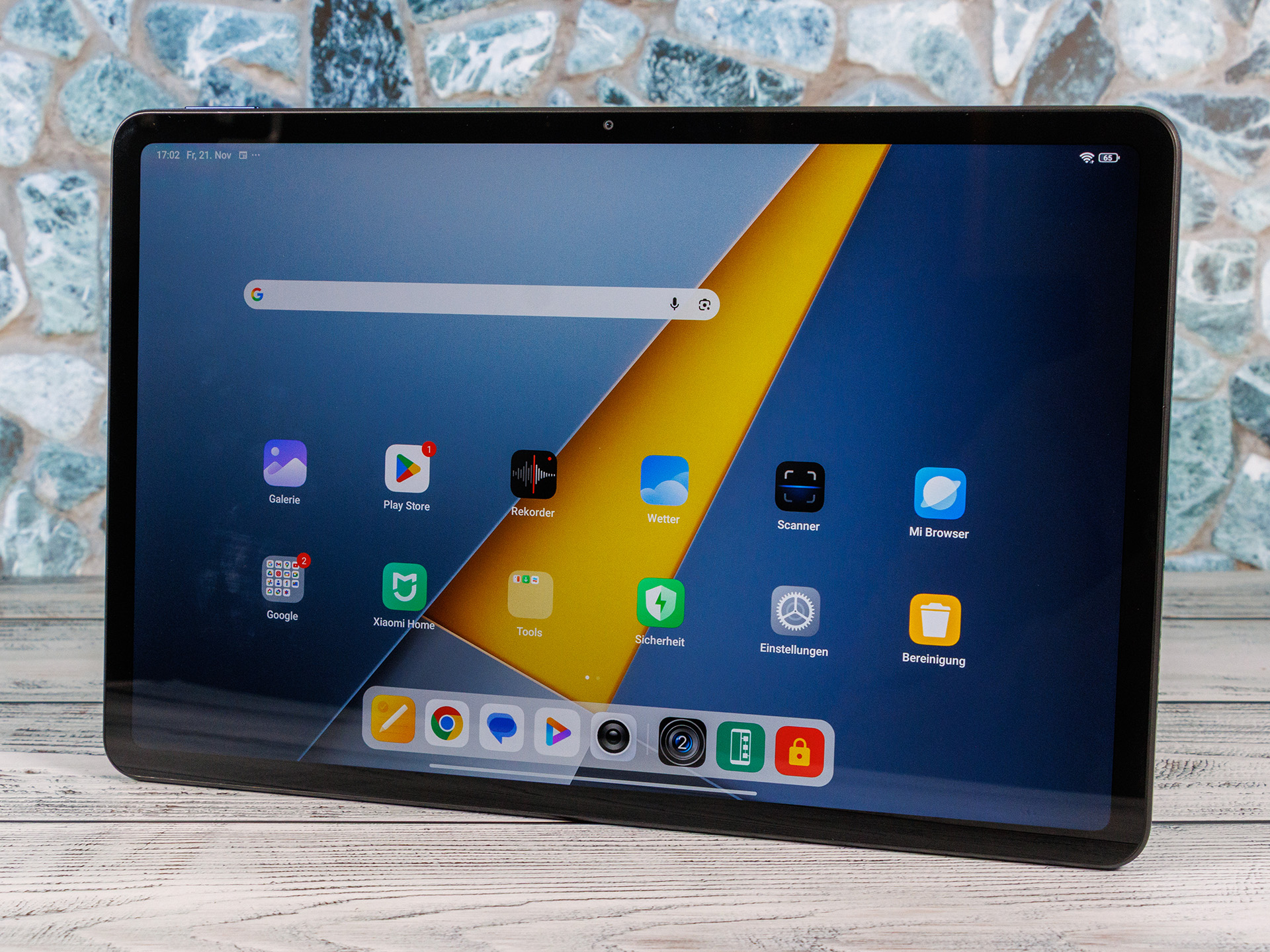
(Image source: Daniel Schmidt)
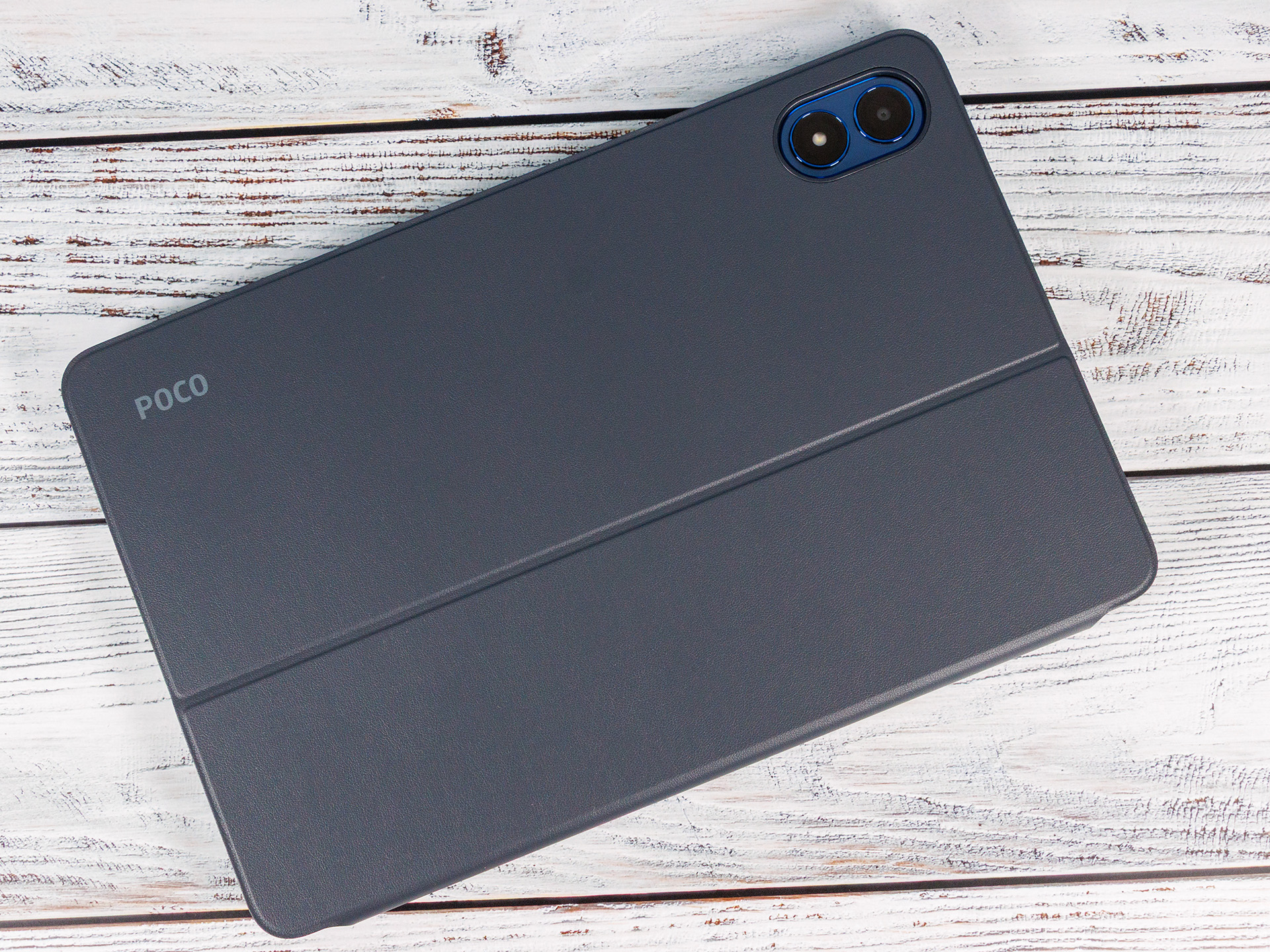
Poco Pad M1 with optional cover (Image source: Daniel Schmidt)

Size comparison

278.8 mm / 11 in 181.05 mm / 7.13 in 8.55 mm / 0.3366 in 530 g1.168 lbs279.8 mm / 11 in 181.65 mm / 7.15 in 7.5 mm / 0.2953 in 610 g1.345 lbs279.8 mm / 11 in 181.65 mm / 7.15 in 7.5 mm / 0.2953 in 610 g1.345 lbs257 mm / 10.1 in 169 mm / 6.65 in 6.9 mm / 0.2717 in 482 g1.063 lbs210 mm / 8.27 in 148 mm / 5.83 in 1 mm / 0.03937 in 2.9 g0.00639 lbs
SD Card Reader - average JPG Copy Test (av. of 3 runs)
Lenovo Idea Tab Plus
Mediatek Dimensity 6400 (Angelbird V60)
47.9 MB/s +45%
Samsung Galaxy Tab A11+
MediaTek Dimensity 7300 (Angelbird V60)
45.6 MB/s +38%
Xiaomi Redmi Pad 2 Pro
Qualcomm Snapdragon 7s Gen 4 (Angelbird AV Pro V60)
38.25 MB/s +16%
Average of class Tablet
  (10.2 - 57.4, n=50, last 2 years)
36.5 MB/s +11%
Xiaomi Poco Pad M1
Qualcomm Snapdragon 7s Gen 4 (Angelbird AV Pro V60)
32.99 MB/s

Communication and operation - Poco tablet with Wi-Fi 6E and facial recognition

The Xiaomi Poco Pad M1 supports only Wi-Fi 6, but, like the Redmi Pad 2 Pro, it shows 6 GHz band support in our testing. The data transfer rates are correspondingly high.

The Pad M1 has a perfectly functioning touchscreen that recognizes up to ten inputs simultaneously and also works with the optional Poco Smart Pen. If you already own a Redmi Smart Pen, you can use it as well.

In addition to PIN and password protection, facial recognition via the front camera is also available for security, although only two faces can be stored.

Networking
Xiaomi Poco Pad M1
Wi-Fi 6E
iperf3 transmit AXE11000 6GHz
1793 (min: 1688) MBit/s ∼100%
iperf3 receive AXE11000 6GHz
1275 (min: 642) MBit/s ∼89%
Xiaomi Redmi Pad 2 Pro
802.11 a/b/g/n/ac/ax
iperf3 transmit AXE11000
918 (min: 744) MBit/s ∼97%
iperf3 receive AXE11000
831 (min: 744) MBit/s ∼89%
iperf3 transmit AXE11000 6GHz
1655 (min: 909) MBit/s ∼92%
iperf3 receive AXE11000 6GHz
1222 (min: 1067) MBit/s ∼85%
Lenovo Idea Tab Plus
802.11 a/b/g/n/ac
iperf3 transmit AXE11000
291 (min: 229) MBit/s ∼31%
iperf3 receive AXE11000
327 (min: 216) MBit/s ∼35%
Samsung Galaxy Tab A11+
802.11 a/b/g/n/ac
iperf3 transmit AXE11000
262 (min: 128) MBit/s ∼28%
iperf3 receive AXE11000
290 (min: 100) MBit/s ∼31%
Average Wi-Fi 6E
 
iperf3 transmit AXE11000
951 (min: 227) MBit/s ∼100%
iperf3 receive AXE11000
934 (min: 442) MBit/s ∼100%
iperf3 transmit AXE11000 6GHz
1371 (min: 229) MBit/s ∼76%
iperf3 receive AXE11000 6GHz
1331 (min: 598) MBit/s ∼93%
Average of class Tablet
 
iperf3 transmit AXE11000
601 (min: 10.5) MBit/s ∼63%
iperf3 receive AXE11000
689 (min: 20.1) MBit/s ∼74%
iperf3 transmit AXE11000 6GHz
1240 (min: 330) MBit/s ∼69%
iperf3 receive AXE11000 6GHz
1431 (min: 291) MBit/s ∼100%
05010015020025030035040045050055060065070075080085090095010001050110011501200125013001350140014501500155016001650170017501800Tooltip
Xiaomi Poco Pad M1 Wi-Fi 6E; iperf3 transmit AXE11000 6GHz; iperf 3.1.3: Ø1793 (1688-1849)
Xiaomi Poco Pad M1 Wi-Fi 6E; iperf3 receive AXE11000 6GHz; iperf 3.1.3: Ø1253 (642-1332)
Lenovo Idea Tab Plus 802.11 a/b/g/n/ac; iperf3 transmit AXE11000: Ø291 (229-311)
Lenovo Idea Tab Plus 802.11 a/b/g/n/ac; iperf3 receive AXE11000: Ø327 (216-358)

Software and sustainability - Shortened updates for the Poco Pad M1

The Poco Pad M1 comes in plastic-free packaging, which is again completely shrink-wrapped. Unfortunately, Xiaomi does not provide any information on the sustainability of its product.

According to a post in the Xiaomi community, the tablet will receive updates until September 2029. In the EPREL database, it is listed with five years of updates, which would be at least until 2030.

Camera - Front and rear with 8 MPix

Selfie with the Poco Pad M1

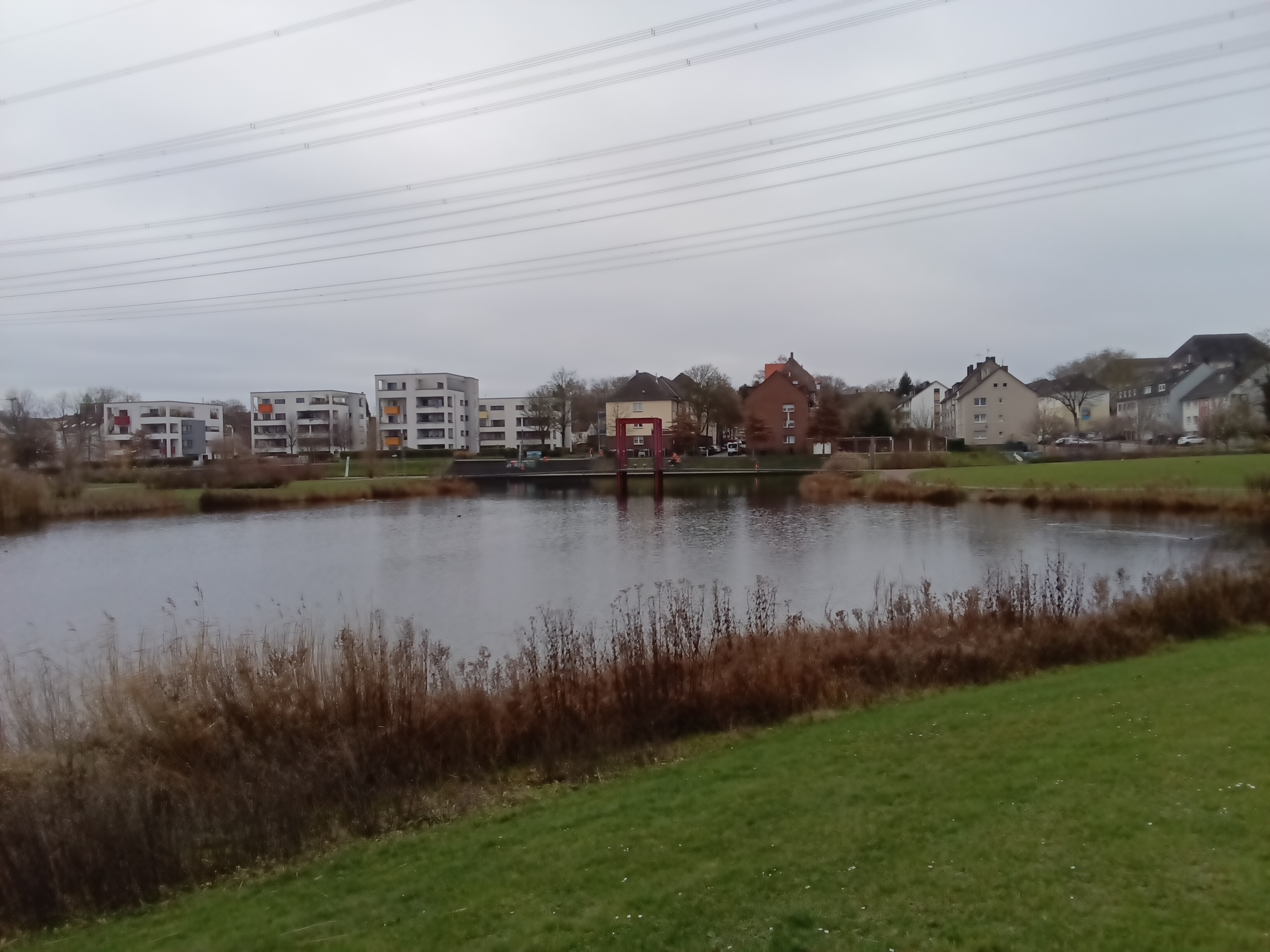
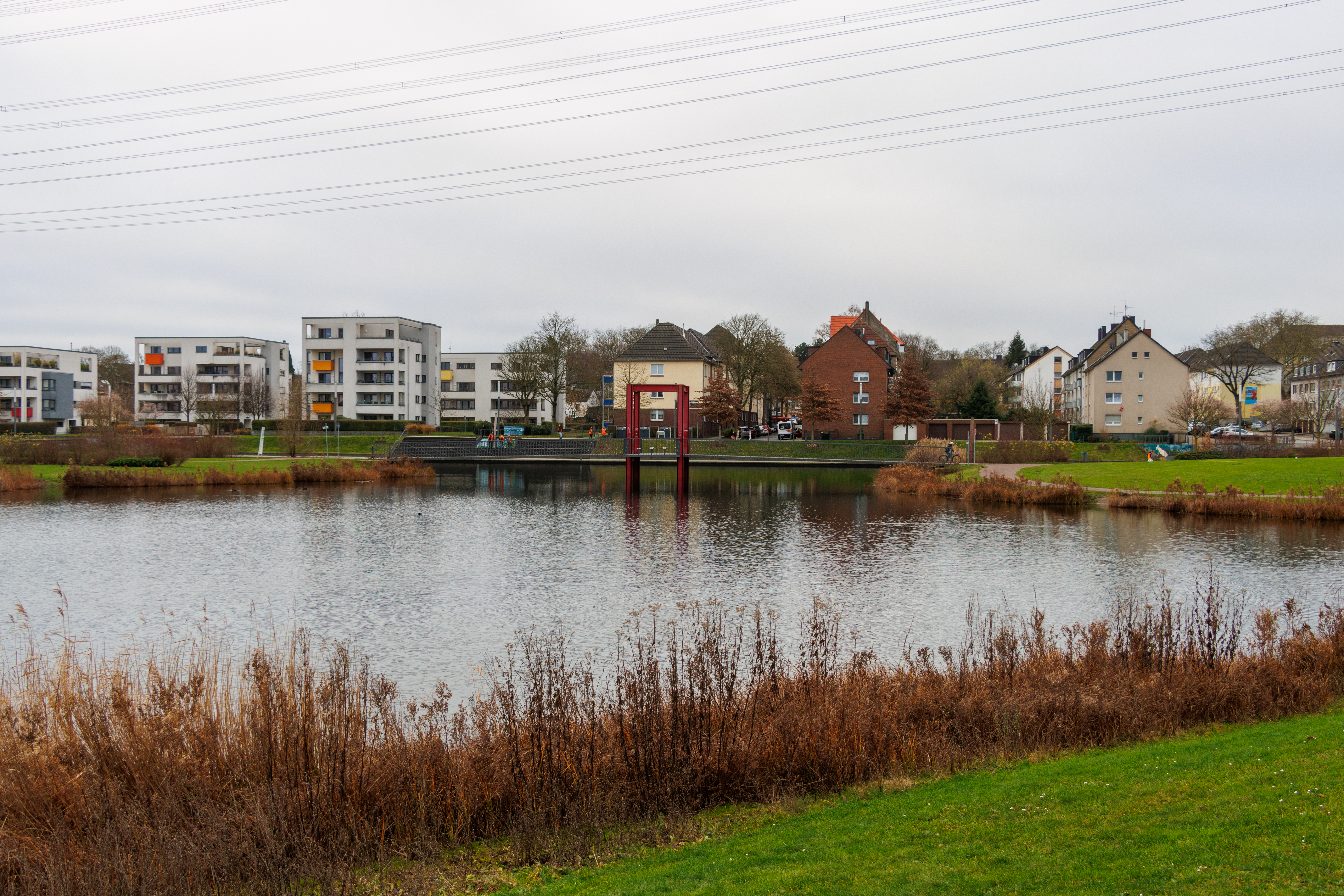
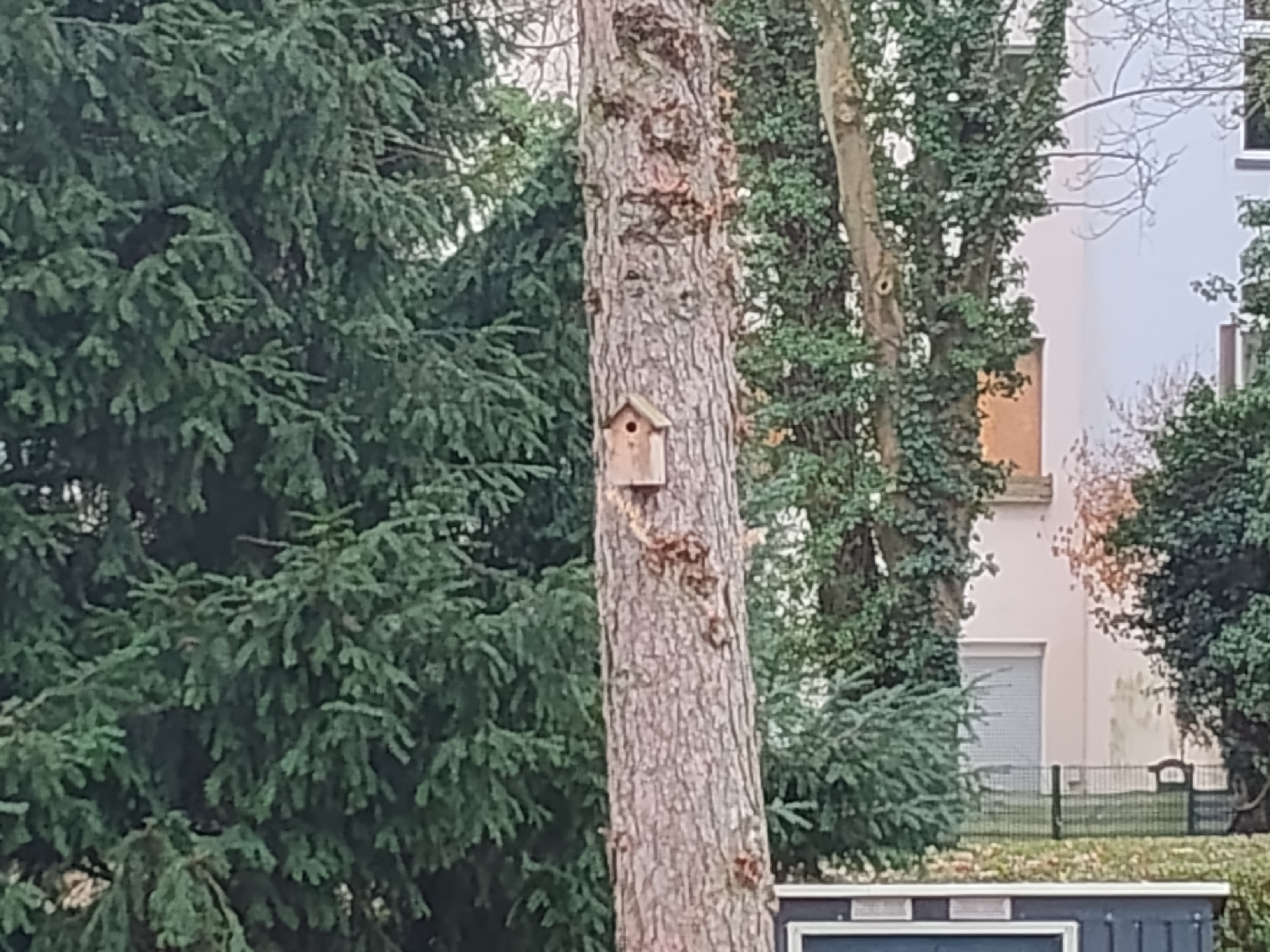
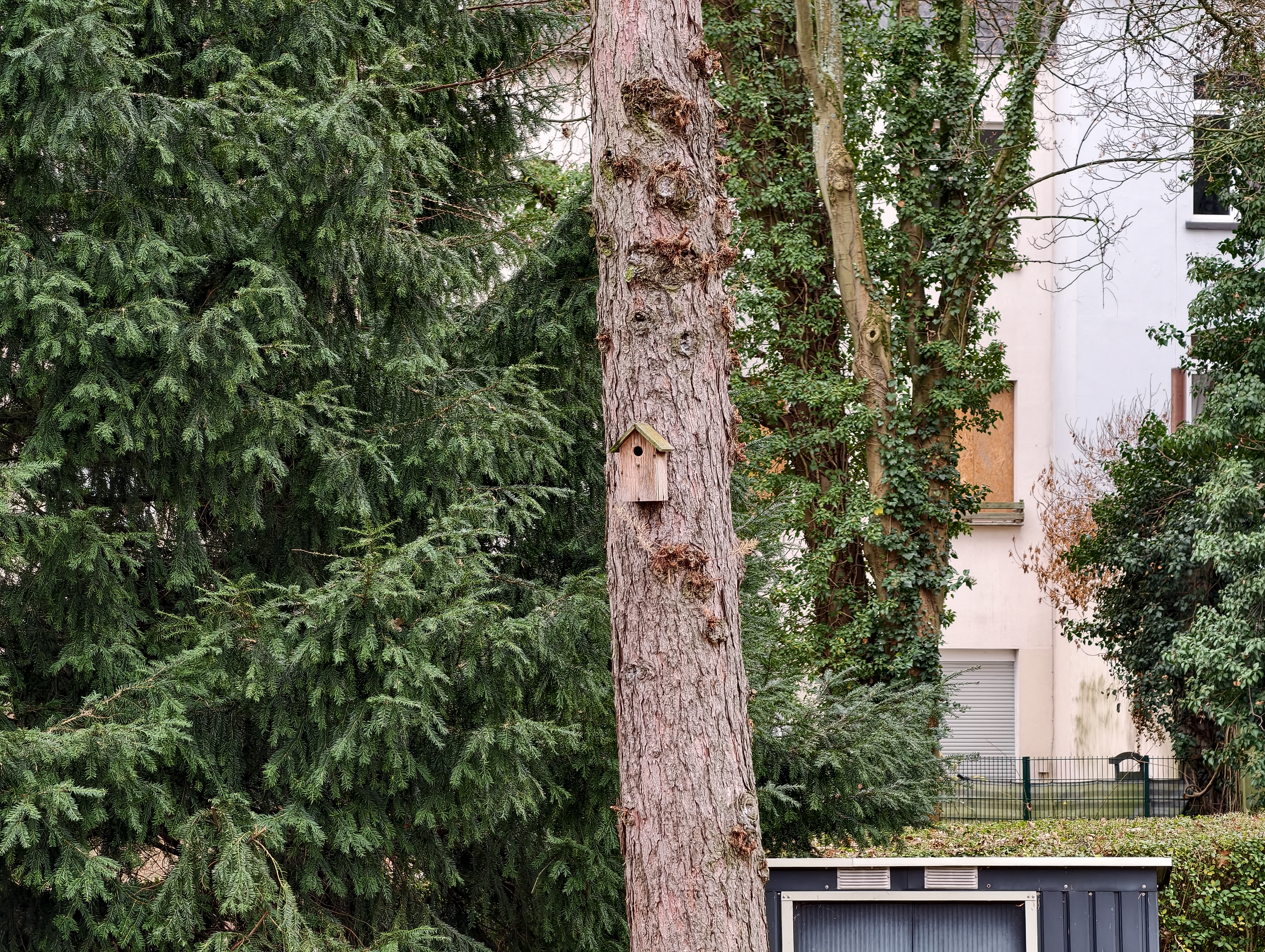
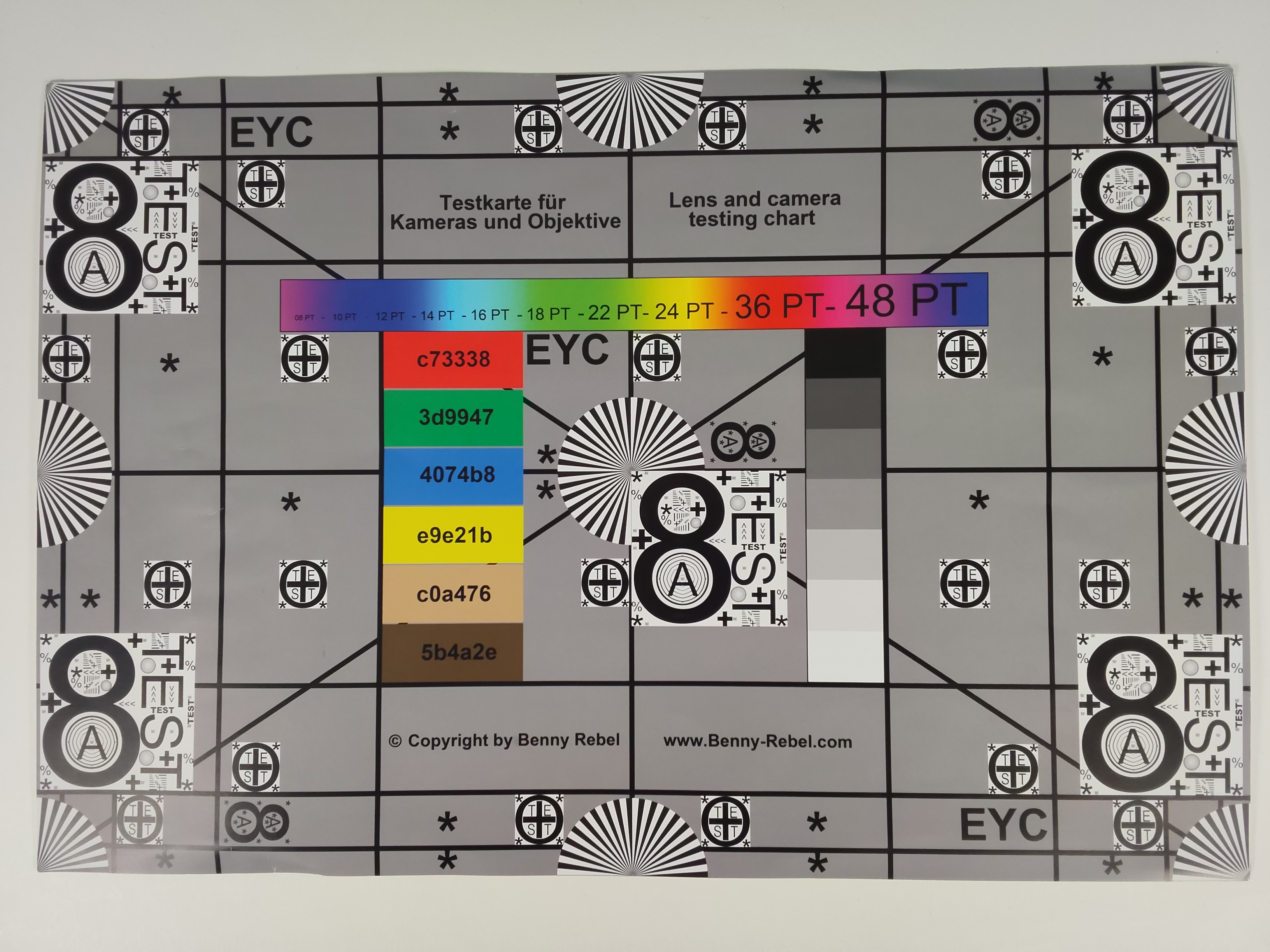
For its price range, the Xiaomi Poco Pad M1 takes pretty decent photos, but it can hardly be compared with a reasonably modern smartphone. However, the performance offered is sufficient for video conferences and simple documentation recordings.

Videos can be recorded on both sides in 720p or Full HD with 30 FPS.

Image comparison

Choose a scene and navigate within the first image. One click changes the position on touchscreens. One click on the zoomed-in image opens the original in a new window. The first image shows the scaled photograph of the test device.

Main cameraMain camera5x ZoomLow-Light

orginal image
click to load images
ColorChecker
5.9 ∆E
5 ∆E
4.4 ∆E
5.7 ∆E
1.7 ∆E
3 ∆E
4.5 ∆E
4.1 ∆E
8.1 ∆E
5.3 ∆E
3.9 ∆E
3.2 ∆E
4.7 ∆E
5.4 ∆E
7.9 ∆E
3.1 ∆E
6.1 ∆E
5.8 ∆E
8.7 ∆E
2.4 ∆E
3.9 ∆E
3.4 ∆E
7.4 ∆E
8.3 ∆E
ColorChecker Xiaomi Poco Pad M1: 5.09 ∆E min: 1.73 - max: 8.75 ∆E
ColorChecker
28.6 ∆E
54.3 ∆E
39.4 ∆E
36.9 ∆E
44.5 ∆E
65.1 ∆E
53.8 ∆E
35.1 ∆E
42.9 ∆E
27 ∆E
66.3 ∆E
64.5 ∆E
30.6 ∆E
49.8 ∆E
36.7 ∆E
77.5 ∆E
43.1 ∆E
45.5 ∆E
93.7 ∆E
71.1 ∆E
52.1 ∆E
36.6 ∆E
23.5 ∆E
13.1 ∆E
ColorChecker Xiaomi Poco Pad M1: 47.15 ∆E min: 13.11 - max: 93.74 ∆E

Display - Poco Pad with flicker-free LCD

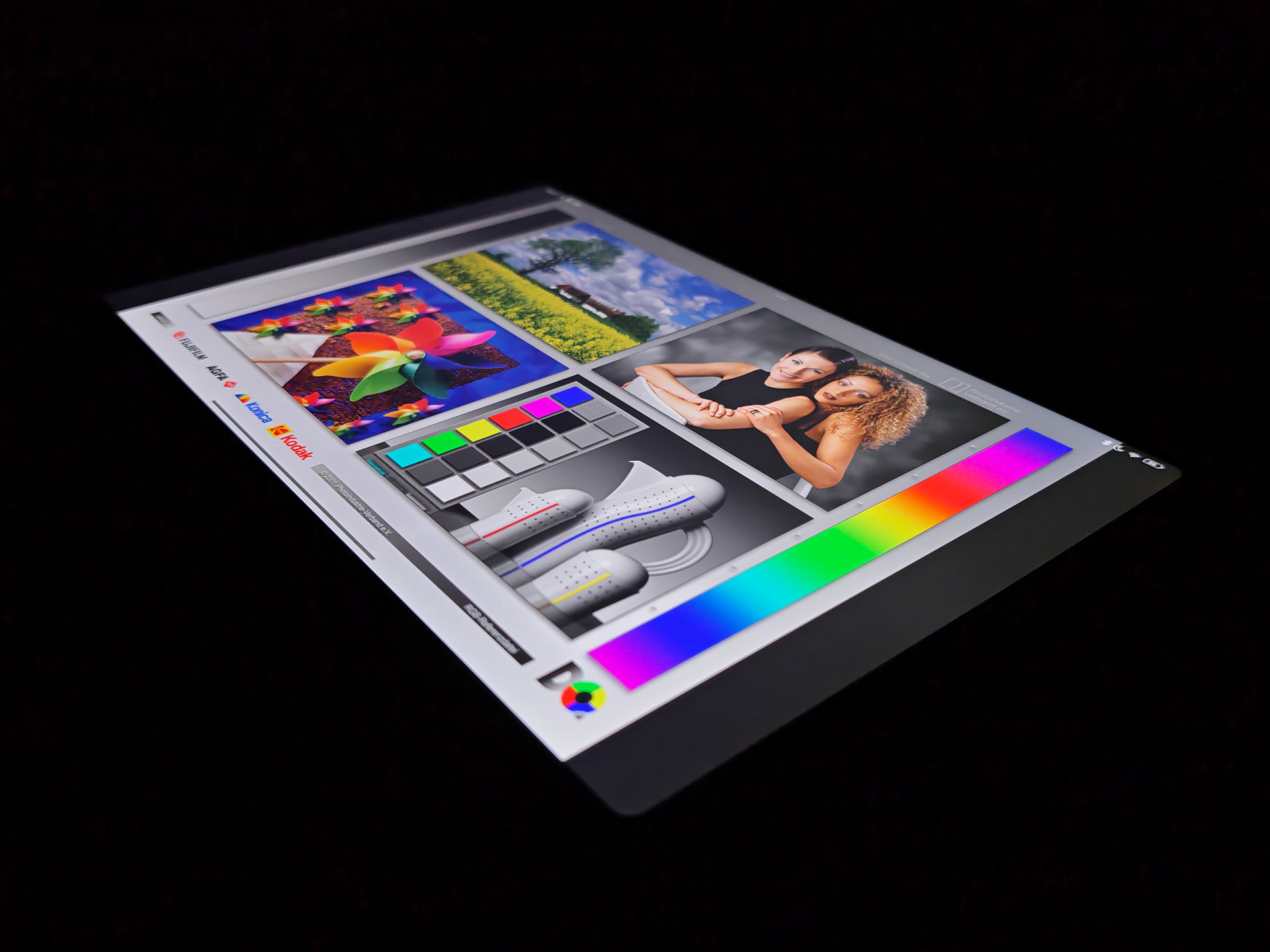
The LCD display of the Poco Pad M1 is not only very large with its 12.1-inch (30.7 cm) diagonal, but also impresses with good measured values in the test. The color reproduction is accurate, and the fairly low black level results in a crisp contrast ratio.

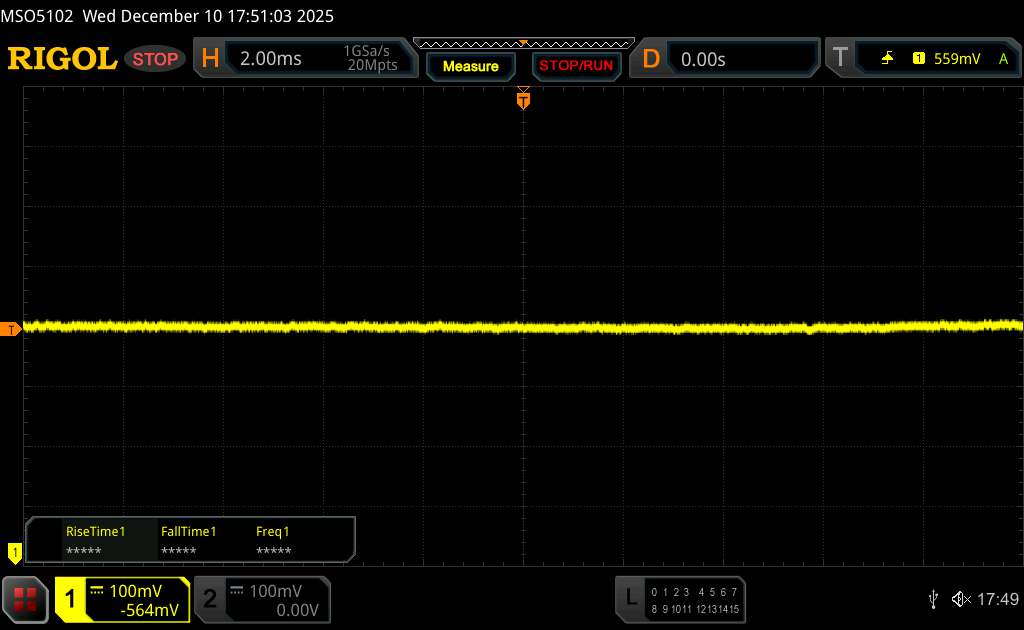
The panel does not use PWM. It's just a shame that only one HDR standard is supported. The system can adjust the refresh rate between 30 and 120 Hz.

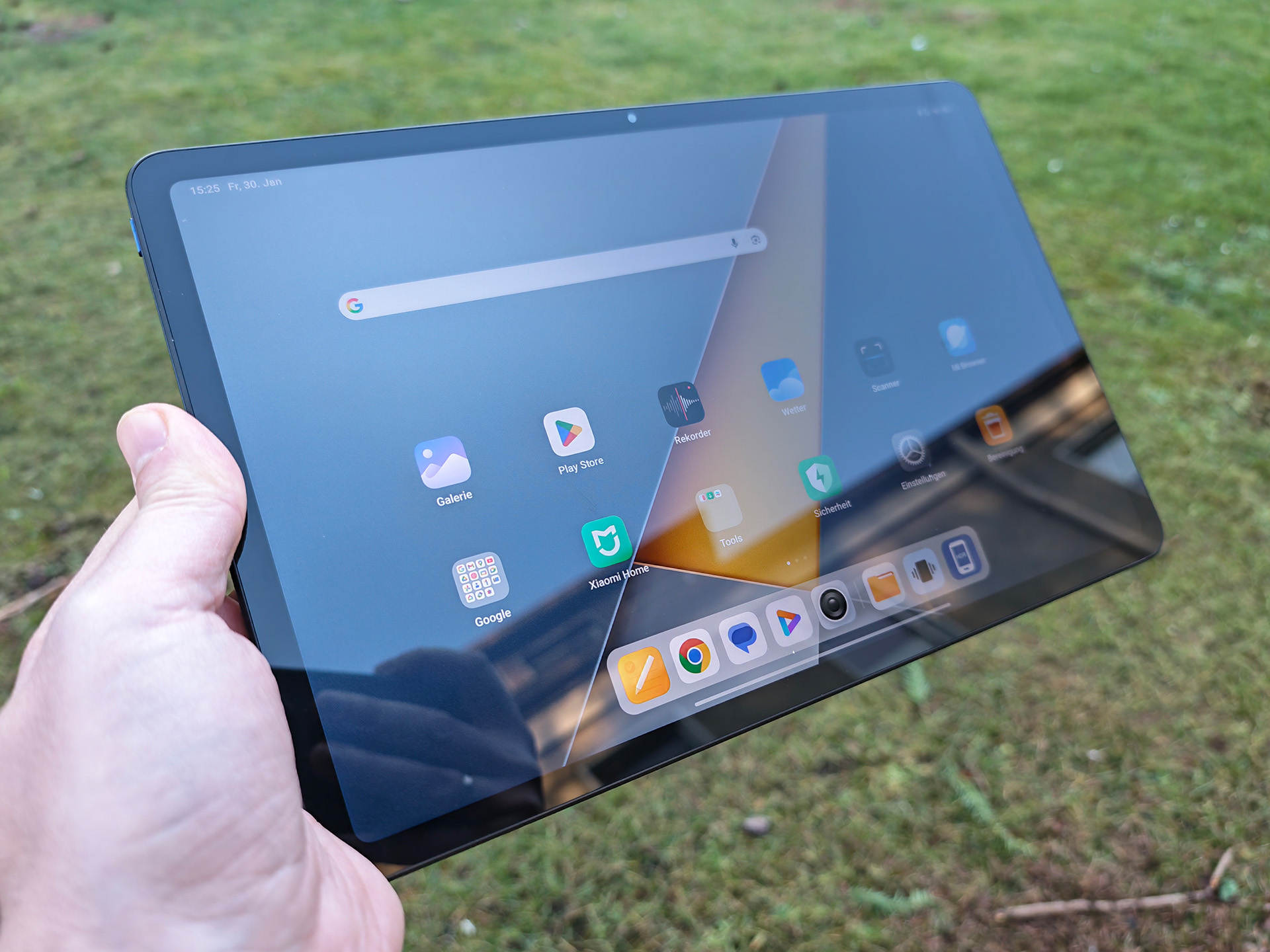
Only outdoors is the brightness not always sufficient, and the display is very reflective.

573
cd/m²
599
cd/m²
584
cd/m²
558
cd/m²
620
cd/m²
567
cd/m²
581
cd/m²
583
cd/m²
533
cd/m²
Distribution of brightness
tested with X-Rite i1Pro 3
Maximum: 620 cd/m² (Nits) Average: 577.6 cd/m² Minimum: 2.06 cd/m²
Brightness Distribution: 86 %
Center on Battery: 620 cd/m²
Contrast: 1676:1 (Black: 0.37 cd/m²)
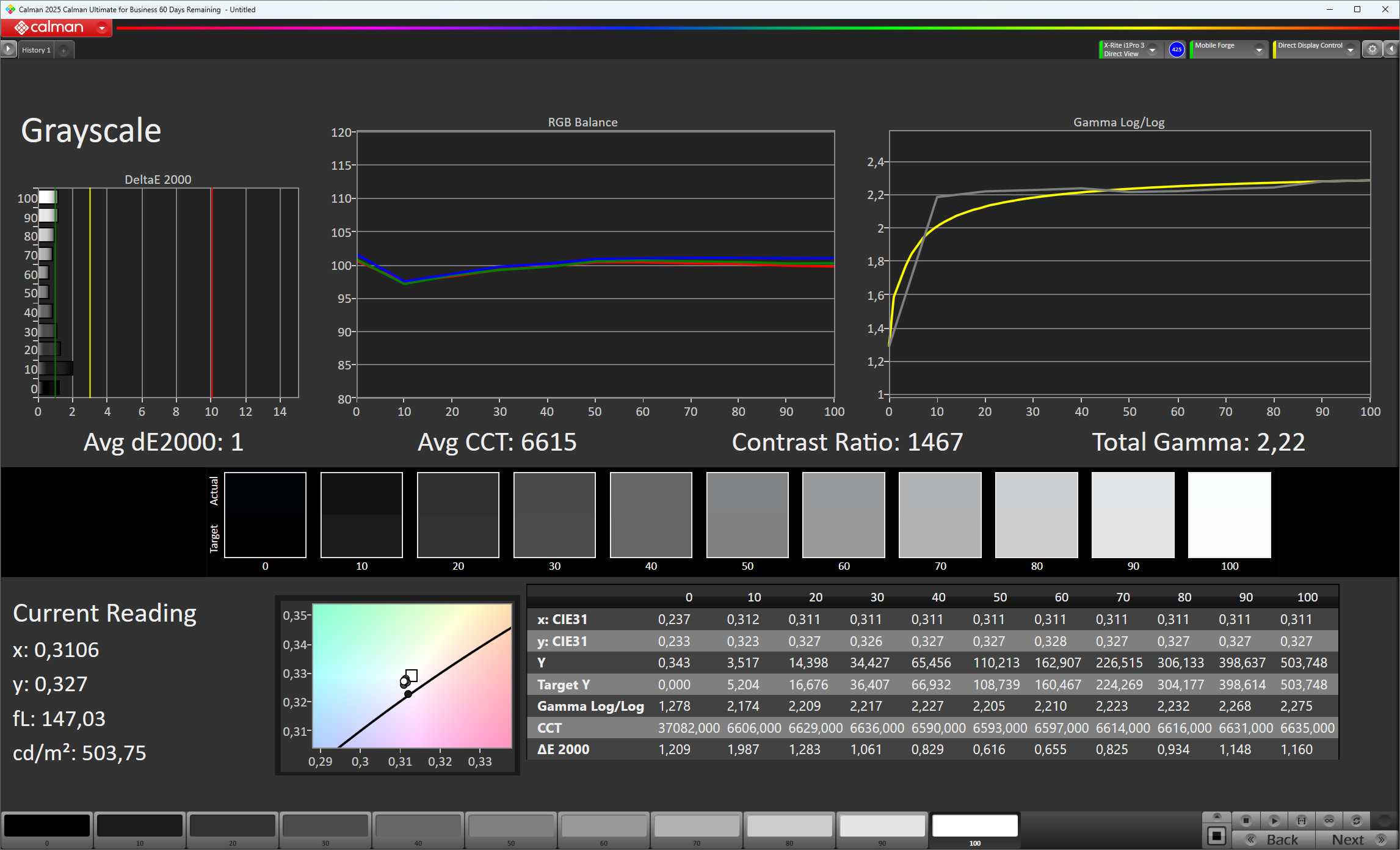
ΔE ColorChecker Calman: 1.1 | ∀{0.5-29.43 Ø4.76}
ΔE Greyscale Calman: 1 | ∀{0.09-98 Ø5}
97% sRGB (Calman 2D)
Gamma: 2.22
CCT: 6615 K
Xiaomi Poco Pad M1
TFT-LCD, 2560x1600, 12.1"
Xiaomi Redmi Pad 2 Pro
TFT-LCD, 2560x1600, 12.1"
Lenovo Idea Tab Plus
IPS, 2560x1600, 12.1"
Samsung Galaxy Tab A11+
IPS, 1920x1200, 11"
Screen
-5%
-41%
-157%
Brightness middle (cd/m²)
620
582
-6%
633
2%
537
-13%
Brightness (cd/m²)
578
553
-4%
622
8%
514
-11%
Brightness Distribution (%)
86
87
1%
95
10%
91
6%
Black Level * (cd/m²)
0.37
0.33
11%
0.54
-46%
0.35
5%
Contrast (:1)
1676
1764
5%
1172
-30%
1534
-8%
Colorchecker dE 2000 *
1.1
0.8
27%
1.81
-65%
5.24
-376%
Colorchecker dE 2000 max. *
1.9
2.2
-16%
2.98
-57%
10.83
-470%
Greyscale dE 2000 *
1
1.6
-60%
2.5
-150%
4.9
-390%
Gamma
2.22 99%
2.21 100%
1.934 114%
2.11 104%
CCT
6615 98%
6294 103%
6853 95%
7637 85%

* ... smaller is better

Display / APL18 Peak Brightness
Xiaomi Poco Pad M1
Adreno 810, SD 7s Gen 4, 256 GB UFS 2.2 Flash
574 cd/m²
Samsung Galaxy Tab A11+
Mali-G615 MP2, Dimensity 7300, 128 GB UFS 3.1 Flash
543 cd/m² -5%
Xiaomi Redmi Pad 2 Pro
Adreno 810, SD 7s Gen 4, 256 GB UFS 2.2 Flash
537 cd/m² -6%
Display / HDR Peak Brightness
Samsung Galaxy Tab A11+
Mali-G615 MP2, Dimensity 7300, 128 GB UFS 3.1 Flash
547 cd/m² +28%
Xiaomi Poco Pad M1
Adreno 810, SD 7s Gen 4, 256 GB UFS 2.2 Flash
426 cd/m²
Xiaomi Redmi Pad 2 Pro
Adreno 810, SD 7s Gen 4, 256 GB UFS 2.2 Flash
400 cd/m² -6%

Screen Flickering / PWM (Pulse-Width Modulation)

To dim the screen, some notebooks will simply cycle the backlight on and off in rapid succession - a method called Pulse Width Modulation (PWM) . This cycling frequency should ideally be undetectable to the human eye. If said frequency is too low, users with sensitive eyes may experience strain or headaches or even notice the flickering altogether.
Screen flickering / PWM not detected

In comparison: 53 % of all tested devices do not use PWM to dim the display. If PWM was detected, an average of 8039 (minimum: 5 - maximum: 343500) Hz was measured.

Grayscale (Profile: Vivid, Color temperature: Warm, Target color space: sRGB)
Colors (Profile: Vivid, Color temperature: Warm, Target color space: sRGB)
Color space (profile: vivid, color temperature: warm, target color space: sRGB)

Display Response Times

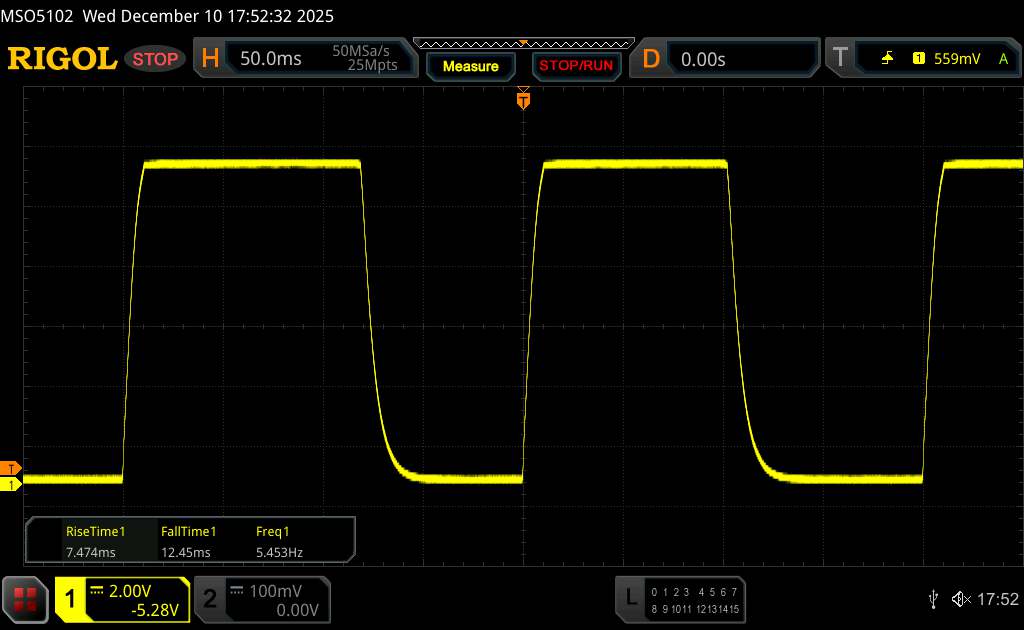
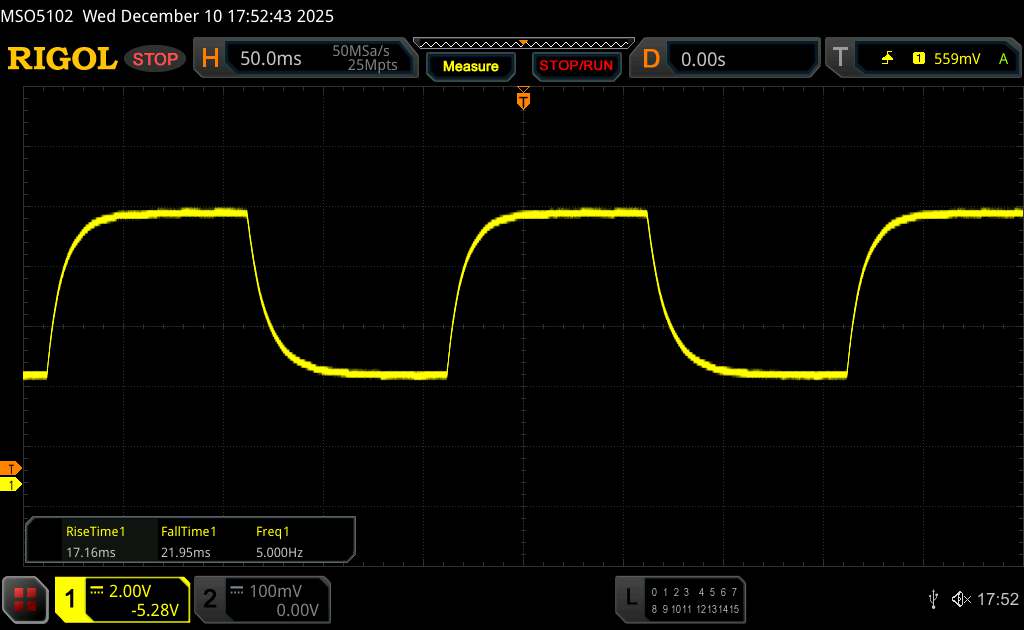
Display response times show how fast the screen is able to change from one color to the next. Slow response times can lead to afterimages and can cause moving objects to appear blurry (ghosting). Gamers of fast-paced 3D titles should pay special attention to fast response times.
       Response Time Black to White
19.92 ms ... rise ↗ and fall ↘ combined↗ 7.474 ms rise
↘ 12.45 ms fall
The screen shows good response rates in our tests, but may be too slow for competitive gamers.
In comparison, all tested devices range from 0.1 (minimum) to 240 (maximum) ms. » 43 % of all devices are better.
This means that the measured response time is similar to the average of all tested devices (20.1 ms).
       Response Time 50% Grey to 80% Grey
39.11 ms ... rise ↗ and fall ↘ combined↗ 17.16 ms rise
↘ 21.95 ms fall
The screen shows slow response rates in our tests and will be unsatisfactory for gamers.
In comparison, all tested devices range from 0.165 (minimum) to 636 (maximum) ms. » 59 % of all devices are better.
This means that the measured response time is worse than the average of all tested devices (31.5 ms).
Outdoors
Outdoors
Viewing angles
Viewing angles

Performance, emissions and battery life - Poco Pad M1 relies on Snapdragon 7s Gen 4

The Poco Pad M1's Snapdragon 7S Gen 4 is positioned in the mid-range and enables the tablet to run smoothly. Although it also reaches its limits with complex apps, it can noticeably set itself apart in the comparison field.

The surface temperatures always remain within a safe range, and the SoC does not throttle even in the stress test.

Despite four loudspeakers with support for Dolby Atmos, the sound is rather average and already seems a little hollow at medium volume.

The battery life is very good. The 12,000 mAh battery can be fully recharged at up to 33 watts in 2 hours and 45 minutes (50%: 77 min.; 80%: 132 min.).

Geekbench 6.5
Single-Core
Average of class Tablet
  (185 - 4128, n=97, last 2 years)
1551 Points +25%
Xiaomi Redmi Pad 2 Pro
Qualcomm Snapdragon 7s Gen 4, Adreno 810, 8192
1241 Points 0%
Xiaomi Poco Pad M1
Qualcomm Snapdragon 7s Gen 4, Adreno 810, 8192
1241 Points
Average Qualcomm Snapdragon 7s Gen 4
  (1227 - 1241, n=3)
1236 Points 0%
Samsung Galaxy Tab A11+
MediaTek Dimensity 7300, Mali-G615 MP2, 6144
999 Points -20%
Lenovo Idea Tab Plus
Mediatek Dimensity 6400, Mali-G57 MP2, 8192
761 Points -39%
Multi-Core
Average of class Tablet
  (848 - 16544, n=97, last 2 years)
4940 Points +49%
Xiaomi Poco Pad M1
Qualcomm Snapdragon 7s Gen 4, Adreno 810, 8192
3311 Points
Xiaomi Redmi Pad 2 Pro
Qualcomm Snapdragon 7s Gen 4, Adreno 810, 8192
3262 Points -1%
Average Qualcomm Snapdragon 7s Gen 4
  (3183 - 3311, n=3)
3252 Points -2%
Samsung Galaxy Tab A11+
MediaTek Dimensity 7300, Mali-G615 MP2, 6144
2956 Points -11%
Lenovo Idea Tab Plus
Mediatek Dimensity 6400, Mali-G57 MP2, 8192
2002 Points -40%
3DMark
Wild Life Unlimited Score
Average of class Tablet
  (421 - 32525, n=86, last 2 years)
8407 Points +93%
Xiaomi Poco Pad M1
Qualcomm Snapdragon 7s Gen 4, Adreno 810, 8192
4356 Points
Average Qualcomm Snapdragon 7s Gen 4
  (n=1)
4356 Points 0%
Samsung Galaxy Tab A11+
MediaTek Dimensity 7300, Mali-G615 MP2, 6144
3095 Points -29%
Lenovo Idea Tab Plus
Mediatek Dimensity 6400, Mali-G57 MP2, 8192
1210 Points -72%
Wild Life Extreme
Average of class Tablet
  (89 - 9391, n=90, last 2 years)
2631 Points +137%
Xiaomi Poco Pad M1
Qualcomm Snapdragon 7s Gen 4, Adreno 810, 8192
1112 Points
Average Qualcomm Snapdragon 7s Gen 4
  (n=1)
1112 Points 0%
Samsung Galaxy Tab A11+
MediaTek Dimensity 7300, Mali-G615 MP2, 6144
838 Points -25%
Lenovo Idea Tab Plus
Mediatek Dimensity 6400, Mali-G57 MP2, 8192
339 Points -70%
Wild Life Extreme Unlimited
Average of class Tablet
  (99 - 11105, n=89, last 2 years)
2805 Points +154%
Xiaomi Poco Pad M1
Qualcomm Snapdragon 7s Gen 4, Adreno 810, 8192
1106 Points
Average Qualcomm Snapdragon 7s Gen 4
  (n=1)
1106 Points 0%
Samsung Galaxy Tab A11+
MediaTek Dimensity 7300, Mali-G615 MP2, 6144
828 Points -25%
Lenovo Idea Tab Plus
Mediatek Dimensity 6400, Mali-G57 MP2, 8192
328 Points -70%
Steel Nomad Light Score
Average of class Tablet
  (54 - 4286, n=54, last 2 years)
1513 Points +277%
Xiaomi Poco Pad M1
Qualcomm Snapdragon 7s Gen 4, Adreno 810, 8192
401 Points
Average Qualcomm Snapdragon 7s Gen 4
  (n=1)
401 Points 0%
Lenovo Idea Tab Plus
Mediatek Dimensity 6400, Mali-G57 MP2, 8192
137 Points -66%
Steel Nomad Light Unlimited Score
Average of class Tablet
  (52 - 4406, n=51, last 2 years)
1506 Points +280%
Xiaomi Poco Pad M1
Qualcomm Snapdragon 7s Gen 4, Adreno 810, 8192
396 Points
Average Qualcomm Snapdragon 7s Gen 4
  (n=1)
396 Points 0%
Lenovo Idea Tab Plus
Mediatek Dimensity 6400, Mali-G57 MP2, 8192
138 Points -65%
GFXBench
on screen Aztec Ruins Normal Tier Onscreen
Average of class Tablet
  (5.2 - 122, n=94, last 2 years)
42 fps +45%
Xiaomi Poco Pad M1
Qualcomm Snapdragon 7s Gen 4, Adreno 810, 8192
29 fps
Average Qualcomm Snapdragon 7s Gen 4
  (28 - 29, n=2)
28.5 fps -2%
Xiaomi Redmi Pad 2 Pro
Qualcomm Snapdragon 7s Gen 4, Adreno 810, 8192
28 fps -3%
Samsung Galaxy Tab A11+
MediaTek Dimensity 7300, Mali-G615 MP2, 6144
27 fps -7%
Lenovo Idea Tab Plus
Mediatek Dimensity 6400, Mali-G57 MP2, 8192
8.9 fps -69%
1920x1080 Aztec Ruins Normal Tier Offscreen
Average of class Tablet
  (4.2 - 340, n=94, last 2 years)
104.2 fps +89%
Xiaomi Redmi Pad 2 Pro
Qualcomm Snapdragon 7s Gen 4, Adreno 810, 8192
55 fps 0%
Xiaomi Poco Pad M1
Qualcomm Snapdragon 7s Gen 4, Adreno 810, 8192
55 fps
Average Qualcomm Snapdragon 7s Gen 4
  (55 - 55, n=2)
55 fps 0%
Samsung Galaxy Tab A11+
MediaTek Dimensity 7300, Mali-G615 MP2, 6144
36 fps -35%
Lenovo Idea Tab Plus
Mediatek Dimensity 6400, Mali-G57 MP2, 8192
15 fps -73%
on screen Aztec Ruins High Tier Onscreen
Average of class Tablet
  (3.1 - 106.4, n=94, last 2 years)
30 fps +67%
Xiaomi Redmi Pad 2 Pro
Qualcomm Snapdragon 7s Gen 4, Adreno 810, 8192
18 fps 0%
Xiaomi Poco Pad M1
Qualcomm Snapdragon 7s Gen 4, Adreno 810, 8192
18 fps
Average Qualcomm Snapdragon 7s Gen 4
  (18 - 18, n=2)
18 fps 0%
Samsung Galaxy Tab A11+
MediaTek Dimensity 7300, Mali-G615 MP2, 6144
16 fps -11%
Lenovo Idea Tab Plus
Mediatek Dimensity 6400, Mali-G57 MP2, 8192
5.6 fps -69%
2560x1440 Aztec Ruins High Tier Offscreen
Average of class Tablet
  (1.5 - 125, n=94, last 2 years)
39.8 fps +90%
Xiaomi Redmi Pad 2 Pro
Qualcomm Snapdragon 7s Gen 4, Adreno 810, 8192
21 fps 0%
Xiaomi Poco Pad M1
Qualcomm Snapdragon 7s Gen 4, Adreno 810, 8192
21 fps
Average Qualcomm Snapdragon 7s Gen 4
  (21 - 21, n=2)
21 fps 0%
Samsung Galaxy Tab A11+
MediaTek Dimensity 7300, Mali-G615 MP2, 6144
14 fps -33%
Lenovo Idea Tab Plus
Mediatek Dimensity 6400, Mali-G57 MP2, 8192
5.5 fps -74%
3840x2160 4K Aztec Ruins High Tier Offscreen
Average of class Tablet
  (0.64 - 55.1, n=94, last 2 years)
18.2 fps +96%
Xiaomi Redmi Pad 2 Pro
Qualcomm Snapdragon 7s Gen 4, Adreno 810, 8192
9.3 fps 0%
Xiaomi Poco Pad M1
Qualcomm Snapdragon 7s Gen 4, Adreno 810, 8192
9.3 fps
Average Qualcomm Snapdragon 7s Gen 4
  (9.3 - 9.3, n=2)
9.3 fps 0%
Samsung Galaxy Tab A11+
MediaTek Dimensity 7300, Mali-G615 MP2, 6144
5 fps -46%
Lenovo Idea Tab Plus
Mediatek Dimensity 6400, Mali-G57 MP2, 8192
2.4 fps -74%
Geekbench AI
Single Precision NPU 1.5
Average of class Tablet
  (166 - 5295, n=32, last 2 years)
654 Points +165%
Samsung Galaxy Tab A11+
MediaTek Dimensity 7300, Mali-G615 MP2, 6144
542 Points +119%
Xiaomi Poco Pad M1
Qualcomm Snapdragon 7s Gen 4, Adreno 810, 8192
247 Points
Average Qualcomm Snapdragon 7s Gen 4
  (246 - 247, n=2)
247 Points 0%
Xiaomi Redmi Pad 2 Pro
Qualcomm Snapdragon 7s Gen 4, Adreno 810, 8192
246 Points 0%
Lenovo Idea Tab Plus
Mediatek Dimensity 6400, Mali-G57 MP2, 8192
218 Points -12%
Half Precision NPU 1.5
Average of class Tablet
  (154 - 41155, n=32, last 2 years)
3062 Points +1140%
Samsung Galaxy Tab A11+
MediaTek Dimensity 7300, Mali-G615 MP2, 6144
1325 Points +436%
Lenovo Idea Tab Plus
Mediatek Dimensity 6400, Mali-G57 MP2, 8192
322 Points +30%
Xiaomi Poco Pad M1
Qualcomm Snapdragon 7s Gen 4, Adreno 810, 8192
247 Points
Average Qualcomm Snapdragon 7s Gen 4
  (246 - 247, n=2)
247 Points 0%
Xiaomi Redmi Pad 2 Pro
Qualcomm Snapdragon 7s Gen 4, Adreno 810, 8192
246 Points 0%
Quantized NPU 1.5
Average of class Tablet
  (88 - 57388, n=32, last 2 years)
4434 Points +650%
Samsung Galaxy Tab A11+
MediaTek Dimensity 7300, Mali-G615 MP2, 6144
2701 Points +357%
Xiaomi Poco Pad M1
Qualcomm Snapdragon 7s Gen 4, Adreno 810, 8192
591 Points
Average Qualcomm Snapdragon 7s Gen 4
  (590 - 591, n=2)
591 Points 0%
Xiaomi Redmi Pad 2 Pro
Qualcomm Snapdragon 7s Gen 4, Adreno 810, 8192
590 Points 0%
Lenovo Idea Tab Plus
Mediatek Dimensity 6400, Mali-G57 MP2, 8192
205 Points -65%
Jetstream 2
2.0 Total Score
Average of class Tablet
  (23.3 - 395, n=69, last 2 years)
154.7 Points
Average Qualcomm Snapdragon 7s Gen 4
  (n=1)
143.9 Points
Xiaomi Redmi Pad 2 Pro
Qualcomm Snapdragon 7s Gen 4, Adreno 810, 8192
143.861 Points
Samsung Galaxy Tab A11+
MediaTek Dimensity 7300, Mali-G615 MP2, 6144
99.2 Points
Lenovo Idea Tab Plus
Mediatek Dimensity 6400, Mali-G57 MP2, 8192
94.343 Points
2.2 Total Score
Average of class Tablet
  (61.3 - 579, n=33, last 2 years)
213 Points +25%
Xiaomi Redmi Pad 2 Pro
Qualcomm Snapdragon 7s Gen 4, Adreno 810, 8192
179.691 Points +5%
Average Qualcomm Snapdragon 7s Gen 4
  (171 - 179.7, n=2)
175.4 Points +3%
Xiaomi Poco Pad M1
Qualcomm Snapdragon 7s Gen 4, Adreno 810, 8192
171.017 Points
Lenovo Idea Tab Plus
Mediatek Dimensity 6400, Mali-G57 MP2, 8192
102.146 Points -40%
Antutu v11 - Score
Average of class Tablet
  (522205 - 2274547, n=4, last 2 years)
1389896 Points +36%
Xiaomi Poco Pad M1
Qualcomm Snapdragon 7s Gen 4, Adreno 810, 8192
1019553 Points
Average Qualcomm Snapdragon 7s Gen 4
  (n=1)
1019553 Points 0%
Xiaomi Poco Pad M1Xiaomi Redmi Pad 2 ProLenovo Idea Tab PlusSamsung Galaxy Tab A11+Average 256 GB UFS 2.2 FlashAverage of class Tablet
AndroBench 3-5
-15%
-7%
58%
-5%
45%
Sequential Read 256KB (MB/s)
999.46
983.31
-2%
526.82
-47%
1990.9
99%
Sequential Write 256KB (MB/s)
997.79
915.09
-8%
527.26
-47%
1645.1
65%
733 ?(369 - 998, n=58)
-27%
Random Read 4KB (MB/s)
202.19
150.42
-26%
271.5
34%
249.4
23%
Random Write 4KB (MB/s)
230.68
180.77
-22%
304.01
32%
332
44%
Max. Load
 35.5 °C
96 F
37.5 °C
100 F
27.6 °C
82 F
 
 31.6 °C
89 F
29.2 °C
85 F
27.7 °C
82 F
 
 30.6 °C
87 F
29.7 °C
85 F
29.9 °C
86 F
 
Maximum: 37.5 °C = 100 F
Average: 31 °C = 88 F
29.6 °C
85 F
32.1 °C
90 F
31.6 °C
89 F
29 °C
84 F
30.4 °C
87 F
30.4 °C
87 F
27.3 °C
81 F
27 °C
81 F
28 °C
82 F
Maximum: 32.1 °C = 90 F
Average: 29.5 °C = 85 F
Power Supply (max.)  30.9 °C = 88 F | Room Temperature 20.6 °C = 69 F | Fluke t3000FC (calibrated) & Voltcraft IR-260
(+) The average temperature for the upper side under maximal load is 31 °C / 88 F, compared to the average of 30 °C / 86 F for the devices in the class Tablet.
(+) The maximum temperature on the upper side is 37.5 °C / 100 F, compared to the average of 33.6 °C / 92 F, ranging from 20.7 to 53.2 °C for the class Tablet.
(+) The bottom heats up to a maximum of 32.1 °C / 90 F, compared to the average of 33.2 °C / 92 F
(+) In idle usage, the average temperature for the upper side is 28.2 °C / 83 F, compared to the device average of 30 °C / 86 F.

3DMark Stress Tests

3DMark
Wild Life Stress Test Stability
Xiaomi Poco Pad M1
Adreno 810, SD 7s Gen 4, 256 GB UFS 2.2 Flash
99.8 %
Samsung Galaxy Tab A11+
Mali-G615 MP2, Dimensity 7300, 128 GB UFS 3.1 Flash
99.5 % 0%
Lenovo Idea Tab Plus
Mali-G57 MP2, Dimensity 6400, 256 GB UFS 2.2 Flash
99.4 % 0%
Wild Life Extreme Stress Test
Xiaomi Poco Pad M1
Adreno 810, SD 7s Gen 4, 256 GB UFS 2.2 Flash
99.6 %
Samsung Galaxy Tab A11+
Mali-G615 MP2, Dimensity 7300, 128 GB UFS 3.1 Flash
99.4 % 0%
Lenovo Idea Tab Plus
Mali-G57 MP2, Dimensity 6400, 256 GB UFS 2.2 Flash
99.2 % 0%
Steel Nomad Light Stress Test Stability
Xiaomi Poco Pad M1
Adreno 810, SD 7s Gen 4, 256 GB UFS 2.2 Flash
99.3 %
Lenovo Idea Tab Plus
Mali-G57 MP2, Dimensity 6400, 256 GB UFS 2.2 Flash
99.1 % 0%
0510152025Tooltip
Xiaomi Poco Pad M1 Adreno 810, SD 7s Gen 4, 256 GB UFS 2.2 Flash; Wild Life Extreme Stress Test; 1.1.14.3: Ø6.64 (6.63-6.66)
Lenovo Idea Tab Plus Mali-G57 MP2, Dimensity 6400, 256 GB UFS 2.2 Flash; Wild Life Extreme Stress Test; 1.1.14.1: Ø2.03 (2.02-2.04)
Samsung Galaxy Tab A11+ Mali-G615 MP2, Dimensity 7300, 128 GB UFS 3.1 Flash; Wild Life Extreme Stress Test; 1.1.14.3: Ø5.19 (5.18-5.21)
Xiaomi Poco Pad M1 Adreno 810, SD 7s Gen 4, 256 GB UFS 2.2 Flash; Wild Life Stress Test Stability: Ø25.2 (25.2-25.2)
Lenovo Idea Tab Plus Mali-G57 MP2, Dimensity 6400, 256 GB UFS 2.2 Flash; Wild Life Stress Test Stability; 0.0.0.0: Ø7.26 (7.24-7.28)
Samsung Galaxy Tab A11+ Mali-G615 MP2, Dimensity 7300, 128 GB UFS 3.1 Flash; Wild Life Stress Test Stability; 0.0.0.0: Ø19.6 (19.6-19.7)
Xiaomi Poco Pad M1 Adreno 810, SD 7s Gen 4, 256 GB UFS 2.2 Flash; Steel Nomad Light Stress Test Stability; 1.0.6.2: Ø2.96 (2.96-2.98)
Lenovo Idea Tab Plus Mali-G57 MP2, Dimensity 6400, 256 GB UFS 2.2 Flash; Steel Nomad Light Stress Test Stability; 1.0.6.1: Ø1.029 (1.024-1.033)
dB(A) 0102030405060708090Deep BassMiddle BassHigh BassLower RangeMidsHigher MidsLower HighsMid HighsUpper HighsSuper Highs2039.836.62529.6393119.338.14025.338.35033.343.96320.741.48023.841.310018.444.412515.24816011.953.82001557.225011.76131511.763.240010.1635009.870.563010.873.180011.376.3100011.380125012.382.4160011.784.2200011.384.725001280.1315012.281400012.878.1500013.172.3630013.367.8800013.365.91000013.468.51250013.365.11600012.961.3SPL24.491.9N0.583.5median 12.2median 70.5Delta1.397.6371436.820.531.123.23523.736.622.827.117.52421.131.921.239.512.646.614.550.918.653.614.459.914.756.5135811.866.410.77110.977.48.7788.874.913.372.55.673.7-0.669.54.166.73.660.21.464.72643.159.3456.54.956.621.484.20.353.3median 10.8median 60.25.18.4hearing rangehide median Pink NoiseXiaomi Poco Pad M1Samsung Galaxy Tab A11+
Frequency diagram (checkboxes can be checked and unchecked to compare devices)
Xiaomi Poco Pad M1 audio analysis

(+) | speakers can play relatively loud (91.9 dB)
Bass 100 - 315 Hz
(-) | nearly no bass - on average 15.9% lower than median
(+) | bass is linear (6.2% delta to prev. frequency)
Mids 400 - 2000 Hz
(±) | higher mids - on average 8.1% higher than median
(+) | mids are linear (4.7% delta to prev. frequency)
Highs 2 - 16 kHz
(±) | higher highs - on average 5.5% higher than median
(+) | highs are linear (5.7% delta to prev. frequency)
Overall 100 - 16.000 Hz
(±) | linearity of overall sound is average (17% difference to median)
Compared to same class
» 43% of all tested devices in this class were better, 3% similar, 54% worse
» The best had a delta of 7%, average was 20%, worst was 129%
Compared to all devices tested
» 30% of all tested devices were better, 8% similar, 62% worse
» The best had a delta of 4%, average was 24%, worst was 134%

Samsung Galaxy Tab A11+ audio analysis

(+) | speakers can play relatively loud (84.2 dB)
Bass 100 - 315 Hz
(±) | reduced bass - on average 13.1% lower than median
(±) | linearity of bass is average (12.1% delta to prev. frequency)
Mids 400 - 2000 Hz
(±) | higher mids - on average 10.6% higher than median
(±) | linearity of mids is average (7.7% delta to prev. frequency)
Highs 2 - 16 kHz
(±) | higher highs - on average 5.5% higher than median
(±) | linearity of highs is average (7.1% delta to prev. frequency)
Overall 100 - 16.000 Hz
(±) | linearity of overall sound is average (19.5% difference to median)
Compared to same class
» 54% of all tested devices in this class were better, 8% similar, 39% worse
» The best had a delta of 7%, average was 20%, worst was 129%
Compared to all devices tested
» 48% of all tested devices were better, 7% similar, 45% worse
» The best had a delta of 4%, average was 24%, worst was 134%

Battery Runtime
WiFi Websurfing (Chrome 142)
17h 43min
Battery runtime - WiFi v1.3
Xiaomi Poco Pad M1
12000 mAh
17.7 h
Xiaomi Redmi Pad 2 Pro
12000 mAh
17.5 h
Lenovo Idea Tab Plus
10200 mAh
14.9 h
Samsung Galaxy Tab A11+
7040 mAh
14.9 h

Notebookcheck overall rating

The Xiaomi Poco Pad M1 is a well-built, durable mid-range tablet with a large, flicker-free 120 Hz display and solid performance that compromises on sound, camera and comfort functions in particular.

Xiaomi Poco Pad M1 - 01/30/2026 v8
Daniel Schmidt

Chassis
85 / 98 → 86%
Keyboard
73 / 80 → 91%
Pointing Device
88%
Connectivity
44 / 69 → 64%
Weight
81 / 40-88 → 86%
Battery
91%
Display
85%
Games Performance
19 / 65 → 29%
Application Performance
65 / 92 → 71%
AI Performance
17%
Temperature
93%
Noise
100%
Audio
76 / 91 → 84%
Camera
58 / 90 → 64%
Average
63%
81%
Tablet - Weighted Average
CO2 Emissions
No Data
Materials
0%
Packaging
75%
Power Use
95.9%
Repairability
40%
Software Updates
78%
Recycle Logo Total Sustainability Score: 48.2%

Possible alternatives in comparison

Image
Model / Review
Price
Weight
Drive
Display
1.
80.7%
Xiaomi Poco Pad M1
Xiaomi Poco Pad M1
Qualcomm Snapdragon 7s Gen 4 ⎘
Qualcomm Adreno 810 ⎘
8 GB Memory, 256 GB UFS 2.1
Amazon:
1. $339.99
XIAOMI Poco Pad M1 Only WiFi...
2. $339.50
XIAOMI Poco Pad M1 Only WiFi...
3. $17.99
Ibywind for Xiaomi Redmi Pad...
610 g256 GB UFS 2.2 Flash12.10"
2560x1600
249 PPI
TFT-LCD
2.
81.2%
Xiaomi Redmi Pad 2 Pro
Qualcomm Snapdragon 7s Gen 4 ⎘
Qualcomm Adreno 810 ⎘
8 GB Memory, 256 GB UFS 2.1
Amazon:
1. $309.50
XIAOMI Redmi Pad 2 PRO Only ...
2. $266.00
XIAOMI Redmi Pad 2 PRO Only ...
3. $260.00
XIAOMI Redmi Pad 2 PRO Only ...
List Price: 300€
610 g256 GB UFS 2.2 Flash12.10"
2560x1600
249 PPI
TFT-LCD
3.
78.9%
Lenovo Idea Tab Plus
Mediatek Dimensity 6400 ⎘
ARM Mali-G57 MP2 ⎘
8 GB Memory, 256 GB UFS 2.1
Amazon:
1. $248.99
Lenovo Idea Tab Plus - Light...
2. $321.76
Lenovo Idea Tab Pro with Goo...
3. $19.88
Vakarey for Lenovo Idea Tab ...
List Price: 299 Euro
530 g256 GB UFS 2.2 Flash12.10"
2560x1600
249 PPI
IPS
4.
78.4%
Samsung Galaxy Tab A11+
MediaTek Dimensity 7300 ⎘
ARM Mali-G615 MP2 ⎘
6 GB Memory, 128 GB 
Amazon: $309.99
List Price: 269€
482 g128 GB UFS 3.1 Flash11.00"
1920x1200
206 PPI
IPS

Transparency

The selection of devices to be reviewed is made by our editorial team. The test sample was given to the author by the manufacturer free of charge for the purposes of review. There was no third-party influence on this review, nor did the manufacturer receive a copy of this review before publication. There was no obligation to publish this review. As an independent media company, Notebookcheck is not subjected to the authority of manufacturers, retailers or publishers.

This is how Notebookcheck is testing

Every year, Notebookcheck independently reviews hundreds of laptops and smartphones using standardized procedures to ensure that all results are comparable. We have continuously developed our test methods for around 20 years and set industry standards in the process. In our test labs, high-quality measuring equipment is utilized by experienced technicians and editors. These tests involve a multi-stage validation process. Our complex rating system is based on hundreds of well-founded measurements and benchmarks, which maintains objectivity. Further information on our test methods can be found here.

Please share our article, every link counts!
Mail Logo
Google Logo Add as a preferred
source on Google
static version load dynamic
Loading Comments
Comment on this article
> Expert Reviews and News on Laptops, Smartphones and Tech Innovations > Reviews > Big tablet for little money - Xiaomi Poco Pad M1 review
Daniel Schmidt, 2026-02- 2 (Update: 2026-02- 2)