




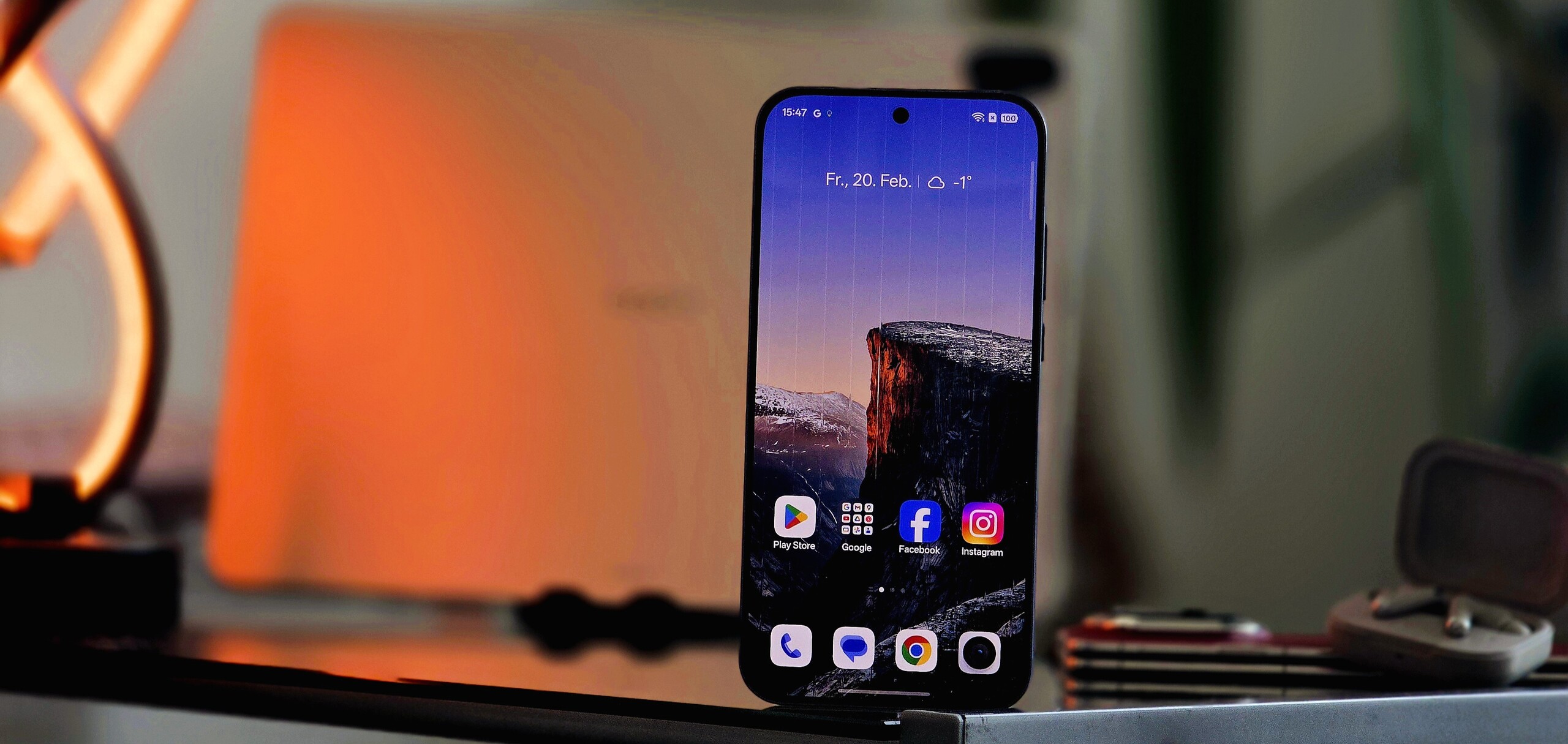
Verdict on the Realme GT 8 Pro
The GT 8 Pro promises the best hardware without entering the absolute high-end segment in terms of price. However, our test report reveals an unexpected number of weaknesses which, in addition to some equipment gaps, such as a fast USB port, are not apparent from the data sheet. These include the dimming of the display after a short time or the very high throttling of the otherwise powerful Snapdragon 8 Elite Gen 5, although the latter is unlikely to have a serious impact in everyday use.
The manageable photo quality, especially with the zoom, is more relevant to everyday life and a surprise, as Realme has been cooperating with Ricoh on cameras since this year.
If you are looking for a high-performance smartphone with a long battery life, you could still be happy with the GT 8 Pro. The Realme phone has a high-quality feel and offers an interesting design concept as well as some equipment highlights, such as a fast ultrasonic fingerprint sensor or 120-watt fast charging.
Pros
Cons
Price and availability of the Realme GT 8 Pro
The flagship phone from Realme comes with 12 GB RAM and 256 GB flash memory, has an RRP of 999 Euros (~$1180) and is available from online retailers including Amazon.de.

- $1,149.00realme GT 8 Pro Dual-SIM 512GB ROM + 16GB RAM (GSM Only | No CDMA) Factory Unlocked 5G Smartphone (Urban Blue) - International Version
- $1,149.00realme GT 8 Pro Dual-SIM 512GB ROM + 16GB RAM (GSM Only | No CDMA) Factory Unlocked 5G Smartphone (Diary White) - International Version
- $617.49XIAOMI Poco F8 PRO 5G Ai (Compatible with Tmobile Mint Tello & Global) (512GB + 12GB) Ai 2K 6.59" Bose Sound 50MP Gamers Phone NFC Dual sim Unlocked Model 2510DPC44G (Titanium Silver)
Table of Contents
- Verdict on the Realme GT 8 Pro
- Specifications of the Realme GT 8 Pro
- Housing and features - Waterproof and dustproof Android cell phone
- Communication and operation - Android smartphone with face unlock
- Software and sustainability - Android 16 and 5 years of updates
- Cameras - Android-Handy with 200 MPix
- Display - top-of-the-range smartphone with large OLED screen
- Performance, emissions and battery life - Android-Phone with high-end chipset
- Notebookcheck overall rating
- Possible alternatives in comparison
Specifications of the Realme GT 8 Pro
Housing and features - Waterproof and dustproof Android cell phone
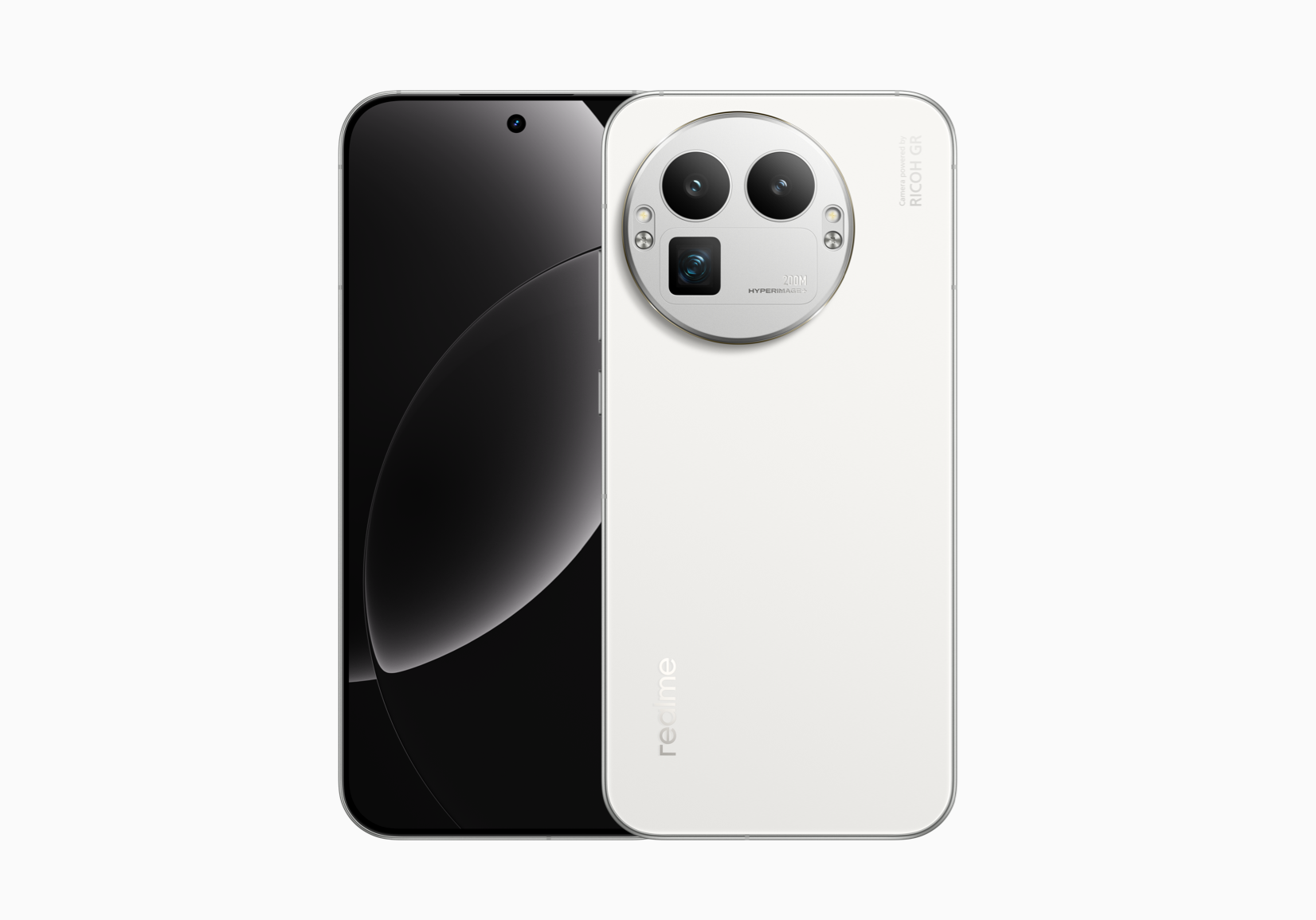
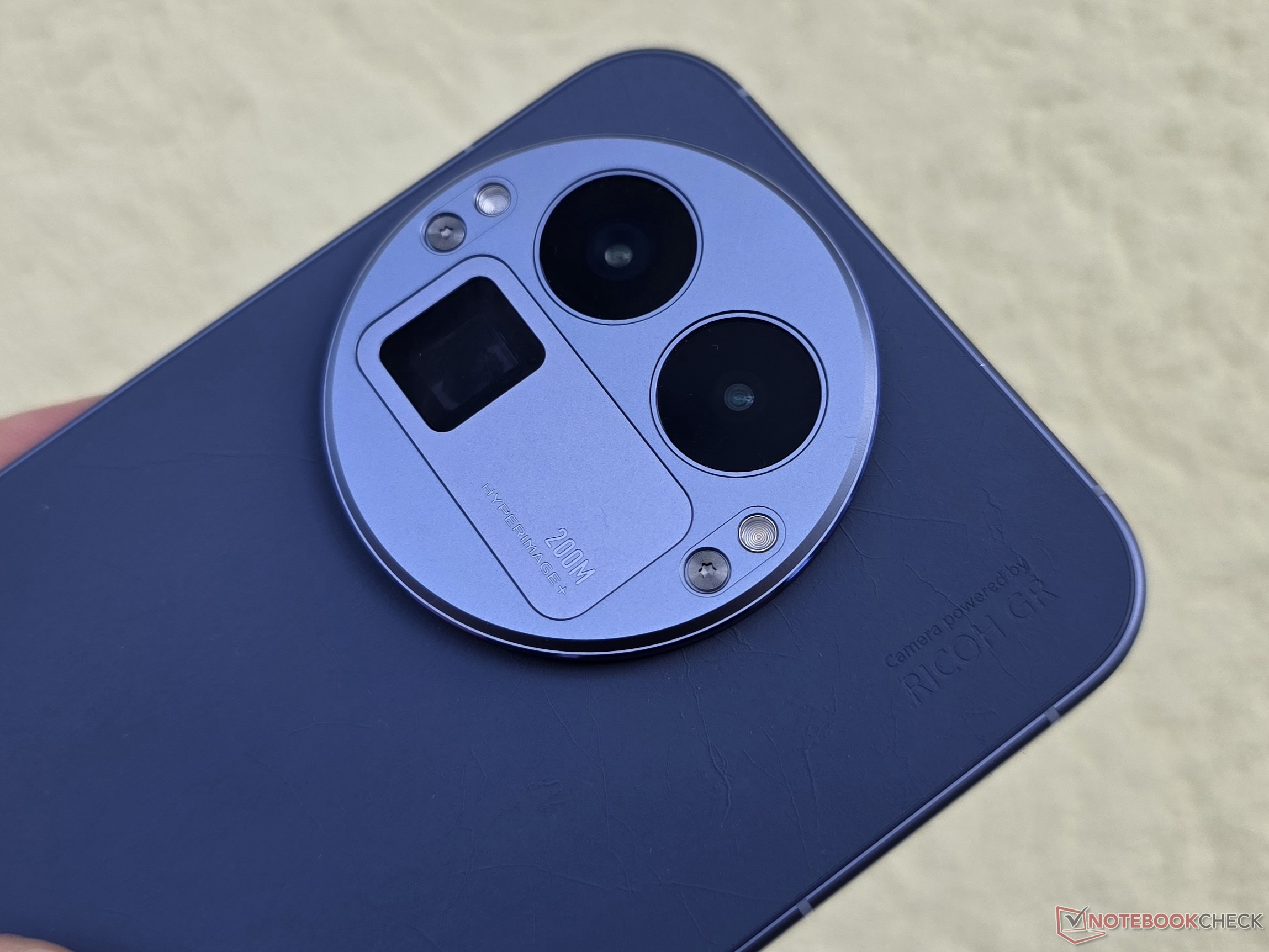
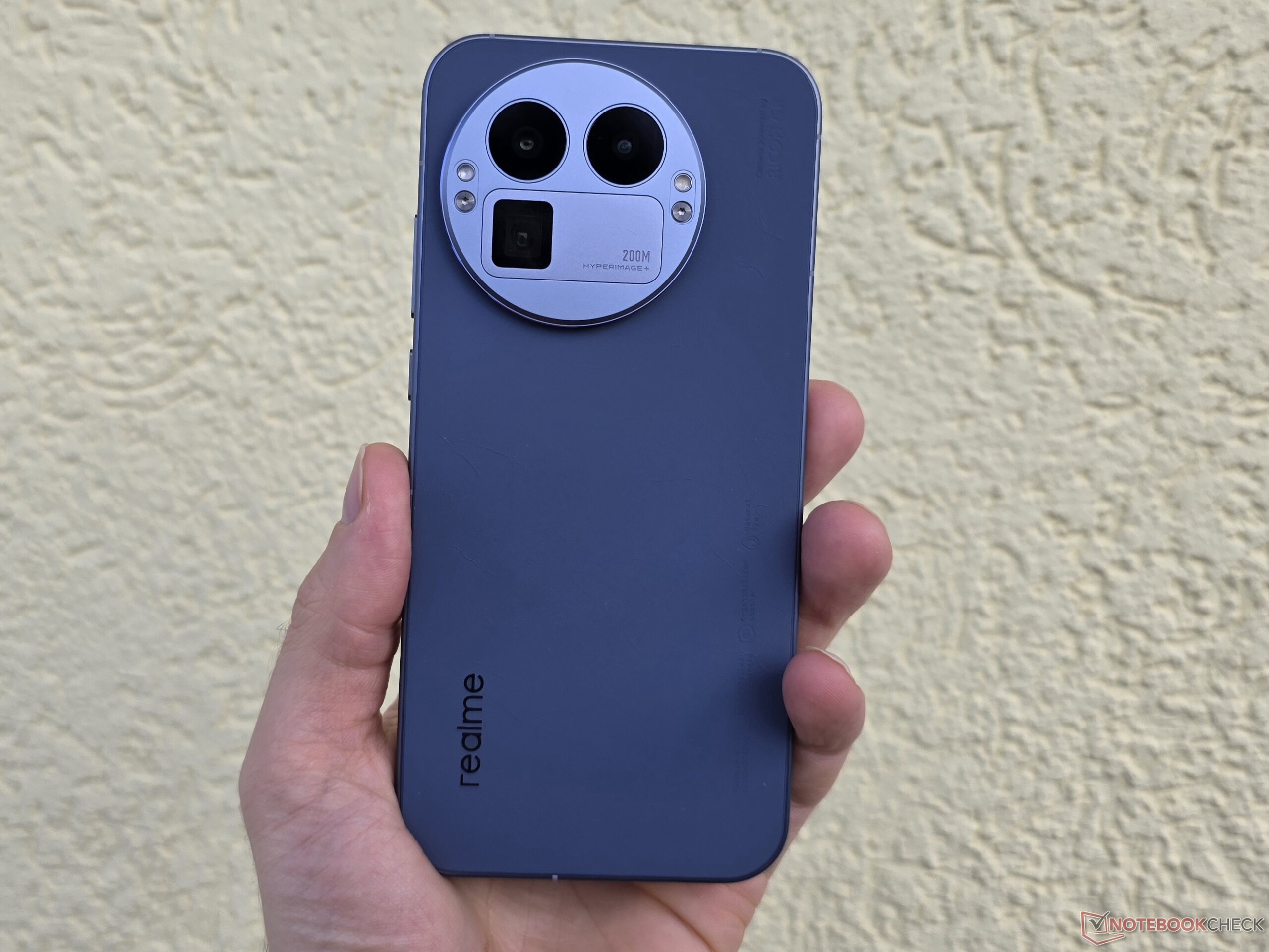
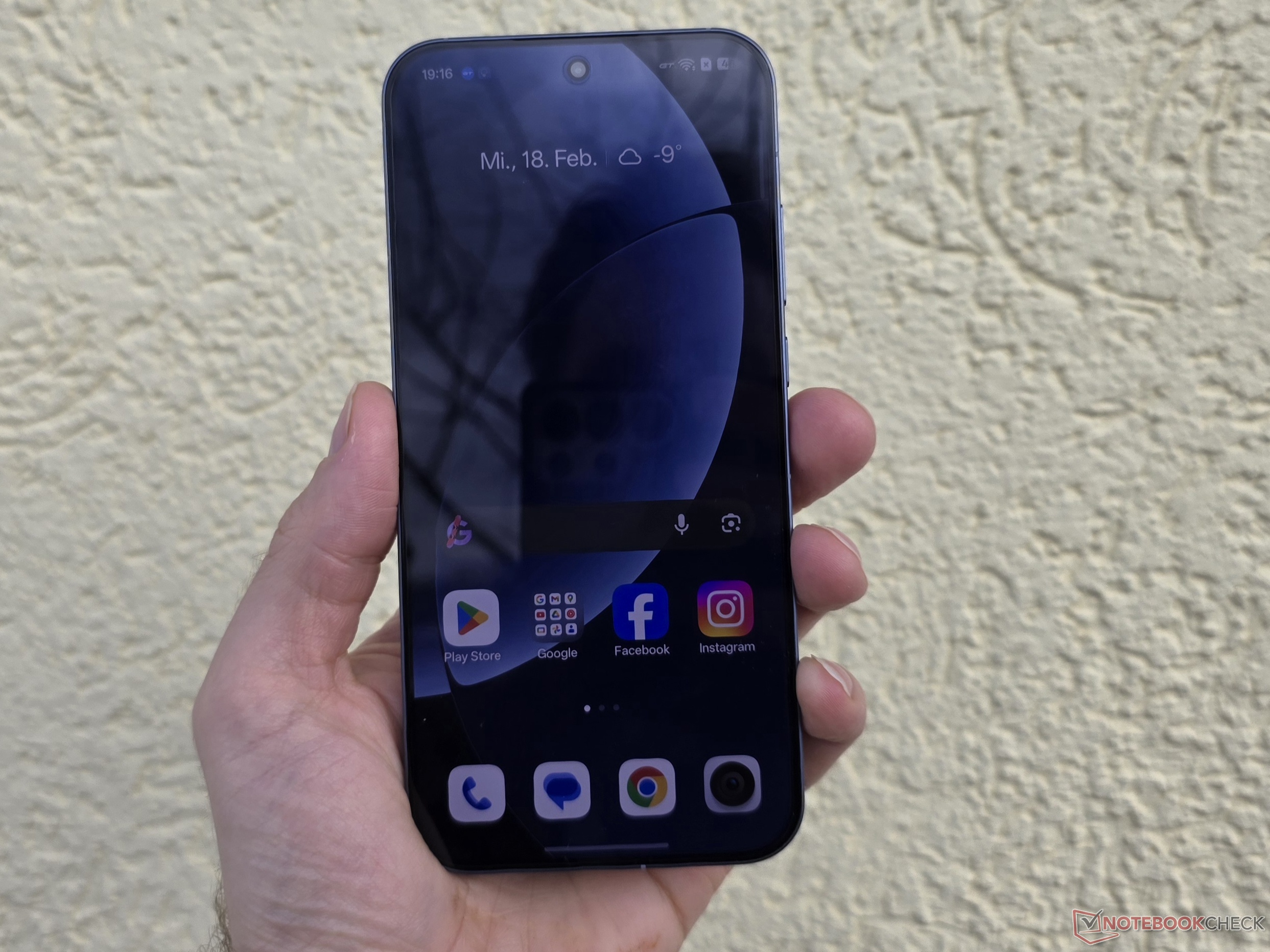
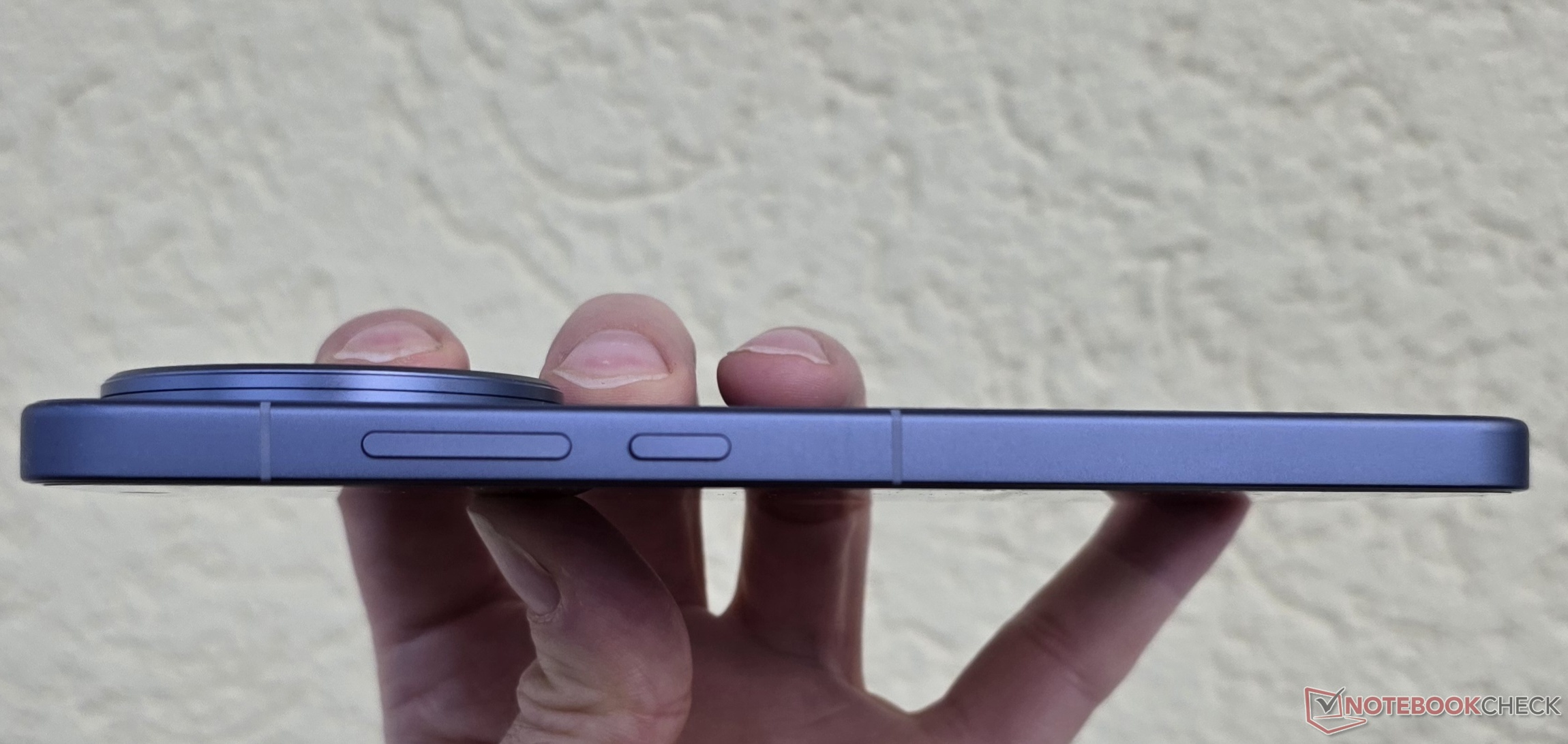
The GT 8 Pro is the most unusual Realme phone in the GT series and the manufacturer is breaking new ground in terms of design. The camera module has a cover that can be replaced by the user. There is a choice of a round or rectangular camera cover as well as a "robot" design without a cover.
With a weight of 214 grams (~7.6 oz), the GT 8 Pro is certainly no lightweight. However, considering that Realme has equipped its flagship phone with a 7,000 mAh battery, the 8.3 millimeter (~0.3 inches) thin smartphone is very handy.
While the front of the IP68/IP69-certified and therefore waterproof housing is made of Corning Gorilla Glass 7i, the back has a plastic texture that Realme says is reminiscent of paper. If you want, you can also purchase an F1 edition from Aston Martin with a back made of aramid fibers.
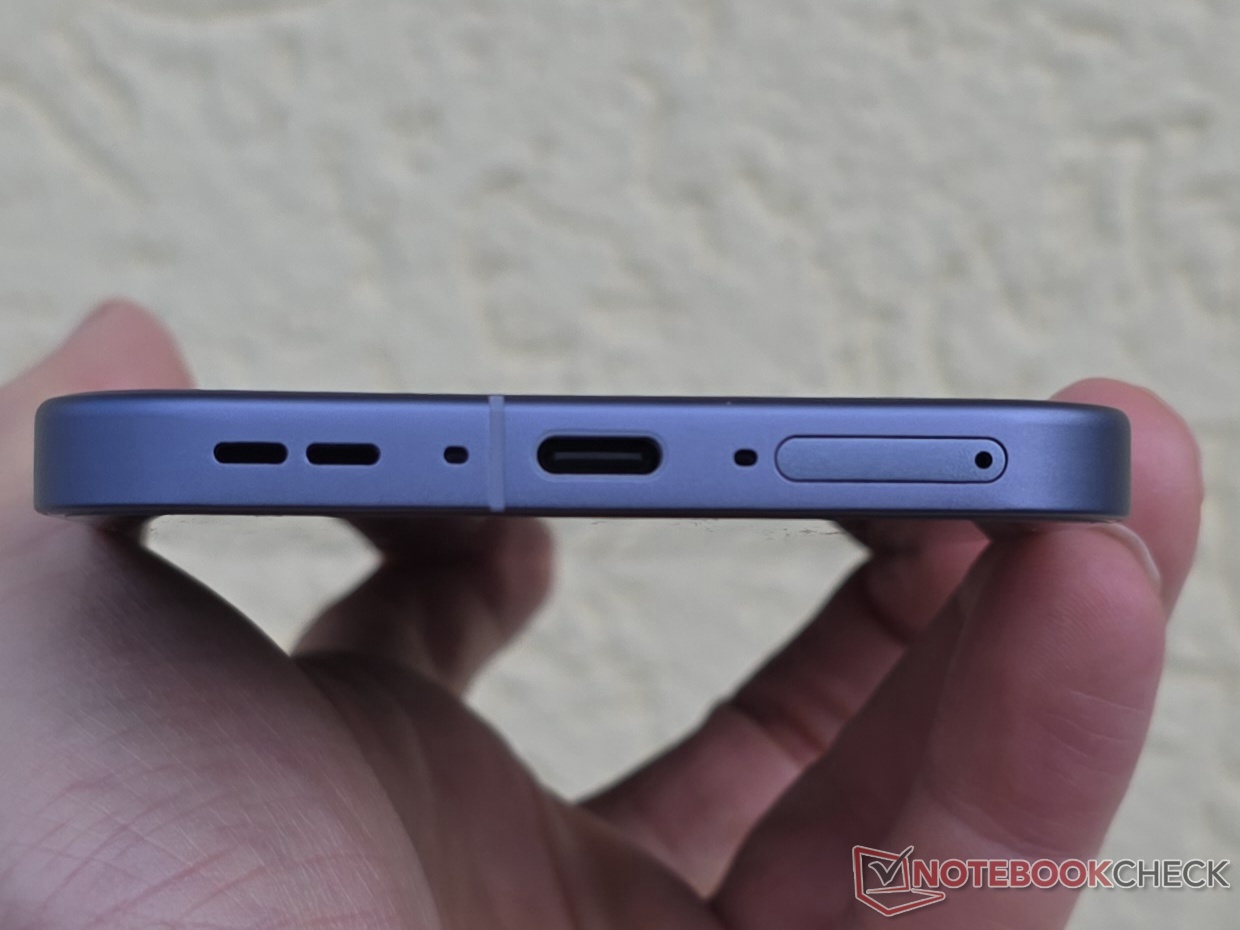
The Realme phone's USB port is disappointing. In 2026, the slow 2.0 standard will hardly play a role for the upper smartphone class, as the demands on the interface in terms of speed and functionality (image output, fast data transfer, ...) have now increased significantly.

Communication and operation - Android smartphone with face unlock
Although the Realme flagship comes with Wi-Fi 7, it is anything but fast in our measurements. The reason for this is the lack of support for the 6 GHz band. However, we only use a Wi-Fi 6E router with the Asus ROG Rapture GT-AXE11000. In everyday use, however, over 800 MBit/s should be more than sufficient for most users.
In addition to two nano-SIM cards, the GT 8 Pro can also be used with an eSIM. The voice quality via the earpiece is good.
For biometric security, a fast ultrasonic fingerprint sensor is integrated into the display, which offers a high recognition rate. 2D facial recognition is also available via the front camera,



| Networking | |
| Realme GT 8 Pro | |
| iperf3 transmit AXE11000 | |
| iperf3 receive AXE11000 | |
| Vivo X300 | |
| iperf3 transmit AXE11000 6GHz | |
| iperf3 receive AXE11000 6GHz | |
| Vivo iQOO 15 | |
| iperf3 transmit AXE11000 6GHz | |
| iperf3 receive AXE11000 6GHz | |
| Xiaomi Poco F8 Pro | |
| iperf3 transmit AXE11000 | |
| iperf3 receive AXE11000 | |
| Samsung Galaxy S25+ | |
| iperf3 transmit AXE11000 | |
| iperf3 receive AXE11000 | |
| iperf3 transmit AXE11000 6GHz | |
| iperf3 receive AXE11000 6GHz | |
| Average 802.11 a/b/g/n/ac/ax/be | |
| iperf3 transmit AXE11000 | |
| iperf3 receive AXE11000 | |
| iperf3 transmit AXE11000 6GHz | |
| iperf3 receive AXE11000 6GHz | |
| Average of class Smartphone | |
| iperf3 transmit AXE11000 | |
| iperf3 receive AXE11000 | |
| iperf3 transmit AXE11000 6GHz | |
| iperf3 receive AXE11000 6GHz | |
Software and sustainability - Android 16 and 5 years of updates
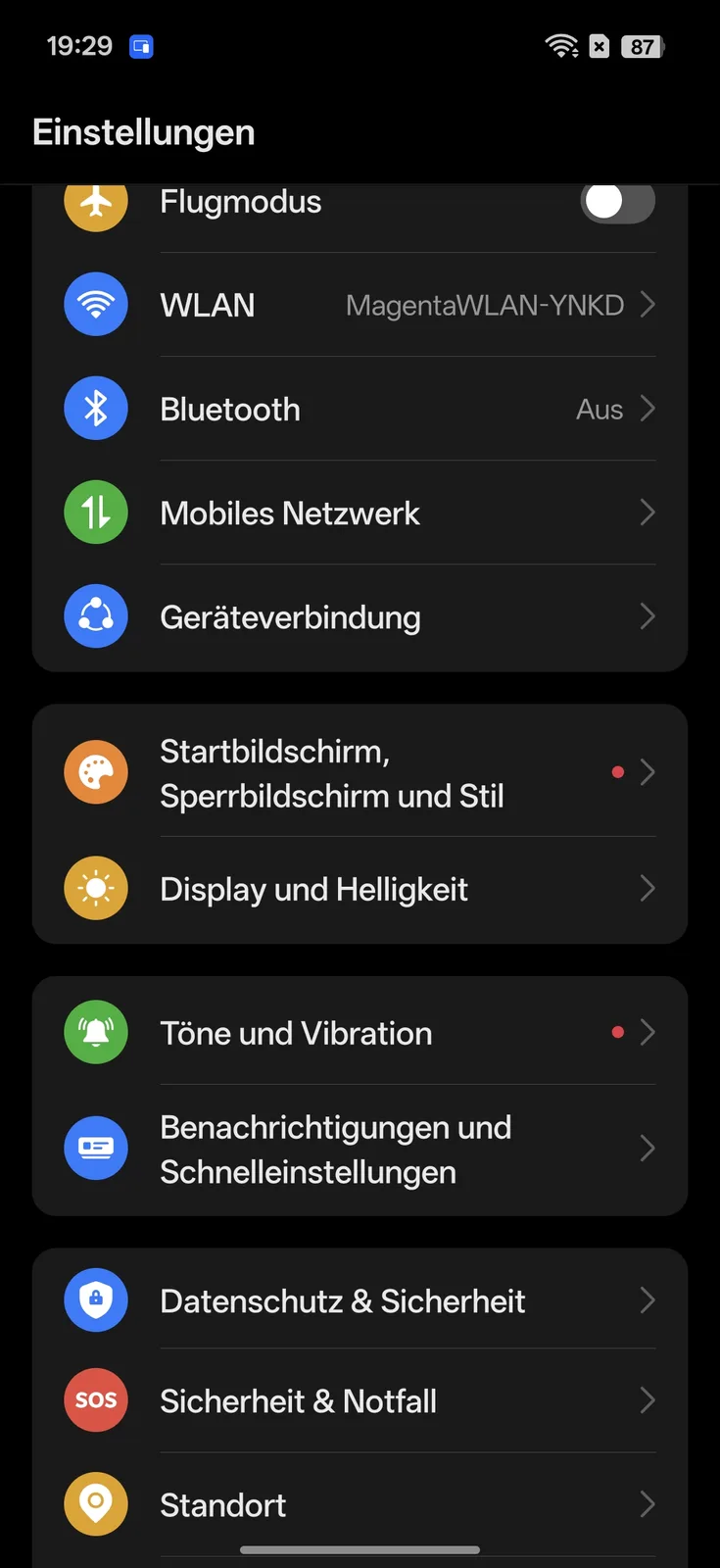
Realme guarantees five major Android upgrades for Europe and new security updates for five years. The Realme GT 8 Pro is delivered with Android 16 and the Realme UI 7.0 during the test. The patches are still dated December 2025, which means they will probably only be rolled out once a quarter (at best).
Those interested in a GT 8 Pro are in the dark when it comes to sustainability. However, the outer packaging appears to be plastic-free.
Cameras - Android-Handy with 200 MPix

Until now, the GT series from Realme has tended to stand for a strong price-performance ratio or for high-end gaming, but this is now set to change with the Ricoh cooperation. The photo quality of the triple rear camera is now also set to be a highlight.
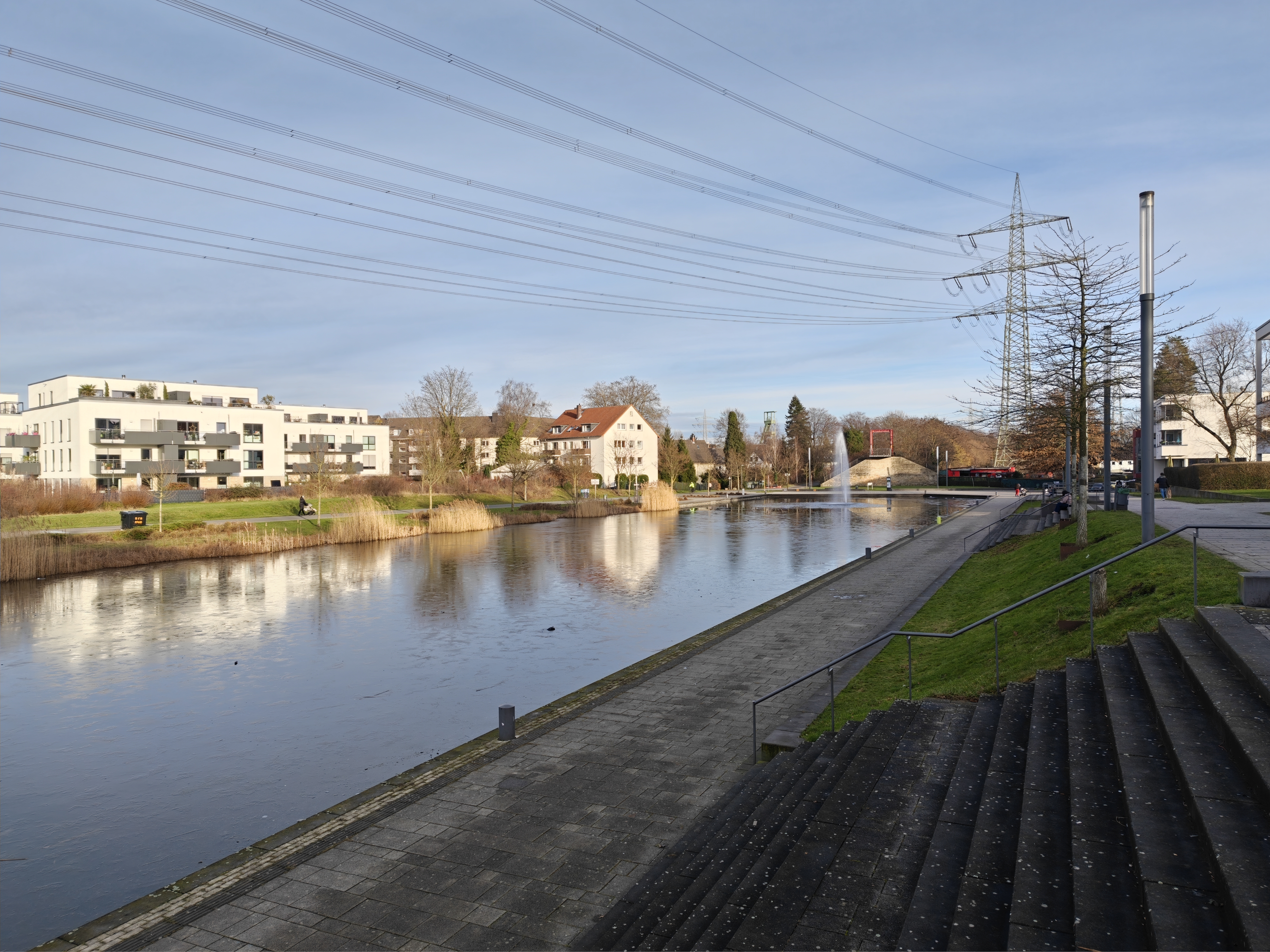
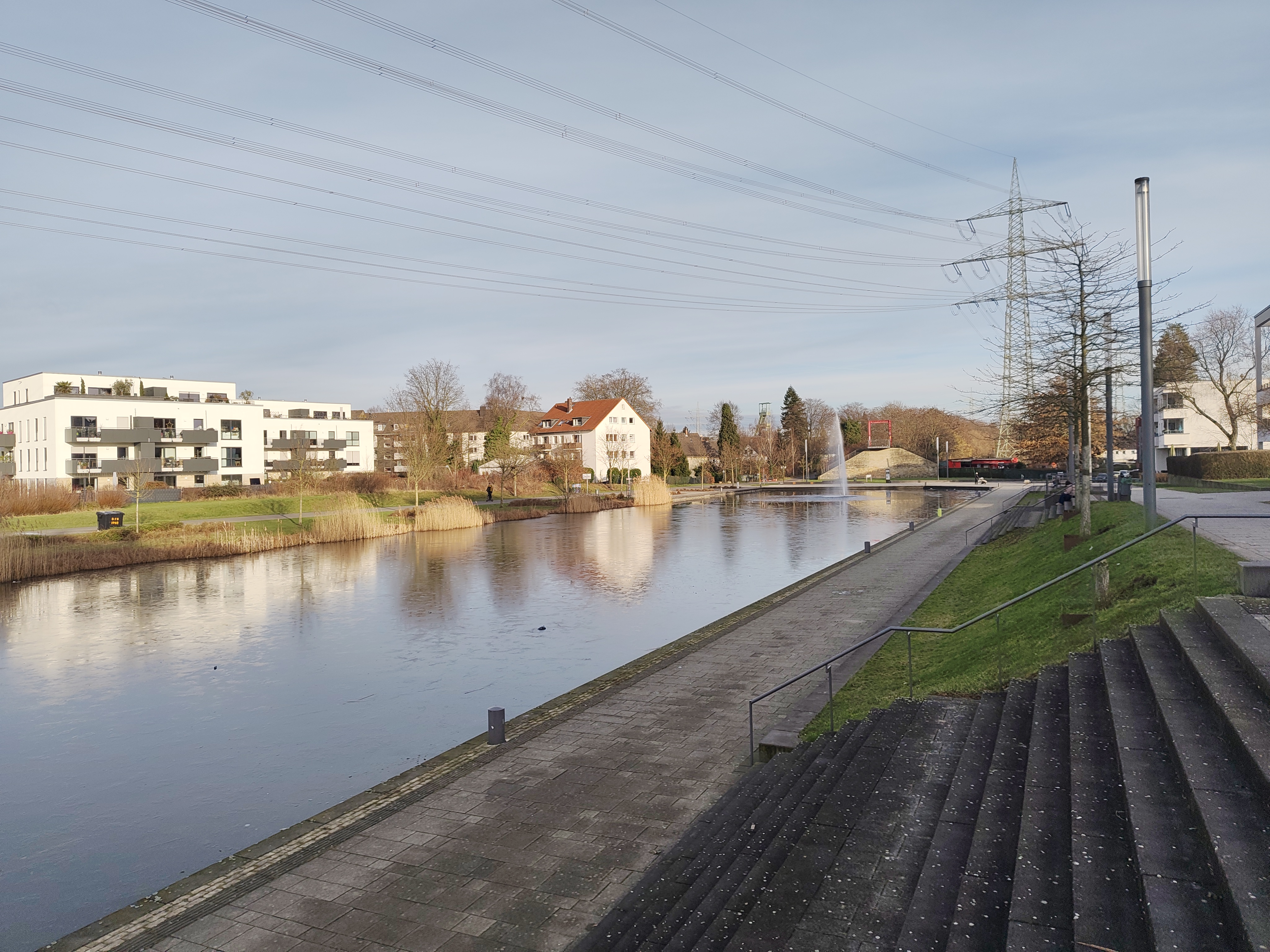
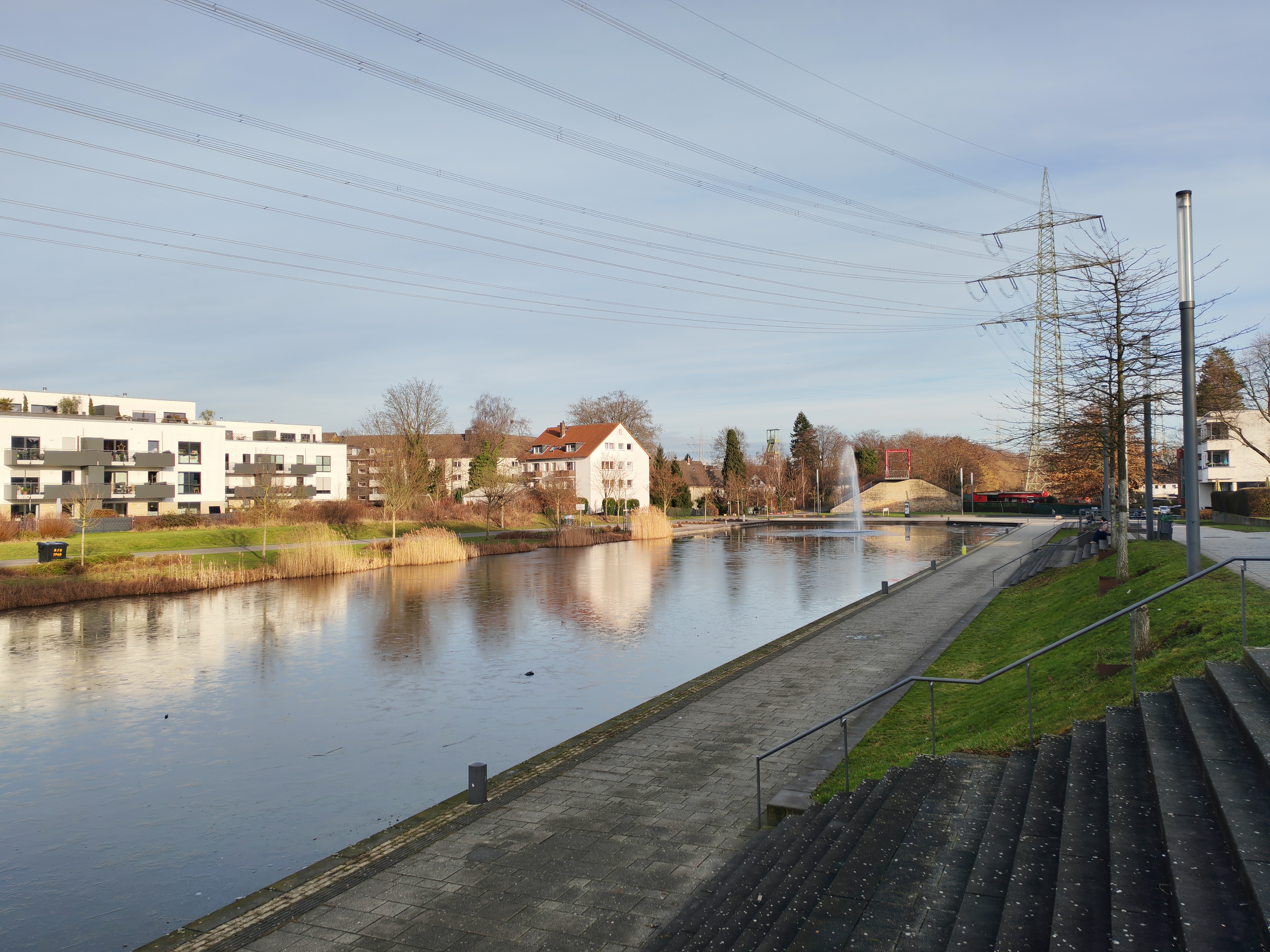
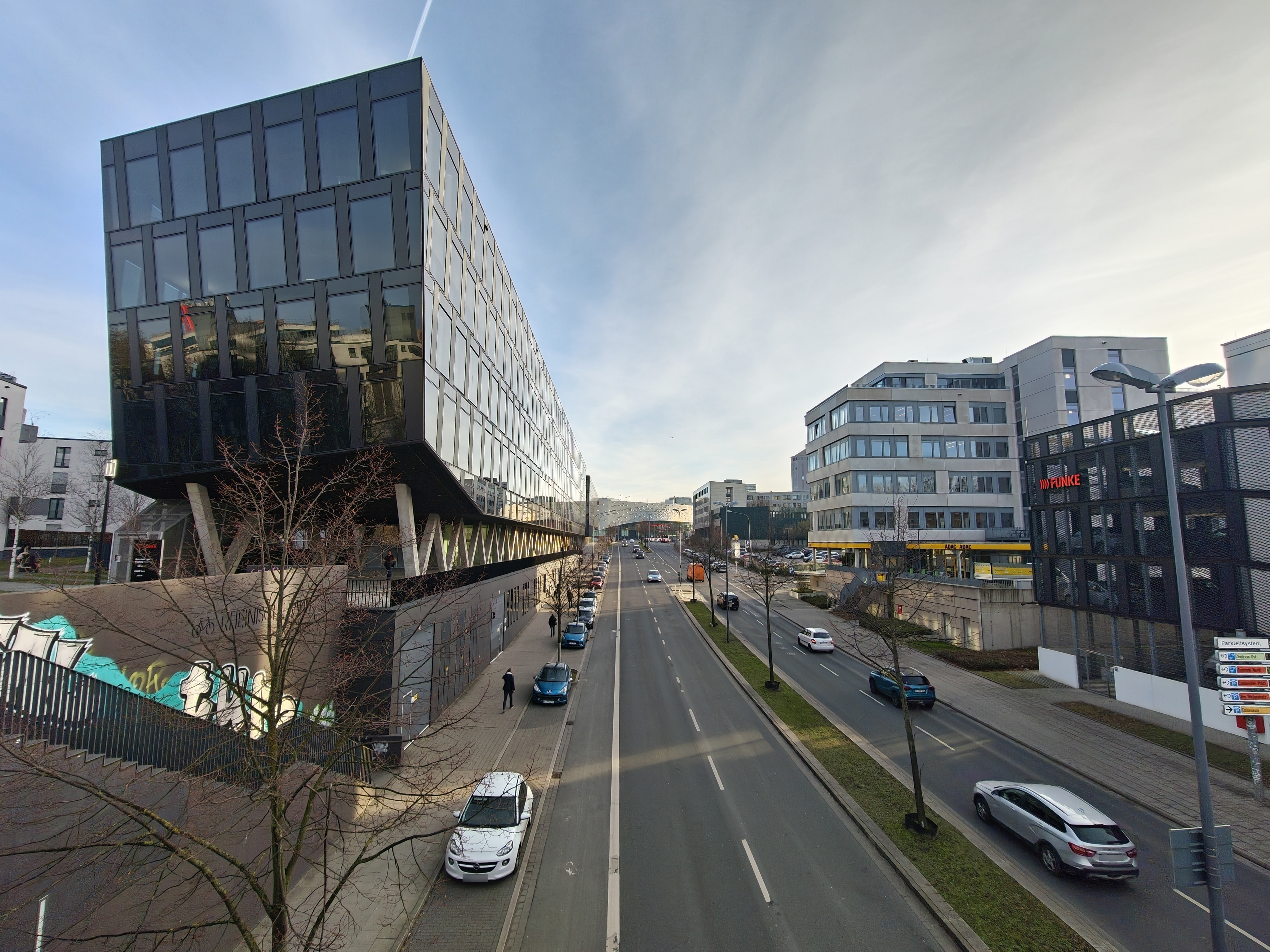
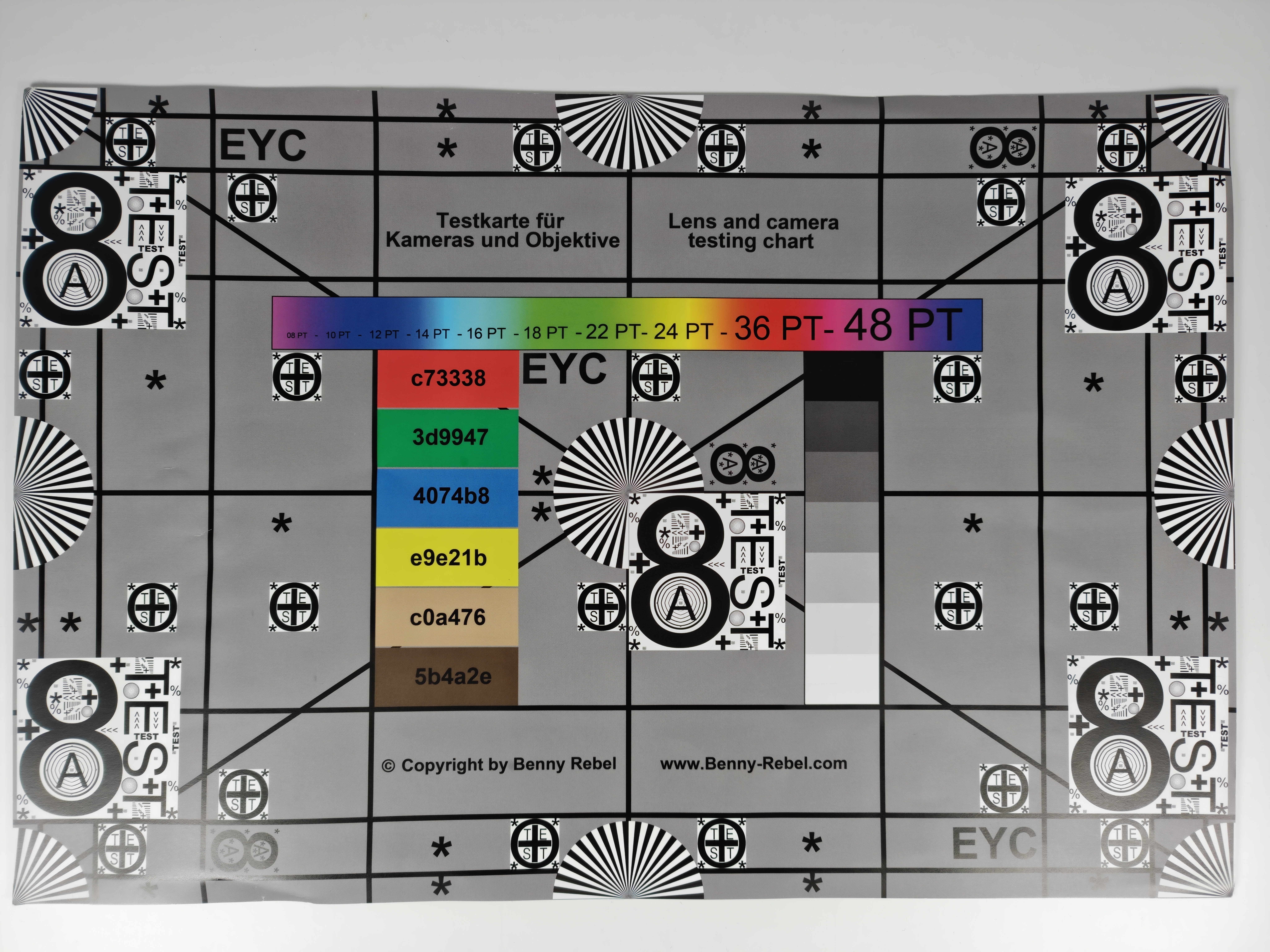
Realme has installed a 50-MPix main camera with OIS, but the sensor is comparatively small at 1/1.56 inches. The results are appealing in daylight and the colors look natural. However, the GT 8 Pro lacks a little sharpness, especially at the edges of the image. In low light, the noise behavior and illumination are suboptimal.
The 1/1.56 inch sensor for the periscope telephoto camera with 200 MPix also delivers a lossless triple zoom. The sharpness offered here is surprisingly poor and hardly any details are recognizable at 5x. We like the 50 MPix ultra-wide-angle lens better, although this is nothing special for a high-end smartphone.
Image comparison
Choose a scene and navigate within the first image. One click changes the position on touchscreens. One click on the zoomed-in image opens the original in a new window. The first image shows the scaled photograph of the test device.
Main cameraMain cameraLow LightUltrawideZoom 5x





















Display - top-of-the-range smartphone with large OLED screen
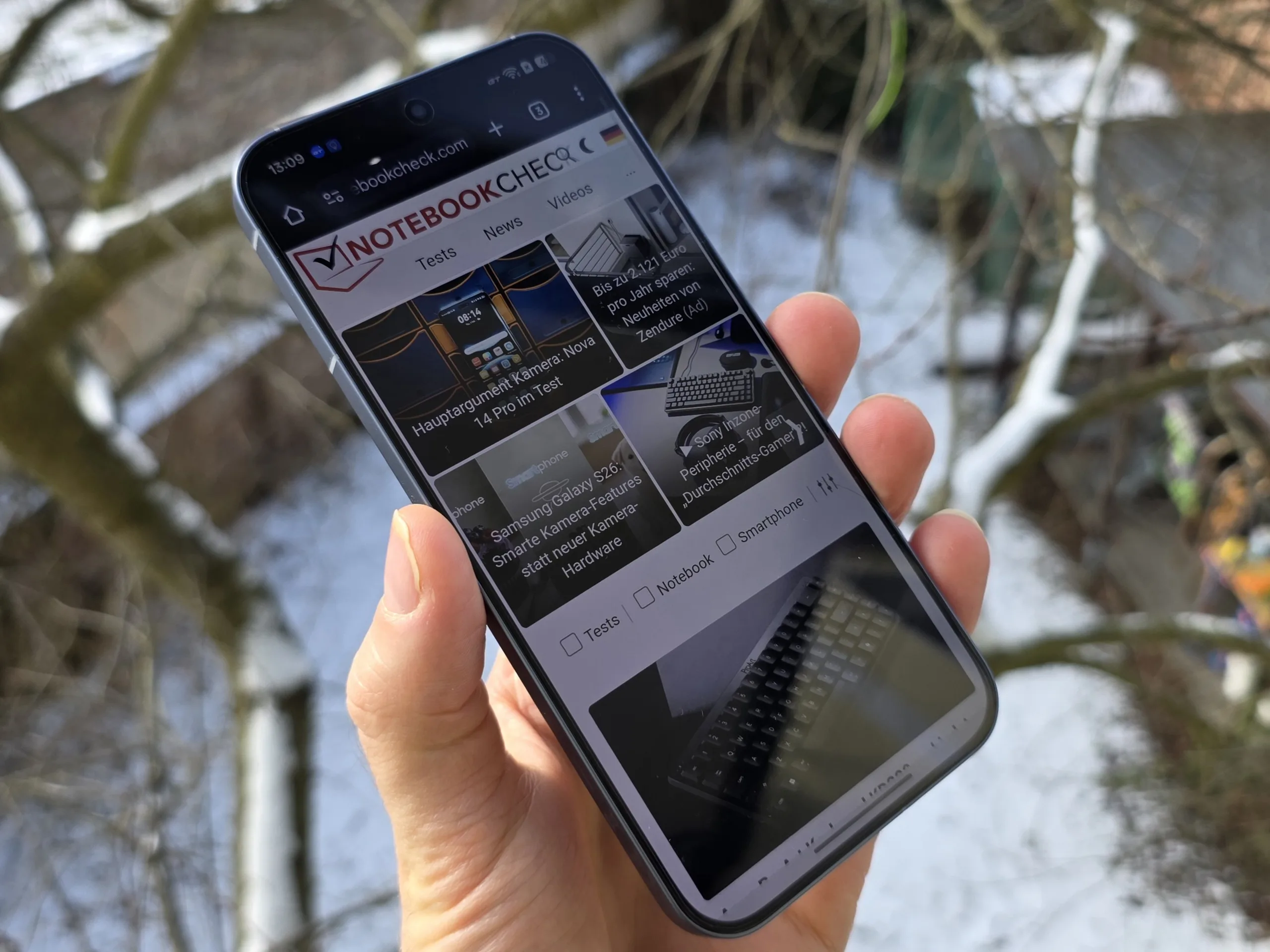
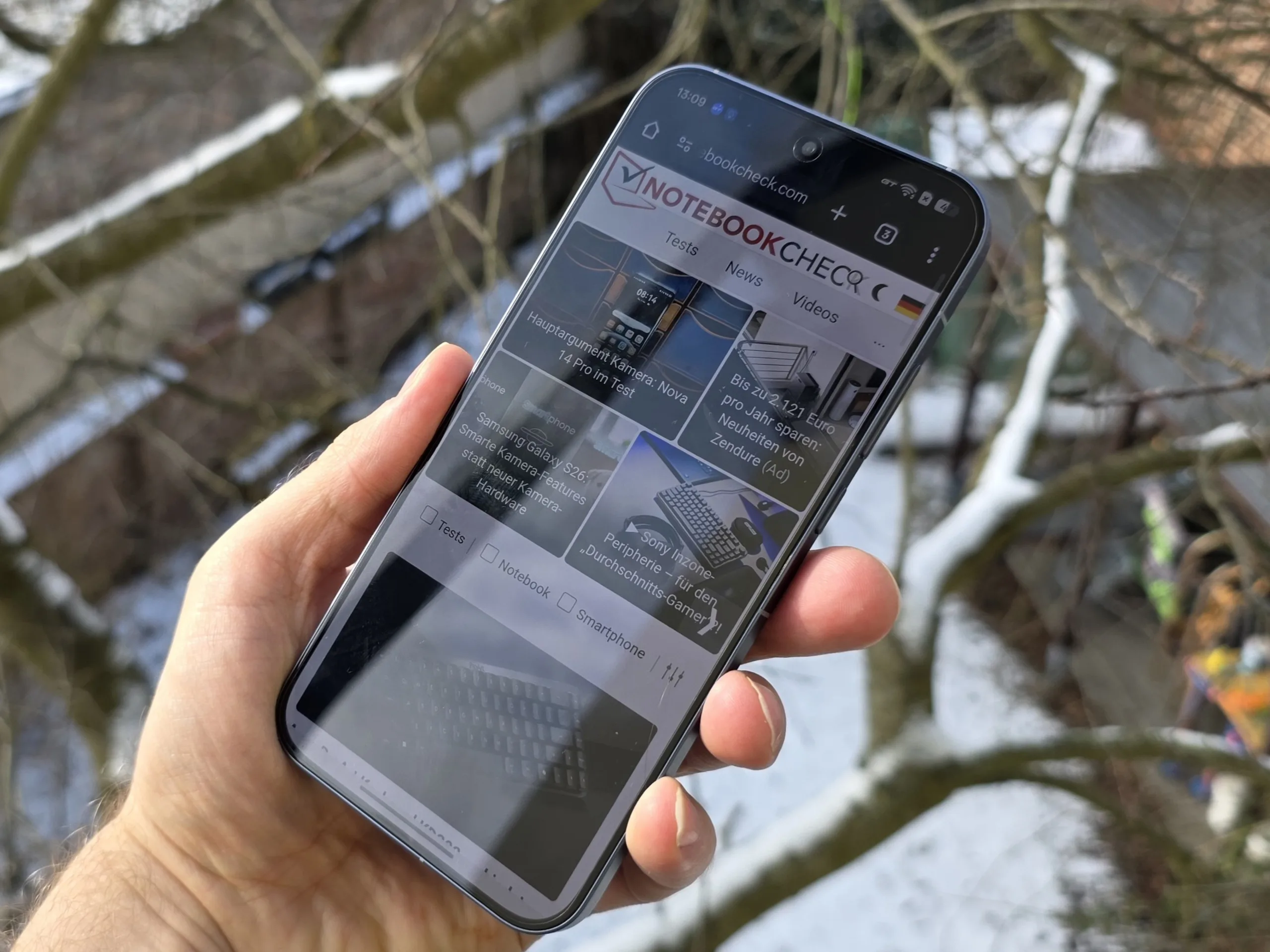
The sharp 1,440p AMOLED panel of the GT 8 Pro works with a frame rate of 144 Hz and a peak brightness of up to 7,000 nits according to the manufacturer. We can also confirm the latter (peak: 6,963 cd/m²), at least for a special mode in the developer settings. In the more everyday tests, such as APL18 or HDR content (2,078 cd/m²), we do not (even come close) to these values. In addition, the maximum luminance dims to below 1,000 cd/m² after a short time in everyday use.
High-frequency PWM dimming is not necessary, the frequency is a very high 2,160 Hz.
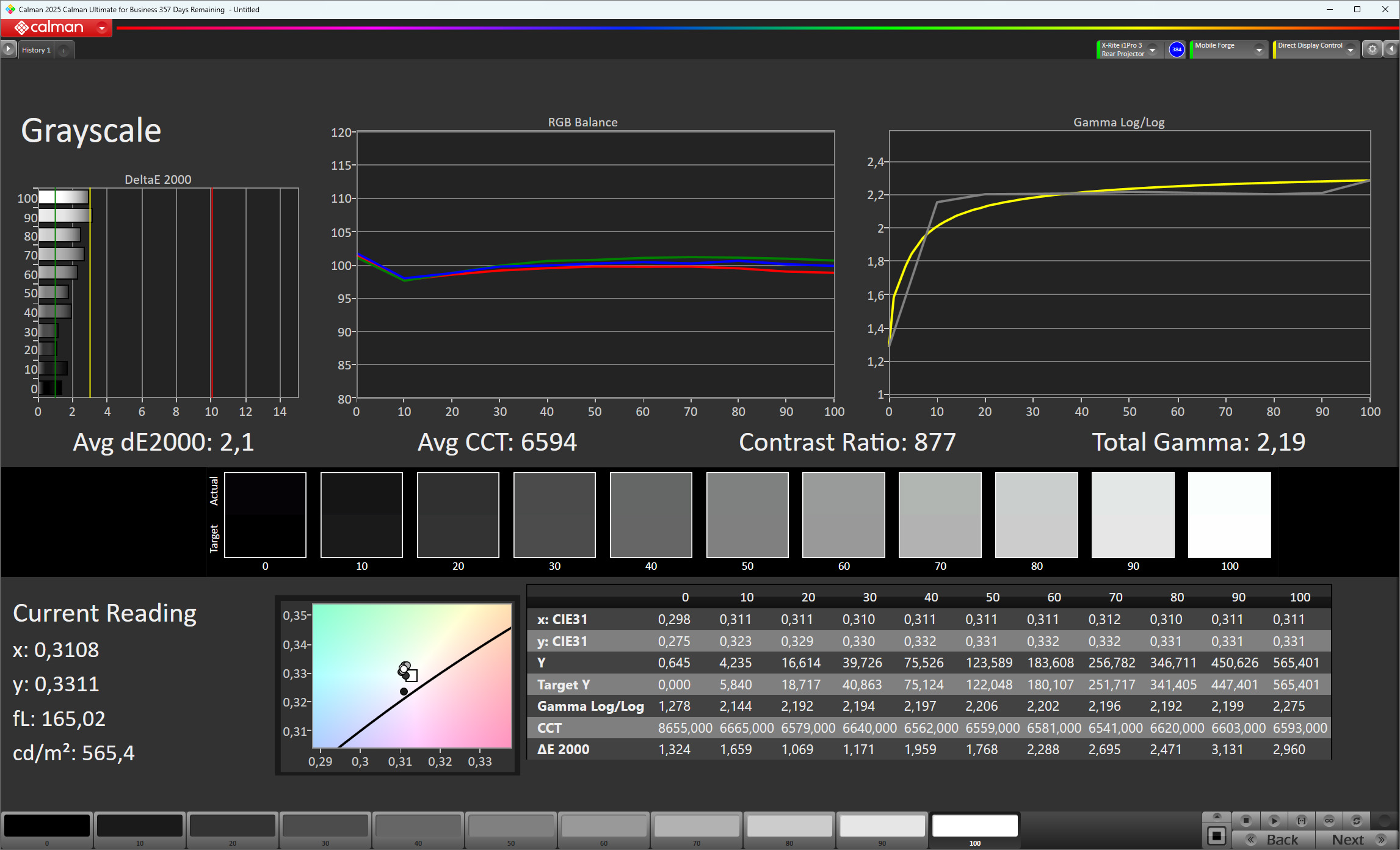
We get the best color display in Pro mode. The grayscale is also very accurate.
| |||||||||||||||||||||||||
Brightness Distribution: 96 %
Center on Battery: 1896 cd/m²
Contrast: ∞:1 (Black: 0 cd/m²)
ΔE ColorChecker Calman: 1.1 | ∀{0.5-29.43 Ø4.7}
ΔE Greyscale Calman: 2.1 | ∀{0.09-98 Ø4.95}
97.5% sRGB (Calman 2D)
Gamma: 2.19
CCT: 6594 K
| Realme GT 8 Pro AMOLED, 3136x1440, 6.8" | Vivo X300 AMOLED, 2640x1216, 6.3" | Vivo iQOO 15 AMOLED, 3168x1440, 6.9" | Xiaomi Poco F8 Pro AMOLED, 2510x1156, 6.6" | Samsung Galaxy S25+ Dynamic AMOLED 2X, 3120x1440, 6.7" | |
|---|---|---|---|---|---|
| Screen | -8% | -21% | 7% | -39% | |
| Brightness middle (cd/m²) | 1896 | 1537 -19% | 1137 -40% | 1717 -9% | 1371 -28% |
| Brightness (cd/m²) | 1891 | 1523 -19% | 1113 -41% | 1721 -9% | 1370 -28% |
| Brightness Distribution (%) | 96 | 96 0% | 96 0% | 98 2% | 96 0% |
| Black Level * (cd/m²) | |||||
| Colorchecker dE 2000 * | 1.1 | 1.4 -27% | 1.52 -38% | 1 9% | 2.7 -145% |
| Colorchecker dE 2000 max. * | 3.1 | 2.6 16% | 3.05 2% | 2.2 29% | 4.2 -35% |
| Greyscale dE 2000 * | 2.1 | 2.1 -0% | 2.3 -10% | 1.7 19% | 2 5% |
| Gamma | 2.19 100% | 2.28 96% | 2.265 97% | 2.29 96% | 2.03 108% |
| CCT | 6594 99% | 6754 96% | 6560 99% | 6574 99% | 6450 101% |
* ... smaller is better
| Display / APL18 Peak Brightness | |
| Xiaomi Poco F8 Pro | |
| Vivo iQOO 15 | |
| Samsung Galaxy S25+ | |
| Vivo X300 | |
| Realme GT 8 Pro | |
| Display / HDR Peak Brightness | |
| Vivo X300 | |
| Xiaomi Poco F8 Pro | |
| Samsung Galaxy S25+ | |
| Realme GT 8 Pro | |
Screen Flickering / PWM (Pulse-Width Modulation)
| Screen flickering / PWM detected | 90 Hz Amplitude: 13.95 % Secondary Frequency: 2173 Hz | 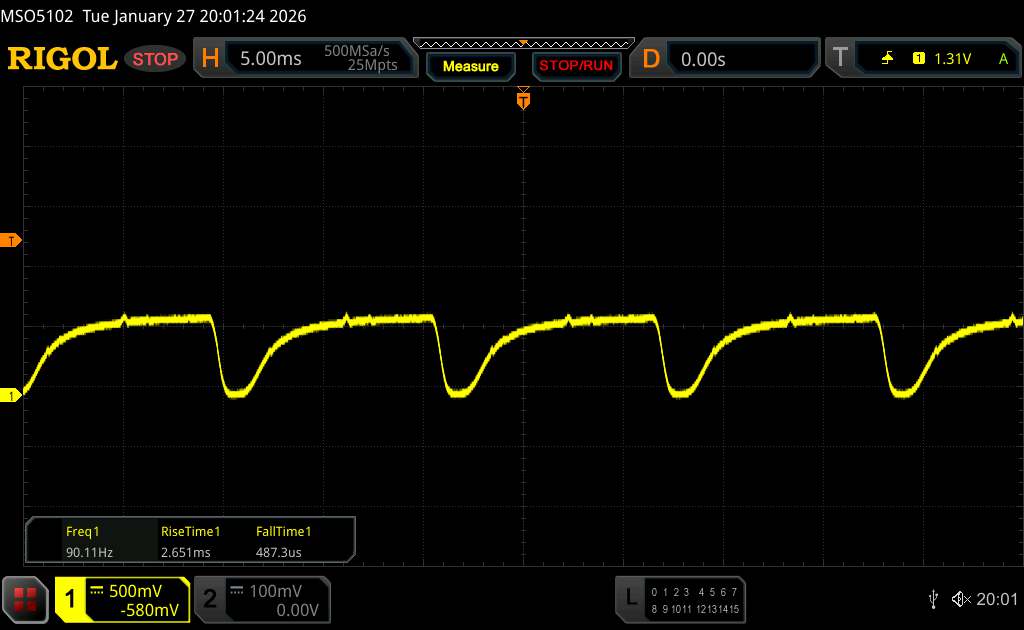 | |
The display backlight flickers at 90 Hz (worst case, e.g., utilizing PWM) . The frequency of 90 Hz is very low, so the flickering may cause eyestrain and headaches after extended use. In comparison: 52 % of all tested devices do not use PWM to dim the display. If PWM was detected, an average of 7683 (minimum: 5 - maximum: 343500) Hz was measured. | |||
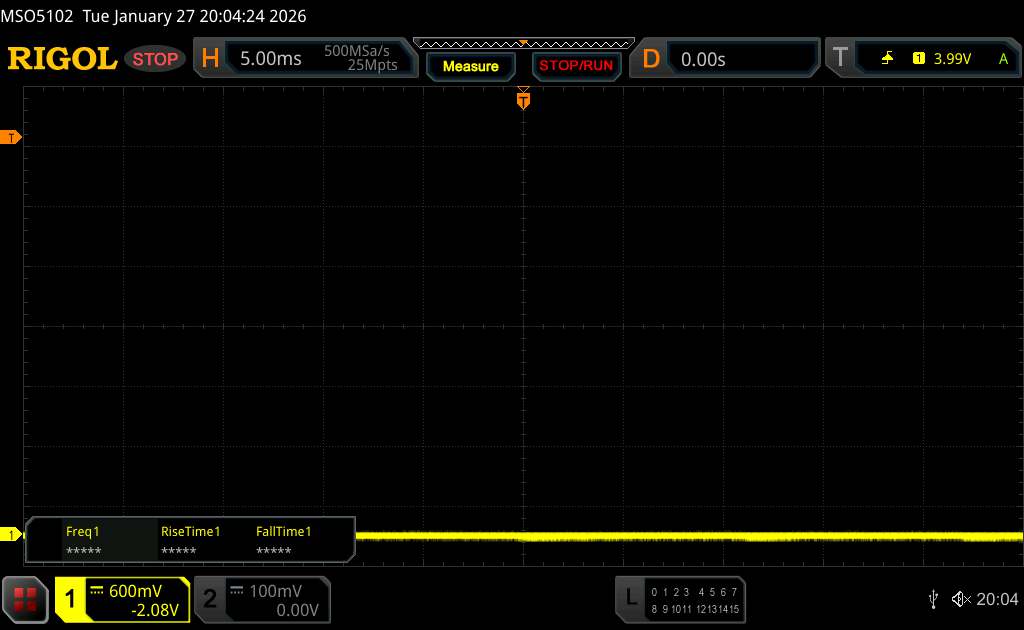
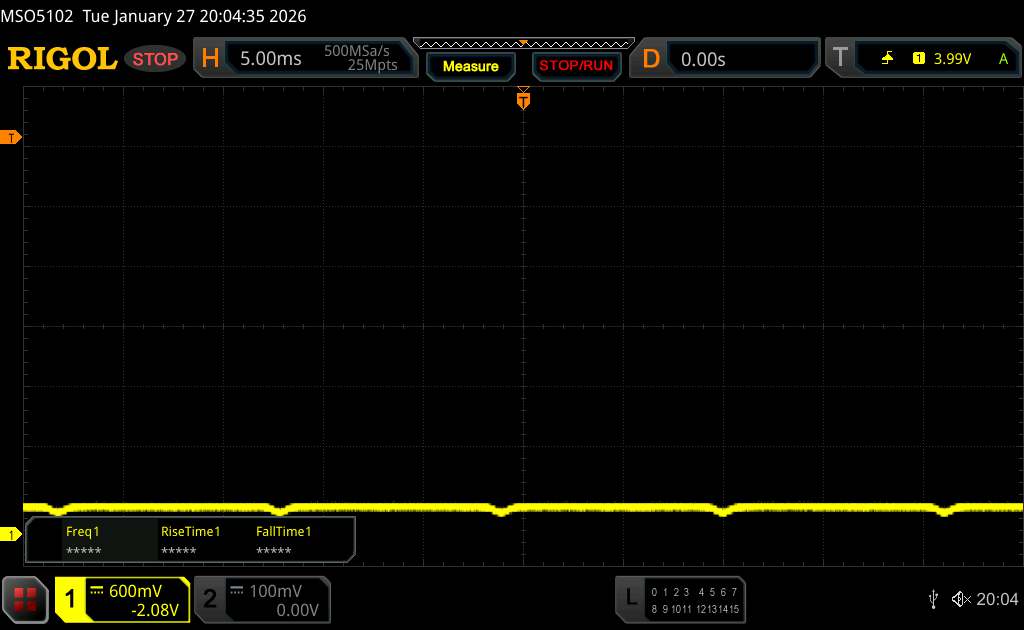
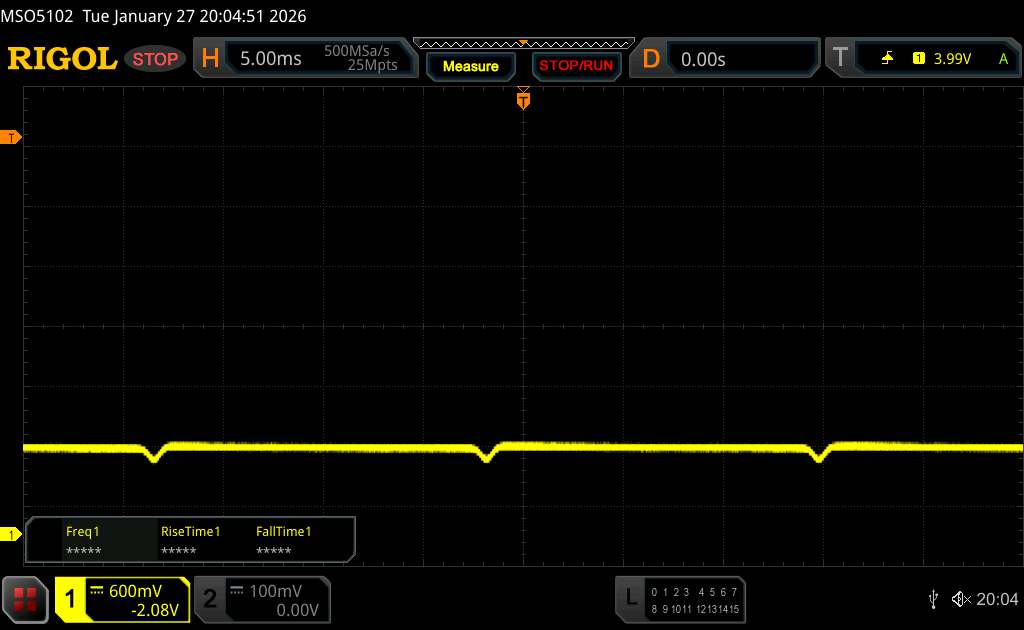
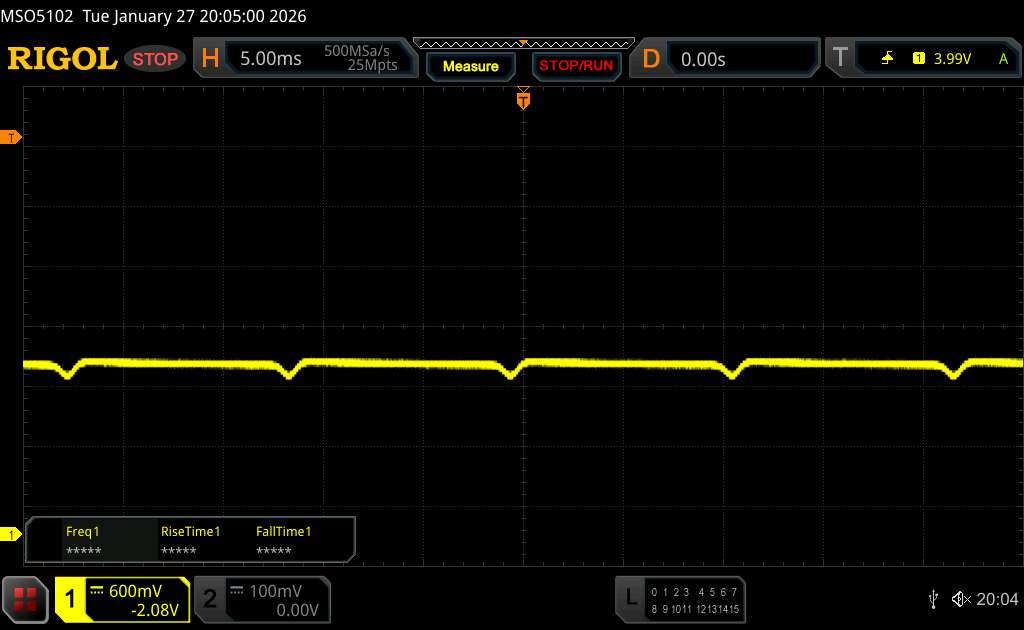
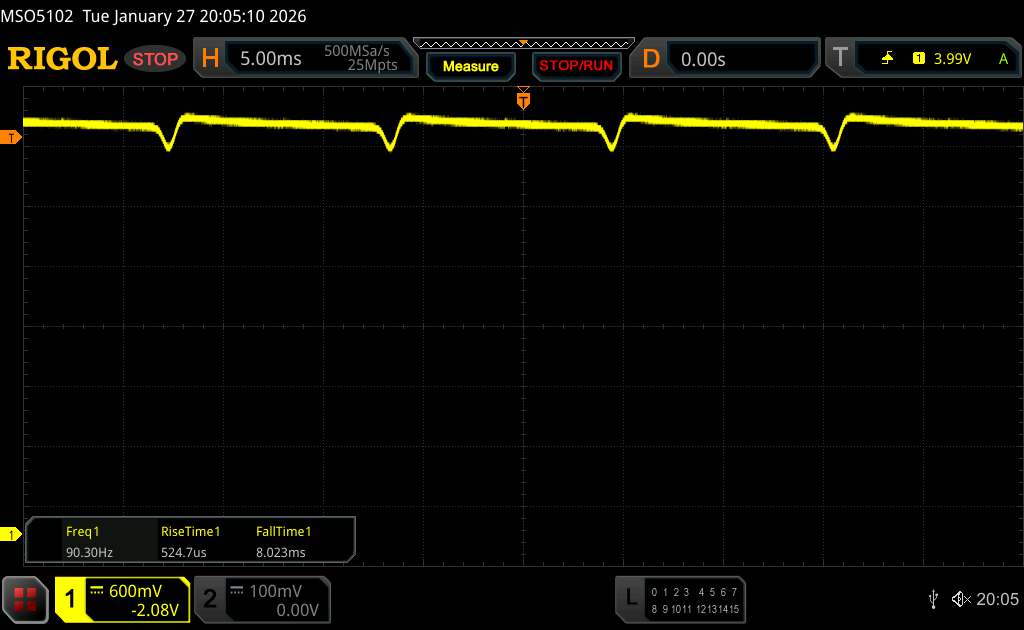
Measurement series with fixed zoom level and different brightness settings (The amplitude curve at minimum brightness looks flat, but this is due to the scaling. The info box shows the enlarged version of the amplitude at minimum brightness)


Display Response Times
| ↔ Response Time Black to White | ||
|---|---|---|
| 0.75 ms ... rise ↗ and fall ↘ combined | ↗ 0.3925 ms rise | 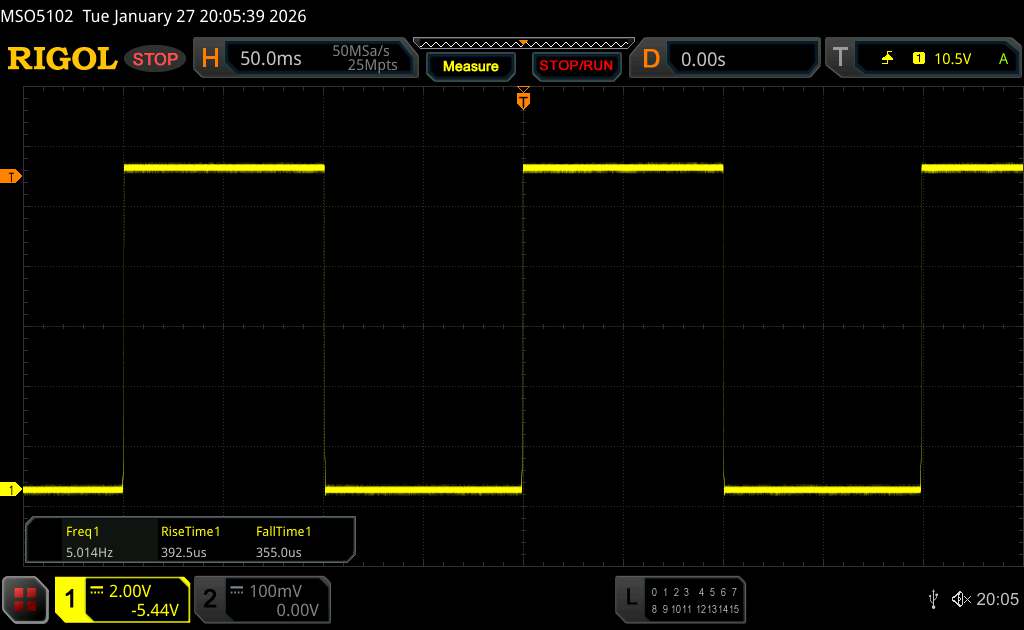 |
| ↘ 0.355 ms fall | ||
| The screen shows very fast response rates in our tests and should be very well suited for fast-paced gaming. In comparison, all tested devices range from 0.1 (minimum) to 240 (maximum) ms. » 2 % of all devices are better. This means that the measured response time is better than the average of all tested devices (19.7 ms). | ||
| ↔ Response Time 50% Grey to 80% Grey | ||
| 15.78 ms ... rise ↗ and fall ↘ combined | ↗ 0.4665 ms rise | 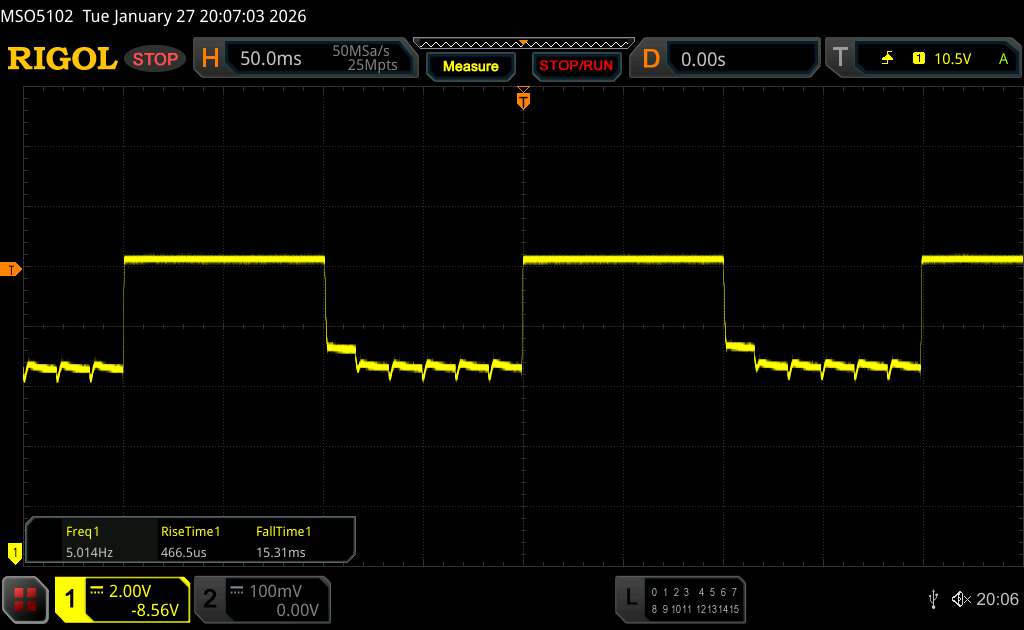 |
| ↘ 15.31 ms fall | ||
| The screen shows good response rates in our tests, but may be too slow for competitive gamers. In comparison, all tested devices range from 0.13 (minimum) to 636 (maximum) ms. » 30 % of all devices are better. This means that the measured response time is better than the average of all tested devices (30.8 ms). | ||


Performance, emissions and battery life - Android-Phone with high-end chipset
Thanks to the Snapdragon 8 Elite Gen 5 with its Adreno 840 the Realme phone offers true flagship performance, while an in-house R1 chip is also designed to reduce the input latency of the display.
The values in the benchmarks are really good, both in the CPU and GPU tests. However, the chipset throttles very noticeably under load - sometimes almost 70 percent in the 3DMark stress tests.
The speakers deliver a powerful soundscape, our pink noise measurement shows a pronounced increase in the mids.
The GT 8 Pro is also delivered in Europe with a 7,000 mAh battery, which can be charged via USB-C with up to 120 watts and wirelessly with 50 watts. In our Wi-Fi test, the Realme phone lasted a whole day.
| Jetstream 2 - 2.2 Total | |
| Vivo iQOO 15 | |
| Average Qualcomm Snapdragon 8 Elite Gen 5 (2 - 480, n=15) | |
| Vivo X300 | |
| Realme GT 8 Pro | |
| Average of class Smartphone (2 - 480, n=95, last 2 years) | |
* ... smaller is better
| Realme GT 8 Pro | Vivo X300 | Vivo iQOO 15 | Xiaomi Poco F8 Pro | Samsung Galaxy S25+ | Average 256 GB UFS 4.1 Flash | Average of class Smartphone | |
|---|---|---|---|---|---|---|---|
| AndroBench 3-5 | -37% | -22% | -16% | -25% | -15% | -46% | |
| Sequential Read 256KB (MB/s) | 4087.51 | 2056.87 -50% | 2556.87 -37% | 3959.14 -3% | 4057.35 -1% | 3537 ? -13% | 2234 ? -45% |
| Sequential Write 256KB (MB/s) | 3324.21 | 1997.76 -40% | 2589.26 -22% | 3833.02 15% | 3311.02 0% | 3223 ? -3% | 1934 ? -42% |
| Random Read 4KB (MB/s) | 488.38 | 332.61 -32% | 453.54 -7% | 309.91 -37% | 294.51 -40% | 432 ? -12% | 312 ? -36% |
| Random Write 4KB (MB/s) | 871.05 | 654.09 -25% | 689.01 -21% | 521.31 -40% | 351.16 -60% | 614 ? -30% | 360 ? -59% |
(±) The maximum temperature on the upper side is 43.6 °C / 110 F, compared to the average of 35.3 °C / 96 F, ranging from 21.9 to 247 °C for the class Smartphone.
(±) The bottom heats up to a maximum of 43.2 °C / 110 F, compared to the average of 34.1 °C / 93 F
(+) In idle usage, the average temperature for the upper side is 26.3 °C / 79 F, compared to the device average of 33 °C / 91 F.
3DMark Stress Tests
| 3DMark | |
| Wild Life Stress Test Stability | |
| Vivo iQOO 15 | |
| Xiaomi Poco F8 Pro | |
| Vivo X300 | |
| Samsung Galaxy S25+ | |
| Realme GT 8 Pro | |
| Wild Life Extreme Stress Test | |
| Xiaomi Poco F8 Pro | |
| Vivo iQOO 15 | |
| Samsung Galaxy S25+ | |
| Vivo X300 | |
| Realme GT 8 Pro | |
| Solar Bay Stress Test Stability | |
| Xiaomi Poco F8 Pro | |
| Samsung Galaxy S25+ | |
| Steel Nomad Light Stress Test Stability | |
| Samsung Galaxy S25+ | |
| Vivo X300 | |
Realme GT 8 Pro audio analysis
(+) | speakers can play relatively loud (89.1 dB)
Bass 100 - 315 Hz
(-) | nearly no bass - on average 21.5% lower than median
(±) | linearity of bass is average (9.8% delta to prev. frequency)
Mids 400 - 2000 Hz
(±) | reduced mids - on average 6.2% lower than median
(+) | mids are linear (6.2% delta to prev. frequency)
Highs 2 - 16 kHz
(±) | higher highs - on average 5.7% higher than median
(+) | highs are linear (5.8% delta to prev. frequency)
Overall 100 - 16.000 Hz
(±) | linearity of overall sound is average (17.4% difference to median)
Compared to same class
» 13% of all tested devices in this class were better, 8% similar, 79% worse
» The best had a delta of 11%, average was 34%, worst was 136%
Compared to all devices tested
» 33% of all tested devices were better, 8% similar, 58% worse
» The best had a delta of 4%, average was 23%, worst was 136%
Samsung Galaxy S25+ audio analysis
(+) | speakers can play relatively loud (90.9 dB)
Bass 100 - 315 Hz
(-) | nearly no bass - on average 18.3% lower than median
(+) | bass is linear (6.5% delta to prev. frequency)
Mids 400 - 2000 Hz
(±) | higher mids - on average 6.3% higher than median
(+) | mids are linear (5.2% delta to prev. frequency)
Highs 2 - 16 kHz
(±) | higher highs - on average 6.7% higher than median
(+) | highs are linear (4.6% delta to prev. frequency)
Overall 100 - 16.000 Hz
(±) | linearity of overall sound is average (16.8% difference to median)
Compared to same class
» 9% of all tested devices in this class were better, 7% similar, 84% worse
» The best had a delta of 11%, average was 34%, worst was 136%
Compared to all devices tested
» 30% of all tested devices were better, 7% similar, 63% worse
» The best had a delta of 4%, average was 23%, worst was 136%
| Battery runtime - WiFi v1.3 | |
| Realme GT 8 Pro | |
| Vivo X300 | |
| Vivo iQOO 15 | |
| Xiaomi Poco F8 Pro | |
| Samsung Galaxy S25+ | |
Notebookcheck overall rating
Realme does a good job with the GT 8 Pro, but has to put up with criticism in many areas (brightness dimming, USB 2.0, photo quality, ...).

Realme GT 8 Pro
- 02/26/2026 v8
Marcus Herbrich
 Total Sustainability Score:
 Possible alternatives in comparison
Image | Model / Review | Price | Weight | Drive | Display |
|---|---|---|---|---|---|
1. 84.1%  | Realme GT 8 Pro Qualcomm Snapdragon 8 Elite Gen 5 ⎘ Qualcomm Adreno 840 ⎘ 12 GB Memory, 256 GB UFS 4.x | Amazon: List Price: 1000€ | 214 g | 256 GB UFS 4.1 Flash | 6.79" 3136x1440 508 PPI AMOLED |
2. 85.9%  | Realme GT7 Pro Qualcomm Snapdragon 8 Elite ⎘ Qualcomm Adreno 830 ⎘ 16 GB Memory, 512 GB UFS 4.x | Amazon: List Price: 999€ | 223 g | 512 GB UFS 4.0 Flash | 6.78" 2780x1264 450 PPI AMOLED |
3. 88.6%  | Vivo iQOO 15 Qualcomm Snapdragon 8 Elite Gen 5 ⎘ Qualcomm Adreno 840 ⎘ 12 GB Memory, 512 GB UFS 4.x | Amazon: 1. $10.79 Ibywind for vivo iQOO 15 5G ... 2. $13.80 Kukoufey Compatible with iQO... 3. $11.80 Elubugod Compatible with Viv... List Price: 580€ | 215 g | 512 GB UFS 4.1 Flash | 6.85" 3168x1440 508 PPI AMOLED |
4. 88.4%  | Samsung Galaxy S25+ Qualcomm Snapdragon 8 Elite for Galaxy ⎘ Qualcomm Adreno 830 ⎘ 12 GB Memory, 256 GB UFS 4.x | Amazon: List Price: 1149 Euro | 190 g | 256 GB UFS 4.0 Flash | 6.70" 3120x1440 513 PPI Dynamic AMOLED 2X |
5. 88.2%  | Xiaomi Poco F8 Ultra Qualcomm Snapdragon 8 Elite Gen 5 ⎘ Qualcomm Adreno 840 ⎘ 16 GB Memory, 512 GB UFS 4.x | Amazon: List Price: 900€ | 220 g | 512 GB UFS 4.1 Flash | 6.90" 2608x1200 416 PPI AMOLED |
Transparency
The selection of devices to be reviewed is made by our editorial team. The test sample was given to the author by the manufacturer free of charge for the purposes of review. There was no third-party influence on this review, nor did the manufacturer receive a copy of this review before publication. There was no obligation to publish this review. As an independent media company, Notebookcheck is not subjected to the authority of manufacturers, retailers or publishers.
This is how Notebookcheck is testing
Every year, Notebookcheck independently reviews hundreds of laptops and smartphones using standardized procedures to ensure that all results are comparable. We have continuously developed our test methods for around 20 years and set industry standards in the process. In our test labs, high-quality measuring equipment is utilized by experienced technicians and editors. These tests involve a multi-stage validation process. Our complex rating system is based on hundreds of well-founded measurements and benchmarks, which maintains objectivity. Further information on our test methods can be found here.
 Add as a preferred source on Google


