




PS5 console sales drop 30% in April after price increase, while Switch 2 dominates
The industry has a clearer picture of how the April 2nd PS5 price increase affected Sony. Circana's U.S. data for the month shows that PlayStation console sales fell 30% year over year. Meanwhile, with the Switch 2 still at the same MSRP, a strong performance contributed to overall growth in hardware spending.
Problematic trend for PlayStation
Responding to storage and memory shortages, Sony hiked the PS5 price by $100 and the PS5 Pro by $150. Previously, Mat Piscatella explained that the March 27th announcement prompted a surge in retail activity. However, that boost was short-lived, with gamers then allocating their dollars elsewhere.
The Circana analyst cautions that the May numbers could reveal an even steeper drop in PS5 sales. Not all retailers made adjustments immediately, as they cleared out existing stock. In its latest fiscal report, Sony reported that sales from January-March 2026 had already declined by over 46% year over year. The company also expects lower hardware revenue throughout the remainder of 2026.
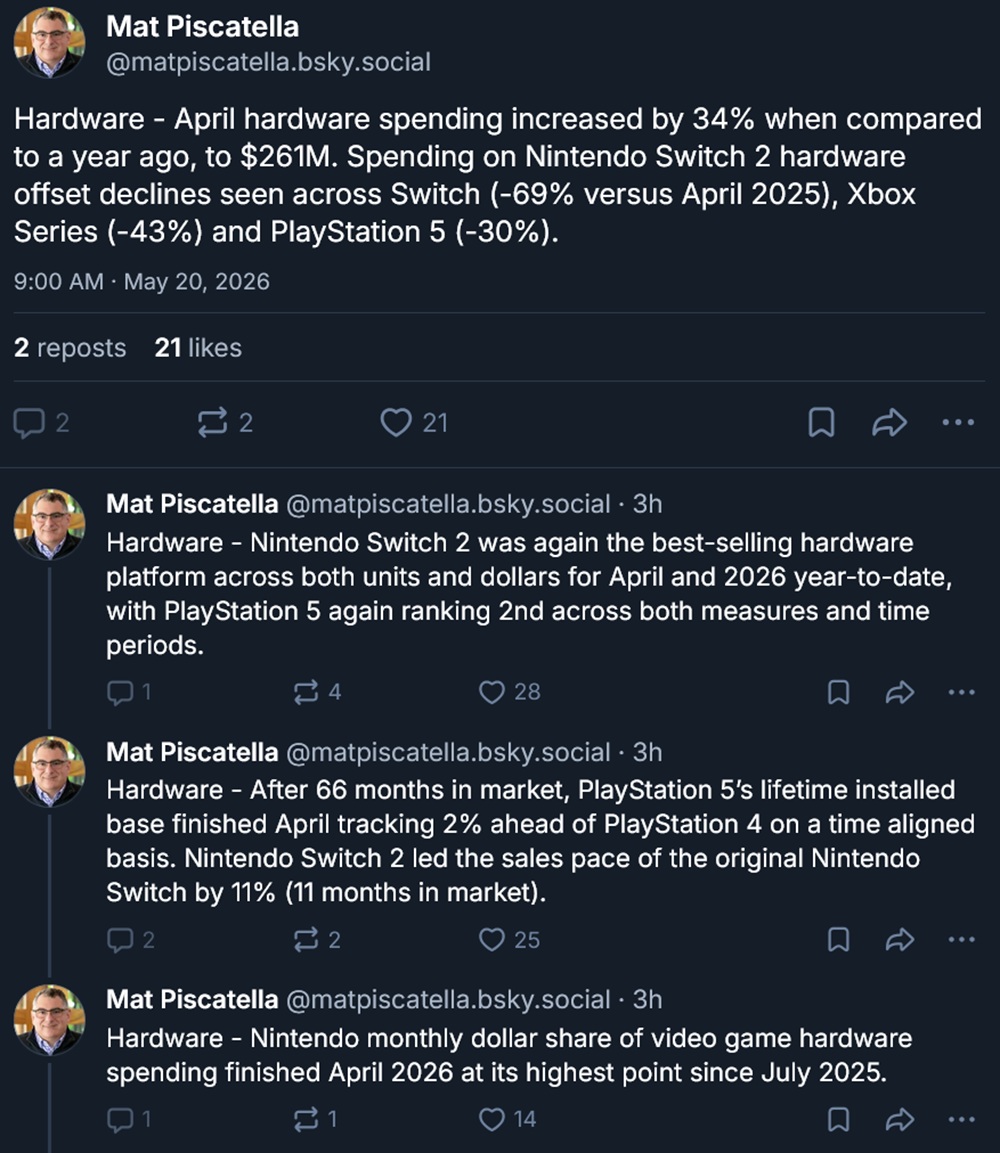
Despite the disappointing data, the PS5 still boasts a larger installed base than the PS4 at the same points in their life cycles. Regardless, Nintendo’s latest console has benefited most from its rival’s slowdown.
The Switch 2 success continues
Building on a trend in the U.S. market, the Switch 2 finished well ahead of PlayStation and Xbox. In both units and revenue, the handheld dominated the charts. Piscatella notes that Nintendo’s “monthly dollar share of video game hardware spending finished April 2026 at its highest point since July 2025.”
As the month's top-selling game, Tomodachi Life: Living the Dream helped Nintendo maintain its position. The gaming giant may have an advantage until at least September, when the $50 Switch 2 price increase takes effect.
Although there have been concerns about plummeting console sales, April proved to be a lucrative month. Hardware spending rose 34% compared to the same period in 2025. With the most delayed reaction to the memory shortage, the Switch 2 could provide stability in an otherwise challenging economy.
Source(s)
 Add as a preferred source on Google


