




Verdict on the Xiaomi Redmi 15 4G
The Redmi 15 presents itself as a well-equipped smartphone at an affordable price. Its strengths include the large 144 Hz display, software support through the end of 2029, and a solid overall feature set.
The clear highlight is the 7,000 mAh silicon-carbon battery, which makes the Redmi 15 one of the most enduring smartphones available for relatively little money. Charging times of around one hour further add to its appeal.
However, the large battery also makes the Redmi 15 comparatively heavy. In addition, photo quality is unremarkable, gaming performance is limited, and the device only offers mono sound, albeit with a pleasing sound character.
Price and availability
Officially, the Xiaomi Redmi 15 is priced at €179.90. In practice, however, it is already available for less, for example from Amazon. Opting for the 128 GB variant can reduce the price by a further €20 or so.

- $229.99XIAOMI Redmi Note 15 4G LTE (Compatible with Tmobile Mint Tello & Global) (128GB + 6GB) 6.77" 120Hz 108MP AI Camera Global Version Dual Sim Model 2510DRA23L Liberado (Glacier Blue)
- $209.50XIAOMI Redmi Note 15 4G LTE (Compatible with Tmobile Mint Tello & Global) (128GB + 6GB) 6.77" 120Hz 108MP AI Camera Global Version Dual Sim Model 2510DRA23L Liberado (Black)
- $189.99XIAOMI Redmi 15 4G LTE (Compatible with Tmobile Tello Mint & Global) (256GB + 8GB) Unlocked Dual SIM 6.9" 50MP Model 25062RN2DL (Midnight Black)
Table of Contents
- Verdict on the Xiaomi Redmi 15 4G
- Specifications
- Case – the large battery makes the Redmi 15 heavy
- Features – apart from 5G, everything important is included
- Software – HyperOS 2.0 with Android 17 update guarantee
- Communication and GNSS – Xiaomi Redmi 15 with very good GPS
- Telephone and call quality
- Cameras – 50 MP main camera, but no ultra-wide-angle
- Accessories and warranty
- Input devices and operation – fast enough for everyday tasks
- Display – IPS panel with good brightness and no PWM
- Performance – Redmi 15 with the ageing Snapdragon 685 SoC
- Emissions – the Xiaomi Redmi 15 stays cool
- Battery life – the 7,000 mAh battery is the clear highlight
- Notebookcheck overall rating
- Possible alternatives at a glance
Xiaomi's new Redmi 15 series aims to impress with a strong price-to-performance ratio. Even the Xiaomi Redmi 15 4G, the smallest model in the lineup, has plenty to offer. Equipped with a 6.9-inch display with a 144 Hz refresh rate, a 7,000 mAh battery, and 256 GB of storage, it is already available for around €150.
Specifications
Case – the large battery makes the Redmi 15 heavy
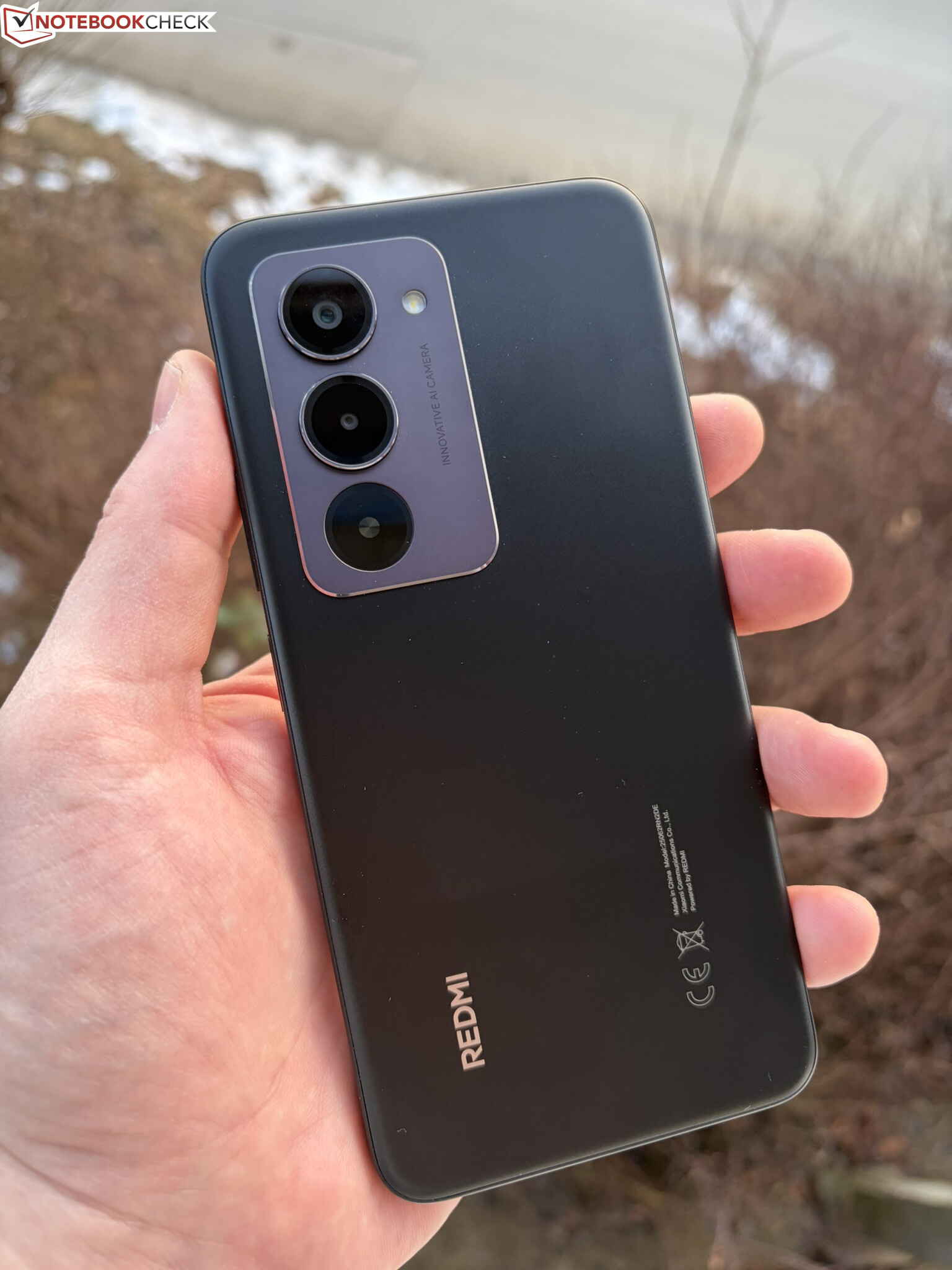
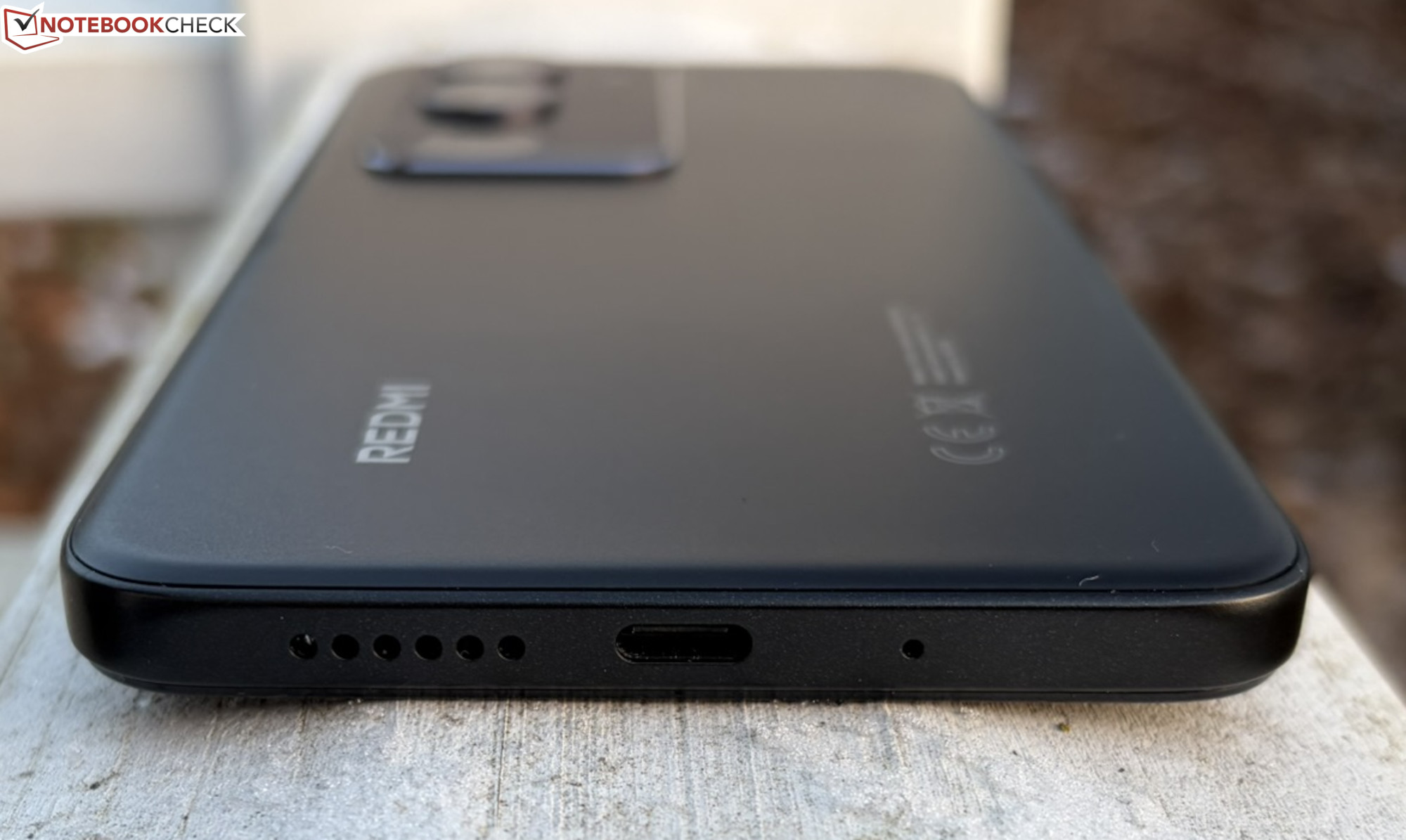
The Redmi 15 stands out with solid build quality, although the chassis creaks slightly when twisted. Thanks to its rounded corners and edges, it still feels comfortable to hold. With its IP64 certification, the smartphone can also withstand a few water splashes without damage.
Compared to competing devices, the higher weight is primarily due to the 6.9-inch form factor and the large 7,000 mAh battery.
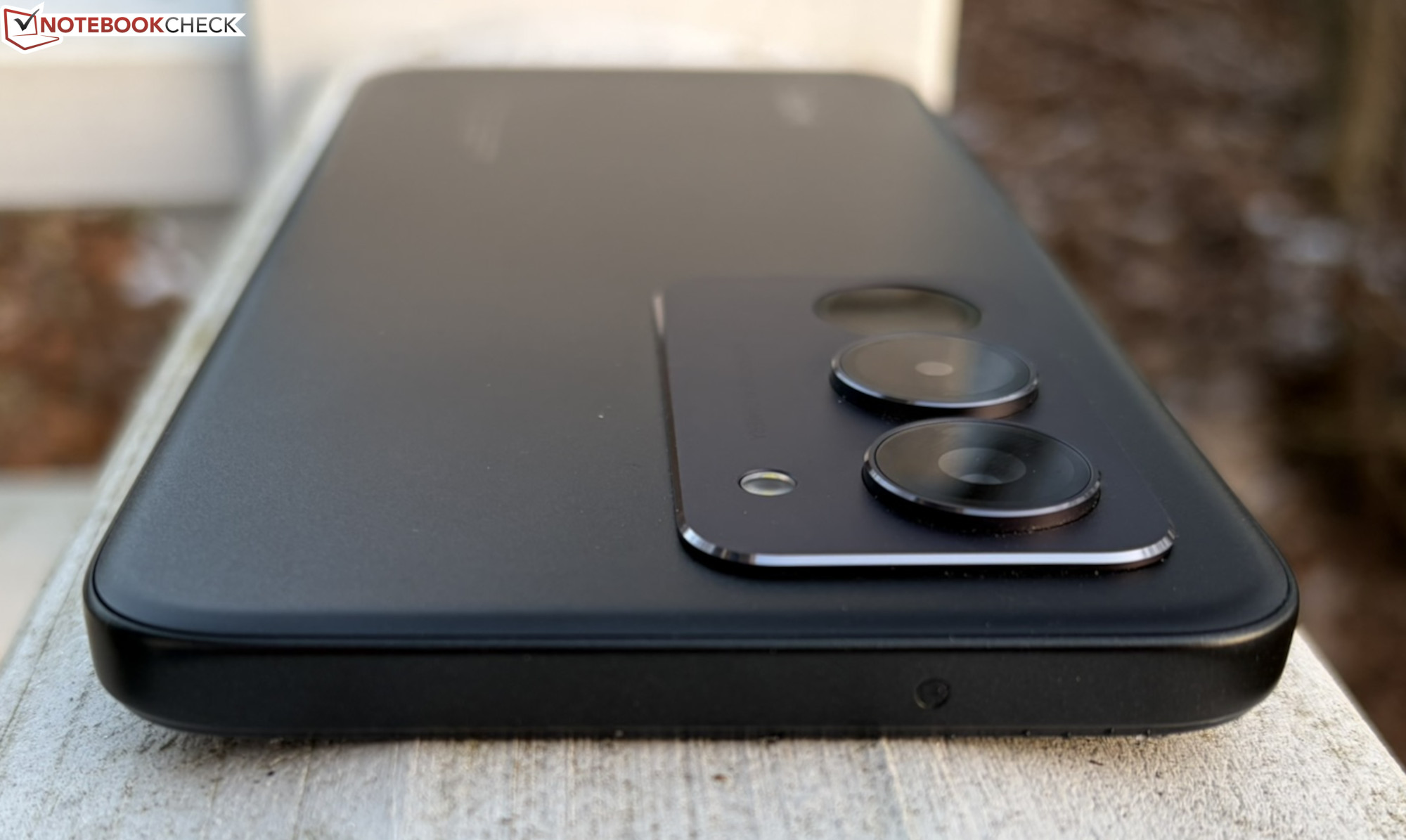
On the back, the Redmi 15 houses a 50 MP main camera and is available in three colour options: Midnight Black, Titan Gray, and Sandy Purple. There is no ultra-wide-angle camera.



Features – apart from 5G, everything important is included
In Xiaomi's official online store, the Redmi 15 is only available in a single configuration with 8 GB of RAM and 256 GB of storage, priced at just under €180. Price comparison portals also list a slightly cheaper second variant with 6 GB of RAM and 128 GB of storage.
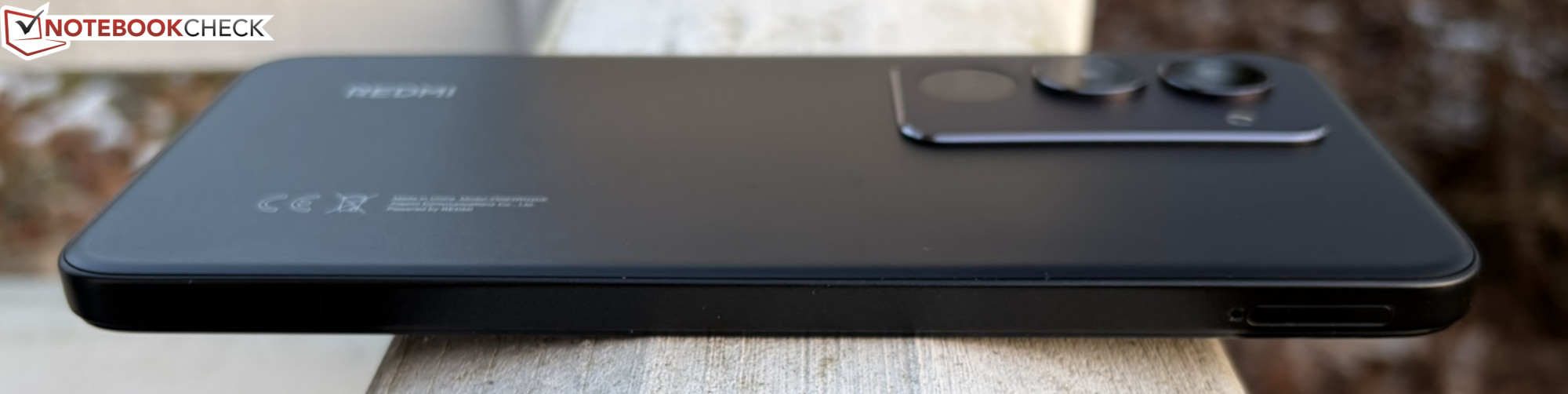
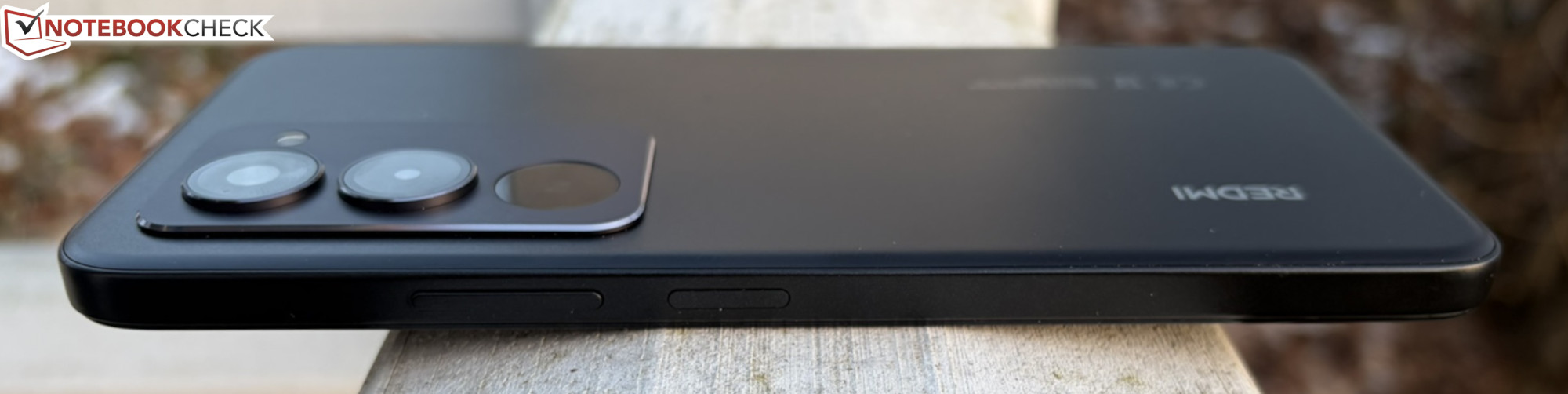
Aside from the lack of 5G, there are no major omissions in terms of features. The USB-C port operates at USB 2.0 speeds, audio is handled by a mono speaker, and the SIM slot supports either two Nano SIM cards or one SIM card combined with a microSD card.
microSD Card Reader
In the copy test, the microSD card reader achieves around 32 MByte/s with our Angelbird AV Pro V60 reference card. This is in line with expectations, as competing devices are not noticeably faster either. Sequential read speeds reach up to 88 MByte/s.
| SD Card Reader - average JPG Copy Test (av. of 3 runs) | |
| Samsung Galaxy A17 4G | |
| Xiaomi Redmi 15C 5G (Angelbird V60) | |
| Motorola Moto G06 (Angelbird V60) | |
| Average of class Smartphone (5.72 - 58.9, n=53, last 2 years) | |
| Xiaomi Redmi 15 4G (Angelbird V60) | |
| ZTE Nubia Music (Angelbird V60) | |
Cross Platform Disk Test (CPDT)
Software – HyperOS 2.0 with Android 17 update guarantee
The Redmi 15 ships with HyperOS 2.0, which is based on Android 15. Xiaomi plans to provide its budget smartphone with updates at three month intervals until October 2029. According to Xiaomi, the Redmi 15 is also set to receive Android 16 and Android 17.


Sustainability
The Redmi 15 comes in plastic-free packaging. However, Xiaomi does not provide specific information on whether recycled materials are used in the smartphone itself or in the packaging, or to what extent.
Xiaomi offers spare parts for the Redmi 15 for purchase, including the appropriate tools, and also operates a trade-in program for old devices. According to the European Union's EPREL database, the Redmi 15 is rated energy efficiency class B.
Communication and GNSS – Xiaomi Redmi 15 with very good GPS
With WiFi 5 as its fastest wireless standard, the Redmi 15 achieves reasonably stable transfer rates of around 300 MBit/s when connected to our reference router, the Asus ROG Rapture GT-AXE11000. This places it squarely in line with comparable devices, as higher speeds are generally not to be expected in this price class.
| Networking | |
| Xiaomi Redmi 15 4G | |
| iperf3 transmit AXE11000 | |
| iperf3 receive AXE11000 | |
| Motorola Moto G06 | |
| iperf3 transmit AXE11000 | |
| iperf3 receive AXE11000 | |
| Samsung Galaxy A17 4G | |
| iperf3 transmit AXE11000 | |
| iperf3 receive AXE11000 | |
| Xiaomi Redmi 15C 5G | |
| iperf3 transmit AXE11000 | |
| iperf3 receive AXE11000 | |
| ZTE Nubia Music | |
| iperf3 transmit AXE11000 | |
| iperf3 receive AXE11000 | |
| Average 802.11 a/b/g/n/ac | |
| iperf3 transmit AXE11000 | |
| iperf3 receive AXE11000 | |
| Average of class Smartphone | |
| iperf3 transmit AXE11000 | |
| iperf3 receive AXE11000 | |


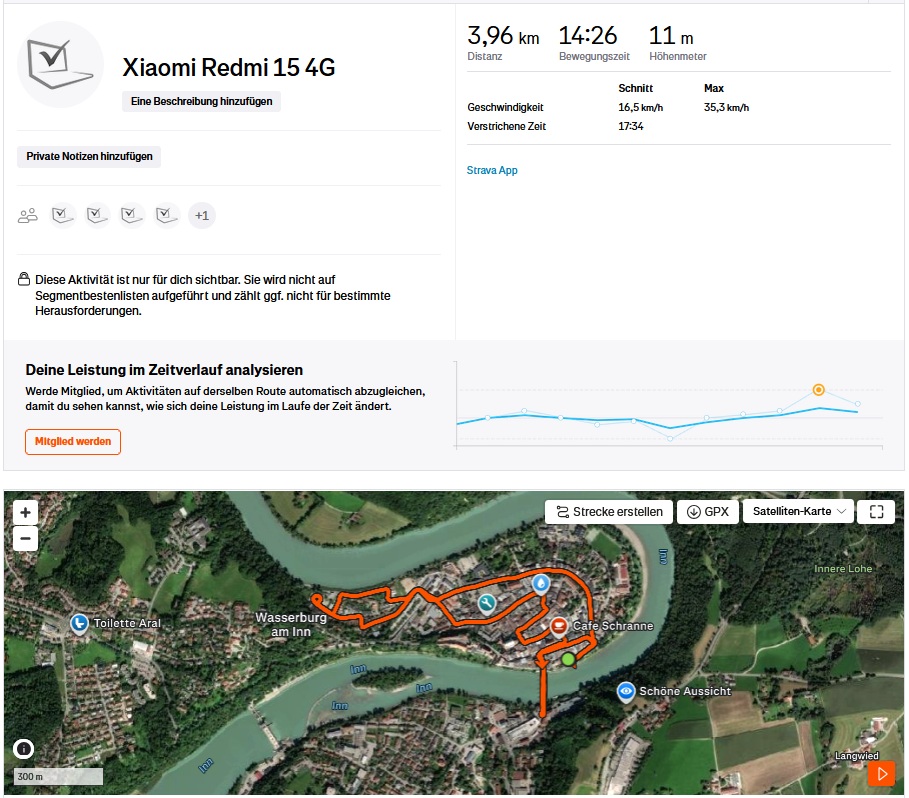
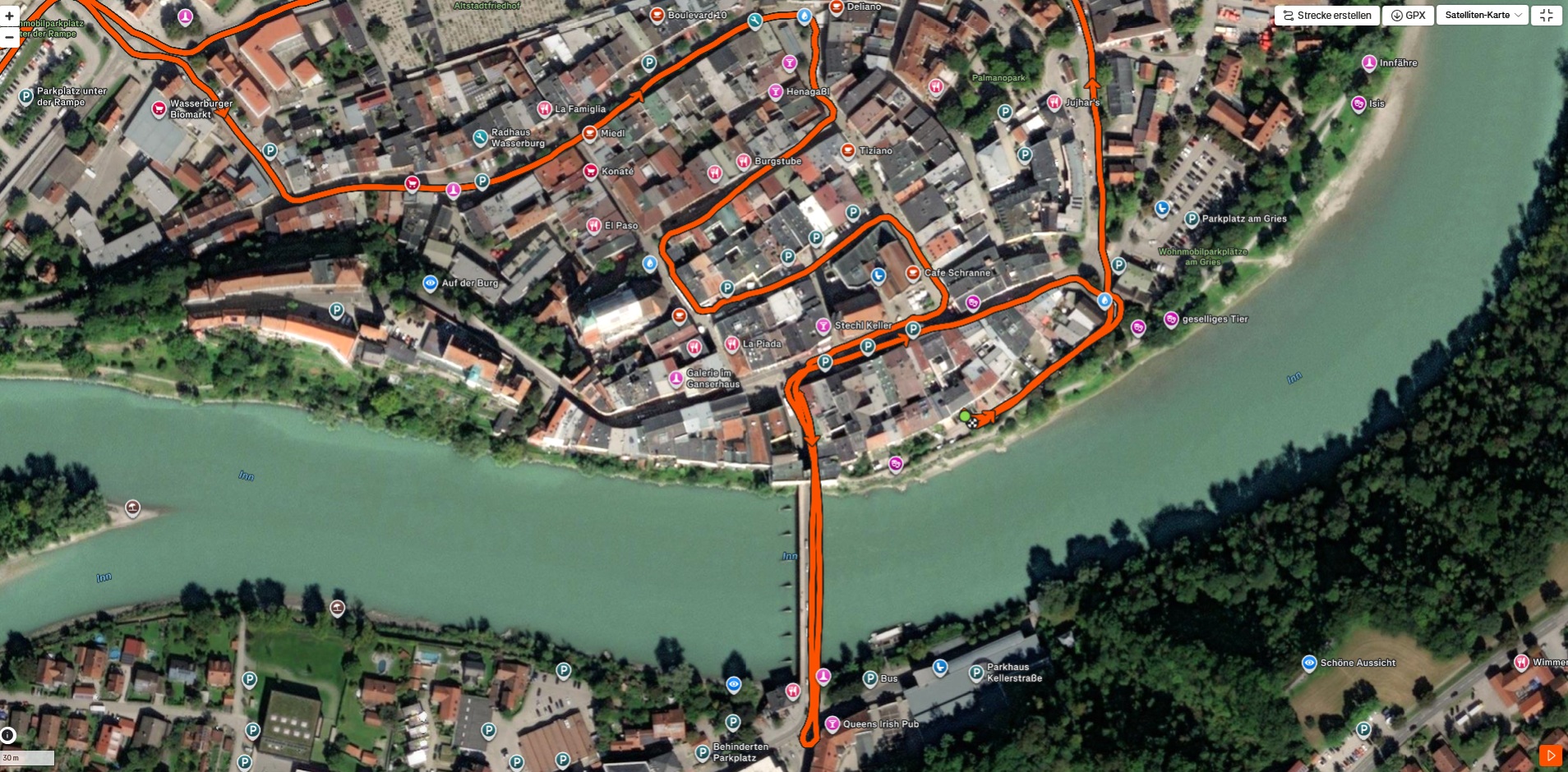
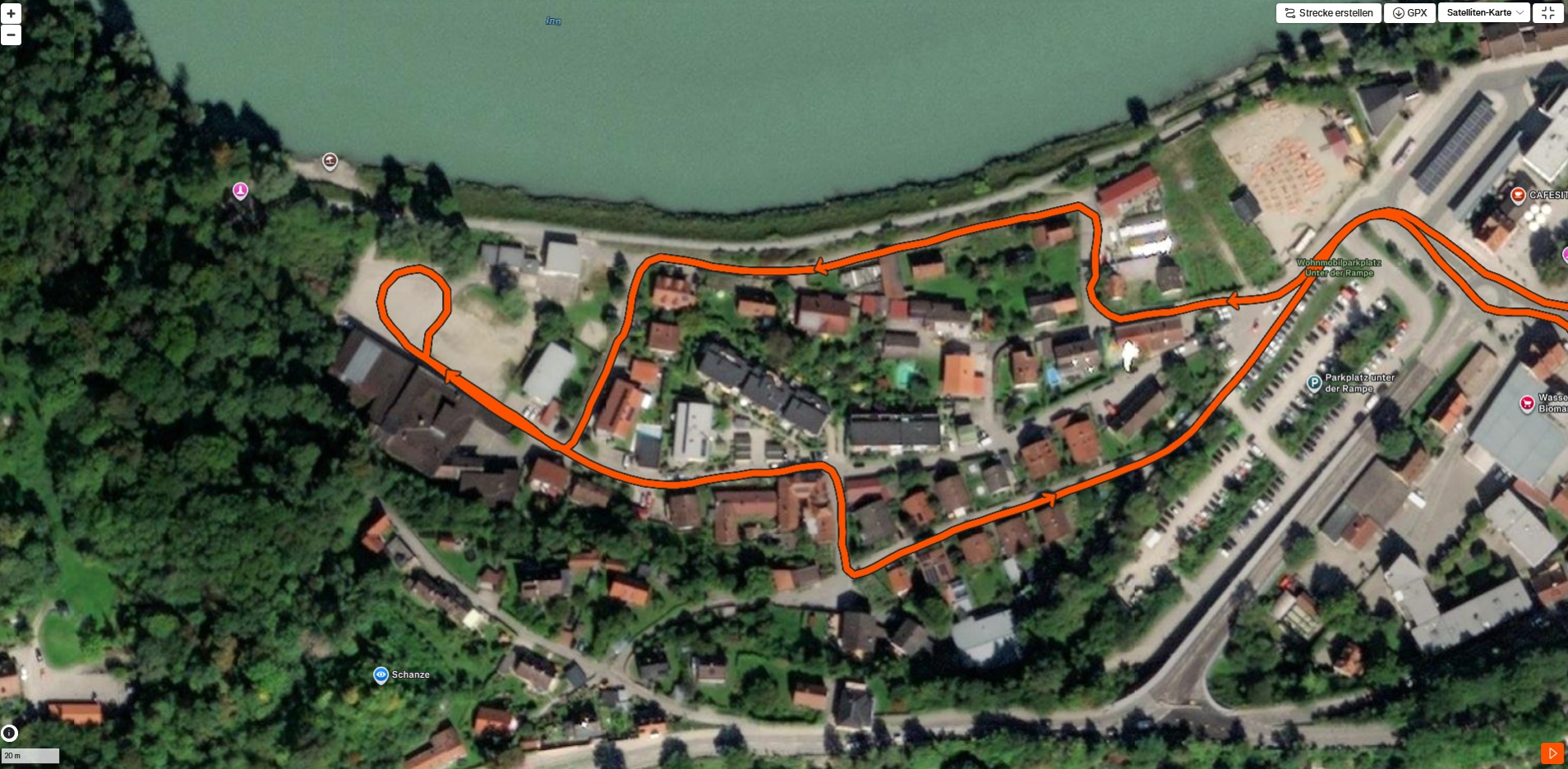
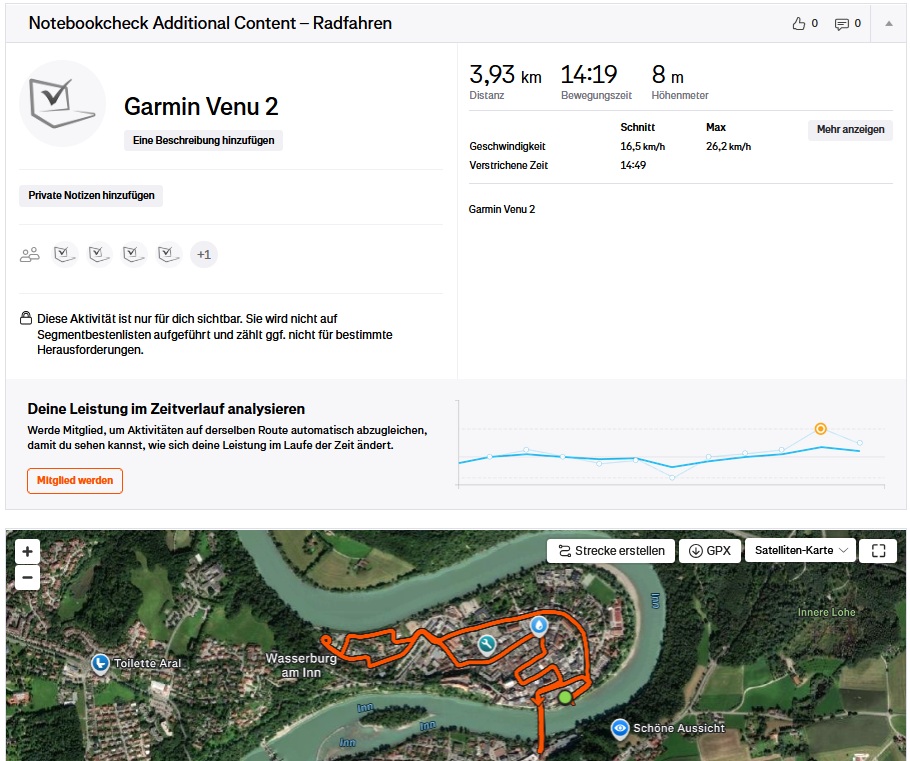
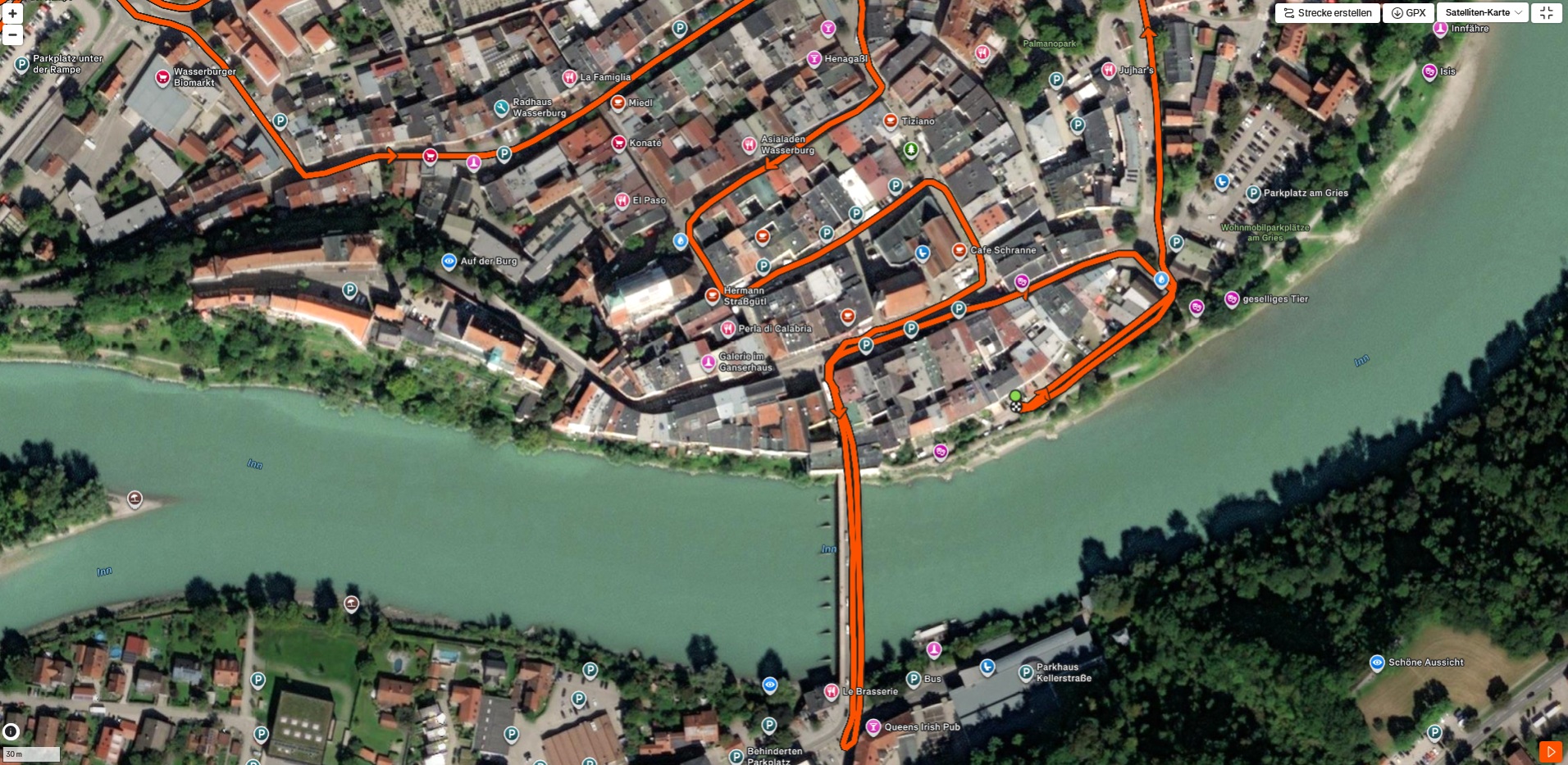
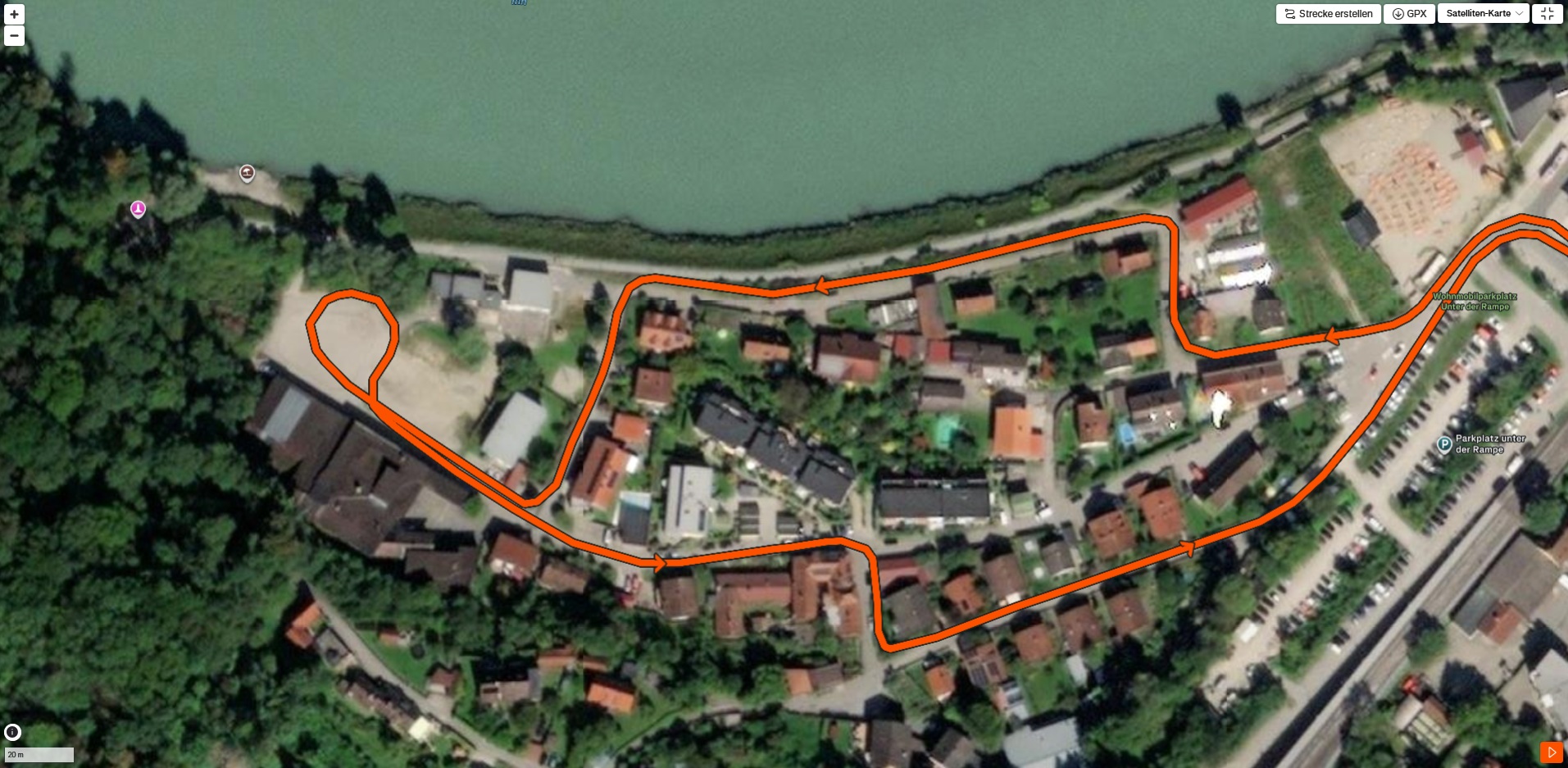
The Redmi 15 supports the satellite systems GPS, GLONASS, BeiDou, and Galileo, all in single-band mode. In real-world testing, it surprises with its very good navigation performance.
Whether in narrow old town streets or in less densely built-up areas, the device maintains the ideal line almost consistently and, overall, is nearly as accurate as the comparison device, the Garmin Venu 2.
Telephone and call quality
When used as a conventional phone, the Redmi 15 performs reliably. During our test calls, nothing out of the ordinary stood out, neither in terms of voice clarity nor signal quality. In addition to VoLTE, the Xiaomi supports WiFi calling and can be used with two Nano SIM cards. eSIM is not supported.
Cameras – 50 MP main camera, but no ultra-wide-angle

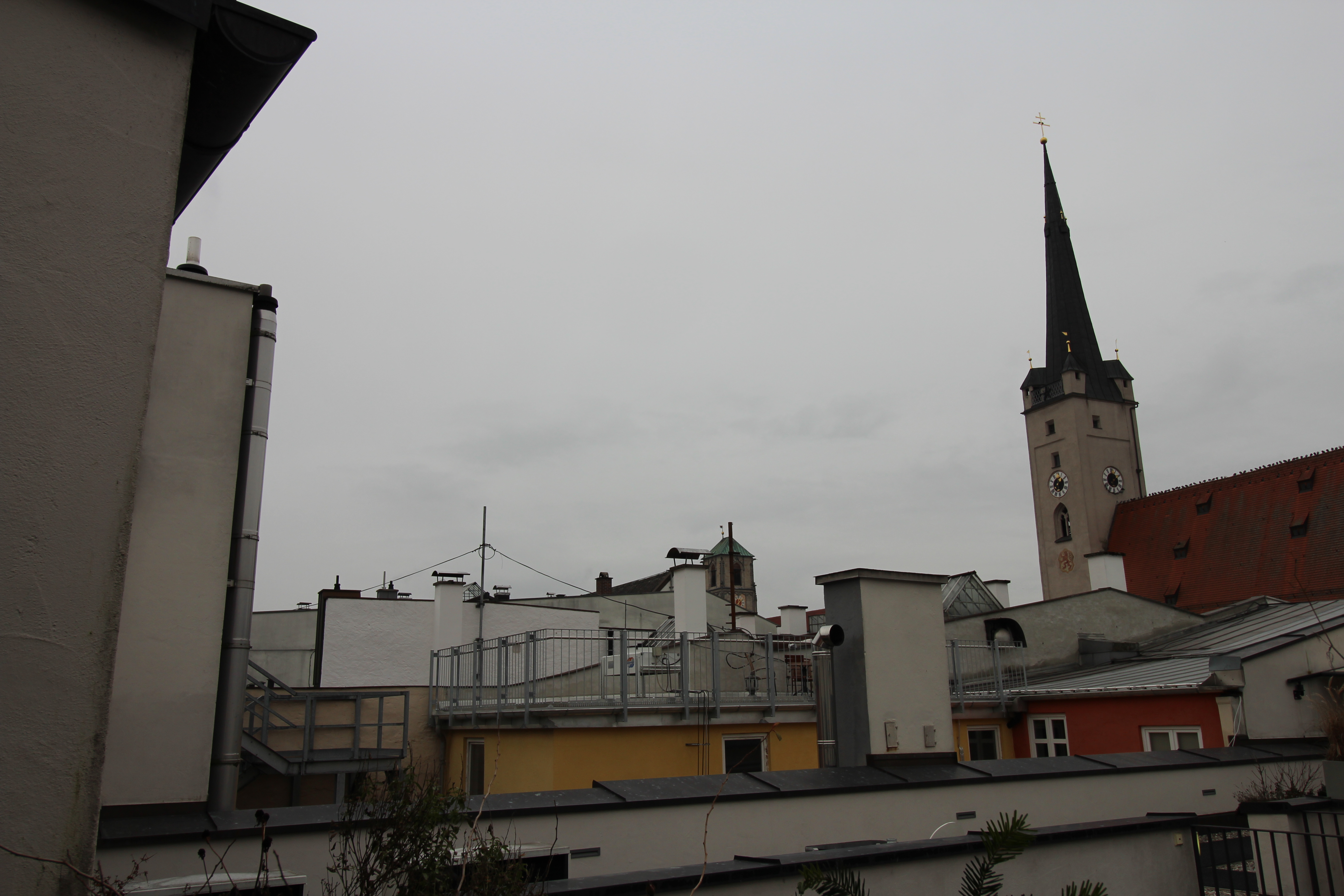
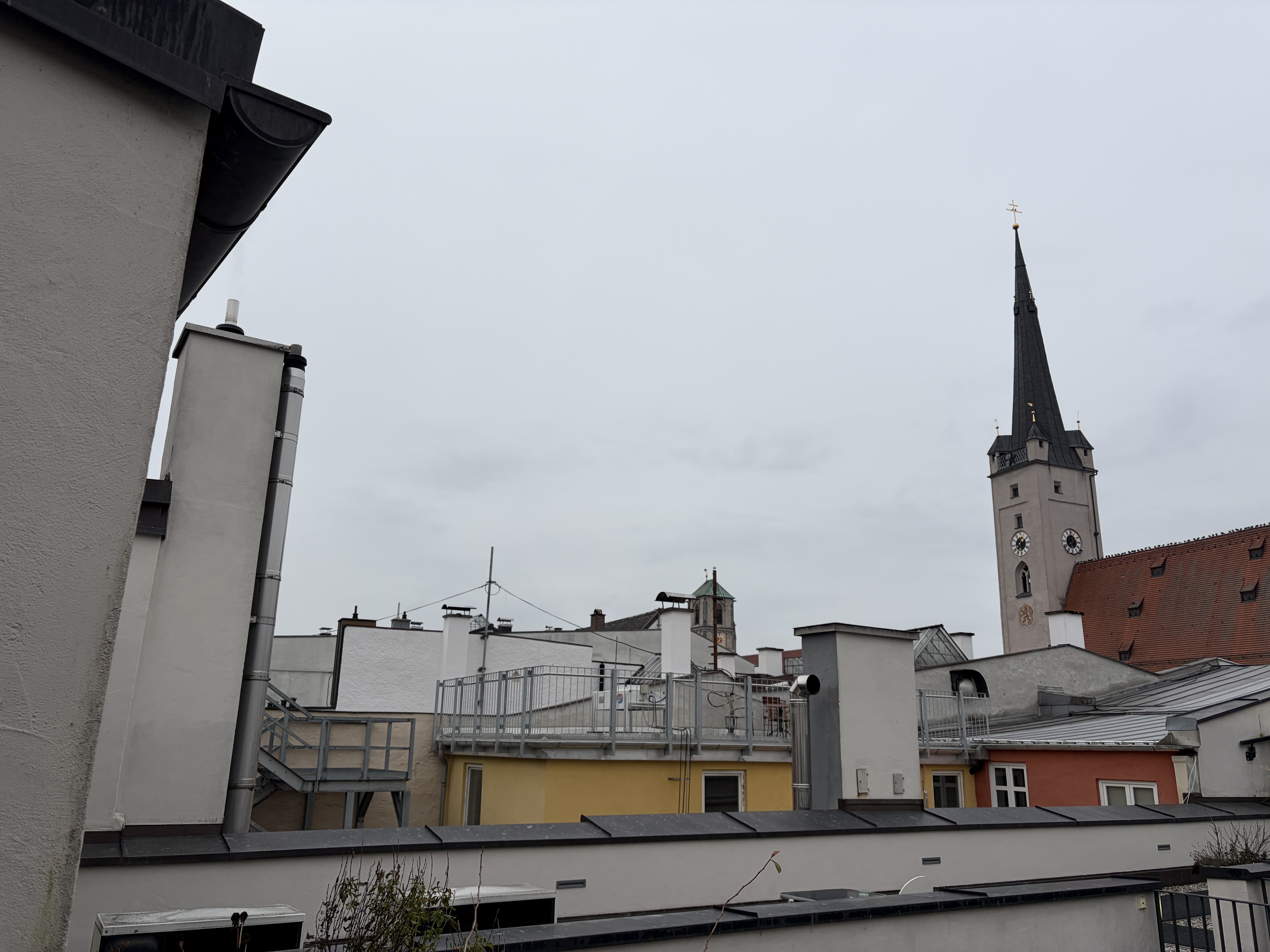
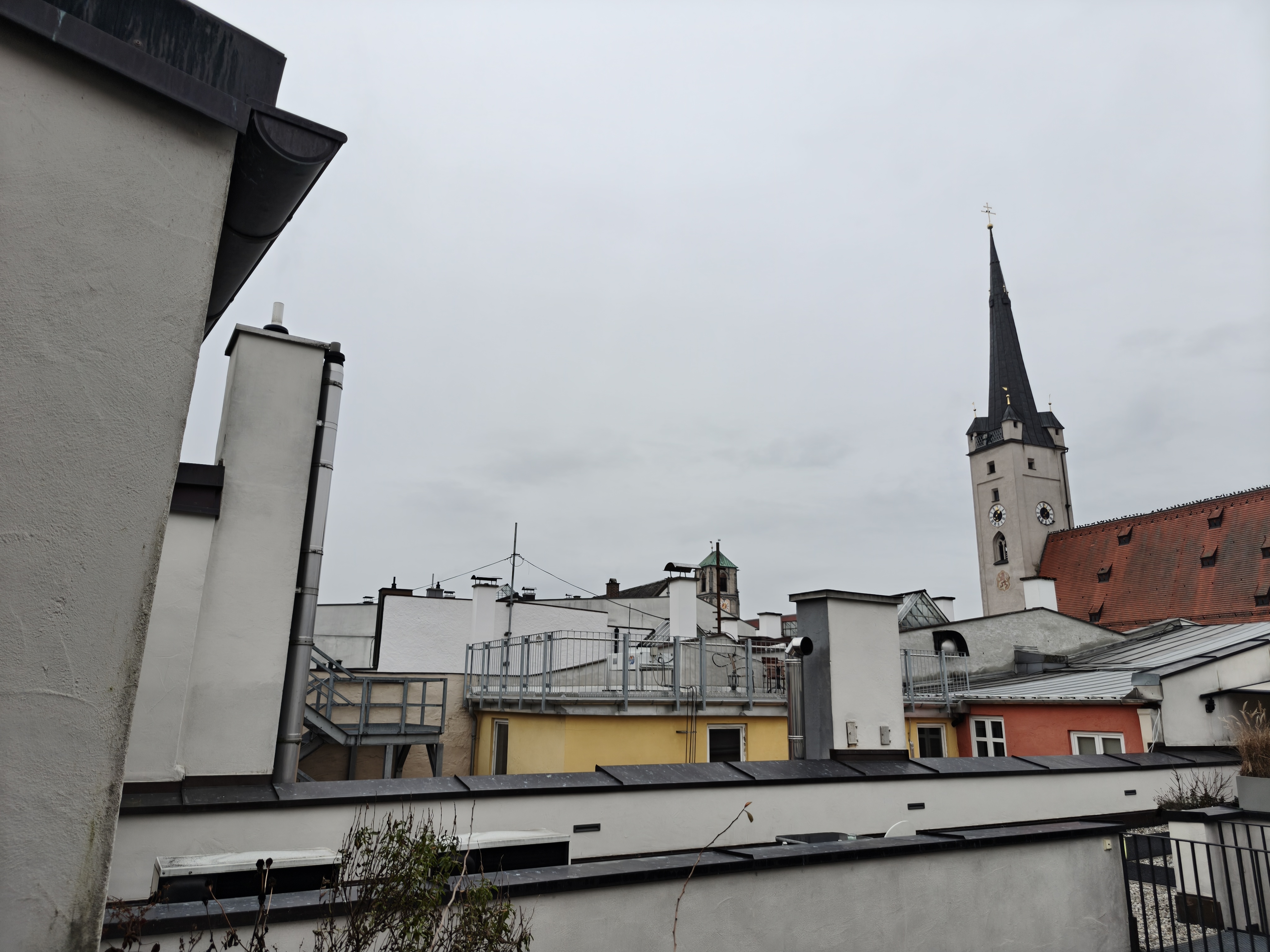
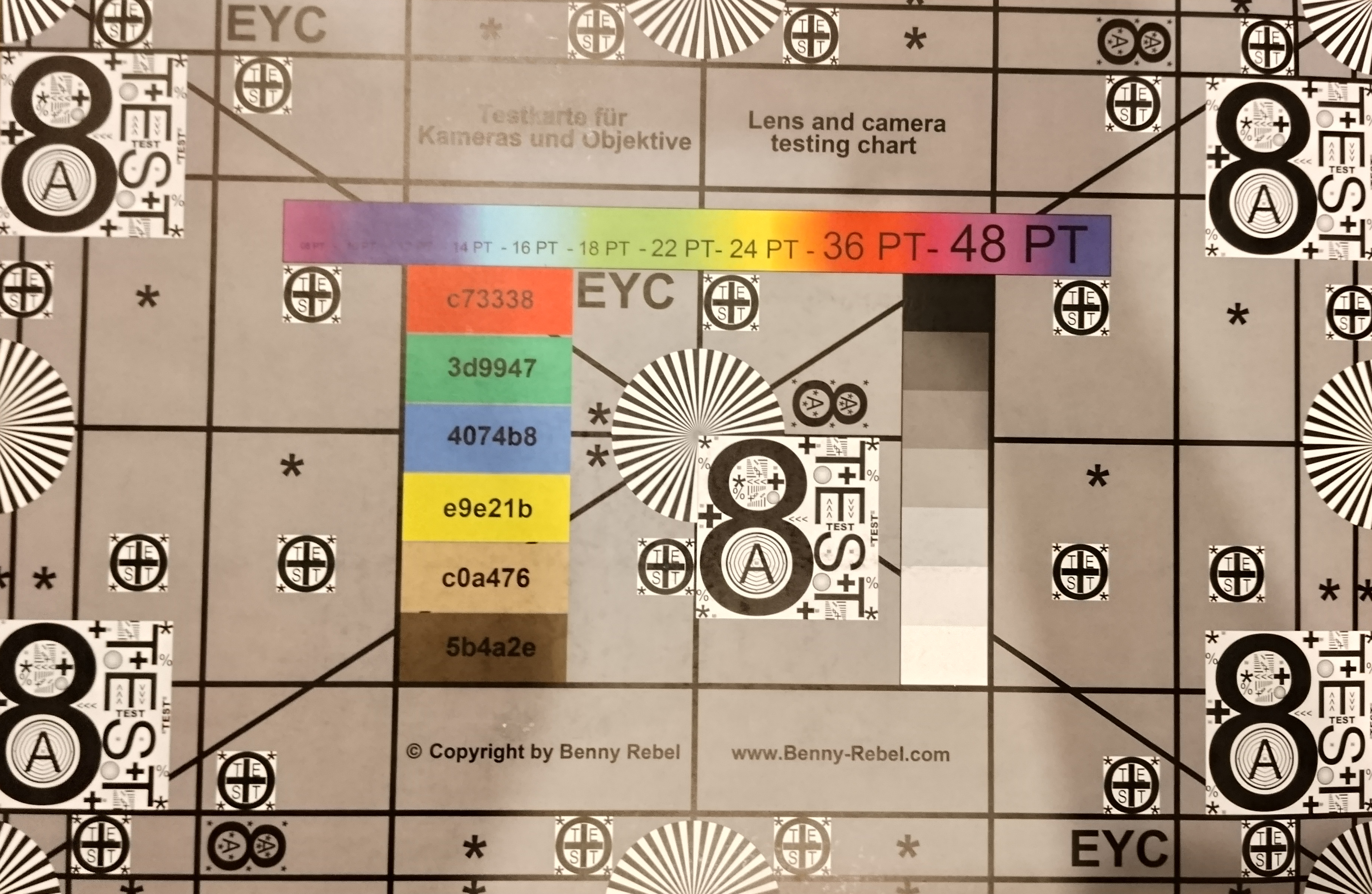
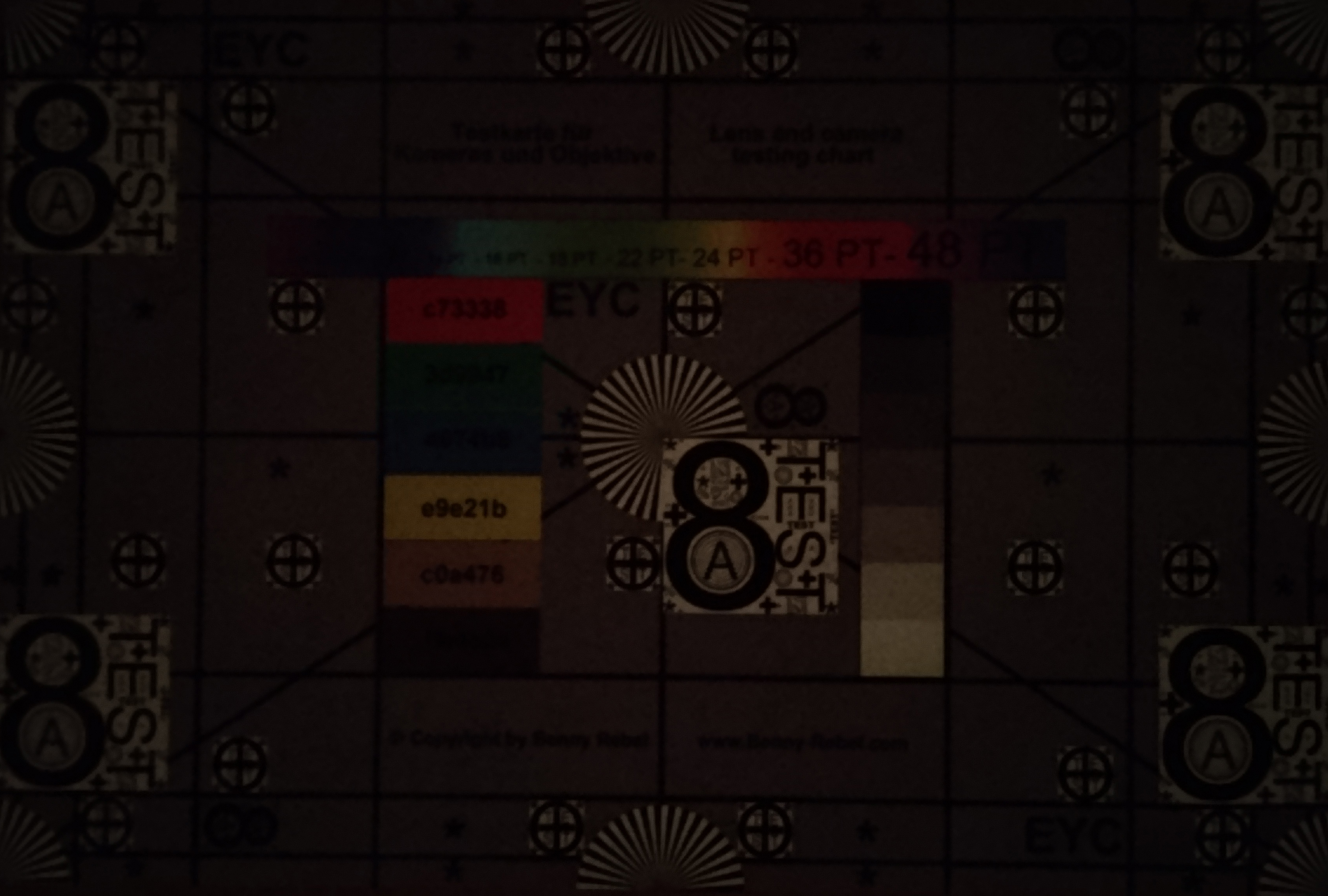
The selfie camera has a resolution of 8 MP. It does not capture a great deal of detail and tends to apply rather aggressive edge sharpening, but overall image quality is acceptable.
The same largely applies to the 50 MP main camera, which is supported by a second lens used for depth information. Its photos are fine and show fairly realistic colours in good lighting conditions, but are not significantly better than those taken with the selfie camera. That said, the main camera also performs reasonably well in low-light situations.
The Redmi 15 does not feature an ultra-wide-angle camera and, like the selfie camera, video recording is limited to a maximum of 1080p at 30 frames per second.
Image comparison
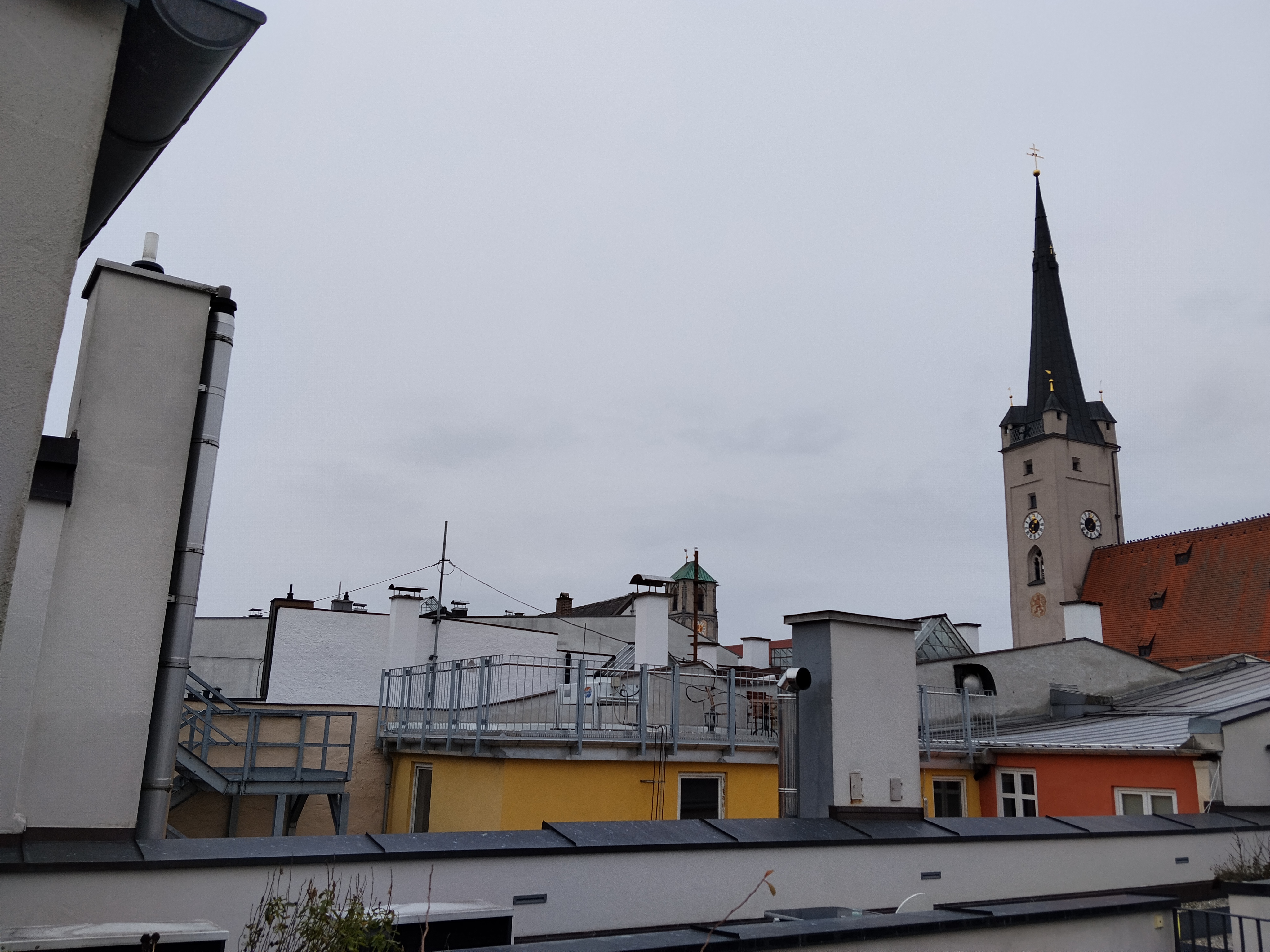
Choose a scene and navigate within the first image. One click changes the position on touchscreens. One click on the zoomed-in image opens the original in a new window. The first image shows the scaled photograph of the test device.
Tageslicht-AufnahmeTageslicht-AufnahmeLowlight-Aufnahme












Accessories and warranty
Xiaomi includes a USB-C cable, a SIM tool, and a protective case with the Redmi 15.
When it comes to the manufacturer warranty, Xiaomi is rather restrained, as Redmi smartphones are covered by a 12-month manufacturer warranty in the EU. Regardless of this, the statutory 24-month seller warranty applies within the European Union.
Input devices and operation – fast enough for everyday tasks
Immediately after booting, HyperOS 2.0 still shows occasional stutters in some places. Once everything has finished loading, however, the Redmi 15 responds quickly to inputs and feels smooth to operate thanks to its 144 Hz IPS panel. For everyday use, the Snapdragon 685 usually offers sufficient performance.
The fingerprint sensor integrated into the power button does exactly what it is supposed to do. It works reliably and unlocks the smartphone very quickly. The 2D facial recognition is just as dependable.

Display – IPS panel with good brightness and no PWM

With a display brightness of around 650 nits, the Redmi 15 reaches a level that is typical for this price class. In small image areas using the APL18 measurement, the IPS panel increases brightness to up to 839 cd/m². HDR is not supported, but the display makes up for this with flicker-free operation, making the Xiaomi smartphone a very good choice for users who are sensitive to PWM.
| |||||||||||||||||||||||||
Brightness Distribution: 91 %
Center on Battery: 656 cd/m²
Contrast: 1426:1 (Black: 0.46 cd/m²)
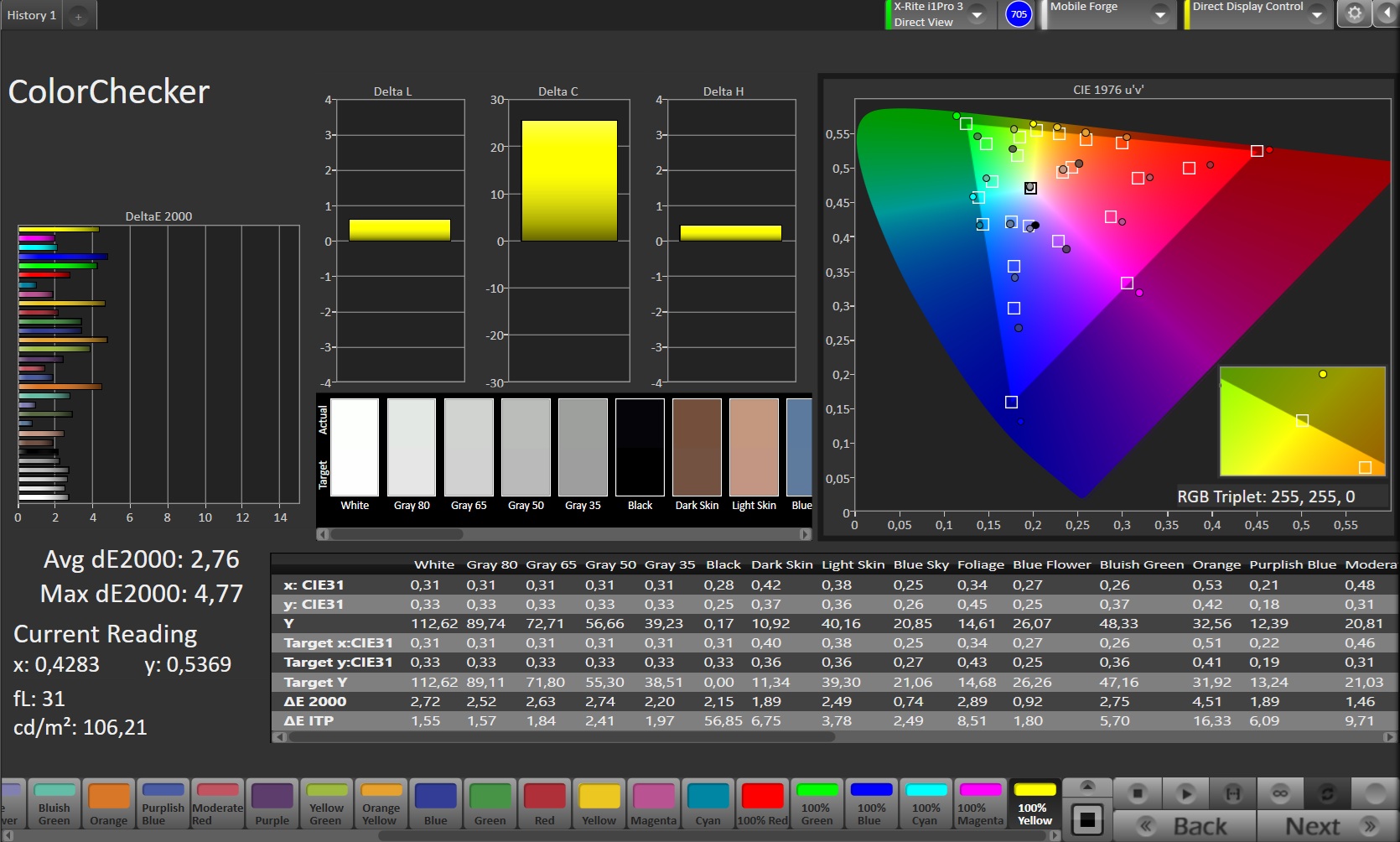
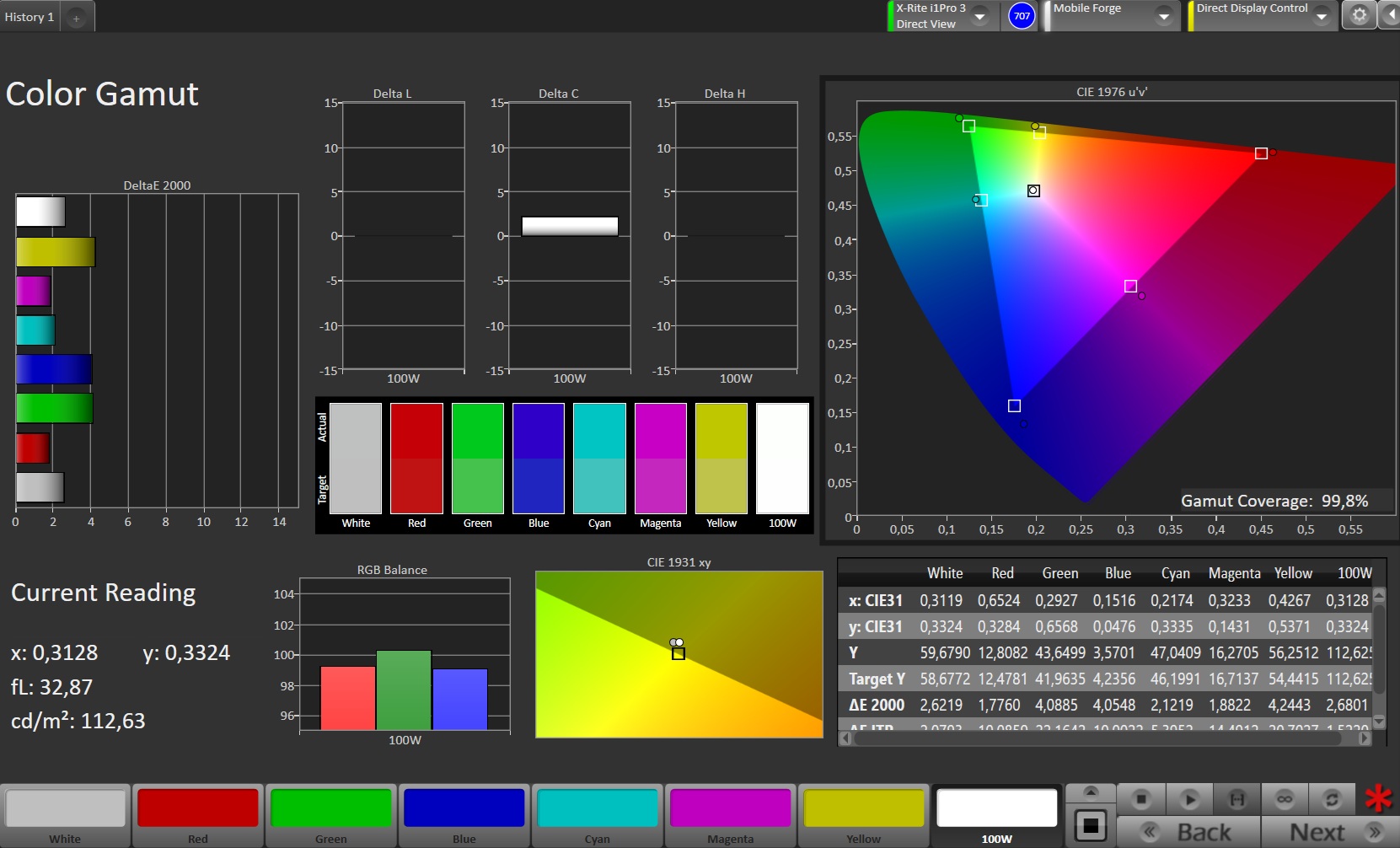
ΔE ColorChecker Calman: 2.76 | ∀{0.5-29.43 Ø4.68}
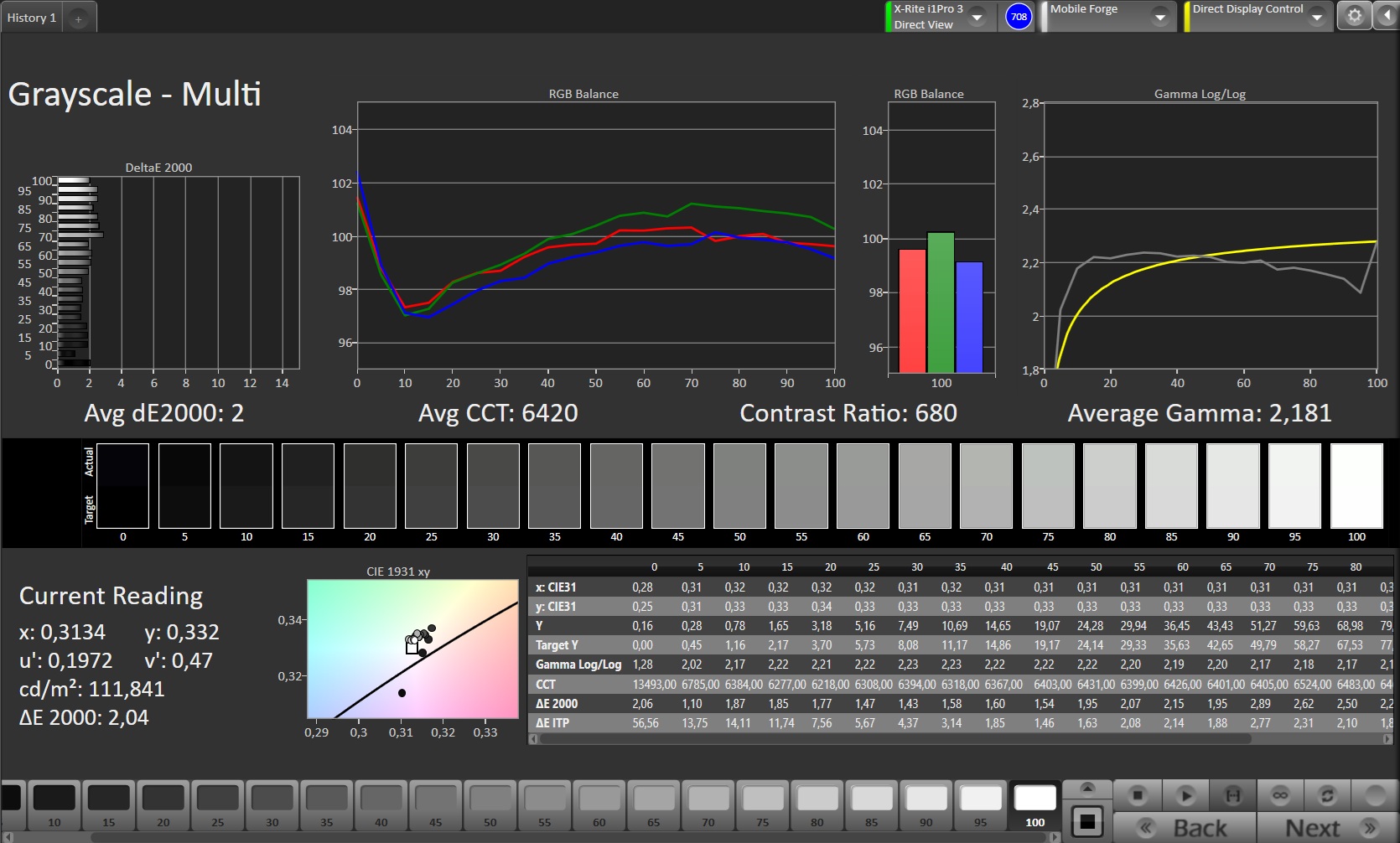
ΔE Greyscale Calman: 2 | ∀{0.09-98 Ø4.93}
99.8% sRGB (Calman 2D)
Gamma: 2.181
CCT: 6420 K
| Xiaomi Redmi 15 4G IPS, 2340x1080, 6.9" | Motorola Moto G06 IPS, 1640x720, 6.9" | Samsung Galaxy A17 4G AMOLED, 2340x1080, 6.7" | Xiaomi Redmi 15C 5G IPS, 1600x720, 6.9" | ZTE Nubia Music IPS, 1612x720, 6.6" | |
|---|---|---|---|---|---|
| Screen | -19% | -18% | -11% | -45% | |
| Brightness middle (cd/m²) | 656 | 531 -19% | 687 5% | 591 -10% | 514 -22% |
| Brightness (cd/m²) | 625 | 512 -18% | 666 7% | 557 -11% | 508 -19% |
| Brightness Distribution (%) | 91 | 94 3% | 93 2% | 91 0% | 94 3% |
| Black Level * (cd/m²) | 0.46 | 0.3 35% | 0.51 -11% | 0.37 20% | |
| Contrast (:1) | 1426 | 1770 24% | 1159 -19% | 1389 -3% | |
| Colorchecker dE 2000 * | 2.76 | 4.28 -55% | 3.45 -25% | 3.25 -18% | 5.21 -89% |
| Colorchecker dE 2000 max. * | 4.77 | 6.77 -42% | 5.49 -15% | 6.77 -42% | 8.64 -81% |
| Greyscale dE 2000 * | 2 | 3.6 -80% | 3.6 -80% | 1.6 20% | 5.3 -165% |
| Gamma | 2.181 101% | 2.235 98% | 2.026 109% | 2.299 96% | 2.212 99% |
| CCT | 6420 101% | 7429 87% | 6192 105% | 6967 93% | 7903 82% |
* ... smaller is better
| Display / APL18 Peak Brightness | |
| Xiaomi Redmi 15 4G | |
Screen Flickering / PWM (Pulse-Width Modulation)
| Screen flickering / PWM not detected | 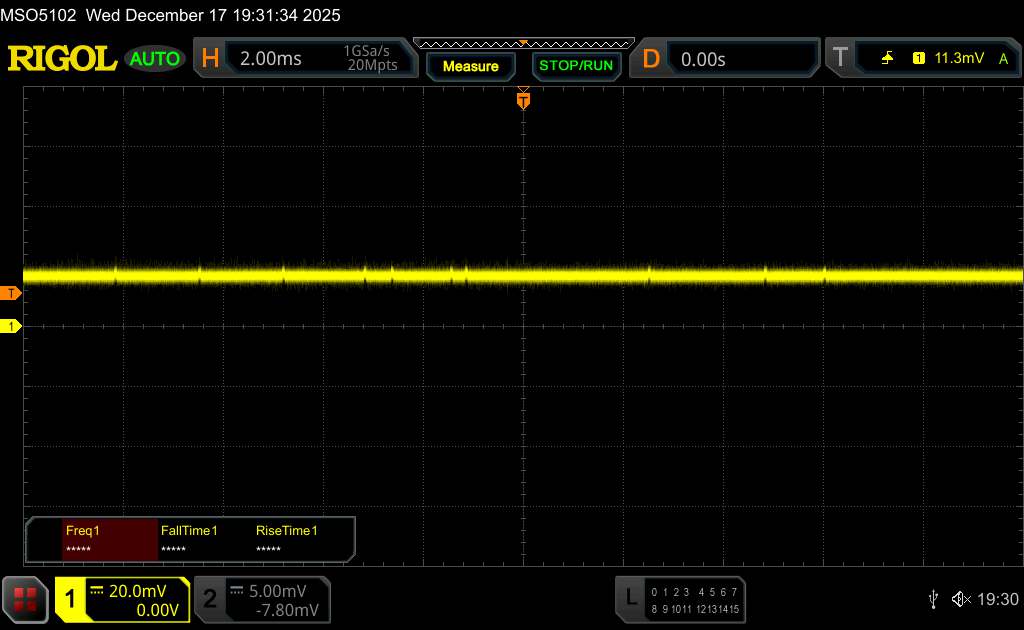 | ||
In comparison: 52 % of all tested devices do not use PWM to dim the display. If PWM was detected, an average of 7572 (minimum: 5 - maximum: 343500) Hz was measured. | |||
Three colour modes are available for colour reproduction: Saturated, Vivid, and Standard. In addition, the colour temperature can be adjusted freely. When left at the default settings, the IPS panel delivers highly accurate colour reproduction, with Delta E values below 3 and an almost ideal colour temperature of 6,420 K.
Display Response Times
| ↔ Response Time Black to White | ||
|---|---|---|
| 21.6 ms ... rise ↗ and fall ↘ combined | ↗ 11.2 ms rise | 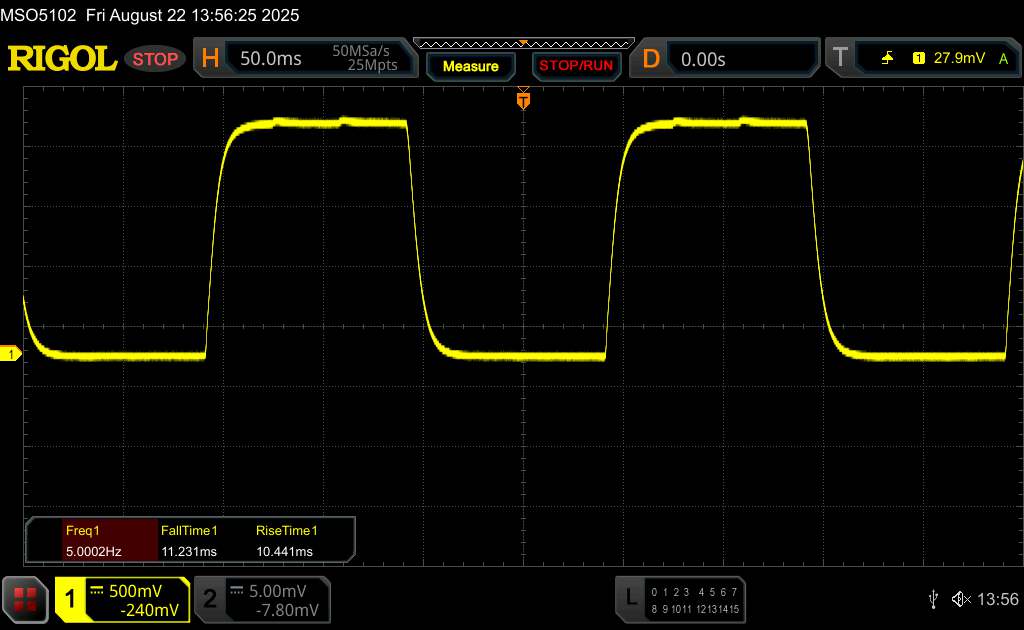 |
| ↘ 10.4 ms fall | ||
| The screen shows good response rates in our tests, but may be too slow for competitive gamers. In comparison, all tested devices range from 0.1 (minimum) to 240 (maximum) ms. » 49 % of all devices are better. This means that the measured response time is worse than the average of all tested devices (19.6 ms). | ||
| ↔ Response Time 50% Grey to 80% Grey | ||
| 38.1 ms ... rise ↗ and fall ↘ combined | ↗ 21.4 ms rise | 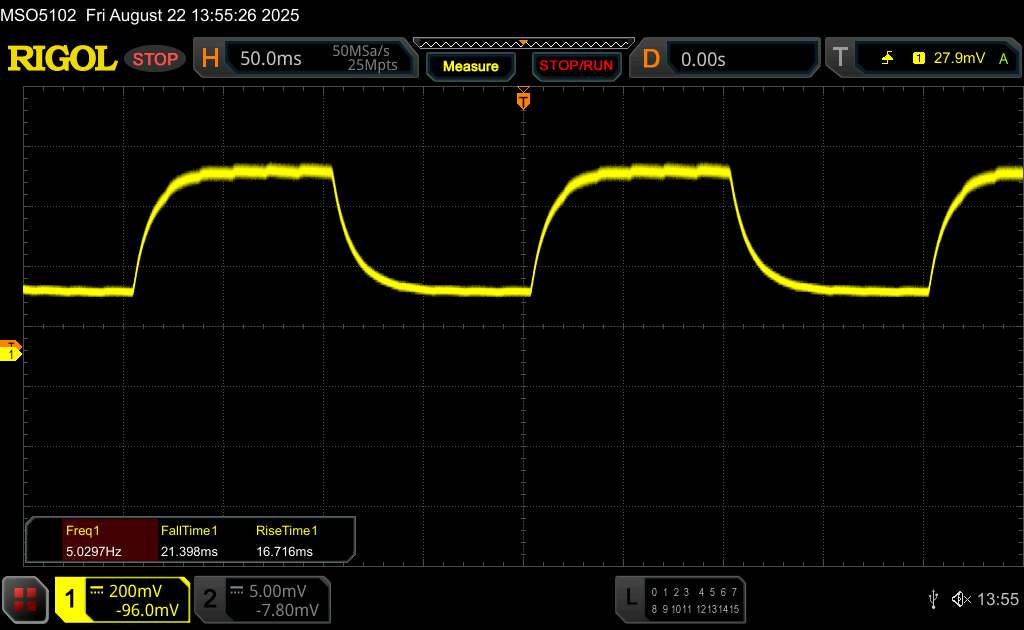 |
| ↘ 16.7 ms fall | ||
| The screen shows slow response rates in our tests and will be unsatisfactory for gamers. In comparison, all tested devices range from 0.13 (minimum) to 636 (maximum) ms. » 58 % of all devices are better. This means that the measured response time is worse than the average of all tested devices (30.7 ms). | ||
Outdoors, the Redmi 15 remains easy to use as long as direct sunlight on the viewing-angle-stable display is avoided. The winter conditions during testing posed no challenge for the IPS panel, however, as content remained clearly legible from all viewing angles at all times.


Performance – Redmi 15 with the ageing Snapdragon 685 SoC
The Redmi 15 is powered by the Snapdragon 685, a SoC that is now more than five years old. In everyday use, however, this is barely noticeable, as standard applications run smoothly most of the time and loading times remain acceptable thanks to UFS 2.2 storage.
With more demanding apps or games, the ARM-based SoC quickly reaches its limits. If more performance is required at a similar price point, the Samsung Galaxy A17 4G or the Xiaomi Redmi 15C 5G are the better options.
| Antutu v10 - Total Score | |
| Average of class Smartphone (264891 - 3269237, n=71, last 2 years) | |
| Xiaomi Redmi 15C 5G | |
| Xiaomi Redmi 15 4G | |
| Average Qualcomm Snapdragon 685 4G (352825 - 385742, n=2) | |
| PCMark for Android - Work 3.x | |
| Average of class Smartphone (4507 - 28557, n=127, last 2 years) | |
| Xiaomi Redmi 15C 5G | |
| Xiaomi Redmi 15 4G | |
| Average Qualcomm Snapdragon 685 4G (7305 - 9502, n=3) | |
| ZTE Nubia Music | |
| UL Procyon AI Inference for Android - Overall Score NNAPI | |
| Average of class Smartphone (2895 - 66164, n=99, last 2 years) | |
| Xiaomi Redmi 15C 5G | |
| Average Qualcomm Snapdragon 685 4G (4387 - 4615, n=3) | |
| Xiaomi Redmi 15 4G | |
| AI Benchmark - Score V6 | |
| Average of class Smartphone (55.6 - 22780, n=78, last 2 years) | |
| Xiaomi Redmi 15C 5G | |
| Xiaomi Redmi 15 4G | |
| Average Qualcomm Snapdragon 685 4G (n=1) | |
GFXBench (DX / GLBenchmark) 2.7: T-Rex Onscreen | 1920x1080 T-Rex Offscreen
GFXBench 3.0: on screen Manhattan Onscreen OGL | 1920x1080 1080p Manhattan Offscreen
GFXBench 3.1: on screen Manhattan ES 3.1 Onscreen | 1920x1080 Manhattan ES 3.1 Offscreen
GFXBench: on screen Car Chase Onscreen | 1920x1080 Car Chase Offscreen | on screen Aztec Ruins High Tier Onscreen | 2560x1440 Aztec Ruins High Tier Offscreen | on screen Aztec Ruins Normal Tier Onscreen | 1920x1080 Aztec Ruins Normal Tier Offscreen | 3840x2160 4K Aztec Ruins High Tier Offscreen
| 3DMark / Wild Life Extreme Unlimited | |
| Xiaomi Redmi 15C 5G | |
| Samsung Galaxy A17 4G | |
| Motorola Moto G06 | |
| Xiaomi Redmi 15 4G | |
| ZTE Nubia Music | |
| 3DMark / Wild Life Extreme | |
| Xiaomi Redmi 15C 5G | |
| Samsung Galaxy A17 4G | |
| Motorola Moto G06 | |
| Xiaomi Redmi 15 4G | |
| ZTE Nubia Music | |
| 3DMark / Wild Life Unlimited Score | |
| Xiaomi Redmi 15C 5G | |
| Samsung Galaxy A17 4G | |
| Xiaomi Redmi 15 4G | |
| Motorola Moto G06 | |
| ZTE Nubia Music | |
| GFXBench (DX / GLBenchmark) 2.7 / T-Rex Onscreen | |
| Xiaomi Redmi 15C 5G | |
| Xiaomi Redmi 15 4G | |
| GFXBench (DX / GLBenchmark) 2.7 / T-Rex Offscreen | |
| Xiaomi Redmi 15C 5G | |
| Xiaomi Redmi 15 4G | |
| GFXBench 3.0 / Manhattan Onscreen OGL | |
| Xiaomi Redmi 15C 5G | |
| Xiaomi Redmi 15 4G | |
| GFXBench 3.0 / 1080p Manhattan Offscreen | |
| Xiaomi Redmi 15C 5G | |
| Xiaomi Redmi 15 4G | |
| GFXBench 3.1 / Manhattan ES 3.1 Onscreen | |
| Xiaomi Redmi 15C 5G | |
| Xiaomi Redmi 15 4G | |
| GFXBench 3.1 / Manhattan ES 3.1 Offscreen | |
| Xiaomi Redmi 15 4G | |
| Xiaomi Redmi 15C 5G | |
| GFXBench / Car Chase Onscreen | |
| Xiaomi Redmi 15C 5G | |
| Xiaomi Redmi 15 4G | |
| GFXBench / Car Chase Offscreen | |
| Xiaomi Redmi 15C 5G | |
| Xiaomi Redmi 15 4G | |
| GFXBench / Aztec Ruins High Tier Onscreen | |
| Xiaomi Redmi 15C 5G | |
| Samsung Galaxy A17 4G | |
| Motorola Moto G06 | |
| Xiaomi Redmi 15 4G | |
| ZTE Nubia Music | |
| GFXBench / Aztec Ruins High Tier Offscreen | |
| Xiaomi Redmi 15C 5G | |
| Samsung Galaxy A17 4G | |
| Xiaomi Redmi 15 4G | |
| Motorola Moto G06 | |
| ZTE Nubia Music | |
| GFXBench / Aztec Ruins Normal Tier Onscreen | |
| Xiaomi Redmi 15C 5G | |
| Samsung Galaxy A17 4G | |
| Motorola Moto G06 | |
| Xiaomi Redmi 15 4G | |
| ZTE Nubia Music | |
| GFXBench / Aztec Ruins Normal Tier Offscreen | |
| Xiaomi Redmi 15C 5G | |
| Samsung Galaxy A17 4G | |
| Xiaomi Redmi 15 4G | |
| Motorola Moto G06 | |
| ZTE Nubia Music | |
| GFXBench / 4K Aztec Ruins High Tier Offscreen | |
| Xiaomi Redmi 15C 5G | |
| Samsung Galaxy A17 4G | |
| Xiaomi Redmi 15 4G | |
| Motorola Moto G06 | |
| ZTE Nubia Music | |
| Jetstream 2 - 2.0 Total | |
| Average of class Smartphone (63.9 - 423, n=115, last 2 years) | |
| Xiaomi Redmi 15C 5G (Chrome 140) | |
| Samsung Galaxy A17 4G (Chrome 141) | |
| Xiaomi Redmi 15 4G (Chrome 143.0.7499.146) | |
| Average Qualcomm Snapdragon 685 4G (58.9 - 76.1, n=3) | |
| Speedometer 2.0 - Result 2.0 | |
| Average of class Smartphone (49.3 - 733, n=73, last 2 years) | |
| Xiaomi Redmi 15 4G (Chrome 143.0.7499.146) | |
| Average Qualcomm Snapdragon 685 4G (50.9 - 82.2, n=3) | |
| Speedometer 3 - Score 3.0 | |
| Average of class Smartphone (3.06 - 56.5, n=81, last 2 years) | |
| Xiaomi Redmi 15 4G (Chrome 143.0.7499.146) | |
| Average Qualcomm Snapdragon 685 4G (n=1) | |
| WebXPRT 4 - Overall | |
| Average of class Smartphone (56 - 278, n=89, last 2 years) | |
| Xiaomi Redmi 15C 5G (Chrome 140) | |
| Xiaomi Redmi 15 4G (Chrome 143.0.7499.146) | |
| Average Qualcomm Snapdragon 685 4G (49 - 69, n=3) | |
| Octane V2 - Total Score | |
| Average of class Smartphone (6015 - 160221, n=130, last 2 years) | |
| Xiaomi Redmi 15C 5G (Chrome 140) | |
| Xiaomi Redmi 15 4G (Chrome 143.0.7499.146) | |
| Average Qualcomm Snapdragon 685 4G (15695 - 20375, n=3) | |
| ZTE Nubia Music (Chrome 131) | |
| Mozilla Kraken 1.1 - Total | |
| Average Qualcomm Snapdragon 685 4G (2000 - 2535, n=3) | |
| Xiaomi Redmi 15 4G (Chrome 143.0.7499.146) | |
| Xiaomi Redmi 15C 5G (Chrome 140) | |
| Average of class Smartphone (216 - 2718, n=119, last 2 years) | |
* ... smaller is better
| Xiaomi Redmi 15 4G | Motorola Moto G06 | Samsung Galaxy A17 4G | Xiaomi Redmi 15C 5G | ZTE Nubia Music | Average 256 GB UFS 2.2 Flash | Average of class Smartphone | |
|---|---|---|---|---|---|---|---|
| AndroBench 3-5 | -58% | -54% | -2% | -71% | 12% | 122% | |
| Sequential Read 256KB (MB/s) | 1027.22 | 301 -71% | 518.6 -50% | 509.9 -50% | 269.6 -74% | 906 ? -12% | 2279 ? 122% |
| Sequential Write 256KB (MB/s) | 617.41 | 243.5 -61% | 172.6 -72% | 512.1 -17% | 236.5 -62% | 739 ? 20% | 1980 ? 221% |
| Random Read 4KB (MB/s) | 179.34 | 100 -44% | 141.1 -21% | 196.3 9% | 47.6 -73% | 223 ? 24% | 319 ? 78% |
| Random Write 4KB (MB/s) | 218.17 | 99.2 -55% | 55.9 -74% | 329 51% | 53.9 -75% | 248 ? 14% | 366 ? 68% |
Emissions – the Xiaomi Redmi 15 stays cool
Temperature
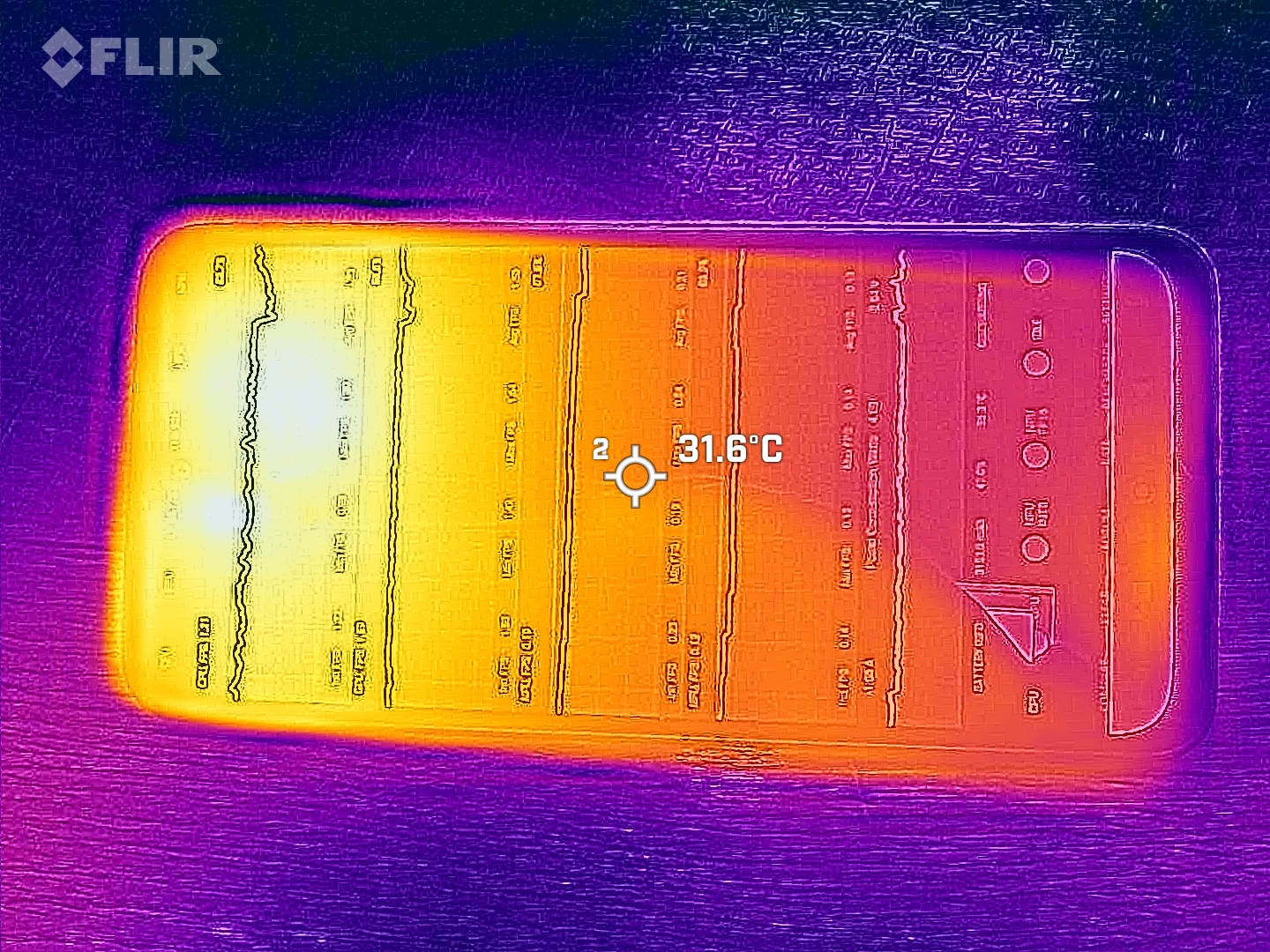
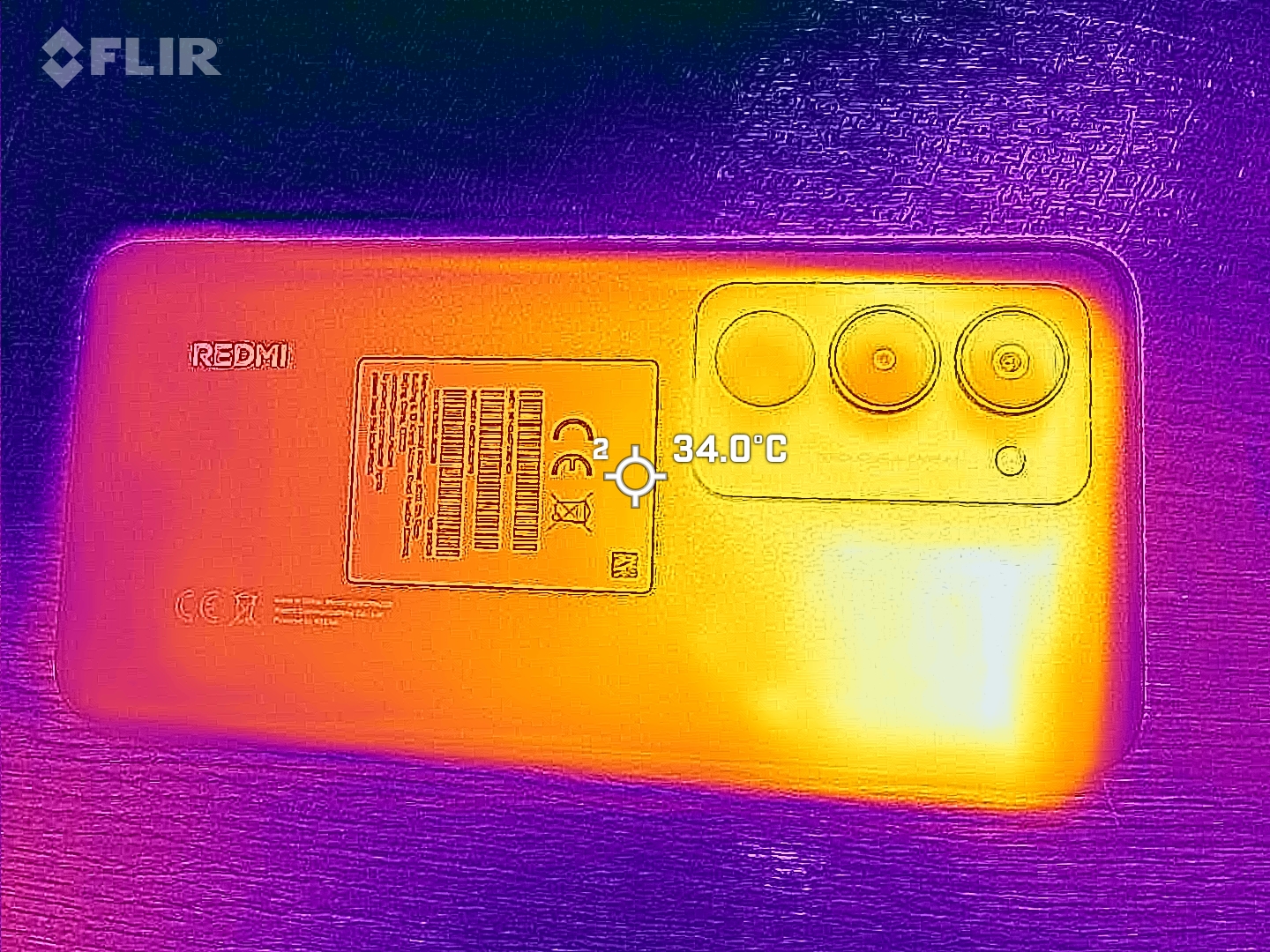
Even under sustained load, the Redmi 15 does not feel uncomfortably warm in the hand, as surface temperatures did not exceed 41 °C during testing.
Internal heat development also remains very modest. In the 3DMark stress tests, no noticeable performance loss occurs.
(±) The maximum temperature on the upper side is 40 °C / 104 F, compared to the average of 35.4 °C / 96 F, ranging from 21.9 to 247 °C for the class Smartphone.
(+) The bottom heats up to a maximum of 38.7 °C / 102 F, compared to the average of 34.1 °C / 93 F
(+) In idle usage, the average temperature for the upper side is 27.7 °C / 82 F, compared to the device average of 33 °C / 91 F.
3DMark Stress Tests
| 3DMark | |
| Wild Life Stress Test Stability | |
| ZTE Nubia Music | |
| Motorola Moto G06 | |
| Samsung Galaxy A17 4G | |
| Xiaomi Redmi 15 4G | |
| Xiaomi Redmi 15C 5G | |
| Wild Life Extreme Stress Test | |
| Motorola Moto G06 | |
| Xiaomi Redmi 15 4G | |
| Xiaomi Redmi 15C 5G | |
| Samsung Galaxy A17 4G | |
| ZTE Nubia Music | |
Speakers
The Redmi 15 does not offer stereo sound. However, the mono speaker located next to the USB-C port does a good job. As is typical for smartphones, low frequencies are scarce, while mids and highs are reproduced in a fairly balanced manner.
External audio devices can be connected via USB-C and Bluetooth 5.0. The Redmi 15 supports a wide range of current Bluetooth codecs, including aptX HD and LHDC V1 to V5.
Xiaomi Redmi 15 4G audio analysis
(+) | speakers can play relatively loud (84.2 dB)
Bass 100 - 315 Hz
(-) | nearly no bass - on average 29.3% lower than median
(±) | linearity of bass is average (12.7% delta to prev. frequency)
Mids 400 - 2000 Hz
(±) | higher mids - on average 6.2% higher than median
(+) | mids are linear (4.8% delta to prev. frequency)
Highs 2 - 16 kHz
(+) | balanced highs - only 3.7% away from median
(+) | highs are linear (5.1% delta to prev. frequency)
Overall 100 - 16.000 Hz
(±) | linearity of overall sound is average (20.7% difference to median)
Compared to same class
» 38% of all tested devices in this class were better, 9% similar, 54% worse
» The best had a delta of 11%, average was 34%, worst was 136%
Compared to all devices tested
» 56% of all tested devices were better, 8% similar, 36% worse
» The best had a delta of 4%, average was 23%, worst was 136%
Samsung Galaxy A17 4G audio analysis
(+) | speakers can play relatively loud (89 dB)
Bass 100 - 315 Hz
(-) | nearly no bass - on average 24% lower than median
(±) | linearity of bass is average (12.9% delta to prev. frequency)
Mids 400 - 2000 Hz
(±) | higher mids - on average 6.1% higher than median
(+) | mids are linear (5.3% delta to prev. frequency)
Highs 2 - 16 kHz
(±) | higher highs - on average 6.5% higher than median
(±) | linearity of highs is average (9% delta to prev. frequency)
Overall 100 - 16.000 Hz
(±) | linearity of overall sound is average (21.9% difference to median)
Compared to same class
» 46% of all tested devices in this class were better, 8% similar, 47% worse
» The best had a delta of 11%, average was 34%, worst was 136%
Compared to all devices tested
» 63% of all tested devices were better, 6% similar, 30% worse
» The best had a delta of 4%, average was 23%, worst was 136%
Battery life – the 7,000 mAh battery is the clear highlight
Power consumption
The 7,000 mAh silicon-carbon battery is the standout feature of the Redmi 15. It is designed to deliver excellent runtimes, with the energy-efficient Snapdragon 685 also playing a supporting role.
The Redmi 15 can be charged at up to 33 W and is also capable of reverse charging other devices at up to 18 W. In testing, a full charging cycle takes just under one hour when using the Anker 317 100 W power adapter.
| Off / Standby |   0.1 / 0.2 Watt 0.1 / 0.2 Watt |
| Idle |  1.3 / 1.6 / 1.9 Watt 1.3 / 1.6 / 1.9 Watt |
| Load |
3.8 / 7.9 Watt |
    
| |
Key:
min: ,
med: ,
max: Metrahit Energy | |
| Xiaomi Redmi 15 4G 7000 mAh | Xiaomi Redmi 15C 5G 6000 mAh | Average Qualcomm Snapdragon 685 4G | Average of class Smartphone | |
|---|---|---|---|---|
| Power Consumption | 21% | 10% | -11% | |
| Idle Minimum * (Watt) | 1.3 | 0.6 54% | 1.067 ? 18% | 0.903 ? 31% |
| Idle Average * (Watt) | 1.6 | 0.9 44% | 1.3 ? 19% | 1.477 ? 8% |
| Idle Maximum * (Watt) | 1.9 | 1.3 32% | 1.633 ? 14% | 1.679 ? 12% |
| Load Average * (Watt) | 3.8 | 5.4 -42% | 4.07 ? -7% | 6.64 ? -75% |
| Load Maximum * (Watt) | 7.9 | 6.7 15% | 7.47 ? 5% | 10.5 ? -33% |
* ... smaller is better
Power consumption: Geekbench (150 cd/m²)
Power consumption: GFXbench (150 cd/m²)
Battery life
The Redmi 15 delivers on its promises when it comes to battery life. Thanks to its huge 7,000 mAh battery, the Xiaomi smartphone easily outlasts all comparison devices and only shuts down after almost 27 hours in the realistic WiFi test.
This makes the Redmi 15 particularly well suited for users who do not want to charge their smartphone every day or carry a power adapter with them at all times.
| Battery runtime - WiFi v1.3 | |
| Xiaomi Redmi 15 4G | |
| Motorola Moto G06 | |
| Samsung Galaxy A17 4G | |
| Xiaomi Redmi 15C 5G | |
| ZTE Nubia Music | |
Notebookcheck overall rating
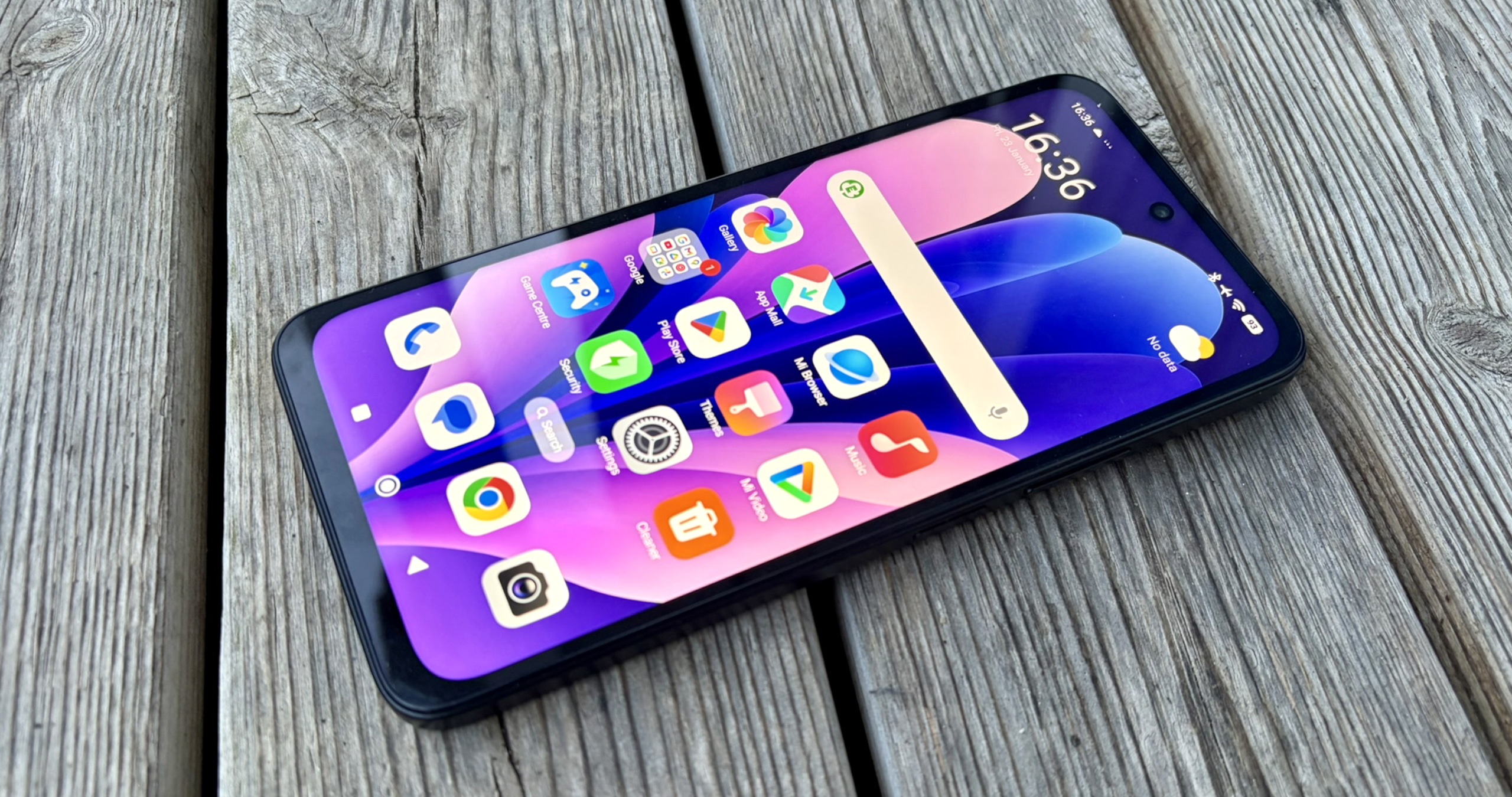
The Xiaomi Redmi 15 4G stands out with a strong price-to-performance ratio. While it does without 5G connectivity, the rest of the feature set is well balanced. Performance is solid, and thanks to its 7,000 mAh battery, the 6.9-inch smartphone achieves excellent battery life.
Xiaomi Redmi 15 4G
- 01/26/2026 v8
Manuel Masiero
 Total Sustainability Score:
 Possible alternatives at a glance
Image | Model / Review | Price | Weight | Drive | Display |
|---|---|---|---|---|---|
1. 72.9%  | Xiaomi Redmi 15 4G Qualcomm Snapdragon 685 4G ⎘ Qualcomm Adreno 610 ⎘ 8 GB Memory, 256 GB UFS 2.2 | Amazon: 1. $229.99 XIAOMI Redmi Note 15 4G LTE ... 2. $209.50 XIAOMI Redmi Note 15 4G LTE ... 3. $189.99 XIAOMI Redmi 15 4G LTE (Comp... List Price: 179 Euro | 224 g | 256 GB UFS 2.2 Flash | 6.90" 2340x1080 374 PPI IPS |
2. 71%  | Motorola Moto G06 Mediatek Helio G81 ⎘ ARM Mali-G52 MP2 ⎘ 4 GB Memory, 256 GB eMMC | List Price: 129€ | 194 g | 256 GB eMMC 5.1 Flash | 6.88" 1640x720 260 PPI IPS |
3. 72%  | Samsung Galaxy A17 4G Mediatek Helio G99 ⎘ ARM Mali-G57 MP2 ⎘ 4 GB Memory, 128 GB eMMC | List Price: 185€ | 190 g | 128 GB eMMC Flash | 6.70" 2340x1080 385 PPI AMOLED |
4. 72.1%  | Xiaomi Redmi 15C 5G Mediatek Dimensity 6300 ⎘ ARM Mali-G57 MP2 ⎘ 4 GB Memory, 128 GB UFS 2.2 | List Price: 170€ | 211 g | 128 GB UFS 2.2 Flash | 6.90" 1600x720 254 PPI IPS |
5. 66.7%  | ZTE Nubia Music UNISOC SC9863A ⎘ PowerVR GE8322 / IMG8322 ⎘ 4 GB Memory, 128 GB eMMC | List Price: 149€ | 199 g | 128 GB eMMC Flash | 6.60" 1612x720 267 PPI IPS |
Transparency
The selection of devices to be reviewed is made by our editorial team. The test sample was provided to the author as a loan by the manufacturer or retailer for the purpose of this review. The lender had no influence on this review, nor did the manufacturer receive a copy of this review before publication. There was no obligation to publish this review. As an independent media company, Notebookcheck is not subjected to the authority of manufacturers, retailers or publishers.
This is how Notebookcheck is testing
Every year, Notebookcheck independently reviews hundreds of laptops and smartphones using standardized procedures to ensure that all results are comparable. We have continuously developed our test methods for around 20 years and set industry standards in the process. In our test labs, high-quality measuring equipment is utilized by experienced technicians and editors. These tests involve a multi-stage validation process. Our complex rating system is based on hundreds of well-founded measurements and benchmarks, which maintains objectivity. Further information on our test methods can be found here.
 Add as a preferred source on Google


