




Marshall Bromley 450 party speaker review – the most versatile and best party speaker of 2026?
It might get loud.
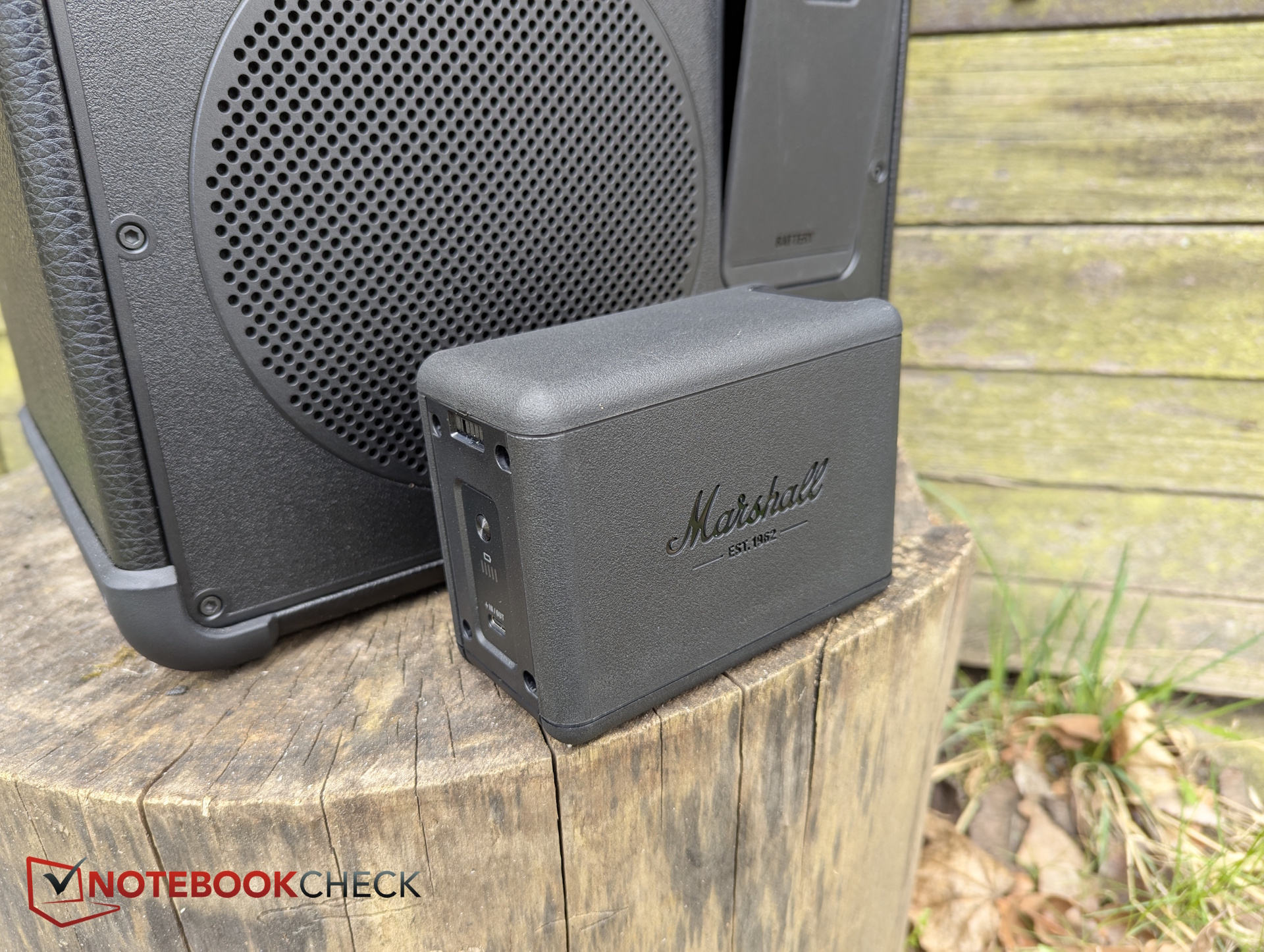
A portable party speaker with Auracast, powerful 360-degree sound, IP55 protection, two combo instrument/microphone inputs, rock-inspired Marshall design, and a swappable battery—that’s the Bromley 450. And instead of $1,299.99 for the larger Bromley, this one comes in at just $799.99.Christian Hintze (translated by Christian Hintze) Published 🇩🇪 🇳🇱 ...
Verdict – mobile party speaker, karaoke machine and mini amp in one
Back when we reviewed the powerful Marshall Tufton, it was already clear that Marshall was experimenting with party speaker concepts. However, it lacked modern features and inputs for instruments or microphones.
The “smaller” of the two Bromleys takes a very different approach. It delivers exactly what you’d expect from a modern party speaker: excellent, punchy sound, up-to-date features (Auracast, 360-degree audio), and two combo inputs for instruments or microphones. That makes it extremely versatile—equally capable of powering a (smaller) party or serving as a one-man entertainment system or karaoke machine with a mic and guitar. Unlike bulky party speakers on wheels, it’s just compact and light enough to carry around comfortably. And the battery is replaceable—huge plus. The only real drawback: the otherwise clean app could use a few more features.
Pros
Cons
Table of Contents
- Verdict – mobile party speaker, karaoke machine and mini amp in one
- Specifications – microphone, guitar and Auracast in focus
- Build and features – Marshall rock attitude instead of generic LED-flashes
- App and controls – great on-device, limited app functionality
- Hands-on and sound test – balanced with warm bass
Last year, Marshall surprised everyone by launching its first dedicated party speaker, the Bromley 750. Apparently, the market responded well, because the heritage brand is now following up with the more compact Bromley 450. We take a closer look at the design—once again a standout—and evaluate the sound profile of the “smaller” Bromley.
Specifications – microphone, guitar and Auracast in focus
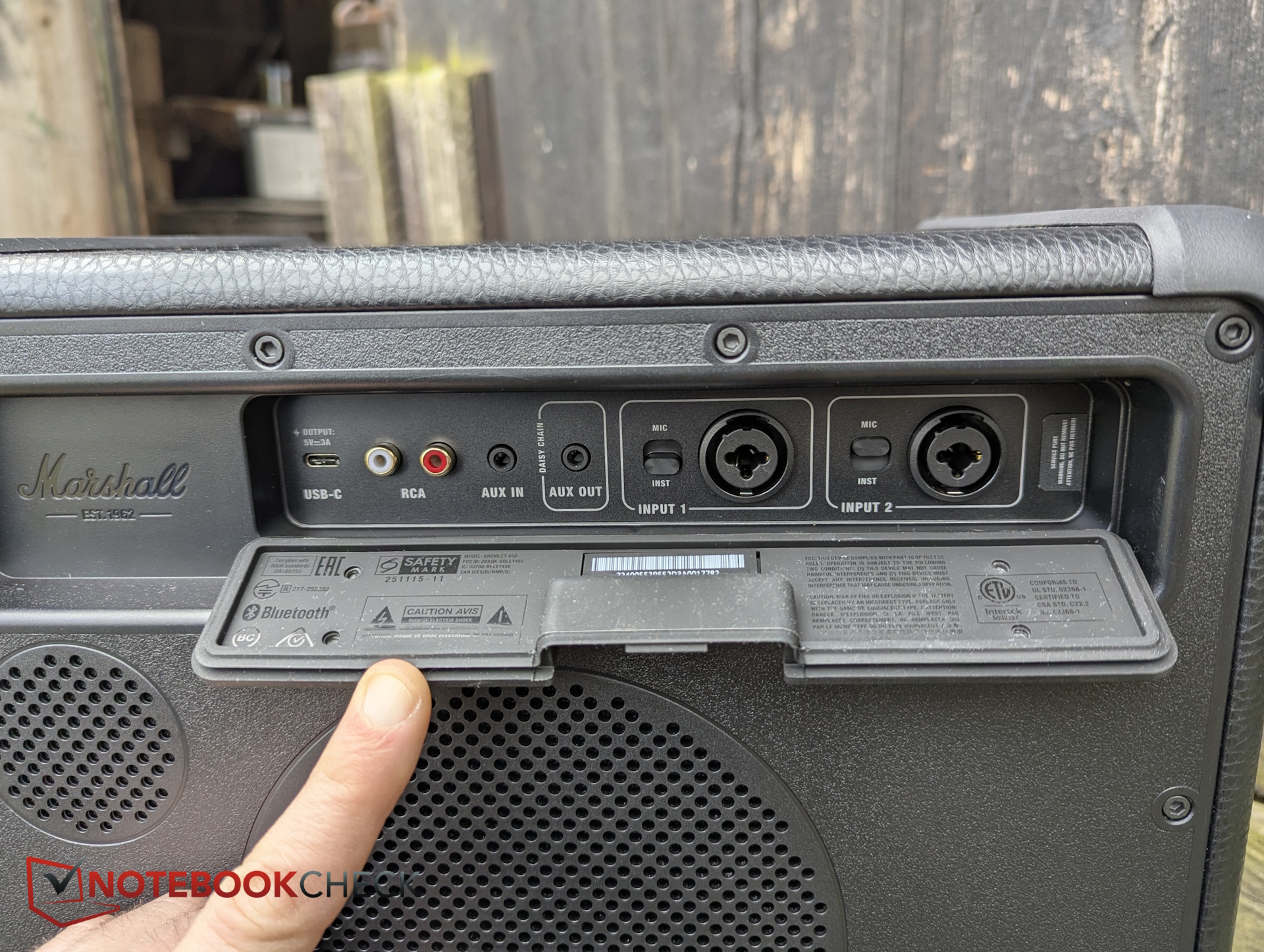
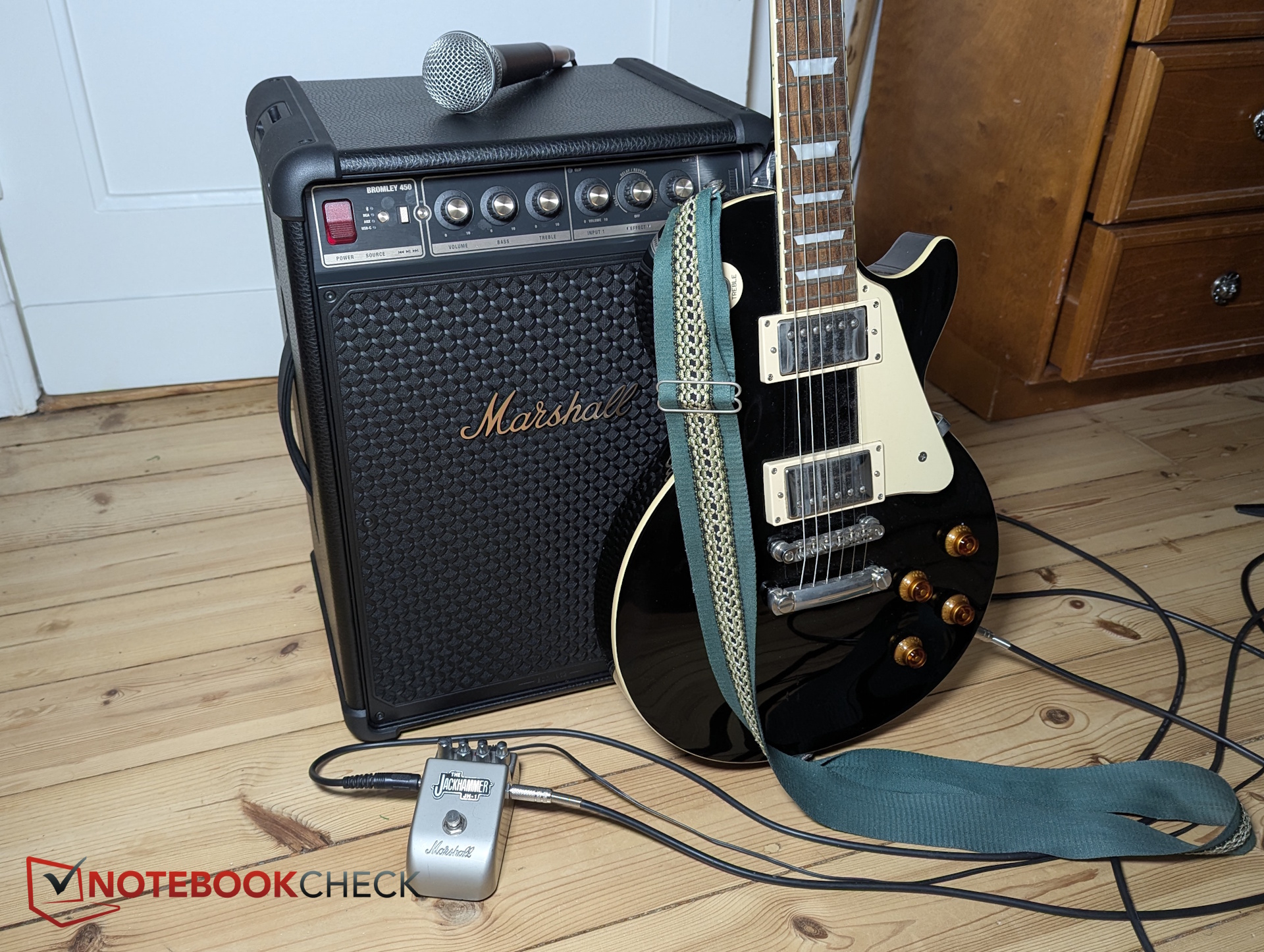
The party speaker doesn’t just look like a cool guitar amp—if you really wanted to, you could actually use it as one. Two combo inputs (XLR/¼-inch with a switch for instrument/mic) let you connect guitars and more, each controlled via dedicated input knobs. The inputs themselves don’t offer distortion, but with an external distortion pedal in the signal chain, you can easily jam along to party tracks while adding vocals through a microphone.
| Amplifiers | 2x Class D amps (90 W) for woofers 4x Class D amps (55 W) for full-range drivers |
| Drivers | 2 x 6.5-inch woofers (40 W) 4 x 2-inch full-range speakers (6 W) 2 x 8-inch passive radiators |
| Frequency range | 42 Hz – 20 kHz |
| Maximum SPL | 100 dB @ 1 m |
| Ports | 2 x XLR/6.3 mm combo jacks, AUX 3.5 mm (in/out), USB-C, RCA |
| Codecs | SBC, AAC (MPEG-2) and LC3 |
| Wireless connectivity | Bluetooth 5.3, Auracast |
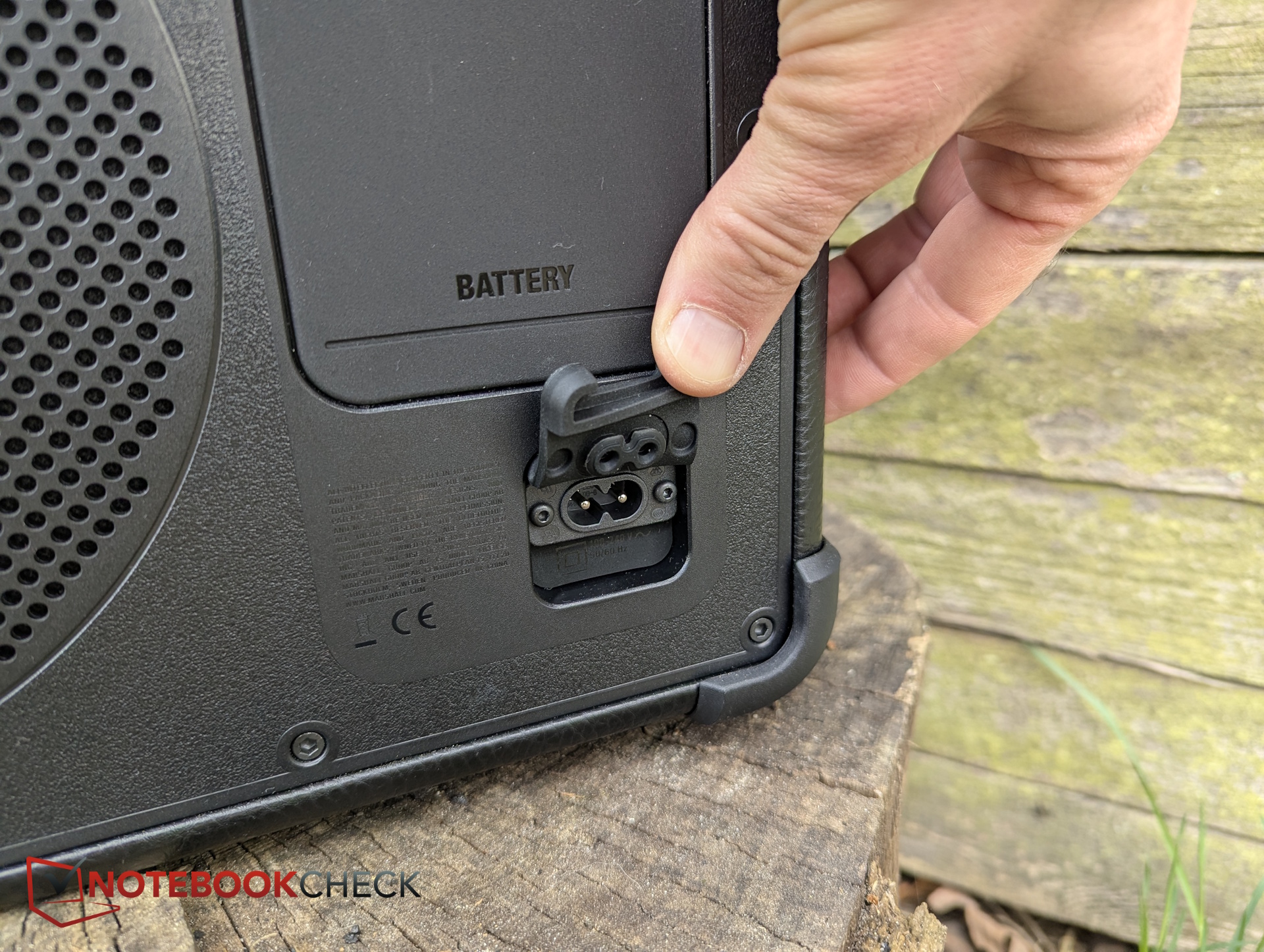
| Battery life | 40+ hours, replaceable battery |
| Features | Carry handle, lighting effects |
| Water resistance | IP55 |
| Dimensions | 360 x 261 x 492 mm |
| Weight | 12.2 kg |
| Price | $799.99 |
Build and features – Marshall rock attitude instead of generic LED-flashes
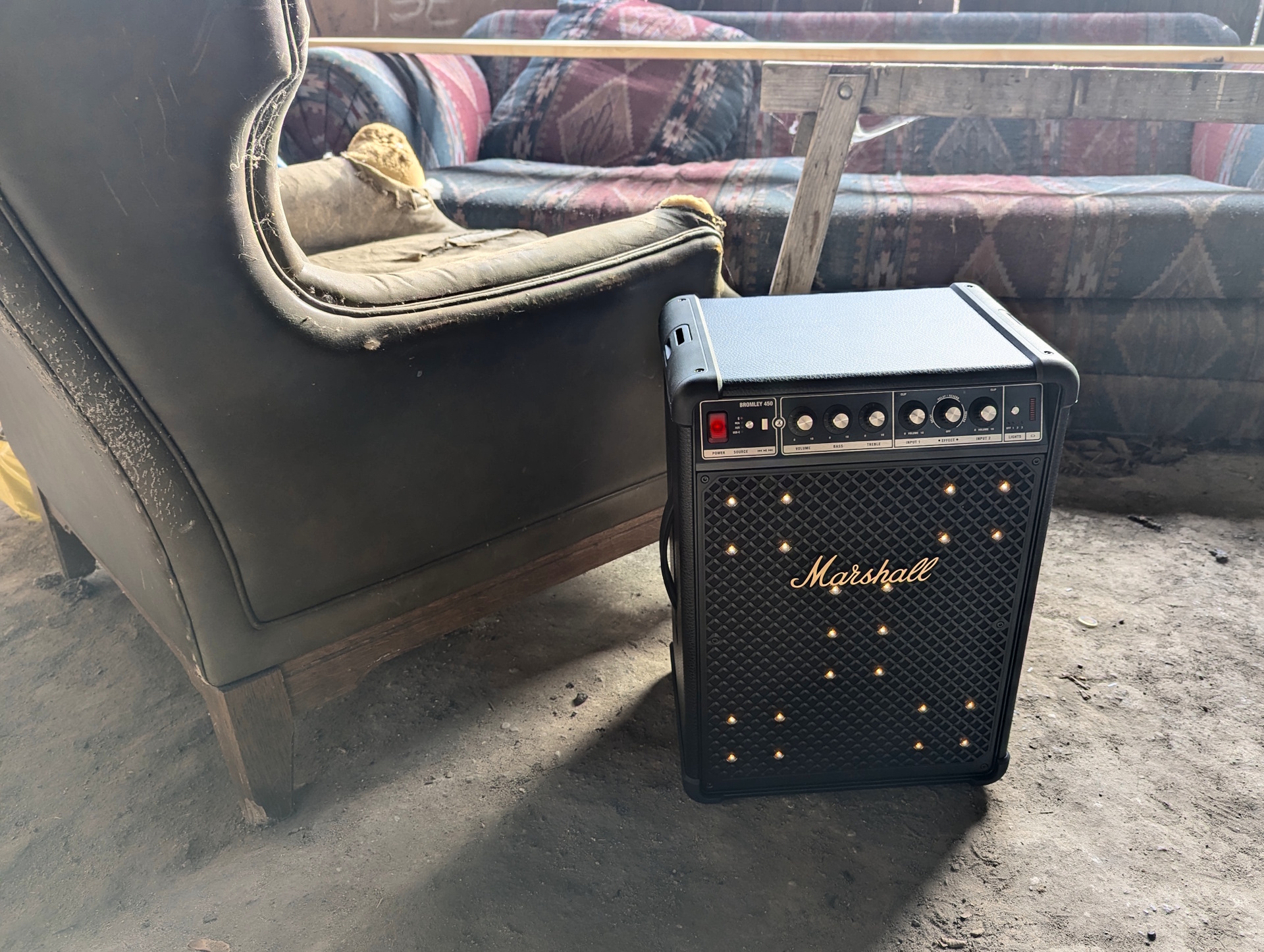
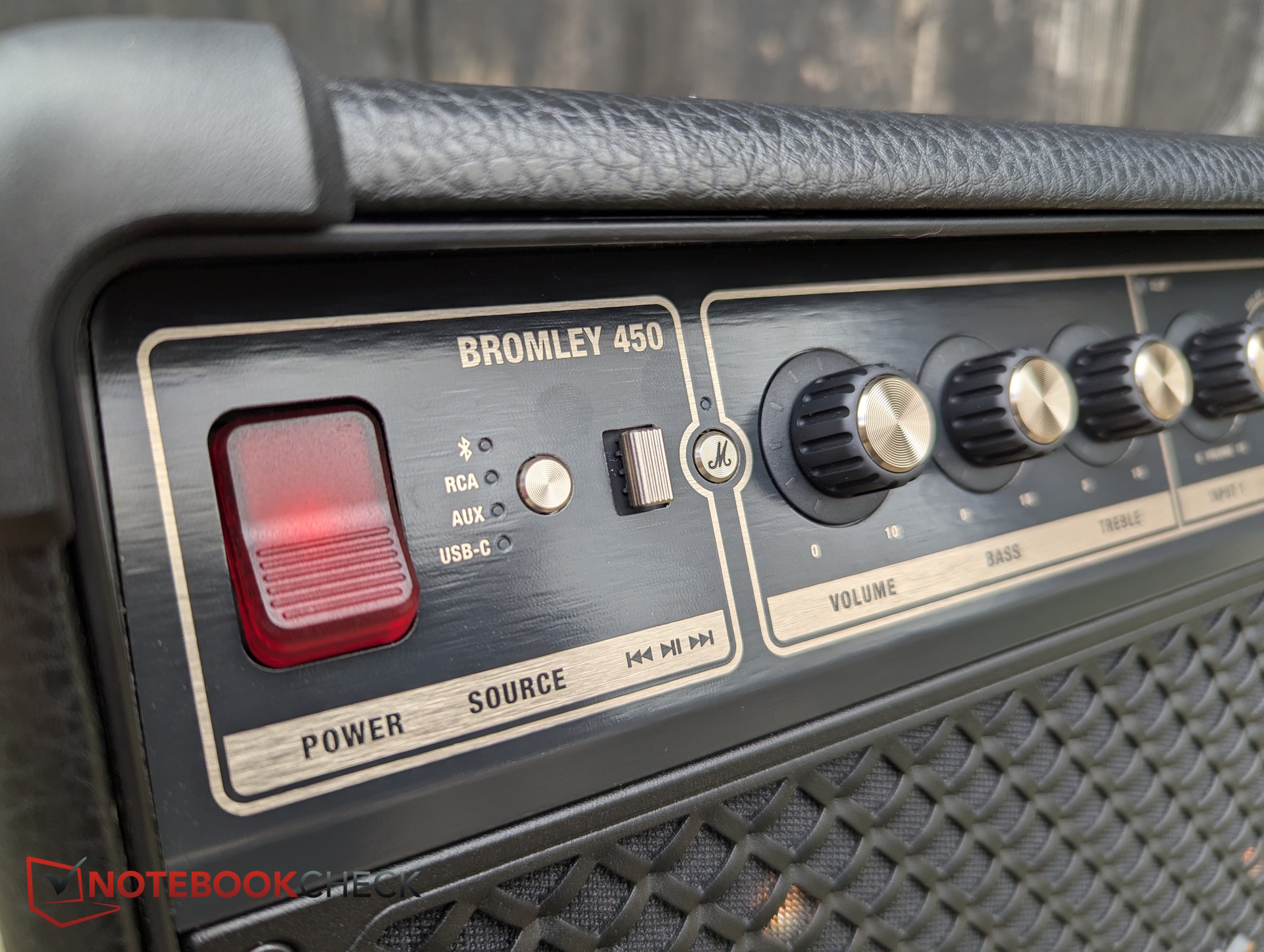
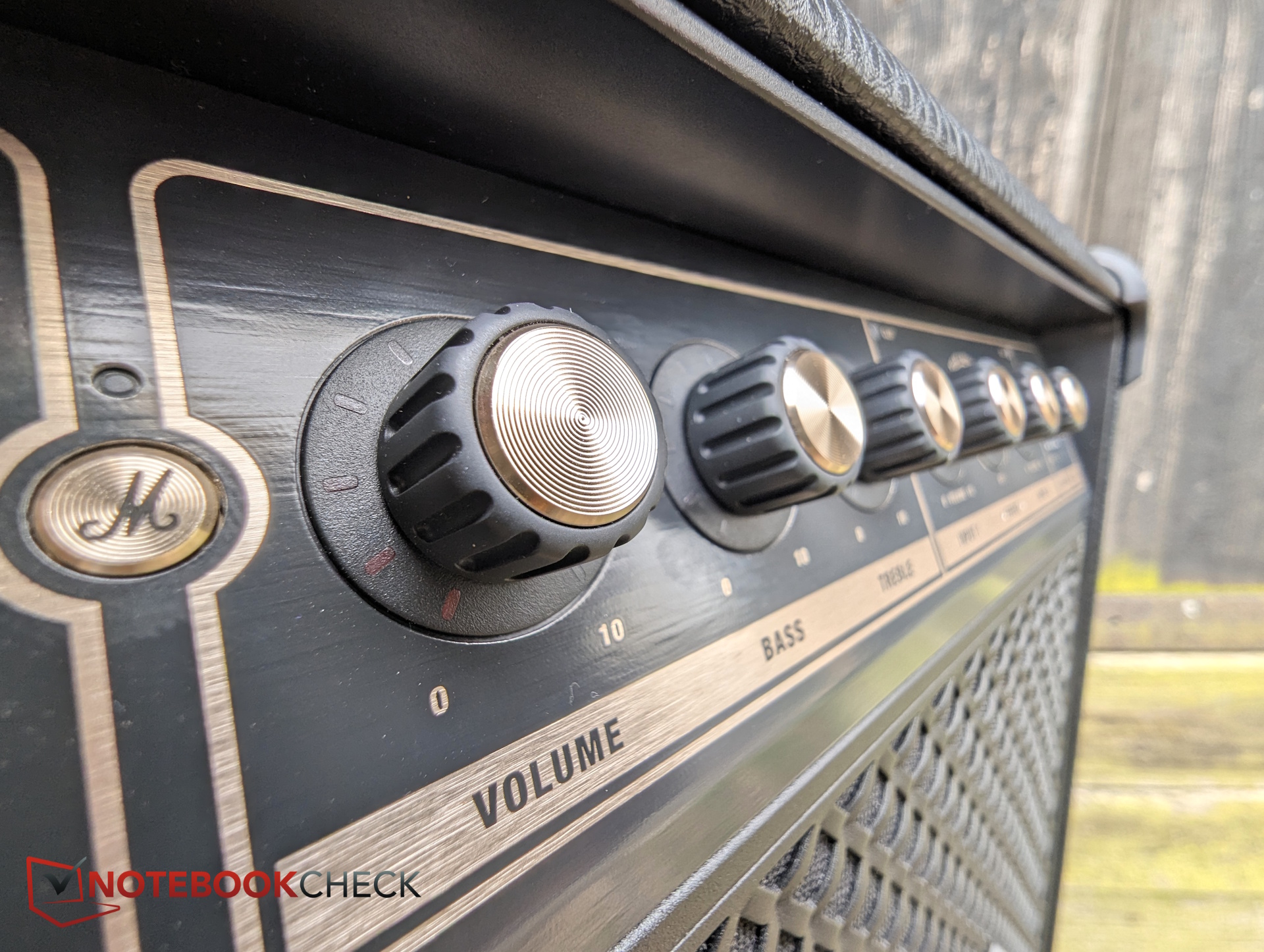
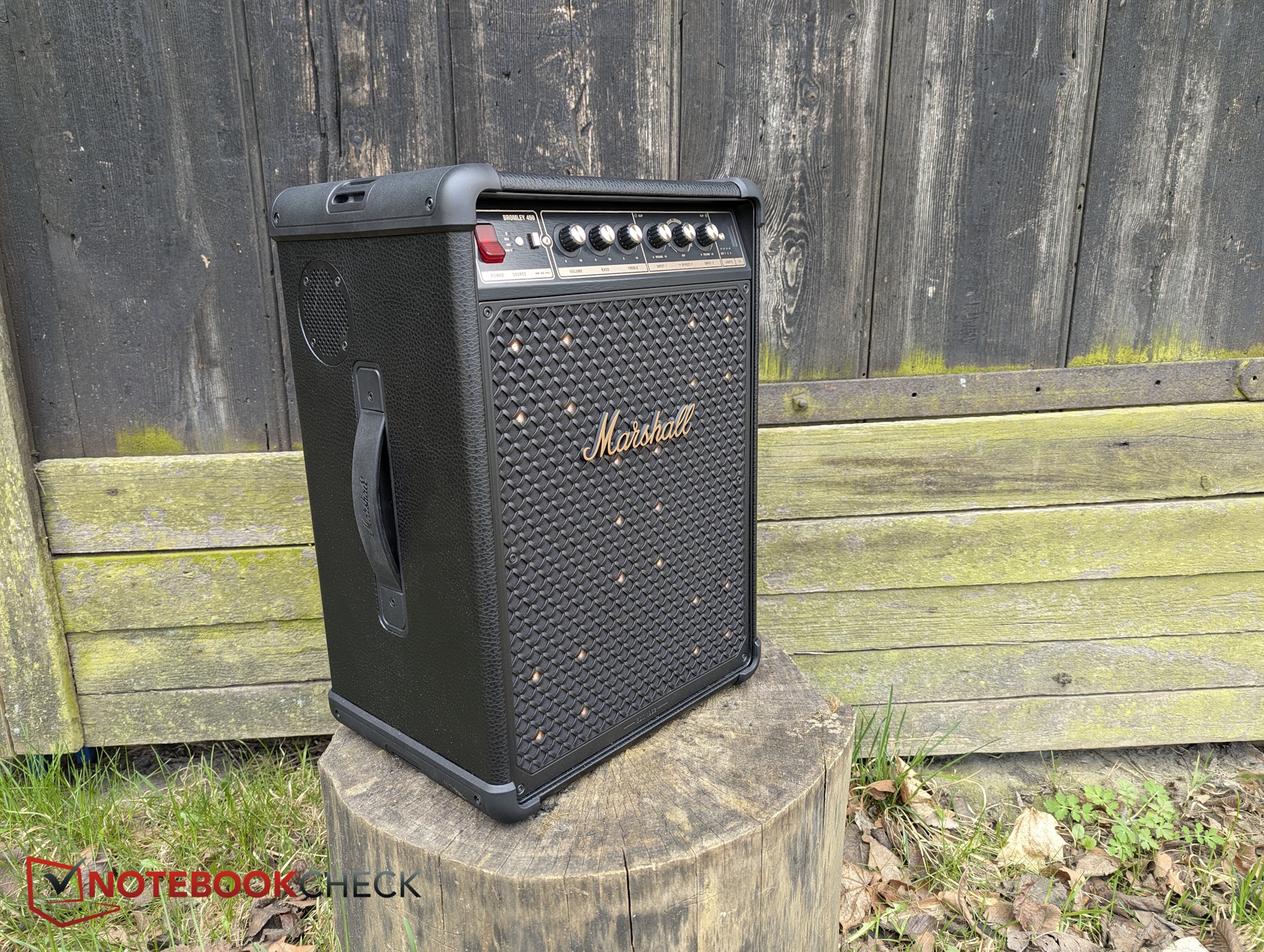
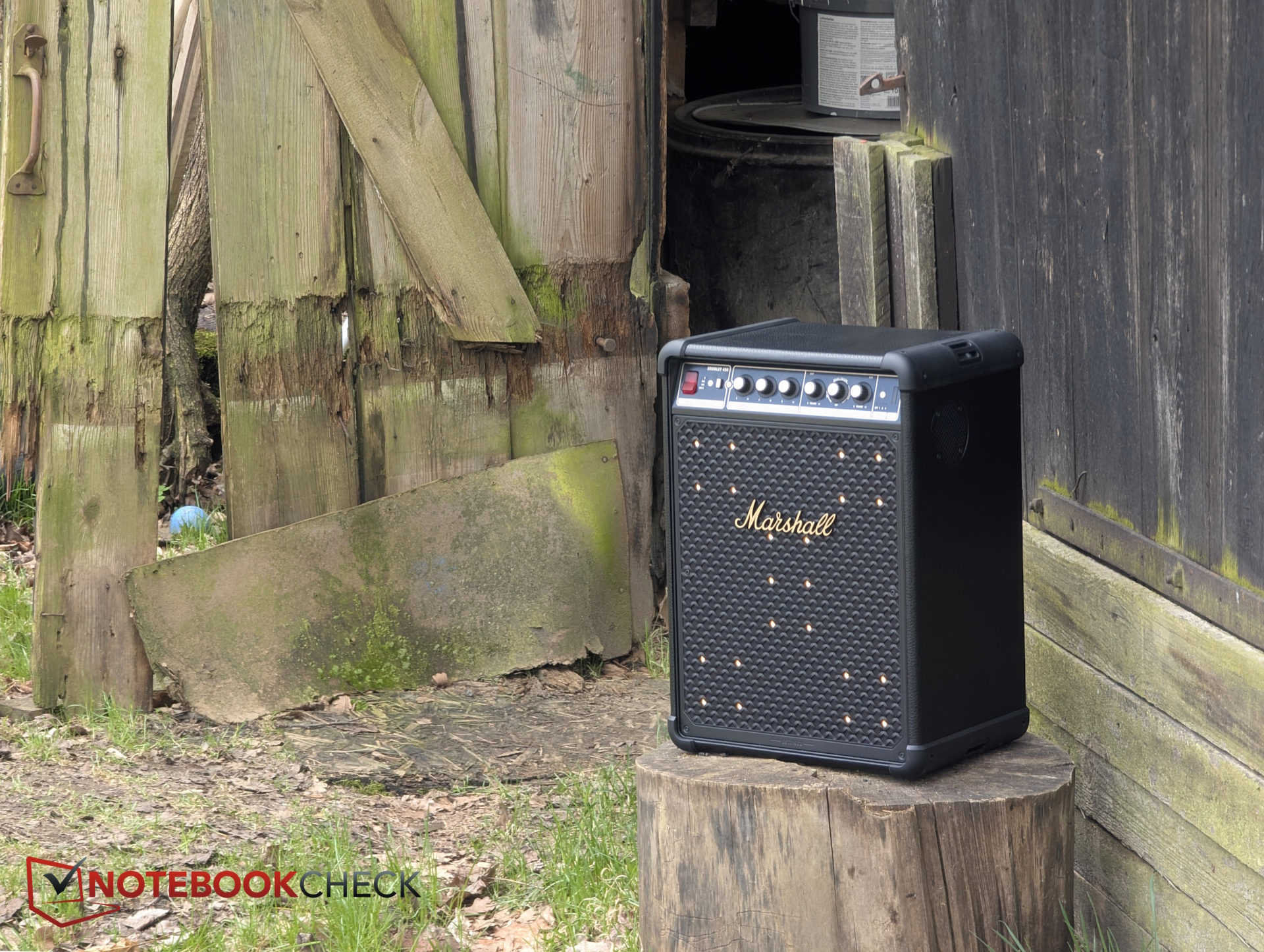
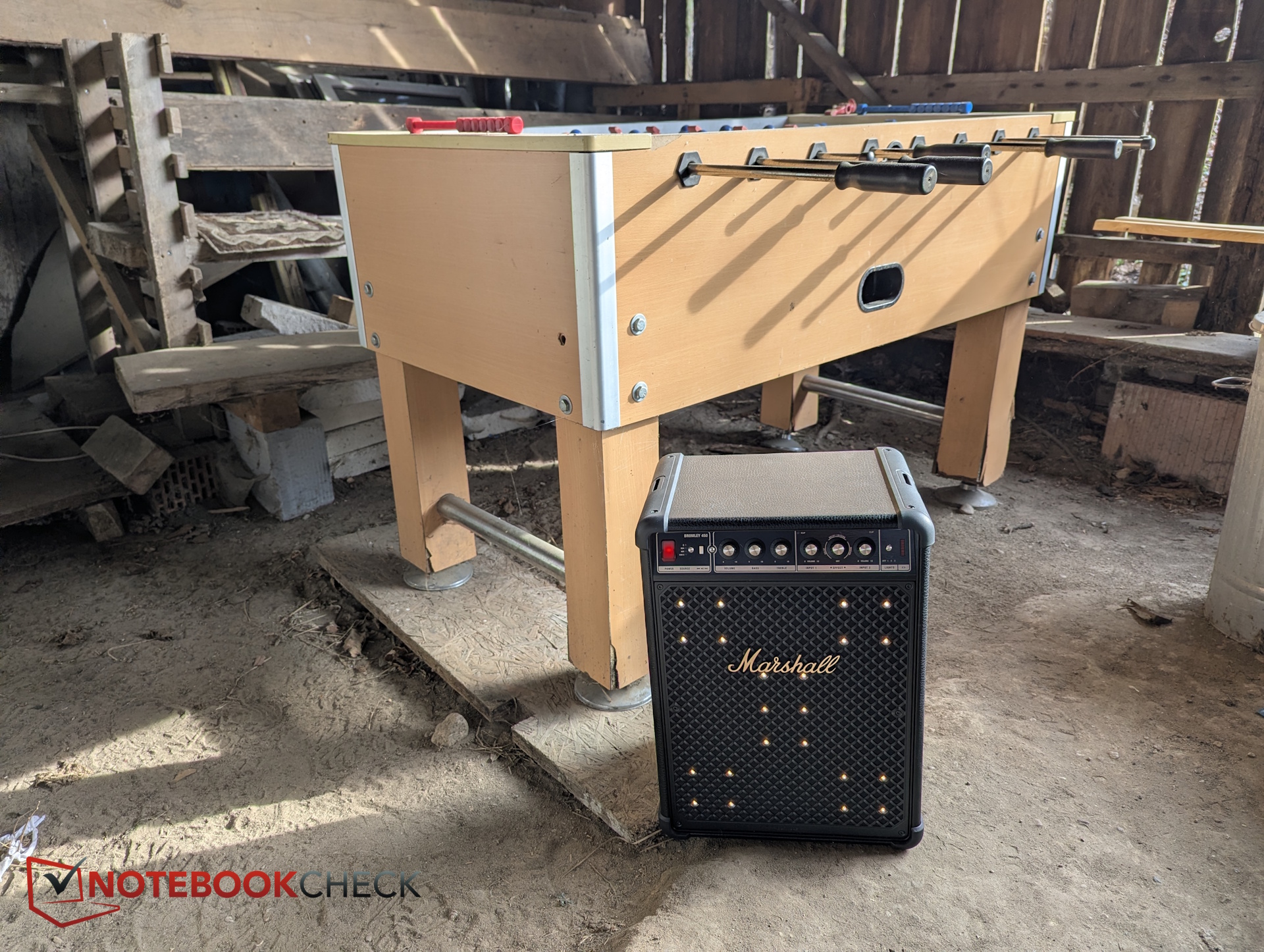
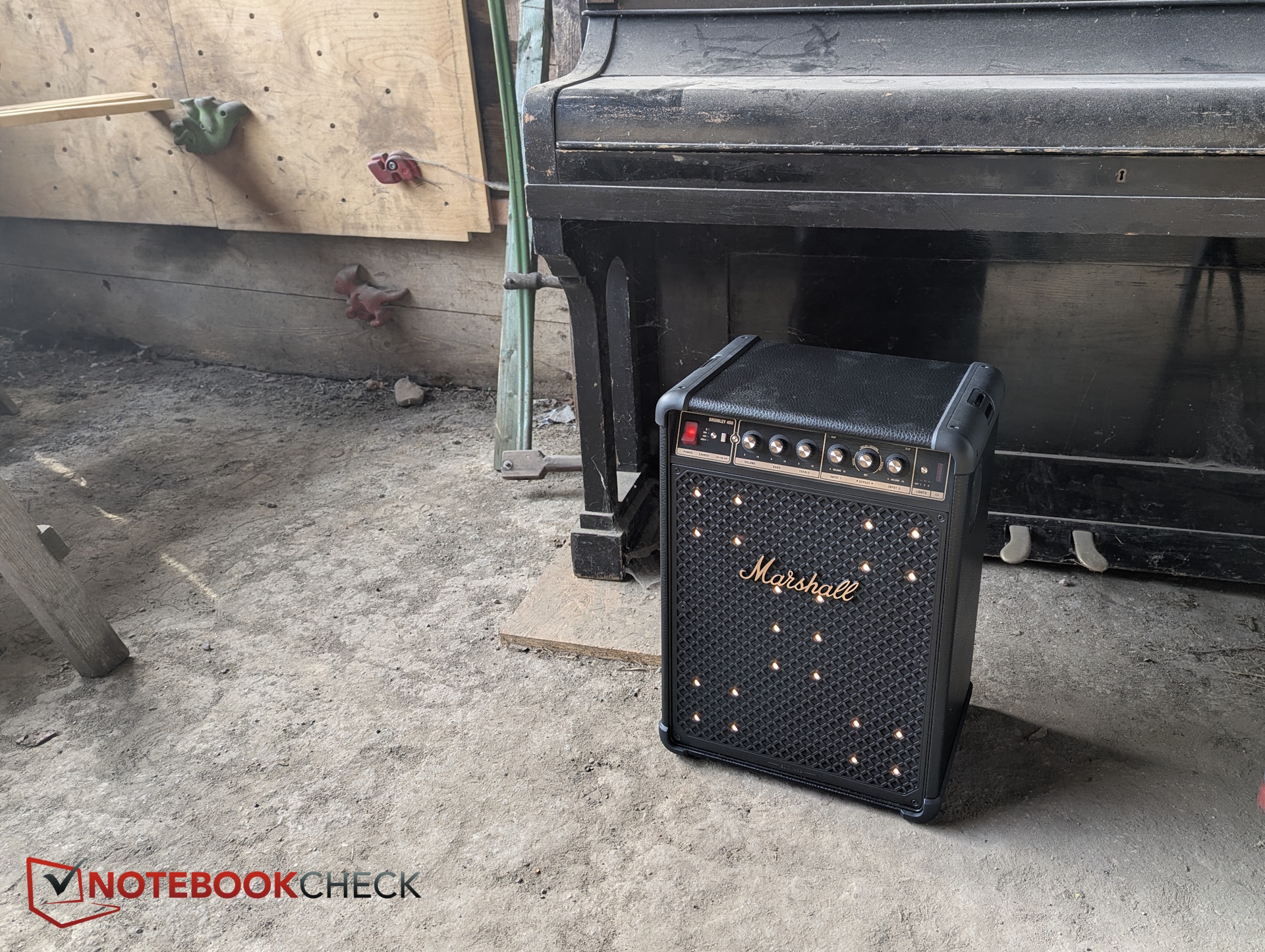
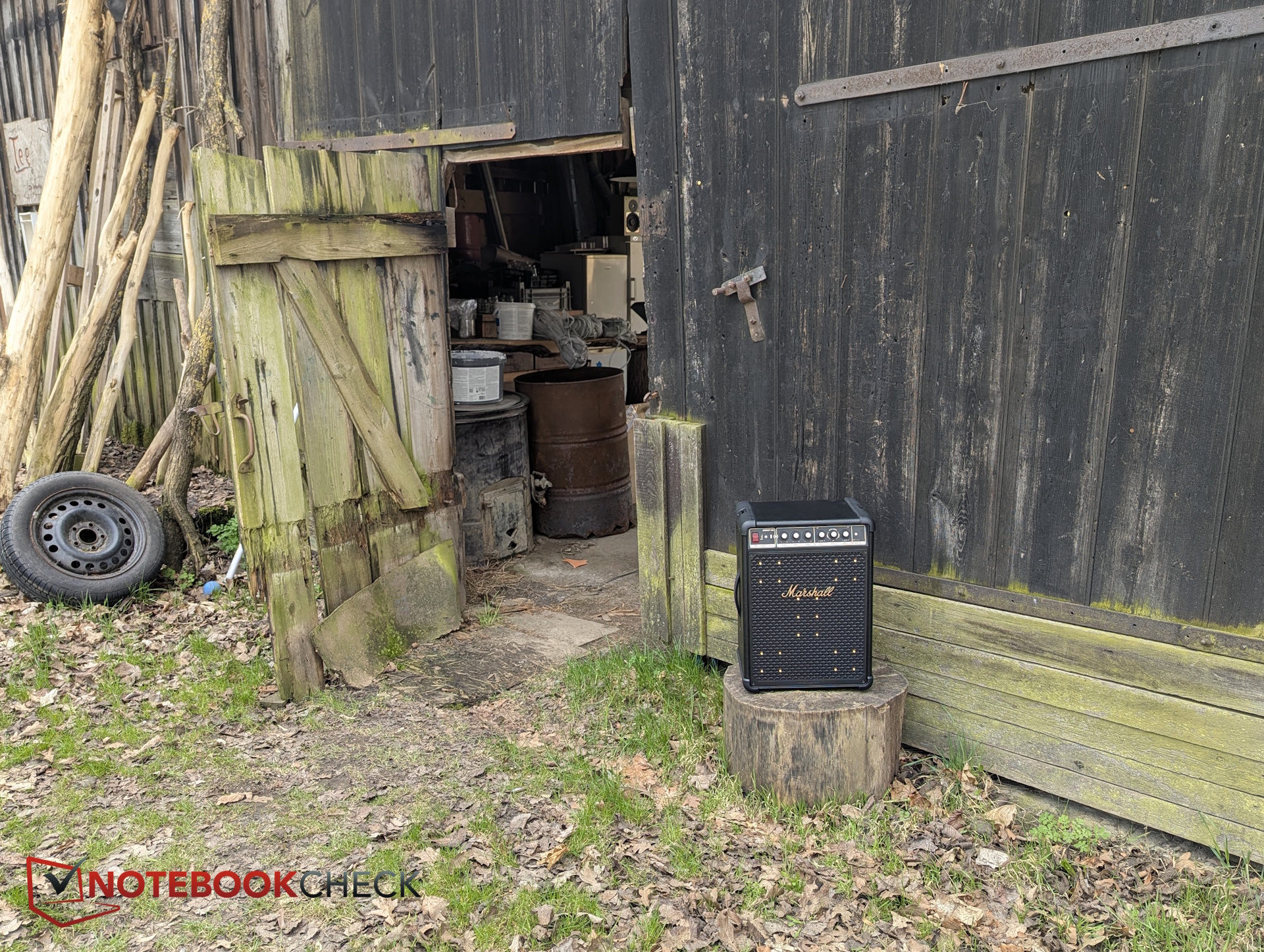
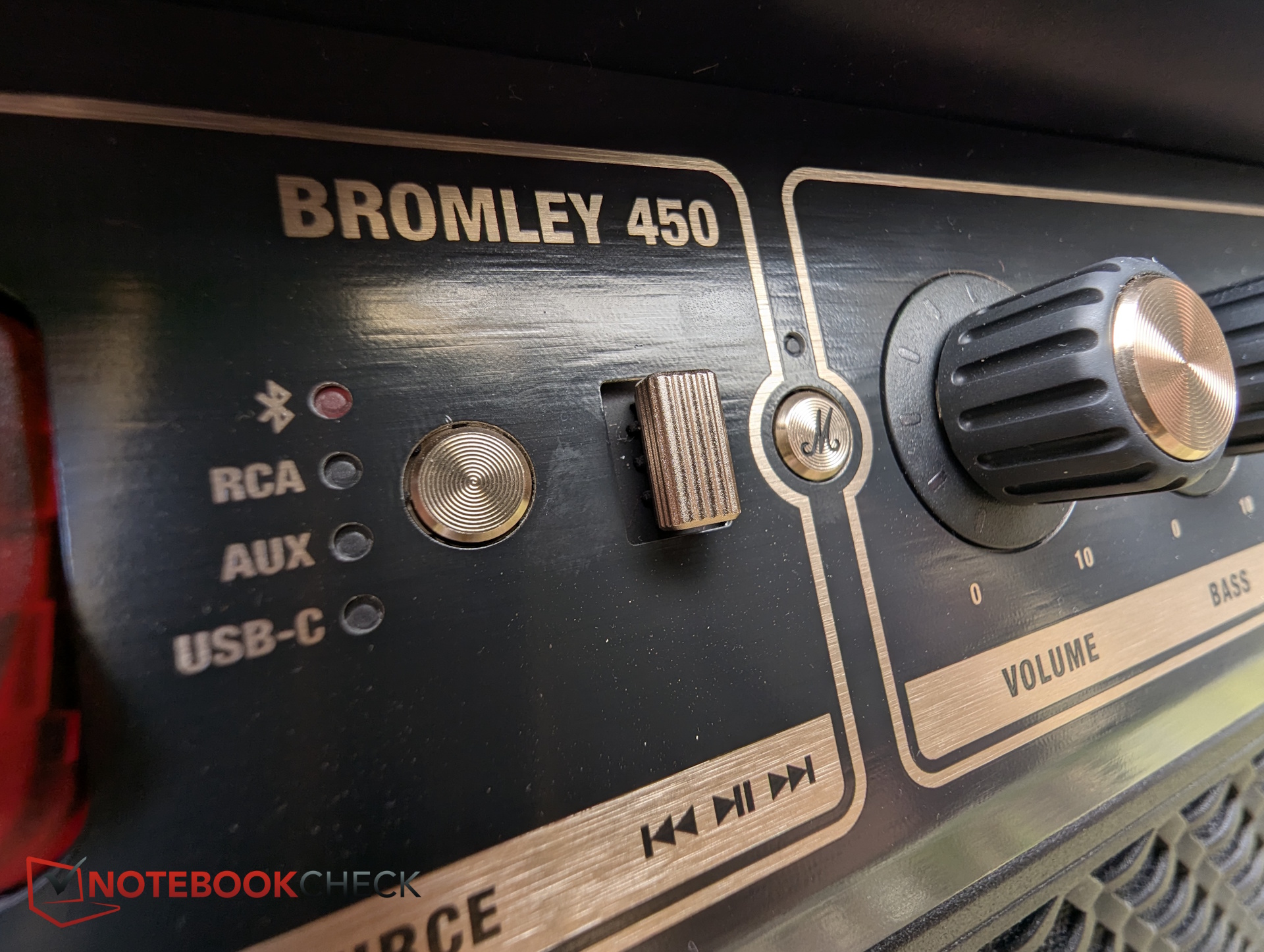
Anyone familiar with the larger Bromley 750 might do a double take—the 450 looks almost identical, just scaled down. That means signature Marshall styling instead of generic, flashy designs. In practice, that translates to premium PU leather covering surfaces that are typically bare plastic, a distinctive metal grille up front, and brass buttons and rotary knobs along the top panel. There’s also the customizable “M” button, which can be assigned via the app.
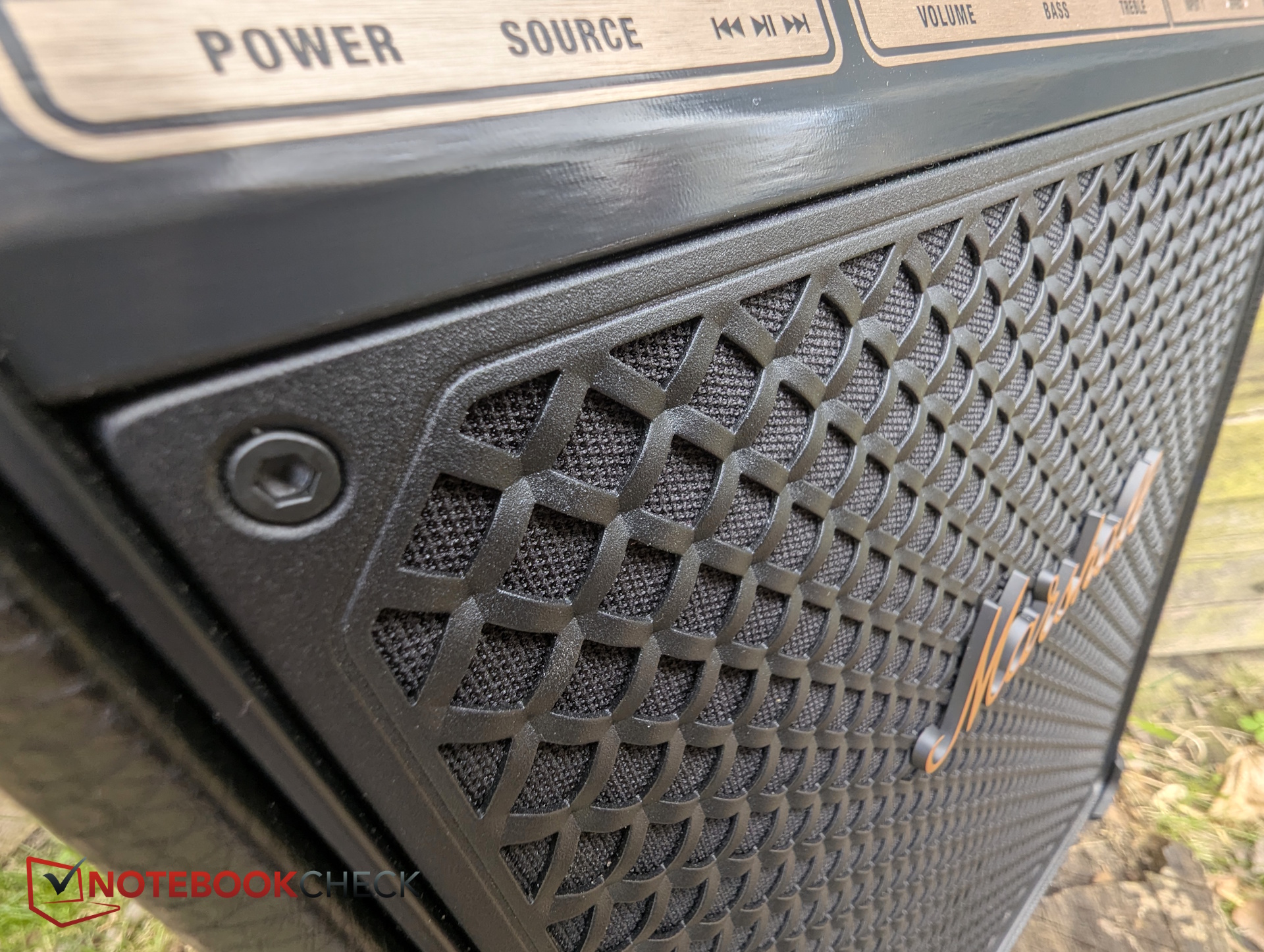
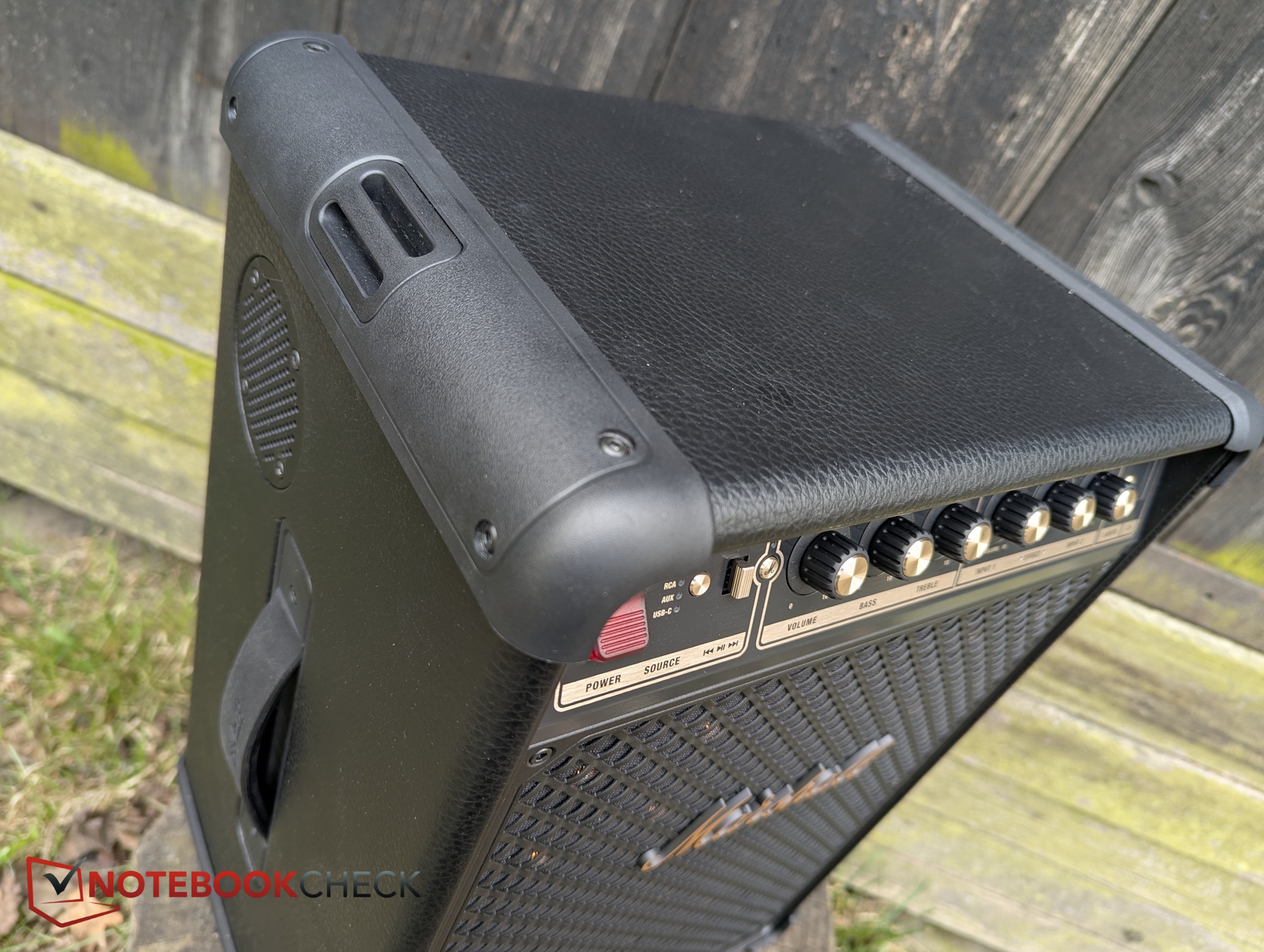
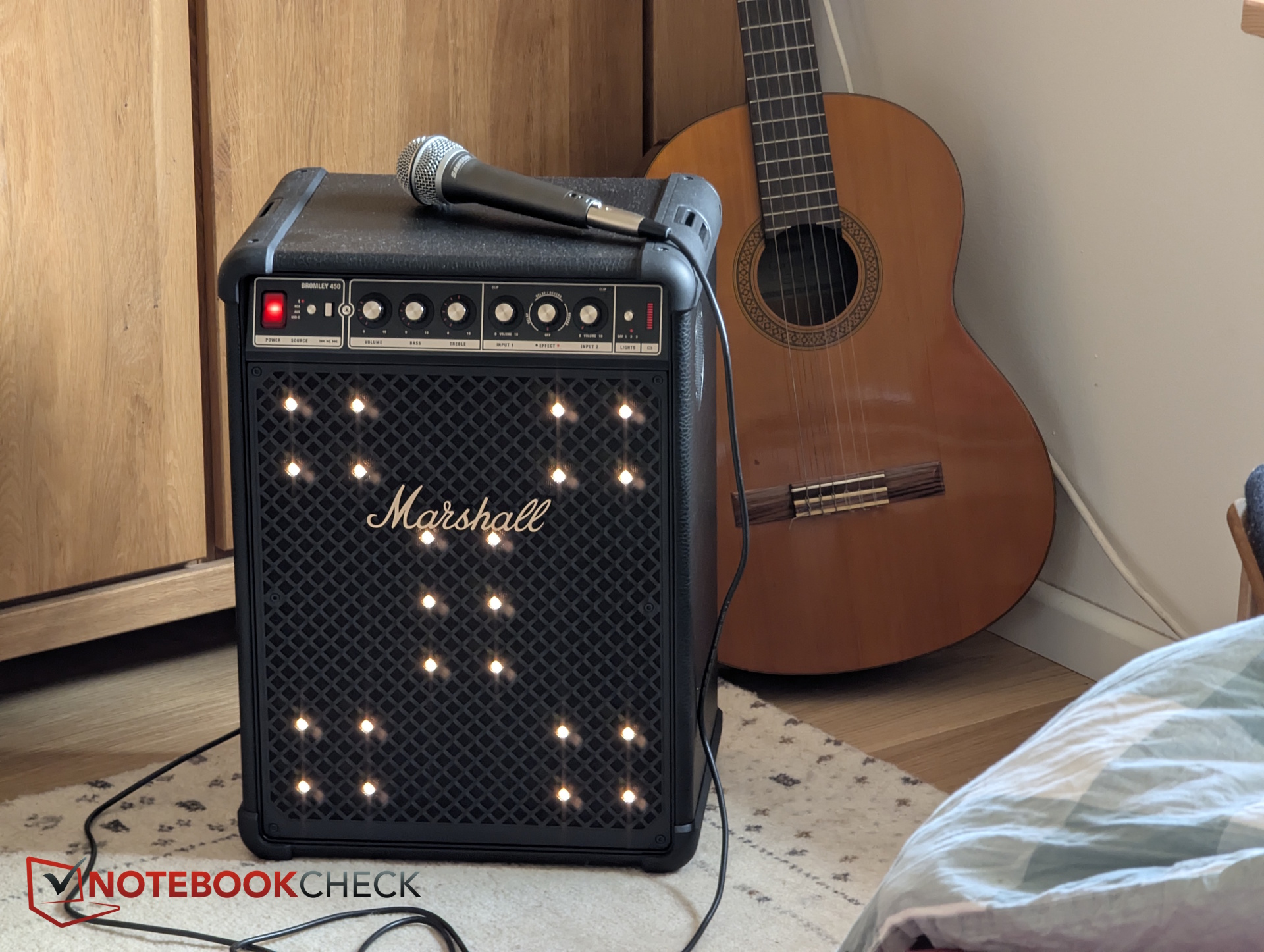
Since party speakers often feature flashy lighting that doesn’t quite fit Marshall’s rock aesthetic, the company opted for a different approach: integrated “stage lights” behind the grille, inspired by iconic 1970s concert setups. Depending on the mode, they glow or pulse in a single color.
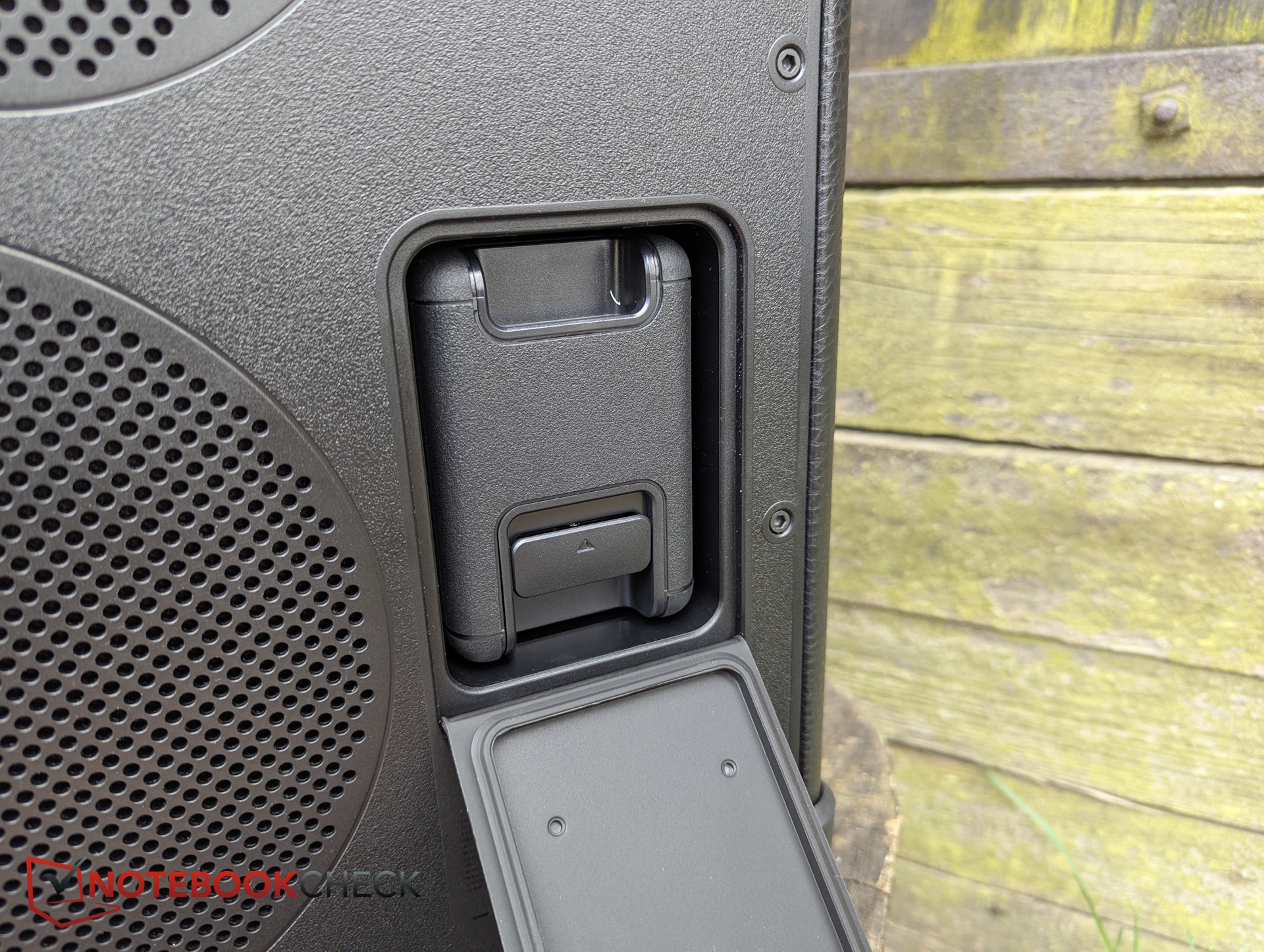
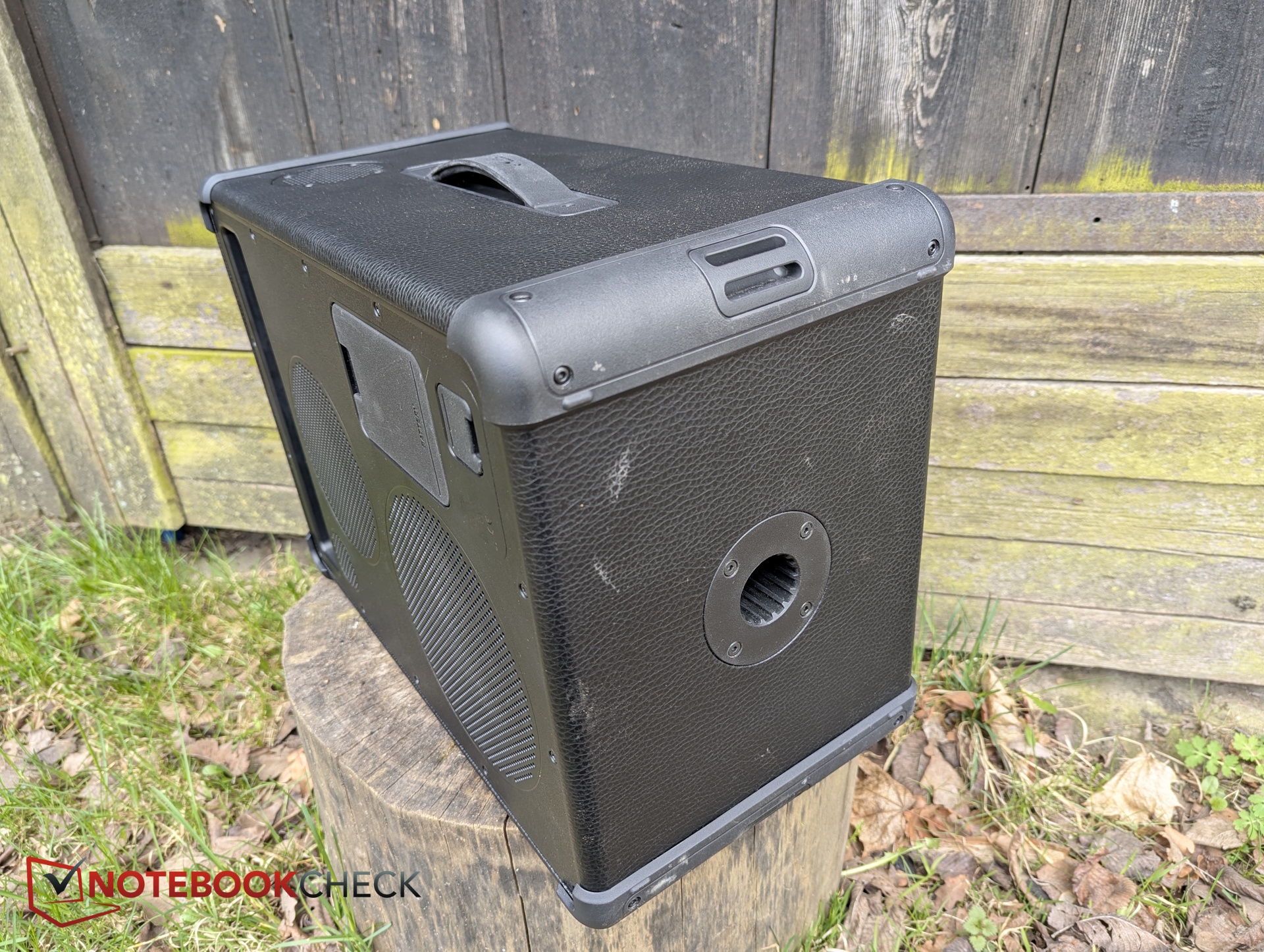
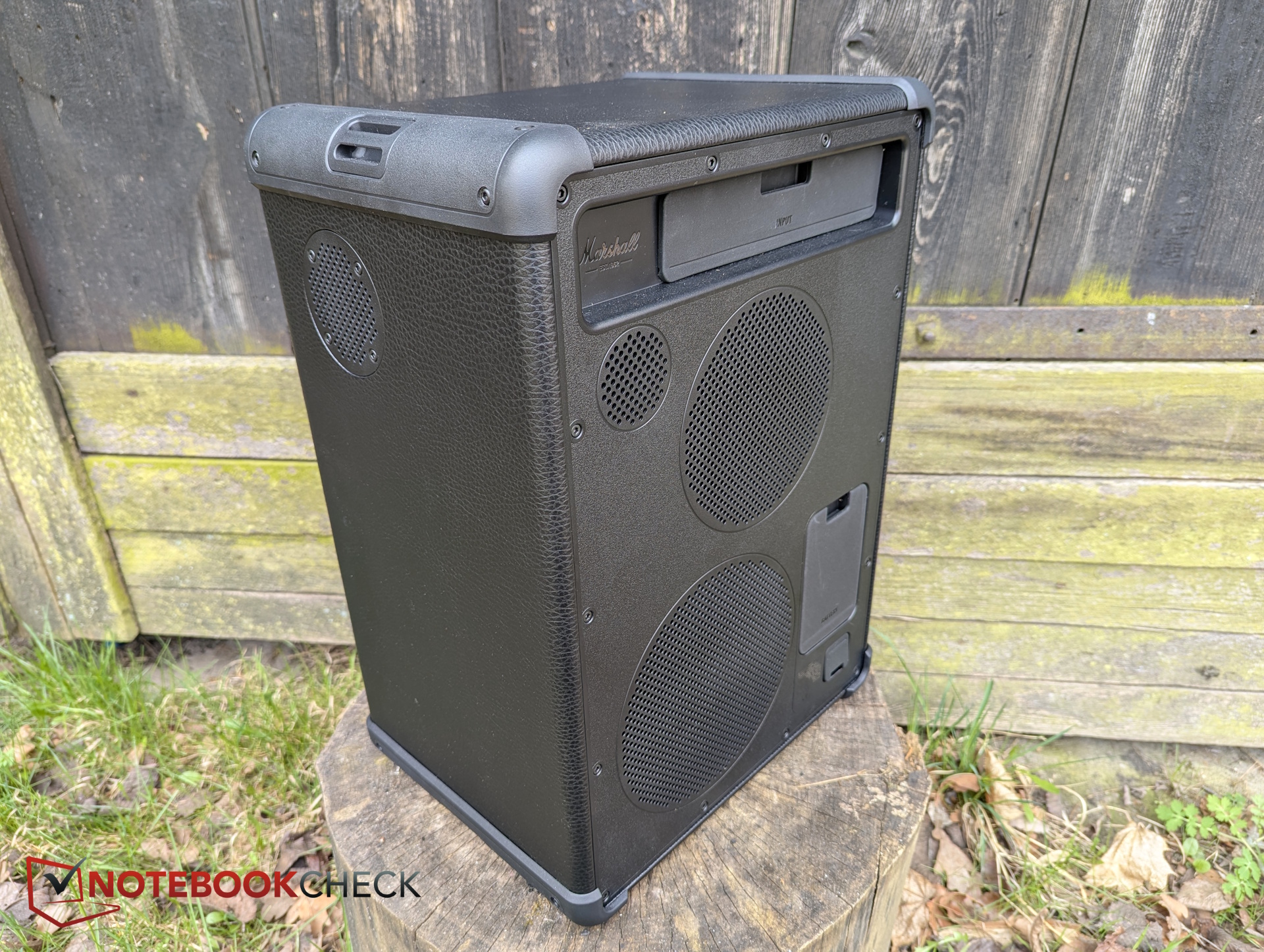
Unlike the larger Bromley, the 450 doesn’t include wheels or a telescopic handle. Instead, it features a side-mounted carry handle—which makes sense, given it weighs about half as much and remains reasonably portable.
App and controls – great on-device, limited app functionality
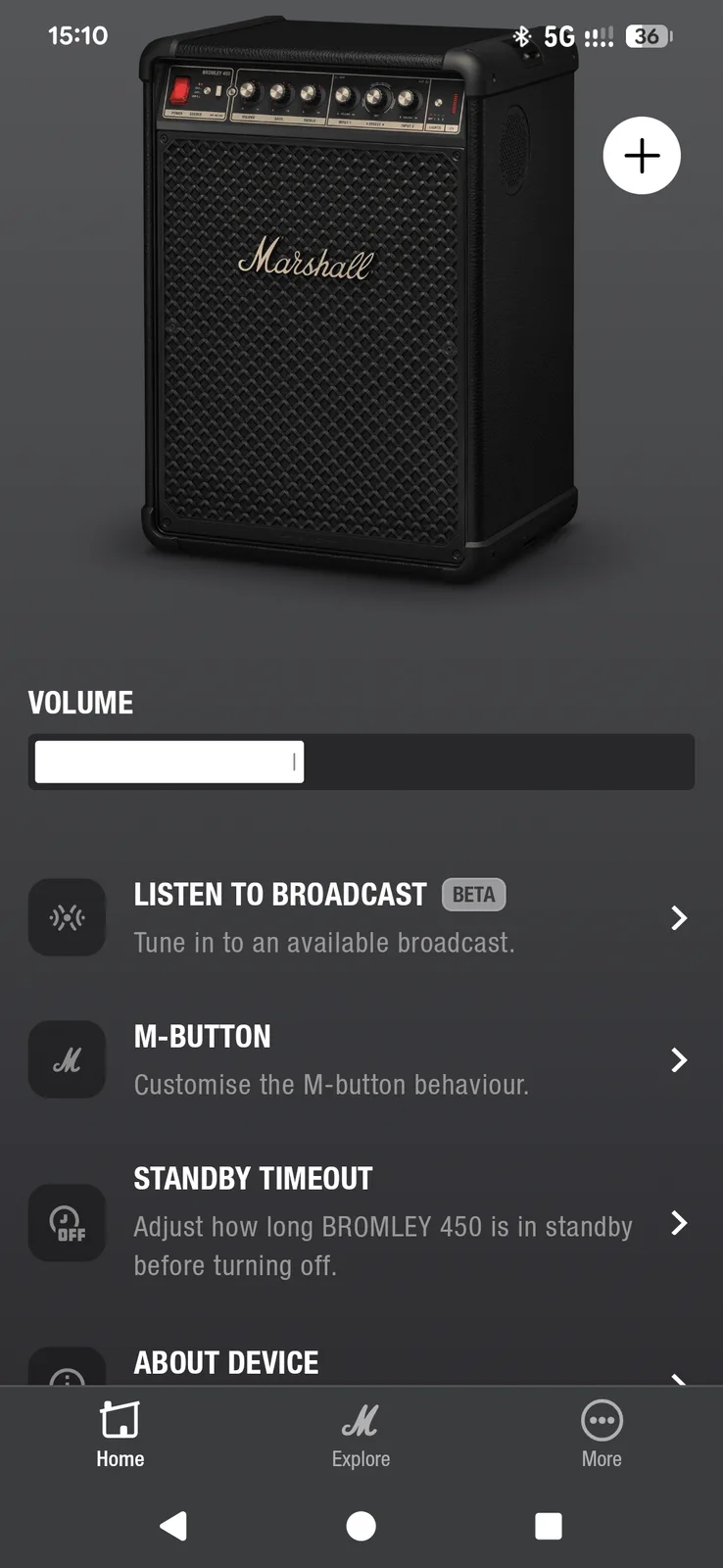
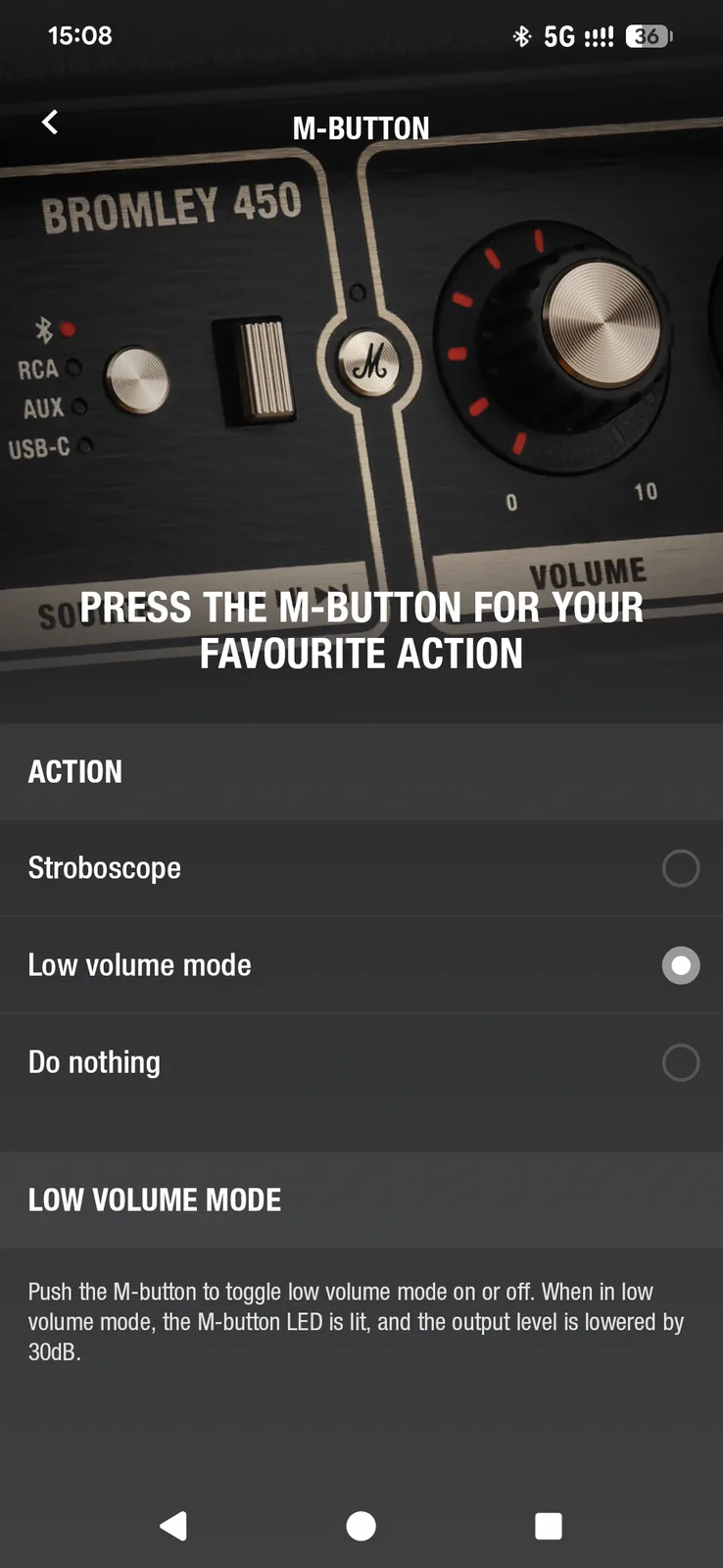
The Bromley uses the same app as Marshall’s headphones. The Marshall Bluetooth app looks clean and is easy to navigate, but it’s lacking in features. You’ll mainly need it for Auracast (linking multiple compatible speakers) and configuring the M button, which currently supports just one of two assignable functions. Beyond volume control, there’s not much you can adjust remotely—no EQ, no treble or bass tweaks.
On the hardware side, though, controls are excellent. A small source button lets you switch inputs, a toggle handles playback and track navigation, and everything else is managed via the signature rotary knobs.
Hands-on and sound test – balanced with warm bass
Out of the box, the Bromley 450 doesn’t sound as aggressive as we remember the Tufton. Instead, it leans toward a more balanced and slightly warmer sound profile. Crank up the bass and volume, and the low end becomes powerful without turning boomy or muddy—more warm, slightly soft, and full-bodied.
For a Marshall speaker, the bass adjustment range via the knob is somewhat limited. We rarely felt the need to dial it down significantly, and in some tracks, we actually wanted a bit more bass without sacrificing treble—especially at low to medium volumes. The highs, on the other hand, remain clear when boosted without becoming harsh.
Overall, for a party speaker, the Bromley 450 delivers surprisingly good resolution and balance, reproducing a fair amount of detail. Turn it up, and it can really kick without immediately losing clarity. Only at very high volumes do the highs start to sound slightly washed out.
For quieter settings—like a balcony or more relaxed environments—there’s a low-volume mode that reduces output by 30 dB. If you want, you can assign this function to the M button.
Transparency
The selection of devices to be reviewed is made by our editorial team. The test sample was given to the author by the manufacturer free of charge for the purposes of review. There was no third-party influence on this review, nor did the manufacturer receive a copy of this review before publication. There was no obligation to publish this review. As an independent media company, Notebookcheck is not subjected to the authority of manufacturers, retailers or publishers.
 Add as a preferred source on Google


