




Kirin XE90 and X90 Plus mark Huawei's first public unveiling of PC processors despite sanctions
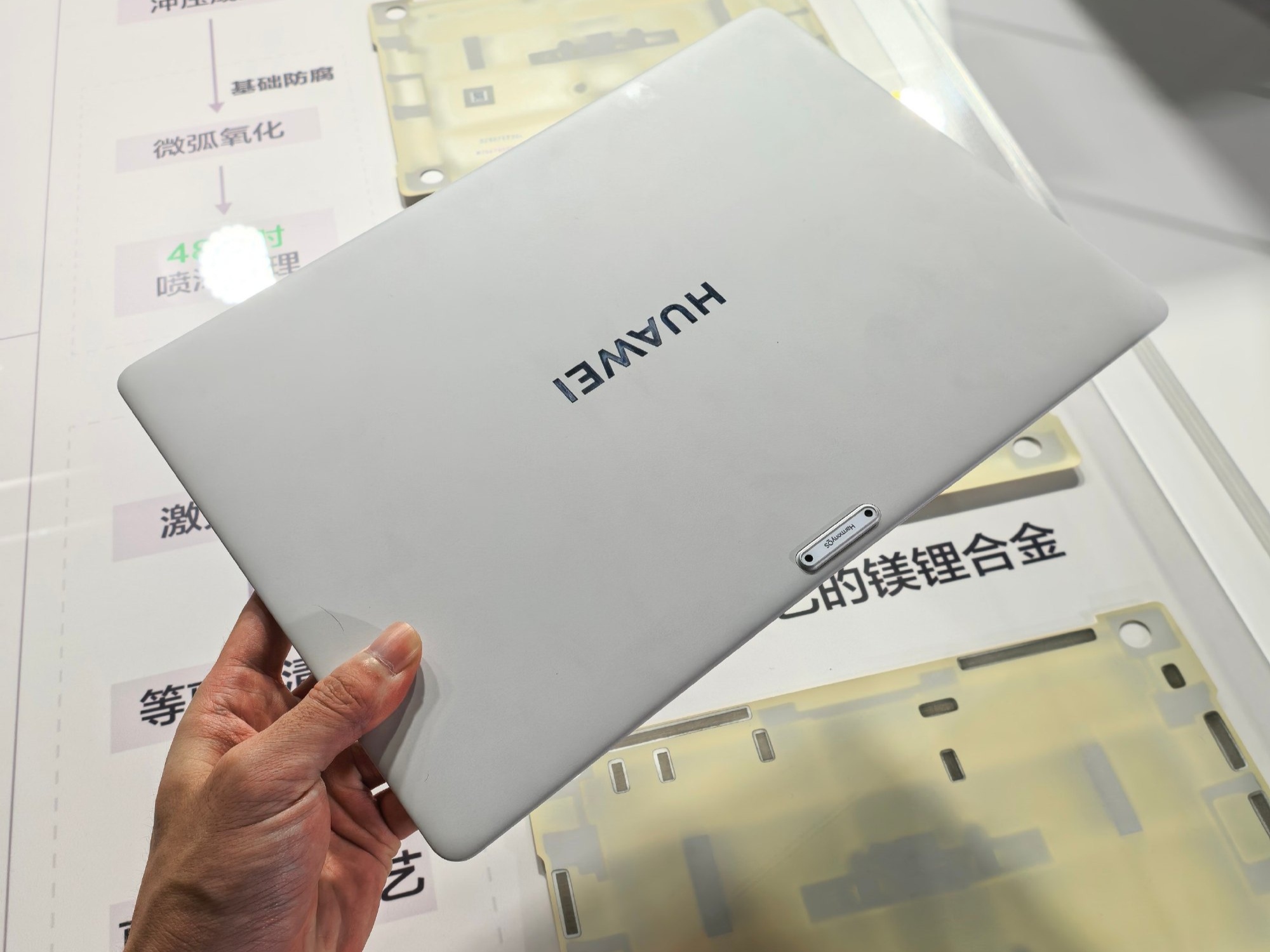
Huawei officially confirmed two new Kirin PC processors at a HarmonyOS computer technology briefing today, marking the company's first public, onstage announcement of its PC silicon lineup. Zhu Dongdong, president of Huawei's Tablet and PC product line under Terminal BG, shared the latest results for HarmonyOS computers at the event.
Huawei also confirmed that it will continue investing in desktop-class processor development, with the Kirin XE90 and X90 Plus set to be the next entries in that lineup. The Kirin X90 Plus is positioned as a high-performance PC processor, while the all-new Kirin XE90 is positioned as a high-efficiency processor. Zhu also said the company will build on a unified HarmonyOS foundation spanning HarmonyOS tablets, commercial tablets, PCs, and commercial PCs.
Two new chips for two new laptops
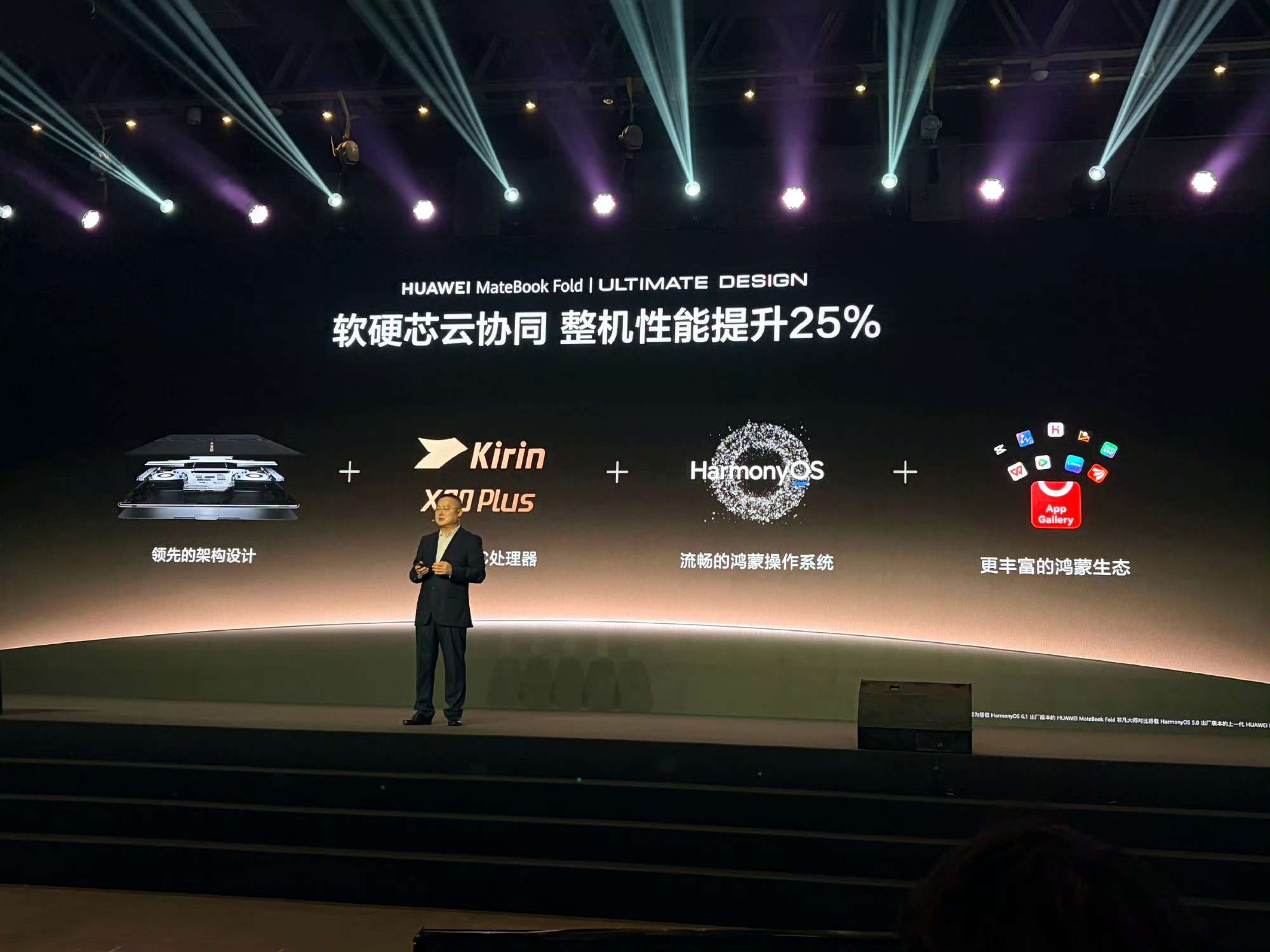
No official specifications were released for either chip at the briefing. Huawei separately announced two new computers today: the MateBook Fold Ultimate Design and the company's lightest laptop ever, the MateBook Pro S, both of which are set to launch on August 5. The chip-to-device pairings were shown onstage: the X90 Plus will power the MateBook Fold Ultimate Design, while the XE90 will power the MateBook Pro S. This arrangement is consistent with the performance-efficiency split and each device's thermal envelope.
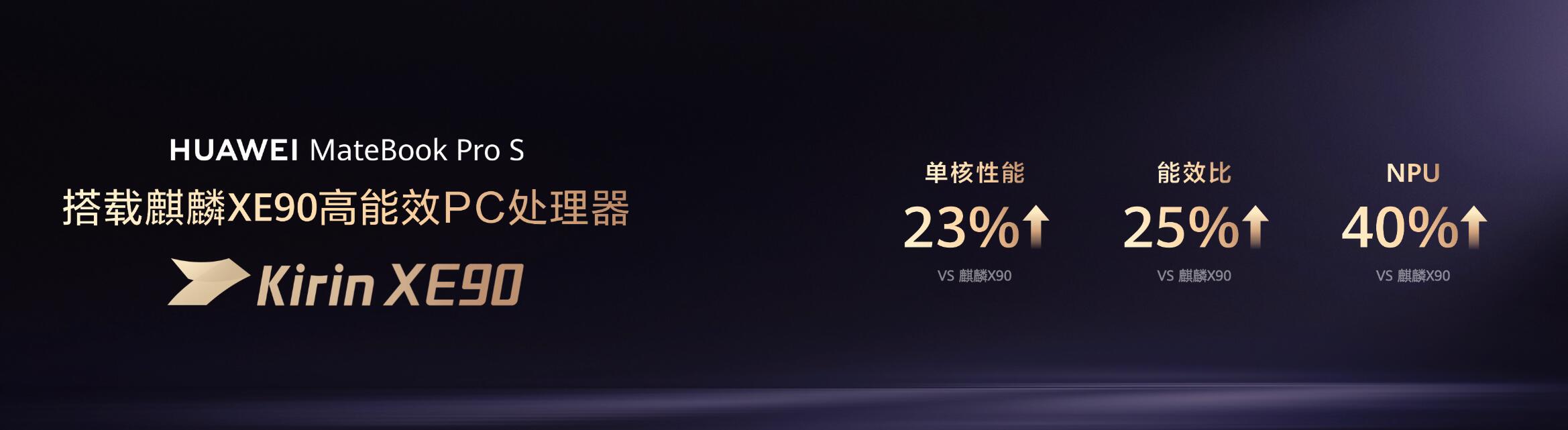
Kirin XE90
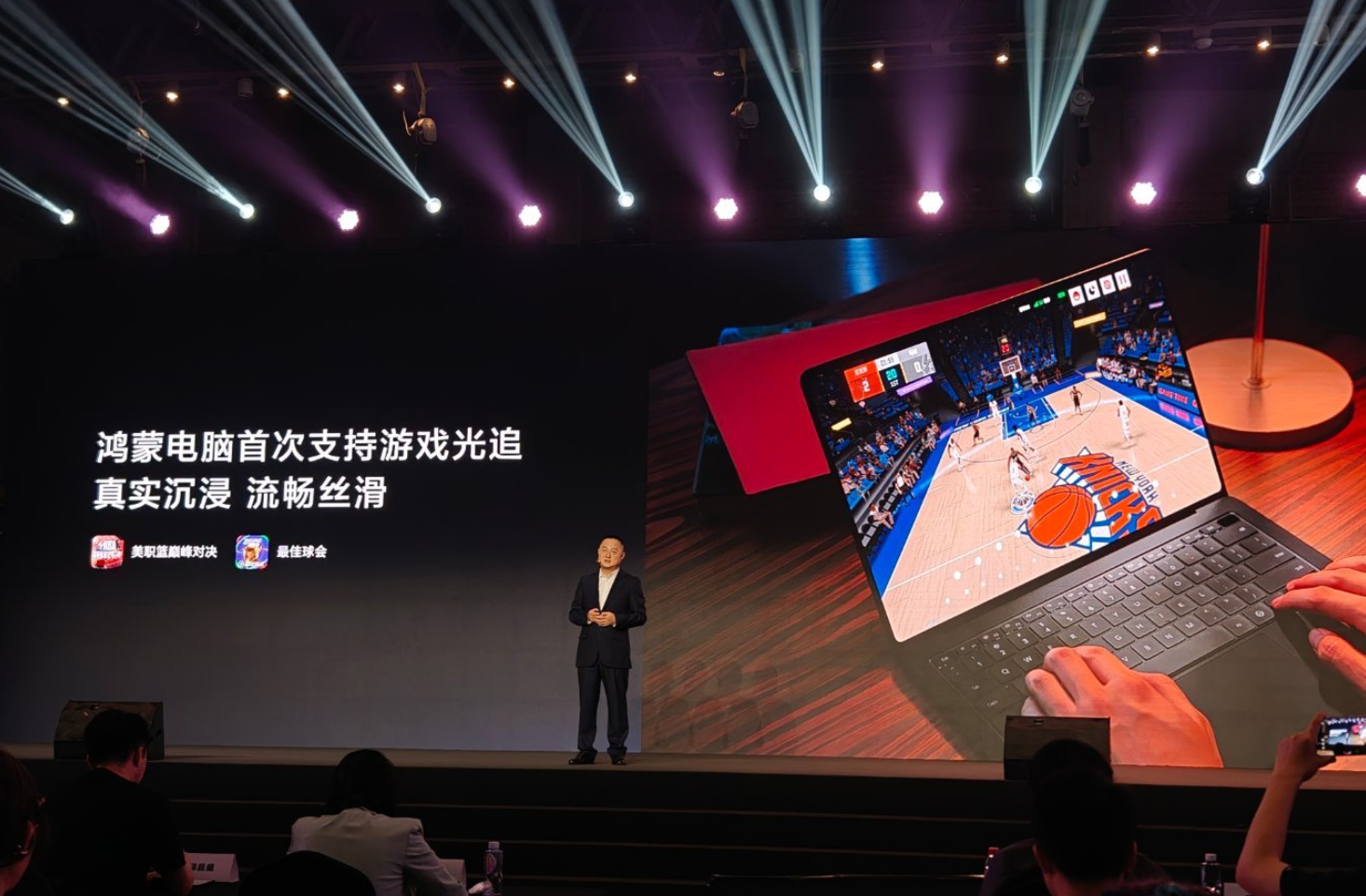
Huawei's comparison slides for the XE90 claim 23% higher single-core performance, 25% higher efficiency, and 40% higher NPU throughput than the original Kirin X90. A separate slide touted the debut of ray-tracing support on HarmonyOS PCs in a demonstration using two basketball titles. These gains do not align with a simple clock-speed bump on the existing X90 die. The original X90's GPU, which is believed to be derived from the Maleoon 920 generation, has no ray-tracing hardware; Huawei's first RT-capable GPU is the Maleoon 935 in the Kirin 9030 Pro, launched for the Mate 80 series in November 2025. That GPU also saw a large area increase from the addition of CUs (from 4 to 6), despite each CU shrinking by about 28% and including built-in RT support; the NPU also moved to a larger multicore cluster. Taken together, these details suggest that the XE90 inherits GPU/NPU IP from the 9030 generation rather than being a straightforward X90 refresh.
Kirin X90 Plus
Huawei claimed that the X90 Plus uses a smaller process node than the original X90's SMIC N+2 (7 nm-class) process, though the exact target node has not been independently confirmed. If this is accurate, N+3—the node used for the Kirin 9030—is the most likely candidate, given that it has already been proven in volume production.
Source(s)
 Add as a preferred source on Google


