




Is SteamOS ready for gaming laptops? Strix Halo test reveals gaming performance and battery life
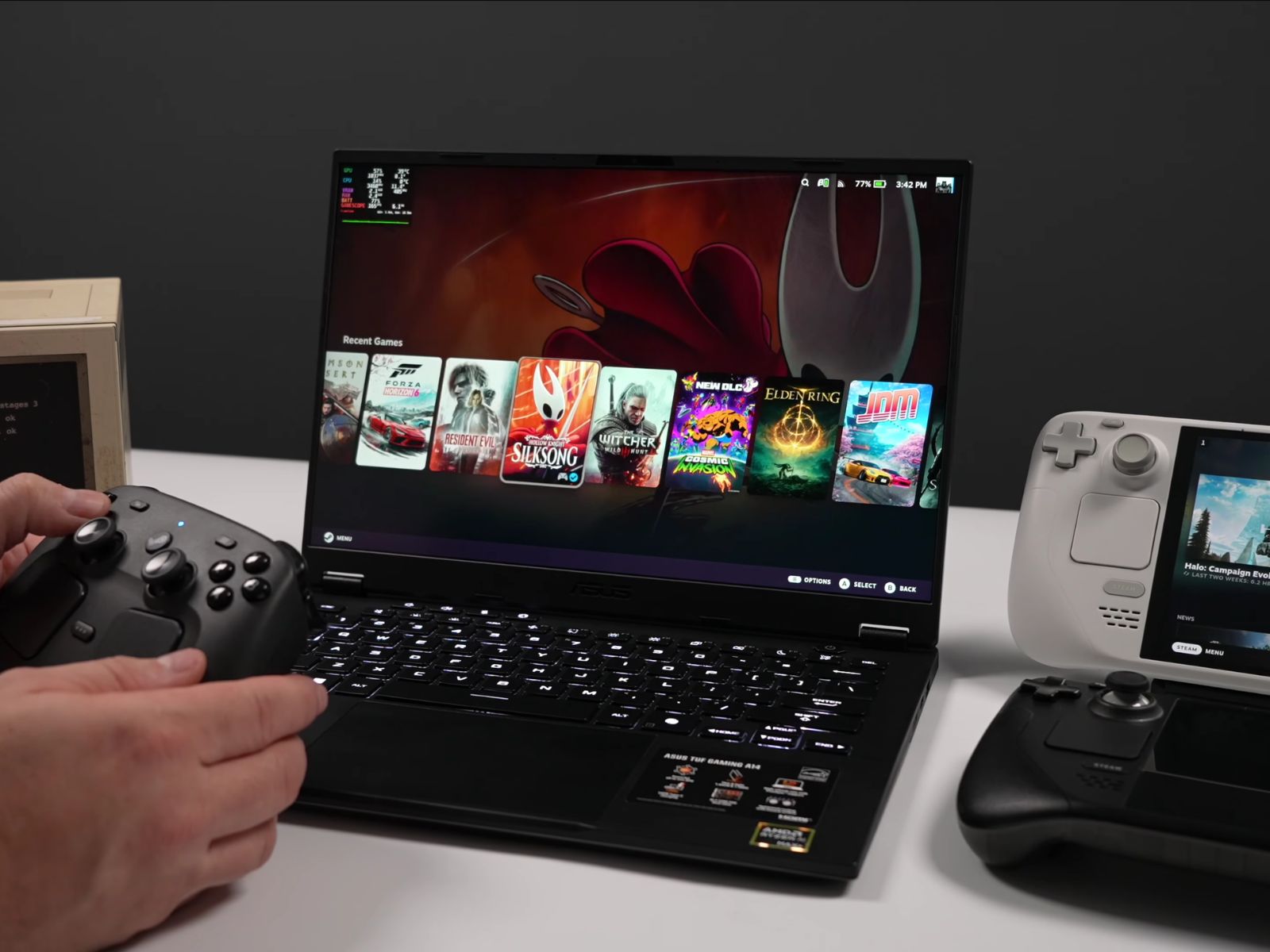
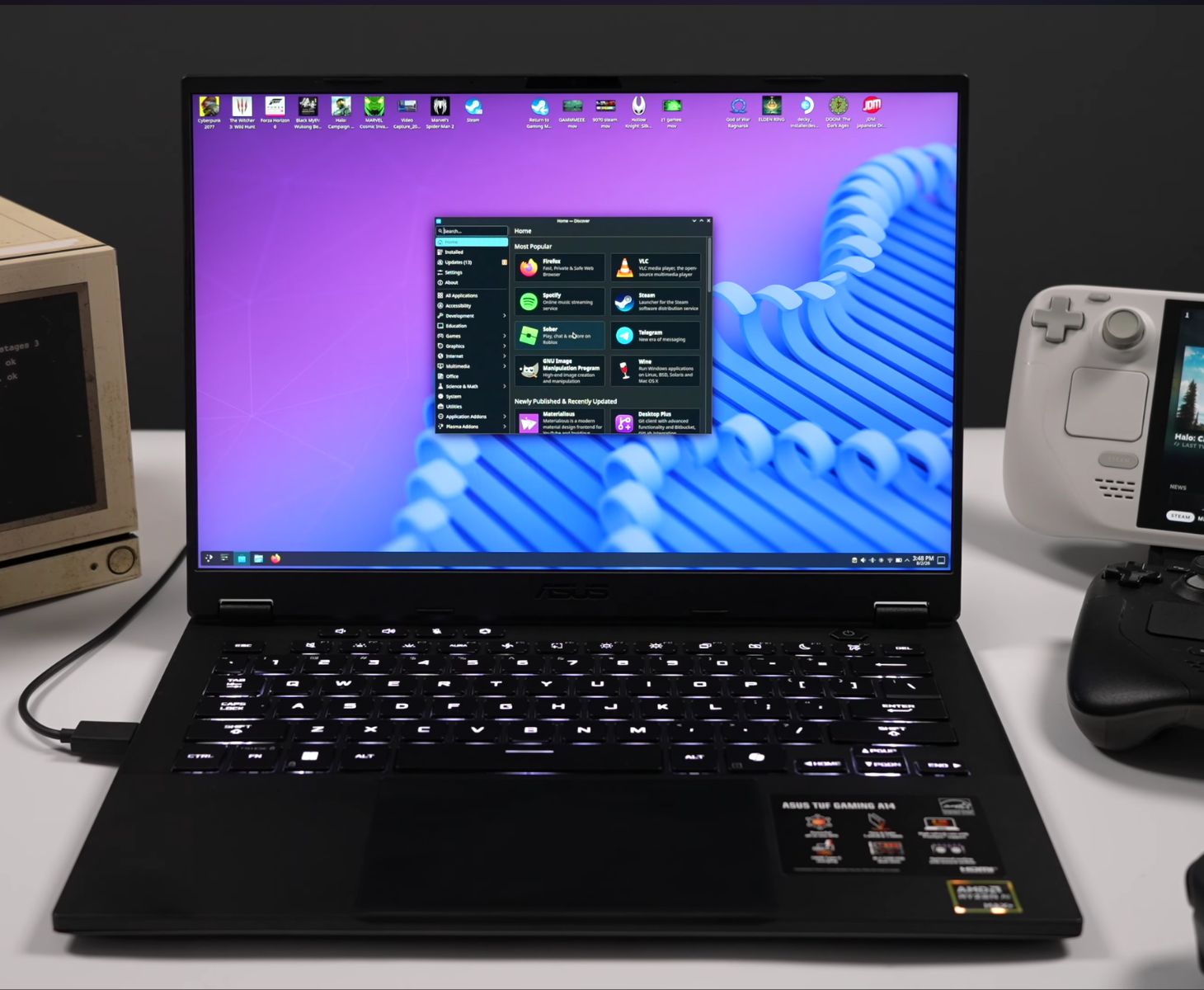
A gaming laptop running SteamOS is something many PC gamers, including me, have wanted for years. Until recently, users had to rely on Linux distributions such as Bazzite, which offered a SteamOS-like experience on compatible hardware. With the latest SteamOS update, however, Valve now officially supports a wider range of AMD-powered computers, allowing users to install the operating system and access the same software experience available on devices such as the Steam Deck or the Steam Machine.
Thanks to a new YouTube video by ETA Prime, we now have a better idea of how such a laptop performs in games. The YouTuber installed SteamOS 3.9 on an Asus TUF Gaming A14 powered by the AMD Ryzen AI Max+ 392 processor, which features the Radeon 8060S integrated GPU. This Strix Halo chip is slightly less powerful than the Ryzen AI Max+ 395, as it comes with 12 Zen 5 CPU cores instead of 16.
Officially, SteamOS requires a 6-core/12-thread CPU and a Radeon GPU based on the RDNA 2 or RDNA 3 architecture, or newer. However, users have also managed to run the operating system on much older hardware, including Apple Macs.
As for gaming performance, in Halo: Combat Evolved, the Max+ 392 delivered frame rates in the mid-70 FPS range at 1440p using the High preset with FSR set to the Medium mode, equivalent to FSR Balanced. The YouTuber noted that the performance was lower than expected, although enabling FSR Frame Generation could nearly double the frame rate. However, frame generation was left disabled to ensure consistent testing.
Spider-Man 2 averaged over 80 FPS at 1440p using the High preset with FSR disabled. The game initially struggled on Linux and even lost its Steam Deck Verified status because of performance issues but recent updates have significantly improved the experience, the creator said.
The tester also measured battery life under SteamOS using the laptop's stock power profile, without any TDP or power management tweaks. In the indie title Hollow Knight: Silksong, the system consumed less than 16 W at 1200p while maintaining a locked 60 FPS. Based on testing across multiple indie games, battery life was estimated at around four to seven hours, depending on the title.
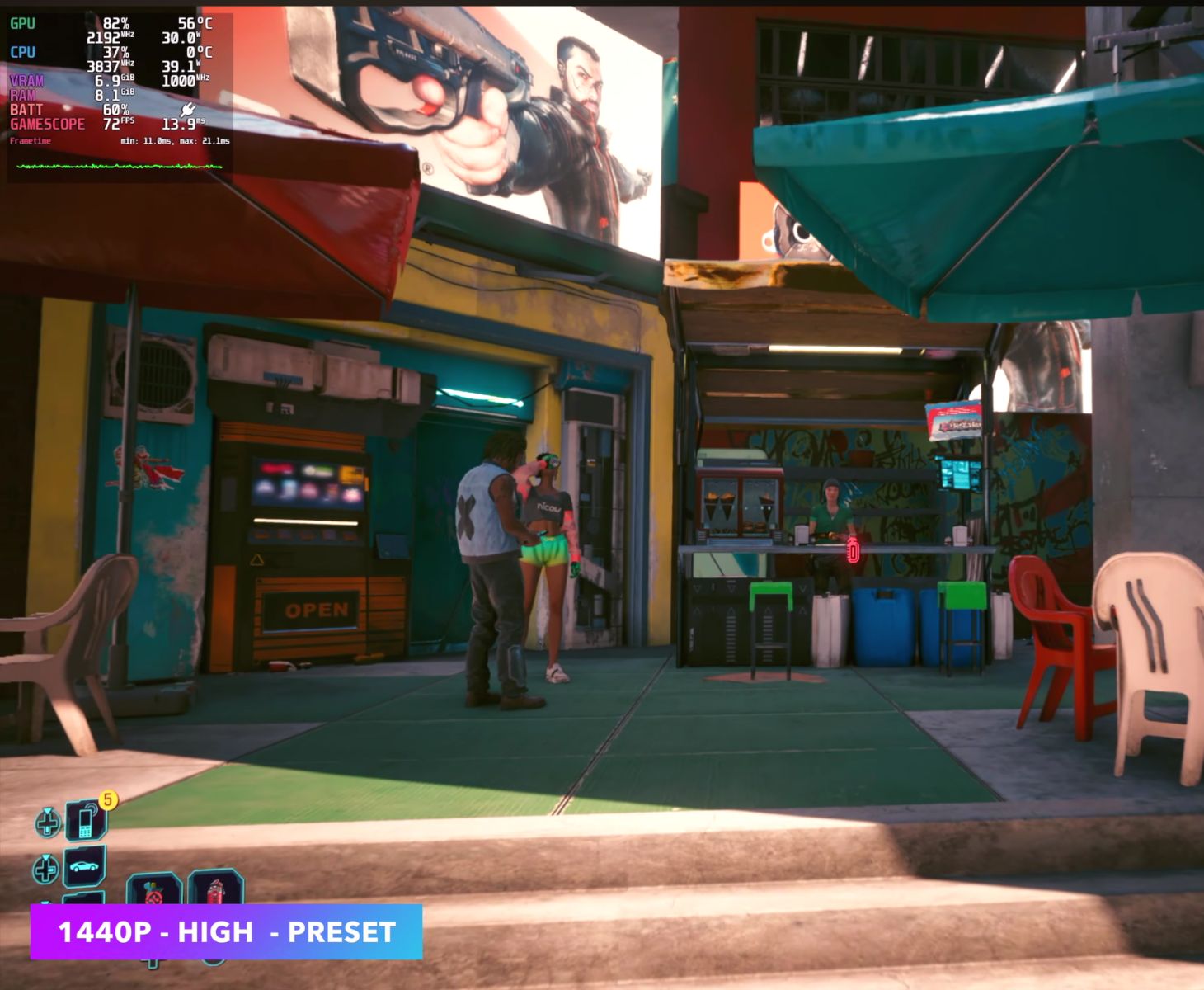
For AAA games, ETA Prime used Cyberpunk 2077 at the Steam Deck preset with the frame rate locked to 60 FPS. Battery life was estimated at around two hours and 25 minutes at 800p, dropping to roughly one hour and 40 minutes at 1200p on the laptop's 73 Wh battery. They noted that enabling TDP controls could improve these figures, but the tests were conducted using SteamOS' default power profile.
These are respectable figures without any serious optimisation. If anything, this test suggests that the best thing to come out of Valve's Steam Machine initiative was not the hardware itself, but the official expansion of SteamOS support to non-Valve PCs.
If you wish to buy the Asus TUF Gaming A14, it is currently available on Amazon for $1,999 with 32 GB of RAM and a 1 TB SSD. Alternatively, if your workflow can make do with a mini PC instead, the GMKtec EVO-X2 AI Mini PC costs the same while offering the faster AMD Ryzen AI Max+ 395 processor and 64 GB of RAM.
The YouTuber also tested several other games, including Doom: The Dark Ages and Crimson Desert. You can watch the full results in the video embedded below.
Source(s)
 Add as a preferred source on Google


