Budget smartphones slowly disappear in the US as memory crisis deepens
US smartphone sales dropped 5% year over year in the second quarter of 2026, as increasing component costs and worsening macroeconomic factors continue to dampen consumer demand. According to Counterpoint Research, rising prices for gasoline and other goods, partly linked to geopolitical conflicts in the Middle East, are pushing down purchasing power. At the same time, surging RAM demand from AI data centers are driving up costs for smartphone manufacturers.
Budget-tier smartphones have been hit hardest, declining 64% year on year as both component shortages and thinner margins make them less and less profitable. In turn, this disproportionally affects smartphone manufacturers: Combined sales from Apple, Samsung, Motorola and Google fell 4% year over year, while sales from all other smartphone brands plunged 45%. Larger companies are better positioned to weather the memory crunch, as Counterpoint explains, because their scale gives them greater access to component supplies and allows them to negotiate costs more effectively. Smaller manufacturers, meanwhile, face greater difficulty securing components at commercially viable prices.
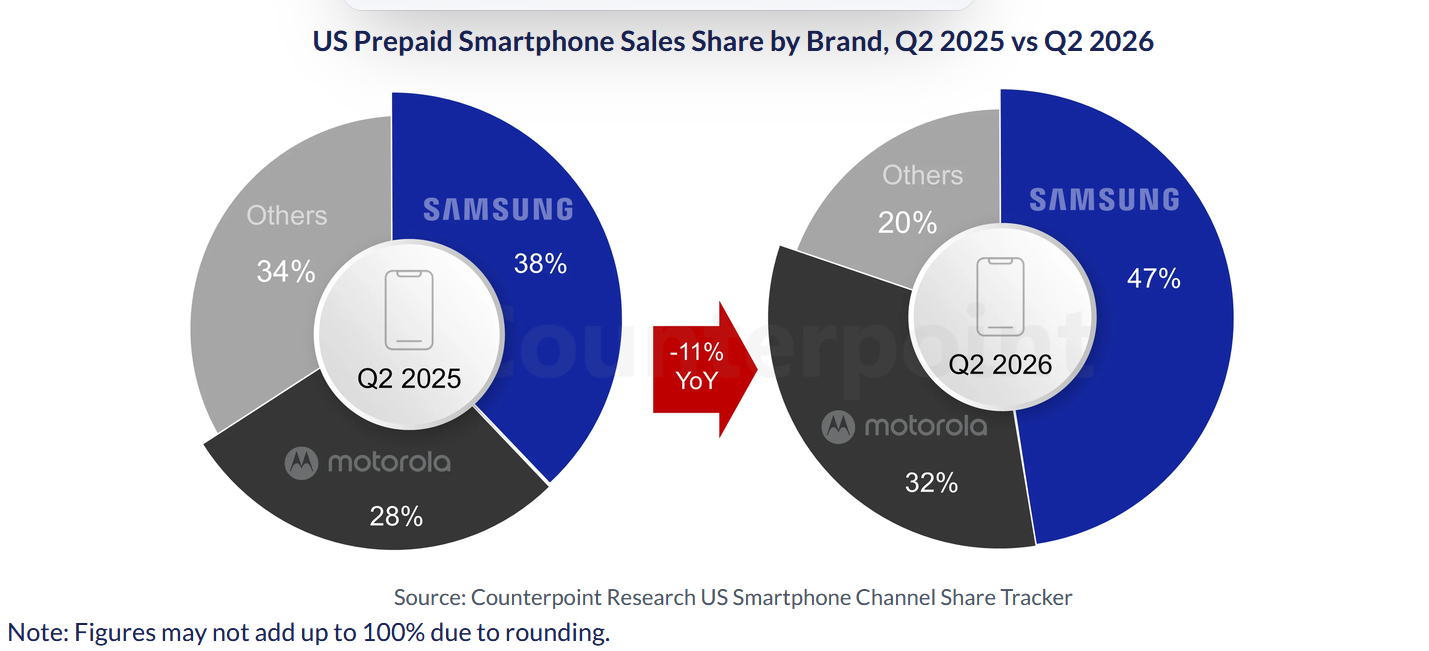
Ironically, both Samsung and Motorola managed to increase their market share by capitalizing on the struggles or market exit of smaller, low-end competitors thanks to the Galaxy A Series (such as the A26) and Moto G Series, which are some of the only options available in the $200-$300 range. Budget or not, Counterpoint expects smartphone prices to keep climbing into the third quarter as Apple prepares its next iPhone lineup.
Source(s)
 Add as a preferred source on Google