




230 million fewer budget smartphones: $200 segment to shrink 40% by 2030

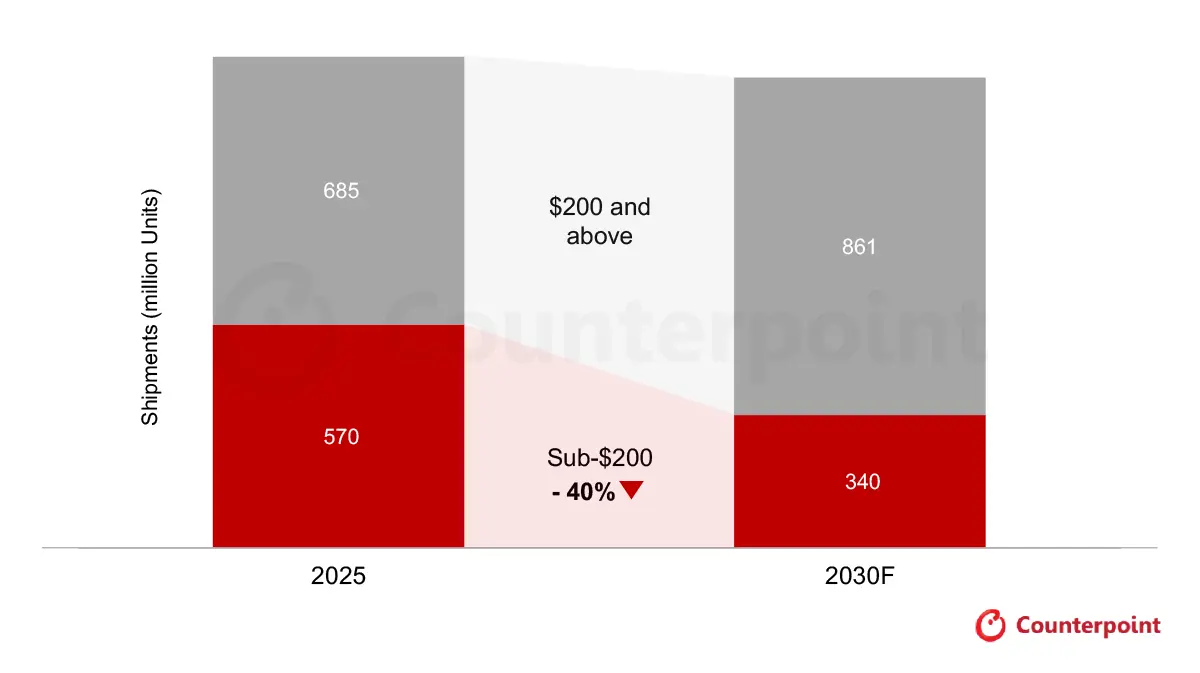
The global smartphone market is headed for a major shift. Overall sales are not expected to shrink, but the lowest-priced segment is set to contract sharply. In its latest forecast, Counterpoint Research expects global sales to reach around 1.2 billion units again by the end of the decade. At the same time, manufacturers are expected to offer far fewer entry-level phones. Analysts forecast a roughly 40% decline between 2025 and 2030 in sales of models priced below $200.
That would mean just over 230 million fewer low-cost smartphones sold each year. Sharply rising prices for memory chips and processors are driving the decline. These components account for a large share of the cost of making a budget smartphone, leaving manufacturers little room for profit. Increasing minimum technical requirements for new devices add to the pressure. Counterpoint expects sales of smartphones priced at $200 or more to rise by 26% over the same period.
The shift will directly affect people shopping for a new phone. They may have to pay more, keep their current devices much longer or buy a refurbished phone. Experts warn that the impact could be especially severe in emerging markets, where a shortage of affordable new devices could significantly slow mobile internet adoption in low-income regions.
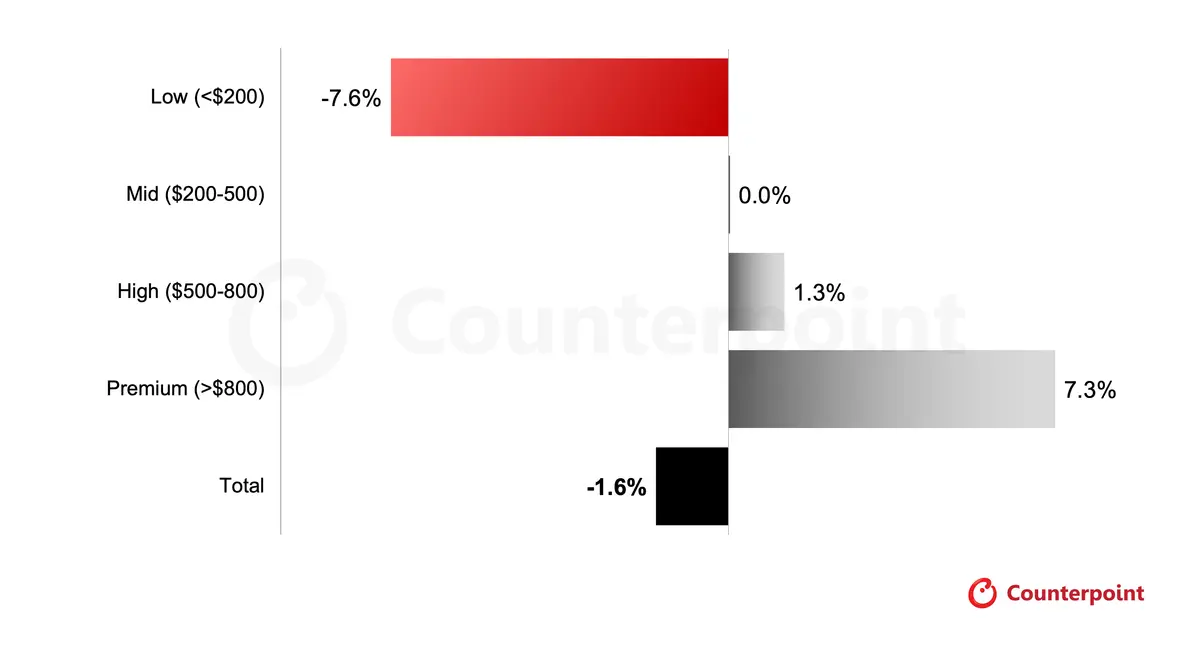
Manufacturers are instead focusing on well-equipped midrange smartphones. Although unit sales in this segment are barely growing, companies plan to concentrate their marketing and sales budgets there. Buyers will get features such as 5G, more storage, better cameras and on-device AI, but average prices will rise. The cheapest smartphones are gradually disappearing.
Source(s)
 Add as a preferred source on Google


No comments for this article

