




Steam Deck: New memory technology promises major benefits – but there's a catch
A new Linux technology called CRAM (Compressed RAM) promises better performance through more efficient use of system memory. It is being developed by engineers at Facebook parent company Meta and was presented on October 5 at the Linux Plumbers Conference in Prague. The idea is simple: Data is compressed so that more of it can fit into the available RAM. Unlike existing solutions such as ZRAM or Zswap, however, compressed data can be read directly without first having to copy it back into regular system memory. Importantly, the implementation presented relies on specialized memory hardware that automatically decompresses the data when it is read.
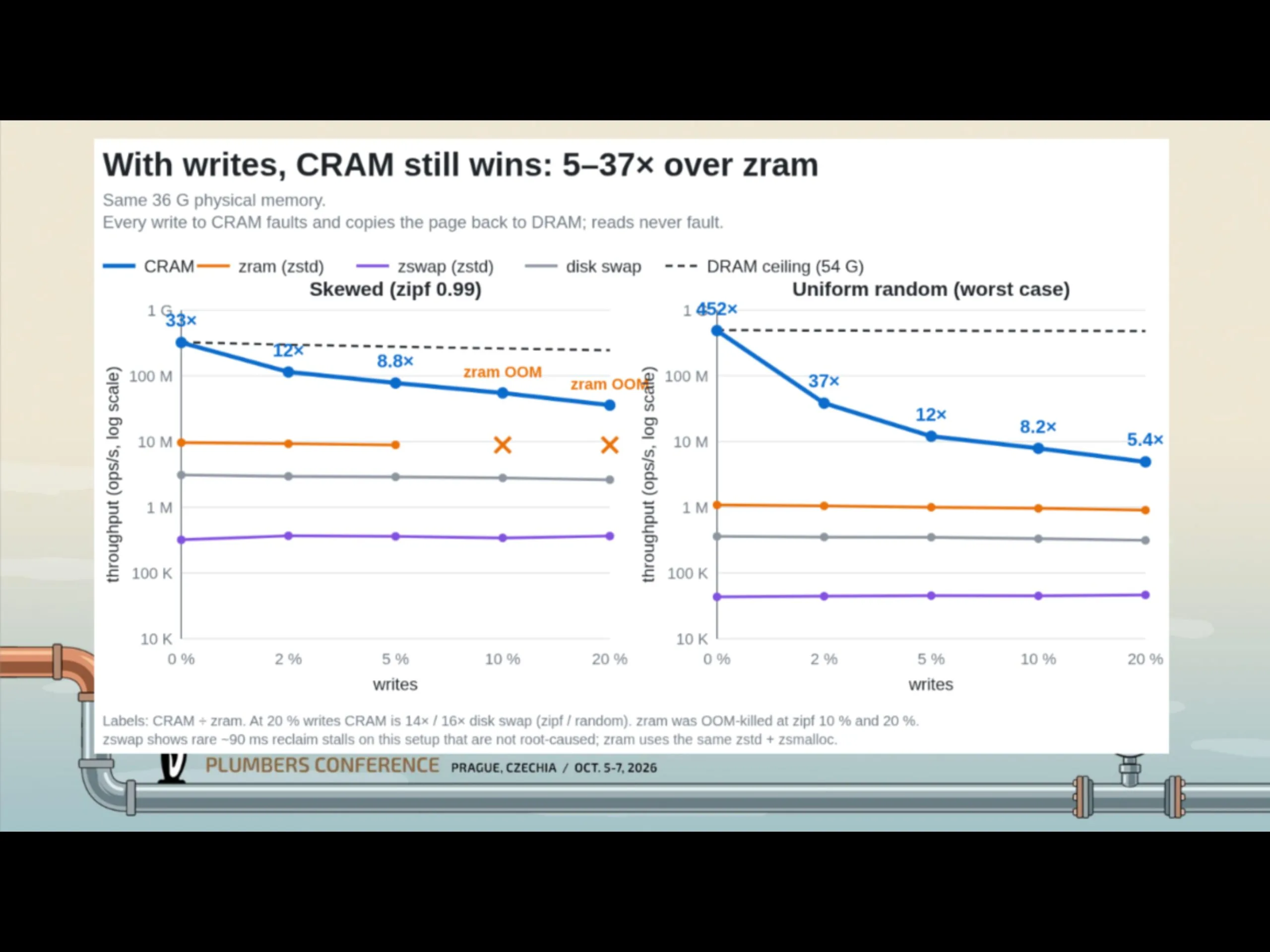
Early benchmarks offer a glimpse of just how significant the speed advantage could be. In read-only memory operations, CRAM achieves nearly the same speed as uncompressed RAM and is up to 452 times faster than ZRAM in testing. However, the advantage shrinks dramatically when write operations are added. With a 20% write workload, CRAM is still 5.4 times faster. It's important to emphasize, though, that these are specialized memory tests and the results don't necessarily translate into better gaming performance.

What does CRAM mean for the Steam Deck?
Since the Steam Deck also runs on Linux, the new technology could theoretically be interesting for Valve's handheld. After all, the device has just 16 GB of RAM, which must be shared between the CPU and GPU. If that memory could be used more efficiently, memory-hungry games might also benefit. On Reddit, CRAM is already being actively discussed.
Some users hope that CRAM could bring shorter loading times to the Steam Deck or allow games to run with less RAM in the future. Whether such improvements would actually be possible remains unclear. There's also another catch: As several users point out, the Steam Deck lacks the specialized hardware on which the presented CRAM implementation relies. A simple SteamOS update therefore wouldn't be enough.
However, the technology isn't entirely off the table for the Steam Deck. Some Redditors believe CRAM could potentially be used in a future Steam Deck 2, provided the technology becomes a widely adopted standard. Whether the hoped-for performance improvements would actually materialize remains questionable, though. As some users point out, RAM isn't the limiting factor in many games – the CPU or GPU is more often the bottleneck.
Source(s)
 Add as a preferred source on Google


No comments for this article
