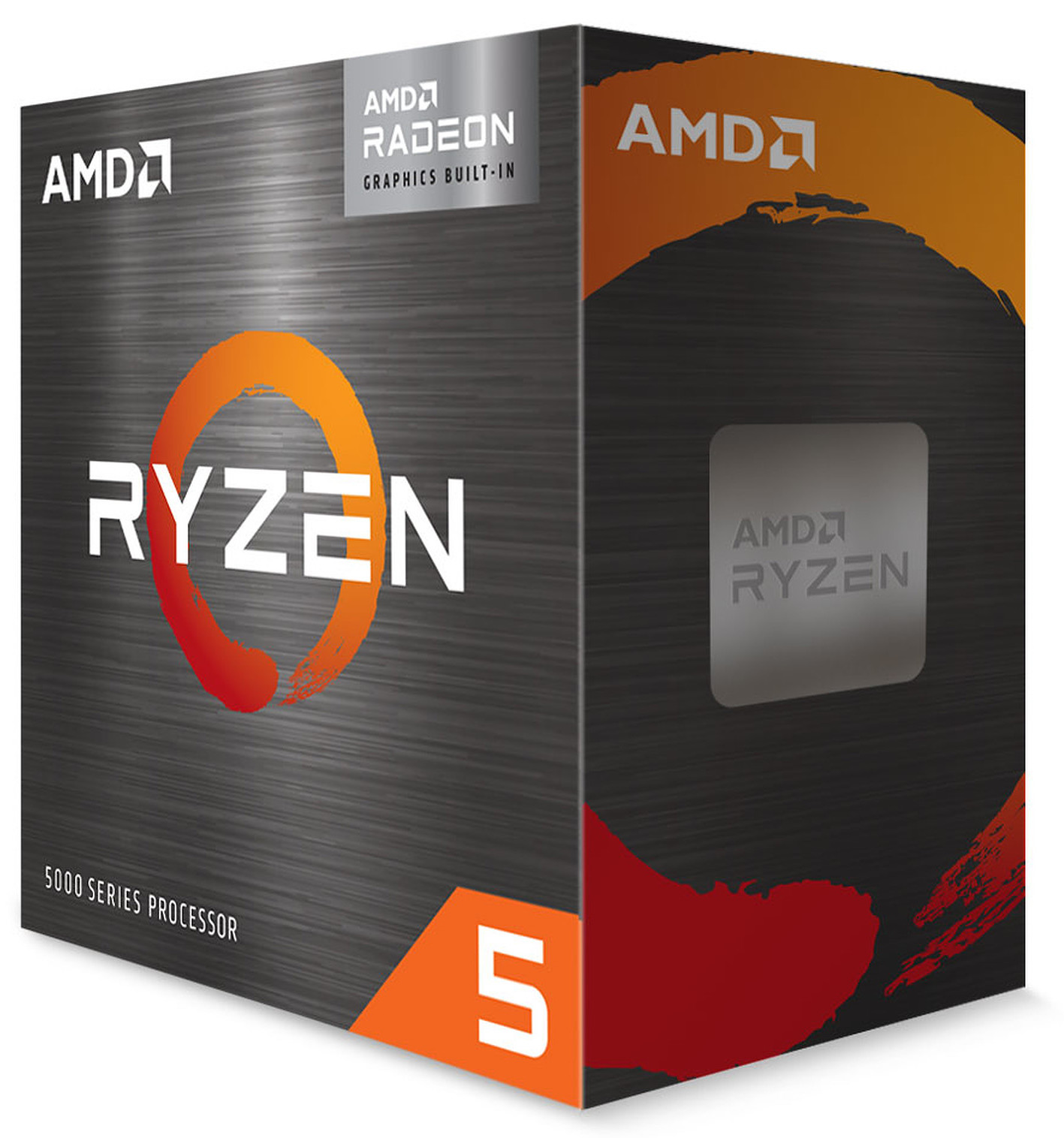
The AMD Ryzen 5 5600G is a Zen 3-based, desktop-grade APU featuring the Radeon Vega 7 graphics adapter. This Ryzen 5 was unveiled in H1 2021. It features six SMT-enabled CPU cores for 12 threads in total, running at 3.9 GHz to 4.4 GHz.
The CPU ships with AMD's Wraith Stealth cooler (as long as it's not an OEM version).
Architecture
Zen 3-based processors bring a moderate performance boost over Zen 2 generation CPUs. Core counts are left where they were before, while per-MHz performance is getting several percentage points higher.
Ryzen 5 5600G's CPU cores have access to 16 MB of L3 cache. The processor is compatible with DDR4-3200 RAM and has plenty of PCI-Express 3.0 lanes for connecting graphics cards, SSDs and other devices. Four PCI-Express 3.0 lanes allow for read/write rates of up to 3.9 GB/s, provided a sufficiently fast NVMe SSD is used. PCI-Express 4.0 spec is not supported here, since Ryzen 5 5600G is pretty much a laptop-grade SoC in disguise rather than a "proper" desktop chip, like a Ryzen 5 5600X.
You can replace this Ryzen with a faster CPU easily as it uses AMD's AM4 socket interface. Another way to get a performance boost would be to overclock the CPU, which is easy to do with AMD's very own software (many motherboard vendors offer overclocking software of their own as well).
Performance
The six Zen 3 cores will rip through most workloads rutlessly, more demanding ones included (like gaming and high-res video editing). Multi-thread benchmarks put the R5 5600G in the same league as the Core i5-10600K, Core i7-10700, Core i5-11600K, Core i7-11850H. A huge advantage of the Ryzen over the aforementioned alternatives is its decent integrated graphics adapter - more on this below.
Graphics
The Radeon RX Vega 7 iGPU has seven Compute Units (= 448 shaders) and runs at up to 1,900 MHz. It is casual gaming-friendly, allowing one to play most games at 900p / Low quality preset. On the other hand, there is no SUHD 4320p monitor support here, nor can the graphics adapter HW-decode AV1, the latest video codec.
Fast RAM is a prerequisite for decent gaming performance as the Vega has no memory of its own.
Power consumption
This Ryzen 5 is manufactured on TSMC's 7 nm process for great, as of early 2022, energy efficiency.
The chip has a default TDP of 65 W (also known as the long-term Power Limit). According to AMD's guidelines, that 65 W value can be reduced by PC makers significantly, the lower limit being 45 W, resulting in lower temperatures, lower clock speeds and lower performance. Either way, an active cooling solution is a must for a system built around this Ryzen.
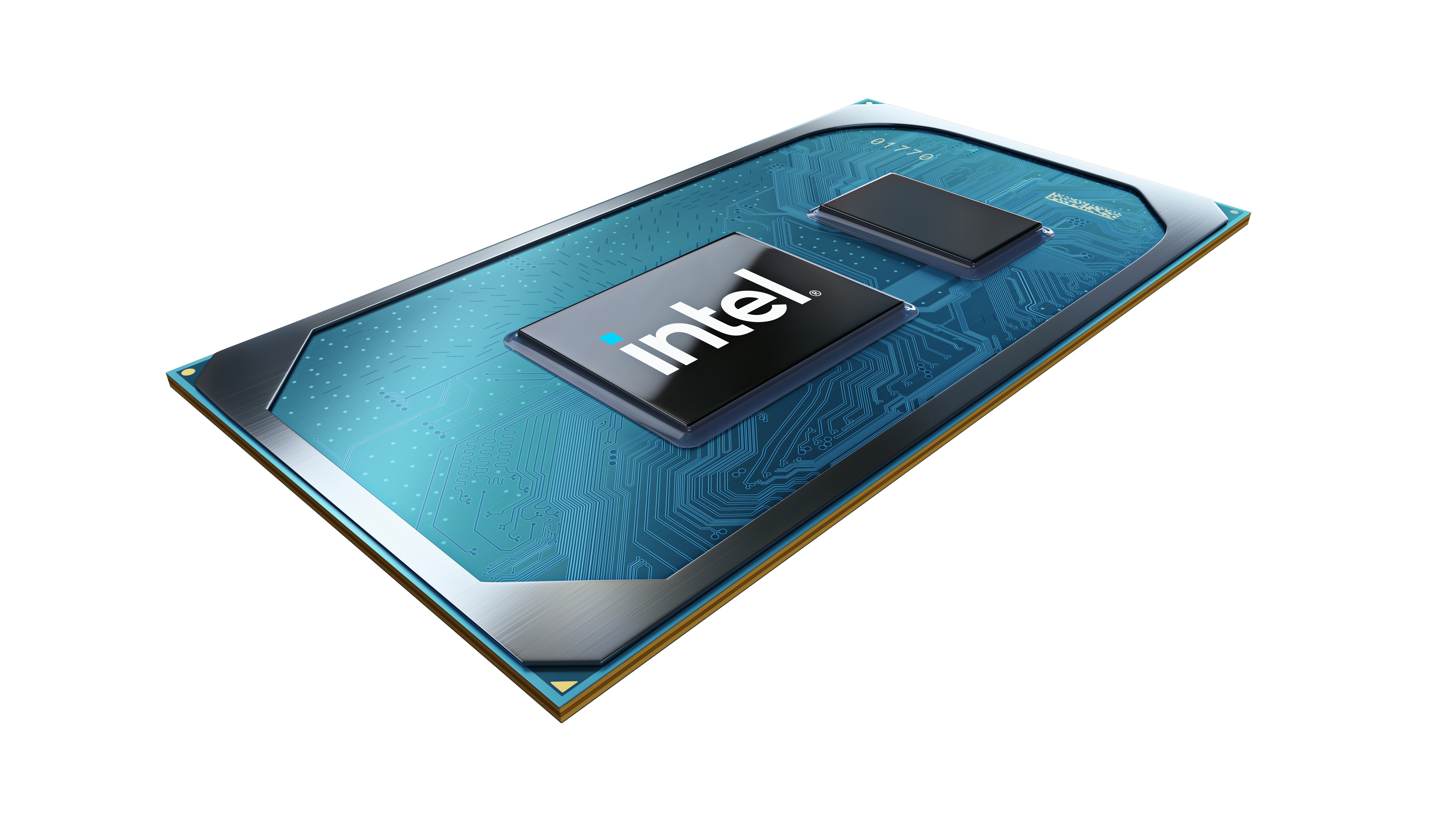
The Intel Core i5-1155G7 is a power efficient quad-core SoC for laptops and Ultrabooks based on the Tiger Lake-U generation that was announced in mid 2021 as part of the refresh. It integrates four Willow Cove processor cores (8 threads thanks to HyperThreading). The base clock speed depends on the TDP settings and ranges from 1 GHz (12 Watt TDP) up to 2.5 GHz (28 Watt). Boost clock speed is 4.5 GHz.
Tiger Lake SoCs add PCIe 4 support (4 lanes), AI hardware acceleration, and the partial integration of Thunderbolt 4 / USB 4 and Wifi 6 in the chip.
Another novelty is the integrated Xe graphics adapter with 80 EUs based on the completely new Gen 12 architecture. It offers a significantly higher performance compared to the older Iris Plus G7 (Ice Lake).
Performance
The average 1155G7 in our database proves to be a very decent mid-range processor, as of mid 2022, trading blows with the Core i7-10810U and the Ryzen 5 4500U as far as multi-thread benchmark scores are concerned. While perhaps not the best option for power users, this Core i5 will make most consumers happy, providing for short load times and generally pain-free experience.
Your mileage may vary depending on how high the CPU power limits are and how competent the cooling solution of your system is.
Power consumption
This Core i5 series chip has a default TDP, also known as the long-term power limit, of 12 W to 28 W, the expectation being that laptop makers will go for a higher value in exchange for higher performance. Either way, this is a tad too high to allow for passively cooled designs.
The i5-1155G7 is built with Intel's third-gen 10 nm process marketed as SuperFin for lower-than-average, as of early 2023, energy efficiency.
- Range of benchmark values for this graphics card - Average benchmark values for this graphics card * Smaller numbers mean a higher performance 1 This benchmark is not used for the average calculation
v1.35
log 12. 23:06:29
#0 ran 0s before starting gpusingle class +0s ... 0s
#1 checking url part for id 14131 +0s ... 0s
#2 checking url part for id 13226 +0s ... 0s
#3 redirected to Ajax server, took 1765577189s time from redirect:0 +0s ... 0s
#4 did not recreate cache, as it is less than 5 days old! Created at Wed, 10 Dec 2025 05:18:44 +0100 +0s ... 0s
#5 composed specs +0.006s ... 0.006s
#6 did output specs +0s ... 0.006s
#7 getting avg benchmarks for device 14131 +0.005s ... 0.011s
#8 got single benchmarks 14131 +0.004s ... 0.015s
#9 getting avg benchmarks for device 13226 +0.004s ... 0.019s
#10 got single benchmarks 13226 +0.008s ... 0.027s
#11 got avg benchmarks for devices +0s ... 0.027s
#12 min, max, avg, median took s +0.031s ... 0.058s








 - Average benchmark values for this graphics card


