




Nvidia DLSS 5 on an RTX 5090 laptop: Our initial impressions

When it was revealed, DLSS 5 caused quite a stir among fans and the community. For starters, nobody saw it coming. Historically, a major DLSS 5 version usually arrived with a new GPU generation (DLSS 4 with the RTX 50 series, DLSS 3 with the RTX 40 series, and so on). DLSS 5 appearing out of nowhere also sent mixed signals about the RTX 60 series’ launch window. Nvidia’s demo raised quite a few questions, and the recent spate of leaks didn’t do much to assuage gamers’ concerns. Nevertheless, we got to take DLSS 5 for a spin ourselves in an official capacity. The test laptop, a Lenovo Legion Pro 7 16IAX10H was provided to us by Lenovo India with the following specifications:
- CPU: Intel Core Ultra 9 275HX
- GPU: Nvidia GeForce RTX 5090 laptop
- RAM: 64 GB Micron DDR5-6400
- SSD: 1 TB Samsung PCIe Gen4 NVMe SSD
This is pretty much as good as it gets when it comes to a gaming laptop, thus making it an ideal staging ground for our DLSS 5 hands-on. Nvidia hooked us up with compatible drivers and a copy of NBA 2K27, the only title that officially supports DLSS 5 neural rendering. Unfortunately, the current DLSS 5 implementation doesn't come with the granular control sliders we got to see in previous leaks. There's no toggle in the settings, and the only way to enable/disable it is via a hotkey.
Nevertheless, refer to the following images to get an idea of what DLSS 5 can do for visual fidelity. For best results, click the 'full resolution' link in each image to easily spot finer details; some can be genuinely hard to catch otherwise due to compression.
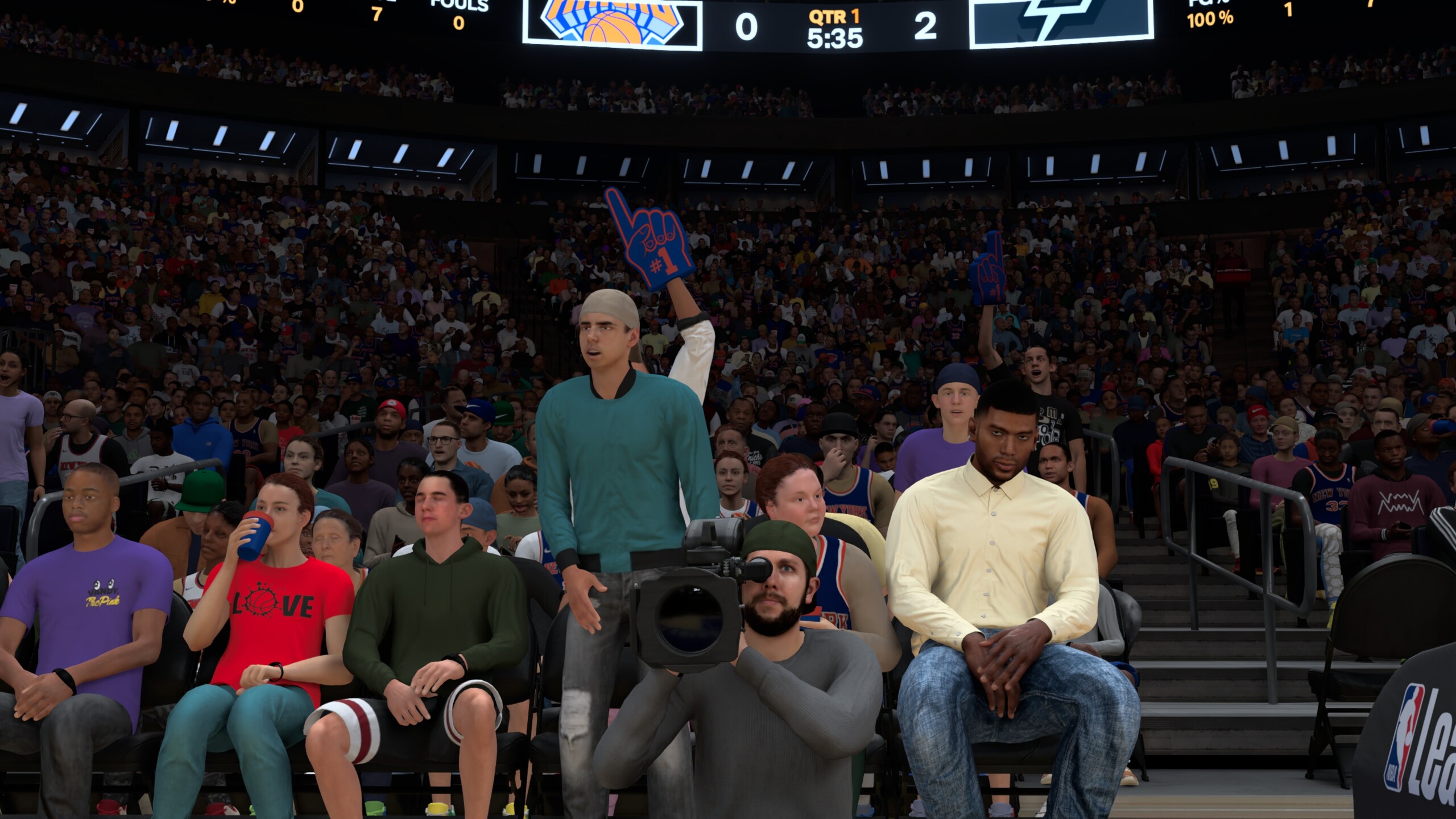
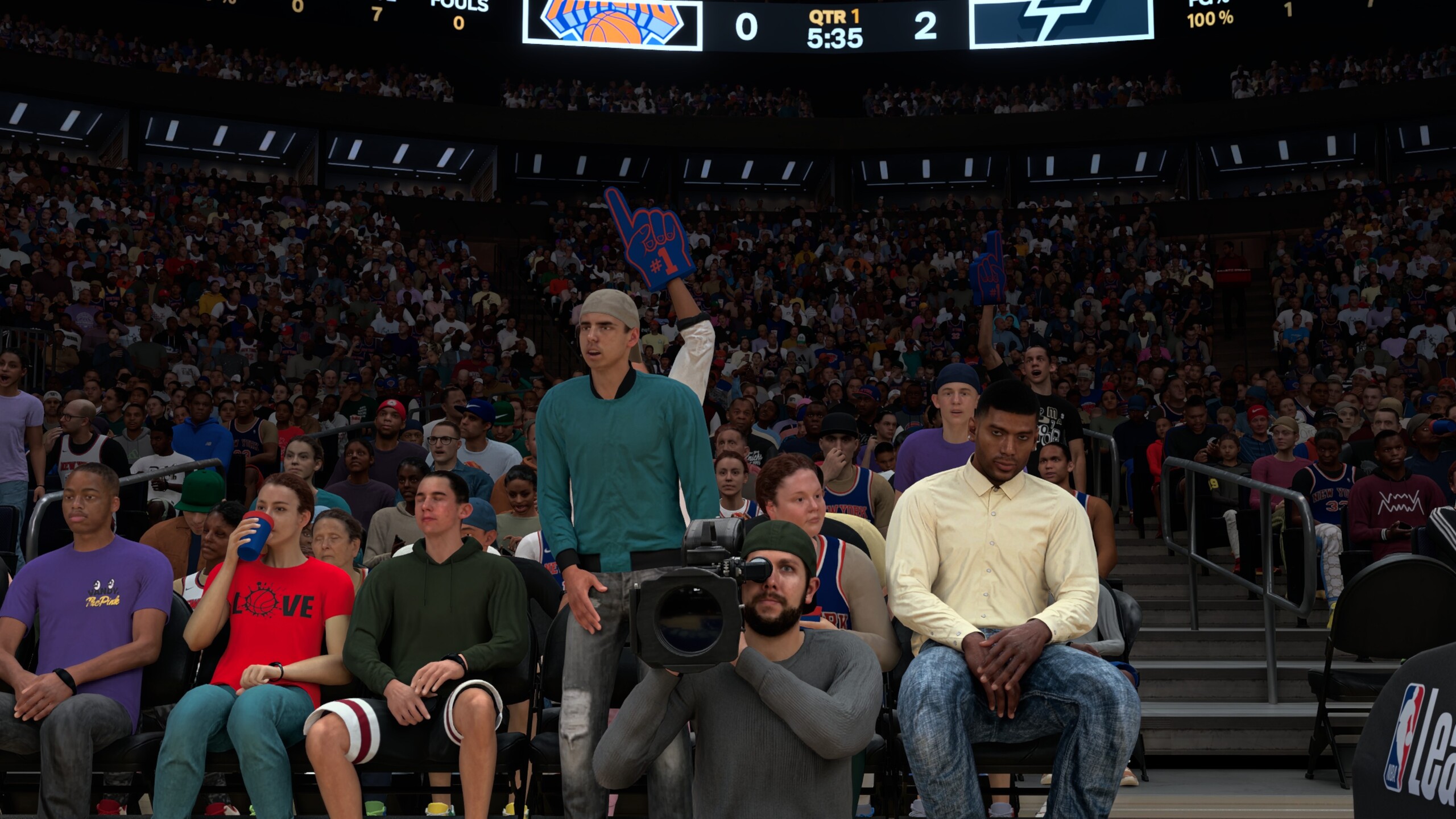


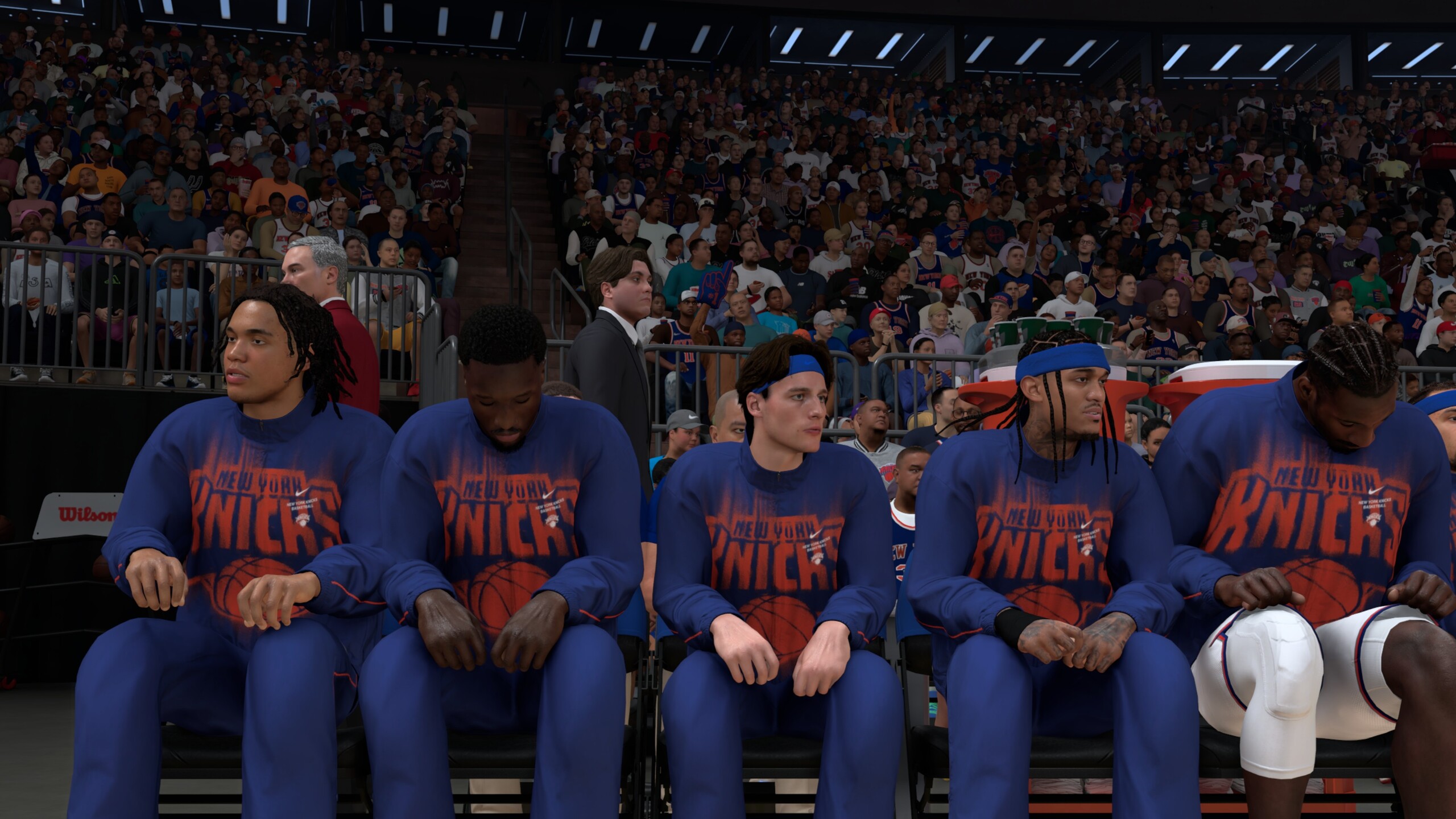
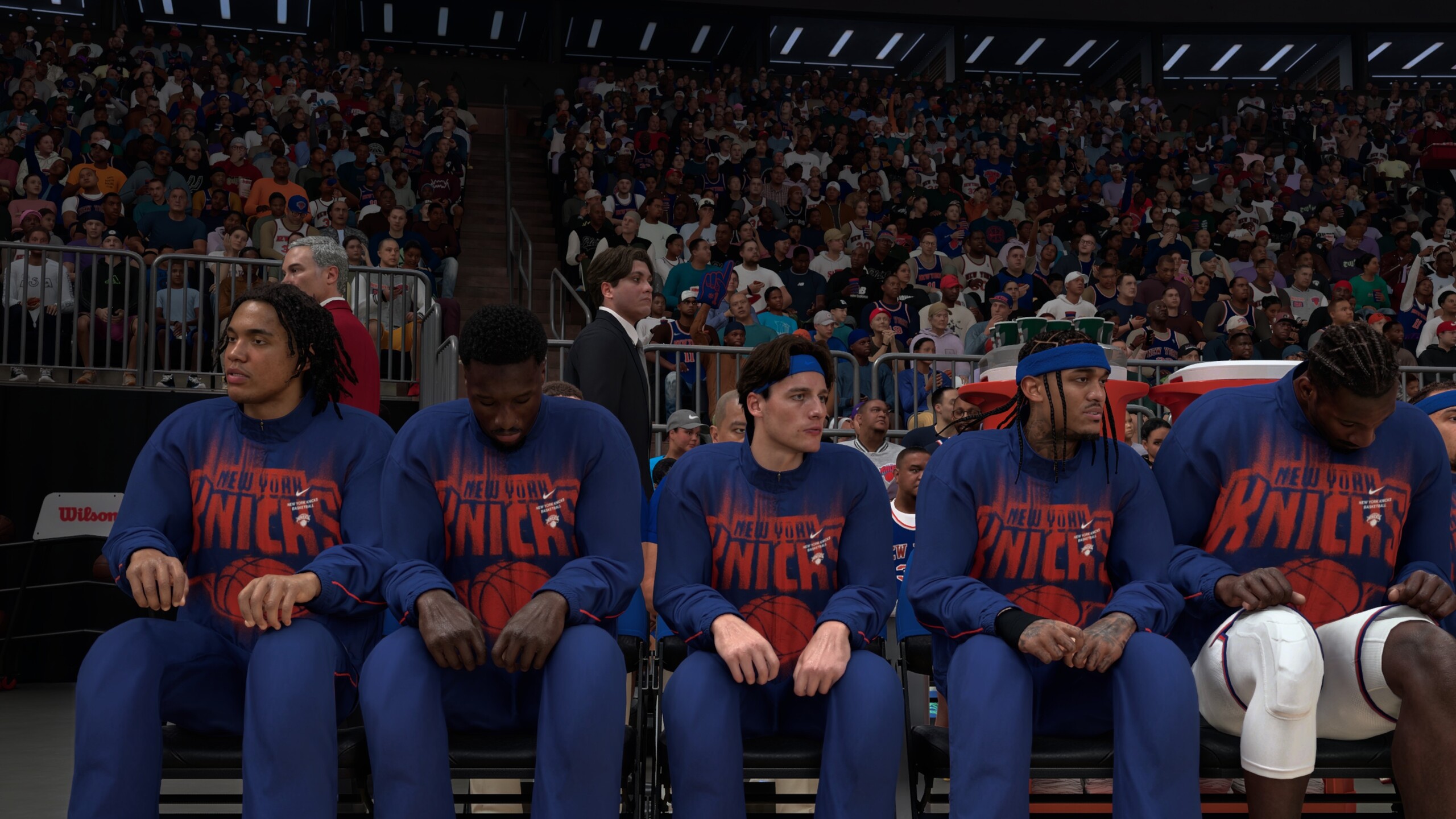








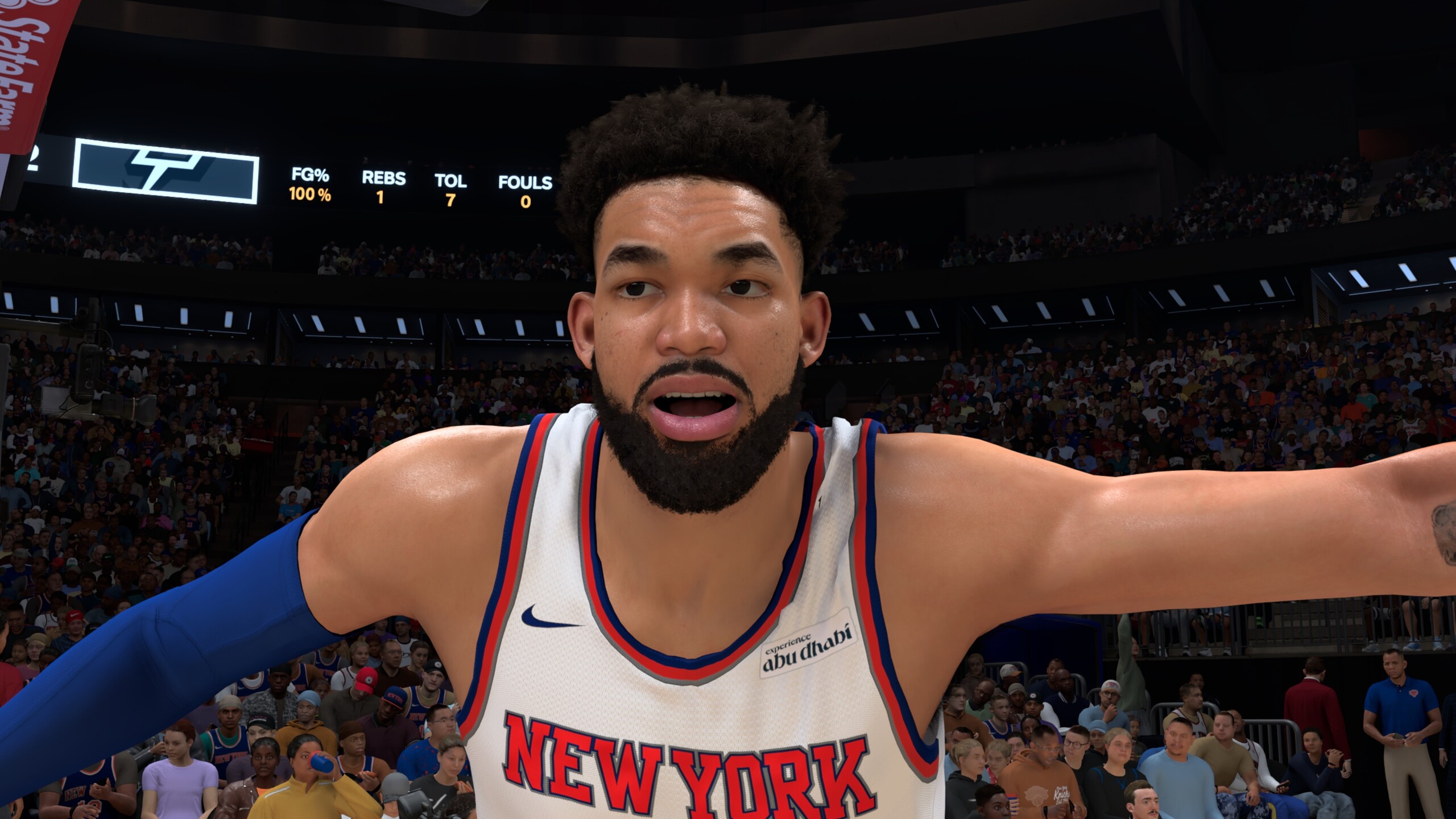

All things considered NBA 2K27 is only a drop in the bucket. DLSS 5 will have to prove itself in a wide range of genres. RPGs, FPSes, and MOBAs all have different requirements, and DLSS 5 will have to be flexible enough to fulfil them all. For example, in games like Doom: The Dark Ages, speed is paramount, whereas in something like Alan Wake 2, visuals take precedence because gamers will definitely pause to take in the view.
Nvidia’s original DLSS 5 demo required two desktop GeForce RTX 5090 graphics cards to show off. Of course, that set off alarm bells among many who rightfully predicted that DLSS would tank performance. To find out if that was accurate, we connected the laptop to a 4K monitor and took NBA 2K27 for a test drive.
Because NBA 2K27 does not have an included benchmark, we tried to recreate a similar 30-second gameplay loop by resetting a match after every benchmark run. All of the data was captured using CapFrameX with the 'use MsBetweenDisplayChange' toggle switched on to accurately capture DLSS Frame Generation.
1440p DLSS Quality
| Resolution | DLSS 5 | Frame generation | Avg FPS | 1% low | 0.1% low | Avg frametime | P99 frametime | Avg PC latency | FPS gain vs DLSS 5 No FG |
|---|---|---|---|---|---|---|---|---|---|
| 1440p | Off | No FG | 149.6 | 98.7 | 75.9 | 6.69 ms | 10.13 ms | N/A | N/A |
| 1440p | On | No FG | 56.8 | 46.6 | 26.4 | 17.60 ms | 21.47 ms | N/A | N/A |
| 1440p | On | FG 2x | 96.7 | 72.3 | 29.4 | 10.35 ms | 13.83 ms | 60.8 ms | +70.1% |
| 1440p | On | FG 3x | 134.3 | 102.0 | 72.4 | 7.44 ms | 9.81 ms | 65.1 ms | +136.4% |
| 1440p | On | FG 4x | 164.3 | 122.5 | 97.8 | 6.09 ms | 8.16 ms | 70.0 ms | +189.2% |
| 1440p | On | FG 5x | 197.2 | 142.4 | 112.8 | 5.07 ms | 7.02 ms | 69.7 ms | +247.0% |
| 1440p | On | FG 6x | 217.4 | 151.0 | 104.2 | 4.60 ms | 6.62 ms | 74.7 ms | +282.5% |
4K DLSS Quality
| Resolution | DLSS 5 | Frame generation | Avg FPS | 1% low | 0.1% low | Avg frametime | P99 frametime | Avg PC latency | FPS gain vs DLSS 5 No FG |
|---|---|---|---|---|---|---|---|---|---|
| 4K | Off | No FG | 104.8 | 79.4 | 55.7 | 9.54 ms | 12.60 ms | N/A | N/A |
| 4K | On | No FG | 28.0 | 24.3 | 17.1 | 35.76 ms | 41.22 ms | N/A | N/A |
| 4K | On | FG 2x | 50.9 | 38.0 | 14.1 | 19.66 ms | 26.33 ms | 101.9 ms | +81.9% |
| 4K | On | FG 3x | 73.3 | 56.6 | 27.3 | 13.64 ms | 17.65 ms | 117.8 ms | +162.1% |
| 4K | On | FG 4x | 92.2 | 65.8 | 19.5 | 10.84 ms | 15.19 ms | 117.2 ms | +229.9% |
| 4K | On | FG 5x | 115.2 | 83.7 | 66.3 | 8.68 ms | 11.95 ms | 120.6 ms | +312.1% |
| 4K | On | FG 6x | 130.9 | 82.5 | 46.8 | 7.64 ms | 12.12 ms | 126.6 ms | +368.1% |
As you can see, DLSS 5 works in tandem with frame generation to make the game somewhat playable, as confirmed by the sub-30 FPS experience at 4K without FG enabled. Frame generation makes an enormous difference at 4K, lifting the displayed frame rate from 28 FPS to 50.9 FPS at 2x and 73.3 FPS at 3x. Higher multipliers push the output past 90 FPS, although this comes with progressively higher latency.
Below, we switched to DLSS Performance and found some marginal difference in performance, although the gains were somewhat diminishing at 5-6x FG. 1% and 0.1% lows, on the other hand, were remarkably different.
4K DLSS Performance
| Resolution | DLSS 5 | Frame generation | Avg FPS | 1% low | 0.1% low | Avg frametime | P99 frametime | Avg PC latency | FPS gain vs DLSS 5 No FG |
|---|---|---|---|---|---|---|---|---|---|
| 4K | On | No FG | 27.5 | 22.6 | 14.3 | 36.40 ms | 44.24 ms | N/A | N/A |
| 4K | On | FG 2x | 51.3 | 26.2 | 17.6 | 19.48 ms | 38.11 ms | 112.9 ms | +86.8% |
| 4K | On | FG 3x | 76.2 | 59.8 | 49.9 | 13.12 ms | 16.73 ms | 113.9 ms | +177.5% |
| 4K | On | FG 4x | 97.0 | 74.6 | 64.7 | 10.31 ms | 13.40 ms | 119.0 ms | +252.9% |
| 4K | On | FG 5x | 113.3 | 79.4 | 23.2 | 8.83 ms | 12.59 ms | 120.0 ms | +312.4% |
| 4K | On | FG 6x | 131.1 | 85.6 | 23.1 | 7.63 ms | 11.69 ms | 122.1 ms | +377.3% |
While average frame rates at 1440p are healthy, the 0.1% lows reveal occasional sharp drops, particularly with frame generation disabled or set to 2x. In a timing-sensitive game such as NBA 2K27, those outliers could be more noticeable than the averages suggest. After all, a random frame drop at the incorrect moment could cost players a match. On the plus side, we didn't notice any DLSS-induced artifacts during our testing, and for all intents and purposes, input lag was minimal even with frame generation cranked all the way up.
Conclusion
The above results make it clear that DLSS 5 does come with a penalty. It is puzzling, given that tech like DLSS was initially designed to extract more performance out of ageing hardware. Whether or not the performance hit is worth the extra visual fidelity it offers remains debatable, and it is far too early to jump to conclusions with a sample set of one game.
It is abundantly clear that DLSS 5 requires more time to mature, and has been designed with future GPU generations in mind. Furthermore, the developer side of DLSS 5 is also a factor that will determine the future of the tech. Thankfully, it won't be limited to the RTX 50 series forever, as confirmed by the following Nvidia statement:
As mentioned in the briefing, DLSS 5 is our most computationally demanding model to date. Since we initially announced it in March, we’ve achieved a 5X performance gain and there’s more to come. Our current focus is on optimizing performance for the GeForce RTX 50 Series with model updates expected later this fall. Once RTX 50 Series performance is more fully tuned, we plan to work on expanding official support to the GeForce RTX 40 Series.
In conclusion, DLSS 5 isn't perfect in its current state, but it has potential. Is this eerily reminiscent of how ray tracing was pitched with the RTX 20 series? A little. Will it be different this time? There's only one way to find out. Till then, let Nvidia cook.
Source(s)
Nvidia, own
 Add as a preferred source on Google


