New health feature in focus: Will Garmin and Apple smartwatches soon get a new function?
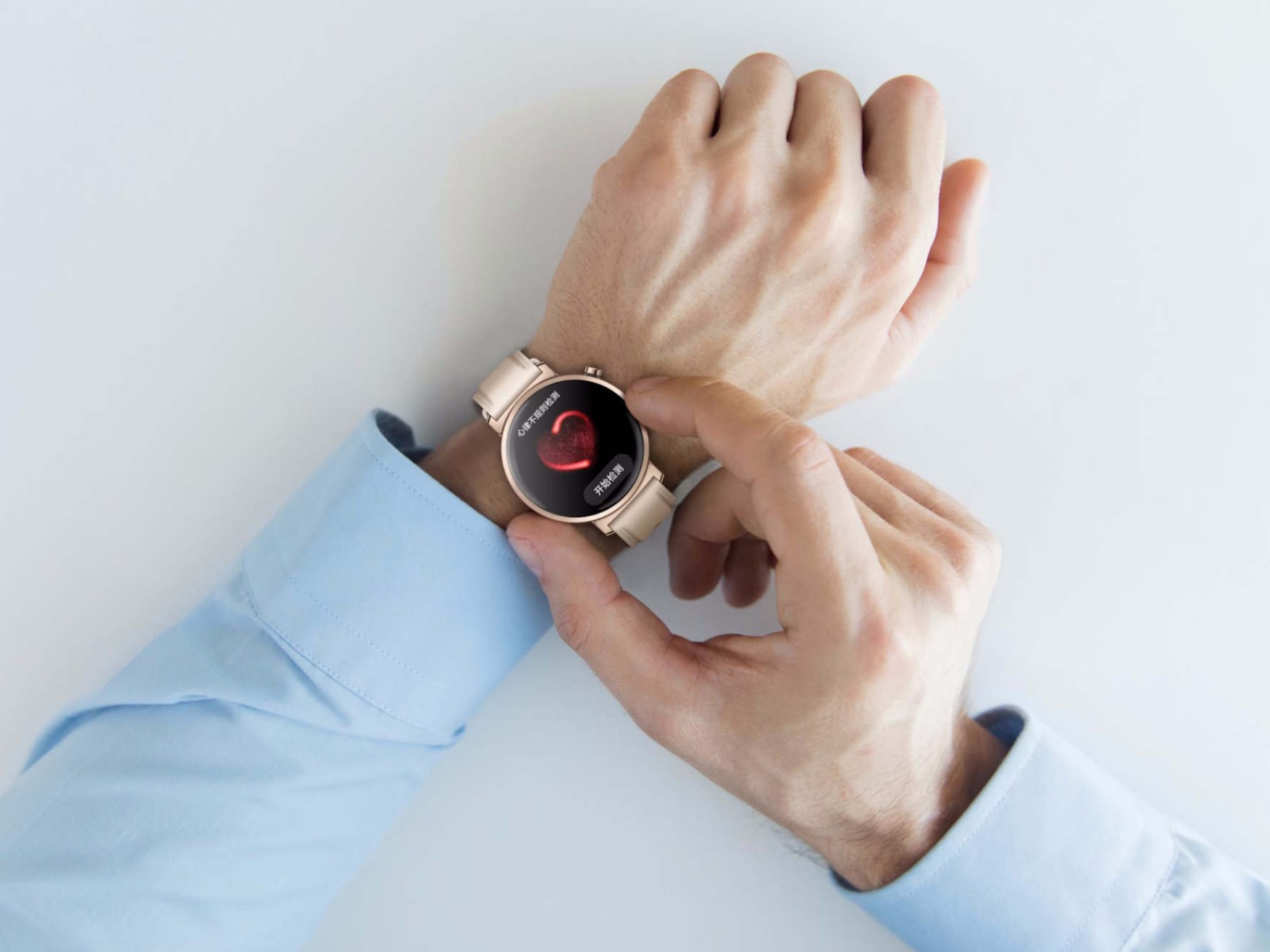
Some time ago, we touched upon the topic of 'heart deceleration capacity' in an article about the Honor Watch GS 5. This is a parameter that estimates the risk of cardiovascular disease. In principle, one can approach this parameter step by step, starting with heart rate, which is relatively easy to measure and can be determined by inexpensive smartwatch models or even with your finger and a smartwatch. Heart rate variability, is a little more complicated and not possible to measure manually. Determining this variability requires more than simply counting heartbeats within a defined time interval. Instead, the intervals between heartbeats, or more precisely pulse beats, must be recorded with high temporal resolution.
Measuring the heart's deceleration capacity also requires high temporal resolution. Deceleration capacity describes how much the heart rate can decrease from beat to beat. This value can provide information about the autonomic regulation of the cardiovascular system and general fitness. An article published in 2024 shows that a five-minute ECG combined with fully automated analysis can be sufficient for estimating mortality. Such a function could be a useful addition to existing health features on smartwatches, but whether Garmin and Apple will incorporate this function is unclear. Such a function could even be added via a software update, as hardware limitations should not be an issue, at least not on smartwatches equipped with ECG or advanced optical sensors. Of course, we cannot assess at this point how reliable the Honor Watch GS 5's measurements are.
Source(s)
 Add as a preferred source on Google