




NGL, Nvidia's GeForce Now India showcase was genuinely impressive, but it left us with more questions than answers
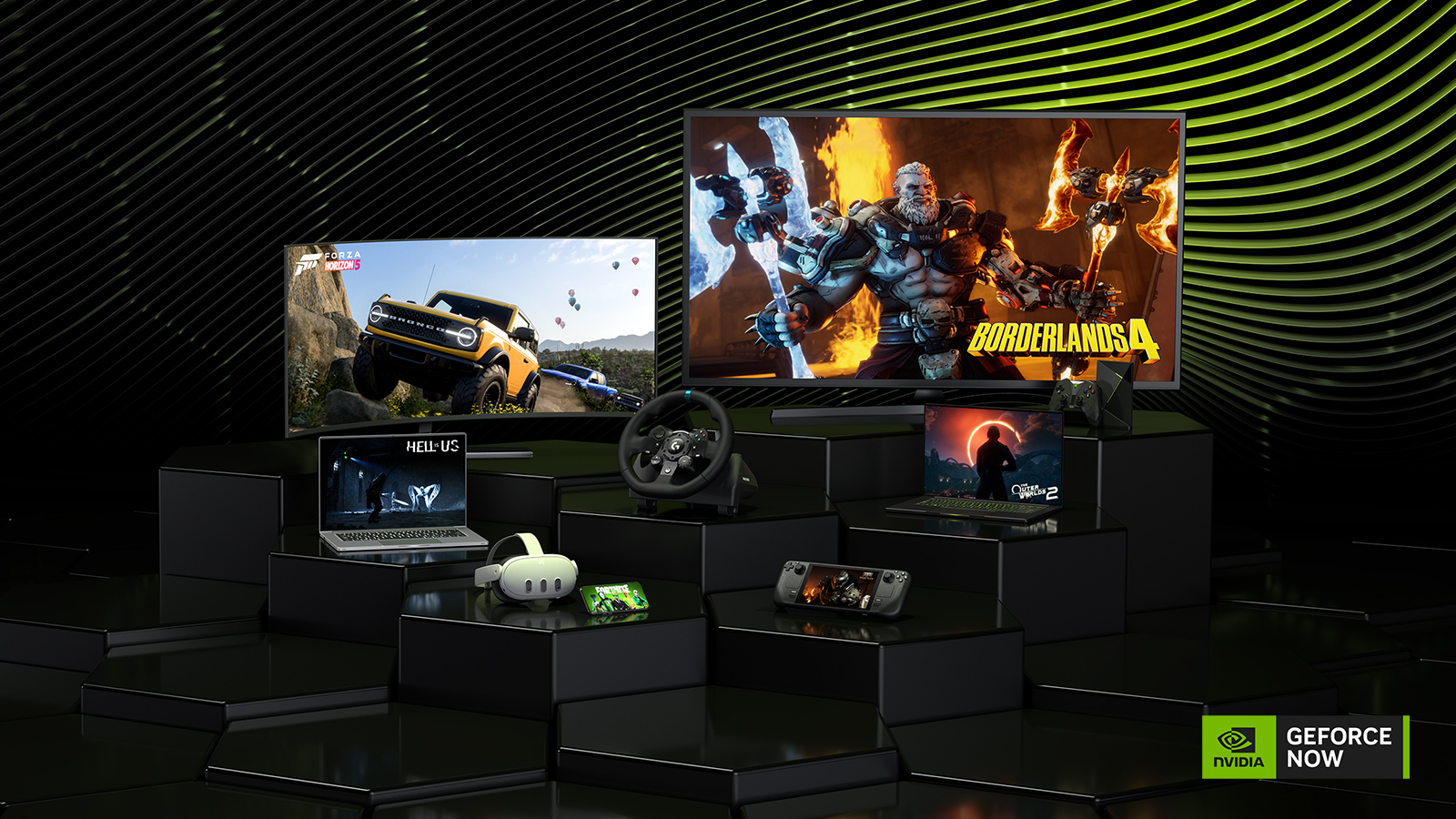
Nvidia has been toying with the idea of bringing its GeForce Now (GFN) service to the Indian market since at least CES 2025. However, getting the backend infrastructure to support a potentially massive user base seems to have delayed the process.
Now, Nvidia is finally bringing GeForce Now to India in the coming weeks. We got a short early hands-on, which left us with good impressions and also lots of questions.
GeForce Now overview: Up to 5K 120 fps streaming with custom RTX 5080 48 GB SuperPods
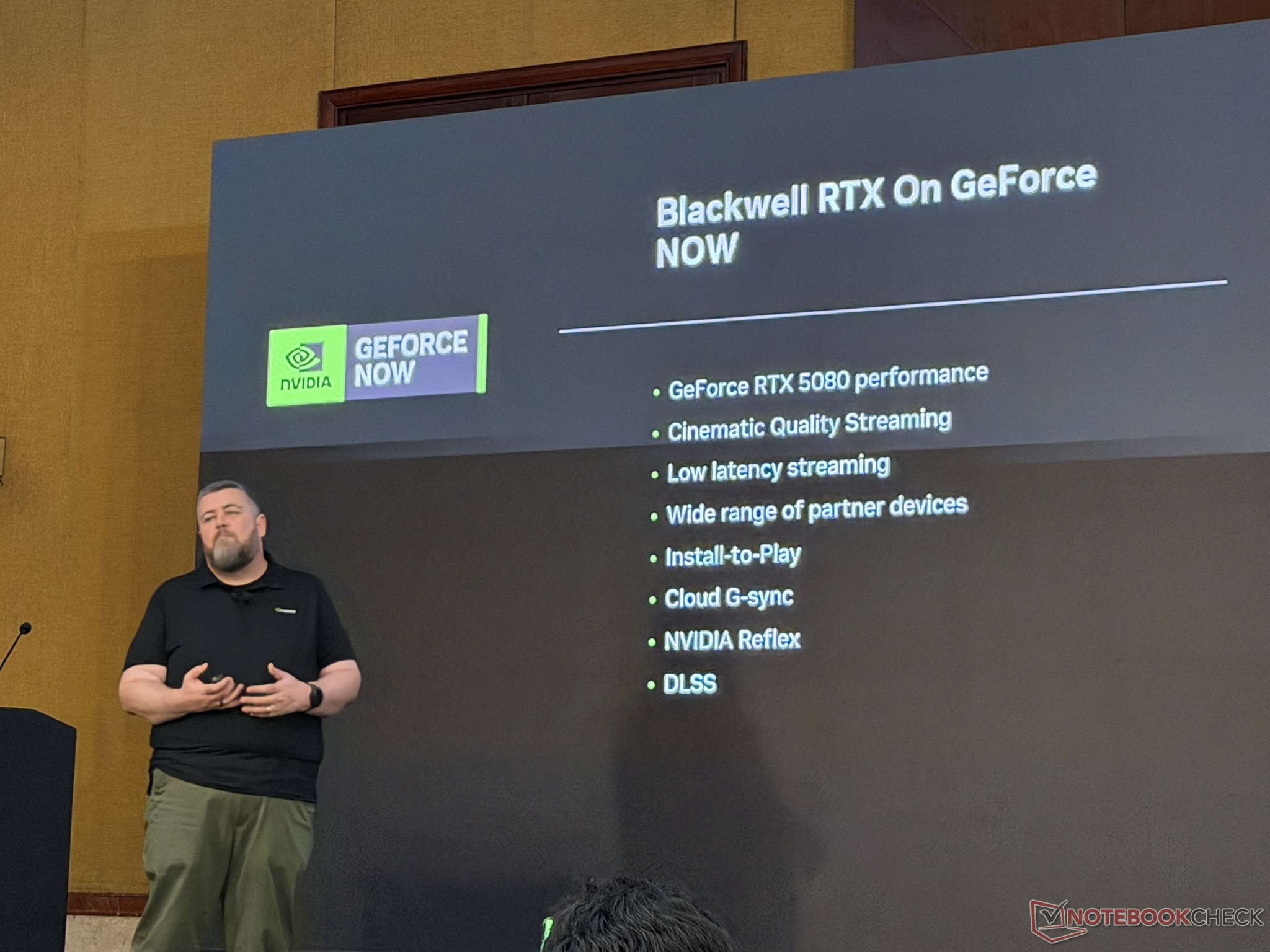
Nvidia first launched GeForce Now to the public back in February 2020. Currently, the service has been upgraded to host Blackwell RTX 5080-class GPUs that are capable of streaming up to 5K 120 fps gaming with support for DLSS 4 multi-frame generation (MFG).
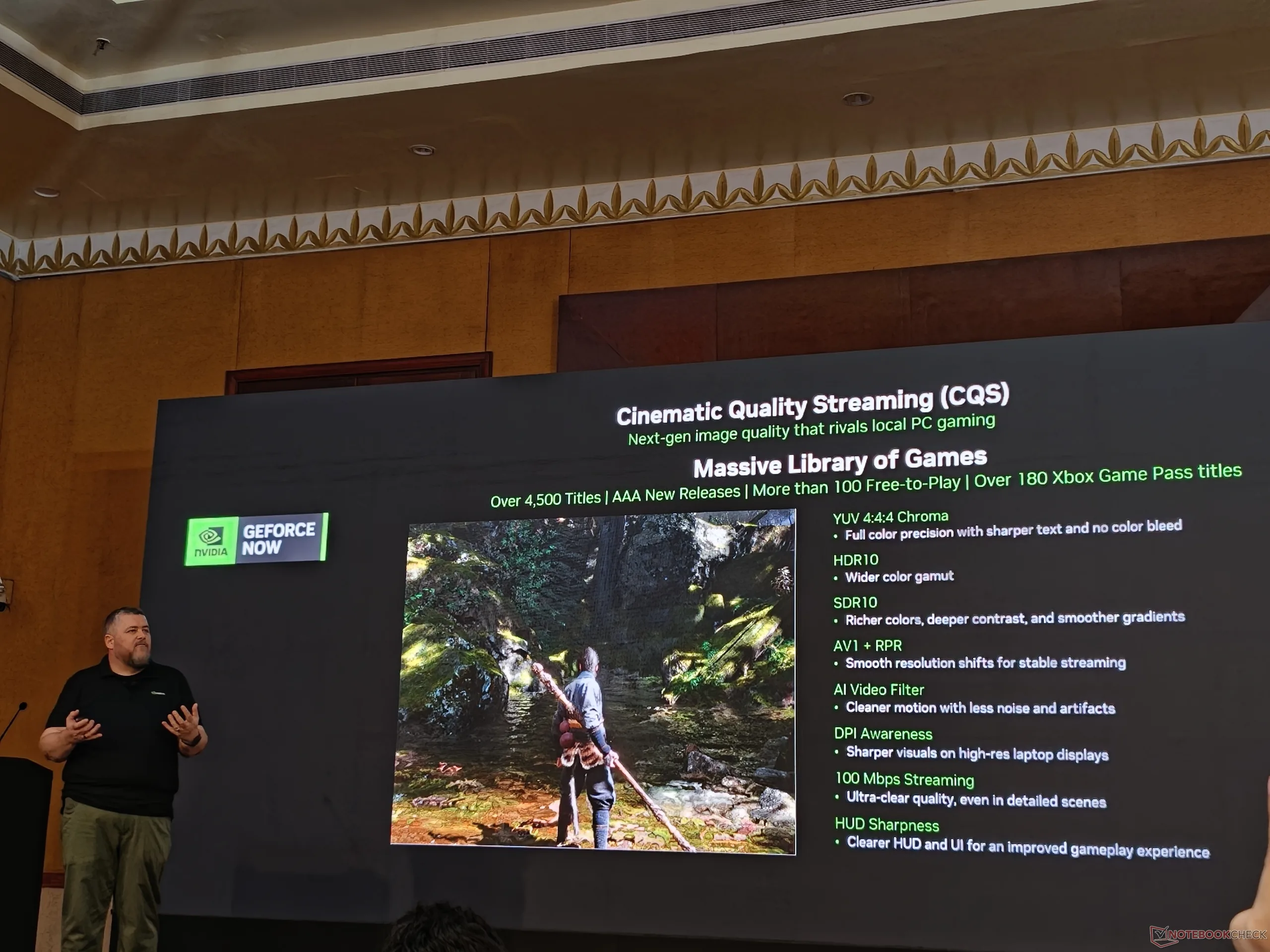
GeForce Now's new Cinematic Quality Streaming (CQS) mode offers YUV 4:4:4 chroma subsampling, 10-bit HDR, AV1 streams, support for high DPI displays, and up to 100 Mbps bitrates.
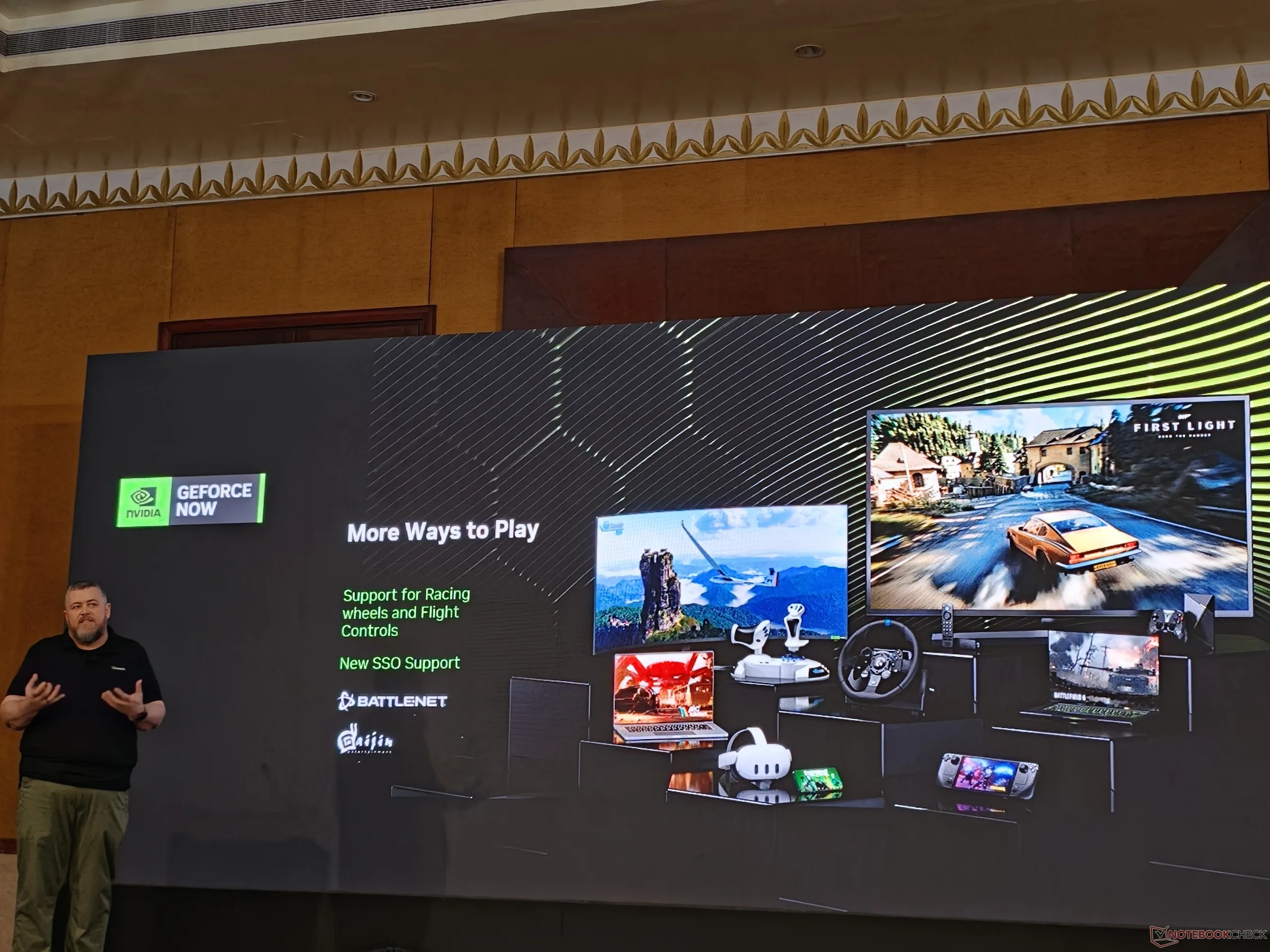
Nvidia said that it currently has 30+ data centers dedicated to GeForce Now in over 100 countries. Data centers in North America, Western Europe, and now in India are fully owned by Nvidia.
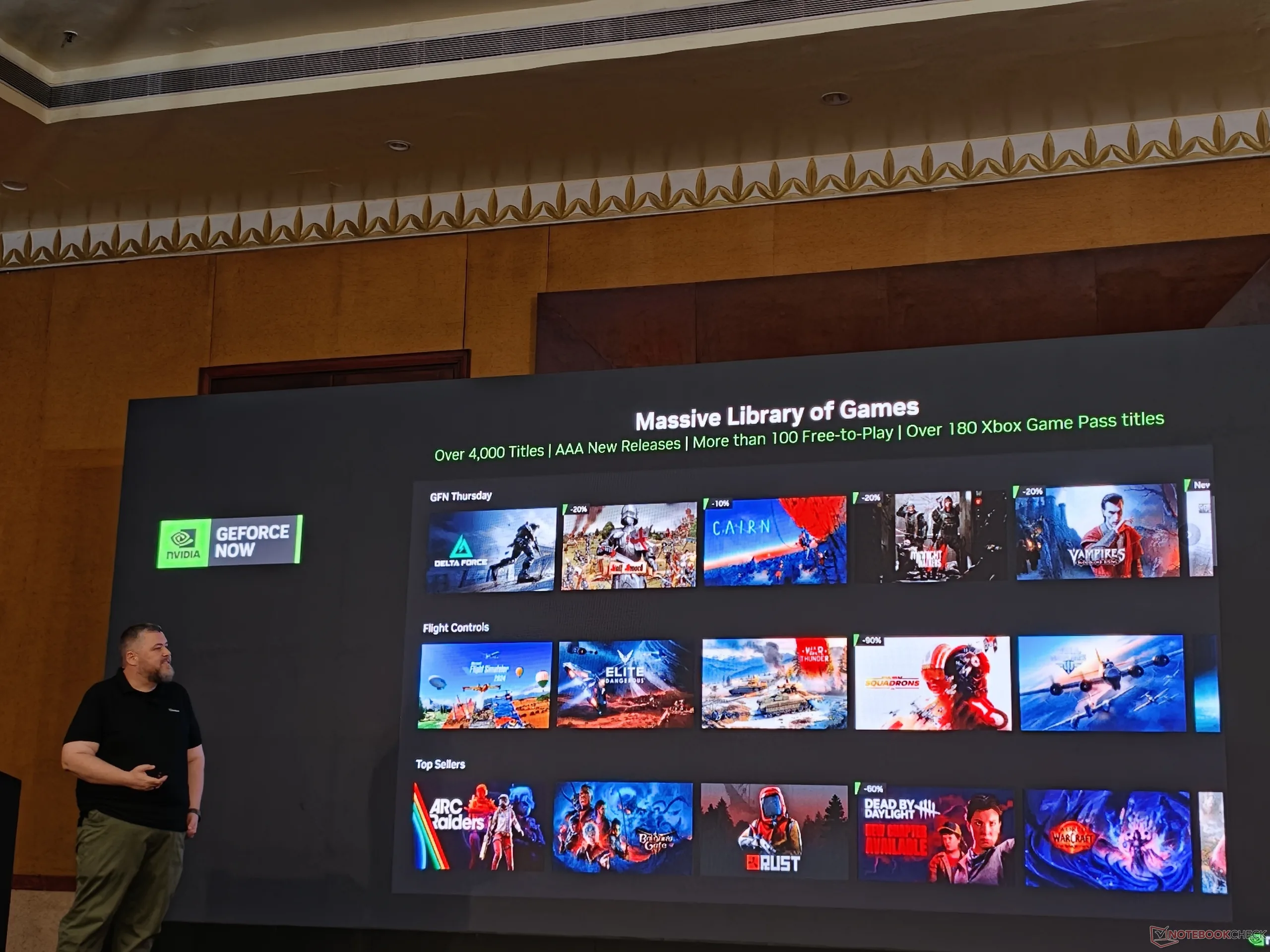
While GeForce Now itself isn't a game publisher, the service presently allows streaming over 4,000 popular titles across Steam, GOG, Epic, EA, Battle.net, Xbox, and Ubisoft Connect.
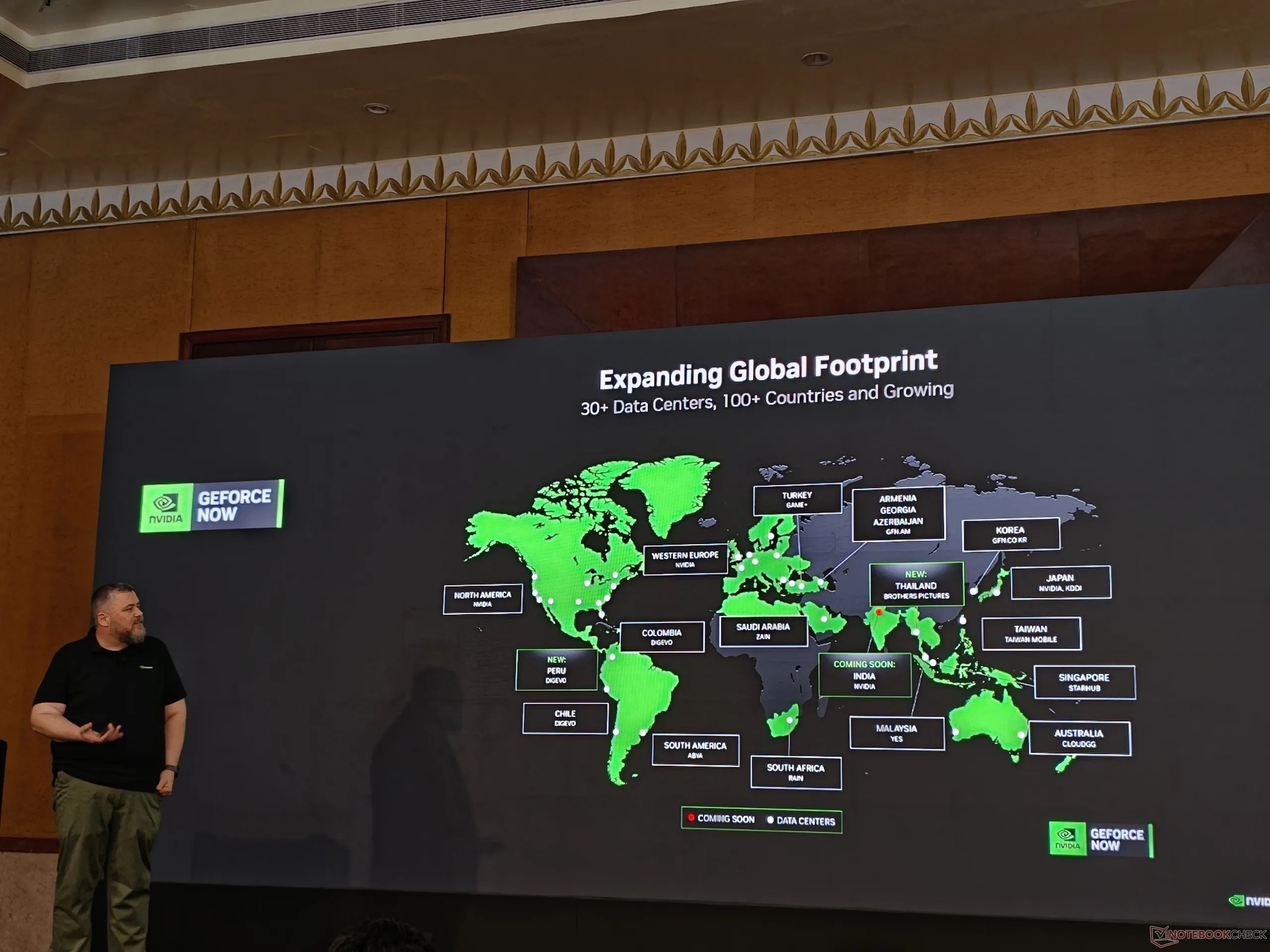
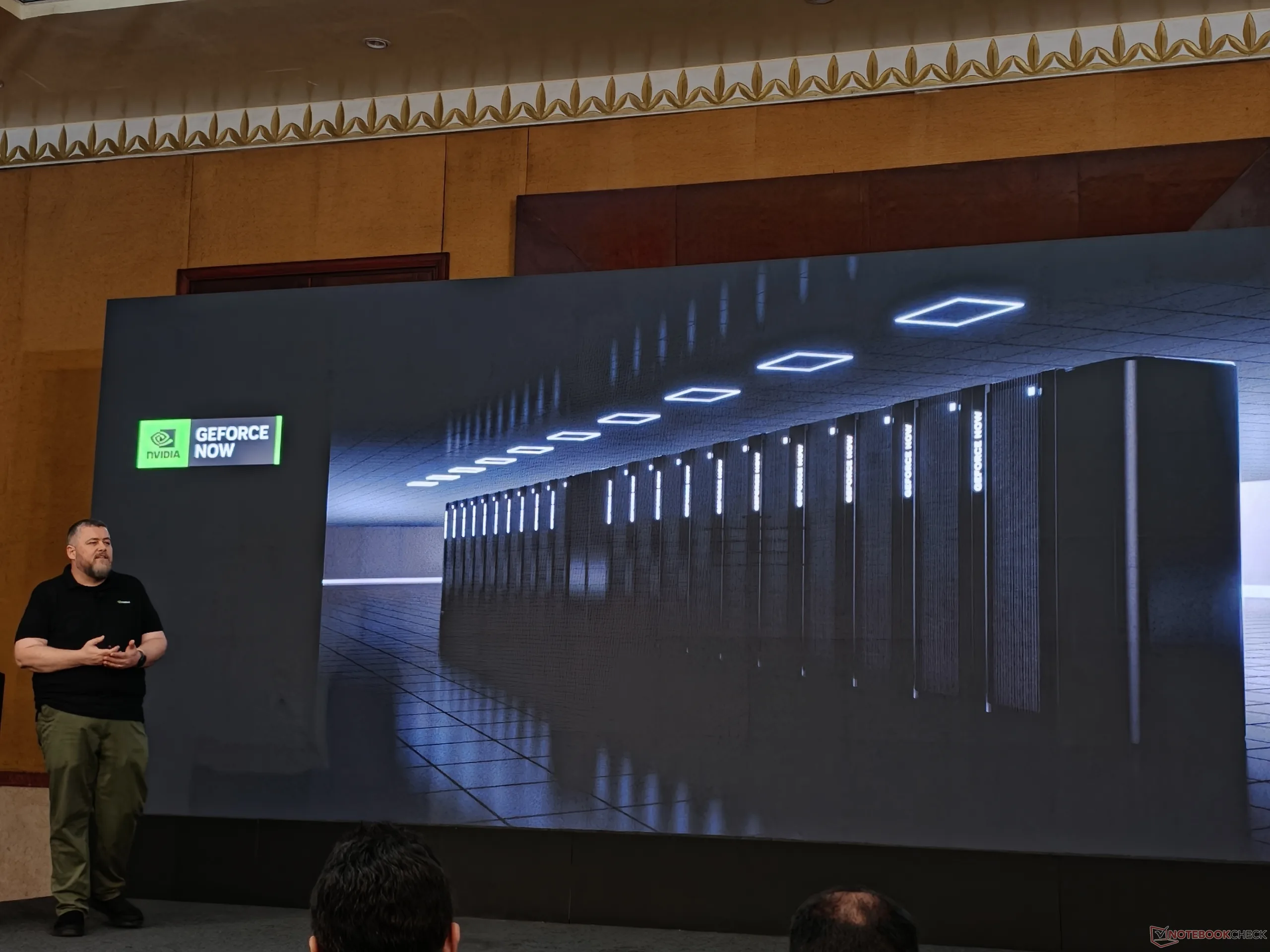
According to Nvidia, GeForce Now's global network of "SuperPods" — essentially, RTX 5080-powered datacenters — enable sub-30 ms network latency in supported regions.
These RTX 5080 SuperPods run AMD Threadipper Pro CPUs clocked at 4.5 GHz, with each instance getting eight cores and 16 threads.
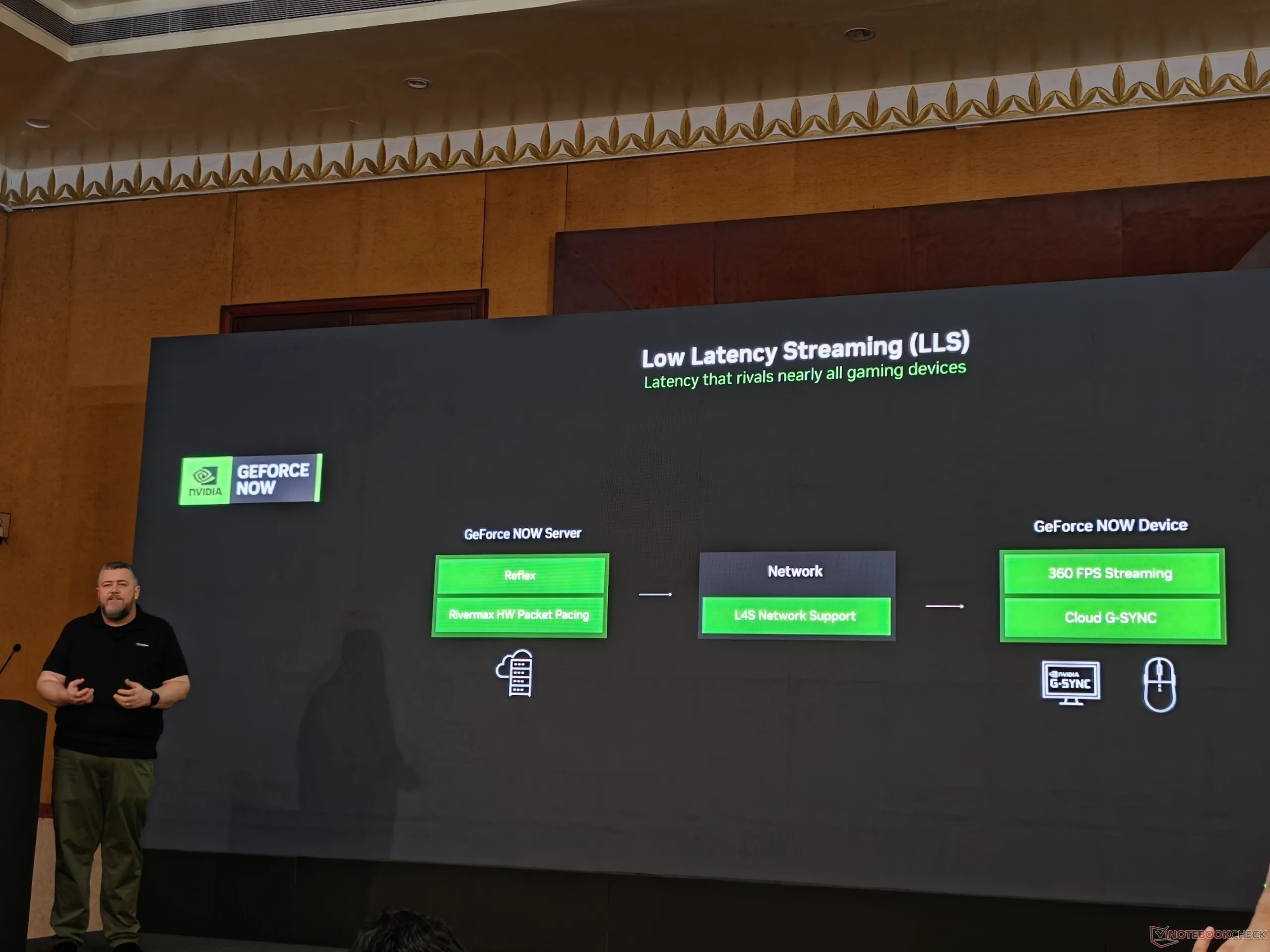
The SuperPods also leverage Nvidia's ConnectX 7 smart NICs and Rivermax hardware packet pacing to reduce latency on the server side.
On the network side, GeForce Now supports Low Latency Low Loss and Scalable Throughput (L4S) networks. However, there is no confirmation that Indian ISPs support L4S, and only select ISPs in the US have been early adopters so far.
Our experience with GeForce Now in India
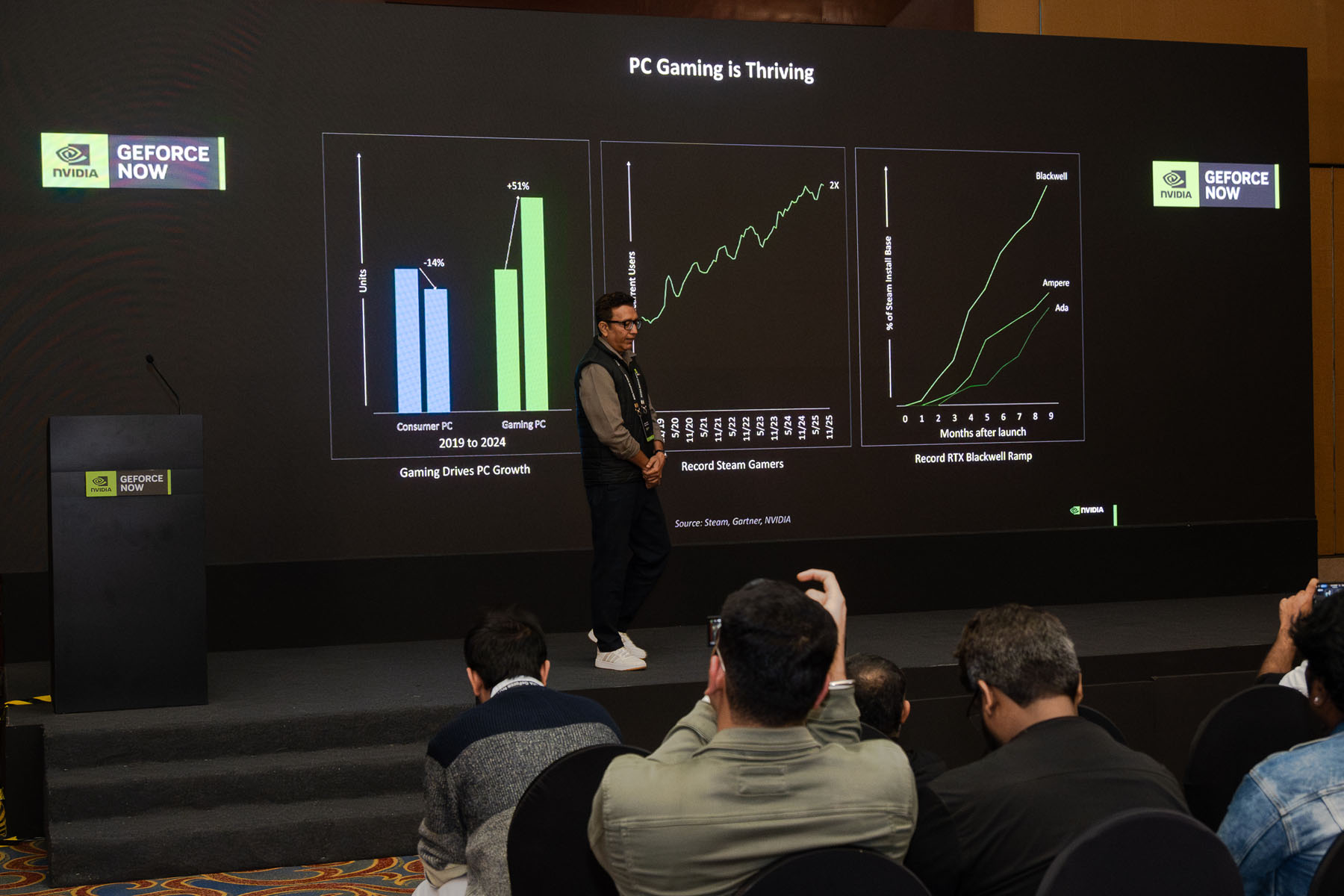
We had a chance to take GeForce Now for a spin at an exclusive media preview in Mumbai, India. First impressions: it's great! At least in the controlled test environment we tried it in.
Nvidia said its SuperPods are located in Mumbai — likely not far from our venue. For what it's worth, it did help with extremely low latency and minimal input lag while playing games like Arc Raiders and Doom: The Dark Ages.
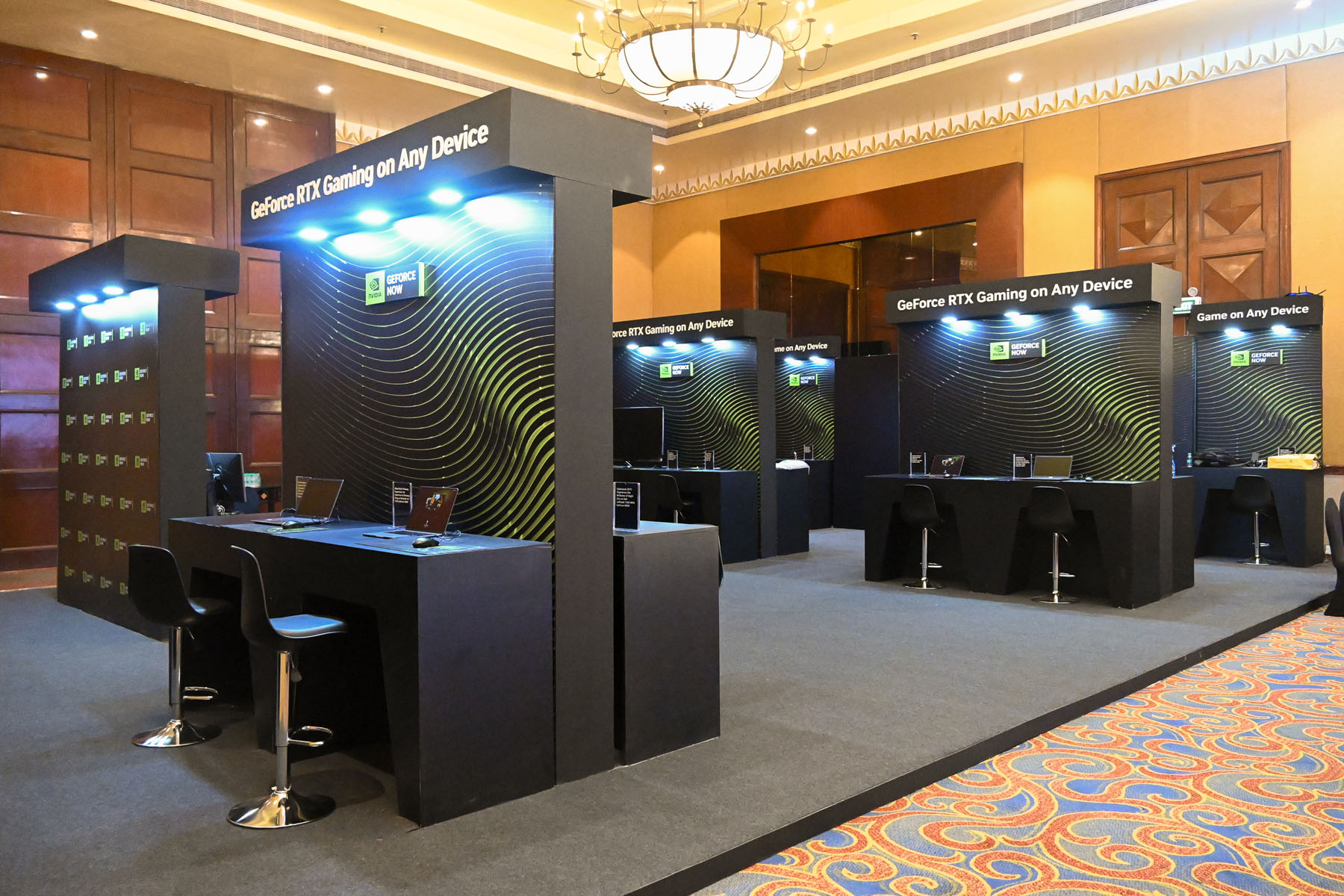
The demo area had all kinds of screens already set up. There were Linux ultrabooks, an iPhone 13, an old OnePlus 10T, and a Steam Deck, among several gaming PCs.
An interesting demonstration was between two identical RTX 5080 gaming PCs running Warhammer 40,000: Space Marine 2. One of the PCs ran the game natively while the other streamed it via GeForce Now at identical settings, and it was difficult to make out which was which.
Unfortunately, we weren't shown the setup process, and the service had been linked to Steam and other game stores already on the test systems.
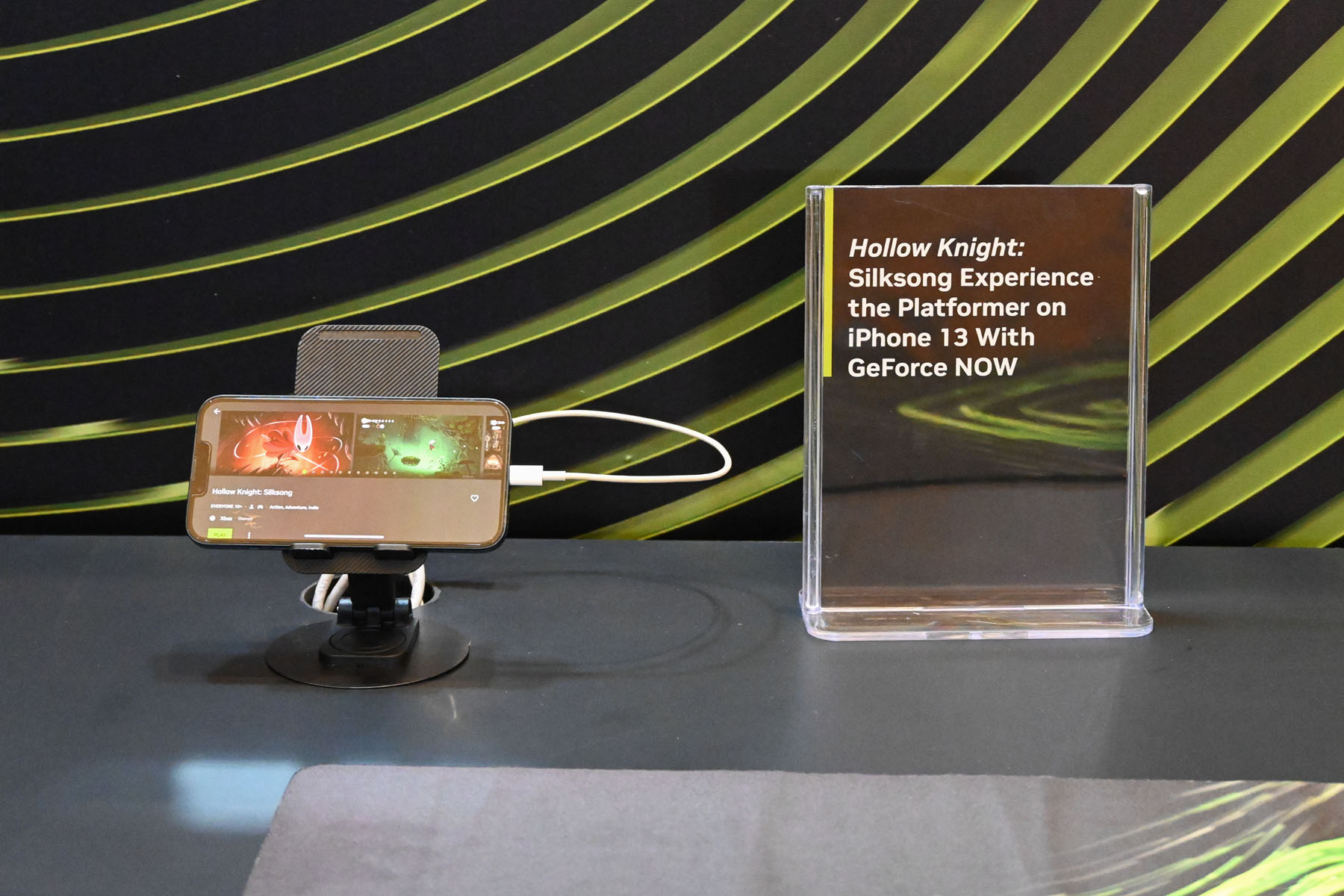
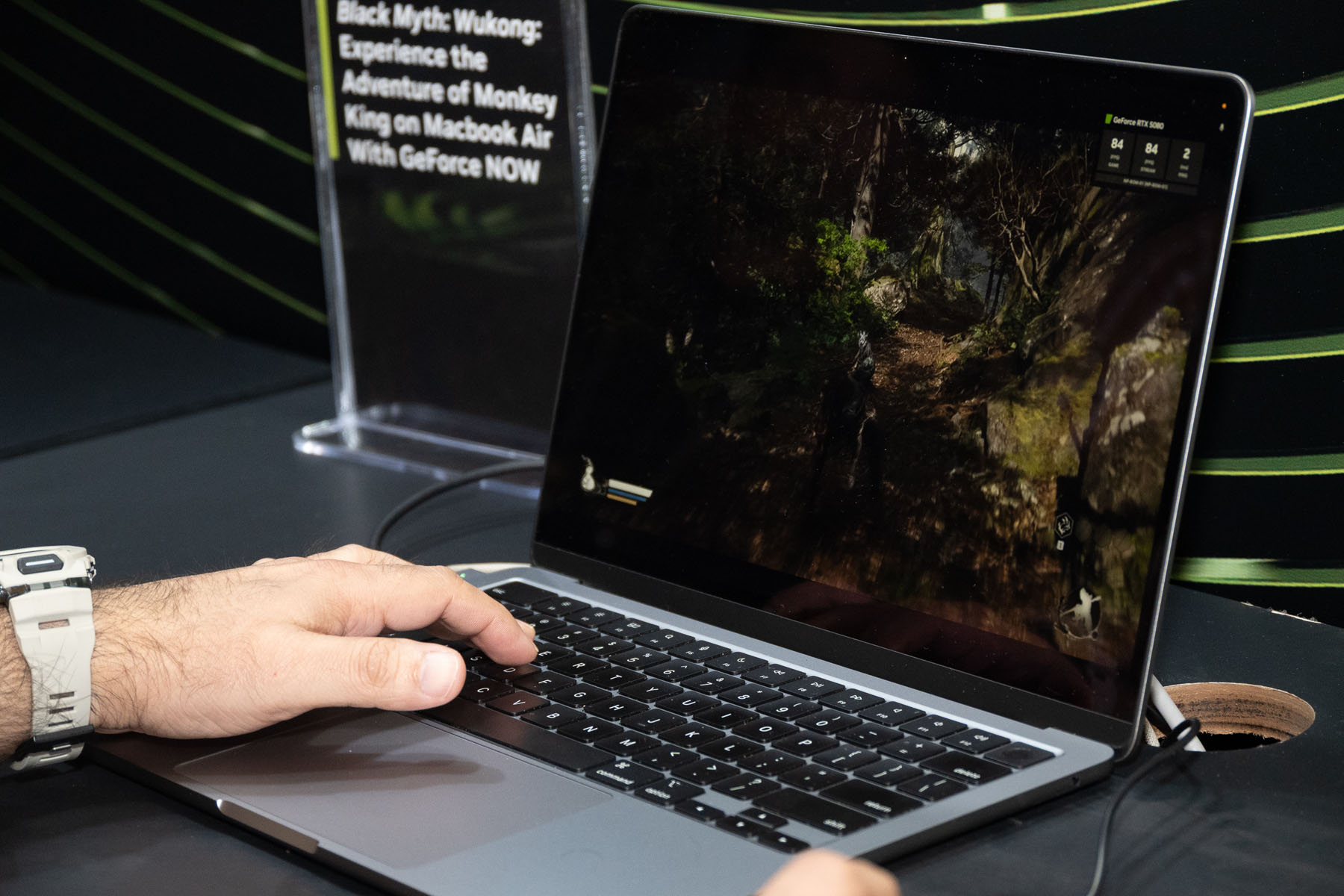
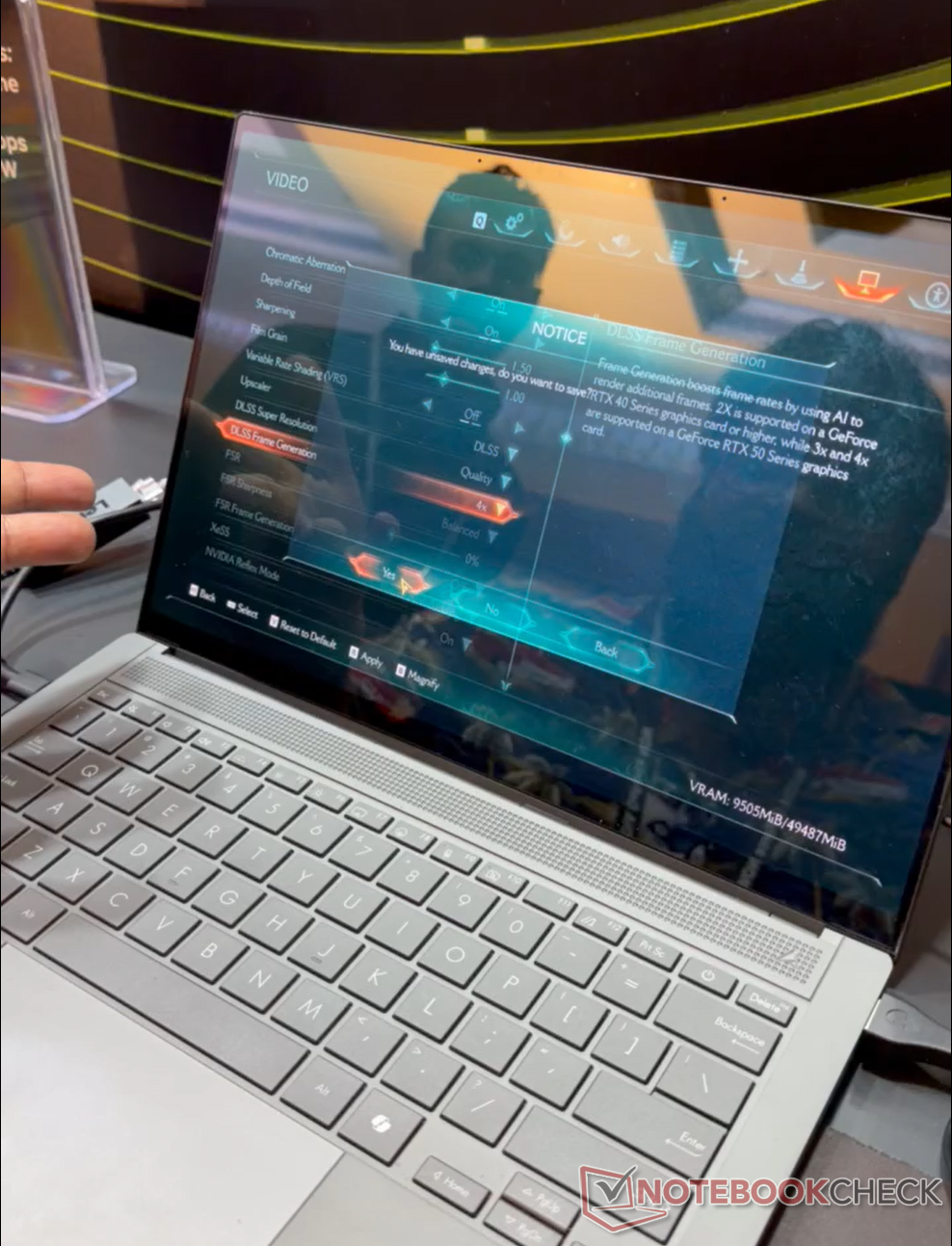
We had a short hands-on running Doom: The Dark Ages on a Meteor Lake-powered ultrabook running Ubuntu.
Doom is a great fast-paced shooter with impressive graphics that makes for a great test candidate for such services. Plus, its performance metrics overlay provides insights into the server hardware running the game.
The game launched via the new GeForce Now app for Linux. It wasn't the fastest experience we've had, and it took quite some time before the game could get up and running.
As you can see in the video below, once the game boots up, it's a near-seamless experience. With all settings cranked up to Ultra and path tracing, DLSS 3.5 ray reconstruction, and DLSS 4 Quality settings with MFG 4x enabled, the game ran pretty impressively for a stream.
We did experience minor input lag but that can also be attributed a bit to MFG 4x. However, Nvidia maintains that optimizations on the server can offset potential input lag with MFG on the client side of things.
We also checked out Arc Raiders running at 1080p 360 fps on a 360 Hz Asus gaming monitor. Of course, this required some reduction in in-game quality settings and the chroma subsampling to YUV 4:2:0.
It may be noted that 4K gaming is capped at 120 fps even if higher frame rates are possible. If you need above 120 fps, you will have to lower the resolution to 1440p or 1080p.
Nvidia didn't delve into this much, but GeForce Now comes with a handy install-to-play feature that gives you 100 GB of temporary, single-session storage powered by NVMesh. This lets you install Steam games onto GeForce Now servers even if the said game isn't directly streaming on the platform yet.
If you want to upgrade this to persistent storage, you can get up to 1 TB for $8 a month.
So, what's the catch?
As much as we walked away with pretty good impressions, several questions remain. For one, Nvidia hasn't disclosed pricing and availability information for GeForce Now in India, save for a vague Q1 2026 window for closed and open betas.
The other major concern is performance. Sure, the event showcased the best of what's possible, but this is with servers based not so far from the venue.
How does the service work in faraway areas, especially in a country with diverse internet providers in each state and district, each with their own challenges? Nvidia on its part claims a 50 Mbps line with <80 ms ping should be enough for 4K 120 fps gameplay.
Is the current datacenter capacity enough to cater to a large gaming crowd without hiccups? Would Nvidia augment its existing infrastructure should demand spike, or rely on a third-party provider?
We will get an idea of real-world performance and pain points once Nvidia opens up the service to beta testing in the coming weeks.
Pricing and concluding remarks
Nvidia has been pretty opaque about pricing and availability so far. If US pricing is anything to go by, plans for GeForce Now range from free to $19.99 (~₹1,900) per month for the Ultimate tier, which gives you access to RTX 5080 SuperPods.
The free tier offers RTX 3050-class compute, which should be enough to get anyone started with casual gaming without having to invest a dime in PC hardware, albeit with potentially long queue times and a one-hour play limit.
Information is also lacking with respect to add-ons like persistent storage and the availability of 24-hour day passes.
Then there's Microsoft Xbox Cloud Gaming (Project xCloud), which launched a few months ago in the country. Microsoft's approach is a bit different here as there's no free tier, and you need to purchase Game Pass Ultimate ($29.99 per month or ₹1,389 per month on Amazon) to access the full console library and stream at 1440p.
GeForce Now already has an edge in this regard as it allows streaming PC versions of games with the full gamut of graphics settings, together with the ability to stream at up to 5K 120 fps resolution along with support for technologies such as Reflex and DLSS.
With ever-increasing supply constraints and hardware costs adversely impacting a budget economy on one side and a ginormous penetration of mobile devices on the other, India holds tremendous market potential for online game streaming services.
An entry-level Performance pricing around the ₹500 mark that scales up to ₹1,500 or so per month for the Ultimate tier should see gamers lap up GeForce Now in large numbers, provided Nvidia can ensure a fairly reliable and consistent experience across every nook and corner of the country.
Source(s)
Notebookcheck
Nvidia arranged travel for the author's participation in the media briefing.
 Add as a preferred source on Google


