




Nvidia nerfs voltages on RTX GPUs with latest driver update leading to lower performance
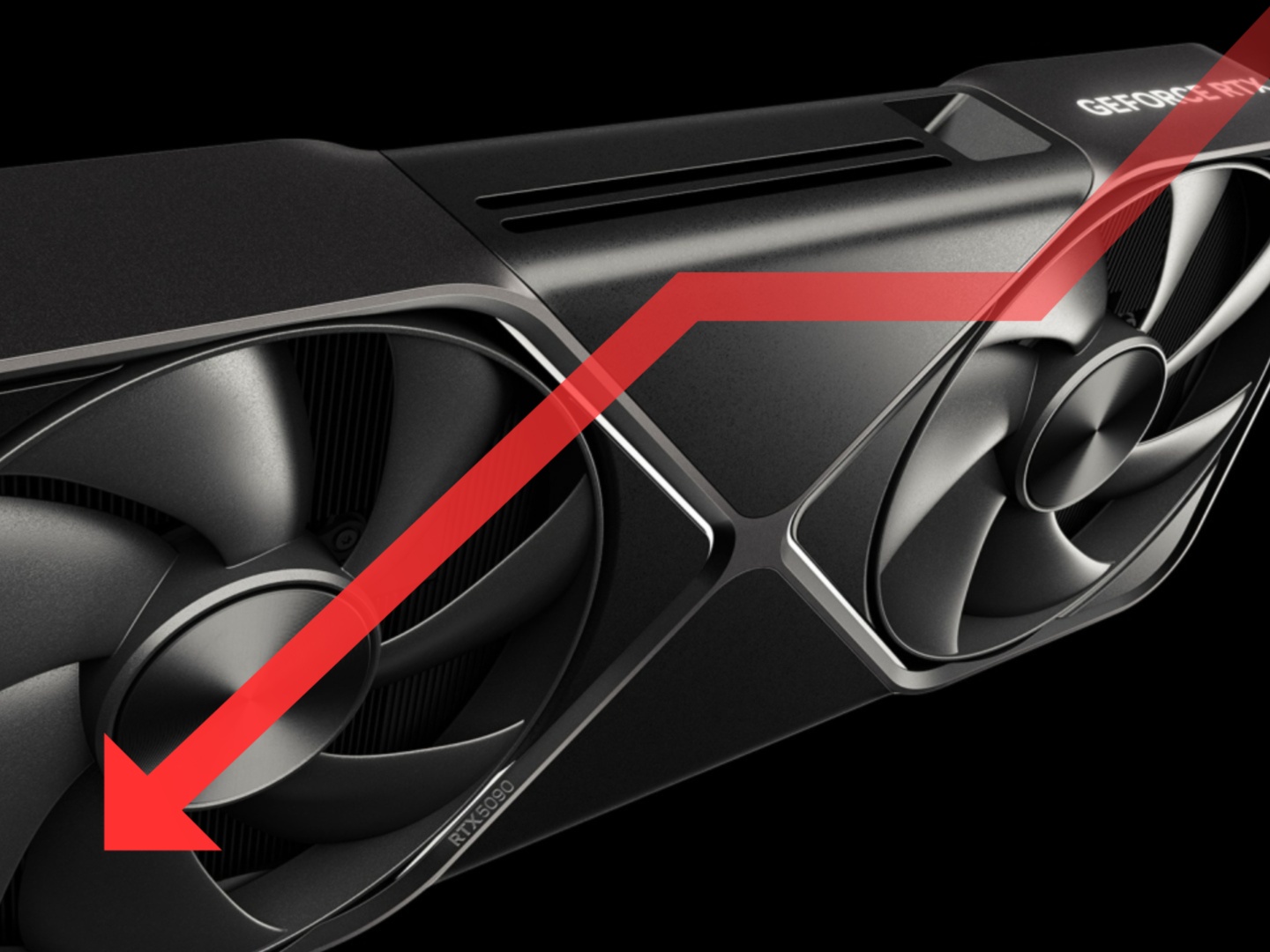
Nvidia’s driver team has been having a rough time since the Resident Evil Requiem Game Ready Drivers came out. The 595.59 driver version that was supposed to optimize GPUs for the game ended up not only tanking the performance but also causing some GPU fan detection issues. The company quickly retracted the drivers and then released an updated version, but that seems to have introduced new issues.
As noted and shared by Bang4BuckPC Gamer on YouTube (linked below), the latest driver version 595.71 implements a voltage lock on some GPUs. While the full range of affected GPUs hasn’t been tested yet, the RTX 5090 is for sure one of the victims here. Additionally, there were also reports of RTX 4090, RTX 4080 Super, and RTX 4070 Ti Super users also affected by this issue.
In their latest video, the YouTuber reports that after updating their Asus TUF Gaming GeForce RTX 5090 OC Edition to the new driver, the voltage was lower at both stock and overclocked frequencies. More interestingly, the GPU reached 1.055V to 1.060V at stock, but when a 150 MHz was added to the core, the clock speed went up accurately, but the voltage dropped to 1.045V to 1.050V. Then, with a 300 MHz overclock, the voltage dropped to below 1V (0.990V) while the core clock speed still remained under 3,000 MHz. It seems like the voltage has been locked to under 1V forcing the clock speeds to stay under 3,000 MHz despite the overclock.
Wccftech also ran some tests on an MSI GeForce RTX 5090 SUPRIM X and noted similar results. With an older driver and some manual overclocking, the card ran at 1.020V to 1.030V with core clocks up to 3,030 MHz. After the new driver, with the same overclocked settings, the GPU wouldn’t cross 3,000 MHz and the voltages dropped to 1.005V – 1.010V. Even at stock, the card ran at lower voltages on the new driver compared to the older one.
Presumably, Nvidia has implemented these voltage limitations because of the numerous melted connector reports. This would theoretically limit the max voltage going through the 16-pin connectors, thereby – theoretically – preventing burning connectors or damaged GPUs. It’s unfortunate that this solution comes at the cost of performance.
Source(s)
Bang4BuckPC Gamer on YouTube, Wccftech, Reddit, Juan Alejo on X
 Add as a preferred source on Google


