Notebookcheck Logo

Intel Celeron N3150 vs Intel Celeron J4125

Intel Celeron N3150

► remove from comparison Intel N3150

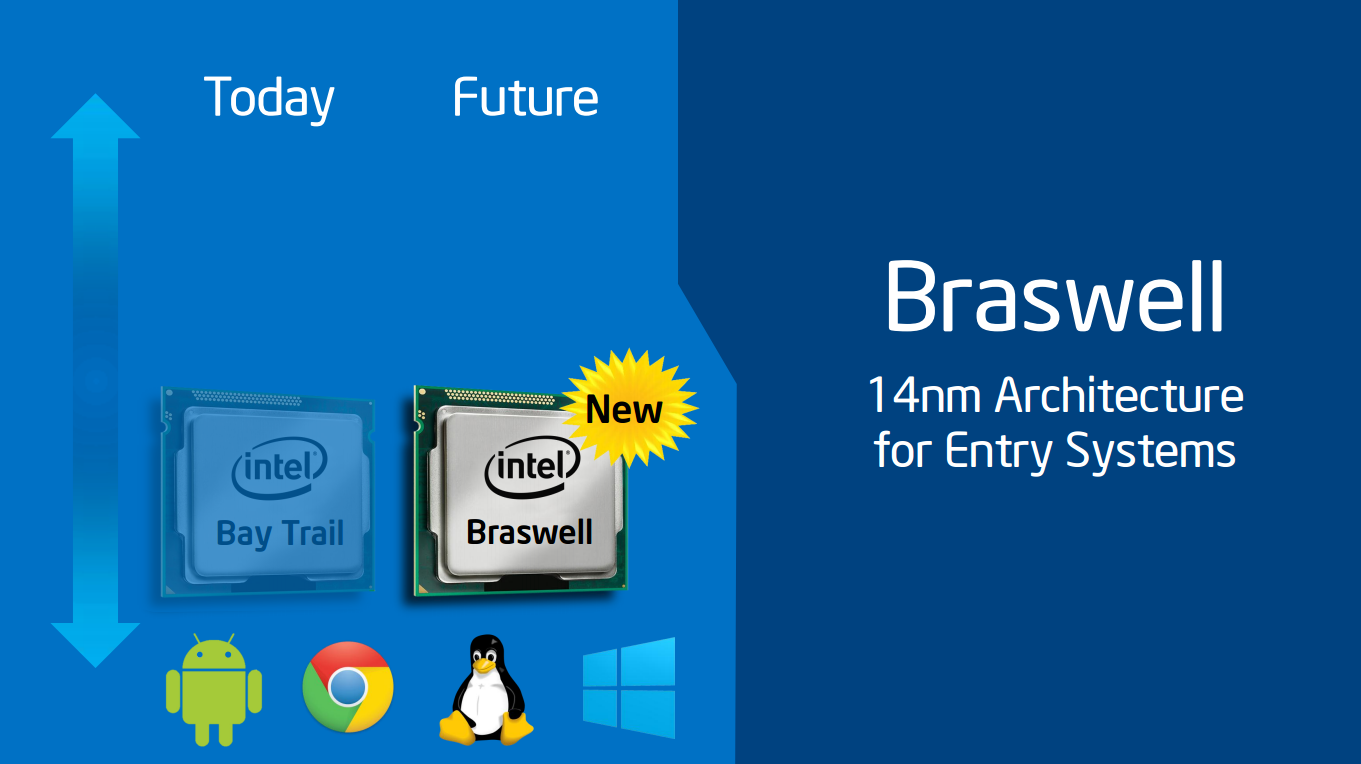
The Intel Celeron N3150 is a quad-core SoC for entry-level notebooks, which has been presented in early 2015. It is clocked at 1.6 - 2.08 GHz and part of the Braswell platform. Thanks to its new 14 nanometer low-power process (P1273) with tri-gate transistors, energy efficiency has been significantly improved compared to its predecessor Bay Trail (e.g. Celeron N2930). In addition to the CPU cores, the SoC offers a DirectX 11.2-capable GPU as well as a DDR3L Memory Controller (2x 64 bit, 25.6 GB/s).

Architecture

The processor cores are based on the Airmont architecture, which is basically a slightly modified shrink of the previous Silvermont core. While performance per clock has not been improved, the more efficient 14 nm process may lead to a better utilization of the CPU Burst (alias Turbo Boost) and therefore a somewhat higher performance in certain situations.

Performance

Compared to its predecessor Celeron N2930 (1.8 - 2.2 GHz) or the competing AMD APU E2-6110, the N3150 offers an almost identical performance. Using Windows, the CPU is adequate for everyday tasks such as Internet browsing or office applications, but may struggle in more demanding software.

Graphics

The HD Graphics (Braswell) is based on the Intel Gen8 architecture, which supports DirectX 11.2 and is also found in the Broadwell series (e.g. HD Graphics 5300). With 12 EUs (Execution Units) and a clock speed of up to 640 MHz, the GPU is almost twice as fast as the HD Graphics (Bay Trail), but still not powerful enough to handle demanding 3D games of 2015. The GPU also supports 4K/H.265 video acceleration.

Power Consumption

The entire SoC is rated at an TDP of 6 watts (SDP 4 watts). Thus, the chip can be cooled passively.

Intel Celeron J4125

► remove from comparison Intel Celeron J4125

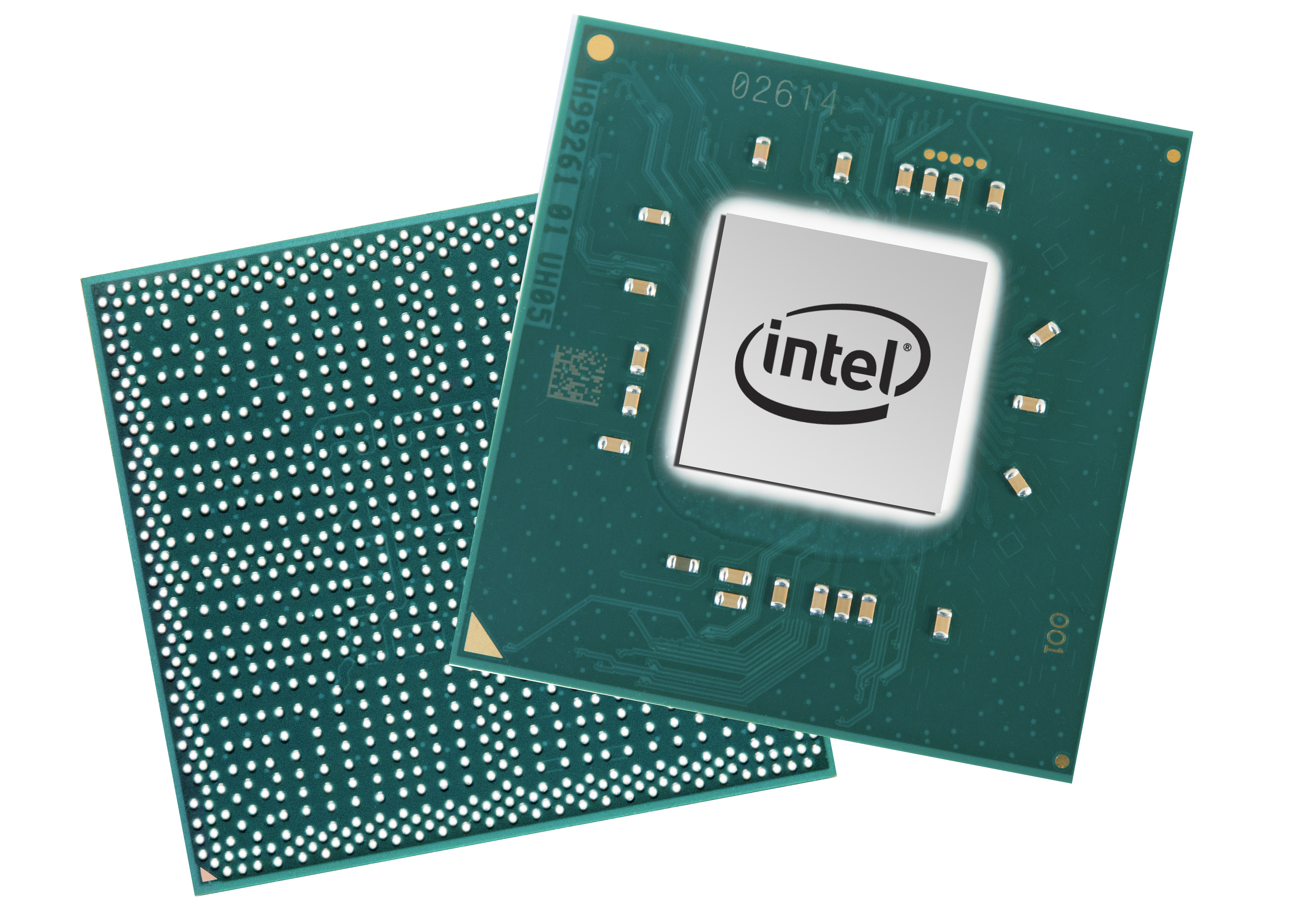
The Intel Celeron J4125 is a quad-core SoC primarily for inexpensive mini PCs and was announced late 2019. It runs at 2-2.7 GHz (Single Core Burst) and is based on the Gemini Lake platform (2019 refresh). Compared to the predecessor, the refresh offers slightly higher clock speeds. Similar to the Apollo Lake predecessors, the chip is manufactured on a 14 nm process with FinFETs but offers slightly improved processor cores, double the amount of L2 cache, partial Wi-Fi 5 support, all in a smaller package. Besides four CPU cores, the chip also includes a DirectX 12 capable GPU as well as a DDR4/LPDDR4 memory controller (dual-channel, up to 2400 MHz). The processor is not replaceable as it is directly soldered to the mainboard.

Architecture

The processor architecture is still called Goldmont Plus. Compared to the older Goldmont cores in Apollo Lake, they feature an increased level 2 cache (to 4 MB). That means the per-clock-performance should be a bit better, but not near the Core CPUs like Kaby Lake Y.

Performance

The average J4125 in our database outguns the AMD 3050e just slightly, the latter being a dual-core, Zen-based, entry-level processor of nearly the same energy efficiency, as far as multi-thread benchmark scores are concerned. This means the Celeron is a very basic CPU that's good for basic day-to-day activities only.

The Beelink GK Mini is one of the fastest systems built around the J4125 that we know of. It can be roughly 70% faster in CPU-bound workloads than the slowest system featuring the same chip in our database, as of August 2023.

GPU Performance

The UHD Graphics 600 (Gemini Lake) is based on Intel's Gen9 architecture, which supports DirectX 12 and is also used for the Kaby Lake / Skylake / Apollo Lake graphics adapters (like HD Graphics 520). Equipped with 12 EUs and a clock of up to 750 MHz, the performance should be roughly on par with the older HD Graphics 500 (Apollo Lake).

The chip also includes an advanced video engine with hardware support for the playback of VP9 and H.265 material (8-bit color-depth).

Power consumption

Like most J-class Intel processors, the Celeron has a default TDP, also known as the long-term power limit, of 10 W. This is low enough, allowing laptop makers to ditch fans while building a passively cooled laptop, tablet or mini-PC around the chip.

The Intel Celeron J4125 is built with one of the old 14 nm Intel processes for poor, as of early 2023, energy efficiency.

ModelIntel Celeron N3150Intel Celeron J4125
CodenameBraswellGemini Lake Refresh
SeriesIntel CeleronIntel Gemini Lake
Series: Gemini Lake Gemini Lake Refresh
Intel Celeron N3160 compare1.6 - 2.24 GHz4 / 4 cores
Intel Celeron N3150 « 1.6 - 2.08 GHz4 / 4 cores
Intel Celeron N3060 compare1.6 - 2.48 GHz2 / 2 cores
Intel Celeron N3050 compare1.6 - 2.16 GHz2 / 2 cores
Intel Celeron N3000 compare1.04 - 2.08 GHz2 / 2 cores
Intel Pentium Silver J5040 compare2 - 3.2 GHz4 / 4 cores
Intel Pentium Silver N5030 compare1.1 - 3.1 GHz4 / 4 cores
Intel Celeron J4125 « 2 - 2.7 GHz4 / 4 cores
Intel Celeron N4120 compare1.1 - 2.6 GHz4 / 4 cores
Intel Celeron J4025 compare2 - 2.9 GHz2 / 2 cores
Intel Celeron N4020 compare1.1 - 2.8 GHz2 / 2 cores
Clock1600 - 2080 MHz2000 - 2700 MHz
L2 Cache2 MB4 MB
Cores / Threads4 / 44 / 4
TDP6 Watt10 Watt
Technology14 nm14 nm
max. Temp.90 °C105 °C
SocketFCBGA1170BGA1090
FeaturesIntel HD Graphics (Braswell, 12 EUs, 320 - 640 MHz), Wireless Display, Quick Sync, AES-NI, max. 8 GB Dual-Channel DDR3L-1600 (25,6 GB/s), 5x USB 3.0, 4x PCIe 2.0, 2x SATA 6.0 Gbit/sDDR4-2400/LPDDR4-2400 RAM, PCIe 2, MMX, SSE, SSE2, SSE3, SSSE3, SSE4.1, SSE4.2, VMX, SMEP, SMAP, MPX, EIST, TM1, TM2, Turbo, AES-NI, RDRAND, RDSEED, SHA, SGX
iGPUIntel HD Graphics (Braswell) (320 - 640 MHz)Intel UHD Graphics 600 (250 - 750 MHz)
Architecturex86x86
$107 U.S.
Announced
Manufacturerark.intel.comark.intel.com

Benchmarks

Performance Rating - CB R15 + R20 + 7-Zip + X265 + Blender + 3DM11 CPU - Celeron J4125
17.1 pt (28%)
Restrict / Search: Model: Max. age: years
Cinebench R23 - Cinebench R23 Multi Core
min: 860     avg: 1203     median: 1186 (1%)     max: 1563 Points
Cinebench R23 - Cinebench R23 Single Core
min: 392     avg: 425.3     median: 438 (18%)     max: 446 Points
Cinebench R20 - Cinebench R20 CPU (Single Core)
min: 155     avg: 166.2     median: 170 (19%)     max: 174 Points
Cinebench R20 - Cinebench R20 CPU (Multi Core)
min: 304     avg: 449.2     median: 430 (1%)     max: 610 Points
Cinebench R15 - Cinebench R15 CPU Multi 64 Bit
118 Points (1%)
min: 148     avg: 223.4     median: 243 (2%)     max: 271 Points
Cinebench R15 - Cinebench R15 CPU Single 64 Bit
32 Points (9%)
min: 63.1     avg: 72.5     median: 75.3 (21%)     max: 79.1 Points
Cinebench R11.5 - Cinebench R11.5 CPU Multi 64 Bit
1.5 Points (2%)
min: 2.13     avg: 2.8     median: 3.1 (4%)     max: 3.09 Points
Cinebench R11.5 - Cinebench R11.5 CPU Single 64 Bit
0.4 Points (10%)
min: 0.84     avg: 0.9     median: 0.9 (20%)     max: 0.92 Points
Cinebench R10 - Cinebench R10 Rend. Single (32bit)
1085 Points (7%)
min: 2070     avg: 2159     median: 2112 (13%)     max: 2295 Points
Cinebench R10 - Cinebench R10 Rend. Multi (32bit)
3624 Points (3%)
min: 4102     avg: 6188     median: 7128 (5%)     max: 7335 Points
Cinebench R10 - Cinebench R10 Rend. Multi (64bit)
min: 9697     avg: 10201     median: 10201 (7%)     max: 10705 Points
Cinebench R10 - Cinebench R10 Rend. Single (64bit)
min: 3669     avg: 3690     median: 3690 (4%)     max: 3711 Points
wPrime 2.10 - wPrime 2.0 1024m *
945 s (11%)
min: 566     avg: 608     median: 603 (7%)     max: 654.159 s
wPrime 2.10 - wPrime 2.0 32m *
30.1 s (6%)
min: 17.3     avg: 18     median: 17.4 (3%)     max: 19.42 s
WinRAR - WinRAR 4.0
915 Points (1%)
min: 1019     avg: 1069     median: 1048 (2%)     max: 1140 Points
7-Zip 18.03 - 7-Zip 18.03 Multi Thread 4 runs
min: 5694     avg: 7248     median: 7494 (4%)     max: 8399 MIPS
7-Zip 18.03 - 7-Zip 18.03 Single Thread 4 runs
min: 2237     avg: 2358     median: 2369 (28%)     max: 2444 MIPS
X264 HD Benchmark 4.0 - x264 Pass 2
9 fps (3%)
min: 11.31     avg: 13.7     median: 13.1 (4%)     max: 16.75 fps
X264 HD Benchmark 4.0 - x264 Pass 1
44.8 fps (10%)
min: 52.6     avg: 64.3     median: 61.4 (14%)     max: 78.9 fps
HWBOT x265 Benchmark v2.2 - HWBOT x265 4k Preset
min: 0.95     avg: 1.4     median: 1.5 (3%)     max: 1.61 fps
TrueCrypt - TrueCrypt Serpent
0.1 GB/s (3%)
min: 0.163     avg: 0.2     median: 0.2 (5%)     max: 0.182 GB/s
TrueCrypt - TrueCrypt Twofish
0.2 GB/s (3%)
min: 0.196     avg: 0.2     median: 0.3 (5%)     max: 0.266 GB/s
TrueCrypt - TrueCrypt AES
0.8 GB/s (2%)
min: 1.8     avg: 1.8     median: 1.8 (5%)     max: 1.9 GB/s
Blender - Blender 3.3 Classroom CPU *
7856 Seconds (100%)
Blender - Blender 2.79 BMW27 CPU *
min: 2198     avg: 2772     median: 2391 (17%)     max: 3860 Seconds
R Benchmark 2.5 - R Benchmark 2.5 *
min: 1.525     avg: 1.6     median: 1.6 (34%)     max: 1.579 sec
3DMark 06 - CPU - 3DMark 06 - CPU
2053 Points (4%)
min: 2373     avg: 3327     median: 3740 (8%)     max: 3869 Points
Super Pi mod 1.5 XS 1M - Super Pi mod 1.5 XS 1M *
41 s (9%)
min: 24.57     avg: 31.6     median: 24.6 (5%)     max: 45.52 s
Super Pi mod 1.5 XS 2M - Super Pi mod 1.5 XS 2M *
90.2 s (4%)
min: 55.9     avg: 68.9     median: 57.4 (2%)     max: 93.4 s
Super Pi Mod 1.5 XS 32M - Super Pi mod 1.5 XS 32M *
1939 s (9%)
min: 1332.53     avg: 3652     median: 1845 (8%)     max: 7778 s
3DMark Vantage - 3DM Vant. Perf. CPU no Physx
min: 3522     avg: 5431     median: 5430.5 (4%)     max: 7339 Points
3DMark 11 - 3DM11 Performance Physics
1516 Points (4%)
min: 2348     avg: 2705     median: 2706 (7%)     max: 2986 Points
3DMark - 3DMark Ice Storm Physics
15395 Points (13%)
min: 10102     avg: 19782     median: 19782 (16%)     max: 29462 Points
3DMark - 3DMark Ice Storm Extreme Physics
min: 11105     avg: 23313     median: 29231 (24%)     max: 29602 Points
3DMark - 3DMark Ice Storm Unlimited Physics
min: 17507     avg: 26606     median: 26606 (21%)     max: 35705 Points
3DMark - 3DMark Cloud Gate Physics
1311 Points (3%)
min: 1196     avg: 2273     median: 2485 (6%)     max: 2804 Points
3DMark - 3DMark Fire Strike Standard Physics
1925 Points (3%)
min: 1602     avg: 3372     median: 3689 (7%)     max: 4271 Points
3DMark - 3DMark Time Spy CPU
min: 876     avg: 994     median: 984 (4%)     max: 1122 Points
Geekbench 5.5 - Geekbench 5.1 - 5.5 64 Bit Single-Core
min: 435     avg: 454.2     median: 455 (18%)     max: 466 Points
Geekbench 5.5 - Geekbench 5.1 - 5.5 64 Bit Multi-Core
min: 1198     avg: 1367     median: 1394 (2%)     max: 1512 Points
Geekbench 5.0 - Geekbench 5.0 64 Bit Single-Core
min: 451     avg: 455.7     median: 453 (2%)     max: 463 Points
Geekbench 5.0 - Geekbench 5.0 64 Bit Multi-Core
min: 1163     avg: 1388     median: 1482 (5%)     max: 1519 Points
Geekbench 4.4 - Geekbench 4.1 - 4.4 64 Bit Single-Core
min: 1922     avg: 1948     median: 1924 (19%)     max: 1997 Points
Geekbench 4.4 - Geekbench 4.1 - 4.4 64 Bit Multi-Core
min: 4246     avg: 5158     median: 5468 (5%)     max: 5761 Points
Geekbench 3 - Geekbench 3 32 Bit Multi-Core
100%
1 N3150 +
2824 Points (5%)
Geekbench 3 - Geekbench 3 32 Bit Single-Core
100%
1 N3150 +
850 Points (11%)
Geekbench 2 - 32 Bit - Geekbench Stream
100%
1 N3150 +
2423 Points (13%)
Geekbench 2 - 32 Bit - Geekbench Memory
100%
1 N3150 +
2167 Points (15%)
Geekbench 2 - 32 Bit - Geekbench Floating Point
100%
1 N3150 +
3246 Points (6%)
Geekbench 2 - 32 Bit - Geekbench Integer
100%
1 N3150 +
3347 Points (7%)
Geekbench 2 - 32 Bit - Geekbench Total Score
100%
1 N3150 +
2983 Points (8%)
Mozilla Kraken 1.1 - Kraken 1.1 Total Score *
7863 ms (9%)
min: 2216     avg: 2258     median: 2276 (3%)     max: 2291 ms
Sunspider - Sunspider 1.0 Total Score *
100%
1 N3150 +
412.3 ms (5%)
Octane V2 - Octane V2 Total Score
100%
1 N3150 +
3963 Points (3%)
WebXPRT 4 - WebXPRT 4 Score
68.2 Points (19%)
WebXPRT 3 - WebXPRT 3 Score
min: 86.2     avg: 89.2     median: 88.7 (16%)     max: 93.2 Points
CrossMark - CrossMark Overall
340 Points (13%)
Power Consumption - Prime95 Power Consumption - external Monitor *
min: 7.87     avg: 12.5     median: 12.4 (2%)     max: 17.4 Watt
Power Consumption - Cinebench R15 Multi Power Consumption - external Monitor *
min: 9.24     avg: 11     median: 11.4 (2%)     max: 12.3 Watt
Power Consumption - Idle Power Consumption - external Monitor *
3.2 Watt (2%)
Power Consumption - Power Efficiency - Cinebench R15 Multi external Monitor
min: 13     avg: 18.4     median: 19.8 (15%)     max: 22.4 Points per Watt

Average Benchmarks Intel Celeron N3150 → 100% n=23

Average Benchmarks Intel Celeron J4125 → 180% n=23

- Range of benchmark values for this graphics card
red legend - Average benchmark values for this graphics card
* Smaller numbers mean a higher performance
1 This benchmark is not used for the average calculation

Add one or more devices and compare

In the following list you can select (and also search for) devices that should be added to the comparison. You can select more than one device.

restrict list:
v1.33
log 19. 15:59:32

#0 ran 0s before starting gpusingle class +0s ... 0s

#1 checking url part for id 6780 +0s ... 0s

#2 checking url part for id 12749 +0s ... 0s

#3 redirected to Ajax server, took 1755611972s time from redirect:0 +0s ... 0s

#4 did not recreate cache, as it is less than 5 days old! Created at Tue, 19 Aug 2025 05:19:27 +0200 +0s ... 0s

#5 composed specs +0.006s ... 0.006s

#6 did output specs +0s ... 0.007s

#7 getting avg benchmarks for device 6780 +0.001s ... 0.007s

#8 got single benchmarks 6780 +0.005s ... 0.012s

#9 getting avg benchmarks for device 12749 +0.004s ... 0.017s

#10 got single benchmarks 12749 +0.007s ... 0.023s

#11 got avg benchmarks for devices +0s ... 0.023s

#12 min, max, avg, median took s +0.038s ... 0.061s

#13 return log +0.003s ... 0.063s

Please share our article, every link counts!
Mail Logo
> Expert Reviews and News on Laptops, Smartphones and Tech Innovations > Benchmarks / Tech > Processor Comparison - Head 2 Head
Redaktion, 2017-09- 8 (Update: 2023-07- 1)