




Kill the cookie banner! Coalition of companies, NGOs and scientists calls for EU abolition of cookie banners

There is probably hardly an internet user who enjoys seeing cookie banners pop up on a regular basis. Quite the opposite: These banners significantly interrupt and slow down the browsing experience. For privacy-conscious users who don't simply click “accept all,” some versions require scrolling through long lists of permissions, with “legitimate interest” at least seemingly preselected in every case.
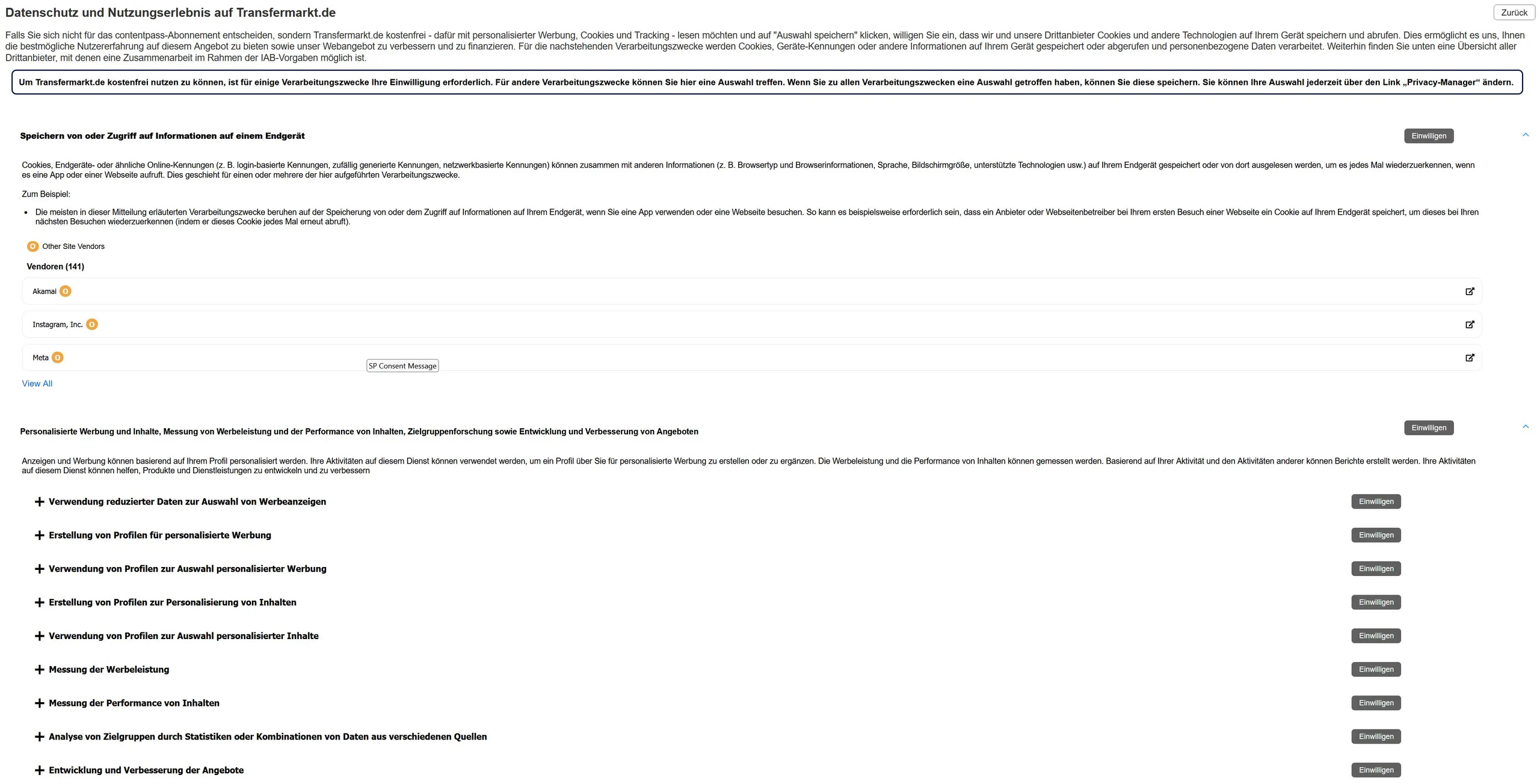
Yet cookie banners are actually completely unnecessary. When the European Commission introduced its controversial “Digital Omnibus” package, it proposed introducing automatic signals instead. In simple terms, users would set their privacy preferences once, eliminating the need for banners altogether.
The advertising and tracking industry naturally sees this as a problem. They benefit from the complexity of the current system—from users quickly clicking “accept” out of convenience, from even privacy-conscious people making the wrong selection, from users choosing an unwanted option because they are short on time, or from the system simply being too complicated for less technically savvy users to reject tracking.
If every internet user set their preferences just once, very few would likely consciously choose “accept all” or agree to all tracking indefinitely. In principle, online tracking is prohibited in the EU, and consent banners are a tool used by the tracking industry to encourage people to give up their rights.
Despite its own proposal, which was incorporated into the GDPR through Article 88b, the Commission is now considering dropping it. At the same time, lobbying efforts led by Google (which has just invested $13 billion in Finland—article here) have resulted in several member states blocking the proposal. A civil-society coalition of 19 companies, NGOs and scientists is now calling on the EU to finally implement the proposal and make the internet easier to use again for everyone in the EU—Kill the cookie banner!
 Add as a preferred source on Google


