





Verdict - Apple iPhone 17e
The iPhone 17e's features and performance make it a good smartphone. The A19 SoC is incredibly fast, even though it lacks a GPU core compared to the A19 found in the iPhone 17. The OLED screen isn't particularly bright, but it's sufficient for everyday use. The phone also features a 48 MP main camera, which, similar to the selfie camera, takes very good photos and videos. With 256 GB of onboard storage, it now offers twice the base storage capacity, without Apple raising the price.
Compared to the not much more expensive iPhone 17, the iPhone 17e lacks a whole set of features. There's neither an ultra-wide camera nor an ultra-wideband chip. Additionally, you're faced with a wide notch and thick bezels, and the screen only runs at 60Hz, a feature that probably no other smartphone manufacturer, besides Apple, would dare to implement in 2026.
Pros
Cons
Price and availability
The Apple iPhone 17e can be purchased from Apple starting at $599. At the time of reviewing, the device is currently unavailable on Amazon.
Table of Contents
- Verdict - Apple iPhone 17e
- Specifications
- Case - Still looks like an iPhone 14
- Features - Neither a camera button nor an ultra-wideband chip
- Software - iPhone 17e comes with IOS 26
- Communication and GNSS - WiFi 6 without 6 GHz support
- Telephone functions and voice quality
- Cameras - iPhone 17 packs a very good 48 MP Fusion camera
- Accessories and warranty - Please bring your own charger
- Input devices and operation - iPhone 17e offers excellent biometrics
- Display - A recycled iPhone 14 era display
- Performance - One fewer GPU core, but still extremely fast
- Emissions - A cool iPhone
- Battery life - Not quite as long-lasting as the iPhone 16e
- Notebookcheck overall rating
- Possible alternatives compared
The iPhone 17e follows the iPhone 16e and officially starts at $599. The "e" in the product name has no official meaning. Depending on the interpretation, however, it could stand for "everyone," making the iPhone 17e a kind of "people's iPhone." Of course, the ambitious price and the fact that other manufacturers charge less than $300 for a smartphone packing similar features and performance are valid counterarguments. Our review reveals whether the iPhone 17e is still worth your hard-earned cash.
Specifications
Case - Still looks like an iPhone 14
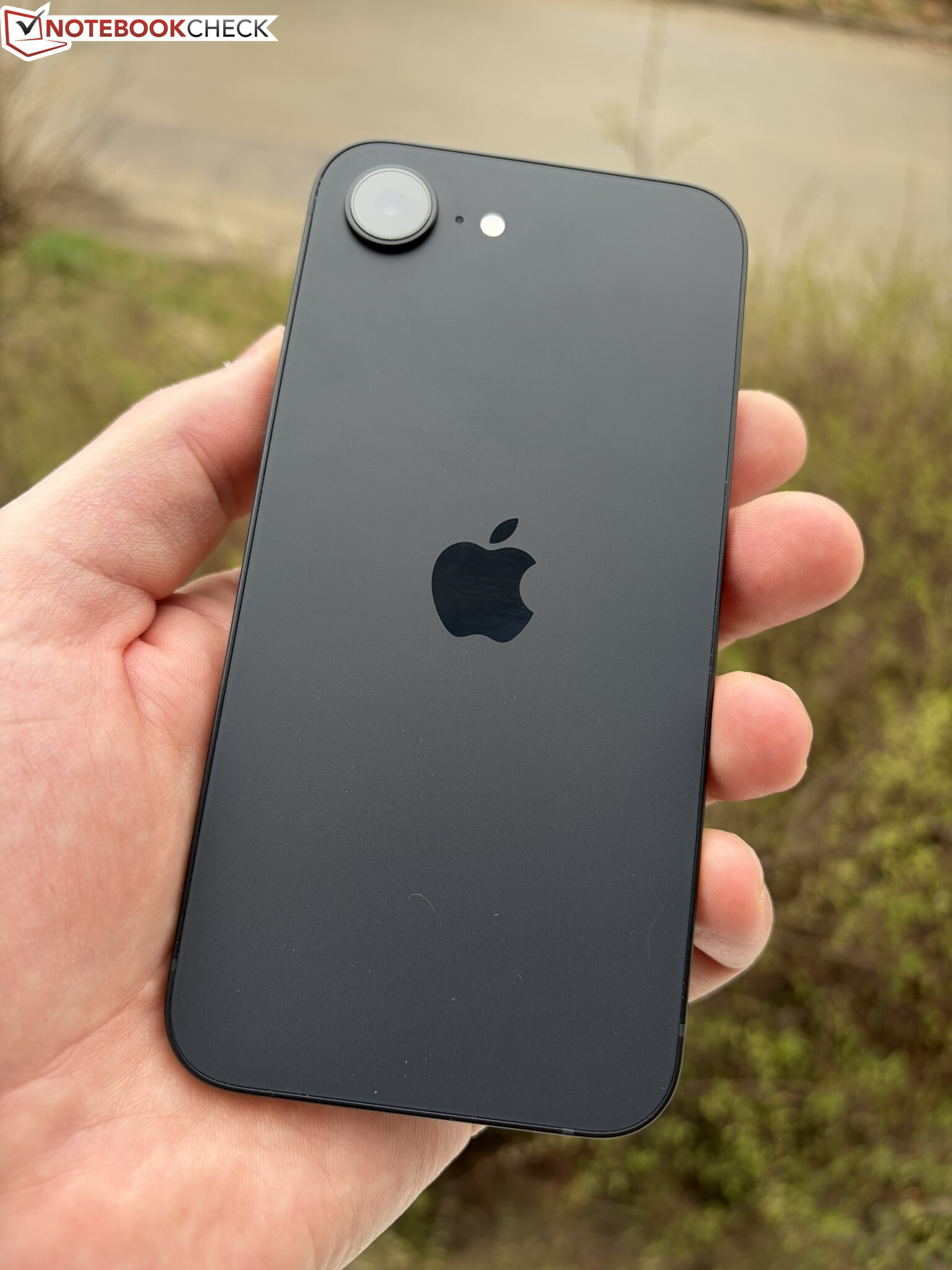
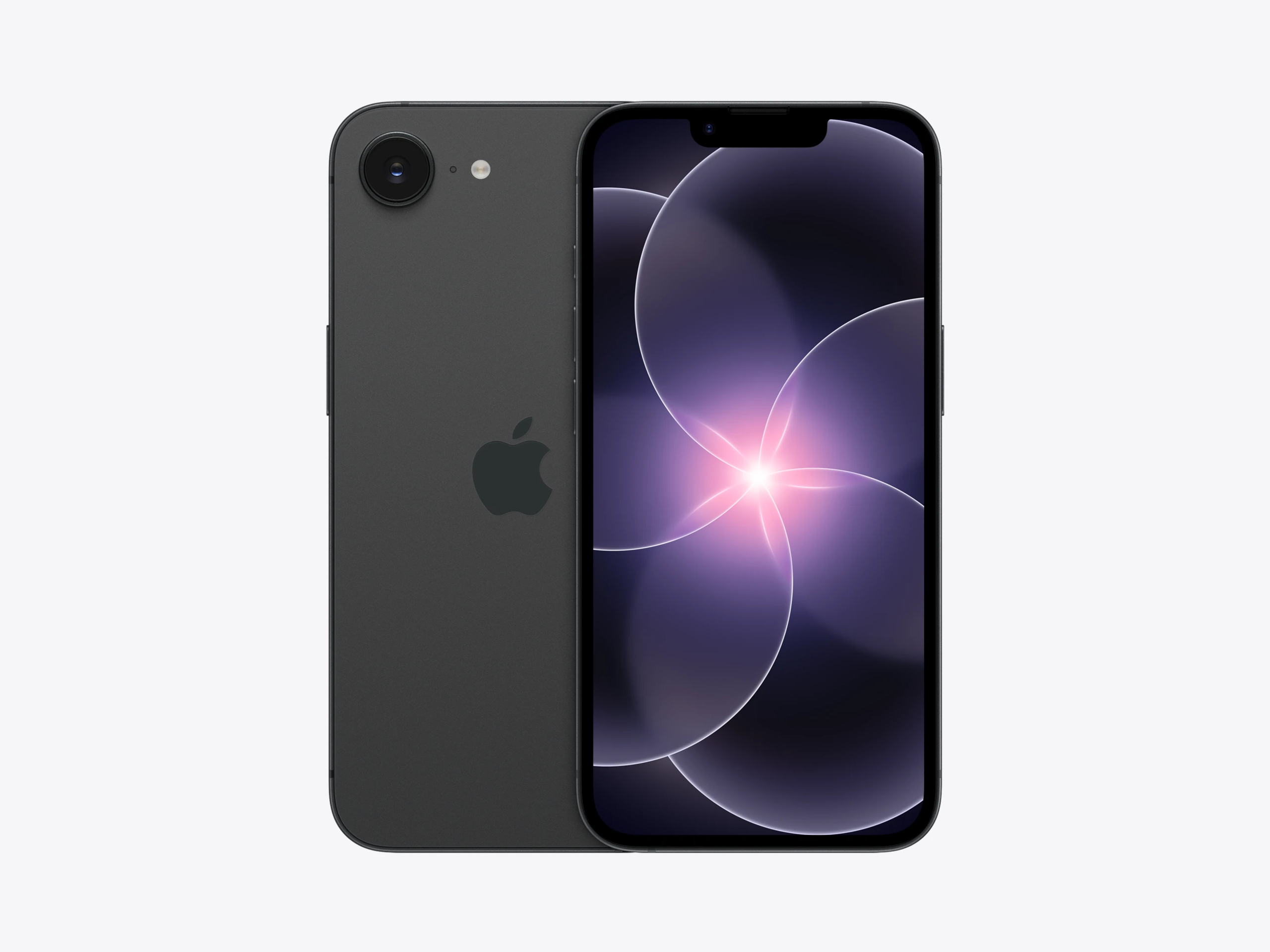
The Apple iPhone 17e's IP68-certified case is identical to its predecessor. On the outside, it maintains the same minimalist design as the iPhone 16e, and this impression is further enhanced by the presence of a single camera on the matte back, which is available in white, black, or light pink. The action button found on the iPhone 17 models is also present on the 17e, but not the camera button.
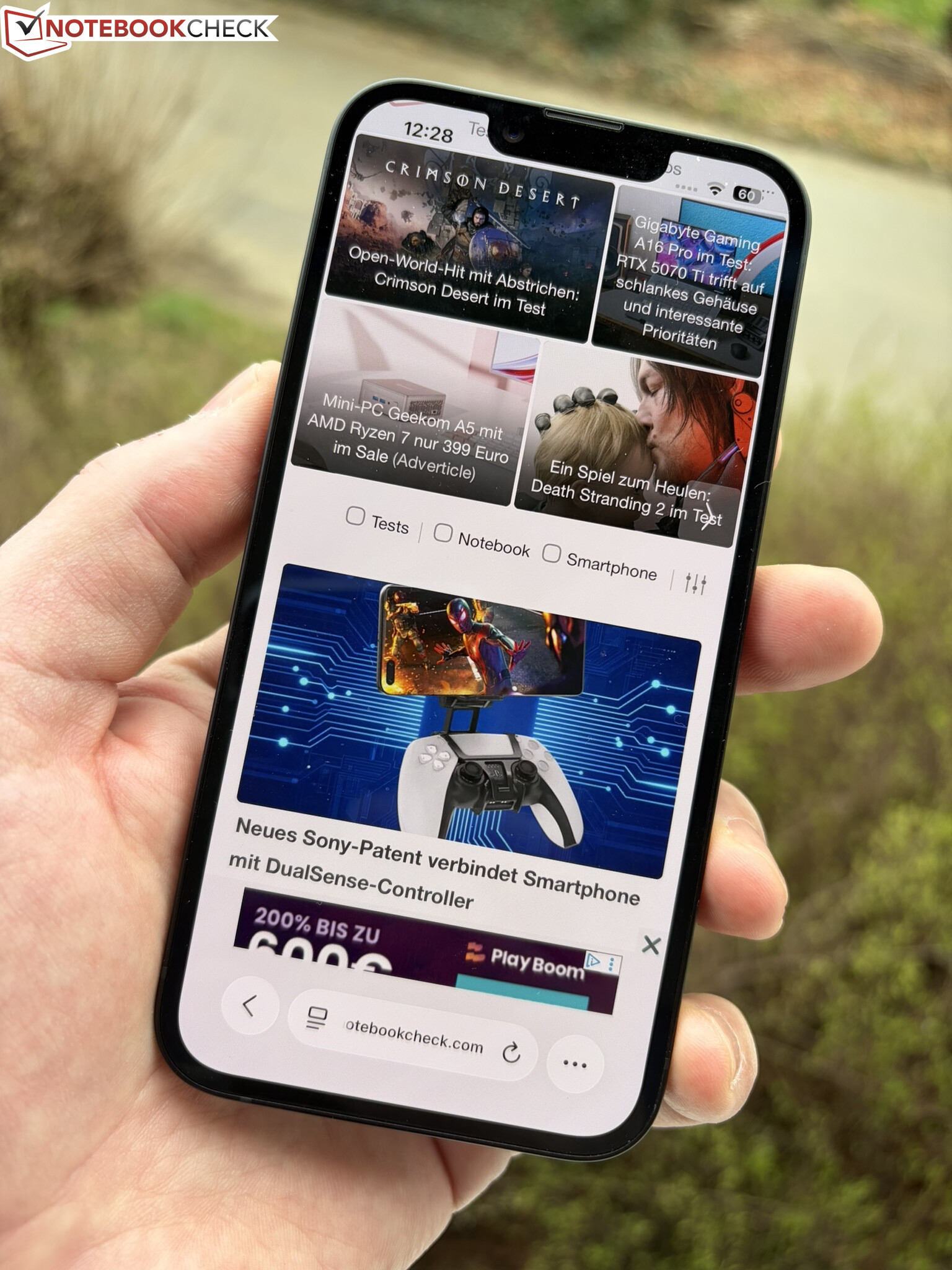
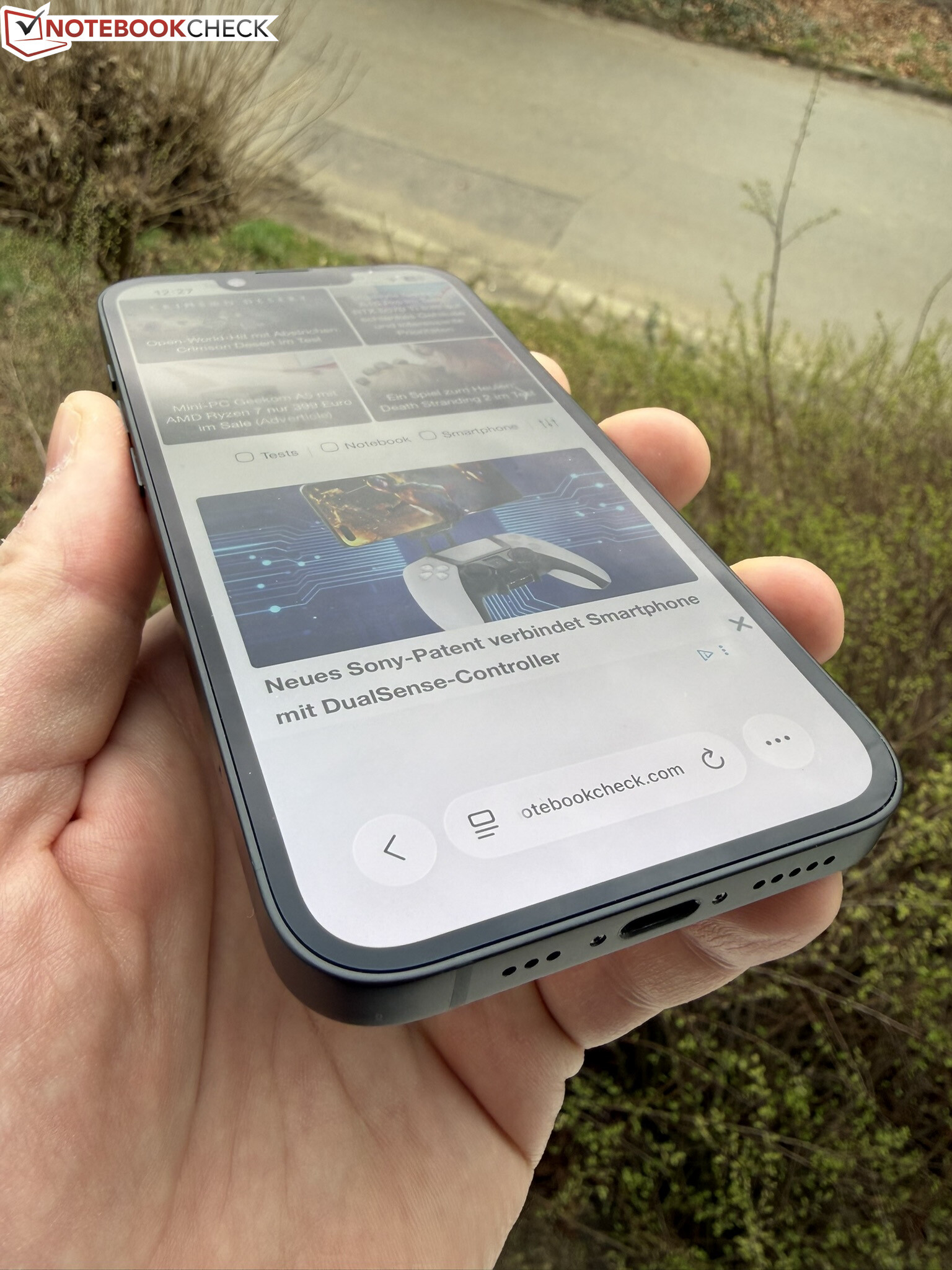
The retro design is also evident in the Ceramic Shield 2-protected front. Just like its predecessors, the iPhone 17e features the same iconic front panel found in the iPhone 14. This includes a very wide notch for the selfie camera and accompanying sensors. Since it also technically inherits its 60Hz display, the bezels are noticeably thick by 2026 standards.



Features - Neither a camera button nor an ultra-wideband chip
While the iPhone 16e had to make do with 128 GB of base storage, the iPhone 17e now offers 256 GB without any price increase. Anyone requiring more than 512 GB of storage will have to opt for an iPhone 17 model within the Apple ecosystem.
- 256 GB of mass storage: RRP $699 ($699 for the iPhone 16e)
- 512 GB of mass storage: RRP $799 ($899 for the iPhone 16e)
In terms of other features, the iPhone 17e consistently falls short of the 17 models. Its USB-C port is still stuck at USB 2.0 speeds. It uses Wi-Fi 6 and Bluetooth 5.3 instead of Wi-Fi 7 and Bluetooth 6, and lacks an Ultra Wideband (UWB) chip; it also doesn't allow for precision searching for AirTags or other Apple devices.


Software - iPhone 17e comes with IOS 26
Much like its iPhone 17 counterparts, the iPhone 17e launches with iOS 26 and is expected to receive updates for a similarly long period. Although Apple hasn't provided specific details, users can anticipate at least five years of updates. For example, despite being released in 2019, the iPhone 11 has still received an update to iOS 26.


Sustainability
According to the Product Environmental Report, the iPhone 17e is made from 30 percent recycled materials, uses 100 percent recycled cobalt, and its battery contains 95 percent recycled lithium. The smartphone's packaging is plastic-free and made from 100 percent wood fibers.
Apple offers a self-repair for the iPhone 17e, which includes a repair manual and an online store with original replacement parts and tools. Alternatively, the smartphone can also be sent in for repair.
Communication and GNSS - WiFi 6 without 6 GHz support
The iPhone 17e's C1X radio chip is said to be twice as fast as the C1 in the iPhone 16e. However, it still doesn't support 6 GHz Wi-Fi. The speed specification likely refers to 5G, because while the iPhone 17e manages to achieve stable transfer speeds on our Asus ROG Rapture AXE11000 reference router, the, its maximum Wi-Fi speed of 663 Mbps actually falls short of its predecessor. On top of this, the competition is significantly faster.
Note: GPS tests will follow in an update.
| Networking | |
| Apple iPhone 17e | |
| iperf3 transmit AXE11000 | |
| iperf3 receive AXE11000 | |
| Apple iPhone 16e | |
| iperf3 transmit AXE11000 | |
| iperf3 receive AXE11000 | |
| Apple iPhone 17 | |
| iperf3 transmit AXE11000 | |
| iperf3 receive AXE11000 | |
| iperf3 transmit AXE11000 6GHz | |
| iperf3 receive AXE11000 6GHz | |
| Honor Magic7 Pro | |
| iperf3 transmit AXE11000 | |
| iperf3 receive AXE11000 | |
| iperf3 transmit AXE11000 6GHz | |
| iperf3 receive AXE11000 6GHz | |
| Xiaomi Poco F8 Ultra | |
| iperf3 transmit AXE11000 | |
| iperf3 receive AXE11000 | |
| Samsung Galaxy S25 FE | |
| iperf3 transmit AXE11000 | |
| iperf3 receive AXE11000 | |
| iperf3 transmit AXE11000 6GHz | |
| iperf3 receive AXE11000 6GHz | |
| Average 802.11 a/b/g/n/ac/ax | |
| iperf3 transmit AXE11000 | |
| iperf3 receive AXE11000 | |
| iperf3 transmit AXE11000 6GHz | |
| iperf3 receive AXE11000 6GHz | |
| Average of class Smartphone | |
| iperf3 transmit AXE11000 | |
| iperf3 receive AXE11000 | |
| iperf3 transmit AXE11000 6GHz | |
| iperf3 receive AXE11000 6GHz | |
Telephone functions and voice quality
The iPhone 17e supports both VoLTE and Wi-Fi calls and has a slot for a nano SIM card. For dual SIM operation, an additional eSIM can be activated. Alternatively, it can also be used with two eSIMs.
During phone calls, the iPhone 17e provides good voice quality and reliably suppresses background noise. In speakerphone mode, our voice sounded slightly muffled to the receiver, but intelligibility remained high.
Cameras - iPhone 17 packs a very good 48 MP Fusion camera

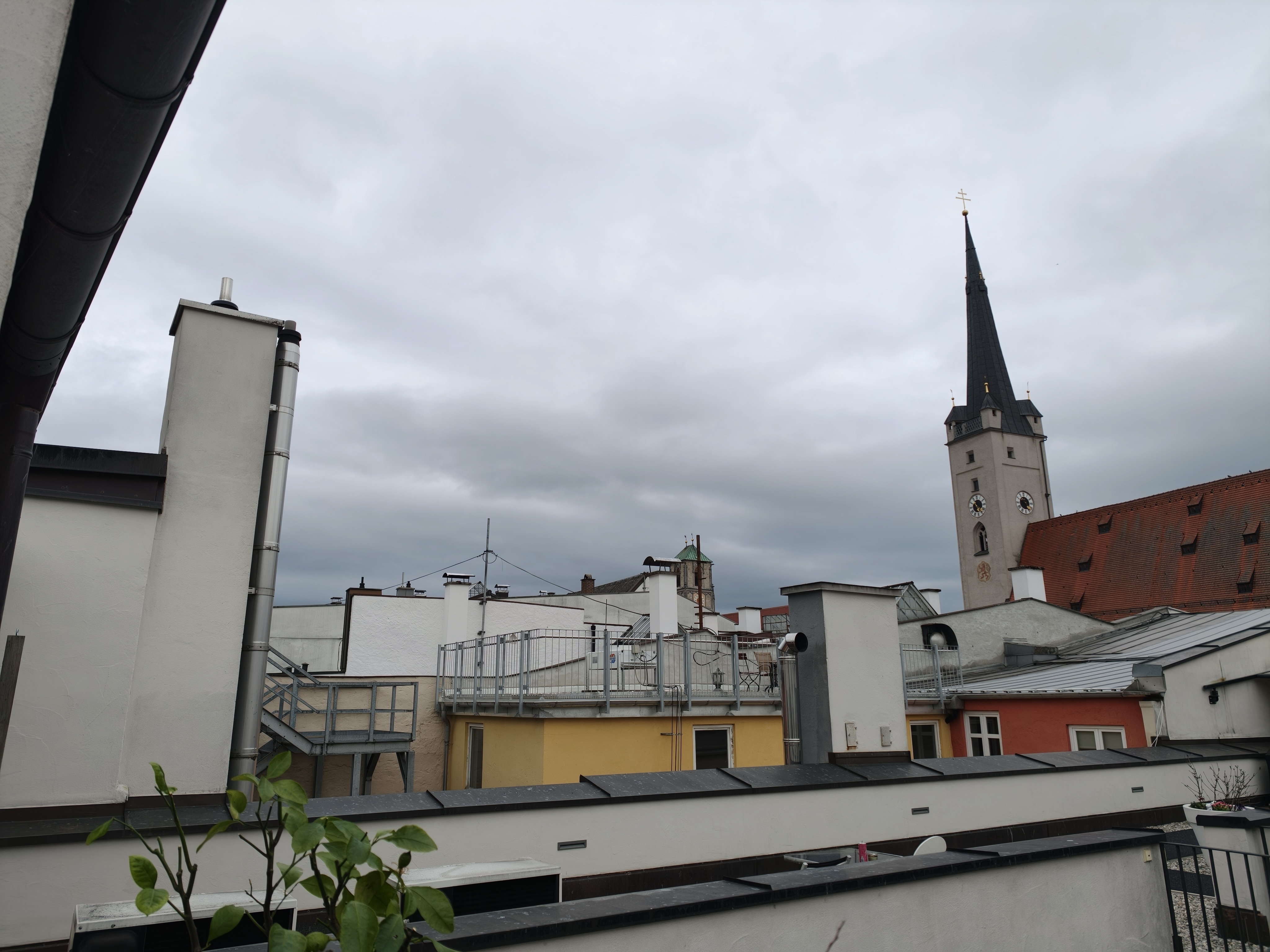
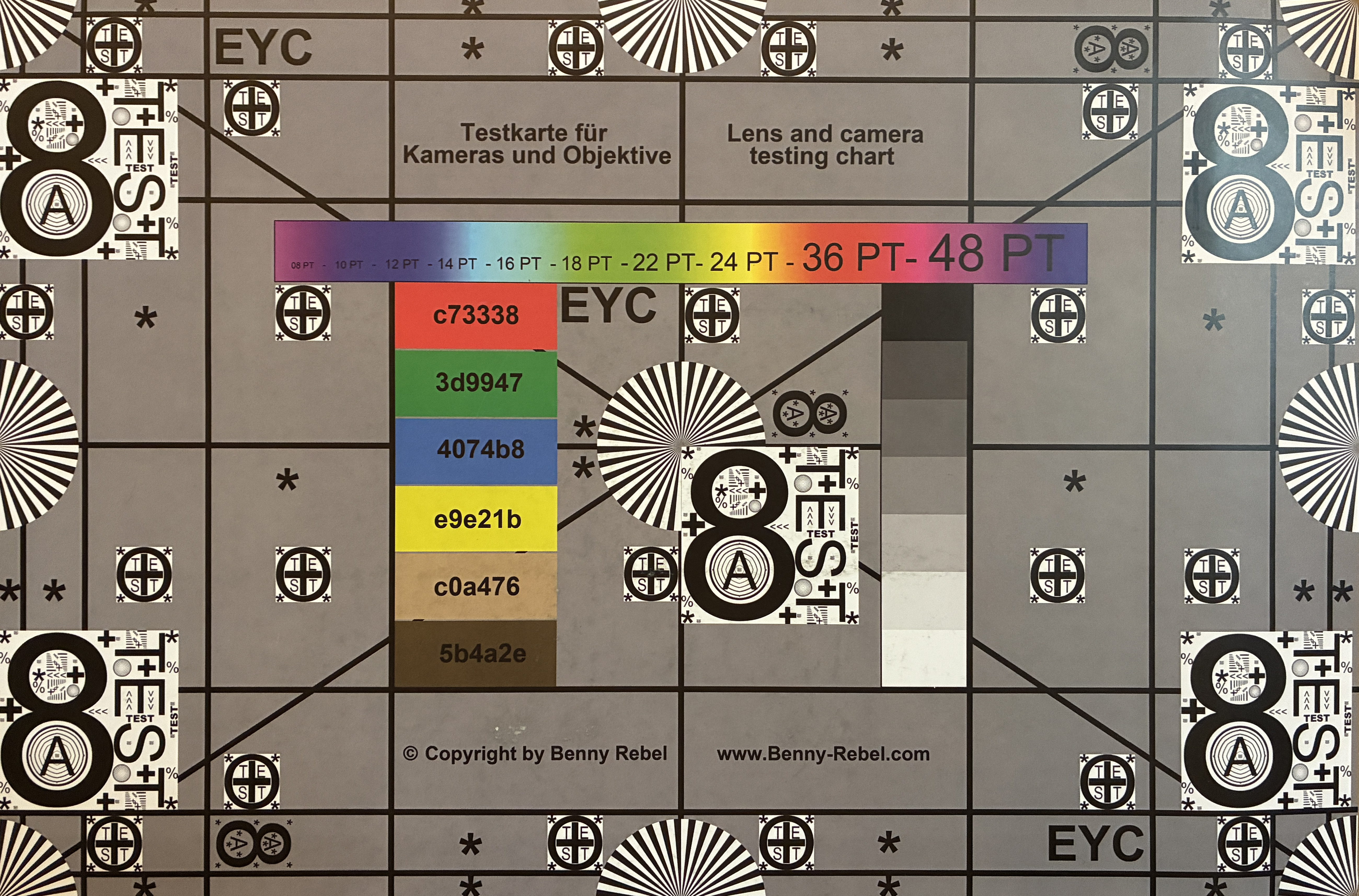
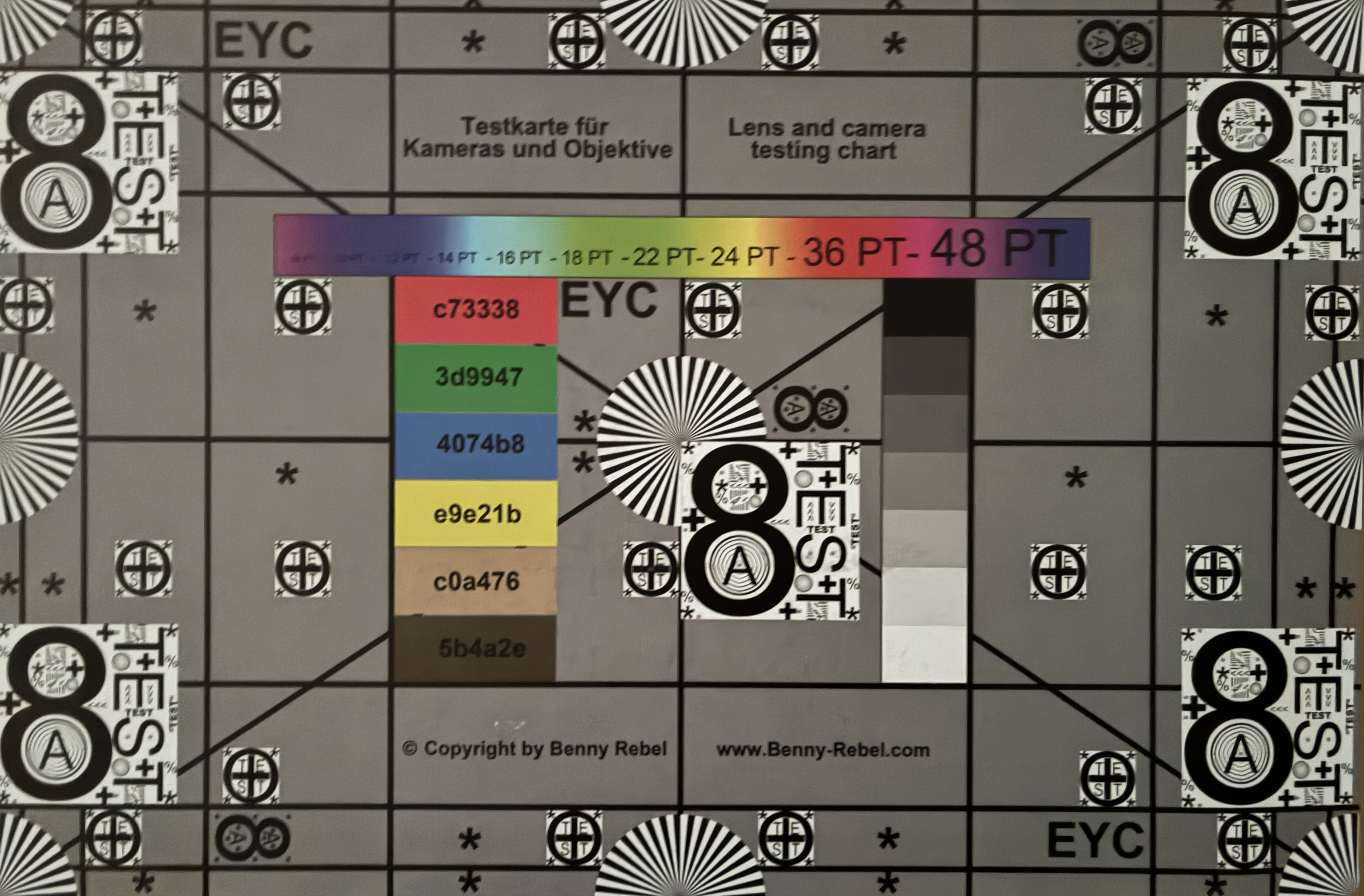
Apple has opted for a minimalist approach when it comes to the cameras, housing a 12 MP selfie camera (lacking Center Stage functionality) and a 48 MP Fusion camera (f/1.6) on the back. Both, however, produce very good quality photos and videos in everyday situations, with the latter recording up to 4K at 60 frames per second.
Users who only occasionally take photos and videos with their smartphone will likely find little lacking. The 48 MP main camera simulates a 2x optical zoom using sensor cropping and delivers very good results in everyday scenarios. However, at higher digital zoom levels up to 10x, images quickly become blurry.
With the iPhone 17e, smartphone photographers have to forgo some of the camera features found in the iPhone 17 models. The absence of an ultra-wide-angle camera not only eliminates some creative photographic possibilities, but also macro photography and video recording, as well as video recording in Cinematic and Action modes.



Image comparison
Choose a scene and navigate within the first image. One click changes the position on touchscreens. One click on the zoomed-in image opens the original in a new window. The first image shows the scaled photograph of the test device.
Daylight imageDaylight imageLowlight image













Accessories and warranty - Please bring your own charger
The iPhone 17e comes with a USB cable, a SIM tool, and several informational leaflets. A wide range of accessories, such as power adapters, protective cases, and headphones, is available in the Apple online store.
Apple offers a 12-month warranty on the iPhone 17e, and optionally, you can also purchase additional Apple Care+ cover.
Input devices and operation - iPhone 17e offers excellent biometrics
Despite the iPhone 17e's excellent performance thanks to its A19 SoC, it delivers slightly jerky user experience, at least for those accustomed to 120Hz displays. The reason for that is, the affordable 2026 iPhone doesn't offer display refresh rates higher than 60Hz.
Compared to the other iPhone 17 models, the iPhone 17e lacks a physical camera button. However, security is on par with the other models. The iPhone 17e supports Face ID just like they do, which offers high-level security through three-dimensional facial recognition, and, thanks to its IR sensor, it works quickly and reliably even in the dark.


Display - A recycled iPhone 14 era display
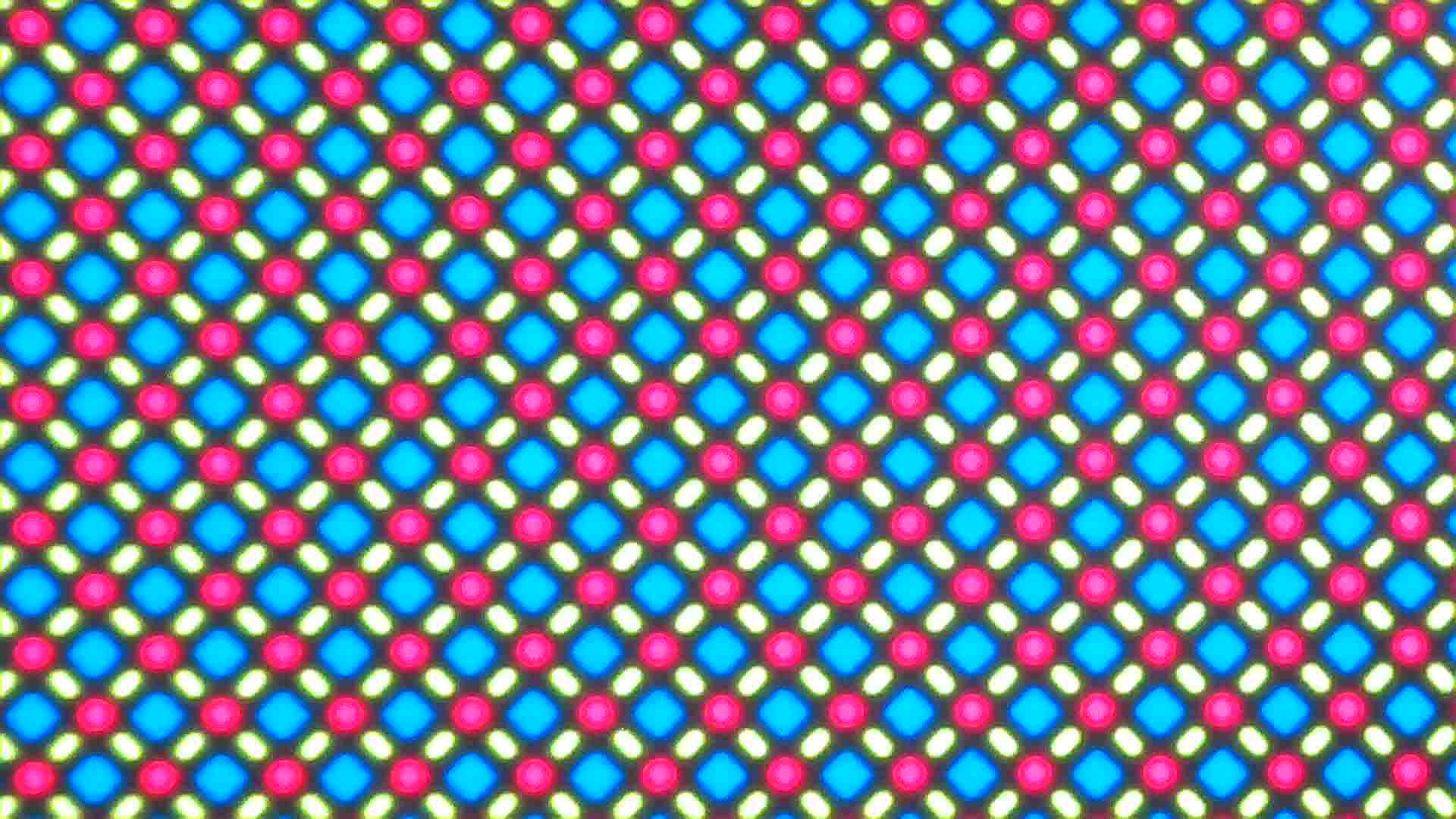
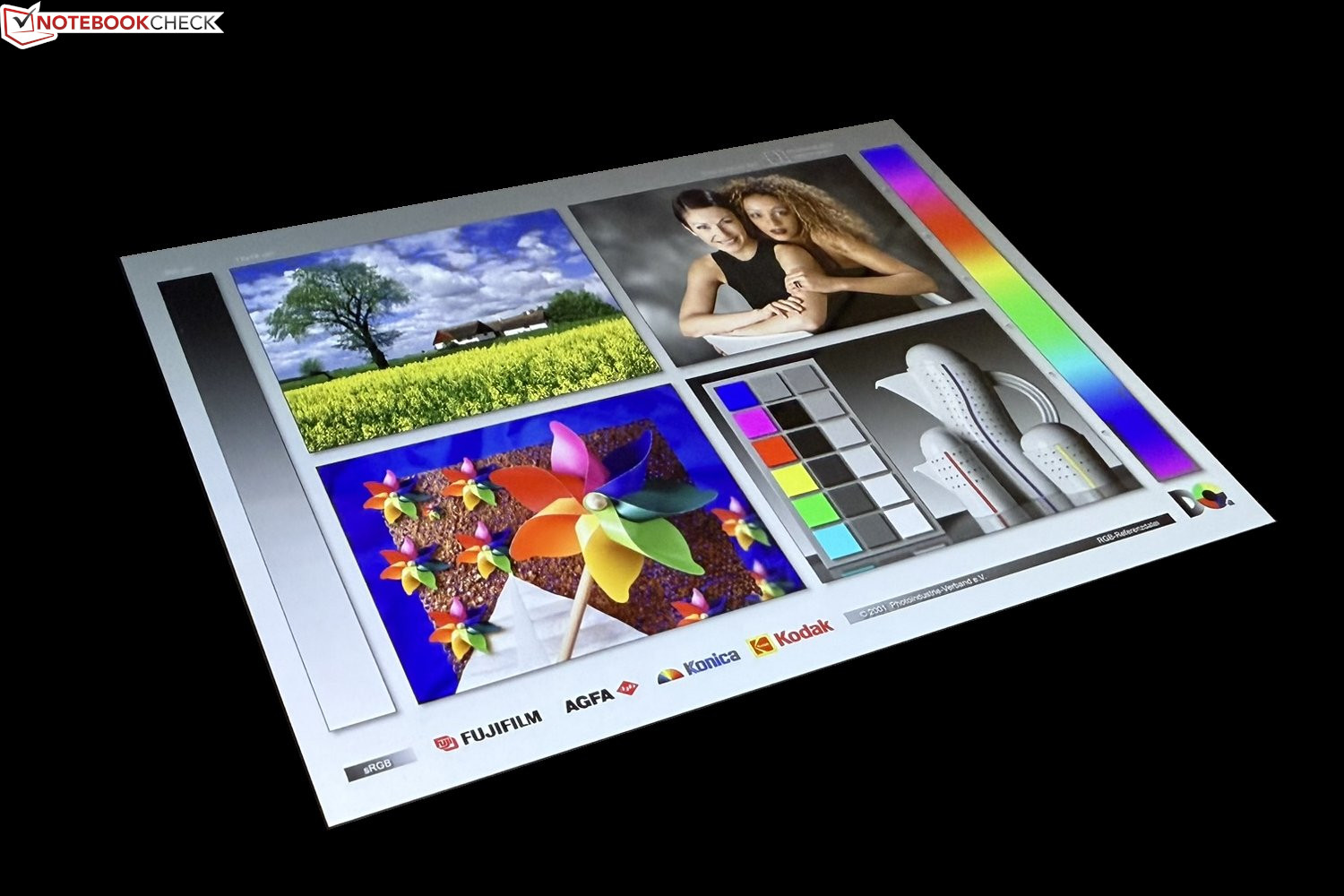
The iPhone 17e's 6.1-inch OLED display has a resolution of 2532 x 1170 pixels and reaches a maximum brightness of 800 nits (1200 nits for HDR), claims Apple. These same specifications were also found in the iPhone 14, and this would suggest that Apple is reusing its display.
By 2026 standards, the peak brightness isn't particularly high, but in everyday use, this is only really noticeable in very bright ambient light, such as direct sunlight.
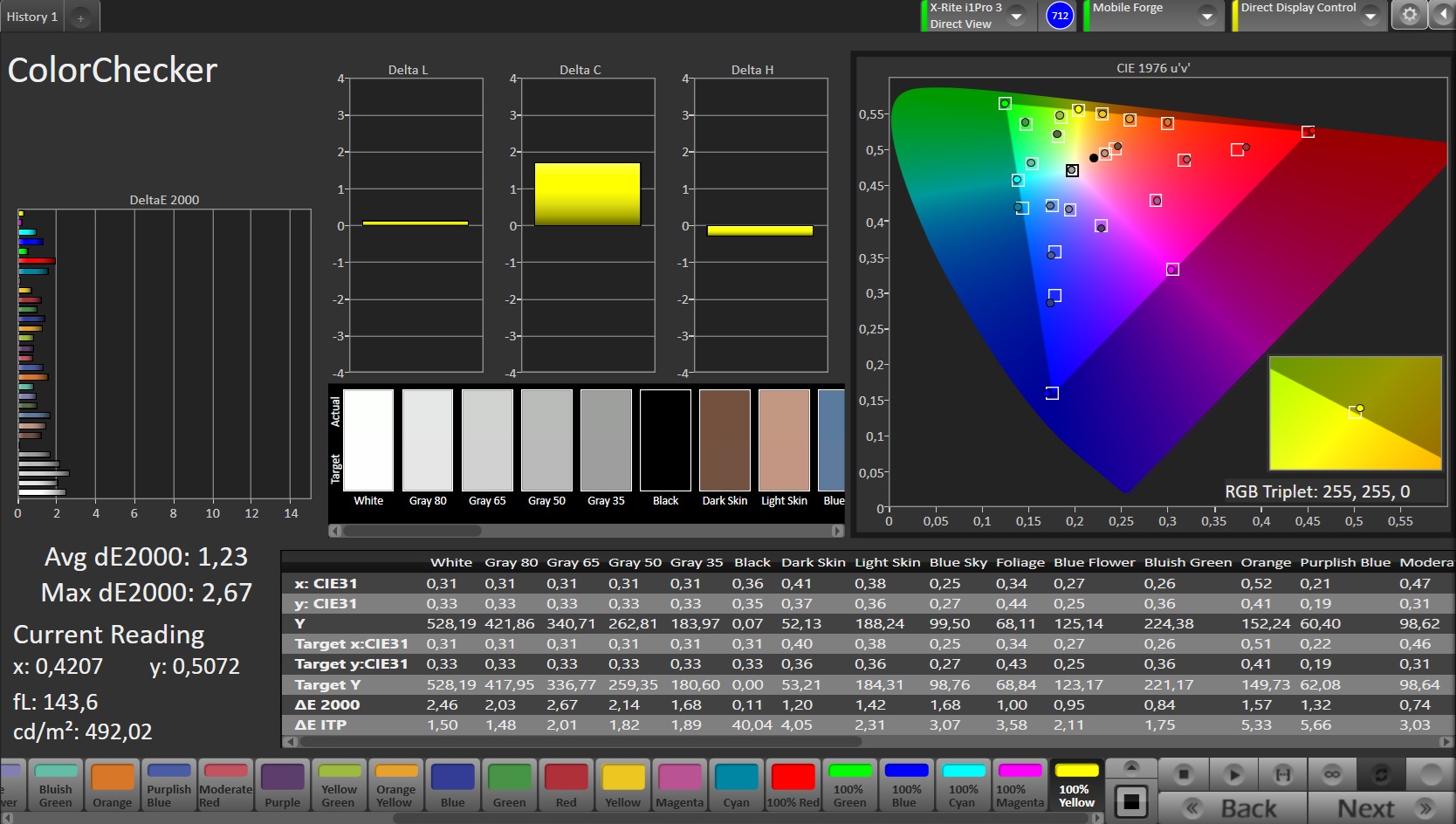
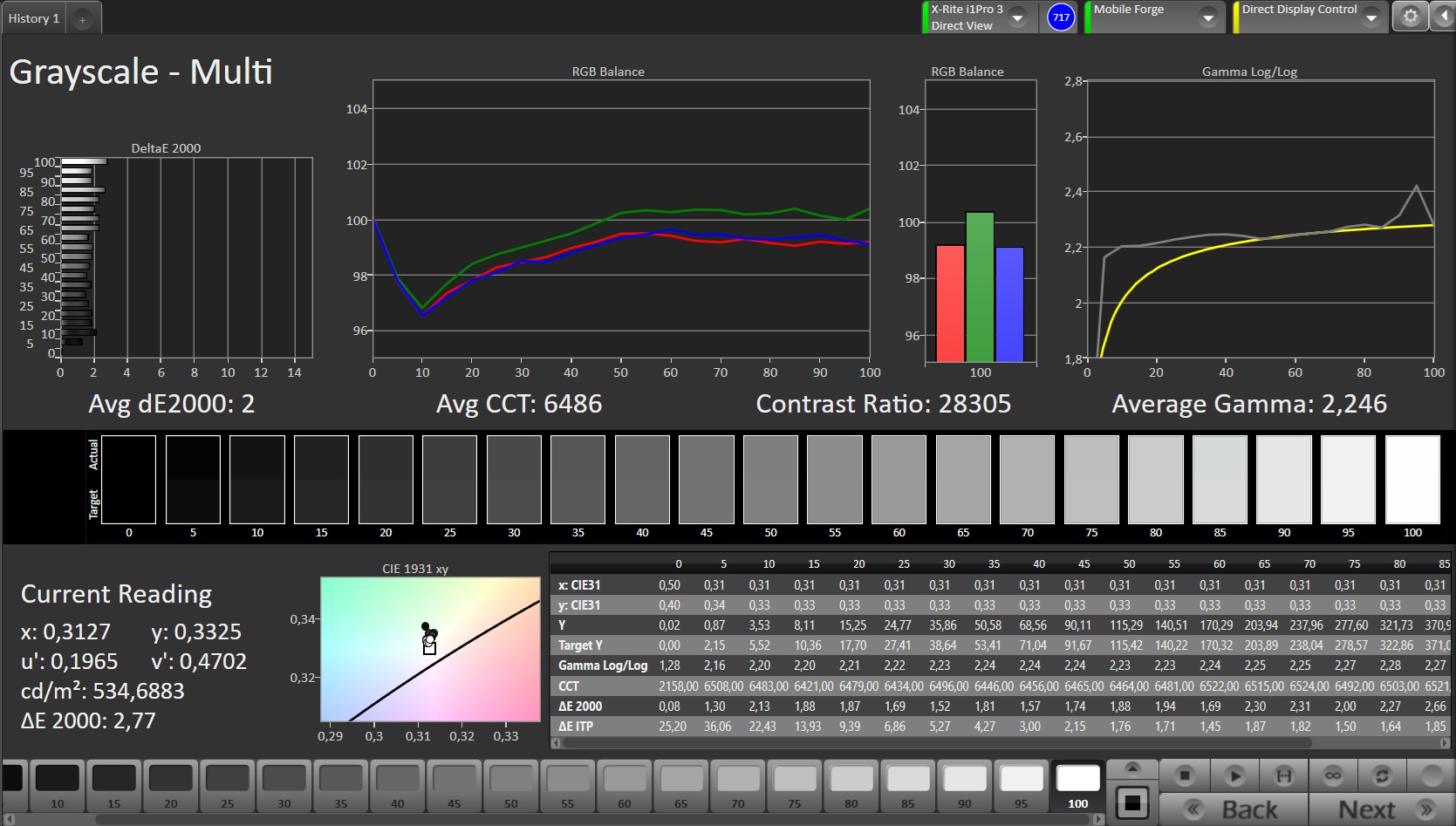
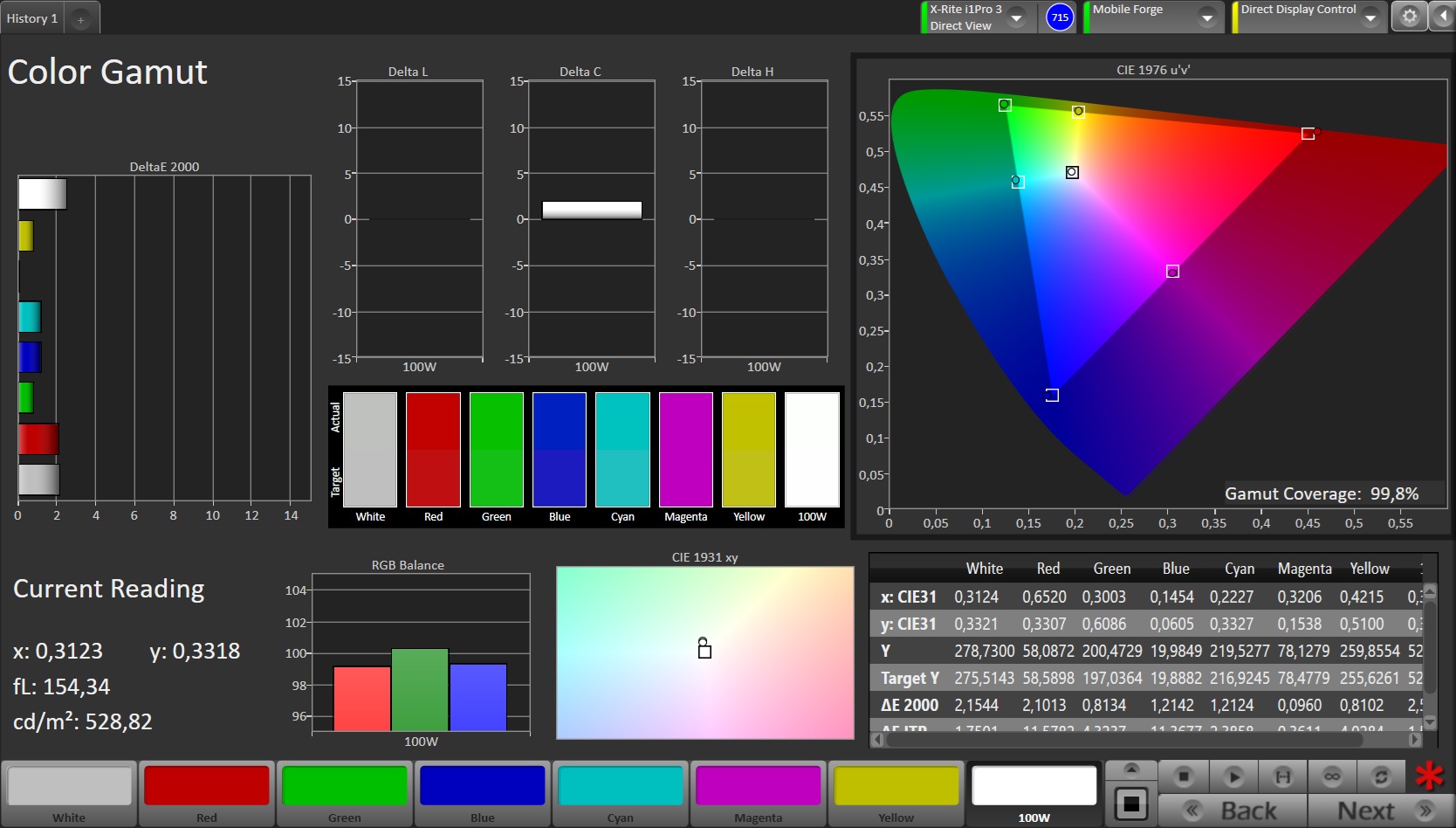
What you definitely will notice is the OLED screen's very even illumination and accurate color reproduction, which reaches a brightness of up to 839 cd/m² and increases to up to 1154 cd/m² with HDR. With HDR10, HDR10+, Dolby Vision, and HLG, HDR compatibility is exemplary.
| |||||||||||||||||||||||||
Brightness Distribution: 99 %
Center on Battery: 837 cd/m²
Contrast: ∞:1 (Black: 0 cd/m²)
ΔE ColorChecker Calman: 1.23 | ∀{0.5-29.43 Ø4.69}
ΔE Greyscale Calman: 2 | ∀{0.09-98 Ø4.94}
99.8% sRGB (Calman 2D)
Gamma: 2.246
CCT: 6486 K
| Apple iPhone 17e OLED, 2532x1170, 6.1" | Apple iPhone 16e OLED, 2532x1170, 6.1" | Apple iPhone 17 OLED, 2622x1206, 6.3" | Honor Magic7 Pro OLED, 2800x1280, 6.8" | Xiaomi Poco F8 Ultra AMOLED, 2608x1200, 6.9" | Samsung Galaxy S25 FE AMOLED, 2340x1080, 6.7" | |
|---|---|---|---|---|---|---|
| Screen | 26% | 13% | 43% | 35% | -40% | |
| Brightness middle (cd/m²) | 837 | 833 0% | 1138 36% | 1607 92% | 1771 112% | 1136 36% |
| Brightness (cd/m²) | 835 | 837 0% | 1127 35% | 1609 93% | 1773 112% | 1132 36% |
| Brightness Distribution (%) | 99 | 99 0% | 96 -3% | 95 -4% | 99 0% | 98 -1% |
| Black Level * (cd/m²) | ||||||
| Colorchecker dE 2000 * | 1.23 | 0.7 43% | 1.07 13% | 0.9 27% | 1.3 -6% | 3.5 -185% |
| Colorchecker dE 2000 max. * | 2.67 | 1.6 40% | 2.99 -12% | 1.8 33% | 2.8 -5% | 5.5 -106% |
| Greyscale dE 2000 * | 2 | 0.6 70% | 1.8 10% | 1.7 15% | 2.1 -5% | 2.4 -20% |
| Gamma | 2.246 98% | 2.19 100% | 2.22 99% | 2.24 98% | 2.25 98% | 2.02 109% |
| CCT | 6486 100% | 6525 100% | 6516 100% | 6346 102% | 6452 101% | 6322 103% |
* ... smaller is better
| Display / APL18 Peak Brightness | |
| Xiaomi Poco F8 Ultra | |
| Samsung Galaxy S25 FE | |
| Honor Magic7 Pro | |
| Apple iPhone 17e | |
| Apple iPhone 16e | |
| Display / HDR Peak Brightness | |
| Honor Magic7 Pro | |
| Xiaomi Poco F8 Ultra | |
| Samsung Galaxy S25 FE | |
| Apple iPhone 17e | |
| Apple iPhone 16e | |
Screen Flickering / PWM (Pulse-Width Modulation)
| Screen flickering / PWM detected | 60 Hz Amplitude: 14 % | 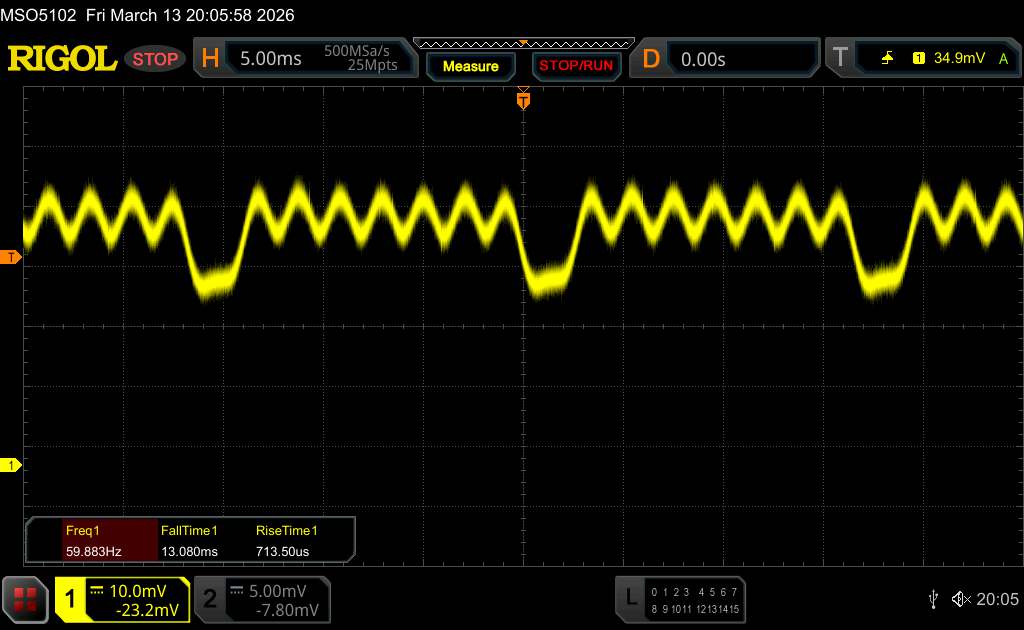 | |
The display backlight flickers at 60 Hz (worst case, e.g., utilizing PWM) . The frequency of 60 Hz is very low, so the flickering may cause eyestrain and headaches after extended use. In comparison: 52 % of all tested devices do not use PWM to dim the display. If PWM was detected, an average of 7625 (minimum: 5 - maximum: 343500) Hz was measured. | |||
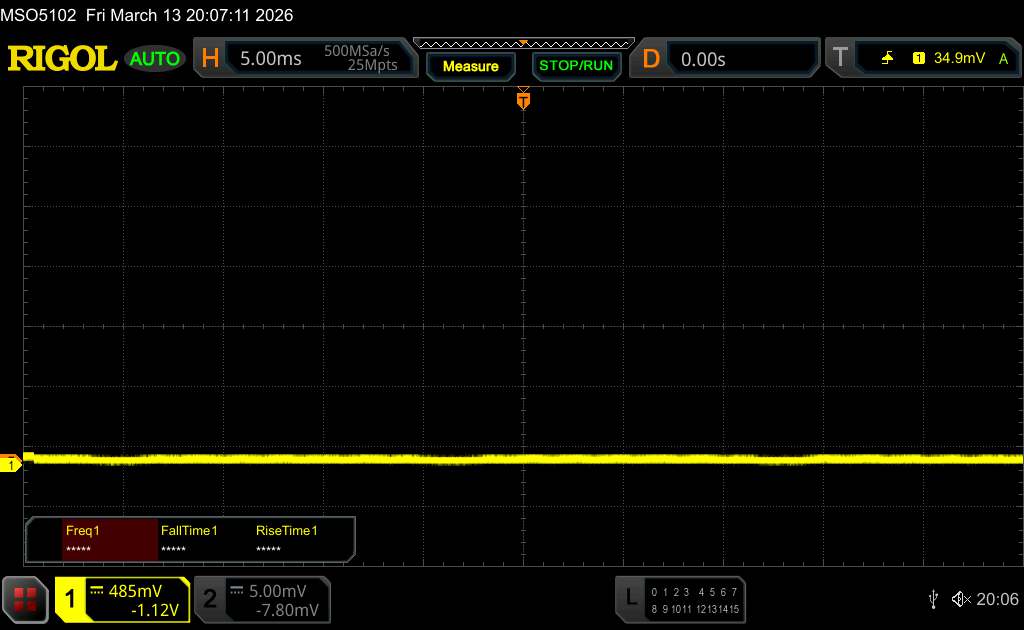
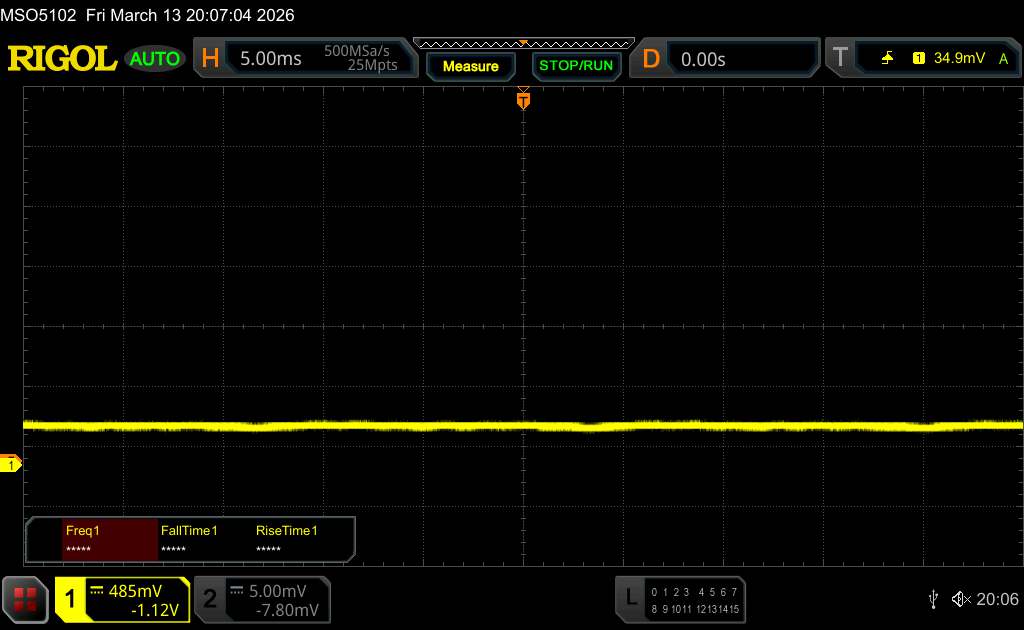
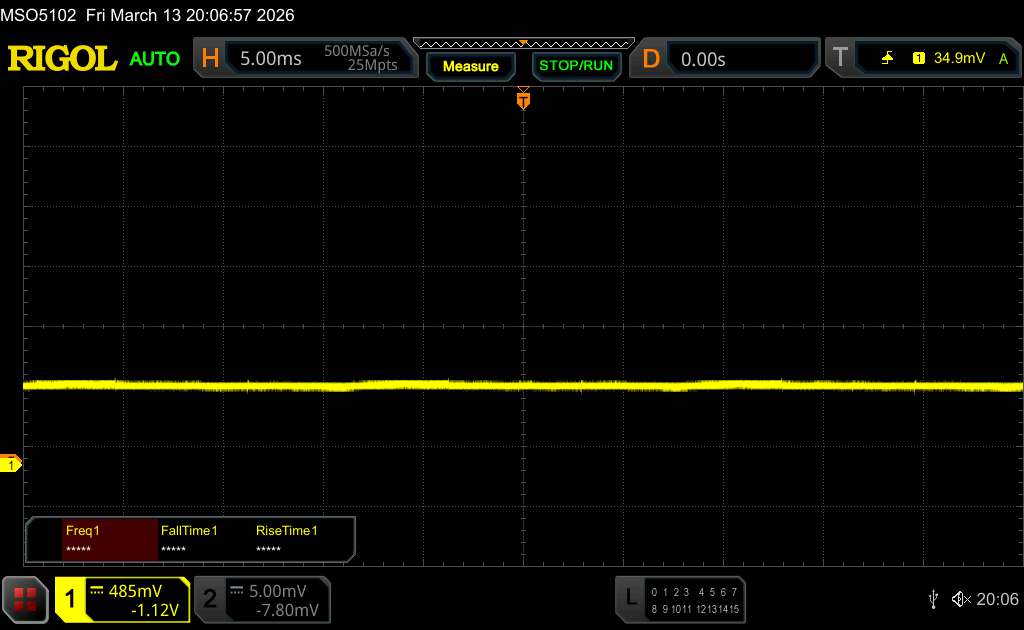
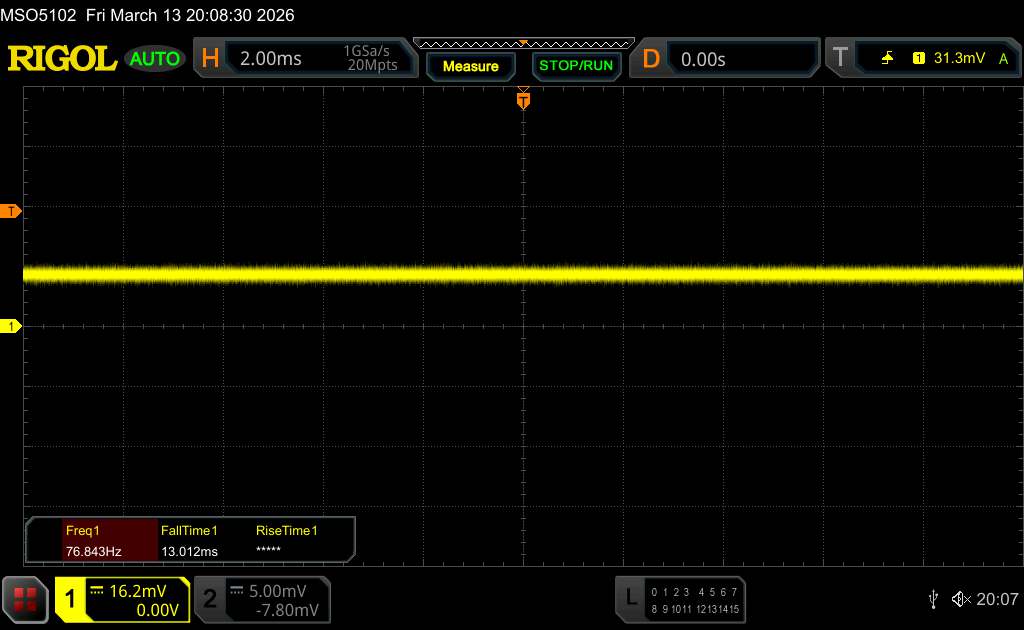
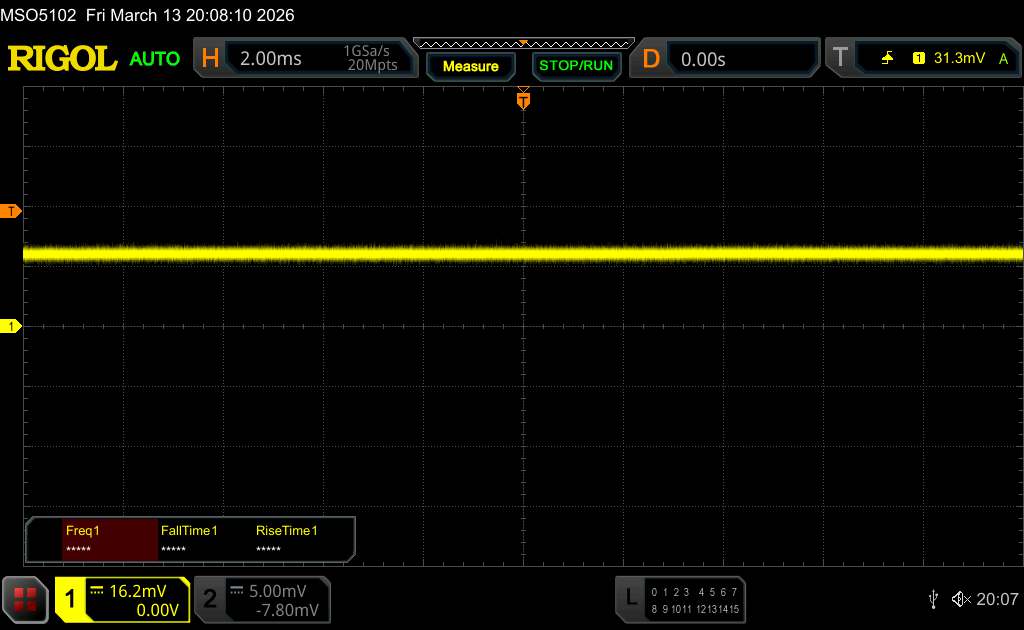
A series of measurements with a fixed zoom level and different brightness settings (The amplitude curve at minimum brightness appears flat, but this is due to the scaling. The enlarged version of the amplitude at minimum brightness can be seen in the info box.)
Display Response Times
| ↔ Response Time Black to White | ||
|---|---|---|
| 3.4 ms ... rise ↗ and fall ↘ combined | ↗ 1.7 ms rise | 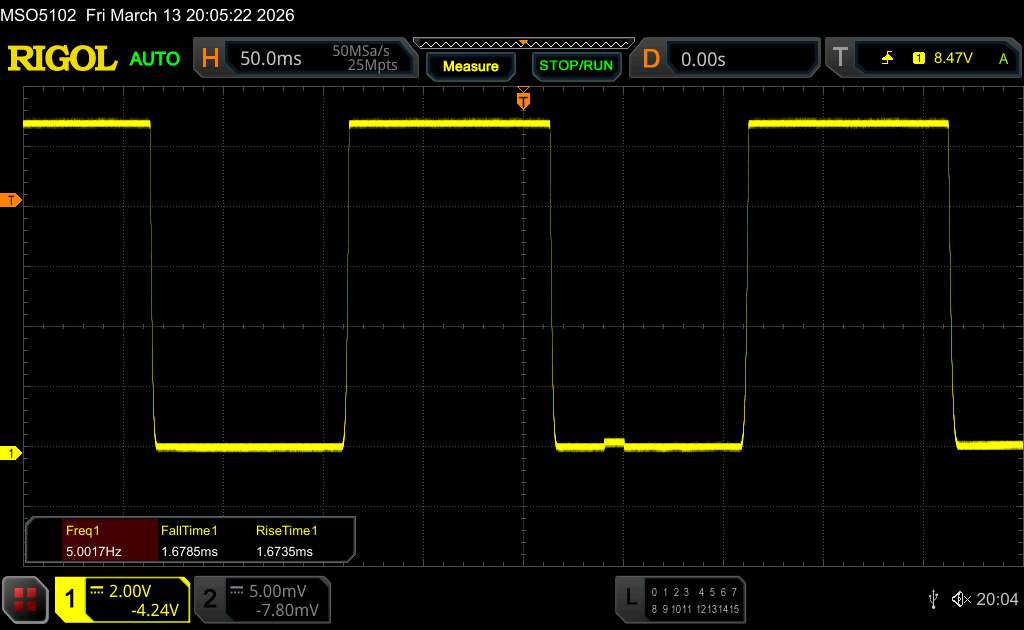 |
| ↘ 1.7 ms fall | ||
| The screen shows very fast response rates in our tests and should be very well suited for fast-paced gaming. In comparison, all tested devices range from 0.1 (minimum) to 240 (maximum) ms. » 16 % of all devices are better. This means that the measured response time is better than the average of all tested devices (19.7 ms). | ||
| ↔ Response Time 50% Grey to 80% Grey | ||
| 4.3 ms ... rise ↗ and fall ↘ combined | ↗ 2.4 ms rise | 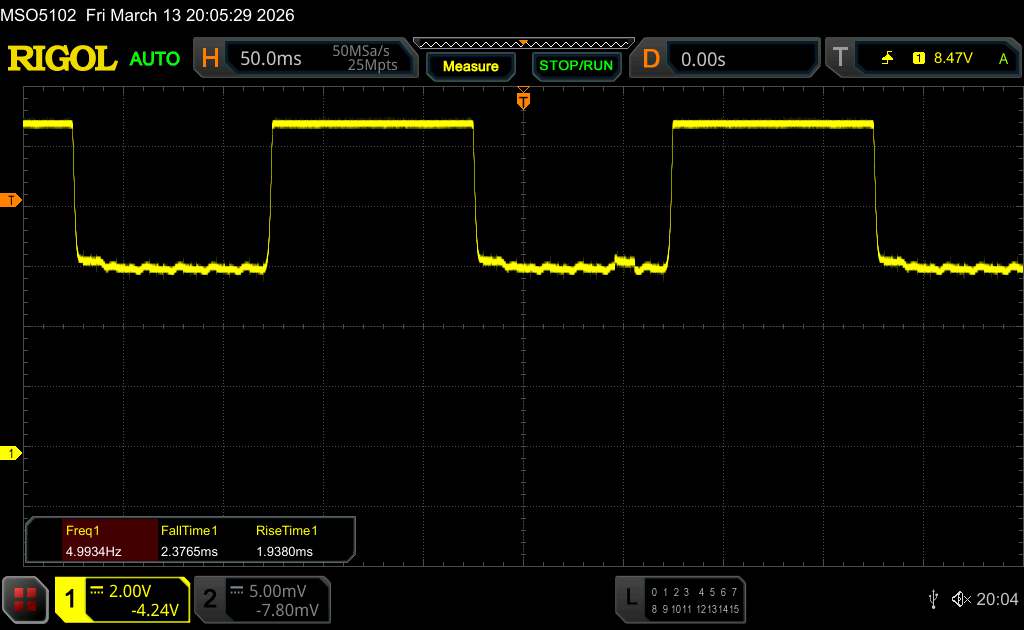 |
| ↘ 1.9 ms fall | ||
| The screen shows very fast response rates in our tests and should be very well suited for fast-paced gaming. In comparison, all tested devices range from 0.13 (minimum) to 636 (maximum) ms. » 17 % of all devices are better. This means that the measured response time is better than the average of all tested devices (30.7 ms). | ||


Performance - One fewer GPU core, but still extremely fast
The A19 SoC in the iPhone 17e only has 4 GPU cores instead of 5. However, this doesn't matter in everyday use, as it still provides one of the fastest smartphone processors currently available, enabling very smooth gaming (with a 60fps limit) and should have more than enough performance reserves for the next few years.
| Antutu v11 - Score | |
| Xiaomi Poco F8 Ultra | |
| Average of class Smartphone (519159 - 4450644, n=44, last 2 years) | |
| Apple iPhone 17e | |
| Average Apple A19 (n=1) | |
| 3DMark / Wild Life Extreme Unlimited | |
| Xiaomi Poco F8 Ultra | |
| Honor Magic7 Pro | |
| Apple iPhone 17 | |
| Samsung Galaxy S25 FE | |
| Apple iPhone 17e | |
| Apple iPhone 16e | |
| 3DMark / Wild Life Extreme | |
| Xiaomi Poco F8 Ultra | |
| Honor Magic7 Pro | |
| Apple iPhone 17 | |
| Samsung Galaxy S25 FE | |
| Apple iPhone 17e | |
| Apple iPhone 16e | |
| 3DMark / Wild Life Unlimited Score | |
| Xiaomi Poco F8 Ultra | |
| Honor Magic7 Pro | |
| Apple iPhone 17 | |
| Apple iPhone 17e | |
| Samsung Galaxy S25 FE | |
| Apple iPhone 16e | |
| 3DMark / Solar Bay Score | |
| Xiaomi Poco F8 Ultra | |
| Apple iPhone 17 | |
| Honor Magic7 Pro | |
| Samsung Galaxy S25 FE | |
| Apple iPhone 17e | |
| Apple iPhone 16e | |
| 3DMark / Solar Bay Unlimited Score | |
| Xiaomi Poco F8 Ultra | |
| Honor Magic7 Pro | |
| Apple iPhone 17 | |
| Samsung Galaxy S25 FE | |
| Apple iPhone 17e | |
| Apple iPhone 16e | |
| 3DMark / Steel Nomad Light Unlimited Score | |
| Xiaomi Poco F8 Ultra | |
| Honor Magic7 Pro | |
| Apple iPhone 17 | |
| Samsung Galaxy S25 FE | |
| Apple iPhone 17e | |
| Apple iPhone 16e | |
| 3DMark / Steel Nomad Light Score | |
| Xiaomi Poco F8 Ultra | |
| Honor Magic7 Pro | |
| Apple iPhone 17 | |
| Samsung Galaxy S25 FE | |
| Apple iPhone 17e | |
| Apple iPhone 16e | |
| Jetstream 2 - 2.0 Total | |
| Apple iPhone 17e (Safari Mobile 26) | |
| Average Apple A19 (336 - 340, n=2) | |
| Apple iPhone 17 (Safari Mobile 26) | |
| Apple iPhone 16e (Safari 18) | |
| Honor Magic7 Pro (Chrome 131) | |
| Samsung Galaxy S25 FE (Chrome 141.0.7390.43) | |
| Xiaomi Poco F8 Ultra (Chrome 143) | |
| Average of class Smartphone (63.9 - 423, n=116, last 2 years) | |
| Speedometer 2.0 - Result 2.0 | |
| Apple iPhone 17 (Safari Mobile 26) | |
| Average Apple A19 (563 - 599, n=2) | |
| Apple iPhone 17e (Safari Mobile 26) | |
| Apple iPhone 16e (Safari 18) | |
| Honor Magic7 Pro (Chrome 131) | |
| Samsung Galaxy S25 FE (Chrome 141.0.7390.43) | |
| Average of class Smartphone (49.3 - 733, n=73, last 2 years) | |
| Speedometer 3 - Score 3.0 | |
| Apple iPhone 17 (Safari Mobile 26) | |
| Average Apple A19 (36.9 - 39.6, n=2) | |
| Apple iPhone 17e (Safari Mobile 26) | |
| Apple iPhone 16e (Safari 18) | |
| Honor Magic7 Pro (Chrome 131) | |
| Xiaomi Poco F8 Ultra (Chrome 143) | |
| Samsung Galaxy S25 FE (Chrome 141.0.7390.43) | |
| Average of class Smartphone (3.06 - 45.5, n=82, last 2 years) | |
| WebXPRT 5 - Overall | |
| Apple iPhone 17e (Safari Mobile 26) | |
| Average Apple A19 (n=1) | |
| Average of class Smartphone (19 - 104, n=26, last 2 years) | |
| Octane V2 - Total Score | |
| Apple iPhone 17 (Safari Mobile 26) | |
| Average Apple A19 (107056 - 110696, n=2) | |
| Apple iPhone 17e (Chrome 146) | |
| Apple iPhone 16e (Safari 18) | |
| Honor Magic7 Pro (Chrome 131) | |
| Samsung Galaxy S25 FE (Chrome 141.0.7390.43) | |
| Xiaomi Poco F8 Ultra (Chrome 143) | |
| Average of class Smartphone (6015 - 126661, n=137, last 2 years) | |
| Mozilla Kraken 1.1 - Total | |
| Average of class Smartphone (281 - 2718, n=120, last 2 years) | |
| Xiaomi Poco F8 Ultra (Chrome 143) | |
| Samsung Galaxy S25 FE (Chrome 141.0.7390.43) | |
| Honor Magic7 Pro (Chrome 131) | |
| Apple iPhone 17e (Chrome 146) | |
| Apple iPhone 16e (Safari 18) | |
| Average Apple A19 (263 - 293, n=2) | |
| Apple iPhone 17 (Safari Mobile 26) | |
* ... smaller is better
Emissions - A cool iPhone
Temperature
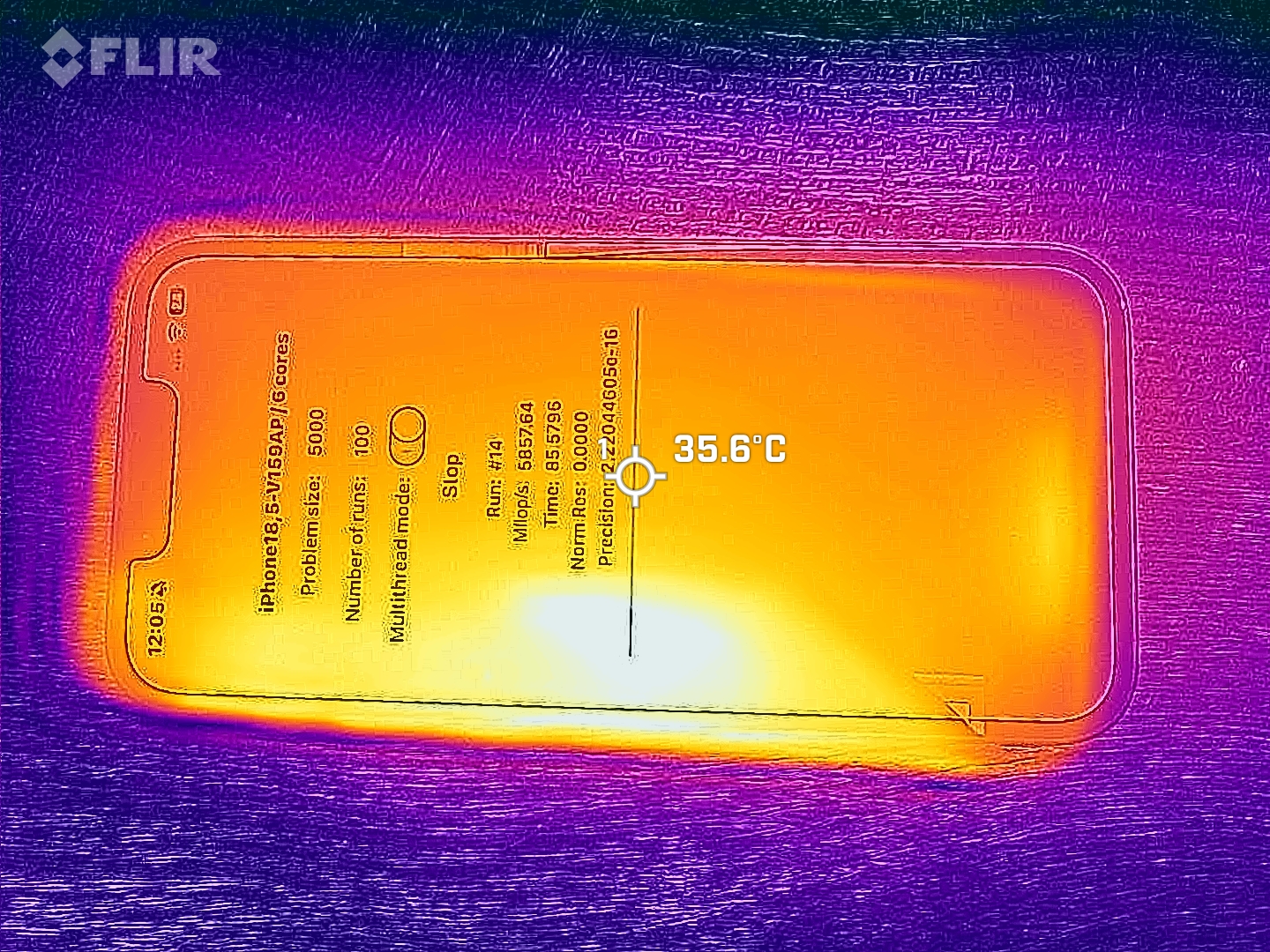
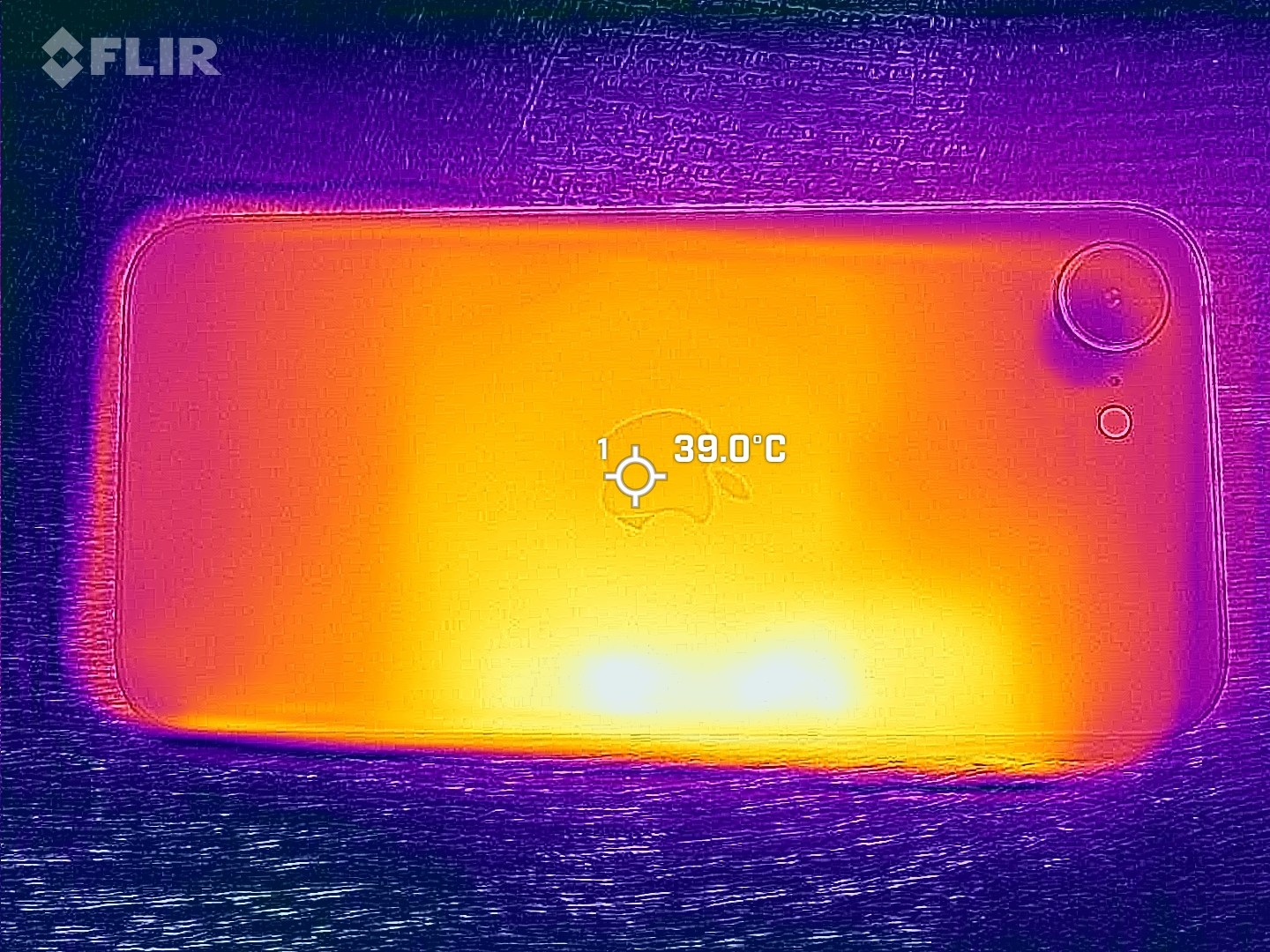
During everyday use, such as web browsing, photography, and WhatsApp, the iPhone 17e remained cool. In our tests, we had to subject it to heavy load for an extended period before its surface temperatures hit up to 42°C in certain areas. At the same time, the SoC performance was significantly throttled, and this was something which became noticeable in benchmarks, such as the 3DMark stress tests.
(±) The maximum temperature on the upper side is 40.2 °C / 104 F, compared to the average of 35.3 °C / 96 F, ranging from 21.9 to 247 °C for the class Smartphone.
(±) The bottom heats up to a maximum of 42.1 °C / 108 F, compared to the average of 34.1 °C / 93 F
(+) In idle usage, the average temperature for the upper side is 25 °C / 77 F, compared to the device average of 33 °C / 91 F.
3DMark Stress Tests
| 3DMark | |
| Wild Life Stress Test Stability | |
| Apple iPhone 17 | |
| Apple iPhone 17e | |
| Apple iPhone 16e | |
| Honor Magic7 Pro | |
| Samsung Galaxy S25 FE | |
| Wild Life Extreme Stress Test | |
| Apple iPhone 16e | |
| Apple iPhone 17e | |
| Apple iPhone 17 | |
| Samsung Galaxy S25 FE | |
| Solar Bay Stress Test Stability | |
| Apple iPhone 16e | |
| Apple iPhone 17e | |
| Apple iPhone 17 | |
| Samsung Galaxy S25 FE | |
| Honor Magic7 Pro | |
| Steel Nomad Light Stress Test Stability | |
| Apple iPhone 16e | |
| Apple iPhone 17e | |
| Honor Magic7 Pro | |
| Apple iPhone 17 | |
| Samsung Galaxy S25 FE | |
Speakers
The two on-board speakers produce a balanced sound stage that conveys voices and music well. However, at higher volumes, both speakers sound increasingly tinny.
A USB-C port is available for wired audio output. Wireless audio is possible via Bluetooth 5.3, although only Apple's AAC codec is supported in addition to SBC.
Apple iPhone 17e audio analysis
(+) | speakers can play relatively loud (88.5 dB)
Bass 100 - 315 Hz
(±) | reduced bass - on average 9.9% lower than median
(±) | linearity of bass is average (13% delta to prev. frequency)
Mids 400 - 2000 Hz
(+) | balanced mids - only 4.2% away from median
(+) | mids are linear (6.4% delta to prev. frequency)
Highs 2 - 16 kHz
(±) | higher highs - on average 6.4% higher than median
(±) | linearity of highs is average (8.9% delta to prev. frequency)
Overall 100 - 16.000 Hz
(±) | linearity of overall sound is average (16.8% difference to median)
Compared to same class
» 9% of all tested devices in this class were better, 7% similar, 84% worse
» The best had a delta of 11%, average was 34%, worst was 136%
Compared to all devices tested
» 30% of all tested devices were better, 7% similar, 63% worse
» The best had a delta of 4%, average was 23%, worst was 136%
Samsung Galaxy S25 FE audio analysis
(+) | speakers can play relatively loud (92 dB)
Bass 100 - 315 Hz
(-) | nearly no bass - on average 19.3% lower than median
(+) | bass is linear (4.6% delta to prev. frequency)
Mids 400 - 2000 Hz
(±) | higher mids - on average 5.7% higher than median
(+) | mids are linear (4.9% delta to prev. frequency)
Highs 2 - 16 kHz
(±) | higher highs - on average 5.9% higher than median
(+) | highs are linear (4.6% delta to prev. frequency)
Overall 100 - 16.000 Hz
(±) | linearity of overall sound is average (17.3% difference to median)
Compared to same class
» 12% of all tested devices in this class were better, 8% similar, 80% worse
» The best had a delta of 11%, average was 34%, worst was 136%
Compared to all devices tested
» 33% of all tested devices were better, 8% similar, 59% worse
» The best had a delta of 4%, average was 23%, worst was 136%
Battery life - Not quite as long-lasting as the iPhone 16e
Power consumption
The iPhone 17e's 4005 mAh battery can be wirelessly charged at up to 15 watts, with additional MagSafe support. Wired charging is possible at up to 20 watts. Apple claims that 50 percent battery capacity ought to be reached after 30 minutes, and this was also the case in our tests. A full charge takes approximately 1 hour and 20 minutes.
| Off / Standby |   0.1 / 0.2 Watt 0.1 / 0.2 Watt |
| Idle |  0.9 / 1.2 / 1.6 Watt 0.9 / 1.2 / 1.6 Watt |
| Load |
6.9 / 12.2 Watt |
    
| |
Key:
min: ,
med: ,
max: Metrahit Energy | |
| Apple iPhone 17e 4005 mAh | Apple iPhone 16e 4005 mAh | Apple iPhone 17 3692 mAh | Honor Magic7 Pro 5270 mAh | Xiaomi Poco F8 Ultra 6500 mAh | Samsung Galaxy S25 FE 4900 mAh | Average Apple A19 | Average of class Smartphone | |
|---|---|---|---|---|---|---|---|---|
| Power Consumption | 3% | -6% | -17% | 2% | -4% | -3% | -3% | |
| Idle Minimum * (Watt) | 0.9 | 0.68 24% | 1.1 -22% | 0.94 -4% | 0.87 3% | 0.87 3% | 1 ? -11% | 0.896 ? -0% |
| Idle Average * (Watt) | 1.2 | 1.89 -58% | 1.3 -8% | 1.5 -25% | 1.29 -8% | 1.48 -23% | 1.25 ? -4% | 1.487 ? -24% |
| Idle Maximum * (Watt) | 1.6 | 1.93 -21% | 1.5 6% | 1.57 2% | 1.33 17% | 1.52 5% | 1.55 ? 3% | 1.677 ? -5% |
| Load Average * (Watt) | 6.9 | 3.77 45% | 7.6 -10% | 11.03 -60% | 8.84 -28% | 6.76 2% | 7.25 ? -5% | 6.83 ? 1% |
| Load Maximum * (Watt) | 12.2 | 9.04 26% | 12 2% | 11.68 4% | 9.15 25% | 12.89 -6% | 12.1 ? 1% | 10.7 ? 12% |
* ... smaller is better
Power consumption: Geekbench (150 cd/m²)
Power consumption: GFXbench (150 cd/m²)
Battery runtime
Under load, the iPhone 17e consumes more power on average than its predecessor, which is why its battery life isn't quite as impressive.
In our Wi-Fi web browsing test, the iPhone 17e achieved a very good runtime of well over 19 hours, but with a runtime of over 23 hours, the iPhone 16e's stamina is quite a bit better. Either way, the iPhone 17e should easily get you through the day, even with intensive use.
| Battery runtime - WiFi v1.3 | |
| Apple iPhone 17e | |
| Apple iPhone 16e | |
| Apple iPhone 17 | |
| Honor Magic7 Pro | |
| Xiaomi Poco F8 Ultra | |
| Samsung Galaxy S25 FE | |
Notebookcheck overall rating
The iPhone 17e packs a decent feature set that includes a sufficiently bright 60Hz display, a good camera, long battery life, and MagSafe charging. However, it lacks both an ultra-wide camera and an ultra-wideband chip.
Apple iPhone 17e
- 03/26/2026 v8
Manuel Masiero
 Total Sustainability Score:
 Possible alternatives compared
Image | Model / Review | Price | Weight | Drive | Display |
|---|---|---|---|---|---|
1. 84%  | Apple iPhone 17e Apple A19 ⎘ Apple A19 4-Core GPU ⎘ 8 GB Memory, 256 GB NVMe | List Price: 699 Euro | 170 g | 256 GB NVMe | 6.10" 2532x1170 460 PPI OLED |
2. 84.1%  | Apple iPhone 16e Apple A18 ⎘ Apple A18 GPU ⎘ 8 GB Memory, 128 GB NVMe | List Price: 699 Euro | 167 g | 128 GB NVMe | 6.10" 2532x1170 460 PPI OLED |
3. 87.9%  | Apple iPhone 17 Apple A19 ⎘ Apple A19 GPU ⎘ 8 GB Memory, 256 GB NVMe | List Price: 949 Euro | 177 g | 256 GB NVMe | 6.30" 2622x1206 460 PPI OLED |
4. 89.2%  | Honor Magic7 Pro Qualcomm Snapdragon 8 Elite ⎘ Qualcomm Adreno 830 ⎘ 12 GB Memory, 512 GB UFS 4.x | Amazon: $990.00 List Price: 1300€ | 223 g | 512 GB UFS 4.0 Flash | 6.80" 2800x1280 453 PPI OLED |
5. 88.2%  | Xiaomi Poco F8 Ultra Qualcomm Snapdragon 8 Elite Gen 5 ⎘ Qualcomm Adreno 840 ⎘ 16 GB Memory, 512 GB UFS 4.x | List Price: 900€ | 220 g | 512 GB UFS 4.1 Flash | 6.90" 2608x1200 416 PPI AMOLED |
6. 85.6%  | Samsung Galaxy S25 FE Samsung Exynos 2400 ⎘ Samsung Xclipse 940 ⎘ 8 GB Memory, 256 GB UFS 4.x | List Price: 809€ | 190 g | 256 GB UFS 4.0 Flash | 6.70" 2340x1080 382 PPI AMOLED |
Transparency
The selection of devices to be reviewed is made by our editorial team. The test sample was provided to the author as a loan by the manufacturer or retailer for the purpose of this review. The lender had no influence on this review, nor did the manufacturer receive a copy of this review before publication. There was no obligation to publish this review. As an independent media company, Notebookcheck is not subjected to the authority of manufacturers, retailers or publishers.
This is how Notebookcheck is testing
Every year, Notebookcheck independently reviews hundreds of laptops and smartphones using standardized procedures to ensure that all results are comparable. We have continuously developed our test methods for around 20 years and set industry standards in the process. In our test labs, high-quality measuring equipment is utilized by experienced technicians and editors. These tests involve a multi-stage validation process. Our complex rating system is based on hundreds of well-founded measurements and benchmarks, which maintains objectivity. Further information on our test methods can be found here.
 Add as a preferred source on Google


