




T-Mobile questions Starlink Mobile launch: can't even get through a Tesla windshield
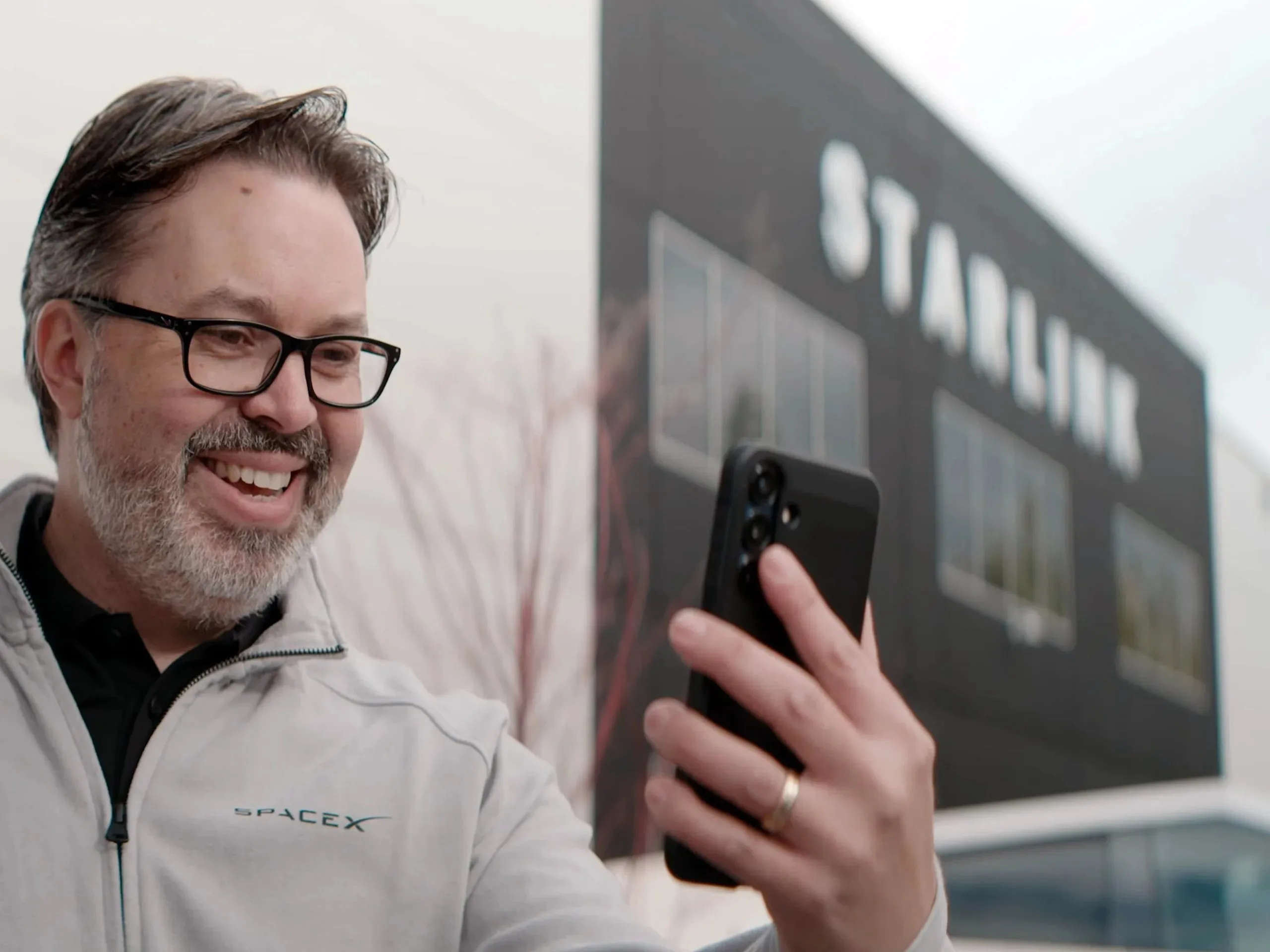
Elon Musk is of the opinion that SpaceX will get into the cell phone carrier business directly with Starlink Mobile's 5G service from space. T-Mobile's CFO, however, claims that the satellite Internet provider will never be competitive to terrestrial carriers, as radio physics doesn't care how many billions SpaceX has raised.
Speaking at Citi's 2026 Global TMT Conference, Peter Osvaldik said that SpaceX has now tried roughly four different ways to get there, and none of the strategies would work, as the signal can't even get through the Tesla Model Y's windshield.
Plan one was direct-to-cell (DtC) and the service is already live as T-Satellite. Ordinary phones like the Samsung Galaxy S26 Ultra that is currently discounted on Amazon can connect straight to Starlink satellites using T-Mobile's own spectrum under an FCC framework called supplemental coverage from space. It sounds impressive on paper, but the satellites are flying hundreds of kilometers overhead at tens of thousands of kilometers per hour. That kind of speed introduces heavy doppler shift, and the antennas involved have far less transmit power than a ground tower. In practice, this means texts and emergency alerts in dead zones, with decent data connection to follow at a later date.
Plan two was becoming an MVNO, essentially renting network capacity from an existing carrier, but AT&T, Verizon, and T-Mobile all say no for the time being. Plan three was building an independent network from scratch using spectrum bought from EchoStar. That would run into the oldest problem in the wireless industry, as towers cost a fortune and take years to permit.
The latest plan of Elon Musk and SpaceX about Starlink Mobile involves clipping small cellular radios called femtocells onto the same arms that already hold residential Starlink dishes. It's a smart way to reuse infrastructure that's already installed but will need scale. T-Mobile's own CFO has estimated it would take something in the neighborhood of a billion femtocells to match the outdoor coverage of existing macro towers, and that's before factoring in interference and backhaul headaches.
And the latest one, which I think everybody is, kind of, in the know, kind of, laughing at and has betrayed the fact that there is no strategy there is the femtocell strategy, where we estimate you'd need probably over 1 billion femtocells to have the equivalent outdoor coverage with all the interference problems, backhaul problems. I mean, it's just not fathomable. And then you had one more in there, kind of, losing track of all the different things that they've said is we're going to build our own network. Well, you have no path to the right level of spectrum assets. You need the layer cake, the low band, the mid-band. You've got to deploy them in a way that we've done and you've got to lead from a tech perspective.
Femtocells also struggle to punch signal through walls, windows, or car glass, something that cell phone towers handle far more easily.
According to T-Mobile's CEO, capacity will also be a problem before Starlink Mobile deployment. A satellite covering a rural county might only need to serve a few hundred users, but the same satellite parked over a major city would have to split its bandwidth among millions of people. That, in his view, is why dense urban and suburban coverage will keep requiring ground-based towers for the foreseeable future.
He also pointed out that T-Satellite, T-Mobile's own service built on Starlink, has been genuinely helpful in rural areas and national parks, though adoption came in below early expectations. Gopalan is still impressed with what the underlying tech can do in the right context, though, and Starlink recently demonstrated the first 5G video call over its satellite DtC network, saying that the new V3 satellites will usher in speeds of up to 150 Mbps delivered to phones anywhere on Earth directly.
What T-Mobile's execs reject, however, is the notion that satellites can match the density, capacity, and reliability of a physical network anytime soon, and it remains to be seen if SpaceX will be able to pull a Musk and surprise them, or if Starlink Mobile will keep getting delayed in the part where it becomes America's fourth largest carrier.
Source(s)
T-Mobile via Seeking Alpha (call transcript)
 Add as a preferred source on Google


