




Elon Musk's T-Mobile rival could be called Starlink Mobile as it offers space-based 5G data and voice network
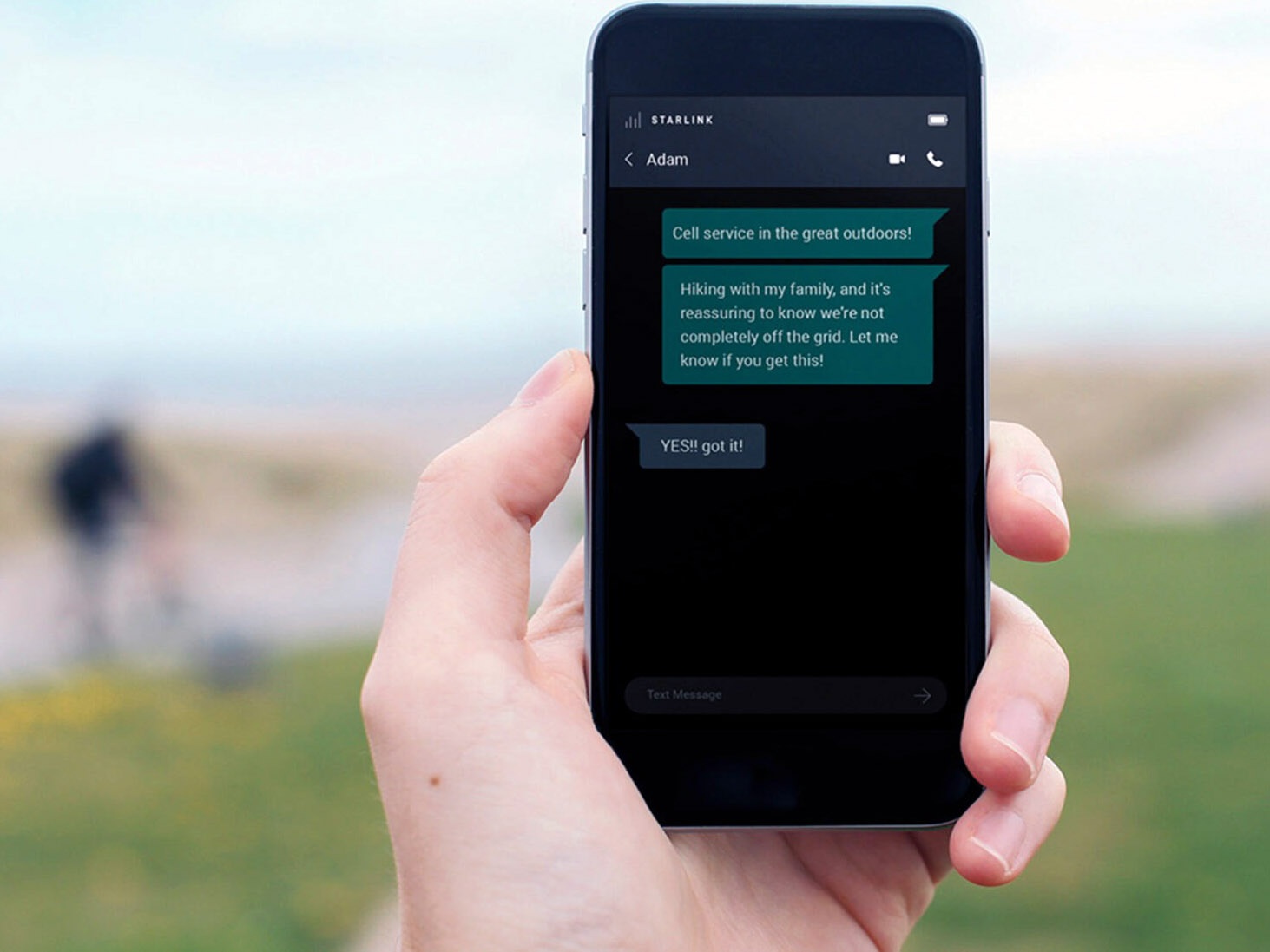
Elon Musk once said that people "should be able to have Starlink like you have an AT&T, or T-Mobile, or Verizon" on their phones, with the satellite carrier service ultimately beaming 5G data from space to regular handsets.
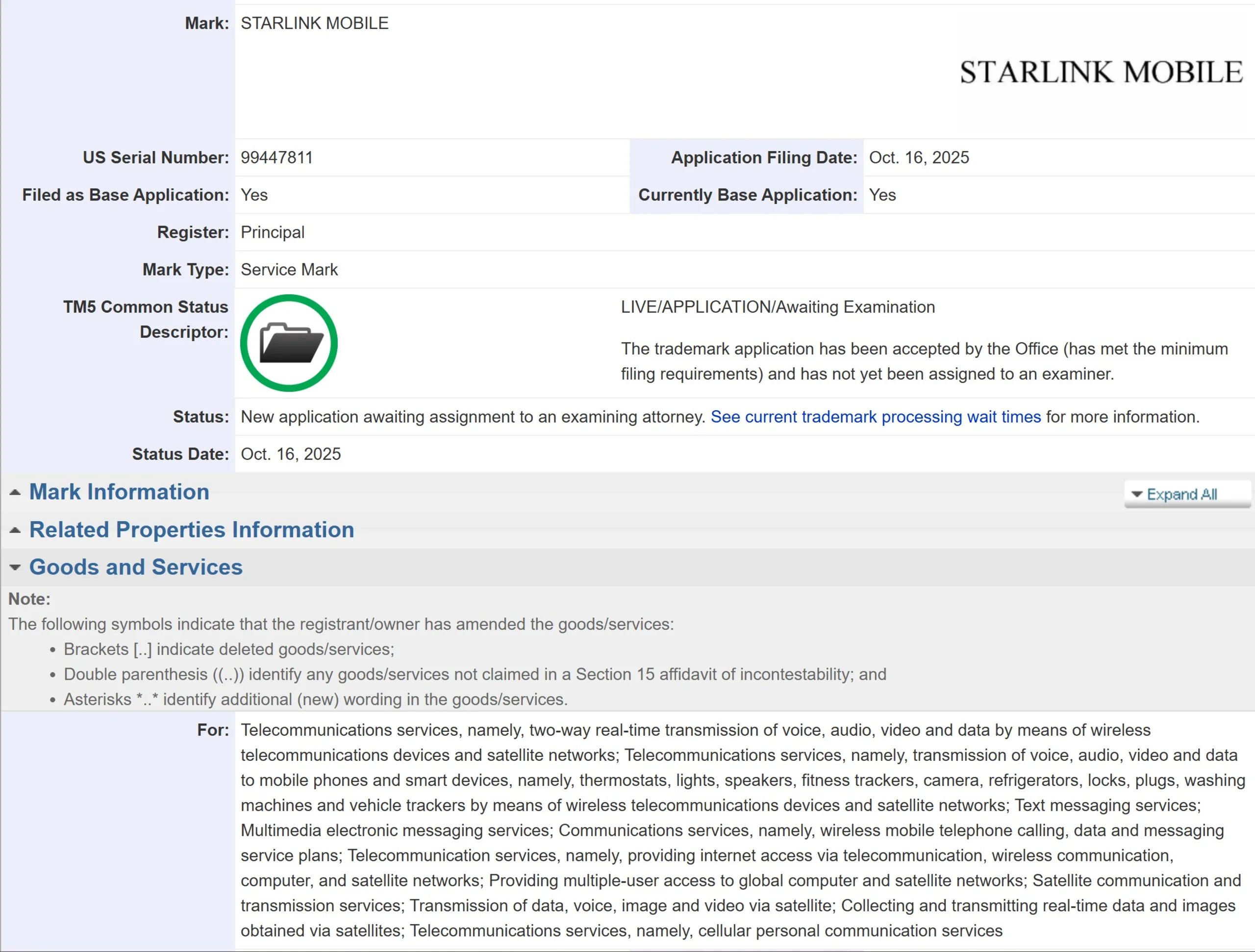
To bring this vision to reality, SpaceX has now filed for the name of the undertaking, trademarking Starlink Mobile at the USPTO, and the scope of the new brand's services sounds suspiciously like the birth of a new cell phone carrier, just beaming voice and data from space, rather than from terrestrial cell towers:
Telecommunications services, namely, two-way real-time transmission of voice, audio, video and data by means of wireless telecommunications devices and satellite networks; Telecommunications services, namely, transmission of voice, audio, video and data to mobile phones and smart devices, namely, thermostats, lights, speakers, fitness trackers, camera, refrigerators, locks, plugs, washing machines and vehicle trackers by means of wireless telecommunications devices and satellite networks.
After SpaceX paid $17 billion for the 50 MHz S-band spectrum that DISH had acquired with its purchase of Boost Mobile, which Sprint had to divest of to merge with T-Mobile, Musk's plans to launch a standalone Starlink carrier service have become a viable idea.
Currently, phones like the Galaxy S25 Ultra that is 30% off at Amazon, can get limited satellite services like T-Mobile's T-Satellite signal without modifications. SpaceX, however, is working with mobile processor makers like Qualcomm or MediaTek to integrate Starlink modems in their future chipsets so that phone owners can receive faster satellite Internet service in areas without cellular coverage directly.
SpaceX plans to start launching the big Starlink V3 satellites in 2026 with the inaugural Starship 3 rocket flights. Those V3 satellites are the size of a Boeing 737 when their solar panels are unfurled, and offer 20x the capacity of the current crop. While this will bring gigabit satellite Internet speeds to customers with the latest Performance dish kit, SpaceX also wants to bring 5G download speeds to phones directly.
It has filed for a permission to launch no fewer than 15,000 direct-to-cell V3 satellites with the FCC, and plans to use that massive constellation to become a viable alternative to Verizon, AT&T, or T-Mobile in the US. The first phones with dedicated Starlink modem in their mobile chipsets will reportedly start testing in 2026 and be ready for the finalized V3 direct-to-cell satellite constellation in 2027.
SpaceX cautioned that even then, Starlink will only be able to provide 5G satellite Internet coverage everywhere with up to 100 Mbps download speeds. Nonetheless, given that carriers currently offer satellite service that only allows messaging and limited data service via optimized apps, such a Starlink Mobile download speed sounds rather revolutionary.
 Add as a preferred source on Google


