




Starlink Mobile 5G phone service to offer 150 Mbps download speeds even in northern latitudes via cell towers in space

After the purchase of EchoStar's DISH spectrum, SpaceX began to dream big, and Elon Musk went on record saying that it will launch a standalone Starlink Mobile 5G network to rival terrestrial carriers like T-Mobile or Verizon.
To do this, SpaceX will need to launch many more satellites that 5G phones can communicate with directly. It has already been granted a permit to satiate low-earth orbit with up to 15,000 direct-to-cell (D2C) or direct-to-device (D2D) satellites, up from the current 650 or so.
Needless to say, the Starlink Mobile 5G phone service will only be made possible when SpaceX starts launching the V3 satellites into orbit with its Starship 3 rocket. The V3 direct-to-cell satellites are the size of a Boeing 737 when their solar panel "wings" are unfurled and have 20x the throughput capacity of the current V2 D2C generation in orbit, offering 1 Tbps download speed and 160 Gbps of uplink per satellite.
Starlink Mobile 5G download speeds per user
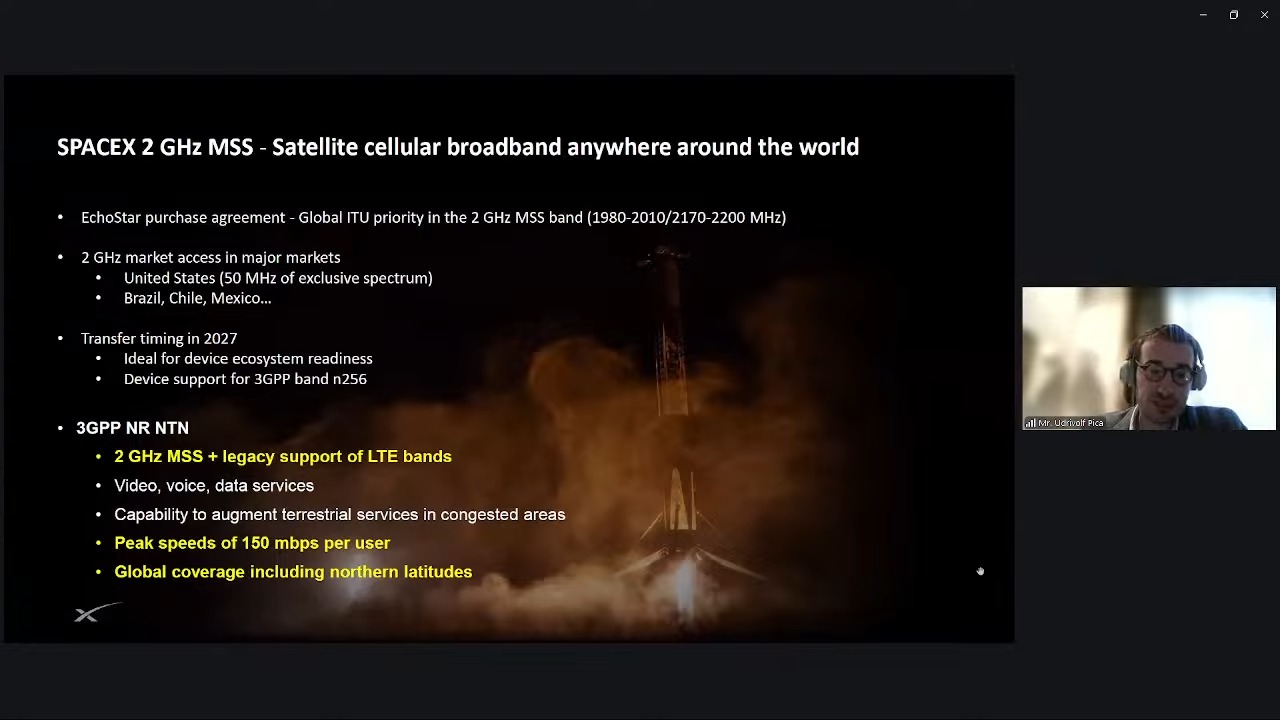
Not only would this allow the launch of Starlink's gigabit-speed Internet, for which it already sells the respective Performance dish, but it would also bring up to 150 Mbps 5G download speeds directly to people's phones on the ground, according to the SpaceX satellite policy head presentation before an ITU panel.
This Starlink Mobile 5G download speed is actually higher than the 100 Mbps it was hinting at during the initial iteration of the idea to become a cell phone carrier beaming data from space, instead of just an emergency connectivity provider for services like T-Mobile Satellite.
After the Dish spectrum acquisition, SpaceX cautioned that Starlink's carrier service will only improve "high-capacity terrestrial 5G networks" coverage but serve 4G LTE speeds, which in real-life scenarios range from 5 Mbps to 100 Mbps, like in the early days of 5G network buildout by T-Mobile, AT&T, and Verizon. This is similar to the speeds that the Starlink Mini kit that costs $329 on Amazon is able to provide, just delivered directly to the user's phone without the dish via Starlink's "cell phone towers in the sky," as per the presentation
Cell phone towers in space
Now, however, SpaceX's Udrivolf Pica is confident that Starlink will leverage both the Mobile Satellite Services (MSS) spectrum at the 2 GHz band and the ITU spectrum for expanded coverage when the deal with EchoStar closes towards the end of 2027. The timing will be "ideal for the device ecosystem readiness and device support for the 3GPP band n256," said Pica, hinting at SpaceX's work with phone chip makers like Qualcomm, MediaTek, or Samsung on developing direct Starlink satellite Internet connectivity in their mobile chipset modems.
The spectrum bouquet will allow Starlink Mobile to cover even the "northern latitudes," or the arctic and subarctic boreal forests and tundra that are frequently overlooked when it comes to connectivity, with 5G satellite internet at speeds of 150 Mbps per subscriber.
Mum's the word on the Starlink Mobile subscription price, but AST, which also presented its future direct-to-device service plan at the panel, said that both long- and short-term subscriptions, or even a day pass, are all available pricing options that the satellite company is considering.
Source(s)
 Add as a preferred source on Google


