




Young star shows what our Sun looked like billions of years ago
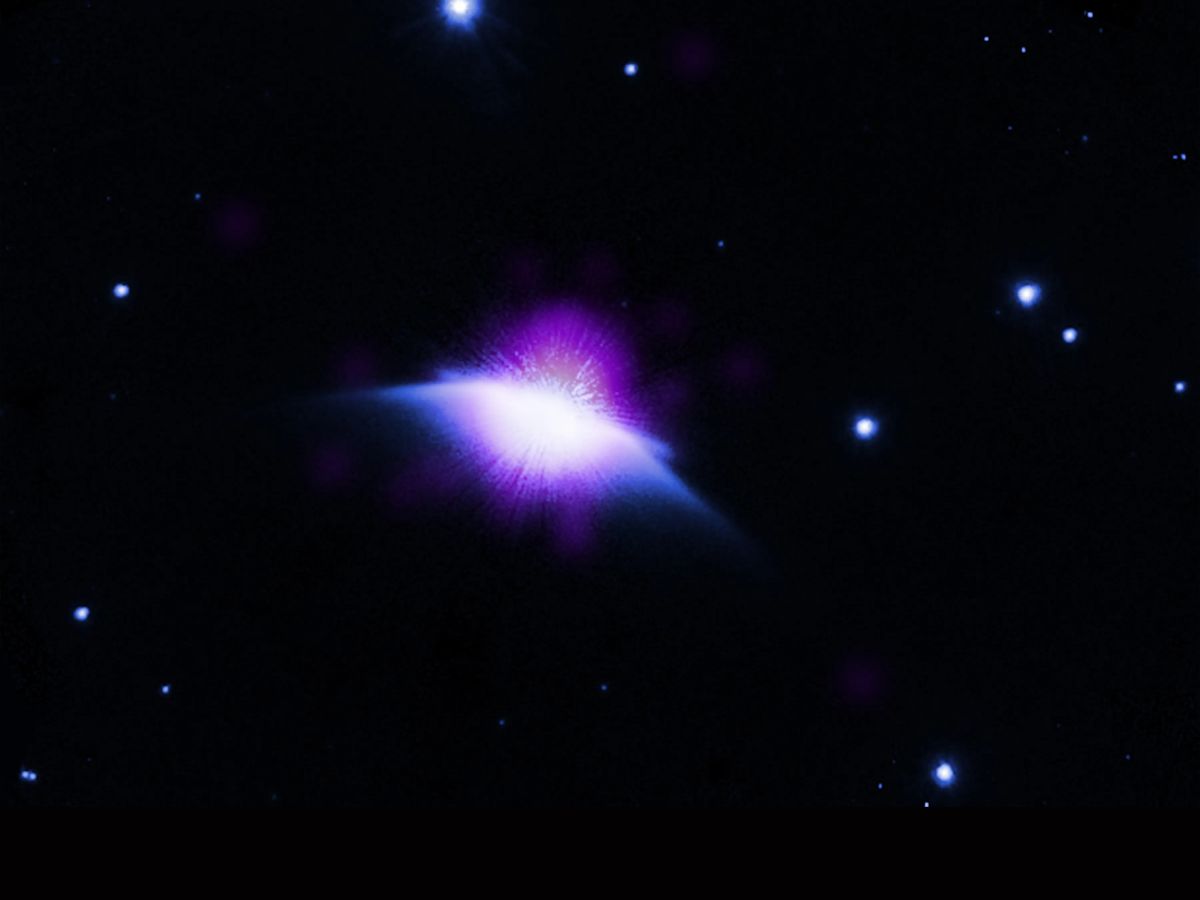
A star named HD 61005, located about 120 light-years away from our Sun and possessing the same mass and temperature as the Sun, was captured by NASA’s Chandra X-ray Observatory. With an age of about 100 million years compared to the Sun’s age of about 5 billion years, it is a younger version of our Sun.
Nicknamed the moth due to the moth-wing-shaped pattern of dust around it, this star is captured with a clearly visible astrosphere 200 times the distance between the Earth and the Sun. An astrosphere is a giant bubble around a star formed by stellar wind pushed outward into space.
The wind of particles from the surface of this young star travels three times faster and is about 25 times denser than the wind from the Sun. This increases the visibility of the astrosphere, alongside its proximity. Chandra was able to detect this phenomenon using the X-rays produced from the heated gas emitted by the stellar wind slamming into the cooler dust and gases.
The Sun has a similar layer called the heliosphere that extends far beyond Pluto, protecting us from cosmic radiation. However, astronomers have not been able to capture it from the outside. This groundbreaking image provides real insight into the evolution of our Sun’s wind, giving us a glimpse into what our Sun was like billions of years ago.
Source(s)
Image source: X-ray: NASA/CXC/John Hopkins Univ./C.M. Lisse et al.; Infrared: NASA/ESA/STIS; Image Processing: NASA/CXC/SAO/N. Wolk
 Add as a preferred source on Google


