




How the Sun stripped Mars of its atmosphere
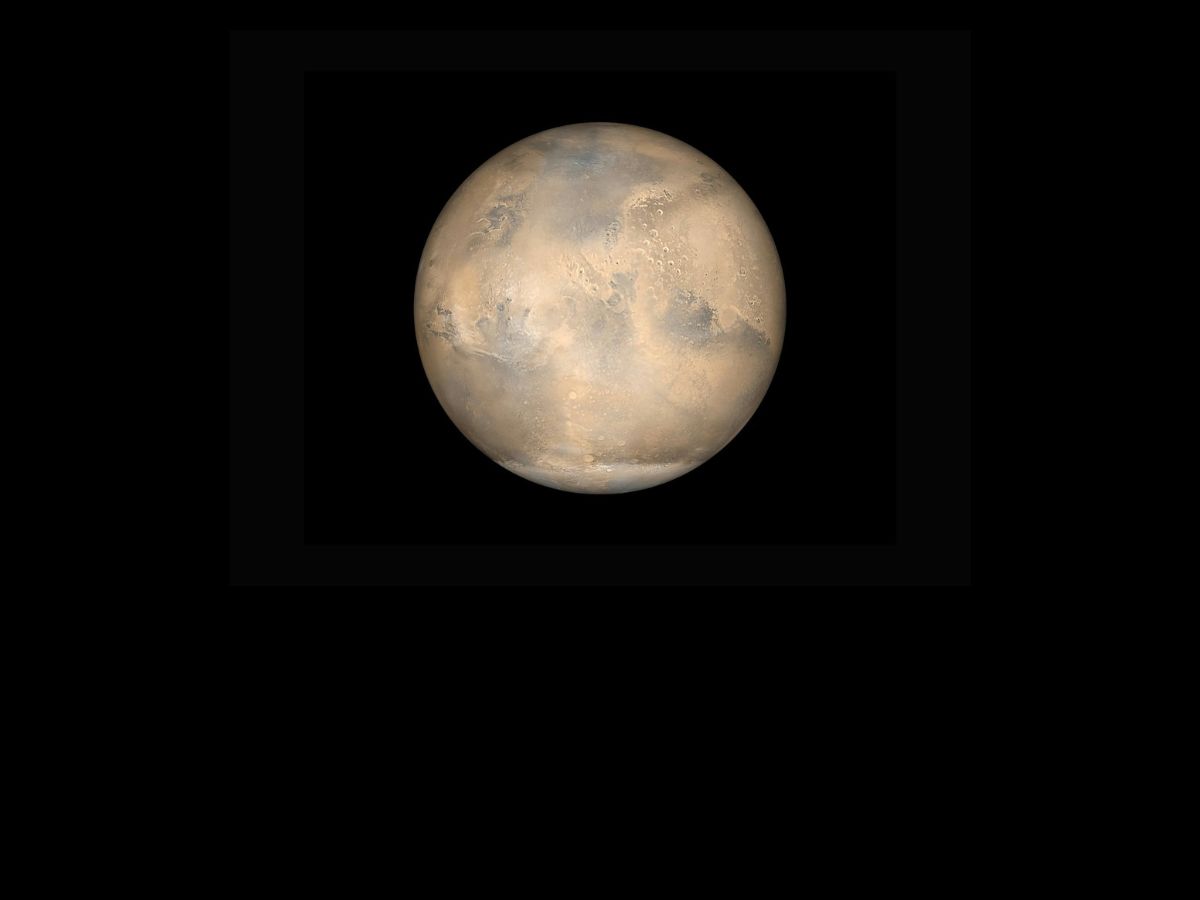
Previously, Mars was warm and watery, with a thick atmosphere, almost Earth-like. But over billions of years, this atmosphere wore away, leaving a cold, dry planet with a thin atmosphere. This was due to the solar wind, a stream of charged particles released from the Sun. This solar wind interacted with the upper atmosphere of Mars due to the planet's weak magnetic field. This caused the planet to cool, lose surface water, and lose most of its atmosphere.
To investigate this, the Escape and Plasma Acceleration and Dynamics Explorer (ESCAPADE) was launched. This is a NASA mission consisting of two spacecraft. Led by UC Berkeley’s Space Sciences Laboratory and funded by NASA’s Heliophysics Division, this mission will measure the magnetosphere around Mars, the strength of the solar wind, the atmospheric escape of particles leaving Mars’ atmosphere, and the ionosphere. Before going to Mars, the ESCAPADE will travel deep into the Earth’s magnetotail, studying the solar wind near Earth.
Usually, spacecraft launch when the Earth and Mars align, but ESCAPADE launched early, looping around Lagrange Point 2, and will use the Earth’s gravity to slingshot toward Mars in November 2026 with an estimated arrival in September 2027. This mission will help better our understanding of space weather near Mars and provide guidance on better shield design, safety protocol creation, and protection of astronauts and equipment.
Source(s)
 Add as a preferred source on Google


