




Red Hat Enterprise Linux 10.2 and 9.8 enhance the core management and more
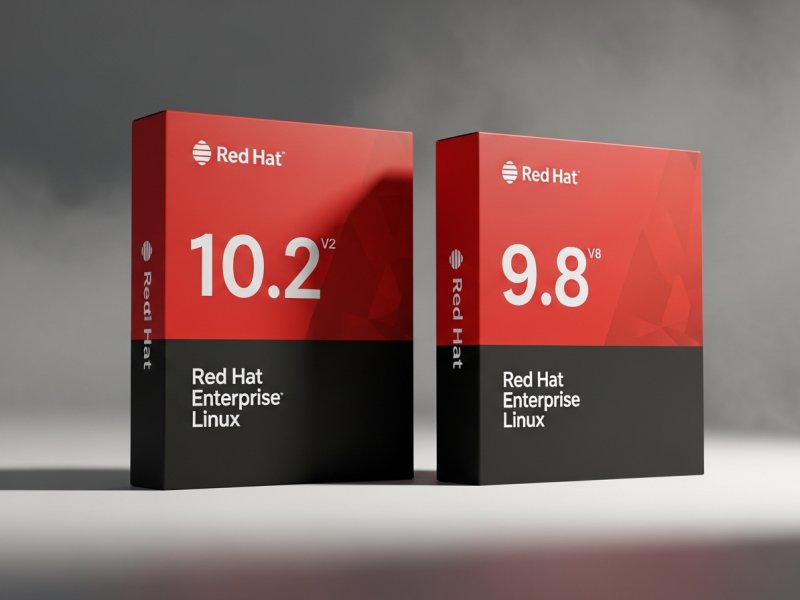
According to the official blog post regarding their release (see the Source link below the last paragraph), Red Hat Enterprise Linux 10.2 and 9.8, which became available yesterday, "enhance the core strengths of RHEL to help IT leaders, developers, and administrators accelerate time-to-market, simplify hybrid cloud management, and proactively defend against advanced threats, including quantum computing risks." Unsurprisingly, both use AI assistance alongside a set of old-school tools.
What makes RHEL 10.2 and 9.8 stand out when it comes to AI is that these two updates combine the power of AI with the command-line interface. While using enhanced color output support, the RHEL command-line now features gooes, an AI assistant that provides quick access to insights and commands, thus eliminating the need to check the manual or go online for information.
Developers get LLVM Toolset 21 (sporting the ThinLTO backend), Go Toolset 1.26 (featuring the new Green Tea garbage collector and HPKE support), Rust Toolset 1.92, Python 3.14, Ruby 4.0 (offering the new ZJIT compiler), PHP 8.4, OpenJDK 25, PostgreSQL 18, and MariaDB 11.8 (with the new VECTOR data type).
OS deployment and management are now easier with bootable container image mode. Additionally, RHEL includes an enhanced image builder command and an upgraded system role, both leading to reduced manual intervention and improved automated tasks.
While offering end-to-end cryptographic integrity protection, RHEL now comes alongside the Red Hate Certificate System 11.0, which meets the emerging NIST standards (FIPS 204) for quantum-resistant algorithms. Since certificate lifespans are decreasing due to the emerging quantum threats, the new system introduced by Red Hat includes zero-touch provisioning, which automates certificate issuance and uses a secure, one-time passsword system.
When talking about migration and upgrade paths, AI surfaces once again. While Leapp comes with a single command for converting and upgrading to a newer major version simultaneously, delegating the upgrade process to the most appropriate teams is done using an Ansible Automation Platform-powered, AI-guided approach.
Source(s)
 Add as a preferred source on Google


