Notebookcheck Logo
Teaser
ⓘ Daniel Schmidt

Nice, affordable, but holding back - Nothing Phone (4b) review

Nothing is just ticking over.

The Nothing Phone (4b) aims to make its mark in the mid-range market with its striking design, Glyph Bar, AMOLED display, and powerful battery. Our review shows that for 329 euros, it has a lot going for it, but the camera, storage, and updates reveal cost-cutting measures. It also raises the question of whether the more affordable model is really the better choice compared to the Phone (4a).
Daniel Schmidt 👁 (translated by Daniel Schmidt) Published 🇩🇪
5G Android Smartphone Touchscreen

Conclusion on the Nothing Phone (4b)

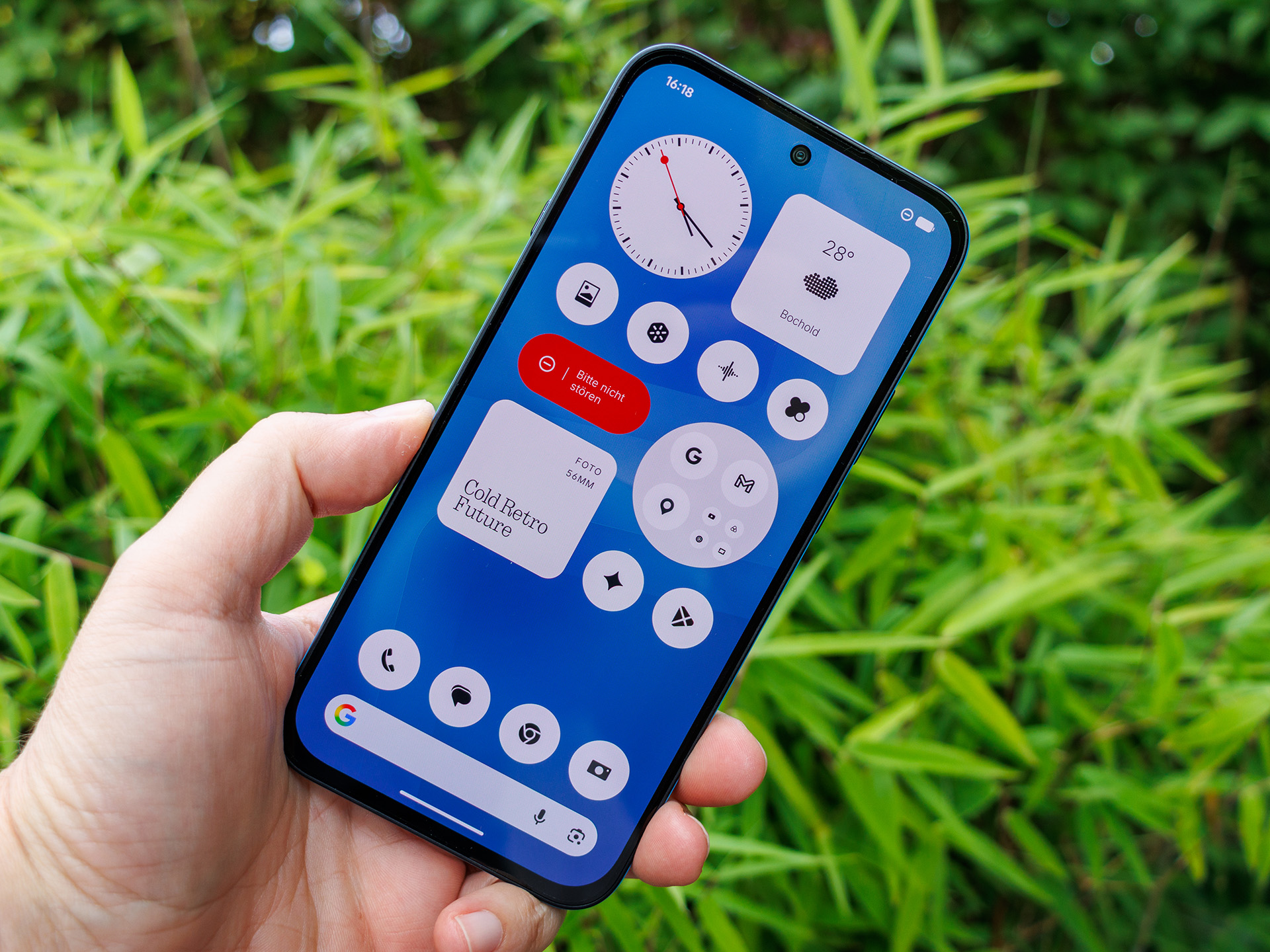
The Phone (4b) is Nothing’s most affordable entry-level model in its smartphone lineup and also features the company’s distinctive design language. The Glyph Bar, which we’re already familiar with from the Phone (4a) and other models, is also included in a smaller form.

The large AMOLED display takes center stage here, but in our test measurements, it didn’t reach the advertised 2,000 nits; instead, it remained well below that at a maximum of 1,160 cd/m². This peak brightness is likely reserved only for very small white areas, so its practical benefit is minimal.

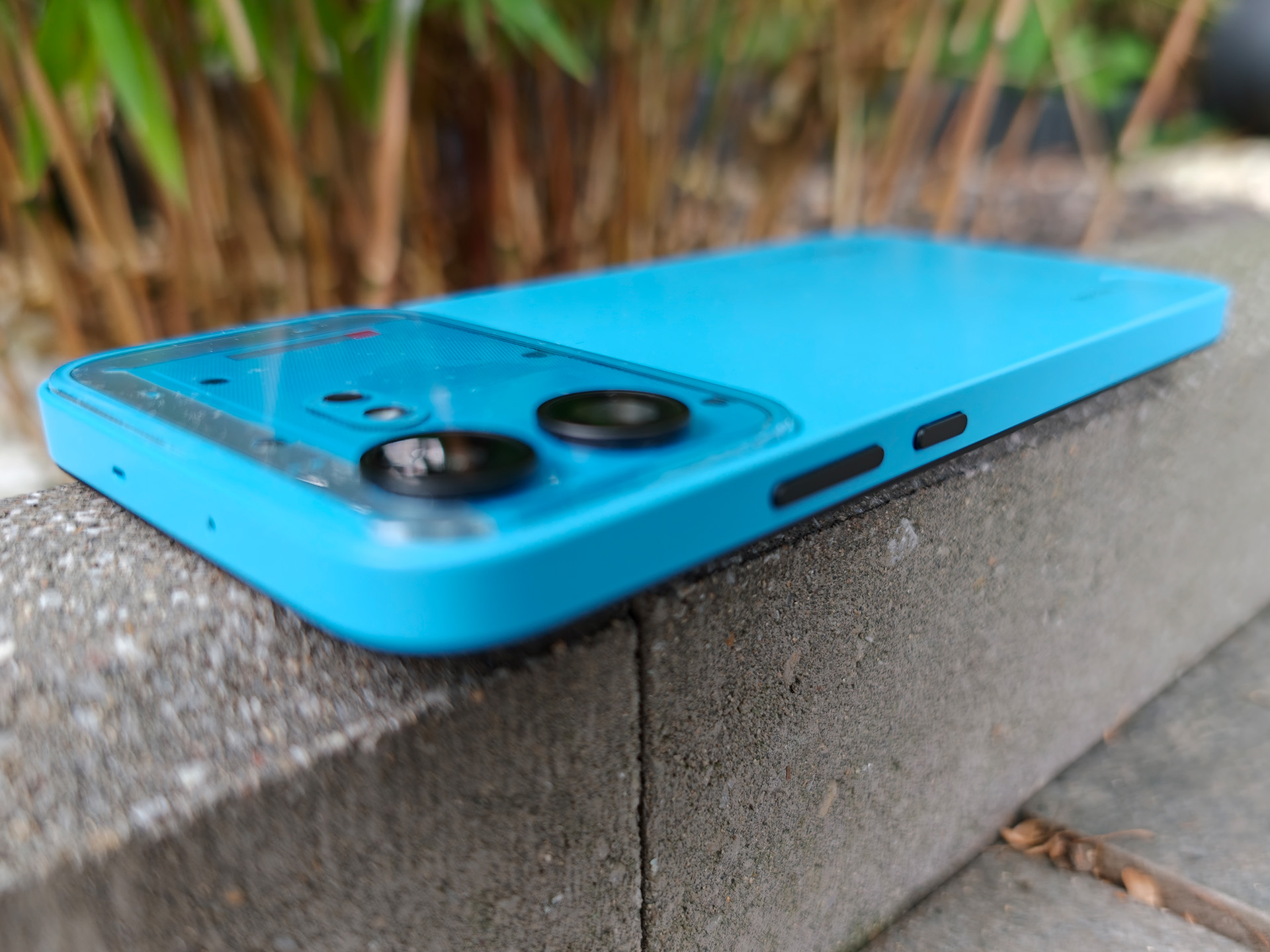
The Nothing Phone (4b)’s dual-camera system features a fairly small main sensor that quickly reaches its limits in low light and backlit conditions, though it does at least have OIS. There is no telephoto lens.

The Nothing phone is only available in Germany with 128 GB of internal storage, which we find a bit limited, especially since it doesn’t support microSD cards. The speakers measure at a slightly lower volume level than those on the (4a), but this is still clearly audible in a direct comparison.

In general, the Phone (4b)’s biggest competition comes from within its own lineup, as the Phone (4a) with the same storage configuration was actually cheaper than the (4b) at some retailers at the time of testing. One area where the Phone (4b) is clearly superior, however, is battery life. Nothing manages to squeeze an incredibly long runtime out of the 5,200 mAh battery, and with 1,400 charge cycles, the battery is also comparatively durable. It’s a shame that the larger 6,000 mAh battery is reserved for the Indian market.

The biggest trade-off with the Nothing Phone (4b) right now is its price; if it drops a bit, it will certainly become an attractive alternative.

Pros

+ sehr gute Akkulaufzeiten
+ langlebiger Akku
+ großes AMOLED mit 120 Hz
+ auffälliges Nothing-Design mit Glyph Bar

Cons

- nur 128 GB in Deutschland
- kein eSIM-Support
- lahmes WLAN

Price & availability

The Nothing Phone (4b) can be purchased directly from the manufacturer's online store and costs 329 euros (~$380).

Amazon Logo
  • $558.33
    Nothing Phone (3) Cell Phone, 5G Unlocked Phones 256GB, Android 15, Snapdragon 8s Gen4, AI Mobile Phones with Four 50MP Cameras & AMOLED Display, 5150mAh, Glyph Interface, Smartphone Black
  • $429.00
    Nothing Phone (2) 5G Unlocked Smartphone 256GB + 12GB RAM, Dark Grey
  • $654.78
    Nothing Phone (3) Cell Phone, 5G Unlocked Phones 512GB, Android 15, Snapdragon 8s Gen4, AI Mobile Phones with Four 50MP Cameras & AMOLED Display, 5150mAh, Glyph Interface, Smartphone Black

Specifications: Nothing Phone (4b)

Nothing Phone (4b) (Phone (4) Series)
Processor
Qualcomm Snapdragon 6 Gen 4 8c/8t, 1 x 2.3 GHz ARM Cortex-A720, 3 x 2.2 GHz ARM Cortex-A720, 4 x 1.8 GHz ARM Cortex-A520, Cortex-A720 / A520
Graphics adapter
Memory
8 GB 
, LPDDR4x
Display
6.77 inch 19.5:9, 2344 x 1080 pixel 381 PPI, capacitive touchscreen, Super AMOLED, Dragontrail Pro Glas, 8 Bit Color depth, Refresh rate: 60 - 120 Hz, Scratch resistance on Mohs hardness scale: 5; Screen-body-ratio: 87 %, glossy: yes, HDR, 120 Hz
Storage
128 GB UFS 2.2 Flash, 128 GB 
, 108 GB free
Connections
1 USB 2.0, USB-C Power Delivery (PD), Audio Connections: USB-C, 1 Fingerprint Reader, NFC, Brightness Sensor, Sensors: Acceleromter, Magnetometer, Proximity, Gyroscope, OTG
Networking
802.11 a/b/g/n/ac/ax (a/b/g/n = Wi-Fi 4/ac = Wi-Fi 5/ax = Wi-Fi 6/), Bluetooth 6.0, 2G (850, 900, 1800, 1900 MHz), 3G (Band 1, 2, 4, 5, 6, 8, 19), LTE (Band 1, 2, 3, 4, 5, 7, 8, 18, 19, 20, 26, 28, 38, 40, 41, 42, 66, 71), 5G-Sub6 (Band 1, 2, 3, 5, 7, 8, 20, 28, 38, 40, 41, 66, 71, 77, 78), Dual SIM, LTE, 5G, GPS
Size
height x width x depth (in mm): 8.6 x 164.4 x 78.2 ( = 0.34 x 6.47 x 3.08 in)
Battery
5200 mAh Lithium-Ion, Battery charge time: 50 %: 29 min, 80 %: 55 min, 100 %: 80 min; Battery charge cycles: 1400
Charging
fast charging / Quickcharge
Operating System
Android 16
Camera
Primary Camera: 50 MPix (Samsung JNS, 1/2.76", f/1.8, 28 mm, OIS) + 8 MPix (Ultra Wide, GalaxyCore GC08A8, 1/4", f/2.2, 16 mm); Camera2-API-Level: Level 3
Secondary Camera: 16 MPix (GalaxyCore GC16B3C, 1/3", f/2.4)
Additional features
Speakers: Dual, USB-C-Cable, Clear case, SIM-tool, Nothing OS 4.1, 24 Months Warranty, Bluetooth Audio Codecs: SBC, AAC, LHDC, LDAC (cannot be viewed) | GNSS: GPS (L1), Glonass (L1), BeiDou (B1I, B1C), Galileo (E1), QZSS (L1) | HDR: HLG, HDR10, HDR10+ | DRM Widevine L1 | IP64 | Body-SAR: 1.404 W/kg, Head-SAR: 1.159 W/kg | max. charging speed: 33 W (wired)
Biometric security: optical fingerprint, 2D facial recognition | Vibration motor: linear / ERM | Telephony features: Dual-Nano-SIM, Wi-Fi Calling, VoLTE
Update Policy: 3 years Android-Updates (till 07/2029), 6 years security patches (till 07/2032), fanless
Released
07/07/2026
Weight
210 g ( = 7.41 oz / 0.46 pounds)
Price
329 Euro
Note: The manufacturer may use components from different suppliers including display panels, drives or memory sticks with similar specifications.


Design and features - The Nothing Phone (4b) is not waterproof

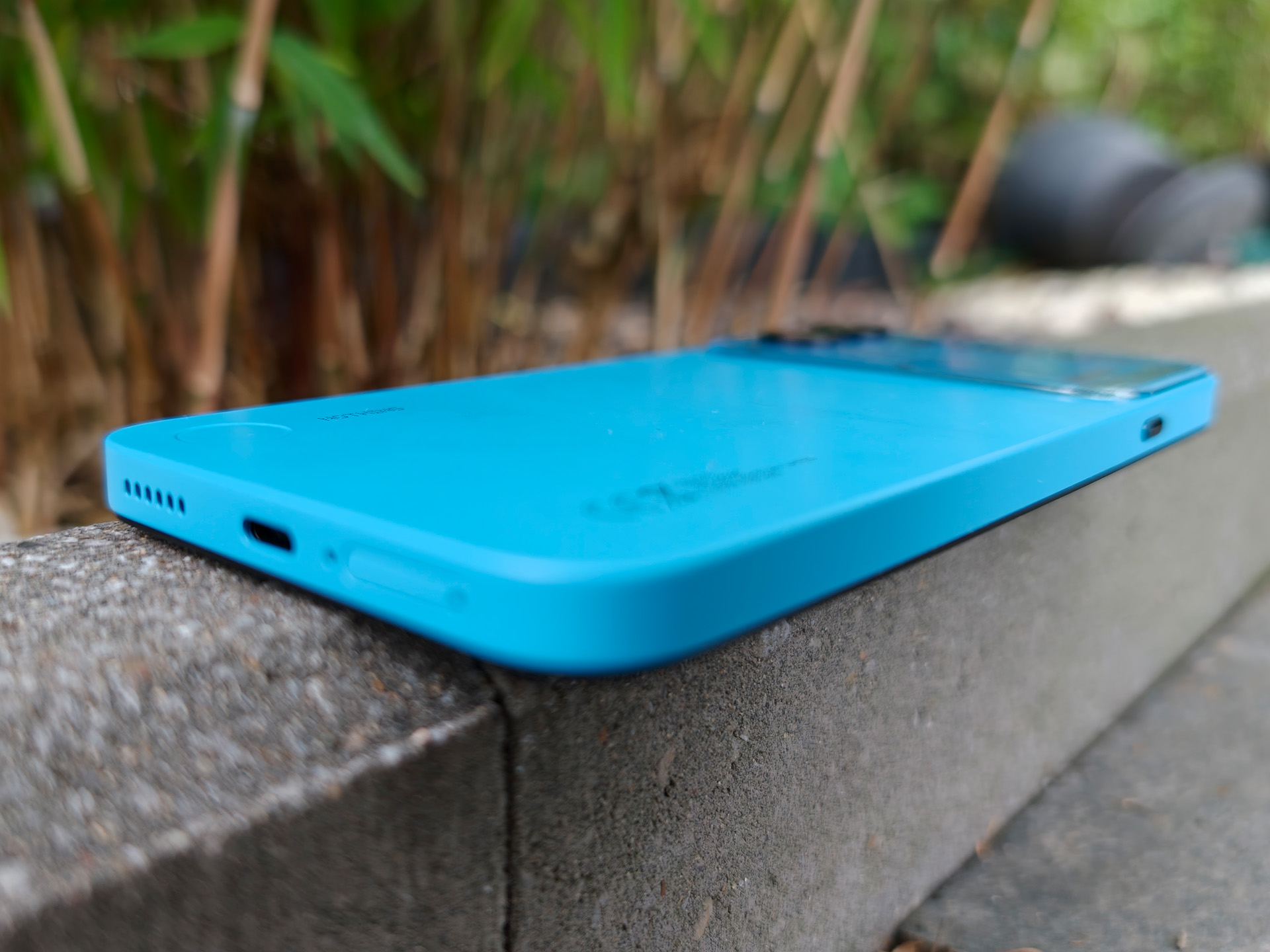
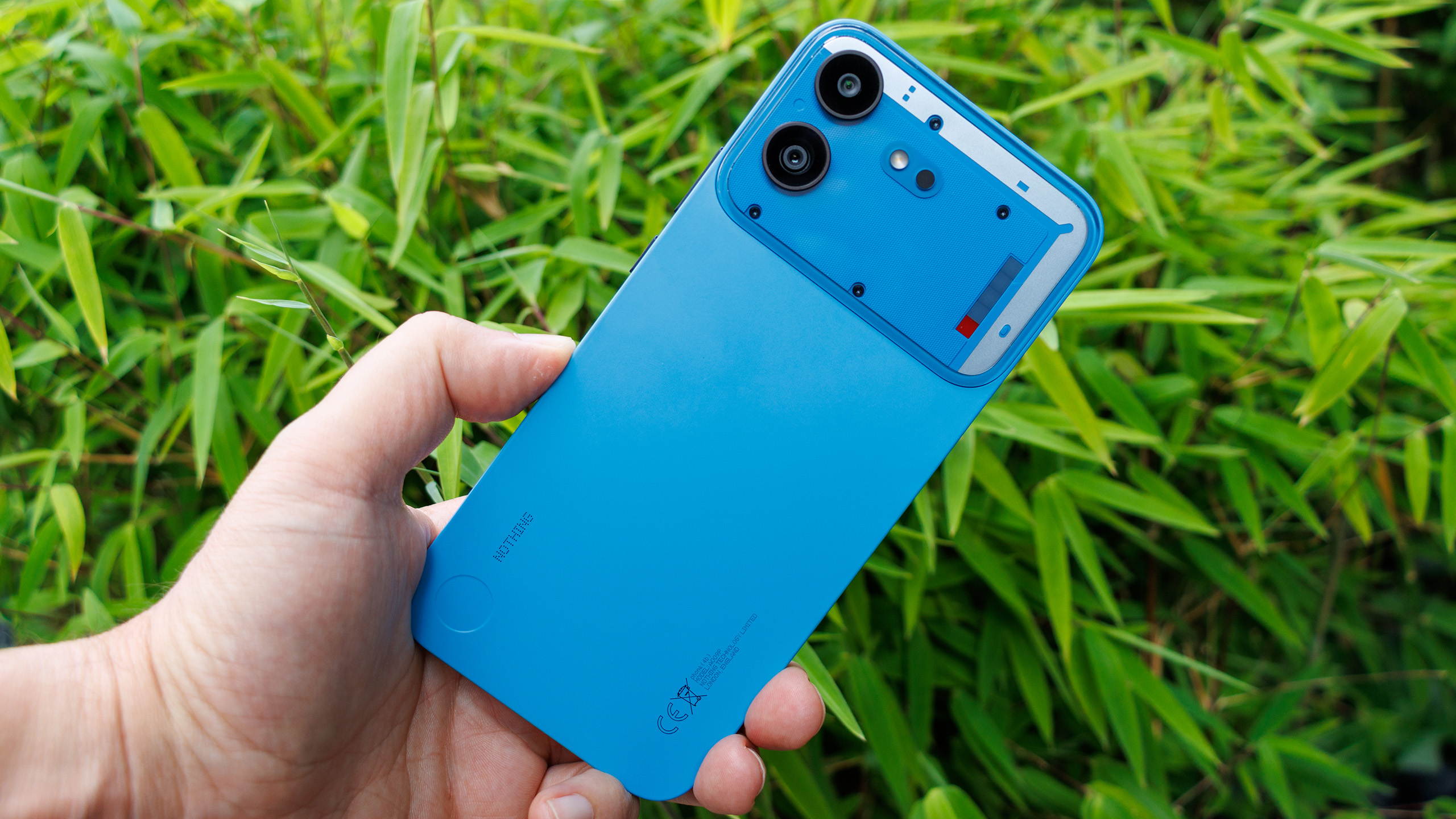
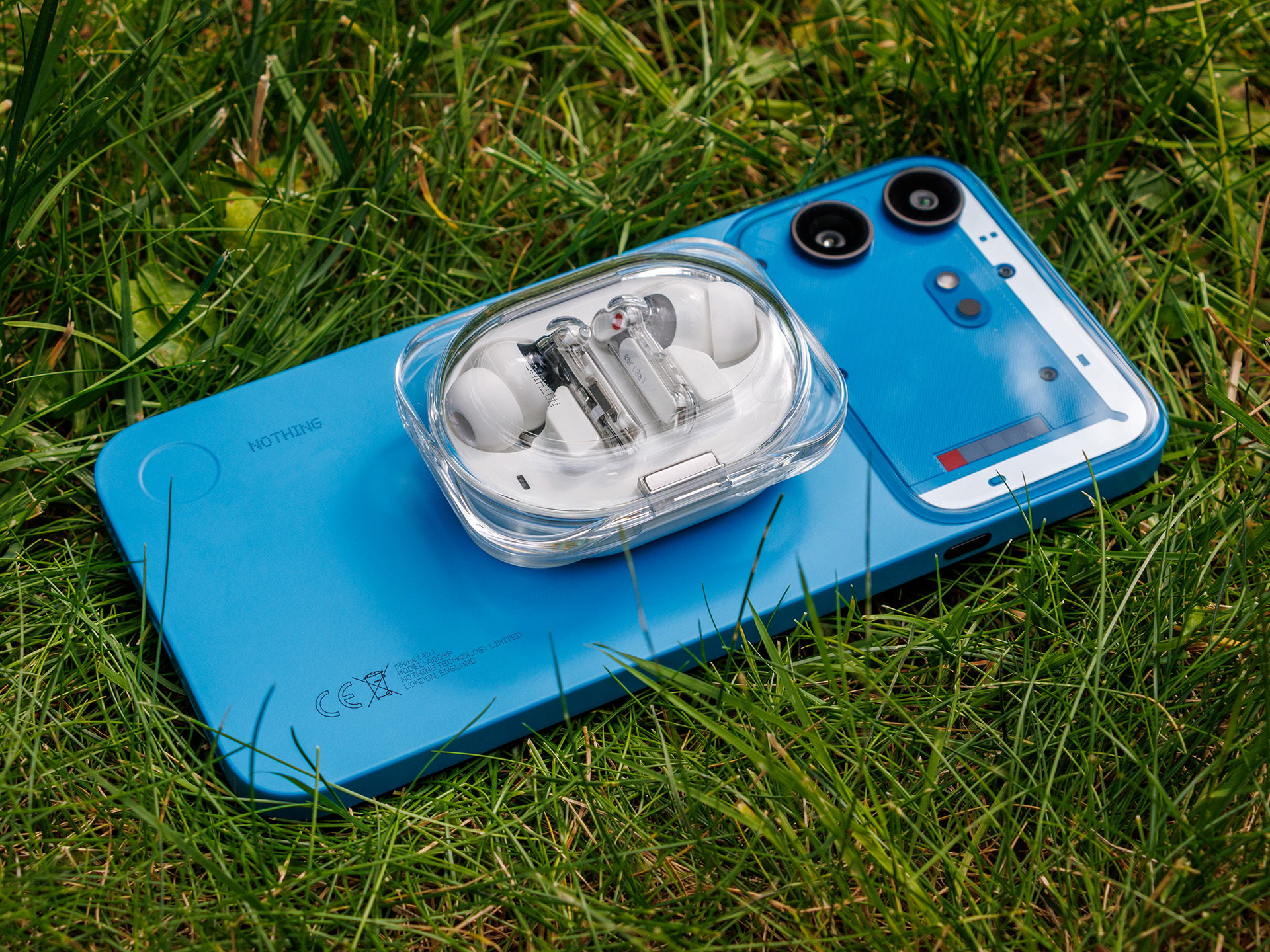
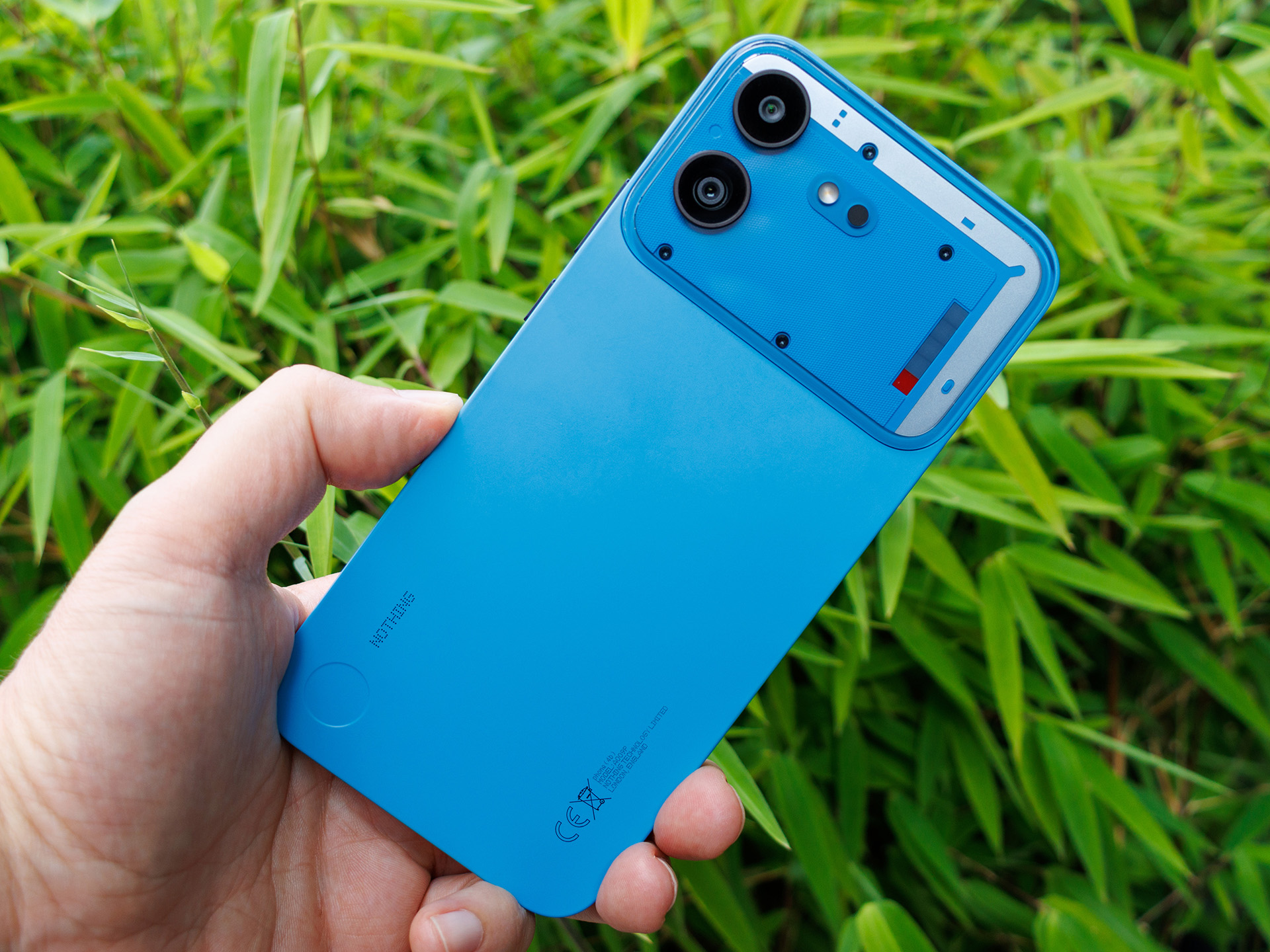
Externally, the Nothing Phone (4b) is made entirely of plastic, yet it still feels both sturdy and high-quality and is also very well built. Nothing lists the thickness as 8.6 mm; we measured 8.8 mm, and with the cameras, it’s up to 11.65 mm.

The smartphone is IP64-certified, meaning it’s only protected against splashes; however, Nothing also states that it has been tested for “immersion in water up to 25 cm for up to 20 minutes.” Given the relatively small storage capacity, we would have liked to see microSD support.
Size comparison

164.4 mm / 6.47 in 78.2 mm / 3.08 in 8.6 mm / 0.3386 in 210 g0.463 lbs163.34 mm / 6.43 in 78.31 mm / 3.08 in 8.31 mm / 0.3272 in 206 g0.4542 lbs164.2 mm / 6.46 in 77.4 mm / 3.05 in 7.3 mm / 0.2874 in 182 g0.4012 lbs162.9 mm / 6.41 in 78.2 mm / 3.08 in 7.4 mm / 0.2913 in 196 g0.4321 lbs148 mm / 5.83 in 105 mm / 4.13 in 1 mm / 0.03937 in 1.5 g0.00331 lbs

Communication and usability – Slow Wi-Fi on the Nothing Phone

Bluetooth 6.0 isn't yet a standard feature in this price range. On the other hand, Nothing doesn't include a powerful antenna setup in the Phone (4b), so while the Wi-Fi connection is stable, it isn't particularly fast.

Voice quality is good when held to the ear, and both parties can be understood clearly. However, background noise isn’t filtered out particularly well. Additionally, there is no eSIM support.

Networking
Nothing Phone (4b)
802.11 a/b/g/n/ac/ax
iperf3 transmit Wi-Fi6/7 RT-BE96U
509 (min: 471) MBit/s ∼29%
iperf3 receive Wi-Fi6/7 RT-BE96U
435 (min: 391) MBit/s ∼22%
Samsung Galaxy A37 5G
802.11 a/b/g/n/ac/ax
iperf3 transmit Wi-Fi6/7 RT-BE96U
725 (min: 620) MBit/s ∼42%
iperf3 receive Wi-Fi6/7 RT-BE96U
768 (min: 673) MBit/s ∼39%
Motorola Moto G77
802.11 a/b/g/n/ac
iperf3 transmit AXE11000
279 (min: 169) MBit/s ∼29%
iperf3 receive AXE11000
342 (min: 251) MBit/s ∼40%
Xiaomi Poco M8 Pro 5G
Wi-Fi 6E
iperf3 transmit AXE11000
950 (min: 929) MBit/s ∼100%
iperf3 receive AXE11000
852 (min: 832) MBit/s ∼100%
iperf3 transmit AXE11000 6GHz
949 (min: 940) MBit/s ∼74%
iperf3 receive AXE11000 6GHz
950 (min: 944) MBit/s ∼68%
Average 802.11 a/b/g/n/ac/ax
 
iperf3 transmit AXE11000
823 (min: 214) MBit/s ∼87%
iperf3 receive AXE11000
825 (min: 234) MBit/s ∼97%
iperf3 transmit AXE11000 6GHz
1161 (min: 417) MBit/s ∼91%
iperf3 receive AXE11000 6GHz
1230 (min: 743) MBit/s ∼88%
iperf3 transmit Wi-Fi6/7 RT-BE96U
537 (min: 378) MBit/s ∼31%
iperf3 receive Wi-Fi6/7 RT-BE96U
533 (min: 395) MBit/s ∼27%
Average of class Smartphone
 
iperf3 transmit AXE11000
672 (min: 52.5) MBit/s ∼71%
iperf3 receive AXE11000
709 (min: 52.2) MBit/s ∼83%
iperf3 transmit AXE11000 6GHz
1275 (min: 287) MBit/s ∼100%
iperf3 receive AXE11000 6GHz
1397 (min: 339) MBit/s ∼100%
iperf3 transmit Wi-Fi6/7 RT-BE96U
1736 (min: 316) MBit/s ∼100%
iperf3 receive Wi-Fi6/7 RT-BE96U
1962 (min: 328) MBit/s ∼100%
0100200300400500600700800Tooltip
Nothing Phone (4b) 802.11 a/b/g/n/ac/ax; iperf3 transmit Wi-Fi6/7 RT-BE96U; iperf 3.21, 5 GHz: Ø509 (471-529) MBit/s
Samsung Galaxy A37 5G 802.11 a/b/g/n/ac/ax; iperf3 transmit Wi-Fi6/7 RT-BE96U; iperf 3.1.3, 5 GHz: Ø726 (620-778) MBit/s
Nothing Phone (4b) 802.11 a/b/g/n/ac/ax; iperf3 receive Wi-Fi6/7 RT-BE96U; iperf 3.21, 5 GHz: Ø435 (391-446) MBit/s
Samsung Galaxy A37 5G 802.11 a/b/g/n/ac/ax; iperf3 receive Wi-Fi6/7 RT-BE96U; iperf 3.1.3, 5 GHz: Ø768 (673-813) MBit/s

Cameras - Two lenses without OIS

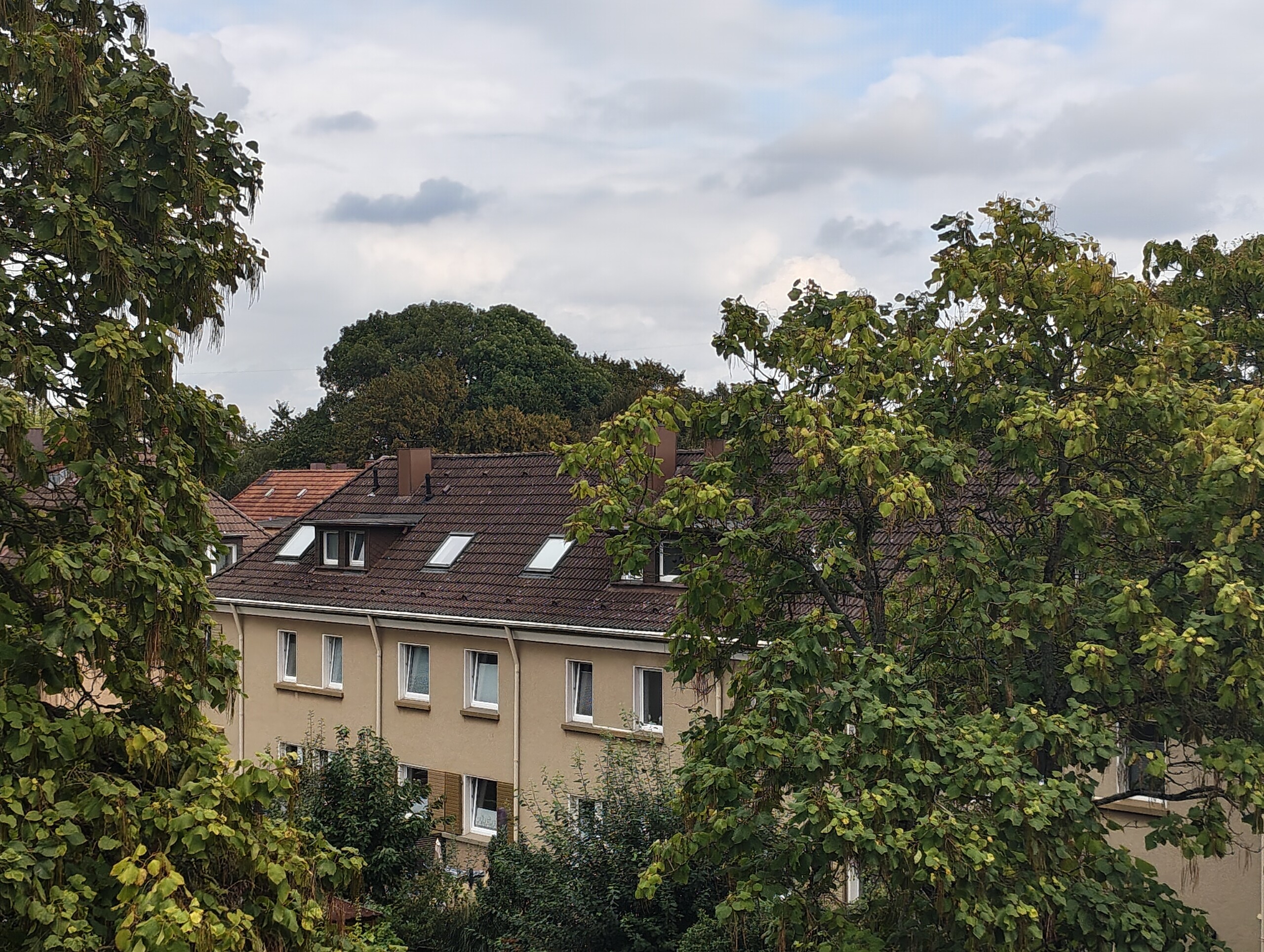
The front camera on the Nothing Phone (4b) takes pretty good photos in our test, as long as there’s enough light.

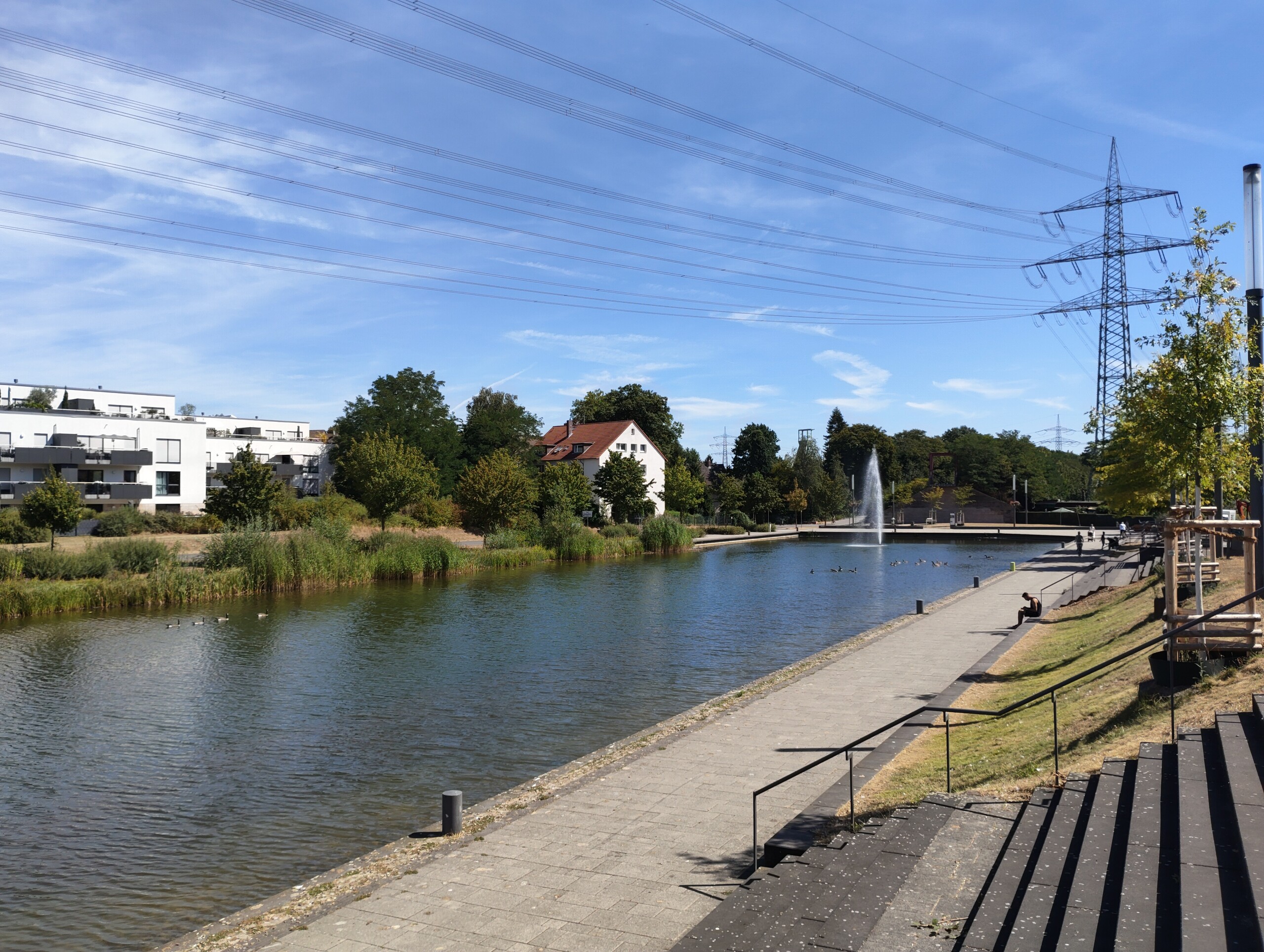
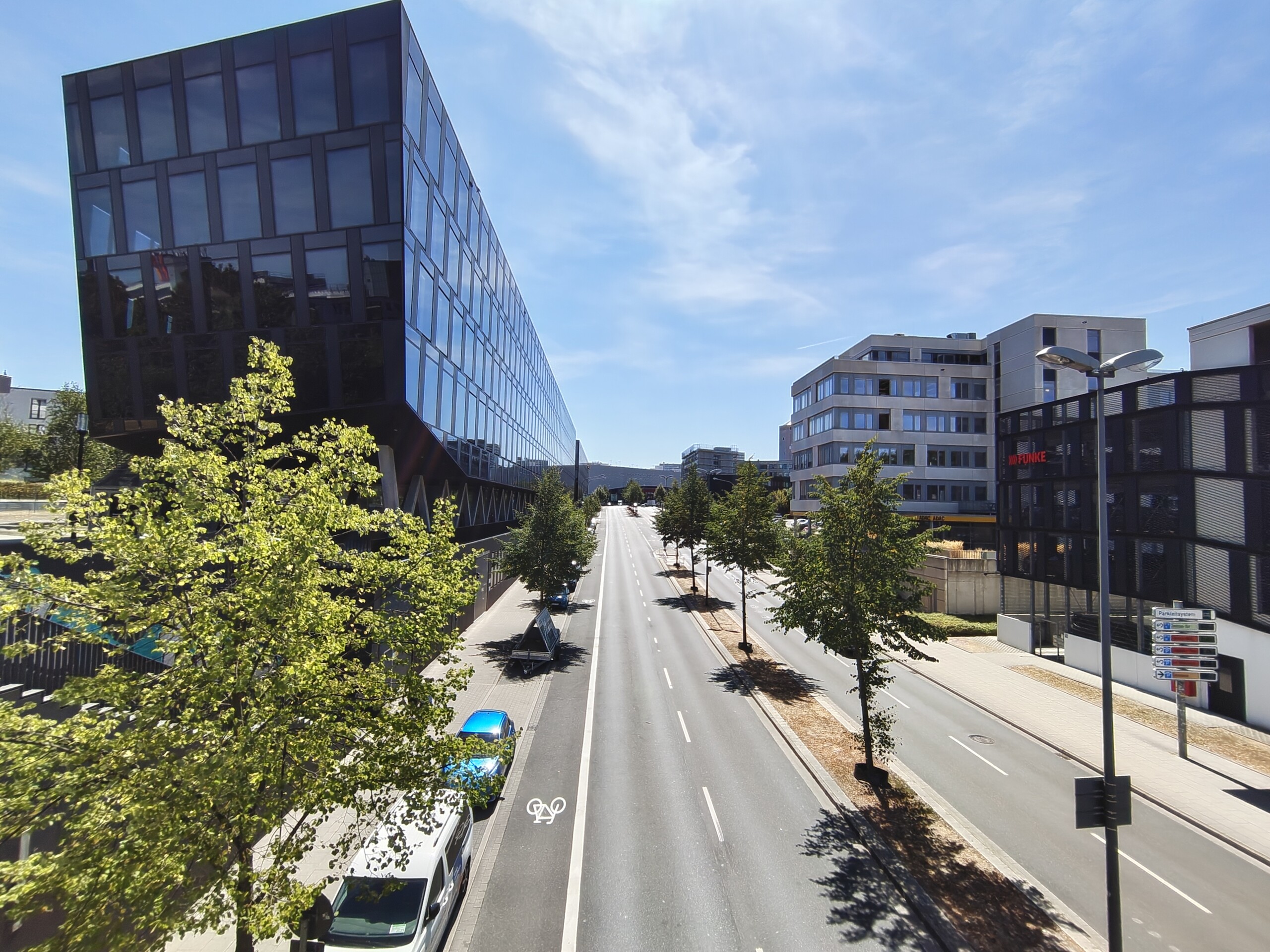
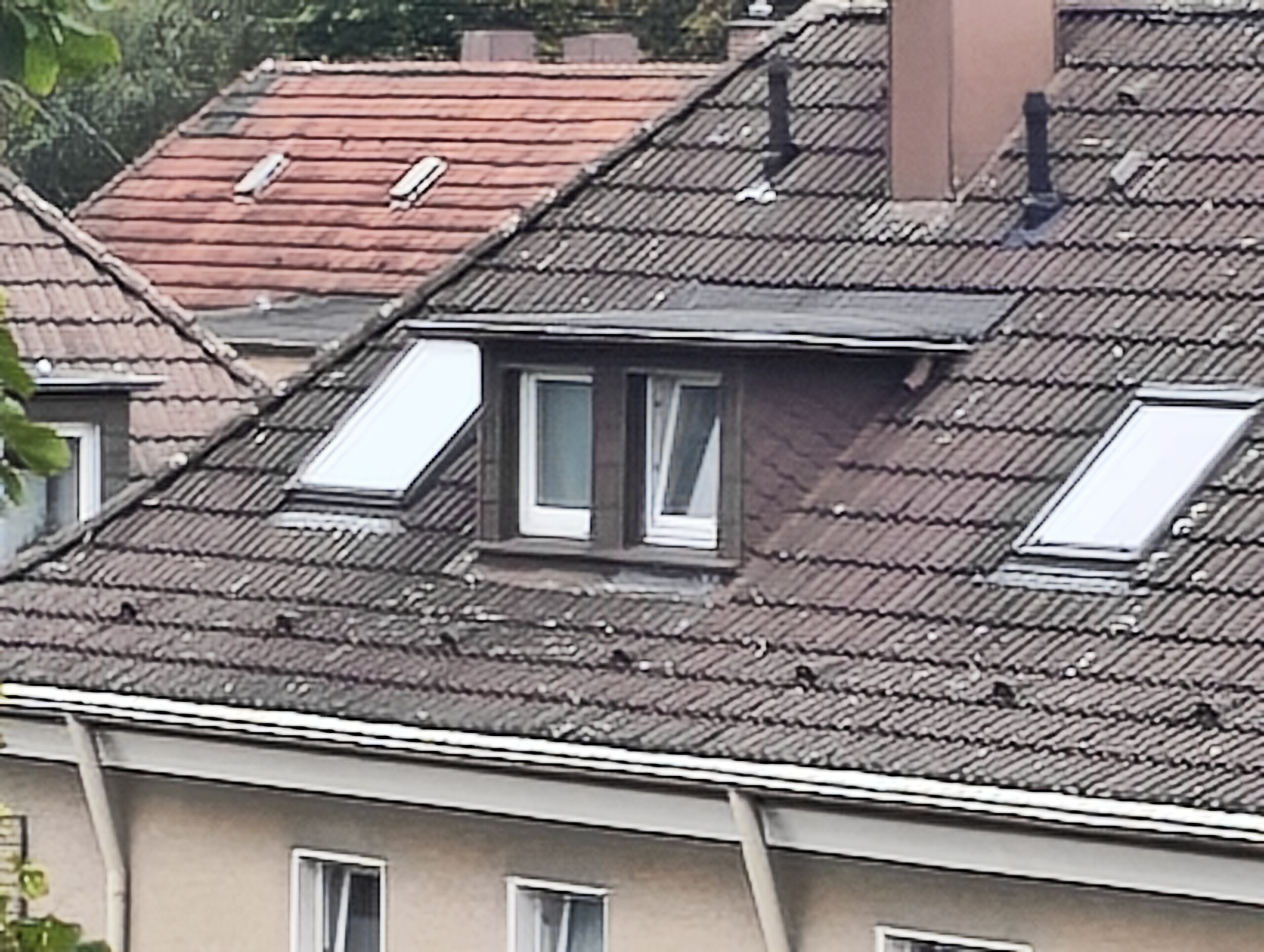
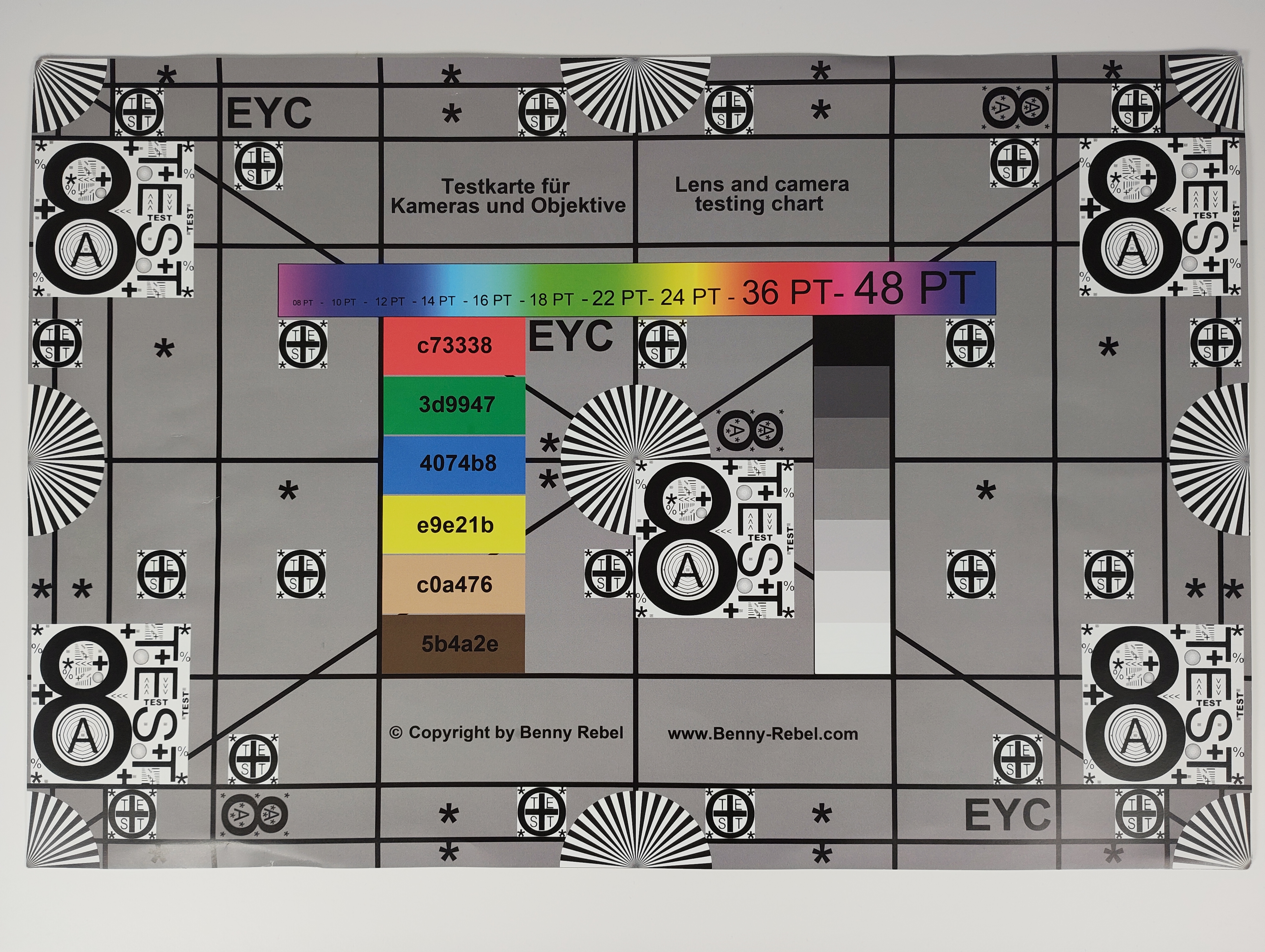
The results from the main rear camera are on par with what’s typical for this class and look very pleasing on the display, though they also tend to appear almost blown out in bright areas. The ultra-wide-angle camera is a nice bonus, but its image quality isn’t particularly impressive. Zooming is exclusively digital, so the quality is correspondingly poor.

Aspect ratio Resolution
Photo 4:3 / 16:9 / 1:1 / Full 12 / 50 MPix
Video (Main camera) 16:9 Full HD (30 / 60 FPS)
Ultra HD (30 FPS)
Video (Front camera) 16:9 Full HD (30 / 60 FPS)

Image comparison

Choose a scene and navigate within the first image. One click changes the position on touchscreens. One click on the zoomed-in image opens the original in a new window. The first image shows the scaled photograph of the test device.


28 mm
28 mm
28 mm
28 mm
16 mm
142 mm
56 mm
280 mm (max.)
Selfie
ColorChecker
15.4 ∆E
10.1 ∆E
16.7 ∆E
19.5 ∆E
17.9 ∆E
10.7 ∆E
8.2 ∆E
17.7 ∆E
11.5 ∆E
8 ∆E
12.1 ∆E
5.9 ∆E
9.8 ∆E
14 ∆E
17.3 ∆E
3.8 ∆E
12.8 ∆E
16.2 ∆E
4.6 ∆E
6.2 ∆E
13.9 ∆E
13.5 ∆E
9 ∆E
1.4 ∆E
ColorChecker Nothing Phone (4b): 11.5 ∆E min: 1.4 - max: 19.49 ∆E
ColorChecker
28.6 ∆E
51.6 ∆E
38.3 ∆E
35.9 ∆E
43.5 ∆E
59.2 ∆E
51.4 ∆E
34.4 ∆E
39.2 ∆E
27 ∆E
61.5 ∆E
61.2 ∆E
29.9 ∆E
45.9 ∆E
33.6 ∆E
72.3 ∆E
39.9 ∆E
40.8 ∆E
82.4 ∆E
68.6 ∆E
50.5 ∆E
36.5 ∆E
23.3 ∆E
13.5 ∆E
ColorChecker Nothing Phone (4b): 44.54 ∆E min: 13.46 - max: 82.38 ∆E

Display - Phone (4b) with up to 2,000 nits

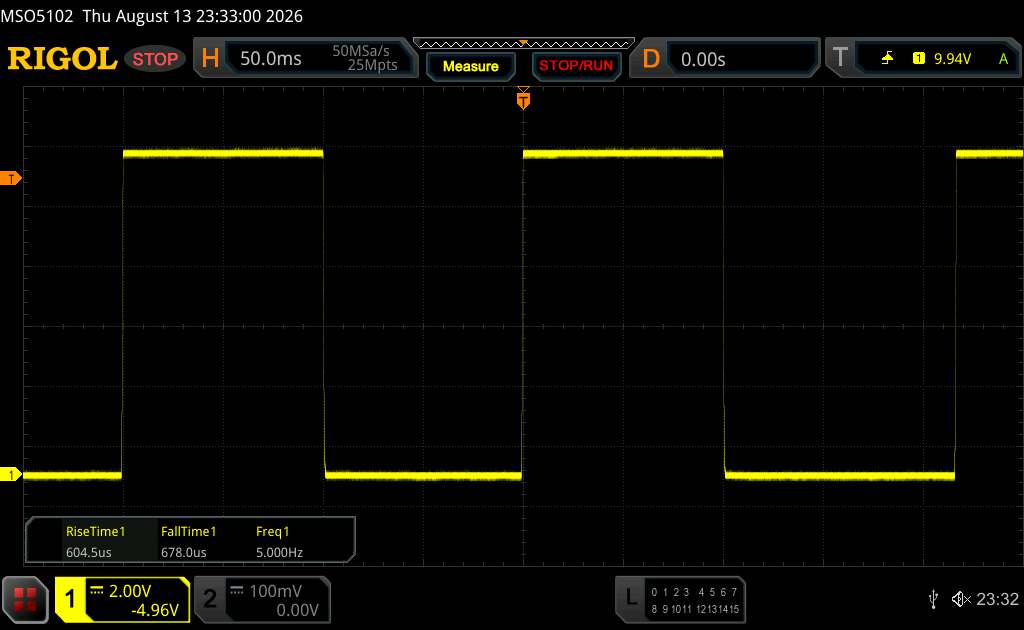
The Nothing Phone (4b)’s large display is supposed to be able to reach a brightness of up to 2,000 cd/m², but in our test, it didn’t achieve that peak brightness. Outdoors on sunny days, this is quite noticeable, as the display can sometimes be difficult to read.

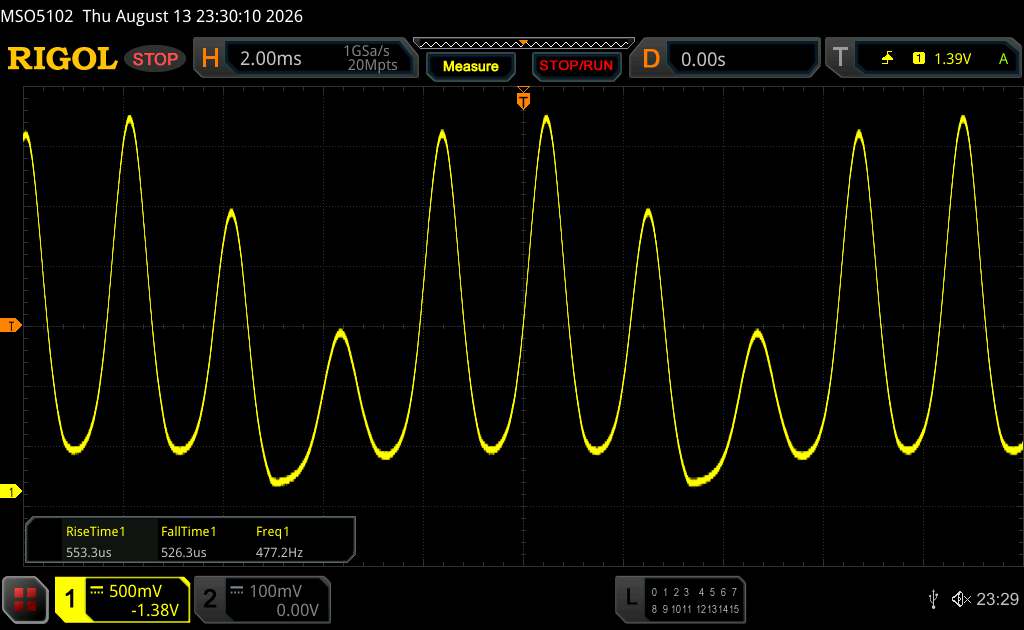
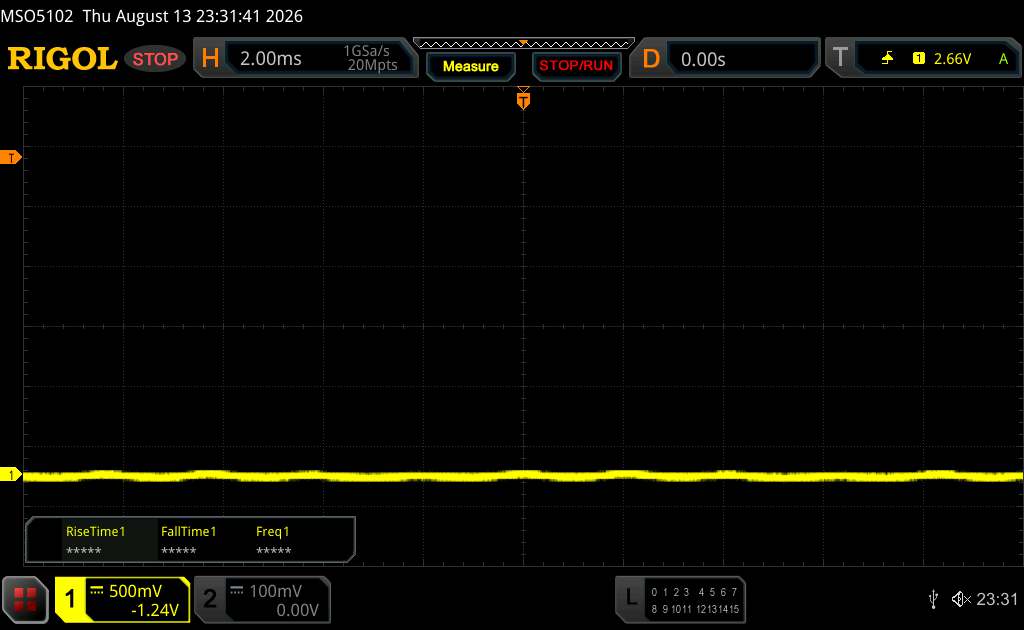
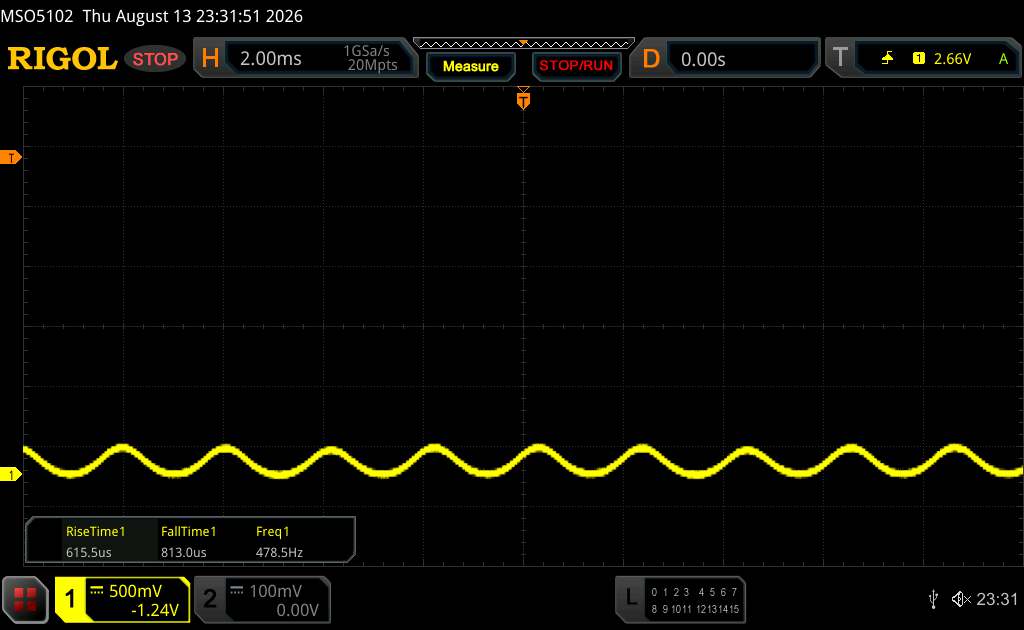
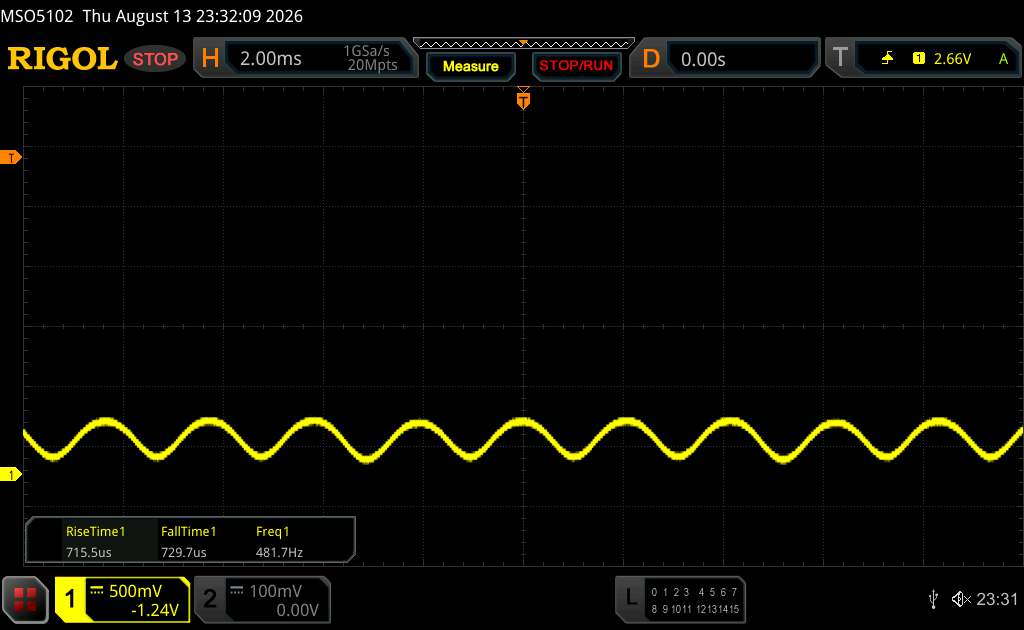
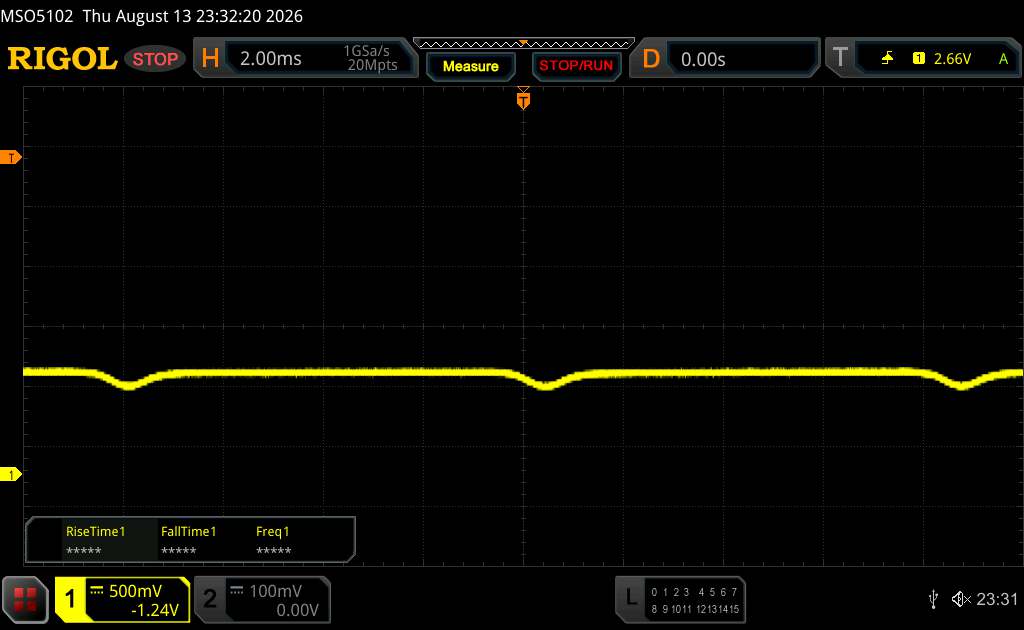
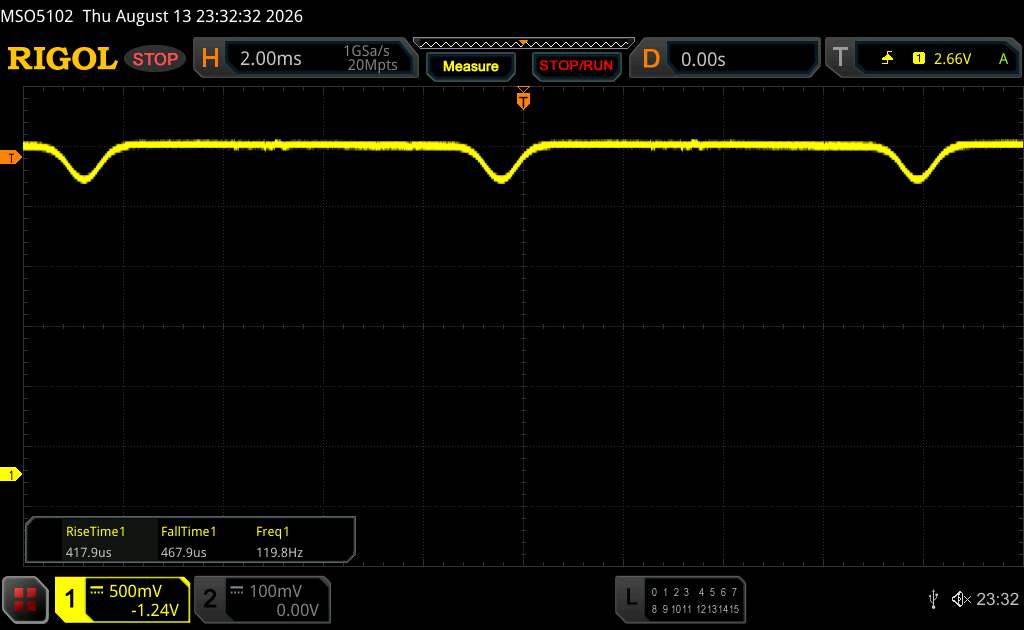
The PWM dimming operates at 480 Hz. While this is generally harmless for most people, it can cause discomfort for those who are sensitive to it.

1148
cd/m²
Distribution of brightness
tested with X-Rite i1Pro 3
Maximum: 1148 cd/m² (Nits) Minimum: 2.35 cd/m²
Center on Battery: 1148 cd/m²
Contrast: ∞:1 (Black: 0 cd/m²)
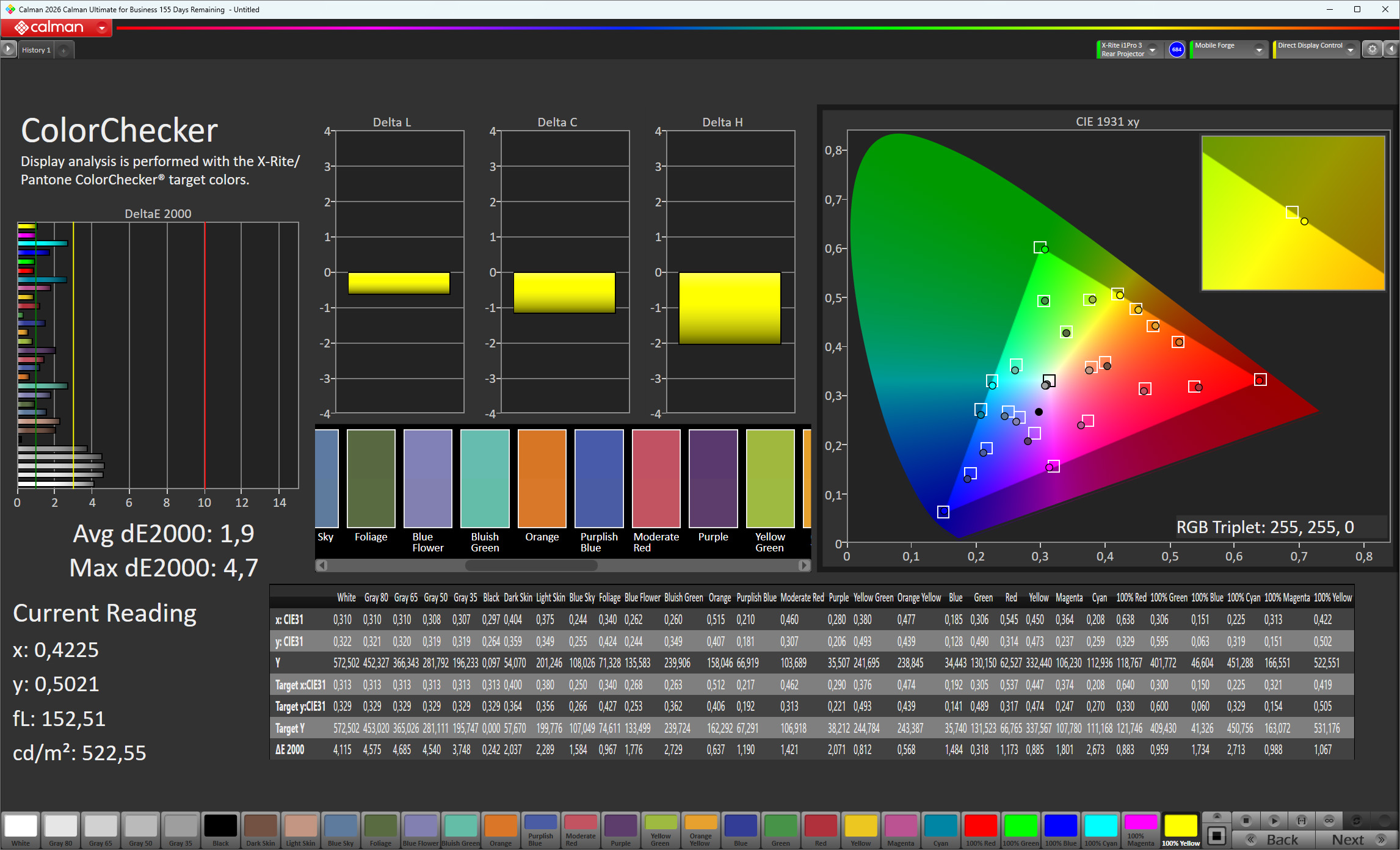
ΔE ColorChecker Calman: 1.9 | ∀{0.5-29.43 Ø4.7}
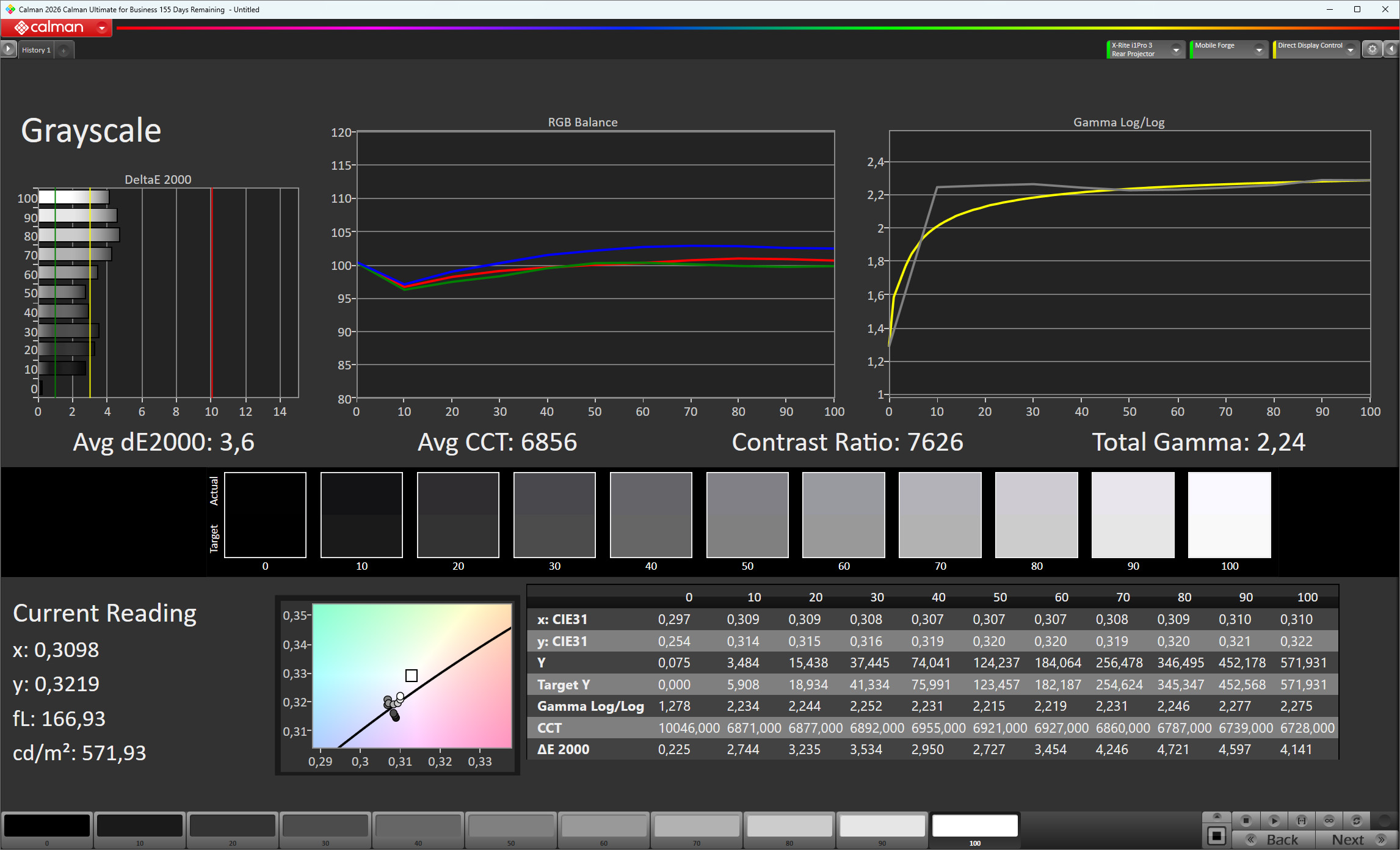
ΔE Greyscale Calman: 3.6 | ∀{0.09-98 Ø4.95}
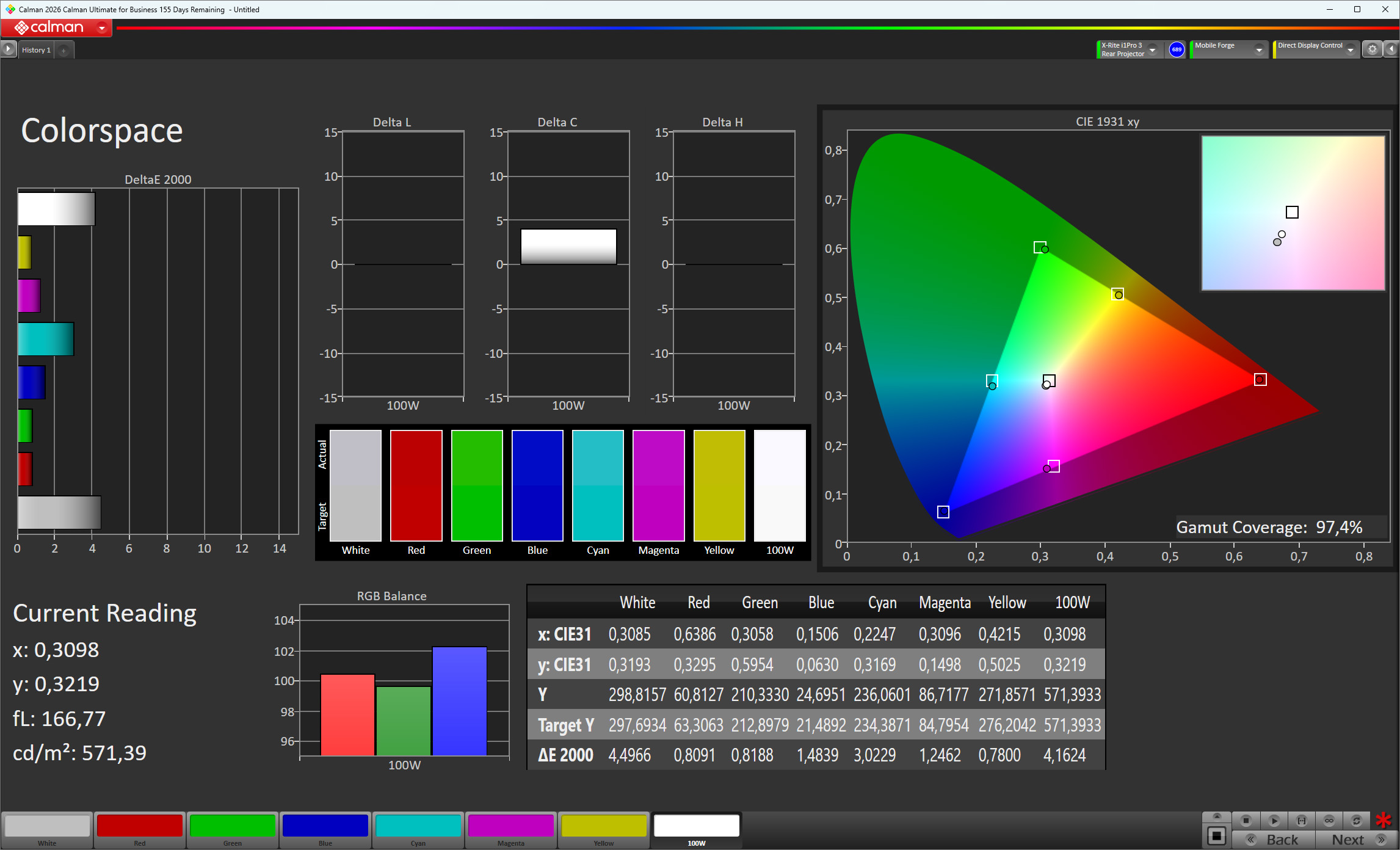
97.4% sRGB (Calman 2D)
Gamma: 2.24
CCT: 6856 K
Nothing Phone (4b)
Super AMOLED, 2344x1080, 6.8"
Samsung Galaxy A37 5G
Super AMOLED, 2340x1080, 6.7"
Motorola Moto G77
AMOLED, 2772x1272, 6.8"
Xiaomi Poco M8 Pro 5G
AMOLED, 2772x1280, 6.8"
Display
65%
232%
174%
APL18 Peak Brightness (cd/m²)
1160
1839
59%
3521
204%
2841
145%
HDR Peak Brightness (cd/m²)
1030
1752
70%
3704
260%
3117
203%
Response Times
-23%
-4%
4%
Response Time Grey 50% / Grey 80% * (ms)
0.95 ?(0.46, 0.491)
1.57 ?(0.7655, 0.8085)
-65%
1.6 ?(0.8, 0.8)
-68%
1.09 ?(0.5235, 0.5645)
-15%
Response Time Black / White * (ms)
1.28 ?(0.6045, 0.678)
1.39 ?(0.7115, 0.6765)
-9%
1.1 ?(0.5, 0.6)
14%
1.13 ?(0.5545, 0.575)
12%
PWM Frequency (Hz)
480
240
103
120
PWM Amplitude * (%)
17.34
16.58
4%
10
42%
14.64
16%
Screen
-14%
49%
44%
Brightness middle (cd/m²)
1148
1127
-2%
1558
36%
1791
56%
Black Level * (cd/m²)
Colorchecker dE 2000 *
1.9
2.6
-37%
0.79
58%
1.5
21%
Colorchecker dE 2000 max. *
4.7
5.3
-13%
2.97
37%
3.4
28%
Greyscale dE 2000 *
3.6
3.7
-3%
1.3
64%
1
72%
Gamma
2.24 98%
2.06 107%
2.24 98%
2.23 99%
CCT
6856 95%
6496 100%
6489 100%
6587 99%
Brightness (cd/m²)
1526
1795
Brightness Distribution (%)
96
99
Total Average (Program / Settings)
9% / 0%
92% / 72%
74% / 60%

* ... smaller is better

Screen Flickering / PWM (Pulse-Width Modulation)

To dim the screen, some notebooks will simply cycle the backlight on and off in rapid succession - a method called Pulse Width Modulation (PWM) . This cycling frequency should ideally be undetectable to the human eye. If said frequency is too low, users with sensitive eyes may experience strain or headaches or even notice the flickering altogether.
Screen flickering / PWM detected 480 Hz
Amplitude: 17.34 %

The display backlight flickers at 480 Hz (worst case, e.g., utilizing PWM) .

The frequency of 480 Hz is relatively high, so most users sensitive to PWM should not notice any flickering. However, there are reports that some users are still sensitive to PWM at 500 Hz and above, so be aware.

In comparison: 52 % of all tested devices do not use PWM to dim the display. If PWM was detected, an average of 7656 (minimum: 5 - maximum: 343500) Hz was measured.

minimum display brightness
min.
25 % display brightness
25 %
50 % display brightness
50 %
75 % display brightness
75 %
maximum manual display brightness
100 %

Measurement series with a fixed zoom level and different brightness settings (Although the amplitude curve at minimum brightness appears flat, this is due to the scaling. The info box shows a magnified version of the amplitude at minimum brightness.) 
Grayscale (Profile: Standard, Target color space: sRGB)
Colors (Profile: Standard, Target color space: sRGB)
Color space (Profile: Standard, Target color space: sRGB)
outdoors
outdoors
Viewing angle stability

Display Response Times

Display response times show how fast the screen is able to change from one color to the next. Slow response times can lead to afterimages and can cause moving objects to appear blurry (ghosting). Gamers of fast-paced 3D titles should pay special attention to fast response times.
       Response Time Black to White
1.28 ms ... rise ↗ and fall ↘ combined↗ 0.6045 ms rise
↘ 0.678 ms fall
The screen shows very fast response rates in our tests and should be very well suited for fast-paced gaming.
In comparison, all tested devices range from 0.1 (minimum) to 240 (maximum) ms. » 7 % of all devices are better.
This means that the measured response time is better than the average of all tested devices (19.7 ms).
       Response Time 50% Grey to 80% Grey
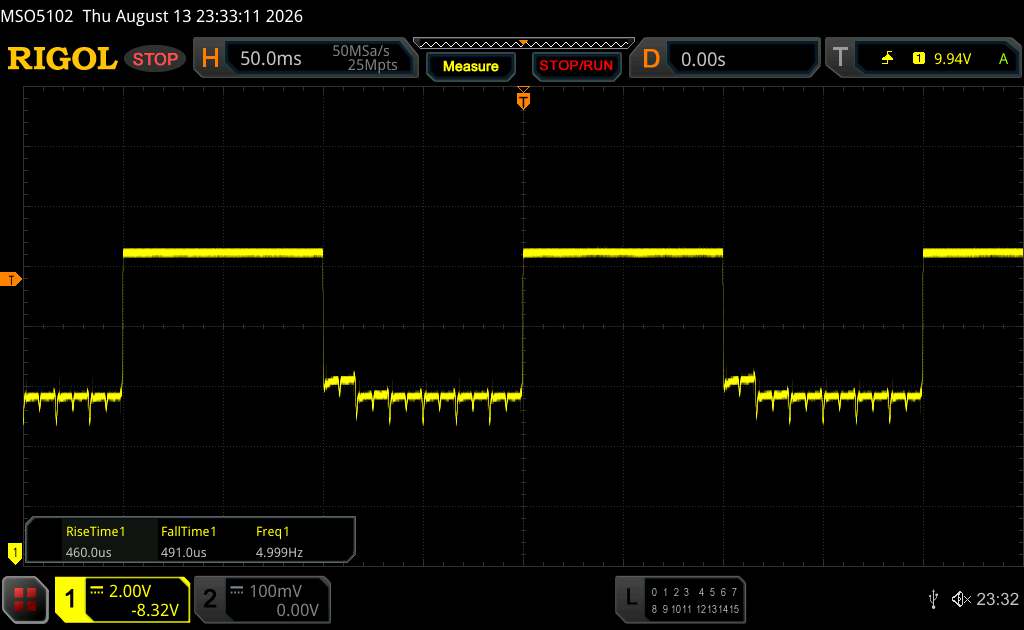
0.95 ms ... rise ↗ and fall ↘ combined↗ 0.46 ms rise
↘ 0.491 ms fall
The screen shows very fast response rates in our tests and should be very well suited for fast-paced gaming.
In comparison, all tested devices range from 0.13 (minimum) to 636 (maximum) ms. » 4 % of all devices are better.
This means that the measured response time is better than the average of all tested devices (30.8 ms).

Performance, emissions, and battery life

Geekbench 7.0
Single-Core
Average of class Smartphone
  (821 - 3156, n=29, last 2 years)
1622 Points +65%
Samsung Galaxy A37 5G
Samsung Exynos 1480, Xclipse 530, 8192
993 Points +1%
Nothing Phone (4b)
Qualcomm Snapdragon 6 Gen 4, Adreno 810, 8192
983 Points
Average Qualcomm Snapdragon 6 Gen 4
  (962 - 983, n=2)
973 Points -1%
Multi-Core
Average of class Smartphone
  (1432 - 10953, n=29, last 2 years)
5738 Points +81%
Samsung Galaxy A37 5G
Samsung Exynos 1480, Xclipse 530, 8192
3466 Points +10%
Nothing Phone (4b)
Qualcomm Snapdragon 6 Gen 4, Adreno 810, 8192
3163 Points
Average Qualcomm Snapdragon 6 Gen 4
  (3006 - 3163, n=2)
3085 Points -2%
3DMark
Wild Life Score
Xiaomi Poco M8 Pro 5G
Qualcomm Snapdragon 7s Gen 4, Adreno 810, 12288
4249 Points +15%
Samsung Galaxy A37 5G
Samsung Exynos 1480, Xclipse 530, 8192
4021 Points +8%
Average Qualcomm Snapdragon 6 Gen 4
  (3710 - 3808, n=2)
3759 Points +1%
Nothing Phone (4b)
Qualcomm Snapdragon 6 Gen 4, Adreno 810, 8192
3710 Points
Average of class Smartphone
  (270 - 7687, n=81, last 2 years)
3054 Points -18%
Motorola Moto G77
Mediatek Dimensity 6400, Mali-G57 MP2, 8192
1357 Points -63%
Wild Life Unlimited Score
Average of class Smartphone
  (271 - 30892, n=172, last 2 years)
12893 Points +242%
Xiaomi Poco M8 Pro 5G
Qualcomm Snapdragon 7s Gen 4, Adreno 810, 12288
4325 Points +15%
Samsung Galaxy A37 5G
Samsung Exynos 1480, Xclipse 530, 8192
4066 Points +8%
Nothing Phone (4b)
Qualcomm Snapdragon 6 Gen 4, Adreno 810, 8192
3770 Points
Average Qualcomm Snapdragon 6 Gen 4
  (3766 - 3770, n=2)
3768 Points 0%
Motorola Moto G77
Mediatek Dimensity 6400, Mali-G57 MP2, 8192
1377 Points -63%
Wild Life Extreme
Average of class Smartphone
  (61 - 8263, n=172, last 2 years)
3377 Points +252%
Xiaomi Poco M8 Pro 5G
Qualcomm Snapdragon 7s Gen 4, Adreno 810, 12288
1107 Points +15%
Samsung Galaxy A37 5G
Samsung Exynos 1480, Xclipse 530, 8192
1015 Points +6%
Average Qualcomm Snapdragon 6 Gen 4
  (960 - 992, n=2)
976 Points +2%
Nothing Phone (4b)
Qualcomm Snapdragon 6 Gen 4, Adreno 810, 8192
960 Points
Motorola Moto G77
Mediatek Dimensity 6400, Mali-G57 MP2, 8192
386 Points -60%
Wild Life Extreme Unlimited
Average of class Smartphone
  (62 - 8271, n=171, last 2 years)
3370 Points +252%
Xiaomi Poco M8 Pro 5G
Qualcomm Snapdragon 7s Gen 4, Adreno 810, 12288
1098 Points +15%
Samsung Galaxy A37 5G
Samsung Exynos 1480, Xclipse 530, 8192
986 Points +3%
Nothing Phone (4b)
Qualcomm Snapdragon 6 Gen 4, Adreno 810, 8192
957 Points
Average Qualcomm Snapdragon 6 Gen 4
  (955 - 957, n=2)
956 Points 0%
Motorola Moto G77
Mediatek Dimensity 6400, Mali-G57 MP2, 8192
382 Points -60%
Steel Nomad Light Score
Average of class Smartphone
  (132 - 3271, n=131, last 2 years)
1524 Points +332%
Samsung Galaxy A37 5G
Samsung Exynos 1480, Xclipse 530, 8192
490 Points +39%
Xiaomi Poco M8 Pro 5G
Qualcomm Snapdragon 7s Gen 4, Adreno 810, 12288
399 Points +13%
Nothing Phone (4b)
Qualcomm Snapdragon 6 Gen 4, Adreno 810, 8192
353 Points
Average Qualcomm Snapdragon 6 Gen 4
  (353 - 353, n=2)
353 Points 0%
Steel Nomad Light Unlimited Score
Average of class Smartphone
  (132 - 3268, n=130, last 2 years)
1512 Points +330%
Samsung Galaxy A37 5G
Samsung Exynos 1480, Xclipse 530, 8192
492 Points +40%
Xiaomi Poco M8 Pro 5G
Qualcomm Snapdragon 7s Gen 4, Adreno 810, 12288
400 Points +14%
Nothing Phone (4b)
Qualcomm Snapdragon 6 Gen 4, Adreno 810, 8192
352 Points
Average Qualcomm Snapdragon 6 Gen 4
  (n=1)
352 Points 0%
GFXBench
on screen Aztec Ruins Normal Tier Onscreen
Average of class Smartphone
  (6.2 - 166, n=183, last 2 years)
62.7 fps +46%
Samsung Galaxy A37 5G
Samsung Exynos 1480, Xclipse 530, 8192
43 fps 0%
Nothing Phone (4b)
Qualcomm Snapdragon 6 Gen 4, Adreno 810, 8192
43 fps
Average Qualcomm Snapdragon 6 Gen 4
  (32 - 43, n=2)
37.5 fps -13%
Xiaomi Poco M8 Pro 5G
Qualcomm Snapdragon 7s Gen 4, Adreno 810, 12288
35 fps -19%
Motorola Moto G77
Mediatek Dimensity 6400, Mali-G57 MP2, 8192
12 fps -72%
1920x1080 Aztec Ruins Normal Tier Offscreen
Average of class Smartphone
  (3.4 - 378, n=182, last 2 years)
132.5 fps +182%
Xiaomi Poco M8 Pro 5G
Qualcomm Snapdragon 7s Gen 4, Adreno 810, 12288
55 fps +17%
Samsung Galaxy A37 5G
Samsung Exynos 1480, Xclipse 530, 8192
51 fps +9%
Nothing Phone (4b)
Qualcomm Snapdragon 6 Gen 4, Adreno 810, 8192
47 fps
Average Qualcomm Snapdragon 6 Gen 4
  (47 - 47, n=2)
47 fps 0%
Motorola Moto G77
Mediatek Dimensity 6400, Mali-G57 MP2, 8192
15 fps -68%
on screen Aztec Ruins High Tier Onscreen
Average of class Smartphone
  (3.7 - 144, n=184, last 2 years)
51.3 fps +97%
Samsung Galaxy A37 5G
Samsung Exynos 1480, Xclipse 530, 8192
29 fps +12%
Nothing Phone (4b)
Qualcomm Snapdragon 6 Gen 4, Adreno 810, 8192
26 fps
Average Qualcomm Snapdragon 6 Gen 4
  (20 - 26, n=2)
23 fps -12%
Xiaomi Poco M8 Pro 5G
Qualcomm Snapdragon 7s Gen 4, Adreno 810, 12288
22 fps -15%
Motorola Moto G77
Mediatek Dimensity 6400, Mali-G57 MP2, 8192
8.6 fps -67%
2560x1440 Aztec Ruins High Tier Offscreen
Average of class Smartphone
  (1.2 - 151, n=182, last 2 years)
51.8 fps +188%
Xiaomi Poco M8 Pro 5G
Qualcomm Snapdragon 7s Gen 4, Adreno 810, 12288
21 fps +17%
Samsung Galaxy A37 5G
Samsung Exynos 1480, Xclipse 530, 8192
20 fps +11%
Nothing Phone (4b)
Qualcomm Snapdragon 6 Gen 4, Adreno 810, 8192
18 fps
Average Qualcomm Snapdragon 6 Gen 4
  (18 - 18, n=2)
18 fps 0%
Motorola Moto G77
Mediatek Dimensity 6400, Mali-G57 MP2, 8192
5.9 fps -67%
3840x2160 4K Aztec Ruins High Tier Offscreen
Average of class Smartphone
  (0.54 - 63, n=182, last 2 years)
23.8 fps +205%
Xiaomi Poco M8 Pro 5G
Qualcomm Snapdragon 7s Gen 4, Adreno 810, 12288
9.3 fps +19%
Samsung Galaxy A37 5G
Samsung Exynos 1480, Xclipse 530, 8192
8.7 fps +12%
Nothing Phone (4b)
Qualcomm Snapdragon 6 Gen 4, Adreno 810, 8192
7.8 fps
Average Qualcomm Snapdragon 6 Gen 4
  (7.8 - 7.8, n=2)
7.8 fps 0%
Motorola Moto G77
Mediatek Dimensity 6400, Mali-G57 MP2, 8192
2.5 fps -68%
Geekbench AI
Single Precision NPU 1.7
Average of class Smartphone
  (80 - 4471, n=126, last 2 years)
512 Points +136%
Xiaomi Poco M8 Pro 5G
Qualcomm Snapdragon 7s Gen 4, Adreno 810, 12288
244 Points +12%
Motorola Moto G77
Mediatek Dimensity 6400, Mali-G57 MP2, 8192
230 Points +6%
Nothing Phone (4b)
Qualcomm Snapdragon 6 Gen 4, Adreno 810, 8192
217 Points
Average Qualcomm Snapdragon 6 Gen 4
  (216 - 217, n=2)
217 Points 0%
Samsung Galaxy A37 5G
Samsung Exynos 1480, Xclipse 530, 8192
121 Points -44%
Half Precision NPU 1.7
Average of class Smartphone
  (80 - 35139, n=126, last 2 years)
1435 Points +558%
Motorola Moto G77
Mediatek Dimensity 6400, Mali-G57 MP2, 8192
330 Points +51%
Xiaomi Poco M8 Pro 5G
Qualcomm Snapdragon 7s Gen 4, Adreno 810, 12288
245 Points +12%
Nothing Phone (4b)
Qualcomm Snapdragon 6 Gen 4, Adreno 810, 8192
218 Points
Average Qualcomm Snapdragon 6 Gen 4
  (217 - 218, n=2)
218 Points 0%
Samsung Galaxy A37 5G
Samsung Exynos 1480, Xclipse 530, 8192
124 Points -43%
Quantized NPU 1.7
Average of class Smartphone
  (124 - 48271, n=126, last 2 years)
2300 Points +360%
Xiaomi Poco M8 Pro 5G
Qualcomm Snapdragon 7s Gen 4, Adreno 810, 12288
571 Points +14%
Average Qualcomm Snapdragon 6 Gen 4
  (500 - 502, n=2)
501 Points 0%
Nothing Phone (4b)
Qualcomm Snapdragon 6 Gen 4, Adreno 810, 8192
500 Points
Samsung Galaxy A37 5G
Samsung Exynos 1480, Xclipse 530, 8192
449 Points -10%
Motorola Moto G77
Mediatek Dimensity 6400, Mali-G57 MP2, 8192
203 Points -59%
CrossMark
Overall
Average of class Smartphone
  (376 - 2856, n=111, last 2 years)
1280 Points
Samsung Galaxy A37 5G
Samsung Exynos 1480, Xclipse 530, 8192
786 Points
Average Qualcomm Snapdragon 6 Gen 4
  (n=1)
746 Points
Motorola Moto G77
Mediatek Dimensity 6400, Mali-G57 MP2, 8192
502 Points
Xiaomi Poco M8 Pro 5G
Qualcomm Snapdragon 7s Gen 4, Adreno 810, 12288
Points
Nothing Phone (4b)
Qualcomm Snapdragon 6 Gen 4, Adreno 810, 8192
Points
Productivity
Average of class Smartphone
  (388 - 2366, n=111, last 2 years)
1149 Points
Samsung Galaxy A37 5G
Samsung Exynos 1480, Xclipse 530, 8192
855 Points
Average Qualcomm Snapdragon 6 Gen 4
  (n=1)
800 Points
Motorola Moto G77
Mediatek Dimensity 6400, Mali-G57 MP2, 8192
583 Points
Xiaomi Poco M8 Pro 5G
Qualcomm Snapdragon 7s Gen 4, Adreno 810, 12288
Points
Creativity
Average of class Smartphone
  (310 - 2123, n=111, last 2 years)
1041 Points
Samsung Galaxy A37 5G
Samsung Exynos 1480, Xclipse 530, 8192
704 Points
Average Qualcomm Snapdragon 6 Gen 4
  (n=1)
648 Points
Motorola Moto G77
Mediatek Dimensity 6400, Mali-G57 MP2, 8192
444 Points
Xiaomi Poco M8 Pro 5G
Qualcomm Snapdragon 7s Gen 4, Adreno 810, 12288
Points
Responsiveness
Average of class Smartphone
  (466 - 13407, n=111, last 2 years)
4122 Points
Average Qualcomm Snapdragon 6 Gen 4
  (n=1)
922 Points
Samsung Galaxy A37 5G
Samsung Exynos 1480, Xclipse 530, 8192
853 Points
Motorola Moto G77
Mediatek Dimensity 6400, Mali-G57 MP2, 8192
466 Points
Xiaomi Poco M8 Pro 5G
Qualcomm Snapdragon 7s Gen 4, Adreno 810, 12288
Points
Jetstream 2
2.0 Total
Xiaomi Poco M8 Pro 5G
Qualcomm Snapdragon 7s Gen 4, Adreno 810, 12288
180.24 Points +22%
Average of class Smartphone
  (63.9 - 423, n=113, last 2 years)
160.5 Points +9%
Nothing Phone (4b)
Qualcomm Snapdragon 6 Gen 4, Adreno 810, 8192
147.238 Points
Average Qualcomm Snapdragon 6 Gen 4
  (129.9 - 147.2, n=2)
138.6 Points -6%
Motorola Moto G77
Mediatek Dimensity 6400, Mali-G57 MP2, 8192
98.2 Points -33%
2.2 Total
Average of class Smartphone
  (2 - 480, n=97, last 2 years)
209 Points +23%
Xiaomi Poco M8 Pro 5G
Qualcomm Snapdragon 7s Gen 4, Adreno 810, 12288
187.232 Points +10%
Samsung Galaxy A37 5G
Samsung Exynos 1480, Xclipse 530, 8192
179.438 Points +5%
Nothing Phone (4b)
Qualcomm Snapdragon 6 Gen 4, Adreno 810, 8192
170.221 Points
Average Qualcomm Snapdragon 6 Gen 4
  (n=1)
170.2 Points 0%
Nothing Phone (4b)Samsung Galaxy A37 5GMotorola Moto G77Xiaomi Poco M8 Pro 5GAverage 128 GB UFS 2.2 FlashAverage of class Smartphone
AndroBench 3-5
49%
-33%
-11%
-30%
79%
Sequential Read 256KB (MB/s)
952.54
1986.3
109%
522.1
-45%
1009.1
6%
Sequential Write 256KB (MB/s)
860.56
1732.34
101%
494.6
-43%
993.91
15%
Random Read 4KB (MB/s)
253.22
368.9
46%
217.2
-14%
183.57
-28%
195.6 ?(89.3 - 297, n=83)
-23%
Random Write 4KB (MB/s)
293.92
115.25
-61%
206.2
-30%
187.74
-36%
189.3 ?(62.5 - 419, n=83)
-36%
Max. Load
49 °C
120 F
49.2 °C
121 F
45.5 °C
114 F
49.4 °C
121 F
49.1 °C
120 F
43.9 °C
111 F
48.5 °C
119 F
48.6 °C
119 F
43 °C
109 F
Maximum: 49.4 °C = 121 F
Average: 47.4 °C = 117 F
44 °C
111 F
46.8 °C
116 F
46.9 °C
116 F
42.6 °C
109 F
46.1 °C
115 F
46.8 °C
116 F
41.1 °C
106 F
43.7 °C
111 F
46.2 °C
115 F
Maximum: 46.9 °C = 116 F
Average: 44.9 °C = 113 F
Room Temperature 22 °C = 72 F | Fluke t3000FC (calibrated) & Voltcraft IR-260
(-) The average temperature for the upper side under maximal load is 47.4 °C / 117 F, compared to the average of 33 °C / 91 F for the devices in the class Smartphone.
(-) The maximum temperature on the upper side is 49.4 °C / 121 F, compared to the average of 35.3 °C / 96 F, ranging from 21.9 to 247 °C for the class Smartphone.
(-) The bottom heats up to a maximum of 46.9 °C / 116 F, compared to the average of 34.1 °C / 93 F

3DMark Stress Tests

3DMark
Wild Life Stress Test Stability
Nothing Phone (4b)
Adreno 810, SD 6 Gen 4, 128 GB UFS 2.2 Flash
99.8 %
Samsung Galaxy A37 5G
Xclipse 530, Exynos 1480, 256 GB UFS 3.1 Flash
99.6 % 0%
Motorola Moto G77
Mali-G57 MP2, Dimensity 6400, 256 GB UFS 2.1 Flash
99.5 % 0%
Xiaomi Poco M8 Pro 5G
Adreno 810, SD 7s Gen 4, 512 GB UFS 2.2 Flash
99.1 % -1%
Wild Life Extreme Stress Test
Xiaomi Poco M8 Pro 5G
Adreno 810, SD 7s Gen 4, 512 GB UFS 2.2 Flash
99.6 %
Samsung Galaxy A37 5G
Xclipse 530, Exynos 1480, 256 GB UFS 3.1 Flash
99.2 %
Motorola Moto G77
Mali-G57 MP2, Dimensity 6400, 256 GB UFS 2.1 Flash
98.7 %
Steel Nomad Light Stress Test Stability
Samsung Galaxy A37 5G
Xclipse 530, Exynos 1480, 256 GB UFS 3.1 Flash
98.9 % 0%
Xiaomi Poco M8 Pro 5G
Adreno 810, SD 7s Gen 4, 512 GB UFS 2.2 Flash
98.8 % 0%
Nothing Phone (4b)
Adreno 810, SD 6 Gen 4, 128 GB UFS 2.2 Flash
98.7 %
05101520Tooltip
Samsung Galaxy A37 5G Xclipse 530, Exynos 1480, 256 GB UFS 3.1 Flash; Wild Life Extreme Stress Test; 1.1.14.3: Ø5.75 (5.73-5.78) %
Nothing Phone (4b) Adreno 810, SD 6 Gen 4, 128 GB UFS 2.2 Flash; Wild Life Stress Test Stability: Ø22.3 (22.2-22.3) %
Samsung Galaxy A37 5G Xclipse 530, Exynos 1480, 256 GB UFS 3.1 Flash; Wild Life Stress Test Stability: Ø23.6 (23.5-23.6) %
Nothing Phone (4b) Adreno 810, SD 6 Gen 4, 128 GB UFS 2.2 Flash; Steel Nomad Light Stress Test Stability; 1.0.6.2: Ø2.6 (2.58-2.62) %
Samsung Galaxy A37 5G Xclipse 530, Exynos 1480, 256 GB UFS 3.1 Flash; Steel Nomad Light Stress Test Stability; 1.0.6.2: Ø3.59 (3.57-3.6) %
dB(A) 0102030405060708090Deep BassMiddle BassHigh BassLower RangeMidsHigher MidsLower HighsMid HighsUpper HighsSuper Highs2028.531.22525.128.23120.926.84031.837.9503740.76321.729.48019.332.910017.634.912514.735.216015.448.320015.951.425015.258.431514.561.140011.658.75001160.863011.86880011.172.9100011.972.8125011.377.7160012.280.8200011.482.3250011.980.131501379.3400013.480.6500013.478.9630013.375.1800013.467.31000013.869.81250013.3651600013.754.7SPL24.890.3N0.677.5median 13.3median 69.8Delta1.410.721.233.420.434.124.929.234.732.936.339.720.13514.134.414.5361643.616.751.415.65214.756.812.560.69.258.59.963.410.467.81373.612.374.210.577.611.378.911.88012.381.713.379.813.581.412.981.613.378.313.175.313.374.813.561.313.253.324.690.80.682.4median 13.1median 74.21.210.8hearing rangehide median Pink NoiseNothing Phone (4b)Samsung Galaxy A37 5G
Frequency diagram (checkboxes can be checked and unchecked to compare devices)
Nothing Phone (4b) audio analysis

(+) | speakers can play relatively loud (90.3 dB)
Bass 100 - 315 Hz
(-) | nearly no bass - on average 21.6% lower than median
(±) | linearity of bass is average (8.3% delta to prev. frequency)
Mids 400 - 2000 Hz
(±) | higher mids - on average 7.4% higher than median
(+) | mids are linear (5.8% delta to prev. frequency)
Highs 2 - 16 kHz
(±) | higher highs - on average 6.8% higher than median
(+) | highs are linear (5.1% delta to prev. frequency)
Overall 100 - 16.000 Hz
(±) | linearity of overall sound is average (20.1% difference to median)
Compared to same class
» 34% of all tested devices in this class were better, 9% similar, 58% worse
» The best had a delta of 11%, average was 34%, worst was 136%
Compared to all devices tested
» 52% of all tested devices were better, 8% similar, 40% worse
» The best had a delta of 4%, average was 23%, worst was 136%

Samsung Galaxy A37 5G audio analysis

(+) | speakers can play relatively loud (90.8 dB)
Bass 100 - 315 Hz
(-) | nearly no bass - on average 24.1% lower than median
(±) | linearity of bass is average (7.1% delta to prev. frequency)
Mids 400 - 2000 Hz
(±) | reduced mids - on average 5.9% lower than median
(+) | mids are linear (4.8% delta to prev. frequency)
Highs 2 - 16 kHz
(+) | balanced highs - only 4.8% away from median
(+) | highs are linear (2.8% delta to prev. frequency)
Overall 100 - 16.000 Hz
(±) | linearity of overall sound is average (18.6% difference to median)
Compared to same class
» 22% of all tested devices in this class were better, 9% similar, 69% worse
» The best had a delta of 11%, average was 34%, worst was 136%
Compared to all devices tested
» 42% of all tested devices were better, 8% similar, 50% worse
» The best had a delta of 4%, average was 23%, worst was 136%

Power Consumption
Off / Standbydarklight 0.11 / 0.3 Watt
Idledarkmidlight 1.01 / 2 / 2.09 Watt
 color bar
Key: min: dark, med: mid, max: light        Metrahit Energy
Nothing Phone (4b)
5200 mAh
Samsung Galaxy A37 5G
5000 mAh
Xiaomi Poco M8 Pro 5G
6500 mAh
Average Qualcomm Snapdragon 6 Gen 4
 
Average of class Smartphone
 
Power Consumption
10%
21%
-17%
20%
Idle Minimum * (Watt)
1.01
0.85
16%
1.11
-10%
1.185 ?(1.01 - 1.36, n=2)
-17%
Idle Average * (Watt)
2
1.86
7%
1.23
38%
2.34 ?(2 - 2.68, n=2)
-17%
Idle Maximum * (Watt)
2.09
1.94
7%
1.34
36%
2.43 ?(2.09 - 2.76, n=2)
-16%
Load Average * (Watt)
3.8
Load Maximum * (Watt)
7.79

* ... smaller is better

Battery Runtime
WiFi Websurfing (Chrome 153)
21h 58min
Battery runtime - WiFi v1.3
Nothing Phone (4b)
5200 mAh
22 h
Samsung Galaxy A37 5G
5000 mAh
18.6 h
Motorola Moto G77
5200 mAh
20 h
Xiaomi Poco M8 Pro 5G
6500 mAh
23.5 h

Notebookcheck Overall Rating

The Nothing Phone (4b) impresses with its design and exceptional battery life, but falls short in terms of the display, cameras, features, and price, especially given the strong competition from its own Phone (4a).
Review: Nothing Phone (4b). Review unit provided by Nothing Germany.
ⓘ Daniel Schmidt
Review: Nothing Phone (4b). Review unit provided by Nothing Germany.

Nothing Phone (4b) - 09/15/2026 v8
Daniel Schmidt

Chassis
85%
Keyboard
67 / 75 → 89%
Pointing Device
89%
Connectivity
45 / 69 → 65%
Weight
88%
Battery
93%
Display
89%
Games Performance
16 / 55 → 29%
Application Performance
67 / 85 → 79%
AI Performance
15%
Temperature
82%
Noise
100%
Audio
73 / 90 → 81%
Camera
63%
Average
70%
77%
Smartphone - Weighted Average
CO2 Emissions
88.8%
Materials
25%
Packaging
95%
Power Use
93.1%
Repairability
40%
Software Updates
83.3%
Recycle Logo Total Sustainability Score: 70.9%

A comparison of possible alternatives

Image
Model / Review
Price
Weight
Drive
Display
1.
76.5%
Nothing Phone (4b)
Nothing Phone (4b)
Qualcomm Snapdragon 6 Gen 4 ⎘
Qualcomm Adreno 810 ⎘
8 GB Memory, 128 GB UFS 2.2
List Price: 329€210 g128 GB UFS 2.2 Flash6.77"
2344x1080
381 PPI
Super AMOLED
2.
79%
Samsung Galaxy A37 5G
Samsung Exynos 1480 ⎘
Samsung Xclipse 530 ⎘
8 GB Memory, 256 GB UFS 3.1
List Price: 519€196 g256 GB UFS 3.1 Flash6.70"
2340x1080
385 PPI
Super AMOLED
3.
76.7%
Motorola Moto G77
Motorola Moto G77
Mediatek Dimensity 6400 ⎘
ARM Mali-G57 MP2 ⎘
8 GB Memory, 256 GB UFS 2.1
List Price: 300€182 g256 GB UFS 2.1 Flash6.78"
2772x1272
450 PPI
AMOLED
4.
79.1%
Xiaomi Poco M8 Pro 5G
Qualcomm Snapdragon 7s Gen 4 ⎘
Qualcomm Adreno 810 ⎘
12 GB Memory, 512 GB UFS 2.2
Amazon: $316.90
List Price: 400 Euro
206 g512 GB UFS 2.2 Flash6.83"
2772x1280
447 PPI
AMOLED

Transparency

The selection of devices to be reviewed is made by our editorial team. The test sample was given to the author by the manufacturer free of charge for the purposes of review. There was no third-party influence on this review, nor did the manufacturer receive a copy of this review before publication. There was no obligation to publish this review. As an independent media company, Notebookcheck is not subjected to the authority of manufacturers, retailers or publishers.

This is how Notebookcheck is testing

Every year, Notebookcheck independently reviews hundreds of laptops and smartphones using standardized procedures to ensure that all results are comparable. We have continuously developed our test methods for around 20 years and set industry standards in the process. In our test labs, high-quality measuring equipment is utilized by experienced technicians and editors. These tests involve a multi-stage validation process. Our complex rating system is based on hundreds of well-founded measurements and benchmarks, which maintains objectivity. Further information on our test methods can be found here.

Google LogoAdd as a preferred source on Google
Mail Logo
static version load dynamic
Loading Comments
> Expert reviews and news on laptops, smartphones and tech innovations > Reviews > Nice, affordable, but holding back - Nothing Phone (4b) review
Daniel Schmidt, 2026-09-15 (Update: 2026-09-15)