




NASA’s PUNCH tracks comet for what might be the longest high-frequency tracking of a comet ever
PUNCH is a NASA mission that consists of a constellation of four small satellites. The mission is designed to observe the entire heliosphere to understand how the Sun’s corona (or outer atmosphere) becomes the solar wind. This provides a better understanding of solar wind and how it affects the solar system, including comets.
One comet that PUNCH recently imaged to achieve its aim is Comet 2025 R2 (SWAN). SWAN was first discovered by Ukrainian amateur astronomer Vladimir Bezugly on September 11. He spotted it in images taken by the SWAN (Solar Wind Anisotropies) instrument aboard the SOHO (Solar and Heliospheric Observatory) spacecraft.
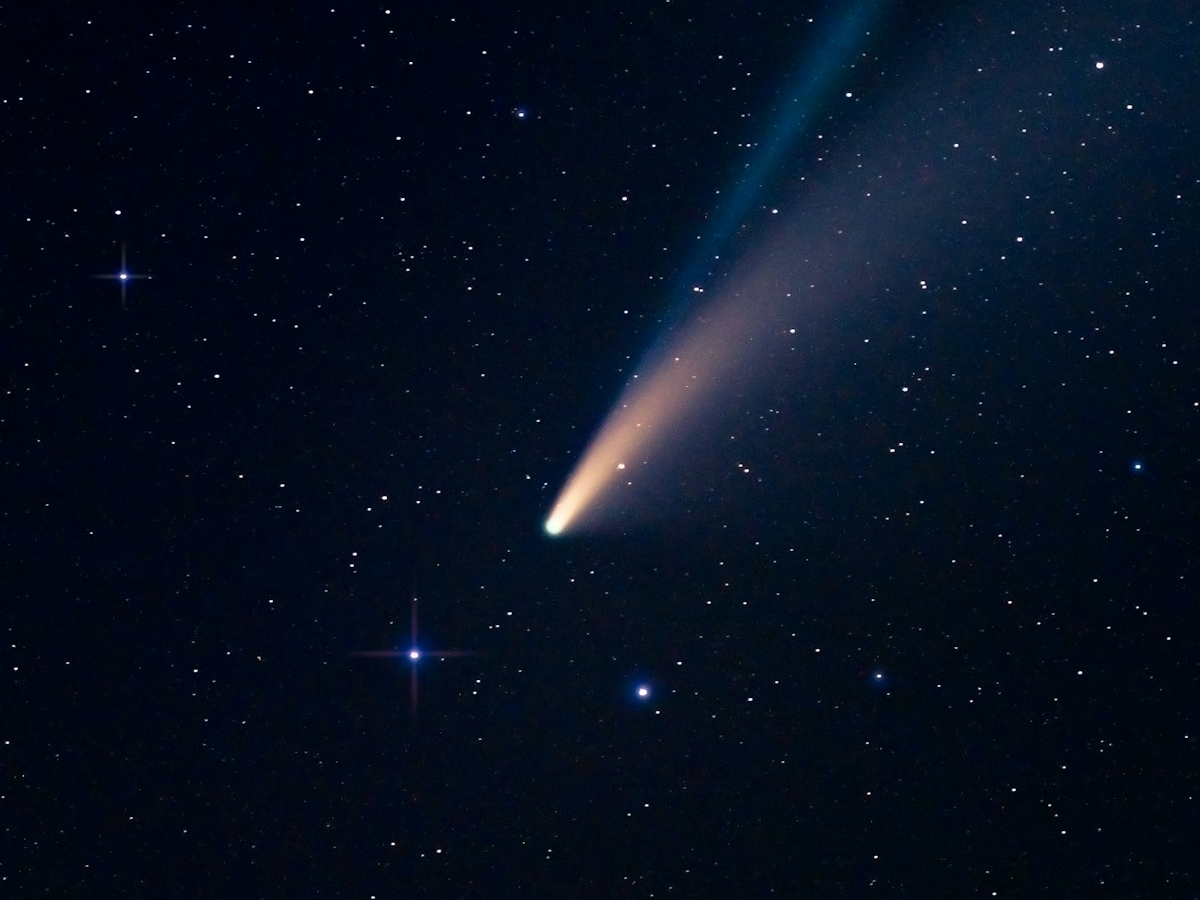
When scientists checked PUNCH for images of this same comet (SWAN), they found it. PUNCH had captured SWAN from as early as August 7. But it is not the capturing of SWAN that makes PUNCH’s observation special. It is the fact that PUNCH captured SWAN every four minutes from August 7 to October 5 — what could possibly be the longest sustained tracking of a comet at such a high observation rate.
From PUNCH’s observation, scientists were able to create a processed movie to show how SWAN moved across the sky. The observation reveals how the comet’s tail reacts to solar wind — growing, shrinking, and flickering. This could tell scientists more about solar wind and how it behaves and affects the space environment.
Source(s)
Image source: Justin Wolff on Unsplash
 Add as a preferred source on Google


