




NASA relies on Microsoft hardware – and battles Outlook in space
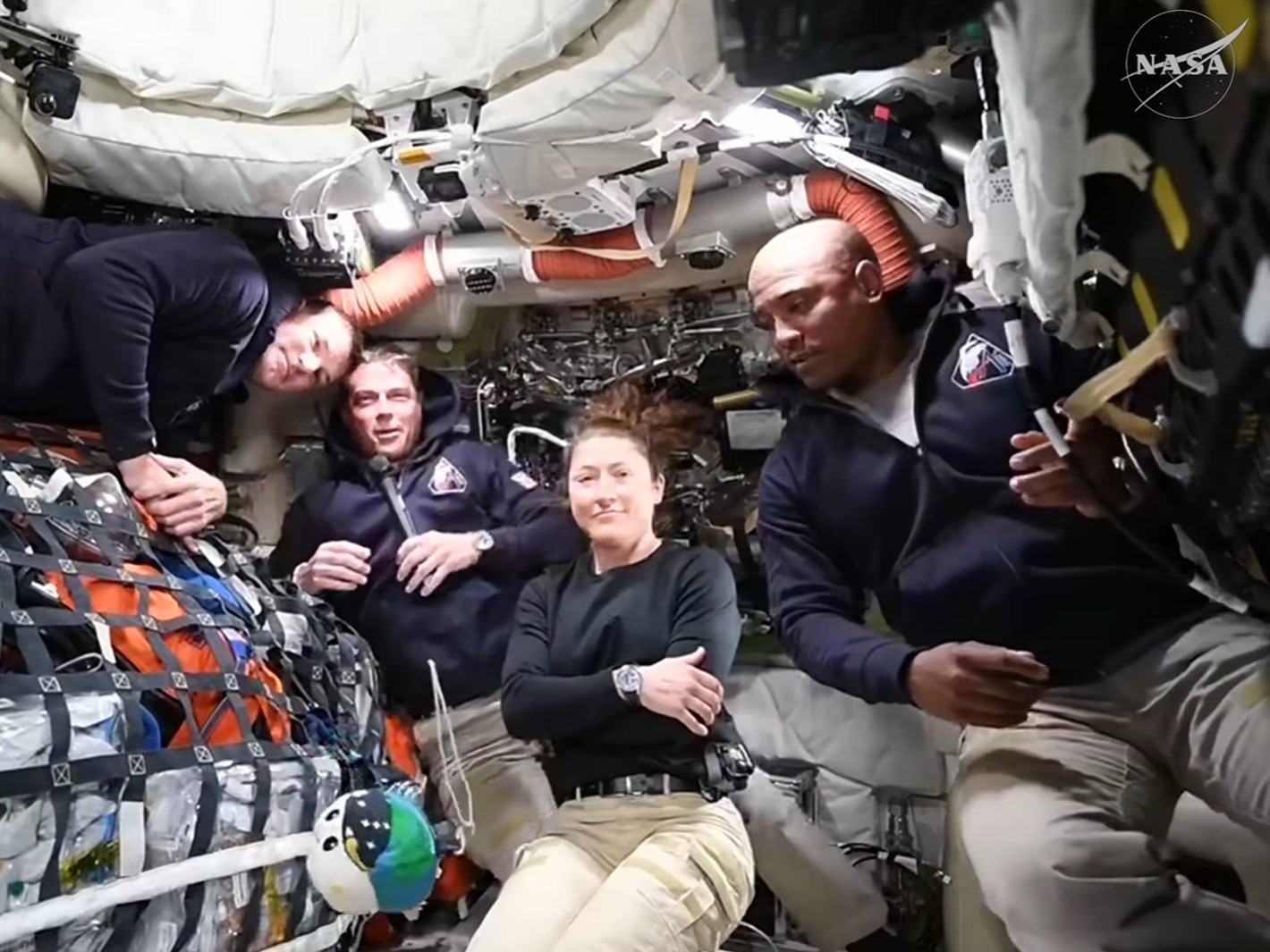
As the Artemis II mission continues its journey toward the Moon, a recent mission status press conference highlighted several minor technical hiccups. Fortunately, all issues were resolved quickly and could have easily occurred on Earth.
The first involved the sanitation system. It was discovered that there was an insufficient water level, causing the pumps to shut down. Shortly before the engine burn required to enter lunar orbit, a leak alarm was also triggered. However, this turned out to be a false alarm: a misaligned fan had interfered with a pressure sensor, leading to inaccurate readings.
On a much more relatable note for anyone who has ever struggled with Microsoft software, there was a technical hiccup that had nothing to do with the rocket's flight systems. On Commander Reid Wiseman's Microsoft Surface Pro, two separate instances of Outlook were running, and neither was functioning correctly.
The mission control center in Houston reacted like a classic IT support team, stepping in via a remote connection. Since the Orion capsule is now significantly further from Earth than the International Space Station (ISS), this was likely the longest-distance Remote Desktop connection ever established. After about an hour, ground stations managed to solve the problem by reloading files within the Outlook application. Although the app displayed an "offline" status, this posed no obstacle to the technical operations in orbit.
The use of standard commercial hardware is a matter of practical necessity. NASA has a long tradition of using tablets with stylus input, as they are much easier for astronauts to operate while wearing bulky gloves. Over time, the Microsoft Surface has established itself as some kind of standard, other solutions, such as the iPad, were also considered.
It is important to understand that this hardware consists of what are known as COTS systems—"commercial off-the-shelf" products. These devices are used primarily for routine tasks, such as scheduling and internal communications. In contrast, the mission-critical flight systems operate on entirely separate, radiation-hardened hardware.
The decision to use such familiar systems also has psychological benefits. A lunar mission presents astronauts with enormous challenges, as they must learn numerous complex procedures for the flight. A familiar software environment helps reduce the cognitive load by providing stable and intuitive operation—even when the environment outside the spacecraft is extremely hostile. Despite these brief software hiccups, communication between the ground station and the crew remains perfectly intact.
 Add as a preferred source on Google


