




Motorola Signature beats Pixel 10 Pro and iPhone 16 Pro in DxOMark camera analysis

The Motorola Signature was officially announced on 7 January 2026 at a price of €999 (US$1,170). Although it costs €200 (US$234) more than the Motorola Edge 70, the new phone offers a more powerful Snapdragon 8 Gen 5 chipset, a display with stylus support, and upgraded cameras.
The Motorola Signature features four 50 MP cameras: an f/1.6 primary camera with a 1/1.28-inch sensor, an f/2.2 ultrawide camera, a periscope telephoto lens with 3x optical zoom and a 1/1.95-inch sensor, and an f/2.0 front-facing camera. Motorola claims that the Signature delivers the best camera system in an ultrathin phone, though it’s debatable whether the device still qualifies as ultrathin at 6.99 mm (0.28 in) thick. DxOMark has already put the flagship’s triple-rear camera setup through its paces.
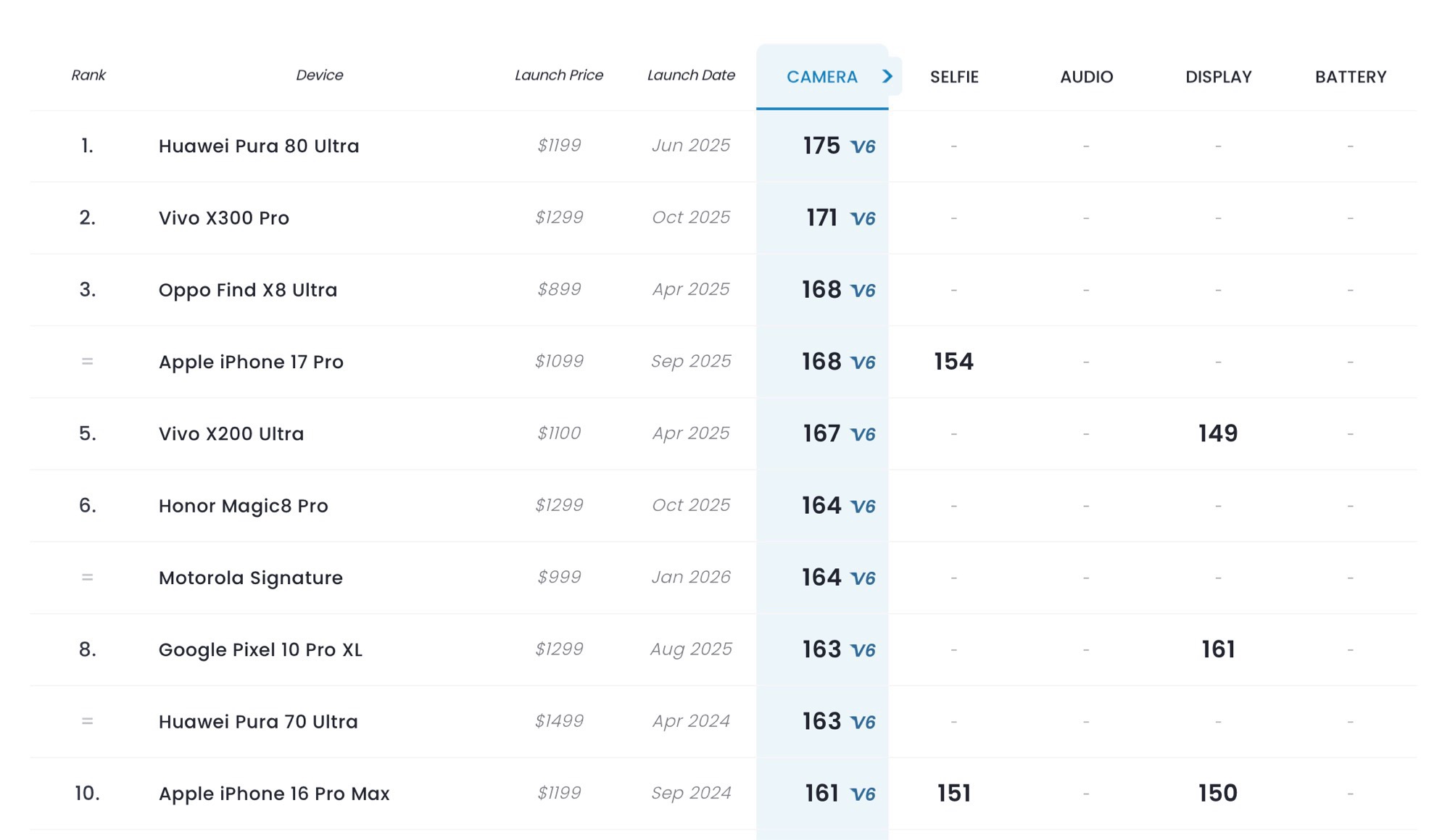
Achieving a fairly respectable score of 164, the Motorola Signature places sixth in DxOMark’s overall rankings – one spot ahead of the Google Pixel 10 Pro XL and just below the Apple iPhone 17 Pro. The device showed only minor weaknesses during DxOMark’s analysis, such as inconsistent exposure in video capture, image noise in scenes with strong lighting in the background, and some detail loss at 2x zoom due to its reliance on digital magnification.
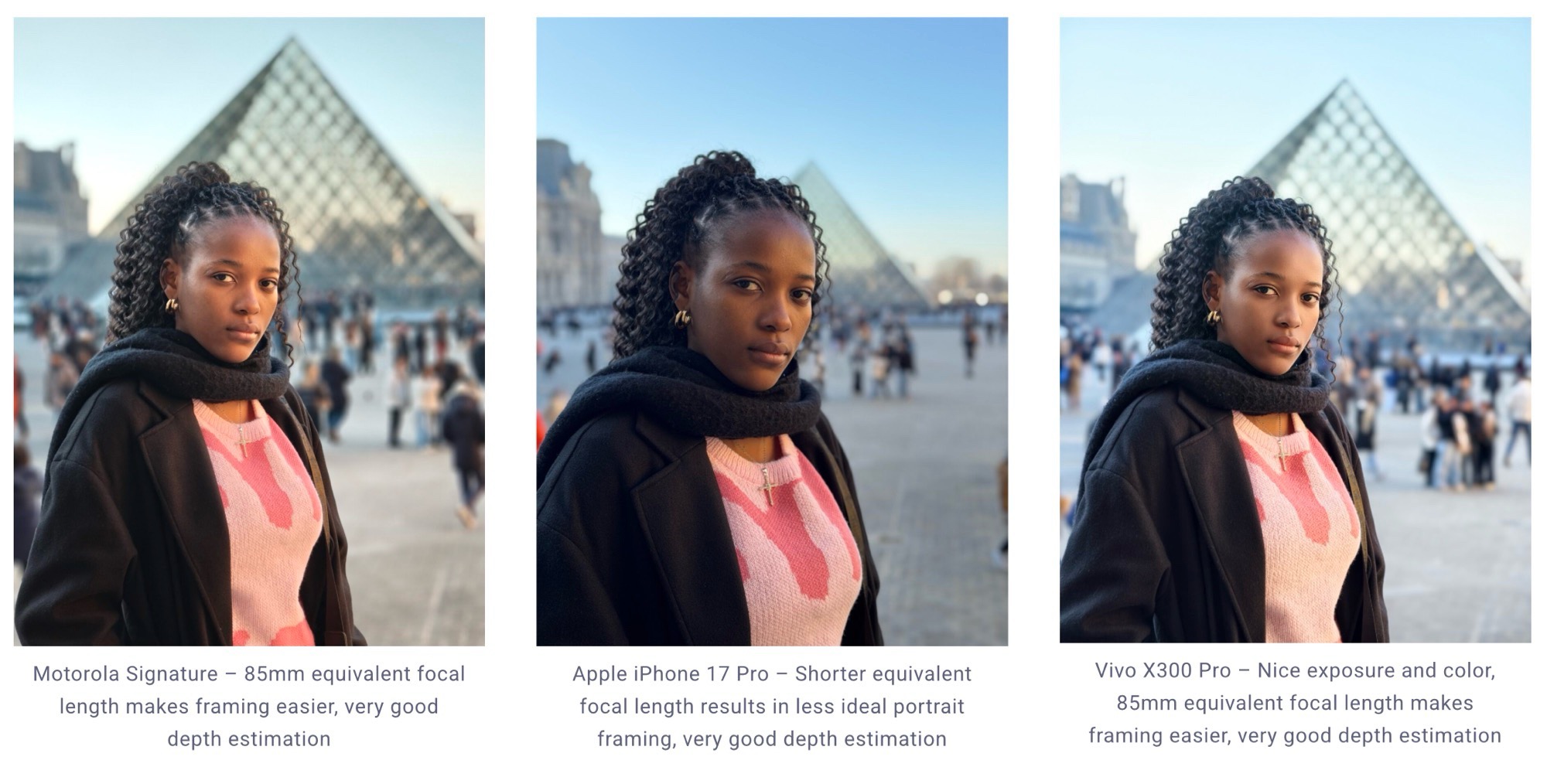
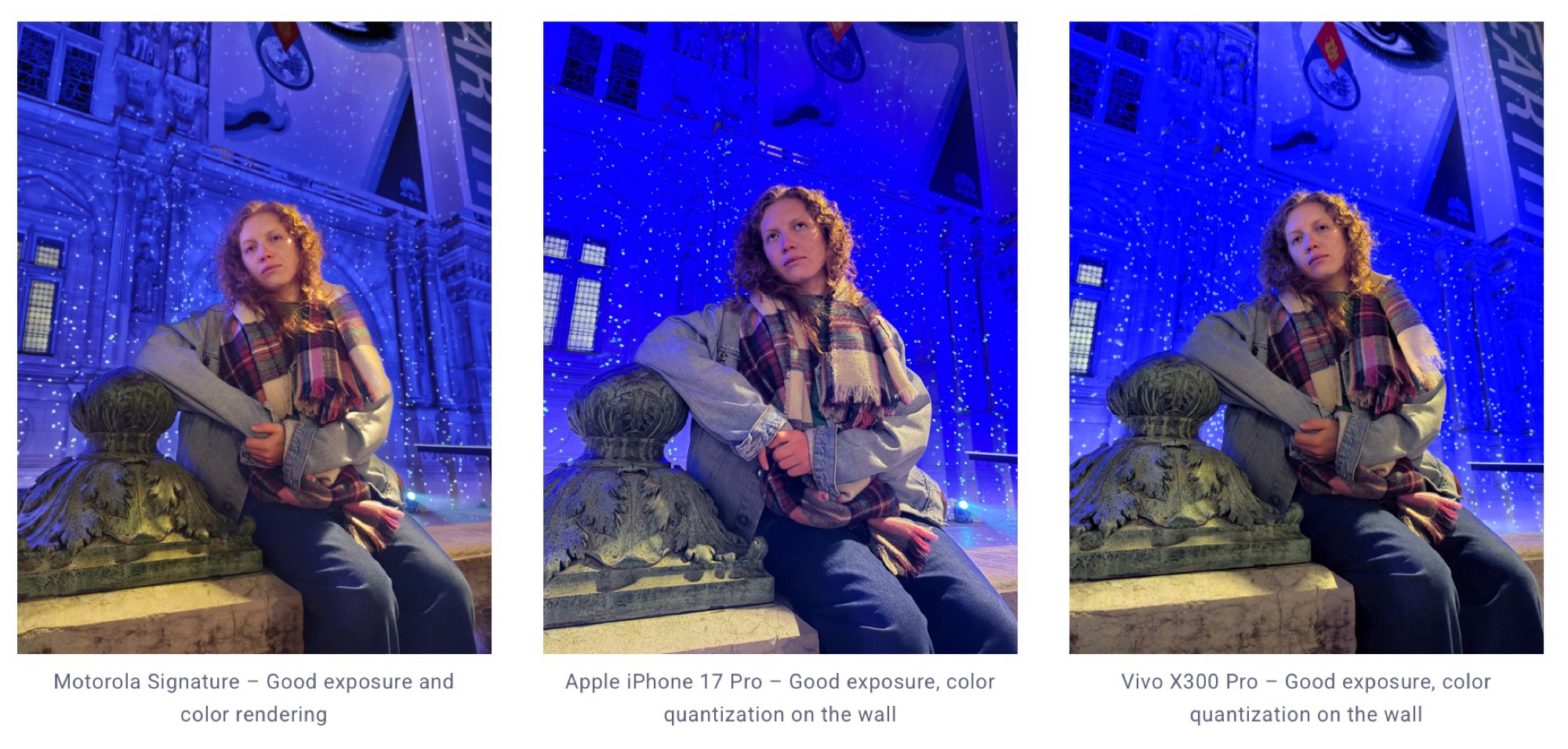
The Motorola Signature particularly impressed reviewers with its accurate auto exposure and reliable white balance. The camera system also handles mixed-lighting scenes without any major issues. Skin tones are rendered accurately, portrait mode produces a convincing bokeh effect, and photos exhibit relatively low levels of noise.
Source(s)
 Add as a preferred source on Google


