




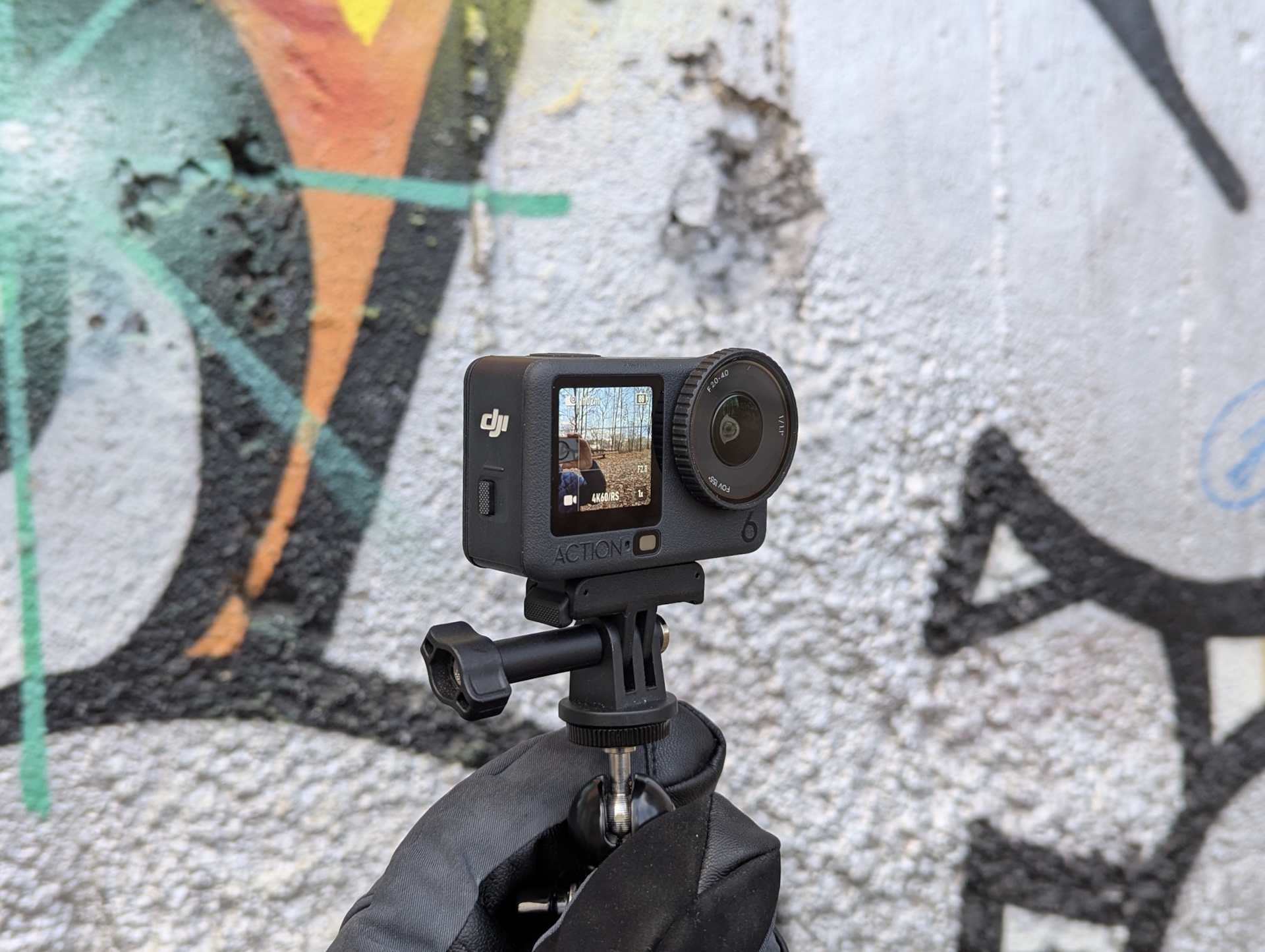
More sensor, more aperture, more possibilities? Our test of the DJI Osmo Action 6
Creator or Consumer?
The new DJI Osmo Action 6 packs several upgrades into a slightly larger body—but not every user will benefit equally. In our test, we look at who the Action 6 is truly designed for and whether the upgrades justify the jump.Christian Hintze (translated by Christian Hintze) Published 🇩🇪 🇫🇷 ...
Verdict – Knowing the target audience is key
The improvements in this year’s Osmo Action won’t excite everyone equally. Creators, vloggers, and similar users are the most likely to upgrade to the Action 6, as they benefit the most from added comfort, better close-focus performance for selfie-vlogging, and more flexibility in post-production.
For vacation and casual shooters, beside the improved stability, the new sensor and variable aperture are far less impactful. In everyday 16:9 recording, the improvements in image quality are barely noticeable—meaning previous models may already be more than sufficient.
Pros
Cons
Price and availability
Directly from the manufacturer, the DJI Osmo Action 6 costs €379 in the Standard Combo. Our Adventure Combo unit costs €479.
Important note: Shops also offer something called an “Essential Combo” for around the same price as the Standard Combo. However, there’s no consistent public definition of what it includes. Some users report that these are stripped-down versions of the Standard Combo with missing mounts or other accessories.

DJI equips the Osmo Action 6 with a larger sensor compared to its two predecessors. But how much does it actually change—and what else is new in this iteration?
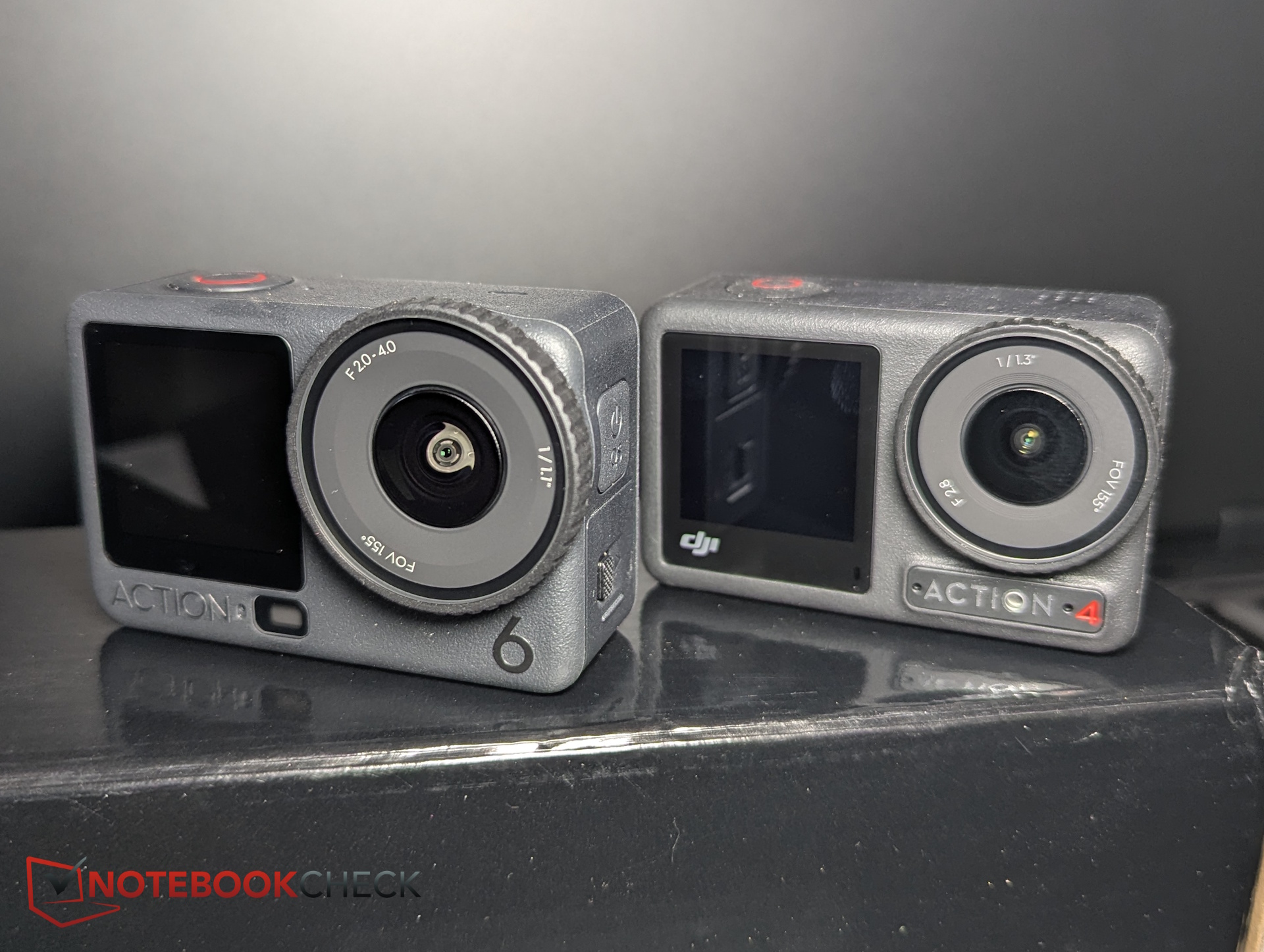
We test the Action 6 and compare it with the Action 4 ($219 on Amazon). What’s changed over the course of two generations?
Specifications – A new sensor
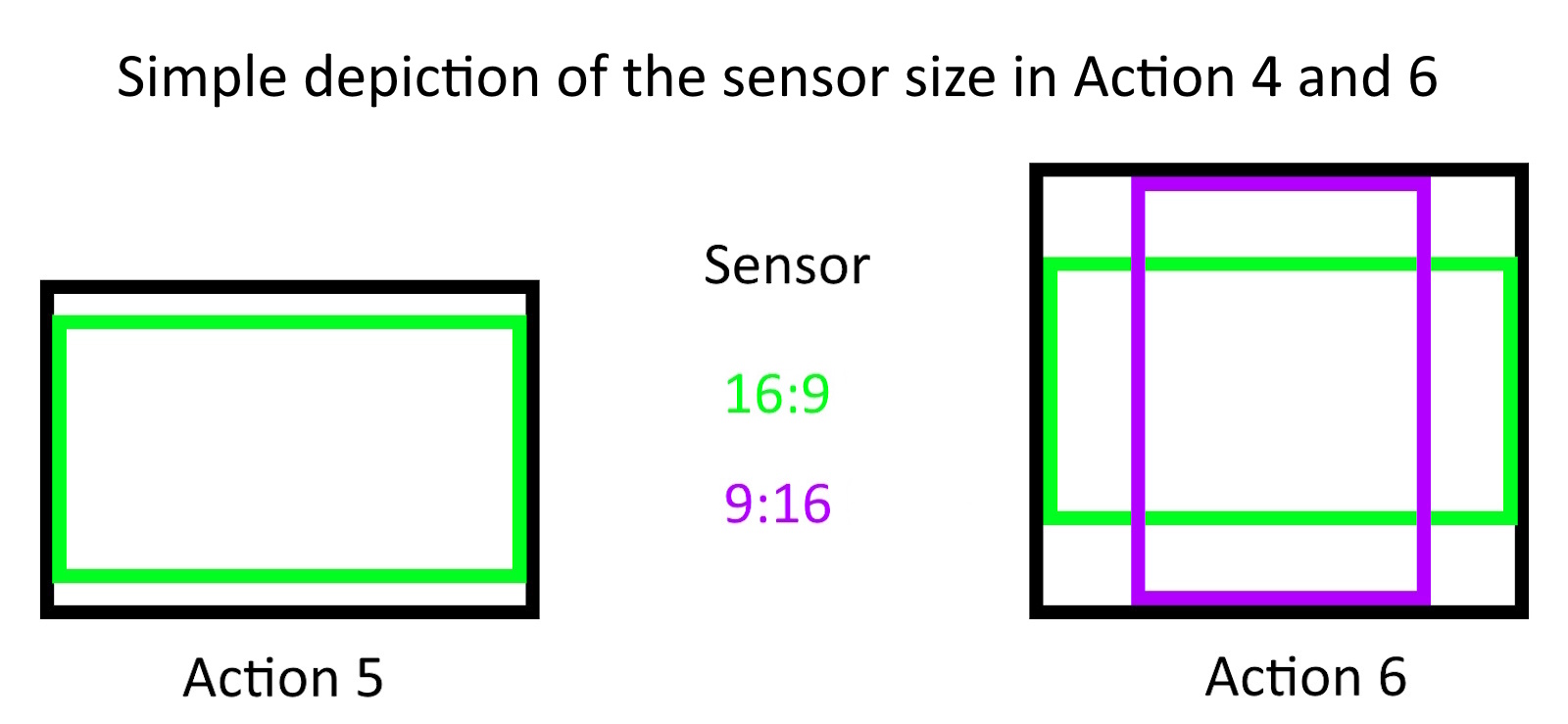
The new sensor is larger overall, though only in height. For 16:9 shooting, the effectively used sensor area unfortunately isn’t bigger than in the previous model. However, the “open gate”-like square capture gives creators more options in post: you can pull horizontal 16:9 or vertical 9:16 clips for TikTok, etc., from the same source material. It’s not true open gate though—horizontal recording maxes out at 4:3.
DJI also introduces a variable aperture; action cams usually have a fixed one. The Action 5 had an f/2.8 aperture, while the Action 6 now ranges from f/2.0 to f/4.0. Does this yield more depth of field or better low-light performance when paired with the new sensor?
| Features | DJI Osmo Action 6 |
| Sensor | 1/1,1-Zoll CMOS |
| Lens | Field of view: 155° Aperture: f/2,0 to f/4,0 Focus (with aperture f/4,0): 0,2 m to ∞ |
| Max. photo resolution | 7168×5376 |
| Video | max 4K Custom: 3840×3840 at 24/25/30/48/50/60fps 4K (16:9): 3840×2160 at 24/25/30/48/50/60/100/120fps |
| Max. video bitrate | 120 MBit/s (MP4 (HEVC)) |
| Stabilization | EIS:RockSteady 3.0, RockSteady 3.0+, HorizonBalancing, HorizonSteady |
| Storage | internal 64 GB (50 GB available), extendible by MicroSD |
| Audio recording | 48 kHz at 16 Bit; AAC |
| Battery | 1950 mAh (around 240 min at FHD, 24 fps with Wi-Fi & screen off) |
| Wireless | Wi-Fi 2,4 GHz and 5 GHz; Bluetooth 5.1 |
| Weight | 149 g |
| Price | from 379 Euro |
Design & build – Slightly larger than the Action 4
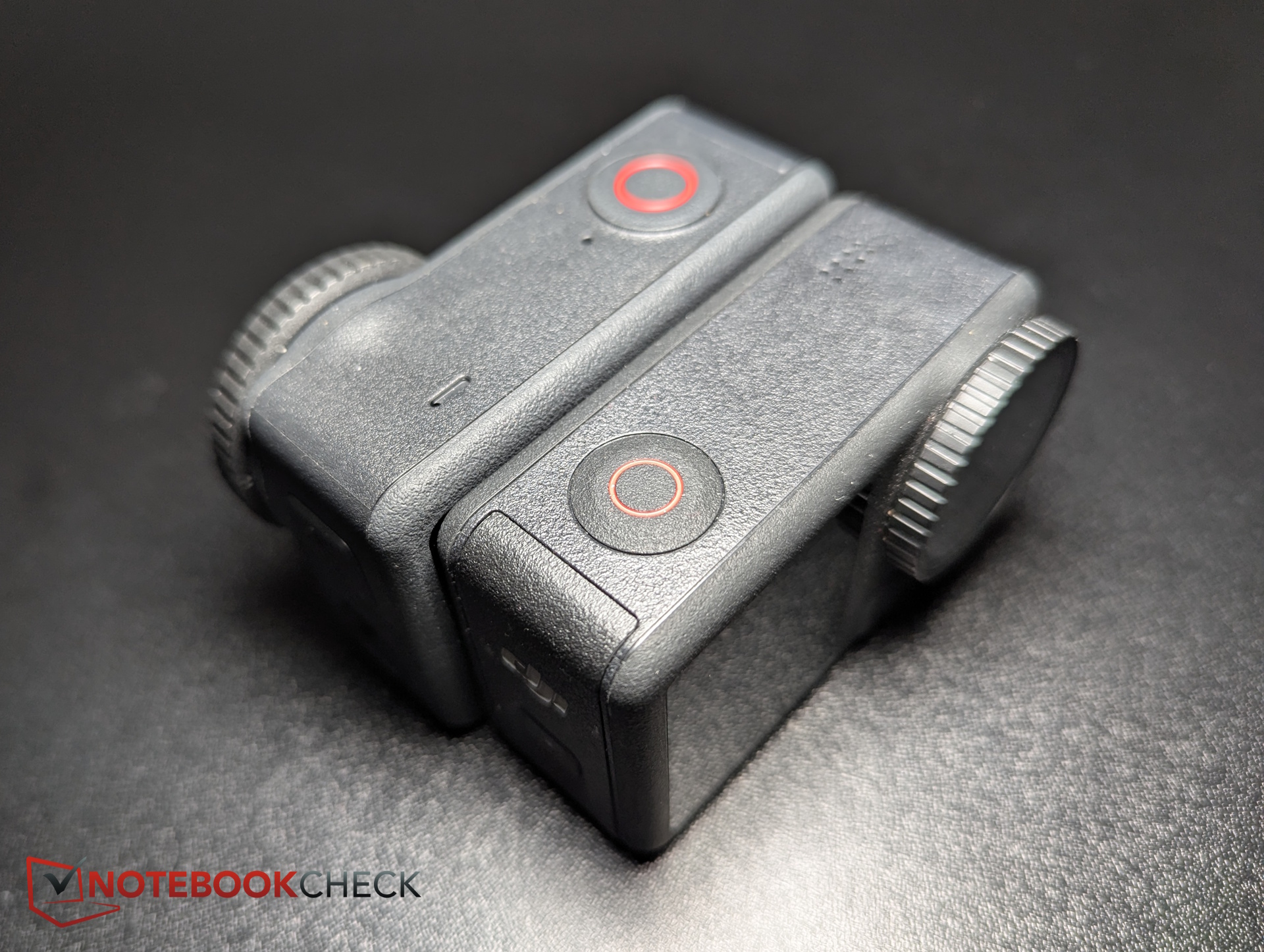
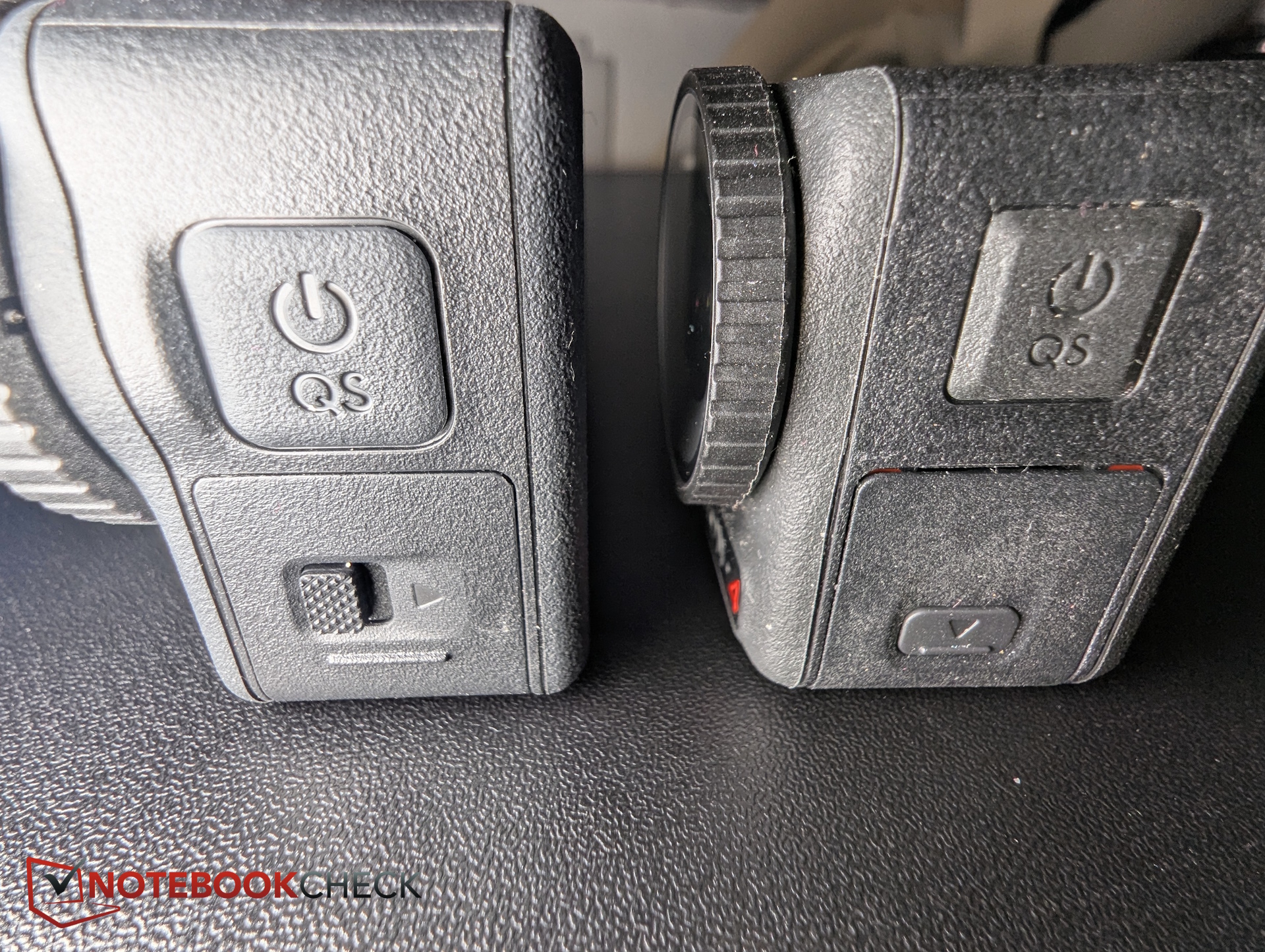
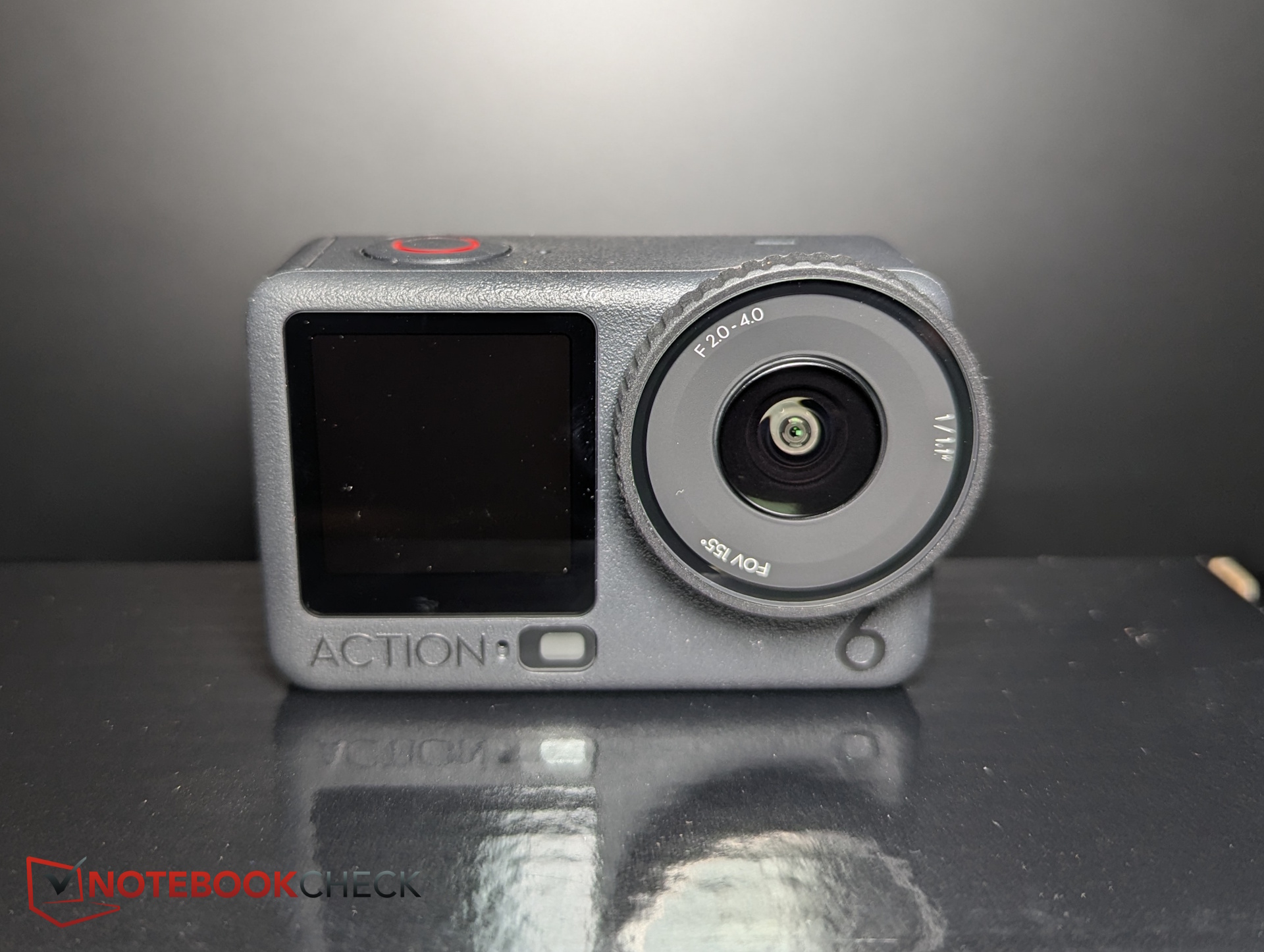
Visually, there’s now a new color-temperature sensor on the front at the bottom. The Action 6 is also slightly larger than the Action 4 or 5, meaning older cases likely won’t fit anymore—though most other accessories still do.
The opening mechanisms for the doors (battery, USB-C) have been redesigned as well: instead of pushing firmly up or down, the doors now open more smoothly. To keep them secure, you now have to push to the right first and then up/down to unlock a compartment.
And finally: the magnetic quick-release now works in both directions!
Included accessories & setup – App pairing required
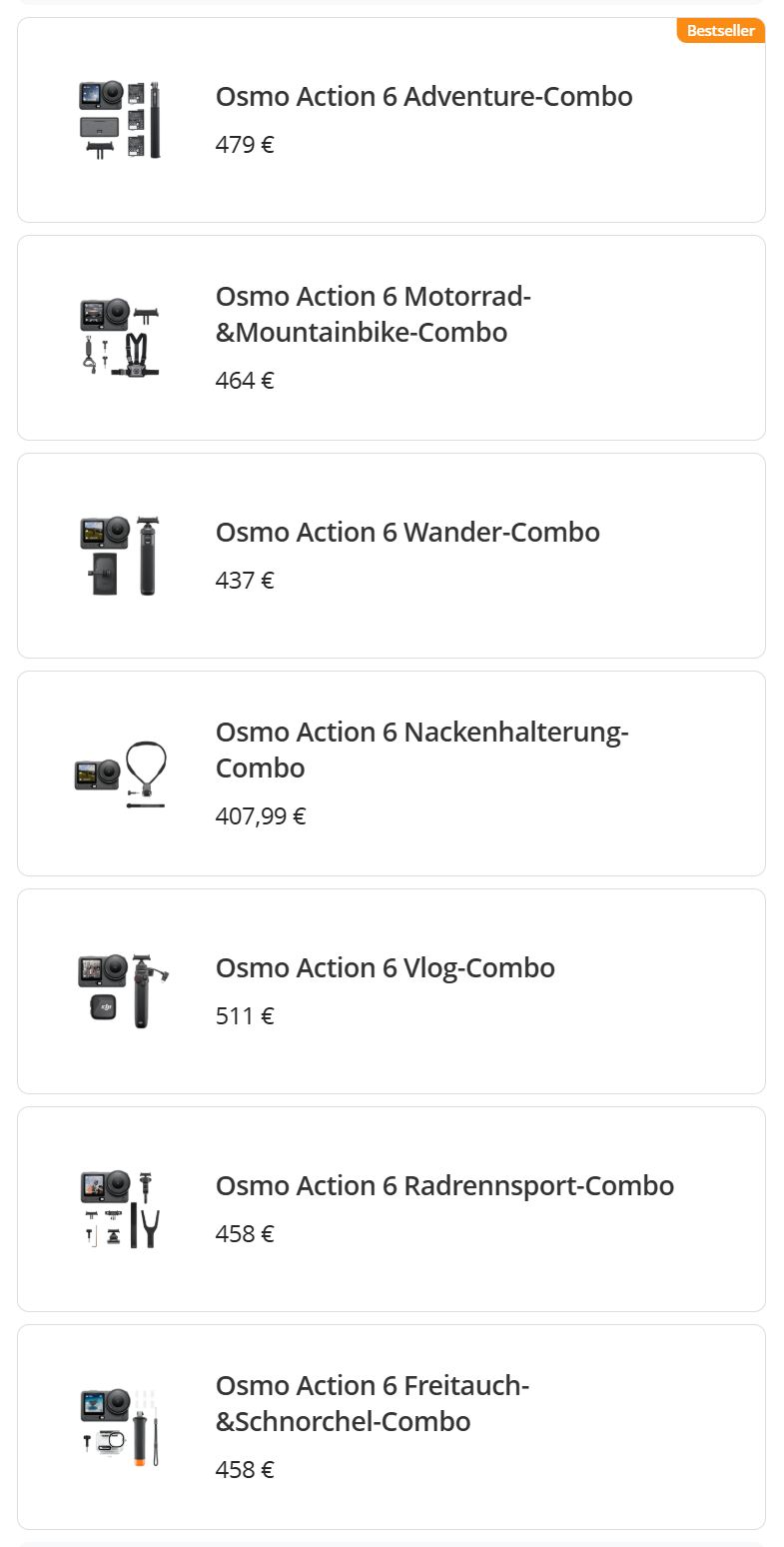
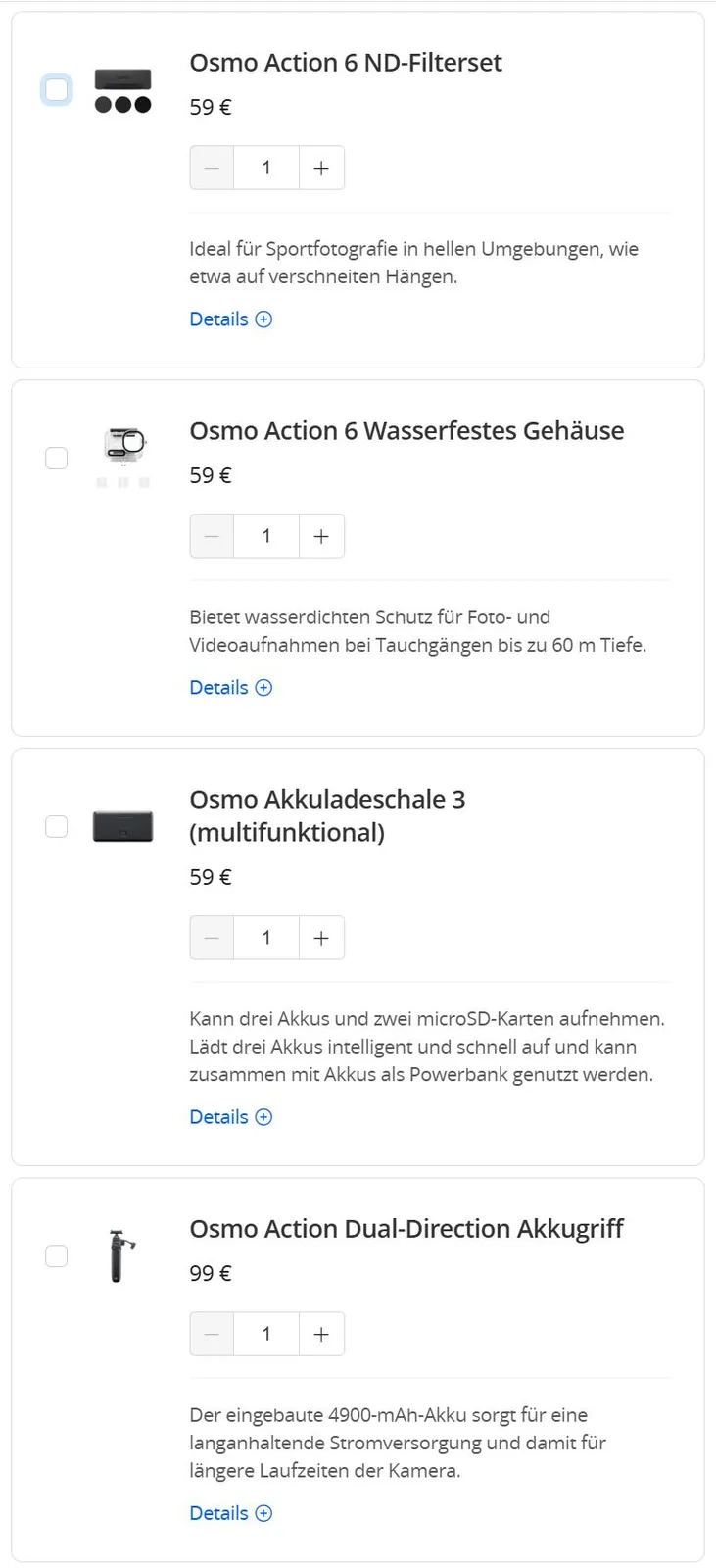
The camera is sold in numerous bundles with varying accessory sets; the screenshot below shows a few examples.
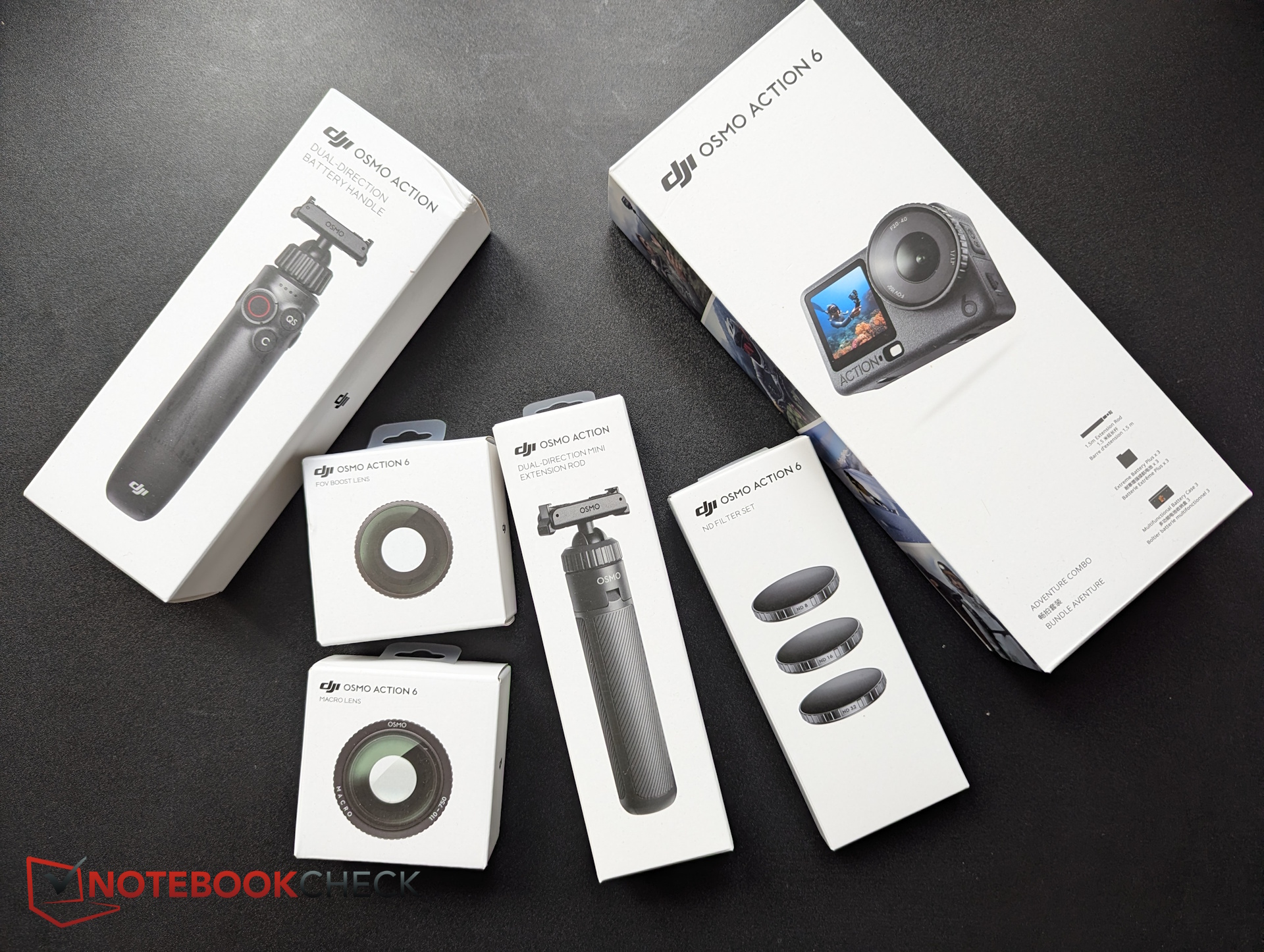
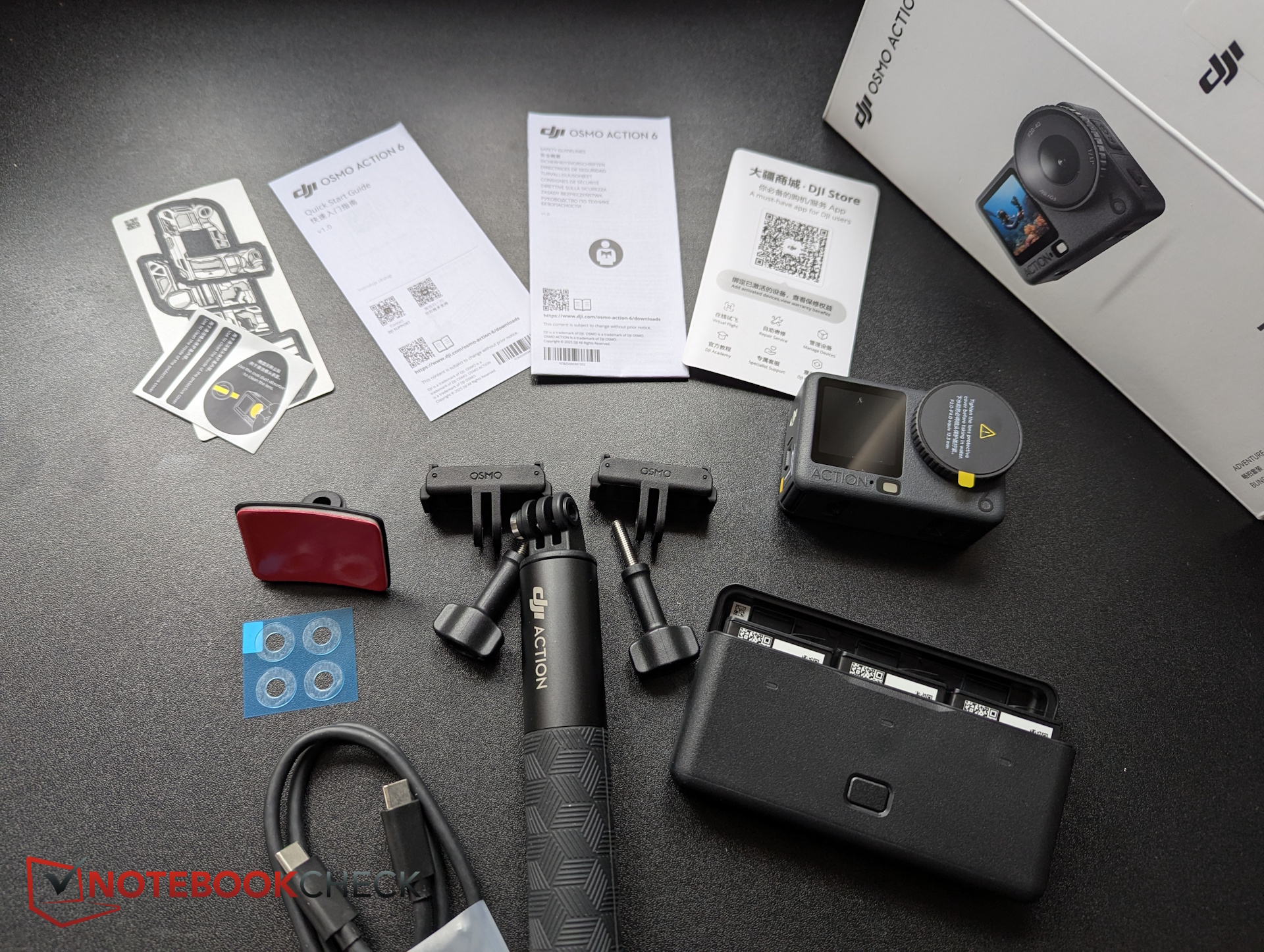
DJI sent us the Adventure Combo, which includes a 1.5 m selfie stick, three batteries, and a triple charger, plus additional accessories like the Osmo Action grip with built-in extra battery, ND filters, and macro and wide-angle lenses.
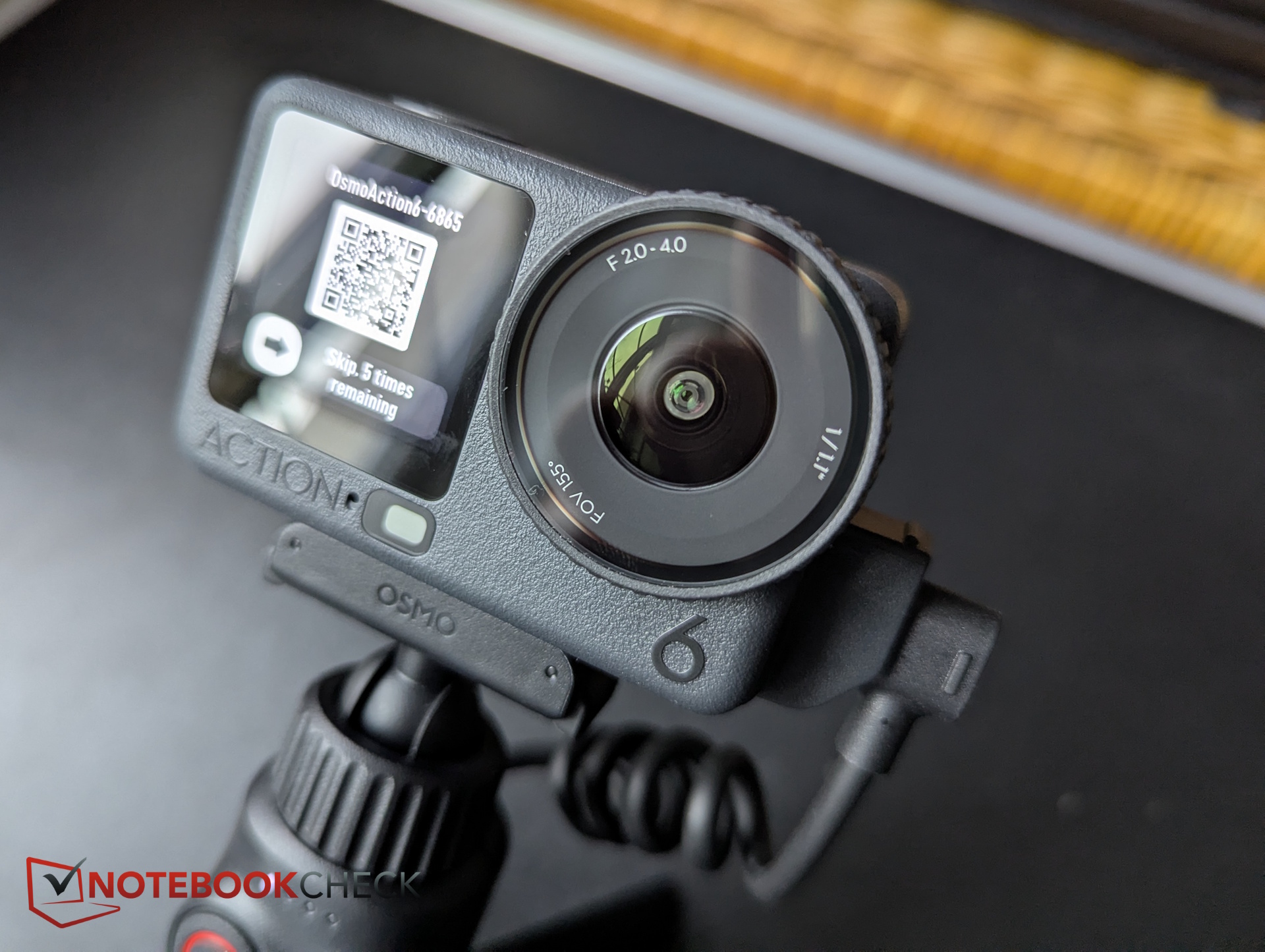
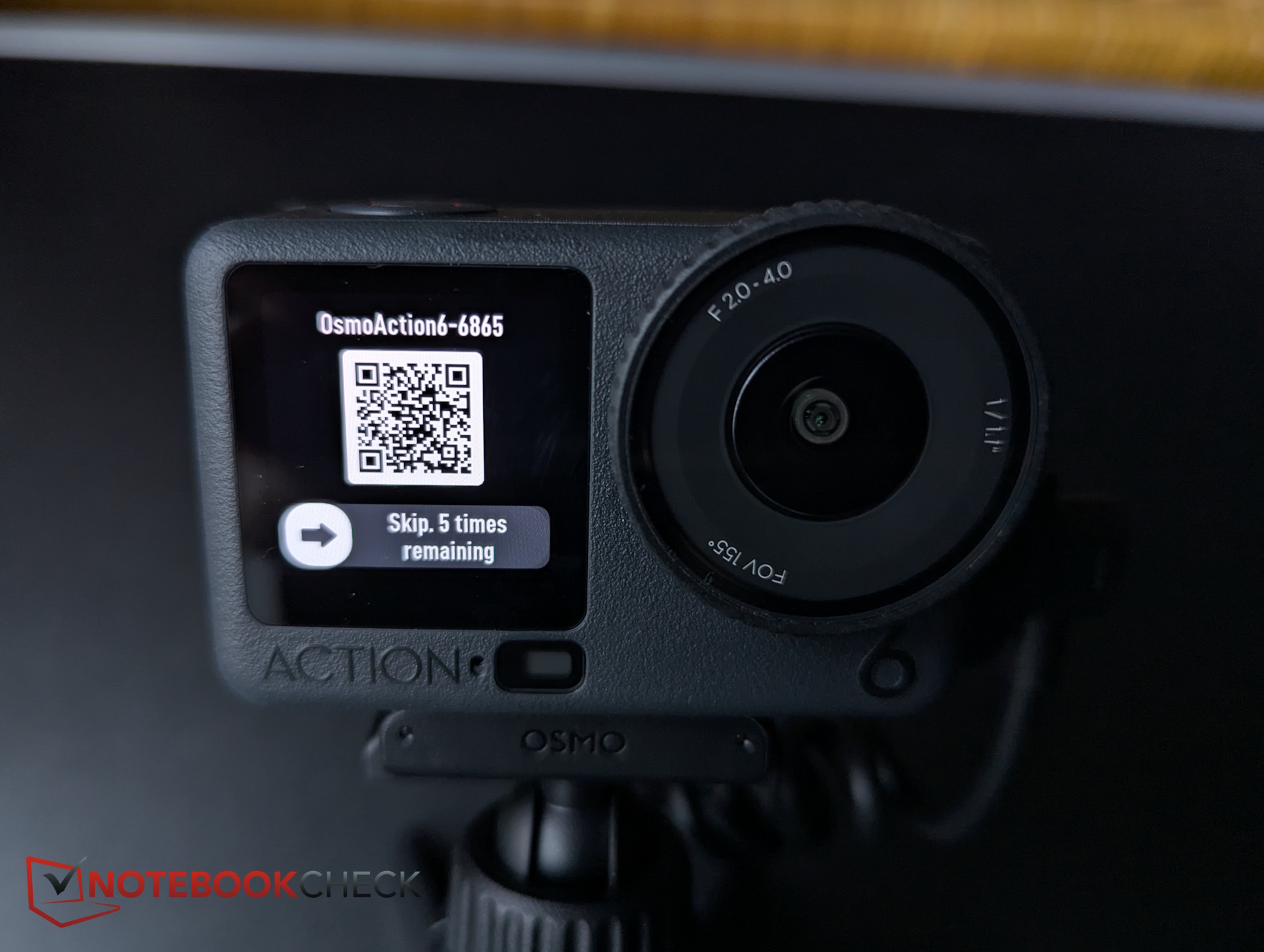
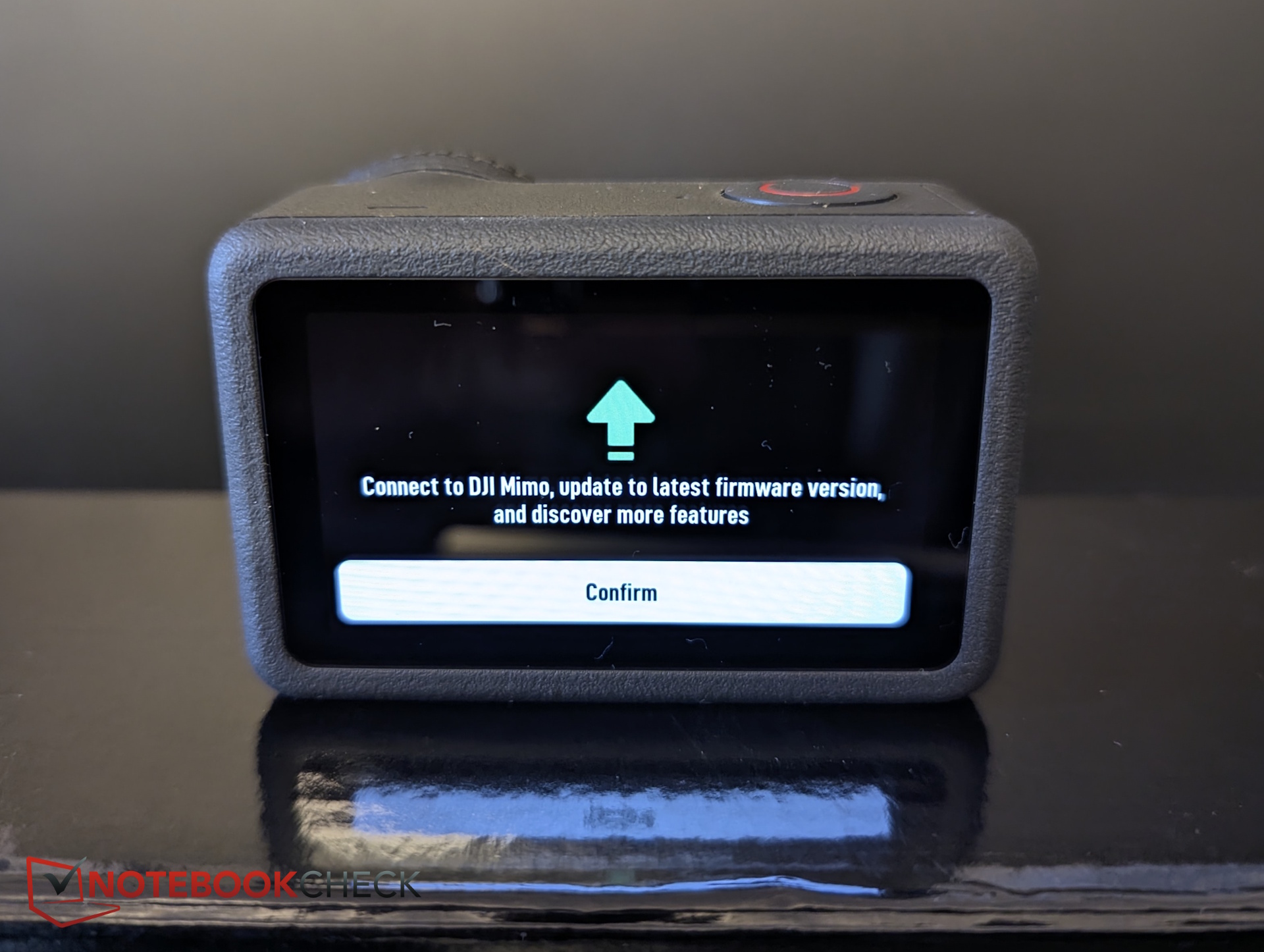
During initial setup, pairing with the app is mandatory. After that, you can technically ignore the app—but in practice, the camera displays a prompt on boot reminding you to connect.
Real-world test – Strong stabilization
We strapped the Action 6 to a bike (without a shock absorber), rode to the Humboldt Tower in Berlin, ran up and down stairs, tried some light parkour on a playground, and shot night scenes and comparisons with the Action 4. The video highlights these scenarios.
General image quality
At higher f-numbers (like f/4.0), the minimum focus distance decreases, meaning you can get closer to your subject—ideal for handheld vlogging.
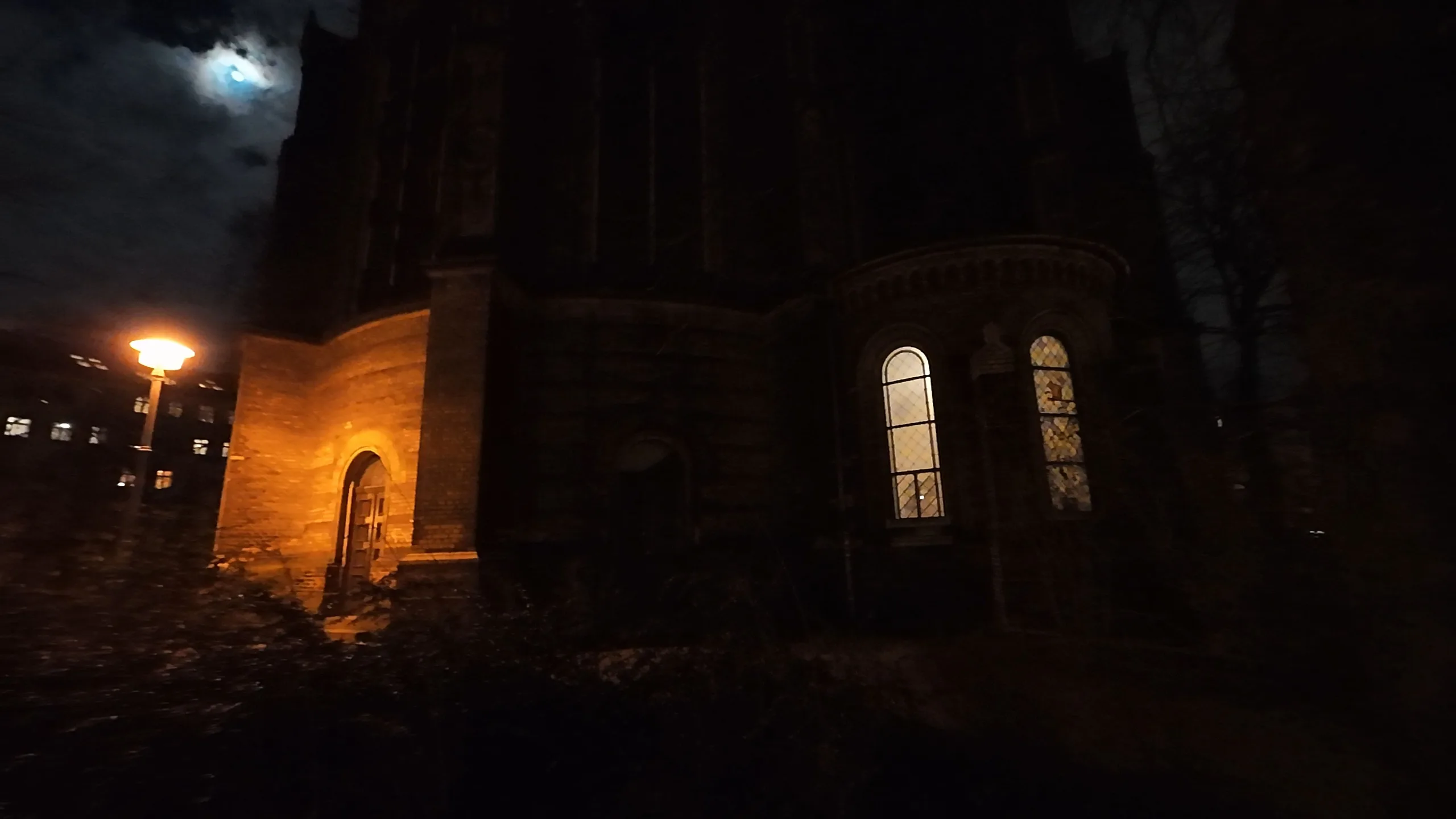
In dark November weather, you can definitely see some noise depending on how much the camera needs to brighten the darker foreground against a brighter background. Still, even in these conditions, the Action 6 produces slightly less noise than the Action 4. The improvement isn’t huge, though but the picture looks slightly brighter overall.
In brighter, low-contrast conditions, the little camera produces genuinely impressive image quality.






Stabilization
Stabilization is excellent when shooting handheld. Even while running or jumping, footage stays surprisingly steady, with a noticable improvement over the Action 4.
Only when mounted to a stiff, unsuspended bike handlebar do we see noticeable jitter. The test video includes plenty of handheld, chest-mounted, and bike-mounted shots.
Low-light performance
The “Supernight” mode brightens the image significantly, though sometimes at the cost of slightly mushier details. Noise levels remain reasonably controlled, however.
In normal mode, we see almost no differences compared with the Action 4—in fact, the Action 6 looks a touch sharper.


Transparency
The selection of devices to be reviewed is made by our editorial team. The test sample was given to the author by the manufacturer free of charge for the purposes of review. There was no third-party influence on this review, nor did the manufacturer receive a copy of this review before publication. There was no obligation to publish this review. As an independent media company, Notebookcheck is not subjected to the authority of manufacturers, retailers or publishers.
 Add as a preferred source on Google


